sam altman

openai-and-common-sense-media-partner-to-protect-teens-from-ai-harms-and-misuse

OpenAI and Common Sense Media partner to protect teens from AI harms and misuse

Adventures in chatbusting —

Site gave ChatGPT 3 stars and 48% privacy score: “Best used for creativity, not facts.”
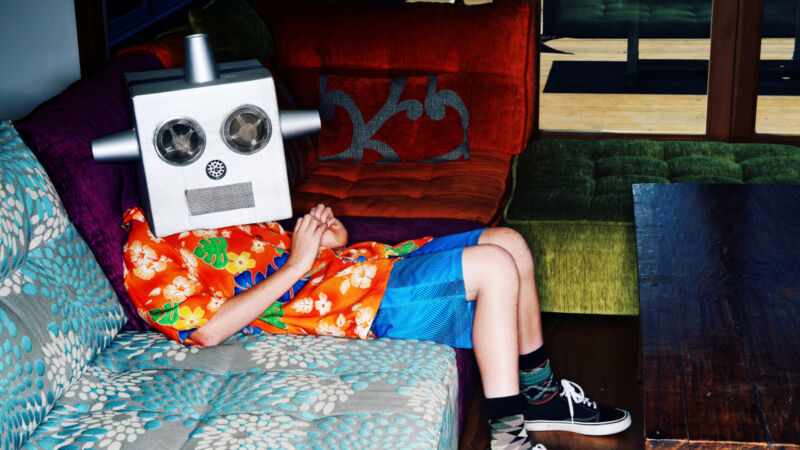
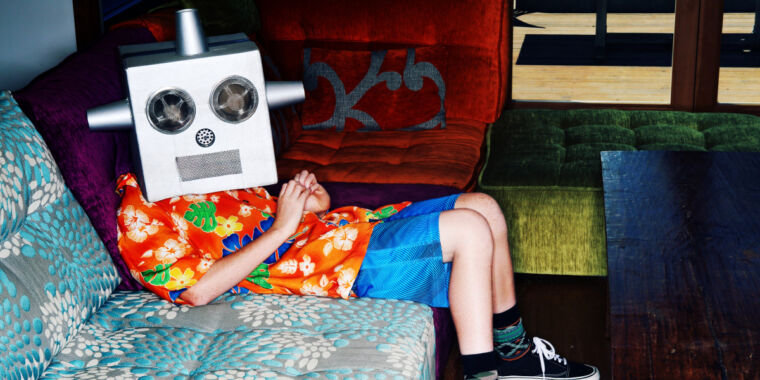
Boy in Living Room Wearing Robot Mask

On Monday, OpenAI announced a partnership with the nonprofit Common Sense Media to create AI guidelines and educational materials targeted at parents, educators, and teens. It includes the curation of family-friendly GPTs in OpenAI’s GPT store. The collaboration aims to address concerns about the impacts of AI on children and teenagers.

Known for its reviews of films and TV shows aimed at parents seeking appropriate media for their kids to watch, Common Sense Media recently branched out into AI and has been reviewing AI assistants on its site.

“AI isn’t going anywhere, so it’s important that we help kids understand how to use it responsibly,” Common Sense Media wrote on X. “That’s why we’ve partnered with @OpenAI to help teens and families safely harness the potential of AI.”

OpenAI CEO Sam Altman and Common Sense Media CEO James Steyer announced the partnership onstage in San Francisco at the Common Sense Summit for America’s Kids and Families, an event that was well-covered by media members on the social media site X.

For his part, Altman offered a canned statement in the press release, saying, “AI offers incredible benefits for families and teens, and our partnership with Common Sense will further strengthen our safety work, ensuring that families and teens can use our tools with confidence.”

The announcement feels slightly non-specific in the official news release, with Steyer offering, “Our guides and curation will be designed to educate families and educators about safe, responsible use of ChatGPT, so that we can collectively avoid any unintended consequences of this emerging technology.”

The partnership seems aimed mostly at bringing a patina of family-friendliness to OpenAI’s GPT store, with the most solid reveal being the aforementioned fact that Common Sense media will help with the “curation of family-friendly GPTs in the GPT Store based on Common Sense ratings and standards.”

Common Sense AI reviews

As mentioned above, Common Sense Media began reviewing AI assistants on its site late last year. This puts Common Sense Media in an interesting position with potential conflicts of interest regarding the new partnership with OpenAI. However, it doesn’t seem to be offering any favoritism to OpenAI so far.

For example, Common Sense Media’s review of ChatGPT calls the AI assistant “A powerful, at times risky chatbot for people 13+ that is best used for creativity, not facts.” It labels ChatGPT as being suitable for ages 13 and up (which is in OpenAI’s Terms of Service) and gives the OpenAI assistant three out of five stars. ChatGPT also scores a 48 percent privacy rating (which is oddly shown as 55 percent on another page that goes into privacy details). The review we cited was last updated on October 13, 2023, as of this writing.

For reference, Google Bard gets a three-star overall rating and a 75 percent privacy rating in its Common Sense Media review. Stable Diffusion, the image synthesis model, nets a one-star rating with the description, “Powerful image generator can unleash creativity, but is wildly unsafe and perpetuates harm.” OpenAI’s DALL-E gets two stars and a 48 percent privacy rating.

The information that Common Sense Media includes about each AI model appears relatively accurate and detailed (and the organization cited an Ars Technica article as a reference in one explanation), so they feel fair, even in the face of the OpenAI partnership. Given the low scores, it seems that most AI models aren’t off to a great start, but that may change. It’s still early days in generative AI.

OpenAI and Common Sense Media partner to protect teens from AI harms and misuse Read More »
a-song-of-hype-and-fire:-the-10-biggest-ai-stories-of-2023

A song of hype and fire: The 10 biggest AI stories of 2023

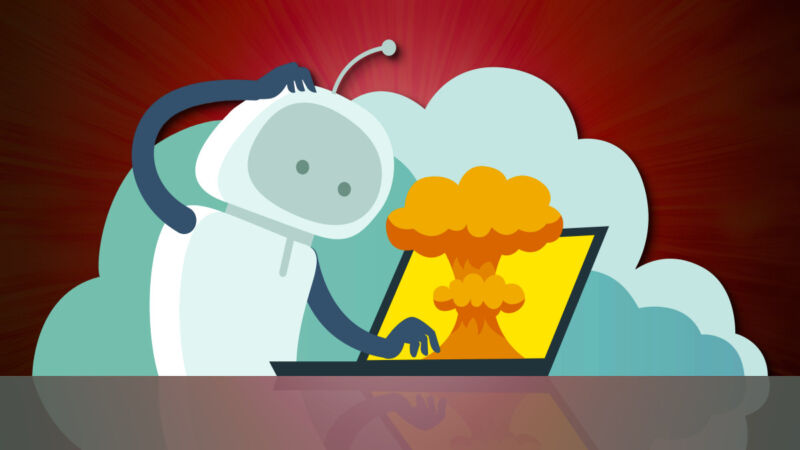
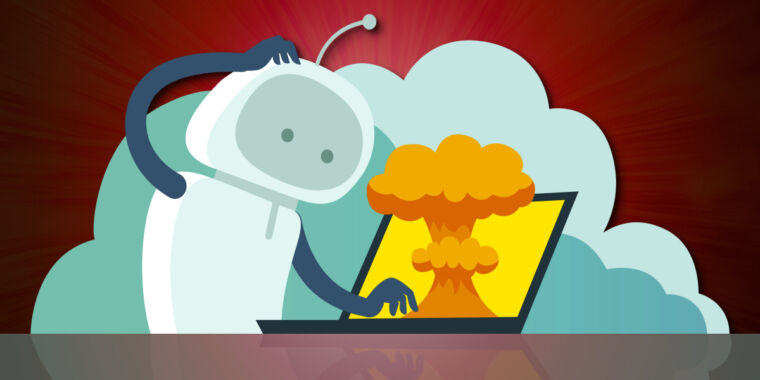
An illustration of a robot accidentally setting off a mushroom cloud on a laptop computer.

Getty Images | Benj Edwards

“Here, There, and Everywhere” isn’t just a Beatles song. It’s also a phrase that recalls the spread of generative AI into the tech industry during 2023. Whether you think AI is just a fad or the dawn of a new tech revolution, it’s been impossible to deny that AI news has dominated the tech space for the past year.

We’ve seen a large cast of AI-related characters emerge that includes tech CEOs, machine learning researchers, and AI ethicists—as well as charlatans and doomsayers. From public feedback on the subject of AI, we’ve heard that it’s been difficult for non-technical people to know who to believe, what AI products (if any) to use, and whether we should fear for our lives or our jobs.

Meanwhile, in keeping with a much-lamented trend of 2022, machine learning research has not slowed down over the past year. On X, former Biden administration tech advisor Suresh Venkatasubramanian wrote, “How do people manage to keep track of ML papers? This is not a request for support in my current state of bewilderment—I’m genuinely asking what strategies seem to work to read (or “read”) what appear to be 100s of papers per day.”

To wrap up the year with a tidy bow, here’s a look back at the 10 biggest AI news stories of 2023. It was very hard to choose only 10 (in fact, we originally only intended to do seven), but since we’re not ChatGPT generating reams of text without limit, we have to stop somewhere.

Bing Chat “loses its mind”

Aurich Lawson | Getty Images

In February, Microsoft unveiled Bing Chat, a chatbot built into its languishing Bing search engine website. Microsoft created the chatbot using a more raw form of OpenAI’s GPT-4 language model but didn’t tell everyone it was GPT-4 at first. Since Microsoft used a less conditioned version of GPT-4 than the one that would be released in March, the launch was rough. The chatbot assumed a temperamental personality that could easily turn on users and attack them, tell people it was in love with them, seemingly worry about its fate, and lose its cool when confronted with an article we wrote about revealing its system prompt.

Aside from the relatively raw nature of the AI model Microsoft was using, at fault was a system where very long conversations would push the conditioning system prompt outside of its context window (like a form of short-term memory), allowing all hell to break loose through jailbreaks that people documented on Reddit. At one point, Bing Chat called me “the culprit and the enemy” for revealing some of its weaknesses. Some people thought Bing Chat was sentient, despite AI experts’ assurances to the contrary. It was a disaster in the press, but Microsoft didn’t flinch, and it ultimately reigned in some of Bing Chat’s wild proclivities and opened the bot widely to the public. Today, Bing Chat is now known as Microsoft Copilot, and it’s baked into Windows.

US Copyright Office says no to AI copyright authors

An AI-generated image that won a prize at the Colorado State Fair in 2022, later denied US copyright registration.

Enlarge / An AI-generated image that won a prize at the Colorado State Fair in 2022, later denied US copyright registration.

Jason M. Allen

In February, the US Copyright Office issued a key ruling on AI-generated art, revoking the copyright previously granted to the AI-assisted comic book “Zarya of the Dawn” in September 2022. The decision, influenced by the revelation that the images were created using the AI-powered Midjourney image generator, stated that only the text and arrangement of images and text by Kashtanova were eligible for copyright protection. It was the first hint that AI-generated imagery without human-authored elements could not be copyrighted in the United States.

This stance was further cemented in August when a US federal judge ruled that art created solely by AI cannot be copyrighted. In September, the US Copyright Office rejected the registration for an AI-generated image that won a Colorado State Fair art contest in 2022. As it stands now, it appears that purely AI-generated art (without substantial human authorship) is in the public domain in the United States. This stance could be further clarified or changed in the future by judicial rulings or legislation.

A song of hype and fire: The 10 biggest AI stories of 2023 Read More »