Paramount Skydance

fcc-chair-calls-paramount/wbd-merger-“a-lot-cleaner”-than-defunct-netflix-deal

FCC chair calls Paramount/WBD merger “a lot cleaner” than defunct Netflix deal


FCC to review foreign debt, but Carr indicates it will be a formality.

Credit: Getty Images | Kenneth Cheung

Paramount Skydance’s $111 billion purchase of Warner Bros. Discovery (WBD) has a notable supporter in Federal Communications Commission Chairman Brendan Carr. The FCC boss told CNBC today that the Paramount/WBD combination “is a lot cleaner” than the now-defunct Netflix deal to buy WBD.

Netflix “would have had a very difficult path forward from a regulatory perspective” because of “the scope and scale” of the streaming service that would have been created by combining Netflix with WBD property HBO Max, Carr said. There were “a lot of concerns in DC” about Netflix buying the company, he said.

Netflix backed out of its deal with Warner Bros. instead of matching the Paramount offer. Although Paramount plans to merge its own Paramount+ streaming service with HBO Max, Carr said the Paramount/WBD merger “does not raise at all the same types of concerns [as Netflix]. I think there’s some real consumer benefits that could emerge from it.”

Paramount Skydance is led by CEO David Ellison. His father, Larry Ellison, pledged $40 billion toward the deal. The Ellisons seem to have won President Trump’s backing for the merger.

The FCC plays a big role in reviewing mergers when broadcast licenses are transferred from one entity to another. There are no license transfers in this case because WBD doesn’t own any TV broadcast licenses.

But Paramount Skydance must comply with the FCC’s foreign ownership rules because it is already an FCC licensee with 28 local CBS stations that it owns and operates. Paramount is apparently financing the WBD purchase partly with money from foreign investors, which could trigger an FCC review of whether a foreign entity would gain control of a broadcaster.

Sovereign wealth funds back Paramount

In December, Paramount said that it lined up “an aggregate $24 billion commitment from three sovereign wealth funds” from Gulf countries, specifically Saudi Arabia, Abu Dhabi, and Qatar. Paramount said at the time that the sovereign wealth funds “agreed to forgo all governance rights (including board representation).”

Carr told the Financial Times yesterday that an FCC review of foreign debt is unlikely to hold up the merger. “All the information that I’ve seen about that foreign debt … is that would qualify under FCC rules as what we call bona fide debt, meaning it would be a very quick, almost pro forma review,” he said. FCC precedents state that bona fide debt may include a guarantee for a loan or a standard loan in which the creditor does not possess an ownership or voting interest in the licensee.

Carr told CNBC that the deal will be reviewed by the Justice Department, and that “if there’s any FCC role at all, it will be a pretty minimal role. I think this is a good deal and I think it should get through pretty quickly.”

The Justice Department is reviewing the merger and is not likely to try to block it, Bloomberg reported. “The agency is taking a softer stance on merger enforcement and hasn’t blocked a deal on antitrust grounds since President Donald Trump took office,” the article said. The deal would still face review by individual US states and regulators in other countries.

Paramount was cagey yesterday about whether sovereign funds are still backing the deal. “In government filings and on an investor call Monday, Paramount reiterated that the Ellisons and private-equity firm RedBird Capital Partners have pledged $47 billion toward the roughly $81 billion Paramount will pay to buy out WBD shareholders,” Business Insider wrote. “The rest will be financed with debt. But Paramount doesn’t say how much the Ellisons and RedBird intend to cough up themselves, and how much will come from other investors.”

Foreign ownership rule

Section 310 of the Communications Act imposes foreign ownership limits of 20 or 25 percent, depending on how the US-based licensee is structured. If the Paramount/WBD deal creates what’s called an “attributable interest” in the entity that holds FCC licenses, the merging companies would need to obtain a waiver, said Harold Feld, a telecom and media lawyer who is senior VP of advocacy group Public Knowledge.

If they’re “changing the corporate structure so that the foreign owners have what the FCC classifies as an attributable interest in the licenses, that would be a change of ownership under the FCC’s rules and would require FCC approval,” Feld told Ars. But if the foreign investment is only a passive interest with no real control over the company, it usually gets a rubber stamp without a difficult review, he said.

Carr’s statement to the Financial Times indicates that it will be a formality. Feld said that “it’s hard to tell whether [Carr] is saying that because the [Trump] administration approves the merger or whether he’s saying that because he’s actually been briefed by the buyers on the nature of the ownership change.”

Paramount has already been talking to regulators about getting the WBD deal approved. Paramount said it made “significant regulatory progress” before signing the deal with WBD and that there are “no statutory impediments to close in [the] US.”

Sen. Elizabeth Warren (D-Mass.) and other Democratic lawmakers alleged in a letter that “the entire process has been clouded by corruption concerns.” The letter to Attorney General Pam Bondi and White House Chief of Staff Susie Wiles said it appears that Trump administration officials discouraged Netflix’s bid in closed-door meetings “so that Paramount Skydance, the bidder reportedly favored by President Trump, could take over Warner Bros. instead.”

Since Warner Bros. properties like HBO Max and CNN offer programming outside the US, other countries’ regulators could try to block the merger. Paramount has started discussions with the European Commission, the firm said.

Paramount gave in to Trump and FCC demands

Trump and Carr have repeatedly criticized TV networks, including Paramount property CBS, for alleged bias. Paramount became the federal government’s preferred buyer of Warner Bros. after multiple instances in which the company acceded to Trump and FCC demands.

Trump sued Paramount because he didn’t like how CBS edited a pre-election interview with Kamala Harris and obtained a $16 million settlement from the company. Trump described the deal as “another in a long line of VICTORIES over the Fake News Media.”

The Paramount/Trump settlement was followed quickly by the FCC approving Paramount’s $8 billion purchase of Skydance in July 2025. To get the merger approval, Paramount agreed to install an ombudsman that Carr described as a “bias monitor.” Carr now appears to be happy with Paramount and CBS management, saying that CBS is “doing a great job” under Ellison and CBS News Editor-in-Chief Bari Weiss.

Carr also seemed pleased with how CBS complied with his demand that late-night shows follow the equal-time rule, after an incident in which host Stephen Colbert alleged that he wasn’t allowed to air an interview with a Democratic politician. Talk shows have historically been exempted from the rule’s requirements, but CBS said it gave Colbert legal guidance on how the planned interview could trigger the equal-time rule after the Carr-led FCC issued a warning to TV broadcasters.

Although the Trump administration appears likely to green-light the Paramount/WBD deal, state governments may not be so quick to approve it. California Attorney General Rob Bonta said, “Paramount/Warner Bros is not a done deal. These two Hollywood titans have not cleared regulatory scrutiny — the California Department of Justice has an open investigation, and we intend to be vigorous in our review.”

Photo of Jon Brodkin

Jon is a Senior IT Reporter for Ars Technica. He covers the telecom industry, Federal Communications Commission rulemakings, broadband consumer affairs, court cases, and government regulation of the tech industry.

FCC chair calls Paramount/WBD merger “a lot cleaner” than defunct Netflix deal Read More »

under-a-paramount-wbd-merger,-two-struggling-media-giants-would-unite

Under a Paramount-WBD merger, two struggling media giants would unite

A successful Paramount-WBD merger would be the largest streaming merger ever and would lead to further consolidation in the industry.

“What started as a fragmented but flexible streaming ecosystem is increasingly trending toward rebundling—fewer, larger super-platforms offering broader catalogues at higher price points,” Mathur said.

Paramount holds on to cable

Paramount’s WBD bid is unique in its aggressive push for cable channels, which are struggling with viewership and advertising revenue. Under a WBD merger, Paramount would add networks like HGTV, Cartoon Network, TLC, and CNN to its linear TV lineup, which currently includes Comedy Central, Nickelodeon, and CBS.

Although Paramount and WBD’s cable businesses are both in decline, they are both profitable. Paramount’s TV/media business, which includes its cable channels and production studios, reported $1.1 billion in adjusted OIBDA in Q4 2025. WBD’s cable business posted adjusted EBITDA of $1.41 billion that quarter.

Ultimately, a Paramount-WBD merger would put diversity of viewpoints at risk. Under Ellison’s ownership, CBS News has adjusted its approach with new editor-in-chief Bari Weiss. There have also been concerns about censoring CBS under Ellison’s Paramount, including from Stephen Colbert, who said this month that CBS forbade him from interviewing Texas Democratic Senate candidate James Talarico; CBS denied Colbert’s claim. Further, Paramount could have a lasting impact on CNN, including costs, layoffs, and coverage.

More to come

Regulatory scrutiny will be at the center of Paramount and WBD’s merger over the upcoming months. Federal approval is likely, but the merger also faces European regulation and potential state lawsuits. The theater industry is also lobbying against Paramount’s WBD merger.

Should a Paramount-WBD merger ultimately be greenlit, two declining businesses will be challenged to form a profitable one. Even with regulatory approval, Paramount-Skydance-Warner-Bros.-Discovery faces an uphill climb.

Although the bidding war may be settled, the fight for WBD is only beginning.

Under a Paramount-WBD merger, two struggling media giants would unite Read More »

netflix-cedes-warner-bros.-discovery-to-paramount:-“no-longer-financially-attractive”

Netflix cedes Warner Bros. Discovery to Paramount: “No longer financially attractive”

On Thursday, WBD’s board deemed Paramount’s revamped offer “superior,” giving Netflix four business days to match it. But that same day, Netflix, which had recently emphasized its willingness to walk away from mergers it deems overly expensive, said it would no longer pursue the acquisition.

A statement from Netflix co-CEOs Ted Sarandos and Greg Peters issued last night said:

The transaction we negotiated would have created shareholder value with a clear path to regulatory approval. However, we’ve always been disciplined, and at the price required to match Paramount Skydance’s latest offer, the deal is no longer financially attractive, so we are declining to match the Paramount Skydance bid.

The CEOs added that the WBD merger “was always a ‘nice to have’ at the right price, not a ‘must have’ at any price.”

Netflix and Paramount’s stock have continuously declined since Netflix announced its planned merger. Following yesterday’s announcement, Netflix shares rose by more than 10 percent in after-hours trading, and Paramount shares increased by 5 percent.

In a statement quoted by The Hollywood Reporter yesterday, WBD President and CEO David Zaslav said, “Once our board votes to adopt the Paramount merger agreement, it will create tremendous value for our shareholders. We are excited about the potential of a combined Paramount Skydance and Warner Bros. Discovery and can’t wait to get started working together telling the stories that move the world.”

The article was edited to correct ticking fee information. 

Netflix cedes Warner Bros. Discovery to Paramount: “No longer financially attractive” Read More »

wbd-says-paramount’s-new,-higher-offer-could-be-“superior”-to-netflix’s

WBD says Paramount’s new, higher offer could be “superior” to Netflix’s

Paramount Skydance increased its bid for Warner Bros. Discovery (WBD) from $30 per share to $31 per share, WBD said today. Amid a competing offer from Netflix for WBD’s movie studios and streaming businesses, WBD said that Paramount’s new bid “could reasonably be expected to lead to a ‘Company Superior Proposal.’”

Under its revamped offer, Paramount would also pay the $7 billion regulatory termination fee that would arise should a Paramount-WBD merger fail to close due to antitrust regulation.

The company owned by David Ellison also said it would pay $0.25 per share for every day the deal doesn’t close, starting on September 30, rather than the previous start date of December 31.

Paramount previously agreed to pay the $2.8 billion termination fee that WBD would be subject to if it canceled its merger deal with Netflix.

Netflix has offered $27.75 per share for a smaller part of WBD’s overall business. Netflix is looking to pay all-cash for WBD’s film studios, intellectual property, HBO, and streaming services, including HBO Max, but not any of WBD’s other cable channels.

WBD’s board has not decided if Paramount’s revamped offer is better than what Netflix has offered. If the board makes that determination, Netflix will have four days to present a better offer.

It’s unclear if Netflix would be willing to pay more for WBD’s streaming and movie businesses than what it’s already offered. The streaming giant hasn’t commented on Paramount’s new offer yet, but on Friday, co-CEO Ted Sarandos told Variety that the people in charge of Netflix are “super-disciplined buyers.”

“We have a reputation for such so that I’m willing to walk away and let someone else overpay for things. We have a rich history of that,” he added.

Regardless of the ultimate buyer, any WBD merger is expected to face intense regulatory scrutiny, lead to higher subscription prices, and have a lasting impact on Hollywood.

WBD says Paramount’s new, higher offer could be “superior” to Netflix’s Read More »

netflix-says-users-can-cancel-service-if-hbo-max-merger-makes-it-too-expensive 

Netflix says users can cancel service if HBO Max merger makes it too expensive 

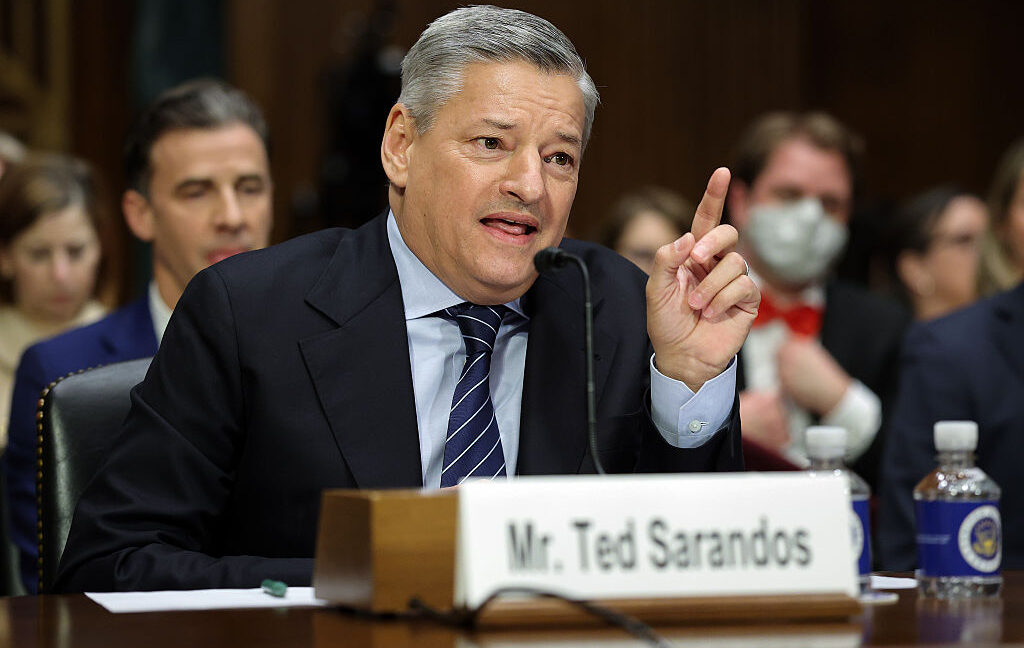
There is concern that subscribers might be negatively affected if Netflix acquires Warner Bros. Discovery’s (WBD’s) streaming and movie studios businesses. One of the biggest fears is that the merger would lead to higher prices due to Netflix having less competition. During a Senate hearing today, Netflix co-CEO Ted Sarandos suggested that the merger would have an opposite effect.

Sarandos was speaking at a hearing held by the US Senate Judiciary Committee’s Subcommittee on Antitrust, Competition Policy, and Consumer Rights, “Examining the Competitive Impact of the Proposed Netflix-Warner Brothers Transaction.”

Sarandos aimed to convince the subcommittee that Netflix wouldn’t become a monopoly in streaming or in movie and TV production if regulators allowed its acquisition to close. Netflix is the largest subscription video-on-demand (SVOD) provider by subscribers (301.63 million as of January 2025), and WBD is the third (128 million streaming subscribers, including users of HBO Max and, to a smaller degree, Discovery+).

Speaking at today’s hearing, Sarandos said:

Netflix and Warner Bros. both have streaming services, but they are very complementary. In fact, 80 percent of HBO Max subscribers also subscribe to Netflix. We will give consumers more content for less.

During the hearing, Sen. Amy Klobuchar (D-Minnesota) asked Sarandos how Netflix can ensure that streaming remains “affordable” after a merger, especially after Netflix issued a price hike in January 2025 despite it adding more subscribers.

Sarandos said the streaming industry is still competitive. The executive claimed that previous Netflix price hikes have come with “a lot more value” for subscribers.

“We are a one-click cancel, so if the consumer says, ‘That’s too much for what I’m getting,’ they can cancel with one click,” Sarandos said.

When pressed further on pricing, the executive argued that the merger doesn’t pose “any concentration risk” and that Netflix is working with the US Department of Justice on potential guardrails against more price hikes.

Netflix says users can cancel service if HBO Max merger makes it too expensive  Read More »

“streaming-stops-feeling-infinite”:-what-subscribers-can-expect-in-2026

“Streaming stops feeling infinite”: What subscribers can expect in 2026


Spoiler: expect higher prices

Streaming may get a little worse before it gets better.

We’re far from streaming’s original promise: instant access to beloved and undiscovered titles without the burden of ads, bundled services, or price gouging that have long been associated with cable.

Still, every year we get more dependent on streaming for entertainment. Despite streaming services’ flaws, many of us are bound to keep subscribing to at least one service next year. Here’s what we can expect in 2026 and beyond.

Subscription prices keep rising, but perhaps not as expected

There’s virtually no hope of streaming subscription prices plateauing in 2026. Streaming companies continue to face challenges as content production and licensing costs rise, and it’s often easier to get current customers to pay slightly more than to acquire new subscribers. Meanwhile, many streaming companies are still struggling with profitability and revenue after spending years focusing on winning subscribers with content.

“We see many services are only now aligning content spend with realistic lifetime value per subscriber,” Christofer Hamilton, industry insights manager at streaming analyst Parrot Analytics, told Ars.

Companies may get more creative with how they frame higher costs to subscribers, however. People who pay extra to stream without ads are the most likely to see price bumps as streaming companies continue pushing customers toward ad-based tiers.

Charging more for “premium” features—such as 4K streaming, simultaneous streams, or offline downloads—offers another way for streaming companies to boost revenue without implementing broad price hikes that risk provoking customer outrage. Subscribers can expect streaming prices to get “more menu-like next year,” said Michael Goodman, director of entertainment research at Parks Associates, a research firm focusing on IoT, consumer electronics, and entertainment.

When will the price hikes stop?

If streaming prices won’t stop rising next year, when will they?

Ultimately, it may be up to subscribers to vote with their dollars by canceling subscriptions or opting for cheaper or free alternatives, such as FAST (free ad-supported streaming television) channels with linear programming.

As Goodman put it, “Until we see net adds stall or decline as a result of price hikes, services have no incentive to stop raising prices.”

Some experts doubt that streaming services will ever willingly stop increasing prices. Bill Yousman, professor and director of the Media Literacy and Digital Culture graduate program at Sacred Heart University, sees precedent for this in cable companies.

“If the big streaming companies had their way, there would be no limit to their price hikes. We have already seen this with the cable monopolies and their disregard for consumer dissatisfaction,” he said.

Yousman believes that prices will only “be brought under control if there is some type of government regulation,” but he noted that’s unlikely under the Trump administration.

To date, US lawmakers haven’t shown interest in halting the steady rise of streaming prices. Most lawmakers who have sought to regulate the industry have focused on industry consolidation. There has been some effort from lawmakers to rein in streaming price hikes, though, especially through proposed federal legislation dubbed the Price Gouging Prevention Act.

Streaming services lean deeper into cable-like bundles

Companies will look to leverage subscribers’ frustration with pricing by being more aggressive about bundling third-party services like traditional pay TV, Internet, and cell phone service with streaming subscriptions. The idea is that people are less likely to cancel a streaming subscription if it’s tied to a different subscription (including another streaming subscription). The strategy echoes the days of cable, when some people kept unused landlines just to save money on cable channels or Internet service.

“For subscribers, 2026 is the year streaming stops feeling infinite and starts feeling more like premium cable used to: fewer apps, clearer bundles, and higher expectations for each service they pay for,” Parrot’s Hamilton said.

Thanks to traditional pay TV providers, bundles have a bad connotation among people looking to save money and simplify their subscriptions. But bundling doesn’t always have to be a bad thing, as Yousman explains:

If the companies wanted to really be responsive to consumers, they would let them design their own packages rather than having to choose options that may or may not include all the services they want. What works against this, of course, is the demand for ever-increasing profits at all times.

Should a sale of Warner Bros. Discovery’s (WBD’s) HBO Max be completed (late) next year, subscribers will face more pressure to bundle their streaming subscriptions.

“When dominant platforms like Netflix or Paramount absorb major content players, it accelerates the erosion of streaming’s original promise: freedom from monopolistic bundles,” Vikrant Mathur, co-founder of streaming technology provider Future Today, said.

Netflix and Paramount duke it out over Warner Bros.

WBD announced plans this month to sell its streaming and movie studios business to Netflix for an equity value of $72 billion, or an approximate total enterprise value of $82.7 billion. Paramount Skydance, however, quickly swooped in with a hostile takeover bid for all of WBD, including its cable channels, for $108.4 billion. A WBD shareholder vote will occur in spring or early summer, chairman Samuel Di Piazza told CNBC. By the end of 2026, we should have a clearer understanding of the future of HBO Max, as well as Netflix and Paramount+.

Any acquisition will be subject to regulatory scrutiny, causing more uncertainty for subscribers. If Netflix buys HBO Max, users of both services can expect higher prices due to reduced competition and the extensive amount of content and number of big-budget franchises (including Harry Potter and DC Comics) expected to unite under one platform.

“If Netflix gets [HBO Max] and the WB studios, HBO Max subscribers are more likely to see a smoother transition, strong ongoing investment in premium content, and simpler app/billing integration,” Parks Associates’ Goodman said.

But while the potential merger is worth watching, subscribers are unlikely to truly feel the impact of HBO Max potentially changing ownership until after 2026.

“Producing a show is a yearslong process, so the content that was already slated to air isn’t going to disappear, and the new content acquired through the WB library won’t be available until the merger is approved and closes,” Tre Lovell, attorney and owner of Los Angeles entertainment law firm The Lovell Firm, explained.

Content starts getting less bold

Looking beyond 2026, a sale of part or all of WBD would likely open the door for more streaming acquisitions. That could eventually benefit customers by making it easier to find content to watch with fewer subscriptions. But merged companies are also less likely to take risks on unique and diverse content.

Analysts I spoke with pointed to fewer niche and mid-tier original shows and movies and more show cancellations if either Netflix or Paramount buys HBO Max. Either buyer would probably focus more on the already-successful franchises that WB owns, such as Game of Thrones, Batman, and Superman.

“Big combined libraries push companies to double down on proven IP because it travels, merchandises, and reduces marketing risk,” said Robert Rosenberg, a partner at the New York law firm Moses Singer focusing on intellectual property, entertainment, technology, and data law.

Rosenberg also expects to see a “tilt toward” live events, sports, and unscripted content “for retention” if HBO Max sells.

In the shorter term, Rory Gooderick, research manager at analyst firm Ampere Analysis, predicted that WBD will be “cautious when greenlighting new large-scale projects until” the acquisition is finalized.

Beyond the potential HBO Max sale, more merger activity could lead to streaming services straying from their original selling point of offering bolder, quirkier content.

As the industry consolidates, “sticky content,” like procedurals, reality shows, and “comfort TV that drives long viewing sessions,” will take priority among mainstream, subscription-based streaming services, especially as they put more emphasis on ad-tier subscriptions, Goodman predicted.

A more stable future?

The new year will be formative for streaming and yield lasting impacts for subscribers. We’ve discussed numerous negative implications, but there could be a silver lining. While we may see more turbulence, hopefully, we’ll also start to see a road toward more stable streaming options.

Streaming subscribers can’t directly stop mergers or price hikes or control streaming libraries. But with services like Netflix and Disney+ focusing on becoming one-stop shops with massive libraries, there’s an opportunity for other services to hone their specialties and stand out by providing offbeat, unexpected, and rare content at more affordable prices.

As the landscape settles, streamers should be mindful of the importance of variety to subscribers. According to Bill Michels, chief product officer at Gracenote, Nielsen’s content data business unit:

There will be some consolidation. But the [connected TV] landscape, inclusive of FAST and [direct-to-consumer] channels, provides more than ample video variety for viewers, so the biggest challenge will be connecting content with the right audience. Audience engagement depends on good content. Audience retention depends on making sure audiences are never without something to watch.

Photo of Scharon Harding

Scharon is a Senior Technology Reporter at Ars Technica writing news, reviews, and analysis on consumer gadgets and services. She’s been reporting on technology for over 10 years, with bylines at Tom’s Hardware, Channelnomics, and CRN UK.

“Streaming stops feeling infinite”: What subscribers can expect in 2026 Read More »

how-the-trump-fcc-justified-requiring-a-“bias-monitor”-at-cbs

How the Trump FCC justified requiring a “bias monitor” at CBS


Paramount/Skydance merger

Trump FCC claims there’s precedent for CBS ombudsman, but it’s a weak one.

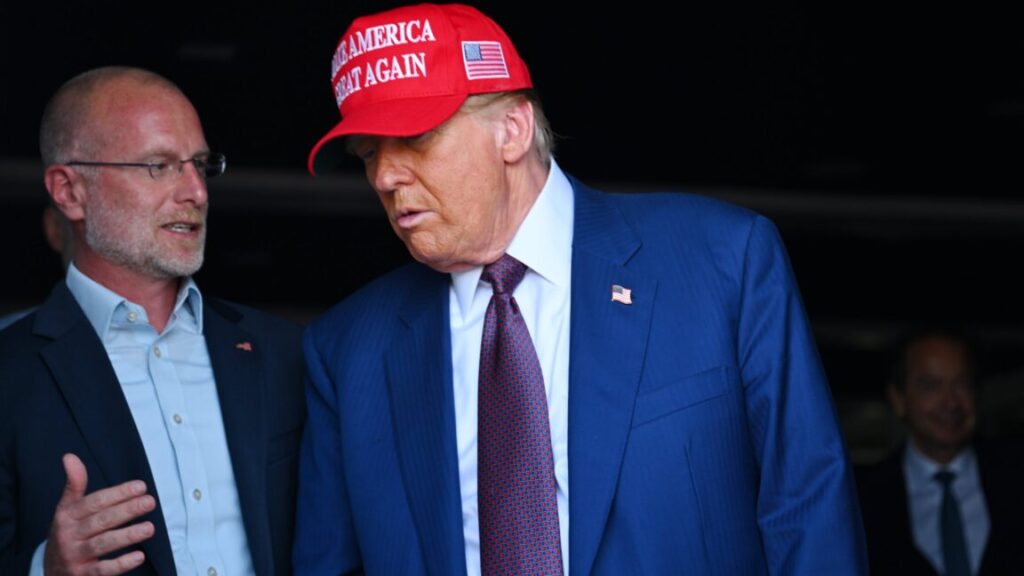
President-elect Donald Trump speaks to Brendan Carr, his intended pick for Chairman of the Federal Communications Commission, as he attends a SpaceX Starship rocket launch on November 19, 2024 in Brownsville, Texas. Credit: Getty Images | Brandon Bell

The Federal Communications Commission’s approval of CBS owner Paramount’s $8 billion merger with Skydance came with a condition to install an ombudsman, which FCC Chairman Brendan Carr has described as a “bias monitor.” It appears that the bias monitor will make sure the news company’s reporting meets standards demanded by President Donald Trump.

“One of the things they’re going to have to do is put an ombudsman in place for two years, so basically a bias monitor that will report directly to the president [of Paramount],” Carr told Newsmax on Thursday, right after the FCC announced its approval of the merger.

The Carr FCC claims there is precedent for such a bias monitor. But the precedent cited in last week’s merger approval points to a very different case involving NBC and GE, one in which an ombudsman was used to protect NBC’s editorial independence from interference by its new owner.

By contrast, it looks like Paramount is hiring a monitor to make sure that CBS reporting doesn’t anger President Trump. Paramount obtained the FCC’s merger approval only after reaching a $16 million settlement with Trump, who sued the company because he didn’t like how CBS edited a pre-election interview with Kamala Harris. Trump claimed last week that Paramount is providing another $20 million worth of “advertising, PSAs, or similar programming,” and called the deal “another in a long line of VICTORIES over the Fake News Media.”

NBC/GE precedent was “viewpoint-neutral”

The FCC merger approval says that “to promote transparency and increased accountability, Skydance will have in place, for a period of at least two years, an ombudsman who reports to the President of New Paramount, and who will receive and evaluate any complaints of bias or other concerns involving CBS.”

The Carr FCC apparently couldn’t find a precedent that would closely match the ombudsman condition being imposed on Paramount. The above sentence has a footnote citing the FCC’s January 2011 approval of Comcast’s purchase of NBCUniversal, saying the Obama-era order found “such a mechanism effective in preventing editorial bias in the operation of the NBC broadcast network.”

But in 2011, the FCC said the purpose of the ombudsman was to ensure that NBC’s reporting would not be altered to fit the business interests of its owner. The FCC said at the time:

The Applicants state that, since GE’s acquisition of NBC in 1986, GE has ensured that the content of NBC’s news and public affairs programming is not influenced by the non-media interests of GE. Under this policy, which was noted with favor when the Commission approved GE’s acquisition of NBC, NBC and its O&O [owned and operated] stations have been free to report about GE without interference or influence. In addition, GE appointed an ombudsman to further ensure that the policy of independence of NBCU’s news operations would be maintained. Although the Applicants contend there is no legal requirement that they do so, they offer to maintain this policy and to retain the ombudsman position in the post-transaction entity to ensure the continued journalistic integrity and independence of NBCU’s news operations.

The NBC/GE condition “was a viewpoint-neutral economic measure. It did not matter if the content had a pro or con position on any political or regulatory issue, but only whether it might have been broadcast to promote GE’s pecuniary interests,” said Andrew Jay Schwartzman, a longtime attorney and advocate who specializes in media and telecommunications policy. Schwartzman told Ars today that the NBC/GE condition cited by the Carr FCC is “very different from the viewpoint-based nature of the CBS condition.”

FCC Commissioner Anna Gomez, the commission’s only Democrat, said the agency is “imposing never-before-seen controls over newsroom decisions and editorial judgment, in direct violation of the First Amendment and the law.”

FCC: Trump lawsuit totally unrelated

The FCC’s merger approval order said that “the now-settled lawsuit filed by President Donald J. Trump against Paramount and CBS News” is “unrelated to our review of the Transaction.” But on Newsmax, Carr credited Trump with forcing changes at CBS and other media outlets.

“For years, people cowed down to the executives behind these companies based in Hollywood and New York, and they just accepted that these national broadcasters could dictate how people think about topics, that they could set the narrative for the country—and President Trump fundamentally rejected it,” Carr said. “He smashed the facade that these are gatekeepers that can determine what people think. Everything we’re seeing right now flows from that decision by President Trump, and he’s winning. PBS has been defunded. NPR has been defunded. CBS is committing to restoring fact-based journalism… President Trump stood up to these legacy media gatekeepers and now their business models are falling apart.”

Carr went on Fox News to discuss the CBS cancellation of Stephen Colbert’s show, saying that “all of this is downstream of President Trump’s decision to stand up, and he stood up for the American people because the American people do not trust these legacy gatekeepers anymore.” Carr also wrote in a post on X, “The partisan left’s ritualist wailing and gnashing of teeth over Colbert is quite revealing. They’re acting like they’re losing a loyal DNC spokesperson that was entitled to an exemption from the laws of economics.”

Warren: “Bribery is illegal no matter who is president”

In a July 22 letter to Carr, Skydance said it “will ensure that CBS’s reporting is fair, unbiased, and fact-based.” With the installation of an ombudsman who will report to the company president, “New Paramount’s executive leadership will carefully consider any such complaints in overseeing CBS’s news programming,” the letter said, also making reference to the previous case of an ombudsman at NBC. Skydance sent another letter about its elimination of diversity, equity, and inclusion (DEI) initiatives, complying with Carr’s demand to end such programs.

As Carr described it to Newsmax, the merging companies “made commitments to address bias and restore fact-based reporting. I think that’s so important. Look, the American public simply do not trust these legacy media broadcasters, so if they stick with that commitment, you know we’re sort of trust-but-verify mode, that’ll be a big win.”

The FCC’s merger-approval order favorably cites comments from the Center for American Rights (CAR), a conservative group that filed a news distortion complaint against CBS over the Harris interview. The group “filed a supplemental brief, in which it discusses a report by Media Research Center (MRC) concerning negative media coverage of the Trump administration,” the FCC said. “CAR asserts that the MRC report confirms that the news media generally, and CBS News in particular, is relentlessly slanted and biased. It concludes that Commission action is necessary to condition the Transaction on an end to this blatant bias.”

Although the FCC insists that the Trump lawsuit wasn’t relevant to its merger review, Carr previously made it clear that the news distortion complaint would be a factor in determining whether the merger would be approved. The FCC investigation into the Harris interview doesn’t seem to have turned up much. CBS was accused of distorting the news by airing two different answers given by Harris to the same question, but the unedited transcript and camera feeds showed that the two clips simply contained two different sentences from the same answer.

Congressional Democrats said they will investigate the circumstances of the merger, including allegations that Skydance and Paramount bribed Trump to get it approved. “Bribery is illegal no matter who is president,” Senator Elizabeth Warren (D-Mass.) said. “It sure looks like Skydance and Paramount paid $36 million to Donald Trump for this merger, and he’s even bragged about this crooked-looking deal… this merger must be investigated for any criminal behavior. It’s an open question whether the Trump administration’s approval of this merger was the result of a bribe.”

Photo of Jon Brodkin

Jon is a Senior IT Reporter for Ars Technica. He covers the telecom industry, Federal Communications Commission rulemakings, broadband consumer affairs, court cases, and government regulation of the tech industry.

How the Trump FCC justified requiring a “bias monitor” at CBS Read More »