NPR

rip-corporation-for-public-broadcasting:-1967–2026

RIP Corporation for Public Broadcasting: 1967–2026

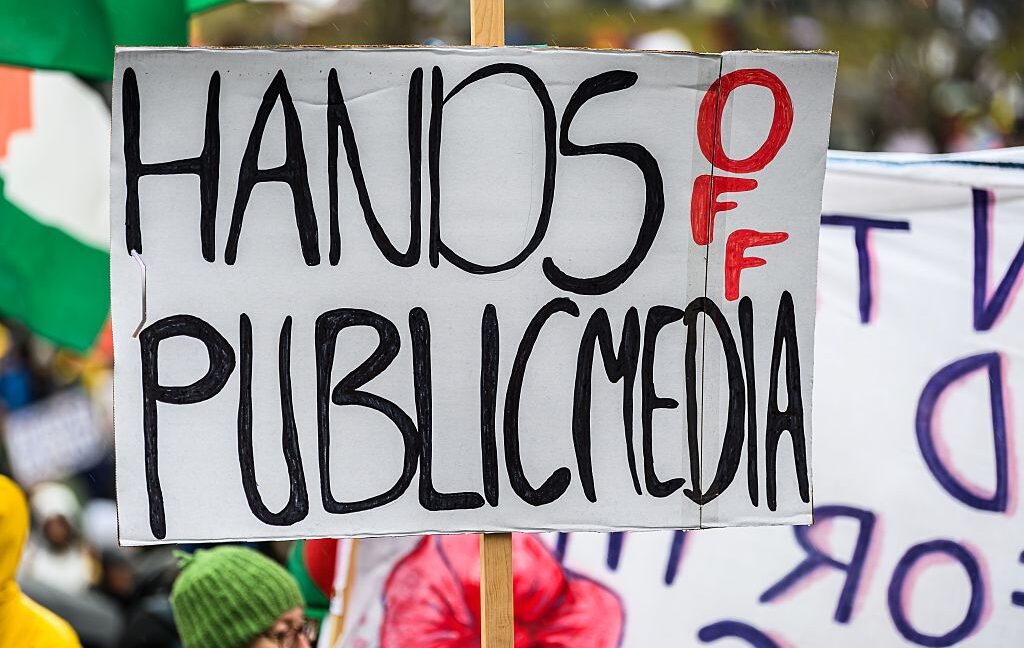
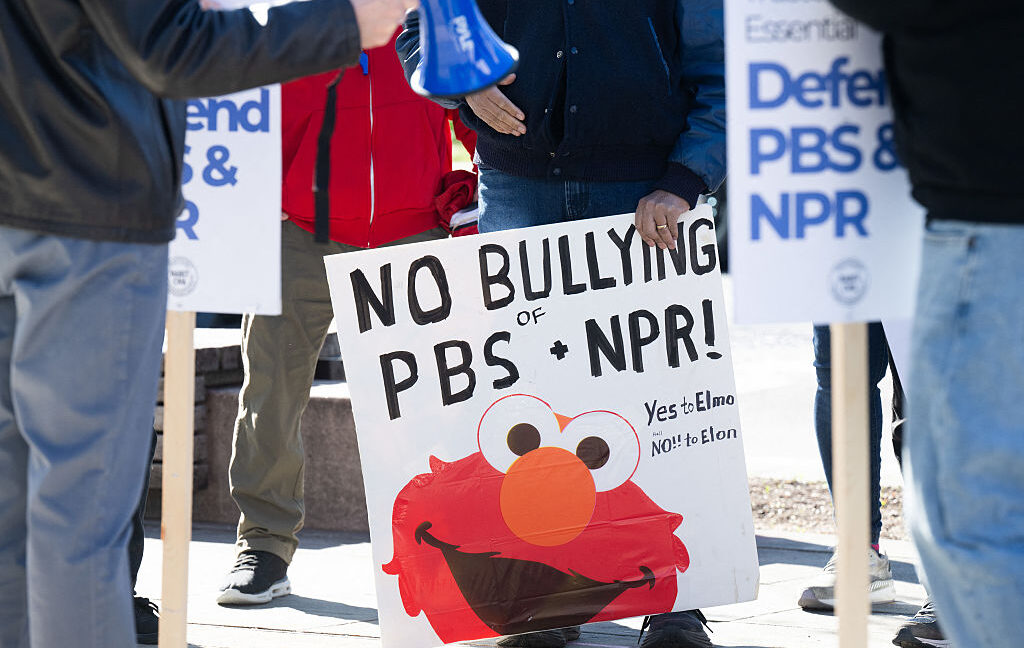
Despite the protests of millions of Americans, the Corporation for Public Broadcasting (CPB) announced it will be winding down its operations after the White House deemed NPR and PBS a “grift” and pushed for a Senate vote that eliminated its entire budget.

The vote rescinded $1.1 billion that Congress had allocated to CPB to fund public broadcasting for fiscal years 2026 and 2027. In a press release, CPB explained that the cuts “excluded funding for CPB for the first time in more than five decades.” CPB president and CEO Patricia Harrison said the corporation had no choice but to prepare to shut down.

“Despite the extraordinary efforts of millions of Americans who called, wrote, and petitioned Congress to preserve federal funding for CPB, we now face the difficult reality of closing our operations,” Harrison said.

Concerned Americans also rushed to donate to NPR and PBS stations to confront the funding cuts, The New York Times reported. But those donations, estimated at around $20 million, ultimately amounted to too little, too late to cover the funding that CPB lost.

As CPB takes steps to close, it expects that “the majority of staff positions will conclude with the close of the fiscal year on September 30, 2025.” After that, a “small transition team” will “ensure a responsible and orderly closeout of operations” by January 2026. That team “will focus on compliance, final distributions, and resolution of long-term financial obligations, including ensuring continuity for music rights and royalties that remain essential to the public media system.”

“CPB remains committed to fulfilling its fiduciary responsibilities and supporting our partners through this transition with transparency and care,” Harrison said.

NPR mourns loss of CPB

In a statement, NPR’s president and CEO, Katherine Maher, mourned the loss of CPB, warning that it was a “vital source of funding for local stations, a champion of educational and cultural programming, and a bulwark for independent journalism.”

RIP Corporation for Public Broadcasting: 1967–2026 Read More »

npr-sues-trump-over-blocked-funding,-says-it-may-have-to-shutter-newsrooms

NPR sues Trump over blocked funding, says it may have to shutter newsrooms

NPR and the local stations “bring this action to challenge an Executive Order that violates the expressed will of Congress and the First Amendment’s bedrock guarantees of freedom of speech, freedom of the press, and freedom of association, and also threatens the existence of a public radio system that millions of Americans across the country rely on for vital news and information,” the lawsuit said.

Congress appropriated $535 million in general funding for the CPB in fiscal years 2025, 2026, and 2027, the lawsuit said. “NPR is funded primarily through sponsorships, donations from individuals and private entities, membership and licensing fees from local public radio stations, direct funding from the Corporation, and direct funding from other government grants, including grants awarded by the NEA,” the lawsuit said.

NPR: Funding loss “would be catastrophic”

NPR said the loss of federal funding and fees from stations that would otherwise acquire programming from NPR “would be catastrophic” to the organization. NPR receives about 31 percent of its operating revenue through membership fees and licensing fees from local stations “and additional millions of dollars from CPB to support NPR’s coverage of particular issue areas, such as the ongoing war in Ukraine,” the lawsuit said.

The loss of funding could force NPR “to shutter or downsize collaborative newsrooms and rural reporting initiatives,” and “eliminate or scale back critical national and international coverage that serves the entire public radio system and is not replicable at scale on the local level,” the lawsuit said.

The NEA terminated a grant award to NPR one day after Trump’s executive order, the lawsuit said. “This termination confirms that NEA is complying with the Order and has rendered NPR ineligible to apply for grants going forward,” the lawsuit said.

One legal problem with the executive order, according to NPR, is that it “purports to require the Corporation to prohibit local stations from using CPB grants to acquire NPR’s programming, notwithstanding a statutory requirement that stations must use ‘restricted’ funds to acquire or produce programming that is distributed nationally and serves the needs of national audiences.”

Local stations would be forced “to redirect those funds to acquire different national programming—in contravention of their own editorial choices—and to take additional, non-federal funds out of their budgets to continue acquiring NPR’s programming,” the lawsuit said.

NPR sues Trump over blocked funding, says it may have to shutter newsrooms Read More »

“blatantly-unlawful”:-trump-slammed-for-trying-to-defund-pbs,-npr

“Blatantly unlawful”: Trump slammed for trying to defund PBS, NPR

“CPB is not a federal executive agency subject to the president’s authority,” Harrison said. “Congress directly authorized and funded CPB to be a private nonprofit corporation wholly independent of the federal government,” statutorily forbidding “any department, agency, officer, or employee of the United States to exercise any direction, supervision, or control over educational television or radio broadcasting, or over [CPB] or any of its grantees or contractors.”

In a statement explaining why “this is not about the federal budget” and promising to “vigorously defend our right to provide essential news, information and life-saving services to the American public,” NPR President and CEO Katherine Maher called the order an “affront to the First Amendment.”

PBS President and CEO Paula Kerger went further, calling the order “blatantly unlawful” in a statement provided to Ars.

“Issued in the middle of the night,” Trump’s order “threatens our ability to serve the American public with educational programming, as we have for the past 50-plus years,” Kerger said. “We are currently exploring all options to allow PBS to continue to serve our member stations and all Americans.”

Rural communities need public media, orgs say

While Trump opposes NPR and PBS for promoting content that he disagrees with—criticizing segments on white privilege, gender identity, reparations, “fat phobia,” and abortion—the networks have defended their programming as unbiased and falling in line with Federal Communications Commission guidelines. Further, NPR reported that the networks’ “locally grounded content” currently reaches “more than 99 percent of the population at no cost,” providing not just educational fare and entertainment but also critical updates tied to local emergency and disaster response systems.

Cutting off funding, Kreger said last month, would have a “devastating impact” on rural communities, especially in parts of the country where NPR and PBS still serve as “the only source of news and emergency broadcasts,” NPR reported.

For example, Ed Ulman, CEO of Alaska Public Media, testified to Congress last month that his stations “provide potentially life-saving warnings and alerts that are crucial for Alaskans who face threats ranging from extreme weather to earthquakes, landslides, and even volcanoes.” Some of the smallest rural stations sometimes rely on CPB for about 50 percent of their funding, NPR reported.

“Blatantly unlawful”: Trump slammed for trying to defund PBS, NPR Read More »

white-house-calls-npr-and-pbs-a-“grift,”-will-ask-congress-to-rescind-funding

White House calls NPR and PBS a “grift,” will ask Congress to rescind funding

We also contacted the CPB and NPR today and will update this article if they provide any comments.

Markey: “Outrageous and reckless… cultural sabotage”

Sen. Ed Markey (D-Mass.) blasted the Trump plan, calling it “an outrageous and reckless attack on one of our most trusted civic institutions… From ‘PBS NewsHour’ to ‘Sesame Street,’ public television has set the gold standard for programming that empowers viewers, particularly young minds. Cutting off this lifeline is not budget discipline, it’s cultural sabotage.”

Citing an anonymous source, Bloomberg reported that the White House “plans to send the package to Congress when lawmakers return from their Easter recess on April 28… That would start a 45-day period during which the administration can legally withhold the funding. If Congress votes down the plan or does nothing, the administration must release the money back to the intended recipients.”

The rarely used rescission maneuver can be approved by the Senate with a simple majority, as it is not subject to a filibuster. “Presidents have used the rescission procedure just twice since 1979—most recently for a $15 billion spending cut package by Trump in 2018. That effort failed in the Senate,” Bloomberg wrote.

CPB expenses in fiscal-year 2025 are $545 million, of which 66.9 percent goes to TV programming. Another 22.3 percent goes to radio programming, while the rest is for administration and support.

NPR and PBS have additional sources of funding. Corporate sponsorships are the top contributor to NPR, accounting for 36 percent of revenue between 2020 and 2024. NPR gets another 30 percent of its funding in fees from member stations. Federal funding indirectly contributes to that category because the CPB provides annual grants to public radio stations that pay NPR for programming.

PBS reported that its total expenses were $689 million in fiscal-year 2024 and that it had $348.5 million in net assets at the end of the year.

NPR and PBS are also facing pressure from Federal Communications Commission Chairman Brendan Carr, who opened an investigation in January and called on Congress to defund the organizations. Carr alleged that NPR and PBS violated a federal law prohibiting noncommercial educational broadcast stations from running commercial advertisements. NPR and PBS both said their underwriting spots comply with the law.

White House calls NPR and PBS a “grift,” will ask Congress to rescind funding Read More »

louisiana-bars-health-dept.-from-promoting-flu,-covid,-mpox-vaccines:-report

Louisiana bars health dept. from promoting flu, COVID, mpox vaccines: Report

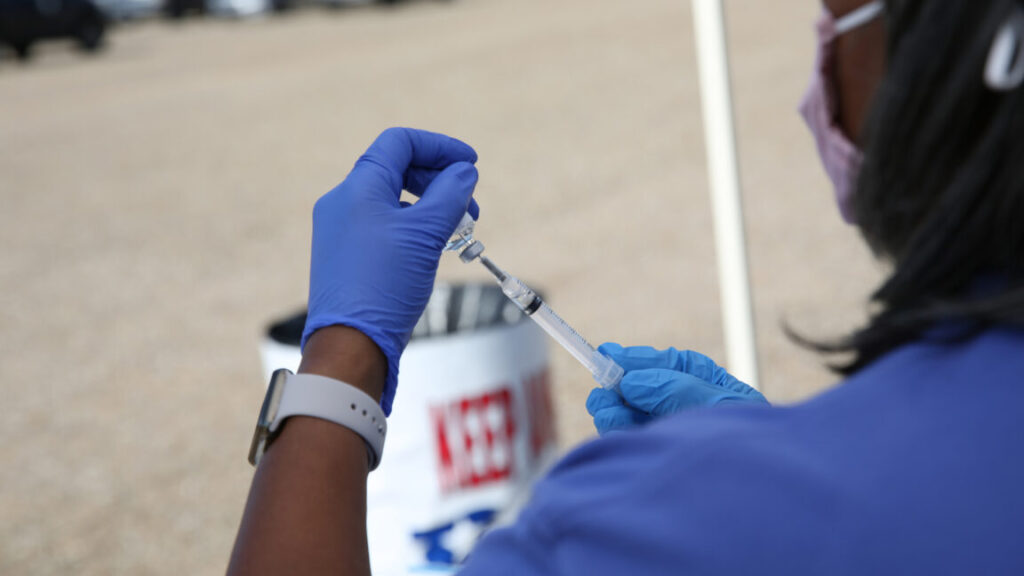
Louisiana’s health department has been barred from advertising or promoting vaccines for flu, COVID-19, and mpox, according to reporting by NPR, KFF Health News, and New Orleans Public Radio WWNO.

Their investigative report—based on interviews with multiple health department employees who spoke on the condition of anonymity for fear of retaliation—revealed that employees were told of the startling policy change in meetings in October and November and that the policy would be implemented quietly and not put into writing.

Ars Technica has contacted the health department for comment and will update this post with any new information.

The health department provided a statement to NPR saying that it has been “reevaluating both the state’s public health priorities as well as our messaging around vaccine promotion, especially for COVID-19 and influenza.” The statement described the change as a move “away from one-size-fits-all paternalistic guidance” to a stance in which “immunization for any vaccine, along with practices like mask wearing and social distancing, are an individual’s personal choice.”

According to employees, the new policy cancelled standard fall flu vaccination events this year and affects every other aspect of the health department’s work, as NPR explained:

“Employees could not send out press releases, give interviews, hold vaccine events, give presentations or create social media posts encouraging the public to get the vaccines. They also could not put up signs at the department’s clinics that COVID, flu or mpox vaccines were available on site.”

“We’re really talking about deaths”

The change comes amid a dangerous swell of anti-vaccine sentiment and misinformation in Louisiana and across the country. President-elect Trump has picked Robert F. Kennedy Jr.—a high-profile anti-vaccine advocate and one of the most prolific spreaders of vaccine misinformation—to head the US Department of Health and Human Services.

Louisiana bars health dept. from promoting flu, COVID, mpox vaccines: Report Read More »