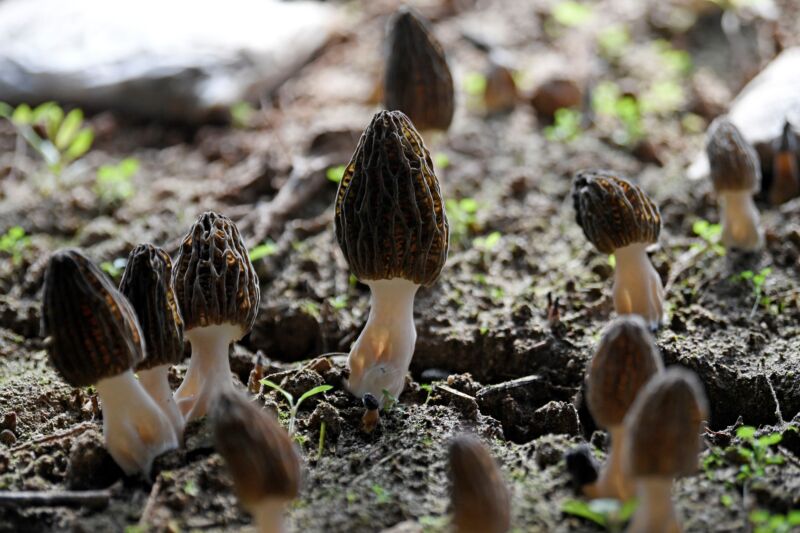
morel mushrooms

mushroom-foragers-collect-160-species-for-food,-medicine,-art,-and science

Mushroom foragers collect 160 species for food, medicine, art, and science

Like many mushroom harvesters, I got interested in foraging for fungi during the COVID-19 pandemic.

I had been preparing for a summer of field work studying foraged desert plants in a remote part of Australia when the pandemic hit, and my travel plans were abruptly frozen. It was March, right before morel mushrooms emerge in central Pennsylvania.

I wasn’t doing a lot other than going on long hikes and taking classes remotely at Penn State for my doctoral degree in ecology and anthropology. One of the classes was an agroforestry class with Eric Burkhart. We studied how agriculture and forests benefit people and the environment.

These two things eventually led to a yearslong project on mushroom harvesting in our region.

Why people forage

Foragers have been harvesting wild mushrooms in what is now Pennsylvania and the rest of the US mid-Atlantic region for generations, but the extent and specifics of the practice in the region had not been formally studied.

In 2021, Burkhart and I decided that we wanted to better understand the variety of wild mushroom species that Pennsylvania harvesters collect and what they use them for.

We conducted a series of surveys in 2022 and 2023 that revealed a wide variety of fungi are foraged in the region—though morels, chicken of the woods, and chanterelles are most common. We also learned that harvesters use the mushrooms primarily for food and medicinal purposes, and that foragers create communities that share knowledge. These community-based projects often use social media tools as a way for mushroom harvesters to share pictures, notes, and even the results of DNA sequences.

Our findings were published in the journal Economic Botany in October 2025.

160 species

Having spent a year building connections with local mushroom harvesters, starting in central Pennsylvania, including members of mushroom clubs and mycological associations, we recruited a diverse group of harvesters from around the mid-Atlantic. We also used mushroom festivals, social media, and word of mouth to get the word out.

We asked harvesters about their favorite mushrooms, common harvesting practices, resources they used while harvesting, and any sustainability practices.

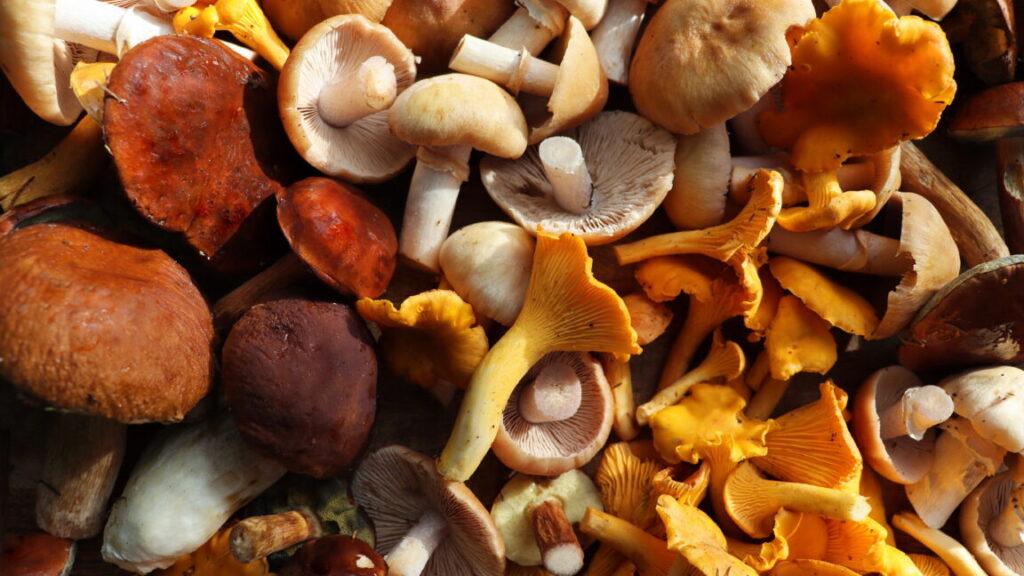
Over 800 harvesters responded to the survey and reported that, collectively, they foraged 160 species of wild mushrooms. Morels and chicken of the woods were the two most popular, as each were reported by 13 percent of respondents. About 10 percent of respondents reported collecting chanterelles. Other popular species were hen of the woods, oysters, lion’s mane, black trumpet, honey mushroom, turkey tail, bolete, reishi, puffball, chaga, shrimp of the woods, and Dryad’s saddle, which is also known as the pheasant’s back mushroom.

Mushroom foragers collect 160 species for food, medicine, art, and science Read More »
deadly-morel-mushroom-outbreak-highlights-big-gaps-in-fungi-knowledge

Deadly morel mushroom outbreak highlights big gaps in fungi knowledge

This fungi’s not fun, guys —

Prized morels are unpredictably and puzzlingly deadly, outbreak report shows.

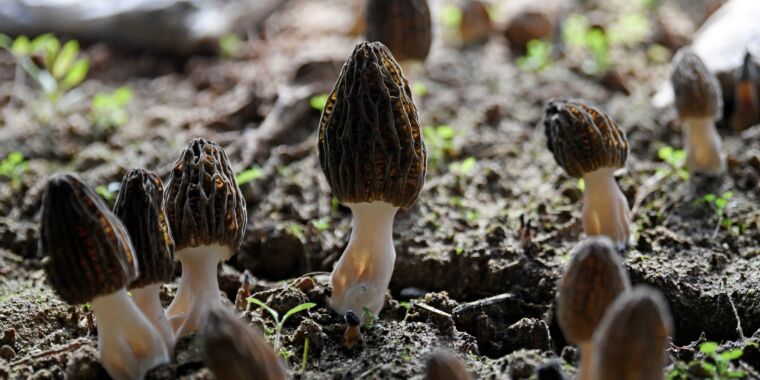
Mature morel mushrooms in a greenhouse at an agriculture garden in Zhenbeibu Town of Xixia District of Yinchuan, northwest China's Ningxia Hui Autonomous Region.

Enlarge / Mature morel mushrooms in a greenhouse at an agriculture garden in Zhenbeibu Town of Xixia District of Yinchuan, northwest China’s Ningxia Hui Autonomous Region.

True morel mushrooms are widely considered a prized delicacy, often pricey and surely safe to eat. But these spongey, earthy forest gems have a mysterious dark side—one that, on occasion, can turn deadly, highlighting just how little we know about morels and fungi generally.

On Thursday, Montana health officials published an outbreak analysis of poisonings linked to the honeycombed fungi in March and April of last year. The outbreak sickened 51 people who ate at the same restaurant, sending four to the emergency department. Three were hospitalized and two died. Though the health officials didn’t name the restaurant in their report, state and local health departments at the time identified it as Dave’s Sushi in Bozeman. The report is published in the Centers for Disease Control and Prevention’s Morbidity and Mortality Weekly Report.

The outbreak coincided with the sushi restaurant introducing a new item: a “special sushi roll” that contained salmon and morel mushrooms. The morels were a new menu ingredient for Dave’s. They were served two ways: On April 8, the morels were served partially cooked, with a hot, boiled sauce poured over the raw mushrooms and left to marinate for 75 minutes; and on April 17, they were served uncooked and cold-marinated.

The mystery poison worked fast. Symptoms began, on average, about an hour after eating at the restaurant. And it was brutal. “Vomiting and diarrhea were reportedly profuse,” the health officials wrote, “and hospitalized patients had clinical evidence of dehydration. The two patients who died had chronic underlying medical conditions that might have affected their ability to tolerate massive fluid loss.”

Of the 51 sickened, 46 were restaurant patrons and five were employees. Among them, 45 (88 percent) recalled eating morels. While that’s a high percentage for such an outbreak investigation, certainly enough to make the morels the prime suspect, the health officials went further. With support from the CDC, they set up a matched case-control study, having people complete a detailed questionnaire with demographic information, food items they ate at the restaurant, and symptoms.

Mysterious poison

Forty-one of the poisoned people filled out the questionnaire, as did 22 control patrons who ate at the restaurant but did not report subsequent illness. The analysis indicated that the odds of recalling eating the special sushi roll were nearly 16 times higher among the poisoned patrons than among the controls. The odds of reporting any morel consumption were nearly 11 times higher than controls.

The detailed consumption data also allowed the health officials to model a dose response, which suggested that with each additional piece of the special roll a person recalled eating, their odds of sickness increased nearly threefold compared with people who reported eating none. Those who ate four or more pieces of the roll had odds nearly 22.5 times higher. A small analysis focusing on the five employees sickened, which was not included in the published study but was noted by the Food and Drug Administration, echoed the dose-response finding, indicating that sickness was linked with larger amounts of morel consumption.

When the officials broke down the analysis by people who ate at the restaurant on April 17, when the morels were served uncooked, and those who ate at the restaurant on April 8, when the mushrooms were slightly cooked, the cooking method seemed to matter. People who ate the uncooked rather than the slightly cooked mushrooms had much higher odds of sickness.

This all strongly points to the morels being responsible. At the time, the state and local health officials engaged the FDA, as well as the CDC, to help tackle the outbreak investigation. But the FDA reported that “samples of morel mushrooms collected from the restaurant were screened for pesticides, heavy metals, toxins, and pathogens. No significant findings were identified.” In addition, the state and local health officials noted that DNA sequencing identified the morels used by the restaurant as Morchella sextelata, a species of true morel. This rules out the possibility that the mushrooms were look-alike morels, called “false morels,” which are known to contain a toxin called gyromitrin.

The health officials and the FDA tracked down the distributor of the mushrooms, finding they were cultivated and imported fresh from China. Records indicated that 12 other locations in California also received batches of the mushrooms. Six of those facilities responded to inquiries from the California health department and the FDA, and all six reported no illnesses. They also all reported cooking the morels or at least thoroughly heating them.

Deadly morel mushroom outbreak highlights big gaps in fungi knowledge Read More »