Meta

meta’s-second-mass-layoff-round-to-affect-10,000-more-employees

Meta’s Second Mass Layoff Round to Affect 10,000 More Employees

Following a mass layoff at Meta late last year which affected 11,000 of its employees, the company announced today that it would be laying off another 10,000 workers through multiple rounds.

Update (March 14th, 2023):  According to a Facebook post by Meta CEO Mark Zuckerberg, Meta is laying off an additional 10,000 employees across multiple rounds. It’s also set to close hiring for 5,000 open roles, and cancel more low-priority projects. Layoffs are said to begin this week, first hitting the company’s recruiting organization. A second weave in late April will affect tech roles, while a third in late May will affect business roles.

In the post, Zuckerberg calls this the “Year of Efficiency,” which the Meta chief says will optimize distributed work, increase developer productivity and tooling, and make the organization flatter by removing multiple layers of management. Zuckerberg also hopes to make it leaner by prioritizing higher-priority projects.

Notably, Zuckerberg doesn’t mention specific projects, or XR in any capacity. Meanwhile, the company has lowered the price of both Quest 2 and Quest Pro before the launch of Quest 3, which has come amid reports that Meta is planning a cheaper follow-up to Quest 3 in 2024 in addition to its AR projects.

The original article detailing the first large layoff round follows below:

Original Article (November 9th, 2022): Meta CEO Mark Zuckerberg said this in an internal memo obtained by Reuters:

“Not only has online commerce returned to [pre-covid] prior trends, but the macroeconomic downturn, increased competition, and ads signal loss have caused our revenue to be much lower than I’d expected,” Zuckerberg said. “I got this wrong, and I take responsibility for that.”

Meta plans to cut discretionary spending and extend its hiring freeze through the first quarter, Reuters maintains. Laid off Meta employees are said to receive 16 weeks of base pay plus two additional weeks for every year of service, as well as all remaining paid time off, as a part of the severance package.

It’s not certain what percentage of layoffs will affect those working in Reality Labs. We’ve reached out to Meta for further comment and will update this if/when we hear back.

Trouble in XR Paradise?

Meta’s most recent quarterly earnings spelled trouble when it was released last month. Close to celebrating its first year after rebranding from Facebook to become a self-described ‘metaverse’ company, Meta battled slumping revenues across multiple divisions, not least of which was its XR centerpiece Reality Labs, which took an expected hit that didn’t sit right with investors.

While Meta has been aggressively spending on its XR division over the past few years, its recent shift away from Facebook amid all-time low revenues and record inflation has made layoffs almost a guarantee to keep stock prices from plummeting further.

Back in May, Reuters reported that hiring freezes would affect Reality Labs, which has added more than 13,000 employees last year and nearly 6,000 in the first quarter this year.

Zuckerberg warned at the time that Reality Labs probably wouldn’t truly profit for at least decade. In the meantime, the Meta’s XR efforts has cost the company $10.2 billion in 2021 and another $3 billion in the first quarter this year.

Meanwhile, Meta has just released its $1,500 Meta Quest Pro mixed reality headset for prosumers and business, and plans to release a consumer-focused follow-up, likely dubbed Quest 3, sometime in 2023.

Meta’s Second Mass Layoff Round to Affect 10,000 More Employees Read More »

meta-is-planning-a-cheaper-vr-headset-for-release-in-2024,-pointing-to-possible-‘quest-3-lite’

Meta is Planning a Cheaper VR Headset for Release in 2024, Pointing to Possible ‘Quest 3 Lite’

Meta is planning to ship a VR headset in 2024 which the company wants to make as accessible as possible to consumers.

According to a report by The Verge, Meta’s VP of VR, Mark Rabki, told thousands of employees in a memo that it plans to release a consumer VR headset in 2024, codenamed Ventura.

“The goal for this headset is very simple: pack the biggest punch we can at the most attractive price point in the VR consumer market,” Rabki wrote in the memo.

Meta seems to be positioning Ventura as a ‘Quest 3 Lite’ of sorts. In the reported memo, the company announced its upcoming Quest 3 would be targeted at enthusiasts, which is said to be a “bit more money” than the current $400/$500 headset, while also including mixed reality capabilities similar to Quest Pro. The company has publicly confirmed Quest 3 will release at some point this year.

Additionally, the report maintains that any ‘Pro’ level headset will be “way out in the future” after Ventura is released in 2024.

This means Meta will be selling Quest 3 at the same time it releases Ventura in 2024, and likely within the life span of Quest Pro too, so the company will need to offer all of them at fitting price points as to not muddy the waters.

It’s uncertain where Meta hopes to cut corners with the ostensibly cheaper standalone. One thing the company can do is ship without motion controllers, which would cut down on overall price, although that would stymie consumer access to the back catalogue of VR games. Not all games make use of Quest hand-tracking.

With Ventura, the company could opt to essentially update Quest 2’s hardware with minor modifications, like replacing the Fresnel lenses with pancake optics to slim down the overall profile, and add a faster chipset.

Whatever the case, it seems the company is looking at capturing the low end of the VR market, which would better lock in a new generation of VR users into the Meta ecosystem—something the company needs if it hopes to increase user retention. Offering a cheaper headset could also potentially broaden Meta’s access to emerging markets, somewhere Chinese competitors like Pico Interactive may succeed given the chance.

Meta is Planning a Cheaper VR Headset for Release in 2024, Pointing to Possible ‘Quest 3 Lite’ Read More »

meta-plans-pricier-quest-3-with-features-to-‘fire-up-enthusiasts’

Meta Plans Pricier Quest 3 With Features to ‘fire up enthusiasts’

Meta’s Quest 3 headset, which the company has confirmed will land this year, is said to be positioned as a slightly pricier headset with features designed to appeal to VR enthusiasts.

For Quest 3, due out sometime later this year, Meta may be focusing more on its existing VR customers rather than trying to reel in brand new users.

According to a report by The Verge, Meta’s VP of VR, Mark Rabki, told thousands of employees that for the company’s next consumer headset, Quest 3, “we have to get enthusiasts fired up about it […] we have to prove to people that all this power, all these new features are worth it.” The Verge cites an internal Meta presentation held today as the source of this information.

Those features, which are largely expected to be a subset of what’s on Quest Pro, would make the headset cost “a bit more,” Rabkin said, than Quest 2 which currently sells for $400.

Leaks have consistently pointed to Quest 3 having pancake lenses, a more compact form-factor, and better augmented reality capabilities. The device is reportedly codenamed ‘Stinson’.

The improved AR capabilities, Rabkin hopes, will make Quest 3 feel easier to use.

“The main north star for the team was from the moment you put on this headset, the mixed reality has to make it feel better, easier, more natural,” he told employees, according to The Verge. “You can walk effortlessly through your house knowing you can see perfectly well. You can put anchors and things on your desktop. You can take your coffee. You can stay in there much longer.”

That would be swell, but Meta hasn’t exactly demonstrated that natural feeling with Quest Pro yet, meaning there is still significant work to do on the user-experience side if Quest 3 will meet those goals.

Something else that would surely ‘fire up enthusiasts’ for Quest 3 would be a dedicated video pipeline for PC VR tethering, rather than using the compressed Oculus Link or Air Link method that’s currently available on Quest 2. However, the company has shown little appetite for appealing to PC VR users as of late.

As for leaning into existing VR customers rather than pulling in new ones, this may be an effort to address Quest’s retention issues; while the headset has certainly sold well, Meta has been disappointed with the rate at which customers continue to use their headset after buying.

With regards to Quest 3 being more expensive than Quest 2, it seems that Meta has learned its lesson; having not established a substantial ads business in VR, heavily subsidizing headsets to get them out the door probably isn’t a good idea. Meta had to very publicly reverse that strategy when it raised the price of Quest 2 last year, by as much as 33% (though this was also related to inflation and broader economic turbulence).

The report from The Verge includes more info about the company’s XR roadmap, which you can read in full here.

Meta Plans Pricier Quest 3 With Features to ‘fire up enthusiasts’ Read More »

meta-has-sold-nearly-20-million-quest-headsets,-but-retention-struggles-remain

Meta Has Sold Nearly 20 Million Quest Headsets, But Retention Struggles Remain

Meta has sold nearly 20 million Quest headsets, but the company continues to struggle with keeping customer using VR.

According to a report by The Verge, citing an internal Meta presentation held today, the company has sold nearly 20 million Quest headsets. This likely includes Quest 1, Quest 2, and Quest Pro, though by all accounts Quest 2 appears to be the vast majority. And while the figure wasn’t publicly announced, this would be the first official confirmation of Quest unit sales from the company.

This info was shared by Mark Rabkin, Meta’s VP of VR, during an internal presentation to “thousands” of employees, according to The Verge.

And while the 20 million unit Quest sales figure is impressive—and well beyond any other single VR headset maker—Rabkin went on to stress that the company has to do a better job at keeping customers using the headsets well after their purchase.

“We need to be better at growth and retention and resurrection,” he said. “We need to be better at social and actually make those things more reliable, more intuitive so people can count on it.”

Curiously, Meta’s latest wave of headset customers are less enthusiastic than those that bought in early.

“Right now, we’re on our third year of Quest 2,” Rabkin said, according to The Verge. “And sadly, the newer cohorts that are coming in—the people who bought it this last Christmas—they’re just not as into it [or engaged as] the ones who bought it early.”

The report from The Verge includes more info about the company’s XR roadmap, which you can read in full here.

Meta Has Sold Nearly 20 Million Quest Headsets, But Retention Struggles Remain Read More »

report:-meta-to-open-‘horizon-worlds’-to-younger-teens-amid-renewed-retention-push

Report: Meta to Open ‘Horizon Worlds’ to Younger Teens Amid Renewed Retention Push

Meta’s social VR app for Quest, Horizon Worlds, is lagging behind the competition when it comes to attracting and retaining VR users. According to a leaked memo obtained by The Wall Street Journal, the company is now ostensibly looking to boost numbers by more transparently appealing to younger teens in addition to funding a slew of new second-party content.

WSJ only posted snippets of the memo, entitled ‘Horizon 2023 Goals and Strategy’, which was allegedly written by Meta Vice President of Horizon Gabriel Aul. The memo is said to outline the team’s objectives for the first half of 2023.

Here’s some highlights we formatted into a bulleted list, which also includes additional info supplied by a source cited by WSJ:

  • Competitors are outperforming HW. Improving user retention is most important, especially among teens and young adults
  • HW to open to teens aged 13 to 17, which could come as early as March
  • Meta is working with outside studios to build new worlds and experiences for HW
  • The team is aiming to launch at least 20 new Horizon-hosted experiences built by second-party studios. Of the 20, it’s hoping for five medium hits and at least one a major hit
  • The flatscreen version of Horizon for mobile and desktops is set to come sometime in H1 2023

Additionally, WSJ reports the memo outlined some key performance metrics, claiming Horizon Worlds’ weekly retention rate was 11% in January, which the company aims to increase to 20%. The goal for monthly active users for the first half of 2023 is said to be 500,000, with hopes of reaching one million for the full year. Currently the platform is at 200,000, or just below the December peak, the reported memo outlines.

The previously reported flatscreen version, which is said to launch by the end of the first half of 2023, is hoping to achieve 150,000 monthly cross-screen Horizon users.

Meta’s Quest 2 headset is technically only available to users aged 13 and up. Horizon Worlds on the other hand has been limited to users 18+ since it was launched in 2021, and only to those in US, Canada, UK, France, Iceland, Ireland and Spain.

While none of this seems to have hindered children below 13 from playing all the Quest 2 has to offer, Horizon Worlds included. More transparently appealing to young teens though will likely come with a host of safety requirements that the company needs to fulfil for liability reasons.

Meta issued a response to WSJ, supporting in part its move to focus on teens:

“Teens are already spending time in a variety of VR experiences on Quest,” Meta spokesman Joe Osborne told WSJ, “and we want to ensure that we can provide them with a great experience in Horizon Worlds as well, with age-appropriate tools and protections in place.”

This comes hot on the heels of Meta reducing its workforce by 13% late last year, one of the biggest tech layoffs in recent memory, which saw 11,000 jobs cut from payroll.

Meanwhile, the company’s Reality Labs XR division has dramatically increased its operating budget in an ostensible bid to maintain market dominance over similar metaverse pushes from the likes of Apple, Google, etc. At the same time, Meta has slashed some XR projects, including first-party title Echo VR.

Provided the report is true, it appears Meta is making another important step towards competing more directly with cross-platform social gaming titans like Roblox and Rec Room. 

Report: Meta to Open ‘Horizon Worlds’ to Younger Teens Amid Renewed Retention Push Read More »

meta-affirms-plans-for-quest-3-launch-this-year,-despite-layoffs-and-focus-on-“efficiency”

Meta Affirms Plans for Quest 3 Launch This Year, Despite Layoffs and Focus on “Efficiency”

Despite major layoffs from Meta, the company has affirmed that its next-gen consumer headset, Quest 3, is planned for release this year. While it will adopt some of the features from Quest Pro, not all will make the leap.

In November last year, Meta announced plans to reduce its workforce by 13%—a whopping 11,000 cut jobs. And though CEO Mark Zuckerberg said recently in the company’s latest earnings call that 2023 would be focused on streamlining the company, Meta continues to prioritize its VR headset lineup and plans to launch Quest 3 sometime this year.

Meta’s XR division, Reality Labs, is burning more money than ever in its pursuit of beating tech-sector rivals Apple, Google, et all to the metaverse and XR. And even though the company is slashing some XR projects, it’s still full-steam ahead with its consumer headset, says Zuckerberg.

“Later this year, we’re going to launch our next generation consumer headset, which will feature Meta Reality, [like Quest Pro], and I expect that this is going to establish this technology as the baseline for all headsets going forward, and eventually of course for AR glasses as well,” Zuckerberg told investors.

“Meta Reality,” as the company calls it, is Meta’s color passthrough AR solution which was first included with Quest Pron—meaning Quest 3 will include similar color passthrough AR capabilities.

While Quest 3 is likely to adopt the passthrough AR system of Quest Pro, it sounds like it won’t get the eye and face-tracking features of that headset. Meta CTO Andrew “Boz” Bosworth said as much during a Q&A session on Instagram last week.

Replying to a question about when face-tracking would come to consumer-priced headsets, Boz noted, “it’s gonna be a little while… it’s gonna be years. The reason is simple: all those extra cameras and the compute power required to actually do the face-geometry and recognition has a lot of tradeoffs with it, and one of the main tradeoffs is cost.”

This lines up with leaks from last year that also pointed to a Quest 3 with color passthrough AR and no face-tracking; however the lauded ‘pancake’ lenses from Quest Pro may flip to the consumer side.

While the Quest headset line continues, not all of Meta’s hardware projects have been spared the axe. Last year Meta discontinued its Portal video-calling smart speakers, and reportedly cancelled two unreleased smartwatch projects, according to The Verge. That Meta is charging ahead with more headsets shows the company’s priorities remain focused on immersive devices.

Along with those cancellations, Zuckerberg during the earnings call told investors that he was marking 2023 as the “year of efficiency”; an effort to streamline the hulking company to be more nimble and get more done.

“We closed last year with some difficult layoffs and restructuring some teams. When we did this, I said clearly that this was the beginning of our focus on efficiency and not the end. Since then, we’ve taken some additional steps like working with our infrastructure team on how to deliver our roadmap while spending less on capex. Next, we’re working on flattening our org structure and removing some layers of middle management to make decisions faster, as well as deploying AI tools to help our engineers be more productive. As part of this, we’re going to be more proactive about cutting projects that aren’t performing or may no longer be as crucial, but my main focus is on increasing the efficiency of how we execute our top priorities.”

Meta Affirms Plans for Quest 3 Launch This Year, Despite Layoffs and Focus on “Efficiency” Read More »

report:-meta-wins-bid-to-acquire-vr-fitness-studio-behind-‘supernatural’,-awaiting-ftc-appeal

Report: Meta Wins Bid to Acquire VR Fitness Studio Behind ‘Supernatural’, Awaiting FTC Appeal

In 2021 Meta announced it was set to acquire Within, the studio behind popular VR fitness app Supernatural, however the reportedly $400 million deal became subject to investigations by the Federal Trade Commission (FTC) in respect to Meta’s supposed monopolization of the VR fitness space. Now, according to a Bloomberg report, it appears the FTC has lost an important suit to block Meta’s acquisition of Within.

Unreleased documents from the closed court proceedings appear to vindicate Meta’s acquisition of Within, Bloomberg reports, citing people familiar with the ruling. The sealed decision was made Wednesday morning by US District Judge Edward Davila in San Jose, California, which effectively denies the FTC’s request for a preliminary injunction to block the acquisition.

The final outcome of the trial isn’t entirely official just yet though. It’s said Judge Davila also issued a temporary restraining order with the aim of pausing Meta from closing the transaction for a further week, allowing time for the FTC to make an appeal. Provided the reports are accurate, the chances of the FTC potentially clawing back from the loss seem fairly slim at this point.

Last July, the FTC under sitting Chair Lina Khan revealed it had filed a motion aimed at blocking the deal with a federal court in a 3–2 decision, which aimed at reigning in Meta’s ability to “buy market position instead of earning it on the merits,” FTC Bureau of Competition Deputy Director John Newman said at the time.

Neither Meta nor the FTC has commented on the report regarding Meta’s win. In a statement to the New York Times about the matter in July, Meta called the FTC’s position “based on ideology and speculation, not evidence. The idea that this acquisition would lead to anticompetitive outcomes in a dynamic space with as much entry and growth as online and connected fitness is simply not credible.” Adding that the lawsuit would send “a chilling message to anyone who wishes to innovate in VR.”

Over the past four years, Meta has gone unchallenged in several VR studio acquisitions, including Beat Games (Beat Saber), Sanzaru Games (Asgard’s Wrath), Ready at Dawn (Lone Echo & Echo Arena), Downpour Interactive (Onward), BigBox VR (Population: One), Camouflaj (Marvel’s Iron Man VR), Twisted Pixel (Wilson’s Heart, Path of the Warrior), and Armature Studio (Resident Evil 4 VR port for Quest 2).

In particular, the FTC used Meta’s acquisition of Beat Saber as evidence that the company already had engineers with the skill set to both expand Beat Saber into fitness and to build a VR dedicated fitness app from scratch, an FTC court filing stated, maintaining that buying Within “was not the only way Meta could have developed the production capabilities and expertise needed to create a premium VR fitness experience.”

Report: Meta Wins Bid to Acquire VR Fitness Studio Behind ‘Supernatural’, Awaiting FTC Appeal Read More »

meta-reality-labs-earnings-reveal-a-less-successful-holiday-season-&-highest-operating-costs-yet

Meta Reality Labs Earnings Reveal a Less Successful Holiday Season & Highest Operating Costs Yet

Meta today revealed its latest quarterly earnings results, showing that Reality Labs, the company’s XR and metaverse arm, had a smaller holiday season than the last, while operating costs have reached their highest levels yet.

Today during the company’s Q4 earnings call, Meta revealed the latest revenue and operating cost figures for its XR and metaverse division, Reality Labs, providing one of the clearest indicators of the success the company is seeing in this space.

The fourth quarter has consistently been the best performer for Reality Labs, no doubt thanks to the holiday season driving sales of the company’s offerings.

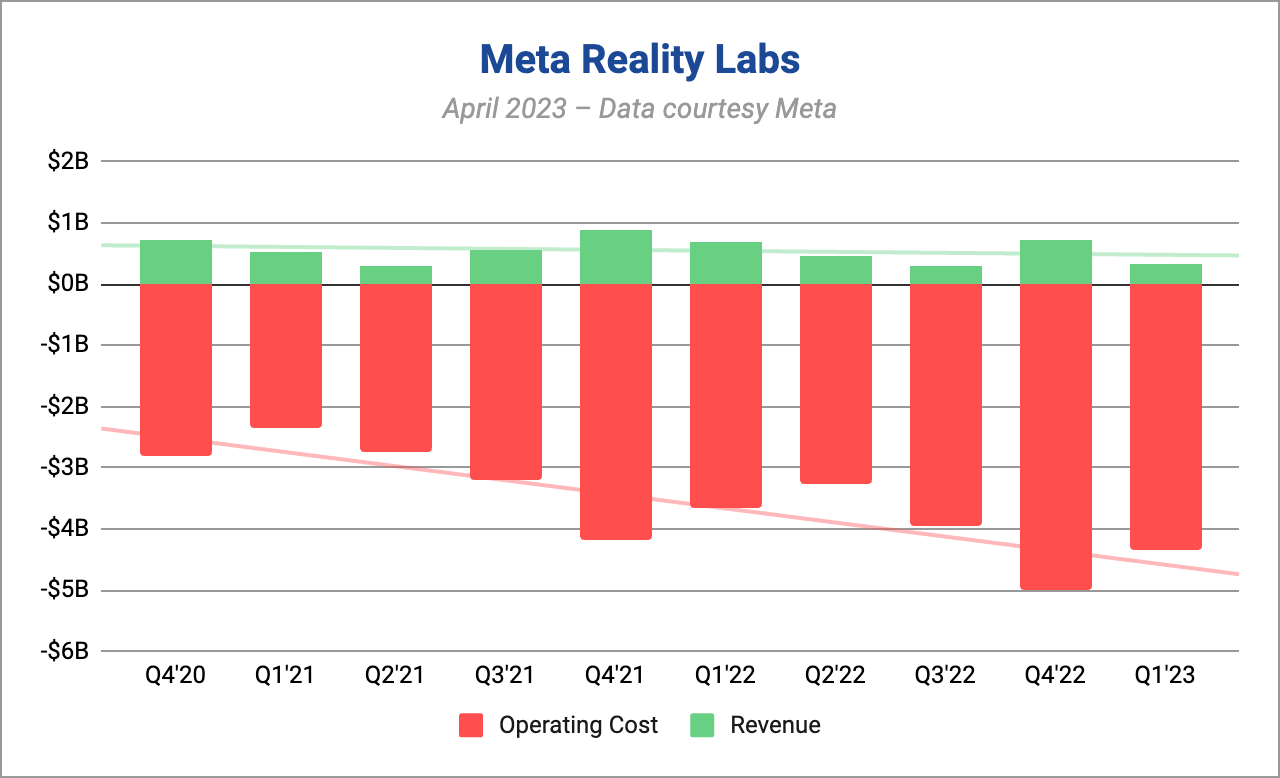
In the fourth quarter of 2022, the company saw $727 million in revenue, which was 17% less compared to the fourth quarter of 2021 when the company pulled in $877 million in revenue.

The fourth quarter of 2021 was a good performer for Reality Labs revenue thanks to the success of Quest 2 which had launched earlier that year.

In the fourth quarter of 2022, the company’s latest headset to launch was Quest Pro, it’s high-end MR headset. Unsurprisingly, the more expensive device—which has yet to find a strong value proposition at $1,500—doesn’t seem to have performed as well as Quest 2 did in its launch year. Just days ago, Meta temporarily discounted the price of the headset to $1,100, appearing to test the waters at that lower price. Granted, XR headsets aren’t the only product Reality Labs offers, which means the division’s other product lines—video calling speakers and smart glasses—may have had a role to play.

In addition to a smaller holiday season than last year, the latest earnings for Reality Labs show the division’s expenses were greater than in any previous quarter, surpassing $4 billion for the first time.

This continues a trend of Meta’s ever-growing investments in Reality Labs which the company has warned investors may not flourish until the 2030s.

In the face of operating costs far outpacing revenue, Meta CEO Mark Zuckerberg told investors that his management theme for 2023 was “efficiency,” saying he wants to focus the company on streamlining its structure to move faster while being more aggressive about shutting down projects that aren’t performing.

Meta Reality Labs Earnings Reveal a Less Successful Holiday Season & Highest Operating Costs Yet Read More »

mil-sim-shooter-‘onward’-to-drop-quest-1-support-later-this-year

Mil-Sim Shooter ‘Onward’ to Drop Quest 1 Support Later This Year

Meta-owned developer Downpour Interactive announced it’s pulling Quest 1 support for Onward, the hit team-based mil-sim shooter.

First launched on PC VR headsets in Early Access back in 2016, Onward managed to garner a hardcore following over the years thanks to its realistic squad-based gameplay and unrelentingly faithful reproduction of real-world weaponry.

In mid-2020, Downpour decidedly slimmed down Onward across the board with its Early Access launch on Quest—just a few months before Meta launched the more powerful Quest 2. Its launch on the original Quest was met with some pretty intense backlash from the PC VR-playing community at the time, as Downpour significantly reduced the Onward’s graphics in addition to limiting community-generated content.

Now the developer, which was acquired by Meta in 2021, says it’s slated to drop support for Quest 1 on July 31st, 2023. In the studio’s FAQ, Downpour says Onward will no longer be playable on Quest 1 in any capacity after the July cut-off date.

The studio isn’t offering any special refund scheme outside of Meta’s standard policy, which allows you to return a game with less than two hours of gameplay time, and within 14 days after purchase.

Onward however benefits from cross-buy, so owners can continue playing on Quest 1 through the Meta Store version, which requires a VR-ready PC to play, or on the still natively supported Quest 2 and Quest Pro headsets.

In comes as no real surprise that some developers are pulling the plug on Quest 1 support only three years after the headset’s launch. Meta announced earlier this month it was set to deprecate first-party social features on the original 2019 Quest in March, which includes access to Parties and Meta Horizon Home. From now until 2024, Meta will only push critical bug fixes and security patches.

Mil-Sim Shooter ‘Onward’ to Drop Quest 1 Support Later This Year Read More »

meta’s-social-vr-app-is-coming-to-web-&-mobile-soon,-alpha-begins-for-members-only-rooms

Meta’s Social VR App is Coming to Web & Mobile Soon, Alpha Begins for Members-only Rooms

Horizon Worlds, Meta’s social VR platform for Quest users, is expanding with alpha tests of new members-only spaces, allowing creators to manage up to 150 card-carrying members in their private worlds. Meta says it’s also gearing up to release Horizon Worlds on non-Quest devices for the first time.

Meta is now rolling out alpha access to its new members-only worlds, which aims to let creators build and cultivate a space in Horizon Worlds. Each members-only world can have up to 150 members, although only 25 concurrent visitors can gather at any given time.

“Every community develops its own norms, etiquette, and social rules over time as it fosters a unique culture,” the company says in a blogpost. “To enable that, we’ll provide the tools that allow the creators of members-only worlds to set the rules for their communities and maintain those rules for their closed spaces.”

Meta says moderation responsibilities can be shared among trusted members, so creators can better control who gets in and who’s kicked out, however the company says its Code of Conduct for Virtual Experiences is still in effect in privately owned spaces.

What’s more, the Quest-only social platform is also going to be available on the Web and mobile devices “soon”, the company says, adding that rules will be made and enforced “similarly to how mobile operating systems manage experiences on their platforms.”

As it is today, Horizon Worlds plays host to a growing number of user-generated content in addition to first-party worlds. The release of Horizon Worlds outside of Quest would represent a massive potential influx of users and user-generated content, putting it in direct competition with cross-platform social gaming titans such as Roblox and Rec Room.

As a similar free-to-play app, Horizon Worlds offers an Avatar Store featuring premium digital outfits—very likely only a first step in the company’s monetization strategy. For now, the company says it allows creators to earn revenue from purchases people make in their worlds, which includes hardware platform fees and a Horizon Worlds fee, which Meta says is 25 percent.

In late October, Meta showed off a tempting preview of its next-gen avatars, although it’s clear there’s still a ton of work to be done to satisfy its existing userbase. Floating torsos are still very much a thing in Horizon Worlds, and that’s despite Meta CEO Mark Zuckerberg’s insistence that full body tracking was in the works. It was too good to be true.

For now, Horizon Worlds is only available on Quest 2 headsets in the US, Canada, UK, France, Iceland, Ireland and Spain—something we hope they change well before it ushers in flatscreen users.

Meta’s Social VR App is Coming to Web & Mobile Soon, Alpha Begins for Members-only Rooms Read More »

meta-drops-quest-pro-price-to-$1,100-for-limited-time,-challenging-vive-xr-elite’s-major-selling-point

Meta Drops Quest Pro Price to $1,100 for Limited Time, Challenging Vive XR Elite’s Major Selling Point

It’s only been three months since Meta launched Quest Pro, pitching its next-gen mixed reality standalone to enterprise and prosumers with the hefty price tag of $1,500. In an unusual move by the company, Meta has quietly slashed the price of Quest Pro for a limited time, putting it more directly in competition with HTC’s recently revealed Vive XR Elite standalone headset.

Update (11AM ET): Sale timing has been revealed; the price drop is in effect for one week only in the US, and two weeks in the UK (dropping to £1,300). We’ve included this in the body of the article below.

Released in late October, Quest Pro essentially set the tone of the next generation of standalone VR hardware. Typically, Meta is consumer-forward, pricing its headsets below (or close to) $500, but Quest Pro represents a pivotal shift in Meta’s strategy.

Starting with Quest Pro, the company is using mixed reality as “a key part of the journey toward full augmented reality devices,” Chief Technology Officer and Reality Labs Chief Andrew Bosworth described in a year-end blogpost.

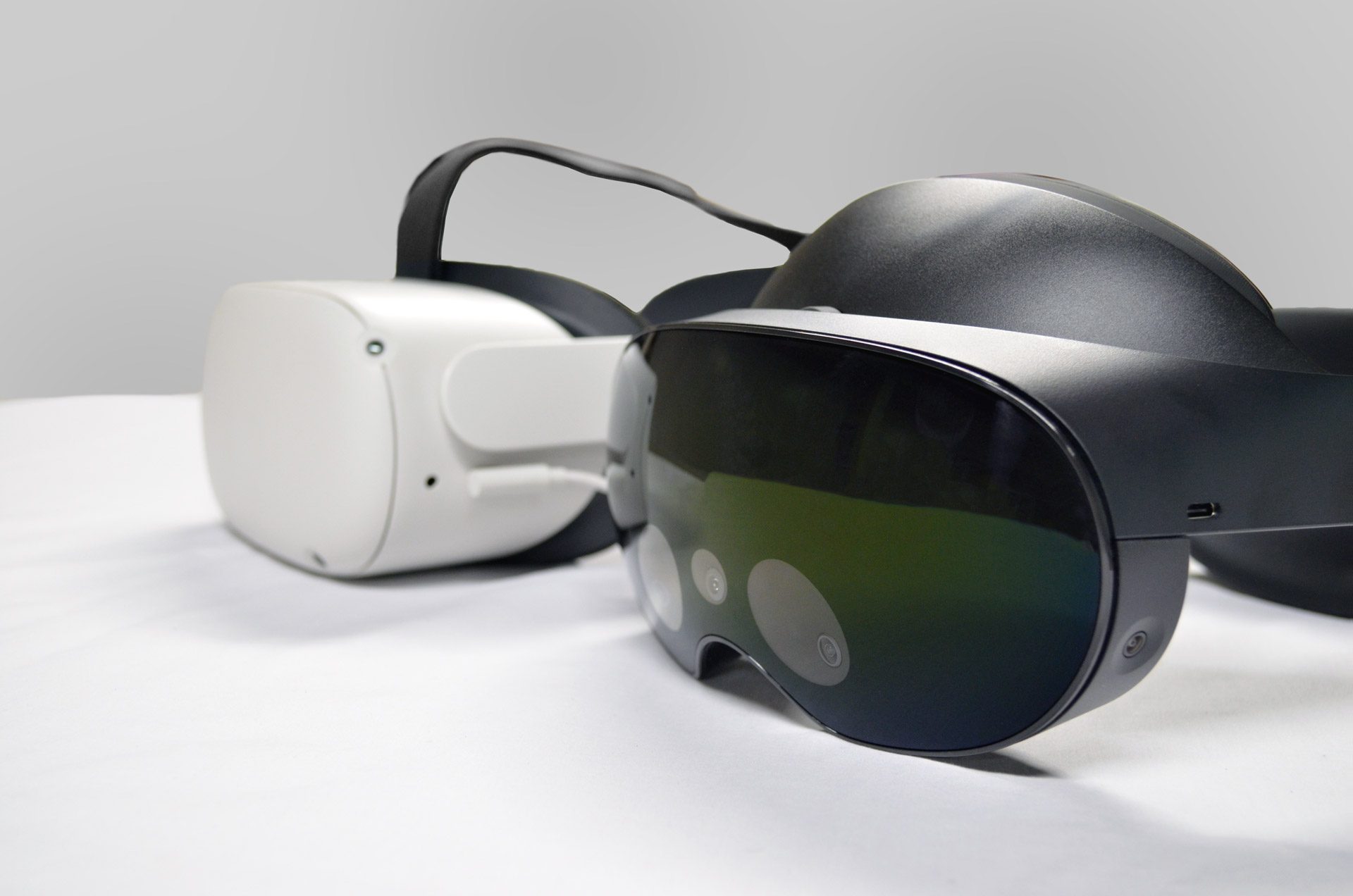
Quest Pro | Image courtesy Meta

With the sale, it seems the company is quietly gunning to retain its share of the budding MR headset marketplace by knocking the price of Quest Pro to match its largest competitor, Vive XR Elite, which HTC revealed earlier this month, couching it as its long-awaited return to the consumer VR space.

Vive XR Elite | Image courtesy HTC

Now, Meta’s Quest Pro is priced at $1,100, or $400 below its previous MSRP, challenging Vive XR Elite’s unique selling points in the process. According to CNET, the sale is happening for one week only in the US, and two weeks in the UK (dropping to £1,300).

Notably, these aren’t entirely analogous devices; some hardware quirks might act as key differentiators, although the undeniable overlap now puts them squarely in direct competition. Still, it’s pretty close.

Here’s a quick breakdown of the headset specs side-by-side:

Feature

Vive XR Elite

Quest Pro

Inside-out tracking wide FOV cameras (4), depth sensor (1) wide FOV cameras (4), no depth sensor
Passthrough single 16 MP RGB camera single RGB (MP?) camera
Resolution 1,920 × 1,920 per eye (LCD) 1,800 × 1,920 per eye (LCD)
Display Refresh 90 Hz 90 Hz
Eye-tracking Additional module required Onboard eye-tracking
Face-tracking Additional module required Onboard face-tracking
Chipset Qualcomm Snapdragon XR2 Qualcomm Snapdragon XR2+
Storage & Memory 128 GB / 12 GB 256 GB / 12 GB
FOV up to 110-degrees diagonal up to 96-degrees diagonal
Optics Pancake lens Pancake lens
IPD Adjustment manual, 54–73 mm range manual, 55-75 mm
Audio built-in open-ear audio built-in open-ear audio, 3.5mm audio port
Weight 625g (including battery), 273g in ‘glasses’ mode 722 g (including battery)
Controllers 6DOF motion controllers (2), hand-tracking 6DOF motion controllers (2), hand-tracking
Playtime on battery ~2 hours ~2 hours
Retail Price $1,099 $1,099 (MSRP $1,499)

A raw spec sheet doesn’t exactly tell the full story, although it’s clear HTC will need to play catchup if it intends on remaining competitive with Meta now that both headsets have achieved price parity, albeit temporarily. Vive XR Elite is still in pre-order, with a late February shipping window, while Quest Pro is available today, direct from Meta.

In Vive XR Elite’s favor is its convertibility: the traditional battery headstrap can be replaced with a glasses arm piece, which allows it to be used with an external powerbank for more casual content viewing, like watching a film in your own private theater whilst on a plane or train.

It’s a unique selling point, although the lack of 3.5mm sours this somewhat, as you’ll need to use Bluetooth headphones to watch anything if you want complete privacy in a public space. Still, the focus on every day, on-the-go use sets it apart from Quest Pro. On the flipside, Quest Pro however features both eye and face-tracking out of the box, something Vive XR Elite will gain in the future with the release of separate modules.

Hardware aside, Meta undoubtedly has a leg up with its content ecosystem, as all games designed for Quest 2 automatically support Quest Pro—that’s a lot of content out of the box in addition to the admittedly smallish drip of mixed reality experiences already on the Quest Store.

Meanwhile, HTC is still amassing games for its growing content library, which currently doesn’t boast any truly notable exclusives that might make you choose one headset over the other. Notably, HTC also openly refutes it will sell personal user data since it’s not a social media company—a clear shot across the bow at Meta’s spotty track record in user privacy and security.

“What’s the cost of your personal data? We’re not a social media company. Our business model doesn’t rely on advertising revenue, so it’s not something we’re doing. We want to build good hardware.” – @shen

Learn more: https://t.co/IC7JOWmfzE#VIVEXRElitehttps://t.co/GXJWQo0lrH

— HTC VIVE (@htcvive) January 19, 2023

The list of differences doesn’t end there. If you want to learn more about Quest Pro and Vive XR Elite, check out our in-depth hands-on articles with both headsets.

Meta Drops Quest Pro Price to $1,100 for Limited Time, Challenging Vive XR Elite’s Major Selling Point Read More »

2022-was-a-plateau-year-for-vr,-here’s-what-to-expect-in-2023

2022 Was a Plateau Year for VR, Here’s What to Expect in 2023

The end of 2022 marks more than a decade since the Oculus Kickstarter sparked the modern era of VR. While the space has undoubtedly grown tremendously since then, 2022 felt largely like a plateau year, with Meta standing unchallenged as the dominant player in the space—while progressing disjointedly in too many directions at once. But with new headsets, promising new content, and a looming heavyweight positioned to challenge Meta all on the horizon, 2023 could big a much bigger year for the VR space.

The 2022 Plateau

2022 wasn’t a bad year for VR by any means, but for the most part the status quo remained unchanged.

There’s no doubt that Meta has been the central pillar of the VR space in 2022, having pivoted its attention in a very public way by renaming the entire company to Meta just before the year began. The company’s Quest 2 headset has retained its position as the most popular headset on the market, even becoming the most-used headset among PC VR players, despite Meta having all but abandoned PC VR as a platform.

Despite its dominance (or perhaps because of it), Meta has continued to make very good hardware while struggling deeply with its software. Though Quest 2 is certainly more capable than similar products, the user experience is disjointed and unrefined. The Quest Pro only continued this trend; the high-end headset brings a range of impressive improvements to the hardware along with new sensing capabilities, but its new features are significantly hampered by an undercooked software offering.

Regardless of various missteps, Meta is undoubtedly doing the most to keep VR afloat right now. Quest 2 is an affordable headset that’s created a large enough market of users that developers are finding growing success on the platform. In 2022 that’s meant that many developers have begun or continued to treat Quest 2 as their highest priority platform. To that end, we saw many ports of existing VR games coming to Quest 2, and most new releases being either Quest 2 exclusive, or on Quest 2 and some other platforms.

Unfortunately Meta’s dominance has meant that much of the air in the room as been sucked away from other parts of the VR space that were once key pillars.

Despite the release of new and updated enthusiast PC VR headsets, the platform has stagnated due to the content focus shifting away from PC VR. Many of the games released this year on PC VR were designed first and foremost for Quest 2, which means many lacked the scale and polish that resonates with enthusiast PC VR users.

Valve’s seeming disinterest in VR ever since the release of Half-Life: Alyx back in 2020 hasn’t helped either. The company continues to sell its 2019 headset for the same price that it was charging on day one, with no official confirmation that it has plans to do anything major in the VR space (hardware or software) in the near future. Sony’s PSVR1, meanwhile, has largely lost any remaining relevance since the announcement of the upcoming PSVR 2.

On the Horizon for 2023

But there’s lots of interesting things on the horizon for VR in 2023. Crucially we may see some real competition for Meta from several different angles, which is sorely needed to keep the company (and the industry at large) on a steady course toward making VR a more valuable platform in order to increase mainstream viability.

First Up

The biggest near-term event for the VR industry in 2023 will be the launch of PSVR 2 in February. Although Sony has technically continued selling its original PSVR headset over the years, it’s been on the market for more than six years now—and gained ‘last-gen’ status well before that.

Given all that time between—and that the company isn’t bringing its exclusive VR content forward to the new headset—the upcoming launch of PSVR 2 feels like a re-entrance into the VR market for Sony rather than a continuation. But now that the company has made the commitment, they’ll likely put strong support behind the headset for at least a few years.

Importantly, as a console maker, Sony knows well that ‘content is king’, and we can expect to see a new slate of quality VR content funded by the company, some of which could make it onto other headsets. Sony’s original PSVR is still home to some of the best exclusive VR games in the industry, made by its own first-party studios; at a minimum it would be nice to see those top titles updated and improved for PSVR 2, and better yet it would be great to see Sony setting its first-party studios to the task of creating high quality VR content once again.

But PSVR 2 only represents pseudo-competition for Meta, since the headset only appeals to those that already own a PS5 (or who are willing to buy a PS5 just to get the headset).

Real Competition for Meta?

On the other hand, some real competition from the likes of Pico and HTC may be on the way.

On the high-end, HTC’s newly announced Vive XR Elite is clearly positioned to compete with Meta’s Quest Pro. With most of the same essential features, but a lower price point ($1,100 vs. $1,500), the Vive XR Elite at least looks at face value like an alternative choice for those looking for a more compact VR headset with improved passthrough AR capabilities.

And on the low-end, Pico’s recently launched Neo 4 is the first such headset that is truly competing on price with Quest 2. Priced at €20 or €50 less than Quest 2 (depending upon storage capacity), looks like a real alternative. Granted, the company has yet to formally bring its headset to the United States—Meta’s home turf.

But… both Vive XR Elite and Pico Neo 4 share a common problem, and that’s content.

A Big Moment for Content Momentum

Regardless of specs and price, unless the content that users want is available on these headsets, they are difficult to consider real options (and thus real competition). As of now, both headsets lack many of the best-selling and most-played killer apps that are available on Meta’s Quest headsets.

But that could finally be changing. Compared to prior alternative standalone headsets, XR Elite and Neo 4 have a much more significant and recognizable body of content than we’ve seen in the past. If more developers recognize the benefit that both they and consumers alike would see from having a more competitive standalone market… perhaps this could be the start of an important sea change in the industry.

The Elephant in the Room

Of course the single biggest elephant in the room has been and will continue to be Apple. It seems that every month we get a new rumor about when the company will enter the market, with the only certainty being that the company is definitely hard at work on something—though no one knows precisely when they will announced it, let alone launch it.

Apple, more than any other company in the world, has the potential to disrupt Meta at its own game by releasing an XR headset with a highly polished user experience… something the social-media-turned-metaverse company (and frankly the VR industry at large) has struggled with.

Make no mistake, Apple’s entrance into the XR space will have wide reaching implications practically overnight—both within the XR space and outside of it.

Look for UX Innovation, Not a Hardware Breakthrough

But nobody should be expecting hardware breakthroughs from Apple. The company is stuck with the same (largely physical) constraints as the rest of the major players in the industry. Whatever device they launch is likely to have similar specs and form-factor to what the latest headsets we see on the market today. More importantly however, Apple is likely to contribute key software design, device interoperability, and overall UX learnings that other companies in XR have consistently struggled with.

While Apple is certainly a threat to the likes of Meta, the company’s entrance into the market is also likely to be a boon for Meta overall; not only will it be a validation of Meta’s early and ambitious bet on the space, but the best XR design concepts revealed from within Apple will be adopted for the betterment of the industry at large. For Meta, Apple’s entrance into the space can’t come soon enough.

Meta Faces the Same Old Struggles

While Quest 2 has been more widely adopted than any other standalone headset, user retention continues to be an issue. Not only due to substandard UX, but also the headset being stuck in an arcade phase where years-old games like Beat Saber, Superhot VR, and Job Simulator continue to be among the most popular games on the platform—seemingly signaling that only a small amount of compelling new content has reached the headset in the years since Quest 2 has launched. Meanwhile, the headset most enthusiastic userbase—core gamers—is underserved, waiting for the sort of large-scale and highly polished content that they expect from the traditional gaming space.

As for Meta’s 2023… outside of the Apple wildcard, the company has confirmed that it’s working on a next-gen consumer headset due out this year, which is very likely to be Quest 3. And while the company has some pretty wild R&D projects in the oven, more likely than not, Quest 3 will adopt core parts of the Quest Pro headset rather than offering some kind of major leap in features or form-factor.

Last But Not Least

As for PC VR, the only thing keeping the platform alive is an enthusiast player base that’s hungry for greater immersion and starved for next-gen VR content. Unfortunately with so much attention focused on standalone VR by platform holders and developers, PC VR in 2023 will be largely stuck with content built for other platforms that happens to spill over.

Between that content, the VR modding scene, smaller-scope projects from enthusiast indie developers, and the occasional release of VR-optional flight or racing sims—PC VR will feel like it’s on life support through 2023.

PC VR is and continues to be the place where users can push immersion to the next level with niche accessories like full-body trackers, racing & cockpit peripherals, haptic vests, and gun stocks. And while some unannounced PC VR headsets may make an appearance in 2023, the drought of next-gen PC VR content means dwindling reasons to upgrade.

– – — – –

What’s your 2023 VR outlook? Let us know in the comments below.

2022 Was a Plateau Year for VR, Here’s What to Expect in 2023 Read More »