liver

this-may-be-the-grossest-eye-pic-ever—but-the-cause-is-what’s-truly-horrifying

This may be the grossest eye pic ever—but the cause is what’s truly horrifying

Savage microbe

Whatever was laying waste to his eye seemed to have come from inside his own body, carried in his bloodstream—possibly the same thing that could explain the liver mass, lung nodules, and brain lesions. There was one explanation that fit the condition perfectly: hypervirulent Klebsiella pneumoniae or hvKP.

Classical K. pneumoniae is a germ that dwells in people’s intestinal tracts and is one that’s familiar to doctors. It’s known for lurking in health care settings and infecting vulnerable patients, often causing pneumonia or urinary tract infections. But hvKP is very different. In comparison, it’s a beefed-up bacteria with a rage complex. It was first identified in the 1980s in Taiwan—not for stalking weak patients in the hospital but for devastating healthy people in normal community settings.

An infection with hvKP—even in otherwise healthy people—is marked by metastatic infection. That is, the bacteria spreads throughout the body, usually starting with the liver, where it creates a pus-filled abscess. It then goes on a trip through the bloodstream, invading the lungs, brain, soft tissue, skin, and the eye (endogenous endophthalmitis). Putting it all together, the man had a completely typical clinical case of an hvKP infection.

Still, definitively identifying hvKP is tricky. Mucus from the man’s respiratory tract grew a species of Klebsiella, but there’s not yet a solid diagnostic test to differentiate hvKP from the classical variety. Since 2024, researchers have worked out a strategy of using the presence of five different virulence genes found on plasmids (relatively small, circular pieces of DNA, separate from chromosomal DNA, that can replicate on their own and be shared among bacteria.) But the method isn’t perfect—some classical K. pneumoniae can also carry the five genes.
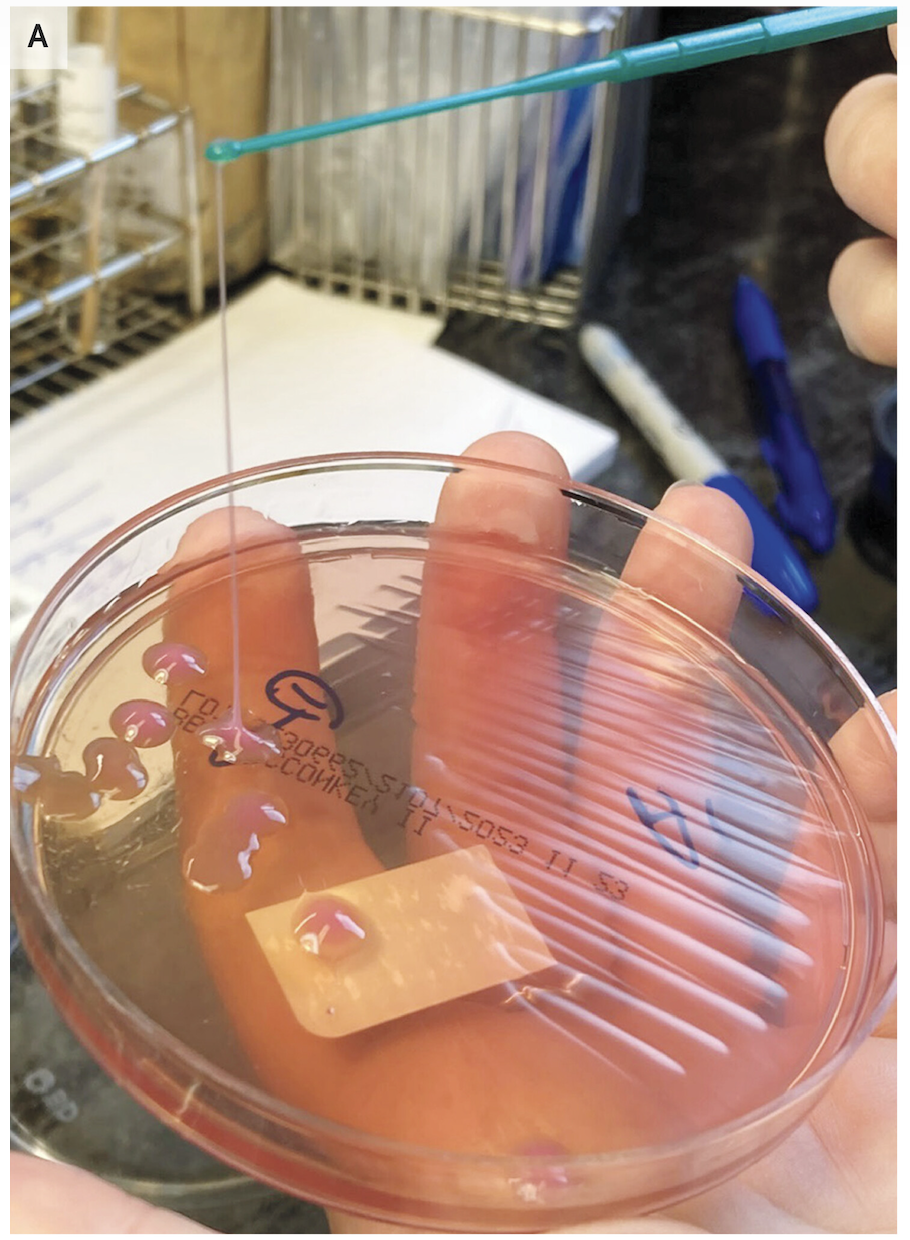
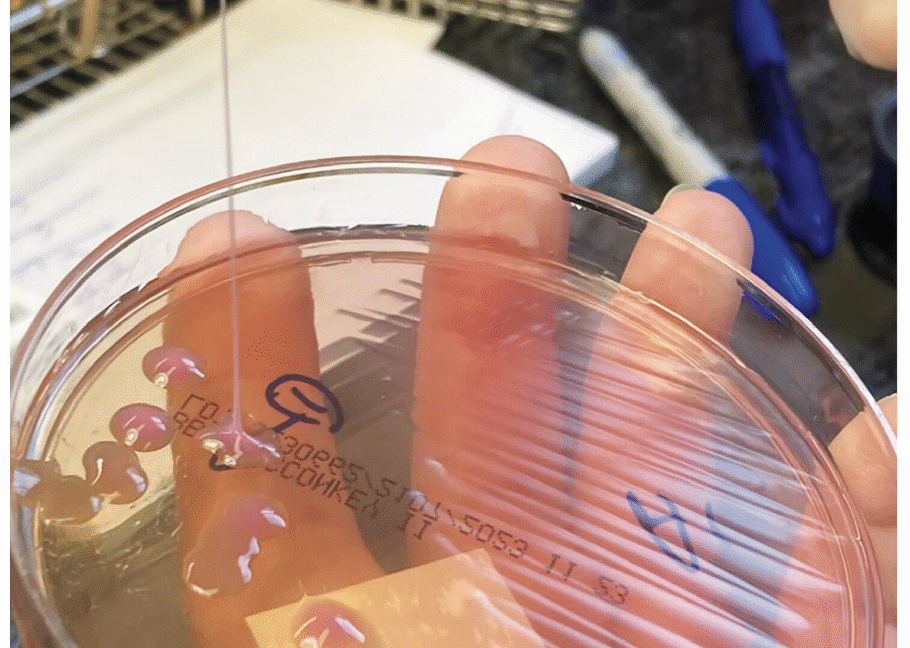
A string test performed on the rare growth of Klebsiella pneumoniae from the sputum culture shows a positive result, with the formation of a viscous string with a height of greater than 5 mm.

A string test performed on the rare growth of Klebsiella pneumoniae from the sputum culture shows a positive result, with the formation of a viscous string with a height of greater than 5 mm. Credit: NEJM 2026

Another much simpler method is the string test, in which clinicians basically test the goopy-ness of the bacteria—hvKP is known for being sticky. For this test, a clinician grows the bacteria into a colony on a petri dish, then touches an inoculation loop to the colony and pulls up. If the string of attached goo stretches more than 5 mm off the petri dish, it’s considered positive for hvKP. This is (obviously) not a precise test.

This may be the grossest eye pic ever—but the cause is what’s truly horrifying Read More »

woman-takes-10x-dose-of-turmeric,-gets-hospitalized-for-liver-damage

Woman takes 10x dose of turmeric, gets hospitalized for liver damage

A 57-year-old woman spent six days in the hospital for severe liver damage after taking daily megadoses of the popular herbal supplement, turmeric, which she had seen touted on social media, according to NBC News.

The woman, Katie Mohan, told the outlet that she had seen a doctor on Instagram suggesting it was useful against inflammation and joint pain. So, she began taking turmeric capsules at a dose of 2,250 mg per day. According to the World Health Organization, an acceptable daily dose is up to 3 mg per kilogram of weight per day—for a 150-pound (68 kg) adult, that would be about 204 mg per day. Mohan was taking more than 10 times that amount.

A few weeks later, she developed stomach pain, nausea, fatigue, and dark urine. “I just did not feel well generally,” she said.

After seeing a news report about the possibility of toxicity from turmeric, she connected her symptoms to the pills and went to urgent care. Blood tests revealed her liver enzyme levels were 60 times higher than the normal limit, suggesting liver damage. She was admitted to a local hospital and then transferred to NYU Langone in New York City. Her hepatologist there, Nikolaos Pyrsopoulos, said she was “one step before full liver damage, liver failure, requiring liver transplant.”

Rare toxicity

Generally, turmeric—a golden-colored staple of curries—is not harmful, particularly in foods. But, as herbal supplements have gained popularity and doses have gotten larger, doctors have reported a rise in liver injuries from the spice. In fact, while rare overall, turmeric appears to have become the most common herbal cause of liver injuries in the US.

Woman takes 10x dose of turmeric, gets hospitalized for liver damage Read More »

texas-surgeon-accused-of-secretly-blocking-patients-from-getting-transplants

Texas surgeon accused of secretly blocking patients from getting transplants

Bizarre —

The motive for the alleged data manipulation is unknown.

Texas surgeon accused of secretly blocking patients from getting transplants

An accomplished and prominent transplant surgeon in Texas allegedly falsified patient data in a government transplant waiting list, which may have prevented his own patients from receiving lifesaving liver transplants, according to media reports and hospital statements.

Memorial Hermann-Texas Medical Center halted its liver transplant program on April 3 after finding “irregularities” with donor acceptance criteria, the Houston Chronicle reported based on a statement from the hospital. At the time there were 38 patients on the hospital’s wait list for a liver. Earlier this week, the hospital also halted its kidney transplant program, telling the Chronicle that it was pausing operations to “evaluate a new physician leadership structure.”

Memorial Hermann has not named the surgeon behind the “inappropriate changes,” but The New York Times identified him as Dr. Steve Bynon, a surgeon who has received numerous accolades and, at one point, appears to have been featured on a billboard. Bynon oversaw both the liver and kidney transplant programs at Memorial Hermann.

According to the Times, the hospital said that a doctor in its liver transplant program had admitted to changing patient records, and those changes led to patients being denied transplants. Officials who spoke with the Times identified said physician as Bynon.

Bynon is a surgical transplant director at the University of Texas Health Science Center at Houston (UTHealth Houston), as well as the leader of Memorial Hermann’s abdominal transplant program. Ars was not able to reach Bynon for comment. When reporters for the Times reached Bynon by phone Thursday, he did not confirm that he had admitted to manipulating the data and referred further questions to UTHealth Houston.

On Friday, UTHealth Houston released a statement defending Bynon, saying that he is “an exceptionally talented and caring physician, and a pioneer in abdominal organ transplantation.” The statement continued by saying that the survival rates and outcomes for Dr. Bynon’s transplant patients are among the best in the country. “Our faculty and staff members, including Dr. Bynon, are assisting with the inquiry into Memorial Hermann’s liver transplant program and are committed to addressing and resolving any findings identified by this process,” it said.

Officials at Memorial Hermann told the Times that the data allegedly manipulated involved criteria for organ donors. When doctors place patients on a waiting list for an organ donation, they specify criteria for acceptable donors. This includes factors like a potential donor’s age and weight. But, according to the officials, entries for some of the patients in Bynon’s program had criteria that were set to impossible conditions, such as a patient only accepting organs from a toddler who weighed 300 pounds. This effectively made Bynon’s patients ineligible for a transplant.

The Chronicle notes that Memorial Hermann has seen increasing numbers of liver transplant candidates die or become too sick for a transplant while on the waitlist. According to federal data, in 2021, only four patients died or got too sick for a transplant while on the hospital’s liver transplant waiting list. In 2022, the number increased to 11, and in 2023, it was 14. So far this year, there are five patients who have died or gotten too sick while waiting.

If the allegations are true, it’s unclear what motivated Bynon to alter the data.

It’s also unclear when the hospital’s transplant programs will resume. In a statement Friday, Memorial Hermann said it is working to “make the necessary changes that will allow for the quick reactivation of the kidney transplant program under a different physician leadership structure.” It did not address when the liver transplant program may resume.

Texas surgeon accused of secretly blocking patients from getting transplants Read More »