NASA is changing the way that its employees come in contact with, and remember, one of its worst tragedies.
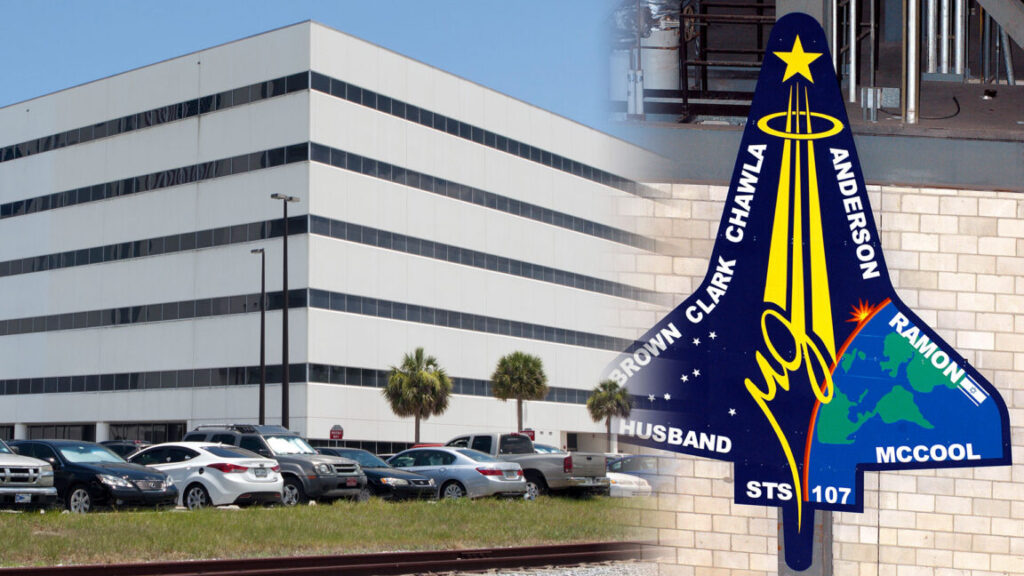
In the wake of the 2003 loss of the space shuttle Columbia and its STS-107 crew, NASA created a program to use the orbiter’s debris for research and education at Kennedy Space Center in Florida. Agency employees were invited to see what remained of the space shuttle as a powerful reminder as to why they had to be diligent in their work. Access to the Columbia Research and Preservation Office, though, was limited as a result of its location and related logistics.
To address that and open up the experience to more of the workforce at Kennedy, the agency has quietly begun work to establish a new facility.
“The room, titled Columbia Learning Center (CLC), is a whole new concept,” a NASA spokesperson wrote in an email. “There are no access requirements; anyone at NASA Kennedy can go in any day of the week and stay as long as they like. The CLC will be available whenever employees need the inspiration and message for generations to come.”
Debris depository
On February 1, 2003, Columbia was making its way back from a 16-day science mission in Earth orbit when the damage that it suffered during its launch resulted in the orbiter breaking apart over East Texas. Instead of landing at Kennedy as planned, Columbia fell to the ground in more than 85,000 pieces.
The tragedy claimed the lives of commander Rick Husband, pilot Willie McCool, mission specialists David Brown, Kalpana Chawla, Michael Anderson, and Laurel Clark, and payload specialist Ilan Ramon of Israel.
SpaceX may soon have up to nine active launch pads. Most competitors have one or two.
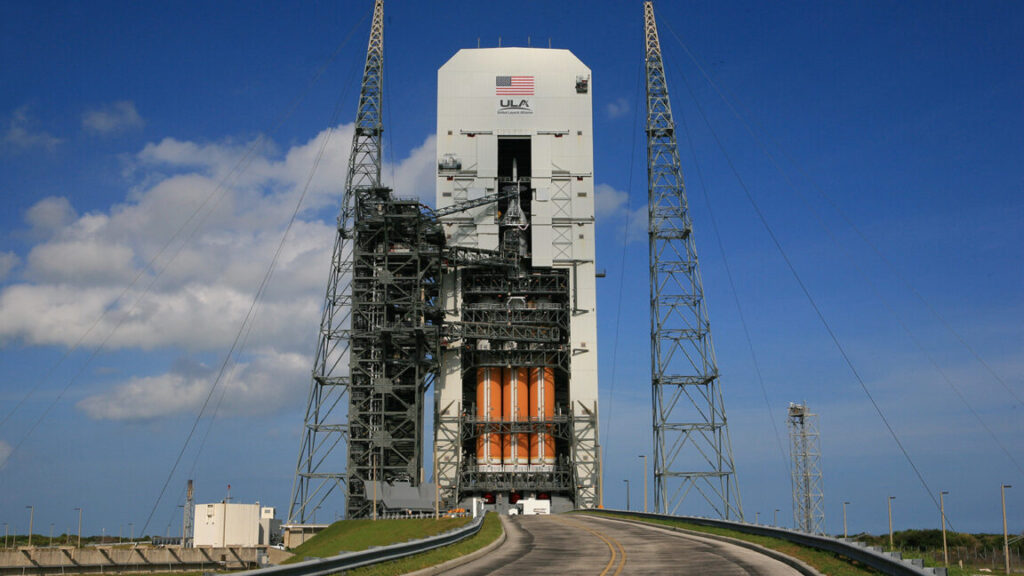
A Delta IV Heavy rocket stands inside the mobile service tower at Space Launch Complex-37 in this photo from 2014. SpaceX is set to demolish all of the structures seen here. Credit: United Launch Alliance
The US Air Force is moving closer to authorizing SpaceX to move into one of the largest launch pads at Cape Canaveral Space Force Station in Florida, with plans to use the facility for up to 76 launches of the company’s Starship rocket each year.
A draft Environmental Impact Statement (EIS) released this week by the Department of the Air Force, which includes the Space Force, found SpaceX’s planned use of Space Launch Complex 37 (SLC-37) at Cape Canaveral would have no significant negative impacts on local environmental, historical, social, and cultural interests. The Air Force also found SpaceX’s plans at SLC-37 will have no significant impact on the company’s competitors in the launch industry.
The Defense Department is leading the environmental review and approval process for SpaceX to take over the launch site, which the Space Force previously leased to United Launch Alliance, one of SpaceX’s chief rivals in the US launch industry. ULA launched its final Delta IV Heavy rocket from SLC-37 in April 2024, a couple of months after the military announced SpaceX was interested in using the launch pad.
Ground crews are expected to begin removing Delta IV-era structures at the launch pad this week. Multiple sources told Ars demolition could begin as soon as Thursday.
Emre Kelly, a Space Force spokesperson, deferred questions on the schedule for the demolition to SpaceX, which is overseeing the work. But he said the Delta IV’s mobile gantry, fixed umbilical tower, and both lightning towers will come down. Unlike other large-scale demolitions at Cape Canaveral, SpaceX and the Space Force don’t plan to publicize the event ahead of time.
“Demolition of these items will be conducted in accordance with federal and state laws that govern explosive demolition operations,” Kelly said.
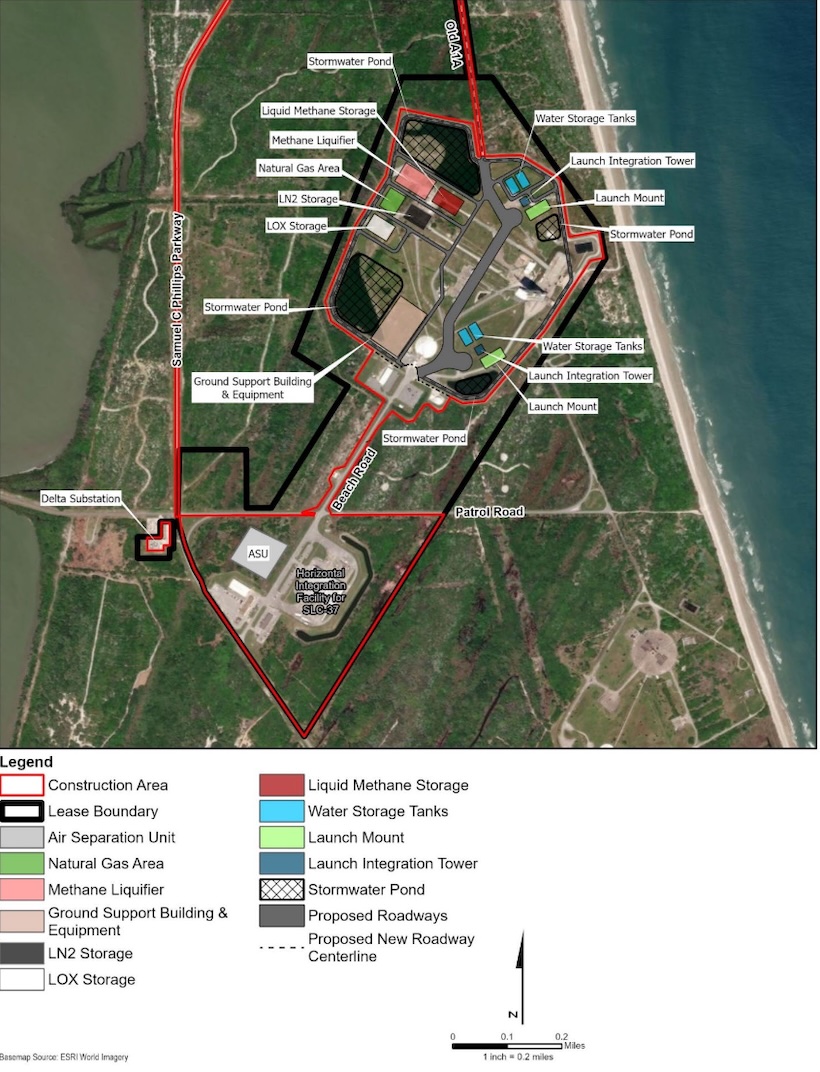
In their place, SpaceX plans to build two 600-foot-tall (180-meter) Starship launch integration towers within the 230-acre confines of SLC-37.
Tied at the hip
The Space Force’s willingness to turn over a piece of prime real estate at Cape Canaveral to SpaceX helps illustrate the government’s close relationship with—indeed, reliance on—Elon Musk’s space company. The breakdown of Musk’s relationship with President Donald Trump has, so far, only spawned a war of words between the two billionaires.
But Trump has threatened to terminate Musk’s contracts with the federal government and warned of “serious consequences” for Musk if he donates money to Democratic political candidates. Musk said he would begin decommissioning SpaceX’s Dragon spacecraft, the sole US vehicle ferrying astronauts to and from orbit, before backing off the threat last week.
NASA and the Space Force need SpaceX’s Dragon spacecraft and its Falcon 9 and Falcon Heavy rockets to maintain the International Space Station and launch the nation’s most critical military satellites. The super heavy-lift capabilities Starship will bring to the government could enable a range of new missions, such as global cargo delivery for the military and missions to the Moon and Mars in partnership with NASA.
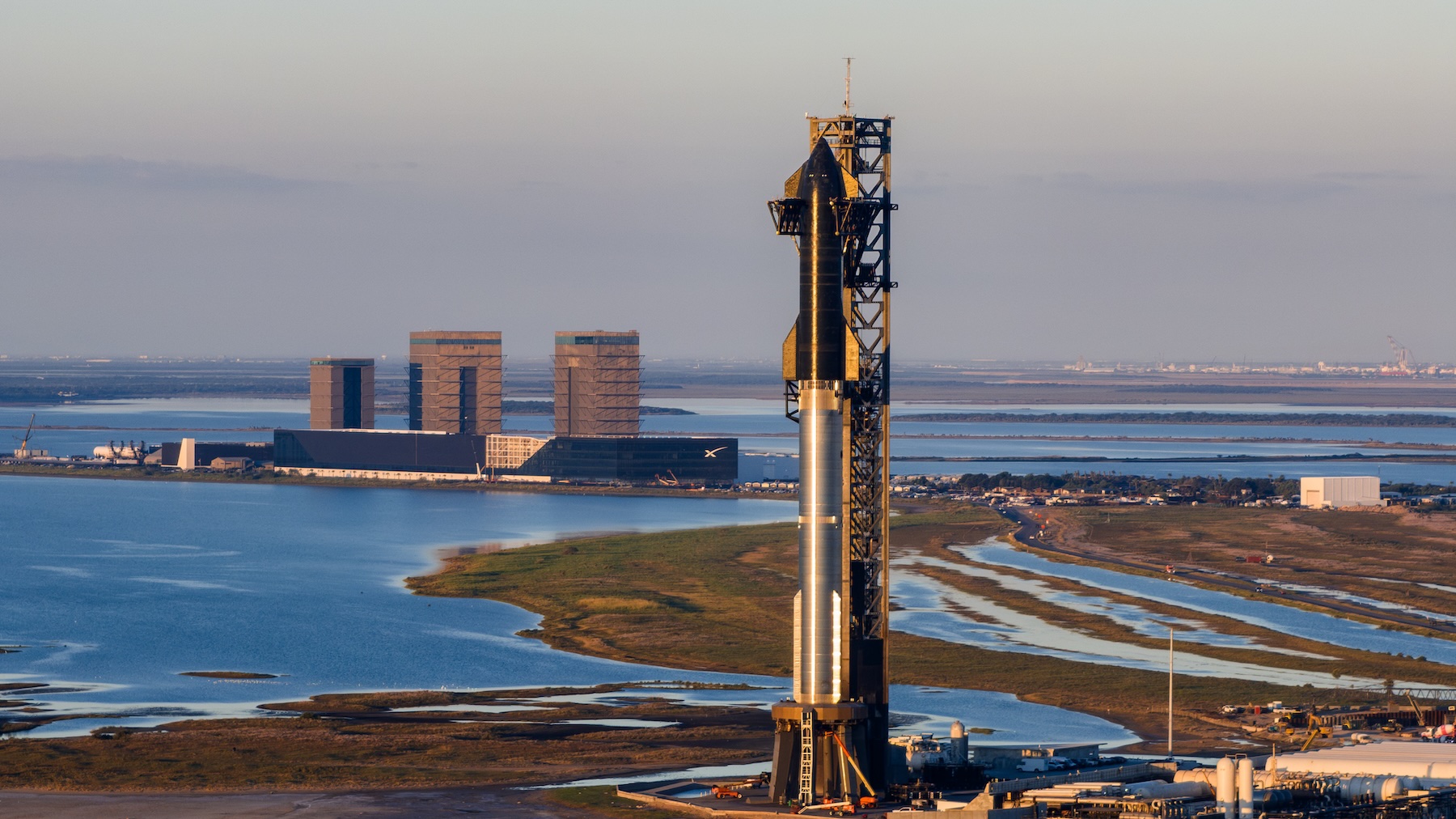
Fully stacked, the Starship rocket stands more than 400 feet tall. Credit: SpaceX
SpaceX already has a “right of limited entry” to begin preparations to convert SLC-37 into a Starship launch pad. A full lease agreement between the Space Force and SpaceX is expected after the release of the final Environmental Impact Statement.
The environmental approval process began more than a year ago with a notice of intent, followed by studies, evaluations, and scope meetings that fed into the creation of the draft EIS. Now, government officials will host more public meetings and solicit public comments on SpaceX’s plans through late July. Then, sometime this fall, the Department of the Air Force will issue a final EIS and a “record of decision,” according to the project’s official timeline.
A growing footprint
This timeline could allow SpaceX to begin launching Starships from SLC-37 as soon as next year, although the site still requires the demolition of existing structures and construction of new towers, propellant farms, a methane liquefaction plant, water tanks, deluge systems, and other ground support equipment. The construction will likely take more than a year, so perhaps 2027 is a more realistic target.
The company is also studying an option to construct two separate towers for use exclusively as “catch towers” for recovery of Super Heavy boosters and Starship upper stages “if space allows” at SLC-37, according to the draft EIS. According to the Air Force, the initial review process eliminated an option for SpaceX to construct a standalone Starship launch pad on undeveloped property at Cape Canaveral because the site would have a “high potential” for impacting endangered species and is “less ideal” than developing an existing launch pad.
SpaceX’s plan for recovering its reusable Super Heavy and Starship vehicles involves catching them with articulating arms on a tower—either a launch integration structure or a catch-only tower. SpaceX has already demonstrated catching the Super Heavy booster on three test flights at the company’s Starbase launch site in South Texas. An attempt to catch a Starship vehicle returning from low-Earth orbit might happen later this year, assuming SpaceX can correct the technical problems that have stalled the rocket’s advancement in recent months.
Construction crews are outfitting a second Starship launch tower at Starbase, called Pad B, that may also come online before the end of this year. A few miles north of SLC-37, SpaceX has built another Starship tower at Launch Complex 39A, a historic site on NASA property at Kennedy Space Center. Significant work remains ahead at LC-39A to install a new launch mount, finish digging a flame trench, and install all the tanks and plumbing necessary to store and load super-cold propellants into the rocket. The most recent official schedule from SpaceX suggests a first Starship launch from LC-39A could happen before the end of the year, but it’s probably a year or more away.
The Air Force’s draft Environmental Impact Statement includes this map showing SpaceX’s site plan for SLC-37. Credit: Department of the Air Force
Similar to the approach SpaceX is taking at SLC-37, a document released last year indicates the Starship team plans to construct a separate catch tower near the Starship launch tower at LC-39A. If built, these catch towers could simplify Starship operations as the flight rate ramps up, allowing SpaceX to catch a returning rocket at one location while stacking Starships for launch with the chopstick arms on nearby integration towers.
With SpaceX’s growing footprint in Texas and Florida, the company has built, is building, or revealed plans to build at least five Starship launch towers. This number is likely to grow in the coming years as Musk aims to eventually launch and land multiple Starships per day. This will be a gradual ramp-up as SpaceX works through Starship design issues, grows factory capacity, and brings new launch pads online.
Last month, the Federal Aviation Administration—which oversees environmental reviews for launch sites that aren’t on military property—approved SpaceX’s request to launch Starships as many as 25 times per year from Starbase, Texas. The previous limit was five, but the number will likely go up from here. Coming into 2025, SpaceX sought to launch as many as 25 Starships this year, but failures on three of the rockets’ most recent test flights have slowed development, and this goal is no longer achievable.
That’s a lot of launches
Meanwhile, in Florida, the FAA’s environmental review for LC-39A is assessing the impact of launching Starships up to 44 times per year from Kennedy Space Center. At nearby Cape Canaveral Space Force Station, the Air Force is evaluating SpaceX’s proposal for up to 76 Starship flights per year from SLC-37. The scope of each review also includes environmental assessments for Super Heavy and Starship landings within the perimeters of each launch complex.
While the draft EIS for SLC-37 is now public, the FAA hasn’t yet released a similar document for SpaceX’s planned expansion and Starship launch operations at LC-39A, also home to a launch pad used for Falcon 9 and Falcon Heavy flights.
SpaceX will continue launching its workhorse Falcon 9 and Falcon Heavy rockets as Starship launch pads heat up with more test flights. Within a few years, SpaceX could have as many as nine active launch pads spread across three states. The company’s most optimistic vision for Starship would require many more, potentially including offshore launch and landing sites.
At Vandenberg Space Force Base in California, SpaceX has leased the former West Coast launch pad for United Launch Alliance’s Delta IV rocket. SpaceX will prepare this launch pad, known as SLC-6, for Falcon 9 and Falcon Heavy launches starting as soon as next year, augmenting the capacity of the company’s existing Vandenberg launch pad, which is only configured for Falcon 9s. Like the demolition at SLC-37 in Florida, the work to prepare SLC-6 will include the razing of unnecessary towers and structures left over from the Delta IV (and the Space Shuttle) program.
SpaceX has not yet announced any plans to launch Starships from the California spaceport.
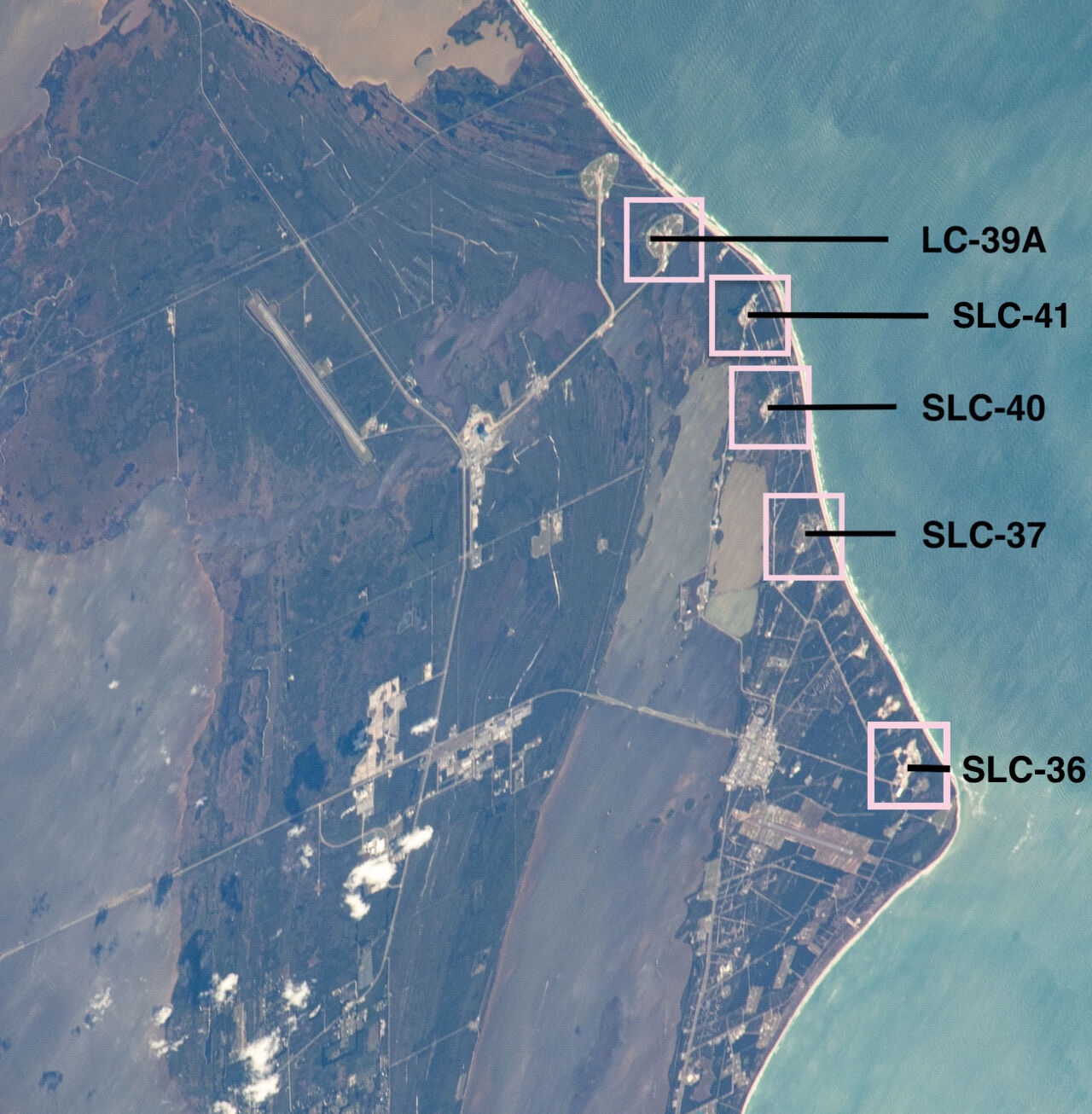
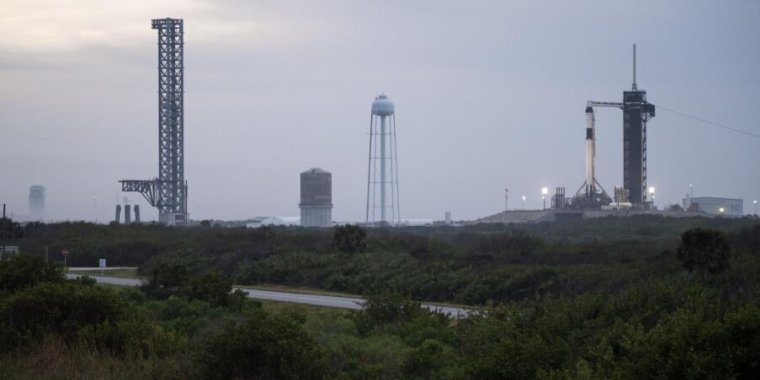
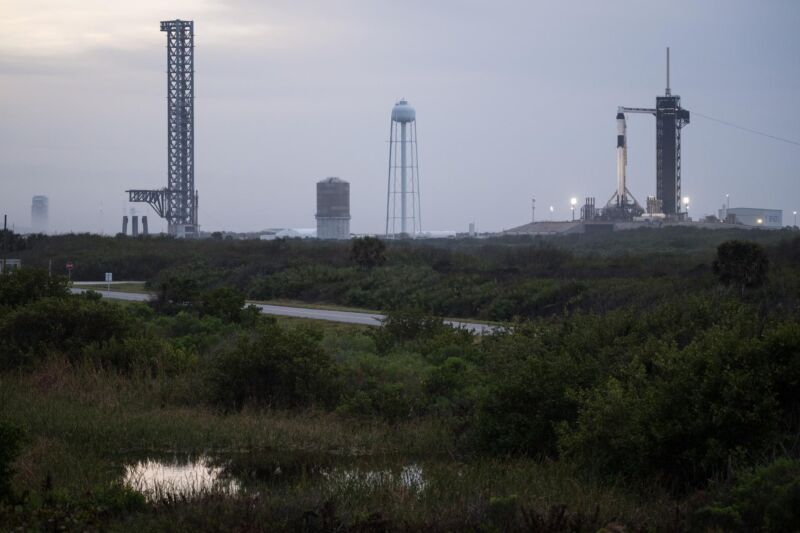
SpaceX launches Falcon 9 rockets from Pad 39A at NASA’s Kennedy Space Center and from Pad 40 at Cape Canaveral Space Force Station. The company plans to develop Starship launch infrastructure at Pad 39A and Pad 37. United Launch Alliance flies Vulcan and Atlas V rockets from Pad 41, and Blue Origin has based its New Glenn rocket at Pad 36. Credit: NASA (labels by Ars Technica)
The expansion of SpaceX’s launch facilities comes as most of its closest competitors limit themselves to just one or two launch pads. ULA has reduced its footprint from seven launch pads to two as a cost-cutting measure. Blue Origin, Jeff Bezos’ space company, operates a single launch pad at Cape Canaveral, although it has unannounced plans to open a launch facility at Vandenberg. Rocket Lab has three operational launch pads in New Zealand and Virginia for the light-class Electron rocket and will soon have a fourth in for the medium-lift Neutron launcher.
Two of these competitors, ULA and Blue Origin, complained last year that SpaceX’s target of launching as many as 120 Starships per year from Florida’s Space Coast could force them to clear their launch pads for safety reasons. The Space Force is responsible for ensuring all personnel remain outside of danger areas during testing and launch operations.
It could become quite busy at Cape Canaveral. Military officials forecast that launch providers not named SpaceX could fly more than 110 launches per year. The Air Force acknowledged in the draft EIS that SpaceX’s plans for up to 76 launches and 152 landings (76 Starships and 76 Super Heavy boosters) per year at SLC-37 “could result in planning constraints for other range user operations.” This doesn’t take into account the FAA’s pending approval for up to 44 Starship flights per year from LC-39A.
But the report suggests SpaceX’s plans to launch from SLC-37 won’t require the evacuation of ULA and Blue Origin’s launch pads. While the report doesn’t mention the specific impact of Starship launches on ULA and Blue Origin, the Air Force wrote that work could continue on SpaceX’s own Falcon 9 launch pad at SLC-40 during a Starship launch at SLC-37. Because SLC-40 is closer to SLC-37 than ULA and Blue Origin’s pads, this finding seems to imply workers could remain at those launch sites.
The Air Force’s environmental report also doesn’t mention possible impacts of Starship launches from NASA property on nearby workers. It also doesn’t include any discussion of how Starship launches from SLC-37 might affect workers’ access to other facilities, such as offices and hangars, closer to the launch pad.
The bottom line of this section of the Air Force’s environmental report concluded that Starship flights from SLC-37 “should have no significant impact” on “ongoing and future activities” at the spaceport.
Shipping Starships
While SpaceX builds out its Starship launch pads on the Florida coast, the company is also constructing a Starship integration building a few miles away at Kennedy Space Center. This structure, called Gigabay, will be located next to an existing SpaceX building used for Falcon 9 processing and launch control.
The sprawling Gigabay will stand 380 feet tall and provide approximately 46.5 million cubic feet of interior processing space with 815,000 square feet of workspace, according to SpaceX. The company says this building should be operational by the end of 2026. SpaceX is also planning a co-located Starship manufacturing facility, similar to the Starfactory building recently completed at Starbase, Texas.
Until this factory is up and running, SpaceX plans to transport Starships and Super Heavy boosters horizontally via barges from South Texas to Cape Canaveral.
Stephen Clark is a space reporter at Ars Technica, covering private space companies and the world’s space agencies. Stephen writes about the nexus of technology, science, policy, and business on and off the planet.
NASA’s existing architecture still has a limited shelf life, and the agency will probably have multiple options for transporting astronauts to and from the Moon in the 2030s. A decision on the long-term future of SLS and Orion isn’t expected until the Trump administration’s nominee for NASA administrator, Jared Isaacman, takes office after confirmation by the Senate.
So, what is the plan for SLS?
There are different degrees of cancellation options. The most draconian would be an immediate order to stop work on Artemis II preparations. This is looking less likely than it did a few months ago and would come with its own costs. It would cost untold millions of dollars to disassemble and dispose of parts of Artemis II’s SLS rocket and Orion spacecraft. Canceling multibillion-dollar contracts with Boeing, Northrop Grumman, and Lockheed Martin would put NASA on the hook for significant termination costs.
Of course, these liabilities would be less than the $4.1 billion NASA’s inspector general estimates each of the first four Artemis missions will cost. Most of that money has already been spent for Artemis II, but if NASA spends several billion dollars on each Artemis mission, there won’t be much money left over to do other cool things.
Other options for NASA might be to set a transition point when the Artemis program would move off of the Space Launch System rocket, and perhaps even the Orion spacecraft, and switch to new vehicles.
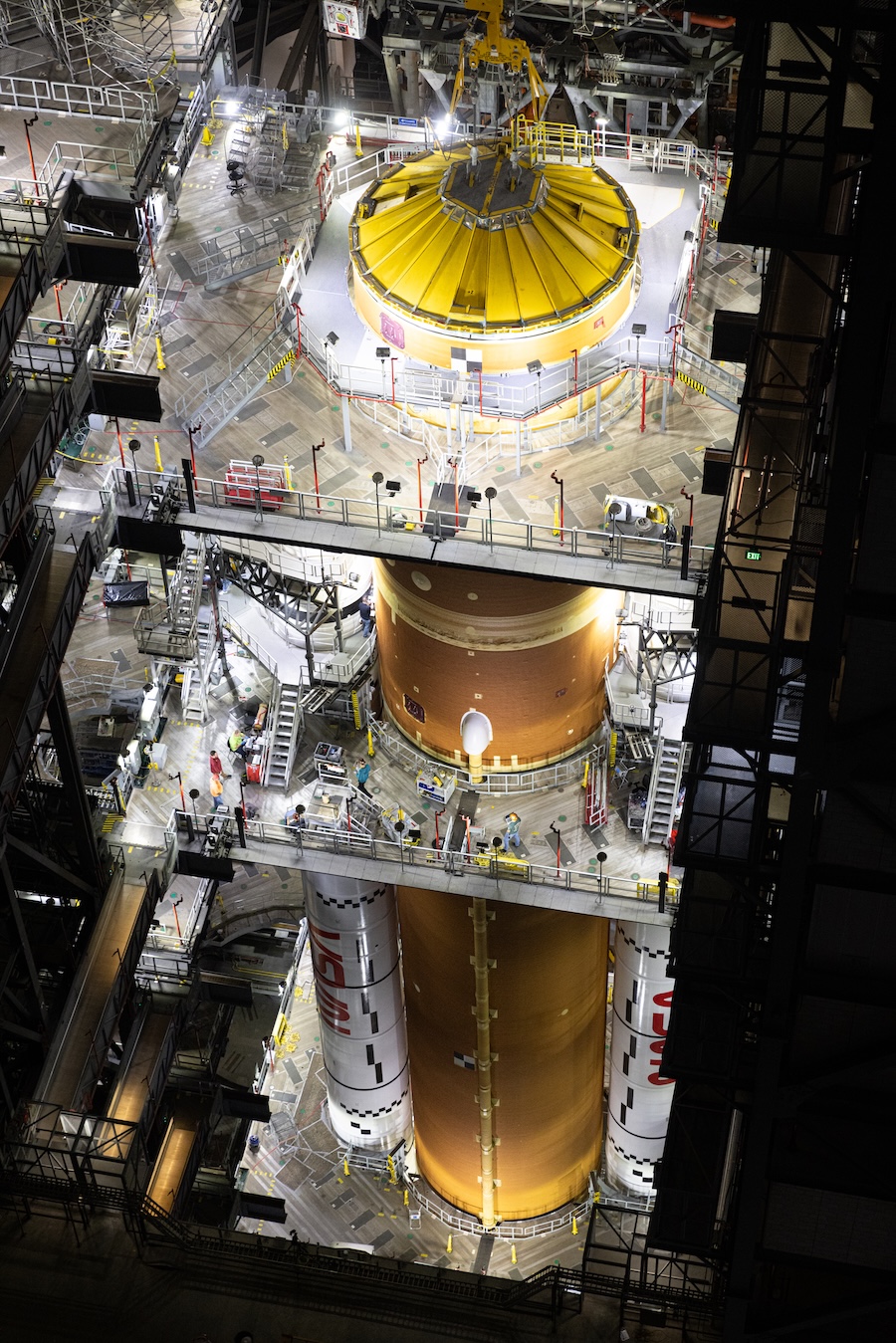
Looking down on the Space Launch System for Artemis II. Credit: NASA/Frank Michaux
Another possibility, which seems to be low-hanging fruit for Artemis decision-makers, could be to cancel the development of a larger Exploration Upper Stage for the SLS rocket. If there are a finite number of SLS flights on NASA’s schedule, it’s difficult to justify the projected $5.7 billion cost of developing the upgraded Block 1B version of the Space Launch System. There are commercial options available to replace the rocket’s Boeing-built Exploration Upper Stage, as my colleague Eric Berger aptly described in a feature story last year.
For now, it looks like NASA’s orange behemoth has a little life left in it. All the hardware for the Artemis II mission has arrived at the launch site in Florida.
The Trump administration will release its fiscal year 2026 budget request in the coming weeks. Maybe, then, NASA will also have a permanent administrator, and the veil will lift over the White House’s plans for Artemis.
The readiness of the Orion crew capsule, where the four Artemis II astronauts will live during their voyage around the Moon, is driving NASA’s schedule for the mission. Officially, Artemis II is projected to launch in September of next year, but there’s little chance of meeting that schedule.
At the beginning of this year, NASA officials ruled out any opportunity to launch Artemis II in 2024 due to several technical issues with the Orion spacecraft. Several of these issues are now resolved, but NASA has not released any meaningful updates on the most significant problem.
This problem involves the Orion spacecraft’s heat shield. During atmospheric reentry at the end of the uncrewed Artemis I test flight in 2022, the Orion capsule’s heat shield eroded and cracked in unexpected ways, prompting investigations by NASA engineers and an independent panel.
NASA’s Orion heat shield inquiry ran for nearly two years. The investigation has wrapped up, two NASA officials said last month, but they declined to discuss any details of the root cause of the heat shield issue or the actions required to resolve the problem on Artemis II.
These corrective options ranged from doing nothing to changing the Orion spacecraft’s reentry angle to mitigate heating or physically modifying the Artemis II heat shield. In the latter scenario, NASA would have to disassemble the Orion spacecraft, which is already put together and is undergoing environmental testing at Kennedy Space Center. This would likely delay the Artemis II launch by a couple of years.
In August, NASA’s top human exploration official told Ars that the agency would hold off on stacking the SLS rocket until engineers had a good handle on the heat shield problem. There are limits to how long the solid rocket boosters can remain stacked vertically. The joints connecting each segment of the rocket motors are certified for one year. This clock doesn’t actually start ticking until NASA stacks the next booster segments on top of the lowermost segments.
However, NASA waived this rule on Artemis I when the boosters were stacked nearly two years before the successful launch.
A NASA spokesperson told Ars on Wednesday that the agency had nothing new to share on the Orion heat shield or what changes, if any, are required for the Artemis II mission. This information should be released before the end of the year, she said. At the same time, NASA could announce a new target launch date for Artemis II at the end of 2025, or more likely in 2026.
But because NASA gave the “go” for SLS stacking now, it seems safe to rule out any major hardware changes on the Orion heat shield for Artemis II.
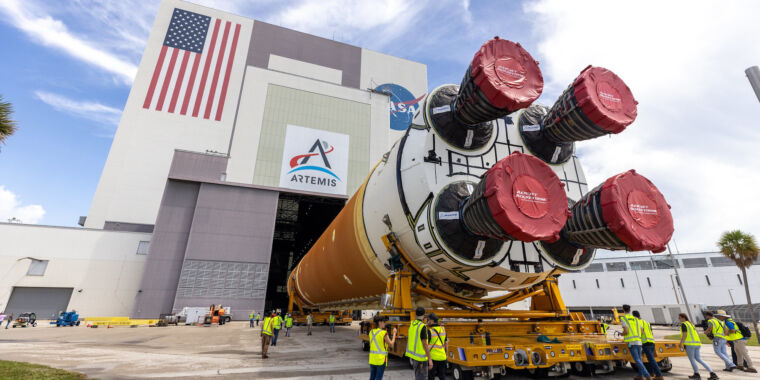
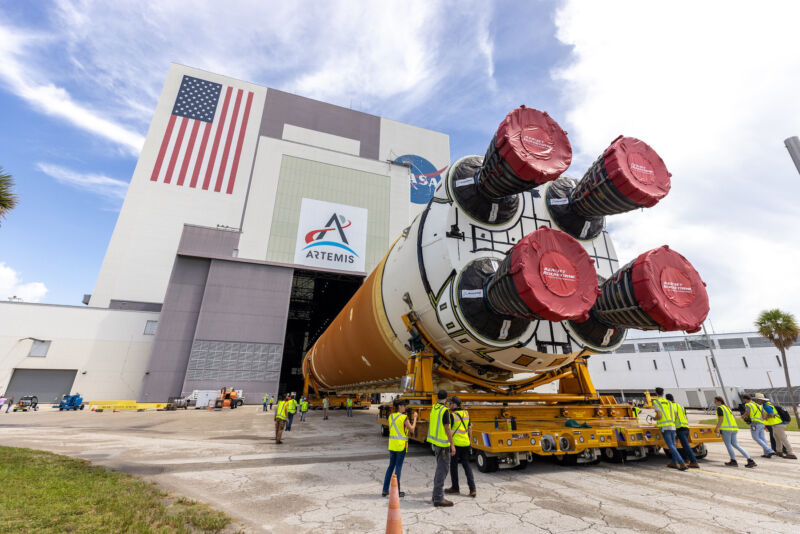
The central piece of NASA’s second Space Launch System rocket arrived at Kennedy Space Center in Florida this week. Agency officials intend to start stacking the towering launcher in the next couple of months for a mission late next year carrying a team of four astronauts around the Moon.
The Artemis II mission, officially scheduled for September 2025, will be the first voyage by humans to the vicinity of the Moon since the last Apollo lunar landing mission in 1972. NASA astronauts Reid Wiseman, Victor Glover, Christina Koch, and Canadian mission specialist Jeremy Hansen will ride the SLS rocket away from Earth, then fly around the far side of the Moon and return home inside NASA’s Orion spacecraft.
“The core is the backbone of SLS, and it’s the backbone of the Artemis mission,” said Matthew Ramsey, NASA’s mission manager for Artemis II. “We’ve been waiting for the core to get here because all the integrated tests and checkouts that we do have to have the core stage. It has the flight avionics that drive the whole system. The boosters are also important, but the core is really the backbone for Artemis. So it’s a big day.”
The core stage rolled off of NASA’s Pegasus barge at Kennedy early Wednesday, following a weeklong ocean voyage from New Orleans, where Boeing builds the rocket under contract to NASA.
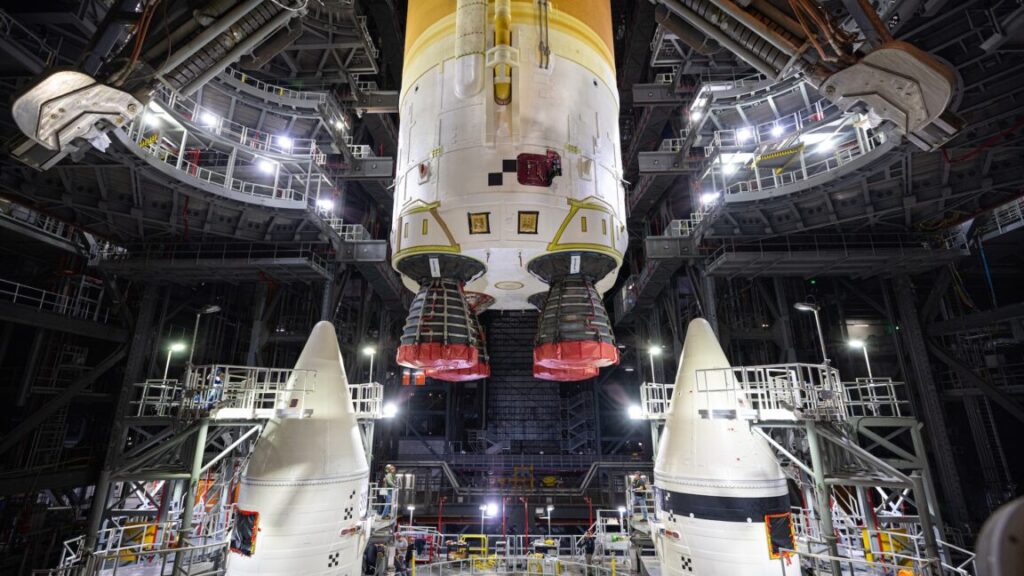
Ramsey told Ars that ground teams hope to begin stacking the rocket’s two powerful solid rocket boosters on NASA’s mobile launcher platform in September. Each booster, supplied by Northrop Grumman, is made of five segments with pre-packed solid propellant and a nose cone. All the pieces for the SLS boosters are at Kennedy and ready for stacking, Ramsey said.
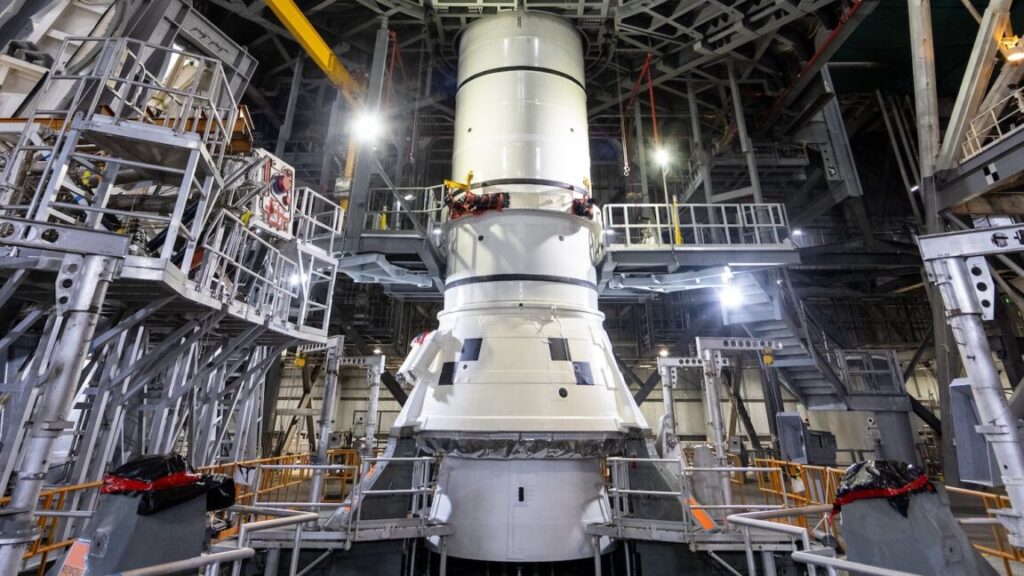
The SLS upper stage, built by United Launch Alliance, is also at the Florida launch site. Now, the core stage is at Kennedy. In August or September, NASA plans to deliver the two remaining elements of the SLS rocket to Florida. These are the adapter structures that will connect the core stage to the upper stage, and the upper stage to the Orion spacecraft.
A heavy-duty crane inside the cavernous Vehicle Assembly Building (VAB) will hoist each segment of the SLS boosters into place on the launch platform. Once the boosters are fully stacked, ground teams will lift the 212-foot (65-meter) core stage vertical in the transfer aisle running through the center of the VAB. A crane will then lower the core stage between the boosters. That could happen as soon as December, according to Ramsey.
Then comes the launch vehicle stage adapter, the upper stage, the Orion stage adapter, and finally, the Orion spacecraft itself.
Moving toward operations
NASA’s inspector general reported in 2022 that NASA’s first four Artemis missions will each cost $4.1 billion. Subsequent documents, including a Government Accountability Office report last year, suggest the expendable SLS core stage is responsible for at least a quarter of the cost for each Artemis flight.
The core stage for Artemis II is powered by four hydrogen-fueled RS-25 engines produced by Aerojet Rocketdyne. Two of the reusable engines for Artemis II have flown on the space shuttle, and the other two RS-25s were built in the shuttle era but never flew. Each SLS launch will put the core stage and its engines in the Atlantic Ocean.
Steve Wofford, who manages the stages office for the SLS program at NASA’s Marshall Space Flight Center, told Ars there are “no major configuration differences” between the core stages for Artemis I and Artemis II. The only minor differences involve instrumentation that NASA wanted on Artemis I to measure pressures, accelerations, vibrations, temperatures, and other parameters on the first flight of the Space Launch System.
“We are still working off some flight observations that we made on Artemis I, but no showstoppers,” Wofford said. “On the first article, the test flight, Artemis I, we really loaded it up. That’s a golden opportunity to learn as much as you can about the vehicle and the flight regime, and anchor all your models… As you progress, you need less and less of that. So Core Stage 2 will have less development flight instrumentation than Core Stage 1, and then Core Stage 3 will have less still.”
Enlarge/ SpaceX’s Starship tower (left) at Launch Complex 39A dwarfs the launch pad for the Falcon 9 rocket (right).
There are a couple of ways to read the announcement from the Federal Aviation Administration that it’s kicking off a new environmental review of SpaceX’s plan to launch the most powerful rocket in the world from Florida.
The FAA said on May 10 that it plans to develop an Environmental Impact Statement (EIS) for SpaceX’s proposal to launch Starships from NASA’s Kennedy Space Center in Florida. The FAA ordered this review after SpaceX updated the regulatory agency on the projected Starship launch rate and the design of the ground infrastructure needed at Launch Complex 39A (LC-39A), the historic launch pad once used for Apollo and Space Shuttle missions.
Dual environmental reviews
At the same time, the US Space Force is overseeing a similar EIS for SpaceX’s proposal to take over a launch pad at Cape Canaveral Space Force Station, a few miles south of LC-39A. This launch pad, designated Space Launch Complex 37 (SLC-37), is available for use after United Launch Alliance’s last Delta rocket lifted off there in April.
On the one hand, these environmental reviews often take a while and could cloud Elon Musk’s goal of having Starship launch sites in Florida ready for service by the end of 2025. “A couple of years would not be a surprise,” said George Nield, an aerospace industry consultant and former head of the FAA’s Office of Commercial Space Transportation.
Another way to look at the recent FAA and Space Force announcements of pending environmental reviews is that SpaceX finally appears to be cementing its plans to launch Starship from Florida. These plans have changed quite a bit in the last five years.
The environmental reviews will culminate in a decision on whether to approve SpaceX’s proposals for Starship launches at LC-39A and SLC-37. The FAA will then go through a separate licensing process, similar to the framework used to license the first three Starship test launches from South Texas.
NASA has contracts with SpaceX worth more than $4 billion to develop a human-rated version of Starship to land astronauts on the Moon on the first two Artemis lunar landing flights later this decade. To do that, SpaceX must stage a fuel depot in low-Earth orbit to refuel the Starship lunar lander before it heads for the Moon. It will take a series of Starship tanker flights—perhaps 10 to 15—to fill the depot with cryogenic propellants.
Launching that many Starships over the course of a month or two will require SpaceX to alternate between at least two launch pads. NASA and SpaceX officials say the best way to do this is by launching Starships from one pad in Texas and another in Florida.
Earlier this week, Ars spoke with Lisa Watson-Morgan, who manages NASA’s human-rated lunar lander program. She was at Kennedy Space Center this week for briefings on the Starship lander and a competing lander from Blue Origin. One of the topics, she said, was the FAA’s new environmental review before Starship can launch from LC-39A.
“I would say we’re doing all we can to pull the schedule to where it needs to be, and we are working with SpaceX to make sure that their timeline, the EIS timeline, and NASA’s all work in parallel as much as we can to achieve our objectives,” she said. “When you’re writing it down on paper just as it is, it looks like there could be some tight areas, but I would say we’re collectively working through it.”
Officially, SpaceX plans to perform a dress rehearsal for the Starship lunar landing in late 2025. This will be a full demonstration, with refueling missions, an uncrewed landing of Starship on the lunar surface, then a takeoff from the Moon, before NASA commits to putting people on Starship on the Artemis III mission, currently slated for September 2026.
So you can see that schedules are already tight for the Starship lunar landing demonstration if SpaceX activates launch pads in Florida late next year.
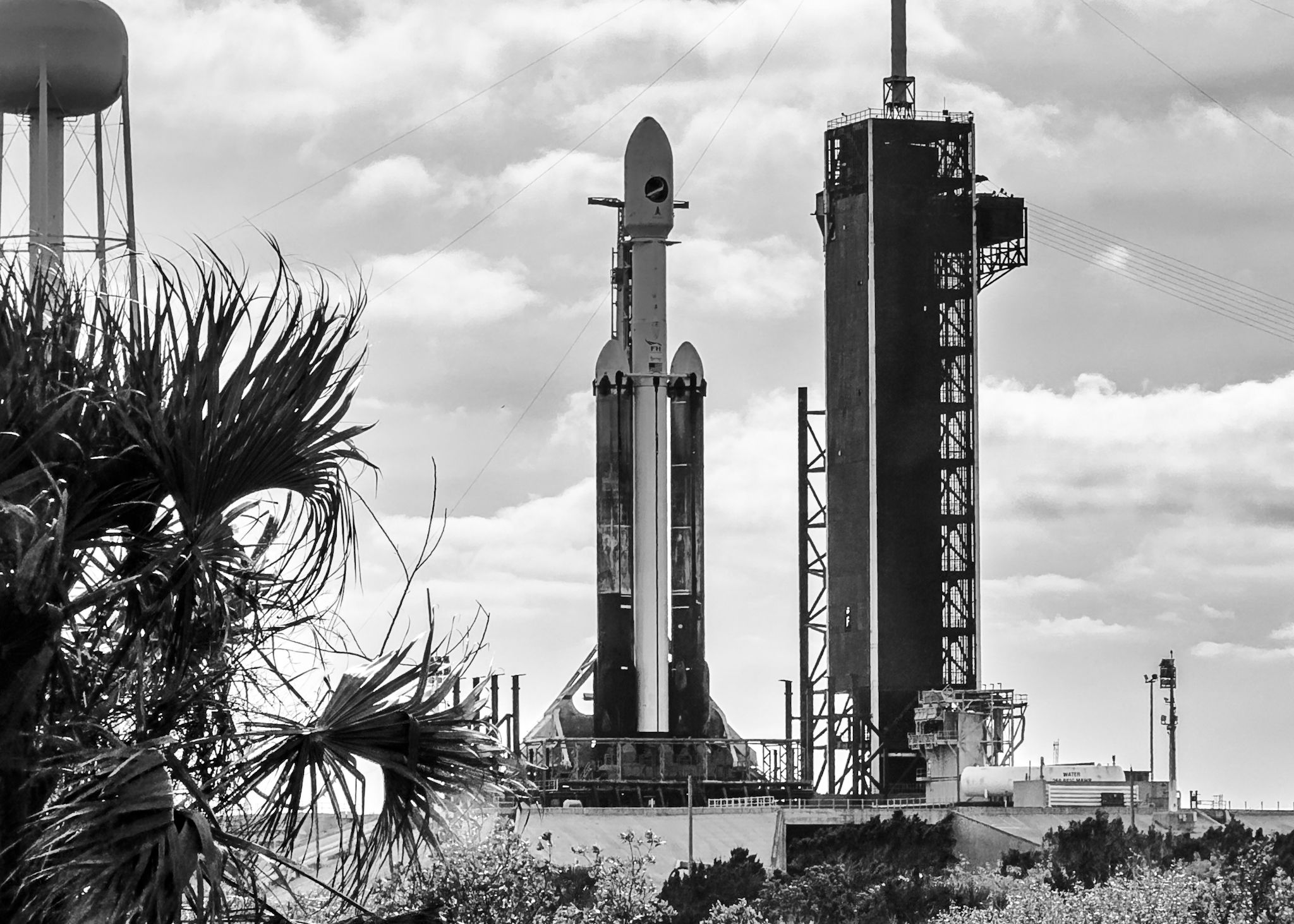
Enlarge/ SpaceX’s Falcon Heavy rocket stands on Launch Complex 39A in Florida, hours before its scheduled liftoff with the military’s X-37B spaceplane.
Trevor Mahlmann/Ars Technica
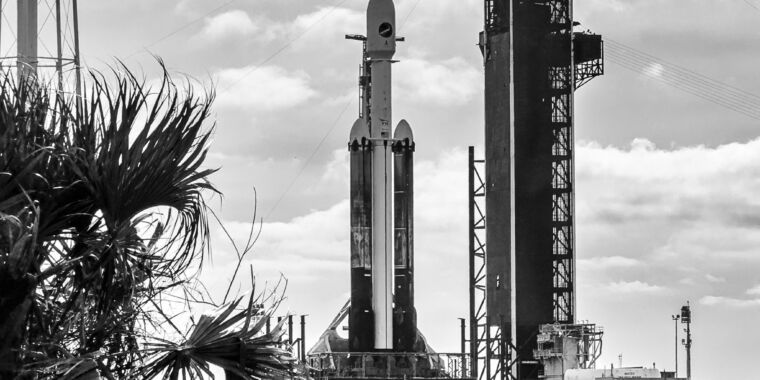
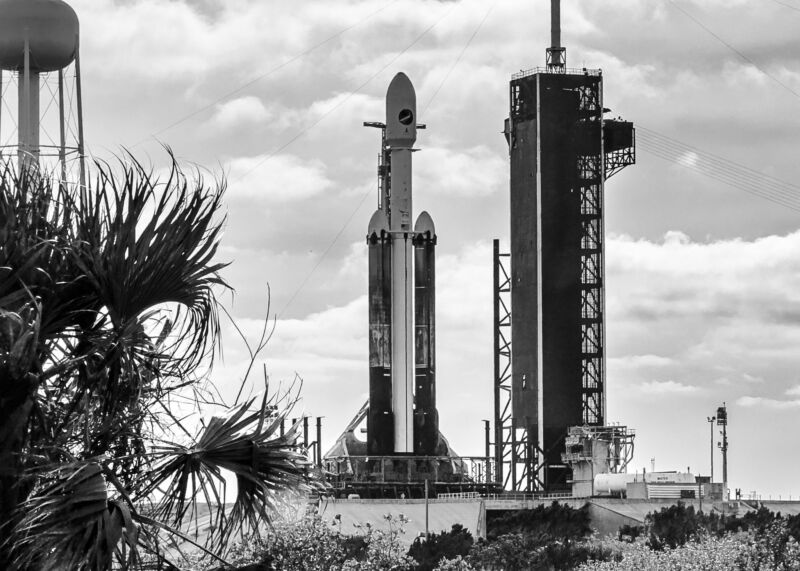
CAPE CANAVERAL, Florida—A SpaceX Falcon Heavy rocket is poised for launch as soon as Tuesday night from the Kennedy Space Center in Florida, and the US military’s mysterious X-37B spaceplane is fastened atop the heavy-lifter for a ride into orbit.
Although the Space Force is keeping details about the military spaceplane’s flight under wraps, we know it’s heading into an unusual orbit, probably significantly higher than the X-37B’s previous sojourns that stayed within a few hundred miles of Earth’s surface.
SpaceX’s launch team called off a launch attempt Monday night “due to a ground side issue” and reset for another launch opportunity as soon as Tuesday night at 8: 14pm EST (01: 14 UTC). When it lifts off, the Falcon Heavy will light 27 kerosene-fueled engines to power the rocket off its launch pad overlooking the Atlantic coastline.
The exact altitude the X-37B will be flying through is unclear, but hobbyists and amateur sleuths who use open source information to reconstruct trajectories of top-secret military spacecraft suggest the Falcon Heavy will haul the winged vehicle into an orbit that could stretch tens of thousands of miles above the planet.
What’s more, the Falcon Heavy will apparently take a flight path toward the northeast from Florida’s Space Coast, then ultimately release the X-37B on a trajectory that will take it over Earth’s polar regions. This is a significant departure from the flight profile for the military spaceplane’s six previous missions, which all flew to space on smaller rockets than the Falcon Heavy.
In a statement, the Space Force said this flight of the X-37B is focused on “a wide range of test and experimentation objectives.” Flying in “new orbital regimes” is among the test objectives, military officials said.
“It seems to me like it might be a much higher orbit that it’s going to,” said Brian Weeden, director of program planning for the Secure World Foundation, which promotes sustainable and peaceful uses of outer space. “Otherwise, I don’t know why they would use a Falcon Heavy, which is a pretty big thing.”
Covering more ground
The X-37B spaceplane has attracted a lot of attention and speculation since its first mission in 2010. Across multiple administrations, Pentagon officials have consistently walked a narrow line between acknowledging the existence of the spaceplane, and divulging limited information about its general purpose, while treating some details with the utmost secrecy. The military does not talk about where in space it flies. With a few exceptions, defense officials haven’t publicly discussed specifics of what the X-37B carries into orbit.
The military has two Boeing-built X-37B spaceplanes, or Orbital Test Vehicles, in its inventory. They are reusable and designed to launch inside the payload fairing of a conventional rocket, spend multiple years in space with the use of solar power, and then return to Earth for a landing on a three-mile-long runway, either at Vandenberg Space Force Base in California or at NASA’s Kennedy Space Center in Florida.
It resembles a miniature version of NASA’s retired space shuttle orbiter, with wings, deployable landing gear, and black thermal protection tiles to shield its belly from the scorching heat of reentry. It measures 29 feet (about 9 meters) long, roughly a quarter of the length of NASA’s space shuttle, and it doesn’t carry astronauts. The X-37B has a cargo bay inside the fuselage for payloads, with doors that open after launch and close before landing.
The Space Force made a surprise announcement on November 8 that the next flight of the X-37B, sometimes called OTV-7, would launch on a SpaceX Falcon Heavy rocket. All six of the spaceplane’s past flights launched on smaller rockets, either United Launch Alliance’s Atlas V or SpaceX’s Falcon 9.