computer history

the-mac-calculator’s-original-design-came-from-letting-steve-jobs-play-with-menus-for-ten-minutes

The Mac calculator’s original design came from letting Steve Jobs play with menus for ten minutes

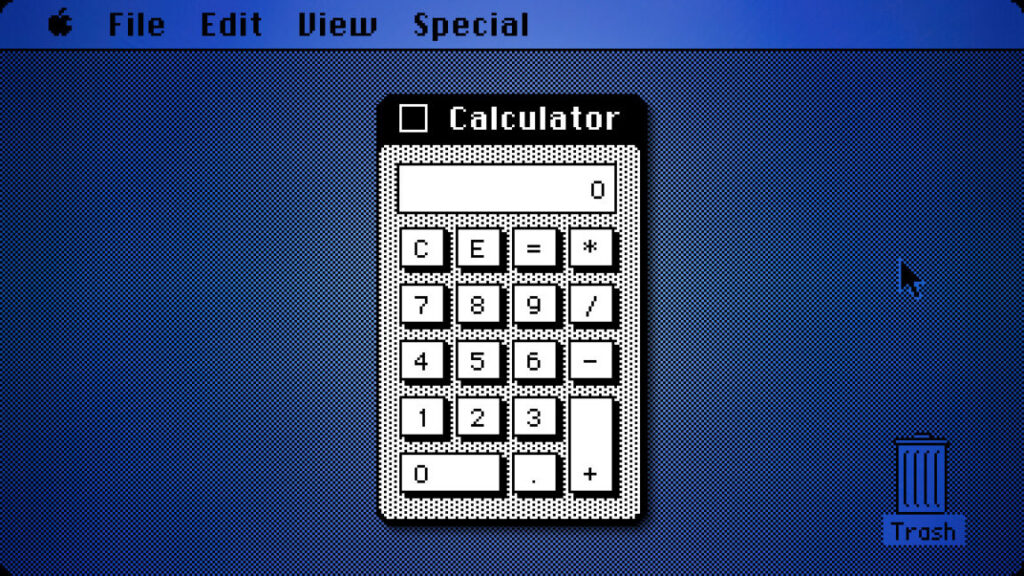
Rather than continue the endless revision cycle, Espinosa took a different approach. According to Hertzfeld, Espinosa created a program that exposed every visual parameter of the calculator through pull-down menus: line thickness, button sizes, background patterns, and more. When Jobs sat down with it, he spent about ten minutes adjusting settings until he found a combination he liked.

The approach worked. When given direct control over the parameters rather than having to articulate his preferences verbally, Jobs quickly arrived at a design he was satisfied with. Hertzfeld notes that he implemented the calculator’s UI a few months later using Jobs’s parameter choices from that ten-minute session, while Donn Denman, another member of the Macintosh team, handled the mathematical functions.

That ten-minute session produced the calculator design that shipped with the Mac in 1984 and remained virtually unchanged through Mac OS 9, when Apple discontinued that OS in 2001. Apple replaced it in Mac OS X with a new design, ending the calculator’s 17-year run as the primary calculator interface for the Mac.

Why it worked

Espinosa’s Construction Set was an early example of what would later become common in software development: visual and parameterized design tools. In 1982, when most computers displayed monochrome text, the idea of letting someone fine-tune visual parameters through interactive controls without programming was fairly forward-thinking. Later, tools like HyperCard would formalize this kind of idea into a complete visual application framework.

The primitive calculator design tool also revealed something about Jobs’s management process. He knew what he wanted when he saw it, but he perhaps struggled to articulate it at times. By giving him direct manipulation ability, Espinosa did an end-run around that communication problem entirely. Later on, when he returned to Apple in the late 1990s, Jobs would famously insist on judging products by using them directly rather than through canned PowerPoint demos or lists of specifications.

The longevity of Jobs’s ten-minute design session suggests the approach worked. The calculator survived nearly two decades of Mac OS updates, outlasting many more elaborate interface elements. What started as a workaround became one of the Mac’s most simple but enduring designs.

By the way, if you want to try the original Mac OS calculator yourself, you can run various antique versions of the operating system in your browser thanks to the Infinite Mac website.

The Mac calculator’s original design came from letting Steve Jobs play with menus for ten minutes Read More »

reddit-user-surprised-when-1960s-computer-panel-emerged-from-collapsed-family-garage

Reddit user surprised when 1960s computer panel emerged from collapsed family garage

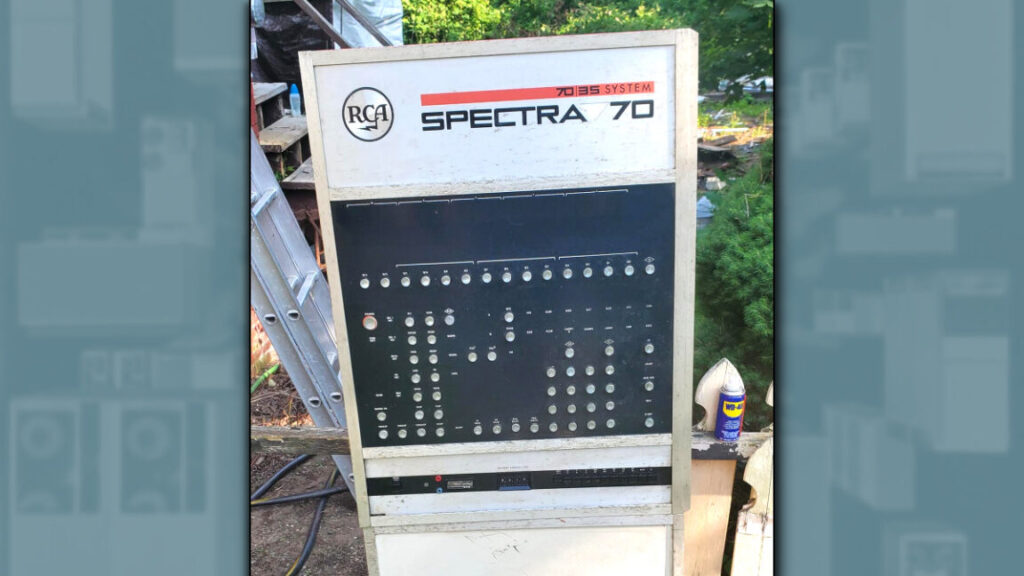
The Spectra 70 family included five models: the 70/15, 70/25, 70/35, 70/45, and 70/55, with progressively more capable memory speeds and capacities. Operators could configure the system with up to 32,768 bytes of memory (32K), achieved by combining two 16,384-byte core memory modules—a respectable amount for the mid-1960s, though minuscule by today’s standards. By comparison, a decade later, the Apple II personal computer could utilize up to a maximum of 48K of memory.

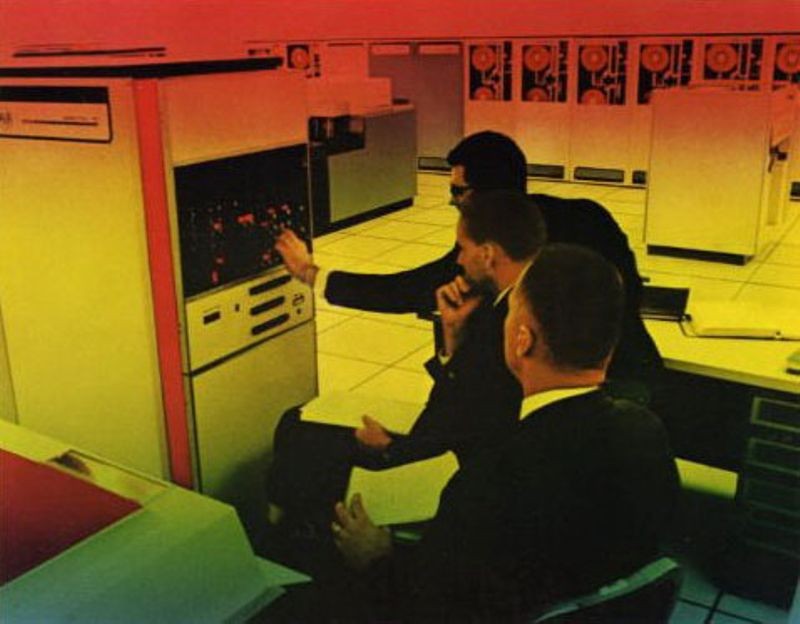
A view of operators using an RCA Spectra 70 control panel similar to the one found in the garage, circa 1965.

A view of operators using an RCA Spectra 70/45 control panel similar to the one found in the garage, circa 1965. Credit: RCA

SonOfADeadMeme believes the 70/35 panel ended up in his family’s garage as a keepsake from the computer’s decommissioning. “I think the system may had been dismantled at IBM and the guy kept the terminal as a souvenir unfortunately, searched high and low while it was still standing but only other computers there was a Apple IIE and a Compaq that I think got tossed (kept the Apple II but cant find the Compaq). I did make sure to pretty much clean the whole place out before the collapse though,” they explained.

RCA discontinued the Spectra series in 1971 when the company exited the mainframe computer business, making surviving examples increasingly scarce. The company sold its computer division to Univac, which briefly continued supporting existing Spectra installations before phasing them out entirely.

As for the control panel’s future, the original poster has creative plans for this piece of computing history. “Unfortunately I don’t think I’m ever finding the other 1,500lbs of mainframe needed to use the luxurious 34 kilobytes of memory so I may (without altering a single Goddamn thing) string some LEDs behind the front panel and set them to blink at random.”

Reddit user surprised when 1960s computer panel emerged from collapsed family garage Read More »

“rasti-computer”-is-a-detailed-grid-compass-tribute-made-from-framework-innards

“Rasti Computer” is a detailed GRiD Compass tribute made from Framework innards

But can it play Pitfall!? —

It’s a custom keyboard, an artfully dinged-up case, and a wonderful throwback.

Penk Chen's Rasti Computer

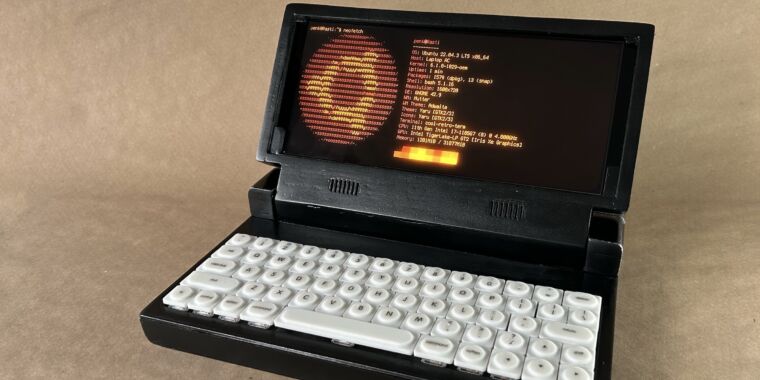
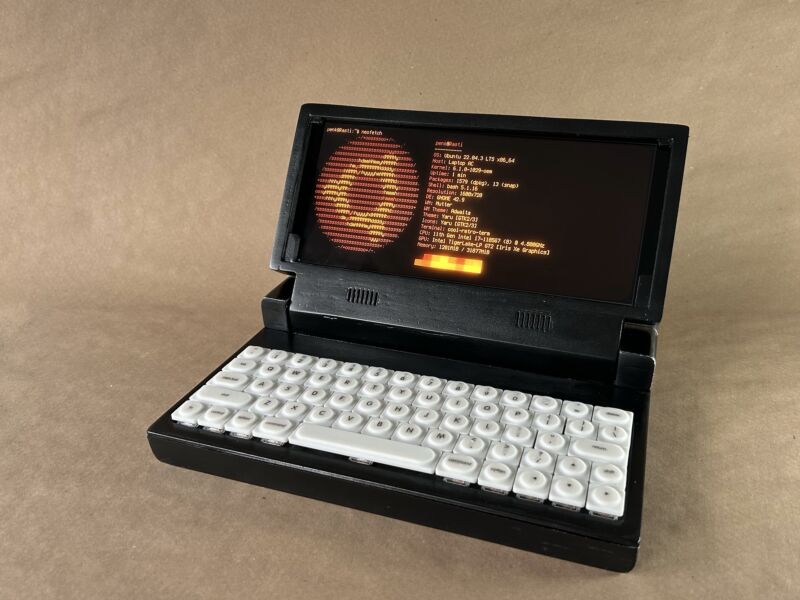
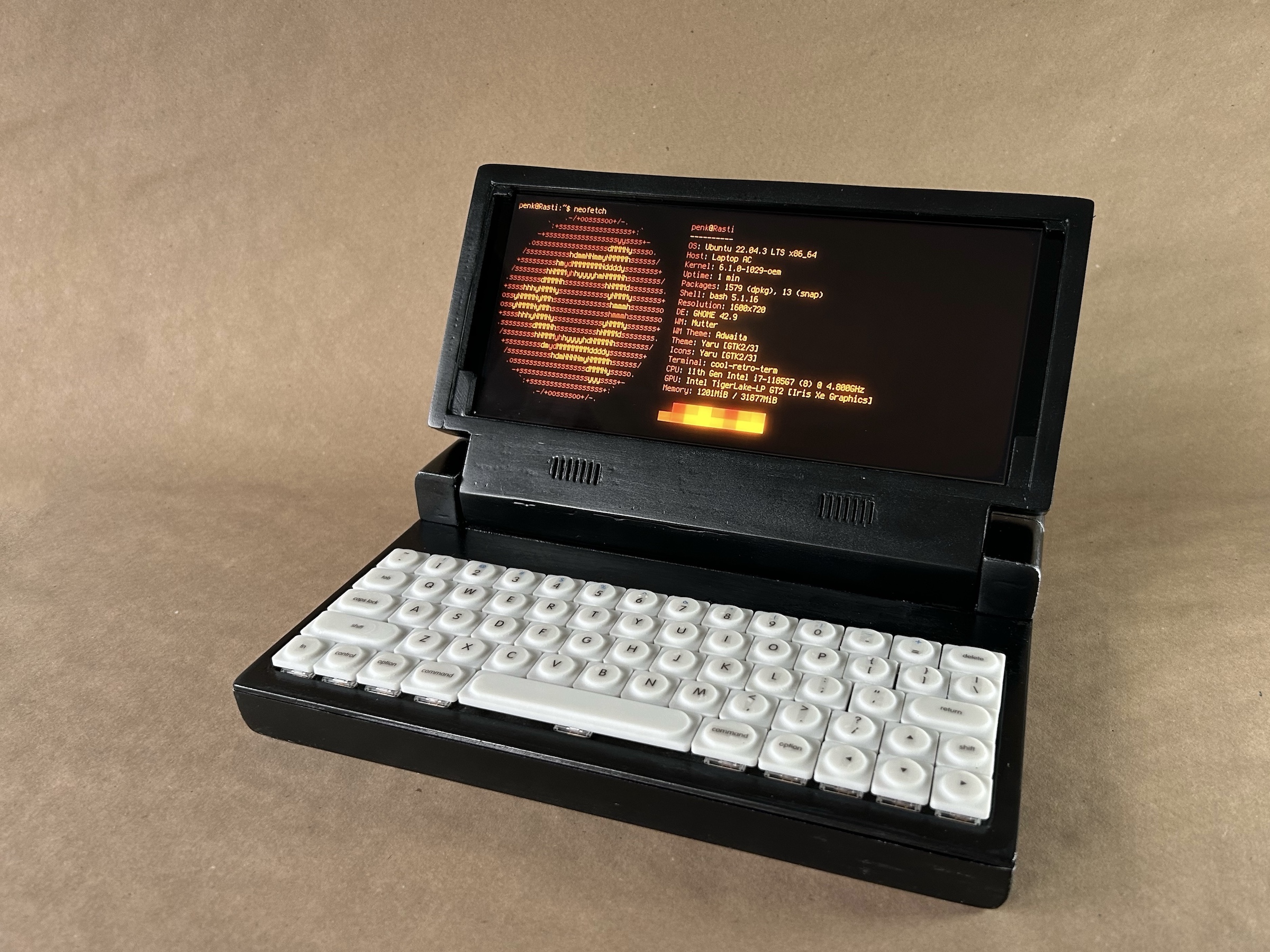
Enlarge / Penk Chen’s Rasti Computer, built with 3D printing, Framework laptop internals, and a deep love for the first laptop that went to space.

If I had to figure out what to do with the insides of a Framework 13 laptop I had lying around after today, I might not turn it into a strange but compelling “Slabtop” this time.

No, I think that, having seen Penk Chen’s remarkable project to fit Framework parts into a kind of modern restyling of the Grid Compass laptop, I would have to wait until Chen posts detailed build instructions for this project… and until I had a 3D printer… and could gather the custom mechanical keyboard parts. Sure, that’s a lot harder, but it’s hard to put a price on drawing unnecessary attention to yourself while you chonk away on your faux-used future laptop.

The Rasti Computer, which Chen writes is “derived from the German compound word ‘Rasterrahmen’ (grid + framework),” has at its core the mainboard, battery, and antennae from the highly modular and repairable first-generation Framework laptop. It takes input from the custom keyboard Chen designed for the chassis, with custom PCB and 3D-printed keycaps and case. It sends images to a 10.4-inch QLED 1600×720 display, and it all fits inside a bevy of 3D-printed pieces with some fairly standard hex-head bolts. Oh, and the hinges from a 2012 13-inch MacBook pro, though that’s possibly negotiable.

  • Rear view of the Rasti Computer, with “a touch of silver dry brushing [that] added the beat-up metal look.”

  • Semi-exploded view of the Rasti Computer.

  • You can, of course, run Windows on this device, if you like. But it might feel dissonant to put so much custom work in to run a stock OS.

Chen’s project derives from, and pays tribute to, the Grid Compass (styled “GRiD” by its maker, GRiD Systems Corp.). The Compass was probably (again, probably) the first clamshell-style laptop made. It saw use by NASA’s Space Shuttle program, as well as by military and other entities needing a laptop that was both compact and throw-it-at-a-wall durable. It had 256KB of memory by default (less than half the amount Bill Gates didn’t say you should ever need), a 320×240 pixel screen, and an Intel 8086 processor. Some models contained a 1,200bps modem. It cost more than $8,000 in 1982, or almost $25,000 today.

We have it on good word from some resident vintage computer collectors that the Compass remains a rare and expensive item to get. Rebuilding a Framework mainboard into a modern-day Grid-like doesn’t seem particularly cheap, depending on your 3D printer setup, or lack thereof. Nor is it likely to be easy, given a glimpse at how it goes together. But it will give you a unique portable and conversation piece, one that runs programs beyond Grid-OS.

You can read more about the Grid Compass at Cooper Hewitt, the firm where Compass designer Bill Moggridge worked as design director from 2010 until his 2011 passing. If you remember bubble memory, it’s a dip back into that genial trauma. Hackaday, where we first saw the Rasti project, wrote up a similarly Compass-inspired laptop, the GRIZ Sextant, with a Raspberry Pi at its core.

“Rasti Computer” is a detailed GRiD Compass tribute made from Framework innards Read More »