
Cellebrite

leaker-reveals-which-pixels-are-vulnerable-to-cellebrite-phone-hacking

Leaker reveals which Pixels are vulnerable to Cellebrite phone hacking
Cellebrite leak

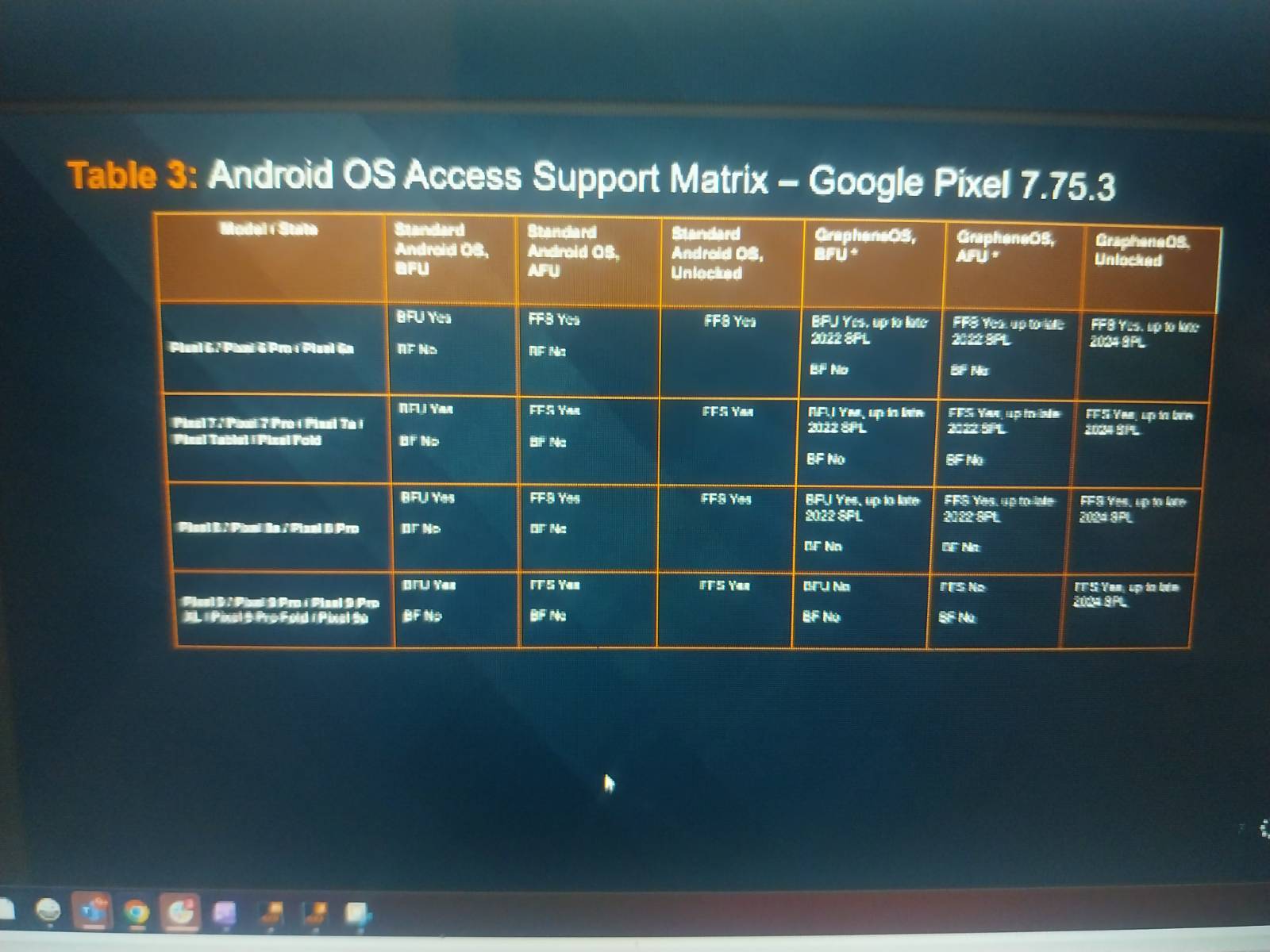
This blurry screenshot appears to list which Pixel phones Cellebrite devices can hack.

Credit: rogueFed

This blurry screenshot appears to list which Pixel phones Cellebrite devices can hack. Credit: rogueFed

At least according to Cellebrite, GrapheneOS is more secure than what Google offers out of the box. The company is telling law enforcement in these briefings that its technology can extract data from Pixel 6, 7, 8, and 9 phones in unlocked, AFU, and BFU states on stock software. However, it cannot brute-force passcodes to enable full control of a device. The leaker also notes law enforcement is still unable to copy an eSIM from Pixel devices. Notably, the Pixel 10 series is moving away from physical SIM cards.

For those same phones running GrapheneOS, police can expect to have a much harder time. The Cellebrite table says that Pixels with GrapheneOS are only accessible when running software from before late 2022—both the Pixel 8 and Pixel 9 were launched after that. Phones in both BFU and AFU states are safe from Cellebrite on updated builds, and as of late 2024, even a fully unlocked GrapheneOS device is immune from having its data copied. An unlocked phone can be inspected in plenty of other ways, but data extraction in this case is limited to what the user can access.

The original leaker claims to have dialed into two calls so far without detection. However, rogueFed also called out the meeting organizer by name (the second screenshot, which we are not reposting). Odds are that Cellebrite will be screening meeting attendees more carefully now.

We’ve reached out to Google to inquire about why a custom ROM created by volunteers is more resistant to industrial phone hacking than the official Pixel OS. We’ll update this article if Google has anything to say.

Leaker reveals which Pixels are vulnerable to Cellebrite phone hacking Read More »

serbian-student’s-android-phone-compromised-by-exploit-from-cellebrite

Serbian student’s Android phone compromised by exploit from Cellebrite

Amnesty International on Friday said it determined that a zero-day exploit sold by controversial exploit vendor Cellebrite was used to compromise the phone of a Serbian student who had been critical of that country’s government.

The human rights organization first called out Serbian authorities in December for what it said was its “pervasive and routine use of spyware” as part of a campaign of “wider state control and repression directed against civil society.” That report said the authorities were deploying exploits sold by Cellebrite and NSO, a separate exploit seller whose practices have also been sharply criticized over the past decade. In response to the December report, Cellebrite said it had suspended sales to “relevant customers” in Serbia.

Campaign of surveillance

On Friday, Amnesty International said that it uncovered evidence of a new incident. It involves the sale by Cellebrite of an attack chain that could defeat the lock screen of fully patched Android devices. The exploits were used against a Serbian student who had been critical of Serbian officials. The chain exploited a series of vulnerabilities in device drivers the Linux kernel uses to support USB hardware.

“This new case provides further evidence that the authorities in Serbia have continued their campaign of surveillance of civil society in the aftermath of our report, despite widespread calls for reform, from both inside Serbia and beyond, as well as an investigation into the misuse of its product, announced by Cellebrite,” authors of the report wrote.

Amnesty International first discovered evidence of the attack chain last year while investigating a separate incident outside of Serbia involving the same Android lockscreen bypass. Authors of Friday’s report wrote:

Serbian student’s Android phone compromised by exploit from Cellebrite Read More »