bigfoot

“it-ain’t-no-unicorn”:-these-researchers-have-interviewed-130-bigfoot-hunters

“It ain’t no unicorn”: These researchers have interviewed 130 Bigfoot hunters

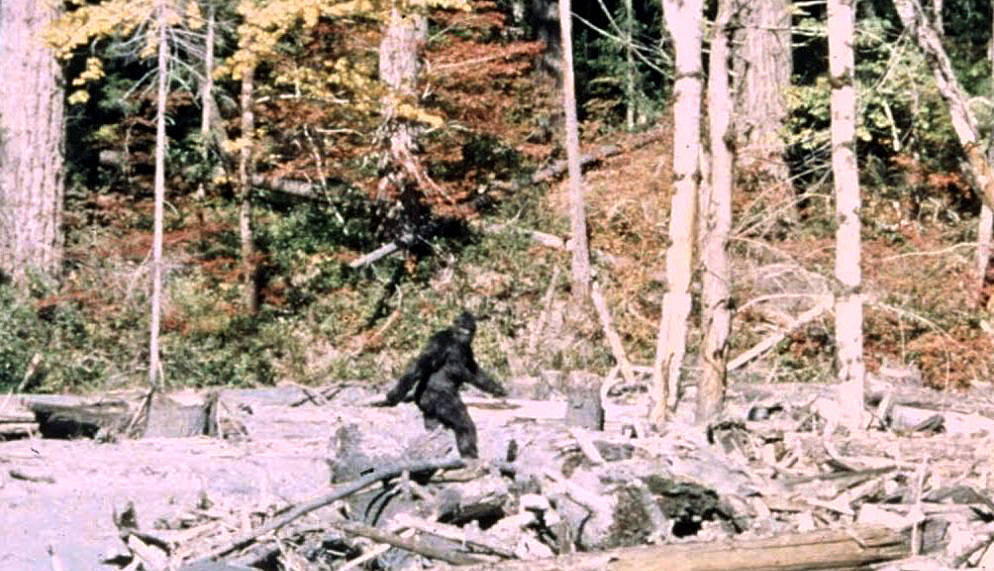
It was the image that launched a cultural icon. In 1967, in the Northern California woods, a 7-foot-tall, ape-like creature covered in black fur and walking upright was captured on camera, at one point turning around to look straight down the lens. The image is endlessly copied in popular culture—it’s even become an emoji. But what was it? A hoax? A bear? Or a real-life example of a mysterious species called the Bigfoot?

The film has been analysed and re-analysed countless times. Although most people believe it was some sort of hoax, there are some who argue that it’s never been definitively debunked. One group of people, dubbed Bigfooters, is so intrigued that they have taken to the forests of Washington, California, Oregon, Ohio, Florida, and beyond to look for evidence of the mythical creature.

But why? That’s what sociologists Jamie Lewis and Andrew Bartlett wanted to uncover. They were itching to understand what prompts this community to spend valuable time and resources looking for a beast that is highly unlikely to even exist. During lockdown, Lewis started interviewing more than 130 Bigfooters (and a few academics) about their views, experiences, and practices, culminating in the duo’s recent book “Bigfooters and Scientific Inquiry: On the Borderlands of Legitimate Science.”

Here, we talk to them about their academic investigation.

What was it about the Bigfoot community that you found so intriguing?

Lewis: It started when I was watching either the Discovery Channel or Animal Planet and a show called Finding Bigfoot was advertised. I was really keen to know why this program was being scheduled on what certainly at the time was a nominally serious and sober natural history channel. The initial plan was to do an analysis of these television programmes, but we felt that wasn’t enough. It was lockdown and my wife was pregnant and in bed a lot with sickness, so I needed to fill my time.

Bartlett: One of the things that I worked on when Jamie and I shared an office in Cardiff was a sociological study of fringe physicists. These are people mostly outside of academic institutions trying to do science. I was interviewing these people, going to their conferences. And that led relatively smoothly into Bigfoot, but it was Jamie’s interest in Bigfoot that brought me to this field.

How big is this community?

Lewis: It’s very hard to put a number on it. There is certainly a divide between what are known as “apers,” who believe that Bigfoot is just a primate unknown to science, and those that are perhaps more derogatorily called “woo-woos,” who believe that Bigfoot is some sort of interdimensional traveller, an alien of sort. We’re talking in the thousands of people. But there are a couple of hundred really serious people of which I probably interviewed at least half.

Many people back them. A YouGov survey conducted as recently as November 2025, suggested that as many as one quarter of Americans believe that Bigfoot either definitely or probably exists.

Were the interviewees suspicious of your intentions?

Lewis: I think there was definitely a worry that they would be caricatured. And I was often asked, “Do I believe in Bigfoot?” I had a standard answer that Andy and I agreed on, which was that mainstream, institutional science says there is absolutely no compelling evidence that Bigfoot exists. We have no reason to dissent with that consensus. But as sociologists what does exist is a community (or communities) of Bigfooting, and that’s what interests us.

“It ain’t no unicorn”: These researchers have interviewed 130 Bigfoot hunters Read More »
under-new-bill,-bigfoot-could-become-california’s-“official-cryptid”

Under new bill, Bigfoot could become California’s “official cryptid”

You might suspect that a one-line bill about Bigfoot that bears the number “666” is a joke, but AB-666 is apparently a serious offering from California Assemblymember Chris Rogers. Rogers represents a California district known for its Bigfoot sightings (or “sightings,” depending on your persuasion—many of these have been faked), and he wants to make Bigfoot the “official cryptid” of the state.

His bill notes that California already has many official symbols, including the golden poppy (official flower), the California redwood (official tree), the word “Eureka” (official motto), the red-legged frog (official amphibian), the grizzly bear (official animal), swing dancing (official dance), and the saber-toothed cat (official fossil). The state has so many of these that there are separate categories for freshwater fish (golden trout) and marine fish (garibaldi). So why not, Rogers wants to know, “designate Bigfoot as the official state cryptid”?

That’s… pretty much the bill, which was introduced this week and already has Bigfoot advocates excited. SFGate talked to Matt Moneymaker, who it describes as “a longtime Bigfoot researcher and former star of the Animal Planet series Finding Bigfoot,” about the bill. Moneymaker loves it, noting that he has personally “had a face-to-face encounter one time, after which I was absolutely sure they existed because I had one about 20 feet in front of me, growling at me.”

Rogers represents California Assembly District 2, a sprawling expanse of Northern California that includes the town of Willow Grove, epicenter of the early Bigfoot sightings back in the 1950s. Today, the small community boasts the Bigfoot Museum, the Bigfoot Motel, and the Bigfoot Steakhouse—to say nothing of Bigfoot’s Barbershop, Bigfoot Equipment & Repair, and, of course, the Bigfoot Cannabis Company. The bill seems like an easy way to goose interest in Bigfoot and to reap the tourist dollars that come from that interest.

This is not to deny the underlying reality of a Bigfoot-like creature (though you can indeed count me among the extremely, extremely skeptical—surely most of these sightings are of bears). Moneymaker runs the Bigfoot Field Researchers’ Organization, which tracks sightings across the US. The most recent one I could find on the site was report 77,879 (!), which came from rural Buchanan County, Virginia, on November 10, 2024.

Under new bill, Bigfoot could become California’s “official cryptid” Read More »

study-finds-bigfoot-sightings-correlate-with-black-bear-populations

Study finds bigfoot sightings correlate with black bear populations

Bearly believable —

The big conclusion: “If bigfoot is there, it could be a bear.”

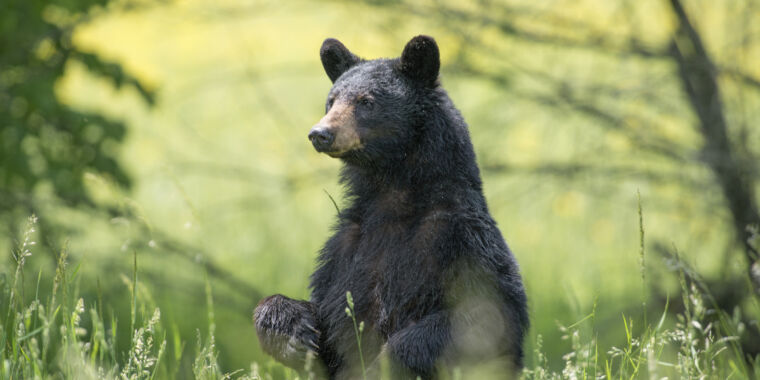
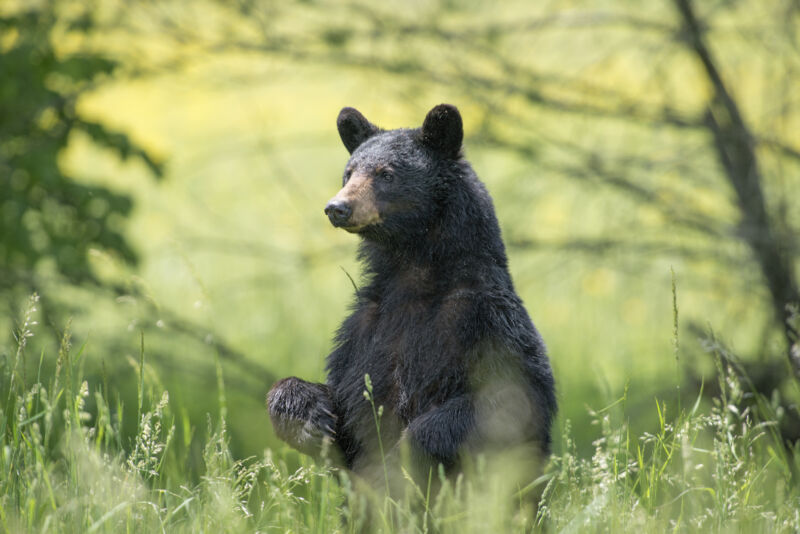
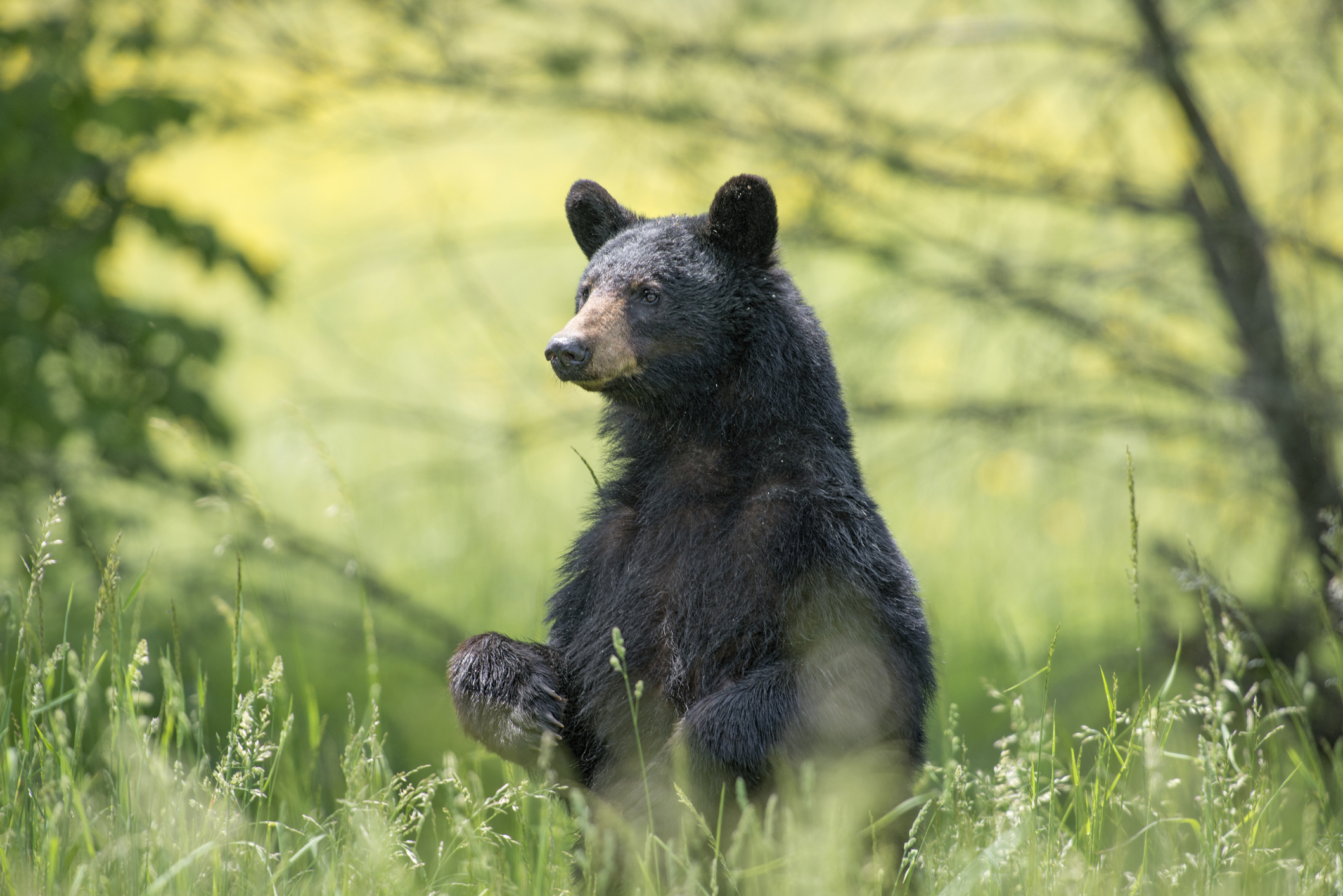
A black bear standing on its hind paws surrounded by greenery in a forest with a blurry background

Enlarge / Black bears will frequently stand on their hind legs, which may increase their misidentification.

The idea that North America is home to a completely unknown primate species just doesn’t seem to go away. Years after everyone started walking around with high-quality cameras in their phones, there still haven’t been any clear images of a bigfoot. But that hasn’t stopped a steady flow of purported sightings.

Now, someone named Floe Foxon has followed up on an earlier analysis and checked for factors that could influence the frequency of bigfoot sightings throughout North America. The results suggest that there’s a strong correlation between sightings and the local black bear population—for every 1,000 bears, the frequency of bigfoot sightings goes up by about 4 percent.

Big (foot) data

It’s easy to see how black bears and bigfoot could be mistaken for each other. Despite their name, the bears come in a wide range of colors, from a golden brown through to a deep reddish one, as well as their namesake black. They’re also large animals and will frequently stand on their hind legs to get a better view of their surroundings. They also frequent the forested areas that are supposedly bigfoot’s favored terrain. Foxon even quotes a reported bigfoot sighting as saying that pictures were obtained but, “One of the pictures looks like a bear.”

Earlier work had used data from the Pacific Northwest to show that the presence of bears correlated with the frequency of bigfoot sightings. But Foxon decided to expand the analysis, bringing in the rest of the US and Canada.

The most recent comprehensive, peer-reviewed data on black bear populations dates from 2006, so the analysis was performed using data from that year. Even so, a number of states and provinces had to be excluded. Sadly for Delaware, Hawaii, Illinois, Indiana, Iowa, Kansas, Nebraska, North Dakota and South Dakota, there were no known black bear populations in those states in 2006. And good population numbers weren’t available for Rhode Island, Texas, Wisconsin, Wyoming, Alberta, Newfoundland and Labrador, Northwest Territories, and Nova Scotia. So, while the work is more comprehensive than the Pacific Northwest-only analysis, there were still considerable gaps.

Data for sightings came from the Bigfoot Field Researchers Organization, which maintains a geo-tagged database of reported sightings. National census data was used to determine the human populations in these areas, and estimates of the amount of forested area were also obtained from the Canadian and US governments.

All of these were combined into two different models. In both models, a larger human population was expected to increase the probability of sightings simply due to increased opportunity. Since bigfoot sightings tend to occur in forested areas—and it’s hard to see how a large primate could hide in most other terrains—forests and sightings were also expected to correlate.

Where the bears are

The key difference between the models was whether they included the local black bear population or not. The model with a bear variable provided a much better fit to the data, suggesting that mistaken identity is a factor in bigfoot sightings.

Overall, Foxon found that, with forested areas and the human population taken into account, there’s about one bigfoot sighting for every 5,000 black bears. Each additional 1,000 bears raises the probability of a sighting by about 4 percent. Hence, the conclusion that “if bigfoot is there, it could be a bear.”

That’s not to say bears account for everything. Foxon notes that there are states without a known breeding population of bears that still have bigfoot sightings. And the human population levels could contribute as a source of mistaken identities in addition to raising the opportunity for sightings.

The paper also suggests that this finding could be helpful for bear conservation, as the frequency of bigfoot sightings may provide a proxy measure for the number of black bears present and thus could provide an independent method of tracking population changes.

Journal of Zoology, 2024. DOI: 10.1111/jzo.13148  (About DOIs).

Study finds bigfoot sightings correlate with black bear populations Read More »