beer

in-puzzling-outbreak,-officials-look-to-cold-beer,-gross-ice,-and-chatgpt

In puzzling outbreak, officials look to cold beer, gross ice, and ChatGPT

An AI assist?

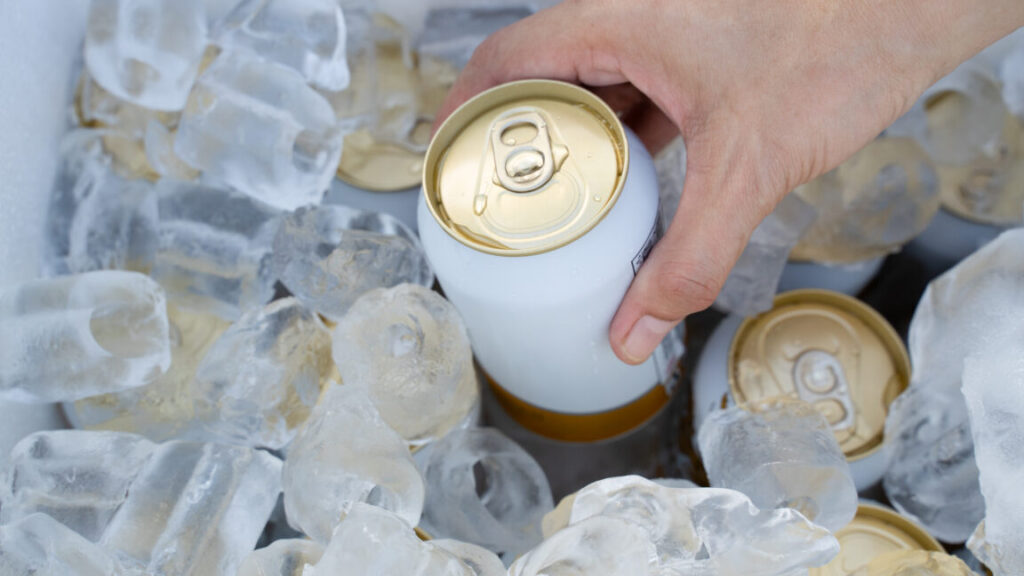
The author of the MMWR report, county health official Katherine Houser, noted that the beer-tent workers were hesitant to give details because they didn’t want to get any of their community members in trouble. But one let slip that someone had put leftover food in the cooler overnight at the start of the fair.

The county health officials hypothesized that the cooler had become contaminated with Salmonella that spread to beer cans from which people then drank, allowing for infection. But with the makeshift cooler gone, it would remain only a hypothesis. So, the health investigators then turned to ChatGPT for assurances.

After providing the chatbot with details of the outbreak, health investigators asked it several questions, including: “Will S. Agbeni grow in an improperly drained cooler?”; “Are any other sources, other than ice, likely if only canned beverages and no foods were available at this location?’ ; and “What examples of similar outbreaks have been documented in scientific literature?”

Some of the questions are easy enough to answer without a chatbot. A simple search on PubMed, a federal database of scientific literature, quickly pulls up examples of Salmonella being found in ice, for example. But, the chatbot assured the officials that the cooler was a “credible and likely” source of the outbreak and they stuck with the hypothesis.

In the end, the officials required new cooler sanitation protocols—and concluded that the AI assistance was helpful. “AI was effective in this rural setting for rapid situational awareness,” Houser wrote. However, she also acknowledged the potential concerns of using AI for outbreak investigations: “Given the inherent limitations of generative AI tools, including potential inaccuracies and lack of source transparency, all AI-generated summaries were critically reviewed and validated against primary literature before incorporation,” she wrote.

Overall, the case report has a murky ending. It’s unclear how helpful the chatbot actually was in this case. Critically reviewing AI-generated answers can easily take as much time as simply researching the answer on one’s own. And of course, we’ll never know for certain what was really going on in that makeshift beer cooler—though the new cooler sanitation protocols seem like a good idea, regardless.

In puzzling outbreak, officials look to cold beer, gross ice, and ChatGPT Read More »
scientists-unlock-secret-to-thick,-stable-beer-foams

Scientists unlock secret to thick, stable beer foams

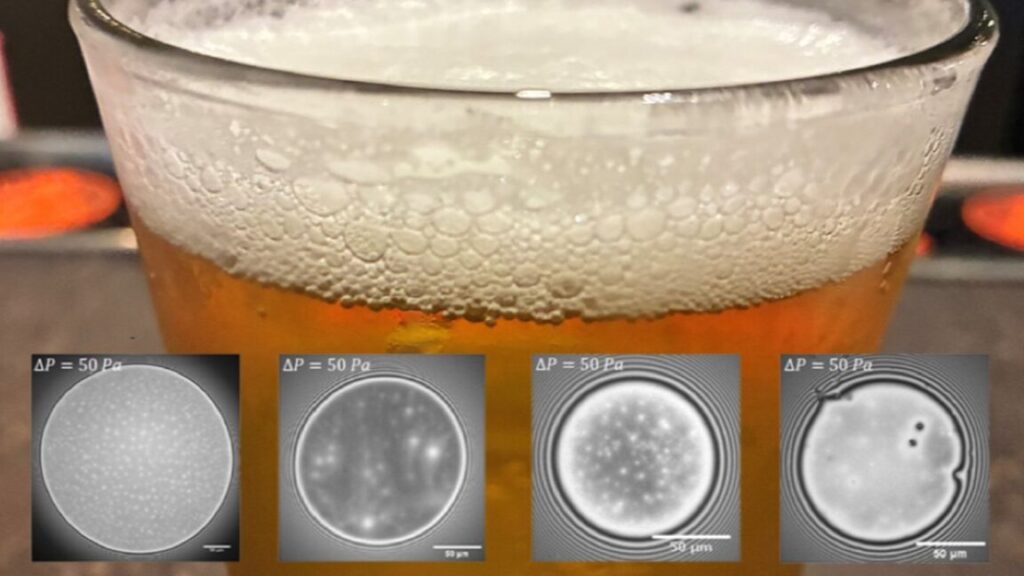
For many beer lovers, a nice thick head of foam is one of life’s pure pleasures, and the longer that foam lasts, the better the beer-drinking experience. A team of Swiss researchers spent seven years studying why some beer foams last longer than others and found that the degree of fermentation—i.e., whether a given beer has been singly, doubly, or triply fermented—is crucial, according to a new paper published in the journal Physics of Fluids.

As previously reported, foams are ubiquitous in everyday life, found in foods (whipped cream), beverages (beer, cappuccino), shaving cream and hair-styling mousse, packing peanuts, building insulation, flame-retardant materials, and so forth. All foams are the result of air being beaten into a liquid formula that contains some kind of surfactant (active surface agent), usually fats or proteins in edible foams, or chemical additives in non-edible products. That surfactant strengthens the liquid film walls of the bubbles to keep them from collapsing.

Individual bubbles typically form a sphere because that’s the shape with the minimum surface area for any volume and hence is the most energy-efficient. One reason for the minimizing principle when it comes to a bubble’s shape is that many bubbles can then tightly pack together to form a foam. But bubbles “coarsen” over time, the result of gravity pulling down on the liquid and thinning out the walls. Eventually, they start to look more like soccer balls (polyhedrons). In a coarsening foam, smaller bubbles are gradually absorbed by larger ones. There is less and less liquid to separate the individual bubbles, so they press together to fill the space.

This “jamming” is why foams are typically far more rigid than their gas (95 percent) and liquid (5 percent) components. The more tightly the bubbles jam together, the less they can move around and the greater the pressure inside them becomes, giving them properties of a solid.

Various factors can affect foam stability. For instance, in 2019, Japanese researchers investigated a phenomenon known as “collective bubble collapse,” or CBC, in which breaking one bubble at the edge of a foam results in a cascading effect as the breakage spreads to other bubbles in the foam. They identified two distinct mechanisms for the resulting CBCs: a so-called “propagating mode,” in which a broken bubble is absorbed into the liquid film, and a “penetrating mode,” in which the breakage of a bubble causes droplets to shoot off and hit other bubbles, causing them to break in turn.

Scientists unlock secret to thick, stable beer foams Read More »

rice-could-be-key-to-brewing-better-non-alcoholic-beer

Rice could be key to brewing better non-alcoholic beer

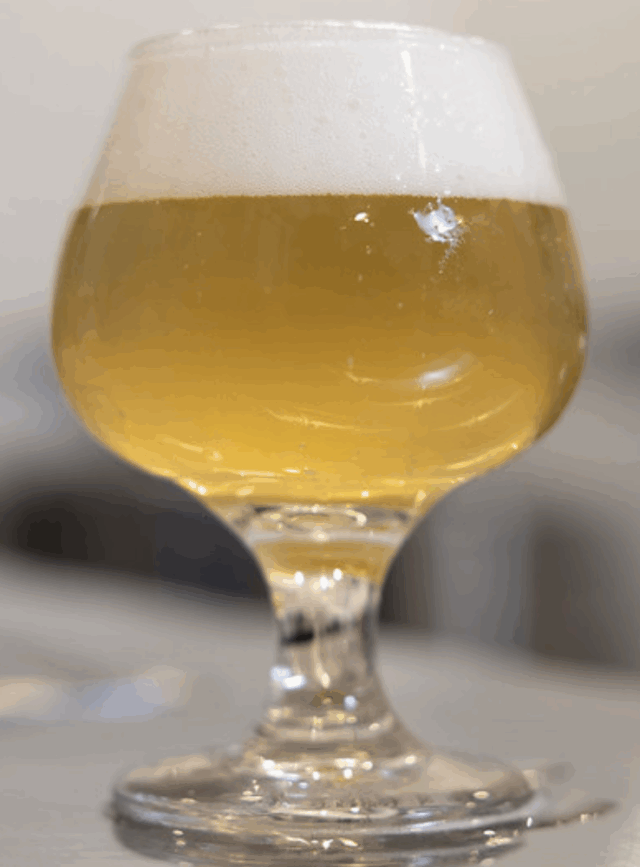
small glass of light colored beer with a nice foam head

Rice enhances flavor profiles for nonalcoholic beer, reduces fermentation time, and may contribute to flavor stability. Credit: Paden Johnson/CC BY-NC-SA

He and his team—including Christian Schubert, a visiting postdoc from the Research Institute for Raw Materials and Beverage Analysis in Berlin—brewed their own non-alcoholic beers, ranging from those made with 100 percent barley malt to ones made with 100 percent rice. They conducted a volatile chemical analysis to identify specific compounds present in the beers and assembled two sensory panels of tasters (one in the US, one in Europe) to assess aromas, flavors, and mouthfeel.

The panelists determined the rice-brewed beers had less worty flavors, and the chemical analysis revealed why: lower levels of aldehyde compounds. Instead, other sensory attributes emerged, most notably vanilla or buttery notes. “If a brewer wanted a more neutral character, they could use nonaromatic rice,” the authors wrote. Along with brewing beers with 50 percent barley/50 percent rice, this would produce non-alcoholic beers likely to appeal more broadly to consumers.

The panelists also noted that higher rice content resulted in beers with a fatty/creamy mouthfeel—likely because higher rice content was correlated with increased levels of larger alcohol molecules, which are known to contribute to a pleasant mouthfeel. But it didn’t raise the alcohol content above the legal threshold for a nonalcoholic beer.

There were cultural preferences, however. The US panelists didn’t mind worty flavors as much as the European tasters did, which might explain why the former chose beers brewed with 70 percent barley/30 percent rice as the optimal mix. Their European counterparts preferred the opposite ratio (30 percent barley/70 percent rice). The explanation “may lie in the sensory expectations shaped by each region’s brewing traditions,” the authors wrote. Fermentation also occurred more quickly as the rice content increased because of higher levels of glucose and fructose.

The second study focused on testing 74 different rice cultivars to determine their extract yields, an important variable when it comes to an efficient brewing process, since higher yields mean brewers can use less grain, thereby cutting costs. This revealed that cultivars with lower amylose content cracked more easily to release sugars during the mashing process, producing the highest yields. And certain varieties also had lower gelatinization temperatures for greater ease of processing.

International Journal of Food Science, 2025. DOI: 10.1080/10942912.2025.2520907  (About DOIs)

Journal of the American Society of Brewing Chemists, 2025. DOI: 10.1080/03610470.2025.2499768

Rice could be key to brewing better non-alcoholic beer Read More »