astronomy

researchers-argue-back-and-forth-about-whether-we’ve-spotted-an-exomoon

Researchers argue back and forth about whether we’ve spotted an exomoon

That’s no moon! —

Years after Kepler shut down, people are arguing over whether it spotted exomoons.

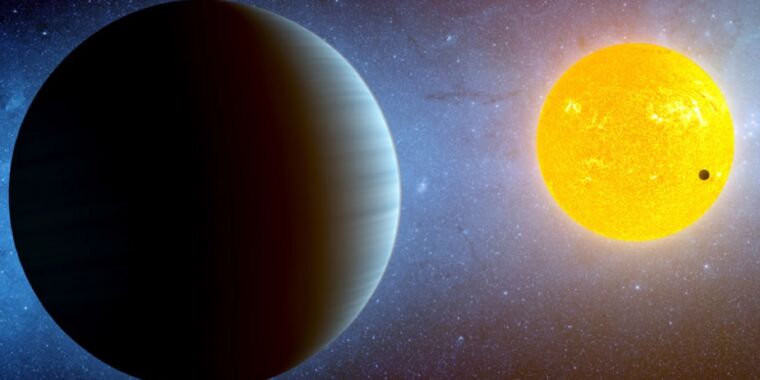
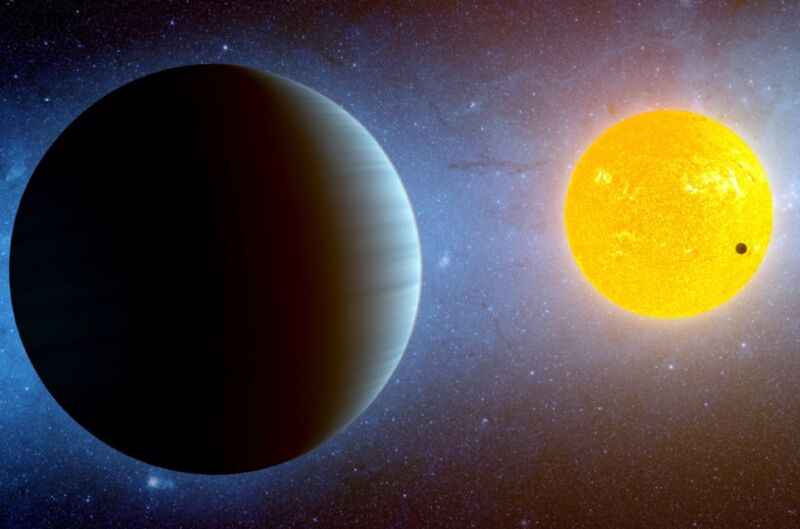
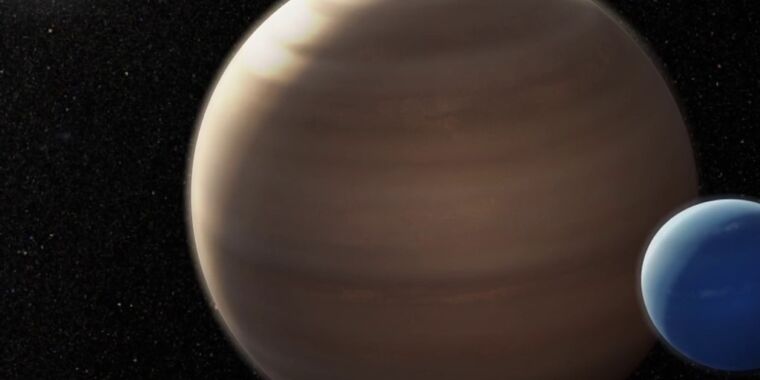
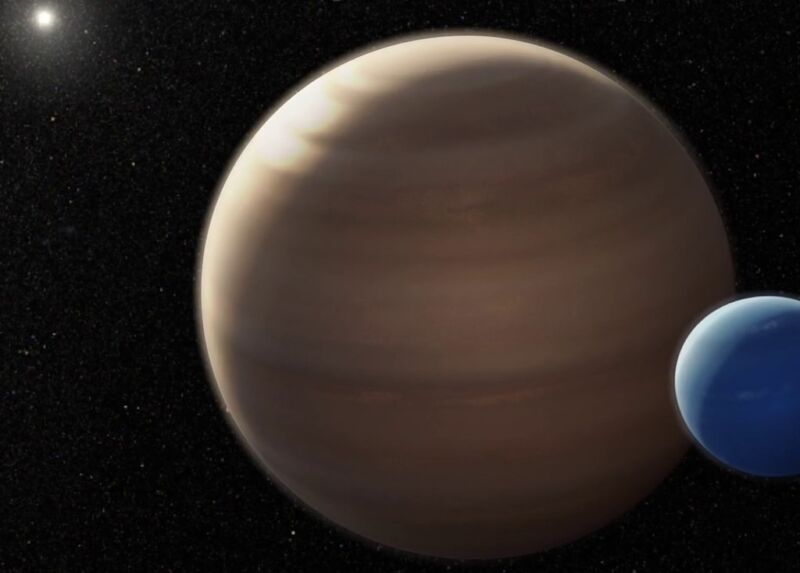
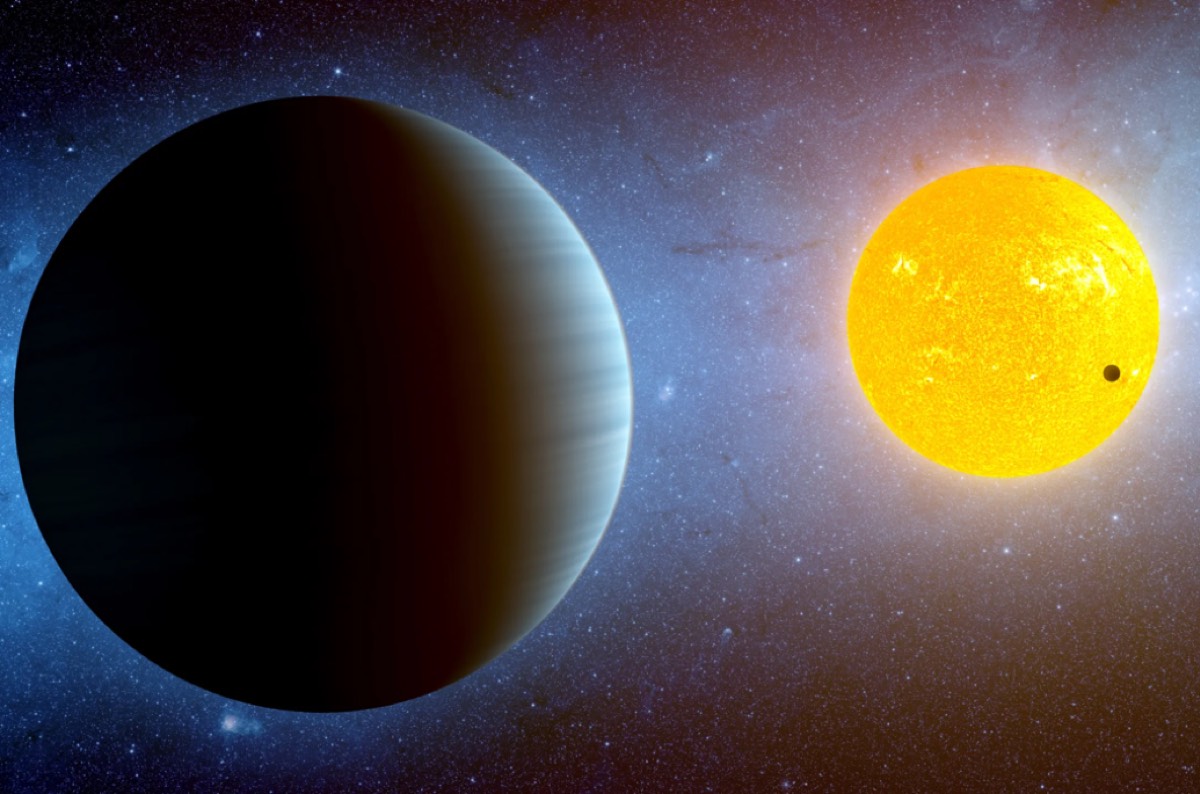
Image of two planets orbiting together around a distant star.

In 2017, the astronomy world was abuzz at the announcement that exoplanet Kepler-1625b potentially had its own moon—an exomoon. This was the first hint anyone had seen of an exomoon, and was followed five years later by another candidate around the planet Kepler-1708b.

There are over five thousand exoplanets discovered so far, and we don’t know for certain whether any have moons orbiting, which is what made these announcements so exciting. Exomoons provide more potentially habitable areas in which we can search for extraterrestrial life, and the study of moons can be a valuable window into the formation of the host planet.

But there has been much debate about these exomoon candidates, with multiple groups combing through the data obtained from the Kepler and Hubble space telescopes.

The most recent paper on the topic, published by astronomers in Germany, has come to the conclusion that the exomoon candidates around Kepler-1625b and Kepler-1708b are unlikely. Previous work has also cast doubt on the exomoon candidate around Kepler-1625b.

This is not a clear cut case, though. David Kipping, the leader of the group that made both original discoveries, and assistant professor of astronomy at Columbia University, disagrees with the new analysis. He and his group are in the process of preparing a manuscript that responds to the latest publication.

A needle in a haystack

The most common method of detecting exoplanets is the transit method. This technique measures the brightness of a star, and looks for a small dip in brightness that corresponds to a planet transiting in front of the star.

Stellar photometry can be extended to look for exomoons, an approach pioneered by Kipping. As well as the main dip caused by the planet, if a moon is orbiting the planet you should be able to see an additional, smaller dip   caused by the moon also shielding some of the star’s light.

An example of what a transit detection of an exomoon might look like.

As moons are smaller they generate a smaller signal, making them more challenging to spot. But what makes this particular case even more challenging is that the host stars Kepler-1625 and Kepler-1708 aren’t that bright. This makes the light dip even fainter—in fact these systems   have to have large moons to be within the threshold of what the Kepler space telescope can detect.

Models, models, models

Until scientists get more data from James Webb, or future missions such as ESA’s PLATO launch, it’s all down to what they can do with the existing numbers.

“The aspects here that are relevant are how the data itself is processed, what physics you put in when you’re modelling that data, and then what possible false positive signals might be out there that could reproduce the sort of signal that you’re looking for,” Eamonn Kerins, senior lecturer in astronomy at the University of Manchester who was not involved with the study, told Ars. “I think this whole debate centers around those questions essentially,” he added.

One key phenomenon that needs accurate modelling is known as the stellar limb darkening effect. Stars, including our Sun, appear dimmer at their edge than at the centre due to effects of the stellar atmosphere. As this affects the apparent brightness of the star, it’s clearly important to understand in the context of searching for exomoons by measuring a star’s brightness.

“We have models for this, but we don’t really know exactly how a specific star behaves in terms of this stellar limb darkening effect,” said René Heller, lead author of the study and astrophysicist at the Max Planck Institute for Solar System Research, in an interview for Ars. How specific stars behave can be deduced, but this isn’t always trivial. By including improved models for stellar limb darkening, the authors found that they can explain signals previously attributed to an exomoon.

Data processing is also paramount, especially a type of processing known as detrending. This takes into account long-term variability in the brightness data that is caused by random stellar variation and instrument variability, among other things. The new research shows that the statistical outcome, moon or no moon, is extremely dependent on how you carry out this detrending.

What’s more, the authors say that the data obtained from the Hubble telescope, which is primarily where the claim for the moon around Kepler-1625b comes from, can’t be properly detrended and thus shouldn’t be relied on for exomoon searches.

Two sides

Until more data is obtained, this is likely to remain an ongoing scientific discussion with no definitive conclusion.

Kerins points out that Kipping and his team have been very measured in their announcements. “They’re very, very careful to not claim it as a cast-iron detection. They’ve done comprehensive testing of the data they’ve been given, and really I think the difference here is all about what physics you put in, how you process the data, and ultimately the fact that the Kepler data set is really on the edge of finding exomoons.”

Heller, though, remains unconvinced. “My impression is that in the Kepler data, we and also other teams have done what’s currently possible and there’s no compelling object that really sticks out.”

Moons far outnumber planets in our own Solar System—two hundred and ninety to eight to date—so it’s reasonable to assume that we will come across exomoons as we continue exploring the skies. “It would be quite extraordinary, I think, if we continue to go over the next few years and not find an exomoon,” said Kerins. “I think it can only be a matter of time.”

Nature Astronomy, 2023.  DOI: 10.1038/s41550-023-02148-w

Ivan Paul is a freelance writer based in the UK, finishing his PhD in cancer research. He is on Twitter @ivan_paul_.

Researchers argue back and forth about whether we’ve spotted an exomoon Read More »

galaxy-scale-winds-spotted-in-the-distant-universe

Galaxy-scale winds spotted in the distant Universe

Out in the wind —

These winds can drive gas out of galaxies, shaping their future evolution.

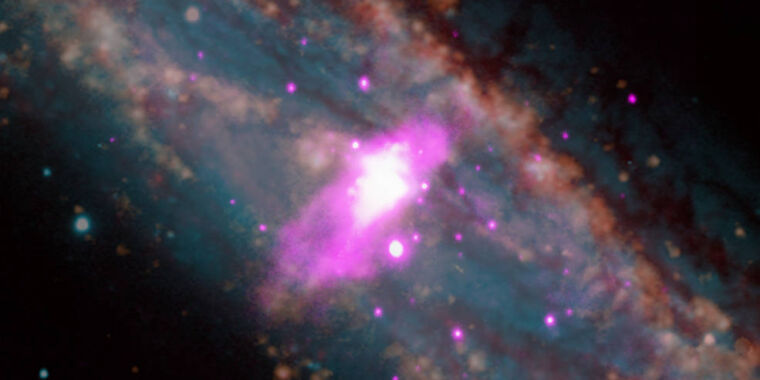
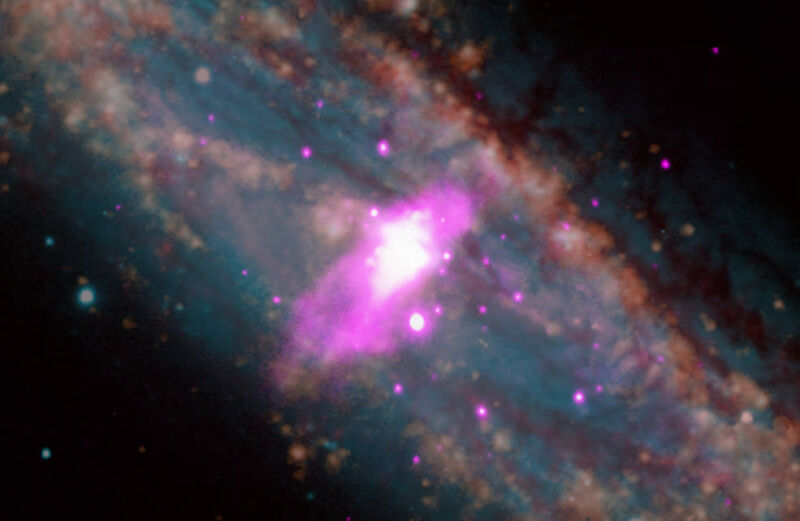
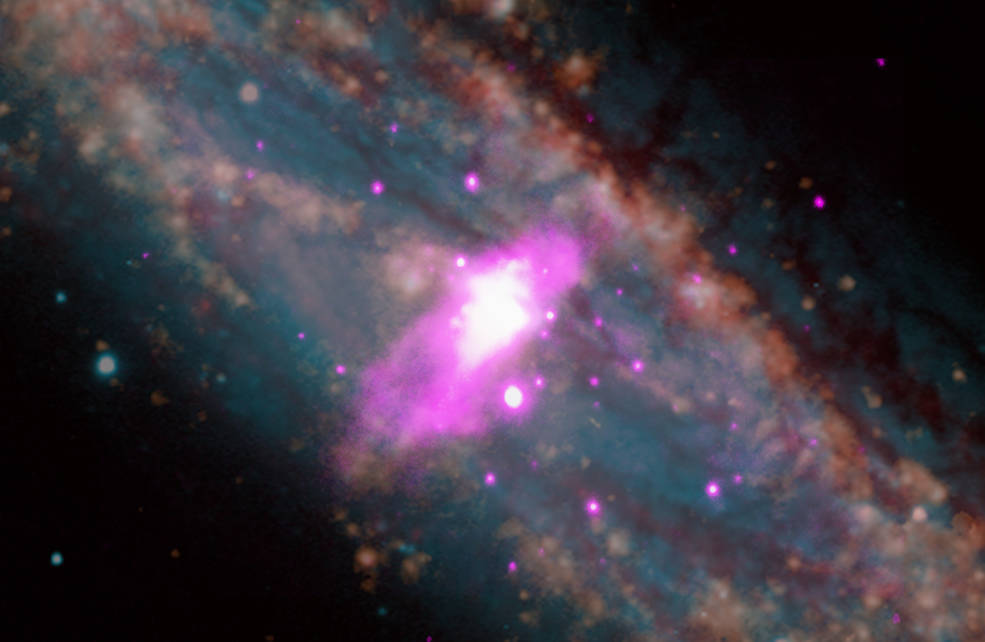
Image of a galaxy with a purple blob superimposed on its center.

Enlarge / X-ray emissions (purple) superimposed on a visible light image of a galaxy shows the galaxy winds being launched. CREDIT: X-ray: NASA/CXC/Ohio StateH-alpha and Optical: NSF/NOIRLab/AURA/KPNO/CTIO; Infrared: NASA/JPL-Caltech/Spitzer/ Optical: ESO/La Silla Observatory.

One of the ways massive stars, those at least 10-times bigger than the Sun, reach their end is in a supernova—an enormous explosion caused by the star’s core running out of fuel.

One consequence of a supernova is the production of galactic winds, which play a key role in regulating star formation. Although galactic winds have already been observed in several nearby galaxies, a team of scientists has now made the first direct observations of this phenomenon in a large population of galaxies in the distant Universe, at a time when galaxies are in their early stages of formation.

Feedback

According to the study’s lead author, Yucheng Guo, of the Centre de Recherche Astrophysique de Lyon, galactic winds are an important part of the galaxy evolution models.

“It was assumed there should be galactic winds that can regulate galaxies’ growth. However, it was very difficult to directly observe these winds. With our study, we show that at the early stage of the Universe, every normal galaxy had such winds,” Guo said.

According to Guo, galactic winds form a key part of the so-called feedback process that is important in our understanding of galaxy evolution. “Galactic winds originate as a result of star formation activity. These winds inject a lot of energy and momentum into the gas, resulting in it [being] expelled from the galaxy. If there is not enough gas in the galaxy, the star formation stops. This is called the feedback process,” he said.

According to Guo, galactic winds also enable exchange of matter between galaxies and their surroundings. “Each galaxy is surrounded by a gas halo. Galaxies can breathe out as well as breathe in gas,” Guo said.

Hard to see

He said that traditionally it has been very difficult to observe galactic winds, because the gas halos are almost transparent.

Guo and his team overcame this hurdle by using the Multi-Unit Spectroscopic Explorer (MUSE) instrument on the Very Large Telescope. “The instrument is able to observe the galaxies at redshift z ≈ 1, which corresponds to 7 billion years of the cosmic evolution.” Guo said at that wavelength, the MUSE instrument is able to detect and directly observe the emission from magnesium atoms in the galactic winds.

He said the other important feature of the research is that they managed to observe the galactic winds in more than 100 galaxies. “We also managed to detect the average shape of these winds, which is like an ice cream cone,” he said.

Guo said the direct observation of the galactic winds outside the local Universe was the first step of their research. “We still don’t know about their physical properties such as size, power, and also how they change with time and in different kinds of galaxies.”

Nature, 2023. DOI: 10.1038/s41586-023-06718-w


Dhananjay Khadilkar is a journalist based in Paris.

Galaxy-scale winds spotted in the distant Universe Read More »