Rocket Report: Starliner launch preps; Indian rocket engine human-rated
Cape-a-palooza —
The Bahamian government and SpaceX signed an agreement for Falcon 9 booster landings.
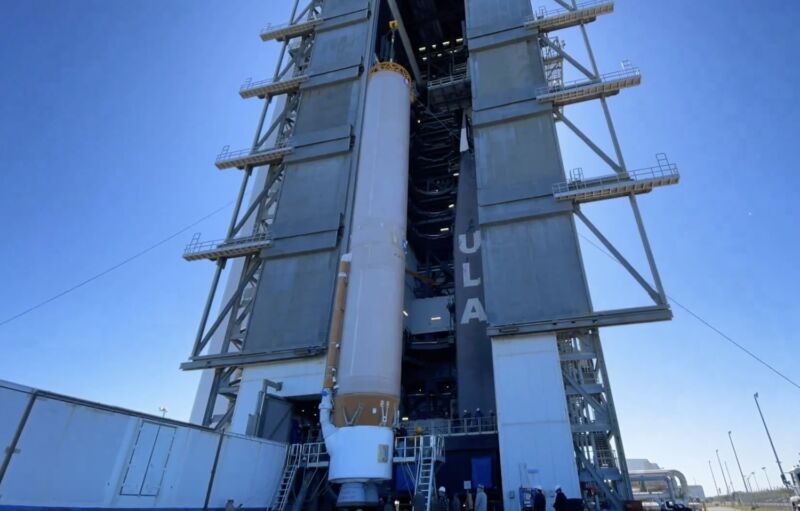
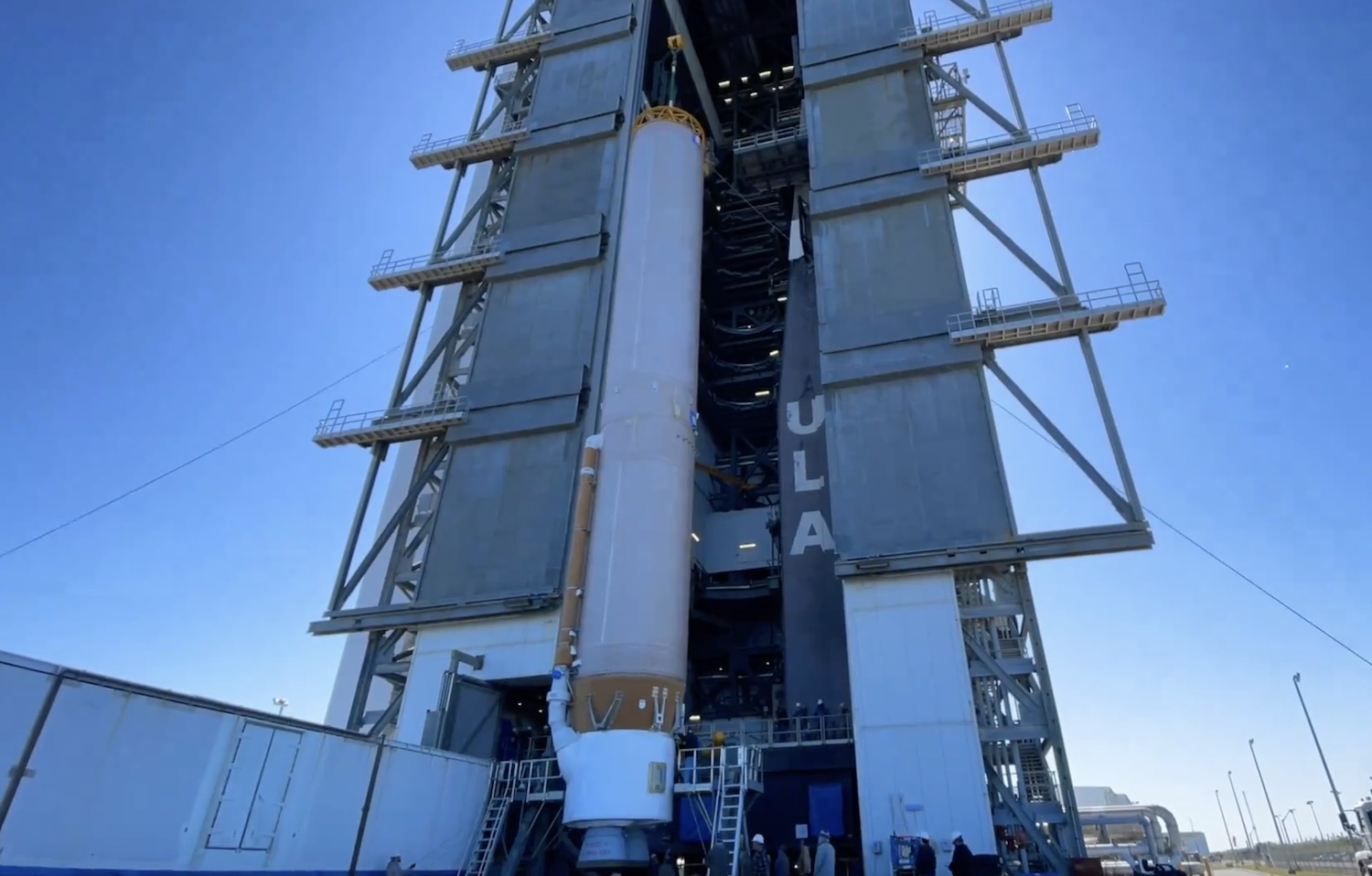
Enlarge / The first stage of United Launch Alliance’s Atlas V rocket was lifted onto its launch platform this week in preparation for an April liftoff with two NASA astronauts on Boeing’s Starliner Crew Flight Test.
United Launch Alliance
Welcome to Edition 6.32 of the Rocket Report! I’m writing the report again this week as Eric Berger is in Washington, DC, to receive a well-earned honor, the 2024 Excellence in Commercial Space Journalism Award from the Commercial Spaceflight Federation. Cape Canaveral is the world’s busiest spaceport, and this week, three leading US launch companies were active there. SpaceX launched another Falcon 9 rocket, and a few miles away, Blue Origin raised a New Glenn rocket on its launch pad for long-awaited ground testing. Nearby, United Launch Alliance began assembling an Atlas V rocket for the first crew launch of Boeing’s Starliner spacecraft in April. 2024 is shaping up to be a truly exciting year for the spaceflight community.
As always, we welcome reader submissions, and if you don’t want to miss an issue, please subscribe using the box below (the form will not appear on AMP-enabled versions of the site). Each report will include information on small-, medium-, and heavy-lift rockets, as well as a quick look ahead at the next three launches on the calendar.

Astroscale inspector satellite launched by Rocket Lab. Astroscale, a well-capitalized Japanese startup, has launched a small satellite to do something that has never been done in space, Ars reports. This new spacecraft, delivered into orbit on February 18 by Rocket Lab, will approach a defunct upper stage from a Japanese H-IIA rocket that has been circling Earth for more than 15 years. Over the next few months, the satellite will try to move within arm’s reach of the rocket, taking pictures and performing complicated maneuvers to move around the bus-size H-IIA upper stage as it moves around the planet at nearly 5 miles per second (7.6 km/s).
This is a first … Astroscale’s ADRAS-J mission is the first satellite designed to approach and inspect a piece of space junk in orbit. This is a public-private partnership between Astroscale and the Japanese space agency. Of course, space agencies and commercial companies have demonstrated rendezvous operations in orbit for decades. The difference here is the H-IIA rocket is uncontrolled, likely spinning and in a slow tumble, and was never designed to accommodate any visitors. Japan left it in orbit in January 2009 following the launch of a climate monitoring satellite and didn’t look back. ADRAS-J is a technology demonstration that could pave the way for a follow-on mission to actually link up with this H-IIA rocket and remove it from orbit. Astroscale eventually wants to use these technologies for satellite servicing, refueling, and further debris removal missions. (submitted by Ken the Bin and Jay500001)
Software error blamed for Firefly launch malfunction. Firefly Aerospace released an update Tuesday on an investigation into an upper stage malfunction on the company’s Alpha rocket in December. The investigation team, consisting of membership from Firefly, the Federal Aviation Administration, the National Transportation Safety Board, Lockheed Martin, NASA, and the US Space Force, determined a software error in the rocket’s guidance, navigation, and control software algorithm ultimately caused the Alpha rocket to release its payload into a lower-than-planned orbit following a launch from California.
Upper stage woes… The software error prevented the rocket from sending the “necessary pulse commands” to control thrusters on the upper stage before its main engine was supposed to reignite. This second burn by the upper stage was supposed to circularize the rocket’s orbit, but it didn’t happen as planned. Still, the Alpha rocket safely released its commercial satellite payload for Lockheed Martin. Although the lower orbit caused the satellite to reenter the atmosphere earlier this month, Lockheed Martin said it was able to achieve many of the objectives of the technology demonstration mission, which focused on testing an electronically steered antenna. This was the fourth launch of an Alpha rocket, and two of them have suffered from upper stage malfunctions during engine restart attempts. Firefly says it is preparing the next Alpha rocket to fly “in the coming months.” (submitted by Ken the Bin)
The easiest way to keep up with Eric Berger’s space reporting is to sign up for his newsletter, we’ll collect his stories in your inbox.
A good fundraising round for Gilmour Space. Australian startup Gilmour Space Technologies has raised $55 million Australian dollars ($36 million) in a Series D funding round announced Monday, Space News reports. The funding supports the small launch vehicle startup’s campaign to manufacture, test, and begin launching rockets and satellites from the Bowen Orbital Spaceport in North Queensland. Gilmour Space, founded in 2012, is developing a three-stage rocket called Eris. The first Eris test flight is expected “in the coming months, pending launch approvals from the Australian Space Agency,” according to the Gilmour Space news release.
Launching from down under… Gilmour Space is aiming to launch the first Australian-built rocket into orbit later this year. The Eris rocket is powered by hybrid engines, and Gilmour says it is capable of delivering about 670 pounds (305 kilograms) of payload mass into a Sun-synchronous orbit. The $36 million fundraising round announced this week follows a $46 million fundraising round in 2021. According to the Australian Broadcasting Corporation, Gilmour Space is aiming for the first flight of Eris in April, and this latest fundraising should give the company enough money to mount four test flights. (submitted by Ken the Bin)
Rocket Report: Starliner launch preps; Indian rocket engine human-rated Read More »