Archaeology

dog-domestication-happened-many-times,-but-most-didn’t-pan-out

Dog domestication happened many times, but most didn’t pan out

The story that data reveals is complicated—but somehow very human.

Until about 13,600 years ago, any wolf living in what is now Alaska would have lived on the usual wolf diet: rabbits, moose, and a whole range of other land animals. But starting around 13,600 years ago, the nitrogen isotopes locked in ancient wolves’ bones suggest that something changed. Some wolves still made their living solely by hunting wild game, but others started living almost entirely on fish. Since it’s unlikely that Alaskan wolves had suddenly taken up fly fishing, the sudden change probably suggests that some wolves had started getting food from people.

They’re good dogs, Brent

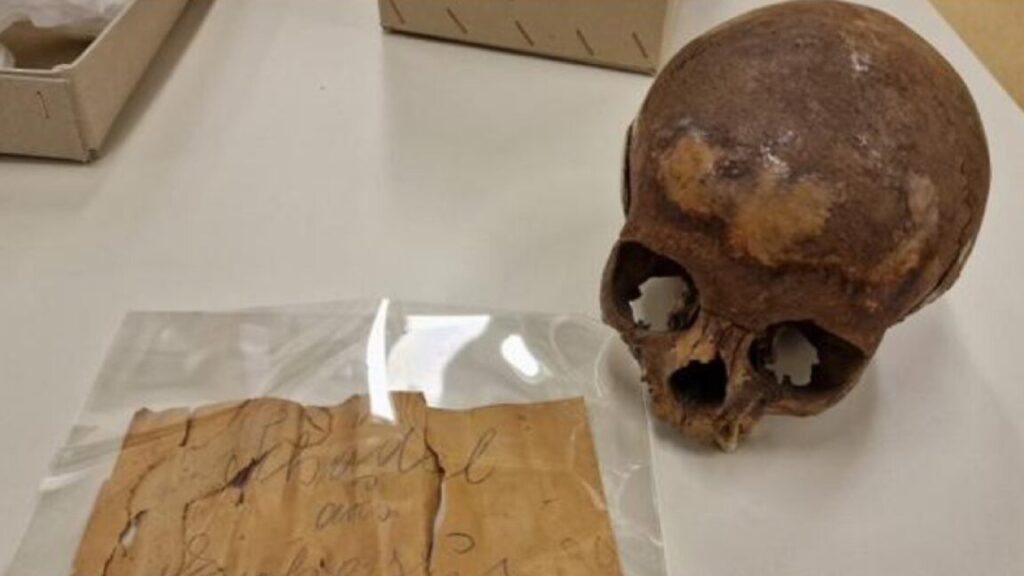
The fact that we kept trying to befriend wolves is starkly clear at a site called Hollembaek Hill, where archaeologists unearthed the 8,100-year-old remains of four canines. Their diets (according to the nitrogen isotopes locked in their bones) consisted mostly of salmon, so it’s tempting to assume these were domesticated dogs. But their DNA reveals that all four—including a newborn puppy—are most closely related to modern wolves.

On the other hand, the Hollembaek Hill canines didn’t all look like wild wolves. At least one of them had the large stature of a modern wolf, but others were smaller, like early dogs. And some of their DNA suggests that they may be at least part dog but not actually related to modern dogs. Lanoë and his colleagues suggest that people at Hollembaek Hill 8,000 years ago were living alongside a mix of pet wolves (do not try this at home) and wolf-dog hybrids.

All modern dogs trace their roots to a single group of wolves (now extinct) that lived in Siberia around 23,000 years ago. But sometime between 11,300 and 12,800 years ago, the canines from Hollembaek Hill and another Alaskan site called Swan Point had dog DNA that doesn’t seem related to modern dogs at all. That may suggest that dog domestication was a process that happened several times in different places, creating several branches of a dog family tree, but only one stuck around in the long run.

In other words, long after humans “invented” dogs, it seems that people just kept repeating the process, doing the things that created dogs in the first place: allowing the friendliest, least aggressive wild canids to live near their villages and maybe adopting and feeding them.

Dog domestication happened many times, but most didn’t pan out Read More »

ancient-fish-trapping-network-supported-the-rise-of-maya-civilization

Ancient fish-trapping network supported the rise of Maya civilization

Harrison-Buck and her colleagues calculated that at its peak, the system could have produced enough fish each year to feed around 15,000 people. That’s based on modern estimates of how many kilograms of fish people eat every year, combined with measurements of how many kilograms of fish people in Zambia harvest with similar traps. Of course, people at Crooked Tree would have needed to preserve the fish somehow, probably by salting, drying, or smoking them.

“Fisheries were more than capable of supporting year-round sedentarism and the emergence of complex society characteristic of Pre-Columbian Maya civilization in this area,” write Harrison-Buck and her colleagues.

When we think about the Maya economy, we think of canal networks and ditched or terraced fields. In just one patch of what’s now Guatemala, a lidar survey revealed that Maya farmers drained thousands of acres of swampy wetland and built raised fields for maize, crossed by a grid of irrigation canals. To feed the ancient city of Holmul, the Maya turned a swamp into a breadbasket. But at least some of their precursors may have made it big on fish, not grain. The common feature, though, is an absolute lack of any chill whatsoever when it came to re-engineering whole landscapes to produce food.

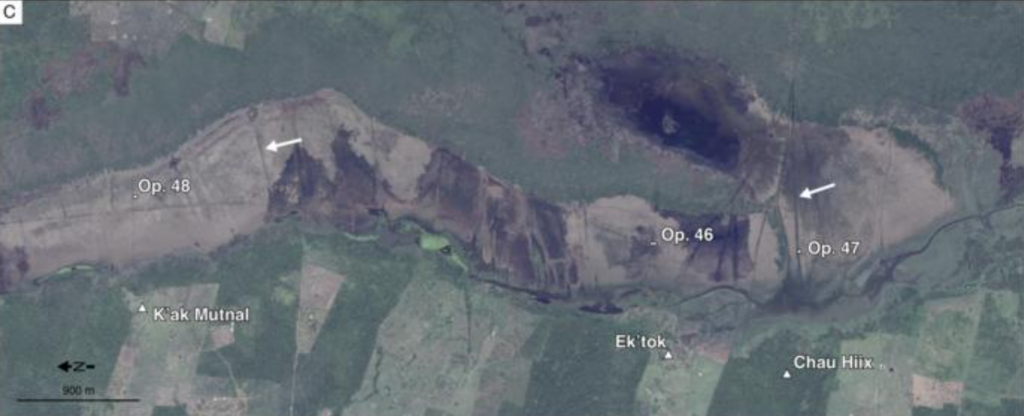
This Google Earth image shows the area containing the ancient fishery.

Infrastructure built to last and last

From the ground, the channels that funneled fish into nearby ponds are nearly invisible today. But from above, especially during the dry season, they stand in stark contrast to the land around them, because vegetation grows rich and green in the moist soil at the base of the channels, even while everything around it dries up. That made aerial photography the perfect way to map them.

Ancient fish-trapping network supported the rise of Maya civilization Read More »

to-invent-the-wheel,-did-people-first-have-to-invent-the-spindle?

To invent the wheel, did people first have to invent the spindle?

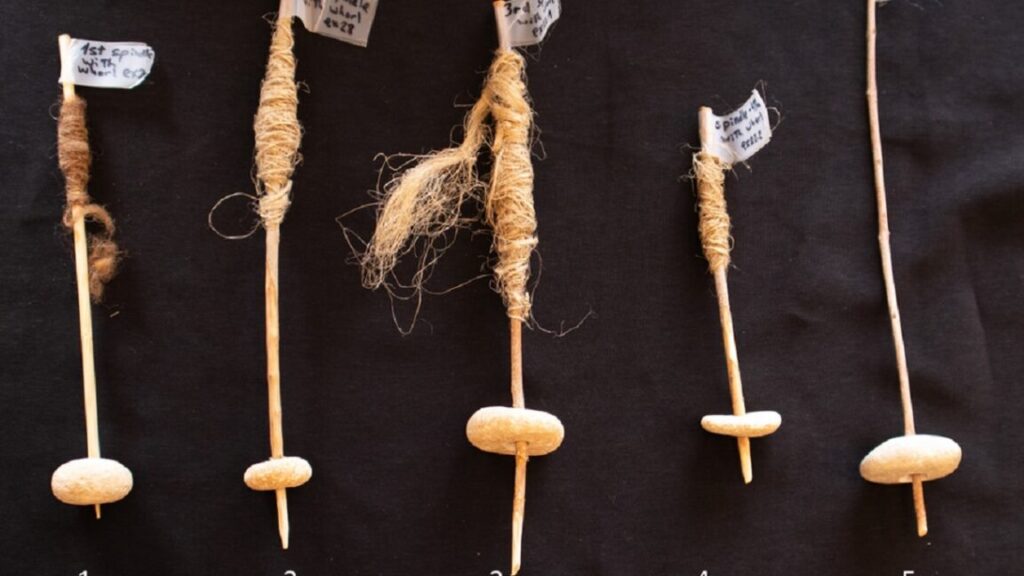
It’s not so much that the spindle whorl was the direct evolutionary ancestor of the wheel, the way wolves were the ancestors of modern dogs. Instead, it was one of the first ways that people got really familiar, in a hands-on way, with the idea that you can attach something round to a stick and use it to turn one kind of motion into another. Pottery wheels, which emerged a bit later, work on the same general principle.

“I don’t jump to saying, ‘Okay, spindle whorls are [cart] wheels,” Yashuv tells Ars. “In many studies of the invention of the wheel, they’re talking about sledges and all sorts of things that are focused on the function of transportation—which is correct. I’m just adding another layer: the foundation of the mechanical principle.”

Once that mechanical principle was firmly embedded in humanity’s collective stash of knowledge, it was a matter of time (a few thousand years) before people looked at animal-drawn sledges, then looked at their pottery wheels and spindles, and put two and two together and got a cart with wheels—or at least, that’s Yashuv’s hypothesis. She and Grosman aren’t the first to suggest something similar; early 20th-century archaeologist Gordon V. Childe suggested that most of the major inventions of the Industrial Revolution were just new applications of much older rotary devices.

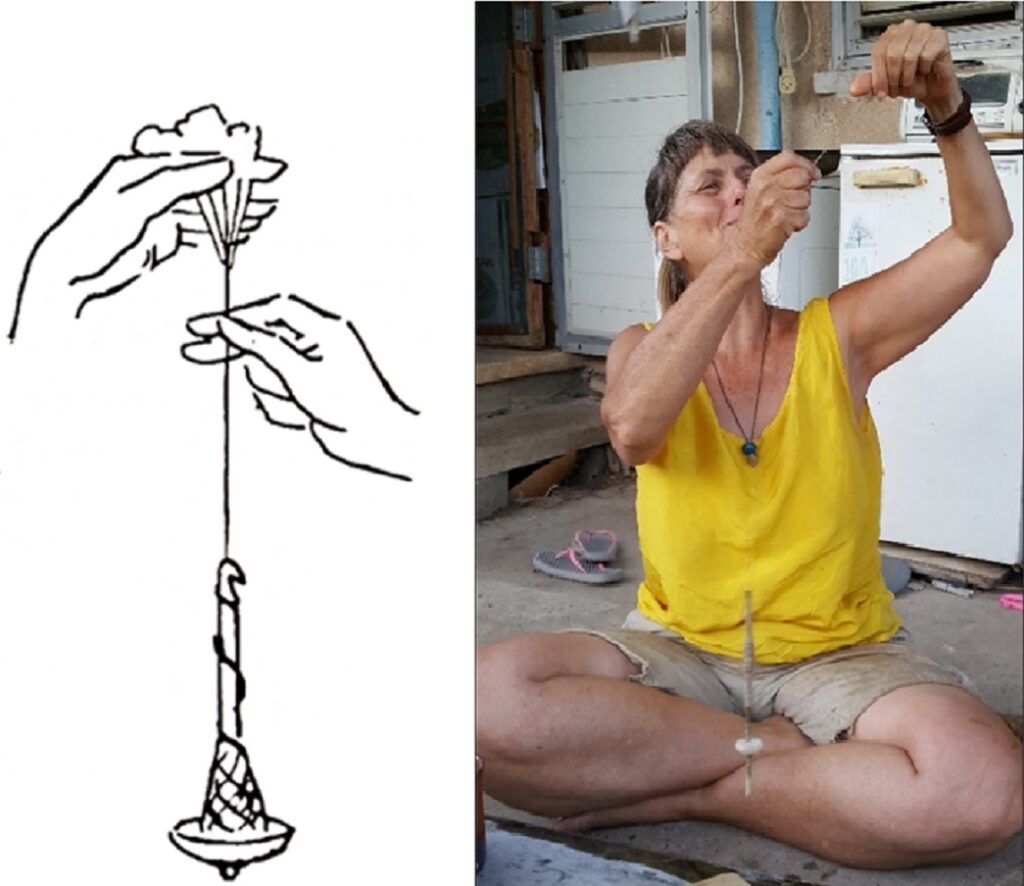
on the left, a diagram of two hands using a drop spindle. On the right, a woman in a yellow shirt spins thread with a drop spindle.

Spinner Yonit Kristal tests a replica of a spindle from the 12,000-year-old village. Credit: Yashuv and Grosman 2024

A village of prehistoric innovators?

Exactly how long people have understood (and made use of) the whole circle-on-a-stick concept is still an open question. Nahal Ein-Gev II is the oldest site with evidence of drop spindles that archaeologists have found so far, but Yashuv says the villagers there probably weren’t the first to invent the concept. They just happened to make their spindle whorls out of rocks with holes drilled in them, leaving a clear trace in the archaeological record.

Modern spindle whorls are often made of wood—either a disc or an X-shaped pair of arms. The trouble with wood, especially in small pieces, is that it’s not very likely to survive thousands of years (although that’s not impossible), so wooden spindle whorls from a site as old as Nahal Ein-Gev II are invisible to archaeologists. In some cultures, spinners might even tie a rock (or even a potato—no joke) to the end of their fibers in lieu of a spindle. Those rocks lack the telltale drill holes that let Yashuv and Grosman recognize the stone spindle whorls at Nahal Ein-Gev II, so they’re also invisible to archaeologists; they just look like rocks. Nahal Ein-Gev II is just the oldest place that recognizable spindle whorls happen to have survived.

To invent the wheel, did people first have to invent the spindle? Read More »

dna-shows-pompeii’s-dead-aren’t-who-we-thought-they-were

DNA shows Pompeii’s dead aren’t who we thought they were

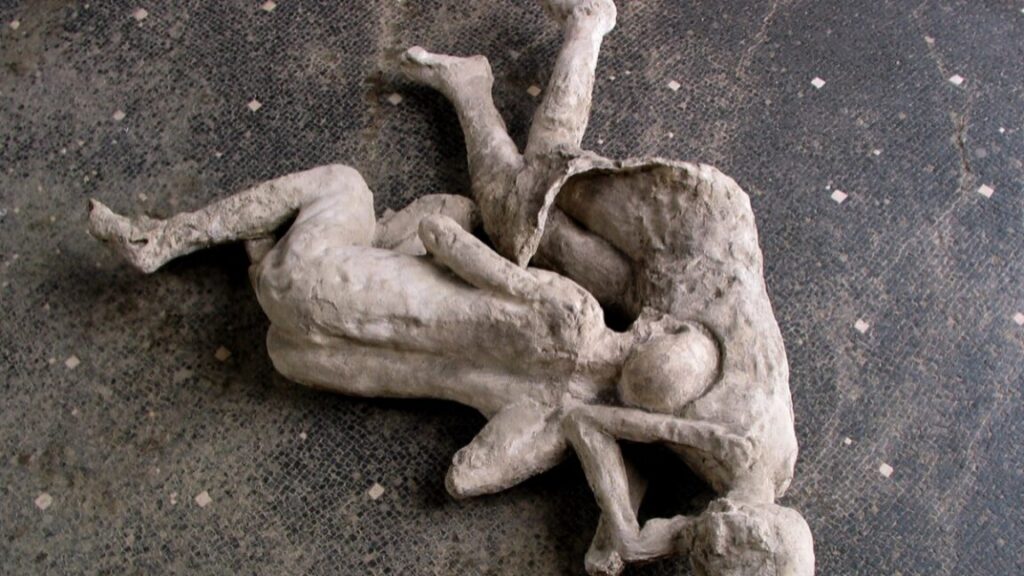
People have long been fascinated by the haunting plaster casts of the bodies of people who died in Pompeii when Mount Vesuvius erupted in 79 CE. Archaeologists have presented certain popular narratives about who these people might have been and how they might have been related. But ancient DNA analysis has revealed that those preferred narratives were not entirely accurate and may reflect certain cultural biases, according to a new paper published in the journal Current Biology. The results also corroborate prior research suggesting that the people of ancient Pompeii were the descendants of immigrants from the Eastern Mediterranean.

As previously reported, the eruption of Mount Vesuvius released thermal energy roughly equivalent to 100,000 times the atomic bombs dropped on Hiroshima and Nagasaki at the end of World War II, spewing molten rock, pumice, and hot ash over the cities of Pompeii and Herculaneum in particular. The vast majority of people in Pompeii and Herculaneum—the cities hardest hit—perished from asphyxiation, choking on the thick clouds of noxious gas and ash. But at least some of the Vesuvian victims probably died instantaneously from the intense heat of fast-moving lava flows, with temperatures high enough to boil brains and explode skulls.

In the first phase, immediately after the eruption, a long column of ash and pumice blanketed the surrounding towns, most notably Pompeii and Herculaneum. By late night or early morning, pyroclastic flows (fast-moving hot ash, lava fragments, and gases) swept through and obliterated what remained, leaving the bodies of the victims frozen in seeming suspended action.

In the 19th century, an archaeologist named Giuseppe Fiorelli figured out how to make casts of those frozen bodies by pouring liquid plaster into the voids where the soft tissue had been. Some 1,000 bodies have been discovered in the ruins, and 104 plaster casts have been preserved. Restoration efforts of 86 of those casts began about 10 years ago, during which researchers took CT scans and X-rays to see if there were complete skeletons inside. Those images revealed that there had been a great deal of manipulation of the casts, depending on the aesthetics of the era in which they were made, including altering some features of the bodies’ shapes or adding metal rods to stabilize the cast, as well as frequently removing bones before casting.

DNA shows Pompeii’s dead aren’t who we thought they were Read More »

what-this-500-year-old-shipwreck-can-tell-us-about-how-we-age

What this 500-year-old shipwreck can tell us about how we age

Dem collarbones

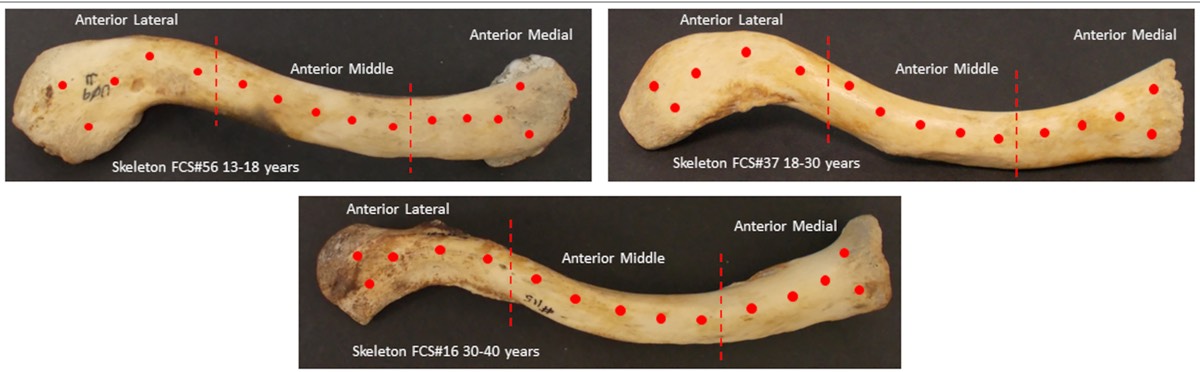
A schematic to illustrate the approximate location from which the measurements were taken; an example right clavicle from each age group.

A schematic to illustrate the approximate location from which the measurements were taken; an example right clavicle from each age group.

Credit: S.I. Shalnkland et al., PLOS ONE 2024

A schematic to illustrate the approximate location from which the measurements were taken; an example right clavicle from each age group. Credit: S.I. Shalnkland et al., PLOS ONE 2024

Most of the recovered human remains were jumbled up, but over the years, preservationists have partially reconstructed some 98 individuals, all men between 10 and 40 years of age. The new study focused on 12 clavicle (collar) bones, which links the upper limb to the torso and is one of the most commonly fractured bones. Per the authors, it’s one of the first bones to start ossifying in utero, but the last to fully fuse, usually between 22 and 25 years old.

That was a boon for determining the age of the Mary Rose crew members, but the authors thought differences in bone mineral and protein chemistry could also shed light on bone changes related not just to aging, but also to lifestyle or disease, and even whether a crewman was right- or left-handed had an impact on those changes. They specifically looked at changes in phosphate, carbonate, and amine (the foundation of collagen), all major components of bone.

The results: mineral content of the bones of all 12 men increased with age, while the protein content decreased. Those changes were more significant in right clavicles rather than left ones, an intriguing result suggesting a preference for right-handed crew members. The authors note that this might be because, at the time, being left-handed was often associated with witchcraft. Perhaps those right-handed crew members put more stress on their right side while performing their duties, and this, in turn, asymmetrically altered their clavicle chemistry.

“Having grown up fascinated by the Mary Rose, it has been amazing to have the opportunity to work with these remains,” said co-author Sheona Shankland of Lancaster University. “The preservation of the bones and the non-destructive nature of the technique allows us to learn more about the lives of these sailors, but also furthers our understanding of the human skeleton, relevant to the modern world.”

PLoS ONE, 2024. DOI: 10.1371/journal.pone.0311717  (About DOIs).

What this 500-year-old shipwreck can tell us about how we age Read More »

study:-dna-corroborates-“well-man”-tale-from-norse-saga

Study: DNA corroborates “Well-man” tale from Norse saga

The results: The Well-man was indeed male, between 30 and 40, with blue eyes and blond or light-brown hair, and his ancestry was traced to southern Norway, most likely present-day Vest-Agder. This is interesting because King Sverre’s men were from central Norway, and it had long been assumed that the dead body thrown into the well was part of that army. It was the invading Baglers who hailed from southern Norway. The authors are careful to note that one cannot definitively conclude that therefore the Well-man was a Bagler, but it’s certainly possible that the Baglers tossed one of their own dead into the well.

As for whether the action was a form of 12th-century biological warfare intended to poison the well, the authors weren’t able to identify any pathogens in their analysis. But that might be because of the strict decontamination procedures that were used to prepare the tooth samples, which may have also removed traces of any pathogen DNA. So they could not conclude one way or another whether the Well-man had been infected with a deadly pathogen at the time of his death.

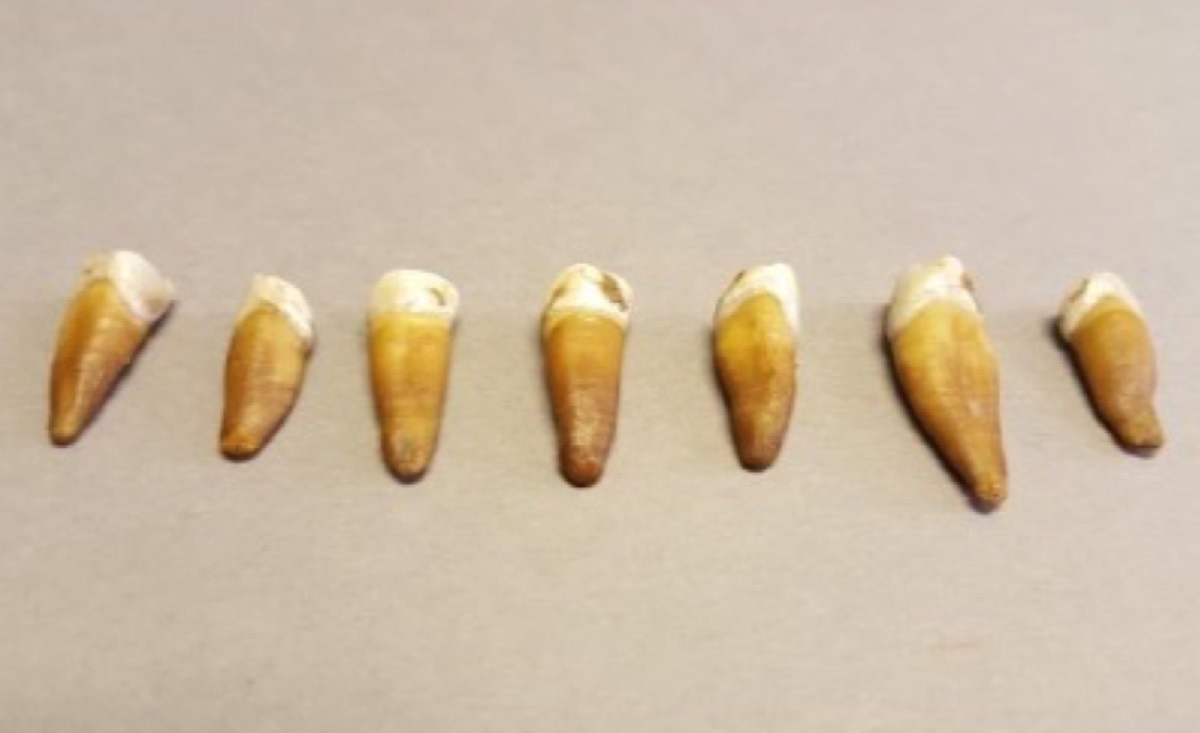
Seven well-man teeth recovered from excavation

Seven Well-man teeth recovered from the excavation.

Credit: Norwegian Institute for Cultural Heritage Research

Seven Well-man teeth recovered from the excavation. Credit: Norwegian Institute for Cultural Heritage Research

“It was a compromise between removing surface contamination of the people who have touched the tooth and then removing some of the possible pathogens. There are lots of ethical considerations,” said co-author Martin Ellegaard, also of the Norwegian University of Science and Technology. “We need to consider what kind of tests we’re doing now because it will limit what we can do in the future.”

The fact that the Well-man hailed from southern Norway indicates that the distinctive genetic drift observed in southern Norway populations already existed during King Sverre’s reign. “This has implications for our understanding of Norwegian populations, insofar as it implies that this region must have been relatively isolated not only since that time, but also at least for a few hundred years beforehand and perhaps longer,” the authors concluded. Future research sequencing more ancient Norwegian DNA would shed further light on this finding—perhaps even the remains of the Norwegian Saint Olaf, believed to be buried near Trondheim Cathedral.

iScience, 2024. DOI: 10.1016/j.isci.2024.111076  (About DOIs).

Study: DNA corroborates “Well-man” tale from Norse saga Read More »

scientists-solved-mysterious-origin-of-stonehenge’s-altar-stone:-scotland

Scientists solved mysterious origin of Stonehenge’s Altar Stone: Scotland

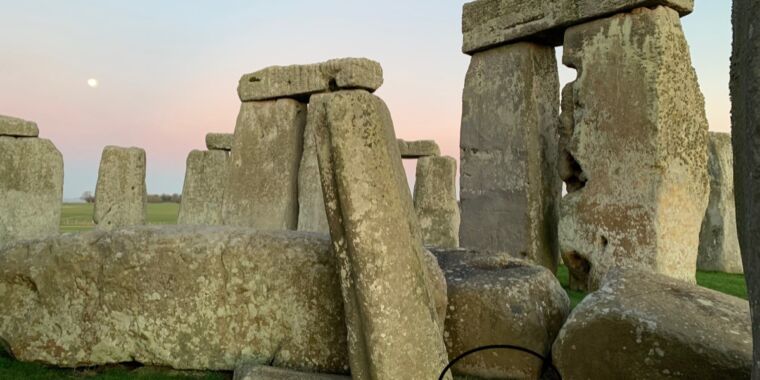
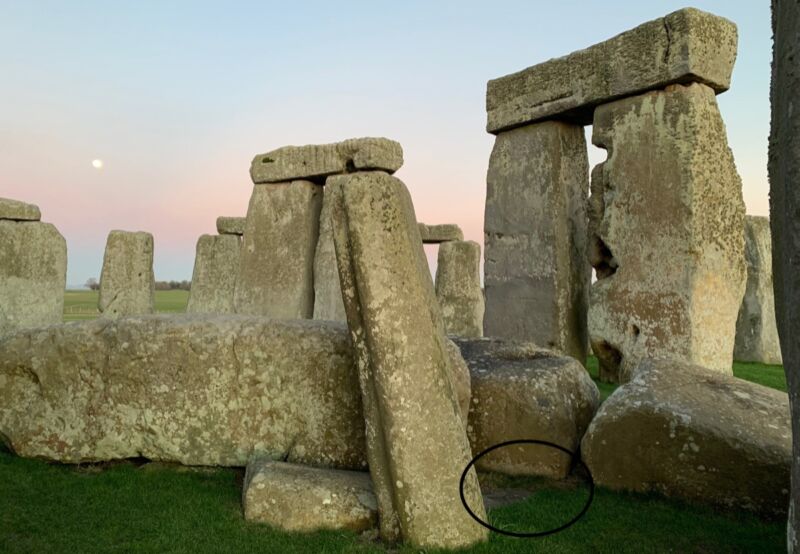
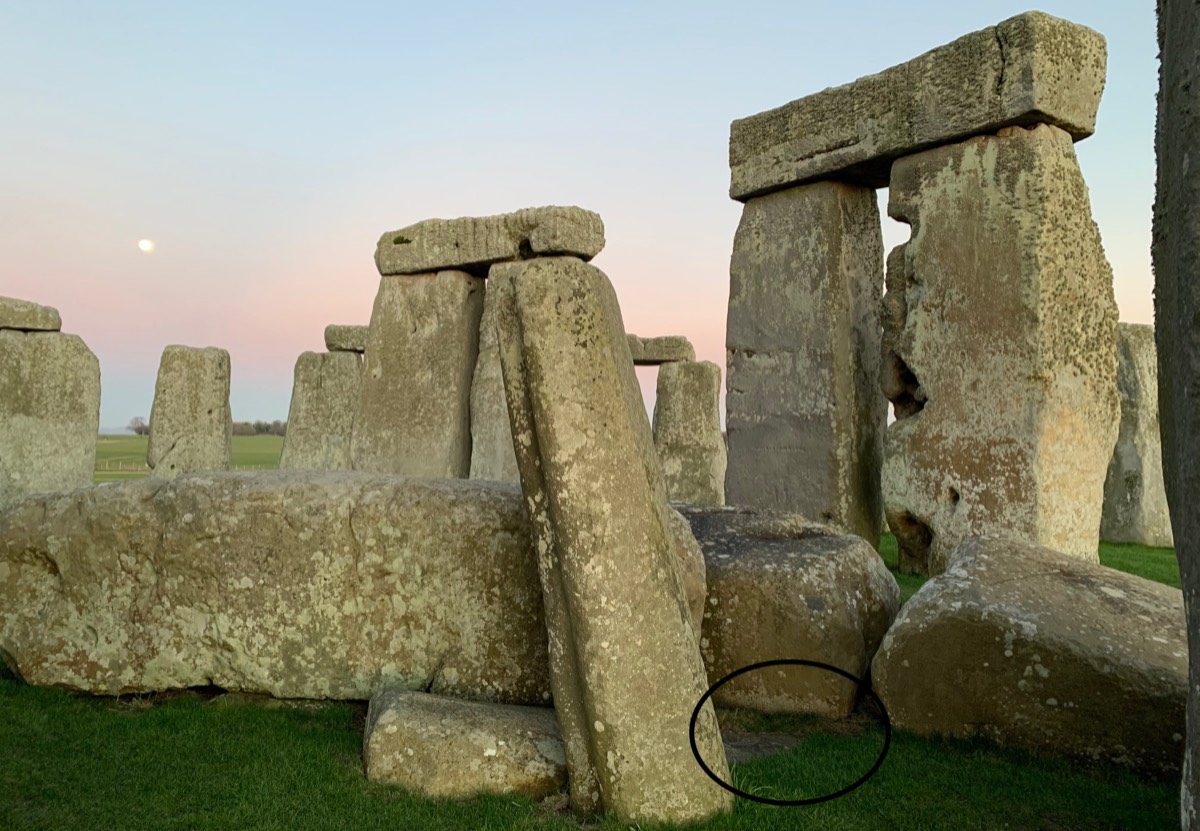
The Altar Stone at Stonehenge.

Enlarge / The Altar Stone at Stonehenge weighs roughly 6 tons and was probably transported by land—or possibly by sea.

English Heritage

The largest of the “bluestones” that comprise the inner circle at Stonehenge is known as the Altar Stone. Like its neighbors, scientists previously thought the stone had originated in western Wales and been transported some 125 miles to the famous monument that still stands on the Salisbury Plain in Wiltshire, England. But a new paper published in the journal Nature came to a different conclusion based on fresh analysis of its chemical composition: The Altar Stone actually hails from the very northeast corner of Scotland.

“Our analysis found specific mineral grains in the Altar Stone are mostly between 1,000 to 2,000 million years old, while other minerals are around 450 million years old,” said co-author Anthony Clarke, a graduate student at Curtin University in Australia, who grew up in Mynydd Preseli in Wales—origin of most of the bluestones—and first visited the monument when he was just a year old. “This provides a distinct chemical fingerprint suggesting the stone came from rocks in the Orcadian Basin, Scotland, at least 750 kilometers [450 miles] away from Stonehenge.”

As previously reported, Stonehenge consists of an outer circle of vertical sandstone slabs (sarsen stones), connected on top by horizontal lintel stones. There is also an inner ring of smaller bluestones and, within that ring, several free-standing trilithons (larger sarsens joined by one lintel). Radiocarbon dating indicates that the inner ring of bluestones was set in place between 2400 and 2200 BCE. But the standing arrangement of sarsen stones wasn’t erected until around 500 years after the bluestones.

No contemporary written records exist concerning the monument’s construction, and scholars have pondered its likely use and cultural significance for centuries. Stonehenge’s form (and maybe its purpose) changed several times over the centuries, and archaeologists are still trying to piece together the details of its story and the stories of the people who built it and gathered in its circles.

In 2019, Parker Pearson and several colleagues reported the results of their investigation into the quarry source for the bluestones. They found that the 42 bluestones came all the way from western Wales. Chemical analysis has even matched some of them to two particular quarries on the northern slopes of the Preseli Hills.

One quarry, an outcrop called Carn Goedog, seems to have supplied most of the bluish-gray, white-speckled dolerite at Stonehenge. And another outcrop in the valley below, Craig Rhos-y-felin, supplied most of the rhyolite. When another group of archaeologists studied the chemical isotope ratios in the cremated remains of people once buried beneath the bluestones, those researchers found that many of those people may have come from the same part of Wales between 3100 and 2400 BCE.

But the sarsen stones hail from much closer to home. Since the 1500s, most Stonehenge scholars have assumed the sarsen stones came from nearby Marlborough Downs, an area of round, grassy hills 25 to 30km (17 miles) north of Stonehenge, which has the largest concentration of sarsen in the UK. A 2020 study by University of Brighton archaeologist David Nash and colleagues confirmed that.

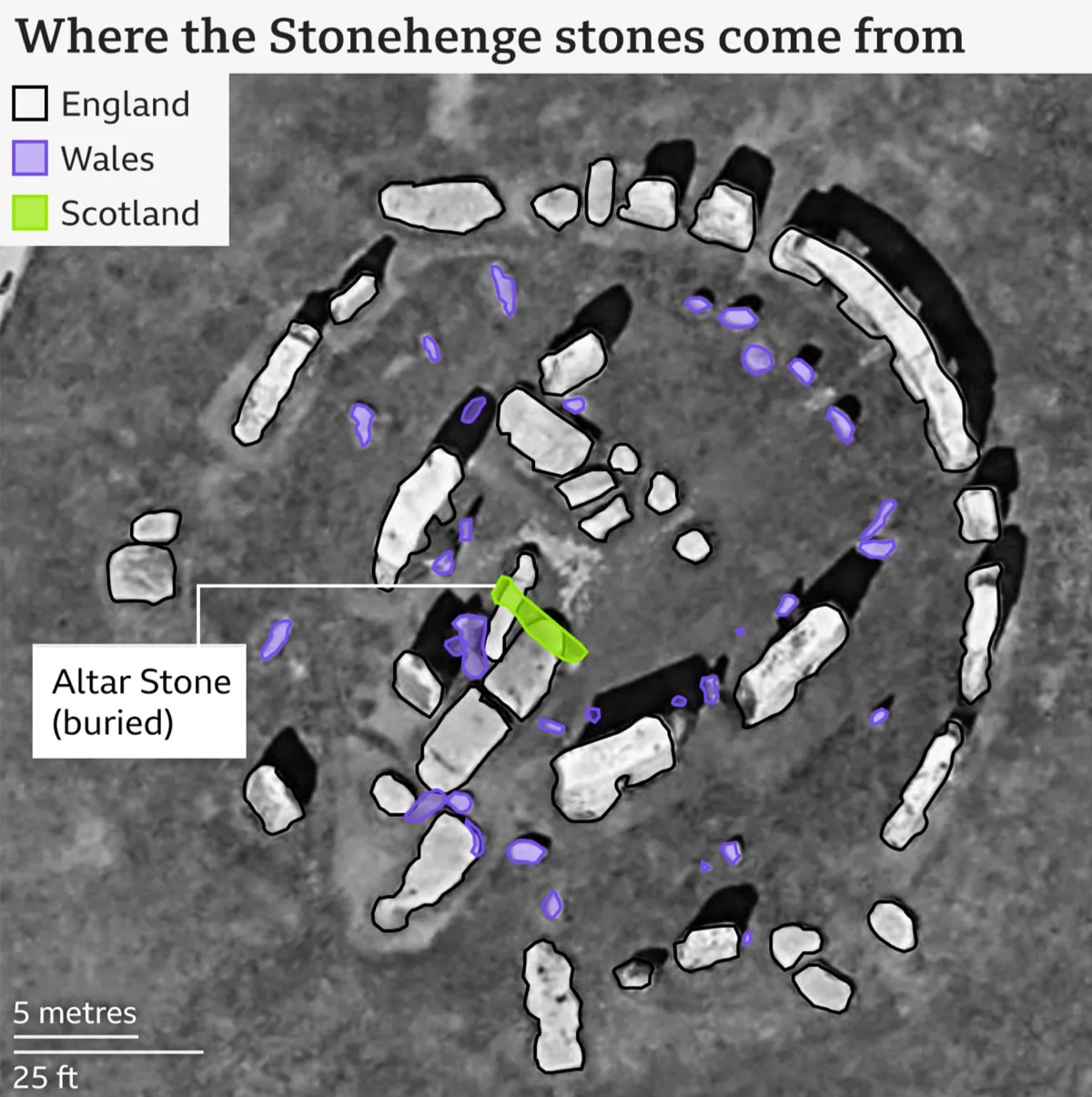
The arrangement of stones at Stonehenge, color-coded to show where they came from.

Enlarge / The arrangement of stones at Stonehenge, color-coded to show where they came from.

English Heritage/Curtin University

Fifty of the sarsens shared very similar chemical fingerprints, which means they probably all came from the same place, most likely one site in the southeastern Marlborough Downs: West Woods, about 25 km (16 miles) north of Stonehenge and just 3 km (2 miles) south of where most earlier studies had looked for Neolithic sarsen quarries. The other two surviving sarsens came from two different places, which archaeologists haven’t pinpointed yet.

Scientists solved mysterious origin of Stonehenge’s Altar Stone: Scotland Read More »

“screaming-woman”-mummy-may-have-died-in-agony-3,500-years-ago,-study-finds

“Screaming Woman” mummy may have died in agony 3,500 years ago, study finds

why is this mummy screaming? —

Scientists performed a “virtual autopsy” but could not determine exact cause of death.

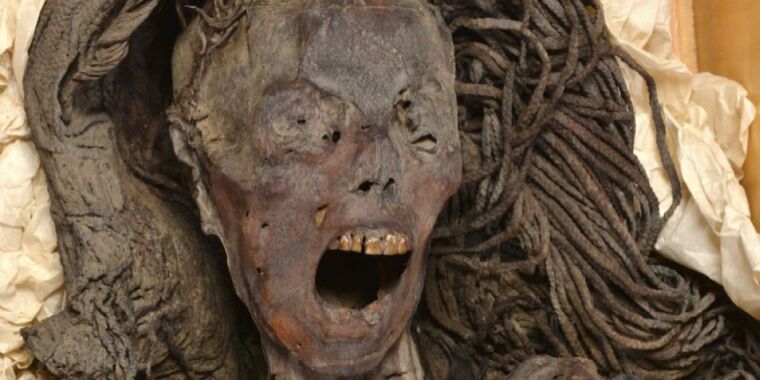
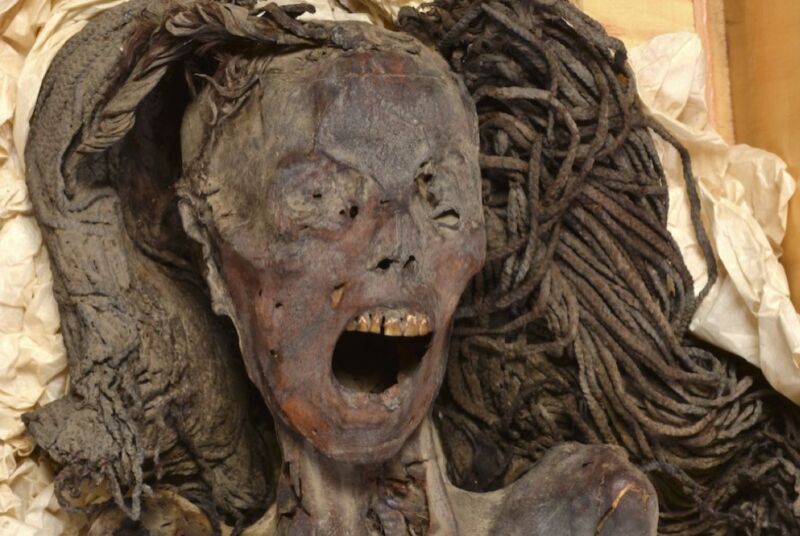
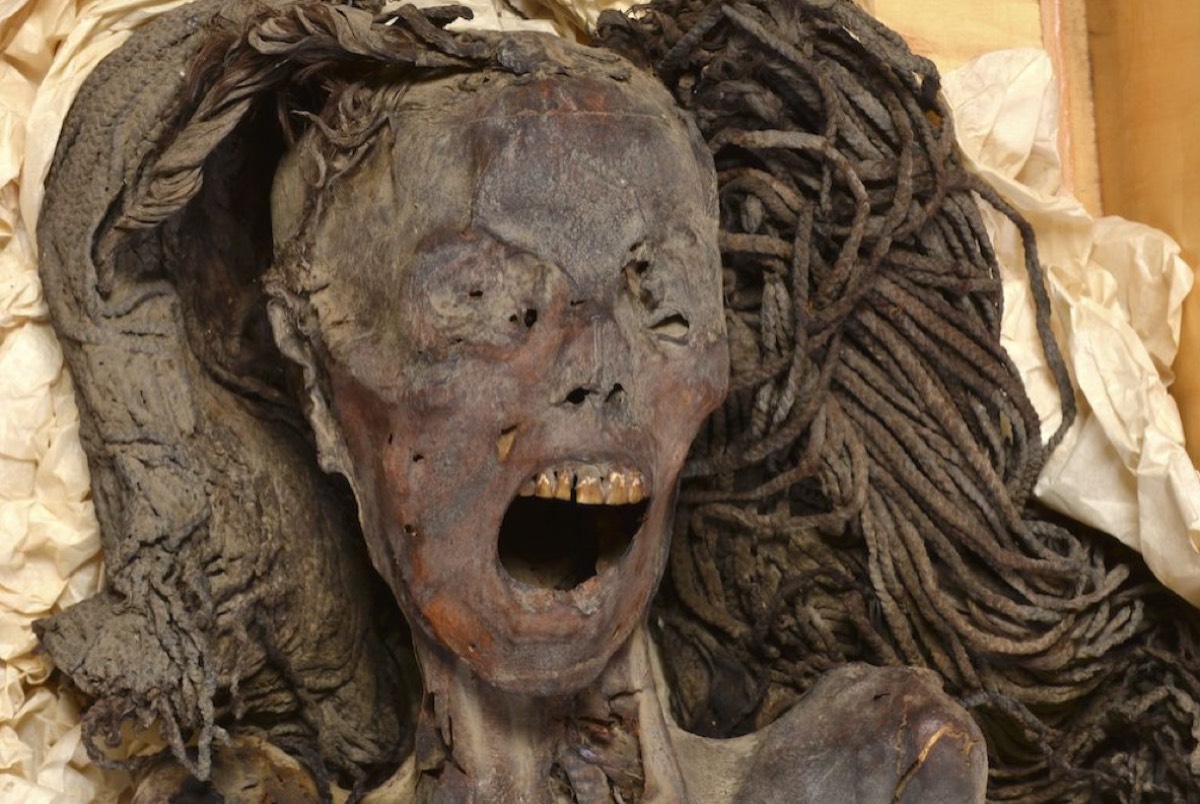
The Screaming Woman mummy, closeup of head/skull surrounded by elaborate wig

Enlarge / CT scans and other techniques allowed scientists to “virtually dissect” this 3,500-year-old “Screaming Woman” mummy.

There have been a handful of ancient Egyptian mummies discovered with their mouths wide open, as if mid-scream. This has puzzled archaeologists because Egyptian mummification typically involved bandaging the mandible to the skull to keep the mouth closed. Scientists have “virtually dissected” one such “Screaming Woman” mummy and concluded that the wide-open mouth is not the result of poor mummification, according to a new paper published in the journal Frontiers in Medicine. There was no clear cause of death, but the authors suggest the mummy’s expression could indicate she died in excruciating pain.

“The Screaming Woman is a true ‘time capsule’ of the way that she died and was mummified,” said co-author Sahar Saleem, a professor of radiology at Cairo University in Egypt. “Here we show that she was embalmed with costly, imported embalming material. This, and the mummy’s well-preserved appearance, contradicts the traditional belief that a failure to remove her inner organs implied poor mummification.”

Saleem has long been involved in paleoradiology and archaeometry of “screaming”  Egyptian mummies. For instance, she co-authored a 2020 paper applying similar techniques to the study of another “Screaming Woman” mummy, dubbed Unknown Woman A by the then-head of the Egyptian Antiquities Service, Gaston Maspero, and one of two such mummies discovered in the Royal Cache at Deir el Bahari near Luxor in 1881. This was where 21st and 22nd Dynasty priests would hide the remains of royal members from earlier dynasties to thwart grave robbers.

The male mummy, which also had a screaming expression, was identified in a 2012 study (also co-authored by Saleem) as Pentawer, son of 20th Dynasty pharaoh Ramses III (1186–1155 BCE), thanks to CT scans and DNA testing. Prince Pentawer was involved in the “harem conspiracy,” resulting in the assassination of his father, although the attempted coup failed in its objective of placing Pentawer on the throne. (The 2012 CT scans of Ramses III’s mummy revealed that the pharaoh’s throat had been cut to the bone, severing the trachea, esophagus, and blood vessels.)

The prince was forced to commit suicide by hanging as punishment. His body was not properly mummified; his organs were not removed (evisceration), and no embalming fluids were placed inside his body cavity. Instead, he was ignominiously wrapped in a goat’s skin (deemed ritually “impure”) and placed in an unmarked coffin.

  • “Screaming Mummy” of a man identified as Prince Pentawer, son of Ramesses III.

    Public domain

  • Picture of the head and upper torso of the “Screaming Woman” mummy known as Unknown Woman A, possibly Meritamun, daughter of 17th Dynasty Pharaoh Seqenenre Taa.

    Zahi Hawass and Sahar N. Saleem

Maspero noted that Unknown Woman A’s wraps included inscriptions that translated into “Royal daughter, royal sister Meritamun,” but there were several princesses of that name, so this “screaming woman” mummy was officially declared unknown. The two most likely candidates were the daughter of late 17th Dynasty pharaoh Seqenenre Taa II (1558–1553 BCE) or the daughter of Nefertiti and Ramses II (1279–1213 BCE), aka Ramses the Great. Maspero thought that the unusual wide-open mouth may have been the result of improper mummification (or no mummification, like Pentawer.)

Saleem and her 2020 co-author, archaeologist Zahi Hawass, took CT scans of the mummy to learn more about who she might have been and how she died. They identified her as an older woman who likely died in her 50s and was just under 5 feet tall. The scans revealed high calcification in many of her arteries (severe atherosclerosis), indicating serious heart disease. This likely led to her sudden death from a heart attack or stroke; the authors suggest the woman was not discovered right away, so her muscles and joints stiffened—hence the unusual body position (bent legs) and the wide open mouth. In addition, or alternatively, some kind of cadaveric spasm at the moment of death may have occurred.

Unlike the remains of the patricidal Pentawer, this woman had been eviscerated; her body cavity was filled with resin and scents, and she had been wrapped in pure linen. Her brain, however, was still in the skull, desiccated and shifted to the right. Based on that detail—brain removal was more common during the 19th Dynasty, and leaving it intact was more common during the 17th Dynasty—Saleem et al. concluded that the mummy is most likely that of Meritanum, daughter of Seqenenre Taa.

“Screaming Woman” mummy may have died in agony 3,500 years ago, study finds Read More »

study:-scribes-in-ancient-egypt-had-really-poor-posture-during-work

Study: Scribes in ancient Egypt had really poor posture during work

a scribe’s life —

There were degenerative joint changes in the spines, shoulders, knees, hips, and ankles.

Statues depicting the high dignitary Nefer and his wife (Abusir, Egypt).

Enlarge / Statues depicting the high dignitary Nefer and his wife (Abusir, Egypt).

Martin Frouz/Czech Institute of Egyptology/Charles University.

Repetitive stress injuries are a common feature of modern life, especially for office workers who spend a good chunk of their working days at a desk typing on a computer. Apparently, scribes in ancient Egypt suffered from their own distinctive repetitive stress injuries, according to a new paper published in the journal Scientific Reports that provides fresh insights into how these scribes lived and worked during the third millennium BCE.

Egyptian kings, royal family members, and other elite people from this Fifth Dynasty era were buried in tombs in the acropolis at Abusir rather than at neighboring Giza, which by then had largely filled up thanks to all the activity during the Fourth Dynasty. The Czech Institute of Egyptology at Charles University in Prague has been conducting research at the site since 1960, leading to the discovery of nearly 200 tombs dating back to the Old Kingdom (between 2700 and 2180 BCE). The first human skeletons were excavated in 1976, and there are currently 221 Old Kingdom skeletons in the collection, 102 of which are male.

Scientists started looking into the health status and markers for specific activities in 2009, but it wasn’t until quite recently that there were enough skeletons to conduct a comprehensive study. That’s what Petra Brukner Havelková of Charles University and the National Museum in Prague, Czech Republic, and colleagues set out to do, analyzing the remains of 69 adult males of different social status and different ages at which they died.

The results show the scribes and the reference group differed in just under 4 percent of the various evaluated skeletal traits, which the authors attribute to the overall similarities in the sample (male, same age distribution, no physically demanding activities). However, the individuals identified as scribes had more degenerative joint issues clustered in several well-defined regions compared to males from other occupations, including the joint connecting the lower jaw to the skull, the right collarbone, where the right humerus meets the shoulder, the right thumb’s first metacarpal bone, where the thigh meets the knee, and all along the spine (but especially at the top). These bone changes can be indicators of repetitive stress.

Bad ergonomics?

  • Working positions of scribes. (A) cross-legged (sartorial) position, (B) kneeling-squatting position, (C) standing position. (D) Different position of the legs when sitting.

    Martin Frouz/Jolana Malátková

  • Osteoarthritis of the temporomandibular joint of a supposed family member of Khemetnu, the presumed owner of family tomb AS 79.

    Šárka Bejdová

  • Drawing indicating the most affected regions of the skeletons of scribes with higher prevalence of changes compared to reference group.

    olana Malátková

For instance, the osteoarthritis in the jaw joints may have been caused by the rush stems the scribes used to write hieroglyphics. The scribes would chew on the ends to make a brush, and whenever a pen started getting ragged or too clogged with ink, they would cut off the end and chew the next section to make a new brush.

Most scribes likely wrote with their right hands and used their left to roll papyrus into cylindrical scrolls. Writing with a rush pen required considerable dexterity, and as anyone with carpal tunnel syndrome could tell you, these sorts of repetitive motions can cause excessive stress in the hands and wrists. There were only minor wrist differences between scribes and the control group, but the significant right thumb degeneration in scribes likely corresponds to specific frequently used thumb motions and positions—probably the act of repeatedly pinching their pens, although the authors say more research is needed to make a definitive determination.

The degenerative signs noted in the cervical spines are likely due to the scribes’ typical working position. “The head had to be forward and the spine flexed, changing the center of gravity of the head and putting stress on the spine,” the authors wrote—a posture common to many modern occupations. Prolonged stretches of sitting cross-legged could also have contributed to the observed damage to the cervical spines. There were signs of stresses to the right rotator cuffs, which usually occurs when the arm is in an extended elevated position and is common among painters, for example. It’s also common in people prone to sitting for a long time and typing with unsupported arms.

As for the degenerative changes noted in the knees, hips, and ankles, the authors suggest this indicates that scribes may have sat with the left leg in a kneeling or cross-legged position and the right leg pointed upward—more of a squat or a crouch. Iconography and statues from that era frequently depict scribes in such positions, as well as standing. The authors concluded that scribes probably alternated their arm and leg positions, but the head and cervical spine were always in that stress-inducing forward position.

Where’s a good ergonomic office chair when you need one?

DOI: Scientific Reports, 2024. 10.1038/s41598-024-63549-z  (About DOIs).

Study: Scribes in ancient Egypt had really poor posture during work Read More »

shackleton-died-on-board-the-quest;-ship’s-wreckage-has-just-been-found

Shackleton died on board the Quest; ship’s wreckage has just been found

A ship called Quest —

“His final voyage kind of ended that Heroic Age of Exploration.”

Ghostly historical black and white photo of a ship breaking in two in the process of sinking

Enlarge / Ernest Shackleton died on board the Quest in 1922. Forty years later, the ship sank off Canada’s Atlantic Coast.

Tore Topp/Royal Canadian Geographical Society

Famed polar explorer Ernest Shackleton famously defied the odds to survive the sinking of his ship, Endurance, which became trapped in sea ice in 1914. His luck ran out on his follow-up expedition; he died unexpectedly of a heart attack in 1922 on board a ship called Quest. The ship survived that expedition and sailed for another 40 years, eventually sinking in 1962 after its hull was pierced by ice on a seal-hunting run. Shipwreck hunters have now located the remains of the converted Norwegian sealer in the Labrador Sea, off the coast of Newfoundland, Canada. The wreckage of Endurance was found in pristine condition in 2022 at the bottom of the Weddell Sea.

The Quest expedition’s relatively minor accomplishments might lack the nail-biting drama of the Endurance saga, but the wreck is nonetheless historically significant. “His final voyage kind of ended that Heroic Age of Exploration, of polar exploration, certainly in the south,” renowned shipwreck hunter David Mearns told the BBC. “Afterwards, it was what you would call the scientific age. In the pantheon of polar ships, Quest is definitely an icon.”

As previously reported, Endurance set sail from Plymouth, Massachusetts, on August 6, 1914, with Shackleton joining his crew in Buenos Aires, Argentina. By January 1915, the ship had become hopelessly locked in sea ice, unable to continue its voyage. For 10 months, the crew endured the freezing conditions, waiting for the ice to break up. The ship’s structure remained intact, but by October 25, Shackleton realized Endurance was doomed. He and his men opted to camp out on the ice some two miles (3.2 km) away, taking as many supplies as they could with them.

Compacted ice and snow continued to fill the ship until a pressure wave hit on November 13, crushing the bow and splitting the main mast—all of which was captured on camera by crew photographer Frank Hurley. Another pressure wave hit in late afternoon November 21, lifting the ship’s stern. The ice floes parted just long enough for Endurance to finally sink into the ocean, before closing again to erase any trace of the wreckage.

When the sea ice finally disintegrated in April 1916, the crew launched lifeboats and managed to reach Elephant Island five days later. Shackleton and five of his men set off for South Georgia the next month to get help—a treacherous 720-mile journey by open boat. A storm blew them off course, and they ended up landing on the unoccupied southern shore. So Shackleton left three men behind while he and a companion navigated dangerous mountain terrain to reach the whaling station at Stromness on May 2. A relief ship collected the other three men and finally arrived back on Elephant Island in August. Miraculously, Shackleton’s entire crew was still alive.

Endurance, which sank off the coast of Antarctica in 1915 after being crushed by pack ice. An expedition located the shipwreck in pristine condition in 2022 after nearly 107 years. ” height=”424″ src=”https://cdn.arstechnica.net/wp-content/uploads/2022/03/endurance2CROP-640×424.jpg” width=”640″>

Enlarge / This is the stern of the good ship Endurance, which sank off the coast of Antarctica in 1915 after being crushed by pack ice. An expedition located the shipwreck in pristine condition in 2022 after nearly 107 years.

Falklands Maritime Heritage Trust/NatGeo

Shackleton’s last voyage

By the time Shackleton got back to England, the country was embroiled in World War I, and many of his men enlisted. Shackleton was considered too old for active service. He was also deeply in debt from the Endurance expedition, earning a living on the lecture circuit. But he still dreamed of making another expedition to the Arctic Ocean north of Alaska to explore the Beaufort Sea. He got seed money (and eventually full funding) from an old school chum, John Quillier Rowett. Shackleton purchased a wooden Norwegian whaler, Foca I, which his wife Emily renamed Quest.

Shackleton died on board the Quest; ship’s wreckage has just been found Read More »

ancient-egyptian-skull-shows-evidence-of-cancer,-surgical-treatment

Ancient Egyptian skull shows evidence of cancer, surgical treatment

“We could not believe what was in front of us.” —

“An extraordinary new perspective in our understanding of the history of medicine.”

Skull and mandible 236, dating from between 2687 and 2345 BCE, belonged to a male individual aged 30 to 35.

Tondini, Isidro, Camarós, 2024.

The 4,000-year-old skull and mandible of an Egyptian man show signs of cancerous lesions and tool marks, according to a recent paper published in the journal Frontiers in Medicine. Those marks could be signs that someone tried to operate on the man shortly before his death or performed the ancient Egyptian equivalent of an autopsy to learn more about the cancer after death.

“This finding is unique evidence of how ancient Egyptian medicine would have tried to deal with or explore cancer more than 4,000 years ago,” said co-author Edgard Camarós, a paleopathologist at the University of Santiago de Compostela. “This is an extraordinary new perspective in our understanding of the history of medicine.”

Archaeologists have found evidence of various examples of primitive surgery dating back several thousand years. For instance, in 2022, archaeologists excavated a 5,300-year-old skull of an elderly woman (about 65 years old) from a Spanish tomb. They determined that seven cut marks near the left ear canal were strong evidence of a primitive surgical procedure to treat a middle ear infection. The team also identified a flint blade that may have been used as a cauterizing tool. By the 17th century, this was a fairly common procedure to treat acute ear infections, and skulls showing evidence of a mastoidectomy have been found in Croatia (11th century), Italy (18th and 19th centuries), and Copenhagen (19th or early 20th century).

Cranial trepanation—the drilling of a hole in the head—is perhaps the oldest known example of skull surgery and one that is still practiced today, albeit rarely. It typically involves drilling or scraping a hole into the skull to expose the dura mater, the outermost of three layers of connective tissue, called meninges, that surround and protect the brain and spinal cord. Accidentally piercing that layer could result in infection or damage to the underlying blood vessels. The practice dates back 7,000 to 10,000 years, as evidenced by cave paintings and human remains. During the Middle Ages, trepanation was performed to treat such ailments as seizures and skull fractures.

Just last year, scientists analyzed the skull of a medieval woman who once lived in central Italy and found evidence that she experienced at least two brain surgeries consistent with the practice of trepanation. Why the woman in question was subjected to such a risky invasive surgical procedure remains speculative, since there were no lesions suggesting the presence of trauma, tumors, congenital diseases, or other pathologies. A few weeks later, another team announced that they had found evidence of trepanation in the remains of a man buried between 1550 and 1450 BCE at the Tel Megiddo archaeological site in Israel. Those remains (of two brothers) showed evidence of developmental anomalies in the bones and indications of extensive lesions—signs of a likely chronic debilitating disease, such as leprosy or Cleidocranial dysplasia.

Ancient Egypt also had quite advanced medical knowledge for treating specific diseases and traumatic injuries like bone trauma, according to Camarós and his co-authors. There is paleopathological evidence of trepanation, prosthetics, and dental fillings, and historical sources describe various therapies and surgeries, including mention of tumors and “eating” lesions indicative of malignancy. They thought that cancer may have been much more prevalent in ancient Egypt than previously assumed, and if so, it seemed likely that Egyptians would have developed methods for therapy or surgery to treat those cancers.

  • Skull E270, dating from between 663 and 343 BCE, belonged to a female individual who was older than 50 years.

    Tondini, Isidro, Camarós, 2024

  • The skulls were examined using microscopic analysis and CT scanning.

    Tondini, Isidro, Camarós, 2024

  • CT Scan of skull.

    Tondini, Isidro, Camarós, 2024

  • Cutmarks found on skull 236, probably made with a sharp object.

    Tondini, Isidro, Camarós, 2024

  • Several of the metastatic lesions on skull 236 display cutmarks.

    Tondini, Isidro, Camarós, 2024

Ancient Egyptian skull shows evidence of cancer, surgical treatment Read More »

deciphered-herculaneum-papyrus-reveals-precise-burial-place-of-plato

Deciphered Herculaneum papyrus reveals precise burial place of Plato

As he lay buried —

Various imaging methods comprised a kind of “bionic eye” to examine charred scroll.

flattened ancient papyrus on a table with lights and cameras overhead

Enlarge / Imaging setup for a charred ancient papyrus recovered from the ruins of Herculaneum; 30 percent of the text has now been deciphered.

CNR – Consiglio Nazionale delle Ricerche

Historical accounts vary about how the Greek philosopher Plato died: in bed while listening to a young woman playing the flute; at a wedding feast; or peacefully in his sleep. But the few surviving texts from that period indicate that the philosopher was buried somewhere in the garden of the Academy he founded in Athens. The garden was quite large, but archaeologists have now deciphered a charred ancient papyrus scroll recovered from the ruins of Herculaneum, indicating a more precise burial location: in a private area near a sacred shrine to the Muses, according to Constanza Millani, director of the Institute of Heritage Science at Italy’s National Research Council.

As previously reported, the ancient Roman resort town Pompeii wasn’t the only city destroyed in the catastrophic 79 AD eruption of Mount Vesuvius. Several other cities in the area, including the wealthy enclave of Herculaneum, were fried by clouds of hot gas called pyroclastic pulses and flows. But still, some remnants of Roman wealth survived. One palatial residence in Herculaneum—believed to have once belonged to a man named Piso—contained hundreds of priceless written scrolls made from papyrus, singed into carbon by volcanic gas.

The scrolls stayed buried under volcanic mud until they were excavated in the 1700s from a single room that archaeologists believe held the personal working library of an Epicurean philosopher named Philodemus. There may be even more scrolls still buried on the as-yet-unexcavated lower floors of the villa. The few opened fragments helped scholars identify various Greek philosophical texts, including On Nature by Epicurus and several by Philodemus himself, as well as a handful of Latin works. But the more than 600 rolled-up scrolls were so fragile that it was long believed they would never be readable, since even touching them could cause them to crumble.

Scientists have brought all manner of cutting-edge tools to bear on deciphering badly damaged ancient texts like the Herculaneum scrolls. For instance, in 2019, German scientists used a combination of physics techniques (synchrotron radiation, infrared spectroscopy, and X-ray fluorescence) to virtually “unfold” an ancient Egyptian papyrus.

Brent Searles’ lab at the University of Kentucky has been working on deciphering the Herculaneum scrolls for many years. He employs a different method of “virtually unrolling” damaged scrolls, using digital scanning with micro-computed tomography—a noninvasive technique often used for cancer imaging—with segmentation to digitally create pages, augmented with texturing and flattening techniques. Then they developed software (Volume Cartography) to virtually unroll the scroll.

The older Herculaneum scrolls were written with carbon-based ink (charcoal and water), so one would not get the same fluorescing in the CT scans, but the scans can still capture minute textural differences indicating those areas of papyrus that contained ink compared to the blank areas, and it’s possible to train an artificial neural network to do just that.

History of the Academy text that were previously illegible.” height=”401″ src=”https://cdn.arstechnica.net/wp-content/uploads/2024/04/plato4-640×401.jpg” width=”640″>

Enlarge / Infrared and X-ray scanners have deciphered more than 1,000 words of Philodemus’ History of the Academy text that were previously illegible.

D.P. Pavone

This latest work is under the auspices of the “GreekSchools” project, funded by the European Research Council, which began three years ago and will continue through 2026. This time around, scholars have used infrared, ultraviolet optical imaging, thermal imaging, tomography, and digital optical microscopy as a kind of “bionic eye” to examine Philodemus’ History of the Academy scroll, which was also written in carbon-based ink. Nonetheless, they were able to extract over 1,000 words, approximately 30 percent of the scroll’s text, revealing new details about Plato’s life as well as his place of burial.

Most notably, the historical account of Plato being sold into slavery in his later years after running afoul of the tyrannical Dionysius is usually pegged to around 387 BCE. According to the newly deciphered Philodemus text, however, Plato’s enslavement may have occurred as early as 404 BCE or shortly after the death of Socrates in 399 BCE.

“Compared to previous editions, there is now an almost radically changed text, which implies a series of new and concrete facts about various academic philosophers,” Graziano Ranocchia, lead researcher on the project, said. “Through the new edition and its contextualization, scholars have arrived at unexpected interdisciplinary deductions for ancient philosophy, Greek biography and literature, and the history of the book.”

Other deciphering efforts are also still underway. For instance, last fall we reported on the use of machine learning to decipher the first letters from a previously unreadable ancient scroll found in an ancient Roman villa at Herculaneum—part of the 2023 Vesuvius Challenge. And earlier this year tech entrepreneur and challenge co-founder Nat Friedman announced via X (formerly Twitter) that they had awarded the grand prize of $700,000 for producing the first readable text.

When the Vesuvius Challenge co-founders started the challenge, they thought there was less than a 30 percent chance of success within the year since, at the time, no one had been able to read actual letters inside of a scroll. However, the crowdsourcing approach proved wildly successful. That said, it’s still just 5 percent of a single scroll.

So there is a new challenge for 2024: $100,000 for the first entry that can read 90 percent of the four scrolls scanned thus far. The primary goal is to perfect the auto-segmentation process since doing so manually is both time-consuming and expensive (more than $100 per square centimeter). This will lay the foundation for one day being able to scan and read all 800 scrolls discovered so far, as well as any additional scrolls that are unearthed should the remaining levels of the villa finally be excavated.

Deciphered Herculaneum papyrus reveals precise burial place of Plato Read More »