Apple is having a rough time of it in France as of late. As if mandated updates to the iPhone 12 due to radiation concerns weren’t enough, Apple customers in the country may now struggle to get their mitts on the latest model when it’s released.
French Apple store workers have voted to strike at the end of the week — coinciding with the launch of the iPhone 15. Apple unions including CGT, Unsa, CFDT and Cidre-CFTC, are asking for better pay and working conditions, or their members will walk out this Friday and Saturday.
Among the demands is a 7% increase in wages to make up for inflation (Apple is offering 4.5%). Furthermore, the negotiators are requesting that Apple put an end to a month-long hiring freeze.
“Since the management has decided to ignore our demands and concerns despite their perfect legitimacy, the 4 unions of Apple Retail France are calling for a strike on the 22nd and 23rd September,” the CGT Apple Retail said in a statement posted to X, formerly known as Twitter.
“We remind management that it is not these movements that harm the company, but rather its denial in the face of the discomfort of its employees,” it continued (translated from the French original text).
The <3 of EU tech
The latest rumblings from the EU tech scene, a story from our wise ol’ founder Boris, and some questionable AI art. It’s free, every week, in your inbox. Sign up now!
For context, during the announcement of the company’s Q3 financial results last month, Apple CEO Tim Cook said he was happy to report an all-time revenue record in Services, driven by over one billion paid subscriptions, and “continued strength” in emerging markets thanks to robust sales of the iPhone. Last year, Apple reported a revenue of $394.33bn.
According to a union spokesperson, workers can mobilise in three quarters of the country’s Apple stores. They will not prevent customers from shopping, however buyers will “need to be patient.” Union officials do not rule out more strike actions the following weekends if Apple’s management does not budge from its position.
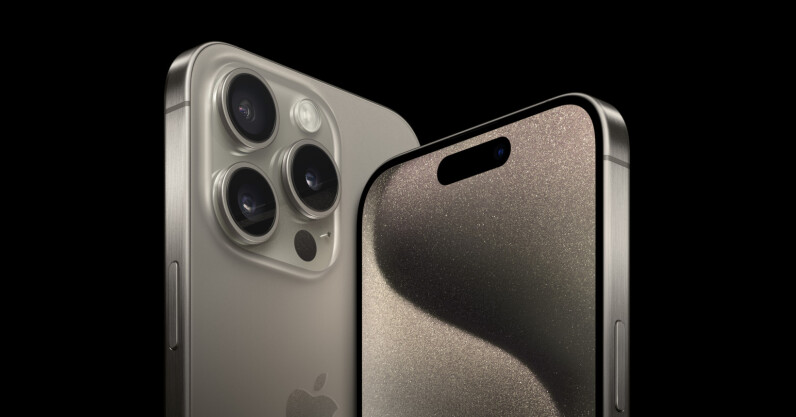
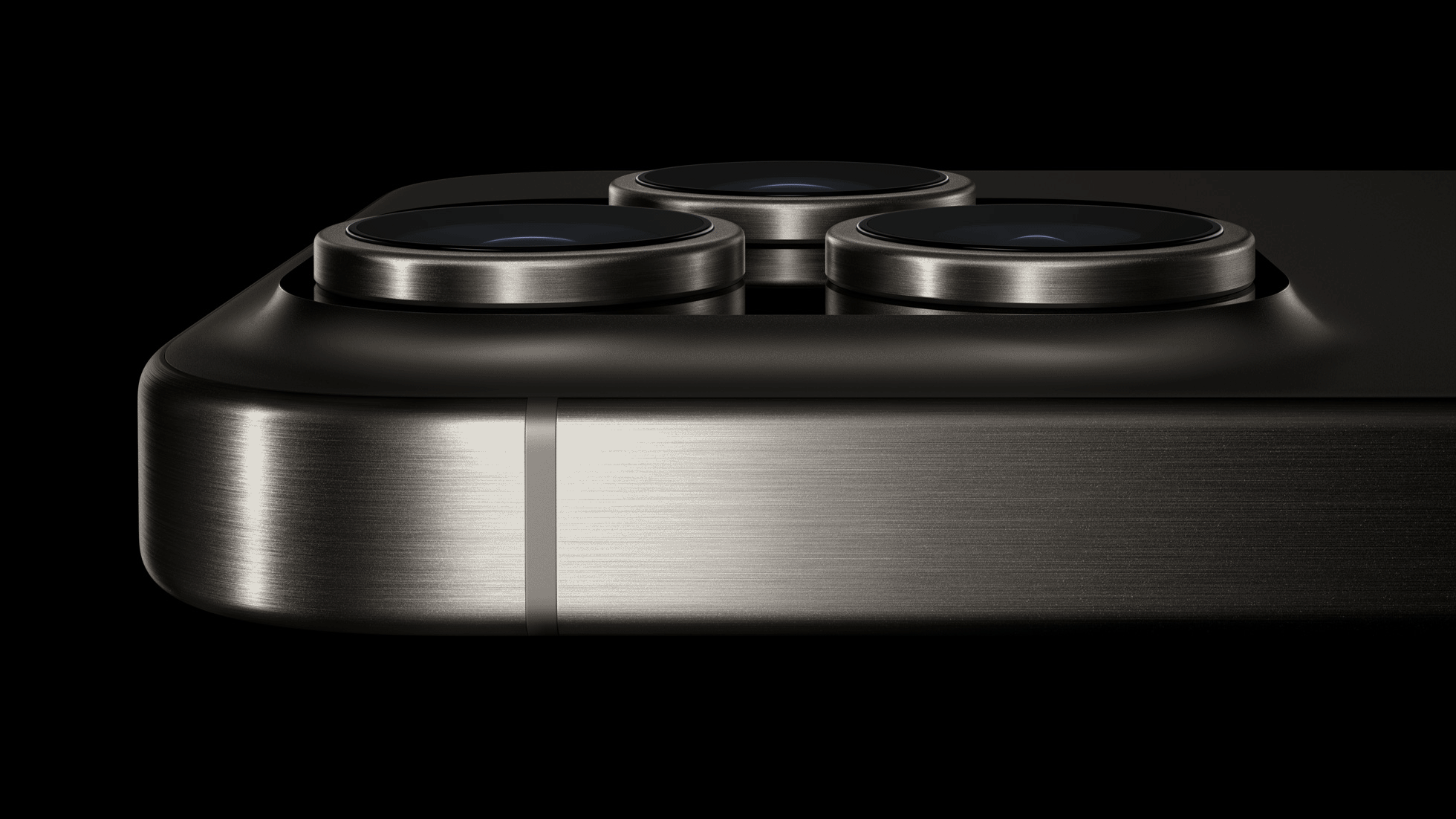
The iPhone 15 will feature the EU mandated shift to USB-C charging — which some of our reporters are more than happy about. Other than that, it is far from revolutionary and more of a slightly updated phone — although it does feature the brand new A17 Pro chip. Among the more notable upgrades are a customisable action button, a titanium body for the pro range, and a next-generation automatic portrait mode for the camera.
Unity, makers of the popular game engine, announced earlier this week it’s getting ready to levy some pretty significant fees on developers, causing many to rethink whether it makes more sense to actually go with the main competition, Unreal Engine from Epic Games. It seems Epic isn’t wasting any time to help transition those creating projects for Apple Vision Pro.
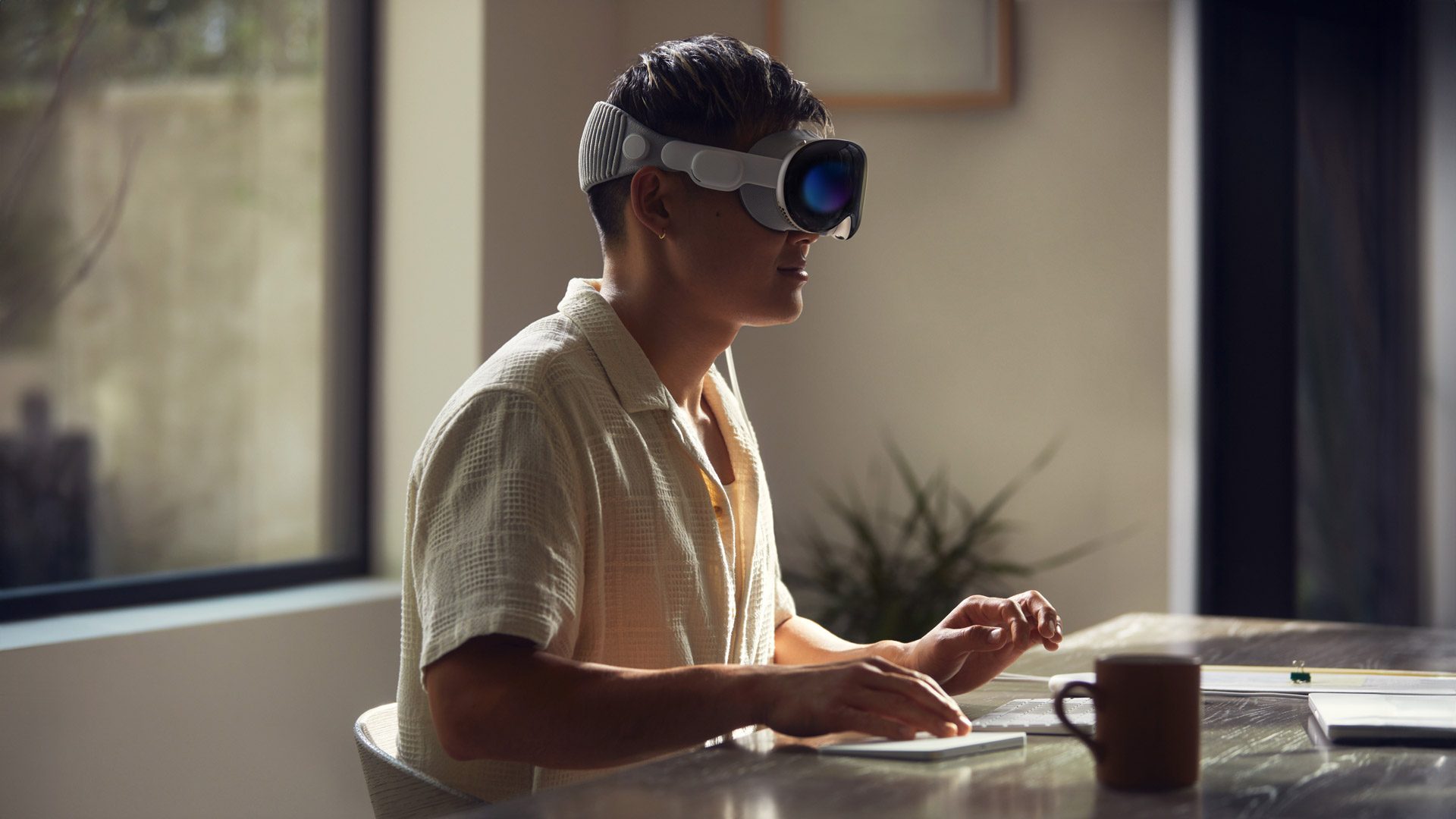
According to Victor Lerp, Unreal Engine XR Product Specialist at Epic Games, the company is now “exploring native Unreal Engine support for Apple Vision Pro,” the upcoming mixed reality headset due to launch in early 2024.
Lerp says it’s still early days though, noting that it’s “too early for us to share details on the extent of support or timelines.”
Lerp posted the statement on Unreal Engine’s XR development forum. You can read it in full below, courtesy of Alex Coulombe, CEO of the XR creative studio Agile Lens:
During Vision Pro’s unveiling at WWDC in June, Apple prominently showcased native Unity support in its upcoming XR operating system, visionOS. Unity began offering beta access to its visionOS-supported engine shortly afterwards, making it feel like something of a ‘bait and switch’ for developers already creating new games, or porting existing titles to Vision Pro.
As explained by Axios, Unity’s new plan will require users of its free tier of development services to pay the company $0.20 per installation once their game hits thresholds of both 200,000 downloads and earns $200,000 in revenue. Subscribers to Unity Pro, which costs $2,000 a year, have a different fee structure that scales downwards in proportion to the number of installs. What constitutes an ‘install’ is still fairly nebulous at this point despite follow-up clarifications from Unity. Whatever the case, the change is set to go into effect starting on January 1st, 2024.
In the meantime, the proposed Unity price increase has caused many small to medium-size teams to reflect on whether to make the switch to the admittedly more complicated Unreal Engine, or pursue other game engines entirely. A majority of XR game studios fit into that category, which (among many other scenarios) could hobble teams as they look to replicate free-to-play success stories like Gorilla Tag, which generated over $26 million in revenue when it hit the Quest Store late last year.
Apple’s “Wonderlust” product launch event featured the official unveiling of iPhone 15 and both Watch Series 9 and Ultra 2. While XR wasn’t a major focus of the event, Apple confirmed its upcoming mixed reality standalone Vision Pro isn’t seeing any delays to push it off its early 2024 release.
First unveiled at WWDC in June, Apple CEO Tim Cook said last night during the product event that Vision Pro is still “on track for release in early 2024.”
Vision Pro, which comes along with the very ‘pro’ price tag of $3,500, has reportedly been the subject of multiple delays in the past. The MR headset was widely thought to arrive sometime in 2022, although several successive reports maintained it was delayed multiple times since then.
With an “early 2024” launch in site, Apple seems to be making some of the right moves in the background, as the company has already opened up applications for developer units which are undoubtedly already in the hands of studios.
Meanwhile, the Cupertino tech giant also announced it’s prepping iPhone 15 Pro to take stereoscopic video which can be viewed on Vision Pro. It’s an interesting choice, as features on company’s most premium ‘Pro’ phone offerings tend to trickle down in successive generations. Here, the phone’s ultrawide and main cameras work together to create what Apple calls a “three-dimensional video.”
Apple today announced its iPhone 15 lineup of smartphones, including the iPhone 15 Pro which will be the company’s first phone to capture spatial video for immersive viewing on Vision Pro.
While Apple Vision Pro itself works as a spatial camera, allowing users to capture immersive photos and videos, I think we can all agree that wearing a camera on your head isn’t the most convenient way to capture content.
Image courtesy Apple
Apple seems to feel the same way. Today during the company’s iPhone 15 announcement, it was revealed that the new iPhone 15 Pro will be capable of capturing spatial video which can be viewed immersively on the company’s upcoming Vision Pro headset. The base versions of the phone, the iPhone 15 and iPhone 15 Plus, won’t have the spatial capture capability.
Details on exactly how this function works are slim for the time being.
“We use the ultrawide and main cameras together to create a three-dimensional video,” the company said during its announcement. But it isn’t clear if “three-dimensional” means stereoscopic footage with a fixed viewpoint, or some kind of depth projection with a bit of 6DOF wiggle room.
Given that the iPhone 15 Pro cameras are so close together—not offering enough distance between the two views for straightforward stereo capture—it seems that some kind of depth projection or scene reconstruction will be necessary.
Image courtesy Apple pro
Apple didn’t specifically say whether the phone’s depth-sensor was involved, but considering the phone uses it for other camera functions, we wouldn’t be surprised to find that it has some role to play. Curiously, Apple didn’t mention spatial photo capture, but ostensibly this should be possible as well.
While users will be able to watch their immersive videos on Vision Pro, Apple also said they’ll be able to share the footage with others who can watch on their own headset.
While the new iPhone 15 lineup will launch on September 22nd, Apple says the spatial capture capability won’t be available until “later this year”—which is curious considering the company also said today that Vision Pro is “on track to launch in early 2024.” Perhaps the company plans to allow creators to access the spatial video files for editing and use outside of Apple’s platform?
Today, big tech companies including Apple, Pixar, Adobe, Autodesk, and NVIDIA, announced the formation of the Alliance for OpenUSD (AOUSD), which is dedicated to promoting the standardization and development of a 3D file protocol that Apple says will “help accelerate the next generation of AR experiences.”
NVIDIA has been an early supporter of Pixar’s Universal Scene Description (USD), stating last year it thinks Pixar’s solution has the potential to become the “HTML of the metaverse.”
Much like HTML forms a sort of description of a webpage—being hostable anywhere on the Internet and retrievable/renderable locally by a web browser—USD can be used to describe complex virtual scenes, allowing it to be similarly retrieved and rendered on a local machine.
Here’s how the alliance describes their new OpenUSD inititive:
Created by Pixar Animation Studios, OpenUSD is a high-performance 3D scene description technology that offers robust interoperability across tools, data, and workflows. Already known for its ability to collaboratively capture artistic expression and streamline cinematic content production, OpenUSD’s power and flexibility make it an ideal content platform to embrace the needs of new industries and applications.
“Universal Scene Description was invented at Pixar and is the technological foundation of our state-of-the-art animation pipeline,” said Steve May, Chief Technology Officer at Pixar and Chairperson of AOUSD. “OpenUSD is based on years of research and application in Pixar filmmaking. We open-sourced the project in 2016, and the influence of OpenUSD now expands beyond film, visual effects, and animation and into other industries that increasingly rely on 3D data for media interchange. With the announcement of AOUSD, we signal the exciting next step: the continued evolution of OpenUSD as a technology and its position as an international standard.”
Housed by the Linux Foundation affiliate Joint Development Foundation (JDF), the alliance is hoping to attract a diverse range of companies and organizations to participate in shaping the future of OpenUSD actively. For now it counts Apple, Pixar, Adobe, Autodesk, and NVIDIA as foudning memebers, with general members including Epic Games, Unity, Foundry, Ikea, SideFX, and Cesium.
“OpenUSD will help accelerate the next generation of AR experiences, from artistic creation to content delivery, and produce an ever-widening array of spatial computing applications,” said Mike Rockwell, Apple’s VP of the Vision Products Group. “Apple has been an active contributor to the development of USD, and it is an essential technology for the groundbreaking visionOS platform, as well as the new Reality Composer Pro developer tool. We look forward to fostering its growth into a broadly adopted standard.”
Khronos Group, the consortium behind the OpenXR standard, launched a similar USD initiative in the past via its own Metaverse Standards Forum. It’s unclear how much overlap these initiatives will have, as that project was supported by AOUSD founders Adobe, Autodesk, and NVIDIA in addition to a wide swath of industry movers, such as Meta, Microsoft, Sony, Qualcomm, and AMD. Notably missing in the Metaverse Standards Forum was support from Apple and Pixar themselves.
We’re hoping to learn more at a long-form presentation of AOUSD during the Autodesk Vision Series on August 8th. There are a host of events leading up to SIGGRAPH 2023 though, which goes from August 6th – 10th, so we may learn more at any one of the companies’ own presentations on USD.
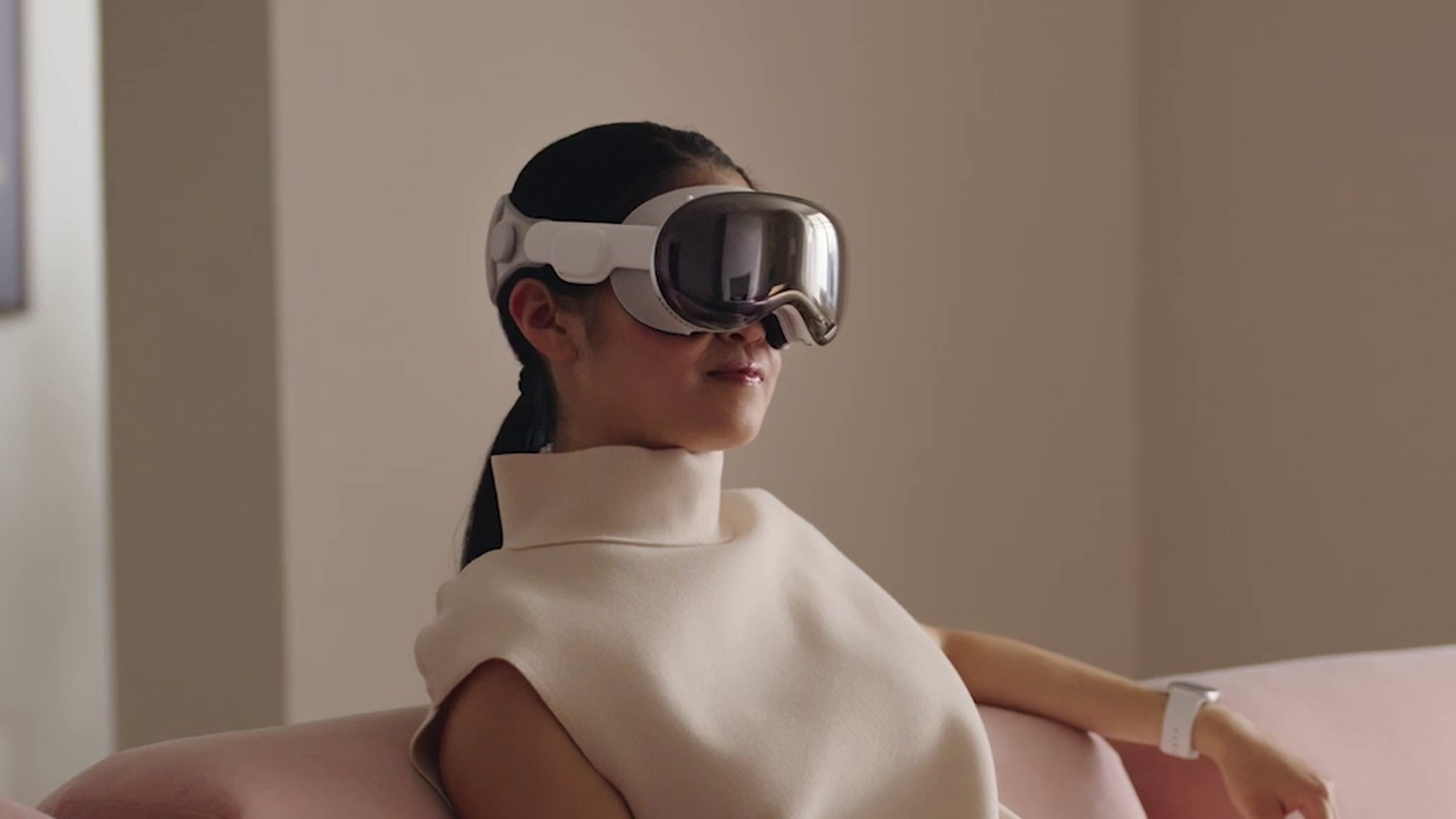
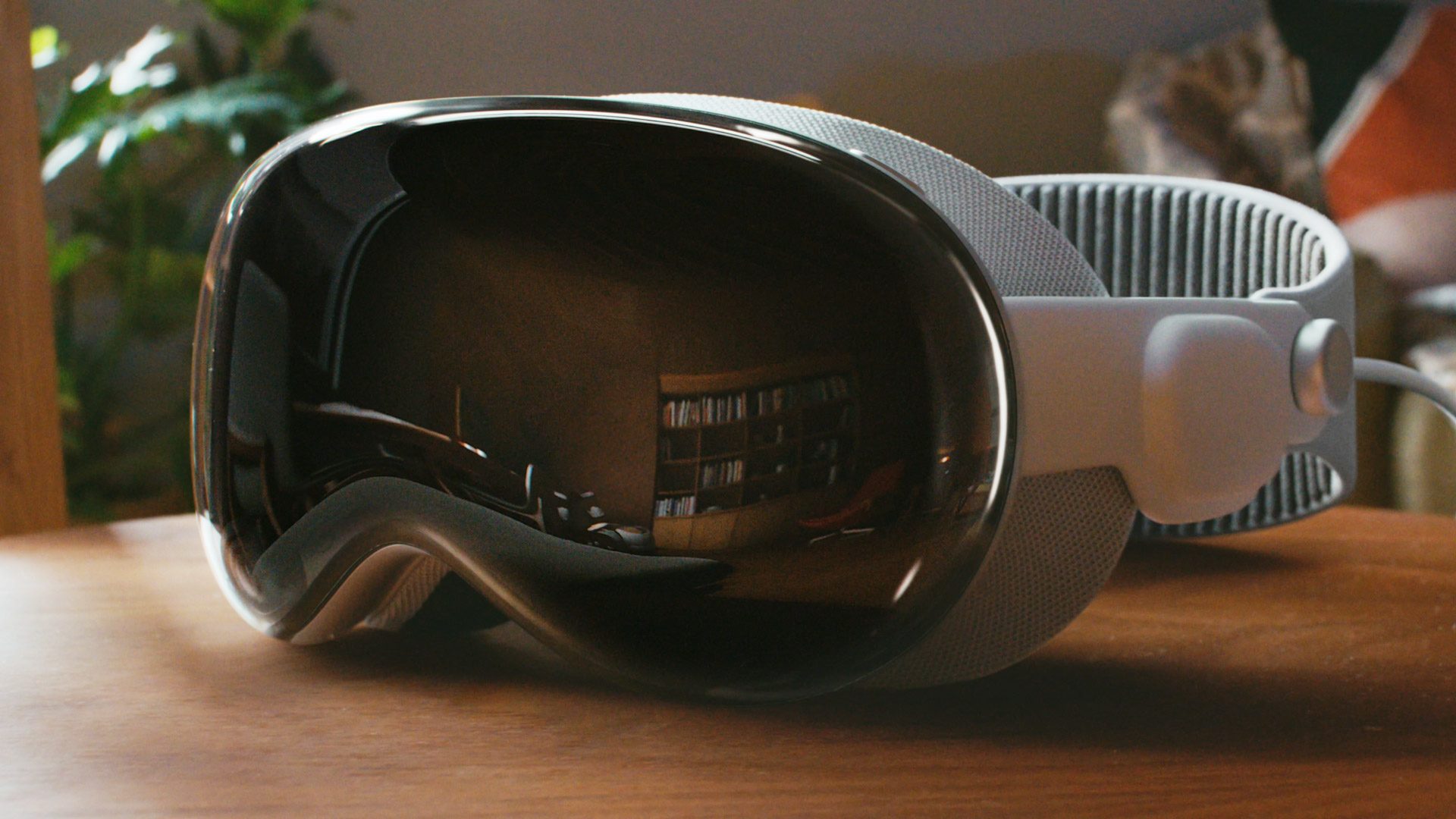
Apple Vision Pro is coming next year, not only making for the Fruit Company’s much awaited first XR headset, but also spurring a resurgence in public interest (and likely investment) in the XR space. At $3,500, Vision Pro is undoubtedly an expensive steppingstone to the company’s future augmented reality ambitions, but even if it’s ostensibly ignoring virtual reality in the meantime, it probably won’t forever.
Apple has a tendency to undervalue gaming initially, though perhaps reluctantly, eventually acknowledges its importance. Gaming in XR is considerably enhanced by fully immersive experiences and motion controllers, and Apple will probably start feeling the pressure of that demand from gamers and developers alike when it kicks off a consumer headset sometime down the road, causing them to relent (if only just).
What is Vision Pro?
Like many, Apple is investing in AR today because the headsets and glasses of tomorrow have a good chance of supplanting smartphones and becoming the dominant mobile computing platform of the future. Long considered the holy grail of immersive computing, all-day AR headsets represent a way of interacting with new layers of information in daily life which would span everything from turn-by-turn directions to gaming applications—like Google Maps directions floating on the street in front of your car or a city-wide version of Pokémon Go.
Granted, Vision Pro isn’t yet the sort of device you’ll take out to the park to catch a random Zubat or Rattata—it’s very much an indoor device that Apple envisions you’ll use to sit down and watch a virtual TV screen or stand up in place to have an immersive chat with a work colleague. But as an opening gambit, Apple’s initial pitch of Vision Pro has been fairly telling of its strategy for XR.
In the ‘one more thing’ bit of the WWDC keynote, Apple lauded Vision Pro’s AR capabilities thanks to its color passthrough cameras, impressively responsive UI, and, from our hands-on with the headset, rock-solid hand-tracking. The company focused almost entirely on the work and lifestyle benefits of AR, and much less on the comparatively more closed-off fully immersed capabilities of virtual reality.
Image courtesy Apple
Considering just how much time and effort Apple has spent talking about AR, you may be surprised to find out Vision Pro can actually play VR games. After all, like Meta Quest Pro or the upcoming Quest 3, it’s basically a VR headset with passthrough cameras—what we’d call a mixed reality headset. In fact, the headset is already confirmed to support one of VR’s most prominent social VR games.
Instead, Vision Pro is focusing on eye-tracking and hand-tracking as primary input methods, with support for traditional peripherals like keyboards and mice and gamepads filling in the gaps for work and traditional flatscreen gaming. This means many VR developers looking to target Vision Pro will need to pare down input schemes to refocus on hand-tracking, or create games from the ground-up that don’t rely on the standard triggers, grip buttons, sticks, and half-dozen buttons.
Still, many VR games simply won’t translate without controllers, which above all provide important haptic feedback and a bevy of sticks and buttons for more complex inputs. Not only that, Vision Pro’s room-scale VR gaming chops are hobbled by a guardian limit of 10 feet by 10 feet (3m × 3m)—if the player moves any further, the VR experience will fade away, returning to the headset’s default AR view. There’s no such limit for AR apps, putting VR more or less into a virtual corner.
Denny Unger, CEO of pioneering VR studio Cloudhead Games, nails it on the head in a recent guest article, saying that Vision Pro “appears to be a VR headset pretending not to be a VR headset.”
Apple’s Chronically Late Adoption
Without speculating too far about into its XR ambitions, it appears Apple is turning somewhat of a new leaf with Vision Pro. The company is reportedly departing from tradition by creating a dedicated Vision Products Group (VPG), which is tasked with spearheading XR product development. Apple typically distributes its product development efforts across more general departments, such as hardware, software, design, services, etc, instead of sectionalizing hardware development into individual product teams, like Mac, Watch, iPad, iPhone, etc.
Not only that, but the company is also publicly accepting applications for development kits of the headset and hosting a handful of ‘developer labs’ around the world so that developer can get their hands and heads into the device ahead of time. It’s a decidedly different tactic than what we usually see from Apple.
The company’s wider strategy still seems to be in play however. Apple traditionally enters markets where it believes it can make a significant impact and actually own something, making it oftentimes not the first, but in many cases, the most important Big Tech company to validate an emerging market. The paradox here is Apple is actually early to AR, but late to VR. Deemphasizing the now fairly mature VR in favor of potentially creating a stronger foundation for its future AR devices makes a certain amount of sense coming from Apple.
Meanwhile, Apple is reportedly preparing a more consumer-focused follow-up to Vision Pro that will hopefully cost less than a high mileage, but still serviceable 2008 Honda Civic. Whenever Apple pitches that cheaper Vision headset to everyday people, they’ll likely need more entertainment-focused experiences, including fully immersive VR experiences with VR controllers.
Image courtesy Apple
And while Apple still isn’t positioning Vision Pro as a fully-fledged VR headset, that doesn’t mean it won’t relent in the future like it does with many crowd-pleasing features on iOS that in many cases don’t appear until years after they’ve been available on Android. In classic Apple style, it could offhandedly announce a pair of slick and ergonomic VR controllers as a pricey accessory during any of its annual product updates, and of course pretend it’s some great home-grown achievement.
Another big reason Apple may eventually decide to un-hobble a future Vision headset is its strong hold on app revenue. Apple’s XR headsets are on the same path as its iOS devices, which means the company captures a slice of revenue from every app you buy on iPhone, iPad and Apple TV. Unlike Mac, which by all accounts is a second-class citizen for gaming, iOS devices seem to be getting their act together. Kind of.
In some ways the company has only just fully embraced gaming on iOS with the launch of Apple Arcade in 2019, which serves up a curated collection of high-quality games on iOS and Apple TV without any ads or in-app purchases. Still, it’s pretty clear Apple doesn’t have big gaming ambitions—it doesn’t hoover up game publishers or studios like Meta or Microsoft tend to—so if it does unharness Vision’s VR capabilities, it may do so without the same raison virtuelle d’être as Meta or ByteDance (the latter being the TikTok parent company that also owns the Pico XR platform).
Provided Apple can secure the same hefty market share with future Vision headsets as it does with iPhone today though, which is around 30%, it may be more inclined to stay competitive with more VR-forward companies. But it isn’t emphasizing VR now, or even really competing against anyone, which may be a safer bet as it ventures into some truly unknown territory. Once the ball gets rolling though, the Cupertino tech giant will have less and less excuse to not toss out a pair of VR controllers and remove some of the arbitrary restrictions it’s imposed.
When that might happen, we don’t know, but it does sound awfully Apple-like to sit on much wanted features and eventually release them with a flick of the wrist.
Apple has now opened applications for Vision Pro developer kits, which it’s sending out to app developers in effort to kickstart its first XR-specific App Store.
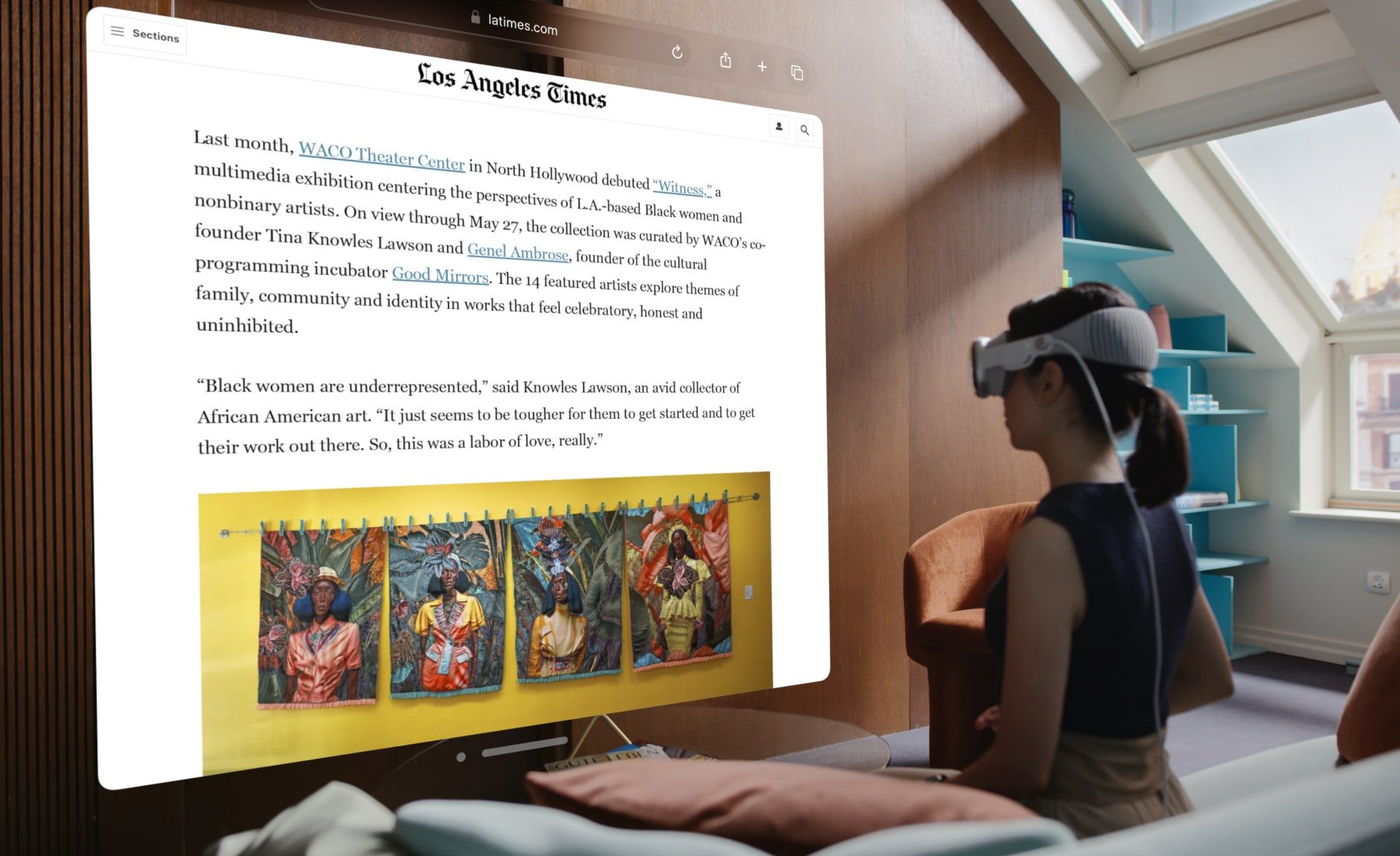
Vision Pro is set to launch sometime in early 2024, coming part and parcel with a load of first-party apps originally developed for iPad. This includes basic things like Safari, Photos, Music, Messages, and even an avatar support for Facetime.
Apple has been fairly mum on its list of third-party apps, listing only a few during its WWDC unveiling in June, including Word, Excel, Teams, Disney+, Zoom, WebEX, and Rec Room, its only VR game to be featured during the keynote.
Apple Vision Pro | Image courtesy Apple
Apple is couching the headset as a general computing device capable of doing most of what a laptop can do, however the $3,500 prosumer headset will need a lot more than a smattering of compatible 2D apps if it wants its first XR device to set the stage for generations of cheaper follow-ups, which will likely be aimed more squarely at regular consumers.
And while the headset emulator and software development tools have been out for a few weeks now, the Cupertino tech giant says developers looking to start creating apps with actual Vision Pro hardware can apply now.
Apple says the dev kit also includes help setting up the device and onboarding, check-ins with Apple experts for UI design and development guidance, and two additional code-level support requests so Apple can help troubleshoot issues.
Like with many hardware developer kits, there are some fairly stringent (if not entirely standard) caveats. The Vision Pro dev kit needs to be returned upon request, and also has to be stored in a private, secure workspace that unauthorized persons don’t have access to view, handle, or use. The dev kit also needs to be passcode protected and never left unattended, or removed from its home address without Apple’s prior written consent.
Again, that’s all pretty standard stuff so developers don’t lose, leak, or strip the headset down to its component parts for the glee of XR publications everywhere. We’ll likely be waiting for that last bit when it finally launches sometime in early 2024.
According to a Bloomberg report from Mark Gurman, Apple is changing things up with the creation of a new Vision Products Group (VPG), which is tasked with developing the company’s recently unveiled mixed reality headset, Vision Pro.
The report maintains that with the creation of VPG, Apple is departing from its “functional” management structure, which was introduced by Steve Jobs in the early ’90s.
Effectively, Jobs distributed the company’s product development efforts across more general departments, such as hardware, software, design, services, etc, instead of sectionalizing hardware development into individual product teams, like Mac, Watch, iPad, iPhone, etc.
Apple Vision Pro | Image courtesy Apple
The so-called Vision Products Group is reportedly independent from Apple’s main software and hardware engineering and other departments, including its own internal versions of those teams which report to unit head Mike Rockwell.
Gurman maintains that VPG still collaborates with other parts of Apple though, including design and operations teams overseen by COO Jeff Williams, Johny Srouji’s chip unit known for the company’s M2 and R1 processors, and iOS/macOS frameworks headed Craig Federighi’s software engineering group.
Some reportedly believed the dedicated group would be disbanded, making it follow the company’s functional management structure. It has however both persisted beyond the Vision Pro’s June unveiling at WWDC and was branded to reflect that the group is tasked with creation of Vision Products, implying the team will be sticking around for multiple product cycles yet to come.
If a recent Bloomberg report from Mark Gurman holds true, not only is Apple not planning to release a motion controller for Vision Pro in the future, but it may not even support third-party VR controllers at all.
When the Cupertino tech giant unveiled Vision Pro last month, it didn’t emphasize the headset’s ability to potentially support VR games, which have typically been designed around motion controllers like Meta Touch or Valve’s Index controller for SteamVR headsets.
Among Vision Pro’s lineup of content, which features a standard suite of Apple ecosystem and standard content viewing apps, the studio only off showed a single VR app, Rec Room, the prolific social VR app that supports most major VR headsets (excluding PSVR 2 for now) in addition to consoles, desktop, and both iOS and Android mobile devices.
Apple Vision Pro | Image courtesy Apple
Mark Gurman, one of the leading journalists reporting on unreleased Apple tech, maintains that Apple is neither actively planning a dedicated controller, nor planning support for third-party VR accessories.
When the $3,500 headset launches in early 2024, this would leave Vision Pro users relying on the headset’s built-in hand and eye-tracking, which admittedly worked very well in our hands-on. It’s also using Siri-driven voice input, Bluetooth and Mac keyboard support, and PlayStation 5 and Xbox controllers for traditional flatscreen games.
For VR gaming though, hand and eye-tracking lack the haptic feedback required for many game genres, meaning what VR games do come to Vision Pro will likely require overhauls to make sure hand-tracking is fully baked in.
Provided Apple sticks with its purported internal plan to not support VR controllers, that would essentially shunt development away from VR gaming and towards the headset’s AR abilities. For Apple, that’s where the ‘real’ money presumably lies.
Denny Unger, founder and lead of pioneering VR studio Cloudhead Games, explains the move as a way to provide a strong development foundation now for Apple’s AR glasses of the future, which will be both more affordable and more capable of replacing a standard smartphone than the admittedly bulky MR headsets of today.
For more from Unger, who heads one of the most successful VR studios, check out his Road to VR guest article to learn more about Vision Pro and why Apple may be launching an AR headset in VR clothing.
Apple has allegedly slashed production targets for Vision Pro due to manufacturing issues related to the mixed reality headset’s complex design, a Financial Timesreport maintains.
Unveiled during Apple’s Worldwide Developer Conference (WWDC) in early June, the $3,500 Vision Pro represents the first big step into XR for the company. Launching sometime next year, Vision Pro is a high-end headset that combines virtual reality displays with color passthrough cameras, allowing it to do both VR and AR tasks.
Apple’s China-based contract manufacturer Luxshare, allegedly the sole assembler of the device, is now preparing to make fewer than 400,000 units of Vision Pro in 2024, according to the report, which cites “multiple people with direct knowledge of the manufacturing process,” including sources close to Apple and Luxshare.
Supply chain rumors also allege that two of Apple’s China-based component suppliers only have enough parts to produce around 130,000 to 150,000 Vision Pro units in the first year. It was previously thought Apple was operating with an internal 12-month sales target of one million units.
Manufacturing complications apparently hinge on Vision Pro’s micro-OLED displays and outward-facing, curved lenticular display, the latter of which allows a sort of digital passthrough view of the user’s eyes.
In our hands-on, we noted Vision Pro packed top of its class lenses and displays, something Apple says is “more than a 4K TV for each eye.”
The company is reportedly unhappy with supplier productivity. It’s said the most expensive component is its internal displays, and getting enough of those micro-OLEDs to be defect-free has purportedly been a significant hurdle. Additionally, Financial Times reports the micro-OLED displays used in the headsets demoed to press at its June launch were supplied by Sony and the chipmaker TSMC.
Meanwhile, Apple is said to be working with Samsung and LG on a second-gen version of the headset, which will be reportedly cheaper than the first, which is launching sometime in 2024 for $3,500.
Apple Vision Pro is about to set a lot of expectations in the industry of what’s ‘right’ and ‘wrong’ about mixed reality, something the fruit company prefers to call spatial computing. Oculus founder Palmer Luckey weighed in on his thoughts, and coming from one of the main figures who kicked off the VR revolution of today, it means something.
Speaking to Peter Diamandis in a nearly two hour-long podcast, Luckey delved into many areas of his work over the years, touching on the role at his defense company Anduril, his role in kickstarting the modern era of VR, and basically everything under the Sun that the tech entrepreneur is doing, or thinks about when it comes to augmented and virtual reality.
Undoubtedly the hottest of hot button issues is whether Apple is doing mixed reality ‘right’ as a newcomer to the space. Luckey is mostly positive about Vision Pro, saying it’s patently Apple.
“I think there were things that I would do differently if I were Apple,” Luckey tells Diamandis. “They did basically everything right—they didn’t do anything terrible. I mean, I think Apple is going after the exact right segment of the market that Apple should be going after.”
Luckey maintains that if Apple went after the low end of the market, it would be “a mistake,” saying the Cupertino tech giant is taking “the exact approach that I had always wanted Apple to take, and really the approach that Oculus had been taking in the early years.”
Apple is admittedly going at XR with little regard for affordability, but that’s not the sticking point you might think it would be. To him, the $3,500 headset packs the best components for the premium segment, including “the highest possible resolution, the highest quality possible displays, the best possible ergonomics.”
In fact, Apple’s first-gen device shouldn’t be about affordability at this point, Luckey says. It’s about “inspiring lust in a much larger group of people, who, as I dreamed all those years ago, see VR as something they desperately want before it becomes something they can afford.”
Image courtesy Apple
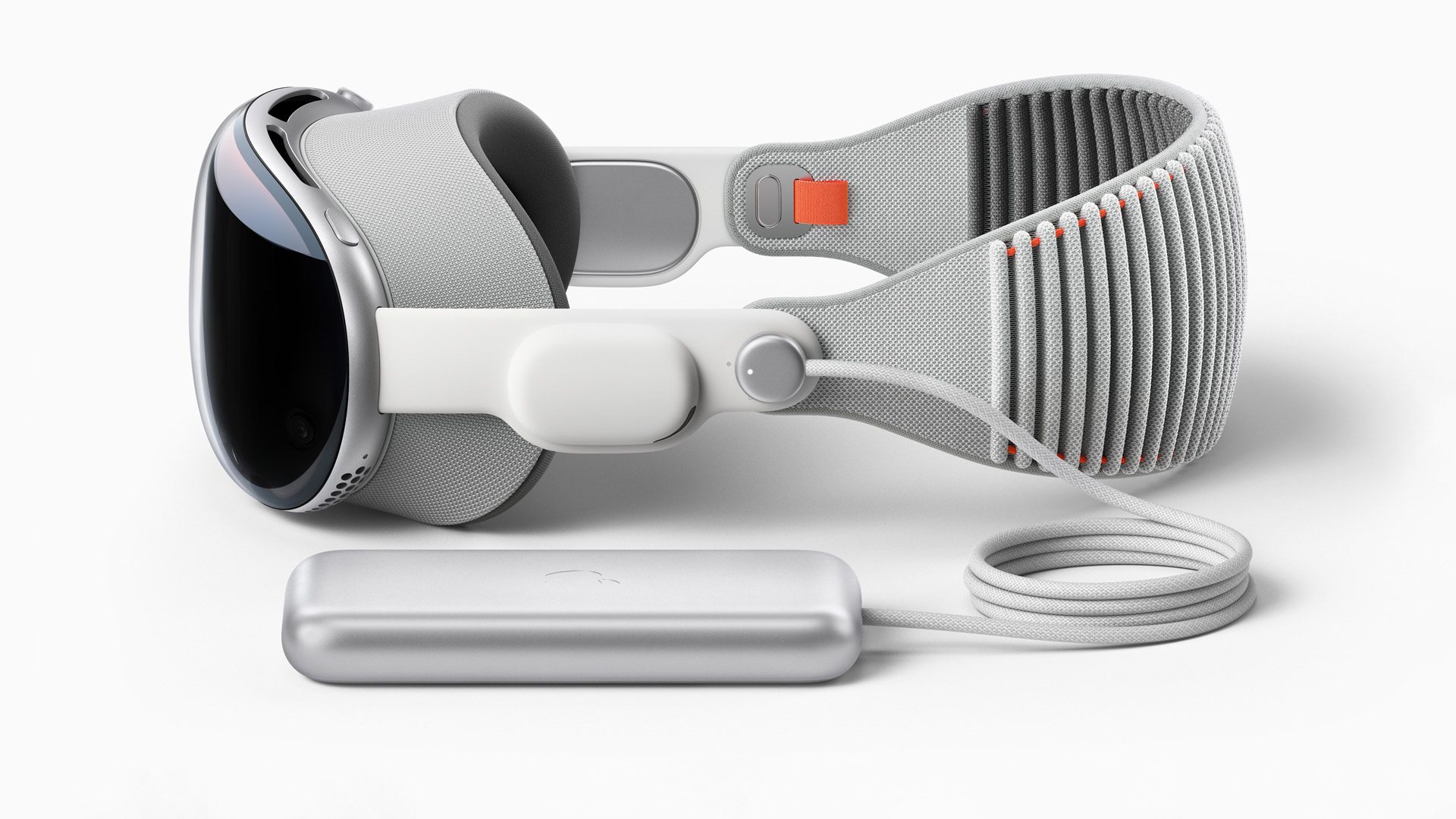
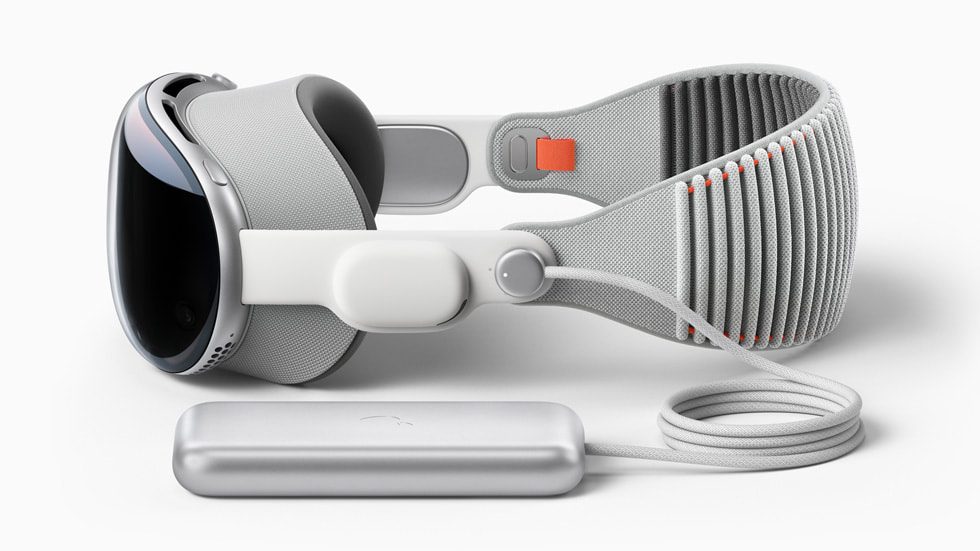
In the world of component configurations, there’s very little that catches Luckey off guard, although Vision Pro’s tethered battery ‘puck’ was choice that surprised the Oculus founder a little bit. When it comes to offloading weight from the user’s head, Luckey says shipping a battery puck was the “right way to do things.”
“I was a big advocate of [external pucks] in Oculus, but unfortunately it was a battle that I lost in my waning years, and [Oculus] went all in on putting all batteries, all the processing in actual headset itself. And not just in the headset, but in the front of the headset itself, which hugely increases the weight of the front of the device, the asymmetric torque load… it’s not a good decision.”
One direction Apple has going that Luckey isn’t a fan of: controllers, or rather, the lack thereof. Vision Pro is set to ship without any sort of VR motion controller, which means developers will need to target hand and eye-tracking as the primary input methods.
“It’s no secret that I’m a big fan of VR input, and I think that’s probably one of the things I would have done differently than Apple. On the other hand, they have a plan for VR input that goes beyond just the finger [click] inputs. They’re taking a focused marketing approach, but I think they have a broader vision for the future than everything just being eyes and fingers.”
Luckey supports the company’s decision to split the headset into a puck and head-worn device not only for Vision Pro in the near term, but also for future iterations of the device, which will likely need more batteries, processing, and antennas. Setting those expectations now of a split configuration could help Apple move lighter and thinner on head-worn components, and never even deal with the problems of balancing the girth and weight seen in the all-in-one, standalone headsets of today.
In the end, whether the average person will wear such things in the future will ultimately come down to clever marketing, Luckey maintains, as it’s entirely possible to slim down to thinner form factors, but devices may not be nearly as functional at sizes smaller than “chunky sunglasses”. To Luckey, companies like Apple have their work cut out for them when it comes to normalizing these AR/VR headsets of the near future, and Apple will most definitely be seeding their devices on the heads of “the right celebrities, the right influencers” in the meantime.
You can check out the full 15-minute clip where Luckey talks about his thoughts on Apple Vision Pro below:
Apple has released new and updated tools for developers to begin building XR apps on Apple Vision Pro.
Apple Vision Pro isn’t due out until early 2024, but the company wants developers to get a jump-start on building apps for the new headset.
To that end the company announced today it has released the visionOS SDK, updated Xcode, Simulator, and Reality Composer Pro, which developers can get access to at the Vision OS developer website.
While some of the tools will be familiar to Apple developers, tools like Simulator and Reality Composer Pro are newly released for the headset.
Simulator is the Apple Vision Pro emulator, which aims to give developers a way to test their apps before having their hands on the headset. The tool effectively acts as a software version of Apple Vision Pro, allowing developers see how their apps will render and act on the headset.
Reality Composer Pro is aimed at making it easy for developers to build interactive scenes with 3D models, sounds, and textures. From what we understand, it’s sort of like an easier (albeit less capable) alternative to Unity. However, developers who already know or aren’t afraid to learn a full-blown game engine can also use Unity to build visionOS apps.
Image courtesy Apple
In addition to the release of the visionOS SDK today, Apple says it’s still on track to open a handful of ‘Developer Labs’ around the world where developers can get their hands on the headset and test their apps. The company also says developers will be able to apply to receive Apple Vision Pro development kits next month.