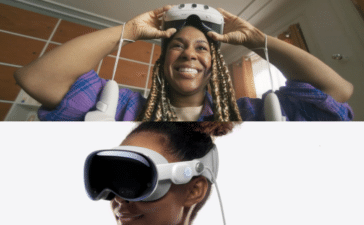
Both Apple and Meta revealed highly anticipated headsets in the last seven days. The hype is just about the only thing they have in common. The two headsets have different audiences, different affordances and requirements, and drastically different price points. As such, they illuminate two drastically different approaches to the XR space.
The Meta Quest 3
The Meta Quest 3 has been the subject of rumors, speculation, leaks, and outright fabrication probably since before the Quest 2 came out. But, it was officially announced last week and is set to launch this fall.
The headset has been relatively easy to speculate on, seeing as it is the fourth iteration of flagship headsets in a familiar and built-out hardware and software ecosystem. As was largely expected, the Quest 3 appears to largely be a blend of the successful elements of the Quest 2 and some of the more advanced features that we saw from the Quest Pro.
From fairly early on, the Quest Pro was largely seen as a dev kit and a testing ground for future products. Pro hallmarks coming to the Quest 3 include color passthrough and the Pro controllers. The price of the Quest 3 is significantly less expensive than the Quest Pro, if slightly more expensive than the Quest 2, coming in at $499.
Following the announcement, most of what we have to go on as far as what kind of punch the Quest 3 packs still does largely come from speculation. Where previous Quest headsets were announced at last year’s Connect – Meta’s biggest annual event – the Quest 3 was announced through a relatively low-key social media campaign on the morning of the Meta Gaming Showcase.

As anticipated as the Quest 3 has been, it might not be the most hyped headset of all time – or even the most hyped headset to come out this week. Meta’s seemingly hasty announcement of the Quest 3 seems to have been timed to come out before Apple’s announcement of the Vision Pro.
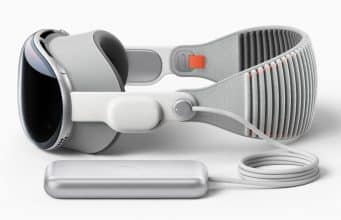
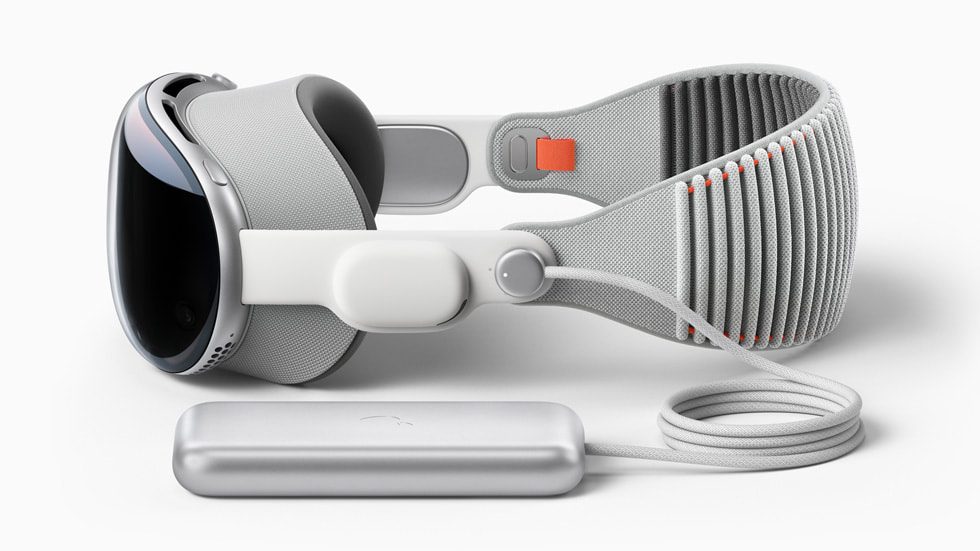
The Apple Vision Pro
Apple’s entry into XR has long been awaited – if only because the company has repeatedly put off announcing a product. So, after all of the wait, what can the headset actually do?
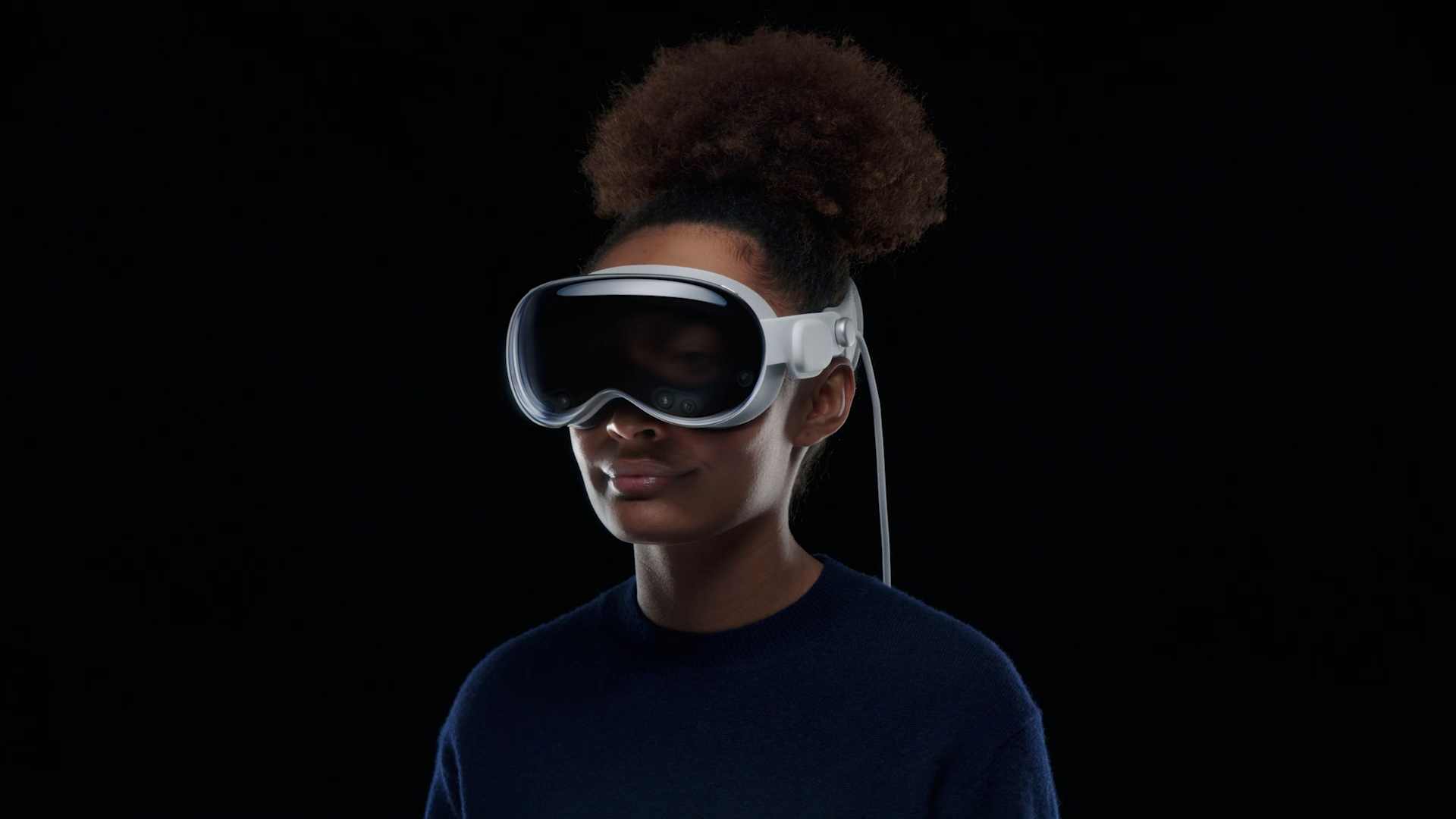
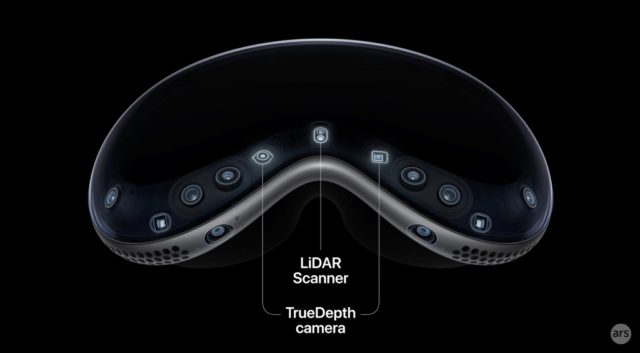
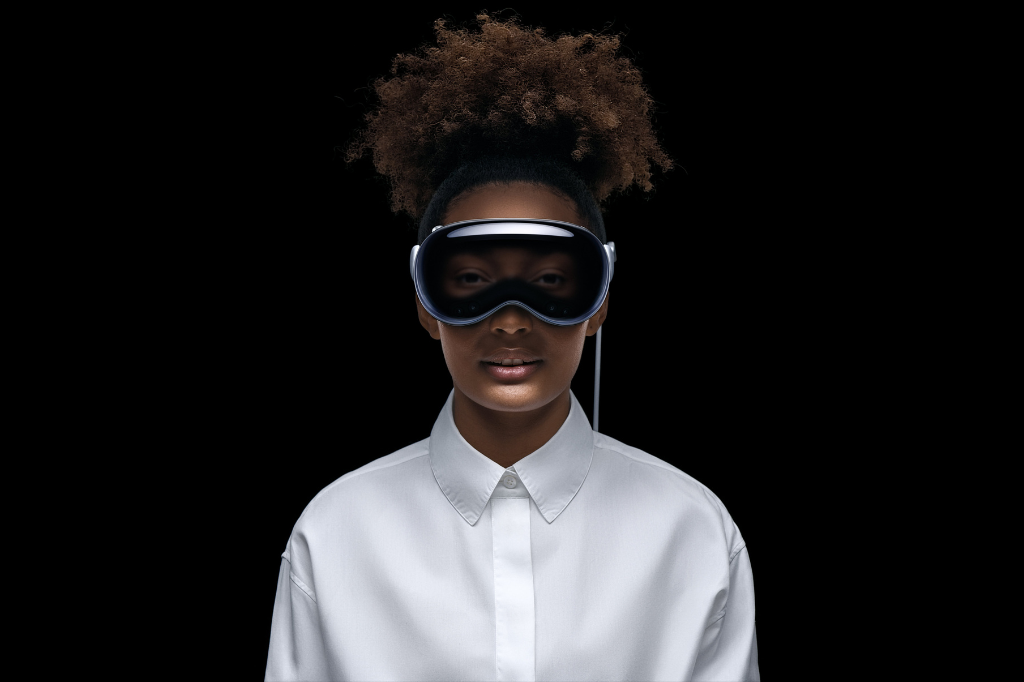
The headset’s 12 cameras, five sensors, and six mics enable controller-free tracking, voice interactions, and impressive audio. Connected to a device it can run all day, but a battery pack will let it run on its own for two hours. Apple reported over 10 million pixels per eye, but did not release familiar resolution metrics or field-of-view.
The headset is capable of handling 3D assets sent via messages, and it constructs a 3D avatar that can be used in video calls. Developers with early access include JigSpace, and the headset’s software is compatible with Unity.
All of that said, currently available material doesn’t show a lot of actual XR content. The headset arguably looks more like what industry insiders call an “AR viewer” – that is, rather than providing spatial content, it provides a spatial interface for 2D content. That also made up the bulk of Apple’s demonstrations of the headset – and their justification for its massive price tag.
“If you purchased a new state-of-the-art TV, surround-sound system, powerful computer with multiple high-definition displays, a high-end camera, and more, you still would not have come close to what Vision Pro delivers,” Apple’s Technology Development Group VP Mike Rockwell said in the WWDC event that introduced the device. “Apple Vision Pro starts at $3,499.”
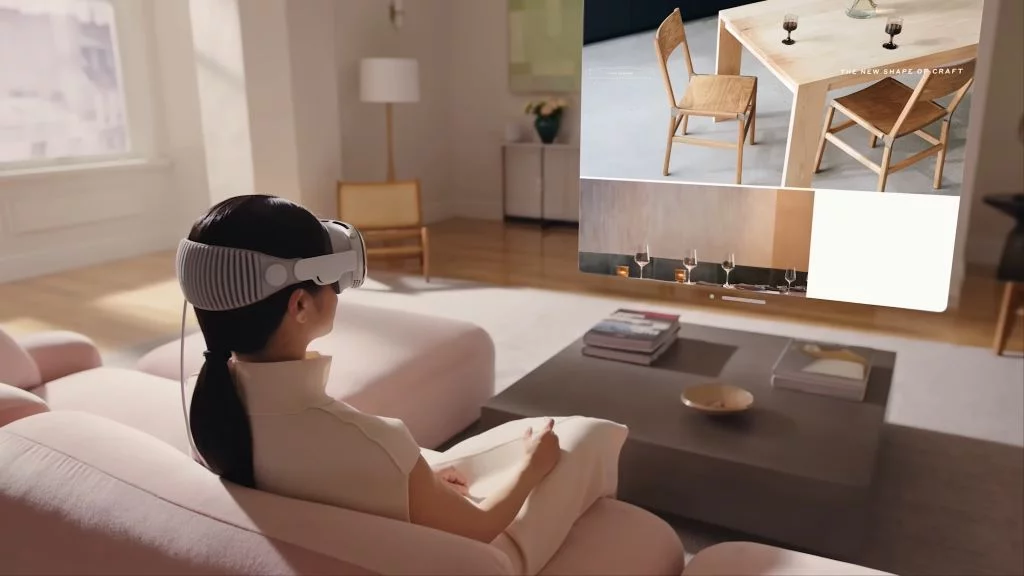
That raises an interesting question for the XR community. An Apple Vision Pro might be able to replace all of those things. But, could it replace a Meta Quest?
New Headsets and the XR Ecosystem
Both the Quest 3 and the Apple Vision Pro had XR experts excited. Many aren’t necessarily viewing the two headsets as in competition, but are rather thinking about how the headsets’ introduction will affect the general XR ecosystem.
“The Quest 3 has finally been announced, which is great for everyone in the industry,” 3lbXR and 3lb Games CEO Robin Moulder said in a talk at this year’s Augmented World Expo. “Next week is going to be a whole new level when Apple announces something – hopefully.”
On the morning of the third day of AWE, the Quest 3 had been announced just an hour or so earlier and the Apple announcement had yet to be aired. However, a number of speakers presented the same idea – this is an exciting time for XR and Apple is contributing to that momentum rather than creating that momentum on its own.
A Bushel of Apples in XR…
One of the XR community’s biggest hopes regarding Apple’s entrance into the market is that XR will be catapulted to the mainstream by Apple’s gravitas. One of the main concerns is that Apple tends to play by their own rules, so a wave of new Apple XR users might be disruptive (or at least, not additive) to XR’s established ecosystem. Not all share this concern.
“If Apple does announce something, they’ll do a lot of education,” Khronos Group President Neil Trevett said during a panel at AWE. “It will progress how people use the tech whether they use open standards or not.”
Now that we’ve seen from Apple, it’s worth wondering how much education would be involved. The Vision Pro seems largely intent on offering a spatial view of Apple’s apps rather than on incorporating existing XR solutions and uses.
“Apple is not seeking to build a wide XR ecosystem with a cheaper device, like Meta with the Quest line-up,” XR analyst Tom Ffiske wrote on the headset. “The company instead seeks to monetize an already-lucrative subsection of its audience with high-margin subscriptions and software, accessible at a $3,499 price tag.”
Make no mistake: at least for now, Apple Reality Pro is another Apple device within the Apple hardware ecosystem. It is not a new XR device within anything like a metaverse ecosystem.
“Apple Reality Pro’s biggest advantage is integration into the Apple ecosystem,” VRDirect founder and CEO Rolf Illenberger said in an email shared with ARPost. “The all-important ability to go from the iPhone, to iPad, to Apple Watch with a similar user experience and low barrier to entry… That’s where we believe the potential exists to create believers in AR.”
Mesmerise Head of Platform, Michael Hoffman, is of the same opinion, “Compatibility with other iOS devices will also help the headset integrate more seamlessly into daily life.”
…Or a Rush on Pears?
The next question is whether Apple can bring people into XR without the Vision Pro. Meta (ignoring its various evils) did a lot to introduce people into the XR universe through incredibly low price points. This is not a game that Apple is playing at all – there probably won’t be too many Vision Pro headsets sitting under Christmas trees this year.
That doesn’t mean that Vision Pro doesn’t have a future. After all, this is the first iteration and it hasn’t even hit the market yet.
“The wire may prevent some users from purchasing the product, and the price tag will scare away many people,” Mytaverse CTO and co-founder Jamie Lopez said in an email shared with ARPost. “But Apple has a long history of lowering prices and making new hardware easier to use. Time will tell how Vision Pro changes the world.”
Still, the announcement may have brought people’s attention to XR in the shorter term. If the sticker shock scares them away from the Vision Pro but doesn’t scare them away from XR, they may find that a lot of what the Vision Pro announcement demoed is already possible on far more affordable headsets.
#WWDC23 pic.twitter.com/FVB2iu5zy0
— XREAL 👓 (@XREAL_Global) June 6, 2023
XREAL (formerly Nreal) made this connection on Twitter and, (potentially unpopular opinion) I didn’t see Apple showing the Vision Pro doing a whole lot of things that the XREAL Air can’t do – and the XREAL Air is literally a tenth of the price.
To be clear, Apple claims sarcastically high resolution for the Vision Pro. This allows users to do things like read emails and webpage text in-headset. This is still a bit of a tall order for products like XREAL.
Advancing Next-Generation Inputs
“By the time we have the Apple headset and the new Quest 3, everybody is going to be freaking out about how great hand tracking is and moving into this new world of possibilities,” said Moulder.
Hand-tracking does play a huge part in the Vision Pro announcement, as the Vision Pro doesn’t have controllers. While it can connect to other devices like Bluetooth keyboards, the headset uses a combination of gaze tracking, hand tracking, and voice commands – which was a first sign that the headset might not be particularly robust for applications like gaming.
Meta, on the other hand, has been experimenting with inputs like voice and gesture controls since the Quest 2, but is by no means ditching the controllers. As cool as gesture recognition is, more robust applications like games and enterprise applications require more nuanced controls – and for now, that still means buttons.
For what it’s worth, Moulder advocated for an input system that uses one controller for things like conjuring menus and one free hand for fine interactions. I would like to see a system like that work with applications like Nanome that provides intuitive interactions that would be great with hand tracking, but provides enough interactions that controllers are still the only way to go.
“Current hand tracking technology does not meet the needs that 6DoF controllers can provide, which consumer AR glasses don’t,” Nanome co-founder and CEO Steve McCloskey told ARPost in a recent in-platform interview.
Time Will Tell
Will flocks of people buy the Apple Vision Pro? Will those that don’t, pick up headsets like the Quest 3 or even consumer AR glasses? Do Quest 3 and Apple Vision Pro exist in the same market, or was Zuckerberg wrong to time his announcement in a way that forced the two headsets into an artificial narrative? All I know is, it’s going to be an interesting couple of years.