antitrust

doj-confirms-it-wants-to-break-up-google’s-ad-business

DOJ confirms it wants to break up Google’s ad business

In the trial, Google will paint this demand as a severe overreach, claiming that few, if any, companies would have the resources to purchase and run the products. Last year, an ad consultant estimated Google’s ad empire could be worth up to $95 billion, quite possibly too big to sell. However, Google was similarly skeptical about Chrome, and representatives from other companies have said throughout the search remedy trial that they would love to buy Google’s browser.

An uphill battle

After losing three antitrust cases in just a couple of years, Google will have a hard time convincing the judge it is capable of turning over a new leaf with light remedies. A DOJ lawyer told the court Google is a “recidivist monopolist” that has a pattern of skirting its legal obligations. Still, Google is looking for mercy in the case. We expect to get more details on Google’s proposed remedies as the next trial nears, but it already offered a preview in today’s hearing.

Google suggests making a smaller subset of ad data available and ending the use of some pricing schemes, including unified pricing, that the court has found to be anticompetitive. Google also promised not to re-implement discontinued practices like “last look,” which gave the company a chance to outbid rivals at the last moment. This was featured prominently in the DOJ’s case, although Google ended the practice several years ago.

To ensure it adheres to the remedies, Google suggested a court-appointed monitor would audit the process. However, Brinkema seemed unimpressed with this proposal.

As in its other cases, Google says it plans to appeal the verdict, but before it can do that, the remedies phase has to be completed. Even if it can get the remedies paused for appeal, the decision could be a blow to investor confidence. So, Google will do whatever it can to avoid the worst-case scenario, leaning on the existence of competing advertisers like Meta and TikTok to show that the market is still competitive.

Like the search case, Google won’t be facing any big developments over the summer, but this fall could be rough. Judge Amit Mehta will most likely rule on the search remedies in August, and the ad tech remedies case will begin the following month. Google also has the Play Store case hanging over its head. It lost the first round, but the company hopes to prevail on appeal when the case gets underway again, probably in late 2025.

DOJ confirms it wants to break up Google’s ad business Read More »
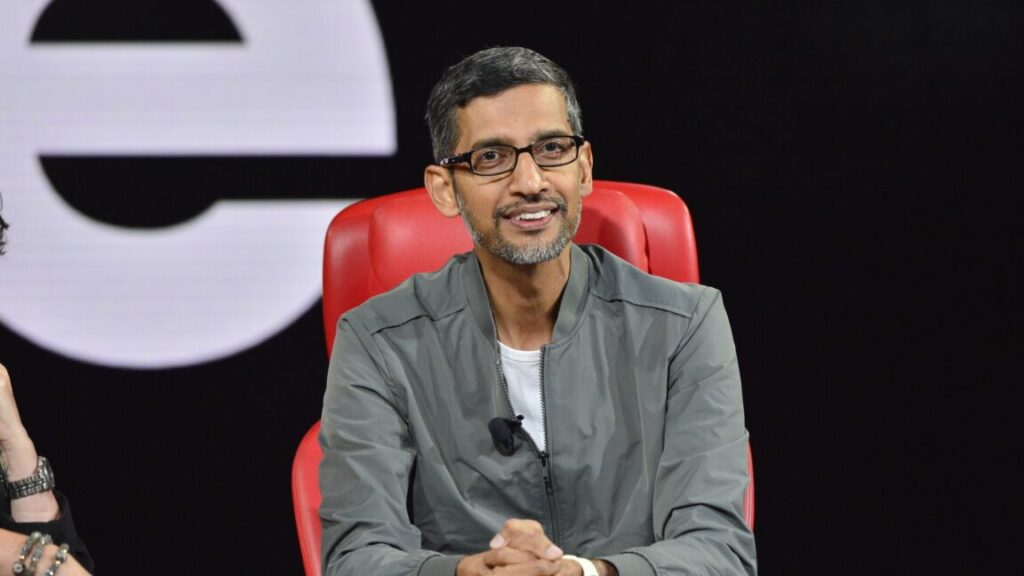
sundar-pichai-says-doj-demands-are-a-“de-facto”-spin-off-of-google-search

Sundar Pichai says DOJ demands are a “de facto” spin-off of Google search

The Department of Justice (DOJ) rested its case in Google’s search remedy trial earlier this week, giving Google a chance to push back on the government’s attempt to break up the search giant. Today is arguably Google’s best chance to make the case that it should not be harshly penalized in the ongoing search antitrust case, with CEO Sundar Pichai taking the stand.

Pichai attempted to explain why Google isn’t abusing its market position and why the DOJ’s proposed remedies are too extreme. The issue of Chrome divestment came up, but Google’s team also focused intensely on the potential effects of the DOJ’s data remedies, which could force Google to share its search index and technology with other firms.

A de facto spin-off

Pichai, who chose to stand while giving testimony, took issue with the government’s proposal to force Google to license search technology to other companies. The DOJ claims that Google’s status as a monopolist has resulted in it accumulating a huge volume of user data on search behavior. Plus, its significant technological lead means its index of the web is much more robust than competing services.

If the market is going to be rebalanced, the DOJ believes Google must be forced to license this data. Google has derisively referred to this as “white labeling” Google search.

According to Bloomberg, Pichai used even harsher language when discussing these remedies in court. He called this part of the government’s case “so far reaching, so extraordinary” that it would remake Google as a company and lead to numerous unintended consequences. To hear Pichai tell it, forcing Google to license this data for a nominal fee would be a “de facto divestiture of search.”

Giving other companies the option of using Google search index to map the web would make other products better, but Pichai claims they would essentially be able to reverse-engineer everything that makes Google’s platform special. And at that point, Google would need to reevaluate how it approaches innovation. Pichai suggests the data remedies could make it “unviable” for Google to invest in research and development as it has been for the past 20 years.

Sundar Pichai says DOJ demands are a “de facto” spin-off of Google search Read More »

openai-wants-to-buy-chrome-and-make-it-an-“ai-first”-experience

OpenAI wants to buy Chrome and make it an “AI-first” experience

According to Turley, OpenAI would throw its proverbial hat in the ring if Google had to sell. When asked if OpenAI would want Chrome, he was unequivocal. “Yes, we would, as would many other parties,” Turley said.

OpenAI has reportedly considered building its own Chromium-based browser to compete with Chrome. Several months ago, the company hired former Google developers Ben Goodger and Darin Fisher, both of whom worked to bring Chrome to market.

Close-up of Google Chrome Web Browser web page on the web browser. Chrome is widely used web browser developed by Google.

Credit: Getty Images

It’s not hard to see why OpenAI might want a browser, particularly Chrome with its 4 billion users and 67 percent market share. Chrome would instantly give OpenAI a massive install base of users who have been incentivized to use Google services. If OpenAI were running the show, you can bet ChatGPT would be integrated throughout the experience—Turley said as much, predicting an “AI-first” experience. The user data flowing to the owner of Chrome could also be invaluable in training agentic AI models that can operate browsers on the user’s behalf.

Interestingly, there’s so much discussion about who should buy Chrome, but relatively little about spinning off Chrome into an independent company. Google has contended that Chrome can’t survive on its own. However, the existence of Google’s multibillion-dollar search placement deals, which the DOJ wants to end, suggests otherwise. Regardless, if Google has to sell, and OpenAI has the cash, we might get the proposed “AI-first” browsing experience.

OpenAI wants to buy Chrome and make it an “AI-first” experience Read More »

chrome-on-the-chopping-block-as-google’s-search-antitrust-trial-moves-forward

Chrome on the chopping block as Google’s search antitrust trial moves forward


The court ruled that Google has a search monopoly. Now, we learn the consequences.

The remedy phase of Google’s search antitrust trial is getting underway, and the government is seeking to force major changes. The next few weeks could reshape Google as a company and significantly alter the balance of power on the Internet, and both sides have a plan to get their way.

With opening arguments beginning today, the US Justice Department will seek to convince the court that Google should be forced to divest Chrome, unbundle Android, and make other foundational changes. But Google will attempt to paint the government’s position as too extreme and rooted in past grievances. No matter what happens at this trial, Google hasn’t given up hope it can turn back time.

Advantage for Justice Dept.

The Department of Justice (DOJ) has a major advantage here: Google is guilty. It lost the liability phase of this trial resoundingly, with the court finding Google violated the Sherman Antitrust Act by “willfully acquiring and maintaining monopoly power.” As far as the court is concerned, Google has an illegal monopoly in search services and general search advertising. The purpose of this trial is to determine what to do about it, and the DOJ has some ideas.

This case, overseen by United States District Judge Amit Mehta, is taking place against a backdrop that is particularly unflattering for Google. It has been rocked by loss after loss in its antitrust cases, including the Epic-backed Google Play case, plus the search case that is at issue here. And just last week, a court ruled that Google abused its monopoly in advertising tech. The remedies in Google’s app store case are currently on hold pending appeal, but that problem is not going away. Meanwhile, Google is facing even more serious threats in the remedy phase of this trial.

The DOJ will come out guns blazing—it sees this as the most consequential antitrust case in the US since the Microsoft trial of the 1990s. The effects of breaking up Google could even rival the impact of antitrust actions against AT&T and Standard Oil decades earlier. We also expect to be reminded repeatedly that virtually every state has joined the government’s case against Google, indicating wide understanding that the market is not operating fairly.

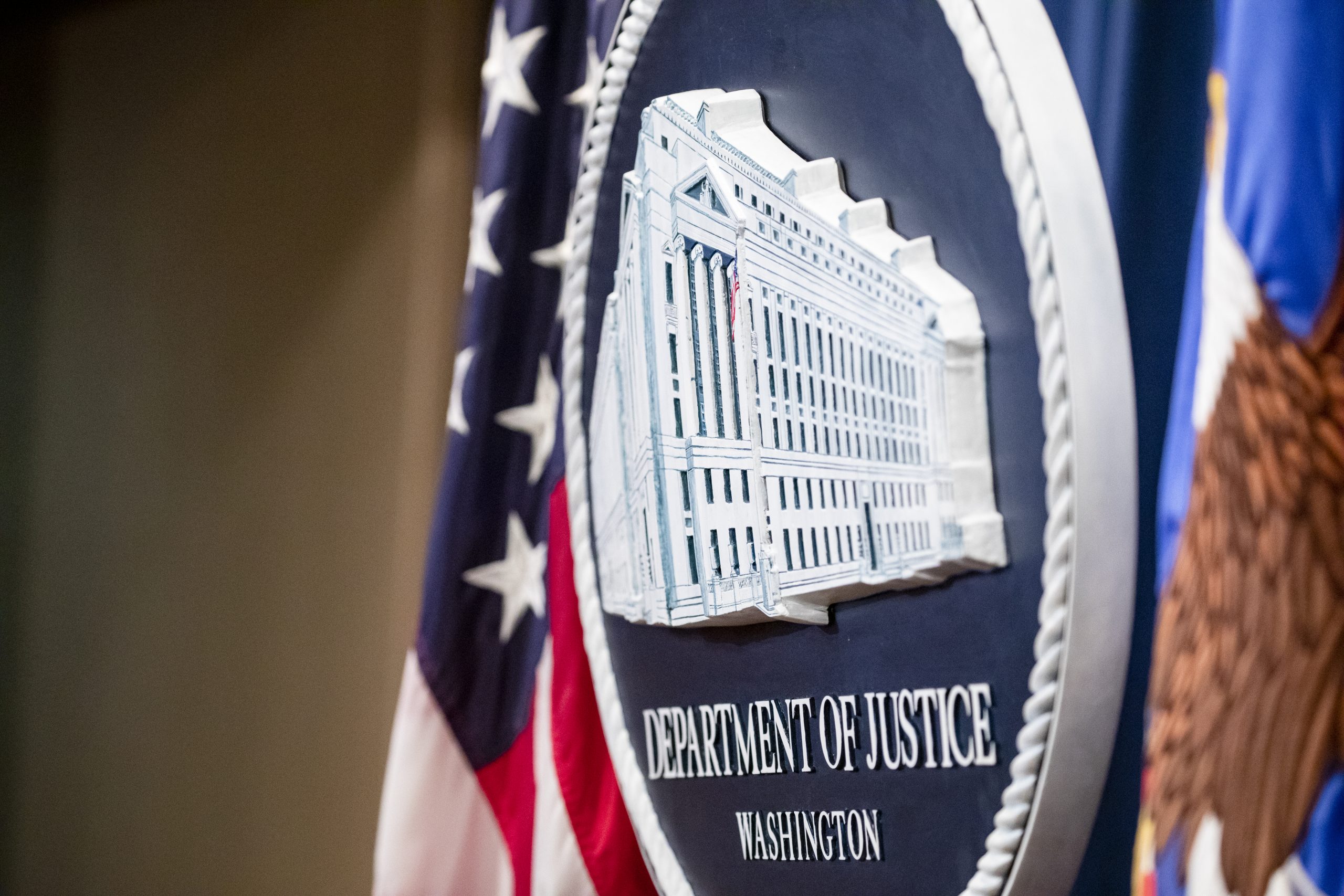
A large seal of a white, Classical Revival-style office building is flanked by flags.

It’s no secret that incentives at the federal level are shifting as the second Trump administration politicizes the Justice Department to an unprecedented degree. Despite the new divisions, opinions are remarkably unified on the Google search case. The DOJ team has successfully made the case that Google is a monopolist, and now they have to enforce the law. The new conservative leadership sees Google as a principal source of the “censorship” of right-wing ideology, which they largely interpret as a downstream effect of Google’s undue market power.

This phase of the case is not about whether or not Google did it; the goal is to decide how to change Google. The DOJ tells Ars that it believes Google’s proposed remedies are anemic and won’t move the needle at all. In this case, government lawyers will argue that the playing field cannot be leveled unless Google gives something up, and that something ought to be Chrome. The government will attempt to show that Google’s handling of Chrome creates a barrier to competition, preferencing Google’s services over the competition.

The DOJ has suggested there are numerous entities that could acquire Chrome and instantly realign online markets, but Google is going to push back hard on that. The government will counter by producing multiple witnesses from Yahoo, DuckDuckGo, Microsoft, and others to explain how their search businesses were stymied by Google and how hacking off Chrome could rectify that.

The DOJ is also interested in Google’s search placement deals—for example, paying Apple and Mozilla billions of dollars to make Google their default search engine. In the government’s view, this forced rivals to nibble around the edges after being locked out by Google’s contracts. The DOJ will try to have these contracts banned in addition to forcing the sale of Chrome.

Not done fighting

Google has already announced its preferred remedies in this case, which amount to less exclusivity in search contracts and more freedom for Android OEMs to choose app preloads. Google says it would also accept additional government oversight to ensure it abides by these remedies.

In the remedy phase, Google will try to portray the Justice Department’s proposal as heavy-handed and emblematic of the agency’s “interventionist agenda.” We expect to see Google looking for any opportunity to make the DOJ look out of touch with the realities of technology today.

Google says it will spend a lot of time arguing against the DOJ’s attempt to end search placement deals, and it will have some backup here in the form of representatives from Mozilla and Apple, both of which are paid billions of dollars per year to make Google their default search engine. These firms will explain Google’s services are the best available, and that’s why they use them. In the case of Mozilla, almost all the foundation’s revenue comes from Google, and Google doesn’t dispute that. In fact, it has noted in the past (and surely will again at the trial) that Mozilla would fold without all that Google money, and that’s bad for user choice. However, the DOJ will probably point out that the massive revenue Apple and Mozilla get from these deals makes their testimony less reliable.

Another pillar of Google’s opposition will be the privacy and security implications of the DOJ’s demand for data sharing. The DOJ will claim this is essential to help other search providers to compete, but Google will paint this as a threat to the privacy of user data. And then there’s the national security angle, which Google has been pushing harder since the start of the year.

More than anything else, Google doesn’t want to lose Chrome. We expect to see Google’s established opposition to Chrome divestiture cranked up to 11 in the remedy phase. The company will no doubt be able to point to many instances where it acted as a benevolent steward of the open web through the dominance of Chrome. It chose to make Chromium open source and has kept it that way, even though it could have made more money keeping the code to itself.

Credit: Getty Images

There is uncertainty about the future of Chrome if it’s sold off, and a Google spokesperson suggests the company will capitalize on that. Google’s legal team will forecast a world in which Chrome has become less secure without Google’s involvement, the Chromium project has crumbled, and browser choice has cratered. Google says its goal of providing easy access to its products and services gives it a strong incentive to keep Chrome free and open, which may not be the case for its new owner. The DOJ would call that self-dealing, of course.

While the government has backed away from the stringent AI investment limits in its original remedy request, Google still worries its AI efforts could be hampered by limits on self-dealing. We expect Google to talk about the rapid pace of changes in AI today, portraying this case as too focused on how the search market worked a decade ago. The company may even go so far as to admit it’s losing ground to the likes of OpenAI as more people use AI to get answers to their questions instead of traditional web search. But can a company worth $2 trillion count on anyone feeling sorry for it?

A time of consequence

The trial will run for a few weeks, and later on, we’ll learn what remedies the court has decided to impose. That doesn’t mean anything will change for Google in the short- or medium-term, though. All the lawyering should be done by early May, and then it’s up to Judge Mehta to decide on the final remedies, which could come as late as August 2025.

That won’t be the end of things. Google is adamant that it plans to appeal the case, but it has to go through the remedy phase first. Google may be able to get the remedies paused while it pursues a new verdict, similar to the current state of the app store case. Much of what the DOJ wants would fundamentally alter the nature of Google’s business, making it difficult to undo the changes if Google does prevail on appeal.

Even if Google can maintain the status quo for the foreseeable future, the company could be headed into Google I/O in late May with a sword of Damocles dangling over its metaphorical head. Google has enjoyed years of growth so stupendous and unprecedented that it reshaped media and commerce. If Google is forced to give up a key product like Chrome or lose its default status in popular products, there’s no telling how the Internet could change. One thing is certain, though. The next few weeks will be the most consequential for Google since it went public more than 20 years ago.

Photo of Ryan Whitwam

Ryan Whitwam is a senior technology reporter at Ars Technica, covering the ways Google, AI, and mobile technology continue to change the world. Over his 20-year career, he’s written for Android Police, ExtremeTech, Wirecutter, NY Times, and more. He has reviewed more phones than most people will ever own. You can follow him on Bluesky, where you will see photos of his dozens of mechanical keyboards.

Chrome on the chopping block as Google’s search antitrust trial moves forward Read More »

apple-barred-from-google-antitrust-trial,-putting-$20-billion-search-deal-on-the-line

Apple barred from Google antitrust trial, putting $20 billion search deal on the line

Apple has suffered a blow in its efforts to salvage its lucrative search placement deal with Google. A new ruling from the DC Circuit Court of Appeals affirms that Apple cannot participate in Google’s upcoming antitrust hearing, which could leave a multibillion-dollar hole in Apple’s balance sheet. The judges in the case say Apple simply waited too long to get involved.

Just a few years ago, a high-stakes court case involving Apple and Google would have found the companies on opposing sides, but not today. Apple’s and Google’s interests are strongly aligned here, to the tune of $20 billion. Google forks over that cash every year, and it’s happy to do so to secure placement as the default search provider in the Safari desktop and mobile browser.

The antitrust penalties pending against Google would make that deal impermissible. Throughout the case, the government made the value of defaults clear—most people never change them. That effectively delivers Google a captive audience on Apple devices.

Google’s ongoing legal battle with the DOJ’s antitrust division is shaping up to be the most significant action the government has taken against a tech company since Microsoft in the late ’90s. Perhaps this period of stability tricked Google’s partners into thinking nothing would change, but the seriousness of the government’s proposed remedies seems to have convinced them otherwise.

Google lost the case in August 2024, and the government proposed remedies in October. According to MediaPost, the appeals court took issue with Apple’s sluggishness in choosing sides. It didn’t even make its filing to participate in the remedy phase until November, some 33 days after the initial proposal. The judges ruled this delay “seems difficult to justify.”

When Google returns to court in the coming weeks, the company’s attorneys will not be flanked by Apple’s legal team. While Apple will be allowed to submit written testimony and file friend-of-the-court briefs, it will not be able to present evidence to the court or cross-examine witnesses, as it sought. Apple argued that it was entitled to do so because it had a direct stake in the outcome.

Apple barred from Google antitrust trial, putting $20 billion search deal on the line Read More »

google-tells-trump’s-doj-that-forcing-a-chrome-sale-would-harm-national-security

Google tells Trump’s DOJ that forcing a Chrome sale would harm national security

Close-up of Google Chrome Web Browser web page on the web browser. Chrome is widely used web browser developed by Google.

Credit: Getty Images

The government’s 2024 request also sought to have Google’s investment in AI firms curtailed even though this isn’t directly related to search. If, like Google, you believe leadership in AI is important to the future of the world, limiting its investments could also affect national security. But in November, Mehta suggested he was open to considering AI remedies because “the recent emergence of AI products that are intended to mimic the functionality of search engines” is rapidly shifting the search market.

This perspective could be more likely to find supporters in the newly AI-obsessed US government with a rapidly changing Department of Justice. However, the DOJ has thus far opposed allowing AI firm Anthropic to participate in the case after it recently tried to intervene. Anthropic has received $3 billion worth of investments from Google, including $1 billion in January.

New year, new Justice Department

Google naturally opposed the government’s early remedy proposal, but this happened in November, months before the incoming Trump administration began remaking the DOJ. Since taking office, the new administration has routinely criticized the harsh treatment of US tech giants, taking aim at European Union laws like the Digital Markets Act, which tries to ensure user privacy and competition among so-called “gatekeeper” tech companies like Google.

We may get a better idea of how the DOJ wants to proceed later this week when both sides file their final proposals with Mehta. Google already announced its preferred remedy at the tail end of 2024. It’s unlikely Google’s final version will be any different, but everything is up in the air for the government.

Even if current political realities don’t affect the DOJ’s approach, the department’s staffing changes could. Many of the people handling Google’s case today are different than they were just a few months ago, so arguments that fell on deaf ears in 2024 could move the needle. Perhaps emphasizing the national security angle will resonate with the newly restaffed DOJ.

After both sides have had their say, it will be up to the judge to eventually rule on how Google must adapt its business. This remedy phase should get fully underway in April.

Google tells Trump’s DOJ that forcing a Chrome sale would harm national security Read More »

disney,-fox,-and-wbd-give-up-on-controversial-sports-streaming-app-venu

Disney, Fox, and WBD give up on controversial sports streaming app Venu

Although Fubo’s lawsuit against the JV appears to be settled, other rivals in sports television seemed intent on continuing to fight Venu.

In a January 9 letter (PDF) to US District Judge Margaret M. Garnett of the Southern District in New York, who granted Fubo’s premliminary injunction against Venu, Michael Hartman, general counsel and chief external affairs officer for DirectTV, wrote that Fubo’s settlement “does nothing to resolve the underlying antitrust violations at issue.” Hartman asked the court to maintain the preliminary injunction against the app’s launch.

“The preliminary injunction has protected consumers and distributors alike from the JV Defendant’s scheme to ‘capture demand,’ ‘suppress’ potentially competitive sports bundles, and impose consumer price hikes,” the letter says, adding that DirectTV would continue to explore its options regarding the JV “and other anticompetitive harms.”

Similarly, Pantelis Michalopoulos, counsel for EchoStar Corporation, which owns Dish, penned a letter (PDF) to Garnett on January 7, claiming the members of the JV “purchased their way out of their antitrust violation.” Michalopoulos added that the JV defendants “should not be able to pay their way into erasing the Court’s carefully reasoned decision” to temporarily block Venu’s launch.

In addition to Fubo, DirecTV, and Dish, ACA Connects (a trade association for small- to medium-sized telecommunication service providers) publicly expressed concerns about Venu. NFL was also reported to be worried about the implications of the venture.

Now, the three giants behind Venu are throwing in the towel and abandoning an app that could have garnered a lot of subscribers tired of hopping around apps, channels, and subscriptions to watch all the sports content they wanted. But they’re also avoiding a lot of litigation and potential backlash in the process.

Disney, Fox, and WBD give up on controversial sports streaming app Venu Read More »

ftc-launches-probe-of-microsoft-over-bundling

FTC launches probe of Microsoft over bundling

John Lopatka, a former consultant to the FTC who now teaches antitrust law at Penn State, told ProPublica that the Microsoft actions detailed in the news organization’s recent reporting followed “a very familiar pattern” of behavior.

“It does echo the Microsoft case” from decades ago, said Lopatka, who co-authored a book on that case.

In the new investigation, the FTC has sent Microsoft a civil investigative demand, the agency’s version of a subpoena, compelling the company to turn over information, people familiar with the probe said. Microsoft confirmed that it received the document.

Company spokesperson David Cuddy did not comment on the specifics of the investigation but said the FTC’s demand is “broad, wide ranging, and requests things that are out of the realm of possibility to even be logical.” He declined to provide on-the-record examples. The FTC declined to comment.

The agency’s investigation follows a public comment period in 2023 during which it sought information on the business practices of cloud computing providers. When that concluded, the FTC said it had ongoing interest in whether “certain business practices are inhibiting competition.”

The recent demand to Microsoft represents one of FTC Commissioner Lina Khan’s final moves as chair, and the probe appears to be picking up steam as the Biden administration winds down. The commission’s new leadership, however, will decide the future of the investigation.

President-elect Donald Trump said this month that he will elevate Commissioner Andrew Ferguson, a Republican attorney, to lead the agency. Following the announcement, Ferguson said in a post on X, “At the FTC, we will end Big Tech’s vendetta against competition and free speech. We will make sure that America is the world’s technological leader and the best place for innovators to bring new ideas to life.”

Trump also said he would nominate Republican lawyer Mark Meador as a commissioner, describing him as an “antitrust enforcer” who previously worked at the FTC and the Justice Department. Meador is also a former aide to Sen. Mike Lee, a Utah Republican who introduced legislation to break up Google.

Doris Burke contributed research.

This story originally appeared on ProPublica.

FTC launches probe of Microsoft over bundling Read More »

ftc-to-launch-investigation-into-microsoft’s-cloud-business

FTC to launch investigation into Microsoft’s cloud business

The FTC also highlighted fees charged on users transferring data out of certain cloud systems and minimum spend contracts, which offer discounts to companies in return for a set level of spending.

Microsoft has also attracted scrutiny from international regulators over similar matters. The UK’s Competition and Markets Authority is investigating Microsoft and Amazon after its fellow watchdog Ofcom found that customers complained about being “locked in” to a single provider, which offers discounts for exclusivity and charge high “egress fees” to leave.

In the EU, Microsoft has avoided a formal probe into its cloud business after agreeing to a multimillion-dollar deal with a group of rival cloud providers in July.

The FTC in 2022 sued to block Microsoft’s $75 billion acquisition of video game maker Activision Blizzard over concerns the deal would harm competitors to its Xbox consoles and cloud-gaming business. A federal court shot down an attempt by the FTC to block it, which is being appealed. A revised version of the deal in the meantime closed last year following its clearance by the UK’s CMA.

Since its inception 20 years ago, cloud infrastructure and services has grown to become one of the most lucrative business lines for Big Tech as companies outsource their data storage and computing online. More recently, this has been turbocharged by demand for processing power to train and run artificial intelligence models.

Spending on cloud services soared to $561 billion in 2023 with market researcher Gartner forecasting it will grow to $675 billion this year and $825 billion in 2025. Microsoft has about a 20 percent market share over the global cloud market, trailing leader Amazon Web Services that has 31 percent, but almost double the size of Google Cloud at 12 percent.

There is fierce rivalry between the trio and smaller providers. Last month, Microsoft accused Google of running “shadow campaigns” seeking to undermine its position with regulators by secretly bankrolling hostile lobbying groups.

Microsoft also alleged that Google tried to derail its settlement with EU cloud providers by offering them $500 million in cash and credit to reject its deal and continue pursuing litigation.

The FTC and Microsoft declined to comment.

© 2024 The Financial Times Ltd. All rights reserved. Not to be redistributed, copied, or modified in any way.

FTC to launch investigation into Microsoft’s cloud business Read More »

corning-faces-antitrust-actions-for-its-gorilla-glass-dominance

Corning faces antitrust actions for its Gorilla Glass dominance

The European Commission (EC) has opened an antitrust investigation into US-based glass-maker Corning, claiming that its Gorilla Glass has dominated the mobile phone screen market due to restrictive deals and licensing.

Corning’s shatter-resistant alkali-aluminosilicate glass keeps its place atop the market, according to the EC’s announcement, because it both demands, and rewards with rebates, device makers that agree to “source all or nearly all of their (Gorilla Glass) demand from Corning.” Corning also allegedly required device makers to report competitive offers to the glass maker. The company is accused of exerting a similar pressure on “finishers,” or those firms that turn raw glass into finished phone screen protectors, as well as demanding finishers not pursue patent challenges against Corning.

“[T]he agreements that Corning put in place with OEMs and finishers may have excluded rival glass producers from large segments of the market, thereby reducing customer choice, increasing prices, and stifling innovation to the detriment of consumers worldwide,” the Commission wrote.

Ars has reached out to Corning for comment and will update this post with response.

Gorilla Glass does approach Xerox or Kleenex levels of brand name association with its function. New iterations of its thin, durable glass reach a bit further than the last and routinely pick up press coverage. Gorilla Glass 4 was pitched as being “up to two times stronger” than any “competitive” alternative. Gorilla Glass 5 could survive a 1.6-meter drop 80 percent of the time, and 6 built in more repetitive damage resistance.

Apple considers Corning’s glass products so essential to its products, like the ceramic shield on the iPhone 12, as to have invested $45 million into the company to expand its US manufacturing. The first iPhone was changed very shortly before launch to use Gorilla Glass instead of a plastic screen, per Steve Jobs’ insistence.

Corning faces antitrust actions for its Gorilla Glass dominance Read More »

doj-subpoenas-nvidia-in-deepening-ai-antitrust-probe,-report-says

DOJ subpoenas Nvidia in deepening AI antitrust probe, report says

DOJ subpoenas Nvidia in deepening AI antitrust probe, report says

The Department of Justice is reportedly deepening its probe into Nvidia. Officials have moved on from merely questioning competitors to subpoenaing Nvidia and other tech companies for evidence that could substantiate allegations that Nvidia is abusing its “dominant position in AI computing,” Bloomberg reported.

When news of the DOJ’s probe into the trillion-dollar company was first reported in June, Fast Company reported that scrutiny was intensifying merely because Nvidia was estimated to control “as much as 90 percent of the market for chips” capable of powering AI models. Experts told Fast Company that the DOJ probe might even be good for Nvidia’s business, noting that the market barely moved when the probe was first announced.

But the market’s confidence seemed to be shaken a little more on Tuesday, when Nvidia lost a “record-setting $279 billion” in market value following Bloomberg’s report. Nvidia’s losses became “the biggest single-day market-cap decline on record,” TheStreet reported.

People close to the DOJ’s investigation told Bloomberg that the DOJ’s “legally binding requests” require competitors “to provide information” on Nvidia’s suspected anticompetitive behaviors as a “dominant provider of AI processors.”

One concern is that Nvidia may be giving “preferential supply and pricing to customers who use its technology exclusively or buy its complete systems,” sources told Bloomberg. The DOJ is also reportedly probing Nvidia’s acquisition of RunAI—suspecting the deal may lock RunAI customers into using Nvidia chips.

Bloomberg’s report builds on a report last month from The Information that said that Advanced Micro Devices Inc. (AMD) and other Nvidia rivals were questioned by the DOJ—as well as third parties who could shed light on whether Nvidia potentially abused its market dominance in AI chips to pressure customers into buying more products.

According to Bloomberg’s sources, the DOJ is worried that “Nvidia is making it harder to switch to other suppliers and penalizes buyers that don’t exclusively use its artificial intelligence chips.”

In a statement to Bloomberg, Nvidia insisted that “Nvidia wins on merit, as reflected in our benchmark results and value to customers, who can choose whatever solution is best for them.” Additionally, Bloomberg noted that following a chip shortage in 2022, Nvidia CEO Jensen Huang has said that his company strives to prevent stockpiling of Nvidia’s coveted AI chips by prioritizing customers “who can make use of his products in ready-to-go data centers.”

Potential threats to Nvidia’s dominance

Despite the slump in shares, Nvidia’s market dominance seems unlikely to wane any time soon after its stock more than doubled this year. In an SEC filing this year, Nvidia bragged that its “accelerated computing ecosystem is bringing AI to every enterprise” with an “ecosystem” spanning “nearly 5 million developers and 40,000 companies.” Nvidia specifically highlighted that “more than 1,600 generative AI companies are building on Nvidia,” and according to Bloomberg, Nvidia will close out 2024 with more profits than the total sales of its closest competitor, AMD.

After the DOJ’s most recent big win, which successfully proved that Google has a monopoly on search, the DOJ appears intent on getting ahead of any tech companies’ ambitions to seize monopoly power and essentially become the Google of the AI industry. In June, DOJ antitrust chief Jonathan Kanter confirmed to the Financial Times that the DOJ is examining “monopoly choke points and the competitive landscape” in AI beyond just scrutinizing Nvidia.

According to Kanter, the DOJ is scrutinizing all aspects of the AI industry—”everything from computing power and the data used to train large language models, to cloud service providers, engineering talent and access to essential hardware such as graphics processing unit chips.” But in particular, the DOJ appears concerned that GPUs like Nvidia’s advanced AI chips remain a “scarce resource.” Kanter told the Financial Times that an “intervention” in “real time” to block a potential monopoly could be “the most meaningful intervention” and the least “invasive” as the AI industry grows.

DOJ subpoenas Nvidia in deepening AI antitrust probe, report says Read More »

judge-calls-foul-on-venu,-blocks-launch-of-espn-warner-fox-streaming-service

Judge calls foul on Venu, blocks launch of ESPN-Warner-Fox streaming service

Out of bounds —

Upcoming launch of $42.99 sports package likely to “substantially lessen competition.”

Texas losing to Alabama in the 2010 BCS championship

Gina Ferazzi via Getty

A US judge has temporarily blocked the launch of a sports streaming service formed by Disney’s ESPN, Warner Bros and Fox, finding that it was likely to “substantially lessen competition” in the market.

The service, dubbed Venu, was expected to launch later this year. But FuboTV, a sports-focused streaming platform, filed an antitrust suit in February to block it, arguing its business would “suffer irreparable harm” as a result.

On Friday, US District Judge Margaret Garnett in New York granted an injunction to halt the launch of the service while Fubo’s lawsuit against the entertainment giants works its way through the court.

The opinion was sealed but the judge noted in an entry on the court docket that Fubo was “likely to succeed on its claims” that by entering the agreement, the companies “will substantially lessen competition and restrain trade in the relevant market” in violation of antitrust law.

In a statement, ESPN, Fox and Warner Bros Discovery said they planned to appeal against the decision.

Venu was aimed at US consumers who had either ditched their traditional pay TV packages for streaming or never signed up for a cable subscription. “Cord cutting” has been eroding the traditional TV business for years, but live sports has remained a primary draw for customers who have held on to their cable subscriptions.

Fubo TV was launched in 2015 as a sports-focused streamer. It offers more than 350 channels—including those carrying major sporting events such as Premier League football matches, baseball, the National Football League and the US National Basketball Association—for monthly subscription prices starting at $79.99. Its offerings included networks owned by Disney and Fox.

ESPN, Fox and Warner Bros said Venu was “pro-competitive,” aimed at reaching “viewers who currently are not served by existing subscription options.”

Venu was expected to charge $42.99 a month when it launched later this month. It “will feature just 15 channels, all featuring popular live sports—the kind of skinny sports bundle that Fubo has tried to offer for nearly a decade, only to encounter tooth-and-nail resistance,” Fubo said in a court filing seeking the injunction.

Venu was expected to aggregate about $16 billion worth of sports rights, analysts have estimated. It was not expected to have an impact on the individual companies’ ability to strike new rights deals.

Analysts had questioned its position in the marketplace. Disney plans to roll out ESPN as a “flagship” streaming service in August 2025 that will carry programming that appears on the TV network as well as gaming, shopping and other interactive content. Disney chief executive Bob Iger said he wants the service to become the “pre-eminent digital sports platform.”

Fubo shares rose 16.8 percent after the ruling, but the stock is down 51 percent this year.

© 2022 The Financial Times Ltd. All rights reserved Not to be redistributed, copied, or modified in any way.

Judge calls foul on Venu, blocks launch of ESPN-Warner-Fox streaming service Read More »