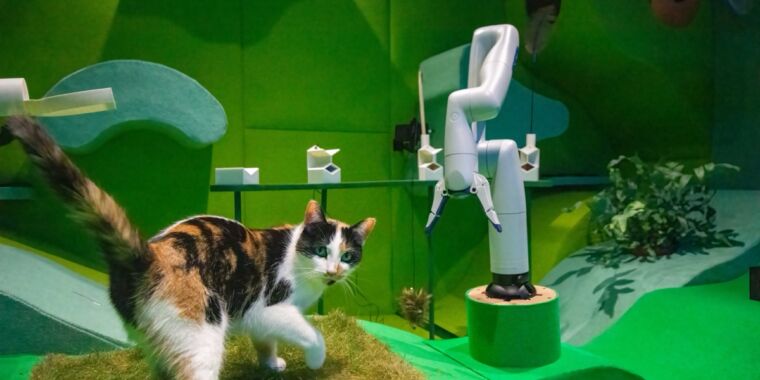
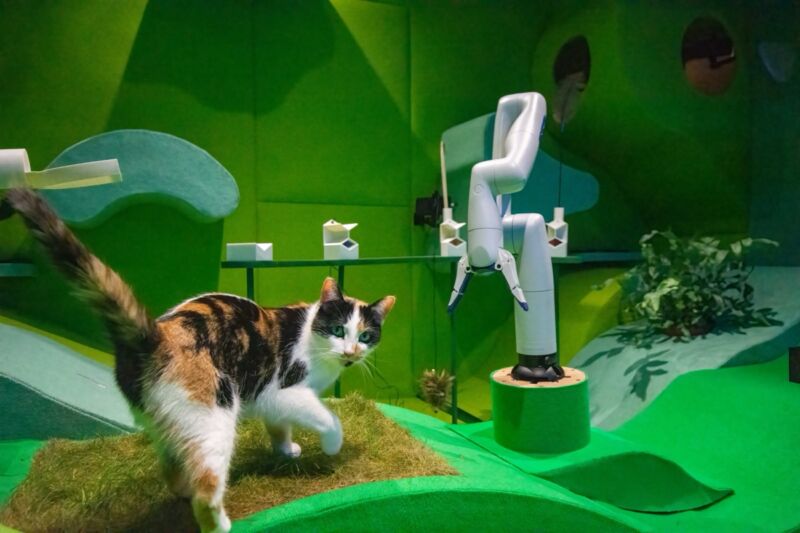
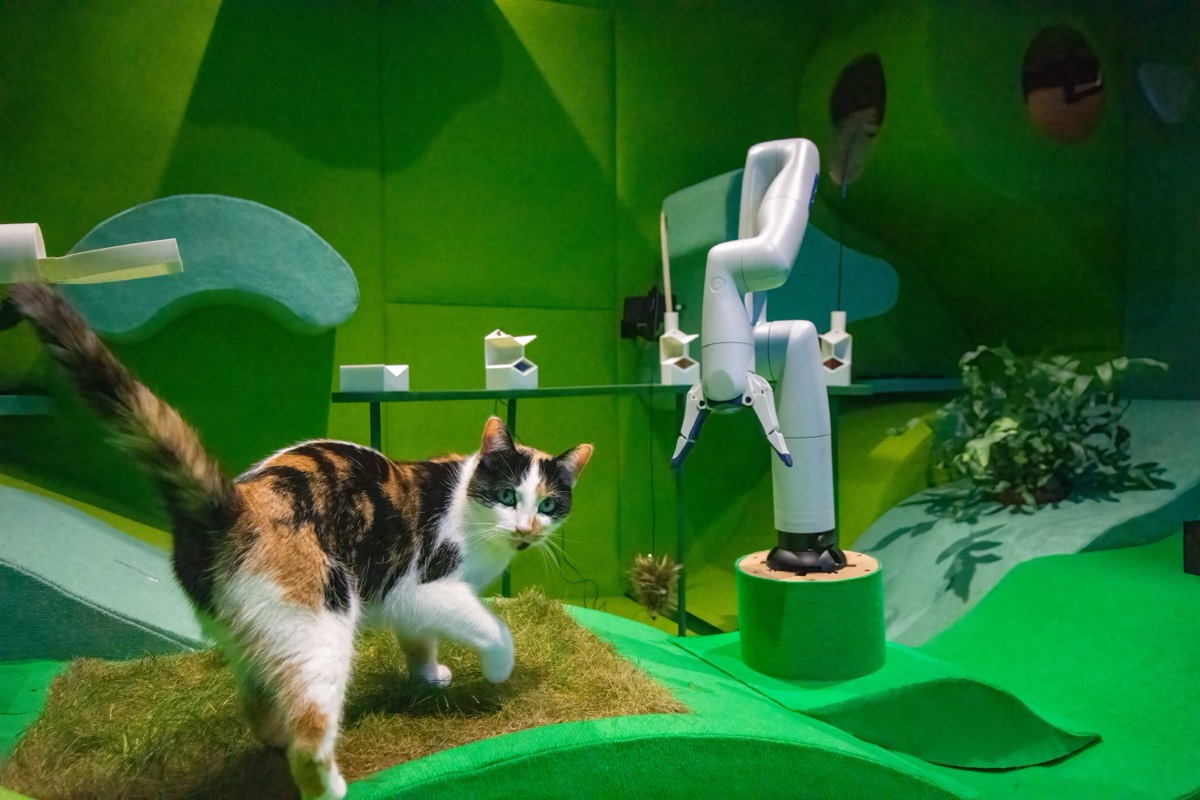
Enlarge/ A kitty named Clover prepares to play with a robot arm in the Cat Royale “multi-species” science/art installation .
Blast Theory – Stephen Daly
Cats and robots are a winning combination, as evidenced by all those videos of kitties riding on Roombas. And now we have Cat Royale, a “multispecies” live installation in which three cats regularly “played” with a robot over 12 days, carefully monitored by human operators. Created by computer scientists from the University of Nottingham in collaboration with artists from a group called Blast Theory, the installation debuted at the World Science Festival in Brisbane, Australia, last year and is now a touring exhibit. The accompanying YouTube video series recently won a Webby Award, and a paper outlining the insights gleaned from the experience was similarly voted best paper at the recent Computer-Human Conference (CHI’24).
“At first glance, the project is about designing a robot to enrich the lives of a family of cats by playing with them,” said co-author Steve Benford of the University of Nottingham, who led the research, “Under the surface, however, it explores the question of what it takes to trust a robot to look after our loved ones and potentially ourselves.” While cats might love Roombas, not all animal encounters with robots are positive: Guide dogs for the visually impaired can get confused by delivery robots, for example, while the rise of lawn mowing robots can have a negative impact on hedgehogs, per Benford et al.
Blast Theory and the scientists first held a series of exploratory workshops to ensure the installation and robotic design would take into account the welfare of the cats. “Creating a multispecies system—where cats, robots, and humans are all accounted for—takes more than just designing the robot,” said co-author Eike Schneiders of Nottingham’s Mixed Reality Lab about the primary takeaway from the project. “We had to ensure animal well-being at all times, while simultaneously ensuring that the interactive installation engaged the (human) audiences around the world. This involved consideration of many elements, including the design of the enclosure, the robot, and its underlying systems, the various roles of the humans-in-the-loop, and, of course, the selection of the cats.”
Based on those discussions, the team set about building the installation: a bespoke enclosure that would be inhabited by three cats for six hours a day over 12 days. The lucky cats were named Ghostbuster, Clover, and Pumpkin—a parent and two offspring to ensure the cats were familiar with each other and comfortable sharing the enclosure. The enclosure was tricked out to essentially be a “utopia for cats,” per the authors, with perches, walkways, dens, a scratching post, a water fountain, several feeding stations, a ball run, and litter boxes tucked away in secluded corners.
Enlarge/ (l-r) Clover, Pumpkin, and Ghostbuster spent six hours a day for 12 days in the installation.
E. Schneiders et al., 2024
As for the robot, the team chose the Kino Gen3 lite robot arm, and the associated software was trained on over 7,000 videos of cats. A decision engine gave the robot autonomy and proposed activities for specific cats. Then a human operator used an interface control system to instruct the robot to execute the movements. The robotic arm’s two-finger gripper was augmented with custom 3D-printed attachments so that the robot could manipulate various cat toys and accessories.
Each cat/robot interaction was evaluated for a “happiness score” based on the cat’s level of engagement, body language, and so forth. Eight cameras monitored the cat and robot activities, and that footage was subsequently remixed and edited into daily YouTube highlight videos and, eventually, an eight-hour film.
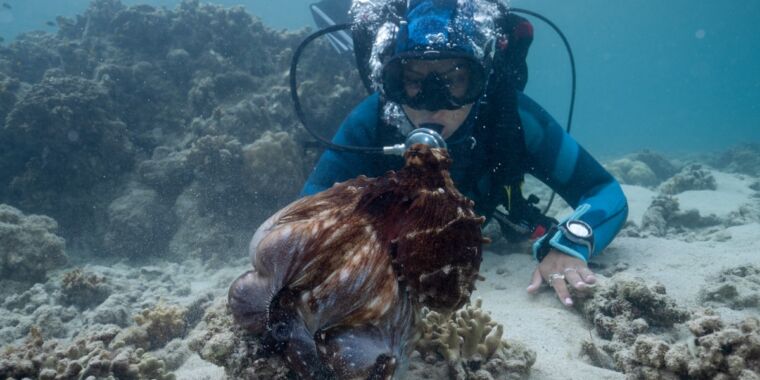
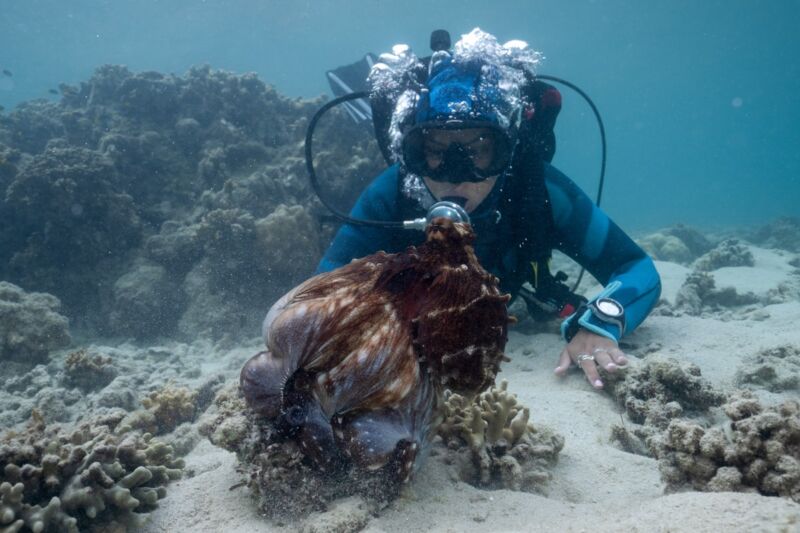
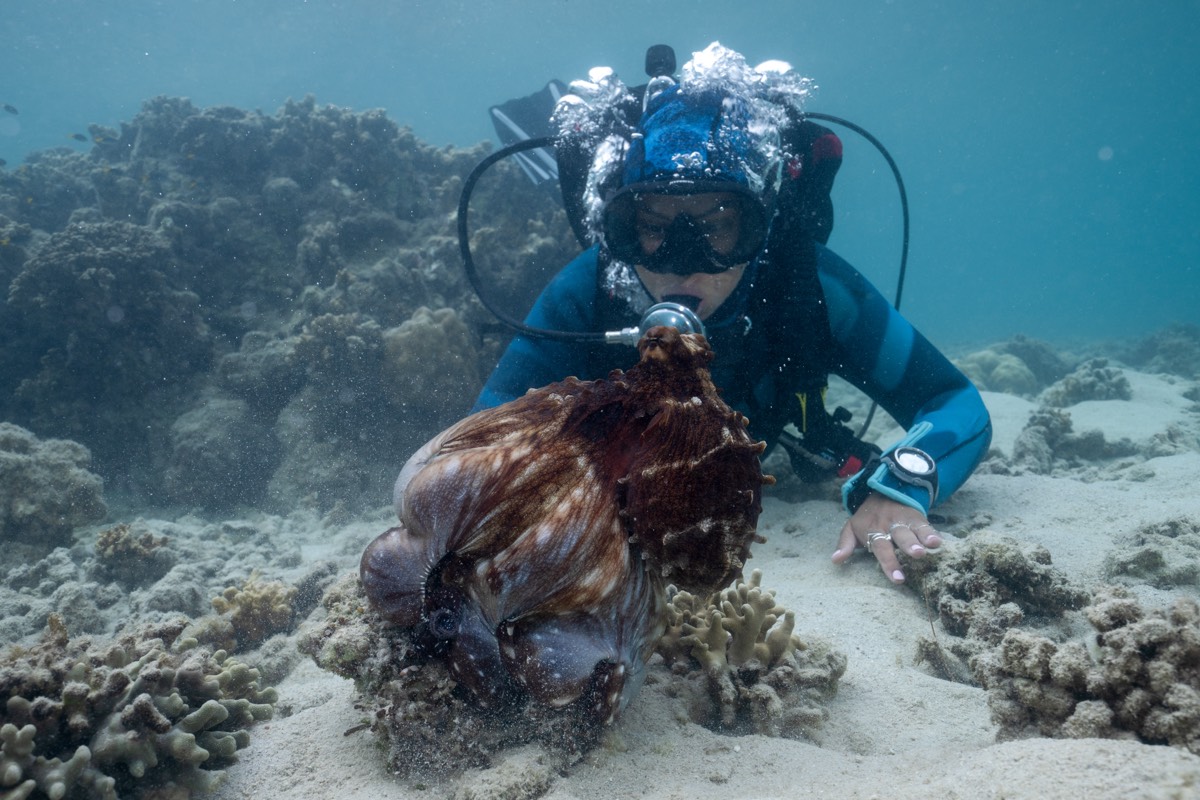
Enlarge/ A Day octopus (Octopus cyanea) named Scarlet parachutes her web over a coral head while Dr. Alex Schnell observes.
National Geographic/Disney/Craig Parry
With Earth Day fast approaching once again, it’s time for another new documentary from National Geographic and Disney+: Secrets of the Octopus. It’s the third in what has become a series, starting with the remarkable 2021 documentary Secrets of the Whales (narrated by Sigourney Weaver) and 2023’s Secrets of the Elephants (Natalie Portman as narrator). James Cameron served as producer on all three.
Secrets of the Octopus is narrated by Paul Rudd. Per the official synopsis:
Octopuses are like aliens on Earth: three hearts, blue blood and the ability to squeeze through a space the size of their eyeballs. But there is so much more to these weird and wonderful animals. Intelligent enough to use tools or transform their bodies to mimic other animals and even communicate with different species, the secrets of the octopus are more extraordinary than we ever imagined.
Each of the three episodes focuses on a specific unique feature of these fascinating creatures: “Shapeshifters,” “Masterminds,” and “Social Networks.” The animals were filmed in their natural habitats over 200 days and all that stunning footage is accompanied by thoughtful commentary by featured scientists. One of those scientists is Dr. Alex Schnell, a native Australian and self described storytelling who has worked at Macquarie University, the University of Cambridge, and the Marine Biological Laboratory, among other institutions. Her research focuses on the intelligence of marine animals, particularly cuttlefish and octopuses.
Ars caught up with Schnell to learn more.
Ars Technica: How did you become interested in studying octopuses?
Alex Schnell: I had this pivotal moment when I was young. I had the luxury of actually growing up on the beaches of Sydney so I would spend a lot of time in the water, in rock pools, looking at all the critters. When I was about five years old, I met my first octopus. It was such a monumental moment that opened up a completely different world for me. That’s the day I decided I wanted to be a marine biologist.
Alex Schnell prepares for a dive on the Great Barrier Reef
National Geographic for Disney/Craig Parry
Alex Schnell SCUBA dives over a coral garden on the Great Barrier Reef, while an Australian research vessel floats on the surface above.
National Geographic for Disney/Craig Parry
A Day octopus perched on corals on the Great Barrier Reef.
National Geographic/Disney/Richard Woodgett
Director and DOP Adam Geiger operates a jib arm with Producer / Camera operator, Rory McGuinness, and Camera Assistant, Woody Spark.
National Geographic for Disney/Annabel Robinson
Woody Spark preparing cameras and underwater housings with cinematographer Rory McGuinness.
National Geographic for Disney/Harriet Spark
Alex Schnell observes a Mimic octopus (Thaumoctopus mimicus) while on a dive with wildlife photographer and local dive guide, Benhur Sarinda
National Geographic for Disney/Craig Parry
A Mimic octopus, with striped skin patterning, stretches out all eight arms across black volcanic sand.
National Geographic for Disney/Craig Parry
A Blue-ringed octopus (Hapalochlaena maculosa) displays bright blue rings, a warning that the venom in her bite is deadly.
National Geographic
Ars Technica: What is the focus of your research?
Alex Schnell: I’m a marine biologist that turned into a comparative psychologist—just a fancy word for studying the different minds of animals. What I’m really interested is how intelligence evolved, where and when. The octopus is the perfect candidate to answer some of these questions because they diverge from our own lineage over 550 million years ago. We share an ancestor that looked like a flat worm. So if the octopus shows glimmers of intelligence that we see in ourselves or in animals that are closely related to us, it reveals a lot about the patterns of evolution and how it evolved throughout the animal kingdom.
When you meet an octopus, you really get the sense that there is another being looking out at you. A few years ago, I worked with a team at London School of Economics to write a report reviewing the evidence of sentience in animals. Does the animal have the capacity to feel emotions? We found really strong evidence in octopuses and it ended up changing UK law. Now under UK law, we have to treat octopuses ethically and with compassion.
Ars Technica: One behavioral aspect the series explores is tool use by octopuses. I was struck by the scene where a little coconut octopus uses her clamshell both for shelter and as a shield. I’ve never seen that before.
Alex Schnell: Neither had I. Before we traveled to Indonesia on that shoot, I had read about that particular defensive tool use by the coconut octopus. This species will often be seen carrying around two halves of a coconut, like a mobile den or an RV home. And they use it as protection because they live in a very barren sandy landscape. So I was really excited to see that behavior unfold.
We got more than we bargained for, because in the clip that you mentioned, our coconut octopus was being threatened by this angry mantis shrimp. They pack a really powerful punch that’s been known to break through aquarium glass. And here we have this defenseless little octopus with no bones or anything. In that moment we witnessed her have this idea. She walked over to the shell and picked it up and dragged it back to her original spot and literally used it like a shield to fend off this angry mantis shrimp. She had imagined herself a shield. I saw her get an idea, she imagined it, and she walked over it and used it. I was so blown away that I was screaming with excitement underwater.
Rory McGuinnes, operating an underwater jib arm to film a colorful coral reef on the Lembeh Strait.
National Geographic for Disney/Adam Geiger
Woody Spark tests the controls for the underwater camera-and-slider system
National Geographic for Disney/Adam Geiger
Local dive guides Reifani and Benhur Sarinda observe a Coconut octopus (Amphioctopus marginatus) sheltering between two clam shells.
National Geographic for Disney/Adam Geiger
Woody Spark uses the underwater camera-and-slider system to film a Coconut octopus sheltering between clam shells.
National Geographic for Disney/Adam Geiger
An 8-foot Giant Pacific octopus (Enteroctopus dofleini) rests on the arms of tech diver and octopus enthusiast, Krystal Janicki, on a dive in the shallow waters off Vancouver Island.
National Geographic for Disney/Maxwel Hohn
A Giant Pacific octopus crawls over the sandy seafloor in shallow waters
National Geographic for Disney/Maxwel Hohn
Dr. C.E. O’Brien observes a resting Island octopus (Octopus insularis) on a dive in Turks and Caicos.
National Geographic for Disney/Adam Geiger
Ars Technica: At one point in the series you celebrate having a “conversation” with an octopus. How do octopuses communicate?
Alex Schnell: Octopuses generally communicate with changes to their skin. They can change the color and the texture of their skin in the blink of an eye, and they can also change their posture. What we’ve found with one particular species is that they have cross-species communication, so they collaboratively hunt with some reef fish. Again, I had only read about this behavior until I had a chance to see it in person.
I had this kind of playful idea while I was down there with a Day octopus named Scarlet, who was allowing me to follow her on a lot of her hunts. Because I was so close to her, I noticed she was missing little crabs here and there. Normally her fish hunting partner will do a head stand to point to where the missed food is. I thought, I wonder what’s going to happen if I just point at it, not expecting anything. To my astonishment, she responded and swum right over and looked where I had pointed.
So that’s what I mean by having a conversation with an octopus. I can’t change color sadly, but it’s as if she was responding to my pointing, my “referential signaling,” which is incredible because this is kind of what we see in humans and chimpanzees: this development of communication before language develops. Here we have this octopus responding to a human pointing.
Ars Technica: Scarlet actually reached out her little tentacle to you on multiple occasions; she seemed to recognize you and accept you.
Alex Schnell: I had had those moments before, the ET moment where you get to meet an octopus, and I’ve spoken to other avid divers and people who have a love for octopuses that have had similar experiences. The really special thing with this relationship that I had with Scarlet is that we were able to develop it over weeks and months. Every time I would return to her, she would appear to recognize me quickly and let me back into her world.
What continues to blow me away is that Scarlet grew to trust me really quickly. She reached out and shook my hand after 30 minutes of me watching her, and she let me swim alongside her as she hunted. This is a creature with no skeleton, no shell, no teeth, no claws to protect itself. And despite that extreme vulnerability, she quickly let her guard down. It’s like she was driven by curiosity and this need to reach out and connect, even with an alien creature like me.
Ars Technica: I was surprised to learn that octopuses have such short lifespans.
Alex Schnell: A lot people ask me if they lived longer, would they take over the world? Maybe. It’s life in the fast lane. They are essentially born as orphans because they don’t have any parents or siblings to guide them. They just drift off. They’re loners for most of their lives and they teach themselves. Everything is driven by this intense curiosity to learn. I think that’s why a lot of people have had these incredible moments with octopuses because even the fear or the vulnerability that they might feel is outweighed by a curiosity to interact.
Alex Schnell on the surface in full SCUBA gear.
National Geographic/Harriet Spark
A Coconut octopus pokes an eye out from between partially buried clam shells. Her powerful suckers hold the two shells together for protection from passing predators.
National Geographic for Disney/Craig Parry
Alex Schnell and Benhur Sarinda observe a Coconut octopus walking across the seafloor with clam shells held underneath her web.
National Geographic for Disney/Craig Parry)
A tiny Coconut octopus reaches out to touch Alex Schnell’s hand.
National Geographic for Disney/Craig Parry
An Algae octopus (Abdopus aculeatus) foraging amongst the algae and seagrass in Bunaken Marine Park.
National Geographic/Annabel Robinson
Alex Schnell observing a Southern keeled octopus (Octopus berrima) on a night dive in Port Phillip Bay
National Geographic
A Dorado octopus mother group with eggs
Schmidt Ocean Institute
Ars Technica: Do you find yourself having to be on guard about anthropomorphizing these amazing creatures a bit too much?
Alex Schnell: I think there’s a fine balance. As a trained comparative psychologist, we are taught to be really careful not to anthropomorphize and attribute human traits onto the animals that we see or that we work with. At the same time, I think that we’ve moved too far into a situation that Frans de Waal called “anthro-denialism.” Traits didn’t just sprout up in the human species. They have an evolutionary history, and while they might not be exactly the same in other animals, there are similarities. So sometimes we need to call it what it is. One of der Waal’s examples was researchers who described chimpanzees kissing as “mouth-to-mouth contact” because they didn’t want to anthropomorphize it. Come on guys, they’re kissing.
We do strive to see human traits in other animals. We watched cartoons growing up, we had pets around us, so it’s really hard not to. Our job is as comparative psychologists is to find really strong evidence for the similarities and the differences between the different minds of the animals that we share our planet with.
Ars Technica: What were some of the highlights for you, filming this documentary series?
Alex Schnell: It was challenging in the sense that when the production team first approached me, I was 38 weeks pregnant. So I went out into the field with a five-month-old baby. I was sleep-deprived, trying to go diving and also be on camera. I had worked on natural history films before, but always on the other side of the camera. So it was a steep learning curve.
But it was such a rewarding experience to be able to have the luxury of time to be out with these animals. I had no project because I was on maternity leave. Sometimes when you’re part of a project, you can get tunnel vision. “I’m going to see this particular behavior and that’s what I’m focusing on.” But I could be completely mindful in the moment with my time with octopuses and get to see how they interact in their natural environment. It opens up this incredible secret world that they have. I was seeing things that, yes, I’d read about some of them, but some I’d never heard of before. I think each episode in this series reveals secrets that will take your breath away.
Ars Technica: What is next for you?
Alex Schnell: I’m working on a project called One World, Many Minds. What this project strives to do is accentuate that, yes, we are one world, but there are many minds that make up our collective existence. I really want to showcase the minds of animals like the octopus or the cuttlefish or a big grouper, and show that we have traits that we can recognize, that we can connect with. That will help remove a barrier of otherness, and highlight our shared vulnerability and interconnectedness with animals.
Secrets of the Octopus premieres on Disney+ and Hulu on April 22, 2024.
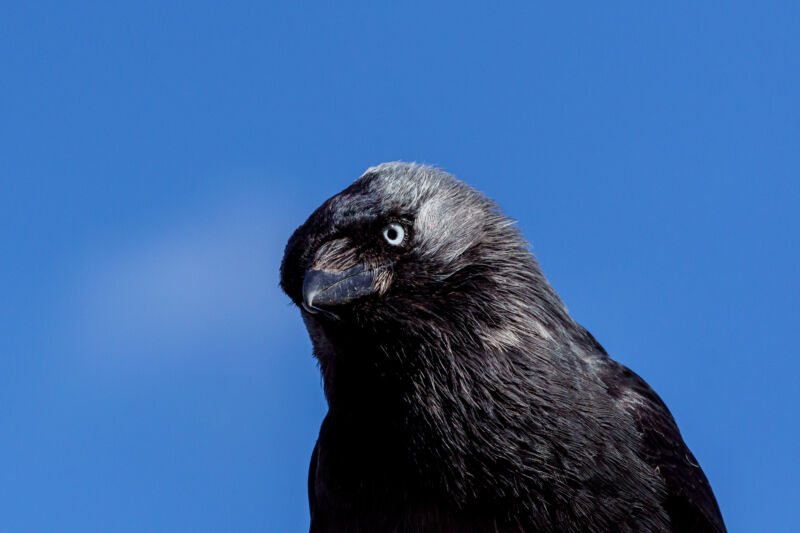
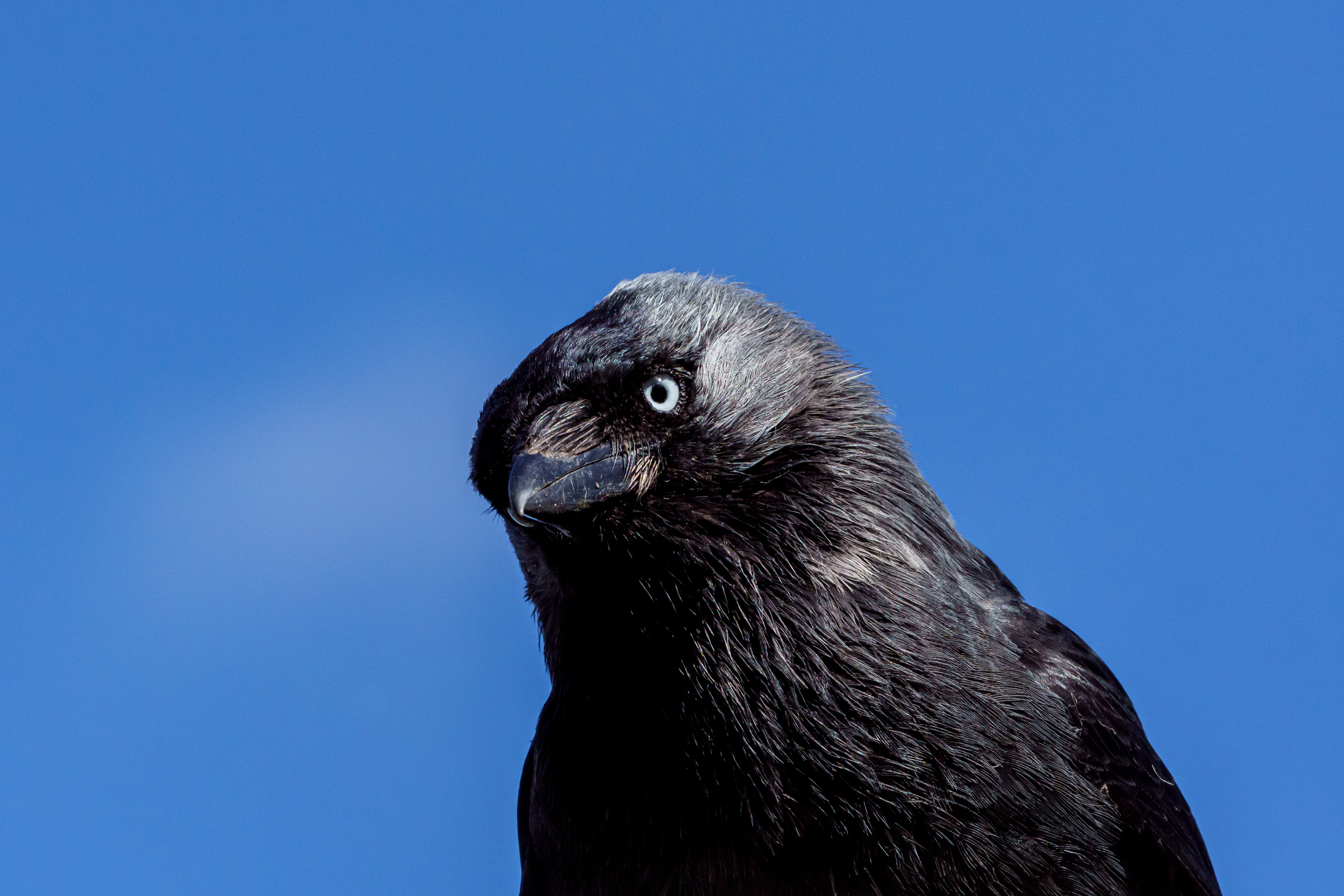
Enlarge/ A jackdaw tries to remember what color it was thinking of.
Humans tend to think that we are the most intelligent life-forms on Earth, and that we’re largely followed by our close relatives such as chimps and gorillas. But there are some areas of cognition in which homo sapiens and other primates are not unmatched. What other animal’s brain could possibly operate at a human’s level, at least when it comes to one function? Birds—again.
This is far from the first time that bird species such as corvids and parrots have shown that they can think like us in certain ways. Jackdaws are clever corvids that belong to the same family as crows and ravens. After putting a pair of them to the test, an international team of researchers saw that the birds’ working memory operates the same way as that of humans and higher primates. All of these species use what’s termed “attractor dynamics,” where they organize information into specific categories.
Unfortunately for them, that means they also make the same mistakes we do. “Jackdaws (Corvus monedula) have similar behavioral biases as humans; memories are less precise and more biased as memory demands increase,” the researchers said in a study recently published in Communications Biology.
Remembering not to forget
Working memory is where we hang on to items for a brief period of time—like a postal code looked up in one browser tab and typed into a second. It can hold everything from numbers and words to images and concepts. But these memories deteriorate quickly, and the capacity is limited—the more things we try to remember, the less likely the brain is going to remember them all correctly.
Attractor dynamics give the brain an assist with working memory by taking sensory input, such as color, and categorizing it. The highly specific red shade “Fire Lily” might fade from working memory quickly, and fewer specifics will stick around as time passes, yet it will still be remembered as “red.” You lose specifics first, but hang on to the general idea longer.
Aside from time, the other thing that kills working memory is distractions. Less noise—meaning distracting factors inside and outside the brain—will make it easier to distinguish Fire Lily among the other reds. If a hypothetical customer was browsing paint swatches for Sandstone (a taupe) and London Fog (a gray) in addition to Fire Lily, remembering each color accurately would become even more difficult because of the increased demands on working memory.
Bias can also blur working memory and cause the brain to remember some red hues more accurately than others, especially if the brain compartmentalizes them all under “red.” This can happen when a particular customer has a certain idea of the color red that leans warmer or cooler than Fire Lily. If they view red as leaning slightly warmer than Fire Lily, they might believe a different, warmer red is Fire Lily.
In living color
To find out if corvids process stimuli using short-term memory with attractor dynamics, the researchers subjected two jackdaws to a variety of tests that involved remembering colors. Each bird had to peck on a white button to begin the test. They were then shown a color—the target color—before being shown a chart of 64 colors. The jackdaws had to look at that chart and peck the color they had previously been shown. A correct answer would get them their favorite treat, while responses that were close but not completely accurate would get them other treats.
While the birds performed well with just one color, their accuracy went down as the researchers challenged them to remember more target colors from the chart at once. They were more likely to pick colors that were close to, but not exactly, the target colors they had been shown—likely because there was a greater load on their short-term memory.
This is what we’d see if a customer had to remember not only Fire Lily, but Sandstone and London Fog. The only difference is that we humans would be able to read the color names, and the jackdaws only found out they were wrong when they didn’t get their favorite treat.
“Despite vastly different visual systems and brain organizations, corvids and primates show similar attractor dynamics, which can mitigate noise in visual working memory representations,” the researchers said in the same study.
How and why birds evolved attractor dynamics still needs to be understood. Because avian eyesight differs from human eyesight, there could have been differences in color perception that the research team was unable to account for. However, it seems that the same mechanisms for working memory that evolved in humans and other primates also evolved separately in corvids. “Birdbrain” should be taken as a compliment.
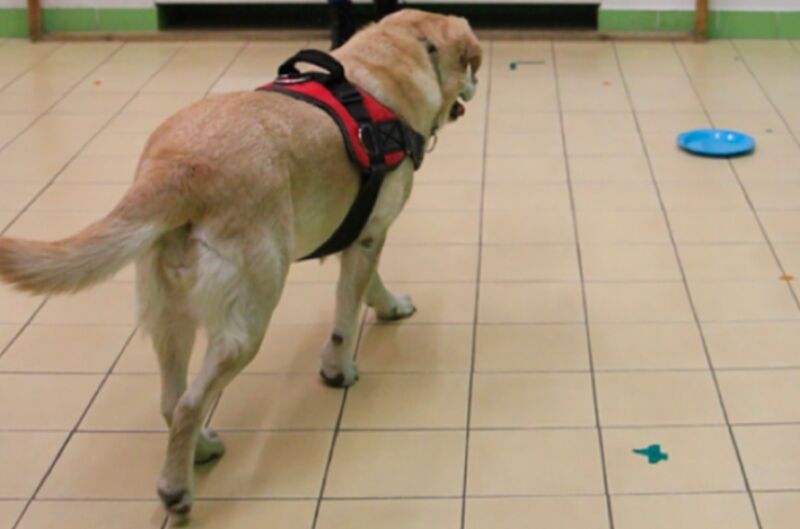
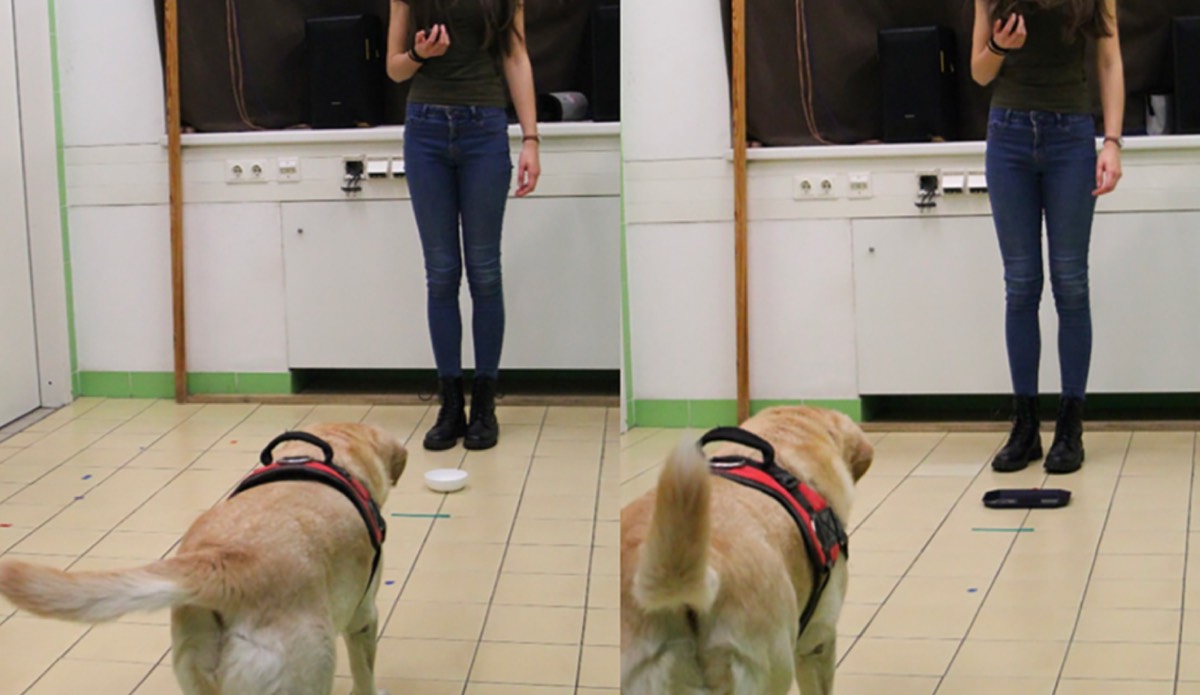
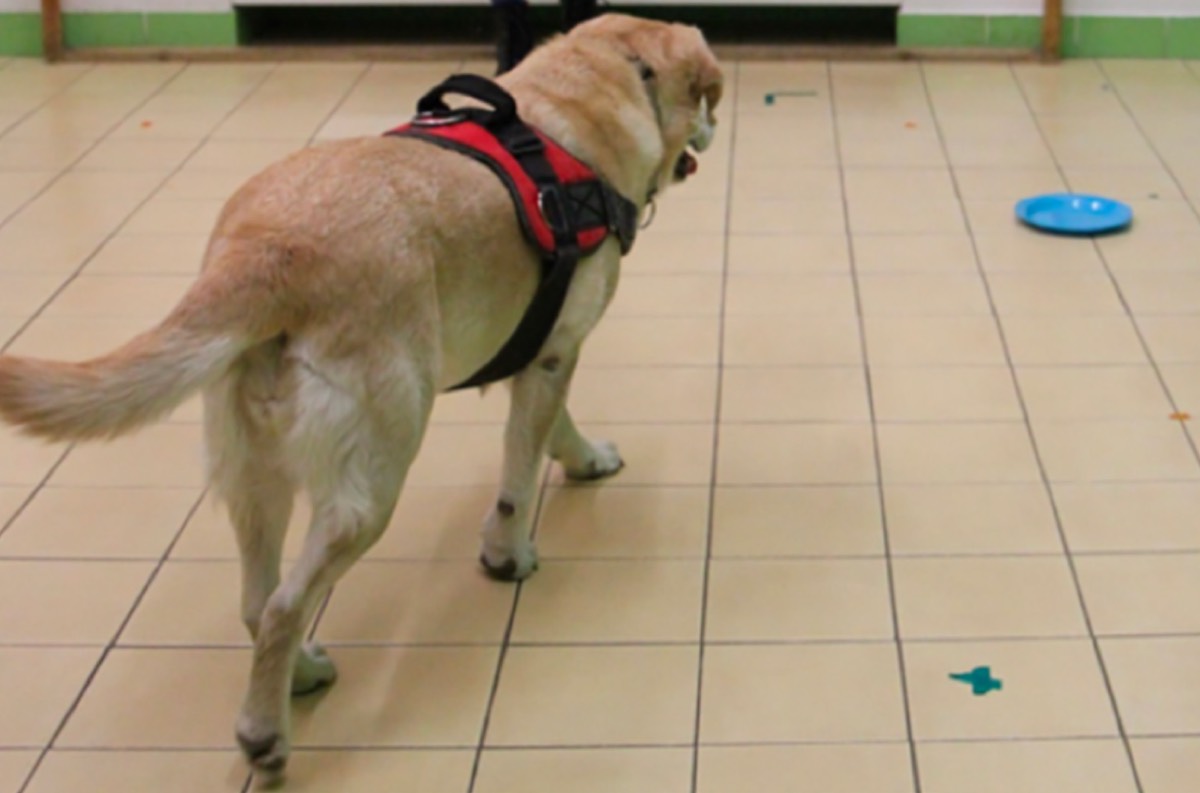
Enlarge/ Look at this very good boy taking a test to determine the origin of his spatial bias for a study on how dogs think.
Eniko Kubinyi
Research has shown that if you point at an object, a dog will interpret the gesture as a directional cue, unlike a human toddler, who will more likely focus on the object itself. It’s called spatial bias, and a recent paper published in the journal Ethology offers potential explanations for why dogs interpret the gesture the way that they do. According to researchers at Eötvös Loránd University in Hungary, the phenomenon arises from a combination of how dogs see (visual acuity) and how they think, with “smarter” dog breeds prioritizing an object’s appearance as much as its location. This suggests the smarter dogs’ information processing is more similar to humans.
The authors wanted to investigate whether spatial bias in dogs is sensory or cognitive, or a combination of the two. “Very early on, children interpret the gesture as pointing to the object, while dogs take the pointing as a directional cue,” said co-author Ivaylo Iotchev. “In other words, regardless of the intention of the person giving the cue, the meaning for children and dogs is different. This phenomenon has previously been observed in dogs using a variety of behavioral tests, ranging from simple associative learning to imitation, but it had never been studied per se.”
Their experimental sample consisted of dogs used in a previous 2018 study plus dogs participating specifically in the new study, for a total of 82 dogs. The dominant breeds were border collies (19), vizslas (17), and whippets (6). Each animal was brought into a small empty room with their owner and one of the experimenters present. The experimenter stood 3 meters away from the dog and owner. There was a training period using different plastic plates to teach the dogs to associate either the presence or absence of an object, or its spatial location, with the presence or absence of food. Then they tested the dogs on a series of tasks.
Enlarge/ An object feature conditioning test involving a white round plate and a black square plate.
I.B. Iotchev et al., 2023
For instance, one task required dogs to participate in a maximum of 50 trials to teach them to learn a location of a treat that was always either on the left or right plate. For another task, the experimenter placed a white round plate and a black square plate in the middle of the room. The dogs were exposed to each semi-randomly but only received food in one type of plate. Learning was determined by how quickly each dog ran to the correct plate.
Once the dogs learned those first two tasks, they were given another more complicated task in which either the direction or the object was reversed: if the treat had previously been placed on the right, now it would be found on the left, and if it had previously been placed on a white round plate, it would now be found on the black square one. The researchers found that dogs learned faster when they had to choose the direction, i.e., whether the treat was located on the left or the right. It was harder for the dogs to learn whether a treat would be found on a black square plate or a white round plate.
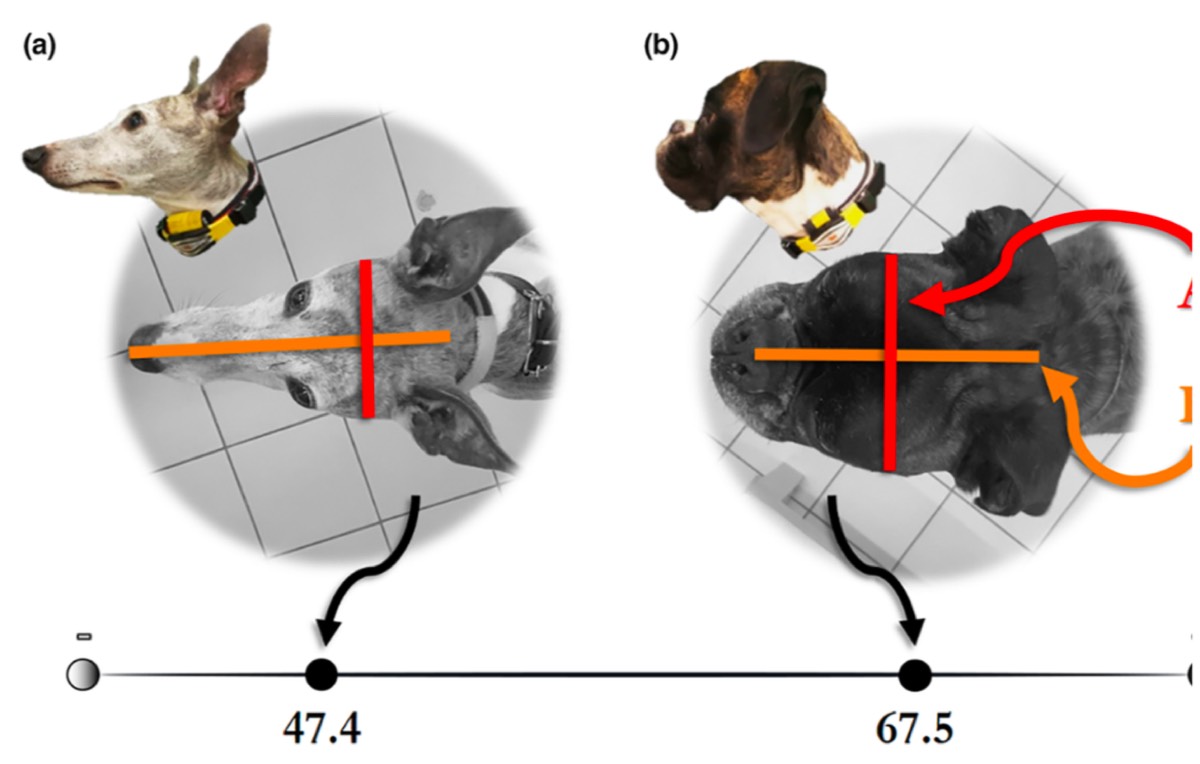
Enlarge/ The shorter a dog’s head, the higher the “cephalic index” (CI).
I.B. Iotchev et al., 2023
Next the team needed to determine differences between the visual and cognitive abilities of the dogs in order to learn whether the spatial bias was sensory or cognitively based, or both. Selective breeding of dogs has produced breeds with different visual capacities, so another aspect of the study involved measuring the length of a dog’s head, which prior research has shown is correlated with visual acuity. The metric used to measure canine heads is known as the “cephalic index” (CI), defined as the ratio of the head’s maximum width multiplied by 100, then divided by the head’s maximum length.
The shorter a dog’s head, the more similar their visual acuity is to human vision. That’s because there is a higher concentration of retinal ganglion cells in the center of their field of vision, making vision sharper and giving such dogs binocular depth vision. The testing showed dogs with better visual acuity, and who also scored higher on the series of cognitive tests, also exhibited less spatial bias. This suggests that canine spatial bias is not simply a sensory matter but is also influenced by how they think. “Smarter” dogs have less spatial bias.
As always, there are a few caveats. Most notably, the authors acknowledge that their sample consisted exclusively of dogs from Hungary kept as pets, and thus their results might not generalize to stray dogs, for example, or dogs from other geographical regions and cultures. Still, “we tested their memory, attention skills, and perseverance,” said co-author Eniko Kubinyi. “We found that dogs with better cognitive performance in the more difficult spatial bias task linked information to objects as easily as to places. We also see that as children develop, spatial bias decreases with increasing intelligence.”