ancient people did stuff

first-revealed-in-spy-photos,-a-bronze-age-city-emerges-from-the-steppe

First revealed in spy photos, a Bronze Age city emerges from the steppe


An unexpectedly large city lies in a sea of grass inhabited largely by nomads.

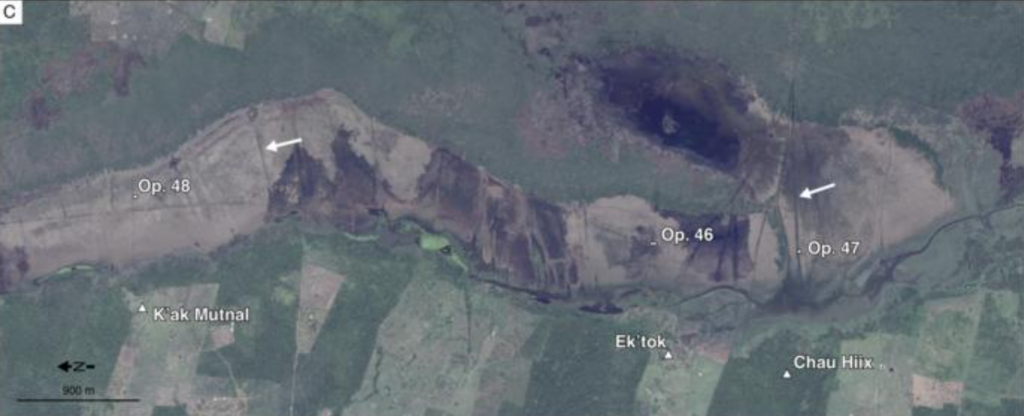
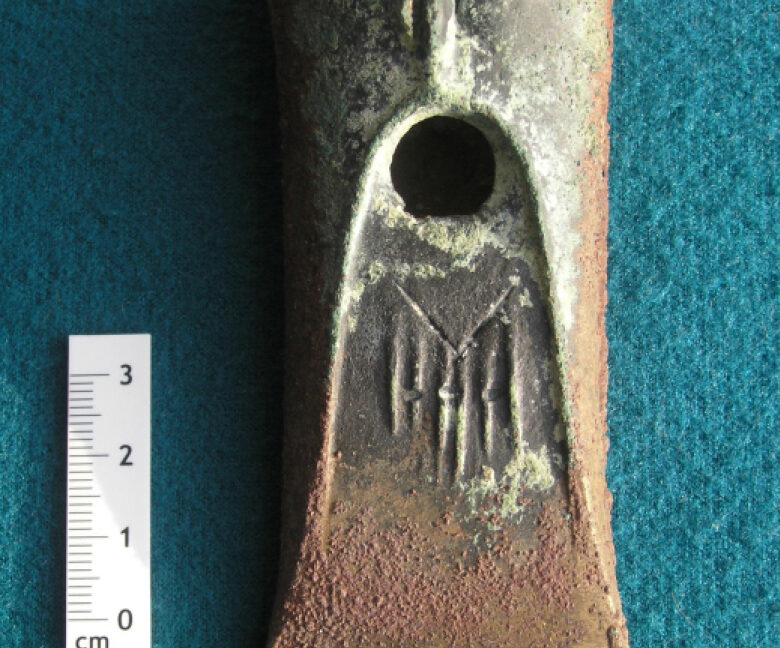
This bronze ax head was found in the western half of Semiyarka. Credit: Radivojevic et al. 2025

Today all that’s left of the ancient city of Semiyarka are a few low earthen mounds and some scattered artifacts, nearly hidden beneath the waving grasses of the Kazakh Steppe, a vast swath of grassland that stretches across northern Kazakhstan and into Russia. But recent surveys and excavations reveal that 3,500 years ago, this empty plain was a bustling city with a thriving metalworking industry, where nomadic herders and traders might have mingled with settled metalworkers and merchants.
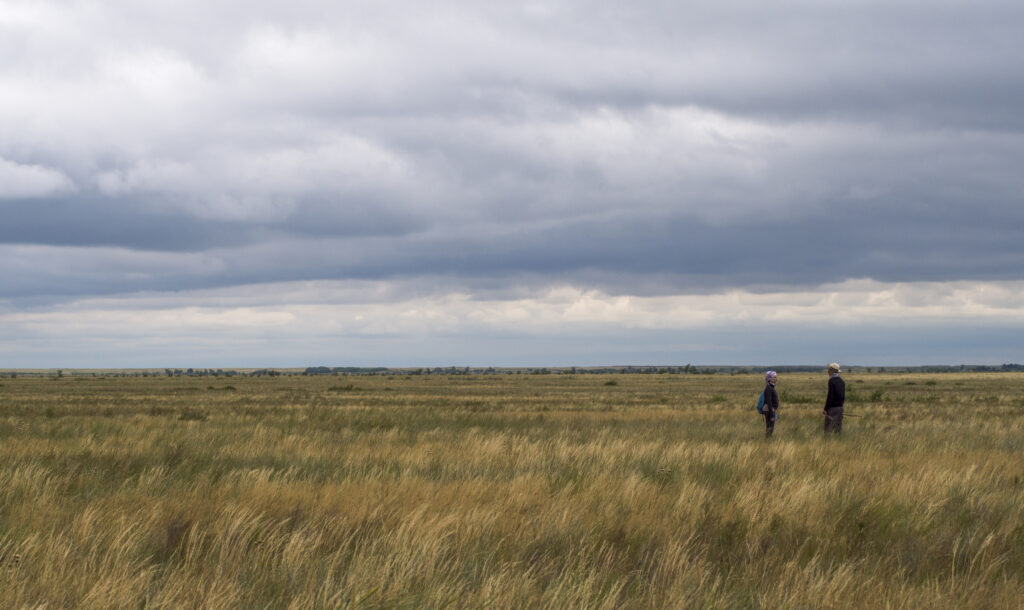
Photo of two people standing on a grassy plain under a gray sky

Radivojevic and Lawrence stand on the site of Semiyarka. Credit: Peter J. Brown

Welcome to the City of Seven Ravines

University College of London archaeologist Miljana Radivojevic and her colleagues recently mapped the site with drones and geophysical surveys (like ground-penetrating radar, for example), tracing the layout of a 140-hectare city on the steppe in what’s now Kazakhstan.

The Bronze Age city once boasted rows of houses built on earthworks, a large central building, and a neighborhood of workshops where artisans smelted and cast bronze. From its windswept promontory, it held a commanding view of a narrow point in the Irtysh River valley, a strategic location that may have offered the city “control over movement along the river and valley bottom,” according to Radivojevic and her colleagues. That view inspired archaeologists’ name for the city: Semiyarka, or City of Seven Ravines.

Archaeologists have known about the site since the early 2000s, when the US Department of Defense declassified a set of photographs taken by its Corona spy satellite in 1972, when Kazakhstan was a part of the Soviet Union and the US was eager to see what was happening behind the Iron Curtain. Those photos captured the outlines of Semiyarka’s kilometer-long earthworks, but the recent surveys reveal that the Bronze Age city was much larger and much more interesting than anyone realized.

This 1972 Corona image shows the outlines of Semiyarka’s foundations. Radivojevic et al. 2025

When in doubt, it’s potentially monumental

Most people on the sparsely populated steppe 3,500 years ago stayed on the move, following trade routes or herds of livestock and living in temporary camps or small seasonal villages. If you were a time-traveler looking for ancient cities, the steppe just isn’t where you’d go, and that’s what makes Semiyarka so surprising.

A few groups of people, like the Alekseeva-Sargary, were just beginning to embrace the idea of permanent homes (and their signature style of pottery lies in fragments all over what’s left of Semiyarka). The largest ancient settlements on the steppe covered around 30 hectares—nowhere near the scale of Semiyarka. And Radivojevic and her colleagues say that the layout of the buildings at Semiyarka “is unusual… deviating from more conventional settlement patterns observed in the region.”

What’s left of the city consists mostly of two rows of earthworks: kilometer-long rectangles of earth, piled a meter high. The geophysical survey revealed that “substantial walls, likely of mud-brick, were built along the inside edges of the earthworks, with internal divisions also visible.” In other words, the long mounds of earth were the foundations of rows of buildings with rooms. Based on the artifacts unearthed there, Radivojevic and her colleagues say most of those buildings were probably homes.

The two long earthworks meet at a corner, and just behind that intersection sits a larger mound, about twice the size of any of the individual homes. Based on the faint lines traced by aerial photos and the geophysical survey, it may have had a central courtyard or chamber. In true archaeologist fashion, Durham University archaeologist Dan Lawrence, a coauthor of the recent paper, describes the structure as “potentially monumental,” which means it may have been a space for rituals or community gatherings, or maybe the home of a powerful family.

The city’s layout suggests “a degree of architectural planning,” as Radivojevic and her colleagues put it in their recent paper. The site also yielded evidence of trading with nomadic cultures, as well as bronze production on an industrial scale. Both are things that suggest planning and organization.

“Bronze Age communities here were developing sophisticated, planned settlements similar to those of their contemporaries in more traditionally ‘urban’ parts of the ancient world,” said Lawrence.

Who put the bronze in the Bronze Age? Semiyarka, apparently

Southeast of the mounds, the ground was scattered with broken crucibles, bits of copper and tin ore, and slag (the stuff that’s left over when metal is extracted from ore). That suggested that a lot of smelting and bronze-casting happened in this part of the city. Based on the size of the city and the area apparently set aside for metalworking, Semiyarka boasted what Radivojevic and her colleagues call “a highly-organized, possibly limited or controlled, industry of this sought-after alloy.”

Bronze was part of everyday life for people on the ancient steppes, making up everything from ax heads to jewelry. There’s a reason the period from 2000 BCE to 500 BCE (mileage may vary depending on location) is called the Bronze Age, after all. But the archaeological record has offered almost no evidence of where all those bronze doodads found on the Eurasian steppe were made or who was doing the work of mining, smelting, and casting. That makes Semiyarka a rare and important glimpse into how the Bronze Age was, literally, made.

Radivojevic and her colleagues expected to find traces of earthworks or the buried foundations of mud-brick walls, similar to the earthworks in the northwest, marking the site of a big, centralized bronze-smithing workshop. But the geophysical surveys found no walls at all in the southeastern part of the city.

“This area revealed few features,” they wrote in their recent paper (archaeologists refer to buildings and walls as features), “suggesting that metallurgical production may have been dispersed or occurred in less architecturally formalized spaces.” In other words, the bronzesmiths of ancient Semiyarka seem to have worked in the open air, or in a scattering of smaller, less permanent buildings that didn’t leave a trace behind. But they all seem to have done their work in the same area of the city.

Connections between nomads and city-dwellers

East of the earthworks lies a wide area with no trace of walls or foundations beneath the ground, but with a scattering of ancient artifacts lying half-buried in the grass. The long-forgotten objects may mark the sites of “more ephemeral, perhaps seasonal, occupation,” Radivojevic and her colleagues suggested in their recent paper.

That area makes up a large chunk of the city’s estimated 140 hectares, raising questions about how many people lived here permanently, how many stopped here along trade routes or pastoral migrations, and what their relationship was like.

A few broken potsherds offer evidence that the settled city-dwellers of Semiyarka traded regularly with their more mobile neighbors on the steppe.

Within the city, most of the ceramics match the style of the Alekseevka-Sargary people. But a few of the potsherds unearthed in Semiyarka are clearly the handiwork of nomadic Cherkaskul potters, who lived on this same wide sea of grass from around 1600 BCE to 1250 BCE. It makes sense that they would have traded with the people in the city.

Along the nearby Irtysh River, archaeologists have found faint traces of several small encampments, dating to around the same time as Semiyarka’s heyday, and two burial mounds stand north of the city. Archaeologists will have to dig deeper, literally and figuratively, to piece together how Semiyarka fit into the ancient landscape.

The city has stories to tell, not just about itself but about the whole vast, open steppe and its people.

Antiquity, 2025. DOI: 10.15184/aqy.2025.10244 (About DOIs).

Photo of Kiona N. Smith

Kiona is a freelance science journalist and resident archaeology nerd at Ars Technica.

First revealed in spy photos, a Bronze Age city emerges from the steppe Read More »
wear-marks-suggest-neanderthals-made-ocher-crayons

Wear marks suggest Neanderthals made ocher crayons

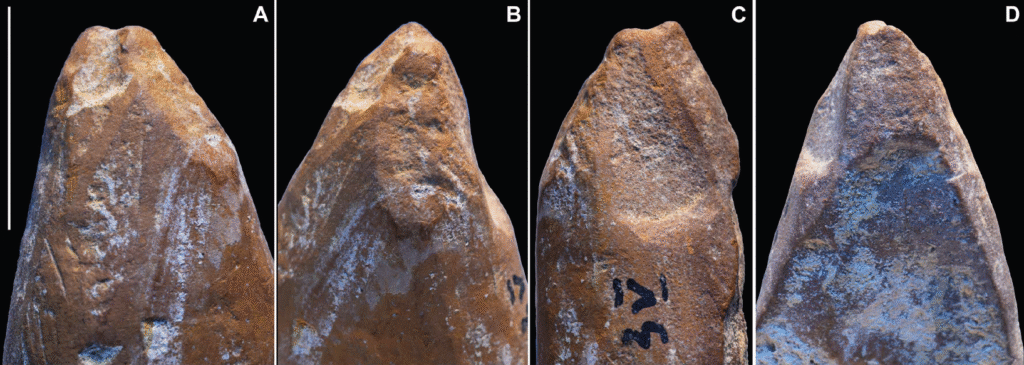
“The combination of shaping, wear, and resharpening indicates they were used to draw or mark on soft surfaces,” D’Errico told Ars in an email. “Although the material is too fragile to reveal the specific material on which they were used, such as hide, human skin, or stone, an experimental approach may, in the future, allow us at least to rule out their use on some materials.”

A 73,000-year-old drawing from Blombo Cave in South Africa looks like it was made with tools much like the ocher crayons from Crimea, which means that Neanderthals and Homo sapiens both invented crayons in their own little corners of the world at around the same time.

Image of a reddish-brown rock with a series of lines carved in its surface

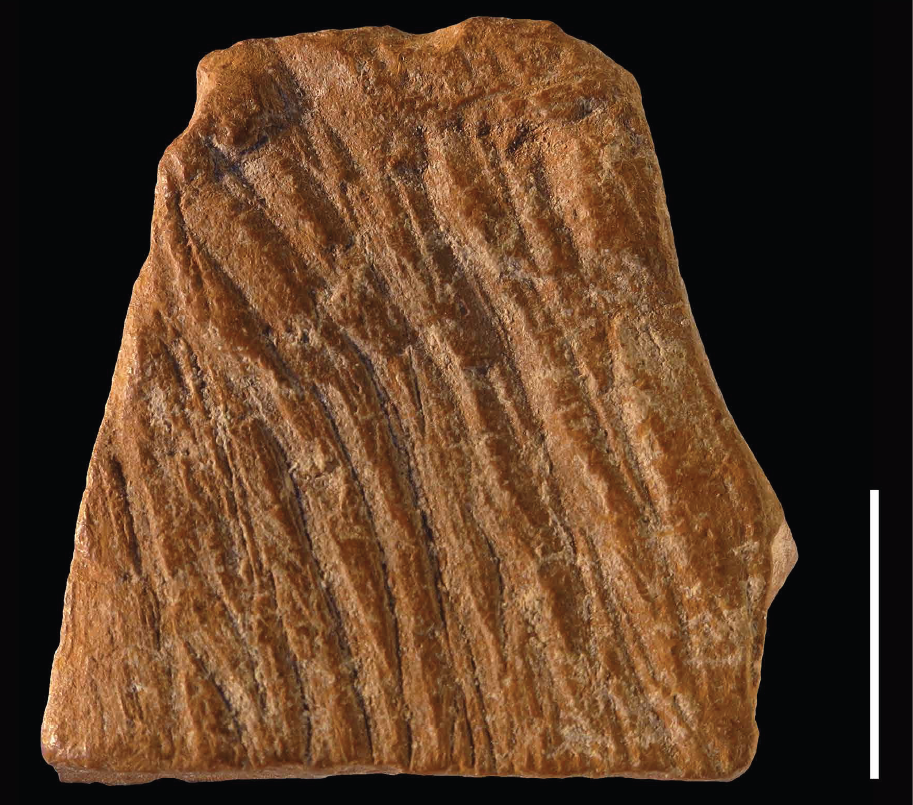
The surface of this flat piece of orange ocher was carved over 47,000 years ago, then worn smooth, perhaps by carrying in a bag. Credit: D’Errico et al. 2025

Sometimes you’re the crayon, sometimes you’re the canvas

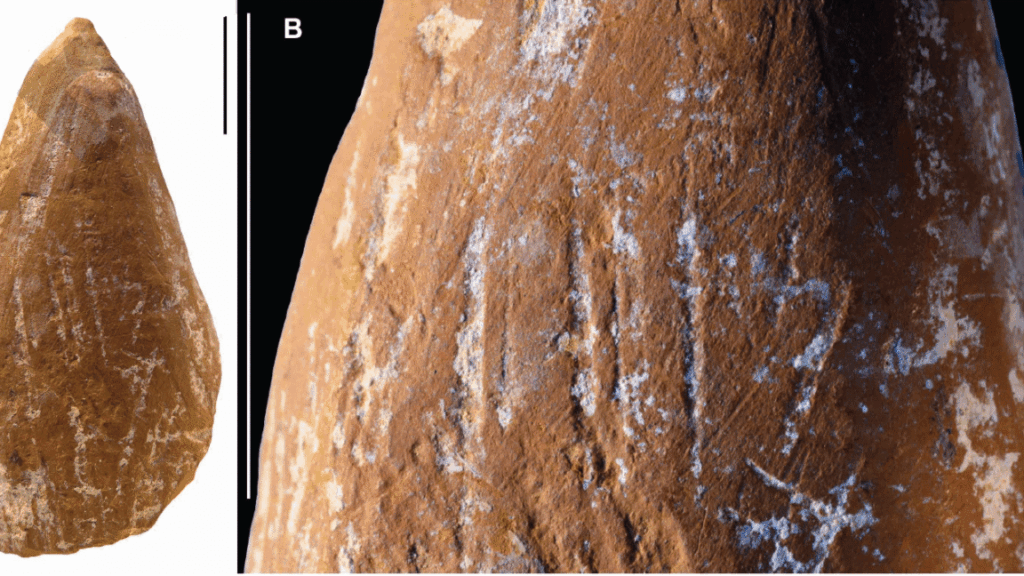
A third item from Zaskalnaya V is a flat piece of orange ocher. One side is covered with a thin layer of hard, dark rock. But more than 47,000 years ago, someone carefully cut several deep lines, regularly spaced and almost parallel, into its surface. The area of stone between the lines has been worn and polished smooth, suggesting that someone carried it and handled it for years.

“The polish smoothing the engraved lines suggest that the piece was curated, perhaps transported in a bag,” D’Errico told Ars. Whoever carved the lines into the piece of ocher also appears to have been right-handed, based on the angle of the incisions’ walls.

The finds join a host of other evidence of Neanderthal artwork and jewelry, from 57,000-year-old finger marks on a cave wall in France to 114,000-year-old ocher-painted shells in Spain.

“Traditionally viewed as lacking the cognitive flexibility and symbolic capacity of humans, the Neanderthals of Crimea demonstrate the opposite: They engaged in cultural practices that were not merely adaptive but deeply meaningful,” wrote D’Errico and his colleagues. “Their sophisticated use of ocher is one facet of their complex cultural life.”

photo of a reddish-brown pointed rock from four angles

The tip of this red ocher crayon was broken off. Credit: D’Errico et al. 2025

Coloring in some details of Neanderthal culture

It’s hard to say whether the rest of the ocher from the Zaskalnaya sites and other nearby rock shelters meant anything to the Neanderthals beyond the purely pragmatic. However, it’s unlikely that humans (of any stripe) could spend 70,000 years working with vividly colored pigment without developing a sense of aesthetics, assigning some meaning to the colors, or maybe doing both.

Wear marks suggest Neanderthals made ocher crayons Read More »

the-first-people-to-set-foot-in-australia-were-fossil-hunters

The first people to set foot in Australia were fossil hunters


I just think they’re neat

Europeans weren’t the first people to collect fossils in Australia.

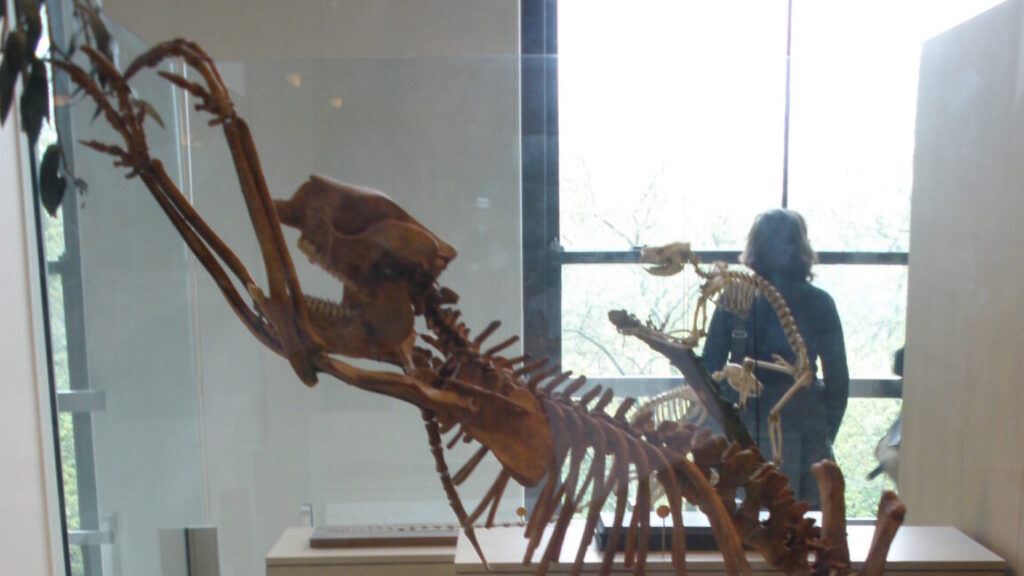
Several species of short-faced kangaroos, like this one, once lived in Australia. Some stood two meters tall, while others were less than half a meter tall. Credit: By Ghedoghedo – Own work, CC BY-SA 3.0, https://commons.wikimedia.org/w/index.php?curid=8398432

Australia’s First Peoples may or may not have hunted the continent’s megafauna to extinction, but they definitely collected fossils.

A team of archaeologists examined the fossilized leg bone of an extinct kangaroo and realized that instead of evidence of butchery, cut marks on the bone reveal an ancient attempt at fossil collecting. That leaves Australia with little evidence of First Peoples hunting or butchering the continent’s extinct megafauna—and reopens the question of whether humans were responsible for the die-off of that continent’s giant Ice Age marsupials.

Fossil hunting in the Ice Age

In the unsolved case of whether humans hunted Australia’s Ice Age megafauna to extinction, the key piece of evidence so far is a tibia (one of the bones of the lower leg) from an extinct short-faced kangaroo. Instead of hopping like their modern relatives, these extinct kangaroos walked on their hind legs, probably placing all their weight on the tips of single hoofed toes. This particular kangaroo wasn’t quite fully grown when it died, which happened sometime between 44,500 and 55,200 years ago, based on uranium-series dating of the thin layer of rock covering most of the fossils in Mammoth Cave (in what’s now Western Australia).

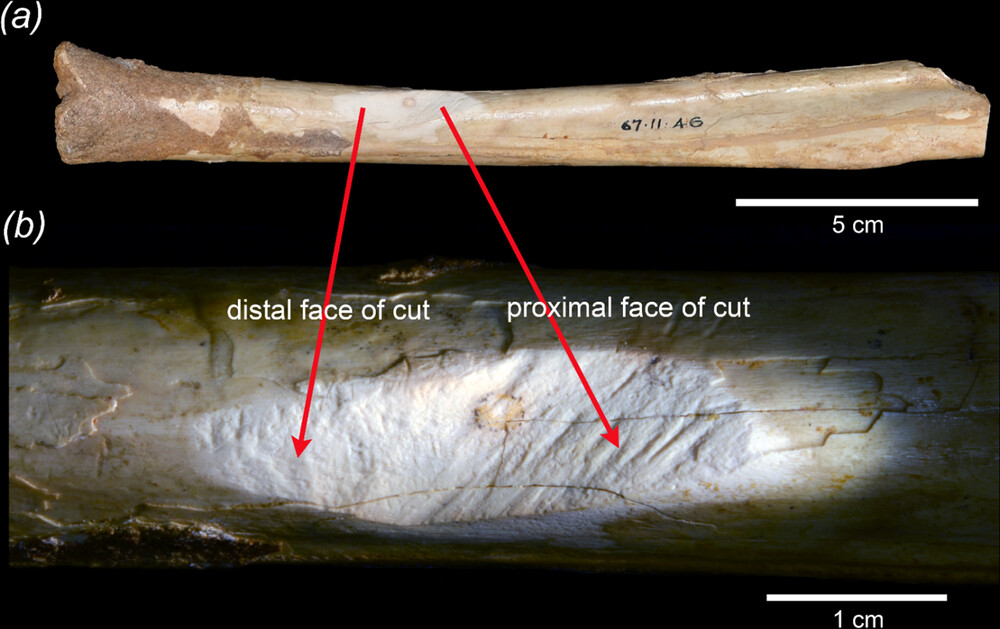
There’s a shallow, angled chunk cut out of the bone near one end. When archaeologists first noticed the cut in 1970 after carefully chipping away the crust of calcium carbonate that had formed over the bone, it looked like evidence that Pleistocene hunters had carved up the kangaroo to eat it. But in their recent paper, University of New South Wales archaeologist Michael Archer and his colleagues say that’s probably not what happened. Instead, they have a stranger idea: “We suggest here that the purpose of this effort may have been the retrieval of the fossils from the bone-rich late-Pleistocene deposit in Mammoth Cave after its discovery by First Peoples,” they wrote in their recent paper.

a photo of a fossil bone with a shallow chunk cut out of it

This close-up image shows the cut kangaroo bone and a micro-CT image of the surfaces of the cut. Credit: Archer et al. 2025

The world used to be so much weirder

Based on the available archaeological evidence, it looks like people first set foot on Australia sometime around 65,000 years ago. At the time, the continent was home to a bizarre array of giant marsupials, as well as flightless birds even bigger and scarier than today’s emus and cassowaries. For the next 20,000 years, Australia’s First Peoples shared the landscape with short-faced kangaroos; Zygomaturus trilobus, a hulking 500-kilogram marsupial that looked a little like a rhinoceros; and Diprotodon optatum, the largest marsupial that ever lived: a 3,000-kilogram behemoth that roamed in huge herds (picture a bear about the size of a bison with a woodchuck’s face).

These species died out sometime around 45,000 or 40,000 years ago; today, they live on in ancient rock art and stories, some of which seem to describe people interacting with now-extinct species.

Since they had shared the continent with humans for at least 20,000 years at that point, it doesn’t seem that the sudden arrival of humans caused an immediate mass extinction. But it’s possible that by hunting or even setting controlled fires, people may have put just enough strain on these megafauna species to make them vulnerable enough for the next climate upheaval to finish them off.

In some parts of the world, there’s direct evidence that Pleistocene people hunted or scavenged meat from the remains of now-extinct megafauna. Elsewhere, archaeologists are still debating whether humans, the inexorable end of the last Ice Age, or some combination of the two killed off the world’s great Ice Age giants. The interaction between people and their local ecosystems looked (and still looks) different everywhere, depending on culture, environment, and a host of other factors.

The jury is still out on what killed the megafauna in Australia because the evidence we need either hasn’t survived the intervening millennia or still lies buried somewhere, waiting to be found and studied. For decades, the one clear bit of evidence has seemed to be the Mammoth Cave short-faced kangaroo tibia. But Archer and his colleagues argue that even that isn’t a smoking gun.

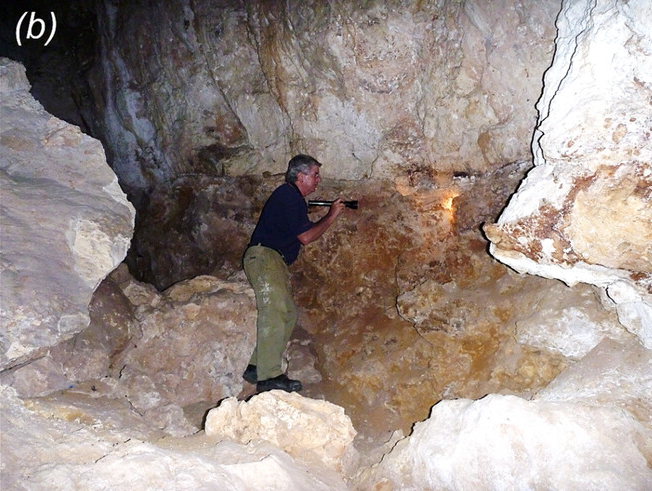
An man in khakis and a dark blue shirt studies a cave wall.

An archaeologist examines a fossil deposit in the wall of Mammoth Cave, in Western Australia. 50,000 years ago, one of the earliest people on the continent may also have stood here contemplating the fossils. Credit: Archer et al. 2025

Evidence of rock collecting, not butchery

For one thing, the researchers argue that the kangaroo had been dead for a very long time when the cut was made. Nine long, thin cracks run along the length of the tibia, formed when the bone dried and shrank. And in the cut section, there’s a short crack running across the width of the bone—but it stops at either end when it meets the long cracks from the bone’s drying. That suggests the bone had already dried and shrunk, leaving those long cracks before the cut was made. It may have just been a very old bone, or it may have already begun to fossilize, but the meat would have been long gone, leaving behind a bone sticking out of the cave wall.

Since there’s no mark or dent on the opposite side of the bone from the cut (which would have happened if it were lying on the ground being butchered), it was probably sticking out of the fossil bed in the cave wall when someone came along and tried to cut it free. And since a crust of calcium carbonate had time to form over the cut (it covers most of the fossils in Mammoth Cave like a rocky burial shroud), that must have happened at least 44,000 years ago.

That leaves us with an interesting mental image: a member of one of Australia’s First Peoples, 45,000 years ago, exploring a cave filled with the bones of fantastical, long-dead animals. This ancient caver finds a bone sticking out from the cave wall and tries to hack the protruding end free—twice, from different angles—before giving up and leaving it in place.

People have always collected cool rocks

We can’t know for sure why this long-ago person wanted the bone in the first place. (Did it have a religious purpose? Might it have made a good tool? Was it just a cool souvenir?) We also don’t know why they gave up their attempt. But if Archer and his colleagues are right, the bone leaves Australia without any clear evidence that ancient people hunted—or even scavenged food from the remains of—extinct Pleistocene megafauna like short-faced kangaroos.

“This is not to say that it did not happen, just that there is now no hard evidence to support that it did,” Archer and his colleagues wrote in their recent paper. We don’t yet know exactly how Australia’s First Peoples interacted with these species.

But whether Archer and his colleagues are correct in their analysis of this particular kangaroo bone or not, humans around the world have been picking up fossils for at least tens of thousands of years. There’s evidence that people in Australia have collected and traded the fossils of extinct animals for pretty much as long as people have been in Australia, including everything from trilobites to Zygomaturus teeth and the jawbones of other extinct marsupials.

“What we can conclude,” Archer and his colleagues wrote, “is that the first people in Australia who demonstrated a keen interest in and collected fossils were First Peoples, probably thousands of years before Europeans set foot on that continent.”

Royal Society Open Science, 2025. DOI: 10.1098/rsos.250078  (About DOIs).

Photo of Kiona N. Smith

Kiona is a freelance science journalist and resident archaeology nerd at Ars Technica.

The first people to set foot in Australia were fossil hunters Read More »

megafauna-was-the-meat-of-choice-for-south-american-hunters

Megafauna was the meat of choice for South American hunters

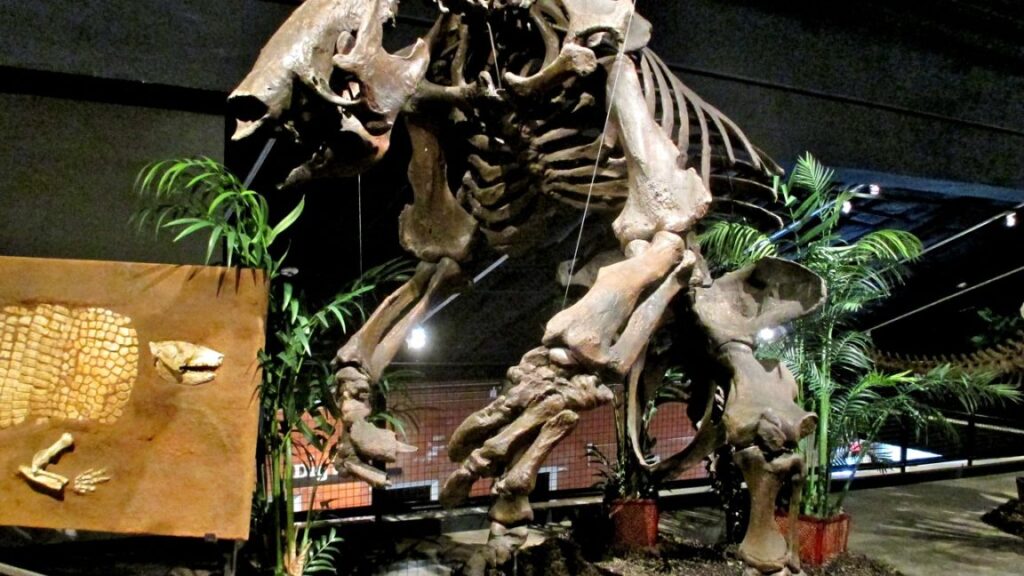
And that makes perfect sense, because when you reduce hunters’ choices to simple math using what’s called the prey choice model (more on that below), these long-lost species offered bigger returns for the effort of hunting. In other words, giant sloths are extinct because they were delicious and made of meat.

Yup, it’s humanity’s fault—again

As the last Ice Age drew to a close, the large animals that had once dominated the world’s chilly Pleistocene landscapes started to vanish. Mammoths, saber-toothed tigers, and giant armadillos died out altogether. Other species went locally extinct; rhinoceroses no longer stomped around southern Europe, and horses disappeared from the Americas until European colonists brought new species with them thousands of years later.

Scientists have been arguing about how much of that was humanity’s fault for quite a while.

Most of the blame goes to the world’s changing climate; habitats shifted as the world mostly got warmer and wetter. But, at least in some places, humans may have sped the process along, either by hunting the last of the Pleistocene megafauna to extinction or just by shaking up the rest of the ecosystem so much that it was all too ready to collapse, taking the biggest species down with it.

It looks, at first glance, like South America’s late Ice Age hunters are safely not guilty. For one thing, the megafauna didn’t start dying out until thousands of years after humans first set foot in the region. Archaeologists also haven’t found many sites that contain both traces of human activity and the bones of extinct horses, giant armadillos, or other megafauna. And at those few sites, megafauna bones made up only a small percentage of the contents of ancient scrap piles. Not enough evidence places us at the crime scene, in other words—or so it seems.

On the other hand, the Ice Age megafauna began dying out in South America around 13,000 years ago, roughly the same time that a type of projectile point called the fishtail appeared. That may not be a coincidence, argued one study. And late last year, another study showed that farther north, in what’s now the United States, Clovis people’s diets contained mammoth amounts of… well, mammoth.

Megafauna was the meat of choice for South American hunters Read More »

incan-numerical-recordkeeping-system-may-have-been-widely-used

Incan numerical recordkeeping system may have been widely used

Women in STEM: Inca Edition

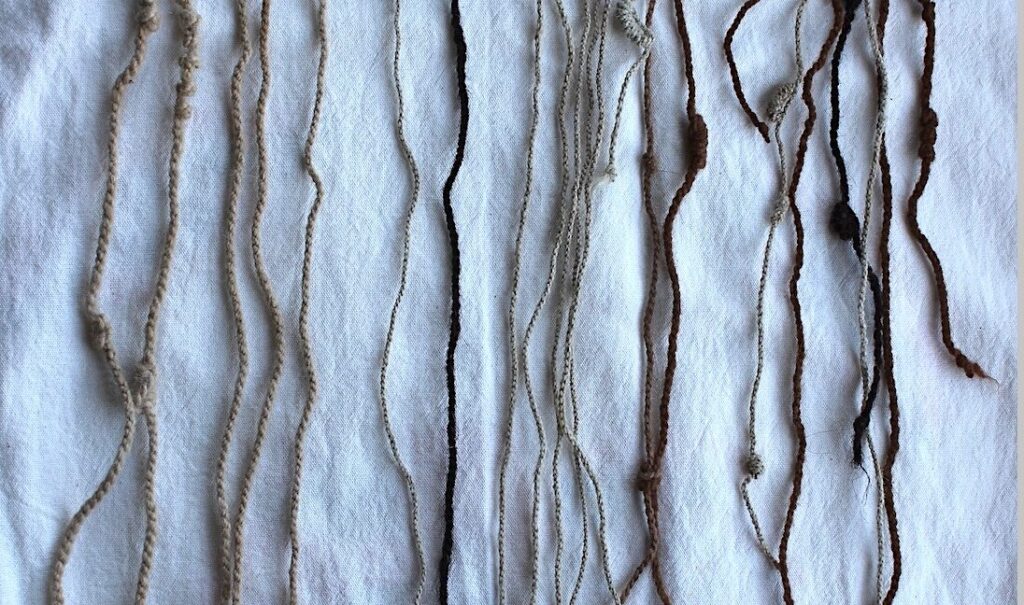
In the late 1500s, a few decades after the khipu in this recent study was made, an Indigenous chronicler named Guaman Poma de Ayala described how older women used khipu to “keep track of everything” in aqllawasai: places that basically functioned as finishing schools for Inca girls. Teenage girls, chosen by local nobles, were sent away to live in seclusion at the aqllawasai to weave cloth, brew chicha, and prepare food for ritual feasts.

What happened to the girls after aqllawasai graduation was a mixed bag. Some of them were married (or given as concubines) to Inca nobles, others became priestesses, and some ended up as human sacrifices. But some of them actually got to go home again, and they probably took their knowledge of khipu with them.

“I think this is the likely way in which khipu literacy made it into the countryside and the villages,” said Hyland. “These women, who were not necessarily elite, taught it to their children, etc.” That may be where the maker of KH0631 learned their skills: either in an aqllawasai or from a graduate of one (we still don’t know this particular khipu-maker’s gender).

Science confirming what they already knew”

The finely crafted khipu turning out to be the work of a commoner shows that numeracy was widespread and surprisingly egalitarian in the Inca empire, but it also reveals a centuries-long thread connecting the Inca and their descendants.

Modern people—the descendants of the Inca—still use khipu today in some parts of Peru and Chile. Some scholars (mostly non-Indigenous ones) have argued that these modern khipu weren’t really based on knowledge passed down for centuries but were instead just a clumsy attempt to copy the Inca technology. But if commoners were using khipu in the Inca empire, it makes sense for that knowledge to have been passed down to modern villagers.

“It points to a continuity between Inka and modern khipus,” said Hyland. “In the few modern villages with living khipu traditions, they already believe in this continuity, so it would be the case of science confirming what they already know.”

Science Advances, 2025. DOI: 10.1126/sciadv.adv1950  (About DOIs).

Incan numerical recordkeeping system may have been widely used Read More »

local-cuisine-was-on-the-menu-at-cafe-neanderthal

Local cuisine was on the menu at Cafe Neanderthal

Gazelle prepared “a la Amud,” or “a la Kebara”?

Neanderthals at Kebara had pretty broad tastes in meat. The butchered bones found in the cave were mostly an even mix of small ungulates (largely gazelle) and medium-sized ones (red deer, fallow deer, wild goats, and boar), with just a few larger game animals thrown in. And it looks like the Kebara Neanderthals were “use the whole deer” sorts of hunters because the bones came from all parts of the animals’ bodies.

On the other hand (or hoof), at Amud, archaeologists found that the butchered bones were almost entirely long bone shafts—legs, in other words—from gazelle. Apparently, the Neanderthal hunters at Amud focused more on gazelle than on larger prey like red deer or boar, and they seemingly preferred meat from the legs.

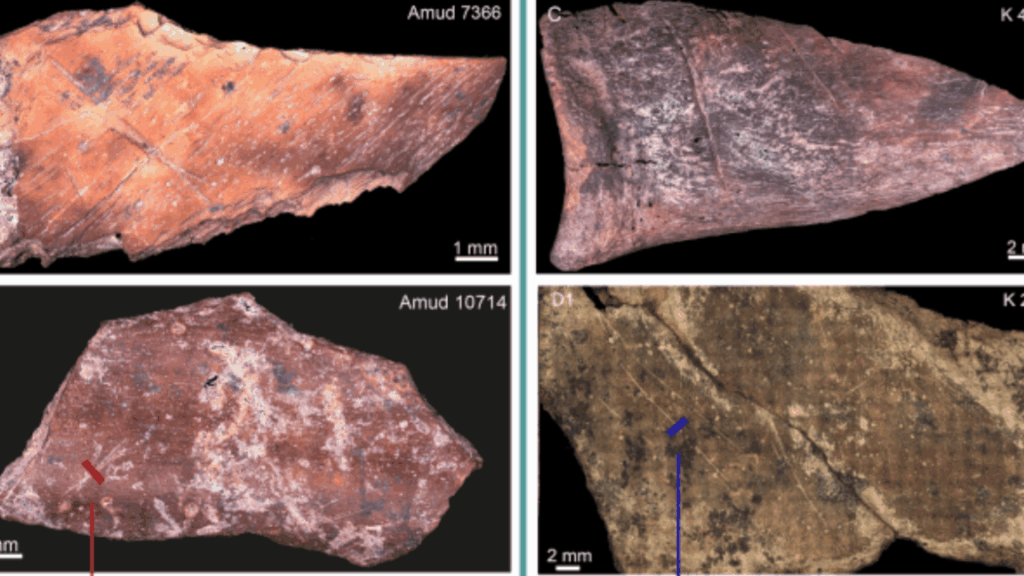
And not too fresh, apparently—the bones at Kebara showed fewer cut marks, and the marks that were there tended to be straighter. Meanwhile, at Amud, the bones were practically cluttered with cut marks, which crisscrossed over each other and were often curved, not straight. According to Jallon and her colleagues, the difference probably wasn’t a skill issue. Instead, it may be a clue that Neanderthals at Amud liked their meat dried, boiled, or even slightly rotten.

That’s based on comparisons to what bones look like when modern hunter-gatherers butcher their game, along with archaeologists’ experiments with stone tool butchery. First, differences in skill between newbie butchers and advanced ones don’t produce the same pattern of cut marks Jallon and her colleagues saw at Amud. But “it has been shown that decaying carcasses tend to be more difficult to process, often resulting in the production of haphazard, deep, and sinuous cut marks,” as Jallon and her colleagues wrote in their recent paper.

So apparently, for reasons unknown to modern archaeologists, the meat on the menu at Amud was, shall we say, a bit less fresh than that at Kebara. Said menu was also considerably less varied. All of that meant that if you were a Neanderthal from Amud and stopped by Kebara for dinner (or vice versa) your meal might seem surprisingly foreign.

Local cuisine was on the menu at Cafe Neanderthal Read More »

a-mammoth-tusk-boomerang-from-poland-is-40,000-years-old

A mammoth tusk boomerang from Poland is 40,000 years old

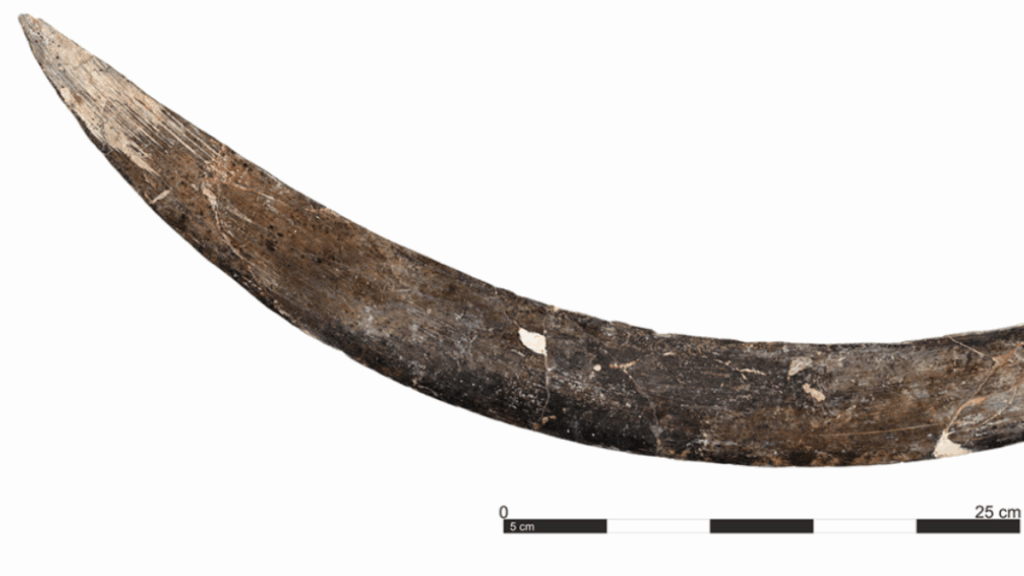
A boomerang carved from a mammoth tusk is one of the oldest in the world, and it may be even older than archaeologists originally thought, according to a recent round of radiocarbon dating.

Archaeologists unearthed the mammoth-tusk boomerang in Poland’s Oblazowa Cave in the 1990s, and they originally dated it to around 18,000 years old, which made it one of the world’s oldest intact boomerangs. But according to recent analysis by University of Bologna researcher Sahra Talamo and her colleagues, the boomerang may have been made around 40,000 years ago. If they’re right, it offers tantalizing clues about how people lived on the harsh tundra of what’s now Poland during the last Ice Age.

A boomerang carved from mammoth tusk

The mammoth-tusk boomerang is about 72 centimeters long, gently curved, and shaped so that one end is slightly more rounded than the other. It still bears scratches and scuffs from the mammoth’s life, along with fine, parallel grooves that mark where some ancient craftsperson shaped and smoothed the boomerang. On the rounded end, a series of diagonal marks would have made the weapon easier to grip. It’s smoothed and worn from frequent handling: the last traces of the life of some Paleolithic hunter.

Based on experiments with a replica, the Polish mammoth boomerang flies smoothly but doesn’t return, similar to certain types of Aboriginal Australian boomerangs. In fact, it looks a lot like a style used by Aboriginal people from Queensland, Australia, but that’s a case of people in different times and places coming up with very similar designs to fit similar needs.

But critically, according to Talamo and her colleagues, the boomerang is about 40,000 years old.

That’s a huge leap from the original radiocarbon date, made in 1996, which was based on a sample of material from the boomerang itself and estimated an age of 18,000 years. But Talamo and her colleagues claim that original date didn’t line up well with the ages of other nearby artifacts from the same layer of the cave floor. That made them suspect that the boomerang sample may have gotten contaminated by modern carbon somewhere along the way, making it look younger. To test the idea, the archaeologists radiocarbon dated samples from 13 animal bones—plus one from a human thumb—unearthed from the same layer of cave floor sediment as the boomerang.

A mammoth tusk boomerang from Poland is 40,000 years old Read More »

studies-pin-down-exactly-when-humans-and-neanderthals-swapped-dna

Studies pin down exactly when humans and Neanderthals swapped DNA


We may owe our tiny sliver of Neanderthal DNA to just a couple of hundred Neanderthals.

The artist’s illustration shows what the six people buried at the Ranis site, who lived between 49, 500 and 41,000 years ago, may have looked like. Two of these people are mother and daughter, and the mother is a distant cousin (or perhaps a great-great-grandparent or great-great-grandchild) to a woman whose skull was found 130 kilometers away in what’s now Czechia. Credit: Sumer et al. 2024

Two recent studies suggest that the gene flow (as the young people call it these days) between Neanderthals and our species happened during a short period sometime between 50,000 and 43,500 years ago. The studies, which share several co-authors, suggest that our torrid history with Neanderthals may have been shorter than we thought.

Pinpointing exactly when Neanderthals met H. sapiens  

Max Planck Institute of Evolutionary Anthropology scientist Leonardo Iasi and his colleagues examined the genomes of 59 people who lived in Europe between 45,000 and 2,200 years ago, plus those of 275 modern people whose ancestors hailed from all over the world. The researchers cataloged the segments of Neanderthal DNA in each person’s genome, then compared them to see where those segments appeared and how that changed over time and distance. This revealed how Neanderthal ancestry got passed around as people spread around the world and provided an estimate of when it all started.

“We tried to compare where in the genomes these [Neanderthal segments] occur and if the positions are shared among individuals or if there are many unique segments that you find [in people from different places],” said University of California Berkeley geneticist Priya Moorjani in a recent press conference. “We find the majority of the segments are shared, and that would be consistent with the fact that there was a single gene flow event.”

That event wasn’t quite a one-night stand; in this case, a “gene flow event” is a period of centuries or millennia when Neanderthals and Homo sapiens must have been in close contact (obviously very close, in some cases). Iasi and his colleagues’ results suggest that happened between 50,500 and 43,000 years ago. But it’s quite different from our history with another closely related hominin species, the now-extinct Denisovans, with whom different Homo sapiens groups met and mingled at least twice on our way to taking over the world.

In a second study, Arev Sümer (also of the Max Planck Institute) and her colleagues found something very similar in the genomes of people who lived 49,500 to 41,000 years ago in what’s now the area around Ranis, Germany. The Ranis population, based on how their genomes compare to other ancient and modern people, seem to have been part of one of the first groups to split off from the wave of humans who migrated out of Africa, through the Levant, and into Eurasia sometime around 50,000 years ago. They carried with them traces of what their ancestors had gotten up to during that journey: about 2.9 percent of their genomes were made up of segments of Neanderthal ancestry.

Based on how long the Ranis people’s segments of Neanderthal DNA were (longer chunks of Neanderthal ancestry tend to point to more recent mixing), the interspecies mingling happened about 80 generations, or about 2,300 years, before the Ranis people lived and died. That’s about 49,000 to 45,000 years ago. The dates from both studies line up well with each other and with archaeological evidence that points to when Neanderthal and Homo sapiens cultures overlapped in parts of Europe and Asia.

What’s still not clear is whether that period of contact lasted the full 5,000 to 7,000 years, or if, as Johannes Krause (also of the Max Planck Institute) suggests, it was only a few centuries—1,500 years at the most—that fell somewhere within that range of dates.

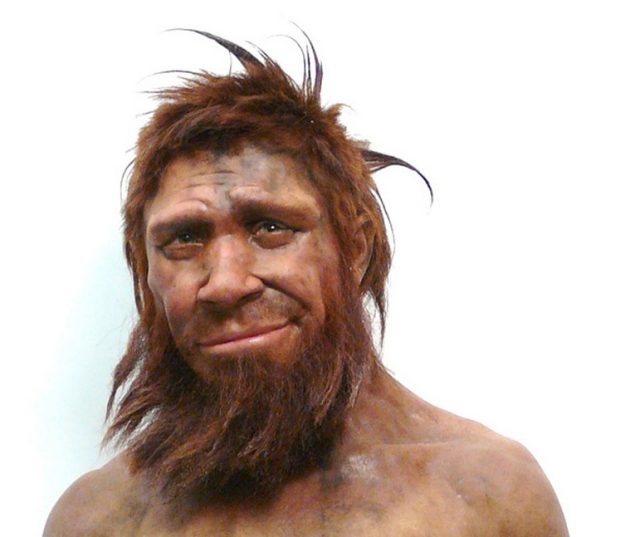
Artist’s depiction of a Neanderthal.

Natural selection worked fast on our borrowed Neanderthal DNA

Once those first Homo sapiens in Eurasia had acquired their souvenir Neanderthal genes (forget stealing a partner’s hoodie; just take some useful segments of their genome), natural selection got to work on them very quickly, discarding some and passing along others, so that by about 100 generations after the “event,” the pattern of Neanderthal DNA segments in people’s genomes looked a lot like it does today.

Iasi and his colleagues looked through their catalog of genomes for sections that contained more (or less) Neanderthal ancestry than you’d expect to find by random chance—a pattern that suggests that natural selection has been at work on those segments. Some of the segments that tended to include more Neanderthal gene variants included areas related to skin pigmentation, the immune response, and metabolism. And that makes perfect sense, according to Iasi.

“Neanderthals had lived in Europe, or outside of Africa, for thousands of years already, so they were probably adapted to their environment, climate, and pathogens,” said Iasi during the press conference. Homo sapiens were facing selective pressure to adapt to the same challenges, so genes that gave them an advantage would have been more likely to get passed along, while unhelpful ones would have been quick to get weeded out.

The most interesting questions remain unanswered

The Neanderthal DNA that many people carry today, the researchers argue, is a legacy from just 100 or 200 Neanderthals.

“The effective population size of modern humans outside Africa was about 5,000,” said Krause in the press conference. “And we have a ratio of about 50 to 1 in terms of admixture [meaning that Neanderthal segments account for about 2 percent of modern genomes in people who aren’t of African ancestry], so we have to say it was about 100 to maybe 200 Neanderthals roughly that mixed into the population.” Assuming Krause is right about that and about how long the two species stayed in contact, a Homo sapiens/Neanderthal pairing would have happened every few years.

So we know that Neanderthals and members of our species lived in close proximity and occasionally produced children for at least several centuries, but no artifacts, bones, or ancient DNA have yet revealed much of what that time, or that relationship, was actually like for either group of people.

The snippets of Neanderthal ancestry left in many modern genomes, and those of people who lived tens of thousands of years ago, don’t offer any hints about whether that handful of Neanderthal ancestors were mostly male or mostly female, which is something that could shed light on the cultural rules around such pairings. And nothing archaeologists have unearthed so far can tell us whether those pairings were consensual, whether they were long-term relationships or hasty flings, or whether they involved social relationships recognized by one (or both) groups. We may never have answers to those questions.

And where did it all happen? Archaeologists haven’t yet found a cave wall inscribed with “Og heart Grag,” but based on the timing, Neanderthals and Homo sapiens probably met and lived alongside each other for at least a few centuries, somewhere in “the Near East,” which includes parts of North Africa, the Levant, what’s now Turkey, and what was once Mesopotamia. That’s one of the key routes that people would have followed as they migrated from Africa into Europe and Asia, and the timing lines up with when we know that both Homo sapiens and Neanderthals were in the area.

“This [same] genetic admixture also appears in East Asia and Australia and the Americas and Europe,” said Krause. “If it would have happened in Europe or somewhere else, then the distribution would probably look different than what we see.”

Science, 2023 DOI: 10.1126/science.adq3010;

Nature, 2023 DOI: 10.1038/s41586-024-08420-x;

(About DOIs).

Photo of Kiona N. Smith

Kiona is a freelance science journalist and resident archaeology nerd at Ars Technica.

Studies pin down exactly when humans and Neanderthals swapped DNA Read More »

ancient-fish-trapping-network-supported-the-rise-of-maya-civilization

Ancient fish-trapping network supported the rise of Maya civilization

Harrison-Buck and her colleagues calculated that at its peak, the system could have produced enough fish each year to feed around 15,000 people. That’s based on modern estimates of how many kilograms of fish people eat every year, combined with measurements of how many kilograms of fish people in Zambia harvest with similar traps. Of course, people at Crooked Tree would have needed to preserve the fish somehow, probably by salting, drying, or smoking them.

“Fisheries were more than capable of supporting year-round sedentarism and the emergence of complex society characteristic of Pre-Columbian Maya civilization in this area,” write Harrison-Buck and her colleagues.

When we think about the Maya economy, we think of canal networks and ditched or terraced fields. In just one patch of what’s now Guatemala, a lidar survey revealed that Maya farmers drained thousands of acres of swampy wetland and built raised fields for maize, crossed by a grid of irrigation canals. To feed the ancient city of Holmul, the Maya turned a swamp into a breadbasket. But at least some of their precursors may have made it big on fish, not grain. The common feature, though, is an absolute lack of any chill whatsoever when it came to re-engineering whole landscapes to produce food.

This Google Earth image shows the area containing the ancient fishery.

Infrastructure built to last and last

From the ground, the channels that funneled fish into nearby ponds are nearly invisible today. But from above, especially during the dry season, they stand in stark contrast to the land around them, because vegetation grows rich and green in the moist soil at the base of the channels, even while everything around it dries up. That made aerial photography the perfect way to map them.

Ancient fish-trapping network supported the rise of Maya civilization Read More »

to-invent-the-wheel,-did-people-first-have-to-invent-the-spindle?

To invent the wheel, did people first have to invent the spindle?

It’s not so much that the spindle whorl was the direct evolutionary ancestor of the wheel, the way wolves were the ancestors of modern dogs. Instead, it was one of the first ways that people got really familiar, in a hands-on way, with the idea that you can attach something round to a stick and use it to turn one kind of motion into another. Pottery wheels, which emerged a bit later, work on the same general principle.

“I don’t jump to saying, ‘Okay, spindle whorls are [cart] wheels,” Yashuv tells Ars. “In many studies of the invention of the wheel, they’re talking about sledges and all sorts of things that are focused on the function of transportation—which is correct. I’m just adding another layer: the foundation of the mechanical principle.”

Once that mechanical principle was firmly embedded in humanity’s collective stash of knowledge, it was a matter of time (a few thousand years) before people looked at animal-drawn sledges, then looked at their pottery wheels and spindles, and put two and two together and got a cart with wheels—or at least, that’s Yashuv’s hypothesis. She and Grosman aren’t the first to suggest something similar; early 20th-century archaeologist Gordon V. Childe suggested that most of the major inventions of the Industrial Revolution were just new applications of much older rotary devices.

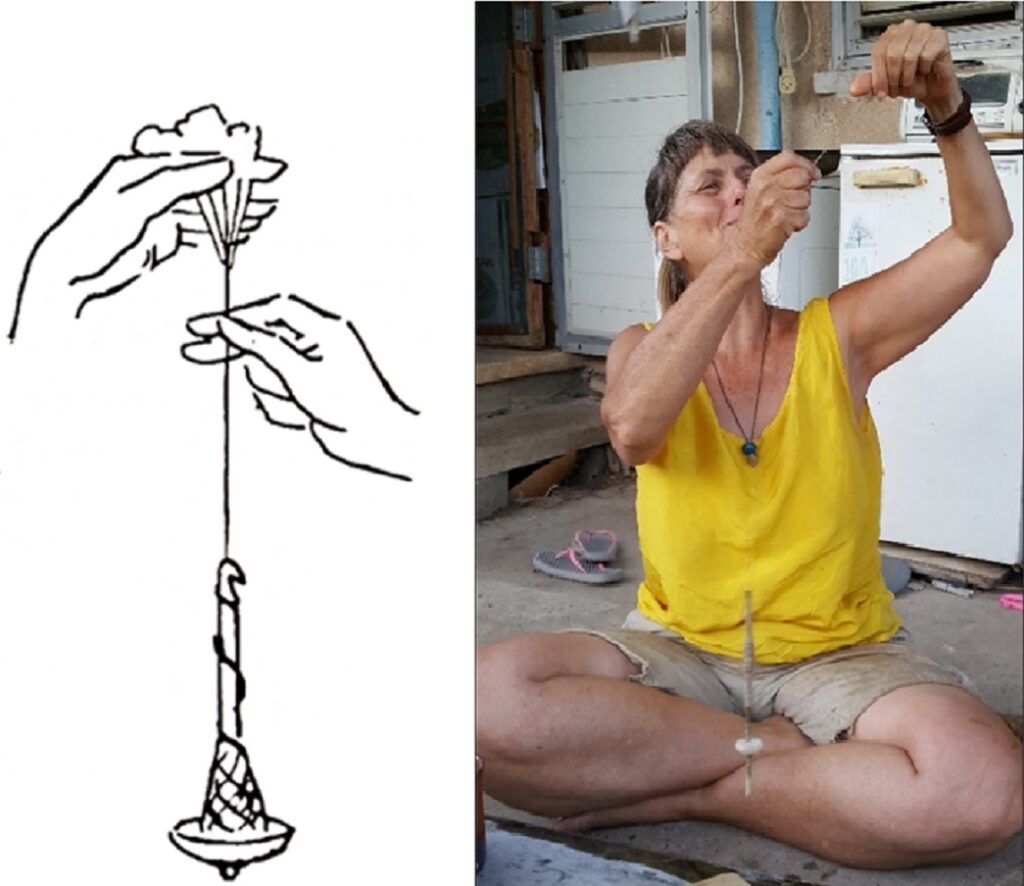
on the left, a diagram of two hands using a drop spindle. On the right, a woman in a yellow shirt spins thread with a drop spindle.

Spinner Yonit Kristal tests a replica of a spindle from the 12,000-year-old village. Credit: Yashuv and Grosman 2024

A village of prehistoric innovators?

Exactly how long people have understood (and made use of) the whole circle-on-a-stick concept is still an open question. Nahal Ein-Gev II is the oldest site with evidence of drop spindles that archaeologists have found so far, but Yashuv says the villagers there probably weren’t the first to invent the concept. They just happened to make their spindle whorls out of rocks with holes drilled in them, leaving a clear trace in the archaeological record.

Modern spindle whorls are often made of wood—either a disc or an X-shaped pair of arms. The trouble with wood, especially in small pieces, is that it’s not very likely to survive thousands of years (although that’s not impossible), so wooden spindle whorls from a site as old as Nahal Ein-Gev II are invisible to archaeologists. In some cultures, spinners might even tie a rock (or even a potato—no joke) to the end of their fibers in lieu of a spindle. Those rocks lack the telltale drill holes that let Yashuv and Grosman recognize the stone spindle whorls at Nahal Ein-Gev II, so they’re also invisible to archaeologists; they just look like rocks. Nahal Ein-Gev II is just the oldest place that recognizable spindle whorls happen to have survived.

To invent the wheel, did people first have to invent the spindle? Read More »