ai action plan

us-government-agency-drops-grok-after-mechahitler-backlash,-report-says

US government agency drops Grok after MechaHitler backlash, report says

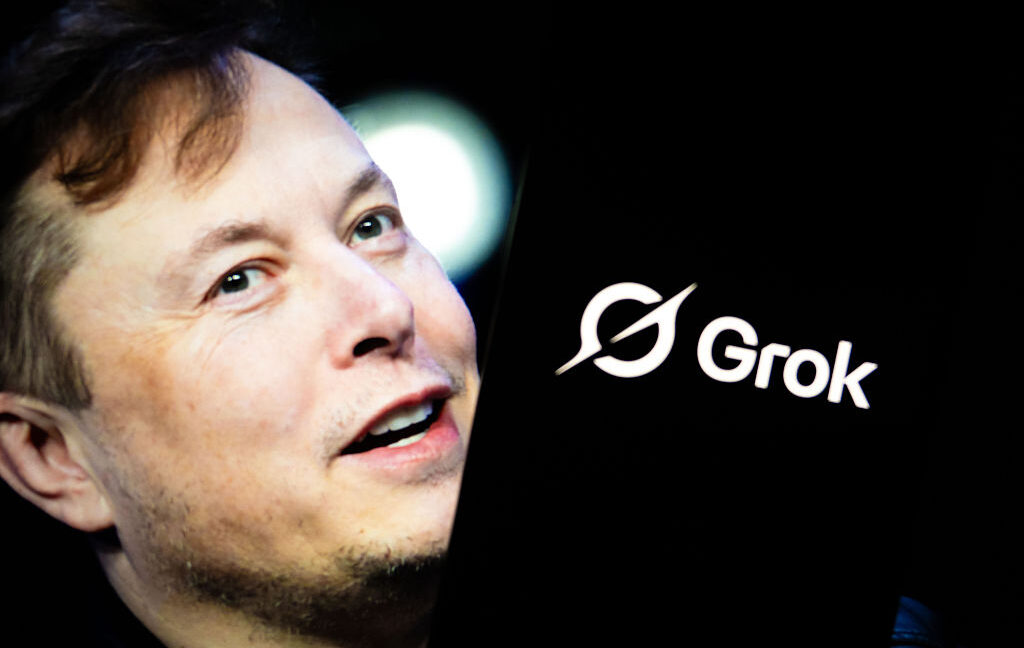
xAI apparently lost a government contract after a tweak to Grok’s prompting triggered an antisemitic meltdown where the chatbot praised Hitler and declared itself MechaHitler last month.

Despite the scandal, xAI announced that its products would soon be available for federal workers to purchase through the General Services Administration. At the time, xAI claimed this was an “important milestone” for its government business.

But Wired reviewed emails and spoke to government insiders, which revealed that GSA leaders abruptly decided to drop xAI’s Grok from their contract offering. That decision to pull the plug came after leadership allegedly rushed staff to make Grok available as soon as possible following a persuasive sales meeting with xAI in June.

It’s unclear what exactly caused the GSA to reverse course, but two sources told Wired that they “believe xAI was pulled because of Grok’s antisemitic tirade.”

As of this writing, xAI’s “Grok for Government” website has not been updated to reflect GSA’s supposed removal of Grok from an offering that xAI noted would have allowed “every federal government department, agency, or office, to access xAI’s frontier AI products.”

xAI did not respond to Ars’ request to comment and so far has not confirmed that the GSA offering is off the table. If Wired’s report is accurate, GSA’s decision also seemingly did not influence the military’s decision to move forward with a $200 million xAI contract the US Department of Defense granted last month.

Government’s go-to tools will come from xAI’s rivals

If Grok is cut from the contract, that would suggest that Grok’s meltdown came at perhaps the worst possible moment for xAI, which is building the “world’s biggest supercomputer” as fast as it can to try to get ahead of its biggest AI rivals.

Grok seemingly had the potential to become a more widely used tool if federal workers opted for xAI’s models. Through Donald Trump’s AI Action Plan, the president has similarly emphasized speed, pushing for federal workers to adopt AI as quickly as possible. Although xAI may no longer be involved in that broad push, other AI companies like OpenAI, Anthropic, and Google have partnered with the government to help Trump pull that off and stand to benefit long-term if their tools become entrenched in certain agencies.

US government agency drops Grok after MechaHitler backlash, report says Read More »
us-executive-branch-agencies-will-use-chatgpt-enterprise-for-just-$1-per-agency

US executive branch agencies will use ChatGPT Enterprise for just $1 per agency

OpenAI announced an agreement to supply more than 2 million workers for the US federal executive branch access to ChatGPT and related tools at practically no cost: just $1 per agency for one year.

The deal was announced just one day after the US General Services Administration (GSA) signed a blanket deal to allow OpenAI and rivals like Google and Anthropic to supply tools to federal workers.

The workers will have access to ChatGPT Enterprise, a type of account that includes access to frontier models and cutting-edge features with relatively high token limits, alongside a more robust commitment to data privacy than general consumers of ChatGPT get. ChatGPT Enterprise has been trialed over the past several months at several corporations and other types of large organizations.

The workers will also have unlimited access to advanced features like Deep Research and Advanced Voice Mode for a 60-day period. After the one-year trial period, the agencies are under no obligation to renew.

A limited deployment of ChatGPT for federal workers was already done via a pilot program with the US Department of Defense earlier this summer.

In a blog post, OpenAI heralded this announcement as an act of public service:

This effort delivers on a core pillar of the Trump Administration’s AI Action Plan by making powerful AI tools available across the federal government so that workers can spend less time on red tape and paperwork, and more time doing what they came to public service to do: serve the American people.

The AI Action Plan aims to expand AI-focused data centers in the United States while bringing AI tools to federal workers, ostensibly to improve efficiency.

US executive branch agencies will use ChatGPT Enterprise for just $1 per agency Read More »

states-take-the-lead-in-ai-regulation-as-federal-government-steers-clear

States take the lead in AI regulation as federal government steers clear

AI in health care

In the first half of 2025, 34 states introduced over 250 AI-related health bills. The bills generally fall into four categories: disclosure requirements, consumer protection, insurers’ use of AI, and clinicians’ use of AI.

Bills about transparency define requirements for information that AI system developers and organizations that deploy the systems disclose.

Consumer protection bills aim to keep AI systems from unfairly discriminating against some people and ensure that users of the systems have a way to contest decisions made using the technology.

Bills covering insurers provide oversight of the payers’ use of AI to make decisions about health care approvals and payments. And bills about clinical uses of AI regulate use of the technology in diagnosing and treating patients.

Facial recognition and surveillance

In the US, a long-standing legal doctrine that applies to privacy protection issues, including facial surveillance, is to protect individual autonomy against interference from the government. In this context, facial recognition technologies pose significant privacy challenges as well as risks from potential biases.

Facial recognition software, commonly used in predictive policing and national security, has exhibited biases against people of color and consequently is often considered a threat to civil liberties. A pathbreaking study by computer scientists Joy Buolamwini and Timnit Gebru found that facial recognition software poses significant challenges for Black people and other historically disadvantaged minorities. Facial recognition software was less likely to correctly identify darker faces.

Bias also creeps into the data used to train these algorithms, for example when the composition of teams that guide the development of such facial recognition software lack diversity.

By the end of 2024, 15 states in the US had enacted laws to limit the potential harms from facial recognition. Some elements of state-level regulations are requirements on vendors to publish bias test reports and data management practices, as well as the need for human review in the use of these technologies.

States take the lead in AI regulation as federal government steers clear Read More »

trump’s-order-to-make-chatbots-anti-woke-is-unconstitutional,-senator-says

Trump’s order to make chatbots anti-woke is unconstitutional, senator says


Trump plans to use chatbots to eliminate dissent, senator alleged.

The CEOs of every major artificial intelligence company received letters Wednesday urging them to fight Donald Trump’s anti-woke AI order.

Trump’s executive order requires any AI company hoping to contract with the federal government to jump through two hoops to win funding. First, they must prove their AI systems are “truth-seeking”—with outputs based on “historical accuracy, scientific inquiry, and objectivity” or else acknowledge when facts are uncertain. Second, they must train AI models to be “neutral,” which is vaguely defined as not favoring DEI (diversity, equity, and inclusion), “dogmas,” or otherwise being “intentionally encoded” to produce “partisan or ideological judgments” in outputs “unless those judgments are prompted by or otherwise readily accessible to the end user.”

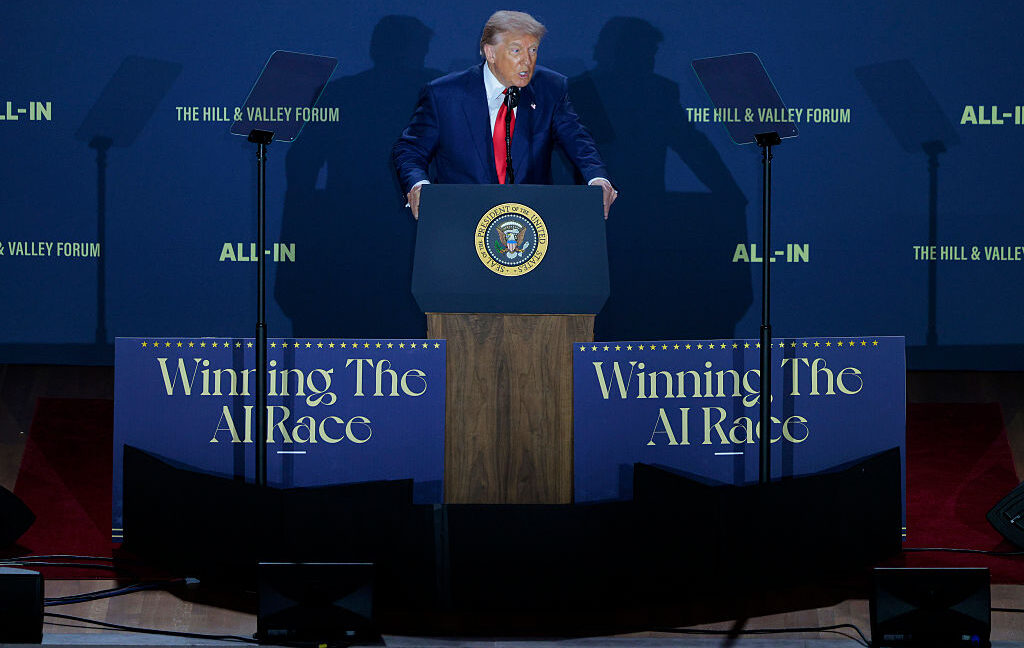
Announcing the order in a speech, Trump said that the US winning the AI race depended on removing allegedly liberal biases, proclaiming that “once and for all, we are getting rid of woke.”

“The American people do not want woke Marxist lunacy in the AI models, and neither do other countries,” Trump said.

Senator Ed Markey (D.-Mass.) accused Republicans of basing their policies on feelings, not facts, joining critics who suggest that AI isn’t “woke” just because of a few “anecdotal” outputs that reflect a liberal bias. And he suggested it was hypocritical that Trump’s order “ignores even more egregious evidence” that contradicts claims that AI is trained to be woke, such as xAI’s Elon Musk explicitly confirming that Grok was trained to be more right-wing.

“On May 1, 2025, Grok—the AI chatbot developed by xAI, Elon Musk’s AI company—acknowledged that ‘xAI tried to train me to appeal to the right,’” Markey wrote in his letters to tech giants. “If OpenAI’s ChatGPT or Google’s Gemini had responded that it was trained to appeal to the left, congressional Republicans would have been outraged and opened an investigation. Instead, they were silent.”

He warned the heads of Alphabet, Anthropic, Meta, Microsoft, OpenAI, and xAI that Trump’s AI agenda was allegedly “an authoritarian power grab” intended to “eliminate dissent” and was both “dangerous” and “patently unconstitutional.”

Even if companies’ AI models are clearly biased, Markey argued that “Republicans are using state power to pressure private companies to adopt certain political viewpoints,” which he claimed is a clear violation of the First Amendment. If AI makers cave, Markey warned, they’d be allowing Trump to create “significant financial incentives” to ensure that “their AI chatbots do not produce speech that would upset the Trump administration.”

“This type of interference with private speech is precisely why the US Constitution has a First Amendment,” Markey wrote, while claiming that Trump’s order is factually baseless.

It’s “based on the erroneous belief that today’s AI chatbots are ‘woke’ and biased against Trump,” Markey said, urging companies “to fight this unconstitutional executive order and not become a pawn in Trump’s effort to eliminate dissent in this country.”

One big reason AI companies may fight order

Some experts agreed with Markey that Trump’s order was likely unconstitutional or otherwise unlawful, The New York Times reported.

For example, Trump may struggle to convince courts that the government isn’t impermissibly interfering with AI companies’ protected speech or that such interference may be necessary to ensure federal procurement of unbiased AI systems.

Genevieve Lakier, a law professor at the University of Chicago, told the NYT that the lack of clarity around what makes a model biased could be a problem. Courts could deem the order an act of “unconstitutional jawboning,” with the Trump administration and Republicans generally perceived as using legal threats to pressure private companies into producing outputs that they like.

Lakier suggested that AI companies may be so motivated to win government contracts or intimidated by possible retaliation from Trump that they may not even challenge the order, though.

Markey is hoping that AI companies will refuse to comply with the order; however, despite recognizing that it places companies “in a difficult position: Either stand on your principles and face the wrath of the Trump administration or cave to Trump and modify your company’s political speech.”

There is one big possible reason that AI companies may have to resist, though.

Oren Etzioni, the former CEO of the AI research nonprofit Allen Institute for Artificial Intelligence, told CNN that Trump’s anti-woke AI order may contradict the top priority of his AI Action Plan—speeding up AI innovation in the US—and actually threaten to hamper innovation.

If AI developers struggle to produce what the Trump administration considers “neutral” outputs—a technical challenge that experts agree is not straightforward—that could delay model advancements.

“This type of thing… creates all kinds of concerns and liability and complexity for the people developing these models—all of a sudden, they have to slow down,” Etzioni told CNN.

Senator: Grok scandal spotlights GOP hypocrisy

Some experts have suggested that rather than chatbots adopting liberal viewpoints, chatbots are instead possibly filtering out conservative misinformation and unintentionally appearing to favor liberal views.

Andrew Hall, a professor of political economy at Stanford Graduate School of Business—who published a May paper finding that “Americans view responses from certain popular AI models as being slanted to the left”—told CNN that “tech companies may have put extra guardrails in place to prevent their chatbots from producing content that could be deemed offensive.”

Markey seemed to agree, writing that Republicans’ “selective outrage matches conservatives’ similar refusal to acknowledge that the Big Tech platforms suspend or impose other penalties disproportionately on conservative users because those users are disproportionately likely to share misinformation, rather than due to any political bias by the platforms.”

It remains unclear what amount of supposed bias detected in outputs could cause a contract bid to be rejected or an ongoing contract to be canceled, but AI companies will likely be on the hook to pay any fees in terminating contracts.

Complying with Trump’s order could pose a struggle for AI makers for several reasons. First, they’ll have to determine what’s fact and what’s ideology, contending with conflicting government standards in how Trump defines DEI. For example, the president’s order counts among “pervasive and destructive” DEI ideologies any outputs that align with long-standing federal protections against discrimination on the basis of race or sex. In addition, they must figure out what counts as “suppression or distortion of factual information about” historical topics like critical race theory, systemic racism, or transgenderism.

The examples in Trump’s order highlighting outputs offensive to conservatives seem inconsequential. He calls out image generators depicting the Pope, the Founding Fathers, and Vikings as not white as problematic, as well as models refusing to misgender a person “even if necessary to stop a nuclear apocalypse” or show white people celebrating their achievements.

It’s hard to imagine how these kinds of flawed outputs could impact government processes, as compared to, say, government contracts granted to models that could be hiding covert racism or sexism.

So far, there has been one example of an AI model displaying a right-wing bias earning a government contract with no red flags raised about its outputs.

Earlier this summer, Grok shocked the world after Musk announced he would be updating the bot to eliminate a supposed liberal bias. The unhinged chatbot began spouting offensive outputs, including antisemitic posts that praised Hitler as well as proclaiming itself “MechaHitler.”

But those obvious biases did not conflict with the Pentagon’s decision to grant xAI a $200 million federal contract. In a statement, a Pentagon spokesperson insisted that “the antisemitism episode wasn’t enough to disqualify” xAI, NBC News reported, partly since “several frontier AI models have produced questionable outputs.”

The Pentagon’s statement suggested that the government expected to deal with such risks while seizing the opportunity of rapidly deploying emerging AI technology into government prototype processes. And perhaps notably, Trump provides a carveout for any agencies using AI models to safeguard national security, which could exclude the Pentagon from experiencing any “anti-woke” delays in accessing frontier models.

But that won’t help other agencies that must figure out how to assess models to meet anti-woke AI requirements over the next few months. And those assessments could cause delays that Trump may wish to avoid in pushing for widespread AI adoption across government.

Trump’s anti-woke AI agenda may be impossible

On the same day that Trump issued his anti-woke AI order, his AI Action Plan promised an AI “renaissance” fueling “intellectual achievements” by “unraveling ancient scrolls once thought unreadable, making breakthroughs in scientific and mathematical theory, and creating new kinds of digital and physical art.”

To achieve that, the US must “innovate faster and more comprehensively than our competitors” and eliminate regulatory barriers impeding innovation in order to “set the gold standard for AI worldwide.”

However, achieving the anti-woke ambitions of both orders raises a technical problem that even the president must accept currently has no solution. In his AI Action Plan, Trump acknowledged that “the inner workings of frontier AI systems are poorly understood,” with even “advanced technologists” unable to explain “why a model produced a specific output.”

Whether requiring AI companies to explain their AI outputs to win government contracts will mess with other parts of Trump’s action plan remains to be seen. But Samir Jain, vice president of policy at a civil liberties group called the Center for Democracy and Technology, told the NYT that he predicts the anti-woke AI agenda will set “a really vague standard that’s going to be impossible for providers to meet.”

Photo of Ashley Belanger

Ashley is a senior policy reporter for Ars Technica, dedicated to tracking social impacts of emerging policies and new technologies. She is a Chicago-based journalist with 20 years of experience.

Trump’s order to make chatbots anti-woke is unconstitutional, senator says Read More »

openai-declares-ai-race-“over”-if-training-on-copyrighted-works-isn’t-fair-use

OpenAI declares AI race “over” if training on copyrighted works isn’t fair use

OpenAI is hoping that Donald Trump’s AI Action Plan, due out this July, will settle copyright debates by declaring AI training fair use—paving the way for AI companies’ unfettered access to training data that OpenAI claims is critical to defeat China in the AI race.

Currently, courts are mulling whether AI training is fair use, as rights holders say that AI models trained on creative works threaten to replace them in markets and water down humanity’s creative output overall.

OpenAI is just one AI company fighting with rights holders in several dozen lawsuits, arguing that AI transforms copyrighted works it trains on and alleging that AI outputs aren’t substitutes for original works.

So far, one landmark ruling favored rights holders, with a judge declaring AI training is not fair use, as AI outputs clearly threatened to replace Thomson-Reuters’ legal research firm Westlaw in the market, Wired reported. But OpenAI now appears to be looking to Trump to avoid a similar outcome in its lawsuits, including a major suit brought by The New York Times.

“OpenAI’s models are trained to not replicate works for consumption by the public. Instead, they learn from the works and extract patterns, linguistic structures, and contextual insights,” OpenAI claimed. “This means our AI model training aligns with the core objectives of copyright and the fair use doctrine, using existing works to create something wholly new and different without eroding the commercial value of those existing works.”

Providing “freedom-focused” recommendations on Trump’s plan during a public comment period ending Saturday, OpenAI suggested Thursday that the US should end these court fights by shifting its copyright strategy to promote the AI industry’s “freedom to learn.” Otherwise, the People’s Republic of China (PRC) will likely continue accessing copyrighted data that US companies cannot access, supposedly giving China a leg up “while gaining little in the way of protections for the original IP creators,” OpenAI argued.

OpenAI declares AI race “over” if training on copyrighted works isn’t fair use Read More »