Author name: Mike M.

meta-cto-says-quest-3-announcement-timing-had-‘nothing-to-do-with-vision-pro’

Meta CTO Says Quest 3 Announcement Timing Had ‘Nothing to do with Vision Pro’

Meta CTO Andrew “Boz” Bosworth said this week that the announcement of Quest 3, which came just days ahead of Vision Pro reveal, had nothing to do with the timing of Apple’s first public foray into XR.

“People won’t believe me, I don’t care—I’m telling the truth, you can believe me or not, that’s up to you […],” Bosworth began in a Q&A hosted on Instagram this week in response to a question about the curious timing of Quest 3’s announcement, which came just days ahead of the reveal of Apple Vision Pro. He continued:

What we found out… especially last year… is that when we announce a new headset in September/October, a lot of people—especially when you already have headsets out in market—a lot of people have already made buying decisions in the summertime, or they’re kind of committed to a path, so you’re not capturing the full holiday season.

So we sent a note to [Meta CEO Mark Zuckerberg] long before we even knew about WWDC timing or substance, saying ‘hey for Quest 3 we want to announce it early, so that people know it’s coming, so they can plan well in advance of the holiday season what they want to do’.

So that was our plan from a long time ago, and the timing worked out unbelievably well [laughs]. I’m not mad about it… I’m not saying I’m mad about it, I’m just saying that was the plan that we developed in terms of go-to-market, and it had nothing to do with [Vision Pro].

The announcement of Quest 3—which came four days before Apple’s Vision Pro reveal—was certainly curious as far as the company’s prior patterns. Compared to the kind of formal announcement we’ve seen, the new headset was first teased and then revealed on social media through Mark Zuckerberg’s feeds. Even when more formal information was shared shortly thereafter, the company didn’t share the headset’s full specs, instead promising more details to come at the annual XR event, Meta Connect, which wouldn’t be held for nearly four more months.

Regardless, Bosworth maintains the Quest 3 announcement was decided well before the company knew what Apple would reveal or when.

Bosworth, who heads Meta’s XR division, Reality Labs, also answered some other questions about Apple Vision Pro during the Q&A.

Q: Thoughts on Apple’s decision to have attached battery pack rather than all-in-one headset?

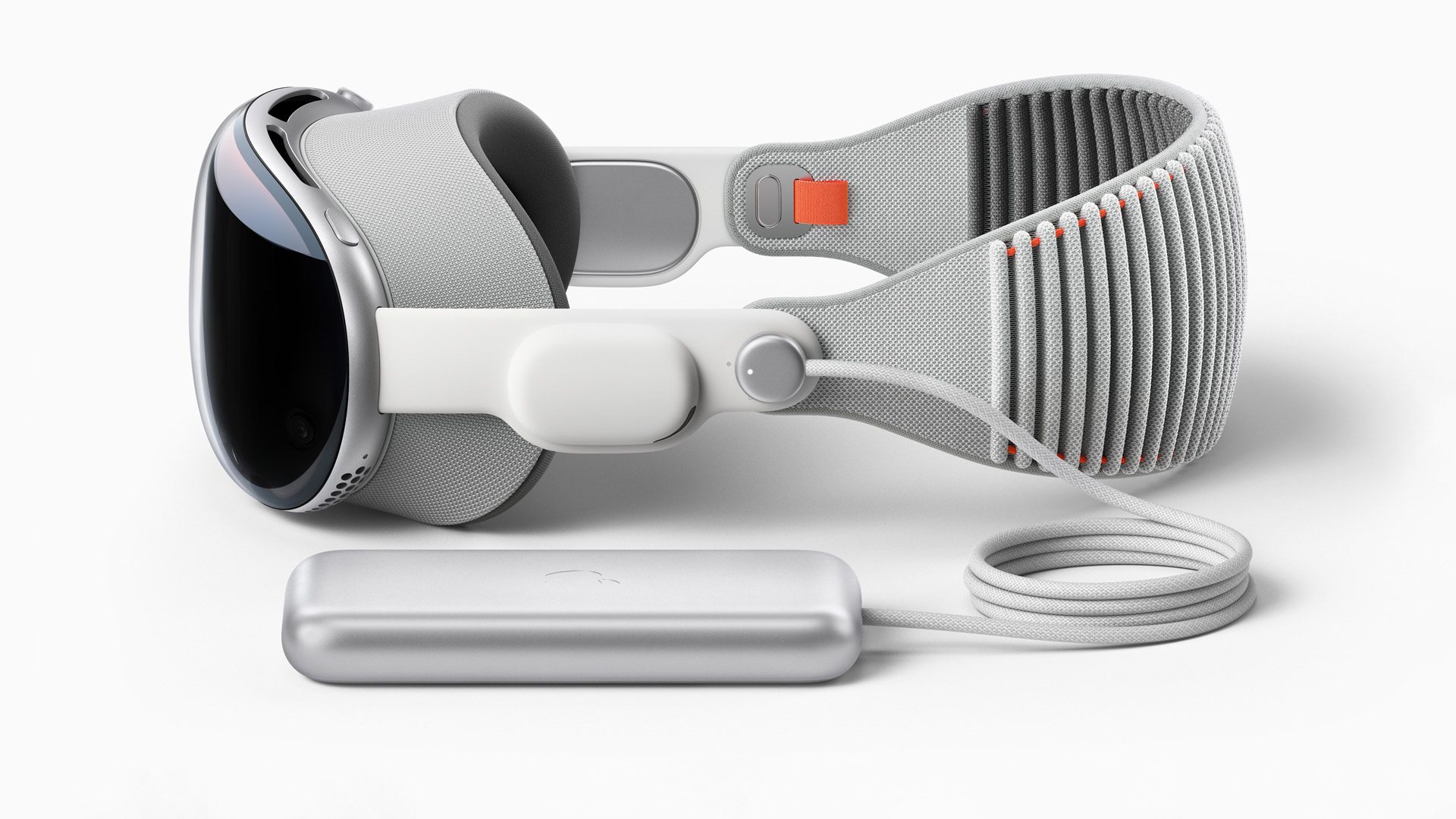
A: At some point these headsets are a physics problem. You can spend your thermals and your weight one way, or another way, but at some point the equation has to square. [Apple’s] headset, I think, is roughly in the same ballpark of weight as our headsets, and they wanted to have this battery life, so they wanted to go external with [the battery]. It doesn’t matter who you are, what company you are, who you work for… physics is a uniform belligerent to this space. We’re making progress hand-over-fist as an industry; I think Apple’s entry is going to help with that a lot. But yeah, you have to square the circle somehow, and they had to do it with an external battery pack and a cord.

Q: How does the Vision Pro change Meta’s roadmap?

A: Andy Grove—famous Intel CEO and kind of godfather of Silicon Valley—always used to say “only the paranoid survive,” and we try to embody that. You try to approach your work with a lot of humility. Whenever a great competitor comes out, whether it be the Pico, whether it be Apple Vision Pro, certainly; you’re trying to look and see, what did they do differently, and why? What did we miss? Did we get it wrong, or did they figure something out? So you try to learn from it. And then be humble about it. At the same time, you can’t constantly be chasing every competitor because then you’re getting thrown off your own game. You’re getting thrown off what you can uniquely do and what you’ve done right, and that they need to learn from. In our case I think we’ve got a great ecosystem, we’ve got a great set of devices, we’ve got a great price point. So it’s a balance to try to learn from them and not over-rotate on that. Nothing that we hadn’t looked at before […] we were focusing on gaze and touch for AR as well—it’s a natural AR interaction—is that something that needs to get more priority in VR? Not sure yet. So we’re looking at it… we’re not sure yet.

Meta CTO Says Quest 3 Announcement Timing Had ‘Nothing to do with Vision Pro’ Read More »

oecd:-60%-of-finance-and-manufacturing-workers-fear-ai-replacement

OECD: 60% of finance and manufacturing workers fear AI replacement

While AI’s impact on the labour market has been limited so far, concerns about job security are heightened, the Organisation for Economic Co-operation and Development (OECD) has found.

To assess the emerging opinions around artificial intelligence in the workplace, the OECD surveyed over 2,000 employers and 5,300 workers in finance and manufacturing across seven of its member countries.

The survey showed that three in five employees working in these sectors fear they’ll be replaced by AI in the next decade. Two in five are worried about AI-related wage decreases.

Overall, jobs with the highest risk of automation (those relying on more than 25 out of the 100 skills considered easily automable) account for 27% of the labour force in the 38 OECD countries. The most exposed among them are Eastern European nations, including Hungary, the Slovak Republic, Czechia, and Poland.

On the bright side, 63% of the respondents said AI has increased their enjoyment at work, by automating, for instance, dangerous or tedious tasks. Eight in ten employees have seen their performance improve, and a little over 50% said AI has boosted their mental health. Around the same number of employers reported that artificial intelligence can help disabled workers.

The <3 of EU tech

The latest rumblings from the EU tech scene, a story from our wise ol’ founder Boris, and some questionable AI art. It’s free, every week, in your inbox. Sign up now!

But despite the positive feedback, a number of tangible concerns remain. These include not only job loss, but also work intensification and ethical challenges.

The OECD is urging its member countries to act fast and ensure that AI’s benefits in the workplace outweigh the risks. It stresses the need for training programmes and — most importantly — policies to facilitate AI’s deployment in a responsible, trustworthy, and unbiased way.

Published

Back to top

OECD: 60% of finance and manufacturing workers fear AI replacement Read More »

amazon-sues-eu-for-calling-it-a-‘very-large-online-platform’

Amazon sues EU for calling it a ‘Very Large Online Platform’

Amazon, Jeff Bezos’ online retail behemoth that registered over 300 million active users and raked over $500bn last year, says it doesn’t fit the EU’s definition of a Very Large Online Platform (VLOP). 

The Silicon Valley firm is so adamant it isn’t a VLOP, it is suing the EU over the matter, making it the first (and probably not the last) US company to challenge the bloc’s new digital content rules.  

Amazon was among the first of 18 companies to be designated a VLOP in late April under the EU’s new Digital Services Act (DSA), designed to curb hate speech and disinformation online. A VLOP designation requires companies to do more to tackle illegal online content, undertake risk management, conduct external and independent auditing, and share data with authorities and researchers. 

All platforms that reach at least 45 million monthly active users are required to comply with the full obligations of the DSA, which comes into force on August 25. Facebook, Twitter, Apple’s App Store, Google Play, YouTube, and German retailer Zalando are all included, among others.  

The <3 of EU tech

The latest rumblings from the EU tech scene, a story from our wise ol’ founder Boris, and some questionable AI art. It’s free, every week, in your inbox. Sign up now!

According to Amazon, the DSA was designed to address systemic risks posed by very large companies that distribute speech and information and rely on advertising as their primary revenue. “Amazon doesn’t fit this description of a ‘very large online platform’ under the DSA and should not be designated as such,” it said. The retail giant said its addition to the EU’s naughty list means it would be “unfairly singled out and forced to meet onerous administrative obligations that do not benefit EU consumers.” 

Last month, Germany’s Zalando, Europe’s largest online retailer, became the first company to start a lawsuit over the designation. The company claimed its active European user base figures aren’t substantial enough for it to be considered a VLOP. It has long been expected that Silicon Valley groups would also challenge the rules. 

“The scope of the DSA is very clear and is defined to cover all platforms that expose their users to content, including the sale of products or services, which can be illegal,” the European Commission said in a statement reported by the Financial Times. “For marketplaces as for social networks, very wide user reach increases the risks and the platforms’ responsibilities to address them.”

Amazon has opened the suit at the Luxembourg-based General Court, Europe’s second highest. The Commission said it is “ready to defend its position”.

Amazon sues EU for calling it a ‘Very Large Online Platform’ Read More »

‘hotter-than-the-sun’-nuclear-fusion-rocket-could-halve-flight-time-to-mars

‘Hotter than the sun’ nuclear fusion rocket could halve flight time to Mars

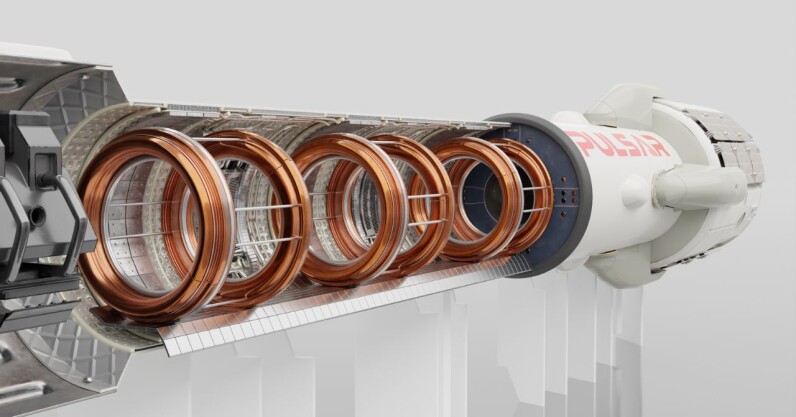
A UK startup is building a nuclear fusion rocket engine that aims to halve the journey time to Mars.

Pulsar Fusion, an aerospace firm based in Bletchley, expects the system to exceed speeds of 805,000kmph and the hottest temperatures in the solar system. To reach those eye-popping targets, the startup will harness nuclear fusion, a reaction that gives the Sun its energy.

In brief, nuclear fusion fuses two atoms together to liberate vast amounts of energy. Scientists believe the process can create limitless, zero-carbon energy to replace fossil fuels. But the benefits could reach space before they’re felt on Earth.

Space is the ideal place to do fusion in terms of it being a vacuum and the extremely cold temperatures,” said Richard Dinan, CEO and founder of Pulsar Fusion.

The <3 of EU tech

The latest rumblings from the EU tech scene, a story from our wise ol’ founder Boris, and some questionable AI art. It’s free, every week, in your inbox. Sign up now!

“Unlike a fusion power station, fusion propulsion doesn’t require a giant steam turbine and fuels can be sourced externally rather than needing to be created on-site.”

To reap these benefits, Dinan plans to produce propulsion directly in the fusion engine. He believes this can be achieved within just four years.

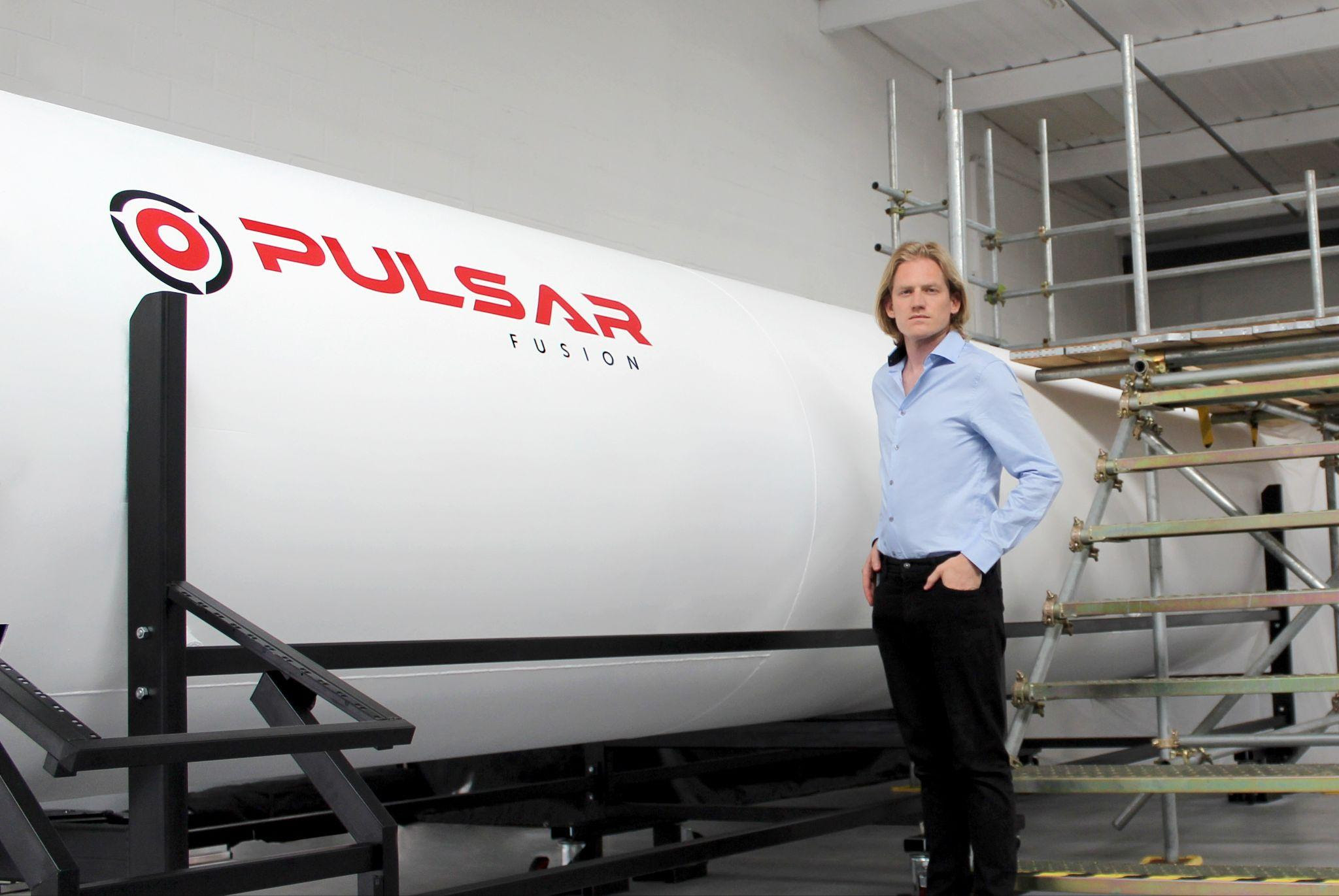
Pulsar Fusion CEO Richard Dinan
Dinan founded Pulsar Fusion in 2014. Credit: Pulsar Fusion

Dinan’s plan involves creating a plasma of electrically-charged particles. When the final plasma shot is fired in the eight-metre fusion chamber, the temperatures are set to reach several hundred million degrees — hotter than the sun.

“The difficulty is learning how to hold and confine the super-hot plasma within an electromagnetic field,” said Dr James Lambert, CFO of Pulsar Fusion.

“The plasma behaves like a weather system in terms of being incredibly hard to predict using conventional techniques. Scientists have not been able to control the turbulent plasma as it is heated to hundreds of millions of degrees and the reaction simply stops.”

Recent breakthroughs, however, have brought the concept closer to reality. In December, for instance, scientists produced the first fusion reaction that created more energy than it took to start the reaction. The milestone was hailed as “one of the most impressive scientific feats of the 21st century.”

At Pulsar Fusion, hopes have been further buoyed by new advances in AI. To tap the benefits, the company has teamed up with the US-based Princeton Satellite Systems to predict how plasma behaves under electromagnetic confinement. The machine learning simulations will guide the rocket engine’s design.

Illustration of Pulsar Fusion
Pulsar Fusion plans to first develop a space propulsion solution and then a land-based fusion power station. Credit: Pulsar Fusion

In 2027, Pulsar Fusion plans to demonstrate that its rocket can achieve fusion temperatures. If the tests are successful, the company will move a step closer to creating the world’s first commercially viable fusion-based engine.

“The technology has the potential to half mission times to Mars, reduce flight time to Saturn from eight years to two and ultimately empower humanity to leave our solar system,” said Dinan.

‘Hotter than the sun’ nuclear fusion rocket could halve flight time to Mars Read More »

meta-platforms-top-the-list-of-uk-payment-scams,-finance-group-claims

Meta platforms top the list of UK payment scams, finance group claims

UK Finance, which represents more than 300 companies, has written to the chancellor, Jeremy Hunt, requesting that ministers make tech companies take responsibility for payment fraud on their platforms. Specifically, the lobby group is pointing the finger at Meta, which it claims is connected to over 60% of all push payment fraud.  

An Authorised Push Payment (APP) scam, also known as bank transfer fraud, is a type of scam in which fraudsters trick individuals or businesses into authorising the transfer of funds from their bank accounts to accounts controlled by the criminals. 

It typically involves social engineering techniques to deceive victims into believing that they are making legitimate payments or transfers. These include tactics such as brand impersonation, too-good-to-be-true crypto deals, online romances, overdue fines, or “relatives” asking for money.

As the victim is the one who initiates the payment, banks in most countries are reluctant to reimburse the funds. Starting in 2024, the government will require UK banks to reimburse fraud victims that have been tricked into sending money to fraudsters. 

The <3 of EU tech

The latest rumblings from the EU tech scene, a story from our wise ol’ founder Boris, and some questionable AI art. It’s free, every week, in your inbox. Sign up now!

With the new rules looming on the horizon, it is understandable that the UK finance industry is pushing for tech companies to take more responsibility for financial online crime. 

UK fraud strategy to “incentivise” online scam investigation

According to a report from Outseer last year, APP scams now comprise 75% of all online banking payments fraud. Meanwhile, UK Finance claims that criminals stole £485.2mn through APPs last year alone.

Promisingly, this was down 17% from the year prior, but fears are that the recent step-change in generative AI could help turbo-charge fraudulent tactics online and make scams more sophisticated.  

The UK government announced a new national fraud strategy in May this year, but stopped short of  forcing tech companies to pay compensation to victims of online scams. It did impose a “duty of care” on large platforms to protect users from fraud and other negative content. 

The data in the letter from UK Finance, as first reported by the Financial Times, says that platforms owned by Mark Zuckerberg’s Meta — Facebook, Facebook Marketplace, Instagram, and WhatsApp — are the locations of 61% of all APP scams. 

A spokesperson for the company told the FT that it is an industry-wide issue with scammers using increasingly sophisticated methods to defraud people in a range of ways, adding that Meta was working with the police to support their investigations. 

According to the UK’s fraud strategy, tech companies must make it easy for users to report fraud on their platforms (“within a few simple clicks”). Furthermore, the strategy says it will “shine a light on which platforms are the safest, making sure that companies are properly incentivised to combat fraud.” 

Depending on how the government will implement this measure, it would seem Meta has its work cut out for it. According to statistics from UK bank TSB earlier this year, when taking into account the three biggest three biggest fraud categories — purchase, impersonation, and investment fraud — as much as 80% occur on Meta’s platforms. 

Meta platforms top the list of UK payment scams, finance group claims Read More »

htc-quietly-retires-vive-cosmos-in-the-us

HTC Quietly Retires Vive Cosmos in the US

After being out of stock for months, HTC quietly removed the US-facing product page for Vive Cosmos, its modular PC VR headset released in 2019.

The discrepancy was first discovered by Reddit user ‘Kody1996’, who wondered why the Vive Cosmos product page was missing.

“I am afraid the VIVE Cosmos headset has been discontinued in the US. I suggest you to check with resellers if they have it available,” an HTC service representative confirmed with Road to VR, echoing the statement provided to Kody1996.

At the time of this writing, new units are still available direct from HTC in select markets, including Europe, Australia, Taiwan, and Japan.

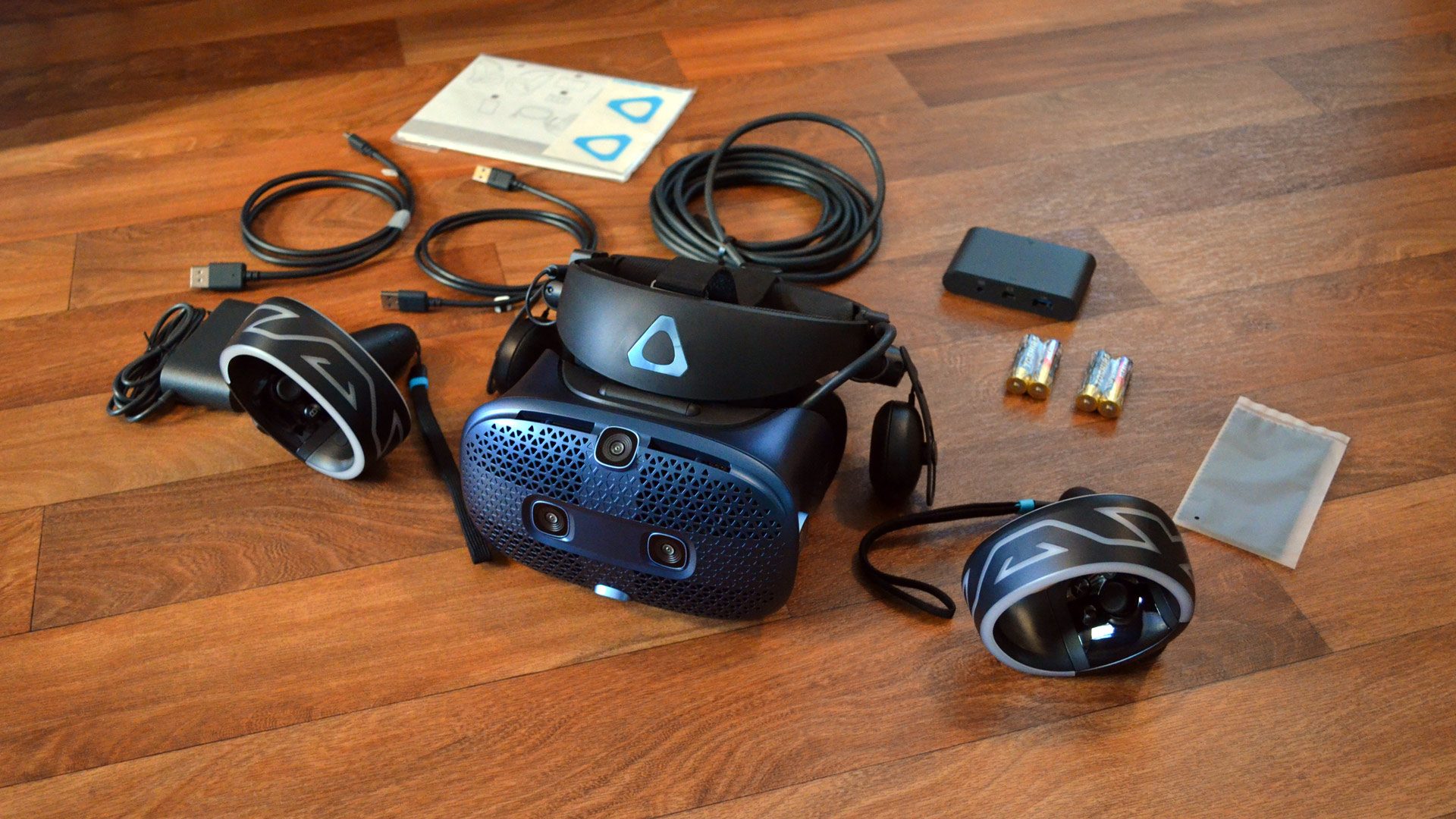
Photo by Road to VR

Vive Cosmos has always been a bit of an odd duck. Launching a little over a year after Vive Pro hit the market, Cosmos was set to be the company’s first consumer VR headset since the original HTC Vive. Cosmos’ claim to fame in 2019: integrated audio, competitive displays, and an inside-out optical tracking, which was… not great.

At its 2019 launch, the $700 Cosmos was sandwiched between two primary competitors: Oculus Rift S on the low-end at $400 and Valve Index on the high-end at $1,000 (controllers and base stations included). It would have to perform better than Rift S to defend its seat in the middle ground, but it was actually so bad at launch we postponed our review because we thought we had received a faulty unit. Nope. The headset’s inside-out tracking was just really unreliable in everything but perfect lighting conditions.

Those tracking woes were partially improved with successive updates, although the only real way to get ‘perfect’ tracking out of the headset was to ditch its modular faceplate and middling controllers and swap it out for the platform’s rock-solid SteamVR-tracking faceplate, courtesy of Vive Cosmos Elite. When Cosmos Elite launched in 2020, that would have set you back $900 for the all-in kit, putting it $100 below Index, which is still broadly considered the reigning champ for best all-around PC VR headset.

Despite lowering the price of the all-in Cosmos Elite kit in the US from $900 to $750, and even offering a headset-only option for as little as $550, HTC’s modular headset never really managed to serve up competition to Oculus or Valve, making only a sliver of an in-road on Steam in its first year.

HTC Quietly Retires Vive Cosmos in the US Read More »

netherlands-first-in-europe-to-approve-lab-grown-meat-tastings

Netherlands first in Europe to approve lab-grown meat tastings

Yesterday, the Dutch government released an official letter announcing it will allow the tasting of meat and seafood products cultivated from animal cells under specified conditions.

Following in the footsteps of the US and Singapore, the Netherlands is now the first country in Europe to permit tastings of lab-grown meat, a move that is particularly welcome by leading Dutch startups in the field. 

Collaborative competition in the lab-grown meat space

Cellular agriculture might not make a huge dent in the food industry for many years yet. However, given time, the breakthrough technology of growing meat in labs can form part of a desperately needed solution to transforming our food systems. 

There is no shortage of cultivated meat startups around the world, and in Europe. One of the keys to their success, apart from food safety and energy efficiency, is taste. For omnivores to pick lab-grown meat over that from a slaughtered animal, it needs to deliver when it comes to taste and texture. 

The <3 of EU tech

The latest rumblings from the EU tech scene, a story from our wise ol’ founder Boris, and some questionable AI art. It’s free, every week, in your inbox. Sign up now!

However, up until now, scientists in Europe have faced a tremendous hurdle — they haven’t actually been able to let people try their products. As such, the move from the Dutch government to allow tastings under certain conditions is crucial to moving the budding industry forward.

Lawmakers established the “code of practice” in collaboration with cultivated meat startups Meatable and Mosa Meat, and sector representative HollandBIO. 

Maarten Bosch, CEO of Mosa Meat which calls itself a food technology company making the “world’s kindest beef burgers,” called the landmark announcement a “great achievement.” 

“Mosa Meat will use these controlled tastings to gather invaluable feedback on our products and to educate key stakeholders about the role cellular agriculture can play in helping Europe meet our food sovereignty and sustainability goals,” Bosch said. 

“This is great news for the Netherlands,” said Krijn de Nood, co-founder and CEO of Meatable, with whom TNW sat down for an interview earlier this year. He further added that it meant the country would maintain its pioneering position in the field. “Meatable is looking forward to inviting the first people to try our sausages, dumplings, and pulled pork!”

Following in the footsteps of the US and Singapore

As previously mentioned, the landmark decision makes the Netherlands the first country in Europe to make pre-approved tastings of cultivated meat possible. The government has previously set aside €60mn to build a “cellular agriculture ecosystem” and make the country a hub for the emerging technology. It has also established the organisation Cellular Agriculture Netherlands, which will now be tasked with overseeing the code of practice for tasting approvals. 

A little over a week ago, the US approved the sale of chicken made from animal cells from startups Upside Foods and Good Meat, both based in California. Singapore, which was also the location for Meatable’s first public tasting of its cultivated pork products earlier this year, has been way ahead on the regulatory side. 

The city-state formed a Novel Food Safety Expert Working Group in March 2020, and approved the first product (cultivated chicken from Eat Just) for sale in November the same year. Meatable has chosen to create a base in Singapore, and over the next five years, the company plans to invest over €60mn and employ more than 50 people there.

Meanwhile, at the beginning of May this year, Mosa Meat opened a new 2,760 square metre scale-up facility in Maastricht in the Netherlands. When it comes to solving one of the key drivers of climate change and halting the killing of more than 70 billion land animals per year, a little healthy competition never hurt. 

Netherlands first in Europe to approve lab-grown meat tastings Read More »

europe-makes-unicorns-at-almost-twice-the-rate-of-the-us,-report-finds

Europe makes unicorns at almost twice the rate of the US, report finds

Europe finally has all the pieces in place to challenge the US as the world’s leading tech hub, according to an analysis from venture capital firm Creandum and Dealroom, released today. 

Europe’s total number of unicorns has grown 88% compared to the US’ 56% since 2014. Moreover, its share of global VC funding has quadrupled in the last 20 years — the continent now takes more than a third of global investments at early-stage.

According to the report, Europe has the highest density of tech unicorn cities globally — with 514 companies valued at $1bn or more spread across 65 cities in 25 countries. These include fintechs like Adyen, Revolut, Klarna, Pleo and iZettle; digital health startups like Kry and Doctolib; and enterprise software startups like Factorial, Personio, and UiPath.

“In just 20 years, Europe has gone from being an outsider to a global challenger,” said Staffan Helgesson, general partner at Creandum — the first VC to invest in European success story Spotify. 

The <3 of EU tech

The latest rumblings from the EU tech scene, a story from our wise ol’ founder Boris, and some questionable AI art. It’s free, every week, in your inbox. Sign up now!

While Europe is clearly doing a good job at producing world-leading companies, its biggest strength lies in emerging sectors like fintech, quantum computing, and climate tech, says the report. It already accounts for around a third of global funding in these key emerging industries, while the continent is home to half of the world’s top science clusters focused on these sectors. 

Climate tech especially has remained a key growth area despite the venture downturn, with 22% of total European funding going into climate tech in 2023 versus 7% for the US. Given that the climate transition is poised to transform industries, Europe’s strength in this sector alone presents a “huge opportunity” in the years to come, says the report. 

“We’re confident that in the next 20 years, Europe can take the lead in emerging tech sectors, including digital health, climate tech, fintech, and AI, that are critical to our economies and lives,” said Helgesson.

Europe makes unicorns at almost twice the rate of the US, report finds Read More »

meta’s-threads-will-not-be-rolled-out-in-the-eu-‘at-this-point’

Meta’s Threads will not be rolled out in the EU ‘at this point’

Meta’s Threads will not be rolled out in the EU ‘at this point’

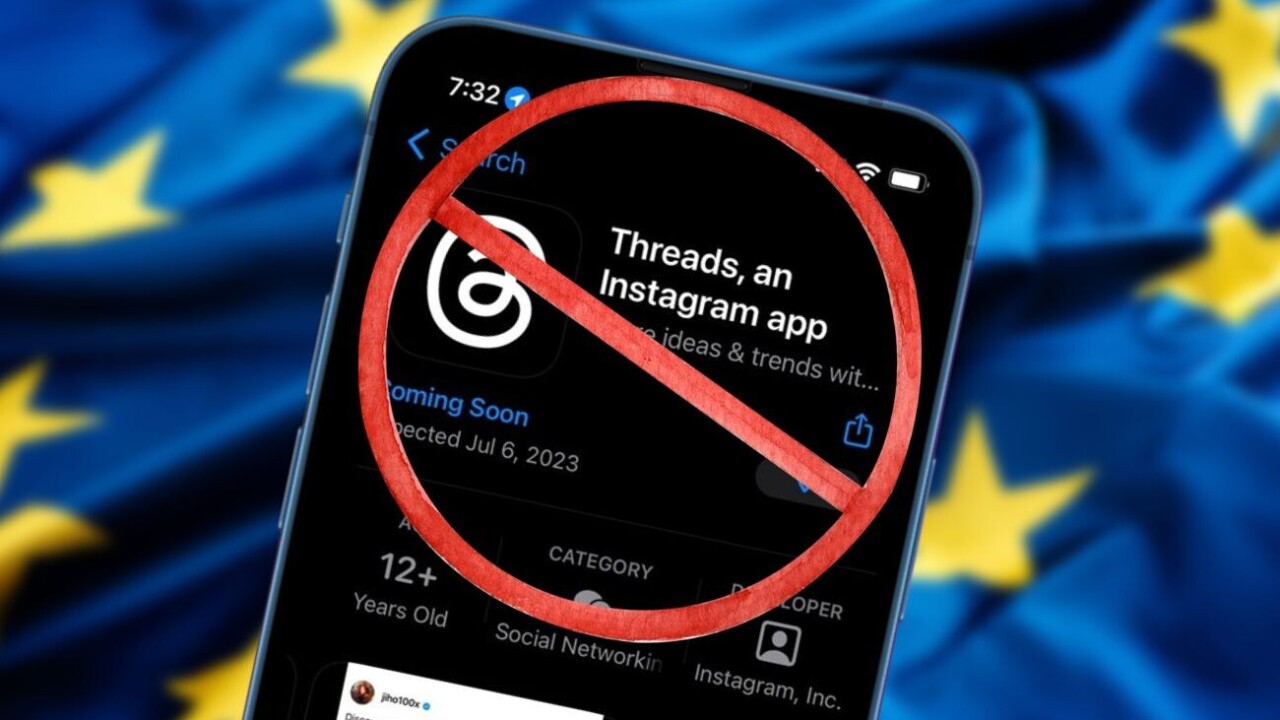
Meta’s new social networking app and Twitter rival, Threads, will not be launched in the EU “at this point,” according to a spokesperson from Ireland’s Data Protection Commission (DPC).

The DPC has not blocked Threads from EU app stores. Instead, Meta is postponing its launch of the platform in the bloc to avoid getting into trouble with regualtors.   

The new Threads platform will pull sensitive data from Instagram, including behavioural and advertising information, which risks breaching EU privacy laws.  

Meta has repeatedly clashed with EU regulators over the way it handles user data. Most recently, it was slapped with a record-breaking €1.2bn fine for breaching the GDPR. The majority have been delivered by the DPC in Ireland, where Meta has its European headquarters. The regulator dished out four fines to the tech giant in 2022 alone.

While the EU lawmakers may have scared off Meta for now, it’s uncertain at this time whether the tech giant will rejig its policy to comply with the bloc’s strict data laws.  Whether Threads will come to the EU anytime soon is anyone’s guess, but a spokesperson for Meta told Bloomberg that it was preparing to roll out the new app in over 100 countries.

The <3 of EU tech

The latest rumblings from the EU tech scene, a story from our wise ol’ founder Boris, and some questionable AI art. It’s free, every week, in your inbox. Sign up now!

Threads, which has been designed to take on Meta’s rival Twitter, is expected to go live on app stores in the US and the UK on Thursday. 

The debut of Threads comes during a week of sweeping changes at Twitter. Owner Elon Musk announced that users of the platform would be limited to viewing just 600 tweets a day, to fight what he called “extreme levels of data scraping.” 

Twitter also announced that TweetDeck, which is used by millions of companies to manage and track different feeds, will become limited to paid subscribers only. 

Get the TNW newsletter

Get the most important tech news in your inbox each week.

Also tagged with


Meta’s Threads will not be rolled out in the EU ‘at this point’ Read More »

cycles-peugeot-unveils-new-e-bike-range-amid-growing-demand-for-green-transport

Cycles Peugeot unveils new e-bike range amid growing demand for green transport

Cycles Peugeot has unveiled a new range of “digital” e-bikes designed to meet the increasing demand for cleaner, greener, healthier (and sometimes quicker) modes of urban mobility.

In 2022, the European market for electrically-assisted bicycles reached a record 5.5 million units sold, representing an annual growth of 8.6%. One in every four bikes sold in Europe last year was electric. 

Cycles Peugeot, which branched out from the popular French car brand over 100 years ago, will launch “several new innovative models” in late 2023 and early 2024 to cater to this growing market.  

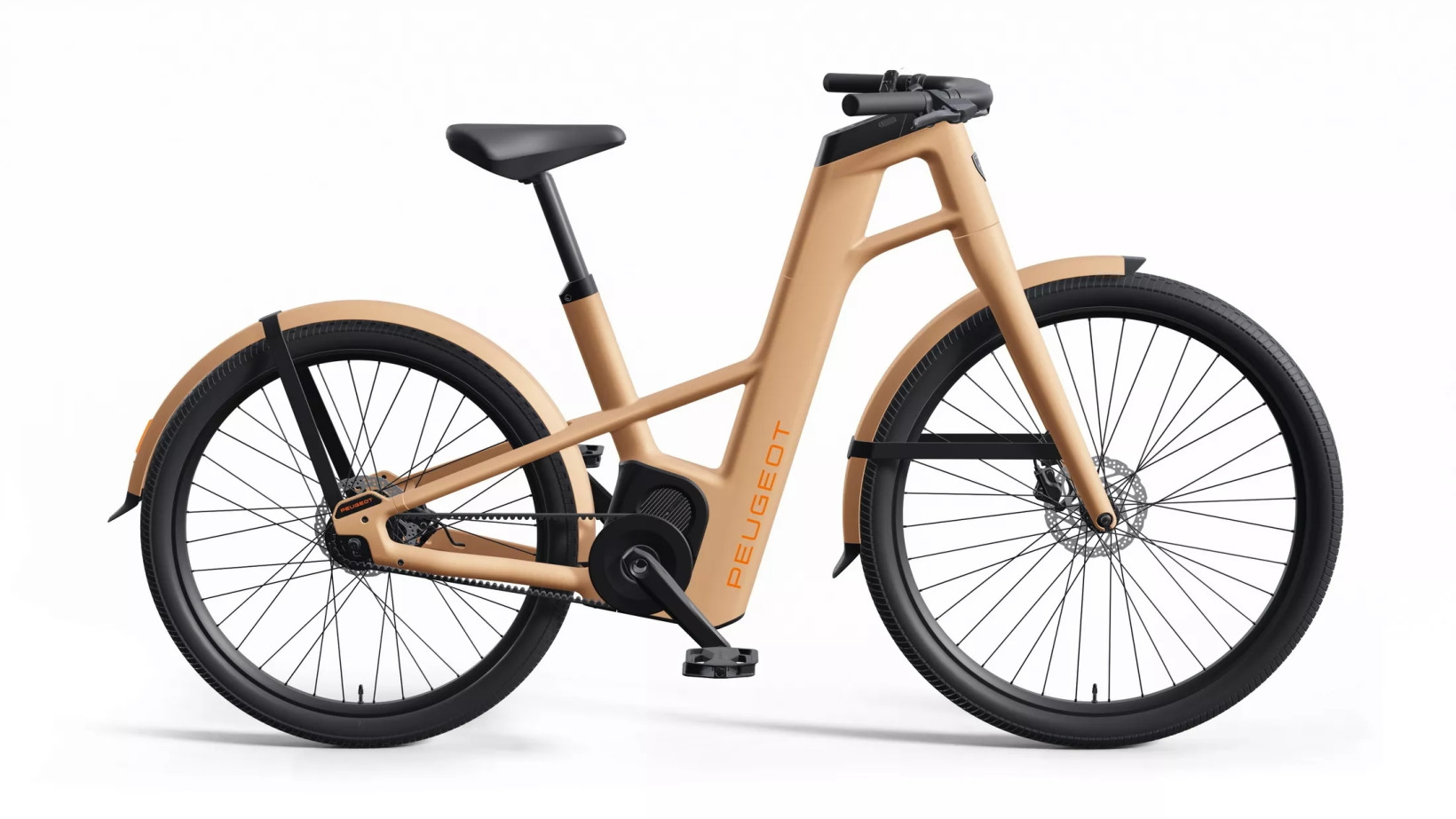
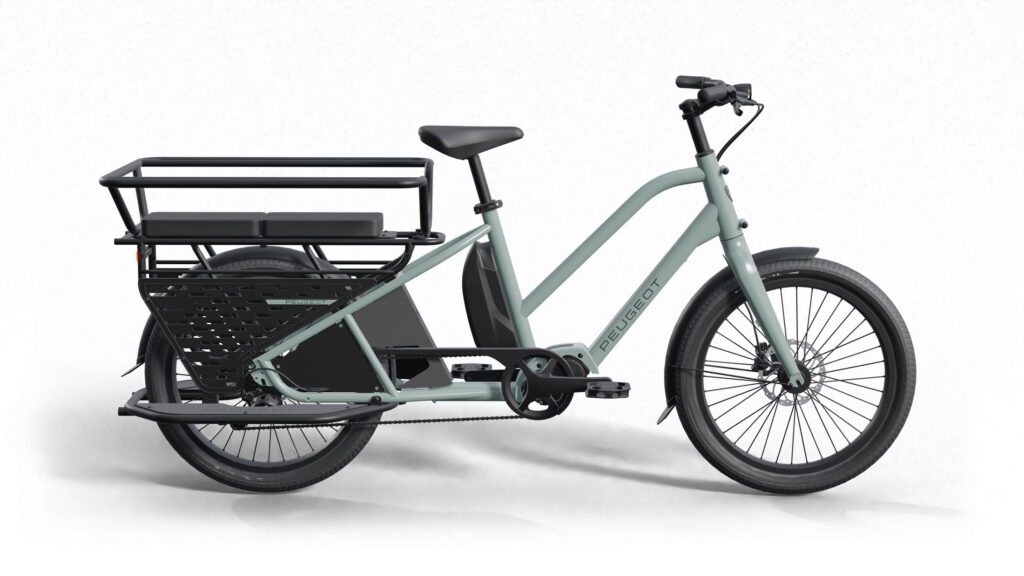
Of the new range, details and renders of three have been disclosed: a city commuter e-bike, a long-tail cargo e-bike, and a front-loader cargo e-bike.  

Peugeot-Cycles-Digital-e-Bike
Cycling Peugeot’s new city commuter e-bike. Credit: Stellantis

The commuter looks very futuristic but is, for all intents and purposes, a normal e-bike — albeit with a belt instead of a chain, for added robustness. The other two are more heavy-duty. 

The long-tail cargo e-bike still looks and handles much like a regular bike but is especially helpful for commuters looking for extra carrying capacity. 

Peugeot-Cycles-Digital-e-Bike-cargo-bike-cycling
Cycling Peugeot’s new long-tail cargo e-bike. Credit: Stellantis

The front-loader on the other hand has a big box slung out in front which can swallow a tonne of stuff. While it might look a bit ungainly, due to the low centre of gravity of the cargo hold, these front-loaders are surprisingly nimble. In fact, they are increasingly popular throughout Europe as “car replacement” bikes.  

According to Amsterdam-based automotive giant Stellantis, which owns the Peugeot brand, both cargo bikes can comfortably carry your weekly shopping or haul two or three kids to and from daycare. 

Peugeot-Cycles-Digital-e-Bike-cargo-bike-cycling
Cycling Peugeot’s new front-loader cargo e-bike. Credit: Stellantis

All of Peugeot’s new e-bikes feature smartphone integration. Via a proprietary app, users can configure a myriad of settings, as well as view the bike’s real-time location, access navigation, toggle weather forecast data, and view ride stats.

The e-bike trio will be designed and manufactured by connected e-bike and app startup Beweelsociety but bear the Cycles Peugeot brand. 

The French startup has developed connected e-bikes as well as an app that provides financing, insurance, maintenance, and anti-theft services for cyclists. This year it was one of ten startups to receive funding under Stellantis’ €300m mobility innovation fund.   

Cycles Peugeot hasn’t announced prices for the new e-bikes yet, but the company is showing off the new designs this week at the PRO-DAYS show in Paris.

Cycles Peugeot unveils new e-bike range amid growing demand for green transport Read More »

apple-reportedly-has-no-plans-to-make-or-support-vr-controllers-for-vision-pro

Apple Reportedly Has No Plans to Make or Support VR Controllers for Vision Pro

If a recent Bloomberg report from Mark Gurman holds true, not only is Apple not planning to release a motion controller for Vision Pro in the future, but it may not even support third-party VR controllers at all.

When the Cupertino tech giant unveiled Vision Pro last month, it didn’t emphasize the headset’s ability to potentially support VR games, which have typically been designed around motion controllers like Meta Touch or Valve’s Index controller for SteamVR headsets.

Among Vision Pro’s lineup of content, which features a standard suite of Apple ecosystem and standard content viewing apps, the studio only off showed a single VR app, Rec Room, the prolific social VR app that supports most major VR headsets (excluding PSVR 2 for now) in addition to consoles, desktop, and both iOS and Android mobile devices.

Apple Vision Pro | Image courtesy Apple

Mark Gurman, one of the leading journalists reporting on unreleased Apple tech, maintains that Apple is neither actively planning a dedicated controller, nor planning support for third-party VR accessories.

When the $3,500 headset launches in early 2024, this would leave Vision Pro users relying on the headset’s built-in hand and eye-tracking, which admittedly worked very well in our hands-on. It’s also using Siri-driven voice input, Bluetooth and Mac keyboard support, and PlayStation 5 and Xbox controllers for traditional flatscreen games.

For VR gaming though, hand and eye-tracking lack the haptic feedback required for many game genres, meaning what VR games do come to Vision Pro will likely require overhauls to make sure hand-tracking is fully baked in.

Provided Apple sticks with its purported internal plan to not support VR controllers, that would essentially shunt development away from VR gaming and towards the headset’s AR abilities. For Apple, that’s where the ‘real’ money presumably lies.

Denny Unger, founder and lead of pioneering VR studio Cloudhead Games, explains the move as a way to provide a strong development foundation now for Apple’s AR glasses of the future, which will be both more affordable and more capable of replacing a standard smartphone than the admittedly bulky MR headsets of today.

For more from Unger, who heads one of the most successful VR studios, check out his Road to VR guest article to learn more about Vision Pro and why Apple may be launching an AR headset in VR clothing.

Apple Reportedly Has No Plans to Make or Support VR Controllers for Vision Pro Read More »

solar-hybrid-car-explodes,-killing-two-italian-researchers

Solar-hybrid car explodes, killing two Italian researchers

Two Italian researchers have died after a solar-powered hybrid car prototype they were test-driving exploded last week near the city of Naples.

The vehicle, a rejigged VW Polo, was being developed as part of an EU-funded project to convert old combustion engine cars into solar-powered hybrids. The prototype caught alight last Friday during a test drive, leaving the two occupants in critical condition.

Maria Vittoria Prati, a researcher at Italy’s National Council of Research (CNR), died of complications from third-degree burns on Monday. 

Earlier this week, the CNR paid tribute to Ms Prati as “a brilliant researcher” and “an expert in the field of emissions studies and the use of alternative fuels”.

The other occupant, research apprentice Fulvio Filace, 25, died overnight, a spokesperson for the Cardarelli hospital in Naples told Reuters on Thursday. 

hybrid-car-explosion-italy
Firefighters examine the wreckage of the hybrid car prototype, which caught alight on a ring road near Naples. Credit: ANSA

Naples authorities are investigating the cause of the explosion, according to ANSA news agency, although no specific suspects have yet been identified.

The CNR said on Thursday it has launched an internal audit to “reconstruct the cause of the very serious incident” and is cooperating with investigators.

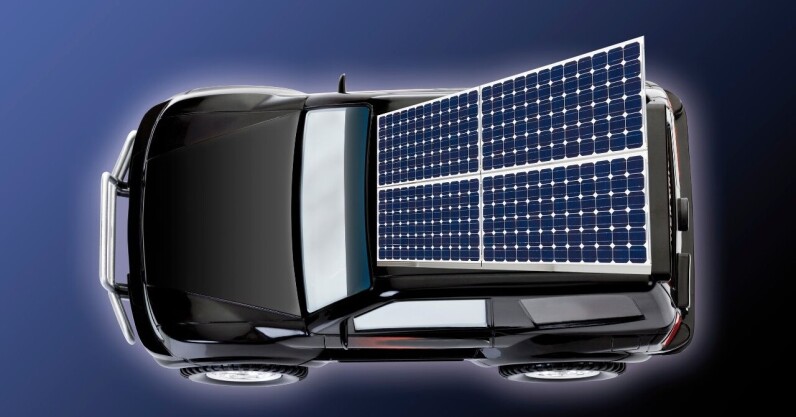
The test was part of the EU-funded Life-Save project, which was researching ways to retrofit regular combustion engines with additional electric motors, which were charged by batteries and solar panels mounted on the vehicle’s roof and bonnet. 

Solar-powered cars have been touted as a potential solution to the lack of infrastructure and affordable charging needed to accelerate the electric vehicle revolution, but the technology is still in its nascent stages. 

Life-Save secured almost €1.8m in funding from the European Commission since 2017 under its LIFE programme, a fund that supports clean tech startups.

Since the incident, Life-Save has disabled its website, which now features a tribute expressing condolences to the families of the deceased.

Published

Back to top

Solar-hybrid car explodes, killing two Italian researchers Read More »