Author name: Mike M.

‘half-life-2:-rtx’-remaster-could-mean-big-upgrades-for-‘half-life-2’-vr

‘Half-Life 2: RTX’ Remaster Could Mean Big Upgrades for ‘Half-Life 2’ VR

NVIDIA this week announced Half-Life 2: RTX, a community-made remaster of the legendary game featuring all-new assets, textures, and lighting. Pieces of the remaster are likely to make their way to the already existing Half-Life 2: VR Mod.

When it rains, it pours, as they say.

After years of delays, Half-Life and VR fans have been treated over the last 12 months to full VR mods of Half-Life, Half-Life 2, Half-Life 2: Episode Oneand Half-Life 2: Episode Two.

And now it seems that fans are in for another treat; the Half-Life 2: VR Mod is likely to get a range of graphical upgrades thanks to the newly announced Half-Life 2: RTX remaster.

Though it already featured improved graphics and lighting over the original Half-Life 2, the Half-Life 2: VR Mod largely focused on touching up the game’s existing assets, and enhancing some key 3D models while building out full support for VR.

Half-Life 2: RTX, on the other hand, is a complete graphical overhaul says Nvidia.

The project is described as being in “early development,” with developers consisting of a range of experienced Half-Life 2 modding teams, including folks from the Half-Life 2: VR Mod team. The teams are working under the banner Orbifold Studios and say they’re seeking more talented people to work on the project.

According to Nvidia, the project will see “every asset reconstructed in high fidelity,” textures built with physically-based rendering techniques, and RTX ray-tracing support.

And while the project will likely mean that high quality 3D assets will make it over to the Half-Life 2: VR Mod, unfortunately RTX ray-tracing probably won’t.

A member of the Half-Life 2: VR Mod team called modding the full Half-Life 2: RTX game to support VR “just a pipe dream at the moment.”

“Currently RTX Remix [the platform used to build Half-Life 2: RTX] is not compatible with Half-Life 2: VR Mod, since they both hook into the rendering pipeline and abuse it in different and incompatible ways,” they said.

But, the member says there are plans to “work with other members of this new super-team [that’s working on Half-Life 2: RTX] on back-porting as much of the shiny new HD content as we can to the old source engine, and putting them into our Half-Life 2: VR Mod graphics update.”

There’s no timeline at the moment for when that might happen, but hey, these things, they take time.

‘Half-Life 2: RTX’ Remaster Could Mean Big Upgrades for ‘Half-Life 2’ VR Read More »

fast-travel-games-teases-mysterious-vr-multiplayer,-full-reveal-coming-in-september

Fast Travel Games Teases Mysterious VR Multiplayer, Full Reveal Coming in September

Fast Travel Games teased a mysterious new multiplayer title today that the VR studio and publisher says we’re due to learn more about sometime next month.

The studio tweeted out a short teaser with a cryptic message, which reads: “The [redacted] have frozen time. I don’t know how it’s even possible. We need to work together to [redacted].”

Fast Travel, which is known for developing Wraith: The Oblivion – Afterlife, Apex Construct and The Curious Tale of the Stolen Pets, has also become a prolific publisher of VR games, with titles under its wing including Broken Edge, Cities VR, Guardian’s Frontline, We Are One, and Virtuoso.

The short teaser says it’s coming from Fast Travel Games without mentioning any other studio though. Much like the studio’s upcoming single-player RPG Vampire: The Masquerade – Justice, it could be the product of in-house development.

Promising a September reveal, the most logical date could be Meta Connect, which is starting September 27th. There, we’re sure to get an info dump of Quest 3 games, release dates, and everything under the sun about Meta’s next big consumer headset release.

In the meantime, we’ll have our eyes peeled on Fast Travel’s social channels for any clues as to what the mysterious multiplayer game may hold.

Fast Travel Games Teases Mysterious VR Multiplayer, Full Reveal Coming in September Read More »

meta-shows-off-quest-hand-tracking-improvements,-claims-“almost-as-responsive-as-controllers”

Meta Shows Off Quest Hand-tracking Improvements, Claims “almost as responsive as controllers”

Apple is going all-in with hand-tracking for its upcoming Vision Pro, but can hand-tracking really replace proper VR controllers? Meta, Apple’s main competitor in the space, isn’t going so far as to make that particular claim, however the company says Quest’s recent hand-tracking improvements are now “almost as responsive as controllers” thanks to its recent v56 software update.

First announced in late July, the company’s Hands 2.2 tracking improvements are introducing what Meta says is better hand responsiveness and a few new experimental features that we’ll probably see in Quest 3.

Now rolling out to Quest headsets, Meta says users should notice hand-tracking latency reduced “up to 40%” in regular use, and “up to 75%” during fast movement. Meta says those dramatic gains in fast movement latency are thanks to the introduction of a new Fast Motion Mode (FMM) for more frenetic games, like fitness and rhythm games that require you to punch incoming objects.

Here’s a look at controllers relative to the new Hands 2.2 release:

v56 is also rolling out to Quest Pro, which includes two new experimental features: simultaneous hands and controllers (Multimodal) tracking, and controller-driven hand pose (Capsense Hands).

Multimodal tracking is said to unlock a number of mixed input style, including Hand+controller gameplay, instant transitions between hands and controllers, and improved social presence when using one controller. It’s only available on Quest Pro for experimentation, although Meta plans to add support for additional devices later.

On the other hand, Capsense Hands lets developers show a natural hand model visualization on top of, or instead of, a user’s controller. Check out both in action in the video below:

“Hand Tracking gives your app’s users the ability to engage with their VR or mixed reality environment in a way that is natural and intuitive,” Meta says in a developer blogpost. “These interactions deepen the immersive experience and help people feel more connected to what’s going on around them in-headset. Hands can also provide a faster on ramp for users new to VR. By integrating Hand Tracking in your existing apps, you can give your users more flexibility to tailor their experience and find what works best for them—and thanks to Hands 2.2, you can feel confident knowing your app’s users will enjoy a great experience regardless of whether they play with hands or controllers.”

Meta says we should hear more about its hand-tracking upgrades in the near future, as the company is hosting its annual Meta Connect developer conference on September 27th, which ought to include an info dump (and likely release date) for its upcoming Quest 3 headset, which is bringing much of the functionality of Quest Pro to the consumer price point of $500.

Meta Shows Off Quest Hand-tracking Improvements, Claims “almost as responsive as controllers” Read More »

sandbox-vr-reeled-in-$23m-annual-revenue-from-most-popular-location-based-vr-experience

Sandbox VR Reeled in $23M Annual Revenue from Most Popular Location-based VR Experience

Sandbox VR, the location-based VR destination, announced that its most popular experience has generated $23 million in ticket sales in the last 12 months.

Launched in the summer of 2022, Deadwood Valley is said to be the company’s most cinematic game, letting players defend against a horde of zombies as a squad.

It’s been so successful, Sandbox VR says the experience has now surpassed $23 million in ticket sales across 30 locations, and is projected to make $100 million in lifetime sales.

All of the company’s multiplayer VR experiences have been developed by in-house gaming studios, allowing teams of up to six players to tackle a host of missions in games such as Star Trek Discovery: Away Mission, Curse of Davy Jones, Deadwood Mansion, and Unbound Fighting League. An experience based on Squid Game is also set to launch sometime in late 2023.

In addition to recently opening its second in-house gaming studio in Vancouver, the company says it will also start letting third-party game developers to create titles for its location-based platform starting in 2024.

Billing itself as the world’s fastest growing location-based VR company, Sandbox VR is now operating in 43 locations spanning major cities in North America, Europe, and Asia, a dozen of which launched in the last 12 months.

Sandbox VR Reeled in $23M Annual Revenue from Most Popular Location-based VR Experience Read More »

‘ghosts-of-tabor’-hits-$3m-revenue-ahead-of-debut-on-main-quest-store

‘Ghosts of Tabor’ Hits $3M Revenue Ahead of Debut on Main Quest Store

Passing Meta’s content review process for Quest games is an essential step to being listed on the Quest Store, although some studios choose to offer their games in beta via App Lab first, meaning they can take time to get things right before listing on the store proper. That’s what developer Combat Waffle Studios and publisher Beyond Frames Entertainment did with their hit multiplayer shooter Ghosts of Tabor, and it’s seemed to have paid off.

Released on App Lab back in March, Ghosts of Tabor is an extraction-based survival game that tosses in player-versus-environment (PVE) and player-versus-player (PVP) combat, all of which is set in the suitably bombed-out near future. Inspired by games likes Escape from Tarkov and DayZ, there are plenty of guns, customization options, and opportunities for crafting and looting along the way to extraction.

It’s been such a winning mix of familiar gameplay, no doubt fueled by sheer developer grit, that it’s already surpassed $3 million in revenue. And that’s without being searchable on the Quest Store, a main feature of games sold via App Lab.

In a Meta developer blogpost, the team describes how listing through App Lab has forced them to focus on direct marketing and generating a community first—arguably the most important things for online multiplayer games in VR. Here’s how Combat Waffle CEO Scott Albright describes the game’s journey:

Getting the game into the hands of players early in closed tests has been the very foundation of our efforts to gain traction. Even initially, we noticed that there is a stickiness to the game and people were enjoying themselves, and from there we made sure to connect with influencers to get their perspective and spread awareness.

By giving people an early hands-on experience, we hoped that they would see the game for what it was and enjoy it as much as we do, despite it not being completely polished or finished.

Thankfully, most people trying the game in those early days really got into it and started posting videos on social media. It didn’t take long to find out that people have a lot of fun watching game clips, and it’s been super exciting to see people’s reactions in the comments. With attention increasing on social media, peoples’ expectations for the title are also starting to build, even before the launch.

While App Lab has stolen the thunder somewhat from SideQuest, the original unofficial content distribution outlet for Quest content, it’s been an increasingly important outlet for developers looking to generate loyal fanbases. The most successful to date is undoubtedly the free-to-play phenomenon Gorilla Tag, which managed to create so much hype in its time on App Lab that it reported a lifetime revenue of $26 million less than a month after moving to the main store.

In addition to being on App LabGhosts of Tabor is also available on Steam Early Access. It’s also said to launch on the Quest Store sometime next year, where it is planned to include “many more maps, gameplay features, and improvements that are currently not present in the Early Access version,” the team says.

‘Ghosts of Tabor’ Hits $3M Revenue Ahead of Debut on Main Quest Store Read More »

european-space-telescopes-spot-tiny-jets-that-could-power-the-solar-wind

European space telescopes spot tiny jets that could power the solar wind

A spacecraft has detected tiny jets that could be the elusive source of the sun’s solar wind.

The discovery was made by the European Space Agency’s (ESA) Solar Orbiter. According to ESA, the satellite is the most complex scientific lab ever sent to the sun.

Using the Extreme Ultraviolet Imager (EUI) —a suite of remote-sensing telescopes —  the probe spotted jets of material emerging from the sun’s outer atmosphere.

Each jet lasts between 20 and 100 seconds. During these fleeting moments, they expel charged particles — known as plasma — at around 100km per second. Scientists suspect the jets are powering the solar wind.

This mosaic of images shows a multitude of tiny jets of material escaping from the Sun’s outer atmosphere.
In this mosaic of images of the jets, the sun’s south pole is to the left. Credit: Credit: ESA and NASA/Solar Orbiter/EUI Team

The solar wind is created by the outward expansion of plasma from the Sun’s outermost atmosphere. That atmosphere is known as the corona.

As it sweeps through the solar system, the solar wind reaches speeds of over 1 million miles per hour. When it hits Earth’s magnetic field, it can create the northern lights and southern lights — as well as disruptions in GPS and communications systems. It also protects Earth from other harmful particles coming from space.

Despite its immense impact on the cosmos, the solar wind’s origins remain mysterious. But the Solar Orbiter has shone a new light on the secrets.

The research team gave much of the credit to the EUI instrument.

“We could only detect these tiny jets because of the unprecedented high-resolution, high-cadence images produced by EUI,” said Lakshmi Pradeep Chitta, the principal author of a paper on the findings.

The spacecraft will now slowly incline its orbit towards the polar regions. When that happens, it will provide another view of the solar winds.

ESA’s project scientist for the Solar Orbiter, Daniel Müller, hopes the new observations produce further evidence.

“It’s harder to measure some of the properties of these tiny jets when seeing them edge-on, but in a few years, we will see them from a different perspective than any other telescopes or observatories so that together should help a lot,” he said.

Published

Back to top

European space telescopes spot tiny jets that could power the solar wind Read More »

here’s-how-the-eu’s-digital-services-act-changes-the-content-rules-for-big-tech

Here’s how the EU’s Digital Services Act changes the content rules for big tech

The EU’s latest crackdown on big tech begins before the end of the week. Starting on Friday, a total of 19 major companies must adhere to the sweeping rules of the Digital Services Act (DSA).

Essentially, the DSA is a landmark content moderation rulebook, designed to empower and protect users online against harmful or illegal content, disinformation, and the violation of privacy and free speech.

The tech firms listed are not only the first required to comply, but also the ones facing the act’s strictest and most far-reaching measures. That’s because they reach at least 45 million European active users per month, which according to the EU, translates to their “significant societal and economic impact.”

The legislation will eventually apply to all businesses providing digital services within the bloc, expected to come fully into force in February 2024. Violations could result in fines of up to 6% of their global revenue, or even a temporary ban from the union.

“The whole logic of our rules is to ensure that technology serves people and the societies that we live in — not the other way around,” said Margrethe Vestager, Executive VP of the Commission.

“The Digital Services Act will bring about meaningful transparency and accountability of platforms and search engines and give consumers more control over their online life.”

Who’s on the naughty list?

Ranging from social media platforms to online marketplaces and search engines, the list so far includes: Facebook, TikTok, X (formerly Twitter), YouTube, Instagram, LinkedIn, Pinterest, Snapchat, Amazon, Booking, AliExpress, Zalando, Google Shopping, Wikipedia, Google Maps, Google and Apple’s mobile app stores, Google’s Search, and Microsoft’s Bing.

5 key DSA obligations big tech have to follow

1. Remove illegal content

The designated companies are required to identify and remove any illegal content as defined by laws either at EU or national level from their platforms.

In the case of online marketplaces, this also means tracing sellers and conducting random checks on existing product databases to ensure protection against counterfeit and dangerous goods or services.

2. Ban some types of targeted ads

The big tech giants can no longer use targeted advertising that’s based on profiling of minors or sensitive personal data, such as ethnicity, sexual orientation, or political views.

3. Increase user empowerment

Users will have a set of new rights, such as flagging illegal content, contesting the decisions made by online platforms if their own content is removed, and even seek compensation for any rule breaches. They’ll also be able to receive information about the advertising practices, including if and why an ad targets them specifically with the option to opt out.

4. Constrain harmful content and disinformation

The selected companies will further have to perform an annual risk assessment and take corresponding measures to mitigate disinformation, election manipulation, hoaxes, cyber violence, and harm to vulnerable groups — while balancing freedom of expression. These measures are also subject to independent audits.

5. Be transparent

In an unprecedented move, the platforms will need to disclose long-guarded information on their data, systems, and algorithms to authorities and vetted researchers. They’ll also have to provide public access to their risk assessment and auditing reports alongside a repository with information about the ads they run.

“Complying with the DSA is not a punishment – it is an opportunity for these online platforms to reinforce their brand value and reputation as a trustworthy site,” Commissioner Thierry Breton said in a statement.

Who has complied so far?

In the group of social media, TikTok is introducing an “additional reporting option” for European consumers that allows them to flag illegal content, including advertising. It will further provide them information about its content moderation decisions and allow them to turn off personalisation. Targeted advertising for minors aged 13-17 will stop.

Snapchat has made similar changes. For instance, personal advertising for minors is no longer allowed and adult users have a higher level of transparency and control on the ads they see. Meanwhile, Meta has launched non-personalised content feeds on Facebook and Instagram.

Among the online marketplaces, Zalando has introduced content flagging systems on its website, while Amazon has opened a channel for flagging illegal products and is now providing more information about third-party merchants.

Nevertheless, both companies have taken legal action against the EU, claiming they have been “unfairly” added to the list.

The DSA’s potential impact

Historically, the rules for data sharing and online content moderation have been determined by big tech.The DSA aims to change that by setting an unprecedented touchstone, much like the EU’s regulatory efforts with the GDPR and the upcoming AI Act.

“The European Digital Services Act is trying to respond to online corporate practices that are considered inappropriate by the European Union,” David Frautschy Heredia, Senior Director of European Government and Regulatory Affairs at Internet Society (ISOC) told TNW.

“The impact of the act is being closely watched. By nature, corporate organisations operate across jurisdictions, and so their potentially damaging behaviour is not limited to a single region. Moreover, the EU has come to be widely regarded as the benchmark authority for digital regulation and as the example to follow.”

But as parts of the act and its implementation are still to be defined, experts are also pointing to potential risks.

“It is of crucial importance to ensure that these new obligations do not have unintended consequences, or they may be inadvertently mirrored across the globe, ” Frautschy Heredia noted, adding that misaligned policy could lead to the “fragmentation” of the internet.

Meanwhile, Mozilla alongside 66 civil organisations across the globe are urging the Commission to ensure that the DSA will not lead to censorship and the violation of fundamental rights.

Here’s how the EU’s Digital Services Act changes the content rules for big tech Read More »

germany-doubles-funds-for-ai-‘made-in-europe’

Germany doubles funds for AI ‘made in Europe’

On Wednesday, the German government announced that it would nearly double its funding for artificial intelligence research. The money pledged towards the development of AI systems now amounts to nearly €1bn, which is still far behind the $3.3bn (€3.04bn) in public funding the US reportedly threw at the field last year. 

The Federal Ministry for Education and Research said that AI is a “key technology” that offers enormous opportunities for science, growth, prosperity, competitiveness, and social added value. It further added that “technological sovereignty in AI must be secured,” and that Germany and Europe should take a leading position in a world “powered by AI.” 

This means that Germany on its own is drawing level with the funds pledged by the EU. The European Commission has also committed €1bn to AI research per year through the Horizon Europe program. Meanwhile, the Commissionstates that it will mobilise additional investments from both the private sector and the member states to reach an annual volume of €20bn. 

The increased funding was presented along with Germany’s Artificial Intelligence Action Plan by Federal Research Minister Bettina Stark-Watzinger. Earlier this month, the Minister argued that Germany “must bring its academic practices in line with its security interests in light of tensions with systemic rivals such as China.” 

The global AI race

Figures for public spending in China are notoriously tricky to pin down. However, in 2022, private AI investments in China were at $13.4bn (€12.35bn), still trailing far behind the US with a total of $47.4bn (€43.4bn). 

This week, the German government also proposed harsher export curbs on China for semiconductors and AI technologies, similar to the executive order signed by US President Biden a little while ago. Furthermore, it laid out plans to tighten the screening process for Chinese FDI.

With the funds, Germany is looking to set up 150 new university labs dedicated to researching artificial intelligence, expand data centres, and increase access to datasets for training advanced AI models. The goal is to then convert the research and skills to “visible and measurable economic success and a concrete, noticeable benefit for society.”

Additionally, the government says it hopes to show the unique selling point of AI “Made in Germany” (or “Made in Europe”). “We have AI that is explainable, trustworthy and transparent,” Stark-Watzinger said. “That’s a competitive advantage.”  

Indeed it is, if you have the intention of using it somewhere affected by forthcoming artificial intelligence regulation. While the world waits for the EU AI Act, which will set different rules for developers and deployers of AI systems according to a risk classification system, the Cyberspace Administration of China last month published its own “interim measures” rules for generative AI.

Although the internet watchdog says the state “encourages the innovative use of generative AI in all industries and fields,” AI developers must register their algorithms with the government, if their services are capable of influencing public opinion or can “mobilise” the public.

Germany doubles funds for AI ‘made in Europe’ Read More »

getir-shuts-down-amsterdam-dark-stores,-withdraws-from-6-dutch-cities

Getir shuts down Amsterdam dark stores, withdraws from 6 Dutch cities

There seems to be no end in sight for Getir’s woes in Europe. Following exits from multiple markets, the rapid grocery delivery platform is now reducing operations in the Netherlands as well.

The Turkish startup is set to close four dark stores in Amsterdam, the company told local paper Het Parool. This is a result of the city council’s new zoning plan which no longer allows the establishment of such stores in exclusively residential areas, following complaints about noise, waste, and traffic nuisance.

The five locations are on Karperstraat, Baarsjesweg, Overtoom, Eerste Jacob van Campenstraat, and on Jan Rebelstraat.

While Getir expressed optimism about its future in Amsterdam (where about 15 dark stores will remain), it’s disappearing completely from six other Dutch cities. These are Leiden, Breda, Delft, Eindhoven, Tilburg, and Groningen.

The <3 of EU tech

The latest rumblings from the EU tech scene, a story from our wise ol’ founder Boris, and some questionable AI art. It’s free, every week, in your inbox. Sign up now!

The closures are part of a global restructuring aimed to increase the startup’s operational efficiency. To this end, the firm announced Wednesday that it’s laying off nearly 11% of its staff, which amounts to about 2,500 employees.

A series of tough months

Amid inflation, investor wariness, and a declining appetite for rapid grocery delivery after the pandemic, Getir has been struggling to keep its business afloat.

Since June, the startup has announced its exit from France, Spain, Portugal, and Italy. This reduces Getir’s presence in Europe to the Netherlands, Germany, and the UK.

But staying alive in these markets has been no bed of roses either. Besides pulling out of six Dutch cities, the startup is reportedly ceasing its service in 17 of the 23 cities in which it operates across Germany. Most notably, July saw Getir’s UK branch auctioning off equipment and aiming for a fresh round of funding.

Published

Back to top

Getir shuts down Amsterdam dark stores, withdraws from 6 Dutch cities Read More »

hands-on-review:-yoges-handle-attachments-for-quest-2-controllers

Hands-On Review: YOGES Handle Attachments for Quest 2 Controllers

There are a lot of possible interactions in virtual reality. The standard Quest 2 controllers just don’t always cut it anymore. Fortunately, there’s a large market of accessories manufacturers making adapters for different games and use cases. Not least among them is YOGES.

YOGES at It Again

YOGES specializes in accessories for the Meta Quest 2 headset and Quest 2 controllers. We’ve already reviewed one of their head strap alternatives for the device and found it to be comfortable and competitively priced. When they invited us to try out their “handle attachments” of course we were curious.

The adapters are designed for the Quest 2 controllers and are reported to work with games including Beat Saber, Gorilla Tag, Kayak VR: Mirage, Real VR Fishing, and others. In this writing, I used the grips to play Playin Pickleball, Bait!, and Kizuna AI – Touch the Beat! (That’s a Beat Saber clone with super-short sabers).

Before we jump into the playthroughs, let’s look at what’s in the box.

Unboxing

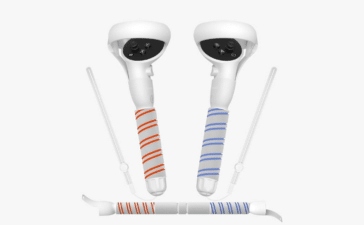
The minimal YOGES packaging for the handle attachments packs one handle for each controller, one detachable lanyard for each controller, and a connector piece turning the whole set into one two-headed controller. There are also two extra velcro ties to hold the controllers into the adapters – just in case. A set of directions is included as well, but it’s a simple setup.

Hands-On Review: YOGES Handle Attachments for Quest 2 Controllers

The standard Quest 2 controller sits into the adapters, which are each labeled “L” or “R”. Then, a velcro tab secures the controller into the adapter via the tracking ring – so, likely not compatible with the Quest Pro controllers. The bottoms of each adapter are threaded. Screw on a lanyard attachment or screw one of the adapters into either end of the connector piece.

The lightweight adapters are hollow core encased in durable-feeling molded foam. That hollow core keeps the weight and probably the cost down, but it also means that you can insert your Quest 2 controllers without removing the lanyards from them. That’s a handy feature because you might not want these adapters for everything that you do in VR.

The full rig measures in at almost exactly two feet. Each controller in a separate adapter with the lanyard attachment measures in at about ten inches – that’s some five-and-a-half inches longer than the Quest 2 controller by itself.

The adapters extend the Quest 2 controllers but don’t allow you to interact with them in any way. That is, you’ve still got to be holding the controller to press buttons and triggers. Fortunately, the lanyard on the end is long enough that you can put it around your wrist and still reach over the entire adapter to reach the controller.

Playtesting the Adapters for Quest 2 Controllers

I was worried that that length was going to throw off my game. It seems to me that if the adapter adds a few inches, that means that the Quest 2 thinks that my arm is a few inches longer than it is – right? This shouldn’t make much difference saber beating or gorilla tagging, but I was all set for playing pickleball to be a nightmare.

Playin Pickleball

But then, it wasn’t. I don’t know if the Quest 2 is smarter than I gave it credit for or if my brain was a lot more ready to accept the extended controller as a part of my arm, but I had no trouble hitting the ball reliably into targets in a practice mode.

layin Pickleball also might be the game that has seen the most flying Quest 2 controllers in my home – lanyards are a must. However, I didn’t use the lanyards to play with the YOGES adapter – the extra length and the molded foam made it significantly easier to hold onto a paddle.

Kizuna AI – Touch the Beat!

I had a bit more of a time getting used to the adapters when I played a round of Kizuna AI – Touch the Beat!. If you haven’t played the game, it’s very similar to Beat Saber but with smaller targets, smaller sabers, and different motion challenges.

Things took some more getting used to, possibly because the sabers are narrower than a pickleball paddle so my movements needed to be even more precise. I did also hit my overhead light at least once, though I’m not entirely sure that that was because of the adapter. Still, by the end of the first song, I had a pretty memorable streak going.

Bait!

From here, I really wanted to use the adapter as a sword handle in Battle Talent, but in Battle Talent you need to hold the trigger to hold the weapon, so that was a no-go. You also pump both arms and use the joysticks to run, so I couldn’t just leave a controller down and dedicate myself to two-handed weapons. I wondered about how the handle might work as a fishing rod in Bait!.

In Bait! you hold the rod and cast with one hand but use the trigger on the other controller to real it in. I let the left-hand controller (sans adapter) hang off of my left wrist as I used the right controller (with adapter) to do a double-handed cast. It was a little awkward because Bait! was still tracking the left-hand controller as it flopped through the air, but the cast was beautiful.

Is it Worth the Price?

Depending on where, when, and how you buy the YOGES Handle Attachments, they run between $18.58 (the price on Amazon at the time of writing) and $33.98 (the price currently listed on the YOGES website). That’s fairly competitive for adapters of this kind – and most adapter sets don’t include the connector piece.

YOGES adapters for Quest 2 Controllers velcro strap

As always, whether or not that’s worth the price depends on the games that you play. For as many games as I found improved by the adapters, I have at least as many that wouldn’t work. Maybe that’s not the case for you. Or maybe it is but you feel really passionate about improving your VR fishing cast or your virtual pickleball game.

I will say that on all of the games that were compatible with these adapters for Quest 2 controllers (and Bait!) my game was improved – or at least felt improved.

Parting Thoughts

So far, I continue to be pleased with YOGES. The Quest 2 Controller Handle Attachments, like the headset strap, are lightweight and low-cost comfortable adapters. While they may not be for all people or in all cases, they certainly have their place in the VR accessories ecosystem.

Hands-On Review: YOGES Handle Attachments for Quest 2 Controllers Read More »

11-tools-for-painting,-modeling,-designing-&-animating-in-vr

11 Tools for Painting, Modeling, Designing & Animating in VR

Though gaming is likely VR’s most visible use-case so far, it’s capable of so much more. Creatives are using VR for a wide range of artistic endeavors including painting, drawing, 3D modeling & sculpting, animating and more. If you’re interested in exploring your creativity in VR, here’s 11 tools worth checking out.

Updated – August 9th, 2023

First, here’s a quick breakdown of the tools and their capabilities, so that you can hone in on what kind of creative tool you’re looking for the VR headset of your choice. A note about the ‘Feature Focus’ categories below: while some of these tools may support all of the features in limited ways, we marked each based on the workflows they primarily cater to.

That’s the short and skinny, below you can check out more info on each tool to get a better idea what they, what skill level they’re built for, and their cost.


Open Brush – Quest, PC VR (free)

Feature Focus:  Painting

From the Developer:  Open Brush is the community created successor to Tilt Brush, a room-scale 3D-painting virtual-reality application available from Google, originally developed by Skillman & Hackett.

Open Brush lets you paint in 3D space with VR. Unleash your creativity with three-dimensional brush strokes, choosing from a wide palette, of brushes, including stars, light, and even fire. Your room is your canvas. Your palette is your imagination.


Quill – PC VR (free)

Feature Focus: Painting, Animation

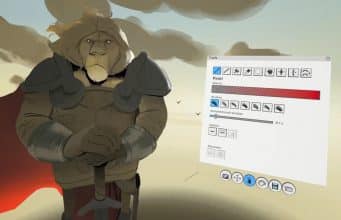
From the Developer:  Quill by Smoothstep is the VR illustration and animation tool built to empower artists, designers and storytellers. You can create fully animated self-contained VR films ready for release, or use it to produce traditional 3D or 2D artwork, or assets for a game engine. It’s designed to be expressive, precise and to let the artist’s “hand” come through clearly – whether that’s a watercolor style, pencil style, oil painting style or other.


Kingspray Graffiti – Quest, PC VR ($15)

Feature Focus: Painting

From the Developer: Creating amazing street art would be much more fun without the jail time, and now you can! Kingspray is a Multiplayer VR Graffiti Simulator, with battle-tested realistic spray, colors, drips, metallics, and more! Using a wide range of caps, ultra-detailed environments and paint surfaces, unleash your creativity (just see what some of our fans have already created!) and express your style!


Gravity Sketch – Quest, PC VR, (free)

Feature Focus:  Modeling, Design

From the Developer:  Gravity Sketch is the immersive 3D design tool that empowers you to create, share and collaborate on your best design ideas. Go beyond the bounds of 2D sketching to express yourself in a virtual studio and explore iterations of designs. Communicate design intent with greater clarity, and invite others to help shape your ideas and decision-making.


ShapesXR – Quest (free)

Feature Focus:  Design, Modeling

From the Developer:  In ShapesXR anybody can start creating in 3D without prior experience within minutes. You can design and prototype your immersive app, invite others to co-create in real-time, or present your ideas using ShapesXR storyboard feature. You can also share your creation with anybody without a VR headset via Web, the Unity plugin or just a picture for your 2D deck.


AnimVR – PC VR ($30)

Feature Focus: Painting, Animation

From the Developer:  AnimVR revolutionizes your 3D content production with a powerful timeline, virtual cameras, audio recording, fading & editing, combined with industry standard import and export capabilities, like Alembic Cache and Pixar’s USD. Hand-drawn animation in VR combines the best parts of traditional animation with the advantages of digital content creation tools. Jump right into story telling, without worrying about topology, rigging or skinning. Create environment layouts, 3D story boards, animatics and whole experiences!


SculptVR – Quest, PC VR ($20)

Feature Focus: Modeling

From the Developer: Create sprawling, brilliant worlds and explore them with your friends! Invite your friends to an online game, then race to the finish with hang-gliders, or switch to climbing mode for even more fun. Discover thousands of amazing creations in the interactive gallery then remix them however you want! When you’re happy with your creation, you can upload to the SculptrVR content gallery and let others see the incredible things you’ve made.


Masterpiece X – Quest (Free)

Feature Focus: Animation, Modeling

From the Developer:  Masterpiece X is the 3D creation platform for modern creators! It’s designed for anyone who wants to start creating in 3D but isn’t sure where to start, or those frustrated with complex tools.You don’t need to start from scratch! Get a head start with a complete model and easily remix it into whatever inspires you!


Adobe Substance 3D Modeler  – PC VR (subscription required)

Feature Focus: Modeling

From the Developer:  Adobe Substance 3D Modeler is an innovative sculpting and modeling app that aims at redefining how we create in 3D by combining VR and desktop experiences with a more natural approach to 3D modeling. Substance 3D Modeler frees you from technical constraints. With a Sparse Distance Field (SDF) engine at its core, Modeler allows you to model and sculpt without worrying about polycount, topology or subdivision levels. Sculpt away and add matter to your scene without ever the need to retopologize. Start your creation from scratch or import an existing model and convert it to clay to start sculpting.


Vermillion – Quest, PC VR ($20)

Feature Focus: Painting

From the Developer:  It’s time to discover your inner artist! With Vermillion, you get a fully equipped oil painting studio in your home, without any of the mess. Ready for the unrivaled sense of accomplishment from creating your first painting? Learn with your favorite YouTube artists using the built-in web browser, trace reference images directly on the canvas, or even better—learn to paint from (new) friends in multiplayer!


Painting VR – Quest, PC VR ($20)

Feature Focus: Painting

From the Developer:  It’s time to discover your inner artist! With Vermillion, you get a fully equipped oil painting studio in your home, without any of the mess. Ready for the unrivaled sense of accomplishment from creating your first painting? Learn with your favorite YouTube artists using the built-in web browser, trace reference images directly on the canvas, or even better—learn to paint from (new) friends in multiplayer!

Interested in seeing what talented artists can do with VR? Check out Anna Dream Brush and Rosie Summers.

Not finding the kind of creative VR tool you’re looking for? Let us know in the comments below.

11 Tools for Painting, Modeling, Designing & Animating in VR Read More »

collaborative-spatial-design-app-‘shapesxr’-raises-$8.6m,-expanding-to-apple-vision-pro-&-other-headsets

Collaborative Spatial Design App ‘ShapesXR’ Raises $8.6M, Expanding to Apple Vision Pro & Other Headsets

ShapesXR is a collaborative spatial design app built to make it easy to prototype spatial interfaces, interactions, and environments. The company announced today it has raised an $8.6 million seed investment, part of which the company plans to use to expand to more headsets.

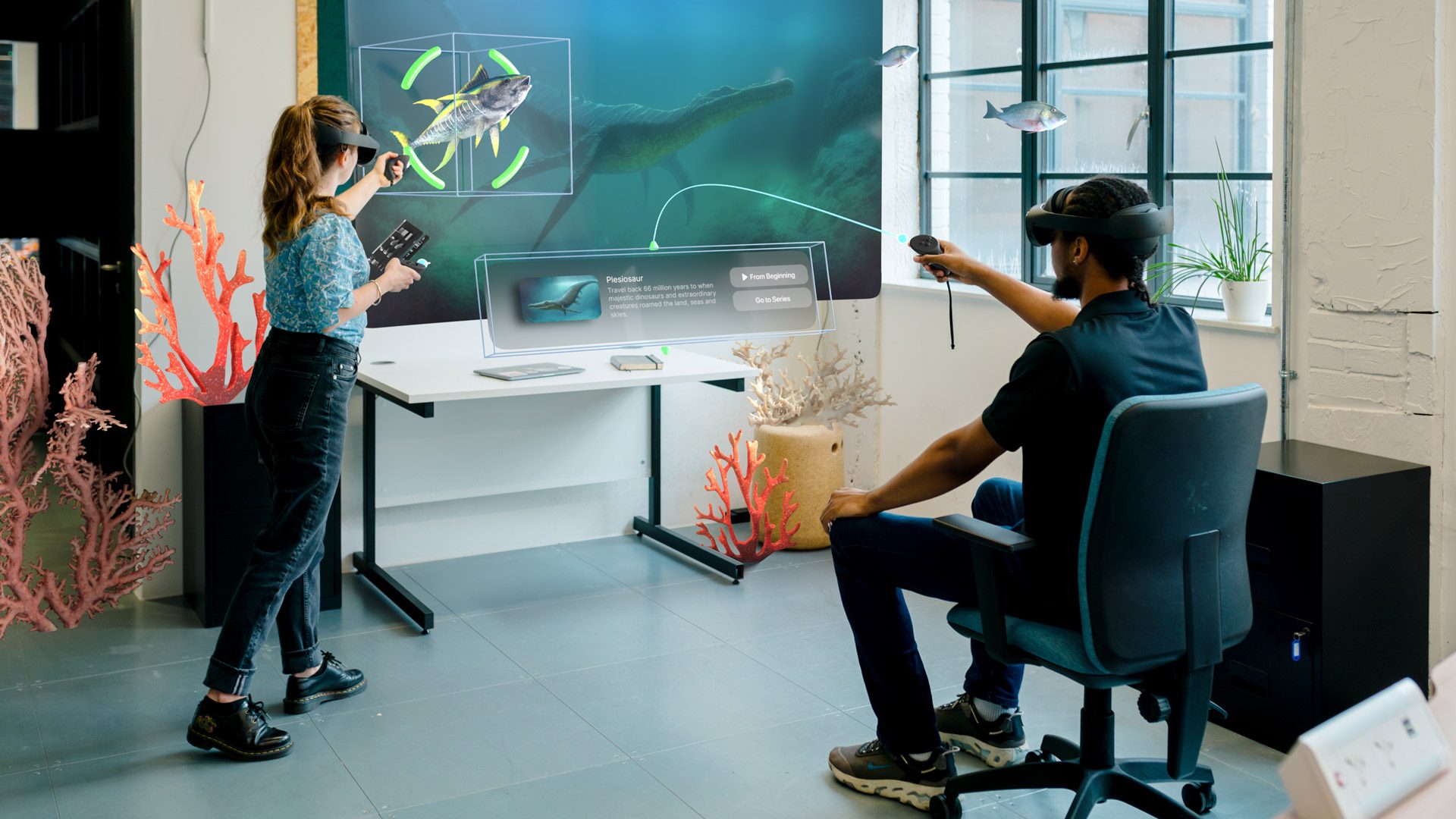
While so many VR interfaces and interactions borrow heavily (if not entirely) from existing ‘flat’ design paradigms, ShapesXR is built on the premise that in order to build spatial applications you need spatial design tools. With that in mind, the app functions like a freeform canvas that allows users to mock up designs inside of VR to understand how everything fits together at scale and in 3D. With collaborative functionality, multiple people can work on projects simultaneously.

Right now that collaboration is limited to those with a Quest headset, but as part of an $8.6 million seed investment, ShapesXR says it plans to expand the app to Apple Vision Pro, Pico, and Magic Leap headsets, opening the door to broader accessibility and cross-headset collaboration.

Image courtesy ShapesXR

The seed investment was led by Supernode Global, with participation from Triptyq VC, Boost VC, Hartmann Capital, and Geek Ventures.

Inga Petryaevskaya, CEO and Founder of ShapesXR says, “VR has such huge potential to transform how we all collaborate on projects and design new products, however, one of the main barriers to entry is the level of technical skill required to get started. ShapesXR has been built to remove these hurdles—it’s as easy to learn as PowerPoint. This truly democratizes 3D content creation and enables anyone to become a VR, AR and mixed reality storyteller.”

Beyond just creating shapes and scenes, ShapesXR also has a ‘layers’ function which lets users create slideshows of spatial content. This works like a simple flip-book animation, except in a 3D environment instead of a flat doodle at the corner of your notebook. Using the layers function, designers can prototype and show how spatial content should interact with the user, which allows design work to be done before any of the interactions are actually programmed.

“ShapesXR’s goal is to become the de facto industry standard for [spatial] UI/UX design—achieving for spatial computing what Figma did for the mobile computing era,” the company said in its seed investment announcement.

Collaborative Spatial Design App ‘ShapesXR’ Raises $8.6M, Expanding to Apple Vision Pro & Other Headsets Read More »