I took a trip to San Francisco early in December.
Ever since then, things in the world of AI have been utterly insane.
Google and OpenAI released endless new products, including Google Flash 2.0 and o1.
Redwood Research and Anthropic put out the most important alignment paper of the year, on the heels of Apollo’s report on o1.
Then OpenAI announced o3. Like the rest of the media, this blog currently is horrendously lacking in o3 content. Unlike the rest of the media, it is not because I don’t realize that This Changes Everything. It is because I had so much in the queue, and am taking the time to figure out what to think about it.
That queue includes all the other, non-AI things that happened this past month.
So here we are, to kick off Christmas week.
John Wentworth reminds us that often people conflate a prediction of what it likely to happen with an assurance of what is going to happen, whereas these are two very different things. And often, whether or not they’re directly conflating the two, they will attempt to convert a prediction (‘I’ll probably come around 9pm’) to an assurance (‘cool can you pick me up on the way?’) in ways that are expensive without realizing they’re expensive.
Your periodic reminder that if you say you’ll make a ton of money and then pursue your dreams, or then advance the causes you care about, the vast majority of the time this does not actually happen. Not never, but, well, hardly ever.
Journalist combines two unrelated statements from Palmer Luckey into an implied larger statement to effectively fabricate a misleading quote. It does seem like journalists are violating the bounded distrust rules more and more often, which at some point means they’re moving the lines involved.
I feel like I’ve shared this graph before but seems worth sharing again (via MR):
An important note from Michael Vassar: People rarely see themselves or their group as ‘bad’ or ‘evil,’ but often they do view themselves as ‘winners’ rather than ‘good.’ Which is a very different morality, and you can guess what label I’d use for such folks.
Starbucks recycling, like much other recycling, isn’t actually a thing that happens.
Sam Knowlton: Recycling is a psyop to convince people that plastic can be used abundantly and sustainably without consequences.
Of all the recyclable #5 plasticware waste generated in the US only 1% is recycled.
As a clean (with respect to the things this blog cares about) example of the kind of accusations being thrown around by a certain type of person, that very much rhyme with certain accusations in other areas including AI, in case I want to point one later: I saw this example where Mario Nawfal got 15m+ views for saying ‘Biden paid Reuters $300m for targeting Elon’s companies’ based on Mike Benz (who also got 15m+ views and got Elon Musk to reply with a 100% sign and called this ‘lawfare’) stating the facts that:
-
The government gave Reuters $300 million in total government contracts, mostly for various data analytics services to Thomson Reuters Government Contracts, a distinct subsidiary of Reuters.
-
Reuters did investigations of Musk that were unkind, for which they won the Pulitzer Prize for National Reporting.
-
No claim as to how #1 and #2 are related.
-
Therefore conspiracy and government funded attacks on Elon Musk!
No, seriously, here is the full argument, with the entire comments section cheering on how awful and illegal all this was:
Mario Newfal: The Biden administration gave $300 million in government contracts to Reuters while 11 federal agencies investigated Elon’s businesses—Tesla, SpaceX, and X.
During this time, Reuters received millions from these agencies and won a Pulitzer Prize for reporting on “misconduct at Elon’s companies.”
This means taxpayer dollars funded media attacks on Elon! It’s a coordinated effort to undermine one of America’s most innovative leaders.
Elon keeps building; they keep scheming.
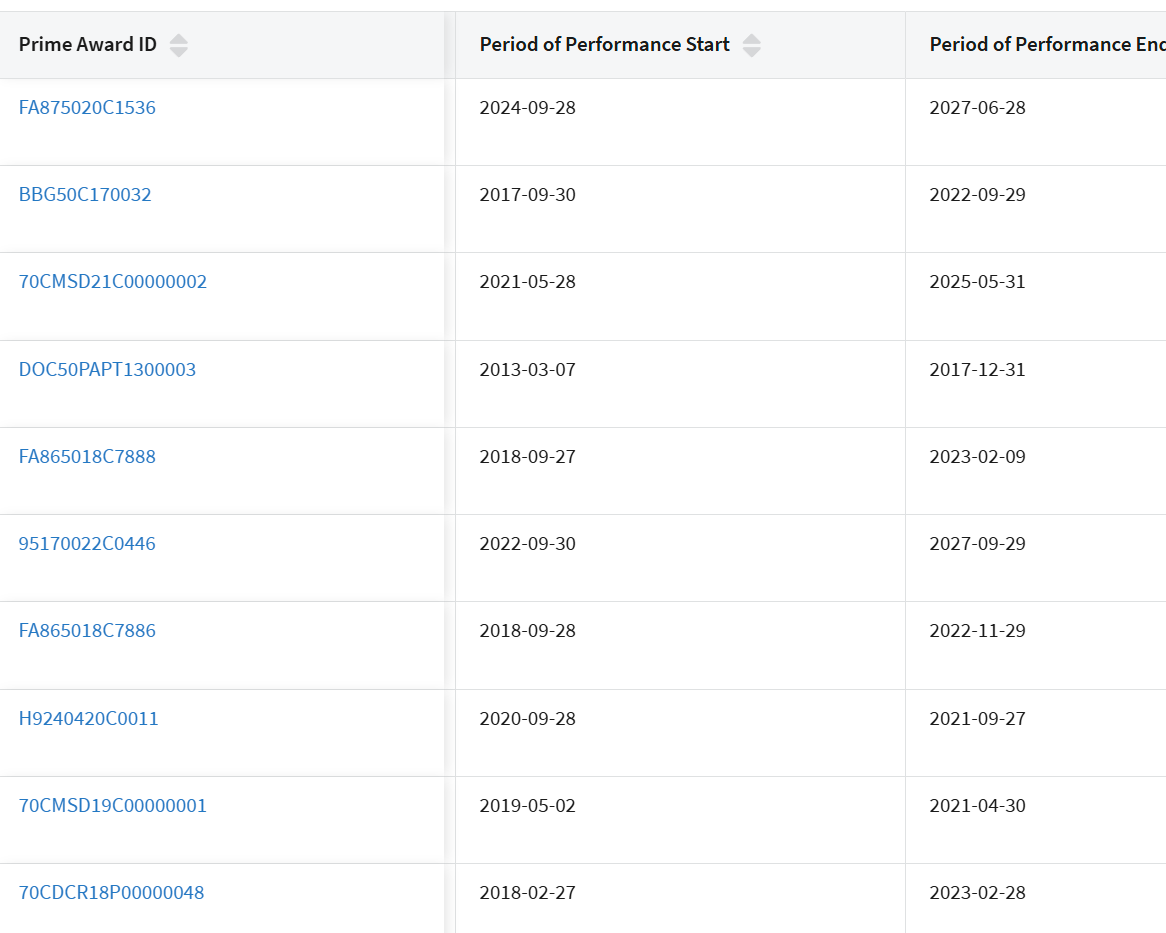
It’s all one big government operation and conspiracy, man. Except not only don’t these posts have any evidence or causal story whatsoever here, not even a fig leaf of one, these contracts are not even larger under Biden than you would have expected from what they got under Trump. If you do a search on the very database he links to and extend it back another 4 years to include the first Trump administration, and sort by contract size, you get this:
As in, 7 of the 9 biggest contracts to Reuters in the past 8 years began under the Trump administration and the long tail looks similar. On so many levels there is absolutely nothing here. When I ask who seems more likely to put their finger on the scale of unrelated government contracts on the basis of news coverage, I think we all know the answer.
Career advice from Richard Ngo, aim to become the best at some broadly-leverageable thing, which can include being the best at the intersection of A, B and C.
Antonio Brown apologizes to Polymarket CEO Shayne Coplan for his role in Kalshi’s campaign to insinuate wrongdoing in the wake of the raid on Coplan’s apartment.
Tyler Cowen asks, should we try to bring back public hangouts? He says yes that would be good, but it seems impossible, and mostly looks at the reasons for the change.
Seriously, as I said on Twitter, I love economists, never stop economisting:
Tyler Cowen: A bigger change is that average walking speed rose by 15%. So the pace of American life has accelerated, at least in public spaces in the Northeast. Most economists would predict such a result, since the growth in wages has increased the opportunity cost of just walking around. Better to have a quick stroll and get back to your work desk.
I am tempted to reply with something wonky about marginal incentive effects not obviously pointing in that direction, or how the opportunity cost is mostly about substitution effects on leisure time instead, but mostly I just want to bask in it.
The biggest change in behavior was that lingering fell dramatically. The amount of time spent just hanging out dropped by about half across the measured locations.
…
The internet and mobile phones are likely driving this change in behavior.
I think faster walking, when you are alone, is mostly great. It doesn’t only get you where you are going faster, it’s better exercise. A slow walk alone can be nice but on average it’s mostly a skill issue. If you’re with someone else, then yeah, walk slow, have a chat.
As for outright lingering, yeah, I think this one is opportunity costs from better leisure options, the same as most everything else. Why would I linger at Boston’s Downtown Crossing, or another public square, and let serendipity happen, given the other options I have?
Did you know average cow milk yields are continuing to steadily rise and are about five times where they are in 1950? Which was already five times as productive as medieval cows?
Community Notes on Twitter extends to links. Now stop throttling them, please.
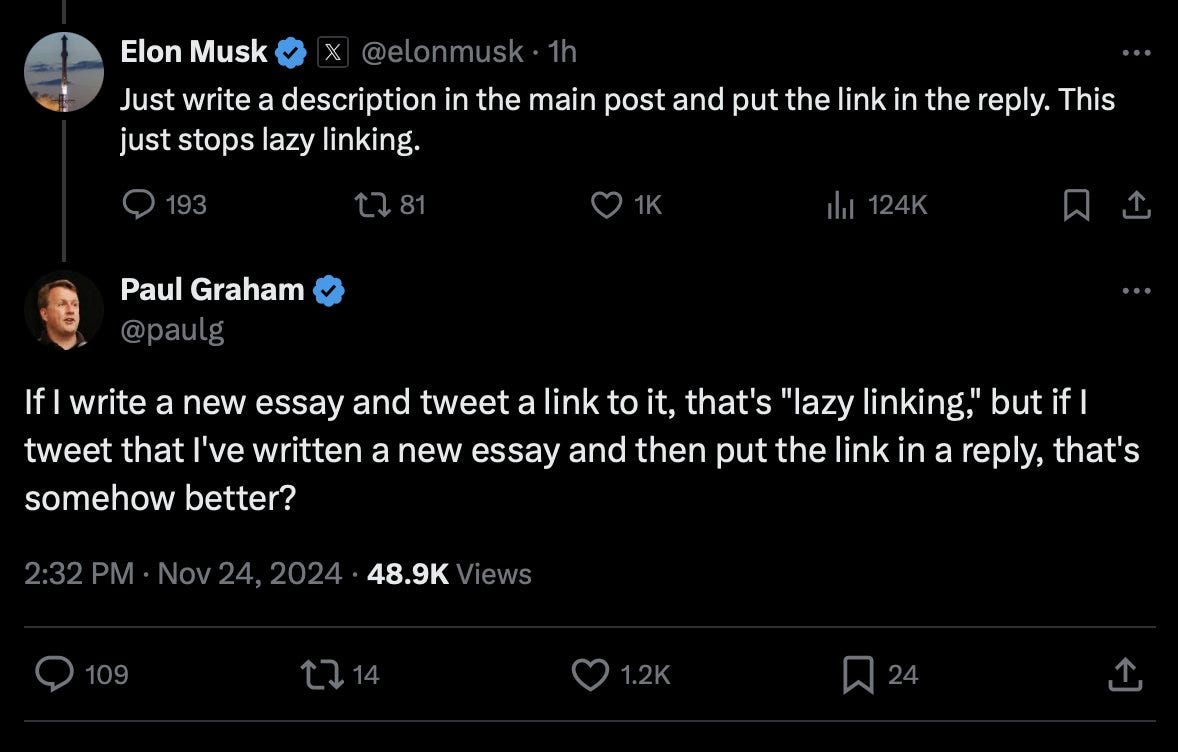
Elon Musk instead outright says ‘just write a description in the main post and put the link in the reply. This just stops lazy linking.’
Chris Prucha: Watching this ratio like it’s tyson vs paul🍿
As in, he’s putting a large tax on linking, since putting it in the reply will dramatically decrease rate of clicks through. Which is the point.
The whole thing continues to be a giant middle finger to every Twitter user.
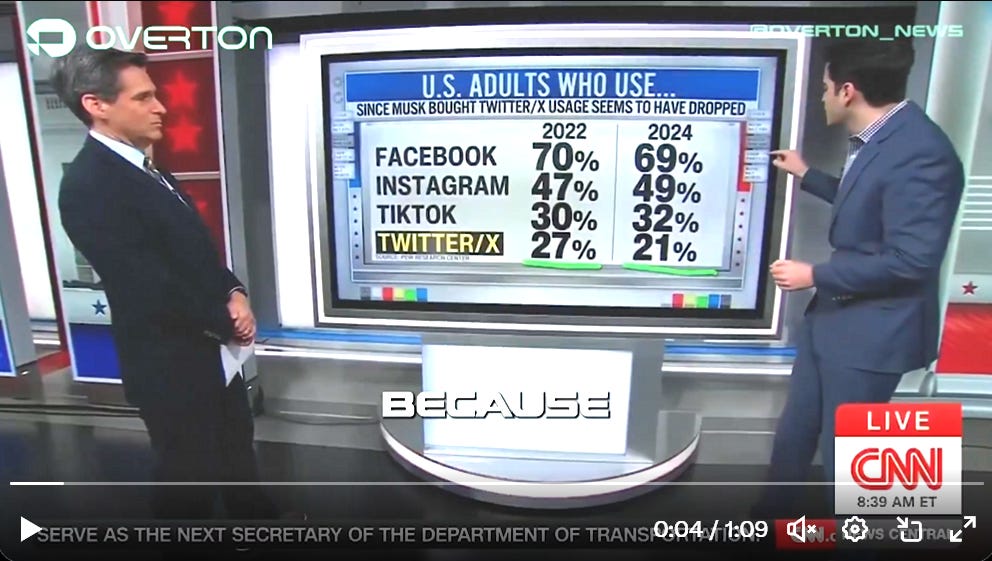
In rival news, BlueSky is rapidly on the rise, and has caught Threads.
Adam Thierer: In recent years, we’ve repeatedly been fed a bed of lies about supposedly unassailable “digital monopolies” when, in reality, competition is always developing in unexpected ways.
These days my head is spinning trying to figure out which social media platforms (X, Bluesky, LinkedIn, Threads, Mastodon, etc) I should be focused on. I’m trying to touch all these bases myself while also keeping up with all the other traditional platforms and outlets out there. It is completely overwhelming.
I suppose it’s only a matter of time before the pro-regulation crowd switches their argument and petitions government to end all this “ruinous competition” through interconnection / interop mandates. But, before that happens, let’s be clear that this splintering of social media is happening without any sort of unnatural external pressure from govt authorities. Once again, organic social and market forces worked their magic. The only problem is it works so well! Now we just have too many damn choices.
Now, excuse me while I go post this same rant on 5 other “digital monopolies.” 😂
BlueSky at that time was still less than 10% the size of Twitter. There are obvious parallels to what happened with Mastodon, which quickly fizzled out.
Yet this time feels different. With Mastodon, it felt like performative anger. People were announcing their moves like they were morally superior. Not this time. This time, the people moving are talking about it practically. They are serious.
The pattern is that the most progressive members of Twitter, and those who move in related circles, are mostly the ones splitting off into BlueSky. They claim Twitter is all MAGA now, I can confirm many times over that many they believe this, but it is all about how you use the site. I don’t encounter any of that, because I don’t interact with the relevant content.
Some people, it seems, think BlueSky is like ‘old Twitter’ and now has all the nerds and think the changes like getting rid of block and prioritizing video ruined it.
Also some sad stats:
From all reports, BlueSky is ‘like old Twitter’ in some ways, especially in the sense that Old Twitter was D+42, and in that it was largely a left wing echo chamber. Which in turn meant that other spaces did not have those people, and leaned further right, while the left wing echo chamber acted as an exclusionary rather than inclusionary force. Also, yes, more people looking to understand things or win at politics should be reading Tracing Woods, who I have met and is delightful.
This response to All Day TA is cited as an example of how this works.
Having this as a clientele puts BlueSky in a strange position, for example with its user base refusing to accept the idea that Jesse Signal might have an account and post with it, and reportedly pushing hard to have him banned for (essentially) being Jesse Signal.
My current view of BlueSky is that those who leave Twitter for BlueSky are usually improving both social networks. Everyone wins from them being distinct. Bubbles are not always a bad thing.
If you’re seeking ElonBucks, consider that you’ll get something on the order of $0.16-$0.24 per reply, with the bigger tweets giving you relatively low payments, as you get rewarded for engagement from blue checks whereas big Tweets bring out the bots.
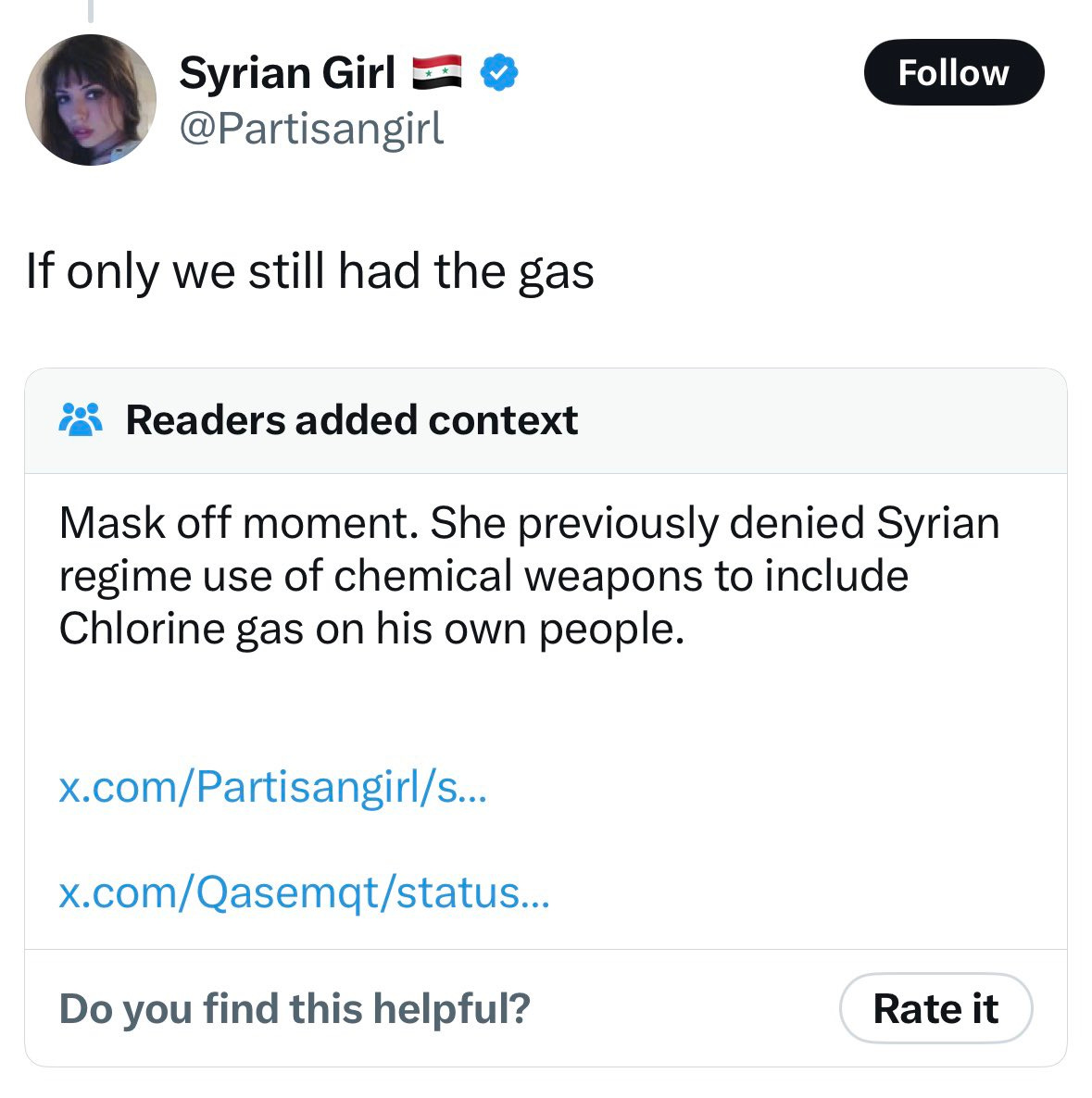
Community Notes is a miracle of the modern age. Is it over?
Richard Hanania: “Readers added context: mask off moment.”
This is the end of the old Community Notes. Now it’s about editorializing. These things always start off targeting the least sympathetic before expanding. Shame.
I strongly say no, and believe this is an important principle. I often see people dismiss norms when they see even one clear instance of ‘getting away with it’ or non-enforcement, or the start of a potential slippery slope, as if these things must be absolute and stand up to rigid definitions, or they’re worthless, doomed or both. And that simply is not so. Lots of rules, including most laws and norms, constantly face this sort of pushing and pushback, and are muddling through, often for a very long time.
Should Community Notes call this a ‘mask off moment’? No, but Community Notes is just people, and occasionally they’re going to do that sort of thing in this kind of spot. To illustrate, after Hanania drew attention to this, the note was voted off this post.
DOGE will be aiming to target regulations using pauses followed by review and reviticism. As Vivek Ramaswamy and Elon Musk point out, it is mostly about getting rid of regulations, not getting rid of headcount. Government union representatives had an op-ed response, and it is exactly what you would expect. Here is a report on the DOGE ramp-up attempt.
DOGE is looking for regulations to target. How do you tell them about this? It seems that you literally DM them on Twitter. That is literally what I have my ops person at Balsa doing for the next few weeks, gathering together properly formatted pitches to DOGE, starting with repealing the Jones Act and Dredge Act of course.
Jennifer Pahlka put out this widely praised post about how hard DOGE will have it when up against all the legal barriers, and how people like Musk willing to brazenly do things people say are illegal might be our best hope in spite of it, not someone like her who has studied the issues but would be too timid to act. Sounds like she should advise?
More than that, what this is saying is, the law has tied all this up in knots. So what we need, ultimately, is not DOGE. DOGE is potentially helpful but not good enough. What we need is new law, to get rid of old law. I realize this would be very difficult, but the first step is having it shovel ready. Is anyone actually writing the ‘make it so the government can do reasonable things without avalanches of lawsuits’ bill? The one that would actually work? At some point we might get an opening.
How many jobs will they cut? Market at time of writing this says 76k, but with a long tail and a 13% chance of over 1 million which means the mean is substantially higher.
Also hopefully they’ll look at government hiring, now that Elon Musk has noticed that the process is unbelievably stupid? Also he’s now following Alec Stapp, which is pretty great.
For those who don’t know, from the above link: If you want to get hired for a government job, you need to literally cut and paste the exact language in the job description into your resume, then in your self-assessment fill out ‘master’ for everything, or you’re ngmi. So, I suppose you’ll want to do that.
Things are going to be interesting with Jim O’Neill backing up RFK Jr at HHS.
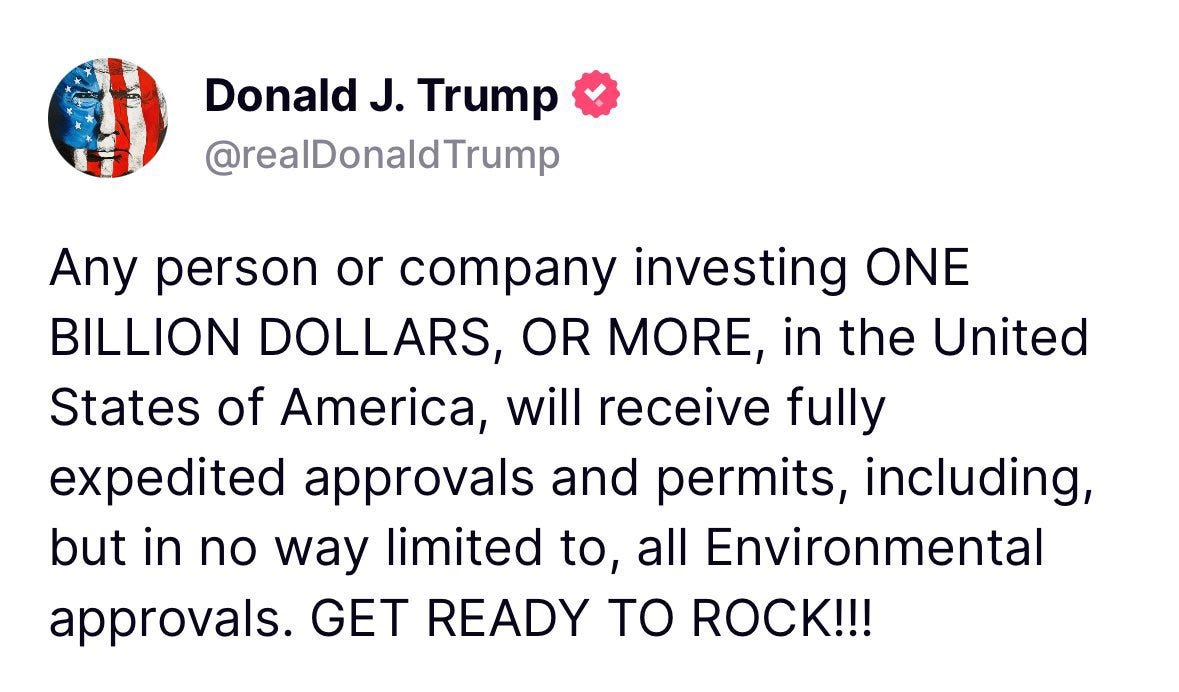
Someone explain to me how he intends to provide these ‘expedited permits’?
Doge Designer: Bullish on America 🚀
Donald Trump: Any person or company investing ONE BILLION DOLLARS, OR MORE, in the United States of America, will receive fully
expedited approvals and permits, including, but in no way limited to, all Environmental approvals. GET READY TO ROCK!!!
Also, if you can do this at all, why not expedite all the permits? Rather than make the billionaires and mega corporations the only ones who can build anything, forcing everyone to partner with one of them?
And one might want to balance that bullishness. He’s studied automation and he’s coming out firmly against it:
Matt Parlmer: This is not going to make America more competitive.
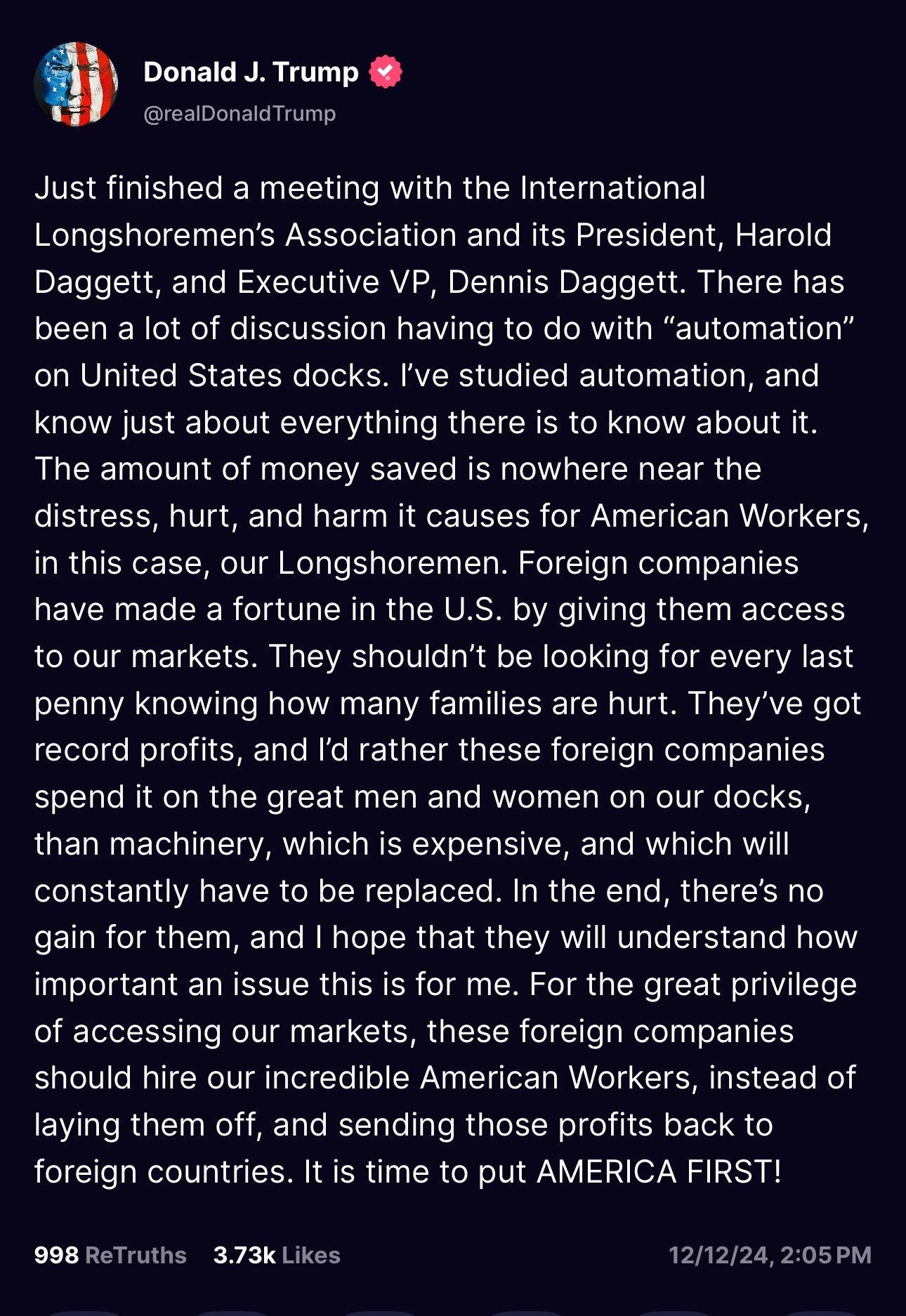
Donald Trump: Just finished a meeting with the International Longshoremen’s Association and its President, Harold Daggett, and Executive VP, Dennis Daggett. There has been a lot of discussion having to do with “automation” on United States docks. I’ve studied automation, and know just about everything there is to know about it. The amount of money saved is nowhere near the distress, hurt, and harm it causes for American Workers, in this case, our Longshoremen.
Foreign companies have made a fortune in the U.S. by giving them access to our markets. They shouldn’t be looking for every last penny knowing how many families are hurt. They’ve got record profits, and I’d rather these foreign companies spend it on the great men and women on our docks, than machinery, which is expensive, and which will constantly have to be replaced. In the end, there’s no gain for them, and I hope that they will understand how important an issue this is for me.
For the great privilege of accessing our markets, these foreign companies should hire our incredible American Workers, instead of laying them off, and sending those profits back to foreign countries. It is time to put AMERICA FIRST!
Is it worse if he knows this is not how any of this works, or if he thinks this actually is how any of this works?
I predict that Trump’s statement opposing port automation was a substantial misstep. There is a certain crowd that really wants to be optimistic about making things work again, and this is a very clear negative signal to them.
Bending the knee to the dockworkers shows weakness, and has extremely bad vibes.
Homeland Security modernizes H-1B program effective January 17, 2025, from the summary the big changes are expanded eligibility for founders with controlling interest in the petition, and nonprofits and research entities being exempt from the cap. That last one is a huge deal.
Agus: One implication of this rule is that it should allow a broader set of nonprofits in EA/AI safety to leverage cap-exempt status for H-1Bs, allowing research to be a “fundamental activity” (among many) rather than the org’s primary activity.
HS2 in the UK forced to spend 100 million on a bat tunnel despite no evidence of any way the trains in question interfere with bats. The details keep somehow making it worse.
Tesla to use Native American tribes to get around dealer requirements for auto sales. This falls under ‘why did this solution take so long to find’ and also ‘haha sickos.’ You love to see it.
Welcome to being a CEO in the EU with over 40m in revenue, now please report these 649 environmental and social indicators.
Hotels are still mostly failing to let you check in on your phone. Various replies say chains get close or work sometimes, Hilton seems to be ahead of the curve here where it usually works, with Marriott claiming to do it but mostly not working. Nate Silver reports the MGM hotels in Vegas do it, makes sense Vegas would be ahead of the curve. On my most recent hotel trip I was not tempted to try to check in online.
Google introduces Willow, an advancement in quantum computing. I frankly have no idea how impressed I should be, or in what ways I should update or what impacts I should expect, beyond a lot of people reporting being impressed.
Google has had ‘loss of pulse alerts’ working for months in Europe on its watches and it’s ready to go but the FDA keeps saying it’s better to let people die, instead. The lives saved number in the thread seems way too high, but I also don’t see the downside.
Joe Weisenthal: Riding in an Uber after a Waymo feels like going from an iPhone to a flip phone.
Whether Waymo can scale like the iPhone did. Obviously a totally separate question. But just as an experience, the difference is stark.
Having ridden in Waymos myself now, I do not want to go back.
And yes, they are everywhere in San Francisco, my eyes confirm this:
liz: prolly about 15-20% of all the cars i see on regular basis in sf are waymos now. rest of the country doesnt recognize how real this is.
Tyler Cowen points to a new working paper from Kevin Lang, that notices that under reasonable assumptions, it would take a t-score of 5.48 to reject the null hypothesis in an economics paper with 95% confidence, with 65% of narrowly rejected hypotheses and 41% of all rejected hypotheses remaining true. Notice that this is the optimistic conclusion that assumes everyone’s methodology is good and no fraud or large mistakes are involved, so it is much worse than this.
Scott Aaronson responds to Google Willow’s advances in quantum computing. Basically, yes it’s a cool advance, but don’t get overexcited yet.
In case it needs to be said: You find a way to rebuild Notre Dame. It is in the 99th percentile of things people spend money on to rebuild Notre Dame. If your ethics and world impact modules suggest that the world should not rebuild Notre Dame, or that marginal ordinary ‘effective’ charity spending would be better than rebuilding Notre Dame, please go and fix your modules accordingly. Thank you.
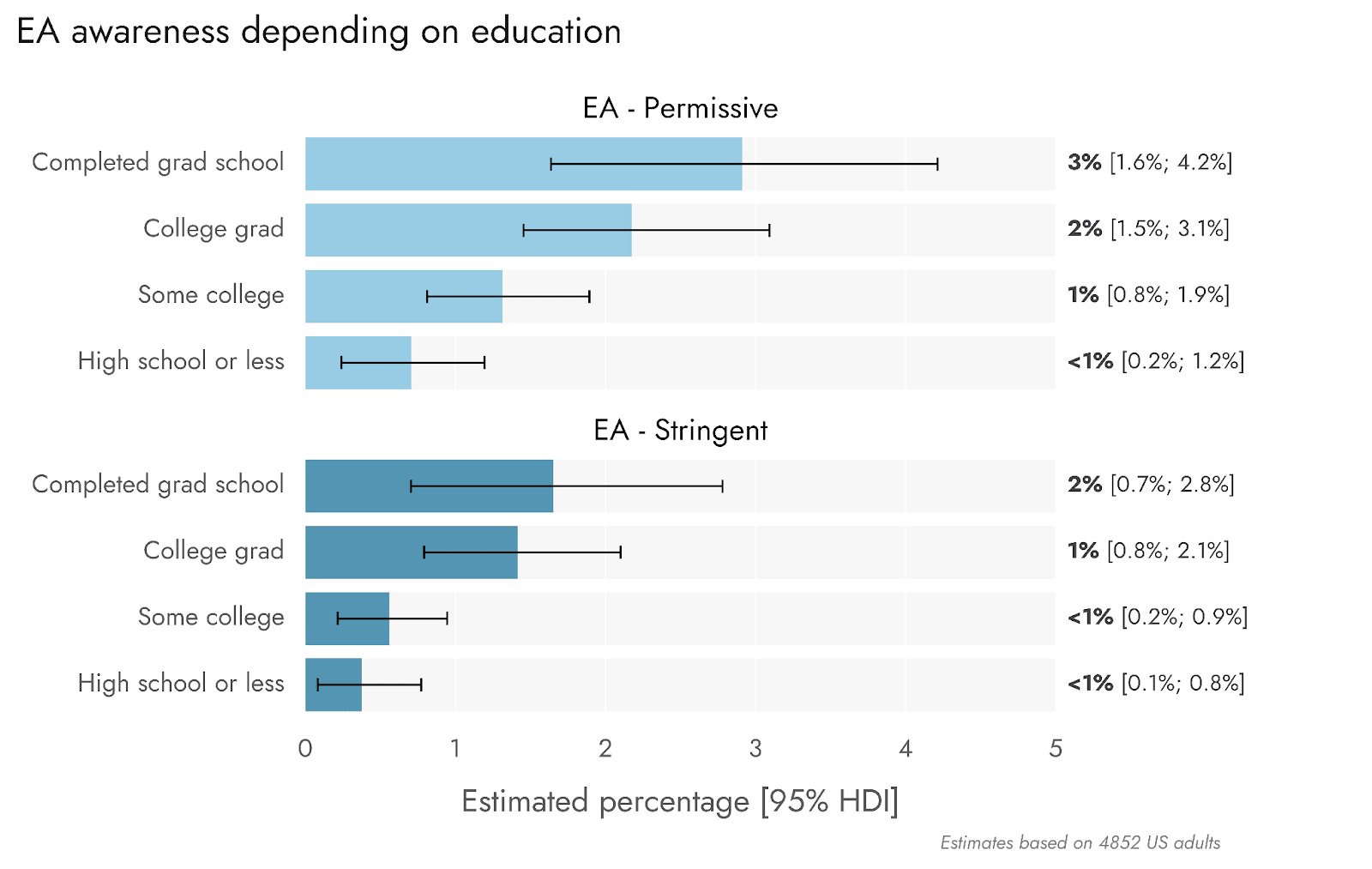
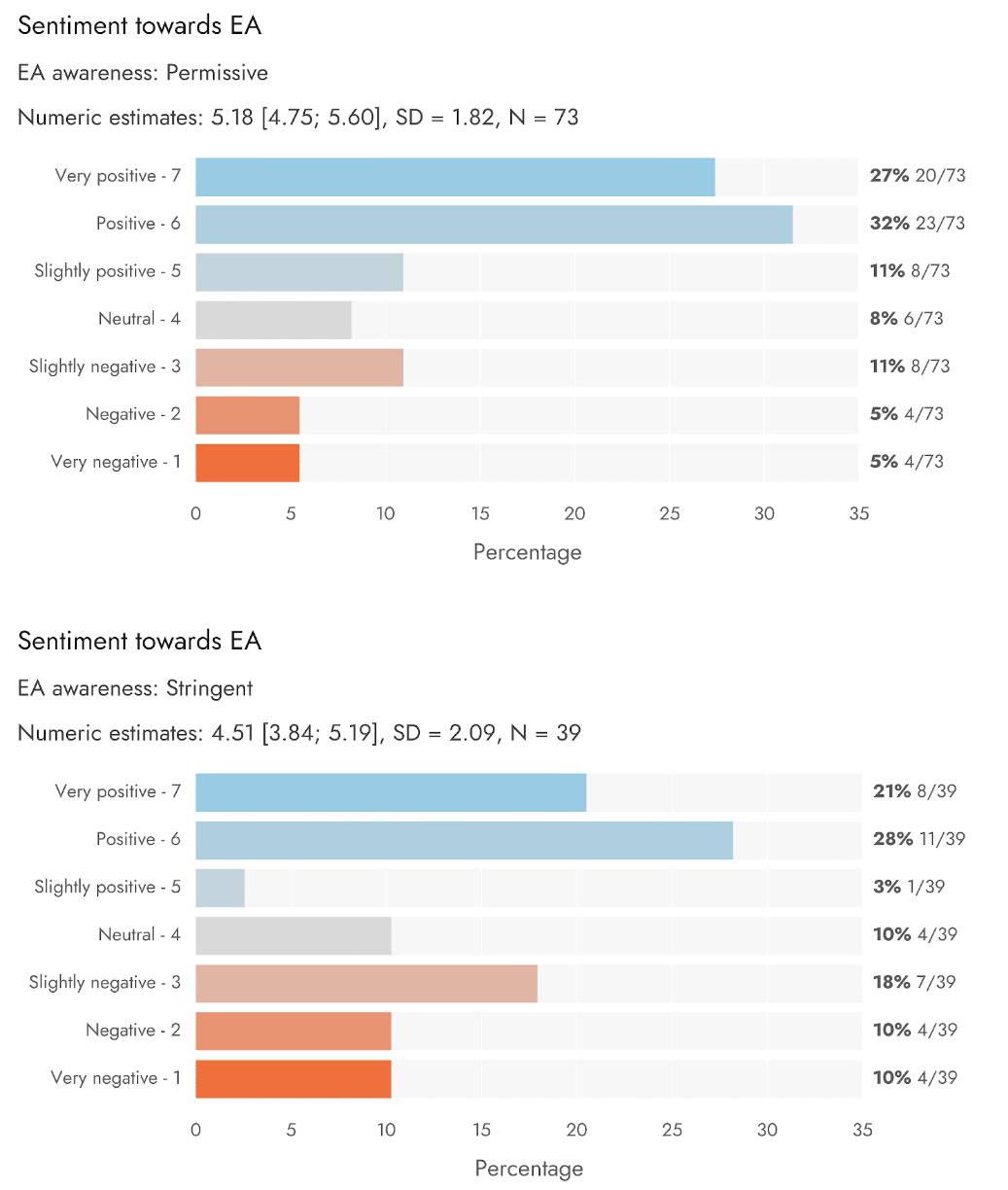
No one has even heard of effective altruism in any meaningful way.
Rob Wiblin: Who has heard of effective altruism and can demonstrate they’re not confabulating?
Roughly nobody, even among people with advanced degrees.
(~1% of total population, ~3% of grad school finishers.)
If you go to ‘has heard of EA at all’ it’s 12%, but they mostly know nothing more.
Of the 1% who actually know what EA means, their attitudes are generally positive.
Sentiment is far more positive among those who don’t know what EA is, if an advocate tells them what EA is, but the issues with that measurement are obvious.
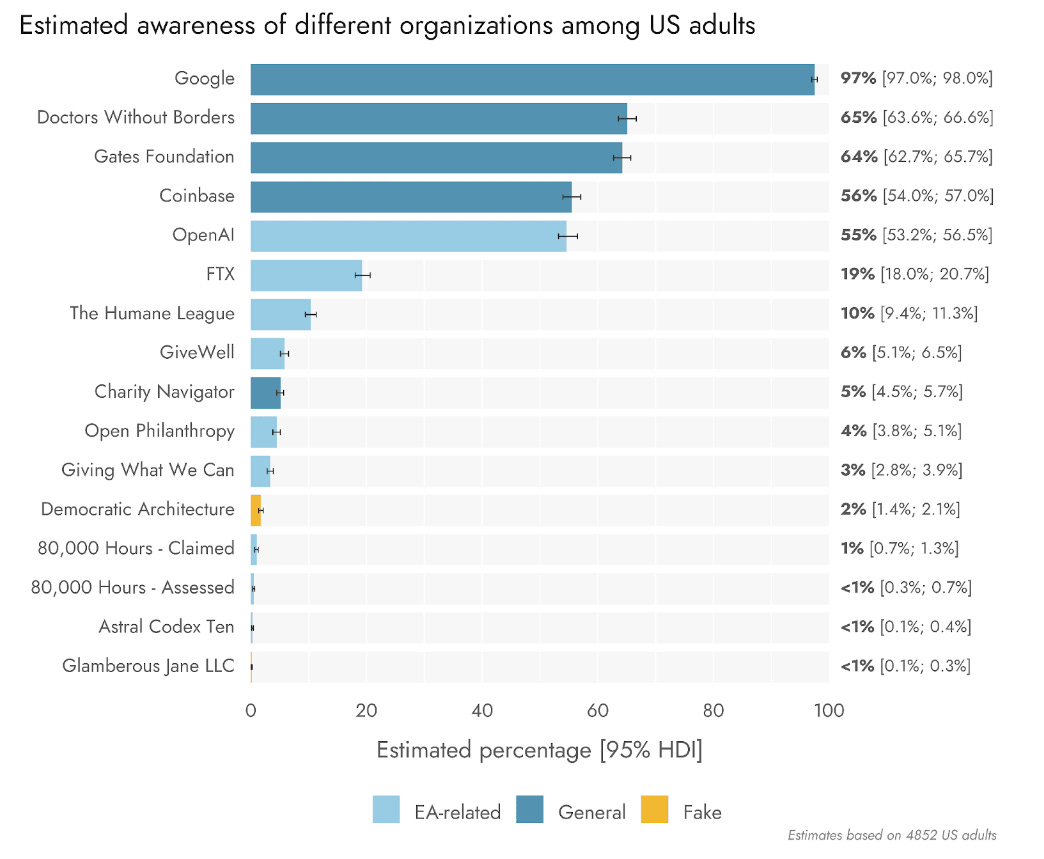
This is a good touching of grass for what regular people have even heard about:
This lack of knowing anything about EA caused EAs generally to greatly underestimate the reputational damage they took from FTX and SBF. As Oliver points out, this is a general point – most of the time most people don’t think about you at all, and most people haven’t heard of and don’t care about most things. So if you do a general population survey mostly all you detect are the vague vibes, but that is very different from what they would find if suddenly they did care, or what the people interacting with you will care about.
The AI situation is similar. Americans hate AI, don’t want AI, and support regulation of AI. The vibes are terrible. That doesn’t mean they actively care much yet, and it isn’t inherently that predictive of what their opinions will be once they do care.
Ever since some combination of FTX and the Battle of the Board at OpenAI, there have been systematic hyperstition attacks made against Effective Altruism (and also anyone else who wants to not die from AI) – attempts to lie about social reality and how everyone hates EAs and they are outcasts and low status and so on, in order to convince others to make take those lies and make them true. Noah Smith is the latest to join this.
I suppose I am modestly disappointed by Noah Smith there, whereas I no longer know how to be disappointed by the hysterics of Marc Andreessen, such as those he is replying to here.
Here are some charts on how EA conferences are doing, with 2024 seeming to show declines. I don’t presume this is a good measure of how EA in general is doing.
If you own the business or can choose what it expenses, you probably could do a lot more expensing without taking on any substantial risk.
Fast (and free) shipping is truly beloved.
Ryan Peterson: Fast shipping can have 5x the sales impact of a super bowl ad.
This is another reason to highly value Jones Act repeal. If we speed up transit within the United States, that can have a big impact on reshoring production.
An unusually frank, self-aware and seemingly balanced view of the costs and benefits of meditation. If one takes this description seriously, and I do, meditation clearly has high opportunity costs and net negative story value. There are benefits, I believe those exist as well, but it made me more confident in my decision not to go seriously down that road. The key benefit that’s missing and might have sold me on it, given Sasha Cohen wrote this, is that this doesn’t let you marry your own Cate Hall.
Grim analysis of Russian economic outlooks, especially if the war is not halted. Things held up well for a while, but at some point the costs add up and the reserves run out, and things start to escalate. First slowly, then quickly.
Many say (here Robin Hanson and HatingOnGodot) that public speaking is easy if you don’t respect a single soul in the room, they will read your disdain for confidence. You can also actually be confident or not care what they think, those works as well.
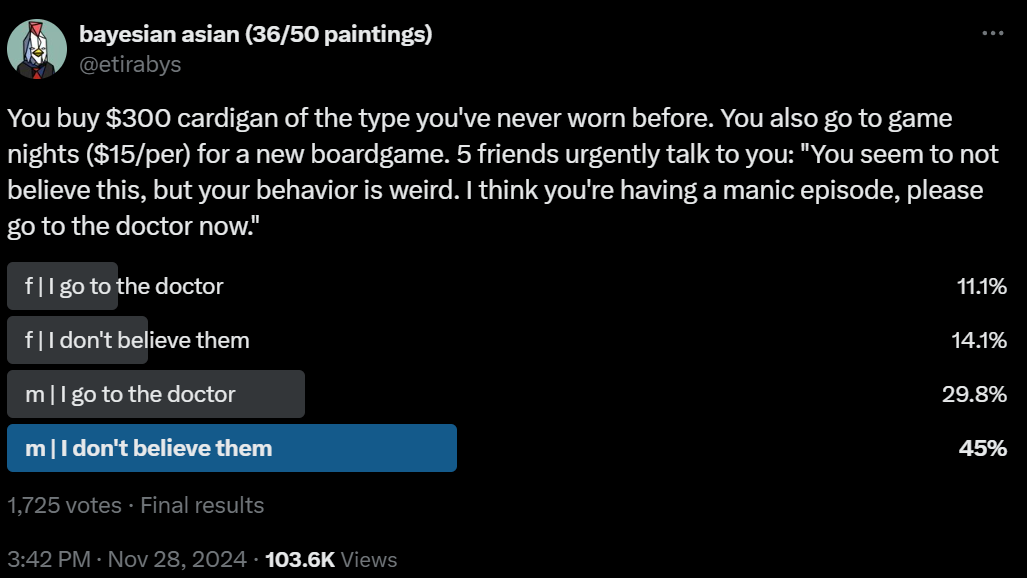
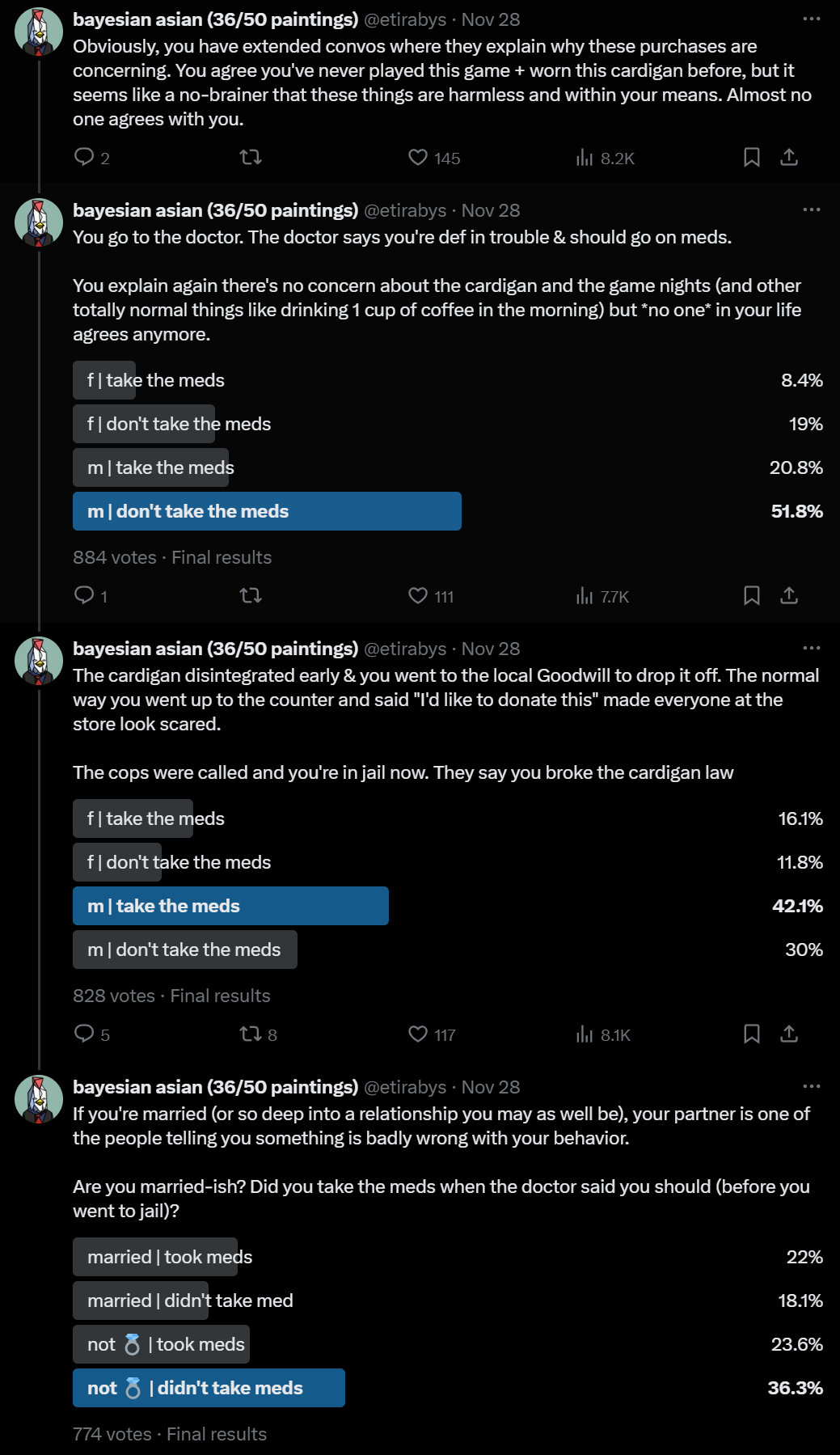
A thread of polls that asks what it would take before you would let your trusted friends convince you to go to a doctor for what they say is a manic episode, despite you not seeing why any of your new behaviors should be concerning.
And when the doctor says you need meds and everyone around you agrees, a large majority won’t take the meds, although a majority of married people would if those warning them included their spouse. But as Paul says, that’s what being crazy will often look like when you’re crazy.
The cops additionally arresting you for a seemingly insane reason got a 60% majority to take the meds, but a lot of people still wouldn’t do it.
It seems rather obvious that people are wrong here. Your close friends all saying you need to see a doctor is rather strong evidence. The doctor then telling you they’re right and you need meds is very strong evidence you need meds. Yes, this means you can in theory be ‘hacked from the outside’ but that is supremely less likely than already being hacked from the inside (and if you’re delusional about all your friends telling you that you need meds, then you definitely need meds!).
The keys here are that almost no one agrees with you, and you don’t know why.
I don’t generally let it bother me much if a majority thinks I’m crazy or wrong.
I do let it bother me when it is essentially everyone, and I don’t have a damn good model of why they’re think I’m crazy or wrong. I probably am.
However, if I have a good model of exactly why they all think I’m crazy, then it might be time for ‘they all thought that I was crazy, but I’ll show them!’
Nate Silver makes his case against eliminating daylight savings time, saying it will cost daylight, and we should save the daylight instead. I say no, we should kill daylight savings time. If schools and companies and businesses then want to adjust their start times, then go ahead. There’s nothing stopping you. In particular I think Nate is being rather unfair in his assessment of the cost of the clock adjustments. Indeed, he proves too much – if clock adjustments are almost free, why not have more adjustments?
What makes a good Royal Navy Officer? Motivation. Motivation matters more for performance evaluations and advancement to leadership than general intelligence or personality traits. Does this mean intelligence is not so important? Perhaps for this particular job it is so, especially in peacetime and until a high level is reached, more than that I would say it is a liability.
The question is indeed who wants to be a Royal Navy officer? Who wants to work hard at that for many years? Being intelligent is a highly double edged sword. If you are the Royal Navy, the highly motivated might not be the best talent, but they are the best talent you can hope to retain.
What does it take before you should trust someone else’s advice on what to do?
As always, some people need to hear this, some need to hear the opposite.
Daystar Eld: Your wants and preferences are not invalidated by smarter or more “rational” people’s preferences. What feels good or bad to someone is not a monocausal result of how smart or stupid they are.
The post is about one form of the Valley of Bad Rationality, where (as a summary of the post’s key points here) you think that you shouldn’t do ‘irrational’ things like eat ice cream (it’s a superstimulus!) or want to share housework (they earn more than you, their time is more valuable!), or feel hurt, or have different preferences than that of your community, and so on. And you definitely shouldn’t let someone bully you with logic into giving up your desires or preferences, even if they aren’t legible. Not everything you think and do and want and insist upon needs to pass a strict logical test all the time.
Beware requiring everything to be legible or logical, especially on every level at once.
You can absolutely take that principle too far. This here I think is simply wrong:
Daystar Eld: If someone else tells you that something you’re doing or thinking is irrational, they need to first demonstrate that they understand your goals, and second demonstrate that they have information you don’t, which may inform predictions of why your actions will fail to achieve those goals.
I need to understand your instrumental goals in context, and every little bit helps, but I absolutely do not need to understand your overall goals except insofar as they are relevant to the actions in question.
I also need some epistemic advantage – which often is actually ‘I understand what your goals are better than you do’ or yes sometimes ‘I am more skilled or smarter’ – but that need not take the form of information. If I have the same information you do, and we are both focused on the same goal, then yes one of us can plausibly be much better at figuring out what to do from there. That doesn’t mean you have to trust it.
First 20 seasons of Law & Order now on Hulu! Woo hoo! I’m not currently watching this on the elliptical, but it’s absolutely great for that.
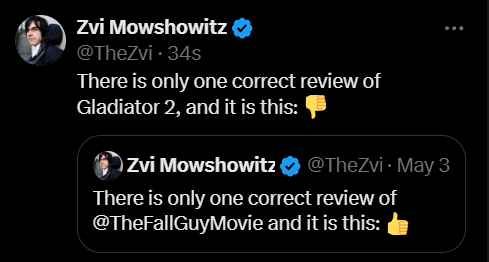
I didn’t realize I was setting this up, but it turns out I was (2/5 stars):
So of course I was delighted that Bret Deveraux not only fully agreed with me (he was kinder on the action scenes than I was, I wasn’t impressed, we agree that Denzel Washington was by far the best part), he also decided to waste a lot of time with two long posts dedicated to nitpicking the film. I knew the film had historical accuracy issues, and I knew I didn’t know the half of it, but even accounting for not knowing the half of it… I definitely did not know the half of it. Wow. They Just Didn’t Care.
I hope to have a 2024 year-in-movies spectacular post, if I find the time. For now, I’ll say I still think The Fall Guy is my favorite movie of 2024, followed by Megalopolis, but I’m realistic and unless something blows me away from the end-of-year releases at the awards shows I will be rooting for Anora.
Tyler Cowen says India has the best food, with $5 meals there often better than Michelin star restaurants in Paris. I too am not a big fan of the Michelin stars. I do buy his case that ‘when everyone is a food critic’ standards rise, and I think the rise of online reviews is a lot of why food has been rapidly improving (and it has!). And I buy that India punches ‘far above its weight’ here and relative to its prices.
But I think the full claim mostly says something very particular about Tyler’s preferences (although I have never been to India so anything is possible). I think this also links in to Scott Alexander and the discussion on taste – Tyler is largely identifying a particular type of taste that he loves, that is highly present in India.
He also mentions that reservations are not a problem, ‘unlike in London or New York.’
Whereas my experience in New York is that reservations are only required at a handful of places, as long as you are not going at peak times on Friday or Saturday night, or to peak brunch, or trying for one of a handful of the hottest places, half of which will still let you sit at the bar if you show up early. My solution is simply that the few places that are hard to get into don’t exist unless someone else gets me a reservation.
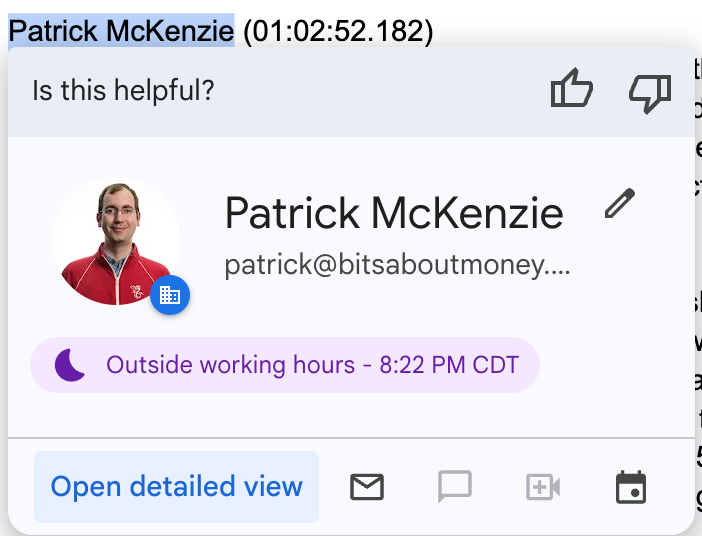
Patrick McKenzie: I do not know what product manager at Google Docs decided that every time I see my own name I would prefer to be reminded by a fly-in card of who I am, what my schedule is like, that I am currently outside of my business hours, and options to email/etc myself, but I urgently want that individual to edit a transcript sometime while on deadline.
That “Was this helpful?” reminds me of Camellia from Wrath of the Righteous, whose catch phrase is “I am helpful, am I not?” and who is lawful good by comparison to the slow-moving interruptive doesn’t-actually-disable-it feedback form which pops if you thumbs down the card.
Had to serially select my name to perform editing of the transcript.
Patrick McKenzie points out that with notably rare exceptions essentially everyone prefers the chargeback system ot the legal system, where the chargeback system is extremely punishing to anyone who gets chargebacks, which means that customers can explicitly break off their agreements and avoid cancellation fees and such if they ever feel like it, and only a few businesses (like many gyms) will find it worthwhile to fight back.
I realize living in Japan is part of it, but the rate at which things like ‘they think your wife’s name on all the forms must not be real so they decide to name her poochie’ remains off the charts high.
The ancient art of strongarming your suppliers and contractors in order to get them to do things in a reasonable time frame, which is the only way things get done within a reasonable time frame while coordinating suppliers.
“For the benefit of the recorded phone line” and “can you send that in an email so I can have a paper trail?”
Patrick McKenzie doesn’t go to the doctor.
Thread with notes on identity theft, in response to another thread about the pervasiveness of identity theft among poor people with extreme problems, with it being extremely difficult and costly to clean up the mess even once you know about it.
A contractor helps ensure that Patrick’s mother’s kitchen is set up to accomodate a potential future wheelchair. That’s a great contractor, also a key idea.
There are those who do not understand why Patrick cares so much about subtexts and being a Dangerous Professional, and those who don’t understand that some people need to be informed about this. Yes, the two should meet, it would be fun and also educational.
Promising early review from Ondrej Strasky of upcoming game The Bazaar. I’ll be checking it out at a later stage, but haven’t yet.
Balatro No Jokers challenge is indeed possible. Of course, the key is an insane amount or rerolling until you get the start you need.
Looking back at the Tempest handoff file, part 1, for those old enough to remember.
On the music of Sid Meier’s Civilization. I feel this. Songo di Volare is on in the background right now, I’m not crying, you’re crying. What I think this undersells is the amount to which great games (and movies and shows) make the associated music great. Yes, there is correlation – if you’re doing great work in one area you do great work in another, and this music is great – but a lot of why we see it as great is that we associate it with the games and the rise of Civilization. Baba Yetu is otherwise not special, but it is Grammy-level because it is part of the game.
Customize famous retro gaming screens with your own text. Good times, man.
Magic’s latest banned and restricted announcement unbans Mox Opal, Faithless Looting, Green Sun’s Zenith and Splinter Twin in Modern while banning The One Ring, Amped Raptor and Jegantha, the Wellspring.
Here are two takes I am inclined to agree with, although my knowledge is rusty now.
Sam Black: The bans are very clear steps in the right direction that, as usual these days, almost certainly didn’t go far enough, but that’s because there is real value in taking things slow (I think I’d like ban updates to be a little more frequent so they could be slow but less slow).
Legacy is probably a Nadu ban away from playable, but I might play another legacy tournament now, where I didn’t even consider playing legacy at EW (despite being there) before. I’m actually happier about the bauble ban than the frog ban.
I wanted big unbans in Modern and I’m very happy they went that way. Also, it’s possible Mox Opal is the strongest card in Modern again, but I have no problem with its unban and it does make me curious to try Modern again.
The hate for Lantern is extremely strong, but at least there’s payoff for trying to make it work again, so I could see myself messing around with Modern Amulet at some point, however.
I’m noticing that I’m less likely to try Modern because I’m not excited about the opportunities to play paper Modern, which is interesting since it used to be the most played paper format. This might just be a bubble I’ve fallen into since I wasn’t interested, or it might be a result of Modern having been bad enough to fall off for awhile, like Standard did in the past, but I’m sure I’m not the only one who’s Modern curious after this update, and I hope event organizers respond by offering some nice Modern events soon.
Brian Kibler: Understandably lots of ban list chatter this morning. Just a reminder that the design philosophy of direct-to-Modern sets like Modern Horizons necessitates pushing the envelope of the most powerful cards in the history of the game and broken cards are absolutely inevitable.
The genie is out of the bottle, and the sets make tons of money, so they’re not going away. Modern is no longer a non-rotating format. It’s a format that effectively rotates whenever the next Horizons set comes out and creeps the power level of the entire game because it has to.
I completely understand the business case for Modern Horizons, but I think from a game design and balance perspective, they are *literallythe worst thing that has ever happened to paper Magic because of the constant upward pressure they put on power level.
Path of Exile 2 is in early access. I’ve barely had time to try it. So far, I like a lot of the choices, but it’s too early to tell. It is very hard early on compared to other similar games, especially for the wrong characters. We’re talking a several-minute fight (at least for my character) with potential one shot kills less than an hour into a Diablo-like, at level 4. And it is very visually dark.
New York Mets pay quite a lot to sign Juan Soto, $765 million for 15 years, or $805 million if they want to block the opt-out clause. Nate Silver thinks this is roughly market rate and the deal is good, actually, because his prospects are actually insanely great. Plus, one thing he doesn’t consider: If they do introduce the insane ‘golden at-bat’ or other such nonsense, then one god-tier player gets a lot more valuable.
Ultimately it comes down to whether baseball contracts will keep getting bigger, since the money is mostly far in the future. I would be sad about this signing if the Mets were effectively on a fixed budget set now, but Steve Cohen is one of a kind and if anything I bet this means he wants to spend more to ensure the money didn’t go to waste, and I expect salaries to rise over time.
So I’m happy about it.
Similarly, I expect Pete Alonso to be at least somewhat overpriced, but I’d be all for signing him as long as the price is only moderately unreasonable, because I don’t expect the Mets to then take that money away from the rest of their budget.
Also, for both cases, I think having star players in very long term contracts is great for fans and for the game. I want to root for my same guys for a decade, as much as possible. Alonso has to be much more valuable as a Met than anywhere else, but if we do it I want it to be a full-career contract. And again, that ultimately would look like a bargain if salaries keep rising, even if it looks high now.
I am extremely excited for the College Football Playoff. I was worried that it would harm the regular season, I was spectacularly wrong it made it infinitely better, and now we get the playoff.
The talk of the town are complaints about the seeding, that the conference champions should not get automatic byes. And the talk is now even louder after what happened in the first round.
I disagree, unless we are expanding to a full 16 teams, which we should probably do. The byes make conference championships matter. It makes them worth fighting for and caring about, effectively playoff games no matter what.
This also answers the question ‘why would you show up to your conference championship game?’ that everyone was so worried risked ruining conference championship games.
The answer is, ‘because a slot in the quarterfinals is a lot better than a slot in the first round.’ You would of course want to play for a first-round bye (and sometimes an automatic playoff slot that you wouldn’t otherwise have!) even at the risk of occasionally slipping out of the field.
Consider the SMU situation, the only team that was in danger of slipping out. If they beat Clemson, one of the weakest four teams in the field, they would have had a first round bye, so they’d have gotten to skip a much harder other game. So even they are mostly better off playing, and for no other team in contention was it even a question.
My expectation was that they wouldn’t much be punishing teams that lost conference championship games in any case, unless they were exposed as total frauds. That has been the pattern in the past, even when there weren’t stakes.
The last time a team under the existing system would have lost a slot due to a championship game was Oregon in 2021 after a blowout loss to Utah. Before that it was TCU in 2017, when they started on the bubble at #11 and took a blowout loss to Oklahoma. Both seem like very reasonable cuts.
So even if the committee isn’t consciously intervening here (until this year these decisions meant almost nothing) we are looking at about one drop out every four years, and most of them won’t be controversial.
I also thought that letting the #5 seed (aka the highest rated non-champion) have a presumptive easy quarterfinal was also great design.
The future, however, is clearly in having more true home games. Everyone wants true home playoff games. So yes everyone wants a bye, but the ‘gains from trade’ are clear.
I do think this was a weird season, in that Alabama missed the playoff and could plausibly have won it all. Normally, there won’t be a bubble team like that. And if we expand to 16 teams, as we likely will and should, then the issue goes away – any team with even 3 losses that could plausibly win, should then make it.
My solution would be to expand to 16, and the top four conference champions are locked into first round home games. None of the four can be seeded lower than 8. Ideally I’d also allow the top seeds to draft their opponents, but we probably can’t have everything.
In terms of how we determine the rankings, this year made it clear we don’t put enough weight on strength of schedule and record, and especially on Nick Saban’s question: Who did you beat? I understand that you don’t set your conference schedule, and you don’t know who is going to be good, but let’s be real. The non-SEC mind really cannot comprehend an SEC schedule. But ultimately, if we go to 16 (and even now with 12) and you don’t get in, that’s still completely on you.
I certainly don’t agree that the playoff is a failure. Yes, the first four games were blowouts, but that’s still playoff football, and it was mostly not because of poor design. It turns out the home teams were very good, and the road teams weren’t. That won’t always be true. We should have had Alabama over SMU, true, but you can’t not include Clemson, Tennessee or Indiana.
On the question of gambling, things are rather grim in Brazil, with mobile gaming apps available and many paying credit card rates exceeding 400%.
Ezra Klein: Online gambling is going to be a fascinating dividing line between the NatCon coalition that sees itself as restoring virtue and the Barstool Conservative side. The evidence is overwhelming that a lot of people are getting hurt, and not just here.
Good Charles Lehman piece on this.
In general you don’t want to put a cap on interest rates, and it is good to give people access to even very expensive credit, but at 400%+ credit card rates I have to wonder. Steps being pondered, like banning advertising that claims gambling is ‘an investment,’ or not allowing funding directly via credit cards, seem likely to be wise.
The only way to (always!) win is not to (have to) play.
I demand free speech! Or, on second thought, maybe not in this case?
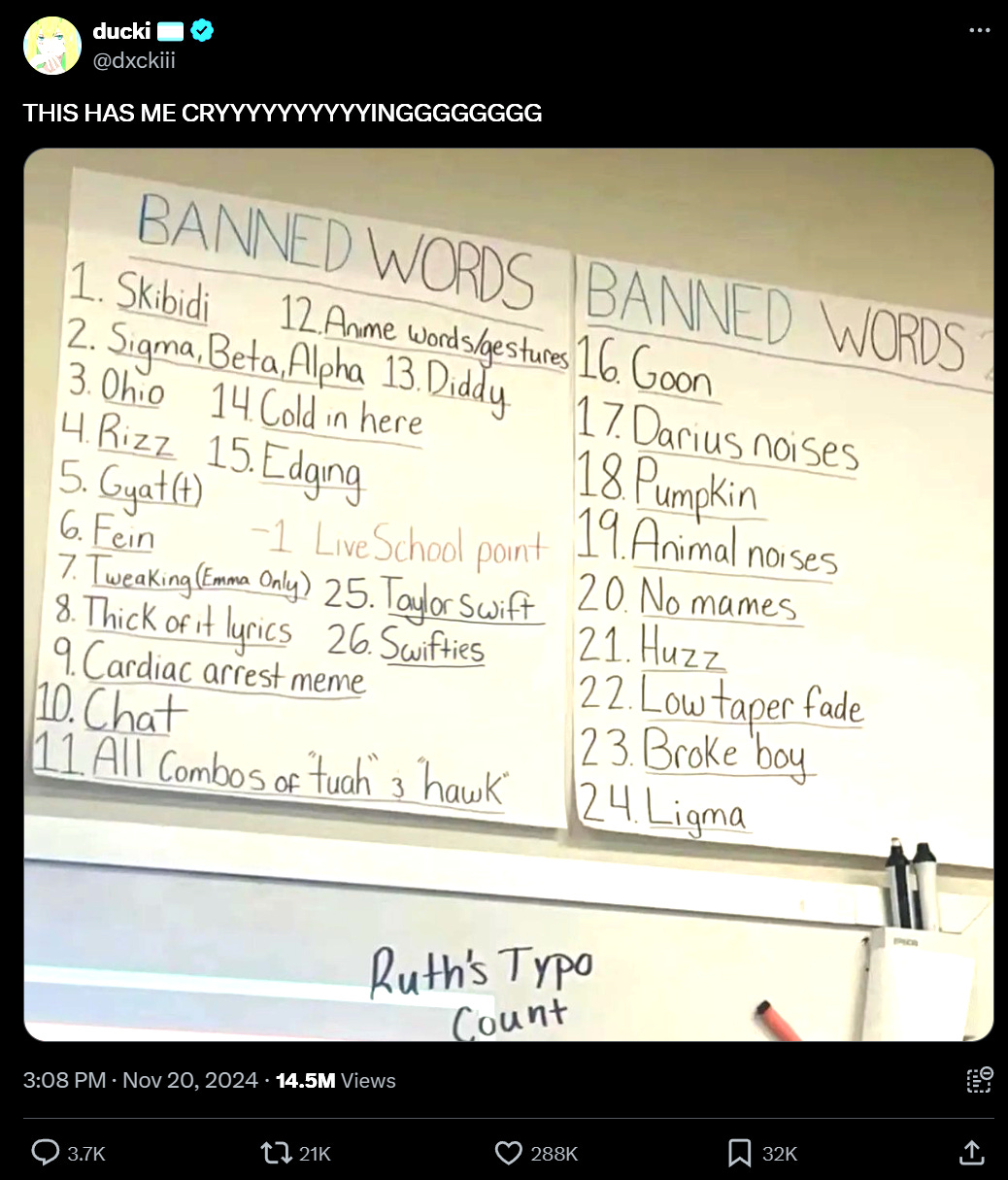
They really don’t like Ohio.
I have been convinced that both Claude and I were wrong, and that the Ohio thing is not actually about the well known villains that are the Ohio State Buckeyes. But I’m still going to head cannon and pretend that we were right anyway.