Author name: Tim Belzer

lizards-and-snakes-are-35-million-years-older-than-we-thought

Lizards and snakes are 35 million years older than we thought

Lizards are ancient creatures. They were around before the dinosaurs and persisted long after dinosaurs went extinct. We’ve now found they are 35 million years older than we thought they were.

Cryptovaranoides microlanius was a tiny lizard that skittered around what is now southern England during the late Triassic, around 205 million years ago. It likely snapped up insects in its razor teeth (its name means “hidden lizard, small butcher”). But it wasn’t always considered a lizard. Previously, a group of researchers who studied the first fossil of the creature, or holotype, concluded that it was an archosaur, part of a group that includes the extinct dinosaurs and pterosaurs along with extant crocodilians and birds.

Now, another research team from the University of Bristol has analyzed that fossil and determined that Cryptovaranoides is not an archosaur but a lepidosaur, part of a larger order of reptiles that includes squamates, the reptile group that encompasses modern snakes and lizards. It is now also the oldest known squamate.

The misunderstandings about this species all come down to features in its bones that are squamate apomorphies. These are traits unique to squamates that were not present in their ancestral form, but evolved later. Certain forelimb bones, skull bones, jawbones, and even teeth of Cryptovaranoides share characteristics with those from both modern and extinct lizards.

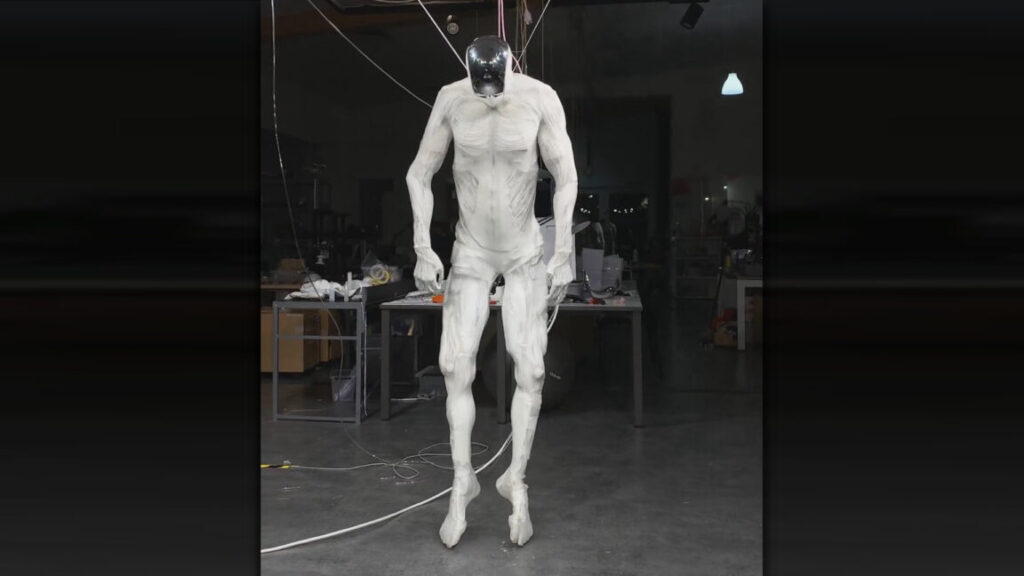
Wait, what is that thing?

So what does the new team argue that the previous team that studied Cryptovaranoides gets wrong? The new paper argues that the interpretation of a few bones in particular stand out, especially the humerus and radius.

In the humerus of this lizard, structures called the ectepicondylar and entepicondylar foramina, along with the radial condyle, were either not considered or may have been misinterpreted. The entepicondylar foramen is an opening in the far end of the humerus, which is an upper arm bone in humans and upper forelimb bone in lizards. The ectepicondylar foramen is a structure on the outer side of the humerus where the extensor muscles attach, helping a lizard bend and straighten its legs. Both features are “often regarded as key lepidosaur and squamate characteristics,” the Bristol research team said in a study recently published in Royal Society Open Science.

Lizards and snakes are 35 million years older than we thought Read More »

lower-cost-sodium-ion-batteries-are-finally-having-their-moment

Lower-cost sodium-ion batteries are finally having their moment

In contrast, a sodium-ion battery relies on an element—sodium—that you can find in table salt and ocean water.

Among the other benefits, sodium-ion batteries perform better than lithium-ion batteries in extreme cold. CATL has said its new battery works in temperatures as low as -40° Fahrenheit.

Also, a sodium-ion battery has much lower risk of fire. When lithium-ion batteries sustain damage, it can lead to “thermal runaway,” which triggers a dangerous and toxic fire.

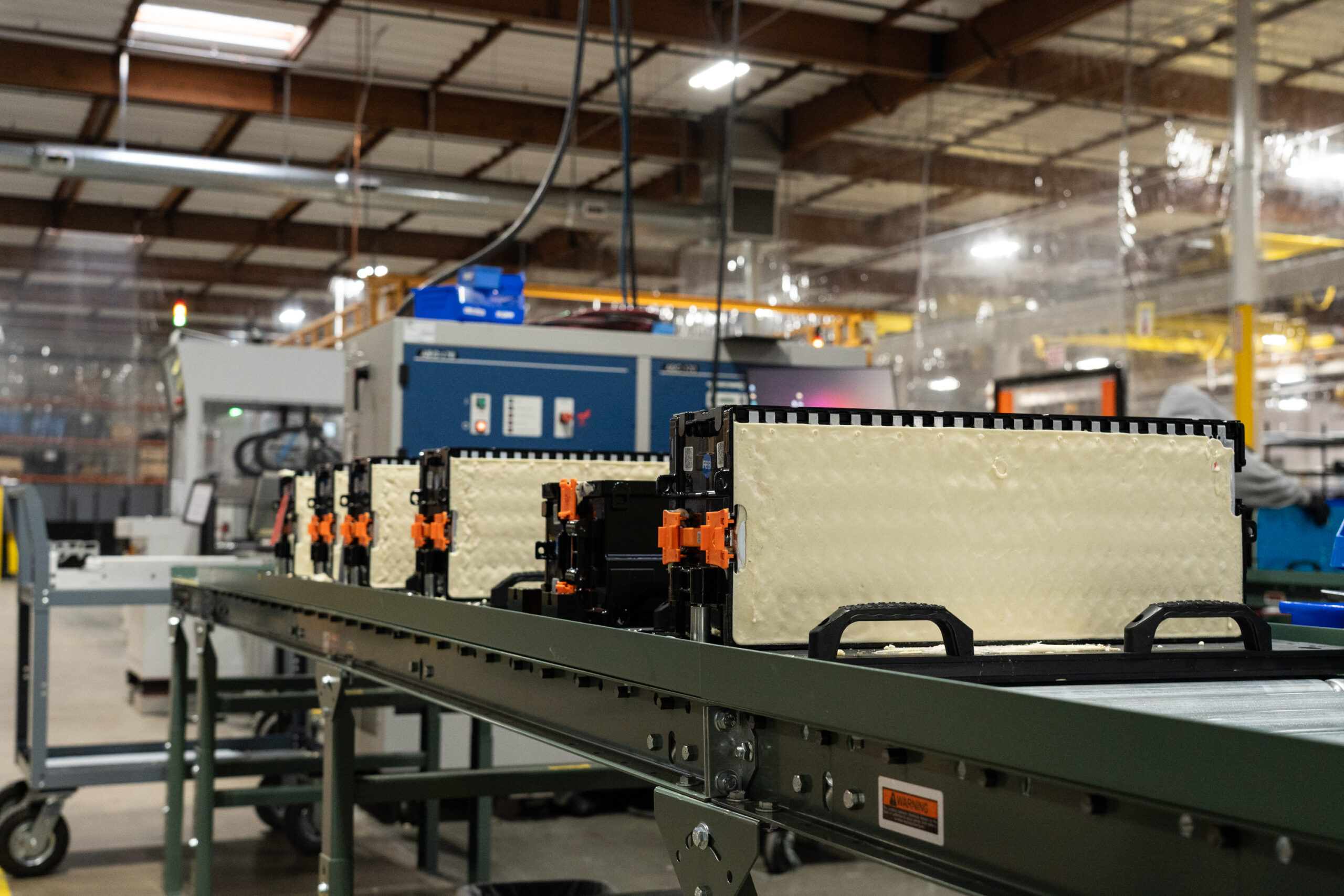
The process of manufacturing sodium-ion batteries is similar to that of lithium-ion batteries, or at least similar enough that companies can shift existing assembly lines without having to spend heavily on retooling.

But sodium-ion batteries have some disadvantages. The big one is low energy density compared to lithium-ion. As a result, an EV running on a sodium-ion battery will go fewer miles per charge than a lithium-ion battery of the same size.

“That is just what nature has given us,” Srinivasan said. “From a physics perspective, sodium batteries inherently have lower energy density than lithium batteries.”

A typical sodium-ion battery has an energy density of about 150 watt-hours per kilogram at the cell level, he said. Lithium-ion batteries can range from about 180 to nearly 300 watt-hours per kilogram.

I asked Srinivasan what he makes of CATL’s claim of a sodium-ion battery with 200 watt-hours per kilogram.

“We tend to be skeptical of news releases from companies,” he said. He specified that his comment applies to all battery companies.

Venkat Srinivasan, director of the Argonne Collaborative Center for Energy Storage Science, discusses battery research with a materials scientist in one of the energy storage discovery labs at Argonne National Laboratory.

Credit: Argonne National Laboratory

Venkat Srinivasan, director of the Argonne Collaborative Center for Energy Storage Science, discusses battery research with a materials scientist in one of the energy storage discovery labs at Argonne National Laboratory. Credit: Argonne National Laboratory

The national labs’ initiative has a five-year timeline, with a goal of developing sodium-ion batteries with energy densities that match or exceed those of today’s iron phosphate-based lithium-ion batteries. Researchers would do this by finding various efficiencies in design and materials.

The project is happening alongside the labs’ ongoing work to develop and improve other kinds of batteries.

Lithium-ion batteries dominate today’s market. This year, global production of lithium-ion batteries was about 1,500 gigawatt-hours, and production of sodium-ion batteries was 11 gigawatt-hours, or less than 1 percent, according to Benchmark Mineral Intelligence.

Lower-cost sodium-ion batteries are finally having their moment Read More »

judge-rejects-boeing-plea-deal-that-was-opposed-by-families-of-crash-victims

Judge rejects Boeing plea deal that was opposed by families of crash victims

The compliance monitor is supposed to ensure that “Boeing implements a program designed to prevent and detect violations of US fraud laws,” O’Connor wrote. Failing to retain a monitor would violate Boeing’s probation, but O’Connor said that Boeing wouldn’t actually have to comply with the monitor’s recommendations.

“[T]he plea agreement prohibits imposing as a condition of probation a requirement for Boeing to comply with the monitor’s anti-fraud recommendations. Additionally, the independent monitor is selected by and reports to the Government, not the Court,” O’Connor wrote.

O’Connor also rejected the deal on the grounds that “Boeing will have the opportunity to prevent the hiring of one of the six monitor candidates chosen by the Government,” and “the Government will select the independent monitor ‘in keeping with the Department’s commitment to diversity and inclusion.'”

Judge opposes diversity provision

O’Connor said that Boeing’s court briefs and its diversity policies suggest that “Boeing will exercise its strike of one of the Government’s six chosen monitor candidates in a discriminatory manner and with racial considerations.” O’Connor said he is also skeptical that the government will consider all possible monitors and choose one based solely on merit and talent.

“It seems fundamentally inconsistent for the Government to say ‘in keeping with the Department’s commitment to diversity and inclusion’ means that the Government will not consider race,” O’Connor wrote. “Otherwise, why would the Government represent to the Court in its briefing that the term ‘diversity’ in the plea agreement is ‘generally consistent’ with the 2021 Executive Order’s definition, which explicitly includes race? Indeed, the Government must adhere to this Executive Order, and, consequently, that definition of ‘diversity’ controls what is required by the plea agreement.”

“In a case of this magnitude, it is in the utmost interest of justice that the public is confident this monitor selection is done based solely on competency,” O’Connor also wrote. “The parties’ DEI [diversity, equity, and inclusion] efforts only serve to undermine this confidence in the Government and Boeing’s ethics and anti-fraud efforts.”

Judge rejects Boeing plea deal that was opposed by families of crash victims Read More »

us-recommends-encrypted-messaging-as-chinese-hackers-linger-in-telecom-networks

US recommends encrypted messaging as Chinese hackers linger in telecom networks

An unnamed FBI official was quoted in the same report as saying that phone users “would benefit from considering using a cellphone that automatically receives timely operating system updates, responsibly managed encryption, and phishing-resistant” multifactor authentication for email accounts, social media, and collaboration tools.

The FBI official reportedly said the hackers obtained metadata showing the numbers that phones called and when, the live phone calls of some specific targets, and information from systems that telcos use for court-ordered surveillance.

Despite recognizing the security benefits of encryption, US officials have for many years sought backdoors that would give the government access to encrypted communications. Supporters of end-to-end encryption have pointed out that backdoors can also be used by criminal hackers and other nation-states.

“For years, the security community has pushed back against these backdoors, pointing out that the technical capability cannot differentiate between good guys and bad guys,” cryptographer Bruce Schneier wrote after the Chinese hacking of telecom networks was reported in October.

Noting the apparent hacking of systems for court-ordered wiretap requests, Schneier called it “one more example of a backdoor access mechanism being targeted by the ‘wrong’ eavesdroppers.”

1994 surveillance law in focus

CISA issued a statement on the Chinese hacking campaign in mid-November. It said:

The US government’s continued investigation into the People’s Republic of China (PRC) targeting of commercial telecommunications infrastructure has revealed a broad and significant cyber espionage campaign.

Specifically, we have identified that PRC-affiliated actors have compromised networks at multiple telecommunications companies to enable the theft of customer call records data, the compromise of private communications of a limited number of individuals who are primarily involved in government or political activity, and the copying of certain information that was subject to US law enforcement requests pursuant to court orders.

The hacks raise concerns about surveillance capabilities required by a 1994 law, the Communications Assistance for Law Enforcement Act (CALEA), which requires “telecommunications carriers and manufacturers of telecommunications equipment design their equipment, facilities, and services to ensure that they have the necessary surveillance capabilities to comply with legal requests for information.”

US recommends encrypted messaging as Chinese hackers linger in telecom networks Read More »

trump-nominates-jared-isaacman-to-become-the-next-nasa-administrator

Trump nominates Jared Isaacman to become the next NASA administrator

President-elect Donald Trump announced Wednesday he has selected Jared Isaacman, a billionaire businessman and space enthusiast who twice flew to orbit with SpaceX, to become the next NASA administrator.

“I am delighted to nominate Jared Isaacman, an accomplished business leader, philanthropist, pilot, and astronaut, as Administrator of the National Aeronautics and Space Administration (NASA),” Trump posted on his social media platform, Truth Social. “Jared will drive NASA’s mission of discovery and inspiration, paving the way for groundbreaking achievements in space science, technology, and exploration.”

In a post on X, Isaacman said he was “honored” to receive Trump’s nomination.

“Having been fortunate to see our amazing planet from space, I am passionate about America leading the most incredible adventure in human history,” Isaacman wrote. “On my last mission to space, my crew and I traveled farther from Earth than anyone in over half a century. I can confidently say this second space age has only just begun.”

Top officials who served at NASA under President Trump and President Obama endorsed Isaacman as the next NASA boss.

“Jared Isaacman will be an outstanding NASA Administrator and leader of the NASA family,” said Jim Bridenstine, who led NASA as administrator during Trump’s first term in the White House. “Jared’s vision for pushing boundaries, paired with his proven track record of success in private industry, positions him as an ideal candidate to lead NASA into a bold new era of exploration and discovery. I urge the Senate to swiftly confirm him.”

Lori Garver, NASA’s deputy administrator during the Obama administration, wrote on X that Isaacman’s nomination was “terrific news,” adding that “he has the opportunity to build on NASA’s amazing accomplishments to pave our way to an even brighter future.”

Isaacman, 41, is the founder and CEO of Shift4, a mobile payment processing platform, and co-founded Draken International, which owns a fleet of retired fighter jets to pose as adversaries for military air combat training. If the Senate confirms his nomination, Isaacman would become the 15th NASA administrator, and the fourth who has flown in space.

Trump nominates Jared Isaacman to become the next NASA administrator Read More »

no-more-ev-app-folders:-universal-plug-and-charge-is-due-to-launch-in-2025

No more EV app folders: Universal plug-and-charge is due to launch in 2025

To fill a car with gas, you generally just need a credit card or cash. To charge an EV at a DC fast charging station, you need any number of things to work—a credit card reader, an app for that charger’s network, a touchscreen that’s working—and they’re all a little different.

That situation could change next year if a new “universal Plug and Charge” initiative from SAE International, backed by a number of EV carmakers and chargers, moves ahead and gains ground. Launching in early 2025, the network could make charging an EV actually easier than gassing up: plug in, let the car and charger figure out the payment details over a cloud connection, and go.

Some car and charging network combinations already offer such a system through a patchwork of individual deals, as listed at Inside EVs. Teslas have always offered a plug-and-charge experience, given the tight integration between their Superchargers and vehicles. Now Tesla will join the plug-and-charge movement proper, allowing Teslas to have a roughly similar experience at other stations.

The Electric Vehicle Public Key Infrastructure, or EVPKI, has a good number of the major players on board, and it builds on the ISO standard (15118) to make it faster and more secure for cars to be authenticated and authorized to charge at stations. A whole bunch of certificates are in place at every step of the charging process, as detailed in an EVPKI presentation, and the system includes a Certified Trust List. With an open standard and authentication system, there should be room for new charging networks and vehicle makers.

No more EV app folders: Universal plug-and-charge is due to launch in 2025 Read More »

microsoft-reiterates-“non-negotiable”-tpm-2.0-requirement-for-windows-11

Microsoft reiterates “non-negotiable” TPM 2.0 requirement for Windows 11

Windows 11 has other system requirements, though they weren’t the focus of this TPM-centric blog post. Windows 11 systems must have Secure Boot enabled, and they have to use a supported processor—an 8th-gen Intel Core CPU, an AMD Ryzen 2000 CPU, or a Qualcomm Snapdragon 850 CPU or newer. In fact, these CPU requirements exclude a couple of generations’ worth of Intel and AMD chips with built-in TPM 2.0 support.

Windows 11 also has nominal requirements for RAM and processor speed, but any system that meets the CPU or TPM requirements will easily clear those bars. If you have a supported CPU and your PC doesn’t appear to support TPM 2.0, you should be able to enable it in your system’s BIOS, either manually or by installing a BIOS update for your motherboard.

Windows 11 can be installed on unsupported systems, either those with an older TPM 1.2 module or no TPM enabled at all. It’s more annoying to install major updates on those systems, and Microsoft reserves the right to pull updates from those systems at any time, but aside from that, Windows 11 usually runs about as well on these PCs as Windows 10 did.

Microsoft reiterates “non-negotiable” TPM 2.0 requirement for Windows 11 Read More »

“nightmare”-zipcar-outage-is-a-warning-against-complete-app-dependency

“Nightmare” Zipcar outage is a warning against complete app dependency

Zipcar’s rep declined to specify how many people were affected by the outage.

A warning against total app reliance

Zipcar’s app problems have not only cost it money but also traumatized some users who may think twice before using Zipcar again. The convenience of using apps to control physical products only exists if said apps are functioning and prepared for high-volume time periods, such as Thanksgiving weekend.

Despite Zipcar’s claims of a “small percentage” of users being affected, the company’s customer support system seemed overwhelmed. Long wait times coupled with misinformation regarding things like fees make already perturbed customers feel more deserted.

Those are the pitfalls of completely relying on apps for basic functionality. There was a time when Zipcar members automatically received physical “Zipcards” for opening doors. Now, they’re not really advertised, and users have to request one.

A Zipcard.

A Zipcard. Credit: Getty

Zipcars also used to include keys inside of locked cars more frequently. Reducing these physical aspects may have saved the company money but effectively put all of Zipcar’s eggs in one basket.

Nightmarish app problems like the one Zipcar experienced can be a deal-breaker. Just look at Sonos, whose botched app update is costing it millions. Further, turning something like car rentals into a virtually app-only service is a risky endeavor that can quickly overcomplicate simple tasks. Some New Zealand gas stations were out of luck earlier this year, for example, when a Leap Day glitch caused payment processing software to stop working. Gas stations that needed apps for payments weren’t able to make sales, and drivers were inconvenienced.

Apps can simplify and streamline while delivering ingenuity. But that doesn’t mean traditional, app-free measures should be eliminated as backups.

“Nightmare” Zipcar outage is a warning against complete app dependency Read More »

balsa-research-2024-update

Balsa Research 2024 Update

For our annual update on how Balsa is doing, I am turning the floor over to Jennifer Chen, who is the only person working full time on Balsa Research.

For my general overview of giving opportunities, see my post from last week.

Previously: The 2023 Balsa Research update post, Repeal the Jones Act of 1920.

tl;dr: In 2024, Balsa Research funded two upcoming academic studies on Jones Act impacts and published the Jones Act Post. In 2025, we’ll expand our research and develop specific policy proposals. Donate to Balsa Research here.

Today is Giving Tuesday. There are many worthy causes, including all of the ones highlighted by Zvi in a recent post. Of all of those orgs, there is one organization I have privileged information on – Balsa Research, where I’ve been working for the past year and a half.

Balsa Research is a tiny 501(c)(3) currently focused on repealing the Jones Act, a century-old law that has destroyed American domestic shipping for minimal gain. You can read the long Zvi post for details, or this Planet Money podcast transcript if you would like the arguments from someone who is not Zvi.

This is not the most urgent challenge facing humanity, but we believe that it’s one where relatively small investments have a chance to unlock fairly large economic benefits.

This post is an update on what we’ve been up to this year, and our plans for 2025.

  1. What We Did in 2024.

  2. Looking Ahead to 2025.

  3. Why Support Balsa.

Our work this year focused on building a robust foundation for future policy change:

In March, we opened up an RFP for academic studies quantifying the costs of the Jones Act after our literature review revealed that it’s been several decades since someone has attempted to do this.

We’re funding studies for a few different reasons. For one, updated numbers are just nice to have, for understanding the state of the world and our likely impact. They’re also good for advocacy work in particular – numbers grow stale over time, and people like seeing numbers that are from the 2020s more than they like seeing numbers from the 1990s in their policy one-pagers. Lastly, we know that DC does occasionally pay attention to policy findings coming out of top econ journals, and this shapes their policy choices at times. We’re not counting on this happening, but who knows!

We have accepted proposals from two different teams of academics working or studying at top econ departments in the US. The contracts have been signed, the teams’ data sets and interns are getting paid for, and we now await their preliminary findings in 2025.

The two proposals take complementary approaches:

  • A Macro-level Trade Impact Model: This proposal aims to construct a large-scale detailed gravity model of domestic and international trade flows across the complex network of routes, evaluating the Jones Act’s comprehensive impact on US trade patterns. This will create a “gains from trade” view of the Act and its potential repeal. By comparing the current constrained system with a hypothetical unconstrained one within this model, the study will estimate the hidden costs and inefficiencies introduced by the Jones Act.

  • A Micro-level Agricultural Commodity Analysis: This proposal focuses on the impact of the Jones Act on U.S. inter-state agricultural trade, with a particular emphasis on California-produced goods, aiming to pinpoint the exact impact of the Jones Act on their transportation and pricing. Similar to the methodology used in a recent paper on the Jones Act’s impact on US petroleum markets, this granular analysis will provide concrete, quantifiable evidence of the Act’s effects on specific goods. By focusing on a specific sector and concrete details, this research could offer valuable hard data to support broader reform efforts and be extended by further research.

We’re excited about both of these – it’s important to both get a better macro view, and to be able to point to fine-grained impact on specific US states and industries.

We consider the RFP to still be open! If we get more exciting proposals, we will continue to happily fund them.

We have also published The Jones Act Post. This was the result of months of research, interviews with experts in the policy sphere and various stakeholders, plus Zvi’s usual twitter habit. This is Zvi’s definitive case for Jones Act repeal, but we obviously didn’t fit in all of the policy minutiae that we picked up over our literature review. Those are going to go into additional documents that are going to be crafted to more precisely target an audience of policy wonks.

We’re also working to develop relationships with key players and experts to better understand both the technical challenges and political dynamics around potential reform.

It would be reasonable to say this is slow progress. We’ve prioritized getting things right over moving quickly, and have a modest budget. Policy change requires careful preparation – especially on an issue where entrenched interests have successfully resisted reform for a century.

With this foundation in place, we’re positioned to do a lot more work in 2025. We’re looking to do the following:

  1. Launch a second round of funding for targeted academic research, informed by the preliminary findings of studies funded in our first round.

  2. Get a better understanding of key players’ interests, constraints, and BATNAs to identify realistically viable reform paths, and reasonable concessions.

  3. Building on all of our existing research, develop detailed and viable policy proposals that address key stakeholder concerns, including:

    • Protecting union jobs and worker interests

    • Maintaining military readiness and security capabilities

    • Structuring viable transition paths and compensation mechanisms

  4. Draft model legislation that can serve as a foundation for reform.

From the very beginning, our philosophy has been to focus on the useful groundwork that enables real policy change, and this is where our focus remains. Additional funding would allow us to expand our impact and accelerate our work.

To be clear: we have funding for our core 2025 expenses and the initiatives outlined above (but not much beyond that). Additional support would allow us to expand our impact through better assisting activities such as:

  • Industry and labor outreach ($5,000+)

    Fund attendance at three key maritime industry and union conferences to build relationships with people working in shipping, unions, and policy. This would cover registration fees, travel, and accommodations.

  • Additional Research & Analysis (~$30,000 per study)

    Fund additional academic studies to strengthen the empirical case for reform, complementing our existing research initiatives, as we discover new opportunities.

  • Policy Engagement ($85,000)

    Hire a DC-based policy liaison to build some key ongoing relationships. This would help us better understand the needs and motivations of the people and committees that we need to convince, allowing us to create more targeted and timely policy documents that directly address their concerns.

  • Additional Causes (unlimited)

    We see opportunity in many other policy areas as well, including NEPA reform and federal pro-housing policy. With additional funding we could address those sooner.

It would also give us additional runway.

While changing century-old policy is not going to be easy, we see many, many places where there is neglected groundwork that we think we’re well positioned to do, and we can do well. There are many studies that should exist, but don’t. There should be analysis done of the pros and cons of various forms of reform and partial repeal, but there aren’t. There should be more dialogue around how to grow the pie in a way that ensures that everyone comes out of the deal happy, but we see very little of that. These are all things we intend to work on at Balsa Research.

We invite you to join us.

If you have experience with maritime shipping, naval procurement, connections to labor unions, or anything else you think might be relevant to Jones Act reform, we’d be interested in talking to you and hearing your perspective. Get in touch at [email protected] and let us know how you might be able to help, whether that’s sharing your insights, making introductions, or contributing in other meaningful ways.

You can also donate to our end-of-year fundraiser here. Balsa Research is a 501(c)(3) nonprofit organization, which means donations are tax-deductible for US taxpayers.

Balsa Research is a small organization – still just me, with Zvi in an unpaid, very part-time advisory role – and our progress this year has been possible only through the generous support of our donors and the many people who have shared their time and expertise with us. We’re grateful for this community of supporters and collaborators who continue to believe in the importance of this work.

Balsa Research 2024 Update Read More »

cyber-monday-cybers-into-view,-and-we’ve-got-all-the-cyber-deals

Cyber Monday cybers into view, and we’ve got all the cyber deals


Vende animam tuam pro commercio

The day’s half-over, but we keep adding stuff—come see if anything speaks to you!

Neither snow nor rain nor heat nor gloom of night stays this courier from the swift completion of his appointed rounds. Credit: bowie15 / Getty Images

I hope everyone survived the weekend shopping experience and no one was eaten by ravening bands of deal-hunting nomads as they trekked through Macy’s, or whatever people who actually go outside on Black Friday have to endure. Things are mostly quiet here at the Ars Orbiting HQ—the gift shop on the mess deck is still selling mugs and other merch, if anyone wants some Ars stuff!—but the e-commerce communications panel is beeping and it says we’ve got more deals to show you guys for Cyber Monday!

Cyber Monday is the thing that happens after Black Friday, where the deals keep going past the weekend and erupt into the next week, like some kind of out-of-control roller coaster of capitalism careening off the rails and into the crowd. Headphones! Power stations! Tablets! More board games! We’ve got so many things for you to buy!

A couple of quick notes: First, we’re going to continue updating this list throughout Monday as things change, so if you don’t see anything that tickles your fancy right now, check back in a few hours! Additionally, although we’re making every effort to keep our prices accurate, deals are constantly shifting around, and an item’s actual price might have drifted from what we list. Caveat emptor and all that.

So, with that out of the way, let’s keep making like *NSYNC and buy, buy, buy!

Laptop and tablet deals

Headphone deals

Home office and computing deals

TV deals

Apple and Apple accessory deals

Ars Technica may earn compensation for sales from links on this post through affiliate programs.

Cyber Monday cybers into view, and we’ve got all the cyber deals Read More »

certain-names-make-chatgpt-grind-to-a-halt,-and-we-know-why

Certain names make ChatGPT grind to a halt, and we know why

The “David Mayer” block in particular (now resolved) presents additional questions, first posed on Reddit on November 26, as multiple people share this name. Reddit users speculated about connections to David Mayer de Rothschild, though no evidence supports these theories.

The problems with hard-coded filters

Allowing a certain name or phrase to always break ChatGPT outputs could cause a lot of trouble down the line for certain ChatGPT users, opening them up for adversarial attacks and limiting the usefulness of the system.

Already, Scale AI prompt engineer Riley Goodside discovered how an attacker might interrupt a ChatGPT session using a visual prompt injection of the name “David Mayer” rendered in a light, barely legible font embedded in an image. When ChatGPT sees the image (in this case, a math equation), it stops, but the user might not understand why.

The filter also means that it’s likely that ChatGPT won’t be able to answer questions about this article when browsing the web, such as through ChatGPT with Search.  Someone could use that to potentially prevent ChatGPT from browsing and processing a website on purpose if they added a forbidden name to the site’s text.

And then there’s the inconvenience factor. Preventing ChatGPT from mentioning or processing certain names like “David Mayer,” which is likely a popular name shared by hundreds if not thousands of people, means that people who share that name will have a much tougher time using ChatGPT. Or, say, if you’re a teacher and you have a student named David Mayer and you want help sorting a class list, ChatGPT would refuse the task.

These are still very early days in AI assistants, LLMs, and chatbots. Their use has opened up numerous opportunities and vulnerabilities that people are still probing daily. How OpenAI might resolve these issues is still an open question.

Certain names make ChatGPT grind to a halt, and we know why Read More »

over-the-weekend,-china-debuted-a-new-rocket-on-the-nation’s-path-to-the-moon

Over the weekend, China debuted a new rocket on the nation’s path to the Moon


Depending on how you count them, China now has roughly 18 types of active space launchers.

China’s new Long March 12 rocket made a successful inaugural flight Saturday, placing two experimental satellites into orbit and testing uprated, higher-thrust engines that will allow a larger Chinese launcher in development to send astronauts to the Moon.

The 203-foot-tall (62-meter) Long March 12 rocket lifted off at 9: 25 am EST (14: 25 UTC) Saturday from the Wenchang commercial launch site on Hainan Island, China’s southernmost province. This was also the first rocket launch from a new commercial spaceport at Wenchang, consisting of two launch sites a short distance from a pair of existing launch pads used by heavier rockets primarily geared for government missions.

The two-stage rocket delivered two technology demonstration satellites into a near-circular 50-degree-inclination orbit with an average altitude of nearly 650 miles (about 1,040 kilometers), according to US military tracking data.

The Long March 12 is the newest member of China’s Long March rocket family, which has been flying since China launched its first satellite into orbit in 1970. The Long March rockets have significantly evolved since then and now include a range of launch vehicles of different sizes and designs.

Versions of the Long March 2, 3, and 4 rockets have been flying since the 1970s and 1980s, burning the same toxic mix of hypergolic propellants as China’s early ICBMs. More recently, China debuted the Long March 5, 6, 7, and 8 rockets consuming the cleaner combination of kerosene and liquid oxygen propellants. These new rockets provide China with a spectrum of small, medium, and heavy-lift launch capabilities.

So many rockets

So, why bother with yet another Long March rocket? One reason is that Chinese officials seek a less expensive rocket to deploy thousands of small satellites for the country’s Internet mega-constellations to rival SpaceX’s Starlink network. Another motivation is to demonstrate the performance of upgraded rocket engines, new technologies, and fresh designs, some of which appear to copy SpaceX’s workhorse Falcon 9 rocket.

Like all of China’s other existing rockets, the Long March 12 configuration that flew Saturday is fully disposable. At the Zhuhai Airshow earlier this month, China’s largest rocket company displayed another version of the Long March 12 with a reusable first stage but with scant design details.

The Long March 12 is powered by four kerosene-fueled YF-100K engines on its first stage, generating more than 1.1 million pounds, or 5,000 kilonewtons of thrust at full throttle. These engines are upgraded, higher-thrust versions of the YF-100 engines used on several other types of Long March rockets.

Models of the Long March rockets on display at the China National Space Administration (CNSA) booth during the China International Aviation & Aerospace Exhibition in Zhuhai, China, on November 12, 2024. In this image, models of a future reusable version of the Long March 12 (left) and the super-heavy Long March 9 (right) are visible. Credit: Qilai Shen/Bloomberg via Getty Images

Notably, China will use the YF-100K variant on the heavy-lift Long March 10 rocket in development to launch Chinese astronauts to the Moon. The heaviest version of the Long March 10 will use 21 of these YF-100K engines on its core stage and strap-on boosters. Now, Chinese engineers have tested the upgraded YF-100K in flight, with favorable results from Saturday’s launch.

China is also developing a new crew-rated spacecraft and lunar lander that will launch on Long March 10 rockets, eyeing a human landing on the lunar surface by 2030. The Long March 10 will have a reusable first stage like the Falcon 9, and China is now working on a super-heavy fully reusable rocket that appears to be a clone of SpaceX’s Starship. This Long March 9 rocket, which probably won’t fly until the 2030s, will enable larger-scale sustained lunar exploration by China.

And now, the details

The Long March 12 was developed by the Shanghai Academy of Spaceflight Technology, also known as SAST, one of the two main state-owned organizations in charge of designing and manufacturing Long March rockets. Together with the Beijing-based China Academy of Launch Vehicle Technology, SAST is part of the China Aerospace Science and Technology Corporation, the largest government-run enterprise overseeing the Chinese space program.

According to SAST, the Long March 12 is capable of delivering a payload of at least 12 metric tons (26,455 pounds) into low-Earth orbit and about half that to a somewhat higher Sun-synchronous orbit. Two kerosene-fueled YF-115 engines power the Long March 12’s upper stage.

The Long March 12 is also China’s first 3.8-meter (12.5-foot) diameter rocket, which is an optimal match between the width of the booster and lift capability, allowing it to be transported by railway to launch sites across China, according to the state-run Xinhua news agency.

China’s older Long March rocket variants are slimmer and generally require engineers to strap together multiple first-stage boosters in a cluster arrangement to achieve performance similar to the Long March 12. The core of the heavy-lift Long March 5 is around 5 meters in diameter and must be transported by sea.

China’s first Long March 12 rocket on its launch pad before liftoff. Credit: Photo by VCG/VCG via Getty Images

In a post-launch press release, SAST identified several other “technology breakthroughs” flying on the Long March 12 rocket. These include a health management system that can diagnose anomalies in flight and adjust the rocket’s trajectory in real time to compensate for any minor problems. The Long March 12 is also China’s first rocket to use cryogenic helium to pressurize its liquid oxygen tanks, and its tanks are made of an aluminum-lithium alloy to save weight.

The Long March 12 is also the first rocket of its size in the Long March family to be assembled on its side instead of stacked vertically on its launch mount. After integrating the rocket in a nearby hangar, technicians transferred the first Long March 12 to its launch pad horizontally, then raised it vertical with an erector system. This is the same way SpaceX integrates and transports Falcon 9 rockets to the launch pad. SpaceX copied this horizontal integration approach from older Soviet-era rockets, and it offers several advantages, allowing teams to assemble rockets faster without the need for large overhead cranes in tall, cavernous vertical assembly buildings.

A bug or a feature?

We’ve already mentioned the proliferation of different types of Long March rockets, with nine classes of Long March launchers currently in operation. And each of these comes in multiple sub-variants.

This is a starkly different approach from SpaceX, which flies standardized rockets like the Falcon 9 and Falcon Heavy, which almost always fly in the same configuration, regardless of the payload or destination for each mission. The only exception is when SpaceX launches Dragon crew or cargo capsules on the Falcon 9.

Depending on how you count them, China now has roughly 18 different types of active space launchers. This number doesn’t include the Long March 9 or Long March 10, but it counts all the other Long March configurations, plus numerous small- and medium-class rockets fielded by China’s quasi-commercial space industry.

These startups operate with the blessing of China’s government and, in many cases, got their start by utilizing surplus military equipment and investment from Chinese local or provincial governments. However, the Chinese Communist Party has allowed them to raise capital from private sources, and they operate on a commercial basis, almost exclusively to serve domestic Chinese markets.

In some cases, these launch startups compete for commercial contracts directly with the government-backed Long March rocket family. The Long March 12 could be in the mix for launching large batches of spacecraft for China’s planned satellite Internet networks.

Some of these launch companies are working on reusable rockets similar in appearance to SpaceX’s Falcon 9. All of these rockets, government and commercial, are part of an ecosystem of Chinese launchers tasked with hauling military and commercial satellites into orbit.

The Long March 12 launch Saturday was China’s 58th orbital launch attempt of 2024, and no single subvariant of a Chinese rocket has flown more than seven times this year. This is in sharp contrast to the United States, which has logged 142 orbital launch attempts so far this year, 119 of them by SpaceX’s Falcon 9 or Falcon Heavy rockets.

There are around a dozen US orbital-class launch vehicle types you might call operational. But a few of these, such as Northrop Grumman’s Pegasus XL and Minotaur, and NASA’s Space Launch System, haven’t flown for several years.

SpaceX’s Falcon 9 is now the dominant leader in the US launch industry. Most of the Falcon 9 launches are filled to capacity with SpaceX’s own Starlink Internet satellites, but many missions fly with their payload fairings only partially full. Still, the Falcon 9 is more affordable on a per-kilogram basis than any other US rocket.

In China, on the other hand, none of the commercial launch startups have emerged as a clear leader. When that happens, if China allows the market to function in a truly commercial manner, some of these Chinese rocket companies will likely fold.

However, China’s government has a strategic interest in maintaining a portfolio of rockets and launch sites, same as the US government. For example, Chinese officials said the new launch site at Wenchang, where the Long March 12 took off from over the weekend, can accommodate 10 or more different types of rockets.

Photo of Stephen Clark

Stephen Clark is a space reporter at Ars Technica, covering private space companies and the world’s space agencies. Stephen writes about the nexus of technology, science, policy, and business on and off the planet.

Over the weekend, China debuted a new rocket on the nation’s path to the Moon Read More »