Author name: Paul Patrick

new-catan-game-has-overpopulation,-pollution,-fossil-fuels,-and-clean-energy

New Catan game has overpopulation, pollution, fossil fuels, and clean energy

The Unsettling of Catan —

If pollution levels go too high, the game ends for everyone. It’s a fun escape!

Catan: New ENergies box in a green hill landscape with nearby wind turbines

Enlarge / If you didn’t know what “New Energies” meant, this promotional image puts a windmill on it.

Catan GmbH

In Klaus Teuber’s Catan (previously Settlers of Catan), the player is tasked with starting from scratch and building as much as they can: the largest army, the most cities, the best sea ports for easy trading, even the longest road. It’s all beneficial, and the only real drawback is that you have to prioritize certain things over others. There wasn’t direct conflict or battle, but there were scarce resources, and the savviest player could corner the market for them.

Catan was released in 1995. Now, in 2024, Teuber’s son, Benjamin Teuber, is releasing Catan: New Energieswhich he developed with his late father. While it is “rooted in classic Catan mechanics of trading, harvesting, and building,” there are some decidedly 2024 issues at play now that the Vikings have settled in for more than a millennia.

As detailed by Benjamin Teuber in a Fast Company interview, New Energies will see players:

  • Choosing between cheaper fossil fuel power or research-intensive renewables
  • Limited in resources as pollution grows
  • Ending the game entirely if pollution hits a certain level
  • Countering pollution with “green tokens” from renewable building
  • Dealing with the effects worldwide climate change exacts on smaller islands
  • Realizing that “As in real life, the most sustainable player does not always win.”

It is, however, a hopeful game. The game comes by its “meaningful, evidence-based message” as sincerely as is possible for a mass-produced product. New Energies is printed and assembled in the US, contains no plastic, and uses sustainably sourced wood and paper materials. It’s available now for preorder at $70 and due in the spring of 2024.

  • Catan: New Energies with all pieces and boards laid out

    Catan GmbH

  • A player board from Catan: New Energies. The brown pieces are drawn more frequently at the beginning, but gradually transition to green tokens.

    Catan GmbH

  • Dev cards from Catan: New Energies.

    Catan GmbH

As with Catan games in general, the game’s competition for land and resources is balanced by the presence of other players, whose actions, appetite for trading, and even collaboration can affect outcomes.

“Very often at the end of the game, you see everybody completely freaking out, like, ‘Oh man, we’ve got to save the world!’” Benjamin Teuber told Fast Company. “But the pollution is already here, like what did you expect? And then maybe people start working together, and that’s a really nice effect that makes you think ‘if we do all work together and all did our share, then it can work, and all it cost is that we grow a little bit slower.’”

If you haven’t played a Catan game in a while or missed most of the variants and alternate settings, New Energies might provide a distinctly fresh experience. The artwork, by Ian O’Toole (On Mars, Rococo, Fit to Print), is distinct from the original. And the new systems look like they’ll provide some new layers of strategy for those who might feel too familiar with the core Catan concepts.

At a minimum, you can test your friends’ patience and sense of humor by playing as a game-ending cheap coal villain. Global footprint marker? Environmental inspector? Not your problem.

This post was updated at 3: 30 p.m. Eastern to note the game’s overall hopeful nature, which might not have been apparent at first glance.

New Catan game has overpopulation, pollution, fossil fuels, and clean energy Read More »

medicare-forced-to-expand-forms-to-fit-10-digit-bills—a-penny-shy-of-$100m

Medicare forced to expand forms to fit 10-digit bills—a penny shy of $100M

more zeros —

Previously, some doctors had to divide bills by 10 and submit 10 claims to get costs covered.

High angle close-up view still life of an opened prescription bottles with pills and medication spilling onto ae background of money, U.S. currency with Lincoln Portrait.

In a disturbing sign of the times, Medicare this week implemented a change to its claims-processing system that adds two extra digits to money amounts, expanding the fields from eight digits to 10. The change now allows for billing and payment totals of up to $99,999,999.99, or a penny shy of $100 million.

In a notice released last month, the Centers for Medicare & Medicaid Services (CMS) explained the change, writing, “With the increase of Part B procedures/treatments exceeding the $999,999.99 limitation, CMS is implementing the expansion of display screens for monetary amount fields related to billing and payment within [the Fiscal Intermediary Shared System (FISS)] to accept and process up to 10 digits ($99,999,999.99).”

The FISS is the processing system used by hospitals and doctors’ offices to process Medicare claims.

Stat news, which first reported the update, noted that it’s not the first time CMS has struggled to make room for ever-increasing drug and treatment prices in its claims processing systems. In 2022, the agency had to give technical advice to doctors submitting claims for chimeric antigen receptor (CAR) T-cell therapy, which is used to treat blood cancers. CAR T-cell therapies run around half a million dollars, or eight digits. But in a different claims processing system, called the Multi-Carrier System (MCS), the money amount fields only included seven digits. In that case, rather than expanding the field, the CMS requested that doctors divide the bill by either five or 10, depending on the size, and then bill Medicare five or 10 separate times for a single claim.

CAR T-cell therapies aren’t the only treatments with eye-popping price points these days. Just last month, the drug Lenmeldy, a lifesaving gene therapy for a tragic childhood condition, set the current record for the highest drug price in the world at $4.25 million. Before Lenmeldy arrived, the hemophilia B drug Hemgenix held that record, with its price set at $3.5 million.

While these advanced therapies come with mind-boggling prices, prescription drug costs in the US are a problem across the board. In a KFF poll published in August, 28 percent of US adults reported difficulty affording their prescription medication, while 31 percent reported not taking their medicine as prescribed in the past year due to the cost. A federal report from 2022 found that Americans pay nearly three times more for prescription drugs than people in 33 other wealthy countries.

Medicare forced to expand forms to fit 10-digit bills—a penny shy of $100M Read More »
carmakers-give-up-on-software-that-avoids-kangaroos

Carmakers give up on software that avoids kangaroos

Hopping madly —

Australia is turning to virtual fences to cut down on car-kangaroo impacts.

Once they go airborne, collision avoidance software can't make sense of kangaroos.

Enlarge / Once they go airborne, collision avoidance software can’t make sense of kangaroos.

Shane Williams is always on the lookout for dead kangaroos. She keeps a can of red spray paint and a pillowcase in her car, just in case she finds one on the side of the road.

When Williams spots a roo, she hops out of her car to check for an orphaned joey, which might still be in its now-dead mother’s pouch. She then sprays the adult with a large pink cross so drivers will know the body has been searched. If Williams, the founder of Bridgetown Wildlife Rescue, finds a baby roo, she’ll hang it up in a pillowcase inside the car for the ride home. Sometimes, she said, when the animals are too small to generate their own heat, “you just put ‘em straight down your top.”

Williams has had plenty of opportunities to refine her technique, as kangaroos are one of Australia’s biggest traffic threats.

Wildlife hazards

Australia’s National Roads and Motorist’s Association estimated that over 12,000 of its insurance claims from 2018 were from kangaroo and wallaby collisions, accidents which cost upward of $5,000 AUD on average.

Over the past 20 years, car companies have pivoted from the old strategies of structurally reinforcing cars to designing prevention technologies that avoid crashes altogether. Car companies and researchers have spent years trying to create systems to detect or deter the animals. But so far, marsupials have presented a nearly impossible tech challenge, leaving communities to come up with alternative solutions to keep roos away from busy roads.

One issue is that collision-prevention systems for large wildlife were originally designed with a very different animal in mind: moose. Wildlife collision technology began in earnest due to increasingly prevalent moose crashes in Nordic countries. These crashes are serious, and if one occurs, the sheer weight of the animal—which is sometimes over 1,200 pounds—causes extensive damage to vehicle, moose, and human.

To mitigate these brutal impacts, Magnus Gens, a master’s vehicle engineering student at KTH Royal Institute of Technology partnered with Saab, a Swedish car company, to investigate how its cars could keep drivers safe in wildlife collisions. For his thesis, Gens built a life-sized moose dummy—crafted from 116 bright red rubber disks—to test on Saabs and Volvos. The dummy mimicked lethal moose accidents, which are especially dangerous when the mammal’s body mass rolls directly into (and through) the car’s windshield.

Saab’s participation in the project and continued wildlife-testing protocols initiated its reputation as a moose-proof vehicle manufacturer, while Gens won a long-belated Ig Nobel Prize for his research last year.

Volvo, however, was the first to market with a Large Animal Detection System, which debuted in 2016. It’s unique because it accurately detects and brakes for mammals when a driver doesn’t have time to respond manually. The system is equipped with a camera and radar that track how far away an animal is by using the ground as a reference point. The program can detect moose, elk, horses, and deer. But it can’t figure out kangaroos.

Completely irrational animals

That’s because kangaroos are completely irrational animals, said David Pickett, Volvo Australia’s technical lead. In 2015, Pickett was a part of the Volvo team that tried to develop the world’s first kangaroo detection and avoidance system by a major car manufacturer.

Pickett and a research team from Volvo headquarters in Sweden traveled to Tidbinbilla Nature Reserve near Canberra, Australia, where they spent a week driving up and down winding roads, watching their detection system attempt to account for kangaroos.

“We were able to drive through the Tidbinbilla, looking past and filming what the car saw, and look at the way the car would sort of react,” Pickett said. “Well, the car wasn’t reacting.”

It quickly became clear that ground detection wouldn’t work for animals with such a hoppy disposition. They look entirely different in full flight than when resting, and they’re fast. They jump in unpredictable ways, maneuvering mid-air to confuse and outrun predators.

Carmakers give up on software that avoids kangaroos Read More »

trash-from-the-international-space-station-may-have-hit-a-house-in-florida

Trash from the International Space Station may have hit a house in Florida

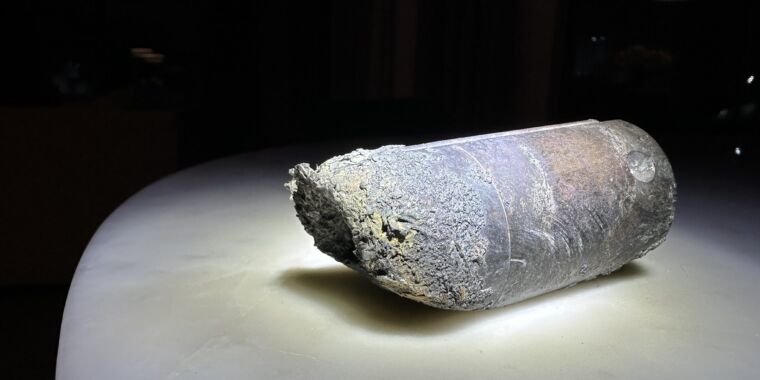
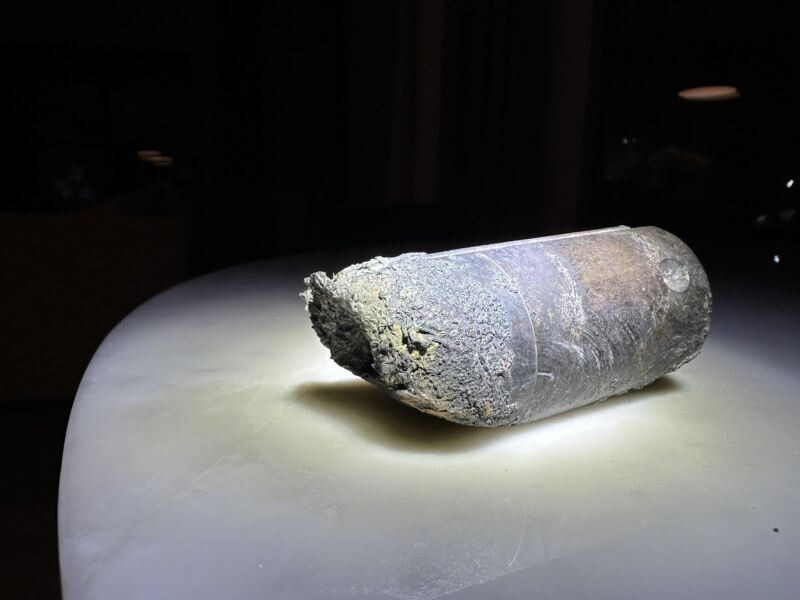
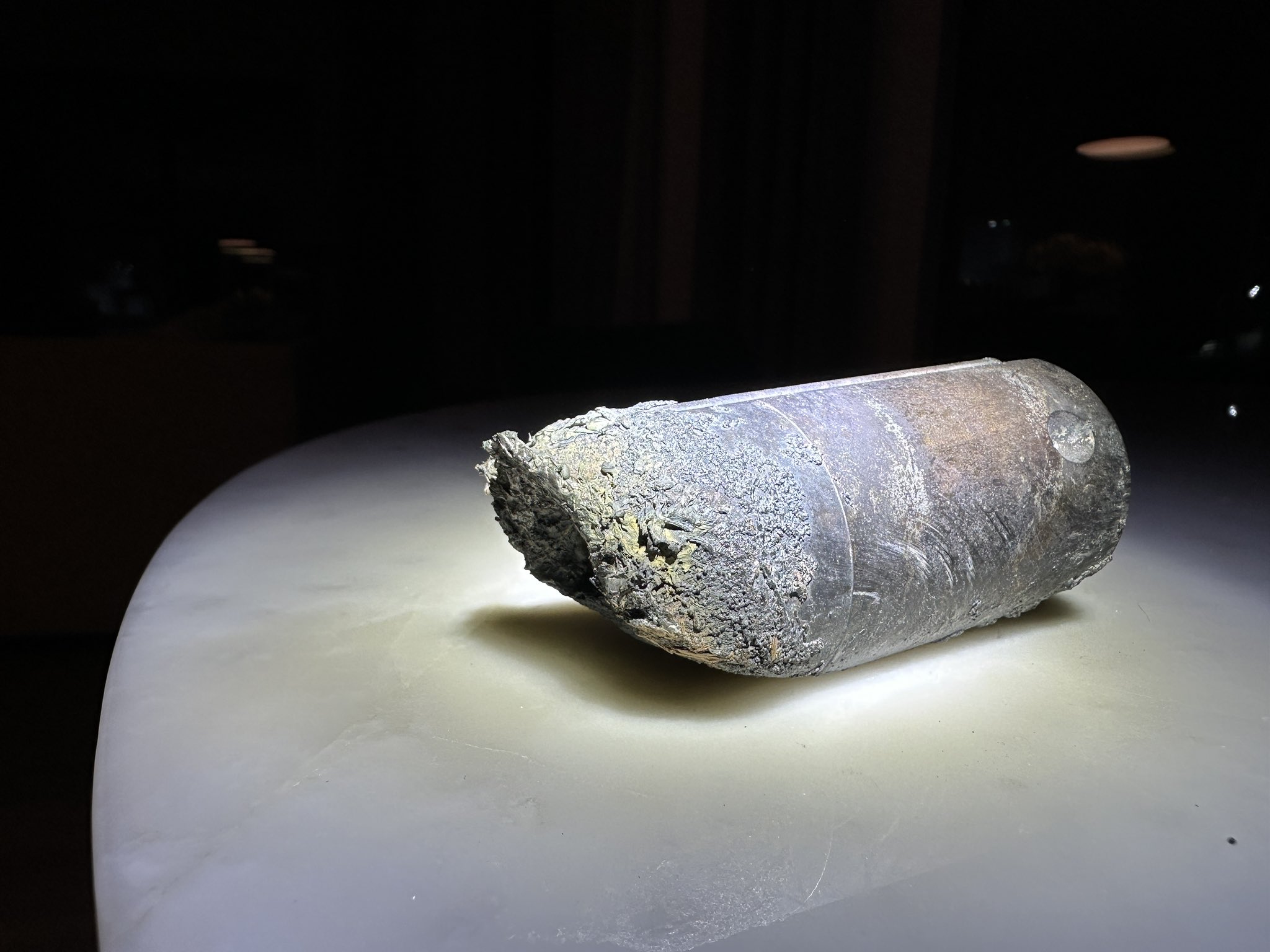
This cylindrical object, a few inches in size, fell through the roof of Alejandro Otero's home in Florida last month.

Enlarge / This cylindrical object, a few inches in size, fell through the roof of Alejandro Otero’s home in Florida last month.

A few weeks ago, something from the heavens came crashing through the roof of Alejandro Otero’s home, and NASA is on the case.

In all likelihood, this nearly two-pound object came from the International Space Station. Otero said it tore through the roof and both floors of his two-story house in Naples, Florida.

Otero wasn’t home at the time, but his son was there. A Nest home security camera captured the sound of the crash at 2: 34 pm local time (19: 34 UTC) on March 8. That’s an important piece of information because it is a close match for the time—2: 29 pm EST (19: 29 UTC)—that US Space Command recorded the reentry of a piece of space debris from the space station. At that time, the object was on a path over the Gulf of Mexico, heading toward southwest Florida.

This space junk consisted of depleted batteries from the ISS, attached to a cargo pallet that was originally supposed to come back to Earth in a controlled manner. But a series of delays meant this cargo pallet missed its ride back to Earth, so NASA jettisoned the batteries from the space station in 2021 to head for an unguided reentry.

Otero’s likely encounter with space debris was first reported by WINK News, the CBS affiliate for southwest Florida. Since then, NASA has recovered the debris from the homeowner, according to Josh Finch, an agency spokesperson.

Engineers at NASA’s Kennedy Space Center will analyze the object “as soon as possible to determine its origin,” Finch told Ars. “More information will be available once the analysis is complete.”

Ars reported on this reentry when it happened on March 8, noting that most of the material from the batteries and the cargo carrier would have likely burned up as they plunged through the atmosphere. Temperatures would have reached several thousand degrees, vaporizing most of the material before it could reach the ground.

The entire pallet, including the nine disused batteries from the space station’s power system, had a mass of more than 2.6 metric tons (5,800 pounds), according to NASA. Size-wise, it was about twice as tall as a standard kitchen refrigerator. It’s important to note that objects of this mass, or larger, regularly fall to Earth on guided trajectories, but they’re usually failed satellites or spent rocket stages left in orbit after completing their missions.

In a post on X, Otero said he is waiting for communication from “the responsible agencies” to resolve the cost of damages to his home.

Hello. Looks like one of those pieces missed Ft Myers and landed in my house in Naples.

Tore through the roof and went thru 2 floors. Almost his my son.

Can you please assist with getting NASA to connect with me? I’ve left messages and emails without a response. pic.twitter.com/Yi29f3EwyV

— Alejandro Otero (@Alejandro0tero) March 15, 2024

If the object is owned by NASA, Otero or his insurance company could make a claim against the federal government under the Federal Tort Claims Act, according to Michelle Hanlon, executive director of the Center for Air and Space Law at the University of Mississippi.

“It gets more interesting if this material is discovered to be not originally from the United States,” she told Ars. “If it is a human-made space object which was launched into space by another country, which caused damage on Earth, that country would be absolutely liable to the homeowner for the damage caused.”

This could be an issue in this case. The batteries were owned by NASA, but they were attached to a pallet structure launched by Japan’s space agency.

Trash from the International Space Station may have hit a house in Florida Read More »

openai-drops-login-requirements-for-chatgpt’s-free-version

OpenAI drops login requirements for ChatGPT’s free version

free as in beer? —

ChatGPT 3.5 still falls far short of GPT-4, and other models surpassed it long ago.

A glowing OpenAI logo on a blue background.

Benj Edwards

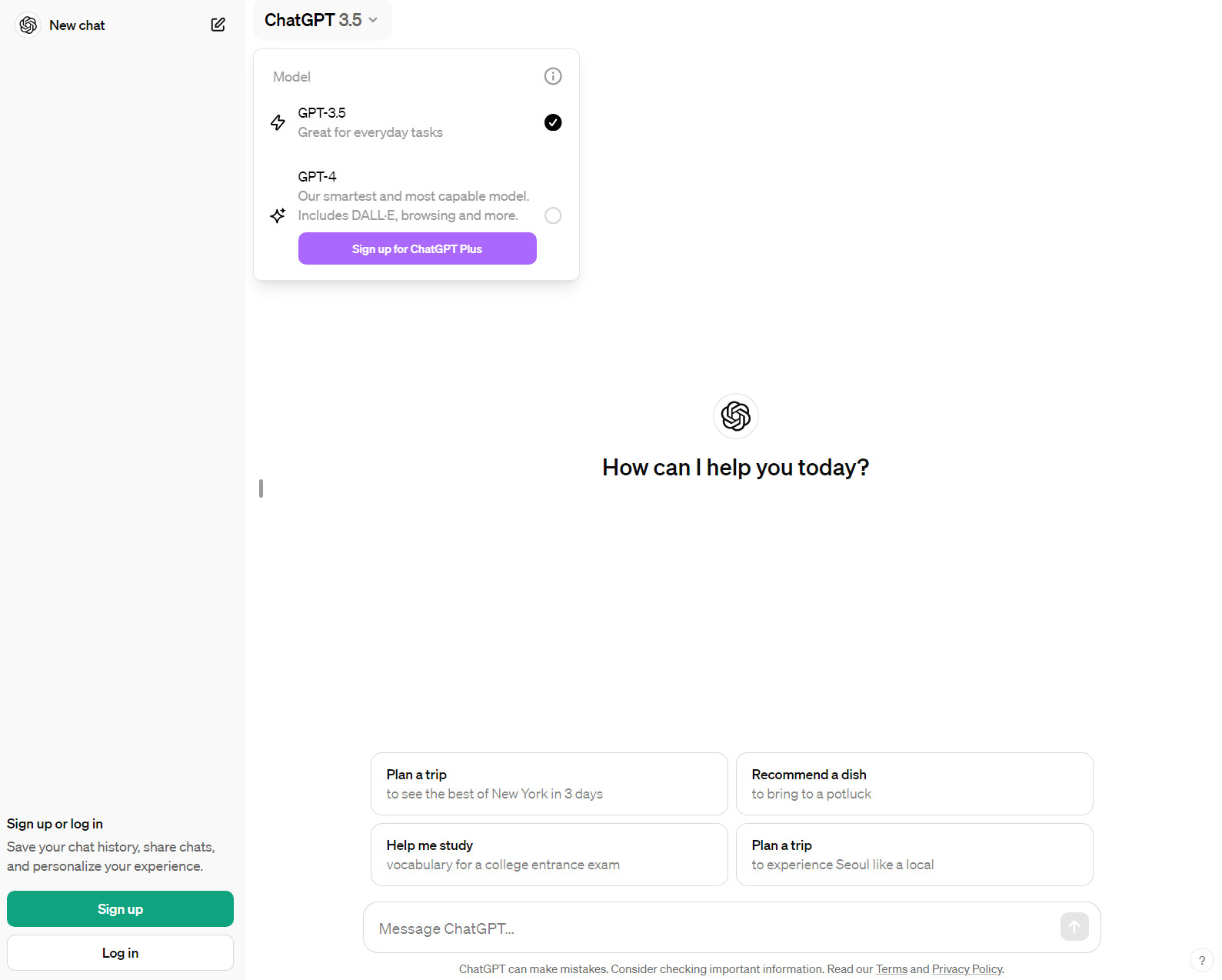
On Monday, OpenAI announced that visitors to the ChatGPT website in some regions can now use the AI assistant without signing in. Previously, the company required that users create an account to use it, even with the free version of ChatGPT that is currently powered by the GPT-3.5 AI language model. But as we have noted in the past, GPT-3.5 is widely known to provide more inaccurate information compared to GPT-4 Turbo, available in paid versions of ChatGPT.

Since its launch in November 2022, ChatGPT has transformed over time from a tech demo to a comprehensive AI assistant, and it’s always had a free version available. The cost is free because “you’re the product,” as the old saying goes. Using ChatGPT helps OpenAI gather data that will help the company train future AI models, although free users and ChatGPT Plus subscription members can both opt out of allowing the data they input into ChatGPT to be used for AI training. (OpenAI says it never trains on inputs from ChatGPT Team and Enterprise members at all).

Opening ChatGPT to everyone could provide a frictionless on-ramp for people who might use it as a substitute for Google Search or potentially gain new customers by providing an easy way for people to use ChatGPT quickly, then offering an upsell to paid versions of the service.

“It’s core to our mission to make tools like ChatGPT broadly available so that people can experience the benefits of AI,” OpenAI says on its blog page. “For anyone that has been curious about AI’s potential but didn’t want to go through the steps to set up an account, start using ChatGPT today.”

When you visit the ChatGPT website, you're immediately presented with a chat box like this (in some regions). Screenshot captured April 1, 2024.

Enlarge / When you visit the ChatGPT website, you’re immediately presented with a chat box like this (in some regions). Screenshot captured April 1, 2024.

Benj Edwards

Since kids will also be able to use ChatGPT without an account—despite it being against the terms of service—OpenAI also says it’s introducing “additional content safeguards,” such as blocking more prompts and “generations in a wider range of categories.” What exactly that entails has not been elaborated upon by OpenAI, but we reached out to the company for comment.

There might be a few other downsides to the fully open approach. On X, AI researcher Simon Willison wrote about the potential for automated abuse as a way to get around paying for OpenAI’s services: “I wonder how their scraping prevention works? I imagine the temptation for people to abuse this as a free 3.5 API will be pretty strong.”

With fierce competition, more GPT-3.5 access may backfire

Willison also mentioned a common criticism of OpenAI (as voiced in this case by Wharton professor Ethan Mollick) that people’s ideas about what AI models can do have so far largely been influenced by GPT-3.5, which, as we mentioned, is far less capable and far more prone to making things up than the paid version of ChatGPT that uses GPT-4 Turbo.

“In every group I speak to, from business executives to scientists, including a group of very accomplished people in Silicon Valley last night, much less than 20% of the crowd has even tried a GPT-4 class model,” wrote Mollick in a tweet from early March.

With models like Google Gemini Pro 1.5 and Anthropic Claude 3 potentially surpassing OpenAI’s best proprietary model at the moment —and open weights AI models eclipsing the free version of ChatGPT—allowing people to use GPT-3.5 might not be putting OpenAI’s best foot forward. Microsoft Copilot, powered by OpenAI models, also supports a frictionless, no-login experience, but it allows access to a model based on GPT-4. But Gemini currently requires a sign-in, and Anthropic sends a login code through email.

For now, OpenAI says the login-free version of ChatGPT is not yet available to everyone, but it will be coming soon: “We’re rolling this out gradually, with the aim to make AI accessible to anyone curious about its capabilities.”

OpenAI drops login requirements for ChatGPT’s free version Read More »

microsoft-splits-up-the-teams-and-office-apps-worldwide,-following-eu-split

Microsoft splits up the Teams and Office apps worldwide, following EU split

different teams —

Changes may save a bit of money for people who want Office apps without Teams.

Updated

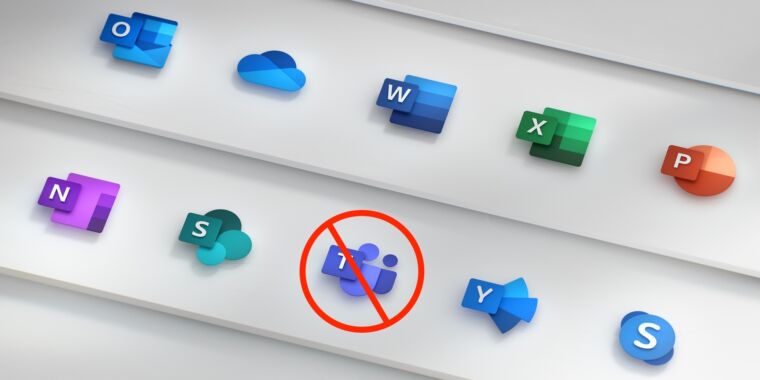
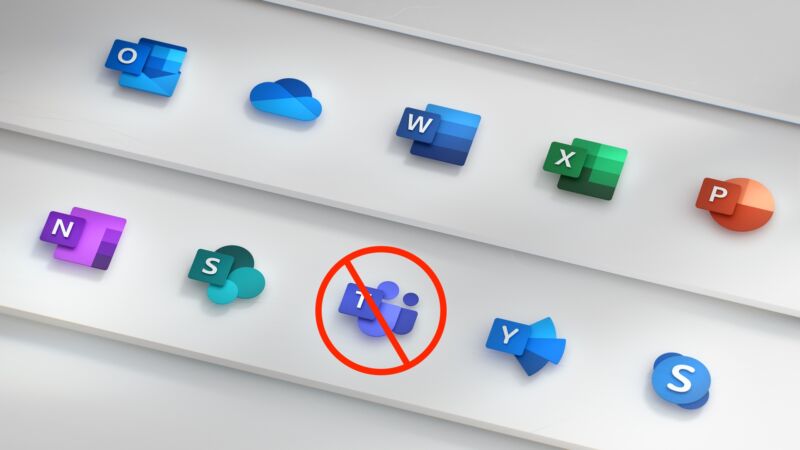
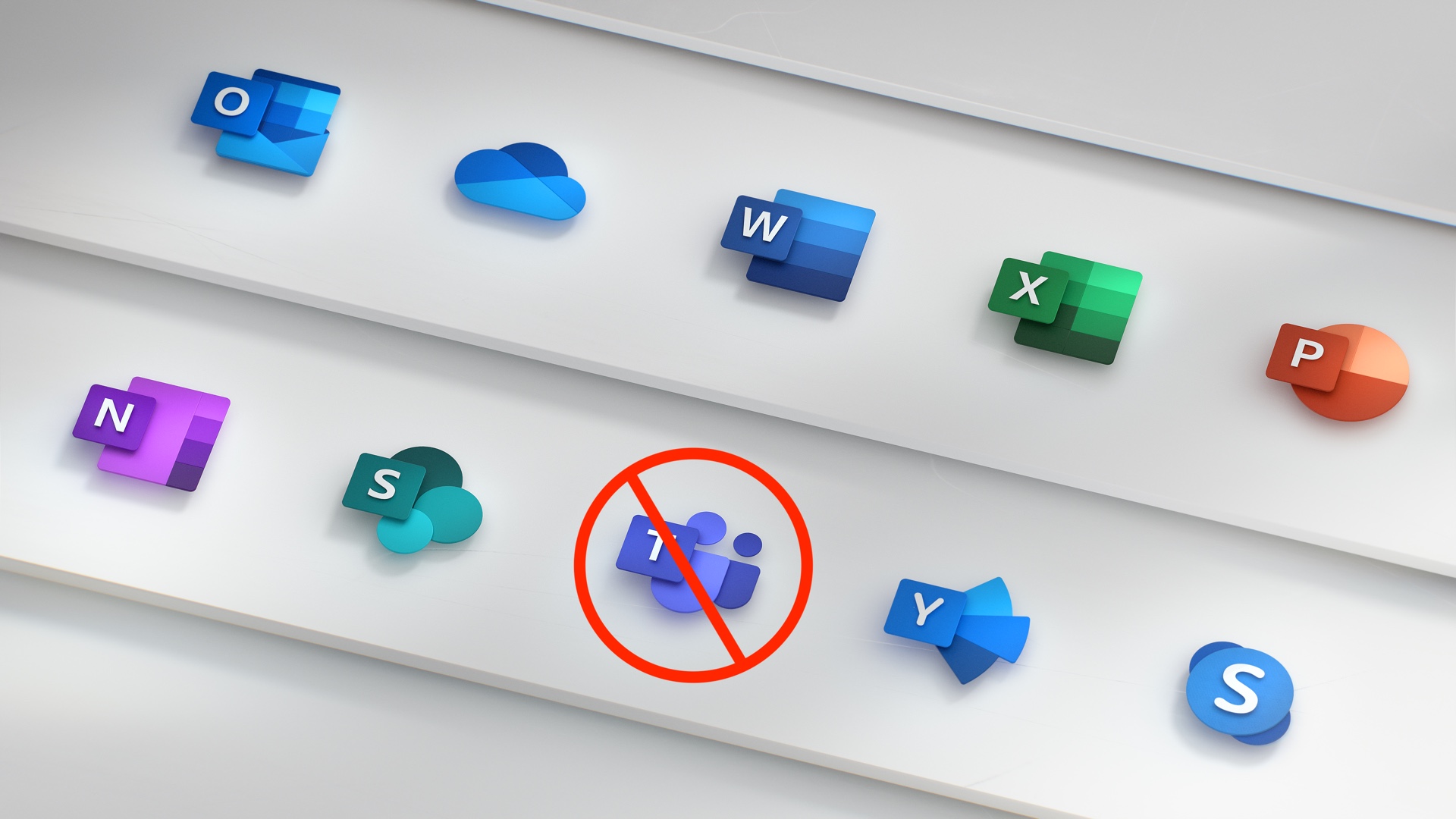
Teams is being decoupled from the other Office apps worldwide, six months after Microsoft did the same thing for the EU.

Enlarge / Teams is being decoupled from the other Office apps worldwide, six months after Microsoft did the same thing for the EU.

Microsoft/Andrew Cunningham

Months after unbundling the apps in the European Union, Microsoft is taking the Office and Teams breakup worldwide. Reuters reports that Microsoft will begin selling Teams and the other Microsoft 365 apps to new commercial customers as separate products with separate price tags beginning today.

“To ensure clarity for our customers, we are extending the steps we took last year to unbundle Teams from M365 and O365 in the European Economic Area and Switzerland to customers globally,” a Microsoft spokesperson told Ars. “Doing so also addresses feedback from the European Commission by providing multinational companies more flexibility when they want to standardize their purchasing across geographies.”

The unbundling is a win for other team communication apps like Slack and videoconferencing apps like Zoom, both of which predate Teams but haven’t had the benefits of the Office apps’ huge established user base.

The separation follows an EU regulatory investigation that started in July of 2023, almost exactly three years after Slack initially filed a complaint alleging that Microsoft was “abusing its market dominance to extinguish competition in breach of European Union competition law.”

In August of 2023, Microsoft announced that it would be unbundling the apps in the EU and Switzerland in October. Bloomberg reported in September that Zoom had met with EU and US Federal Trade Commission regulators about Microsoft, further ratcheting up regulatory pressure on Microsoft.

In October, Microsoft European Government Affairs VP Nanna-Louise Linde described the unbundling and other moves as “proactive changes that we hope will start to address these concerns in a meaningful way,” though the EU investigation is ongoing, and the company may yet be fined. Linde also wrote that Microsoft would allow third-party apps like Zoom and Slack to integrate more deeply with the Office apps and that it would “enable third-party solutions to host Office web applications.”

Microsoft has put up a blog post detailing its new pricing structure here—for now, the changes only affect the Microsoft 365 plans for the Business, Enterprise, and Frontline versions of Microsoft 365. Consumer, Academic, US Government, and Nonprofit editions of Microsoft 365 aren’t changing today and will still bundle Teams as they did before.

Current Office/Microsoft 365 Enterprise customers who want to keep using the Office apps and Teams together can continue to subscribe to both at their current prices. New subscribers to the Enterprise versions of Microsoft 365/Office 365 can pay $5.25 per user per month for Teams, whether they’re buying Teams as standalone software or adding it on top of a Teams-free Office/Microsoft 365 subscription.

For the Business and Frontline Microsoft 365 versions, you can either buy the version with Teams included for the same price as before, or choose a new Teams-less option that will save you a couple of dollars per user per month. For example, the Teams-less version of Microsoft 365 Business Standard costs $10.25 per user per month, compared to $12.50 for the version that includes Teams.

Updated April 1, 2024, at 4: 12 pm to add more details about pricing and a link to Microsoft’s official blog post about the announcement; also added a statement from a Microsoft spokesperson.

Microsoft splits up the Teams and Office apps worldwide, following EU split Read More »

discord-starts-down-the-dangerous-road-of-ads-this-week

Discord starts down the dangerous road of ads this week

Sponsored Quests —

Discord’s first real foray into ads seems minimally intrusive.

Updated

The Discord logo on a funky cyber-background.

Discord

Discord had long been strongly opposed to ads, but starting this week, it’s giving video game makers the ability to advertise to its users. The introduction of so-called Sponsored Quests marks a notable change from the startup’s previous business model, but, at least for now, it seems much less intrusive than the ads shoved into other social media platforms, especially since Discord users can choose not to engage with them.

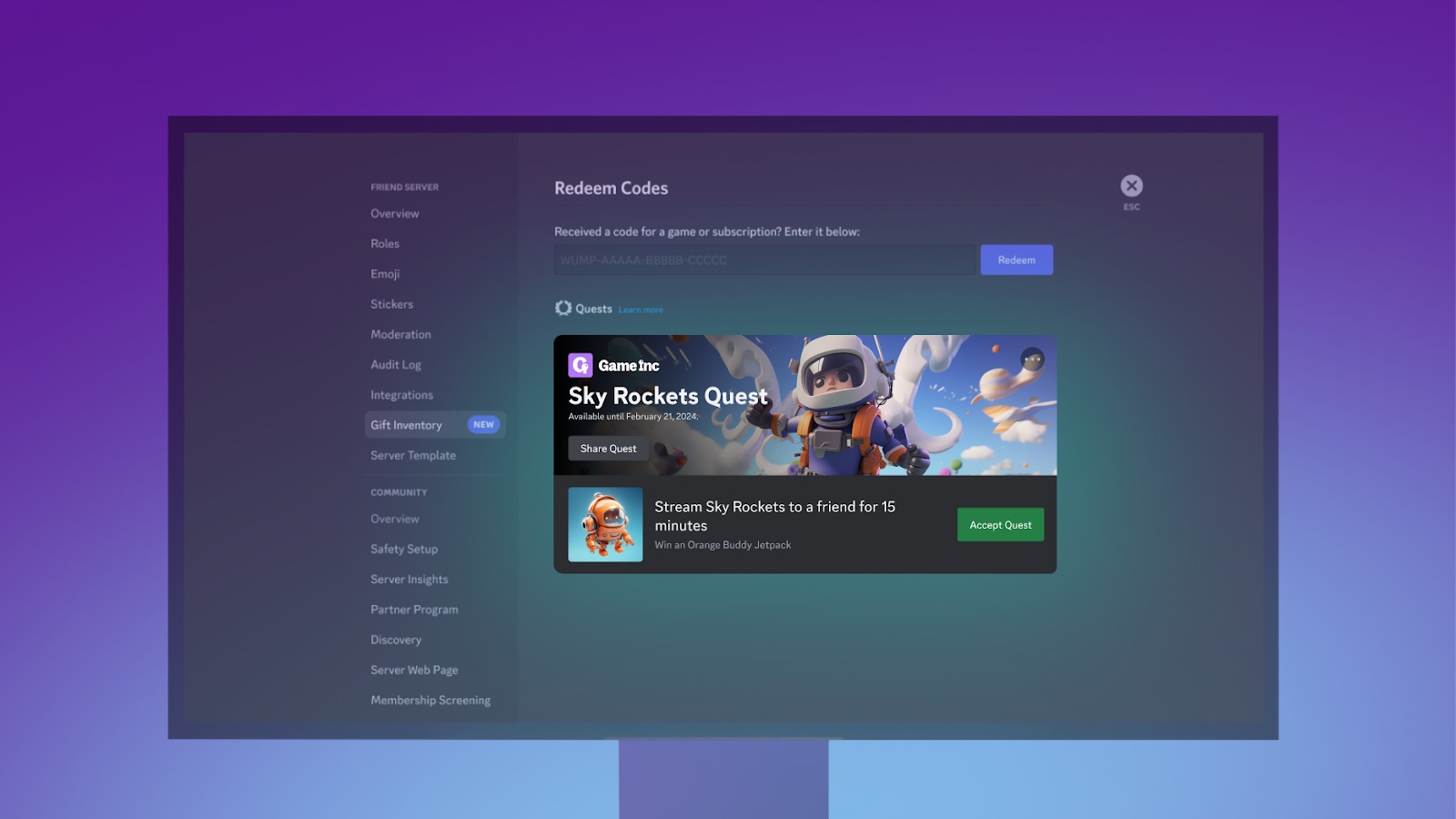
Discord first announced Sponsored Quests on March 7, with Peter Sellis, Discord’s SVP of product, writing in a blog post that users would start seeing them in the “coming weeks.” Sponsored Quests offer PC gamers in-game rewards for getting friends to watch a stream of them playing through Discord. Discord senior product communications manager Swaleha Carlson confirmed to Ars Technica that Sponsored Quests launch this week.

Discord shared this image in March as an example of the new type of ads.

Enlarge / Discord shared this image in March as an example of the new type of ads.

The goal is for video games to get exposure to more gamers, serving as a form of marketing. On Saturday, The Wall Street Journal (WSJ) reported that it viewed a slide from a slideshow Discord shows to game developers regarding the ads that reads: “We’ll get you in front of players. And those players will get you into their friend groups.”

Sellis told WSJ that Discord will target ads depending on users’ age, geographic location data, and gameplay. The ads will live on the bottom-left of the screen, but users can opt out of personalized promotions for Quests that are based on activity or data shared with Discord, Swaleha Carlson, senior product communications manager at Discord, told Ars Technica.

“Users may still see Quests, however, if they navigate to their Gift Inventory and/or through contextual entry points like a user’s friends’ activity. They’ll also have the option to hide an in-app promotion for a specific Quest or game they’re not interested in,” she said.

“Users may still see Quests, however, if they navigate to their Gift Inventory and/or through contextual entry points like a user’s friends’ activity. They’ll also have the option to hide an in-app promotion for a specific Quest or game they’re not interested in. “

Discord already tested the ads in May with Lucasfilm Games and Epic Games. Discord users were able to receive Star Wars-themed gear in Fortnite for getting a friend to watch them play Fortnite on PC for at least 15 minutes.

Jason Citron, Discord co-founder and CEO, told Bloomberg in March that the company hopes that one day “every game will offer Quests on Discord.”

Discord used to be anti-ads

It may be a nuisance for users to have to disable personalized promotion for Sponsored Quests when they never asked for them, but it should bring long-term users at least some comfort that their data purportedly doesn’t have to contribute to the marketing. However, it’s unclear if Discord may one day change this. The fact that the platform is implementing ads at all is somewhat surprising. Discord named its avoidance of advertising as one of its key differentiators from traditional social media platforms as recently as late January.

In March 2021, Citron told WSJ that Discord had eschewed ads until that point because ads would be intrusive, considering Discord’s purpose of instant back-and-forth communication and people’s general distaste for viewing ads and having their data shared with other companies.

“We really believe we can build products that make Discord more fun and that people will pay for them. It keeps our incentives aligned,” Citron told WSJ at the time.

That same year, Citron, in response to a question about why being ad-free is important to Discord, told NPR: “We believe that people’s data is their data and that people should feel comfortable and safe to have conversations and that their data is not going to be used against them in any way that is improper.”

Sponsored Quests differs from other types of ads that would more obviously disrupt Discord users’ experiences, such as pop-up ads or ads viewed alongside chat windows.

A tight-rope to walk

Beyond Sponsored Quests, Discord, which launched in 2015, previously announced that it would start selling sponsored profile effects and avatar decorations in the Discord Shop. In March, Discord’s Sellis said this would arrive in the “coming weeks.” Discord is also trying to hire more than 12 people to work in ad sales, WSJ said Saturday, citing anonymous “people familiar with [Discord’s] plans.”

Discord’s Carlson declined to comment to Ars on whether or not Discord plans to incorporate other types of ads into Discord. She noted that Sponsored Quests “are currently in the pilot phase” and that the company will “continue to iterate based on what we learn.”

In 2021, Discord enjoyed a nearly three-times revenue boost that it attributed to subscription sales for Nitro, which adds features like HD video streaming and up to 500MB uploads. In March, Citron told Bloomberg that Discord has more than 200 million monthly active users and that the company will “probably” go public eventually.

The publication, citing unnamed “people with knowledge of the matter,” also reported that Discord makes over $600 million in annualized revenue. The startup has raised over $1 billion in funding and is reported to have over $700 million in cash. However, the company reportedly isn’t profitable. It also laid off 17 percent of staffers, or 170 workers, in January.

Meanwhile, ads are the top revenue generator for many other social media platforms, such as Reddit, which recently went public.

While Discord’s first real ads endeavor seems like it will have minimal impact on users who aren’t interested in them, it brings the company down a tricky road that it hasn’t previously navigated. A key priority should be ensuring that any form of ads doesn’t disrupt the primary reasons people like using Discord. As it stands, Sponsored Quests might already put off some users.

“I don’t want my friendships to be monetized or productized in any way,” Zack Mohsen, a reported long-time user and computer hardware engineer based in Seattle, told WSJ.

Updated April 1, 2024 at 5: 32 p.m. ET to add information and comment from Discord. 

Discord starts down the dangerous road of ads this week Read More »

google-agrees-to-delete-incognito-data-despite-prior-claim-that’s-“impossible”

Google agrees to delete Incognito data despite prior claim that’s “impossible”

Deleting files —

What a lawyer calls “a historic step,” Google considers not that “significant.”

Google agrees to delete Incognito data despite prior claim that’s “impossible”

To settle a class-action dispute over Chrome’s “Incognito” mode, Google has agreed to delete billions of data records reflecting users’ private browsing activities.

In a statement provided to Ars, users’ lawyer, David Boies, described the settlement as “a historic step in requiring honesty and accountability from dominant technology companies.” Based on Google’s insights, users’ lawyers valued the settlement between $4.75 billion and $7.8 billion, the Monday court filing said.

Under the settlement, Google agreed to delete class-action members’ private browsing data collected in the past, as well as to “maintain a change to Incognito mode that enables Incognito users to block third-party cookies by default.” This, plaintiffs’ lawyers noted, “ensures additional privacy for Incognito users going forward, while limiting the amount of data Google collects from them” over the next five years. Plaintiffs’ lawyers said that this means that “Google will collect less data from users’ private browsing sessions” and “Google will make less money from the data.”

“The settlement stops Google from surreptitiously collecting user data worth, by Google’s own estimates, billions of dollars,” Boies said. “Moreover, the settlement requires Google to delete and remediate, in unprecedented scope and scale, the data it improperly collected in the past.”

Google had already updated disclosures to users, changing the splash screen displayed “at the beginning of every Incognito session” to inform users that Google was still collecting private browsing data. Under the settlement, those disclosures to all users must be completed by March 31, after which the disclosures must remain. Google also agreed to “no longer track people’s choice to browse privately,” and the court filing said that “Google cannot roll back any of these important changes.”

Notably, the settlement does not award monetary damages to class members. Instead, Google agreed that class members retain “rights to sue Google individually for damages” through arbitration, which, users’ lawyers wrote, “is important given the significant statutory damages available under the federal and state wiretap statutes.”

“These claims remain available for every single class member, and a very large number of class members recently filed and are continuing to file complaints in California state court individually asserting those damages claims in their individual capacities,” the court filing said.

While “Google supports final approval of the settlement,” the company “disagrees with the legal and factual characterizations contained in the motion,” the court filing said. Google spokesperson José Castañeda told Ars that the tech giant thinks that the “data being deleted isn’t as significant” as Boies represents, confirming that Google was “pleased to settle this lawsuit, which we always believed was meritless.”

“The plaintiffs originally wanted $5 billion and are receiving zero,” Castañeda said. “We never associate data with users when they use Incognito mode. We are happy to delete old technical data that was never associated with an individual and was never used for any form of personalization.”

While Castañeda said that Google was happy to delete the data, a footnote in the court filing noted that initially, “Google claimed in the litigation that it was impossible to identify (and therefore delete) private browsing data because of how it stored data.” Now, under the settlement, however, Google has agreed “to remediate 100 percent of the data set at issue.”

Mitigation efforts include deleting fields Google used to detect users in Incognito mode, “partially redacting IP addresses,” and deleting “detailed URLs, which will prevent Google from knowing the specific pages on a website a user visited when in private browsing mode.” Keeping “only the domain-level portion of the URL (i.e., only the name of the website) will vastly improve user privacy by preventing Google (or anyone who gets their hands on the data) from knowing precisely what users were browsing,” the court filing said.

Because Google did not oppose the motion for final approval, US District Judge Yvonne Gonzalez Rogers is expected to issue an order approving the settlement on July 30.

Google agrees to delete Incognito data despite prior claim that’s “impossible” Read More »

at&t-acknowledges-data-leak-that-hit-73-million-current-and-former-users

AT&T acknowledges data leak that hit 73 million current and former users

A lot of leaked data —

Data leak hit 7.6 million current AT&T users, 65.4 million former subscribers.

A person walks past an AT&T store on a city street.

Getty Images | VIEW press

AT&T reset passcodes for millions of customers after acknowledging a massive leak involving the data of 73 million current and former subscribers.

“Based on our preliminary analysis, the data set appears to be from 2019 or earlier, impacting approximately 7.6 million current AT&T account holders and approximately 65.4 million former account holders,” AT&T said in an update posted to its website on Saturday.

An AT&T support article said the carrier is “reaching out to all 7.6 million impacted customers and have reset their passcodes. In addition, we will be communicating with current and former account holders with compromised sensitive personal information.” AT&T said the leaked information varied by customer but included full names, email addresses, mailing addresses, phone numbers, Social Security numbers, dates of birth, AT&T account numbers, and passcodes.

AT&T’s acknowledgement of the leak described it as “AT&T data-specific fields [that] were contained in a data set released on the dark web.” But the same data appears to be on the open web as well. As security researcher Troy Hunt wrote, the data is “out there in plain sight on a public forum easily accessed by a normal web browser.”

The hacking forum has a public version accessible with any browser and a hidden service that requires a Tor network connection. Based on forum posts we viewed today, the leak seems to have appeared on both the public and Tor versions of the hacking forum on March 17 of this year. Viewing the AT&T data requires a hacking forum account and site “credits” that can be purchased or earned by posting on the forum.

Hunt told Ars today that the term “dark web” is “incorrect and misleading” in this case. The forum where the AT&T data appeared “does not meet the definition of dark web,” he wrote in an email. “No special software, no special network, just a plain old browser. It’s easily discoverable via a Google search and immediately shows many PII [Personal Identifiable Information] records from the AT&T breach. Registration is then free for anyone with the only remaining barrier being obtaining credits.”

We contacted AT&T today and will update this article if we get a response.

49 million email addresses

Hunt’s post on March 19 said the leaked information included a file with 73,481,539 lines of data that contained 49,102,176 unique email addresses. Another file with decrypted Social Security numbers had 43,989,217 lines, he wrote.

Hunt, who runs the “Have I Been Pwned” database that lets you check if your email was in a data breach, says the 49 million email addresses in the AT&T leak have been added to his database.

BleepingComputer covered the leak two weeks ago, writing that it is the same data involved in a 2021 incident in which a hacker shared samples of the data and attempted to sell the entire data set for $1 million. In 2021, AT&T told BleepingComputer that “the information that appeared in an Internet chat room does not appear to have come from our systems.”

AT&T maintained that position last month. “AT&T continues to tell BleepingComputer today that they still see no evidence of a breach in their systems and still believe that this data did not originate from them,” the news site’s March 17, 2024, article said.

AT&T says data may have come from itself or vendor

AT&T’s update on March 30 acknowledged that the data may have come from AT&T itself, but said it also may have come from an AT&T vendor:

AT&T has determined that AT&T data-specific fields were contained in a data set released on the dark web approximately two weeks ago. While AT&T has made this determination, it is not yet known whether the data in those fields originated from AT&T or one of its vendors. With respect to the balance of the data set, which includes personal information such as Social Security numbers, the source of the data is still being assessed.

“Currently, AT&T does not have evidence of unauthorized access to its systems resulting in exfiltration of the data set,” the company update also said. AT&T said it “is communicating proactively with those impacted and will be offering credit monitoring at our expense where applicable.”

AT&T said the passcodes that it reset are generally four digits and are different from AT&T account passwords. The passcodes are used when calling customer support, when managing an account at a retail store, and when signing in to the AT&T website “if you’ve chosen extra security.”

AT&T acknowledges data leak that hit 73 million current and former users Read More »

redis’-license-change-and-forking-are-a-mess-that-everybody-can-feel-bad-about

Redis’ license change and forking are a mess that everybody can feel bad about

Licensing is hard —

Cloud firms want a version of Redis that’s still open to managed service resale.

AWS data centers built right next to suburban cul-de-sac housing

Enlarge / An Amazon Web Services (AWS) data center under construction in Stone Ridge, Virginia, in March 2024. Amazon will spend more than $150 billion on data centers in the next 15 years.

Getty Images

Redis, a tremendously popular tool for storing data in-memory rather than in a database, recently switched its licensing from an open source BSD license to both a Source Available License and a Server Side Public License (SSPL).

The software project and company supporting it were fairly clear in why they did this. Redis CEO Rowan Trollope wrote on March 20 that while Redis and volunteers sponsored the bulk of the project’s code development, “the majority of Redis’ commercial sales are channeled through the largest cloud service providers, who commoditize Redis’ investments and its open source community.” Clarifying a bit, “cloud service providers hosting Redis offerings will no longer be permitted to use the source code of Redis free of charge.”

Clarifying even further: Amazon Web Services (and lesser cloud giants), you cannot continue reselling Redis as a service as part of your $90 billion business without some kind of licensed contribution back.

This generated a lot of discussion, blowback, and action. The biggest thing was a fork of the Redis project, Valkey, that is backed by The Linux Foundation and, critically, also Amazon Web Services, Google Cloud, Oracle, Ericsson, and Snap Inc. Valkey is “fully open source,” Linux Foundation execs note, with the kind of BSD-3-Clause license Redis sported until recently. You might note the exception of Microsoft from that list of fork fans.

As noted by Matt Asay, who formerly ran open source strategy and marketing at AWS, most developers are “largely immune to Redis’ license change.” Asay suggests that, aside from the individual contributions of AWS engineer and former Redis core contributor Madelyn Olson (who contributed in her free time) and Alibaba’s Zhao Zhao, “The companies jumping behind the fork of Redis have done almost nothing to get Redis to its current state.”

Olson told TechCrunch that she was disappointed by Redis’ license change but not surprised. “I’m more just disappointed than anything else.” David Nally, AWS’ current director for open source strategy and marketing, demurred when asked by TechCrunch if AWS considered buying a Redis license from Redis Inc. before forking. “[F]rom an open-source perspective, we’re now invested in ensuring the success of Valkey,” Nally said.

Shifts in open source licensing have triggered previous keep-it-open forks, including OpenSearch (from ElasticSearch) and OpenTofu (from Terraform). With the backing of the Linux Foundation and some core contributors, though, Valkey will likely soon evolve far beyond a drop-in Redis replacement, and Redis is likely to follow suit.

If you’re reading all this and you don’t own a gigascale cloud provider or sit on the board of a source code licensing foundation, it’s hard to know what to make of the fiasco. Every party in this situation is doing what is legally permissible, and software from both sides will continue to be available to the wider public. Taking your ball and heading home is a longstanding tradition when parties disagree on software goals and priorities. But it feels like there had to be another way this could have worked out.

Redis’ license change and forking are a mess that everybody can feel bad about Read More »

google-podcasts-shuts-down-tomorrow,-april-2

Google Podcasts shuts down tomorrow, April 2

Google Listen was the last good Google podcast app —

Building a podcast player into Google Search was always a weird plan.

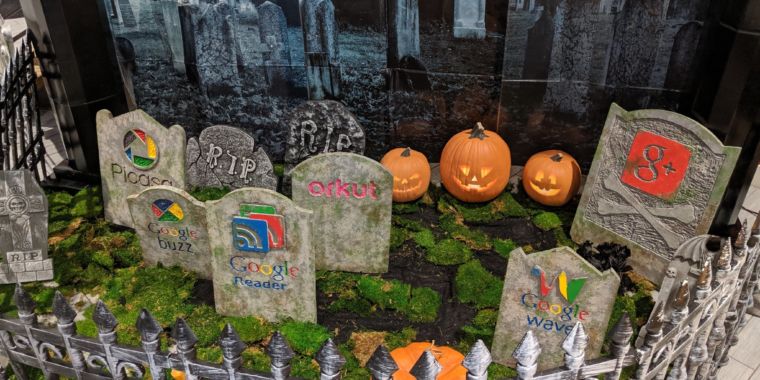
Each headstone in this miniature, decorative cemetery is for a defunct Google product.

Enlarge / A spooky Halloween display from Google’s Seattle campus.

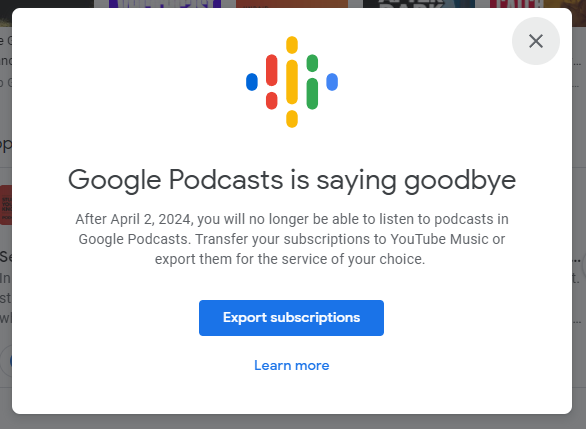
RIP Google Podcasts. Google’s self-branded podcasting service shuts down tomorrow, April 2, and existing users have until July to export any subscriptions that are still on the service. Google originally announced the shutdown in September and has been plastering shutdown notices all over the Google Podcasts site and app for a few days now.

Google Podcasts was Google’s third podcasting service, after Google Listen (2009–2012) and Google Play Music Podcasts (2016–2020). The shutdown will clear the deck for Google’s media consolidation under the YouTube brand with podcasting app No. 4: YouTube Podcasts.

Google Podcasts has always had an awkward life.  Despite an eight-year existence, it has only been a viable podcasting app for maybe half that time. The project grew out of the Google Search team’s desire to index podcast content. That started in 2016 when searching for a podcast would show a player embedded right in the Google Search results. This only worked on google.com and on the Android search app.

The Google Podcasts shutdown notice.

The Google Podcasts shutdown notice.

Google

Actually subscribing to a podcast didn’t come until two years later, in 2018, allowing users to finally do the bare minimum of opening the app and seeing the latest episodes of shows they’re subscribed to. Again, though, this was all in the Google Search app, which didn’t make sense to anyone, especially when Google already had a decent podcast ecosystem going in its primary music app, Google Play Music. A month later it launched a formal “Google Podcasts” app on the Play Store, helping the app make a little more sense, even though under the hood the “app” was just a link to the podcast interface in the Google Search app. This was also the first podcast player to integrate with another Google Search project, the Google Home smart speaker.

Two years later, in 2020, Google finally launched an iOS app. At this point, four years after launch, as a third-party observer, you could begin to think that “maybe Google is actually serious about Google Podcasts.” The very next year rumors of “YouTube Podcasts” started, and the writing was on the wall for the search team’s weird little podcast app.

Google Podcasts is one of the major examples of Google’s disorganization. Along with Google Play Music Podcasts, Google launched two competing and disconnected podcast services within the same week! The Google Search team never had a clear reason for building a podcast app, and no clear vision; it felt like it was going rogue inside the company. Along with a glacially slow development pace, Google Podcasts feels like it should have never existed to begin with.

Google Podcasts shuts down tomorrow, April 2 Read More »

ncuti-gatwa’s-fifteenth-doctor-rocks-the-fashion-in-new-doctor-who-trailer

Ncuti Gatwa’s Fifteenth Doctor rocks the fashion in new Doctor Who trailer

The Fifteenth Doctor is in —

The return of Russell T. Davies as show runner has been a welcome one.

Ncuti Gatwa officially begins his tenure as the Fifteenth Doctor in May, when the new Doctor Who season premieres.

Heads up, Whovians! We’ve got a newly regenerated Fifteenth Doctor in Ncuti Gatwa and a new season of the long-running British sci-fi series Doctor Who on the way. Judging by the latest trailer, we’re in for another wild ride of time-traveling hijinks, punctuated by an irresistibly charismatic Gatwa sporting some very colorful outfits with confident aplomb.

(Spoilers for most recent seasons and specials below.)

Look, I loved Jodie Whittaker’s incarnation of the Doctor, but her tenure was hampered by the unavoidable fact that showrunner Chris Chibnall just didn’t give her a lot of great material to work with. Among other issues, there was an unfortunate tendency toward didacticism and preachiness in the writing at the expense of genuine emotional resonance. While there were a number of notable episodes, and Chibnall gamely trotted out all the fan-favorite monsters and tropes, nothing ever fully captured the imagination in quite the same way as the show has always done at its best. Whittaker deserved better.

But then the BBC announced the return of Russell T. Davies—who revived the series in 2005 with Christopher Eccleston as the Ninth Doctor—as showrunner, setting up another reset of this beloved series. When Gatwa’s casting was announced, everyone assumed Whittaker’s Thirteenth Doctor would regenerate accordingly at the end of “The Power of the Doctor.” Instead, the newly regenerated Fourteenth Doctor was played by none other than David Tennant, everyone’s favorite Tenth Doctor—a little older with a few tweaks to his trademark look.

It was great casting for the 60th anniversary specials, in which Tennant’s Fourteenth Doctor reunited with Donna Noble (Catherine Tate)—one of my favorite companions. Donna had her memories of the Doctor wiped by the Tenth Doctor to save her life since she had taken on some Time Lord knowledge that human beings just aren’t designed to carry. Donna now had a teenage daughter named Rose, and of course, a major crisis forced the Doctor to restore the erased knowledge to save London yet again. Donna should have died, but her Time Lord knowledge ended up being safely split between her and Rose instead.

The Doctor and Donna next encountered an abandoned spaceship filled with doppelgängers (Not-Things) in “Wild Blue Yonder.” In “The Giggle,” they faced off against the Toymaker (Neil Patrick Harris), and during the climactic battle, the Fourteenth Doctor was shot. Fans expecting the usual regeneration were in for a surprise. The Fourteenth Doctor “bigenerated” instead, resulting in both a Fourteenth Doctor and Gatwa’s Fifteenth Doctor, a separate physical entity.

  • Ncuti Gatwa is ready for his first full season as the Fifteenth Doctor.

    YouTube/BBC

  • His new companion is Ruby Sunday (Millie Gibson).

    YouTube/BBC

  • “Space babies!”

    YouTube/BC

  • The Doctor and the dinosaurs.

    YouTube/BBC

  • Going full-on Bridgerton.

    YouTube/BBC

  • “We are going to rock through time…”

    YouTube/BBC

  • Sporting a snazzy tangerine-colored knit.

    YouTube/BBC

  • Looking very Mod Squad, Doctor!

    YouTube/BBC

  • Recreating a famous album cover because why not?

    YouTube/BBC

The two Doctors teamed up to defeat the Toymaker and then figured out how to duplicate the TARDIS by drawing on the power of the remnants of the villain’s reality-warping domain. And Gatwa’s Doctor embarked on a fresh adventure with the 2023 Christmas special “The Church on Ruby Road,” which also introduced us to his new companion, Ruby Sunday (Millie Gibson).

All of that brings us to season 14. All we really know about this new season is that it will have eight episodes, beginning with the Davies-penned “Space Babies” and “The Devil’s Chord.” Davies wrote six out of the eight episodes, in fact, closing out with “The Legend of Ruby Sunday” and the finale, “Empire of Death.”  The latest trailer doesn’t give us much more than some exciting visual teases of what’s in store, including the aforementioned space babies, dinosaurs, a mysterious spacecraft—and all those outfits.

The Fifteenth Doctor is apparently something of a clothes horse. Each incarnation of the Doctor has always had a trademark “look,” but costume designer Pam Downe decided to broaden the scope for Gatwa, incorporating design elements from previous Doctors all the way back to Jon Pertwee’s Third Doctor, whose style Gatwa particularly admired. That Regency-era burgundy velvet jacket is definitely a nod to the Third Doctor. There’s even a 1960s suit and Afro reminiscent of the Mod Squad or Austin Powers (with a sly allusion to The Beatles’ Abbey Road). Gatwa is clearly having a blast, which bodes well for the upcoming new season.

Season 14 of Doctor Who premieres on BBC and Disney+ on May 10, 2024, in the US and May 11 in the UK.

Listing image by YouTube/BBC

Ncuti Gatwa’s Fifteenth Doctor rocks the fashion in new Doctor Who trailer Read More »