Author name: Paul Patrick

war-never-changes:-a-fallout-fan’s-spoiler-laden-review-of-the-new-tv-series

War never changes: A Fallout fan’s spoiler-laden review of the new TV series

The nukes went off in 2077 in Fallout's universe. The show tells us more about this event than we've learned from the games before.

Enlarge / The nukes went off in 2077 in Fallout’s universe. The show tells us more about this event than we’ve learned from the games before.

Amazon

It’s been just over a week since the Fallout TV series premiered on Amazon Prime, and one thing’s for sure: It’s a huge hit. You can hardly open a social media app without seeing content about it, the reviews are positive, and the active players for the Fallout games have doubled over the past week.

A few days ago, I shared some spoiler-free impressions of the first three episodes. I loved what I’d seen up to that point—the show seemed faithful to the games, but it was also a great TV show. A specific cocktail of tongue-in-cheek humor, sci-fi campiness, strong themes, great characters, and visceral violence really came together into a fantastic show.

Still, I had some questions at that point: Would the franchise’s penchant for satire and its distinct political and social viewpoint come through? Where was all this headed?

Like a lot of us, I’ve now finished the series. So if you have, too (or if you haven’t but just don’t care about spoilers), it’s time to dive into all eight episodes of season one together.

I’m a long-time Fallout fan, so I’ll focus on how the show ties in with the games, but like the show itself, I aim to make this interesting even for the newbies.

Heavy spoilers for Fallout season one start here, as well as a few spoilers about Fallout New Vegas and Fallout 4.

Something for everybody

So was the show as good after eight episodes as it was after three? Absolutely. If anything, the show only got better as it progressed. The more inducted into the world, lore, and characters new viewers became, the more effective the show could be.

There was a lot to set up, after all. Some of us have been playing the games for years, so we knew all about Vault-Tec, the Brotherhood of Steel, the Enclave, the New California Republic, Pip-Boys, gulpers, and ghouls. But if you’re coming into the world fresh, that’s a lot to take on.

I was worried while watching that despite the show’s efforts to introduce new viewers, it might not be good enough, but I’ve been told by multiple people who haven’t played the games that they didn’t have trouble keeping up.

Once the various elements were established, the show was able to hit its stride and start bringing in the aspects of Fallout that weren’t prominent in the opening stretch.

Further, it expertly walked the line to give established fans something to chew on at the same time. The timeline of Fallout lore and stories spans hundreds of years, but the TV show is actually set after all of the games.

Event Year
Bombs Drop 2077
Fallout 76 (2018)

2102
Fallout (1997)

2161
Fallout 2 (1998) 2241
Fallout 3 (2008)

2277
Fallout New Vegas (2010) 2281
Fallout 4 (2015)

2287
Fallout Season 1 (2024)

2296

That meant the show revealed some things about what happened to certain factions and places that previously appeared in the games. Most notably, Shady Sands is a crater, and the New California Republic—one of the most important factions and one of the strongest governments from the games—no longer exists as we knew it.

That led some fans to speculate that TV series executive producer and game creative director Todd Howard was trying to make the popular New Vegas game (which was not made by his team) non-canon, but in a recent interview, he clarified that both the show and New Vegas are very much canon, noting that the bomb fell on Shady Shands very shortly after the events of that game. The timeline on the show is cutting it close, but a generous interpretation allows it all to line up.

Of course, the show expanded on some elements from the games in ways that could be seen as breaching canon. You could write most of them away as things the games never addressed—like the vials ghouls must consume to avoid going feral or the origin story of gulpers. The games at times implied different things about both of those aspects, but they didn’t necessarily contradict them.

The series also canonized some specific choices that players could make in some prior games. For example, it’s confirmed that the Brotherhood of Steel airship seen in the show is the same one seen in Fallout 4, meaning that the canon outcome for Fallout 4 is obviously not one where that airship was destroyed. (Players of that game had the option of pursuing paths that led to its destruction or not.)

  • Shady Sands as it’s seen in the show.

    Amazon

  • New Vegas is teased as the next destination.

    Amazon

  • The last moments had a brief tease with what appears to be a Deathclaw skull, too.

    Amazon

With minimal exceptions, previous games in the series avoided canonizing outcomes like that by being set decades or even centuries (as well as hundreds or even thousands of miles) apart—such that it wasn’t necessary to reveal what happened in those cases. Since this show is set in a region that is well-documented in prior Fallout titles, that’s not the case here.

The tease that we’re going to New Vegas next season probably means that several multiple-choice outcomes from that game will have to be canonized, too. Is Mr. House still running the show? What happened to Caesar’s Legion? Why does New Vegas look so bombed out compared to how it appeared in the game? We’ll probably find out.

All told, new fans got to explore the world of Fallout for the first time, even as longtime fans got to see where the story has gone since they last played the games. The story hadn’t been moved forward in nine years, since 2018’s Fallout 76 was actually a prequel that took place long before any of the other games in the series.

It took some skillful work to serve both of those audiences without compromising the experience of the other, so kudos to the show’s writers.

War never changes: A Fallout fan’s spoiler-laden review of the new TV series Read More »

why-are-groups-of-university-students-modifying-cadillac-lyriq-evs?

Why are groups of university students modifying Cadillac Lyriq EVs?

A Cadillac Lyriq EV

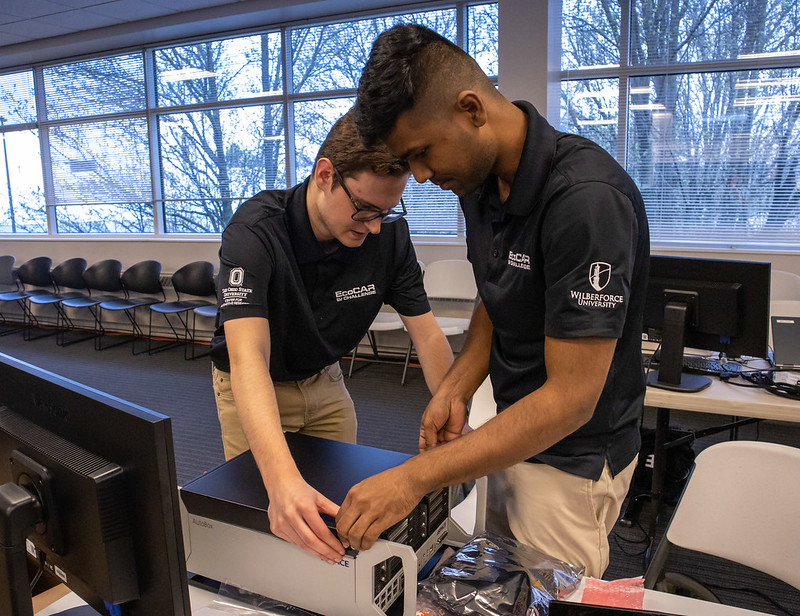
Enlarge / For the previous EcoCar 3 competition, student teams turned Camaro sportscars into hybrids. For the EcoCar EV challenge, their job is to improve on the Cadillac Lyriq.

EcoCar

Across the country, teams of students at 15 different universities are in the middle of a four-year project, dissecting an electric vehicle and figuring out ways to make it even better. The program, called the EcoCar EV Challenge, was founded more than three decades ago by the US Department of Energy and is run by the DOE’s Argonne National Laboratory.

Over the last 35 years, more than 30,000 students from 95 universities have participated in the EcoCar Challenge, part of the DOE’s Advanced Vehicle Technology Competition. Each segment spans four years, with the most recent cycle beginning in 2023 with a new Cadillac Lyriq donated by the General Motors automaker.

The students take this competition very seriously, as participation alone brings a lot of benefits, including the potential for a lifelong career path.

Mobility advancement in progress

One of the organization’s goals is to challenge teams to “identify and address specific challenges with equity in the future of mobility through the application of innovative hardware and software solutions” while working with underserved populations. Through this process, the student-run teams are discovering untapped potential for future EV development and finding solutions that could help local and national communities.

The entire first year is packed with intense research and planning. Students don’t even get to put their hands on a car until year two; meanwhile, they learn how to work together and communicate as a team. They run simulations with propulsion controls and modeling, and by the time they have access to a vehicle, they’re ready to dive in.

University of Alabama student Corban Walsh explains that during the prototyping process, automakers like Cadillac end up with a fleet of pre-production vehicles that can’t be resold. Walsh and his team were given a practically new all-electric Lyriq with just 17,000 miles (27,400 km) on it, and they decided their goal was to transform it from a rear-wheel-drive to an all-wheel-drive configuration and boost the horsepower from 300 to 550 (223 to 373 kW). With tasks like that, one might think this is an ideal club for car fanatics. But Walsh says the team has diverse interests and is in fact very software- and planning-focused.

Year one is research and planning.

Year one is research and planning.

EcoCar

“In some ways, we attract the ‘car guy’ type of person, but at the end of the day, you don’t have to be a car guy,” Walsh says. “You can even forget it’s a car sometimes.”

Any student can join the EcoCar EV Challenge, and general onboarding familiarizes them with the tracks and teams they can join. First, they take a lab tour and view required safety videos; then, they choose a subteam under the general categories of hardware, integration, and software development. The Connected and Automated Vehicle Features subteam, for example, integrates sensor hardware and software, stitching together the data.

Along the way, small tasks lead to big advances. One of the first orders of business for the Lyriq was to obtain a clean title and registration as a salvage vehicle to be considered road-legal. Teams strip the cars down as far as they can, sometimes moving forward through a series of trials and errors. They read all the manuals they can get their hands on, consulting with their GM mentor when they get stuck.

GM also supplies some parts, allowing students to order a limited number from the catalog. The University helps defray some of the cost, and companies like American Axle donate critical components like motors. Natick, Massachusetts-based Mathworks provides the simulation software the team needs for planning. Students learn how to use the resources available on campus, too.

“One of the hardest but coolest things we’ve worked on was when we had to plan mountings for two new motors,” Walsh says. “We decided to use the on-campus foundry where we can cast these parts.”

The foundry had excellent advice for the team, Walsh says, helping them figure out how to make mountings that were strong enough to hold the motor and won’t cause corrosion. They 3D-printed the part and made a ceramic mold, then burned out the plastic and let the metal harden.

Why are groups of university students modifying Cadillac Lyriq EVs? Read More »

the-gmo-tooth-microbe-that-is-supposed-to-prevent-cavities

The GMO tooth microbe that is supposed to prevent cavities

oral hygiene —

Some experts have concerns over the safety of the genetically modified bacteria.

It's a tooth

About seven years ago, Aaron Silverbook and his then-girlfriend, a biologist, were perusing old scientific literature online. “A romantic evening,” joked Silverbook. That night, he came across a study from 2000 that surprised him. Scientists had genetically engineered an oral bacterium that they said could possibly prevent tooth decay: “I read it and sort of boggled at it and said, ‘Wow, this is a cavity vaccine. Why don’t we have this?’”

So, Silverbook tracked down the primary author, Jeffrey Hillman, a now-retired oral biologist formerly at the University of Florida, to see if he could pick up the torch.

In 2023, Silverbook founded Lantern Bioworks, which made a deal with Oragenics, the company Hillman co-founded and that owned the technology, for the materials. Lantern Bioworks then launched the genetically engineered bacteria under the name Lumina Probiotic. “I didn’t expect it to happen in my lifetime,” said Hillman.

As recently as last month, a website for the product included language about cavity prevention. And a previously available press kit stated that “a one-time brushing with this genetically modified bacteria could indefinitely prevent dental cavities.” By the time Lumina became available for pre-orders last week, however, that wording and the press kit had been removed. Silverbook—who does not have a background in dentistry or microbiology—told Undark that his lawyer advised the change in wording on the website, as Lantern Bioworks is bringing the product to market as a cosmetic, meaning it can’t make health claims about Lumina. Cosmetics don’t need to go through the same rigorous trials a drug would. “If anything I said sounded like a medical claim,” Silverbook told Undark in an interview earlier this year, “it wasn’t.”

The product can be applied to teeth as a one-time application either at home or by a dentist. Additional applications can “expedite inoculation,” Silverbook wrote in a follow-up email. He said the company anticipates Lumina will ship by mid-June.

Some people have already received it. Silverbook said he introduced Lumina into his own mouth in October of 2023, and that Lantern Bioworks has also provided it to about 60 people, including attendees of Vitalia, a biotechnology conference held in Honduras earlier this year. At the conference, Lumina was offered for $20,000 per treatment, though the pre-order price has been reduced to $250 before taxes and shipping fees. (Silverbook would not comment on how many people went for Lumina at the conference.)

Experts, though, have safety and ethical concerns: Despite earlier efforts by Oragenics, the treatment has never successfully moved through human clinical trials. “Without human trials, you really can’t determine whether it’s safe or efficacious,” said Jennifer Kuzma, a professor and co-director of the Genetic Engineering and Society Center at North Carolina State University. In fact, it’s possible it could do the opposite of its original intention: She noted that subtle changes in the oral microbiome might lead to more cavities or other problems.

“I read it and sort of boggled at it and said, ‘Wow, this is a cavity vaccine. Why don’t we have this?’”

There’s also no data about whether it could spread between people, which brings up questions of informed consent. If someone doesn’t want to risk taking the untested bacteria, but kisses or shares spoons with someone who got the product, would it be transmitted? No one is quite sure.

Although Lantern Bioworks is bringing Lumina to market as a cosmetic product, precisely how it should be categorized isn’t entirely obvious, Kuzma points out: “The regulatory system isn’t 100 percent clear on this.”

The GMO tooth microbe that is supposed to prevent cavities Read More »
china-orders-apple-to-remove-meta-apps-after-“inflammatory”-posts-about-president

China orders Apple to remove Meta apps after “inflammatory” posts about president

Apple and China —

WhatsApp, Threads, Telegram, and Signal removed from Apple App Store in China.

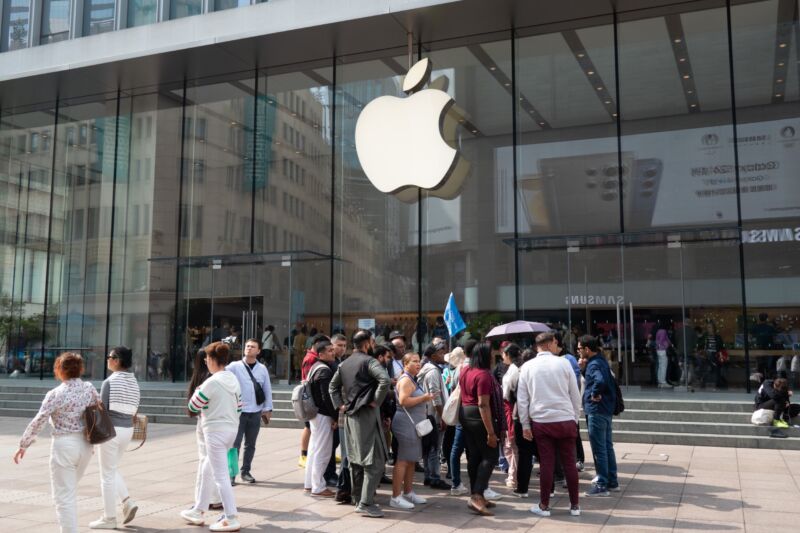
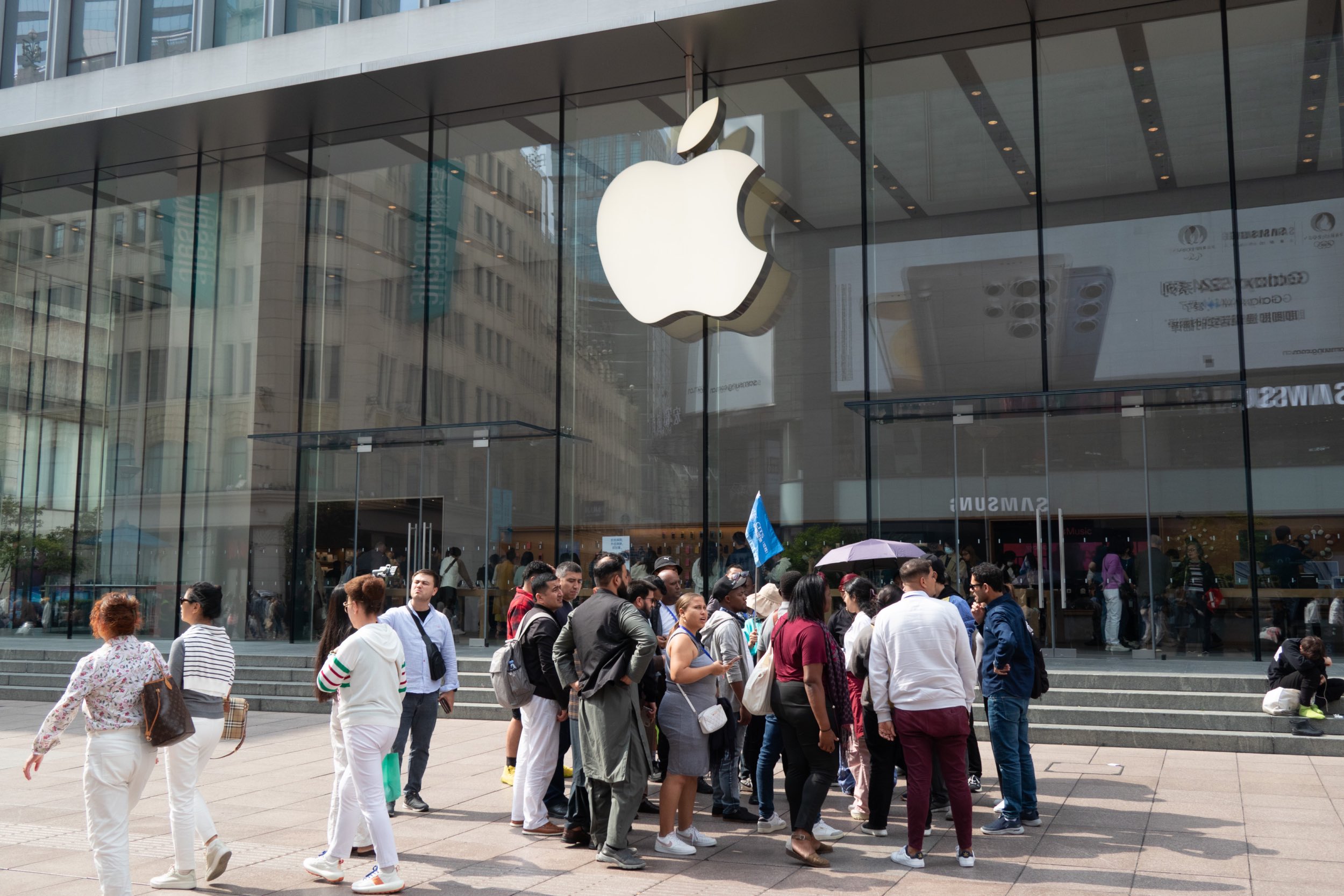
People walk past an Apple store in Shanghai, China.

Enlarge / An Apple Store in Shanghai, China, on April 11, 2024.

CFOTO/Future Publishing via Getty Images

Apple said it complied with orders from the Chinese government to remove the Meta-owned WhatsApp and Threads from its App Store in China. Apple also removed Telegram and Signal from China.

“We are obligated to follow the laws in the countries where we operate, even when we disagree,” Apple said in a statement quoted by several news outlets. “The Cyberspace Administration of China ordered the removal of these apps from the China storefront based on their national security concerns. These apps remain available for download on all other storefronts where they appear.”

The Wall Street Journal paraphrased a person familiar with the matter as saying that the Chinese cyberspace agency “asked Apple to remove WhatsApp and Threads from the App Store because both contain political content that includes problematic mentions of the Chinese president [Xi Jinping].”

The New York Times similarly wrote that “a person briefed on the situation said the Chinese government had found content on WhatsApp and Threads about China’s president, Xi Jinping, that was inflammatory and violated the country’s cybersecurity laws. The specifics of what was in the content was unclear, the person said.”

Meta apps Facebook, Instagram, and Messenger were still available for iOS in China today, according to Reuters. As Reuters noted, the four apps removed from Apple’s China store were not widely used in the country, where WeChat is the dominant service.

“These apps and many foreign apps are normally blocked on Chinese networks by the ‘Great Firewall’—the country’s extensive cybersystem of censorship—and can only be used with a virtual private network or other proxy tools,” Reuters wrote. WhatsApp, Threads, Telegram, and Signal were reportedly still available on Apple devices in Hong Kong and Macau, China’s special administrative regions.

US House moves on forcing TikTok sale or ban

China’s crackdown on foreign messaging apps comes amid US debate over whether to ban or force a sale of the Chinese-owned TikTok. The House Commerce Committee last month voted 50–0 to approve a bill that would force TikTok owner ByteDance to sell the company or lose access to the US market.

US lawmakers argue that TikTok poses national security risks, saying that China can use the app to obtain sensitive personal data and manipulate US public opinion. House leaders are reportedly planning a floor vote on the TikTok bill on Saturday.

US lawmakers raised concerns about Apple’s China ties after the recent cancellation of Apple TV+ show The Problem with Jon Stewart. Stewart reportedly told members of his staff that Apple executives were concerned about potential show topics related to China and artificial intelligence.

Apple pulled The New York Times app from its store in China in December 2016, saying that Apple was informed by China “that the app is in violation of local regulations.” The New York Times news app is still unavailable on Apple’s App Store in China, the Reuters article said.

“For years, Apple has bowed to Beijing’s demands that it block an array of apps, including newspapers, VPNs, and encrypted messaging services,” The New York Times noted yesterday. “It also built a data center in the country to house Chinese citizens’ iCloud information, which includes personal contacts, photos and email.”

China orders Apple to remove Meta apps after “inflammatory” posts about president Read More »

crypto-influencer-guilty-of-$110m-scheme-that-shut-down-mango-markets

Crypto influencer guilty of $110M scheme that shut down Mango Markets

Crypto influencer guilty of $110M scheme that shut down Mango Markets

A jury has unanimously convicted Avi Eisenberg in the US Department of Justice’s first case involving cryptocurrency open-market manipulation, the DOJ announced Thursday.

The jury found Eisenberg guilty of commodities fraud, commodities market manipulation, and wire fraud in connection with the manipulation on a decentralized cryptocurrency exchange called Mango Markets.

Eisenberg is scheduled to be sentenced on July 29 and is facing “a maximum penalty of 10 years in prison on the commodities fraud count and the commodities manipulation count, and a maximum penalty of 20 years in prison on the wire fraud count,” the DOJ said.

On the Mango Markets exchange, Eisenberg was “engaged in a scheme to fraudulently obtain approximately $110 million worth of cryptocurrency from Mango Markets and its customers by artificially manipulating the price of certain perpetual futures contracts,” the DOJ said. The scheme impacted both investors trading and the exchange itself, which had to suspend operations after Eisenberg’s attack made the exchange insolvent.

Nicole M. Argentieri, the principal deputy assistant attorney general who heads the DOJ’s criminal division, said that Eisenberg’s manipulative trading scheme “puts our financial markets and investors at risk.”

“This prosecution—the first involving the manipulation of cryptocurrency through open-market trades—demonstrates the Criminal Division’s commitment to protecting US financial markets and holding wrongdoers accountable, no matter what mechanism they use to commit manipulation and fraud,” Argentieri said.

Mango Labs has similarly sued Eisenberg over the price manipulation scheme, but that lawsuit was stayed until the DOJ’s case was resolved. Mango Labs is expecting a status update today from the US government and is hoping to proceed with its lawsuit.

Ars could not immediately reach Mango Labs for comment.

Eisenberg’s lawyer, Brian Klein, provided the same statement to Ars, confirming that Eisenberg’s legal team is “obviously disappointed” but “will keep fighting for our client.”

How the Mango Markets scheme worked

Mango Labs has accused Eisenberg of being a “notorious cryptocurrency market manipulator,” noting in its complaint that he has a “history of attacking multiple cryptocurrency platforms and manipulating cryptocurrency markets.” That history includes allegedly embezzling $14 million in 2021 while Eisenberg was working as a developer for another decentralized marketplace called Fortress, Mango Labs’ complaint said.

Eisenberg’s attack on Mango Markets intended to grab tens of millions more than the alleged Fortress attack. When Eisenberg was first charged, the DOJ explained how his Mango Markets price manipulation scheme worked.

On Mango Markets, investors can “purchase and borrow cryptocurrencies and cryptocurrency-related financial products,” including buying and selling “perpetual futures contracts.”

“When an investor buys or sells a perpetual for a particular cryptocurrency, the investor is not buying or selling that cryptocurrency but is, instead, buying or selling exposure to future movements in the value of that cryptocurrency relative to another cryptocurrency,” the DOJ explained.

Crypto influencer guilty of $110M scheme that shut down Mango Markets Read More »
this-ai-controlled-jet-fighter-has-now-flown-against-human-pilots

This AI-controlled jet fighter has now flown against human pilots

no breaking the hard deck —

After flying against simulated opponents, the AI agent has taken on humans.

A two-seat F-16 that's painted red white and blue

Enlarge / The X-62A VISTA Aircraft flying above Edwards Air Force Base, California.

Kyle Brasier, U.S. Air Force

An AI test pilot has successfully flown a jet fighter in dogfights against human opponents. It’s the latest development for DARPA’s Air Combat Evaluation program, which is trying to develop aerospace AI agents that can be trusted to perform safely.

Human test pilots have a bit of a reputation thanks to popular culture—from The Right Stuff to Top Gun: Maverick, the profession has been portrayed as a place for loose cannons with a desire to go fast and break the rules. The reality is pretty far from that these days, especially where DARPA is concerned.

The agency instead wants a machine-learning agent that can safely fly a real aircraft autonomously, with no violations of training rules. After all, neural networks have their own reputation—at this point well-earned—for finding ways to exploit situations that hadn’t occurred to humans. And the consequences when controlling a real jet fighter can be a lot more severe than just testing in silico.

In this case, the jet fighter is called the X-62A Variable Stability In-Flight Simulator Test Aircraft, or VISTA. It began life as an F-16D (Block 30) two-seater, which spent most of its 32-year career working at the US Air Force Test Pilot School at Edwards AFB.

Over the years, the plane, previously designated the NF-16D, has been modified to simulate the flight characteristics of other aircraft while in flight. “It has given almost a thousand students and staff members the opportunity to practice testing aircraft with dangerously poor flying qualities and to execute risk-reduction flight test programs for advanced technologies,” said William Gray, chief test pilot of VISTA and the USAF Test Pilot School.

That made it a natural candidate for DARPA’s ACE program, and in 2021, the process of modifying the aircraft began once again as it became the X-62A.

The USAF and DARPA started conducting X-62A test flights under AI control in December 2022, logging 17 hours by the time we first learned of the program in early 2023. Although DARPA’s AI agent flew the X-62A, there was always a pair of human pilots onboard to monitor the test flight and, if necessary, take control. But in those early tests, the X-62A flew against simulated adversaries.

By September 2023, the program had completed 21 test flights, including the first-ever AI versus human aerial engagement within visual range, flying against a human-piloted F-16. During that time, DARPA says the team made over 100,000 lines of flight-critical software changes, which it called “an unprecedented rate of development.”

That’s certainly an achievement, but just focusing on the dogfight is a mistake, according to Gray. “That misses the point. Dogfighting was the problem to solve so we could start testing autonomous artificial intelligence systems in the air, but every lesson we’re learning applies to every task we can give to an autonomous system,” he said.

This AI-controlled jet fighter has now flown against human pilots Read More »

nasa-may-alter-artemis-iii-to-have-starship-and-orion-dock-in-low-earth-orbit

NASA may alter Artemis III to have Starship and Orion dock in low-Earth orbit

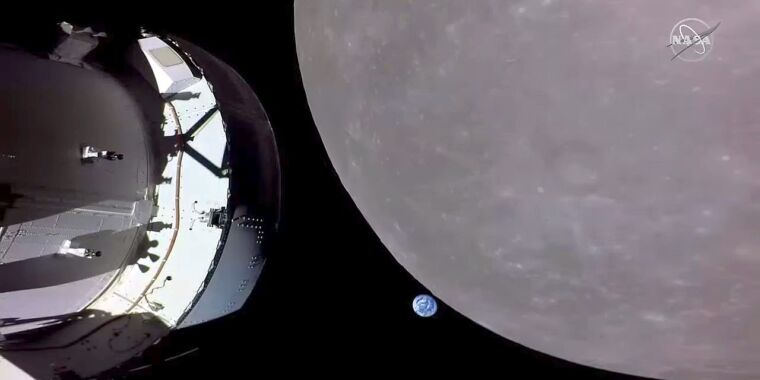
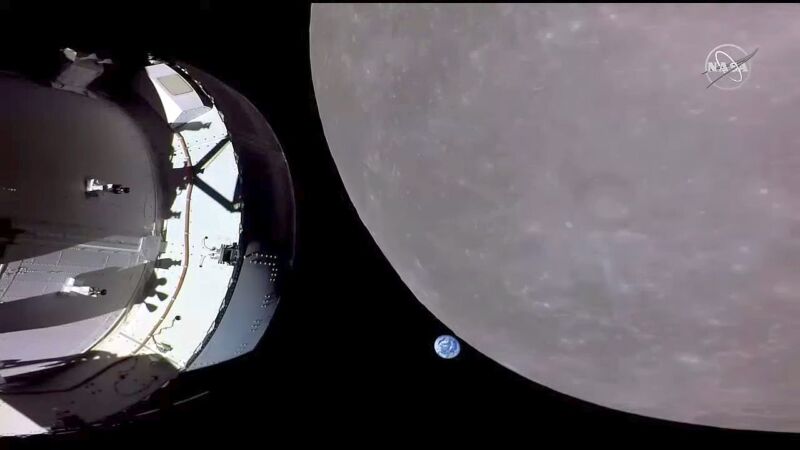
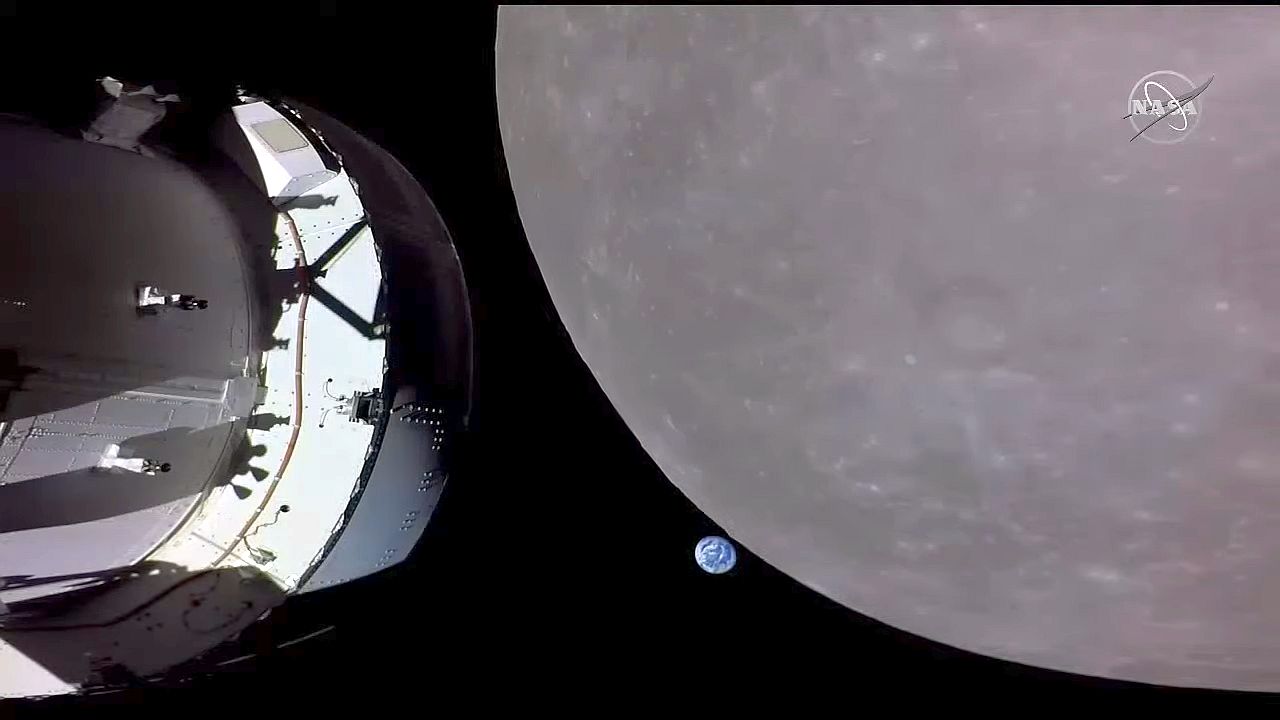
This image taken by NASA's Orion spacecraft shows its view just before the vehicle flew behind the Moon in 2022.

Enlarge / This image taken by NASA’s Orion spacecraft shows its view just before the vehicle flew behind the Moon in 2022.

NASA

Although NASA is unlikely to speak about it publicly any time soon, the space agency is privately considering modifications to its Artemis plan to land astronauts on the surface of the Moon later this decade.

Multiple sources have confirmed that NASA is studying alternatives to the planned Artemis III landing of two astronauts on the Moon, nominally scheduled for September 2026, due to concerns about hardware readiness and mission complexity.

Under one of the options, astronauts would launch into low-Earth orbit inside an Orion spacecraft and rendezvous there with a Starship vehicle, separately launched by SpaceX. During this mission, similar to Apollo 9, a precursor to the Apollo 11 lunar landing, the crew would validate the ability of Orion and Starship to dock and test habitability inside Starship. The crew would then return to Earth. In another option NASA is considering, a crew would launch in Orion and fly to a small space station near the Moon, the Lunar Gateway, and then return to Earth.

To discuss these options, Ars asked for an interview with Catherine Koerner, a deputy associate administrator who oversees Exploration Systems Development for NASA. Instead, the space agency offered a noncommittal statement.

“NASA continues to work toward the Artemis II crewed test flight in September of 2025 and the Artemis III test flight to land astronauts near the lunar South Pole in September of 2026,” the statement read. “The agency evaluates element progress and status on a daily basis and uses that data to make decisions at the right time for each mission as a part of prudent programmatic and mission management. Should a particular hardware element not be available to support a mission as scheduled or planned, NASA will evaluate the readiness of available hardware for options to make those decisions with crew safety as the number one priority.”

An unrealistic timeline

The space agency’s date for Artemis II is optimistic but potentially feasible if NASA can resolve the Orion spacecraft’s heat shield issues. A lunar landing in September 2026, however, seems completely unrealistic. The biggest stumbling blocks for Artemis III are the lack of a lander, which SpaceX is developing through its Starship program, and spacesuits for forays onto the lunar surface by Axiom Space. It is not clear when the lander or the suits, which NASA only began funding in the last two to three years, will be ready.

There are also concerns about the complexity of Artemis III. It will require a number of previously untested steps, including an Orion-Starship rendezvous and docking in lunar orbit; humans flying inside of Starship in space; Starship going down to the surface and coming back up to dock with Orion; and more. Mission planners would be more comfortable if they could, in NASA parlance, “buy down the risk” of Artemis III by validating some of these delicate maneuvers before the lunar landing mission.

This is why NASA has asked SpaceX to look at a mission where Orion would rendezvous with the Starship vehicle in orbit around Earth. Such a mission—whether called Artemis IIS or Artemis III—would solve a lot of problems for the space agency and appears to be the preferred option at this time. Critically, it would verify the ability of the two spacecraft to dock in an environment where, if there were a problem, it would be much easier for the crew to return safely home. It would also validate the ability of astronauts to live inside Starship and perform some ascent and descent maneuvers.

NASA may alter Artemis III to have Starship and Orion dock in low-Earth orbit Read More »
tesla-recalls-all-3,878-cybertrucks-over-faulty-accelerator-pedal-cover

Tesla recalls all 3,878 Cybertrucks over faulty accelerator pedal cover

they’re blaming soap —

This time there’s no over-the-air software patch.

Tesla's boxy Cybertruck pictured driving around a corner.

Enlarge / The Tesla Cybertruck.

Tesla

On Monday, we learned that Tesla had suspended customer deliveries of its stainless steel-clad electric pickup truck. Now, the automaker has issued a recall for all the Cybertrucks in customer hands—nearly 4,000 of them—in order to fix a problem with the accelerator pedal. It has come at an inconvenient time for Tesla, which is laying off more than 10 percent of its workforce due to shrinking sales even as CEO Elon Musk asks for an extra $55.8 billion in compensation.

The problem, which affects all 3,878 Cybertrucks delivered so far, has to do with the EV’s accelerator pedal. Tesla has fitted this with a metal-finish cover to match the brushed metal appearance of the truck itself—no word on whether the pedals rust, too—but it says that at some point, “an unapproved change introduced lubricant (soap) to aid in the component assembly of the pad onto the accelerator pedal. Residual lubricant reduced the retention of the pad to the pedal.”

Thanks to the profile of the Cybertruck’s under dash, if the pedal cover becomes partially detached it can slide up and become trapped in place, wedging the pedal down and unleashing all of the Cybertruck’s substantial power—the dual-motor truck boasts 600 hp (447 kW) and can reach 60 mph (98 km/h) in just over four seconds.

  • This cover became partially detached from the accelerator pedal.

  • And then became stuck underneath some trim, jamming the accelerator on full.

Fortunately, applying the brake overrides the accelerator and cuts torque immediately, but that still didn’t prevent one owner from allegedly crashing into a light pole before he was able to bring his Cybertruck to a stop.

Tesla is no stranger to the National Highway Traffic Safety Administration’s official recall process, but this time there is no software fix or over-the-air patch. Instead, the trucks will need to be physically inspected and reworked if necessary. The company says that it will notify its stores and service centers about the recall “on or around” today, and that owners will be contacted in due course.

Tesla recalls all 3,878 Cybertrucks over faulty accelerator pedal cover Read More »

password-crackdown-leads-to-more-income-for-netflix

Password crackdown leads to more income for Netflix

Sharing is caring —

Netflix to stop reporting subscriber numbers, prioritizing viewer engagement instead.

screen with netflix login

Bloomberg

Netflix’s crackdown on password sharing helped the streaming service blow past Wall Street’s earnings forecasts, but its shares fell after it said it planned to stop regularly disclosing its subscriber numbers.

The company’s operating income surged 54 percent in the first quarter as it added 9.3 million subscribers worldwide, proving that the efforts to reduce password sharing it launched last year have had more lasting benefits than some investors expected.

However, Netflix said on Thursday that from next year it would stop revealing its total number of subscribers, a metric that has been a crucial benchmark for investors in the streaming era.

In its letter to shareholders, Netflix said it was shifting its focus to engagement—the amount of time its subscribers spend on the service—while also developing new price points and sources of revenue, including advertising.

“Each incremental member has a different business impact” with the new subscription plans, Greg Peters, co-chief executive, said in a call with investors. “And that means the historical simple math that we all did—the number of members times the monthly price—is increasingly less accurate in capturing the state of the business.”

He added that Netflix would “periodically update” on subscriber figures when it hits “major milestones.”

Paolo Pescatore, an analyst at PP Foresight, said Netflix’s decision to no longer disclose quarterly subscriptions starting in 2025 “will not go down well.”

“No matter the company’s attempt to switch focus from subscribers to financials, net [subscriber] adds is the key metric everyone wants to see,” he said.

The latest results showed there was still room for growth as a result of its password crackdown and push into advertising, Pescatore added. Netflix said memberships to its advertising-supported tier rose 65 percent from the previous quarter.

Before Thursday’s report the streaming pioneer’s shares had risen 30 percent this year, significantly outperforming the broader market. The shares fell 4.7 percent in after-hours trading following the earnings report.

Netflix executives said among their primary goals was improving the variety and quality of their entertainment, including television shows, movies, and games. It recently appointed Dan Lin as the new head of its film division.

“Even though we have made and we are making great films, we want to make them better,” said Ted Sarandos, co-chief executive. He added that he saw no need to spend more money on content.

Netflix has been pushing further into sports-related content, including a $5 billion deal to livestream World Wrestling Entertainment’s flagship Raw program in the US over the next decade.

It is also offering a livestream of a fight between Mike Tyson and Jake Paul in July, leading analysts to question whether the company plans to move further into live sport. “We’re not anti-sports, but pro-profitable growth,” Sarandos said.

Netflix reported earnings of $5.28 a share, well ahead of Wall Street forecasts of $4.51, while its number of subscribers rose 16 percent to 269 million from a year earlier.

Its revenue forecast for the current quarter of $9.49 billion was slightly below Wall Street forecasts of about $9.5 billion. But Netflix said it expected revenue to grow between 13 and 15 percent for the full year.

The company said it generated strong engagement in the first quarter from subscribers in the UK with Fool Me Once, which had 98 million views. Other standouts included the drama series Griselda with 66.4 million views and 3 Body Problem with about 40 million.

© 2024 The Financial Times Ltd. All rights reserved. Not to be redistributed, copied, or modified in any way.

Password crackdown leads to more income for Netflix Read More »

microsoft’s-vasa-1-can-deepfake-a-person-with-one-photo-and-one-audio-track

Microsoft’s VASA-1 can deepfake a person with one photo and one audio track

pics and it didn’t happen —

YouTube videos of 6K celebrities helped train AI model to animate photos in real time.

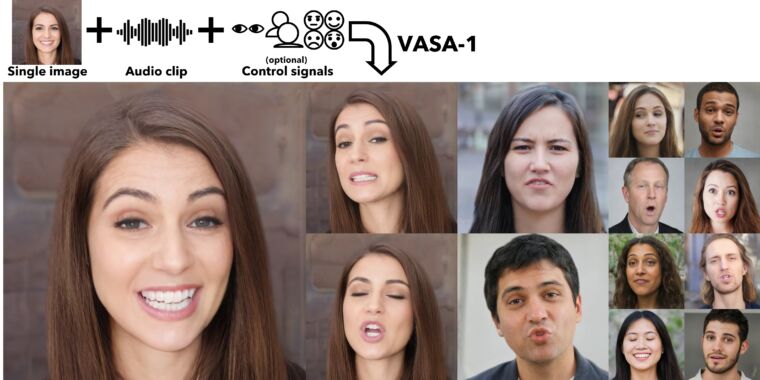
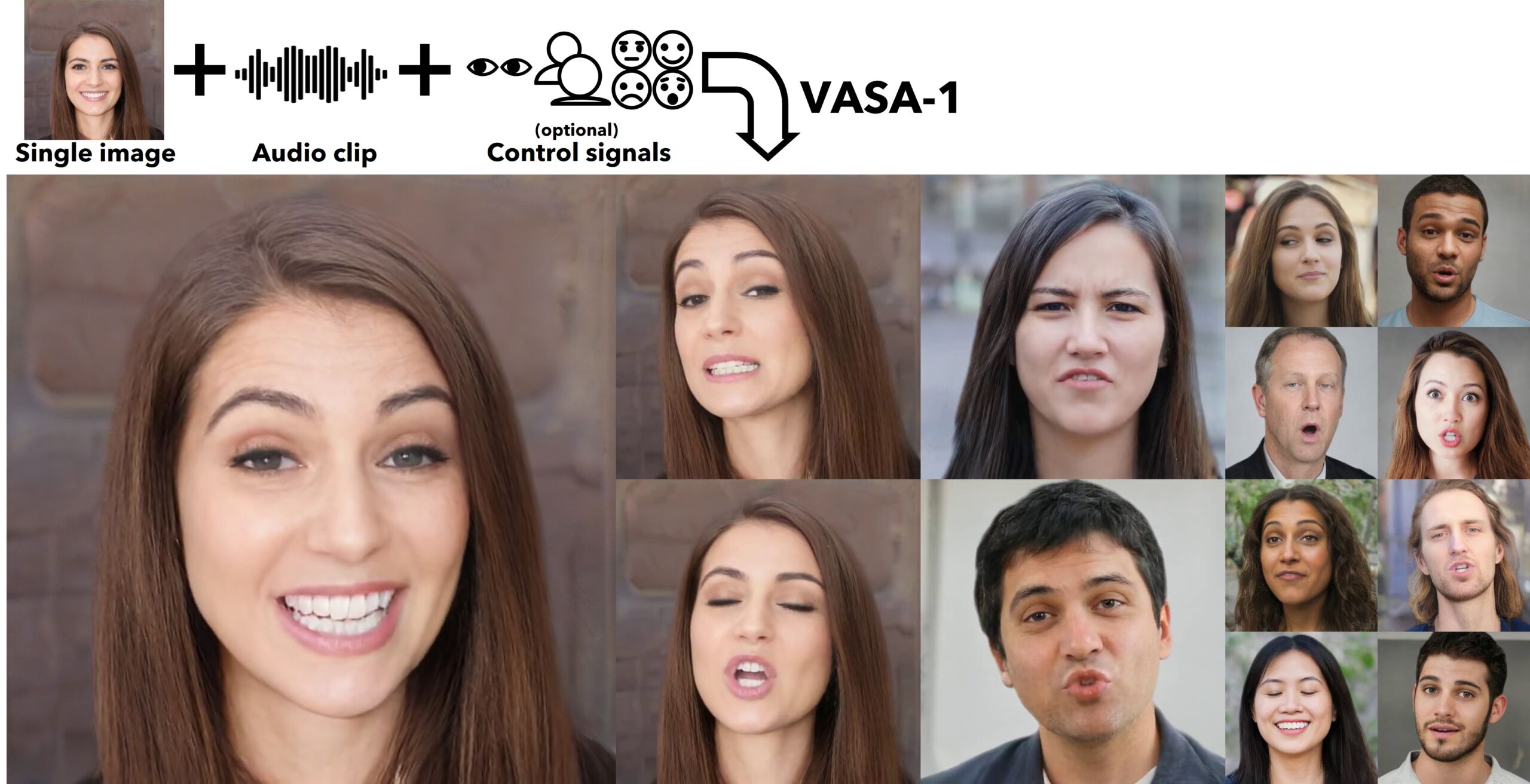
A sample image from Microsoft for

Enlarge / A sample image from Microsoft for “VASA-1: Lifelike Audio-Driven Talking Faces Generated in Real Time.”

On Tuesday, Microsoft Research Asia unveiled VASA-1, an AI model that can create a synchronized animated video of a person talking or singing from a single photo and an existing audio track. In the future, it could power virtual avatars that render locally and don’t require video feeds—or allow anyone with similar tools to take a photo of a person found online and make them appear to say whatever they want.

“It paves the way for real-time engagements with lifelike avatars that emulate human conversational behaviors,” reads the abstract of the accompanying research paper titled, “VASA-1: Lifelike Audio-Driven Talking Faces Generated in Real Time.” It’s the work of Sicheng Xu, Guojun Chen, Yu-Xiao Guo, Jiaolong Yang, Chong Li, Zhenyu Zang, Yizhong Zhang, Xin Tong, and Baining Guo.

The VASA framework (short for “Visual Affective Skills Animator”) uses machine learning to analyze a static image along with a speech audio clip. It is then able to generate a realistic video with precise facial expressions, head movements, and lip-syncing to the audio. It does not clone or simulate voices (like other Microsoft research) but relies on an existing audio input that could be specially recorded or spoken for a particular purpose.

Microsoft claims the model significantly outperforms previous speech animation methods in terms of realism, expressiveness, and efficiency. To our eyes, it does seem like an improvement over single-image animating models that have come before.

AI research efforts to animate a single photo of a person or character extend back at least a few years, but more recently, researchers have been working on automatically synchronizing a generated video to an audio track. In February, an AI model called EMO: Emote Portrait Alive from Alibaba’s Institute for Intelligent Computing research group made waves with a similar approach to VASA-1 that can automatically sync an animated photo to a provided audio track (they call it “Audio2Video”).

Trained on YouTube clips

Microsoft Researchers trained VASA-1 on the VoxCeleb2 dataset created in 2018 by three researchers from the University of Oxford. That dataset contains “over 1 million utterances for 6,112 celebrities,” according to the VoxCeleb2 website, extracted from videos uploaded to YouTube. VASA-1 can reportedly generate videos of 512×512 pixel resolution at up to 40 frames per second with minimal latency, which means it could potentially be used for realtime applications like video conferencing.

To show off the model, Microsoft created a VASA-1 research page featuring many sample videos of the tool in action, including people singing and speaking in sync with pre-recorded audio tracks. They show how the model can be controlled to express different moods or change its eye gaze. The examples also include some more fanciful generations, such as Mona Lisa rapping to an audio track of Anne Hathaway performing a “Paparazzi” song on Conan O’Brien.

The researchers say that, for privacy reasons, each example photo on their page was AI-generated by StyleGAN2 or DALL-E 3 (aside from the Mona Lisa). But it’s obvious that the technique could equally apply to photos of real people as well, although it’s likely that it will work better if a person appears similar to a celebrity present in the training dataset. Still, the researchers say that deepfaking real humans is not their intention.

“We are exploring visual affective skill generation for virtual, interactive charactors [sic], NOT impersonating any person in the real world. This is only a research demonstration and there’s no product or API release plan,” reads the site.

While the Microsoft researchers tout potential positive applications like enhancing educational equity, improving accessibility, and providing therapeutic companionship, the technology could also easily be misused. For example, it could allow people to fake video chats, make real people appear to say things they never actually said (especially when paired with a cloned voice track), or allow harassment from a single social media photo.

Right now, the generated video still looks imperfect in some ways, but it could be fairly convincing for some people if they did not know to expect an AI-generated animation. The researchers say they are aware of this, which is why they are not openly releasing the code that powers the model.

“We are opposed to any behavior to create misleading or harmful contents of real persons, and are interested in applying our technique for advancing forgery detection,” write the researchers. “Currently, the videos generated by this method still contain identifiable artifacts, and the numerical analysis shows that there’s still a gap to achieve the authenticity of real videos.”

VASA-1 is only a research demonstration, but Microsoft is far from the only group developing similar technology. If the recent history of generative AI is any guide, it’s potentially only a matter of time before similar technology becomes open source and freely available—and they will very likely continue to improve in realism over time.

Microsoft’s VASA-1 can deepfake a person with one photo and one audio track Read More »

review:-pitch-perfect-renegade-nell-is-a-gem-of-a-series-you-won’t-want-to-miss

Review: Pitch-perfect Renegade Nell is a gem of a series you won’t want to miss

Don’t call her “Nelly” —

It’s a good old-fashioned swashbuckling adventure that doesn’t take itself too seriously.

A young prodigal tomboy returns home from war and finds herself framed for murder in <em>Renegade Nell</em>.” src=”https://cdn.arstechnica.net/wp-content/uploads/2024/04/nellTOP-800×536.jpg”></img><figcaption>
<p><a data-height=Enlarge / A young prodigal tomboy returns home from war and finds herself framed for murder in Renegade Nell.

Disney+

Award-winning British TV writer Sally Wainwright is best known for the dramatic series Happy Valley (2014–2023) and Gentleman Jack (2019–2022), the latter produced jointly by BBC and HBO. Wainwright partnered with Disney+ for her latest series, the resolutely PG-13 Renegade Nell, which is a different beast altogether: a good old-fashioned, swashbuckling comic adventure with a supernatural twist, featuring a sassy cross-dressing heroine forced to turn to highway robbery to survive.

(Some spoilers below, but no major reveals.)

Set in 1705 during the reign of Queen Anne (Jodi May, Gentleman Jack), the series stars Louisa Harland (Derry Girls) as Nell Jackson. Nell is a headstrong young woman with tomboy flair and a taste for adventure who returns home to her village of Tottenham after running off five years before to marry one Captain Jackson against her father’s wishes. She’s now widowed and possessed of occasional supernatural skills whenever someone threatens her, courtesy of a fairy sprite named Billy Blind (Nick Mohammed, aka Nathan from Ted Lasso), who has been tasked to protect Nell. Nell’s family thought she’d been killed on the battlefield alongside her husband, so her homecoming is a bit of a shock.

Alas, Nell soon runs afoul of one Thomas Blancheford (Jake Dunn), the louche, drunken offspring of the town’s landlord, Lord Blancheford (Pip Torrens, Preacher). Let’s just say things escalate, and Nell soon finds herself on the run and framed for murder, along with her two sisters, Roxy (Bo Bragason) and George (Florence Keen), and the Blanchefords’ former groomsman, Rasselas (Enyi Okoronkwo, The Lazarus Project). The group gets further assistance from a charming aristocratic dandy/secret highwayman named Charles Devereaux (Frank Dillane, The Essex Serpent).

Nell just wants to evade capture long enough to find an honest magistrate to clear her name. In the process, she finds herself battling the formidable black magic of the Earl of Poynton (Adrian Lester, Euphoria) and his acolyte, Thomas’ sister, Lady Sofia (Alice Kremelberg, The Sinner), and stumbles upon a sinister plot to dethrone the queen.

  • Louisa Harland stars as Nelly Jackson, who finds herself framed for murder.

    Disney+

  • Nick Mohammed plays a sprite named Billy Blind, charged with protecting Nell.

    Disney+

  • Charles Devereaux (Frank Dillane) is an impoverished aristocrat who does highway robberies on the side.

    Disney+

  • Nell returns home to her family: father Sam Trotter and sisters George and Roxy.

    Disney+

  • Thomas Blancheford (Jake Dunn) is a drunken louche who torments the villagers.

    Disney+

  • The Earl of Poynton (Adrian Lester) dabbles in black magic and has sinister plans afoot.

    Disney+

  • Lady Sofia Wilmot (Alice Kremelberg) chafes at the limitations imposed upon her by society.

    Disney+

  • Nell and her sisters end up on the run.

    Disney+

  • The Blanchefords’ former groom, Rasselas (Enyi Okoronkwo), helps the sisters.

    Disney+

  • Rebellious young socialite Polly Honeycombe (Ashna Rabheru) is rather thrilled to be robbed by a dashing highwayman.

    Disney+

The writing, pacing, and production values are top-notch, and the cast is terrific across the board. Lester brings a ruthless authority to Poynton’s spooky supernatural machinations, while Kremelberg is all seething bitter resentment and steely resolve as Lady Sofia, a brilliant, ambitious noblewoman (also widowed) who is far more qualified to run the family estate than her worthless brother, yet prohibited from inheriting by the laws of the time. Dillane’s Devereaux provides much of the witty repartee and comic relief, as does Joely Richardson’s (The Sandman) newspaper magnate, Lady Eularia Moggerhanger. And Ashna Rabheru (Red Rose) is delightful as a spoiled young aristocrat, Polly Honeycombe, with a lively romantic imagination who longs for something more in life than an arranged marriage.

But it’s Harland’s sensational portrayal of Nell that anchors it all. This is a role that requires her to be a tough rebellious tomboy in one scene and sport a posh accent and fancy dress in another; to balance action comedy with moments of genuine fear and heartbreaking tragedy. It’s also a highly physical role: Harland underwent several months of stunt training prior to filming. She does it all with refreshingly unpretentious aplomb.

Renegade Nell keeps the action flowing and wisely never takes itself too seriously. Sure, there is injustice, class warfare, and strong intelligent women chafing within the strict confines of traditional binary gender roles—and Polly Honeycombe definitely qualifies as bicurious. But Wainwright never lets the story get bogged down in heavy-handed symbolism or didacticism. Even Nell’s cross-dressing is handled with the lightest touch. Asked to comment on her character’s gender politics, Harland told the Guardian that there was no ulterior motive or agenda: “Why does she dress as a man? To pass as a man.” Simple as that.

Will we see more of feisty Nell and her delightfully eccentric compatriots? That’s up to Disney. There are plenty of questions left unanswered and definitely more stories to tell, both past and present. Series director Ben Taylor told Radio Times just after the premiere that a second season was currently being written and that it would likely involve some kind of time jump (given that some of the younger actors will visibly age), picking up with the various surviving characters from where they left off in the first season. But Disney has yet to confirm this. Here’s hoping this series finds the broader audience it so richly deserves. We’re rooting for you, Nelly… err, Nell.

Renegade Nell is now streaming on Disney+.

Trailer for Renegade Nell.

Review: Pitch-perfect Renegade Nell is a gem of a series you won’t want to miss Read More »

us-woman-arrested,-accused-of-targeting-young-boys-in-$1.7m-sextortion-scheme

US woman arrested, accused of targeting young boys in $1.7M sextortion scheme

Preventing leaks —

FBI has warned of significant spike in teen sextortion in 2024.

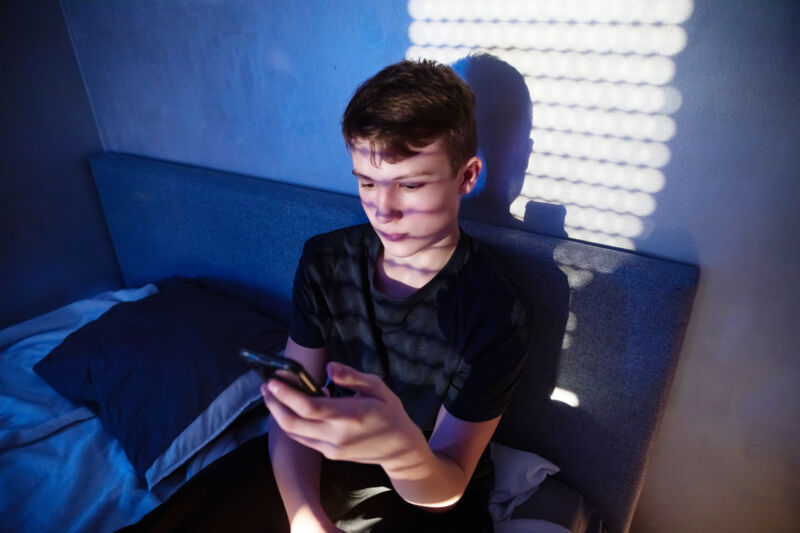
US woman arrested, accused of targeting young boys in $1.7M sextortion scheme

A 28-year-old Delaware woman, Hadja Kone, was arrested after cops linked her to an international sextortion scheme targeting thousands of victims—mostly young men and including some minors, the US Department of Justice announced Friday.

Citing a recently unsealed indictment, the DOJ alleged that Kone and co-conspirators “operated an international, financially motivated sextortion and money laundering scheme in which the conspirators engaged in cyberstalking, interstate threats, money laundering, and wire fraud.”

Through the scheme, conspirators allegedly sought to extort about $6 million from “thousands of potential victims,” the DOJ said, and ultimately successfully extorted approximately $1.7 million.

Young men from the United States, Canada, and the United Kingdom fell for the scheme, the DOJ said. They were allegedly targeted by scammers posing as “young, attractive females online,” who initiated conversations by offering to send sexual photographs or video recordings, then invited victims to “web cam” or “live video chat” sessions.

“Unbeknownst to the victims, during the web cam/live video chats,” the DOJ said, the scammers would “surreptitiously” record the victims “as they exposed their genitals and/or engaged in sexual activity.” The scammers then threatened to publish the footage online or else share the footage with “the victims’ friends, family members, significant others, employers, and co-workers,” unless payments were sent, usually via Cash App or Apple Pay.

Much of these funds were allegedly transferred overseas to Kone’s accused co-conspirators, including 22-year-old Siaka Ouattara of the West African country the Ivory Coast. Ouattara was arrested by Ivorian authorities in February, the DOJ said.

“If convicted, Kone and Ouattara each face a maximum penalty of 20 years in prison for each conspiracy count and money laundering count, and a maximum penalty of 20 years in prison for each wire fraud count,” the DOJ said.

The FBI has said that it has been cracking down on sextortion after “a huge increase in the number of cases involving children and teens being threatened and coerced into sending explicit images online.” In 2024, the FBI announced a string of arrests, but none of the schemes so far have been as vast or far-reaching as the scheme that Kone allegedly helped operate.

In January, the FBI issued a warning about the “growing threat” to minors, warning parents that victims are “typically males between the ages of 14 to 17, but any child can become a victim.” Young victims are at risk of self-harm or suicide, the FBI said.

“From October 2021 to March 2023, the FBI and Homeland Security Investigations received over 13,000 reports of online financial sextortion of minors,” the FBI’s announcement said. “The sextortion involved at least 12,600 victims—primarily boys—and led to at least 20 suicides.”

For years, reports have shown that payment apps have been used in sextortion schemes with seemingly little intervention. When it comes to protecting minors, sextortion protections seem sparse, as neither Apple Pay nor Cash App appear to have any specific policies to combat the issue. However, both apps only allow minors over 13 to create accounts with authorized adult supervisors.

Apple and Cash App did not immediately respond to Ars’ request to comment.

Instagram, Snapchat add sextortion protections

Some social media platforms are responding to the spike in sextortion targeting minors.

Last year, Snapchat released a report finding that nearly two-thirds of more than 6,000 teens and young adults in six countries said that “they or their friends have been targeted in online ‘sextortion’ schemes” across many popular social media platforms. As a result of that report and prior research, Snapchat began allowing users to report sextortion specifically.

“Under the reporting menu for ‘Nudity or sexual content,’ a Snapchatter’s first option is to click, ‘They leaked/are threatening to leak my nudes,'” the report said.

Additionally, the DOJ’s announcement of Kone’s arrest came one day after Instagram confirmed that it was “testing new features to help protect young people from sextortion and intimate image abuse, and to make it more difficult for potential scammers and criminals to find and interact with teens.”

One feature will by default blur out sexual images shared over direct message, which Instagram said would protect minors from “scammers who may send nude images to trick people into sending their own images in return.” Instagram will also provide safety tips to anyone receiving a sexual image over DM, “encouraging them to report any threats to share their private images and reminding them that they can say no to anything that makes them feel uncomfortable.”

Perhaps more impactful, Instagram claimed that it was “developing technology to help identify where accounts may potentially be engaging in sextortion scams, based on a range of signals that could indicate sextortion behavior.” Having better signals helps Instagram to make it “harder for potential sextortion accounts to message or interact with people,” the platform said, by hiding those requests. Instagram also by default blocks adults from messaging users under 16 in some countries and under 18 in others.

Instagram said that other tech companies have also started “sharing more signals about sextortion accounts” through Lantern, a program that Meta helped to found with the Tech Coalition to prevent child sexual exploitation. Snapchat also participates in the cross-platform research.

According to the special agent in charge of the FBI’s Norfolk field office, Brian Dugan, “one of the best lines of defense to stopping a crime like this is to educate our most vulnerable on common warning signs, as well as empowering them to come forward if they are ever victimized.”

Both Instagram and Snapchat said they were also increasing sextortion resources available to educate young users.

“We know that sextortion is a risk teens and adults face across a range of platforms, and have developed tools and resources to help combat it,” Snap’s spokesperson told Ars. “We have extra safeguards for teens to protect against unwanted contact, and don’t offer public friend lists, which we know can be used to extort people. We also want to help young people learn the signs of this type of crime, and recently launched in-app resources to raise awareness of how to spot and report it.”

US woman arrested, accused of targeting young boys in $1.7M sextortion scheme Read More »