Author name: Paul Patrick

einstein,-newton-could-have-been-wrong-about-gravity,-gaia-telescope-data-reveals

Einstein, Newton could have been wrong about gravity, Gaia telescope data reveals

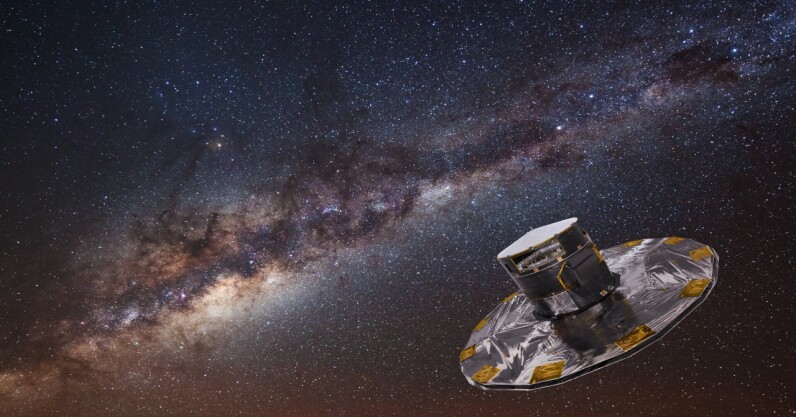
A groundbreaking study, based on observations from the European Space Agency’s billion-pixel Gaia space telescope, has revealed a “gravitational anomaly” that challenges our fundamental understanding of the universe. The anomaly occurs when loosely orbiting stars, known as wide binaries, seem to move in ways that defy standard models of gravity established by Albert Einstein and Isaac Newton.  

Astronomer Kyu-Hyun Chae from Sejong University in South Korea made the discovery while studying binary star systems, which refer to two stars that orbit each other. At accelerations of lower than 0.1 nanometres per second squared, the orbit of the two stars deviated from Newton’s universal law of gravitation and Einstein’s general relativity. 

The discovery puts into question the existence of ‘dark matter’ which was often used to explain such anomalies. “Testing gravity with wide binaries is interesting because dark matter can play no role in their internal dynamics,” Chae said.

Professor Chae theorised that a model known as Modified Newtonian Dynamics (MOND) could explain why these previous theoretical frameworks were unable to explain the stars’ movements. MOND was first conceptualised by Israeli physicist Mordehai Milgrom, who proposed a modification to the laws of gravity at low accelerations to explain observed irregularities in galactic rotation without the need for dark matter.

“Chae’s finding is a result of a very involved analysis of cutting-edge data, which, as far as I can judge, he has performed very meticulously and carefully,” said Milgrom, from the Weizmann Institute in Israel. “But for such a far-reaching finding – and it is indeed very far-reaching – we require confirmation by independent analyses, preferably with better future data.

The <3 of EU tech

The latest rumblings from the EU tech scene, a story from our wise ol’ founder Boris, and some questionable AI art. It’s free, every week, in your inbox. Sign up now!

“If this anomaly is confirmed as a breakdown of Newtonian dynamics, and especially if it indeed agrees with the most straightforward predictions of MOND, it will have enormous implications for astrophysics, cosmology, and for fundamental physics at large,” he added.

Professor Chae commented on the implications, asserting that potential systemic errors were rigorously examined and the results appeared to be genuine. He anticipates that the results will undergo further scrutiny and refinement as more data becomes available.

Nevertheless, these findings could have a profound effect on our conception of the universe. “Because the standard cosmology is based on general relativity, cosmology needs a major revision now,” Chae said. “I think we are now entering an extremely exciting period of time.”

Einstein, Newton could have been wrong about gravity, Gaia telescope data reveals Read More »

composition-co-written-by-ai-performed-by-choir-and-published-as-sheet-music

Composition co-written by AI performed by choir and published as sheet music

Ed Newton-Rex, a creative AI pioneer and VP Audio at Stability AI, says that he’s become the first author to publish a piece of classical music that uses generative AI. The musician and entrepreneur wrote his “I stand in the library,” a piece for the choir and piano, to a poem produced by OpenAI‘s generative AI model GPT3.

Written back in 2022, the 15-minute composition has been premiered at the Live from London online classical music festival, performed by a choral group VOCES8. The full version of the performance is available (behind paywall) on the festival’s website, but here’s an exclusive preview to give you a general idea:

‘Among Us VR’ Gets New Polus Point Map, Trailer Here Read More »

meta-releases-anti-piracy-tools-for-quest-devs,-including-hardware-based-app-bans-&-more

Meta Releases Anti-piracy Tools for Quest Devs, Including Hardware-based App Bans & More

Meta announced it’s introducing new anti-piracy measures for Quest developers that the company says will protect VR apps from “unauthorized modifications and potential security breaches.”

Called the Platform Integrity Attestation API (Attestation API), Meta says its new system is designed to detect whether an app’s server is interacting with an untampered VR device, thereby ensuring whether an app is authentic or not.

The Attestation API includes things like secure device authentication, hardware-based app bans, protection of financial and enterprise app data, prevention of external data misuse, and other anti-piracy measures.

In a developer blogpost, Meta calls it “increasingly important to instill a consistent method for validating the integrity of apps in order to provide a secure and safe user experience for everyone.”

It remains to be seen what effects this will have on modding communities, since modders for Quest games such as Beat Saber may inadvertently run afoul of the new token system at the core of the Attestation API.

“Once integrated, the API will provide you with an ‘attestation token,’ which you can use to determine if an app running on a Meta device has been tampered with,” Meta says. “This token is cryptographically signed by the Attestation Server to reinforce the security and reliability of the attestation process.”

At the time of this writing, we have not yet received a response for comment from Meta on what effects it may have on those communities. We’ll update this piece when/if we do.

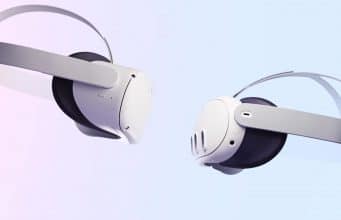
Meta is allowing developers to opt-in now for their Quest apps, which spans Quest 2, Quest Pro, and the upcoming Quest 3, which is slated to launch in late 2023. Meta has published documentation for both Unity and Native.

Meta Releases Anti-piracy Tools for Quest Devs, Including Hardware-based App Bans & More Read More »

sony-details-psvr-2-prototypes-from-conception-to-production

Sony Details PSVR 2 Prototypes from Conception to Production

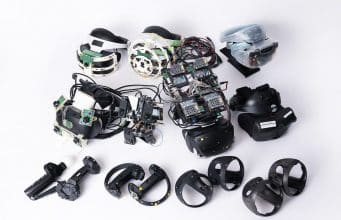
Sony released a peek into the prototyping stages that led to PSVR 2, showing off a number of test units for both the headset and controllers.

In an extensive interview on the PS blog, PSVR 2’s Product Manager Yasuo Takahashi reveals the development process behind Sony’s latest VR headset.

Takahashi reveals that detailed discussions on the company’s next-gen PSVR began in earnest after the launch of the original in 2016. From there, the team started prototyping various technologies for PSVR 2 starting in early 2017.

Below is a condensed version of the interview, including all provided photos. If you want to read the full article, click here.

Challenges of Design & Optimization

Maintaining a light and compact design while implementing new features was a challenge, Takahashi says, requiring the teams to work closely to produce detailed technical estimates and optimize the design.

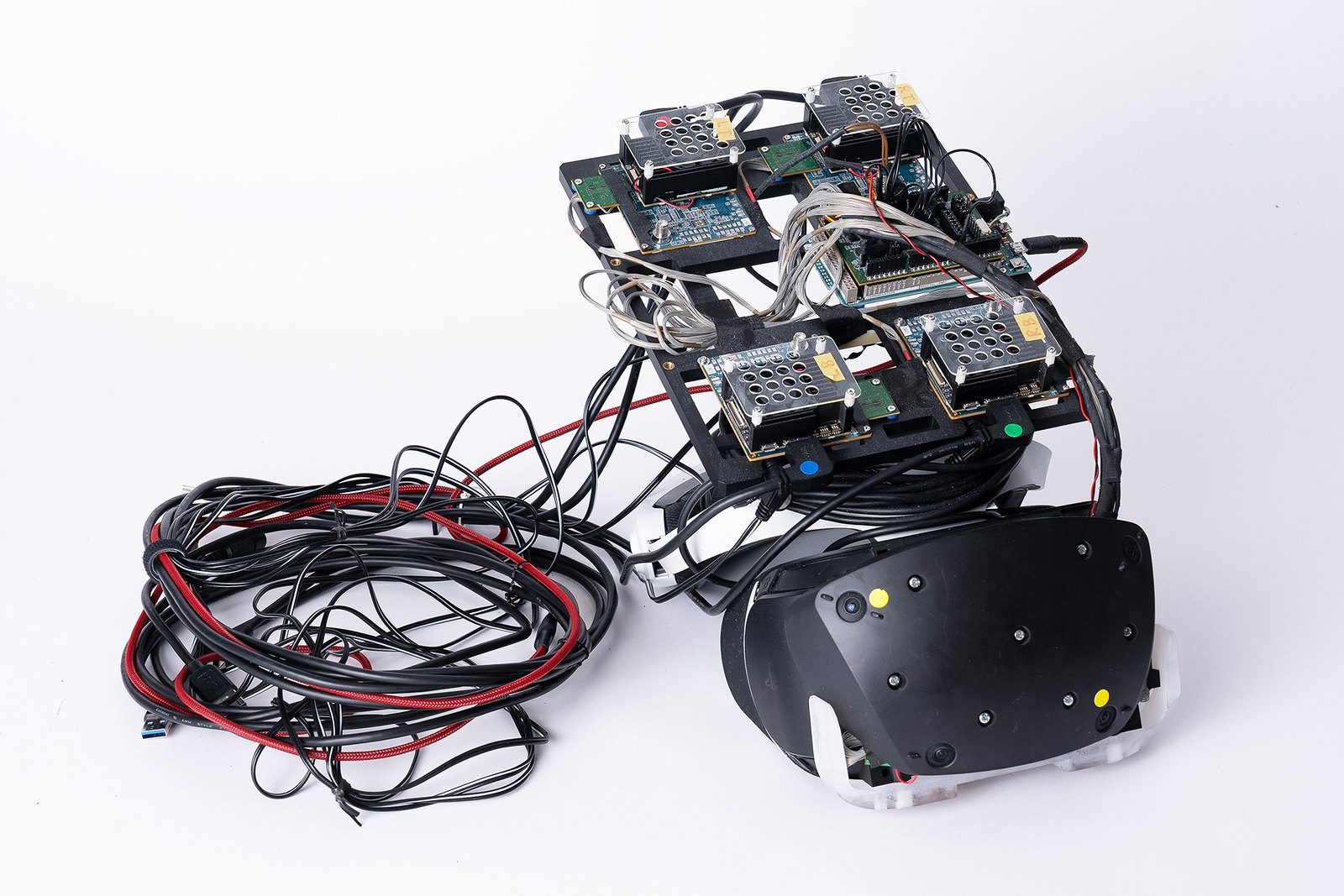
Prototype for testing inside-out in tracking cameras with evaluation board | Image courtesy Sony

While comfort was a significant focus during the development process, the initial prototype focused on evaluating functionality rather than weight.

All of that top bulk is dedicated to inside-out camera evaluation boards which would eventually be shrunk down to an SoC embedded within the headset.

Room-scale & Eye-tracking Tech

Various prototypes were created and tested before integration including both inside-out and outside-in tracking methods. Of course, we know inside-out tracking was eventually the winner, but it’s interesting to note the company was at one point still considering an outside-in approach, similar to the original PSVR.

Eye-tracking tech was also explored as a new UI feature in addition to foveated rendering, which allows developer to push the boundaries of PS5’s VR rendering capabilities and serve up higher-fidelity visuals in games.

Testing and optimizing eye tracking took time, considering different eye colors and accommodating players wearing glasses.

Eye-tracking evaluation prototype 2 | Image courtesy Sony

Comfort & Design

The development team assessed comfort and wearability, evaluating numerous configurations based on the headset’s expected weight. The team put a lot of thought into the materials and shape to make the headset feel lightweight while maintaining strength.

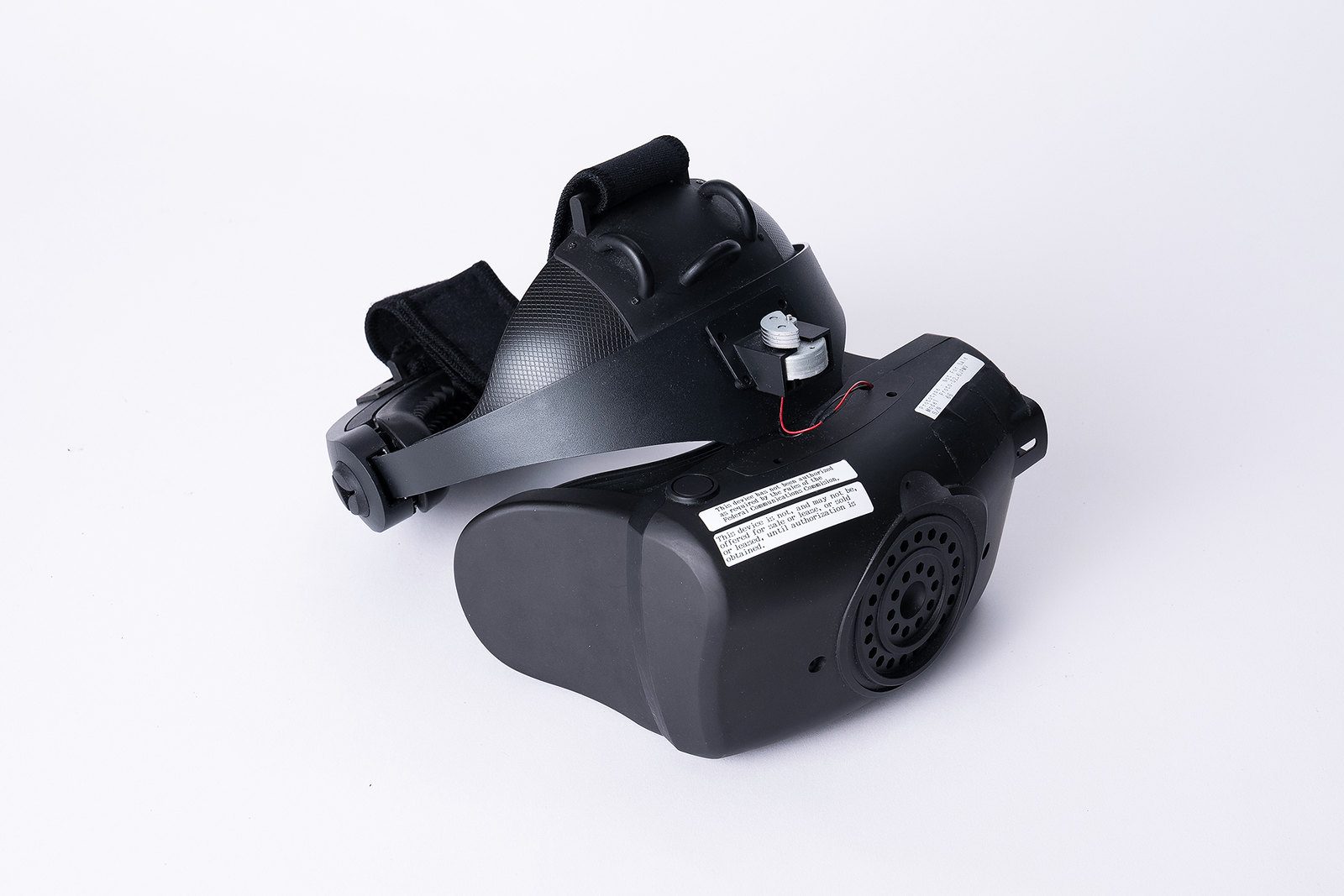
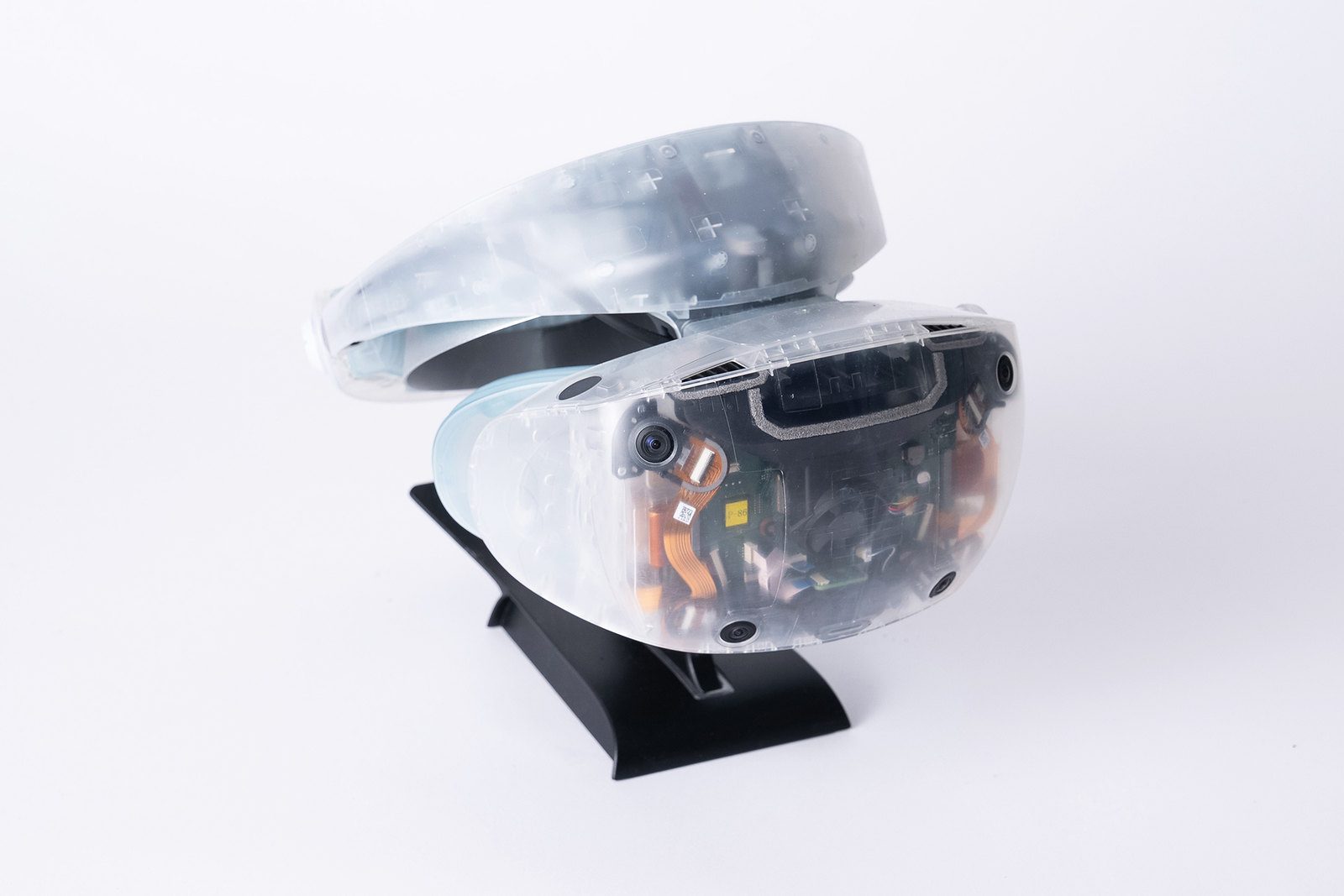
A cool ‘skeleton’ prototype shows all of the pieces of the puzzle together, also showing the headset’s halo strap, which like the original PSVR, keeps the bulk of the weight off the user’s forehead. This one should definitely get a spot on the museum shelves (or maybe a fun mid-generation release?).

The ‘skeleton’ prototype | Image courtesy Sony

Headset haptics were also added as a new feature based on the idea of using the rumble motor from the DualShock 4 wireless controller.

PSVR 2 Sense Controllers

The PSVR 2 Sense controllers were developed in parallel with the headset, starting discussions in 2016 and prototyping in 2017.

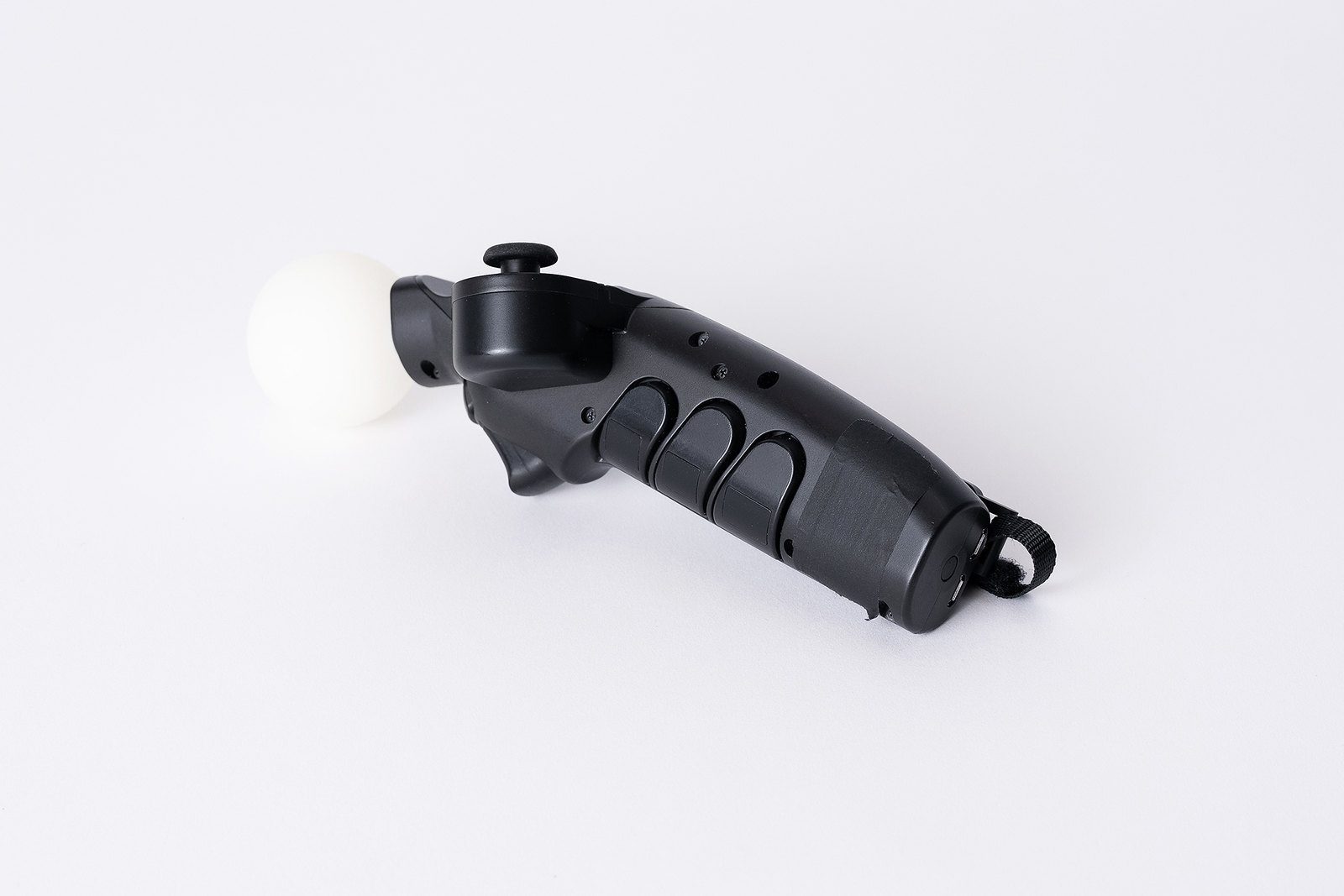
Features like haptic feedback, adaptive triggers, and finger-touch detection were early additions, although the team was still sussing out tracking. Notice the Move-style tracking sphere on the tip of an early prototype.

Prototype 1 | Image courtesy Sony

The final shape of the Sense controller was achieved through extensive prototyping and user testing to ensure a comfortable fit and optimized center of gravity.

Here you can see a number of IR tracking marker configurations that would eventually settle on the production model’s current form.

While Sony is undoubtedly sitting on a lot more prototypes than this—they began prototype when the original PSVR had only been in the wild for less than a year—it’s an interesting look at how Takahashi’s team eventually settled on the current form and function of what will likely be PS5’s only VR headset for years to come.

If you’re interested to learn more, check out the full interview with Takahashi.

Sony Details PSVR 2 Prototypes from Conception to Production Read More »

space-invaders-celebrates-45th-anniversary-with-a-new-ar-game

Space Invaders Celebrates 45th Anniversary With a New AR Game

Space Invaders is a shooting video game created by Tomohiro Nishikado in 1978 and manufactured and sold by TAITO. It was the first fixed shooter video game and is considered one of the most iconic arcade games ever. As Space Invaders turns 45, TAITO teams up with Google and UNIT9 to give its players an elevated AR gaming experience with Google’s ARCore Geospatial API.

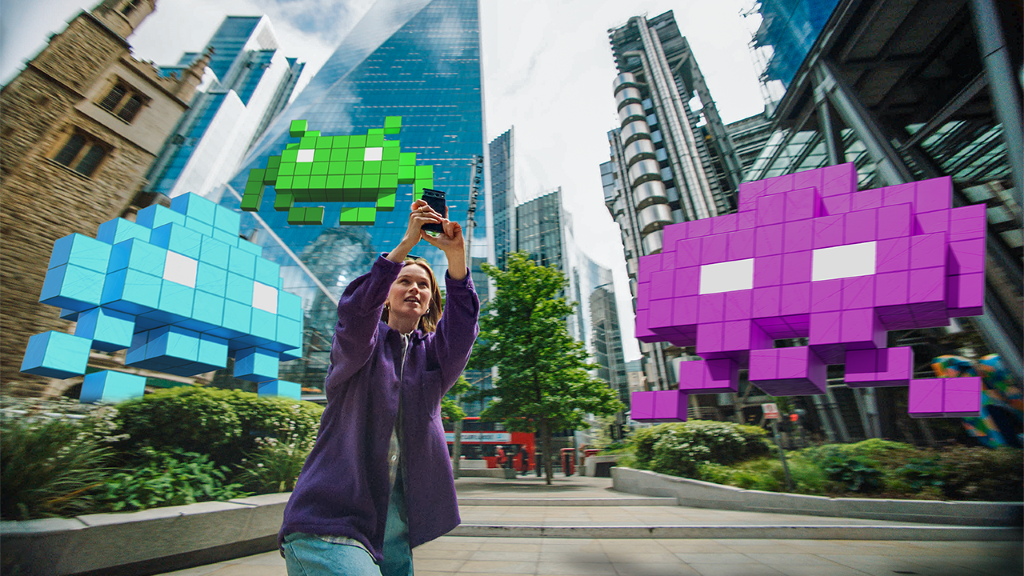
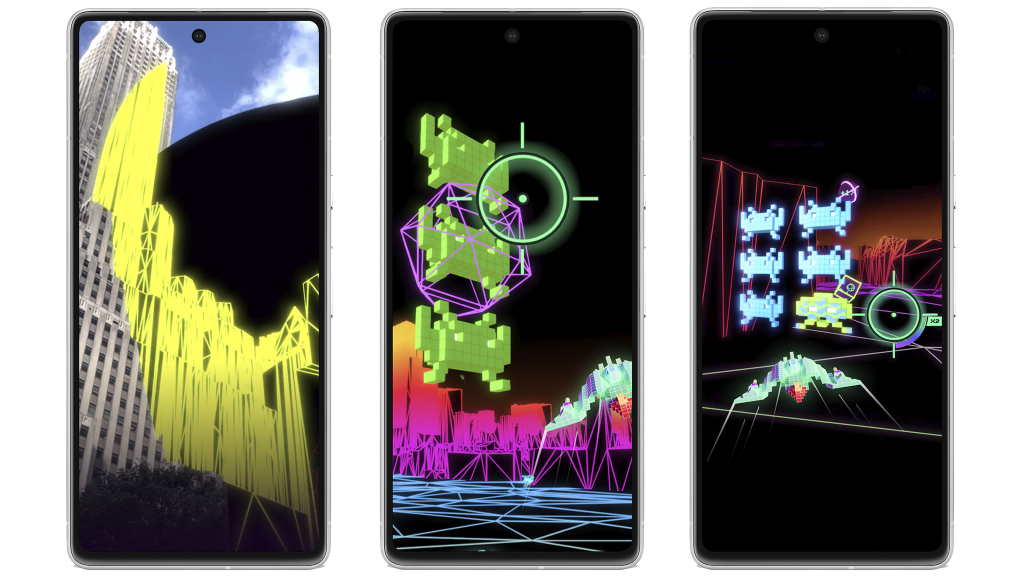
TAITO and Google partnered with global production and innovation studio UNIT9 to transform Space Invaders into an immersive AR game in honor of its 45th anniversary. Players can defend their real-world neighborhoods from 3D invaders emerging from nearby buildings and landmarks.

Meet “SPACE INVADERS: World Defense” AR Game

The reimagined iconic video game is SPACE INVADERS: World Defense, a sequel to the original game. It gives players access to enhanced weapons so they can defend their neighborhoods more effectively. New music and sound effects were also added for a more exhilarating and immersive experience.

Space Invaders AR game gameplay

The most remarkable update, however, is the real-time response to location-specific patterns and nearby buildings. It means that the AR game adapts to the player’s real-life surroundings. For example, if it’s raining, the virtual environment may also show rain, and if there’s a tall building at the player’s location, there will also be a tall building in the AR realm where an Invader may emerge from.

SPACE INVADERS: World Defense Gameplay

The original game’s classic characters and high-score mechanics are preserved in the AR game SPACE INVADERS: World Defense. The difference is that players should explore their virtual neighborhoods to find Space Invaders and defeat them. They can unlock special power-ups, compete with their friends within their location, and take an AR selfie to post on social media.

AR game Space Invaders

Players can easily switch between the World Dimension and Invaders Dimension via a portal. The virtual, 3D Invader world changes in sync with the natural environment, allowing players to complete missions in both the virtual world and the natural world’s AR view.

Harnessing the Power of Google’s ARCore and Geospatial API

UNIT9 harnessed the power of Google’s ARCore and Geospatial API to develop the next-level AR gaming experience of SPACE INVADERS: World Defense. ARCore is a software development kit (SDK) developers use to create AR applications across multiple platforms, including iOS, Android, Unity, and the Web. It seamlessly merges the digital and physical worlds, allowing users to interact with virtual objects in the AR adaptation of their natural surroundings.

As one of the top AR SDKs, the other prominent capabilities of ARCore include tracking the orientation and position of the user’s device, matching the lighting of virtual objects with their surroundings, detecting the location and size of various surface types, and integrating with existing tools like Unreal and Unity.

Phone screens Space Invaders - Invader Dimension

Combined with Geospatial API, which remotely attaches content to any area Google Street View covers, ARCore integrates geometric data from Google Maps Street View into SPACE INVADERS: World Defense, displaying accurate terrain and building information within a 100-meter radius of the player’s location.

The Beginning of an Exciting New Era

According to UNIT9’s Head of Digital, Media Ridha, Google Geospatial API’s launch marks the beginning of an exciting new era for digital experiences tied to real-world locations that are not only limited to games but for any brand experience linked to a specific place. “It was an honor to work with Google and TAITO to translate one of the most famous IPs out there into the next wave of AR gaming and create an experience that fans of all ages around the world can enjoy,” Ridha said in a press release shared with ARPost.

Matthieu Lorrain, global head of creative innovation at Google Labs Partnerships, is excited to see more developers leverage their platform to push the boundaries of geolocalized experiences. “[Google’s Geospatial API] allowed us to celebrate the iconic Space Invaders game by turning the world into a global playground,” said Lorrain.

SPACE INVADERS: World Defense officially launched on July 17, 2023, and is available on iOS and Android. Players in key markets, including Europe, Japan, and the USA, can download the AR game on their mobile devices and defeat Invaders in the real world, made more immersive with augmented reality.

Space Invaders Celebrates 45th Anniversary With a New AR Game Read More »