$321 million from today’s announcement will be spent on 41 different projects across the country—these projects are a mix of level 2 AC chargers as well as DC fast chargers. The remaining $200 million will continue funding DC fast chargers along designated highway corridors.
The Joint Office of Energy and Transportation, which administers the federal funding, called out a $15 million project to install chargers at 53 sites in Milwaukee and a $3.9 million project to install publicly accessible chargers on the Sioux Reservation in North Dakota as examples of the latest awards.
“Today’s investments in public community charging fill crucial gaps and provide the foundation for a zero-emission future where everyone can choose to ride or drive electric for greater individual convenience and reduced fueling costs, as well as cleaner air and lower healthcare costs for all Americans,” said Gabe Kline, executive director of the Joint Office of Energy and Transportation.
The Biden administration set a goal of 500,000 EV chargers nationwide by 2030. The Joint Office’s latest data shows more than 189,000 chargers across the country, although fewer than 44,000 of these were DC fast chargers.
But it cites real improvements over the past few years—56 percent of the most heavily trafficked highways have a fast charger every 50 miles, up from 38 percent in January 2021. And in June, it says an additional 3,000 charging ports were added to the national network. Other funding has gone to repairing or upgrading existing infrastructure, starting with a currently inoperable site in Washington, DC.
At the same time, progress has not been especially rapid for the highway charger NEVI (National Electric Vehicle Infrastructure) program. NEVI funds are administered by the states, similar to the way they manage federal highway funding, and the extra layers of bureaucracy have meant that the first NEVI-funded charging station—located in Ohio—only became operational in mid-December 2023.
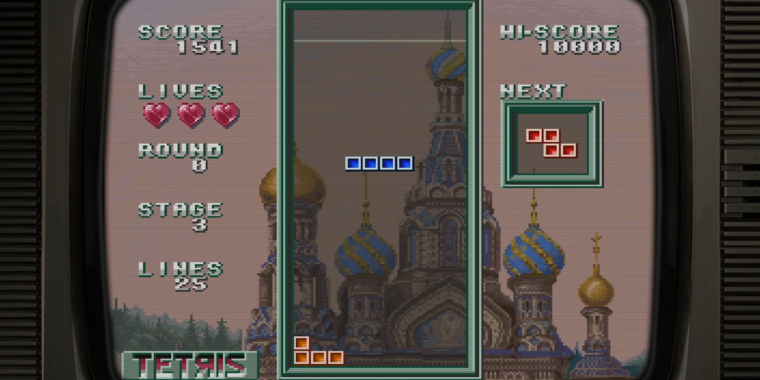
Tetris Forever includes several versions of the game that had been released over the years.
Nintendo
There’s also a new game called Tetris Time Warp that combines gameplay styles from several prior entries.
Nintendo
A combination documentary and classic game compilation called Tetris Forever is headed to PC, Nintendo Switch, and other platforms later this year, according to an announcement.
The game will include 15 Tetris games, from an “accurate” version of the first Tetris for the Electronika 60 to an NES version of the game and more, including Tetris 2 + Bombliss, Super Tetris 3, and Tetris Battle Gaiden, among others.
In addition to that, it will feature a new take called Tetris Time Warp, which will see players jumping “between gameplay styles from across the series” in real time as they complete each board. The game will support up to four players.
The game is developed by Digital Eclipse, which previously made waves with a docu-game called The Making of Karateka that combined the classic game with documentary footage. It also made a remaster of the original Wizardry.
Tetris Forever is the latest in the same docu-game series that included The Making of Karateka. As such, the classic games will be presented in an interactive digital museum-like format and will be accompanied by over an hour of documentary clips “about the history of Tetris and its key players.”
Tetris Forever was announced as part of a Nintendo Direct stream this morning. The reveal focused on the experience of playing the game on the Nintendo Switch and also noted that the original NES version of Tetris is coming to Nintendo Switch Online’s classic game library this winter.
However, the game also appeared on Steam, so there will be a PC release. Releases on other consoles are likely as well. The Steam page says the game is coming sometime before the end of this year but doesn’t get more specific than that. There’s no pricing information yet, either.
The Tetris Forever announcement video from Nintendo Direct.
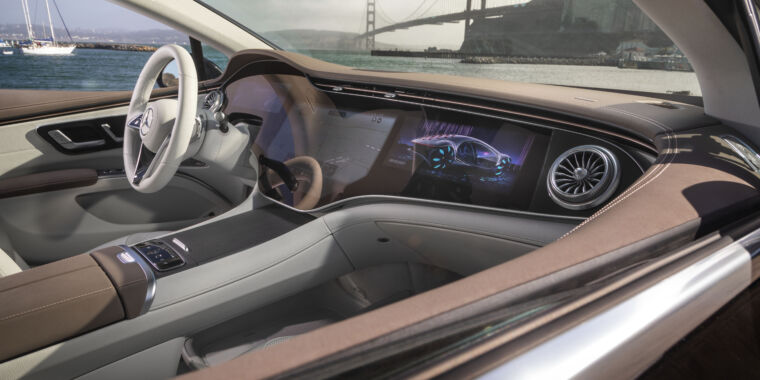
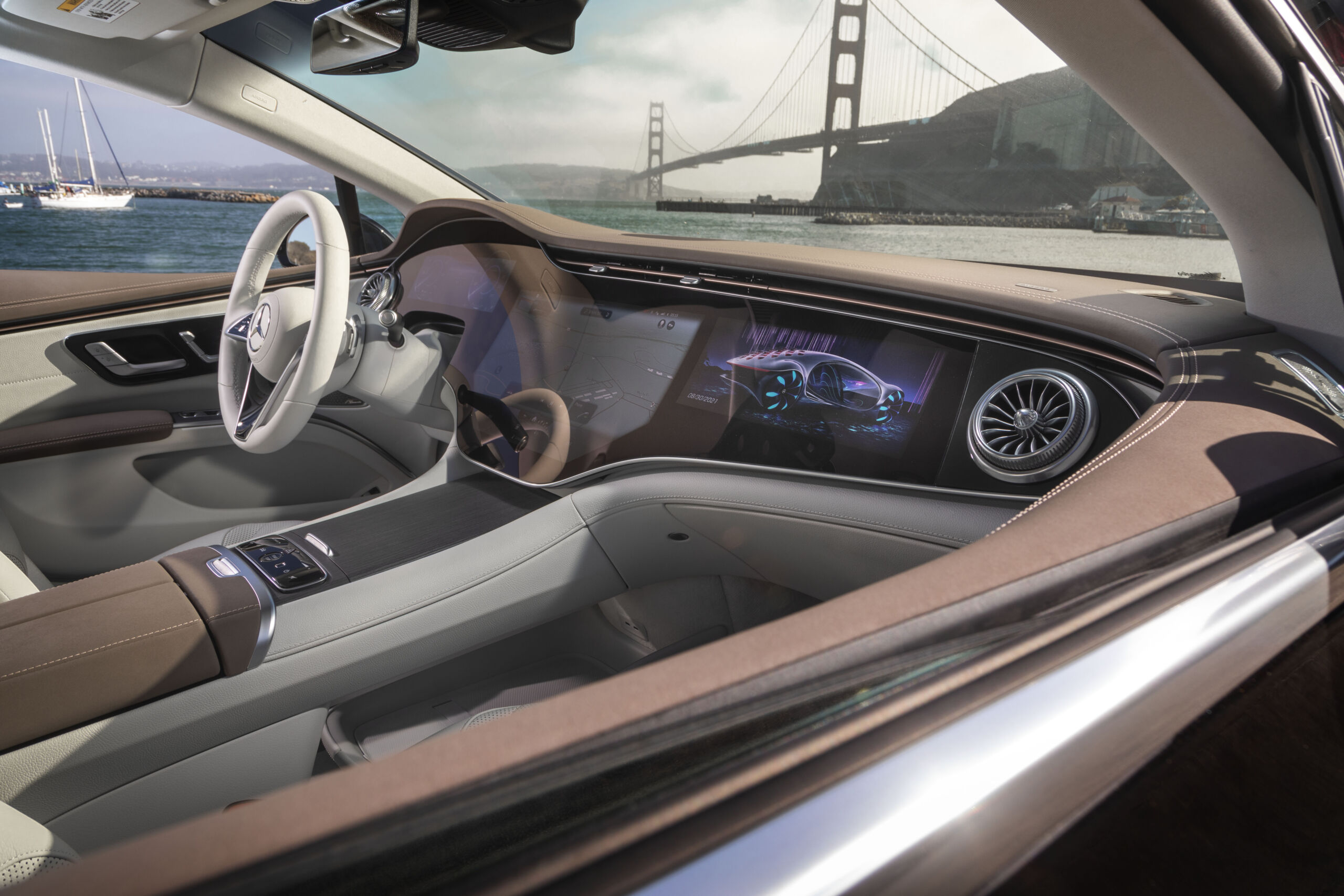
Enlarge/ Mercedes-Benz got into the passenger infotainment game with the EQS.
Mercedes-Benz
Jumping into a new car from the driver’s seat of something built before 2010 can cause quite the case of future shock. Over that time, automakers have been on a technology frenzy, loading up new vehicles with all manner of gizmos, gadgets, and features, some meant to make your life easier, others to make your journey safer. But do car buyers actually want all this stuff? A new survey by JD Power suggests they may not.
With enough time, a new convenience feature just becomes something buyers expect to be there. Starter motors replaced hand cranks for a reason, and I imagine most modern motorists would prefer not to deal with manual chokes. Manual window winders became more expensive and heavier than electric ones, leading to their extinction.
Some of the technology creep has come about by regulation or the threat of it. While many bemoan the “iPad on the dash,” the legal requirement for a backup camera means there needs to be a screen in the car to display that feed. Steering wheels and dashboards grew to conceal airbags. And now vehicle fascias conceal sensors that can alert the driver or stop the car in the event of an imminent head-on crash.
But according to JD Power’s Tech Experience Survey, which “measures problems encountered and the user experience with advanced technologies as they first enter the market,” advanced technology in cars needs to solve real problems, and too much tech simply doesn’t do that.
For example, drivers generally appreciate advanced driver assistance systems, known as ADAS in the industry; blind spot monitoring solves a real problem. But does anyone ever actually use their automatic parking system? JD Power found that systems that partially automate a driving task—even the most advanced hands-free systems—had a low perceived usefulness, a finding that dovetails nicely with data published last month by the Insurance Institute for Highway Safety that revealed partial automation did not make cars any safer.
Enough with the screens
My current bete noir is the trend for automakers to include an additional infotainment screen directly in front of the front passenger, separate from the main infotainment screen in the center stack. Blame Ferrari, which started adding a passenger screen to its supercars in the perhaps misguided impression that Ferrari drivers wanted their passengers to know how fast they were actually going.
The early Ferrari passenger displays were somewhat limited, but they have morphed into a second fully fledged infotainment display for the not-driver. Porsche did this with the Taycan, then Mercedes brought us the “hyperscreen,” which was really three separate displays and plenty of blank dashboard, all bonded to a single sheet of glass. The latest trick, as seen in some new Audis, is to have an active privacy mode so that the passenger can watch video but the driver can’t see anything at all on that display.
If the idea of giving passengers their own display when there’s already one immediately next to it sounds excessive, welcome to my club. We’re not alone—JD Power says passenger screens are negatively reviewed by many owners and notes that “it is difficult for dealers to teach new owners how to use the primary infotainment screen, let alone a second one.”
Other examples of new technology solving a nonexistent problem include facial recognition, fingerprint scanners, and gesture control. Having experienced all three in various new cars over the past few years, I am not surprised by their inclusion. I never felt safe enough, though, with Genesis’ facial recognition to leave the key at home, and BMW’s gesture controls mean that you might accidentally turn the sound system to full volume if you talk with your hands too much.
But not every new innovation was met with opprobrium. JD Power calls out AI-based features like smart climate control as having quickly won popularity.
“A strong advanced tech strategy is crucial for all vehicle manufacturers, and many innovative technologies are answering customer needs,” said Kathleen Rizk, senior director of user experience benchmarking and technology at JD Power. “At the same time, this year’s study makes it clear that owners find some technologies of little use and/or are continually annoying.”
The market research company says its tech survey is designed to help automakers decide where to invest their R&D resources. If we start seeing any objectionable in-car tech become less common, we’ll know which OEMs were paying attention.
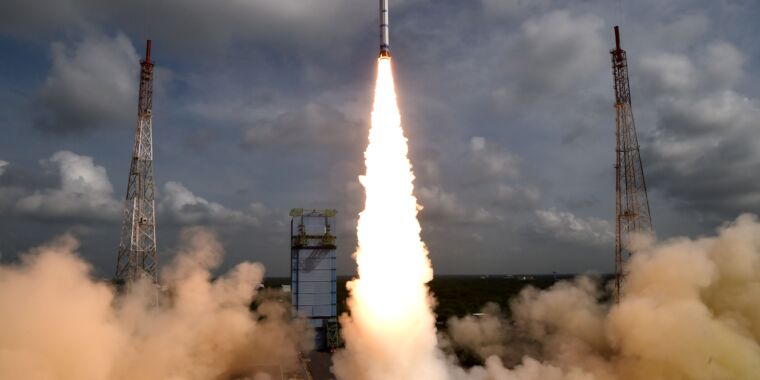
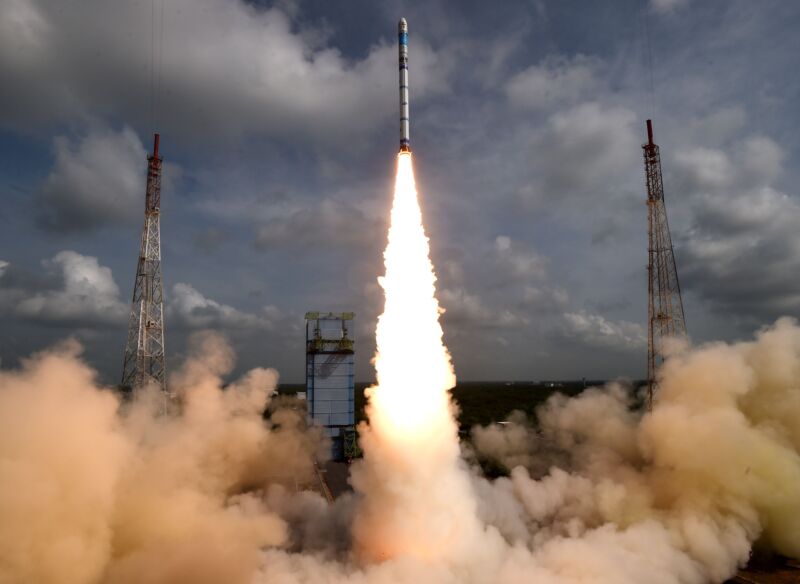
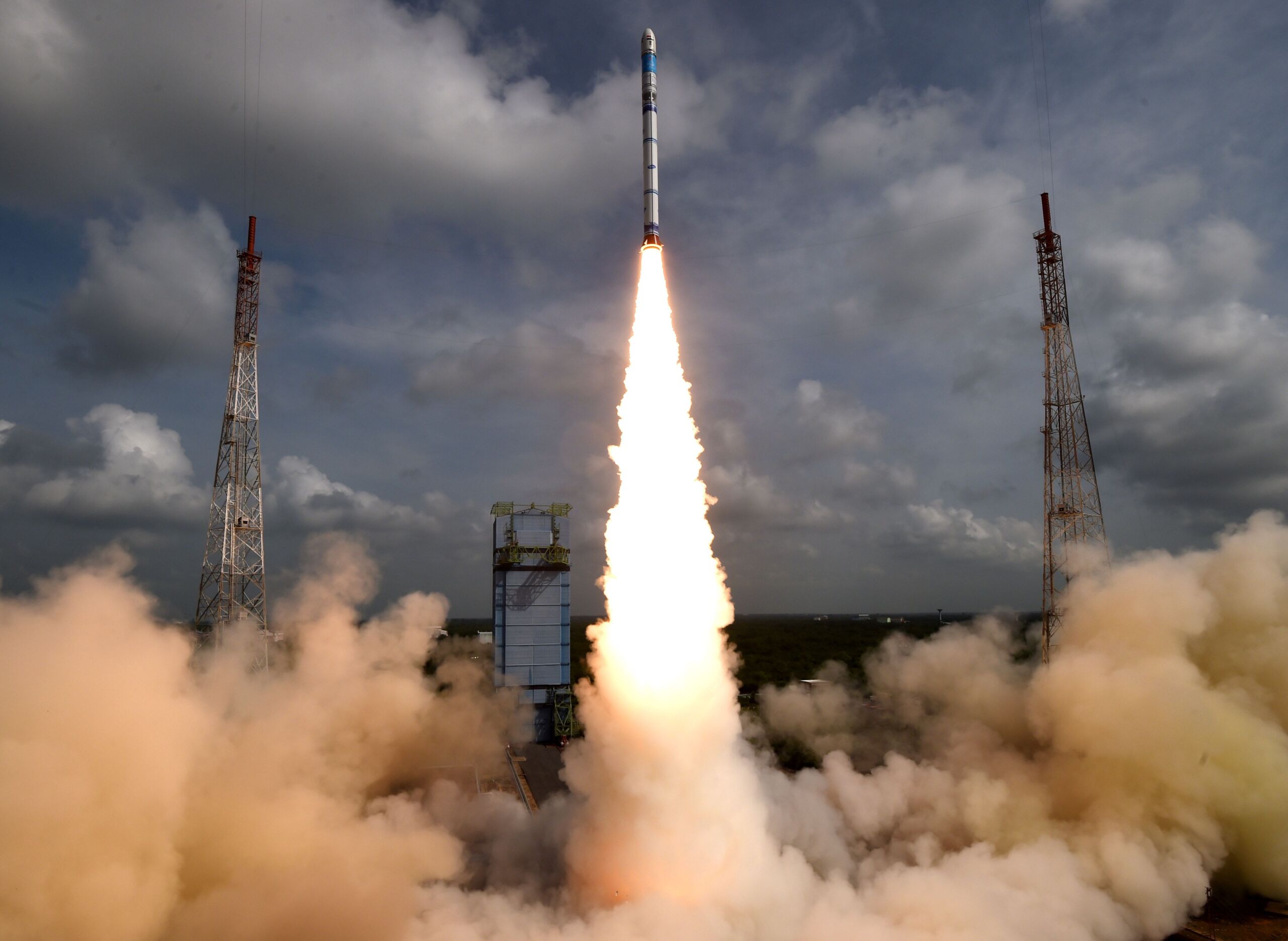
Enlarge/ India’s Small Satellite Launch Vehicle launched for the third time this week.
ISRO
Welcome to Edition 7.08 of the Rocket Report! Lots of news as always, but what I’m most interested in is the launch of the Polaris Dawn mission. If all goes as planned, the flight will break all sorts of ground for commercial spaceflight, including the first-ever private spacewalk. Best of luck to Jared Isaacman and his crew on their adventurous mission.
As always, we welcome reader submissions, and if you don’t want to miss an issue, please subscribe using the box below (the form will not appear on AMP-enabled versions of the site). Each report will include information on small-, medium-, and heavy-lift rockets as well as a quick look ahead at the next three launches on the calendar.
RFA One blows up a booster. The first stage of Rocket Factory Augsburg’s first orbital launcher was destroyed in a fireball during a test-firing Monday evening at a spaceport in Scotland, Ars reports. It’s a notable event for the European commercial space industry as the German launch startup aimed to send its first rocket into space later this year and appeared to be running ahead of several competitors in Europe’s commercial launch industry that are also developing rockets to deploy small satellites in orbit. BBC obtained video of the fiery explosion.
Now comes the hard work of an anomaly investigation … In a statement, RFA said there was “an anomaly that led to the loss of the stage” Monday evening. The company said no one was injured and reported that the launch pad had been “saved and secured.” This was the same rocket RFA planned to launch on its inaugural test flight. The hot fire test Monday was the first with all nine engines on RFA One’s first stage. “We are now working closely with SaxaVord Spaceport and the authorities to gather data and info to eventually resolve what happened,” RFA said. “We will take our time to analyze and assess the situation.” On Thursday, the cause was attributed to a turbopump fire. (submitted by SPHK_Tech, gizmo23, brianrhurley, Jay500001, and Ken the Bin)
Orbex says it’s targeting a 2025 launch, but get real. UK-based Orbex is now projecting a 2025 first launch of its small launch vehicle, the company’s chief executive told Space News recently. Phil Chambers, chief executive of the United Kingdom-based company, said the company was making progress on both its Prime small rocket and launch site at Sutherland Spaceport in northern Scotland. “We are shooting for a 2025 launch,” Chambers said but declined to be more specific about a launch date other than to say that the company wanted to avoid a launch in winter because of poor weather conditions. “But I do want it to be 2025.”
Shooting to be the first orbital launch success from the UK … There is an interesting detail in the story that caught my eye: “Vehicle subsystems are going through critical design reviews, with some flight hardware under construction.” Let’s be honest, if they’re still working through the critical design review process for subsystems, the chance of a launch in 2025 is zero, and honestly for a company founded in 2015 it should not provide much confidence that the company will ever successfully launch an orbital rocket. (submitted by EllPeaTea)
The easiest way to keep up with Eric Berger’s space reporting is to sign up for his newsletter, we’ll collect his stories in your inbox.
SSLV makes its third launch. India successfully launched its third Small Satellite Launch Vehicle on Thursday, placing an Earth observation satellite into orbit and completing the solid rocket’s development process, Space News reports. The rocket carried the experimental Earth observation EOS-08 spacecraft into its intended 475-kilometer circular orbit for the Indian Space Research Organization.
Two for three … According to ISRO chairman S. Somanath, the successful completion of the SSLV’s development phase paves the way for technology transfer to Indian industry, enabling serial production and operational deployment of the SSLV. The first SSLV flight failed in August 2022 when an upper stage malfunction left its payloads stranded in a very low orbit. The second launch, in February 2023, was successful. (submitted by Ken the Bin)
Indian firm plans suborbital launch. A Chennai-based startup, Space Zone India, plans to launch its Rhumi-01 suborbital rocket on Saturday from a mobile launcher. The hybrid vehicle, combining both solid and liquid rocket propellants, will carry three cubesats and 50 smaller picosats on its debut launch, the New Indian Express reports.
Seeking to recycle rockets … According to the company’s website, the Rhumi launch vehicle can reach an altitude of about 30 km. The three cubesats are designed to monitor and collect data on atmospheric conditions, including cosmic radiation intensity, UV radiation intensity, air quality, and more. The company said most of the rocket is designed to be recoverable and reused. (submitted by brianrhurley)
Sierra Space kicking the tires on ULA. Boeing and Lockheed Martin are in talks to sell their rocket-launching joint venture United Launch Alliance to Sierra Space, Reuters reports. A deal could value ULA at around $2 billion to $3 billion, sources told the publication. A potential deal would be an ambitious move for Sierra Space, spun off from Sierra Nevada in 2021 to focus on bringing to market its long-delayed Dream Chaser spaceplane. A deal with ULA could give the company a rocket, Vulcan, for uncrewed and potentially crewed launches of Dream Chaser.
A source believes the deal is unlikely … ULA has been up for sale, actively, for more than a year. Blue Origin and Cerberus Capital Management had placed bids in early 2023 for the company, but none of those offers resulted in a deal. I heard about Sierra’s interest last Friday, but the Reuters story came out before I could write something up. I will say, from the reporting I have been able to do, that the discussions between Sierra and ULA’s owners were serious and substantial. However, at this time, my best information indicates that a sale is unlikely to happen. The parents believe ULA is worth more than Sierra is willing to pay. Sierra would also need to borrow substantially to make any transaction happen. (submitted by Hacker Uno and Ken the Bin)
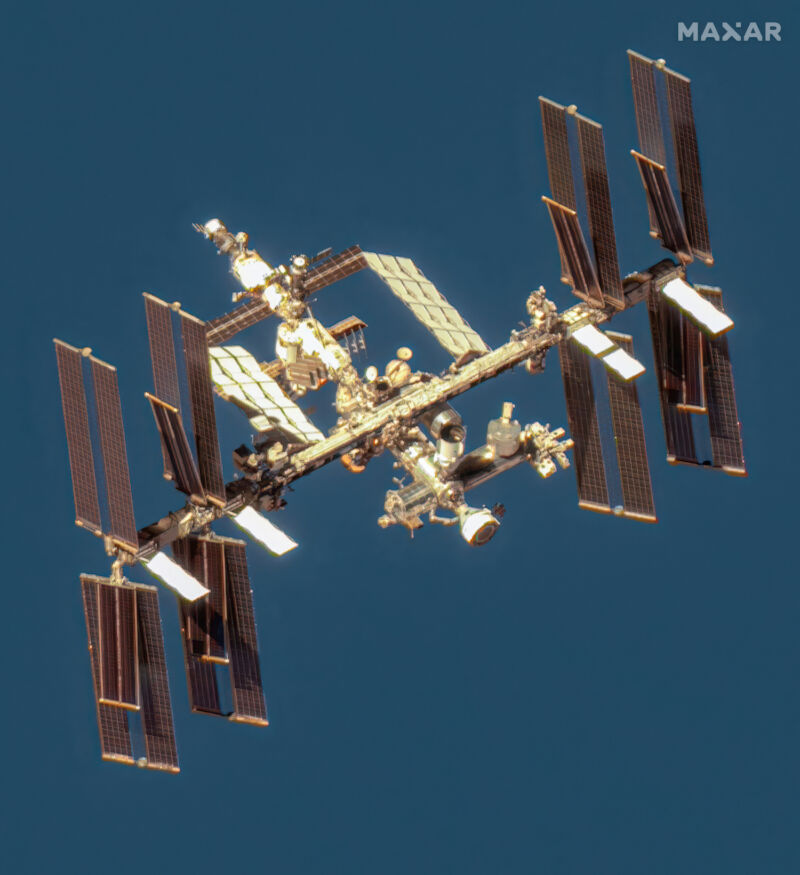
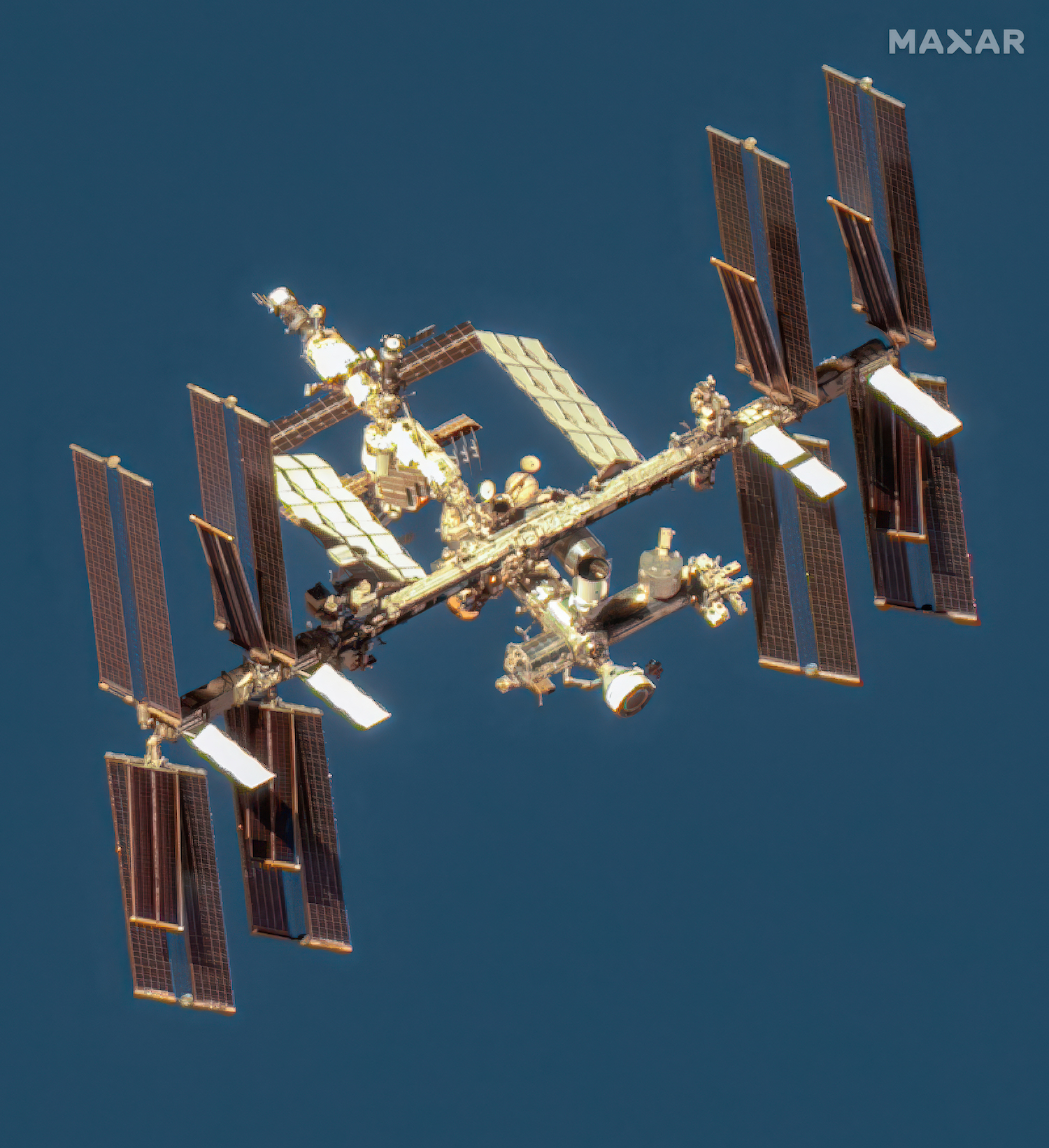
Enlarge/ A high-resolution commercial Earth-imaging satellite owned by Maxar captured this view of the International Space Station on June 7 with Boeing’s Starliner capsule docked at the lab’s forward port (lower right).
Senior NASA leaders, including the agency’s administrator, Bill Nelson, will meet Saturday in Houston to decide whether Boeing’s Starliner spacecraft is safe enough to ferry astronauts Butch Wilmore and Suni Williams back to Earth from the International Space Station.
The Flight Readiness Review (FRR) is expected to conclude with NASA’s most consequential safety decision in nearly a generation. One option is to clear the Starliner spacecraft to undock from the space station in early September with Wilmore and Williams onboard, as their flight plan initially laid out, or to bring the capsule home without its crew.
As of Thursday, the two veteran astronauts have been on the space station for 77 days, nearly 10 times longer than their planned stay of eight days. Wilmore and Williams were the first people to launch and dock at the space station aboard a Starliner spacecraft, but multiple thrusters failed and the capsule leaked helium from its propulsion system as it approached the orbiting complex on June 6.
That led to months of testing—in space and on the ground—data reviews, and modeling for engineers to try to understand the root cause of the thruster problems. Engineers believe the thrusters overheated, causing Teflon seals to bulge and block the flow of propellant to the small control jets, resulting in losing thrust. The condition of the thrusters improved once Starliner docked at the station when they weren’t repeatedly firing, as they need to do when the spacecraft is flying alone.
However, engineers and managers have not yet reached a consensus about whether the same problem could recur, or get worse, during the capsule’s journey back to Earth. In a worst-case scenario, if too many thrusters fail, the spacecraft would be unable to point in the proper direction for a critical braking burn to guide the capsule back into the atmosphere toward landing.
The suspect thrusters are located on Starliner’s service module, which will perform the deorbit burn and then separate from the astronaut-carrying crew module before reentry. A separate set of small engines will fine-tune Starliner’s trajectory during descent.
If NASA managers decide it’s not worth the risk, Wilmore and Williams would extend their stay on the space station until at least February of next year, when they would return to Earth inside a Dragon spacecraft provided by SpaceX, Boeing’s rival in NASA’s commercial crew program. This would eliminate the threat that thruster problems on the Starliner spacecraft might pose to the crew’s safety during the trip to Earth, but it comes with myriad side effects.
These effects include disrupting crew activities on the space station by bumping two astronauts off the next SpaceX flight, exposing Wilmore and Williams to additional radiation during their time in space, and dealing a debilitating blow to Boeing’s Starliner program.
If Boeing’s capsule cannot return to Earth with its two astronauts, NASA may not certify Starliner for operational crew missions without an additional test flight. In that case, Boeing probably wouldn’t be able to complete all six of its planned operational crew missions under a $4.2 billion NASA contract before the International Space Station is due for retirement in 2030.
FRR-eedom to speak
The Flight Readiness Review at NASA’s Johnson Space Center in Houston will begin Saturday morning. Ken Bowersox, a former astronaut and head of NASA’s Space Operations Mission Directorate, will chair the meeting. NASA Administrator Bill Nelson will participate, too. If there’s no unanimous agreement around the table at the FRR, a final decision on what to do could be elevated above Bowersox to NASA’s associate administrator, Jim Free or to Nelson.
“The agency flight readiness review is where any formal dissents are presented and reconciled,” NASA said in a statement Thursday. “Other agency leaders who routinely participate in launch and return readiness reviews for crewed missions include NASA’s administrator, deputy administrator, associate administrator, various agency center directors, the Flight Operations Directorate, and agency technical authorities.”
NASA has scheduled a press conference for no earlier than 1 pm ET (17: 00 UTC) Saturday to announce the agency’s decision and next steps, the agency said.
Lower-level managers will meet Friday in a so-called Program Control Board to discuss their findings and views before the FRR. At a previous Program Control Board meeting, managers disagreed on whether the agency was ready to sign off that the Starliner spacecraft was safe enough to return its astronauts to Earth.
There’s one new piece of information that engineers will brief to the Program Control Board on Friday:
“Engineering teams have been working to evaluate a new model that represents the thruster mechanics and is designed to more accurately predict performance during the return phase of flight,” NASA said. “This data could help teams better understand system redundancy from undock to service module separation. Ongoing efforts to complete the new modeling, characterize spacecraft performance data, refine integrated risk assessments, and determine community recommendations will fold into the agency-level review.”
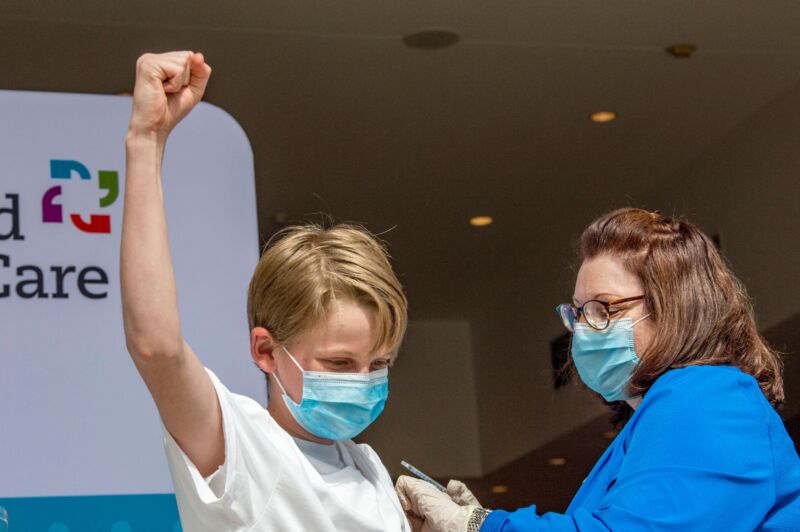
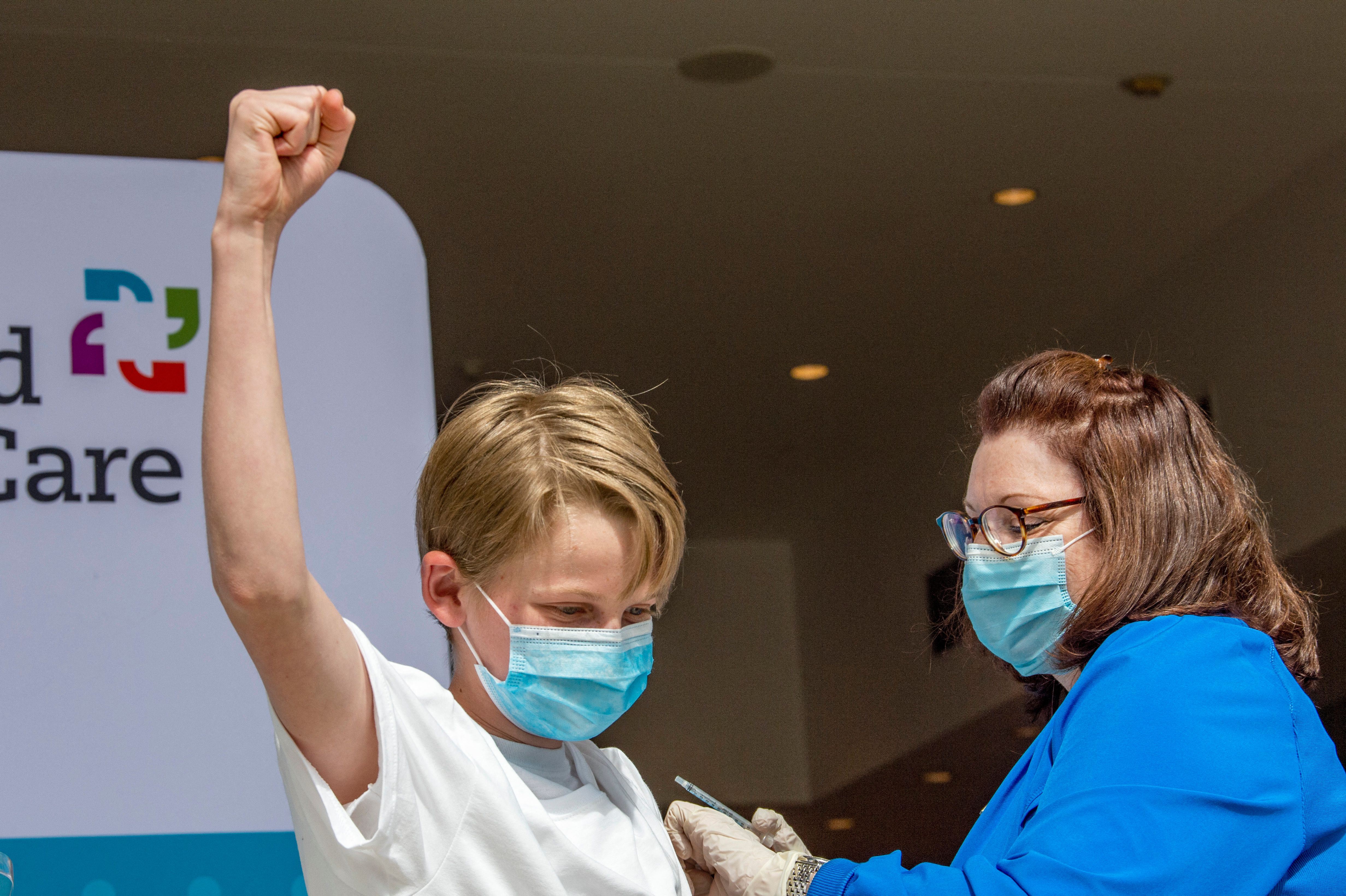
Enlarge/ A 13-year-old celebrates getting the Pfizer-BioNTech COVID-19 vaccine in Hartford, Connecticut, on May 13, 2021.
With the impending arrival of the 2024–2025 COVID-19 vaccines approved yesterday, some Americans are now gaming out when to get their dose—right away while the summer wave is peaking, a bit later in the fall to maximize protection for the coming winter wave, or maybe a few weeks before a big family event at the end of the year? Of course, the group pondering such a question is just a small portion of the US.
In a press briefing Friday, federal health officials were quick to redirect focus when reporters raised questions about the timing of COVID-19 vaccination in the coming months and the possibility of updating the vaccines twice a year, instead of just once, to keep up with an evolving virus that has been producing both summer and winter waves.
“The current problem is not that the virus is evolving so much, at least in terms of my estimation,” Peter Marks, the top vaccine regulator at the Food and Drug Administration, told journalists. “It’s that we don’t have the benefits of the vaccine, which is [to say] that it’s not vaccines that prevent disease, it’s vaccination. It’s getting vaccines in arms.” When exactly to get the vaccine is a matter of personal choice, Marks went on, but the most important choice is to get vaccinated.
Estimates for this winter
The press briefing, which featured several federal health officials, was intended to highlight the government’s preparations and hopes for the upcoming respiratory virus season. The FDA, the Centers for Disease Control and Prevention, and the Department of Health and Human Services (HHS) are urging all Americans to get their respiratory virus vaccines—flu, COVID-19, and RSV.
CDC Director Mandy Cohen introduced an updated data site that provides snapshots of local respiratory virus activity, national trends, data visualizations, and the latest guidance in one place. HHS, meanwhile, highlighted a new outreach campaign titled “Risk Less. Do More.” to raise awareness of COVID-19 and encourage vaccination, particularly among high-risk populations. For those not at high risk, health officials still emphasize the importance of vaccination to lower transmission and prevent serious outcomes, including long COVID. “There is no group without risk,” Cohen said, noting that the group with the highest rates of emergency department visits for COVID-19 were children under the age of 5, who are not typically considered high risk.
So far, CDC models are estimating that this year’s winter wave of COVID-19 will be similar, if not slightly weaker on some metrics, than last year’s winter wave, Cohen said. But she emphasized that many assumptions go into the modeling, including how the virus will evolve in the near future and the amount of vaccine uptake. The modeling assumes the current omicron variants stay on their evolutionary path and that US vaccination coverage is about the same as last year. Of course, beating last year’s vaccine coverage could blunt transmission.
Amazon may be forced to meet some unionized delivery drivers at the bargaining table after a regional National Labor Relations Board (NLRB) director determined Thursday that Amazon is a joint employer of contractors hired to ensure the e-commerce giant delivers its packages when promised.
This seems like a potentially big loss for Amazon, which had long argued that delivery service partners (DSPs) exclusively employed the delivery drivers, not Amazon. By rejecting its employer status, Amazon had previously argued that it had no duty to bargain with driver unions and no responsibility for alleged union busting, The Washington Post reported.
But now, after a yearlong investigation, the NLRB has issued what Amazon delivery drivers’ union has claimed was “a groundbreaking decision that sets the stage for Amazon delivery drivers across the country to organize with the Teamsters.”
In a press release reviewed by Ars, the NLRB regional director confirmed that as a joint employer, Amazon had “unlawfully failed and refused to bargain with the union” after terminating their DSP’s contract and terminating “all unionized employees.” The NLRB found that rather than bargaining with the union, Amazon “delayed start times by grounding vans and not preparing packages for loading,” withheld information from the union, and “made unlawful threats.” Teamsters said those threats included “job loss” and “intimidating employees with security guards.”
Sean M. O’Brien, the Teamsters general president, claimed the win for drivers unionizing not just in California but for nearly 280,000 drivers nationwide.
“Amazon drivers have taken their future into their own hands and won a monumental determination that makes clear Amazon has a legal obligation to bargain with its drivers over their working conditions,” O’Brien said. “This strike has paved the way for every other Amazon worker in the country to demand what they deserve and to get Amazon to the bargaining table.”
Unless a settlement is reached, the NLRB will soon “issue a complaint against Amazon and prosecute the corporate giant at a trial” after finding that “Amazon engaged in a long list of egregious unfair labor practices at its Palmdale facility,” Teamsters said.
Apparently downplaying the NLRB determination, Amazon is claiming that the Teamsters are trying to “misrepresent what is happening here.” Seemingly Amazon is taking issue with the union claiming that an NLRB determination on the merits of their case is a major win when the NLRB has yet to issue a final ruling.
According to the NLRB’s press release, “a merit determination is not a ‘Board decision/ruling’—it is the first step in the NLRB’s General Counsel litigating the allegations after investigating an unfair labor practice charge.”
Amazon’s spokesperson, Eileen Hards, told Ars that the NLRB office confirmed to Amazon that it will be “dismissing most of the Teamsters’ more significant claims it filed last year in Palmdale.” That apparently includes dismissing the Teamsters’ claims that Amazon unlawfully terminated its contract with one of their DSPs and that Amazon had a legal obligation to honor the Teamsters’ contract with that DSP.
Next, the NLRB will determine if the “remaining allegations should be decided by an administrative law judge,” Hards said. After that, Amazon will have opportunities to appeal any unfavorable rulings, first to the Board and then to a federal appeals court, the NLRB confirmed to Ars.
Hards confirmed that Amazon still expects all the Teamsters’ remaining claims will be dismissed.
“As we have said all along, there is no merit to the Teamsters’ claims,” Hards told Ars. “If and when the agency decides it wants to litigate the remaining allegations, we expect they will be dismissed as well.”
But Hards declined to comment on the impacts of the NLRB’s determination that Amazon is a joint employer of the unionized delivery drivers.
One Amazon driver in Palmdale, Jessie Moreno, said that worker conditions for Amazon drivers could improve because of the determination.
“Amazon can no longer dodge responsibility for our low wages and dangerous working conditions, and it cannot continue to get away with committing unfair labor practices,” Moreno said. “We are Amazon workers, and we are holding Amazon accountable.”
Amazon drivers uniting “like never before”
The NLRB determination came following a complaint from 84 Amazon workers from Palmdale, California, who became the first Amazon delivery drivers to unionize in April 2023, represented by Teamsters Local 396.
While their DSP recognized the union, workers launched an unfair labor strike in June 2023 after Amazon allegedly “engaged in dozens of unfair labor practices in violation of federal labor law in an effort to quash workers’ organizing efforts,” the Teamsters said.
The picket line quickly expanded “to over 50 Amazon warehouses across 10 states,” the Teamsters said. Most recently, drivers in Skokie, Illinois, “launched their own unfair labor practice strike in June 2024,” right around the same time that “more than 5,500 members of the Amazon Labor Union in New York voted by an overwhelming 98.3 percent to affiliate with the Teamsters.”
In their blog, the Teamsters said that Amazon “has avoided responsibility for its drivers through its DSP subcontractor business model” since 2018, but drivers hope that yesterday’s NLRB determination could put an end to the dodgy tactic.
“The NLRB’s joint employer determination shatters that myth” that “DSP drivers are not official employees of Amazon” and “makes clear that through its DSP business model, Amazon exercises widespread control over drivers’ labor and working conditions, making Amazon the drivers’ employer,” the Teamsters said.
The Teamsters said that they are “confident” that “the NLRB’s regional determination for the Palmdale workers will extend to Amazon DSP drivers who unionize nationwide.” One union member and Amazon driver, Brandi Diaz, celebrated what she considered to be the US government recognizing that the DSP program is a “sham.”
“We wear Amazon uniforms, we drive Amazon vans, and Amazon controls every minute of our day,” Diaz said. “Amazon can no longer have all the benefits of their own fleet of drivers without the responsibilities that come with it. The time has come for Amazon drivers across the country to organize with the Teamsters and demand what we deserve.”
Drivers are currently fighting to increase wages and improve driver safety amid what they claim are unchecked dangerous conditions they must navigate as Amazon drivers. Moreno said that the NLRB determination was a significant step toward unionizing more drivers and ending Amazon’s allegedly unfair labor practices nationwide.
“We have been on strike to stop Amazon’s lawbreaking and we are winning at the NLRB, while we are uniting Amazon workers across the country like never before,” Moreno said.
Fast-forward to this week’s announcement of Borderlands 4, and despite Pitchford’s old comments, the sequel will not follow its predecessor’s example of EGS exclusivity. The new game plans to launch on Steam and EGS simultaneously sometime in 2025 (alongside PS5 and Xbox Series X/S versions).
When one social media user noticed that change this week, Pitchford responded with another lengthy message explaining why his early hopes for the Epic Games Store’s rise to dominance were “misplaced or overly optimistic.”
In the short team, Pitchford said his high hopes for Epic’s effort were initially “validated” by the launches of Borderlands 3 and 2022 spin-off Tiny Tina’s Wonderlands (which was available on EGS for three months before its Steam release). “Borderlands 3 and Wonderlands demonstrated clearly that the customers show up for the games, not the storefront,” he said.
But Pitchford now says Epic didn’t “successfully press its advantage” to take a significant chunk of Steam’s dominant market power. “Famously, Steam does very little to earn the massive cut they take and continues its effective monopoly in the West while would-be competitors with much more developer friendly models continue to shoot themselves in the foot,” Pitchford said.
“The industry gives Steam their monopoly because publishers are afraid to take the risk to support more developer and publisher friendly stores,” he continued. “It’s all very interesting and there is a huge amount of opportunity in the PC gaming space for retail disruption, but no one seems to be able to make it happen.”
A limited success or an Epic failure?
Internal documents revealed in the Epic vs. Apple case in 2021 show that both Gearbox and Epic seemed to benefit from the Borderlands 3 exclusivity deal. Epic set a guaranteed sales floor of $80 million to help attract Borderlands 3 to the platform—if the game sold less on EGS, Epic would pay Gearbox the difference to reach that amount. But Gearbox’s game managed to hit that sales floor in just two weeks, bringing in more revenue on its own than the entirety of EGS had for the previous nine months while also attracting plenty of new EGS users.
Borderlands 3‘s exclusive launch was a huge revenue boost for the Epic Games Store.
Epic vs. Apple court filing
Epic recouped its $80 million upfront revenue guarantee for Borderlands 3 within two weeks.
Not all of Epic’s attempts to secure exclusives were so successful, though. In 2019, Epic paid roughly $542 million in minimum guarantees for exclusive titles projected to earn just $336 million over their lifetimes. That $206 million difference that amounts to throwing money at publishers in hopes that their exclusive games would help attract new users to EGS.
And that continuing effort hasn’t been a total failure for Epic; by the end of 2023, the company said there were 75 million active monthly users for its PC store, up from 68 million the year before. But that’s still relatively tiny compared to Steam, which had 132 million active monthly users back in 2021. While Valve hasn’t released monthly user numbers since then, Steam’s concurrent user peak has increased about 67 percent (per SteamDB tracking) since the end of 2021—from 21.17 million to 35.55 million. That suggests Steam’s current monthly user number could be well over 200 million.
To be fair, pushing a new PC storefront from a standing start to about 10 percent of Steam’s massive revenue in about five years is impressive. But that result still has to be disappointing for Epic, which projected in 2019 that EGS could represent 35 to 50 percent of the entire PC games market in 2024.
It’s an open question whether Epic’s limited success is a result of the company’s failure to “press its advantage,” as Pitchford opines, or just a sign that Steam’s massive entrenched network effects have proven more resilient than he expected. Regardless, Borderlands 4‘s Steam launch— following the lead of other former EGS exclusive publishers—doesn’t mean Pitchford has given up hope that a Steam-killer could still come down the pike.
“I sincerely hope Epic keeps up the fight and makes headway,” Pitchford said. “Epic is going to have to prioritize the store and try some new initiatives while also doubling down on earning pivotal exclusives if it is going to have a chance. I also hope other viable competitors arrive. I am sure we will all be watching.”
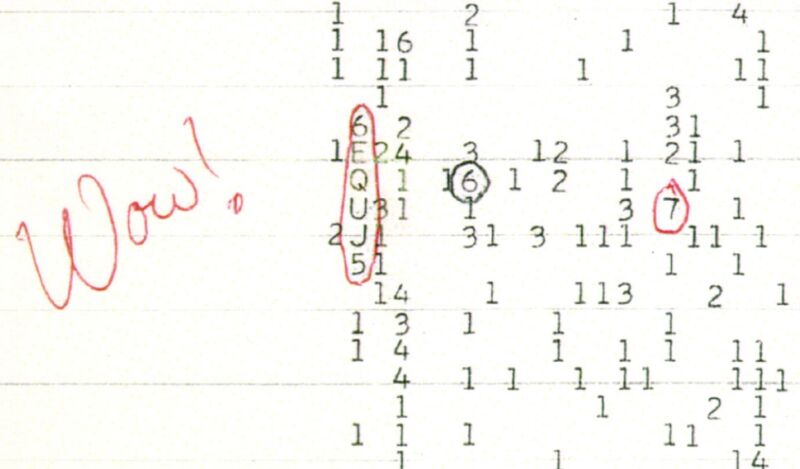
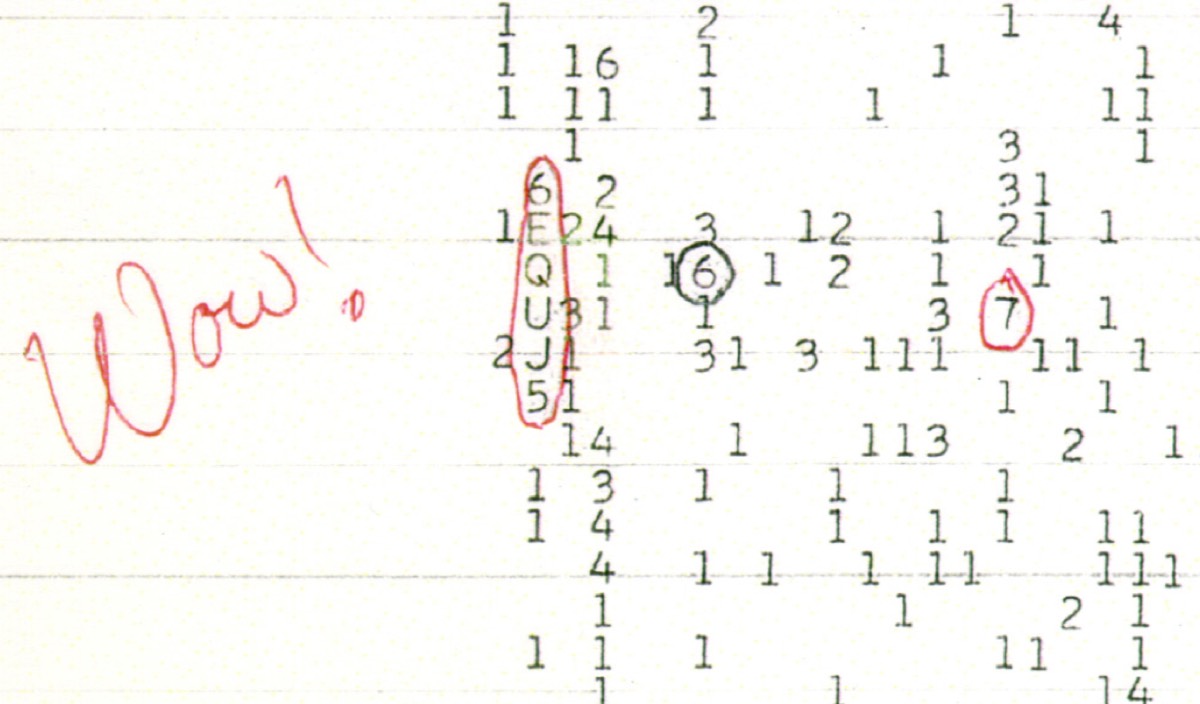
Enlarge/ The Wow! signal, represented as “6EQUJ5,” was discovered in 1977 by astronomer Jerry Ehman.
Public domain
An unusually bright burst of radio waves—dubbed the Wow! signal—discovered in the 1970s has baffled astronomers ever since, given the tantalizing possibility that it just might be from an alien civilization trying to communicate with us. A team of astronomers think they might have a better explanation, according to a preprint posted to the physics arXiv: clouds of atomic hydrogen that essentially act like a naturally occurring galactic maser, emitting a beam of intense microwave radiation when zapped by a flare from a passing magnetar.
As previously reported, the Wow! signal was detected on August 18, 1977, by The Ohio State University Radio Observatory, known as “Big Ear.” Astronomy professor Jerry Ehman was analyzing Big Ear data in the form of printouts that, to the untrained eye, looked like someone had simply smashed the number row of a typewriter with a preference for lower digits. Numbers and letters in the Big Ear data indicated, essentially, the intensity of the electromagnetic signal picked up by the telescope over time, starting at ones and moving up to letters in the double digits (A was 10, B was 11, and so on). Most of the page was covered in ones and twos, with a stray six or seven sprinkled in.
But that day, Ehman found an anomaly: 6EQUJ5 (sometimes misinterpreted as a message encoded in the radio signal). This signal had started out at an intensity of six—already an outlier on the page—climbed to E, then Q, peaked at U—the highest power signal Big Ear had ever seen—then decreased again. Ehman circled the sequence in red pen and wrote “Wow!” next to it. The signal appeared to be coming from the direction of the Sagittarius constellation, and the entire signal lasted for about 72 seconds. Alas, SETI researchers have never been able to detect the so-called “Wow! Signal” again, despite many tries with radio telescopes around the world.
One reason for the excited reaction is that such a signal had been proposed as a possible communication from extraterrestrial civilizations in a 1959 paper by Cornell University physicists Philip Morrison and Giuseppe Cocconi. Morrison and Cocconi thought that such a civilization might use the 1420 megahertz frequency naturally emitted by hydrogen, the universe’s most abundant element and, therefore, something an alien civilization would be familiar with. In fact, the Big Ear had been reassigned to the SETI project in 1973 specifically to hunt for possible signals. Ehman himself was quite skeptical of the “it could be aliens” hypothesis for several decades, although he admitted in a 2019 interview that “the Wow! signal certainly has the potential of being the first signal from extraterrestrial intelligence.”
Several other alternative hypotheses have been suggested. For instance, Antonio Paris suggested in 2016 that the signal may have come from the hydrogen cloud surrounding a pair of comets, 266P/Christensen and 335P/Gibbs. This was rejected by most astronomers, however, in part because comets don’t emit strongly at the relevant frequencies. Others have suggested the signal was the result of interference from satellites orbiting the Earth, or a signal from Earth reflected off a piece of space debris.
Space maser!
Astrobiologist Abel Mendez of the University of Puerto Rico at Arecibo and his co-authors think they have the strongest astrophysical explanation to date with their cosmic maser hypothesis. The team was actually hunting for habitable exoplanets using signals from red dwarf stars. In some of the last archival data collected at the Arecibo radio telescope (which collapsed in 2020), they noticed several signals that were remarkably similar to the Wow! signal in terms of frequency—just much less intense (bright).
Mendez admitted to Science News that he had always viewed the Wow! signal as just a fluke—he certainly didn’t think it was aliens. But he realized that if the signals they were identifying had blazed brighter, even momentarily, they would be very much like the Wow! signal. As for the mechanism that caused such a brightening, Mendez et al. propose that a magnetar (a highly magnetic neutron star) passing behind a cloud of atomic hydrogen could have flared up with sufficient energy to produce stimulated emission in the form of a tightly focused beam of microwave radiation—a cosmic maser. (Masers are akin to lasers, except they emit microwave radiation rather than visible radiation.)
Proving their working hypothesis will be much more challenging, although there have been rare sightings of such naturally occurring masers from hydrogen molecules in space. But nobody has ever spotted an atomic hydrogen cloud with an associated maser, and that’s what would be needed to explain the intensity of the Wow! signal. That’s why other astronomers are opting for cautious skepticism. “A magnetar is going to produce [short] radio emissions as well. Do you really need this complicated maser stuff happening as well to explain the Wow! signal?” Michael Garrett of the University of Manchester told New Scientist. “Personally, I don’t think so. It just makes a complicated story even more complicated.”
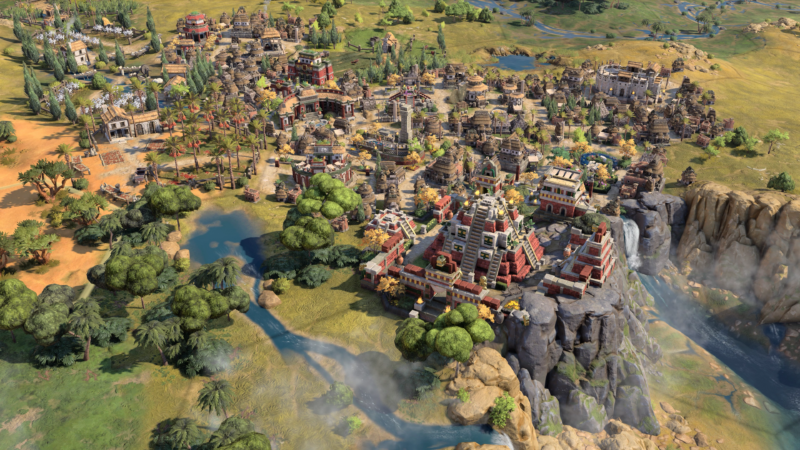
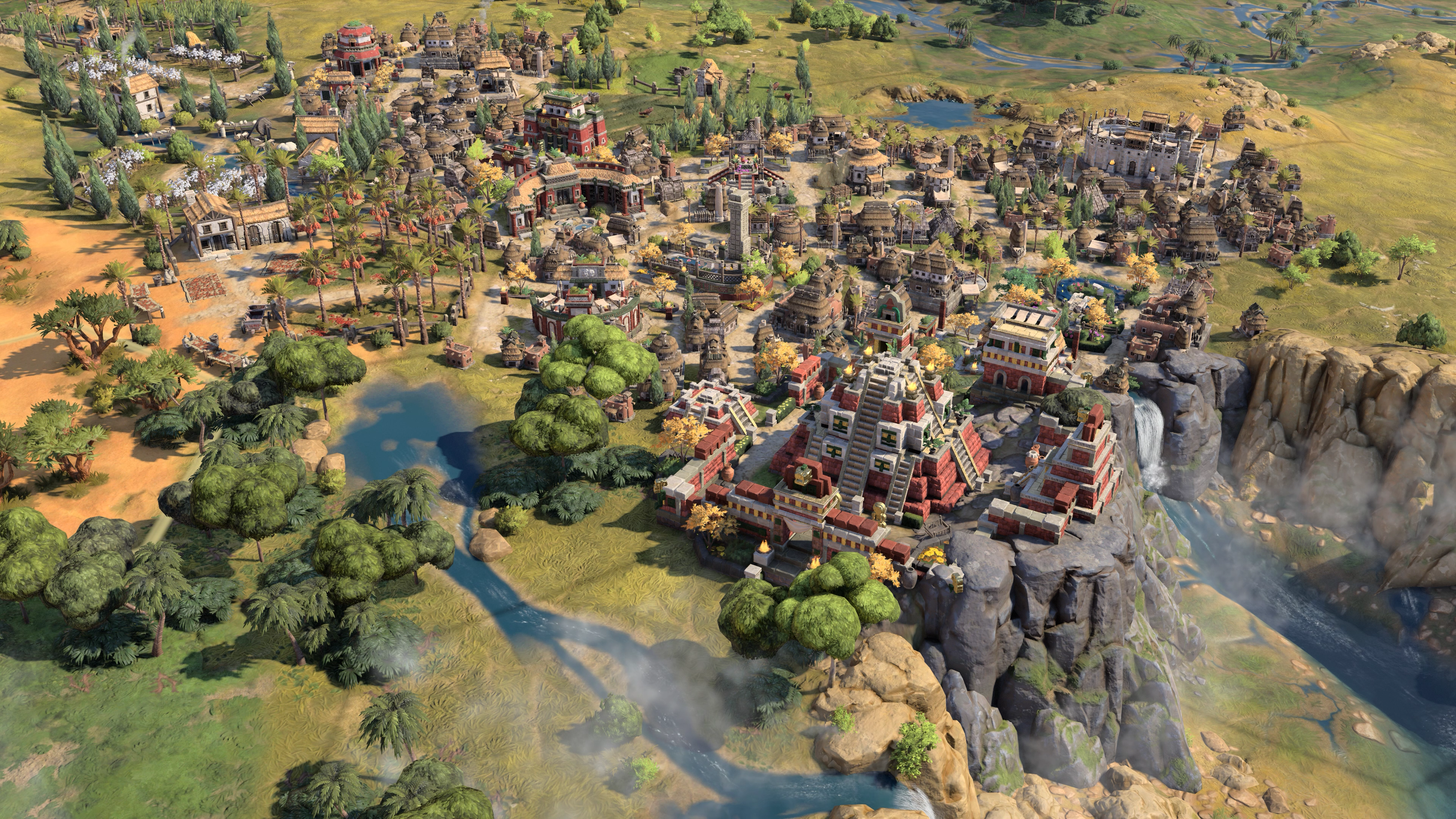
Enlarge/ Firaxis has upped the ante on presentation for the cities. It’s still a bit abstract and removed, but they have more vibrancy, detail, and movement than before.
2K Games
2K Games provided a flight from Chicago to Baltimore and accommodation for two nights so that Ars could participate in the preview opportunity for Civilization VII. Ars does not accept paid editorial content.
From squares to hexes, from tech trees to civic trees, over its more than 30 years across seven mainline entries, the Civilization franchise continues to evolve.
Firaxis, the studio that has developed the Civilization games for many years, has a mantra when making a sequel: 33 percent of the game stays the same, 33 percent gets updated, and 33 percent is brand new.
Recently, I had the opportunity to play Civilization VII, the next entry, which is due to launch in February 2025. The build I played was an early alpha build, but the bones of the game it will become were there, and it’s interesting to see which third Firaxis kept the same and which third it has reimagined.
It turns out that the core of the game that its developers won’t much want to change is the turn-to-turn experience. But in the case of Civilization VII, all bets are off when it comes to the overall arc of a long journey, from sticks and stones to space travel.
Rethinking the structure of a Civilization game
Most of the time, playing Civilization VII feels a lot like playing Civilization VI—but there’s one big change that spans the whole game that seems to be this sequel’s tentpole feature.
That’s the new Ages system. The long game is now broken into three segments: Antiquity, Exploration, and Modern. Each Age has some unique systems and gameplay, though most systems span all three.
Within each age, you’re given a handful of “Legacy Paths” to choose from. These map closely to the franchise’s long-standing victory conditions: Science, Economic, Cultural, and Military. The idea is that you pick the Legacy Path you want to pursue, and each Legacy Path has different success conditions that change across each of the three Ages.
These conditions are big and broad, and Firaxis thankfully hasn’t gotten too jazzy with them. For example, I played in the Age of Antiquity and pursued the Cultural path, so my goal was to build a certain number of Wonders before the end of the Age.
In some ways, this is similar to the boom-and-bust cycle of Dark and Golden Ages in Civilization VI, but I found it much more natural in VII. In VI, I often found myself making arbitrary-seeming choices I didn’t think made sense for my long-term strategy just to game the system and get the Age transition I wanted. In this new game, the Legacy Path objectives are likely to always be completely in line with the overall victory strategy you’re pursuing.
One of the advantages of this new structure is support for shorter games that aren’t just hyper-compressed versions of a larger game. Previously, the only way to play a game of Civilization that wasn’t a dozen or more hours long was to pick one of the faster game speeds, but that fundamentally changed how the game felt to play.
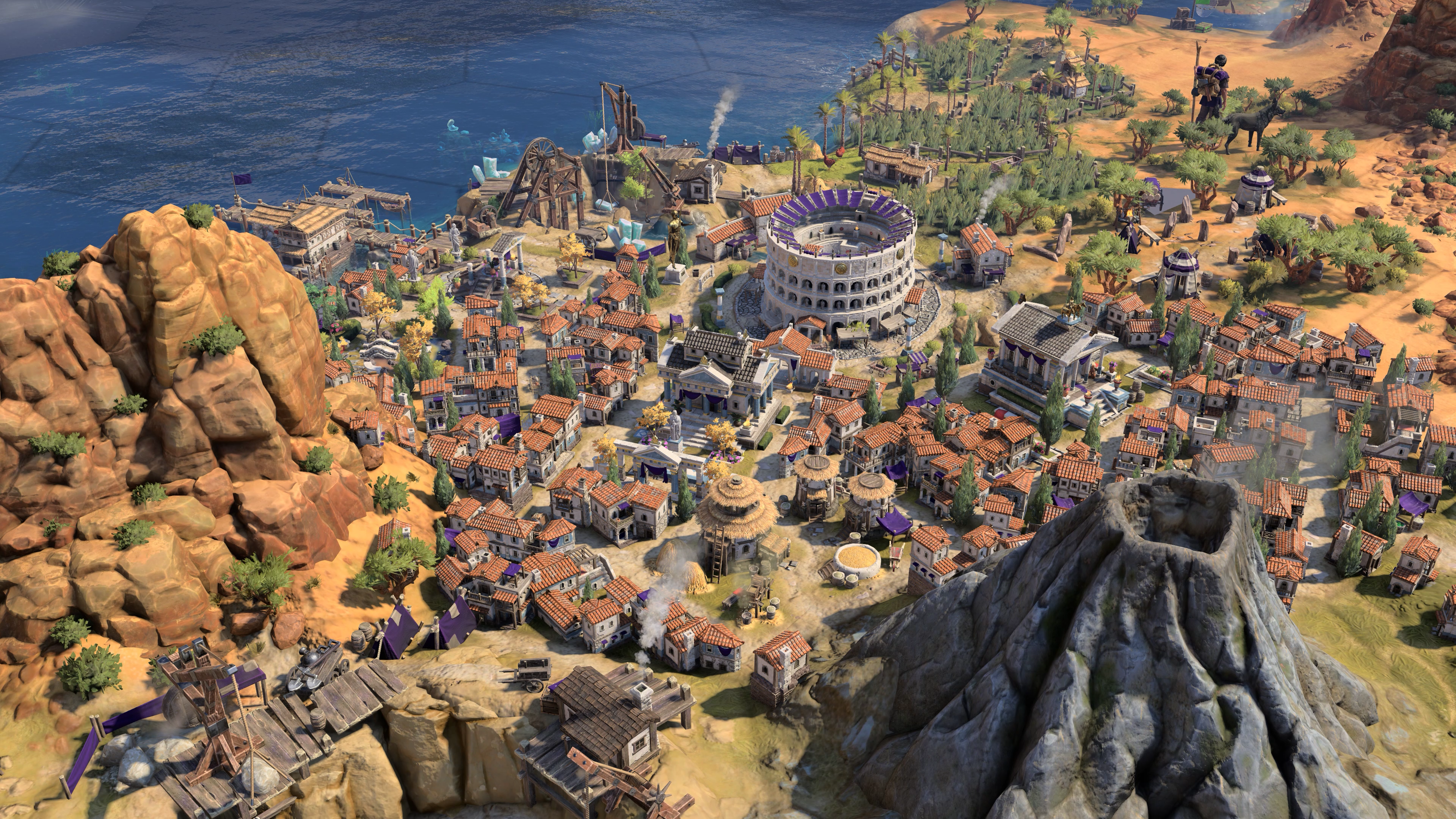
Enlarge/ This is a Roman city, but you could have a non-Roman historical leader, like Egypt’s Hatshepsut, at the helm.
2K Games
Now, Civilization VII gives you the ability to play a match that’s just one Age, if you choose to.
The new Ages system is integrated with another big change: your choice of leader and civilization are no longer tied together when you start a new game, and they’re not set in stone, either.
Now you pick both a civilization and a leader separately at the start—and you can do some weird, ahistorical combinations, like Greece’s Alexander as the leader of China. Each leader and civilization offers specific bonuses, so this gives more customization of your playstyle at the start.
It doesn’t end there, though. At the end of each Age, you can essentially change civilizations (though as far as I could tell, you stick with the leader). Firaxis says it took inspiration for this feature from history—like the fact that London was a Roman city before it became an English one in the Medieval era.
Which civilization you can transition to is dictated by what you did within the Legacy Path system, among other things.
The amount of time I had to play the game was just enough to almost finish the Antiquity Age, so I didn’t get to see this in action, but it sounds like an interesting new system.
Back in 2013, Nvidia introduced a new technology called G-Sync to eliminate screen tearing and stuttering effects and reduce input lag when playing PC games. The company accomplished this by tying your display’s refresh rate to the actual frame rate of the game you were playing, and similar variable refresh-rate (VRR) technology has become a mainstay even in budget monitors and TVs today.
The issue for Nvidia is that G-Sync isn’t what has been driving most of that adoption. G-Sync has always required extra dedicated hardware inside of displays, increasing the costs for both users and monitor manufacturers. The VRR technology in most low-end to mid-range screens these days is usually some version of the royalty-free AMD FreeSync or the similar VESA Adaptive-Sync standard, both of which provide G-Sync’s most important features without requiring extra hardware. Nvidia more or less acknowledged that the free-to-use, cheap-to-implement VRR technologies had won in 2019 when it announced its “G-Sync Compatible” certification tier for FreeSync monitors. The list of G-Sync Compatible screens now vastly outnumbers the list of G-Sync and G-Sync Ultimate screens.
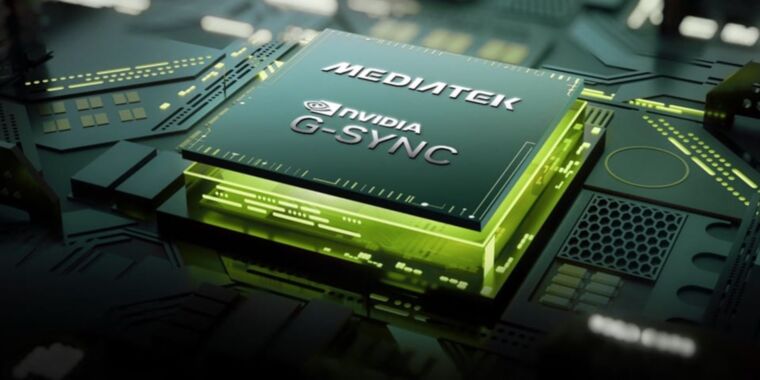
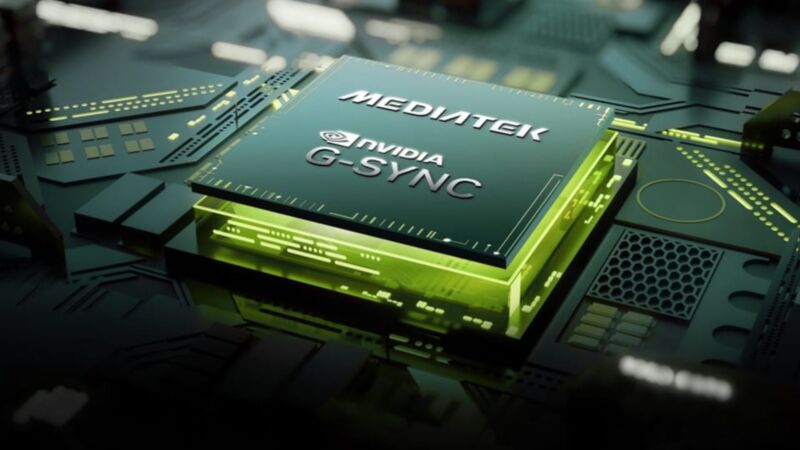
Today, Nvidia is announcing a change that’s meant to keep G-Sync alive as its own separate technology while eliminating the requirement for expensive additional hardware. Nvidia says it’s partnering with chipmaker MediaTek to build G-Sync capabilities directly into scaler chips that MediaTek is creating for upcoming monitors. G-Sync modules ordinarily replace these scaler chips, but they’re entirely separate boards with expensive FPGA chips and dedicated RAM.
These new MediaTek scalers will support all the same features that current dedicated G-Sync modules do. Nvidia says that three G-Sync monitors with MediaTek scaler chips inside will launch “later this year”: the Asus ROG Swift PG27AQNR, the Acer Predator XB273U F5, and the AOC AGON PRO AG276QSG2. These are all 27-inch 1440p displays with maximum refresh rates of 360 Hz.
As of this writing, none of these companies has announced pricing for these displays—the current Asus PG27AQN has a traditional G-Sync module and a 360 Hz refresh rate and currently goes for around $800, so we’d hope for the new version to be significantly cheaper to make good on Nvidia’s claim that the MediaTek chips will reduce costs (or, if they do reduce costs, whether monitor makers are willing to pass those savings on to consumers).
For most people most of the time, there won’t be an appreciable difference between a “true” G-Sync monitor and one that uses FreeSync or Adaptive-Sync, but there are still a few fringe benefits. G-Sync monitors support a refresh rate between 1 and the maximum refresh rate of the monitor, whereas FreeSync and Adaptive-Sync stop working on most displays when the frame rate drops below 40 or 48 frames per second. All G-Sync monitors also support “variable overdrive” technology to help eliminate display ghosting, and the new MediaTek-powered displays will support the recent “G-Sync Pulsar” feature to reduce blur.
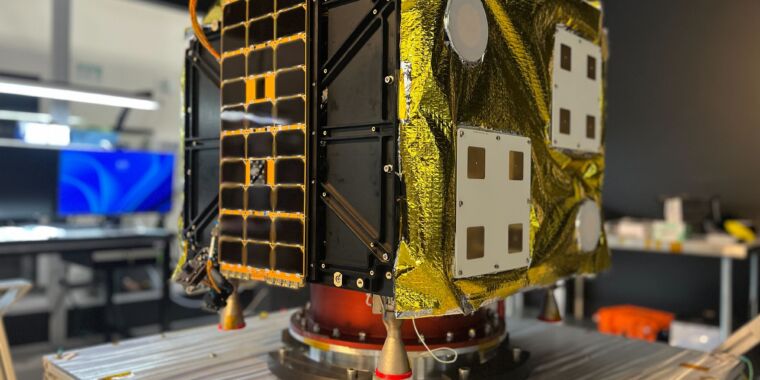
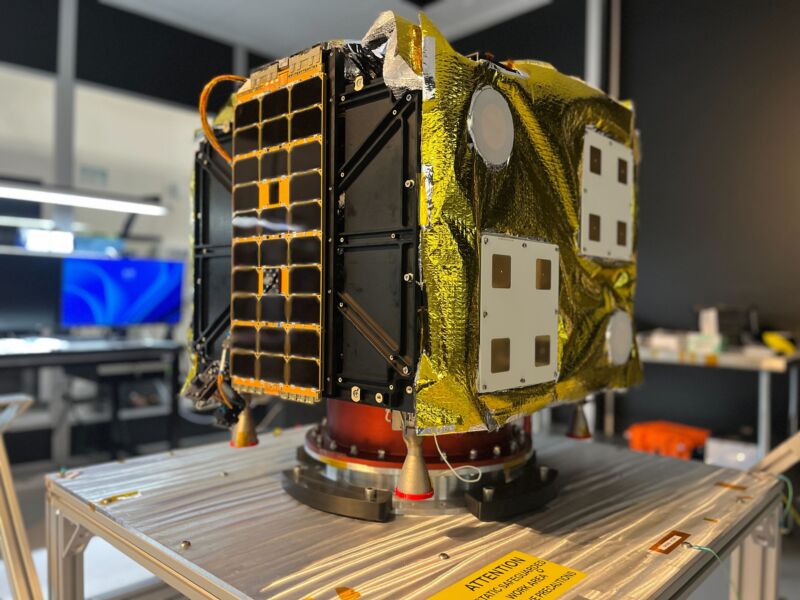
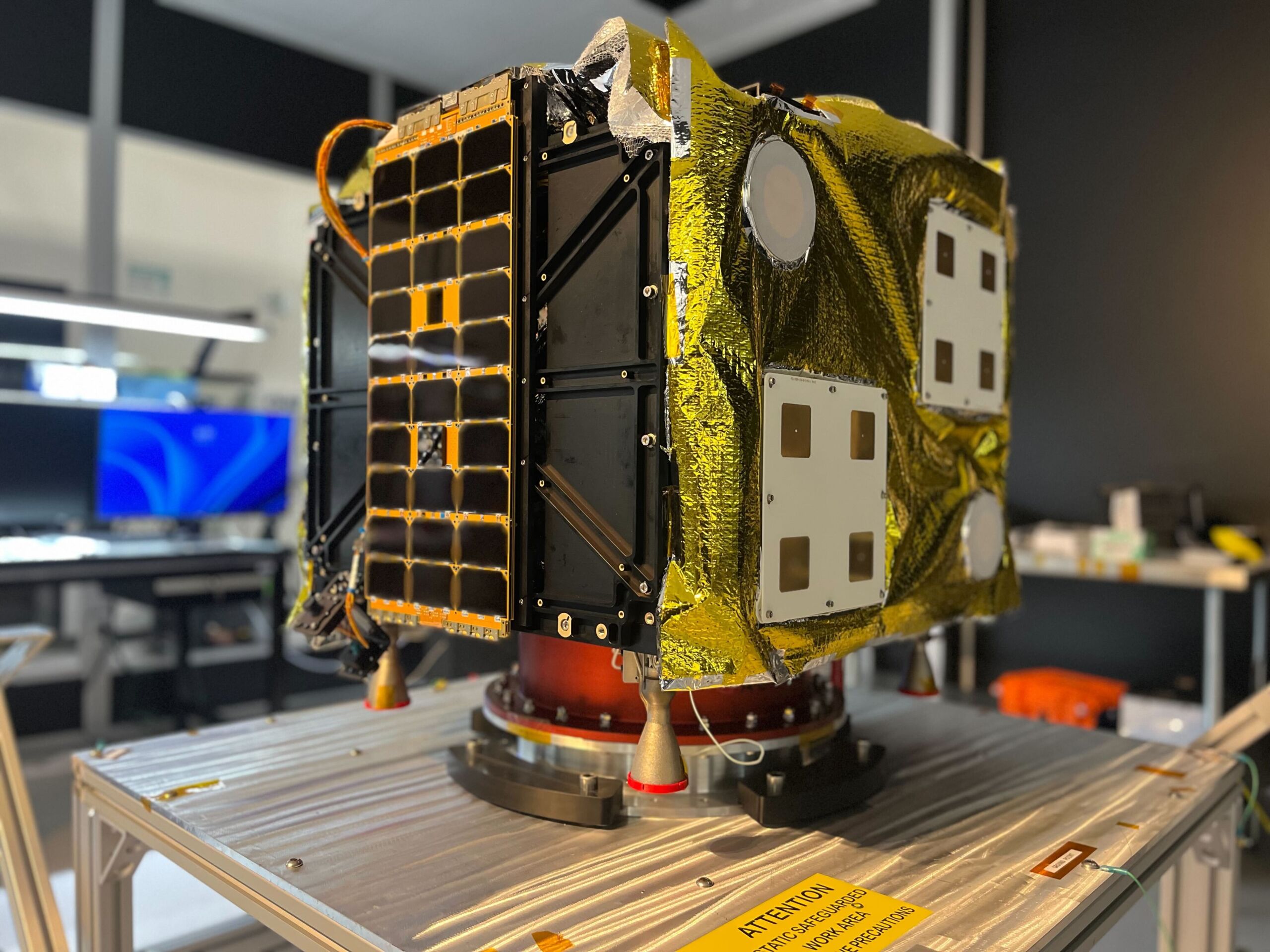
Enlarge/ The Odin spacecraft passed vibration testing.
Astro Forge
When I first spoke with space entrepreneurs Jose Acain and Matt Gialich a little more than two years ago, I wondered whether I would ever talk to them again.
That is not meant to be offensive; rather, it is a reflection of the fact that the business they entered into—mining asteroids for platinum and other precious metals—is a perilous one. To date, NASA and other space agencies have spent billions of dollars returning a few grams of rocky material from asteroids. Humanity has never visited a metal-rich asteroid, although that will finally change with NASA’s $1.4 billion Psyche mission in 2029. And so commercial asteroid mining seems like a stretch, and indeed, other similarly minded startups have come and gone.
But it turns out that I did hear from Acain and Gialich again about their asteroid mining venture, AstroForge. On Tuesday the co-founders announced that they have successfully raised $40 million in Series A funding and shared plans for their next two missions. AstroForge has now raised a total of $55 million to date.
“It was challenging,” Gialich said of the latest fundraising effort, in an interview. “It’s not easy to ever raise for an asteroid mining company, right? Let’s be honest. We talked two years ago and you told us this. And you were not wrong. So a big part of this funding round was just showing people that we can actually build a spacecraft.”
Making some mistakes
In April 2023, the company launched a shoebox-sized cubesat, named the Brokkr-1 mission, on a SpaceX Transporter flight. Although the vehicle flew as intended for a while, AstroForge was unable to send the necessary commands to the spacecraft to initiate a demonstration of its space-based refining technology.
However, Gialich said AstroForge learned a lot from this mission and is working toward launching a second spacecraft named Odin. This will be a rideshare payload on the Intuitive Machines-2 mission, which is due to launch during the fourth quarter of this year. If successful, the Odin mission would be spectacular. About seven months after launching, Odin will attempt to fly by a near-Earth, metallic-rich asteroid while capturing images and taking data—truly visiting terra incognita. Odin would also be the first private mission to fly by a body in the Solar System beyond the Moon.
It has not been an easy project to develop. In the name of expediency, AstroForge initially sought to develop this spacecraft by largely outsourcing key components from suppliers—a practice known as horizontal integration. However, in March, the Odin spacecraft failed vibration testing. “Originally, our concept was to be different than SpaceX, and be horizontally integrated, not vertical,” Gialich said. “That was completely wrong. We have very much made changes there to be vertical.”
After the original vehicle failed vibration testing, which ensures it can survive the rigors of launch, AstroForge decided to bring forward a spacecraft being developed internally for the company’s third flight and use that for the Odin mission. To remain on track for a launch this year, the company had to complete vibration testing of the new, 100-kg Odin vehicle by August 1. AstroForge made that deadline but still must complete several other tests before shipping Odin to the launch pad.
Docking with an asteroid
On Tuesday, the company also announced plans for its third mission, Vestri (the company is naming its missions after Norse deities). This spacecraft will be about twice as large as Odin and is intended to return to the targeted metallic asteroid and dock with it. The docking mechanism is simple—since the asteroid is likely to be iron-rich, Vestri will use magnets to attach itself.
The plan is to use a mass spectrometer to sample and characterize the asteroid weekly until the spacecraft fails. AstroForge seeks to launch Vestri on another Intuitive Machines mission in 2025. Vestri’s goals are highly ambitious, as no private spacecraft has ever landed on a body beyond the Moon.
AstroForge is tracking several candidate asteroids as the target body for Odin and Vestri, Gialich said, each of which is about 400 meters across. He won’t make a final decision for several months. The company does not want to tip its hand due to the interest of potential competitors, including China-based Origin Space.
However, there is no shortage of potential targets. Scientists estimate that there are about 10 million near-Earth asteroids, which come within one astronomical unit (the distance between the Sun and Earth) of our planet. Perhaps 3 to 5 percent of these are rich in metals, so there are potentially hundreds of thousands of candidates for mining.