Author name: Rejus Almole

google-and-meta-update-their-ai-models-amid-the-rise-of-“alphachip”

Google and Meta update their AI models amid the rise of “AlphaChip”

Running the AI News Gauntlet —

News about Gemini updates, Llama 3.2, and Google’s new AI-powered chip designer.

Cyberpunk concept showing a man running along a futuristic path full of monitors.

Enlarge / There’s been a lot of AI news this week, and covering it sometimes feels like running through a hall full of danging CRTs, just like this Getty Images illustration.

It’s been a wildly busy week in AI news thanks to OpenAI, including a controversial blog post from CEO Sam Altman, the wide rollout of Advanced Voice Mode, 5GW data center rumors, major staff shake-ups, and dramatic restructuring plans.

But the rest of the AI world doesn’t march to the same beat, doing its own thing and churning out new AI models and research by the minute. Here’s a roundup of some other notable AI news from the past week.

Google Gemini updates
On Tuesday, Google announced updates to its Gemini model lineup, including the release of two new production-ready models that iterate on past releases: Gemini-1.5-Pro-002 and Gemini-1.5-Flash-002. The company reported improvements in overall quality, with notable gains in math, long context handling, and vision tasks. Google claims a 7 percent increase in performance on the MMLU-Pro benchmark and a 20 percent improvement in math-related tasks. But as you know, if you’ve been reading Ars Technica for a while, AI typically benchmarks aren’t as useful as we would like them to be.

Along with model upgrades, Google introduced substantial price reductions for Gemini 1.5 Pro, cutting input token costs by 64 percent and output token costs by 52 percent for prompts under 128,000 tokens. As AI researcher Simon Willison noted on his blog, “For comparison, GPT-4o is currently $5/[million tokens] input and $15/m output and Claude 3.5 Sonnet is $3/m input and $15/m output. Gemini 1.5 Pro was already the cheapest of the frontier models and now it’s even cheaper.”

Google also increased rate limits, with Gemini 1.5 Flash now supporting 2,000 requests per minute and Gemini 1.5 Pro handling 1,000 requests per minute. Google reports that the latest models offer twice the output speed and three times lower latency compared to previous versions. These changes may make it easier and more cost-effective for developers to build applications with Gemini than before.

Meta launches Llama 3.2

On Wednesday, Meta announced the release of Llama 3.2, a significant update to its open-weights AI model lineup that we have covered extensively in the past. The new release includes vision-capable large language models (LLMs) in 11 billion and 90B parameter sizes, as well as lightweight text-only models of 1B and 3B parameters designed for edge and mobile devices. Meta claims the vision models are competitive with leading closed-source models on image recognition and visual understanding tasks, while the smaller models reportedly outperform similar-sized competitors on various text-based tasks.

Willison did some experiments with some of the smaller 3.2 models and reported impressive results for the models’ size. AI researcher Ethan Mollick showed off running Llama 3.2 on his iPhone using an app called PocketPal.

Meta also introduced the first official “Llama Stack” distributions, created to simplify development and deployment across different environments. As with previous releases, Meta is making the models available for free download, with license restrictions. The new models support long context windows of up to 128,000 tokens.

Google’s AlphaChip AI speeds up chip design
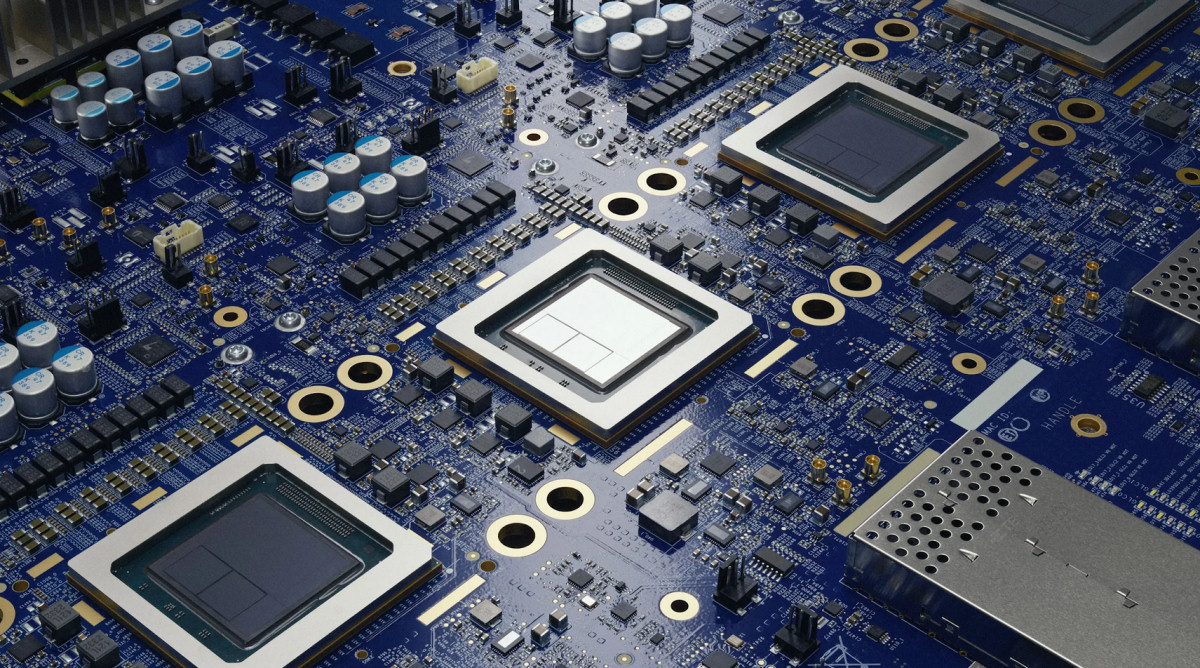
On Thursday, Google DeepMind announced what appears to be a significant advancement in AI-driven electronic chip design, AlphaChip. It began as a research project in 2020 and is now a reinforcement learning method for designing chip layouts. Google has reportedly used AlphaChip to create “superhuman chip layouts” in the last three generations of its Tensor Processing Units (TPUs), which are chips similar to GPUs designed to accelerate AI operations. Google claims AlphaChip can generate high-quality chip layouts in hours, compared to weeks or months of human effort. (Reportedly, Nvidia has also been using AI to help design its chips.)

Notably, Google also released a pre-trained checkpoint of AlphaChip on GitHub, sharing the model weights with the public. The company reported that AlphaChip’s impact has already extended beyond Google, with chip design companies like MediaTek adopting and building on the technology for their chips. According to Google, AlphaChip has sparked a new line of research in AI for chip design, potentially optimizing every stage of the chip design cycle from computer architecture to manufacturing.

That wasn’t everything that happened, but those are some major highlights. With the AI industry showing no signs of slowing down at the moment, we’ll see how next week goes.

Google and Meta update their AI models amid the rise of “AlphaChip” Read More »

black-hole-jet-appears-to-boost-rate-of-nova-explosions

Black hole jet appears to boost rate of nova explosions

Image of a bright point against a dark background, with a wavy, lumpy line of material extending diagonally from the point to the opposite corner of the image.

Enlarge / One of the jets emitted by galaxy M87’s central black hole.

The intense electromagnetic environment near a black hole can accelerate particles to a large fraction of the speed of light and sends the speeding particles along jets that extend from each of the object’s poles. In the case of the supermassive black holes found in the center of galaxies, these jets are truly colossal, blasting material not just out of the galaxy, but possibly out of the galaxy’s entire neighborhood.

But this week, scientists have described how the jets may be doing some strange things inside of a galaxy, as well. A study of the galaxy M87 showed that nova explosions appear to be occurring at an unusual high frequency in the neighborhood of one of the jets from the galaxy’s central black hole. But there’s absolutely no mechanism to explain why this might happen, and there’s no sign that it’s happening at the jet that’s traveling in the opposite direction.

Whether this effect is real, and whether we can come up with an explanation for it, may take some further observations.

Novas and wedges

M87 is one of the larger galaxies in our local patch of the Universe, and its central black hole has active jets. During an earlier period of regular observations, the Hubble Space Telescope had found that stellar explosions called novas appeared to be clustered around the jet.

This makes very little sense. Novas occur in systems with a large, hydrogen-rich star, with a nearby white dwarf in orbit. Over time, the white dwarf draws hydrogen off the surface of its companion, until it reaches a critical mass on its surface. At that point, a thermonuclear explosion blasts the remaining material off the white dwarf, and the cycle resets. Since the rate of material transfer tends to be fairly stable, novas in a stellar system will often repeat at regular intervals. And it’s not at all clear why a black hole’s jet would alter that regularity.

So, some of the people involved in the first study got time on the Hubble to go back and have another look. And for a big chunk of a year, every five days, Hubble was pointed at M87, allowing it to capture novas before they faded back out. All told, this picked up 94 novas that occurred near the center of the galaxy. Combined with 41 that had been identified during earlier work, this left a collection of 135 novas in this galaxy. The researchers then plotted these relative to the black hole and its jets.

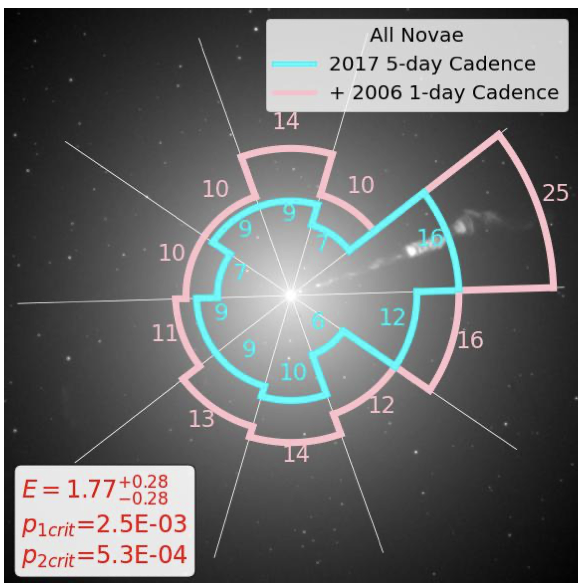
The area containing the jet (upper right) experiences significantly more novas than the rest of the galaxy's core.

The area containing the jet (upper right) experiences significantly more novas than the rest of the galaxy’s core.

Lessing et. al.

Dividing the area around the center of the galaxy into 10 equal segments, the researchers counted the novas that occurred in each. In the nine segments that didn’t include the jet on the side of the galaxy facing Earth, the average number of novas was 12. In the segment that included the jet, the count was 25. Another way to look at this is that the highest count in a non-jet segment was only 16—and that was in a segment immediately next to the one with the jet in it. The researchers calculate the odds of this arrangement occurring at random as being about one in 1,310 (meaning less than 0.1 percent).

To get a separate measure of how unusual this is, the researchers placed 8 million novas around the center of the galaxy, with the distribution being random but biased to match the galaxy’s brightness under the assumption that novas will be more frequent in areas with more stars. This was then used to estimate how often novas should be expected in each of these segments. They then used a wide variety of wedges: “In order to reduce noise and avoid p-hacking when choosing the size of the wedge, we average the results for wedges between 30 and 45 degrees wide.”

Overall, the enhancement near the jet was low for either very narrow or very wide wedges, as you might expect—narrow wedges crop out too much of the area affected by the jet, while wide ones include a lot of space where you get the normal background rate. Things peak in the area of wedges that are 25 degrees wide, where the enrichment near the jet is about 2.6-fold. So, this appears to be real.

Black hole jet appears to boost rate of nova explosions Read More »

steam-doesn’t-want-to-pay-arbitration-fees,-tells-gamers-to-sue-instead

Steam doesn’t want to pay arbitration fees, tells gamers to sue instead

Mandatory litigation —

Valve previously sued a law firm in attempt to stop mass arbitration claims.

A pen and book resting atop a paper copy of a lawsuit.

Valve Corporation, tired of paying arbitration fees, has removed a mandatory arbitration clause from Steam’s subscriber agreement. Valve told gamers in yesterday’s update that they must sue the company in order to resolve disputes.

The subscriber agreement includes “changes to how disputes and claims between you and Valve are resolved,” Steam wrote in an email to users. “The updated dispute resolution provisions are in Section 10 and require all claims and disputes to proceed in court and not in arbitration. We’ve also removed the class action waiver and cost and fee-shifting provisions.”

The Steam agreement previously said that “you and Valve agree to resolve all disputes and claims between us in individual binding arbitration.” Now, it says that any claims “shall be commenced and maintained exclusively in any state or federal court located in King County, Washington, having subject matter jurisdiction.”

Steam’s email to users said the updated terms “will become effective immediately when you agree to it, including when you make most purchases, fund your Steam wallet, or otherwise accept it. Otherwise, the updated Steam Subscriber Agreement will become effective on November 1, 2024, unless you delete or discontinue use of your Steam account before then.” Steam also pushed a pop-up message to gamers asking them to agree to the new terms.

One likely factor in Valve’s decision to abandon arbitration is mentioned in a pending class-action lawsuit over game prices that was filed last month in US District Court for the Western District of Washington. The Steam users who filed the suit previously “mounted a sustained and ultimately successful challenge to the enforceability of Valve’s arbitration provision,” their lawsuit said. “Specifically, the named Plaintiffs won binding decisions from arbitrators rendering Valve’s arbitration provision unenforceable for both lack of notice and because it impermissibly seeks to bar public injunctive relief.”

Mandatory arbitration clauses are generally seen as bad for consumers, who are deprived of the ability to seek compensation through individual or class-action lawsuits. But many Steam users were able to easily get money from Valve through arbitration, according to law firms that filed the arbitration cases over allegedly inflated game prices.

Valve sued lawyers behind arbitration claims

Valve used to prefer arbitration because few consumers brought claims and the process kept the company’s legal costs low. But in October 2023, Valve sued a law firm in an attempt to stop it from submitting loads of arbitration claims on behalf of gamers.

Valve’s suit complained that “unscrupulous lawyers” at law firm Zaiger, LLC presented a plan to a potential funder “to recruit 75,000 clients and threaten Valve with arbitration on behalf of those clients, thus exposing Valve to potentially millions of dollars of arbitration fees alone: 75,000 potential arbitrations times $3,000 in fees per arbitration is two hundred and twenty-five million dollars.”

Valve said that Zaiger’s “extortive plan” was to “offer a settlement slightly less than the [arbitration] charge—$2,900 per claim or so—attempting to induce a quick resolution.”

“Zaiger targeted Valve and Steam users for its scheme precisely because the arbitration clause in the SSA [Steam Subscriber Agreement] is ‘favorable’ to Steam users in that Valve agrees to pay the fees and costs associated with arbitration,” Valve said.

Zaiger has a “Steam Claims” website that says, “Tens of thousands of Steam users have engaged Zaiger LLC to hold Steam’s owner, Valve, accountable for inflated prices of PC games.” The website said that through arbitration, “many consumers get compensation offers without doing anything beyond completing the initial form.” Another law firm called Mason LLP used a similar strategy to help gamers bring arbitration claims against Steam.

There hadn’t previously been many arbitration cases against Steam, Valve’s lawsuit against Zaiger said. “In the five years before Zaiger began threatening Valve, 2017 to 2022, there were only two instances where Valve and a Steam user could not resolve that user’s issue before proceeding to arbitration. Both of those arbitrations were resolved in Valve’s favor, and Valve paid all of the arbitrator fees and costs for both Valve and the impacted Steam user,” Valve said.

Valve’s lawsuit against Zaiger was dismissed without prejudice on August 20, 2024. The ruling in US District Court for the Western District of Washington said the case was dismissed because the court lacks jurisdiction over Zaiger.

Steam doesn’t want to pay arbitration fees, tells gamers to sue instead Read More »
rts-classics-starcraft,-starcraft-ii-make-their-way-to-pc-game-pass

RTS classics StarCraft, StarCraft II make their way to PC Game Pass

YOU MUST CONSTRUCT ADDITIONAL PYLONS —

The collection includes the 2017 remaster of the original StarCraft.

Phil Spencer’s Tokyo Game Show update.

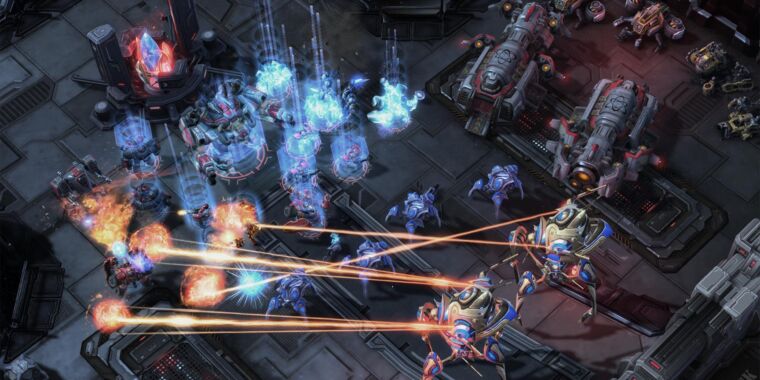
Beloved real-time strategy classics StarCraft and StarCraft II will soon be available in Microsoft’s Game Pass subscription for PC, the company announced during the Tokyo Game Show.

It’s already free to play both StarCraft and StarCraft II‘s multiplayer modes on PC. This move to Game Pass will make the equally excellent single-player campaigns available to anyone with a subscription, though. Game Pass will also offer all the expansions for both games.

The subscription will provide access to StarCraft Remastered, a revamped version of the original 1998 game that came out in 2017, as well as the StarCraft II Campaign Collection, which includes all 70-plus single-player missions from StarCraft II‘s Wings of Liberty, Heart of the Swarm, Legacy of the Void, and Nova Covert Ops.

The announcement was the lone bit of new information in a brief video by Xbox boss Phil Spencer. He appeared in the video wearing a StarCraft T-shirt, which might have gotten StarCraft fans’ hopes up that the franchise would be getting a new game for the first time in over a decade.

That didn’t happen, of course, but the games’ addition to Game Pass will likely expose them to many new players who may have been too young to play the influential strategy titles when they debuted in 1998 and 2010.

These aren’t the first Blizzard games to be added to Game Pass since Microsoft acquired Activision-Blizzard. First came Diablo IV, then Overwatch 2—the latter was free-to-play already by the time it came to Game Pass, but Microsoft included it in the Game Pass distribution platform and offered cosmetics and goodies to Game Pass subscribers.

The StarCraft games will launch for PC Game Pass and Game Pass Ultimate subscribers on November 5.

Listing image by Microsoft

RTS classics StarCraft, StarCraft II make their way to PC Game Pass Read More »

the-war-of-words-between-spacex-and-the-faa-keeps-escalating

The war of words between SpaceX and the FAA keeps escalating

Elon Musk, SpaceX's founder and CEO, has called for the resignation of the FAA administrator.

Enlarge / Elon Musk, SpaceX’s founder and CEO, has called for the resignation of the FAA administrator.

The clash between SpaceX and the Federal Aviation Administration escalated this week, with Elon Musk calling for the head of the federal regulator to resign after he defended the FAA’s oversight and fines levied against the commercial launch company.

The FAA has said it doesn’t expect to determine whether to approve a launch license for SpaceX’s next Starship test flight until late November, two months later than the agency previously communicated to Musk’s launch company. Federal regulators are reviewing changes to the rocket’s trajectory necessary for SpaceX to bring Starship’s giant reusable Super Heavy booster back to the launch pad in South Texas. This will be the fifth full-scale test flight of Starship but the first time SpaceX attempts such a maneuver on the program.

This week, SpaceX assembled the full Starship rocket on its launch pad at the company’s Starbase facility near Brownsville, Texas. “Starship stacked for Flight 5 and ready for launch, pending regulatory approval,” SpaceX posted on X.

Apart from the Starship regulatory reviews, the FAA last week announced it is proposing more than $633,000 in fines on SpaceX due to alleged violations of the company’s launch license associated with two flights of the company’s Falcon 9 rocket from Florida. It is rare for the FAA’s commercial spaceflight division to fine launch companies.

Michael Whitaker, the FAA’s administrator, discussed the agency’s ongoing environmental and safety reviews of SpaceX’s Starship rocket in a hearing before a congressional subcommittee in Washington Tuesday. During the hearing, which primarily focused on the FAA’s oversight of Boeing’s commercial airplane business, one lawmaker asked Whitaker the FAA’s relationship with SpaceX.

Public interest

“I think safety is in the public interest and that’s our primary focus,” said Michael Whitaker, the FAA administrator, in response to questions from Rep. Kevin Kiley, a California Republican. “It’s the only tool we have to get compliance on safety matters,” he said, referring to the FAA’s fines.

The stainless-steel Super Heavy booster is larger than a Boeing 747 jumbo jet. SpaceX says the flight path to return the first stage of the rocket to land will mean a “slightly larger area could experience a sonic boom,” and a stainless-steel ring that jettisons from the top of the booster, called the hot-staging ring, will fall in a different location in the Gulf of Mexico just offshore from the rocket’s launch and landing site.

The FAA, which is primarily charged with ensuring rocket launches don’t endanger the public, is consulting with other agencies on these matters, along with issues involving SpaceX’s discharge of water into the environment around the Starship launch pad in Texas. The pad uses water to cool a steel flame deflector that sits under the 33 main engines of Starship’s Super Heavy booster.

SpaceX says fines levied against it this year by the Texas Commission on Environmental Quality (TCEQ) and the Environmental Protection Agency (EPA) related to the launch pad’s water system were “entirely tied to disagreements over paperwork” and not any dumping of pollutants into the environment around the Starship launch site.

SpaceX installed the water-cooled flame deflector under the Starship launch mount after the engine exhaust rocket’s first test flight excavated a large hole in the ground. Gwynne Shotwell, SpaceX’s president and chief operating officer, summed up her view of the issue in a hearing with Texas legislators in Austin on Tuesday.

“To protect that from happening again, we built this kind of upside-down shower head to basically cool the flame as the rocket was lifting off,” she said. “That was licensed and permitted by TCEQ. The EPA came in afterwards and didn’t like the license or the permit that we had for that, and wanted to turn it into a federal permit, which we are working on now.”

“We work very closely with organizations such as TCEQ,” Shotwell said. “You may have read a little bit of nonsense in the papers recently about that, but we’re working quite well with them.”

The war of words between SpaceX and the FAA keeps escalating Read More »

spread-of-deadly-eee-virus-explodes-5-fold-in-new-york;-one-death-reported

Spread of deadly EEE virus explodes 5-fold in New York; one death reported

Viral spread —

Normally only 2 or 3 counties have EEE-positive mosquitoes; there’s 15 this year.

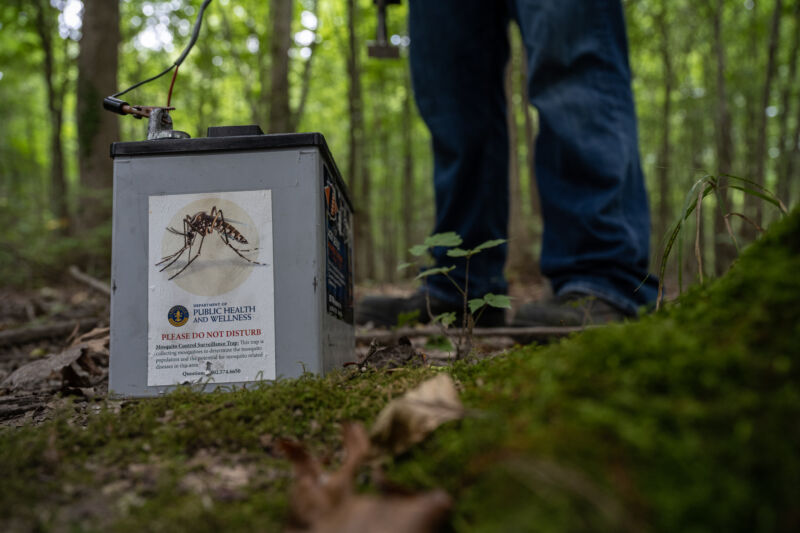
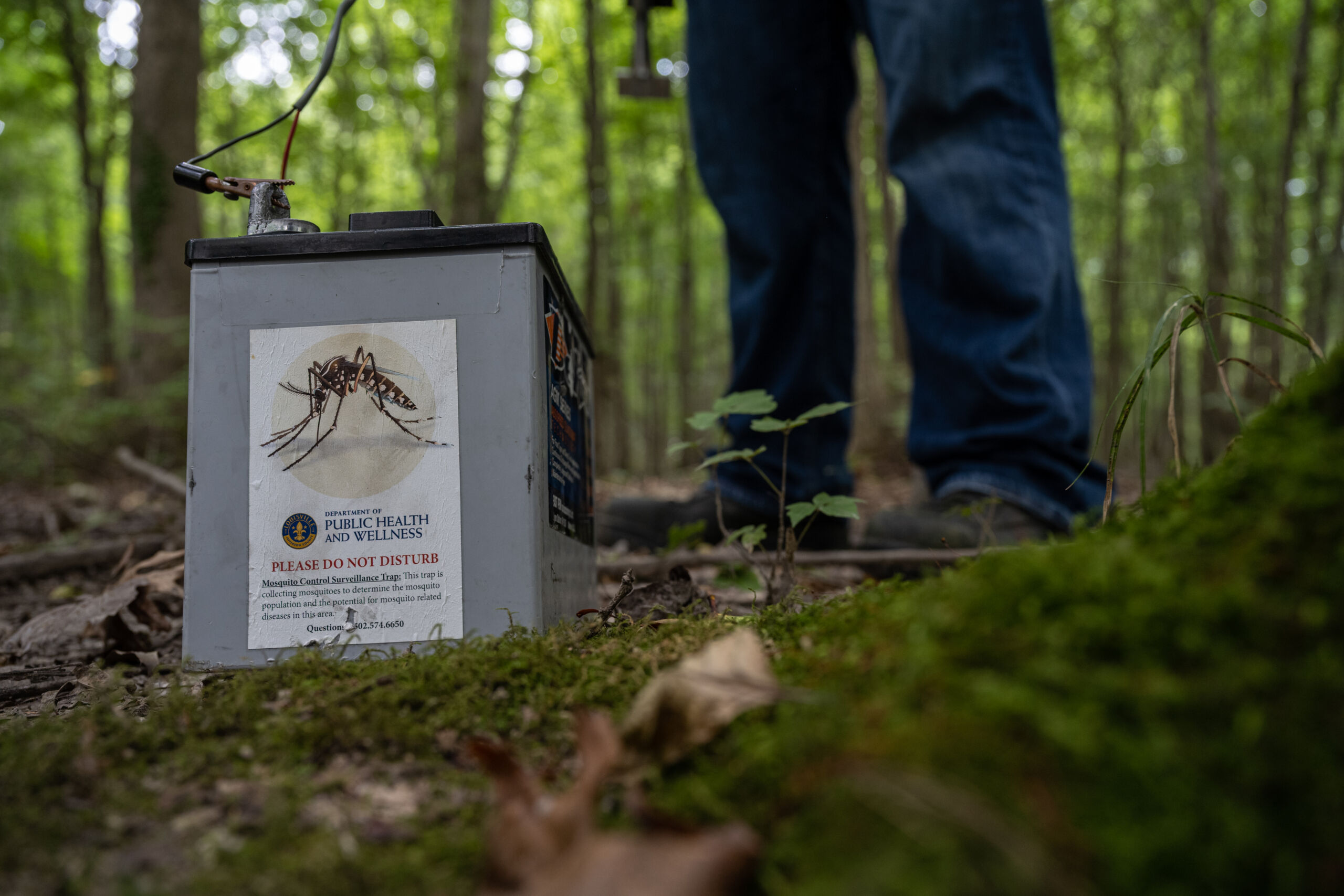
An entomologist for the Louisville Metro Department of Public Health and Wellness in a swampland area on August 25, 2021 in Louisville, Kentucky collecting various mosquito species, and testing the samples for mosquito-borne diseases, such as EEE.

Enlarge / An entomologist for the Louisville Metro Department of Public Health and Wellness in a swampland area on August 25, 2021 in Louisville, Kentucky collecting various mosquito species, and testing the samples for mosquito-borne diseases, such as EEE.

New York is facing an unusual boom in mosquitoes toting the deadly eastern equine encephalitis (EEE) virus, which has already led to one rare death in the state and a declaration of an “imminent threat” by officials.

While the state’s surveillance system typically picks up EEE-positive mosquitoes in two or three counties each year, this year there have been 15 affected counties, which are scattered all across New York, State Health Commissioner James McDonald said this week.

“Eastern equine encephalitis is different this year,” McDonald said, noting the deadly nature of the infection, which has a mortality rate of between 30 and 50 percent. “Mosquitoes, once a nuisance, are now a threat,” McDonald added. “I urge all New Yorkers to prevent mosquito bites by using insect repellents, wearing long-sleeved clothing, and removing free-standing water near their homes. Fall is officially here, but mosquitoes will be around until we see multiple nights of below-freezing temperatures.”

On Monday, McDonald issued a Declaration of an Imminent Threat to Public Health for EEE, and Governor Kathy Hochul announced statewide actions to prevent infections. At the same time as the declaration, the officials reported the death of a New Yorker who developed EEE. The case, which was confirmed in Ulster County on September 20, is the state’s first EEE case since 2015.

The disease is very rare in New York. Between 1971 and 2024, there were only 12 cases of EEE reported in the state; seven cases were fatal.

Rare but deadly

EEE is generally rare in the US, with an average of only 11 cases reported per year, according to the Centers for Disease Control and Prevention. The virus lurks in wild birds and spreads to people and other animals via mosquitoes. The virus is particularly deadly in horses—as its name suggests—with mortality rates up to 90 percent. In people, most bites from a mosquito carrying the EEE virus do not lead to EEE. In fact, the CDC estimates that only about 4–5 percent of infected people develop the disease; most remain asymptomatic.

Fo those who develop EEE, the virus travels from the mosquito bite into the lymph system and spreads from there to cause a systemic infection. Initial symptoms are unspecific, including fever, headache, malaise, chills, joint pain, nausea, and vomiting. This can progress to inflammation of the brain and neurological symptoms, including altered mental state and seizures. Children under the age of 15 and adults over the age of 50 are most at risk.

The CDC estimates that about 30 percent of people who develop severe EEE die of the disease. But, with small numbers of cases over time, the reported mortality rates can vary. In Massachusetts, for instance, about 50 percent of the cases have been fatal. Among those who survive neuro-invasive disease, many are left severely disabled, and some die within a few years due to complications. There is no vaccine for EEE and no specific treatments.

Overall numbers

While New York seems to be experiencing an unusual surge of EEE-positive mosquitoes, the country as a whole is not necessarily seeing an uptick in cases. Only 10 cases from six states have been reported to the CDC this year. That count does not include the New York case, which would bring the total to 11, around the country’s average number of cases per year.

In addition to New York, the states that have reported cases are Massachusetts, Vermont, New Jersey, Rhode Island, Wisconsin, and New Hampshire. Most cases have been in the Northeast, where cases are typically reported between mid-June and early October before freezing temperatures kill off mosquito populations.

The death in New York is at least the second EEE death this year. In August, New Hampshire’s health department reported the death of an EEE case, and local media reports identified the person as a previously healthy 41-year-old man from Hampstead.

EEE gained attention last month when a small town in Massachusetts urged residents to follow an evening curfew to avoid mosquito bites.  The move came after the state announced its first EEE case this year (the state’s case count is now at four) and declared a “critical risk level” in four communities.

Between 2003 and 2023, the highest tally of cases in a year was in 2019, when states reported 38 EEE cases.

Spread of deadly EEE virus explodes 5-fold in New York; one death reported Read More »
assassin’s-creed-shadows-delayed-after-poor-star-wars-outlaws-reception

Assassin’s Creed Shadows delayed after poor Star Wars Outlaws reception

So Many Samurai Games —

It will now launch the same year as another, maybe better, open-world samurai game.

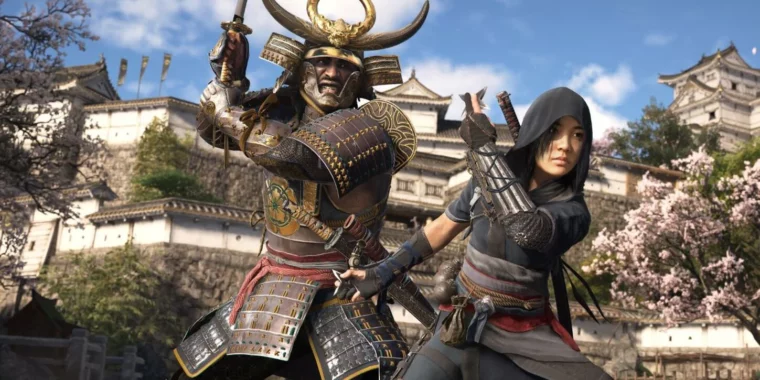
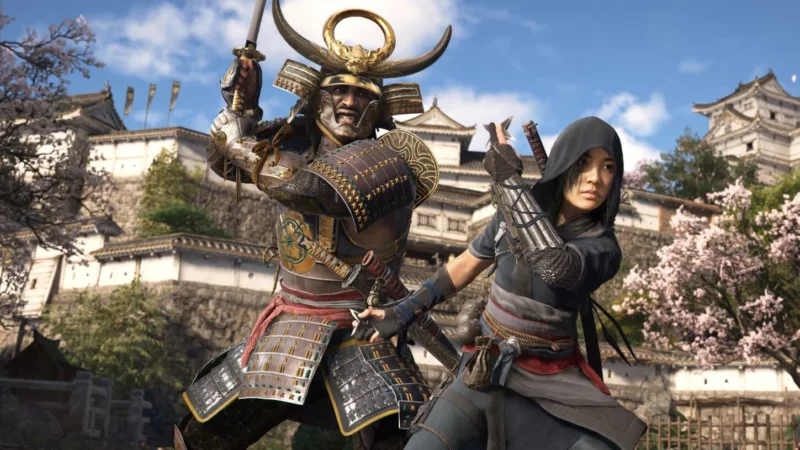
A samura and a ninja pose in a video game

Enlarge / The dual protagonists of Assassin’s Creed Shadows.

Ubisoft

Assassin’s Creed Shadows, the long-anticipated next major edition in the popular historical, open-world game franchise, has been moved back from its previously announced November 15, 2024 release date.

The new date is February 14, 2025, according to an open letter posted to X by franchise executive producer Marc-Alexis Côté. “We realize we need more time to polish and refine the experience, pushing further some of our key features,” Côté wrote. “As such, we’ve made the decision to postpone the release date.”

He went on to promise a same-day launch on Steam as well as the console platforms for that date.

Côté wrote the note to players, but a letter from publisher Ubisoft to investors went into more detail. “While the game is feature complete, the learnings from the Star Wars Outlaws release led us to provide additional time to further polish the title,” it says. “This will enable the biggest entry in the franchise to fully deliver on its ambition, notably by fulfilling the promise of our dual protagonist adventure, with Naoe and Yasuke bringing two very different gameplay styles.” (It was previously announced that the game allows players to play as two characters: a samurai warrior and a stealthy assassin.)

The investor note also says that “the game will mark the return of our new releases on Steam Day 1,” so that’s a silver lining for PC players.

A precarious position

The massive-budget Star Wars Outlaws was positioned as an “Assassin’s Creed, but in the Star Wars universe” game and was released on August 30. However, it was met with a mixed reception. Players, reviewers, and streamers praised its meticulous, high-fidelity presentation of Star Wars locales and characters, but they criticized its stealth gameplay as repetitive and frustrating.

Among other things, the game involved lengthy stealth sequences that forced the player to start over if they were discovered; it also didn’t do a very good job of giving players the information and tools they needed to complete these sequences without resorting to trial and error. Shortly after the launch, one of the game’s creative leads promised a patch (which arrived) that would fix one of the earlier missions, but his suggestion in an interview that the problem was simply with a single mission early in the game rather than something more fundamental rang hollow for many players.

Ubisoft acknowledged publicly that Star Wars Outlaws did not meet expectations in terms of either sales or critical reception.

It’s unclear exactly which lessons Ubisoft intends to take from the misfire of Star Wars Outlaws. But Assassin’s Creed is its most vital franchise, so after a big failure like that, the company can’t afford anything other than an enthusiastic reception for Shadows from players. It’s the first tentpole release in the storied franchise in four years.

Of course, this delay now means that Ubisoft’s big-budget open-world samurai game will launch in the same year as Ghost of Yōtei, a sequel to the Sony exclusive big-budget open-world samurai game called Ghost of Tsushima that many players felt did the Assassin’s Creed formula more justice than most Ubisoft titles. Shadows will also launch just a few months before the planned release of Grand Theft Auto VI, which is likely to suck all the oxygen out of the room in gaming spaces for some time. There remains some possibility that GTA6 will be delayed, though.

This is the first time an Assassin’s Creed game from the main franchise has been delayed in a decade; the last delay was Assassin’s Creed Unity, which saw its release date bump from October 28, 2014, to November 11. Despite the delay, that game launched with significant technical problems, which were mostly fixed in later updates.

Assassin’s Creed Shadows delayed after poor Star Wars Outlaws reception Read More »
cox-asks-court-to-block-rhode-island-plan-for-broadband-expansions

Cox asks court to block Rhode Island plan for broadband expansions

Both ends of an Ethernet cable sitting on a table

Getty Images | Adrienne Bresnahan

Cox Communications asked a court to block Rhode Island’s plan for distributing $108.7 million in federal funding for broadband deployment. If successful, Cox’s lawsuit could prevent other Internet service providers from obtaining grants to expand into areas that Cox says it already serves with high-speed broadband.

The cable company claims Rhode Island used “flawed Internet speed data” to determine which areas are underserved and that the plan “will benefit wealthy parts of the State already served with high-speed Internet in contravention of the program that it purports to implement.”

Cox filed the lawsuit on Monday in Superior Court in Providence, Rhode Island. It seeks an injunction prohibiting Rhode Island from using the allegedly flawed speed test data to determine where broadband grants should be directed.

The organization overseeing the state’s broadband funding plans quickly issued a response calling Cox’s lawsuit “misleading and unsupported by facts.”

“Let’s be clear about what’s behind Cox’s lawsuit: It is an attempt to prevent the investment of $108.7 million in broadband infrastructure in Rhode Island, likely because it realizes that some, or even all, of that money may be awarded through a competitive process to other Internet service providers,” said the response issued by the Rhode Island Commerce Corporation.

Cox accused of sitting out public process

The Commerce Corporation is a quasi-public agency that is implementing the state’s $108.7 million share of the $42 billion federal Broadband Equity, Access, and Deployment (BEAD) program. It said that Cox is the “state’s leading provider” but “declined to engage in the robust, months-long public planning process on how the Corporation would deploy Rhode Island’s BEAD funds.”

“Cox did not submit public comments on the design of the BEAD program, did not raise concerns at public Broadband Advisory Council meetings (where they are the sole provider represented), and declined to share its network map information during the 90-day Rhode Island Broadband Map Challenge Process. Our planning process was open and participatory, and Cox did not participate,” the corporation said.

Cox disputed the claim. “For over a year Cox has presented facts and evidence as to why Commerce’s broadband plan is flawed and these arguments have been ignored at every turn,” the company said in a statement provided to Ars. “We have shared our mapping data with Commerce—in fact we have a data sharing agreement with Commerce. To state today that this information hasn’t been conveyed is not factual.”

Cox said its officials “met with [Commerce] Secretary [Elizabeth] Tanner and her staff repeatedly to raise concerns,” and submitted formal comments “through its trade association, the New England Connectivity and Telecommunications Association.”

Rhode Island is one of 44 states and territories that have obtained National Telecommunications and Information Administration (NTIA) approval for an initial plan to distribute funds. The approval, granted in July, “enables Rhode Island to request access to funding and begin implementation of the BEAD program,” the NTIA said.

Ookla speed tests in dispute

Cox’s lawsuit criticized Rhode Island’s use of Ookla speed test data. The Commerce Corporation “layered Ookla speed test data from the past 12 months over the FCC map, and ‘reclassified’ as ‘underserved’ any location which had a speed test result of less than 100Mpbs, and also reclassified some locations as ‘underserved’ within census block groups based on Ookla speed test data that did not pertain to any specific location,” Cox wrote.

The Federal Communications Commission’s broadband map is based on submissions from Internet service providers, which in at least some cases were inaccurate. While the FCC has used a challenge process to periodically improve the map’s accuracy, there continue to be complaints about the map claiming unserved or underserved areas have fast broadband. Under the BEAD process, states can investigate availability locally to determine where funding should be directed.

The Rhode Island Commerce Corporation said its plan is “built on fairness, transparency, and a commitment to maximizing the impact of this historic federal investment… and, contrary to Cox’s assertions, parts of the state are indeed unserved or underserved, including areas that Cox claims are affluent. Whether an area is affluent or not has no bearing on the type of broadband service that is—or is not—available in that area.”

Cox asks court to block Rhode Island plan for broadband expansions Read More »
review:-intel-lunar-lake-cpus-combine-good-battery-life-and-x86-compatibility

Review: Intel Lunar Lake CPUs combine good battery life and x86 compatibility

that lake came from the moon —

But it’s too bad that Intel had to turn to TSMC to make its chips competitive.

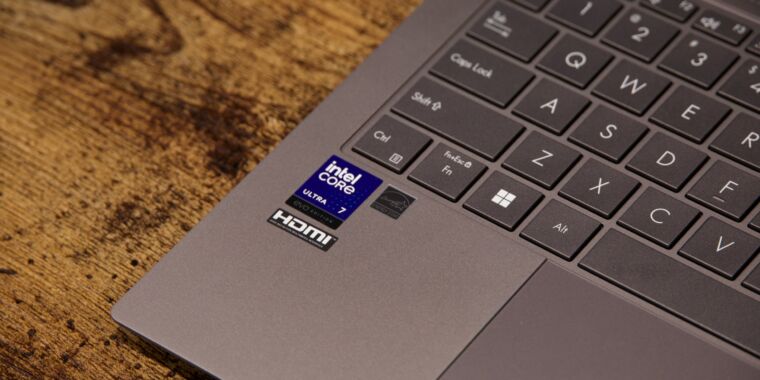
  • An Asus Zenbook UX5406S with a Lunar Lake-based Core Ultra 7 258V inside.

    Andrew Cunningham

  • These high-end Zenbooks usually offer pretty good keyboards and trackpads, and the ones here are comfortable and reliable.

    Andrew Cunningham

  • An HDMI port, a pair of Thunderbolt ports, and a headphone jack.

    Andrew Cunningham

  • A single USB-A port on the other side of the laptop. Dongles are fine, but we still appreciate when thin-and-light laptops can fit one of these in.

    Andrew Cunningham

Two things can be true for Intel’s new Core Ultra 200-series processors, codenamed Lunar Lake: They can be both impressive and embarrassing.

Impressive because they perform reasonably well, despite some regressions and inconsistencies, and because they give Intel’s battery life a much-needed boost as the company competes with new Snapdragon X Elite processors from Qualcomm and Ryzen AI chips from AMD. It will also be Intel’s first chip to meet Microsoft’s performance requirements for the Copilot+ features in Windows 11.

Embarrassing because, to get here, Intel had to use another company’s manufacturing facilities to produce a competitive chip.

Intel claims that this is a temporary arrangement, just a bump in the road as the company prepares to scale up its upcoming 18A manufacturing process so it can bring its own chip production back in-house. And maybe that’s true! But years of manufacturing misfires (and early reports of troubles with 18A) have made me reflexively skeptical of any timelines the company gives for its manufacturing operations. And Intel has outsourced some of its manufacturing at the same time it is desperately trying to get other chip designers to manufacture their products in Intel’s factories.

This is a review of Intel’s newest mobile silicon by way of an Asus Zenbook UX5406S with a Core Ultra 7 258V provided by Intel, not a chronicle of Intel’s manufacturing decline and ongoing financial woes. I will mostly focus on telling you whether the chip performs well and whether you should buy it. But it’s a rare situation, where whether it’s a solid chip is not a slam-dunk win for Intel, which might factor into our overall analysis.

About Lunar Lake

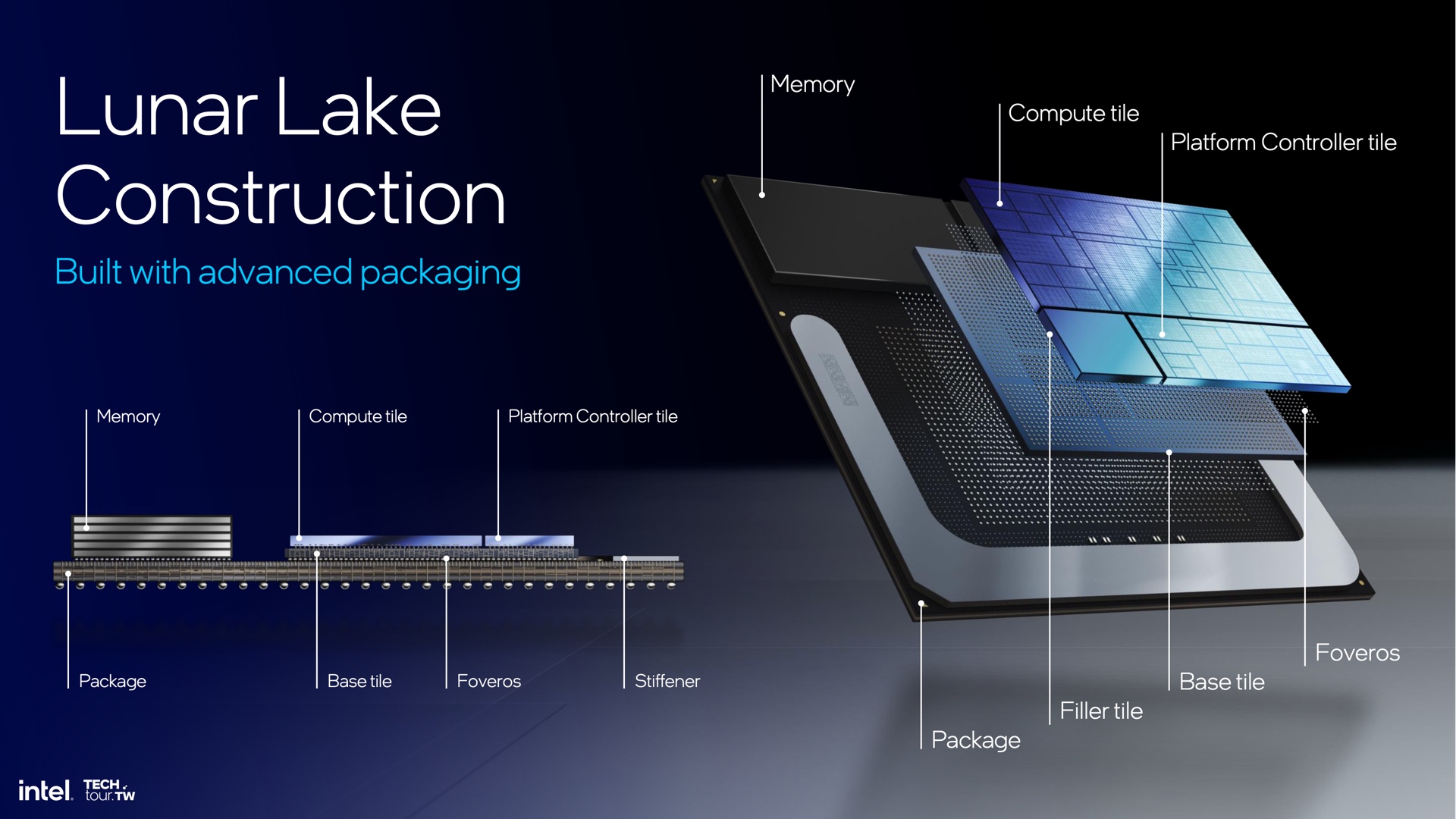
A high-level breakdown of Intel's next-gen Lunar Lake chips, which preserve some of Meteor Lake's changes while reverting others.

Enlarge / A high-level breakdown of Intel’s next-gen Lunar Lake chips, which preserve some of Meteor Lake’s changes while reverting others.

Intel

Let’s talk about the composition of Lunar Lake, in brief.

Like last year’s Meteor Lake-based Core Ultra 100 chips, Lunar Lake is a collection of chiplets stitched together via Intel’s Foveros technology. In Meteor Lake, Intel used this to combine several silicon dies manufactured by different companies—Intel made the compute tile where the main CPU cores were housed, while TSMC made the tiles for graphics, I/O, and other functions.

In Lunar Lake, Intel is still using Foveros—basically, using a silicon “base tile” as an interposer that enables communication between the different chiplets—to put the chips together. But the CPU, GPU, and NPU have been reunited in a single compute tile, and I/O and other functions are all handled by the platform controller tile (sometimes called the Platform Controller Hub or PCH in previous Intel CPUs). There’s also a “filler tile” that exists only so that the end product is rectangular. Both the compute tile and the platform controller tile are made by TSMC this time around.

Intel is still splitting its CPU cores between power-efficient E-cores and high-performance P-cores, but core counts overall are down relative to both previous-generation Core Ultra chips and older 12th- and 13th-generation Core chips.

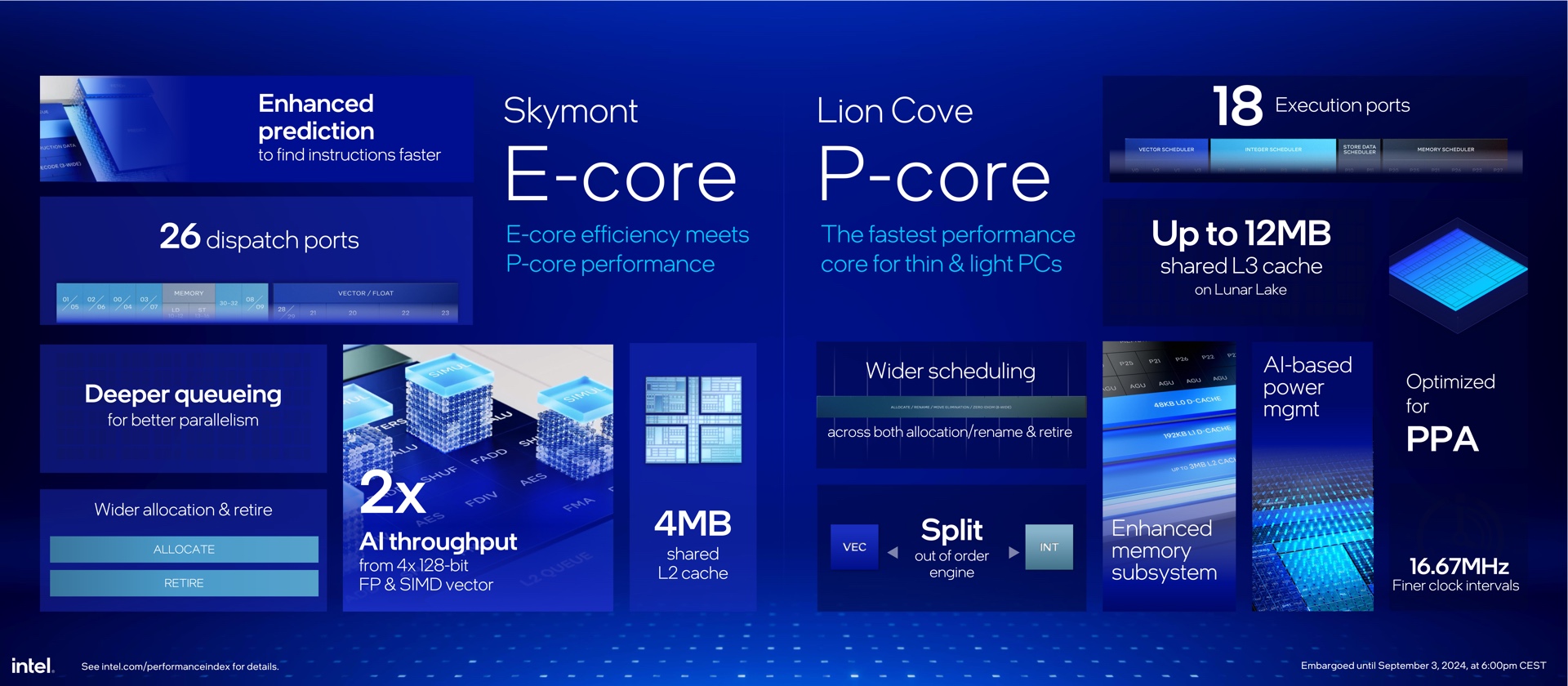
Some high-level details of Intel's new E- and P-core architectures.

Enlarge / Some high-level details of Intel’s new E- and P-core architectures.

Intel

Lunar Lake has four E-cores and four P-cores, a composition common for Apple’s M-series chips but not, so far, for Intel’s. The Meteor Lake Core Ultra 7 155H, for example, included six P-cores and a total of 10 E-cores. A Core i7-1255U included two P-cores and eight E-cores. Intel has also removed Hyperthreading from the CPU architecture it’s using for its P-cores, claiming that the silicon space was better spent on improving single-core performance. You’d expect this to boost Lunar Lake’s single-core performance and hurt its multi-core performance relative to past generations, and to spoil our performance section a bit, that’s basically what happens, though not by as much as you might expect.

Intel is also shipping a new GPU architecture with Lunar Lake, codenamed Battlemage—it will also power the next wave of dedicated desktop Arc GPUs, when and if we get them (Intel hasn’t said anything on that front, but it’s canceling or passing off a lot of its side projects lately). It has said that the Arc 140V integrated GPU is an average of 31 percent faster than the old Meteor Lake Arc GPU in games, and 16 percent faster than AMD’s newest Radeon 890M, though performance will vary widely based on the game. The Arc 130V GPU has one less of Intel’s Xe cores (7, instead of 8) and lower clock speeds.

The last piece of the compute puzzle is the neural processing unit (NPU), which can process some AI and machine-learning workloads locally rather than sending them to the cloud. Windows and most apps still aren’t doing much with these, but Intel does rate the Lunar Lake NPUs at between 40 and 48 trillion operations per second (TOPS) depending on the chip you’re buying, meeting or exceeding Microsoft’s 40 TOPS requirement and generally around four times faster than the NPU in Meteor Lake (11.5 TOPS).

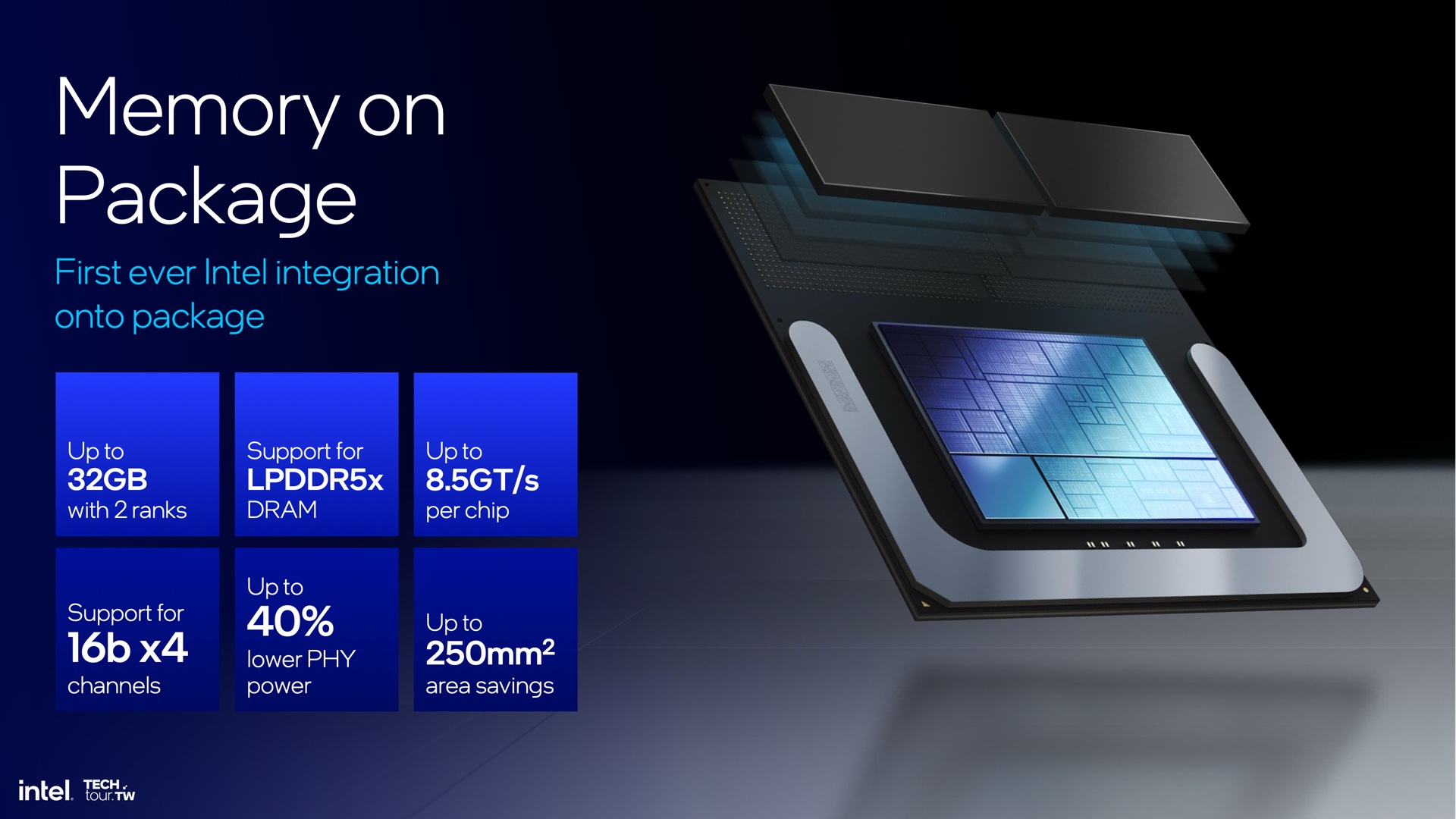
Intel is shifting to on-package RAM for Meteor Lake, something Apple also uses for its M-series chips.

Enlarge / Intel is shifting to on-package RAM for Meteor Lake, something Apple also uses for its M-series chips.

Intel

And there’s one last big change: For these particular Core Ultra chips, Intel is integrating the RAM into the CPU package, rather than letting PC makers solder it to the motherboard separately or offer DIMM slots—again, something we see in Apple Silicon chips in the Mac. Lunar Lake chips ship with either 16GB or 32GB of RAM, and most of the variants can be had with either amount (in the chips Intel has announced so far, model numbers ending in 8 like our Core Ultra 7 258V have 32GB, and model numbers ending in 6 have 16GB). Packaging memory this way both saves motherboard space and, according to Intel, reduces power usage, because it shortens the physical distance that data needs to travel.

I am reasonably confident that we’ll see other Core Ultra 200-series variants with more CPU cores and external memory—I don’t see Intel giving up on high-performance, high-margin laptop processors, and those chips will need to compete with AMD’s high-end performance and offer additional RAM. But if those chips are coming, Intel hasn’t announced them yet.

Review: Intel Lunar Lake CPUs combine good battery life and x86 compatibility Read More »
lg-tvs-start-showing-ads-on-screensavers

LG TVs start showing ads on screensavers

Ad fatigue —

LG’s TV business is heightening focus on selling ads and tracking.

LG's 2024 G4 OLED TV.

Enlarge / LG’s 2024 G4 OLED TV.

LG

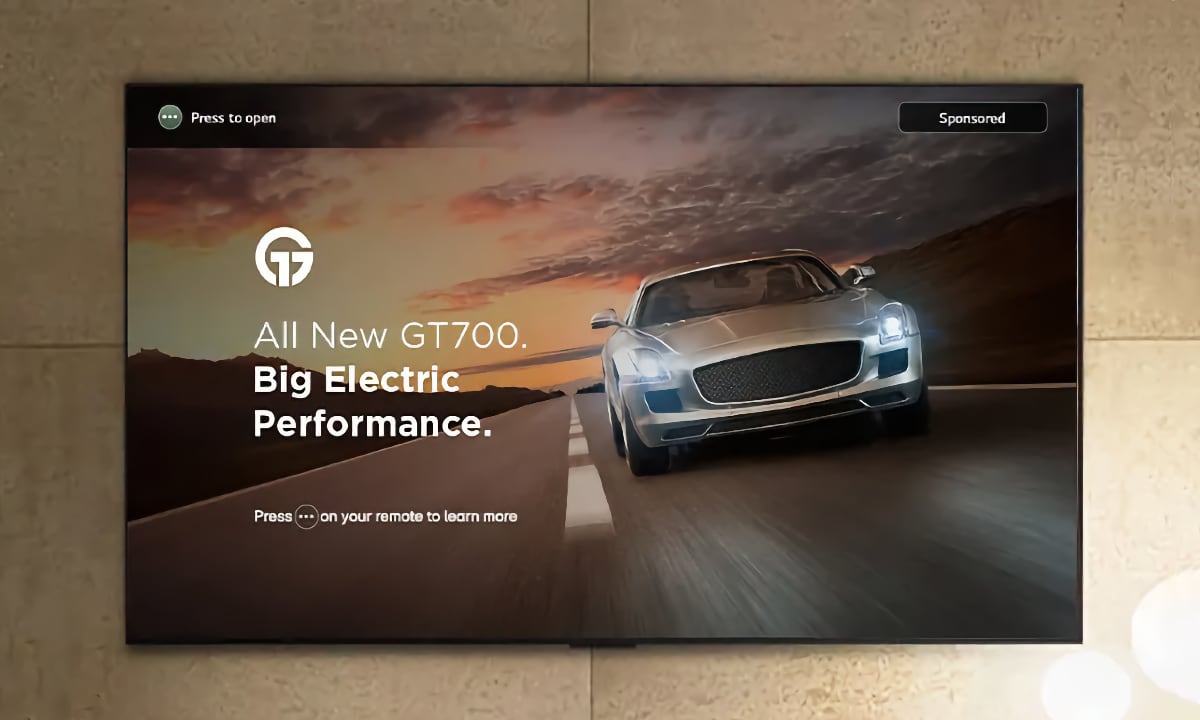
Last month, Ars Technica went on a deep dive into the rapid growth of ads in TV software. Less than three weeks later, LG announced that it was adding advertisements to its TVs’ screensavers. The move embodies how ads are a growing and virtually inescapable part of the TV-viewing experience—even when you’re not watching anything.

As you might have expected, LG didn’t make a big, splashy announcement to consumers or LG TV owners about this new ad format. Instead, and ostensibly strategically, the September 5 announcement was made to advertisers. LG appears to know that screensaver ads aren’t a feature that excites users. Still, it and many other TV makers are happy to shove ads into the software of already-purchased devices.

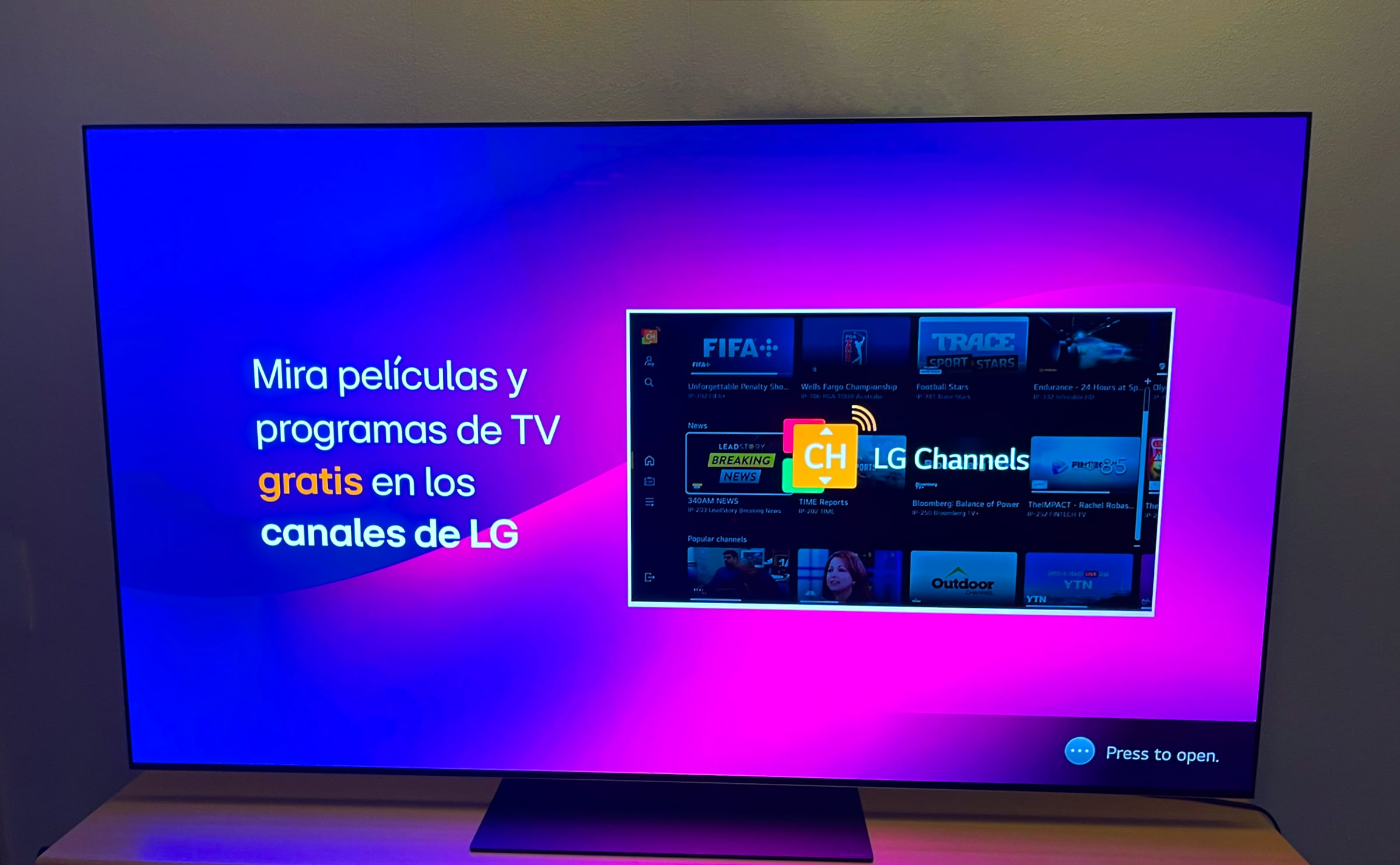
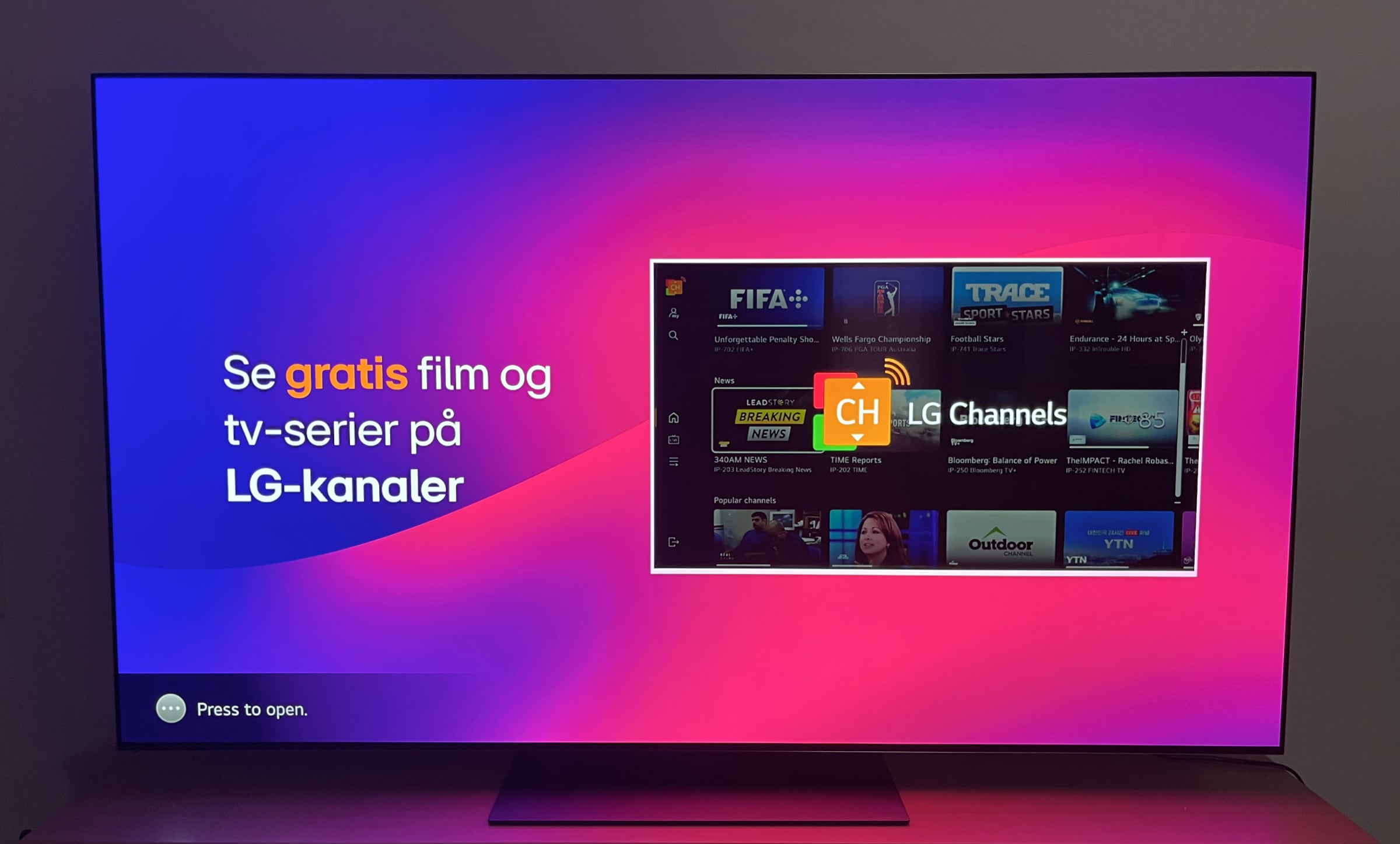
LG TV owners may have already spotted the ads or learned about them via FlatpanelsHD, which today reported seeing a full-screen ad on the screensaver for LG’s latest flagship TV, the G4. “The ad appeared before the conventional screensaver kicks in,” per the website, “and was localized to the region the TV was set to.” (You can see images that FlatpanelsHD provided of the ads herehere, and here.) The reviewer reported seeing an ad for LG’s free ad-supported streaming channel, LG Channels, as well as third-party ads.

LG has put these ads on by default, according to FlatpanelsHD, but you can disable them in the TVs’ settings. Still, the introduction of ads during a screensaver, shown during a pause in TV viewing that some TVs use as an opportunity to show art or personal photos that amplify the space, illustrates the high priority that ad dollars and tracking have among today’s TVs—even new top-of-the-line ones.

According to LG’s ads arm, LG AD Solutions, the screensaver ads activate “across the home screen, LG Channels, and Content Store on LG smart TVs.” The point is to capitalize “on idle screen time, turning what may be perceived as a period of downtime into a valuable engagement opportunity.” LG AD Solutions claims that it has commissioned testing showing that screensaver ads drive “on average a 2.5 times higher lift in brand awareness.”

In a statement, LG AD Solutions CTO Dave Rudnick seemed to acknowledge that people whose TVs are showing screensavers are often trying to do something other than look at adverts.

“In the past, a screensaver ad might have indicated that viewers had left the room, but today’s viewing habits are markedly different,” he said. “Now, 93 percent of viewers multitask while watching TV, engaging in activities like messaging, shopping, browsing social media, or playing games on their phones.”

TV advertising: The next generation

The addition of screensaver ads that users can disable may sound like a comparatively smaller disruption as far as TV operating system (OS) ads go. But the incorporation of new ad formats into TV OSes’ various nooks and crannies is a slippery slope. Some TV brands are even centered more on ads than selling hardware. Unfortunately, it’s up to OS operators and TV OEMs to decide where the line is, including for already-purchased TVs. User and advertiser interests don’t always align, making TV streaming platforms without third-party ads, such as Apple TV, increasingly scarce gems.

LG has been expanding its business for selling and tracking ads shown on LG TVs. It has a partnership with Nielsen that sends automatic content-recognition data gathered from LG TVs to Nielsen, for example. Additionally, LG has boasted of plans to evolve from a hardware business into a “media and entertainment platform,” which includes selling ads. The South Korean company has also expressed strong interest in shopable TV ads.

For its part, LG’s growing ad interests have led it to launch a new LG Ad Solutions division this month that’s focused on developing new ways to show ads to and track smart TV users. In a statement, Rudnick said Innovation Labs is seeking to “push the boundaries” of smart-TV advertising and drive “next-generation advertising,” including interactive ads, on smart TVs.

LG is adapting to a changing market

LG claims to have done its homework before deciding to inject ads into its TVs’ screensavers. LG Ad Solutions-commissioned research, which was reportedly conducted and measured by Lucid, a consumer market research firm, found that screensaver ads increase brand awareness, especially among adults 45 and up and women with a household income greater than $80,000 (assumedly annually).

LG’s ads push comes as it’s challenged to continue finding revenue and growth from its TV business while TVs get more advanced and reliable and are able to get new features via software updates. Meanwhile, advertisers are challenged to find ways to continue reaching TV viewers in a world shifting from linear TV to streaming and web-based entertainment that’s often sold with the option of being commercial-free. Although lower-priced TVs, like those running Roku OS, may have a reputation for more ads, they’re also doing well in the market.

Market conditions and changing TV users’ habits are forcing LG to adapt the way it makes money from TVs. Unfortunately for those adverse to ads, that means pushing more commercials and finding better ways to track viewers.

LG TVs start showing ads on screensavers Read More »

in-the-room-where-it-happened:-when-nasa-nearly-gave-boeing-all-the-crew-funding

In the room where it happened: When NASA nearly gave Boeing all the crew funding

The story behind the story —

“In all my years of working with Boeing I never saw them sign up for additional work for free.”

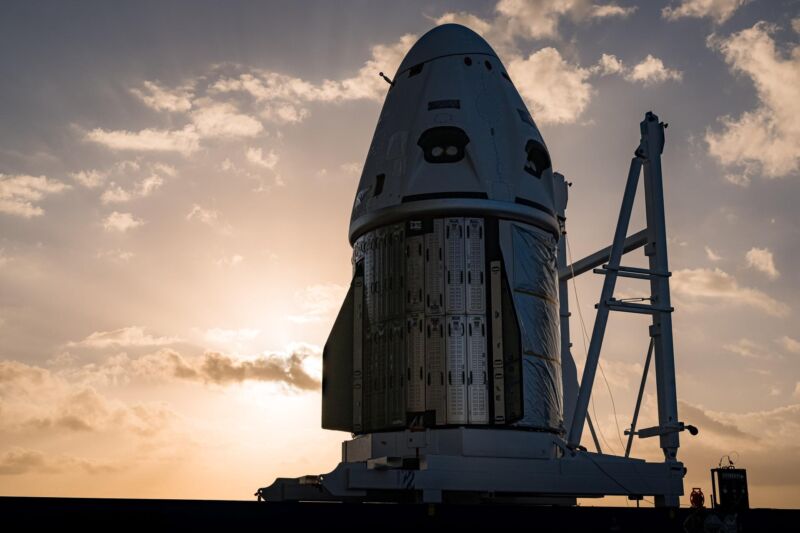
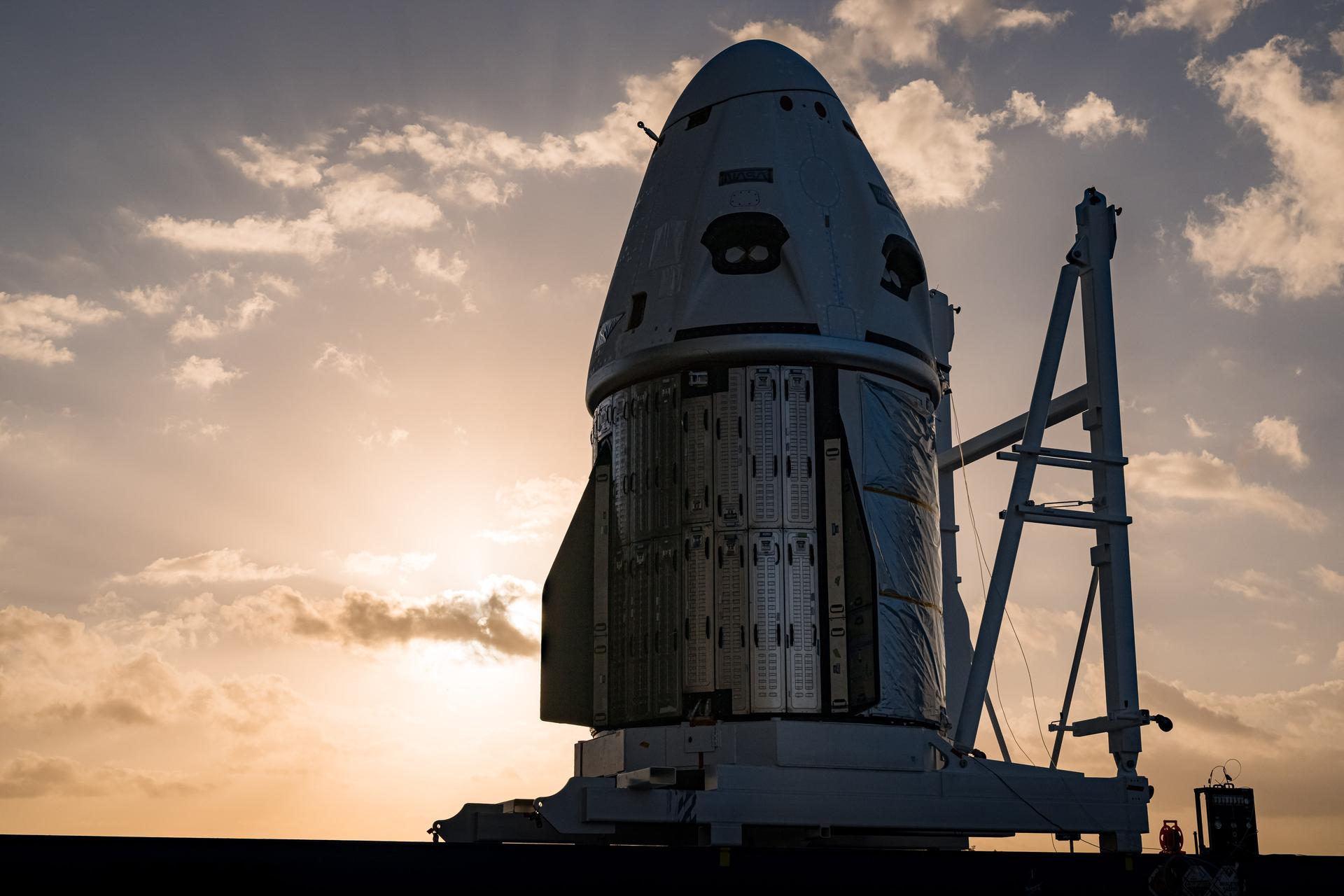
But for a fateful meeting in the summer of 2014, Crew Dragon probably never would have happened.

Enlarge / But for a fateful meeting in the summer of 2014, Crew Dragon probably never would have happened.

SpaceX

This is an excerpt from Chapter 11 of the book REENTRY: SpaceX, Elon Musk and the Reusable Rockets that Launched a Second Space Age by our own Eric Berger. The book will be published on September 24, 2024. This excerpt describes a fateful meeting 10 years ago at NASA Headquarters in Washington, DC, where the space agency’s leaders met to decide which companies should be awarded billions of dollars to launch astronauts into orbit.

In the early 2010s, NASA’s Commercial Crew competition boiled down to three players: Boeing, SpaceX, and a Colorado-based company building a spaceplane, Sierra Nevada Corporation. Each had its own advantages. Boeing was the blue blood, with decades of spaceflight experience. SpaceX had already built a capsule, Dragon. And some NASA insiders nostalgically loved Sierra Nevada’s Dream Chaser space plane, which mimicked the shuttle’s winged design.

This competition neared a climax in 2014 as NASA prepared to winnow the field to one company, or at most two, to move from the design phase into actual development. In May of that year Musk revealed his Crew Dragon spacecraft to the world with a characteristically showy event at the company’s headquarters in Hawthorne. As lights flashed and a smoke machine vented, Musk quite literally raised a curtain on a black-and-white capsule. He was most proud to reveal how Dragon would land. Never before had a spacecraft come back from orbit under anything but parachutes or gliding on wings. Not so with the new Dragon. It had powerful thrusters, called SuperDracos, that would allow it to land under its own power.

“You’ll be able to land anywhere on Earth with the accuracy of a helicopter,” Musk bragged. “Which is something that a modern spaceship should be able to do.”

A few weeks later I had an interview with John Elbon, a long-time engineer at Boeing who managed the company’s commercial program. As we talked, he tut-tutted SpaceX’s performance to date, noting its handful of Falcon 9 launches a year and inability to fly at a higher cadence. As for Musk’s little Dragon event, Elbon was dismissive.

“We go for substance,” Elbon told me. “Not pizzazz.”

Elbon’s confidence was justified. That spring the companies were finalizing bids to develop a spacecraft and fly six operational missions to the space station. These contracts were worth billions of dollars. Each company told NASA how much it needed for the job, and if selected, would receive a fixed price award for that amount. Boeing, SpaceX, and Sierra Nevada wanted as much money as they could get, of course. But each had an incentive to keep their bids low, as NASA had a finite budget for the program. Boeing had a solution, telling NASA it needed the entire Commercial Crew budget to succeed. Because a lot of decision-makers believed that only Boeing could safely fly astronauts, the company’s gambit very nearly worked.

Scoring the bids

The three competitors submitted initial bids to NASA in late January 2014, and after about six months of evaluations and discussions with the “source evaluation board,” submitted their final bids in July. During this initial round of judging, subject-matter experts scored the proposals and gathered to make their ratings. Sierra Nevada was eliminated because their overall scores were lower, and the proposed cost not low enough to justify remaining in the competition. This left Boeing and SpaceX, with likely only one winner.

“We really did not have the budget for two companies at the time,” said Phil McAlister, the NASA official at the agency’s headquarters in Washington overseeing the Commercial Crew program. “No one thought we were going to award two. I would always say, ‘One or more,’ and people would roll their eyes at me.”

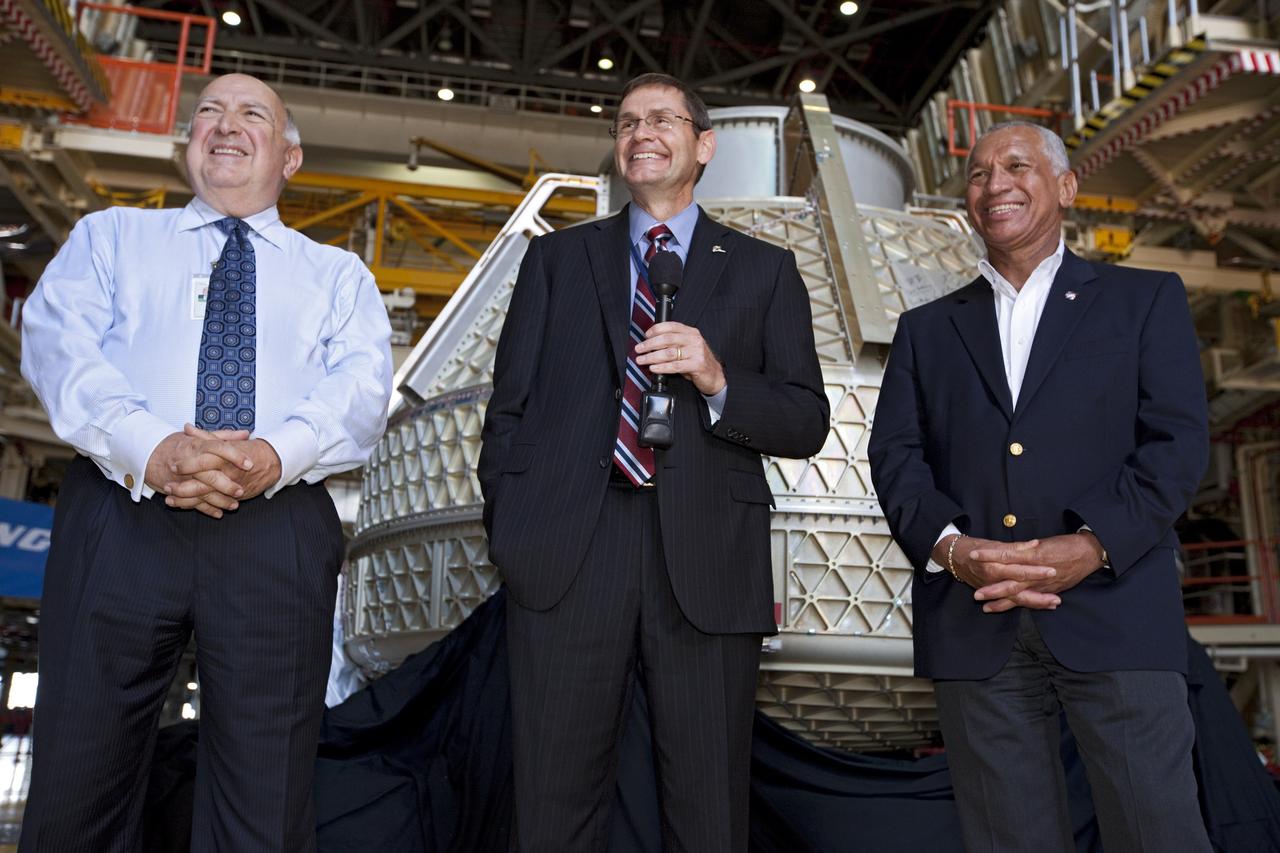
Boeing's John Elbon, center, is seen in Orbiter Processing Facility-3 at NASA's Kennedy Space Center in Florida in 2012.

Boeing’s John Elbon, center, is seen in Orbiter Processing Facility-3 at NASA’s Kennedy Space Center in Florida in 2012.

NASA

The members of the evaluation board scored the companies based on three factors. Price was the most important consideration, given NASA’s limited budget. This was followed by “mission suitability,” and finally, “past performance.” These latter two factors, combined, were about equally weighted to price. SpaceX dominated Boeing on price.

Boeing asked for $4.2 billion, 60 percent more than SpaceX’s bid of $2.6 billion. The second category, mission suitability, assessed whether a company could meet NASA’s requirements and actually safely fly crew to and from the station. For this category, Boeing received an “excellent” rating, above SpaceX’s “very good.” The third factor, past performance, evaluated a company’s recent work. Boeing received a rating of “very high,” whereas SpaceX received a rating of “high.”

While this makes it appear as though the bids were relatively even, McAlister said the score differences in mission suitability and past performance were, in fact, modest. It was a bit like grades in school. SpaceX scored something like an 88, and got a B; whereas Boeing got a 91 and scored an A. Because of the significant difference in price, McAlister said, the source evaluation board assumed SpaceX would win the competition. He was thrilled, because he figured this meant that NASA would have to pick two companies, SpaceX based on price, and Boeing due to its slightly higher technical score. He wanted competition to spur both of the companies on.

In the room where it happened: When NASA nearly gave Boeing all the crew funding Read More »

car-software-patches-are-over-20%-of-recalls,-study-finds

Car software patches are over 20% of recalls, study finds

write good code —

How automotive recalls are handled has shifted over time.

Blue circuit board closeup connected to a cpu with a glowing car wifi symbol on top smart vehicle concept 3D illustration

Getty Images

Software fixes are now responsible for more than 1 in 5 automotive recalls. That’s the key finding from a decade’s worth of National Highway Traffic Safety Administration recall data, according to an analysis from the law firm DeMayo Law. While that’s a sign of growing inconvenience for drivers, the silver lining is that a software patch is usually a much quicker fix than something requiring hardware replacement.

“Our analysis suggests we’re witnessing a shift in how automotive recalls are handled. The growing number of software-related recalls, coupled with the ability to address issues remotely, could revolutionize the recall process for both manufacturers and vehicle owners,” said a spokesperson for DeMayo Law.

In 2014, 34 of 277 automotive recalls were software fixes. The percentage of software recalls floated around 12–13 percent (apart from a spike in 2015) before growing steadily from 2020. In 2021, 16 percent of automotive recalls (61 out of 380) were for software. In 2022, almost 22 percent of recalls were software fixes (76 out of 348), and last year topped 23 percent (82 out of 356).

Leading the way was Chrysler, with 82 different software recalls since 2014. Ford (66 recalls) and Mercedes-Benz (60) are the two runner-ups. Meanwhile, Tesla ranks only eighth, with 26 software recalls since 2014, which puts it on par with Hyundai (25) and Kia (25).

Electrical systems were the most common problem area, which makes sense—this is also the second-most common hardware fix recall and would probably be the top if it were not for the massive Takata airbag recall, which has affected more than 100 million cars worldwide.

The other common systems affected by recalls requiring software remedies were related to backover prevention—whether that be reversing cameras, collision warnings, or automatic emergency braking—airbags, powertrains, and exterior lighting.

It should be noted that not all recalls involving a software fix are to solve a software problem. Take the recent Jaguar I-Pace recall, which was triggered by battery fires caused by battery cells damaged during assembly. Jaguar’s fix? A software update that sets a new, lower limit to the storage capacity of the battery pack, preventing it from fully charging to 100 percent.

While many older vehicles from legacy OEMs require a trip to the dealer to be patched, more and more new models can be updated over the air, meaning that owners can have the recall performed from the comfort of their own parking space, provided they have connectivity. Even this isn’t hassle-free, though, as some Rivian owners found out to their dismay late last year when an update broke some infotainment screens.

Expect this to become more common

To hear carmakers tell it, customers see their smartphone and games console and want that kind of entertainment built into their next car. (Whether that’s true is up for debate, however.) Software competency is a new battleground between global automakers, and the fear of Chinese brands is strong despite an impending ban on Chinese-connected car software, which looks likely to be put into effect in a couple of years.

So, it’s highly likely the trend of fixing product flaws with software will only escalate, particularly with the introduction of software-defined vehicles. This represents a clean-sheet approach to designing a car, with a handful of powerful computers replacing tens of dozens of black boxes, each with a single function. Which is great when it all works, but it’s a headache when there are problems.

Car software patches are over 20% of recalls, study finds Read More »