Author name: Rejus Almole

14-reasons-why-trump’s-tariffs-won’t-bring-manufacturing-back

14 reasons why Trump’s tariffs won’t bring manufacturing back


Op-ed: Trump administration grossly underestimates difficulty of their stated task.

Molson Hart is the founder and president of Viahart, an educational toy company. To see what he’s up to, follow him on X, or watch his educational videos on TikTok.

On April 2, 2025, our president announced major new taxes on imports from foreign countries (“tariffs”), ranging from 10 percent to 49 percent. The stated goal is to bring manufacturing back to the United States and to “make America wealthy again.”

These tariffs will not work. In fact, they may even do the opposite, fail to bring manufacturing back, and make America poorer in the process.

This article gives the 14 reasons why this is the case, how the United States could bring manufacturing back if it were serious about doing so, and what will ultimately happen with this wrongheaded policy.

I’ve been in the manufacturing industry for 15 years. I’ve manufactured in the US and in China. I worked in a factory in China. I speak and read Chinese. I’ve purchased millions of dollars’ worth of goods from the US and China, but also Vietnam, Indonesia, Taiwan, and Cambodia. I’ve also visited many factories in Mexico and consider myself a student of how countries rise and fall.

In other words, unlike many who have voiced an opinion on this topic, I know what I am talking about. And that’s why I felt compelled to write this article. I had to do it. I’m a first-generation American, and I love my country, and it pains me to see it hurtling at high speed towards an economic brick wall. This article is an attempt to hit the brakes.

1. They’re not high enough

iPhone 15 in all of its colors

The iPhone 15 has been manufactured both in China and India.

Credit: Apple

The iPhone 15 has been manufactured both in China and India. Credit: Apple

A tariff is a tax on an imported product. For example, when Apple imports an iPhone that was made in China, it declares to the United States government what it paid to make that product overseas. Let’s say it’s $100. When there is a 54 percent tariff, Apple pays $100 to the manufacturer in China and $54 to the US government when importing. In this simplified example, an iPhone used to cost Apple $100, but it now costs $154. For every dollar Apple spends, Apple needs to make a profit. So Apple sells iPhones to stores for double what it pays for them. And stores sell iPhones to consumers like you and me for double what it pays for them, as well.

Before the tariffs, prices looked like this:

  • Apple bought iPhones it designed for $100
  • Apple sold iPhones for $200 to stores
  • Stores sold iPhones to you and me for $400

After the tariffs, prices look like this:

  • Apple bought iPhones for $154 ($100 + $54 in import taxes)
  • Apple sells those iPhones for $308 (double what it paid)
  • Stores sell those iPhones to you and me for $616 (double what they paid)

Now that you know what a tariff is, let me tell you why they aren’t high enough to bring manufacturing back to the United States.

In short, manufacturing in the United States is so expensive, and our supply chain (we’ll explain that next) is so bad that making that iPhone in the United States without that 54 percent tariff would still cost more than in China with a 54 percent tariff. Since it still costs less to make the iPhone in China, both Apple and consumers would prefer it be made there, so it will, and not in the USA.

2. America’s industrial supply chain for many products is weak

Think of a supply chain as a company’s ability to get the components it needs to build a finished product. Suppose you wanted to build and sell wooden furniture. You’re going to need wood, nails, glue, etc. Otherwise, you can’t do it. If you want to build an iPhone, you need to procure a glass screen, shaped metal, and numerous internal electronic components.

Now you might be thinking, “What do you mean America has a weak supply chain? I’ve built furniture; I’ve assembled a computer. I can get everything I want at Home Depot and at Amazon.”

That’s because America has an amazing consumer supply chain, one of the best, if not the best, in the world, but this is totally different from having an industrial supply chain.

When you’re operating a furniture factory, you need an industrial quantity of wood, more wood than any Home Depot near you has in store. And you need it fast and cheap. It turns out that the United States has a good supply chain for wood, which is why, despite higher wages, we export chopsticks to China. We have abundant cheap wood in the forests of the northern United States. But if you decided to move that chopstick factory to desert Saudi Arabia, you would not succeed, because their supply chain for wood is poor; there simply aren’t any trees for thousands of miles.

When it comes to the iPhone, all the factories that make the needed components are in Asia, which is one reason why, even with a 54 percent tariff, it’s cheaper to assemble that iPhone in China than in the United States. It’s cheaper and faster to get those components from nearby factories in Asia than it is to get them from the US, which, because said factories no longer exist here, has to buy these components from Asia anyway.

Supply chains sound complicated but aren’t. If you can’t get the components you need at a reasonable price and timeline to build a finished product, it doesn’t matter what the tariffs are, you have to import it, because you can’t build it locally.

3. We don’t know how to make it

Fabrication plant

TSMC Fab 16.

Credit: TSMC

TSMC Fab 16. Credit: TSMC

Apple knows how to build an iPhone but may not know how to make the individual components. It may seem trivial to make that glass that separates your finger from the electronic engineering that powers your ability to access the Internet, but it’s difficult.

The world buys semiconductors from Taiwan, not just because it’s relatively inexpensive (but more expensive than China) labor and excellent supply chain, but because they know how to make the best semiconductors in the world. Even with infinite money, we cannot duplicate that, because we lack the know-how.

A 54 percent tariff does not solve that problem. We still need to buy semiconductors from Taiwan, which is perhaps why the administration put in an exception for semiconductors, because we need them and because we can’t make them without their help.

This is a problem that applies to more than just semiconductors. We have forgotten how to make products people wrongly consider to be basic, too.

My company makes educational toys from plastic called Brain Flakes. To make Brain Flakes, you melt plastic and force it into shaped metal molds. Were we to import the machines and molds needed to do this, it would work for a little while, but as soon as one of those molds broke, we’d be in trouble, because there are almost no moldmakers left in the United States. The people who knew how to build and repair molds have either passed away or are long retired. In the event of a problem, we’d have to order a new mold from China or send ours back, shutting down production for months.

People trivialize the complexity and difficulty of manufacturing when it’s really hard. And if we don’t know how to make something, it doesn’t matter what the tariff is. It won’t get made in America.

4. The effective cost of labor in the United States is higher than it looks

Most people think that the reason why we make products in China instead of the United States is cheaper labor. That’s true, but it’s not the whole story. Frankly, the whole story is hard to read. People are not machines, they are not numbers on a spreadsheet or inputs into a manufacturing cost formula. I respect everyone who works hard and the people I have worked with over the years, and I want Americans to live better, happier lives.

Chinese manufacturing labor isn’t just cheaper. It’s better.

In China, there are no people who are too fat to work. The workers don’t storm off midshift, never to return to their job. You don’t have people who insist on being paid in cash so that they can keep their disability payments, while they do acrobatics on the factory floor that the non-disabled workers cannot do.

Chinese workers are much less likely to physically attack each other and their manager. They don’t take 30 minute bathroom breaks on company time. They don’t often quit because their out-of-state mother of their children discovered their new job and now receives 60 percent of their wages as child support. They don’t disappear because they’ve gone on meth benders. And they don’t fall asleep on a box midshift because their pay from yesterday got converted into pills.

And they can do their times tables. To manufacture, you need to be able to consistently and accurately multiply 7 times 9 and read in English, and a disturbingly large portion of the American workforce cannot do that.

Chinese workers work longer hours more happily, and they’re physically faster with their hands; they can do things that American labor can’t. It’s years of accumulated skill, but it’s also a culture that is oriented around hard work and education that the United States no longer has.

Sadly, what I describe above are not theoretical situations. These are things that I have experienced or seen with my own eyes. It’s fixable, but the American workforce needs great improvement in order to compete with the world’s, even with tariffs.

So yes, Chinese wages are lower, but there are many countries with wages lower than China’s. It’s the work ethic, knowhow, commitment, combined with top-notch infrastructure, that makes China the most powerful manufacturing country in the world today.

5. We don’t have the infrastructure to manufacture

The inputs to manufacturing are not just materials, labor, and knowhow. You need infrastructure like electricity and good roads for transportation, too.

Since the year 2000, US electricity generation per person has been flat. In China, over the same time period, it has increased 400 percent. China generates over twice as much electricity per person today as the United States. Why?

Manufacturing.

To run the machines that make the products we use, you need electricity, a lot of it. We already have electricity instability in this country. Without the construction of huge amounts of new energy infrastructure, like nuclear power plants, we cannot meaningfully increase our manufacturing output.

And it would put huge stress on our roads and create lots more dangerous traffic. When we import finished goods from foreign countries, a truck delivers them from the port or the airport to distribution centers, stores, and where we live and work.

When you start manufacturing, every single component, from factory to factory, needs to be moved, increasing the number of trucks on the road many times.

Paving more roads, modernizing our seaports, improving our airports, speeding up our train terminals, and building power plants in the costliest nation in the world to build is a huge undertaking that people are not appreciating when they say “well, we’ll just make it in America.”

6. Made in America will take time

We placed a $50,000 order with our supplier overseas before the election in November 2024. At the time of ordering, there were no import taxes on the goods. By the time it arrived, a 20 percent tariff had been applied, and we had a surprise bill for $10,000. It can easily take 180 days for many products to go from order to on your doorstep, and this tariff policy seems not to understand that.

It takes at least, in the most favorable of jurisdictions, two years (if you can get the permits) to build a factory in the United States. I know because I’ve done it. From there, it can take six months to a year for it to become efficient. It can take months for products to come off the assembly lines. All this ignores all the infrastructure that will need to be built (new roads, new power plants, etc.) to service the new factory.

By the time “made in America” has begun, we will be electing a new president.

7. Uncertainty and complexity around the tariffs
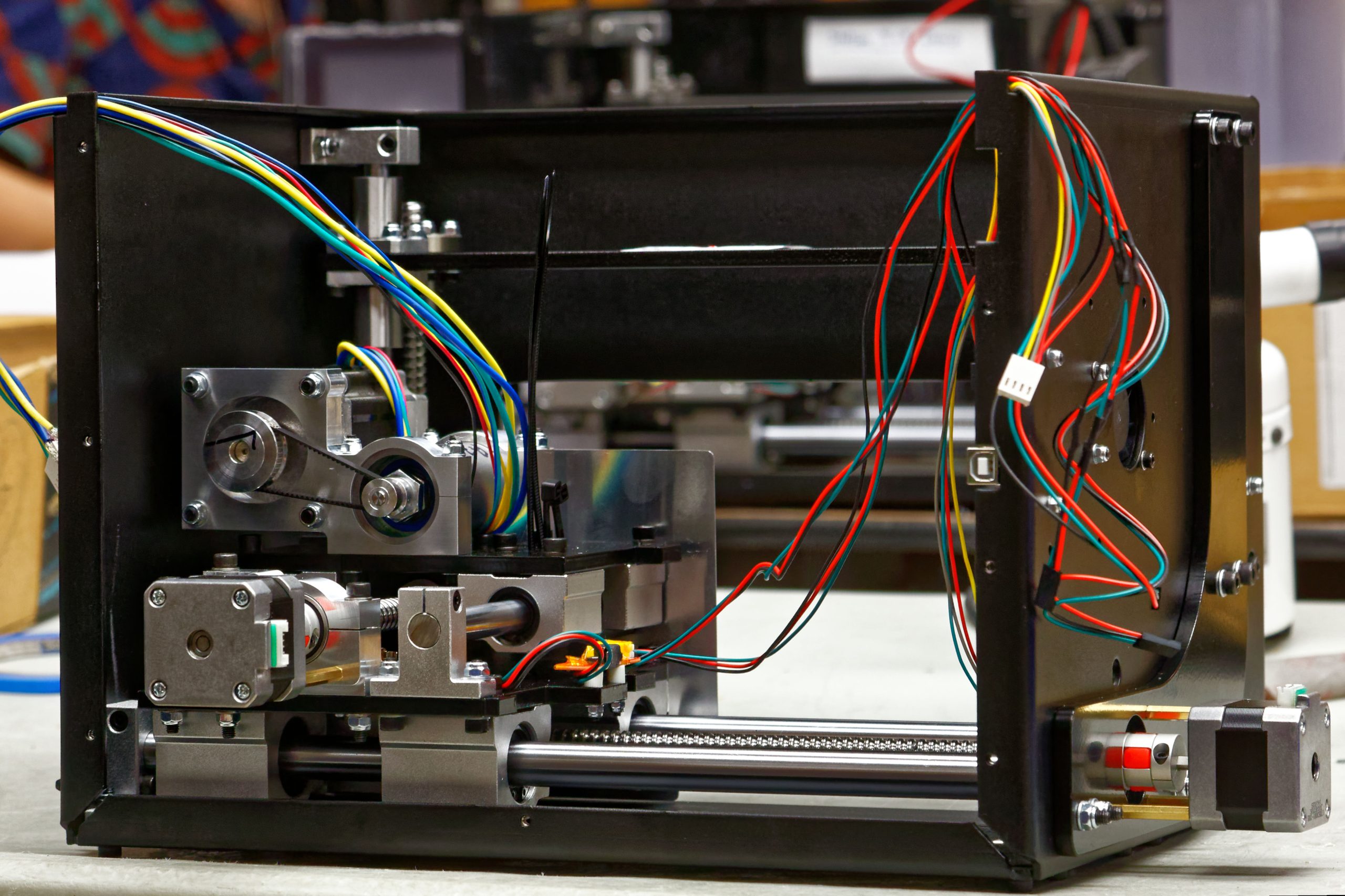
An unfinished Ghost Gunner awaits parts at Defense Distributed’s manufacturing facility.

Credit: Lee Hutchinson

An unfinished Ghost Gunner awaits parts at Defense Distributed’s manufacturing facility. Credit: Lee Hutchinson

To start manufacturing in the United States, a company needs to make a large investment. They will need to buy new machinery, and if no existing building is suitable, they will need to construct a new building. These things cost money, a lot, in fact, and significantly more in the USA than they do in other countries. In exchange for this risk, there must be some reward. If that reward is uncertain, no one will do it.

Within the past month, the president put a 25 percent tariff on Mexico and then got rid of it, only to apply it again and then get rid of it a second time. Then, last week, he was expected to apply new tariffs to Mexico but didn’t.

If you’re building a new factory in the United States, your investment will alternate between maybe it will work, and catastrophic loss according to which way the tariffs and the wind blow. No one is building factories right now, and no one is renting them, because there is no certainty that any of these tariffs will last. How do I know? I built a factory in Austin, Texas, in an industrial area. I cut its rent 40 percent two weeks ago, and I can’t get a lick of interest from industrial renters.

The tariffs have frozen business activity because no one wants to take a big risk dependent on a policy that may change next week.

Even further, the tariffs are confusing, poorly communicated, and complex. Today, if you want to import something from China, you need to add the original import duty, plus a 20 percent “fentanyl tariff,” plus a 34 percent “reciprocal tariff,” and an additional 25 percent “Venezuelan oil” tariff, should it be determined that China is buying Venezuelan oil. The problem is, there is no list of countries that are importing Venezuelan oil provided by the White House, so you don’t know if you do or don’t need to add that 25 percent, and you also don’t know when any of these tariffs will go into effect because of unclear language.

As such, you can’t calculate your costs, either with certainty or accuracy; therefore, not only do you not build a factory in the United States, you cease all business activity, the type of thing that can cause a recession, if not worse.

For the past month, as someone who runs a business in this industry, I have spent a huge portion of my time just trying to keep up with the constant changes instead of running my business.

8. Most Americans are going to hate manufacturing

Americans want less crime, good schools for their kids, and inexpensive health care.

They don’t want to be sewing shirts.

The people most excited about this new tariff policy tend to be those who’ve never actually made anything, because if you have, you’d know how hard the work is.

When I first went to China as a naive 24-year-old, I told my supplier I was going to “work a day in his factory!” I lasted four hours. It was freezing cold, middle of winter; I had to crouch on a small stool, hunched over, assembling little parts with my fingers at one-quarter the speed of the women next to me. My back hurt, my fingers hurt. It was horrible. That’s a lot of manufacturing.

And enjoy the blackouts, the dangerous trucks on the road, the additional pollution, etc. Be careful what you wish for America. Doing office work and selling ideas and assets is a lot easier than making actual things.

9. The labor does not exist to make good products

There are over a billion people in China making stuff. As of right now there are 12 million people looking for work in the United States (4 percent unemployment). Ignoring for a moment the comparative inefficiency of labor and the billions of people making products outside of China, where are the people who are going to do these jobs? Do you simply say “make America great again” three times and they will appear with the skills needed to do the work?

And where are the managers to manage these people? One of the reasons why manufacturing has declined in the United States is a brain drain toward sectors that make more money. Are people who make money on the stock market, in real estate, in venture capital, and in startups going to start sewing shirts? It’s completely and totally unrealistic to assume that people will move from superficially high productivity sectors driven by US Dollar strength to products that are low on the value chain.

The United States is trying to bring back the jobs that China doesn’t even want. They have policies to reduce low-value manufacturing, yet we are applying tariffs to bring it back. It’s incomprehensible.

10. Automation will not save us

Most people think that the reason why American manufacturing is not competitive is labor costs. Most people think this can be solved by automation.

They’re wrong.

First, China, on a yearly basis, installs 7x as many industrial robots as we do in the United States. Second, Chinese robots are cheaper. Third, most of today’s manufacturing done by people cannot be automated. If it could, it would have already been done so, by China, which, again, has increasingly high labor costs relative to the rest of the world.

The robots you see on social media doing backflips are, today, mostly for show and unreliable off camera. They are not useful in industrial environments where, if a humanoid robot can do it, an industrial machine that is specialized in the task can do it even better. For example, instead of having a humanoid robot doing a repetitive task such as carrying a box from one station to another, you can simply set up a cheaper, faster conveyor belt.

Said another way, the printer in your office is cheaper and more efficient than both a human and a humanoid robot with a pen hand drawing each letter.

It’s unlikely that American ingenuity will be able to counter the flood of Chinese industrial robots that is coming. The first commercially electrical vehicle was designed and built in the United States, but today China is dominating electric vehicle manufacturing across the world. Industrial robots will likely be the same story.

11. Robots and overseas factory workers don’t file lawsuits, but Americans do
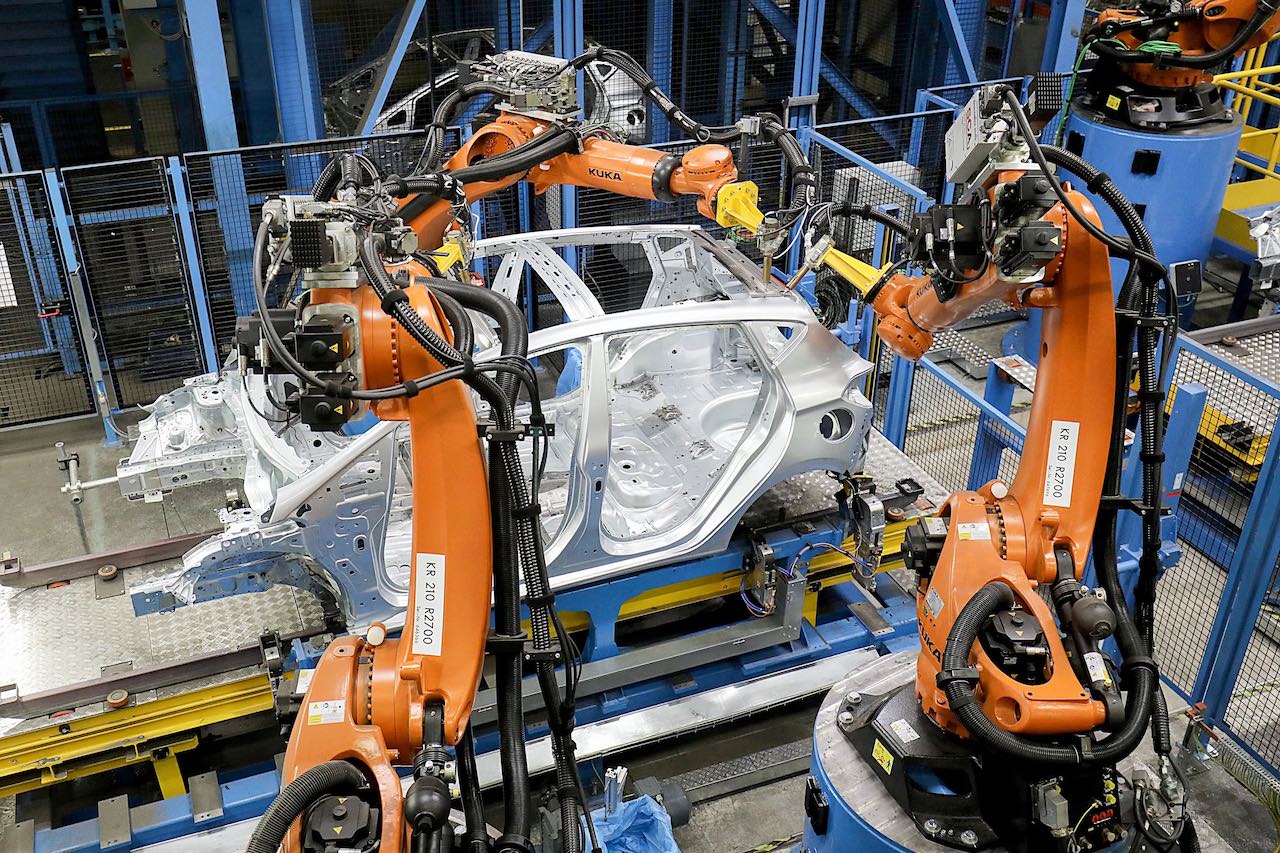
Ford is adding artificial intelligence to its robotic assembly lines.

Ford is adding artificial intelligence to its robotic assembly lines.

I probably should not have written this article. Not only will I be attacked for being unpatriotic, but what I have written here makes me susceptible to employment lawsuits. For the record, I don’t use a person’s origin to determine whether or not they will do good work. I just look at the person and what they’re capable of. Doing otherwise is bad business because there are talented people everywhere.

America has an extremely litigious business environment, both in terms of regulation and employment lawsuits. Excessive regulation and an inefficient court system will stifle those with the courage to make products in this country.

12. Enforcement of the tariffs will be uneven and manipulated

Imagine two companies that import goods into the United States. One is based in China, while the other is based in the United States. They both lie about the value of their goods so that they have to pay less tariffs.

What happens to the China company? Perhaps they lose a shipment when it’s seized by the US government for cheating, but they won’t pay additional fines because they’re in China, where they’re impervious to the US legal system.

What happens to the USA company? Owners go to prison.

Who do you think is going to cheat more on tariffs, the China or the US company?

Exactly.

So, in other words, paradoxically, the policies that are designed to help Americans will hurt them more than the competition these policies are designed to punish.

13. The tariff policies are structured in the wrong way

Why didn’t the jobs come back in 2018 when we initiated our last trade war? We applied tariffs; why didn’t it work?

Instead of making America great, we made Vietnam great.

When the United States applied tariffs to China, it shifted huge amounts of manufacturing to Vietnam, which did not have tariffs applied to it. Vietnam, which has a labor force that is a lot more like China’s than the United States’, was able to use its proximity to China for its supply chain and over the past seven or so years, slowly developed its own. With Vietnamese wages even lower than Chinese wages, instead of the jobs coming to the United States, they just went to Vietnam instead.

We’re about to make the same mistake again, in a different way.

Let’s go back to that last example, the China-based and the US-based companies that were importing goods into the United States. That US-based importer could’ve been a manufacturer. Instead of finished iPhones, perhaps they were importing the glass screens because those could not be found in the USA for final assembly.

Our government applied tariffs to finished goods and components equally.

I’ll say that again. They applied the same tax to the components that you need to make things in America that they did to finished goods that were made outside of America.

Manufacturing works on a lag. To make and sell in America, first you must get the raw materials and components. These tariffs will bankrupt manufacturers before it multiplies them because they need to pay tariffs on the import components that they assemble into finished products.

And it gets worse.

They put tariffs on machines. So if you want to start a factory in the United States, all the machinery you need, which is not made here, is now significantly more expensive. You may have heard that there is a chronic shortage of transformers needed for power transmission in the United States. Tariffed that, too.

It gets even worse.

There is no duty drawback for exporting. In the past, even in the United States, if you imported something and then exported it, the tariff you paid on the import would be refunded to you. They got rid of that, so we’re not even incentivizing exports to the countries that we are trying to achieve trade parity with.

Tariffs are applied to the costs of the goods. The way we’ve structured these tariffs, factories in China that import into the United States will pay lower tariffs than American importers, because the Chinese factory will be able to declare the value of the goods at their cost, while the American importer will pay the cost the factory charges them, which is, of course, higher than the factory’s cost.

Worse still.

With a few exceptions like steel and semiconductors, the tariffs were applied to all products, ranging from things that we will never realistically make, like our high-labor Tigerhart stuffed animals, to things that don’t even grow in the continental USA, like coffee.

Call me crazy, but if we’re going to make products in America, we could use some really cheap coffee, but no, they tariffed it! Our educational engineering toy, Brain Flakes, also got tariffed. How is the next generation supposed to build a manufacturing powerhouse if it cannot afford products that will develop its engineering ability? It’s like our goal was to make education and raising children more expensive.

Not only did we put tariffs on the things that would help us make this transformation, we didn’t put higher tariffs on things that hurt us, like processed food, which makes us tired and fat, or fentanyl precursors, which kill us.

The stated goal of many of our tariffs was to stop the import of fentanyl. Two milligrams of fentanyl will kill an adult. A grain of rice is 65 milligrams. How do you stop that stuff from coming in? It’s basically microscopic.

Maybe we could do what every other country has done and focus on the demand instead of the supply, ideally starting with the fentanyl den near my house that keeps my children indoors or in our backyard instead of playing in the neighborhood.

It’s frustrating to see our great country take on an unrealistic goal like transforming our economy when so many basic problems should be fixed first.

14. Michael Jordan sucked at baseball

Michael Jordan

Michael Jordan: Basketball GOAT, career .202 hitter in the minor leagues.

Michael Jordan: Basketball GOAT, career .202 hitter in the minor leagues. Credit: Focus on Sport/Getty Images

America is the greatest economic power of all time. We’ve got the most talented people in the world, and we have a multi-century legacy of achieving what so many other countries could not.

Michael Jordan is arguably the greatest basketball player of all time, perhaps even the greatest athlete of all time.

He played baseball in his youth. What happened when he switched from basketball to baseball? He went from being an MVP champion to being a middling player in the minor leagues. Two years later, he was back to playing basketball.

And that’s exactly what’s going to happen to us.

My prediction for what will happen with the tariffs

This is probably the worst economic policy I’ve ever seen. Maybe it’s just an opening negotiating position. Maybe it’s designed to crash the economy, lower interest rates, and then refinance the debt. I don’t know.

But if you take it at face value, there is no way that this policy will bring manufacturing back to the United States and “make America wealthy again.” Again, if anything, it’ll do the opposite; it’ll make us much poorer.

Many are saying that this tariff policy is the “end of globalization.” I don’t think so.

Unless this policy is quickly changed, this is the end of America’s participation in globalization. If we had enacted these policies in 2017 or 2018, they stood a much stronger chance of being successful. That was before COVID. China was much weaker economically and militarily then. They’ve been preparing eight years for this moment, and they are ready.

China trades much less with the United States as a percent of its total exports today than it did eight years ago and, as such, is much less susceptible to punishing tariffs from the United States today than it was back then.

Chinese-made cars, particularly electric vehicles, are taking the world by storm, without the United States. Go to Mexico to Thailand to Germany and you will see Chinese-made electric vehicles on the streets. And they’re good, sometimes even better than US-made cars, and not just on a per-dollar basis, but simply better quality.

That is what is going to happen to the United States. Globalization will continue without us if these policies continue unchanged.

That said, I think the tariffs will be changed. There’s no way we continue to place a 46 percent tariff on Vietnam when eight years ago we nudged American companies to put all their production there. Most likely, this policy will continue another round of the same type of investment; rather than replacing made in China with made in the USA, we’ll replace it with made in Vietnam, Mexico, etc.

Finally, in the process of doing this, regardless of whether or not we reverse the policies, we will have a recession. There isn’t time to build US factories, nor is it realistic or likely to occur, and American importers don’t have the money to pay for the goods they import.

People are predicting inflation in the cost of goods, but we can just as easily have deflation from economic turmoil.

The policy is a disaster. How could it be done better? And what’s the point of this anyways?

The 3 reasons why we want to actually bring manufacturing back

  1. It makes our country stronger. If a foreign country can cut off your supply of essentials such as food, semiconductors, or antibiotics, you’re beholden to that country. The United States must have large flexible capacity in these areas.
  2. It makes it easier to innovate. When the factory floor is down the hall, instead of 30 hours of travel away, it’s easier to make improvements and invent. We need to have manufacturing of high-value goods, like drones, robots, and military equipment that are necessary for our economic future and safety. It will be difficult for us to apply artificial intelligence to manufacturing if we’re not doing it here.
  3. People can simplistically be divided into three buckets: those of verbal intelligence, those of mathematical intelligence, and those of spatial intelligence. Without a vibrant manufacturing industry, those with the latter type of intelligence cannot fulfill their potential. This is one reason why so many men drop out, smoke weed, and play video games; they aren’t built for office jobs and would excel at manufacturing, but those jobs either don’t exist or pay poorly.

How to actually bring manufacturing back

Every country that has gone on a brilliant run of manufacturing first established the right conditions and then proceeded slowly.

We’re doing the opposite right now, proceeding fast with the wrong conditions.

First, the United States must fix basic problems that reduce the effectiveness of our labor. For example, everyone needs to be able to graduate with the ability to do basic mathematics. American health care is way too expensive and needs to be fixed if the United States wants to be competitive with global labor. I’m not saying health care should be socialized or switched to a completely private system, but whatever we’re doing now clearly is not working, and it needs to be fixed.

We need to make Americans healthy again. Many people are too obese to work. Crime and drugs. It needs to stop.

And to sew, we must first repair the social fabric.

From COVID lockdowns to the millions of people who streamed over our border, efforts must be made to repair society. Manufacturing and economic transformations are hard, particularly the way in which we’re doing them. Patriotism and unity are required to tolerate hardship, and we seem to be at all-time lows for those right now.

Let’s focus on America’s strengths in high-end manufacturing, agriculture, and innovation instead of applying tariffs to all countries and products blindly. We should be taxing automated drones for agriculture at 300 percent to encourage their manufacture here, instead of applying the same blanket tariff of 54 percent that we apply to T-shirts.

The changes in the policies needed are obvious. Tax finished products higher than components. Let exporters refund their import duties. Enforce the tariffs against foreign companies more strenuously than we do against US importers.

If American companies want to sell in China, they must incorporate there, register capital, and name a person to be a legal representative. To sell in Europe, we must register for their tax system and nominate a legal representative. For Europeans and Chinese to sell in the United States, none of this is needed, nor do federal taxes need to be paid.

We can level the playing field without causing massive harm to our economy by adopting policies like these, which cause foreign companies to pay the taxes domestic ones pay.

And if we want to apply tariffs, do it slowly. Instead of saying that products will be tariffed at 100 percent tomorrow, say they’ll be 25 percent next year, 50 percent after that, 75 percent after that, and 100 percent in year four. And then make it a law instead of a presidential decree so that there is certainty so people feel comfortable taking the risks necessary to make in America.

Sadly, a lot of the knowhow to make products is outside of this country. Grant manufacturing visas, not for labor, but for knowhow. Make it easy for foreign countries to teach us how they do what they do best.

Conclusion and final thoughts

I care about this country and the people in it. I hope we change our mind on this policy before it’s too late. Because if we don’t, it might break the country. And, really, this country needs to be fixed.

14 reasons why Trump’s tariffs won’t bring manufacturing back Read More »

cdc-struggling-to-fight-raging-measles-outbreak-after-deep-funding,-staff-cuts

CDC struggling to fight raging measles outbreak after deep funding, staff cuts

In now-rarified comments from experts at the Centers for Disease Control and Prevention, an agency official on Tuesday evening said the explosive measles outbreak mushrooming out of West Texas will require “significant financial resources” to control and that the agency is already struggling to keep up.

“We are scrapping to find the resources and personnel needed to provide support to Texas and other jurisdictions,” said David Sugerman, the CDC’s lead on its measles team. The agency has been devastated by brutal cuts to CDC staff and funding, including a clawback of more than $11 billion in public health funds that largely went to state health departments.

Sugerman noted that the response to measles outbreaks is generally expensive. “The estimates are that each measles case can be $30,000 to $50,000 for public health response work—and that adds up quite quickly.” The costs go to various responses, including on-the-ground response teams, vaccine doses and vaccination clinics, case reporting, contact tracing, mitigation plans, infection prevention, data systems, and other technical assistance to state health departments.

In the past, the CDC would provide media briefings and other public comments on the responses to such an extraordinarily large and fast-moving outbreak. However, Sugerman’s comments are among the first publicly made by CDC experts under the current administration. He spoke about the outbreak at the very end of an all-day public meeting of the agency’s Advisory Committee on Immunization Practices (ACIP), which discussed a broad range of vaccine and vaccine-preventable diseases over the course of the day.

The meeting was initially planned for February but was abruptly canceled and then rescheduled upon the Trump administration coming into office, including the new health secretary and longtime anti-vaccine advocate, Robert F. Kennedy, Jr. But, despite concern for ACIP’s future, the meeting proceeded more or less as usual on Tuesday and continues today with additional topics. The last 30 minutes of yesterday’s agenda was set aside for an update on the measles outbreak.

“I find it absolutely devastating that we’re having this update today,” ACIP chair Keipp Talbot said at the outset of Sugerman’s update. “There’s no reason why we have healthy children dying of measles in the US when this vaccine is amazing,” Talbot said, referencing the measles, mumps, and rubella (MMR) vaccine. “It’s highly effective and has very long-lasting immunity.” Two doses of MMR offer 97 percent protection against the virus, which is among the most infectious viruses known.

CDC struggling to fight raging measles outbreak after deep funding, staff cuts Read More »

ct-scans-could-cause-5%-of-cancers,-study-finds;-experts-note-uncertainty

CT scans could cause 5% of cancers, study finds; experts note uncertainty

Uncertainty and balancing

“The estimates, while based on the best models available to the authors, are indirect, so there is considerable uncertainty about the estimates,” Stephen Duffy, emeritus professor of Cancer Screening at Queen Mary University of London, said in a statement. “Thus, I would say to patients that if you are recommended to have a CT scan, it would be wise to do so.”

Duffy also highlighted that in the context of a person’s overall risk of cancer, CT scans don’t move the needle much. There were a little over 100,000 cancers linked to 93 million scans. “This amounts to around a 0.1 percent increase in cancer risk over the patient’s lifetime per CT examination,” he said. The lifetime risk of cancer in the US population is around 40 percent. Thus, the additional risk from CT scans “is small.” Overall, when a CT scan is deemed necessary, the “likely benefit in diagnosis and subsequent treatment of disease outweighs the very small increase in cancer risk.”

Doreen Lau, a cancer biology expert at Brunel University of London, agreed: “The findings don’t mean that people should avoid CT scans when recommended by a doctor. In most cases, the benefit of detecting or ruling out serious illness far outweighs the very small risk of harm.”

Still, the rise in CT scans in recent years may suggest that doctors could cut back on their use. In an accompanying editorial, Ilana Richman of Yale University and Mitchell Katz of NYC Health and Hospitals discussed ways that doctors could make sure they’re balancing risks and benefits before using CT scans, including using diagnostic algorithms and offering alternative imaging options, such as ultrasounds and magnetic resonance imaging (MRIs).

“As with all complex problems, there will be no simple solution,” they write. But, “educating clinicians about avoiding low-value testing and, in circumstances where alternatives are readily available, involving patients in the decision to do a CT scan may help shift culture and practice.”

CT scans could cause 5% of cancers, study finds; experts note uncertainty Read More »

lunar-gateway’s-skeleton-is-complete—its-next-stop-may-be-trump’s-chopping-block

Lunar Gateway’s skeleton is complete—its next stop may be Trump’s chopping block

Officials blame changing requirements for much of the delays and rising costs. NASA managers dramatically changed their plans for the Gateway program in 2020, when they decided to launch the PPE and HALO on the same rocket, prompting major changes to their designs.

Jared Isaacman, Trump’s nominee for NASA administrator, declined to commit to the Gateway program during a confirmation hearing before the Senate Commerce Committee on April 9. Sen. Ted Cruz (R-Texas), the committee’s chairman, pressed Isaacman on the Lunar Gateway. Cruz is one of the Gateway program’s biggest backers in Congress since it is managed by Johnson Space Center in Texas. If it goes ahead, Gateway would guarantee numerous jobs at NASA’s mission control in Houston throughout its 15-year lifetime.

That’s an area that if I’m confirmed, I would love to roll up my sleeves and further understand what’s working right?” Isaacman replied to Cruz. “What are the opportunities the Gateway presents to us? And where are some of the challenges, because I think the Gateway is a component of many programs that are over budget and behind schedule.”

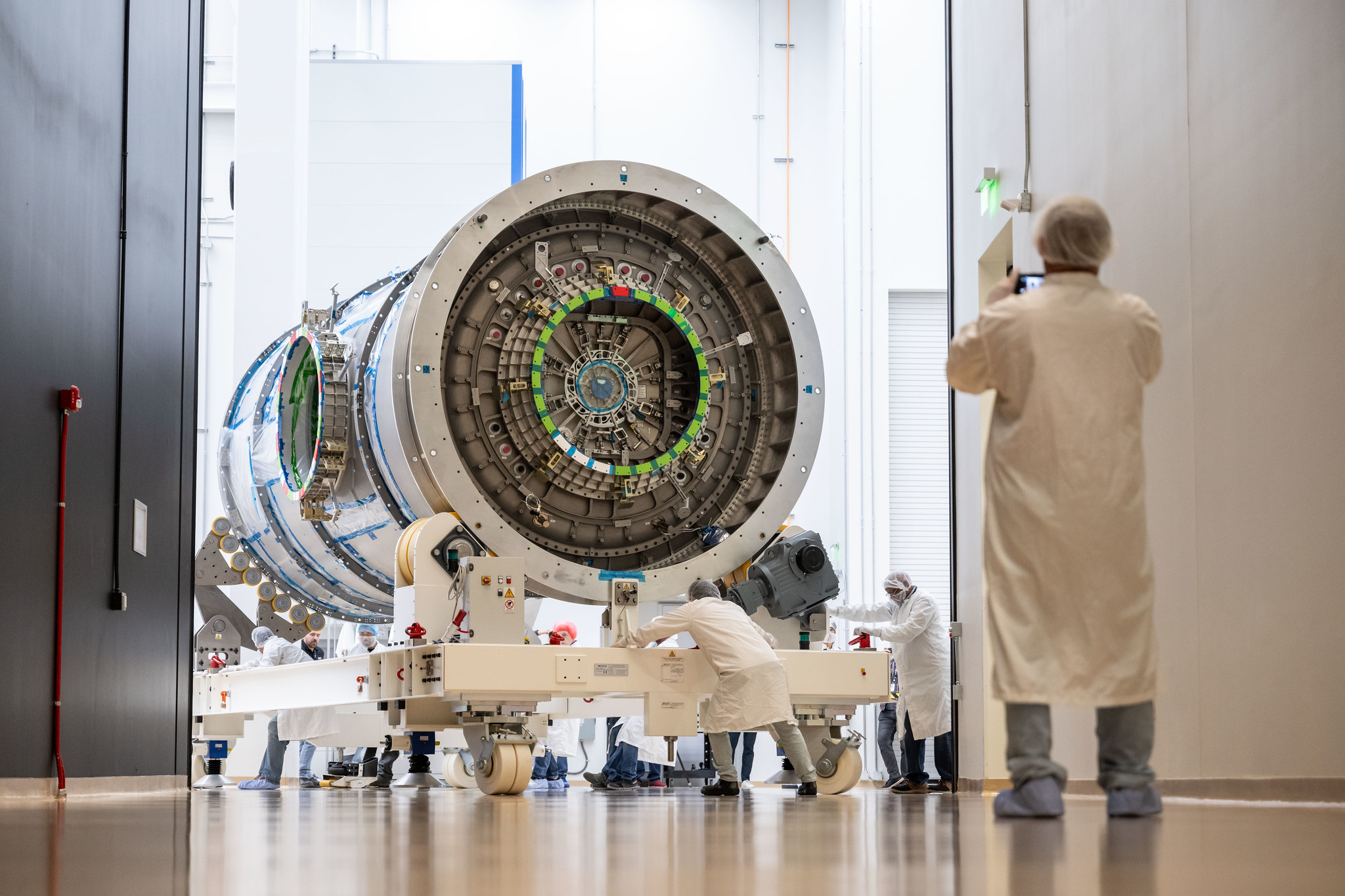
The pressure shell for the Habitation and Logistics Outpost (HALO) module arrived in Gilbert, Arizona, last week for internal outfitting. Credit: NASA/Josh Valcarcel

Checking in with Gateway

Nevertheless, the Gateway program achieved a milestone one week before Isaacman’s confirmation hearing. The metallic pressure shell for the HALO module was shipped from its factory in Italy to Arizona. The HALO module is only partially complete, and it lacks life support systems and other hardware it needs to operate in space.

Over the next couple of years, Northrop Grumman will outfit the habitat with those components and connect it with the Power and Propulsion Element under construction at Maxar Technologies in Silicon Valley. This stage of spacecraft assembly, along with prelaunch testing, often uncovers problems that can drive up costs and trigger more delays.

Ars recently spoke with Jon Olansen, a bio-mechanical engineer and veteran space shuttle flight controller who now manages the Gateway program at Johnson Space Center. A transcript of our conversation with Olansen is below. It is lightly edited for clarity and brevity.

Ars: The HALO module has arrived in Arizona from Italy. What’s next?

Olansen: This HALO module went through significant effort from the primary and secondary structure perspective out at Thales Alenia Space in Italy. That was most of their focus in getting the vehicle ready to ship to Arizona. Now that it’s in Arizona, Northrop is setting it up in their facility there in Gilbert to be able to do all of the outfitting of the systems we need to actually execute the missions we want to do, keep the crew safe, and enable the science that we’re looking to do. So, if you consider your standard spacecraft, you’re going to have all of your command-and-control capabilities, your avionics systems, your computers, your network management, all of the things you need to control the vehicle. You’re going to have your power distribution capabilities. HALO attaches to the Power and Propulsion Element, and it provides the primary power distribution capability for the entire station. So that’ll all be part of HALO. You’ll have your standard thermal systems for active cooling. You’ll have the vehicle environmental control systems that will need to be installed, [along with] some of the other crew systems that you can think of, from lighting, restraint, mobility aids, all the different types of crew systems. Then, of course, all of our science aspects. So we have payload lockers, both internally, as well as payload sites external that we’ll have available, so pretty much all the different systems that you would need for a human-rated spacecraft.

Ars: What’s the latest status of the Power and Propulsion Element?

Olansen: PPE is fairly well along in their assembly and integration activities. The central cylinder has been integrated with the propulsion tanks… Their propulsion module is in good shape. They’re working on the avionics shelves associated with that spacecraft. So, with both vehicles, we’re really trying to get the assembly done in the next year or so, so we can get into integrated spacecraft testing at that point in time.

Ars: What’s in the critical path in getting to the launch pad?

Olansen: The assembly and integration activity is really the key for us. It’s to get to the full vehicle level test. All the different activities that we’re working on across the vehicles are making substantive progress. So, it’s a matter of bringing them all in and doing the assembly and integration in the appropriate sequences, so that we get the vehicles put together the way we need them and get to the point where we can actually power up the vehicles and do all the testing we need to do. Obviously, software is a key part of that development activity, once we power on the vehicles, making sure we can do all the control work that we need to do for those vehicles.

[There are] a couple of key pieces I will mention along those lines. On the PPE side, we have the electrical propulsion system. The thrusters associated with that system are being delivered. Those will go through acceptance testing at the Glenn Research Center [in Ohio] and then be integrated on the spacecraft out at Maxar; so that work is ongoing as we speak. Out at ESA, ESA is providing the HALO lunar communication system. That’ll be delivered later this year. That’ll be installed on HALO as part of its integrated test and checkout and then launch on HALO. That provides the full communication capability down to the lunar surface for us, where PPE provides the communication capability back to Earth. So, those are key components that we’re looking to get delivered later this year.

Jon Olansen, manager of NASA’s Gateway program at Johnson Space Center in Houston. Credit: NASA/Andrew Carlsen

Ars: What’s the status of the electric propulsion thrusters for the PPE?

Olansen: The first one has actually been delivered already, so we’ll have the opportunity to go through, like I said, the acceptance testing for those. The other flight units are right on the heels of the first one that was delivered. They’ll make it through their acceptance testing, then get delivered to Maxar, like I said, for integration into PPE. So, that work is already in progress. [The Power and Propulsion Element will have three xenon-fueled 12-kilowatt Hall thrusters produced by Aerojet Rocketdyne, and four smaller 6-kilowatt thrusters.]

Ars: The Government Accountability Office (GAO) outlined concerns last year about keeping the mass of Gateway within the capability of its rocket. Has there been any progress on that issue? Will you need to remove components from the HALO module and launch them on a future mission? Will you narrow your launch windows to only launch on the most fuel-efficient trajectories?

Olansen: We’re working the plan. Now that we’re launching the two vehicles together, we’re working mass management. Mass management is always an issue with spacecraft development, so it’s no different for us. All of the things you described are all knobs that are in the trade space as we proceed, but fundamentally, we’re working to design the optimal spacecraft that we can, first. So, that’s the key part. As we get all the components delivered, we can measure mass across all of those components, understand what our integrated mass looks like, and we have several different options to make sure that we’re able to execute the mission we need to execute. All of those will be balanced over time based on the impacts that are there. There’s not a need for a lot of those decisions to happen today. Those that are needed from a design perspective, we’ve already made. Those that are needed from enabling future decisions, we’ve already made all of those. So, really, what we’re working through is being able to, at the appropriate time, make decisions necessary to fly the vehicle the way we need to, to get out to NRHO [Near Rectilinear Halo Orbit, an elliptical orbit around the Moon], and then be able to execute the Artemis missions in the future.

Ars: The GAO also discussed a problem with Gateway’s controllability with something as massive as Starship docked to it. What’s the latest status of that problem?

Olansen: There are a number of different risks that we work through as a program, as you’d expect. We continue to look at all possibilities and work through them with due diligence. That’s our job, to be able to do that on a daily basis. With the stack controllability [issue], where that came from for GAO, we were early in the assessments of what the potential impacts could be from visiting vehicles, not just any one [vehicle] but any visiting vehicle. We’re a smaller space station than ISS, so making sure we understand the implications of thruster firings as vehicles approach the station, and the implications associated with those, is where that stack controllability conversation came from.

The bus that Maxar typically designs doesn’t have to generally deal with docking. Part of what we’ve been doing is working through ways that we can use the capabilities that are already built into that spacecraft differently to provide us the control authority we need when we have visiting vehicles, as well as working with the visiting vehicles and their design to make sure that they’re minimizing the impact on the station. So, the combination of those two has largely, over the past year since that report came out, improved where we are from a stack controllability perspective. We still have forward work to close out all of the different potential cases that are there. We’ll continue to work through those. That’s standard forward work, but we’ve been able to make some updates, some software updates, some management updates, and logic updates that really allow us to control the stack effectively and have the right amount of control authority for the dockings and undockings that we will need to execute for the missions.

Lunar Gateway’s skeleton is complete—its next stop may be Trump’s chopping block Read More »

experimental-drug-looks-to-be-gastric-bypass-surgery-in-pill-form

Experimental drug looks to be gastric bypass surgery in pill form

In rats, the drug produced a consistent 1 percent weekly weight loss over a six-week study period while preserving 100 percent of lean muscle mass.

In a first-in-human pilot study of nine participants, the drug was safe with no adverse effects. Tissue samples taken from the intestine were used to confirm that the coating formed and was also cleared from the body within 24 hours. The study wasn’t designed to assess weight loss, but blood testing showed that after the drug was given, glucose levels and the “hunger hormone” ghrelin were lower while the levels of leptin, an appetite-regulating hormone, were higher.

“When nutrients are redirected to later in the intestine, you’re activating pathways that lead towards satiety, energy expenditure, and overall healthy, sustainable weight loss,” Dhanda says.

Syntis Bio’s findings in animals also hint at the drug’s potential for weight loss without compromising muscle mass, one of the concerns with current GLP-1 drugs. While weight loss in general is associated with numerous health benefits, there’s growing evidence that the kind of drastic weight loss that GLP-1s induce can also lead to a loss of lean muscle mass.

Louis Aronne, an obesity medicine specialist and professor of metabolic research at Weill-Cornell Medical College, says that while GLP-1s are wildly popular, they may not be right for everyone. He predicts that in the not-so-distant future there will be many drugs for obesity, and treatment will be more personalized. “I think Syntis’ compound fits in perfectly as a treatment that could be used early on. It’s a kind of thing you could use as a first-line medication,” he says. Arrone serves as a clinical adviser to the company.

Vladimir Kushnir, professor of medicine and director of bariatric endoscopy at Washington University in St. Louis, who isn’t involved with Syntis, says the early pilot data is encouraging, but it’s hard to draw any conclusions from such a small study. He expects that the drug will make people feel fuller but could also have some of the same side effects as gastric bypass surgery. “My anticipation is that this is going to have some digestive side effects like bloating and abdominal cramping, as well as potentially some diarrhea and nausea once it gets into a bigger study,” he says.

It’s early days for this novel technique, but if it proves effective, it could one day be an alternative or add-on drug to GLP-1 medications.

This story originally appeared on wired.com.

Experimental drug looks to be gastric bypass surgery in pill form Read More »

wheel-of-time-recap:-the-show-nails-one-of-the-books’-biggest-and-bestest-battles

Wheel of Time recap: The show nails one of the books’ biggest and bestest battles

Andrew Cunningham and Lee Hutchinson have spent decades of their lives with Robert Jordan and Brandon Sanderson’s Wheel of Time books, and they previously brought that knowledge to bear as they recapped each first season episode and second season episode of Amazon’s WoT TV series. Now we’re back in the saddle for season 3—along with insights, jokes, and the occasional wild theory.

These recaps won’t cover every element of every episode, but they will contain major spoilers for the show and the book series. We’ll do our best to not spoil major future events from the books, but there’s always the danger that something might slip out. If you want to stay completely unspoiled and haven’t read the books, these recaps aren’t for you.

New episodes of The Wheel of Time season 3 will be posted for Amazon Prime subscribers every Thursday. This write-up covers episode seven, “Goldeneyes,” which was released on April 10.

Lee: Welcome back—and that was nuts. There’s a ton to talk about—the Battle of the Two Rivers! Lord Goldeneyes!—but uh, I feel like there’s something massive we need to address right from the jump, so to speak: LOIAL! NOOOOOOOOOO!!!! That was some out-of-left-field Game of Thrones-ing right there. My wife and I have both been frantically talking about how Loial’s death might or might not change the shape of things to come. What do you think—is everybody’s favorite Ogier dead-dead, or is this just a fake-out?

Image of Loial

NOOOOOOOOO

Credit: Prime/Amazon MGM Studios

NOOOOOOOOO Credit: Prime/Amazon MGM Studios

Andrew: Standard sci-fi/fantasy storytelling rules apply here as far as I’m concerned—if you don’t see a corpse, they can always reappear (cf. Thom Merrillin, The Wheel of Time season 3, episode 6).

For example! When the Cauthon sisters fricassee Eamon Valda to avenge their mother and Alanna laughs joyfully at the sight of his charred corpse? That’s a death you ain’t coming back from.

Even assuming that Loial’s plot armor has fallen off, the way we’ve seen the show shift and consolidate storylines means it’s impossible to say how the presence or absence of one character or another couple ripple outward. This episode alone introduces a bunch of fairly major shifts that could play out in unpredictable ways next season.

But let’s back up! The show takes a break from its usual hopping and skipping to focus entirely on one plot thread this week: Perrin’s adventures in the Two Rivers. This is a Big Book Moment; how do you think it landed?

Image of Padan Fain.

Fain seems to be leading the combined Darkfriend/Trolloc army.

Credit: Prime/Amazon MGM Studios

Fain seems to be leading the combined Darkfriend/Trolloc army. Credit: Prime/Amazon MGM Studios

Lee: I would call the Battle of the Two Rivers one of the most important events that happens in the front half of the series. It is certainly a defining moment for Perrin’s character, where he grows up and becomes a Man-with-a-capital-M. It is possibly done better in the books, but only because the book has the advantage of being staged in our imaginations; I’ll always see it as bigger and more impactful than anything a show or movie could give us.

Though it was a hell of a battle, yeah. The improvements in pulling off large set pieces continues to scale from season to season—comparing this battle to the Bel Tine fight back in the first bits of season 1 shows not just better visual effects or whatever, but just flat-out better composition and clearer storytelling. The show continues to prove that it has found its footing.

Did the reprise of the Manetheren song work for you? This has been sticky for me—I want to like it. I see what the writers are trying to do, and I see how “this is a song we all just kind of grew up singing” is given new meaning when it springs from characters’ bloody lips on the battlefield. But it just… doesn’t work for me. It makes me feel cringey, and I wish it didn’t. It’s probably the only bit in the entire episode that I felt was a swing and a miss.

Image of the battle of the Two Rivers

Darkfriends and Trollocs pour into Emond’s Field.

Darkfriends and Trollocs pour into Emond’s Field.

Andrew: Forgive me in advance for what I think is about to be a short essay but it is worth talking about when evaluating the show as an adaptation of the original work.

Part of the point of the Two Rivers section in The Shadow Rising is that it helps to back up something we’ve seen in our Two Rivers expats over the course of the first books in the series—that there is a hidden strength in this mostly ignored backwater of Randland.

To the extent that the books are concerned with Themes, the two big overarching ones are that strength and resilience come from unexpected places and that heroism is what happens when regular, flawed, scared people step up and Do What Needs To Be Done under terrible circumstances. (This is pure Tolkien, and that’s the difference between The Wheel of Time and A Song of Ice and FireWoT wants to build on LotR‘s themes and ASoIaF is mainly focused on subverting them.)

But to get back to what didn’t work for you about this, the strength of the Two Rivers is meant to be more impressive and unexpected because these people all view themselves, mostly, as quiet farmers and hunters, not as the exiled heirs to some legendary kingdom (a la Malkier). They don’t go around singing songs about How Virtuous And Bold Was Manetheren Of Old, or whatever. Manetheren is as distant to them as the Roman Empire, and those stories don’t put food on the table.

So yeah, it worked for me as an in-the-moment plot device. The show had already played the “Perrin Rallies His Homeland With A Rousing Speech” card once or twice, and you want to mix things up. I doubt it was even a blip for non-book-readers. But it is a case, as with the Cauthon sisters’ Healing talents, where the show has to take what feels like too short a shortcut.

Lee: That’s a good set of points, yeah. And I don’t hate it—it’s just not the way I would have done it. (Though, hah, that’s a terribly easy thing to say from behind the keyboard here, without having to own the actual creative responsibility of dragging this story into the light.)

In amongst the big moments were a bunch of nice little character bits, too—the kinds of things that keep me coming back to the show. Perrin’s glowering, teeth-gritted exchange with Whitecloak commander Dain Bornhald was great, though my favorite bit was the almost-throwaway moment where Perrin catches up with the Cauthon sisters and gives them an update on Mat. The two kids absolutely kill it, transforming from sober and traumatized young people into giggling little sisters immediately at the sight of their older brother’s sketch. Not even blowing the Horn of Valere can save you from being made fun of by your sisters. (The other thing that scene highlighted was that Perrin, seated, is about the same height as Faile standing. She’s tiny!)

We also close the loop a bit on the Tinkers, who, after being present in flashback a couple of episodes ago, finally show back up on screen—complete with Aram, who has somewhat of a troubling role in the books. The guy seems to have a destiny that will take him away from his family, and that destiny grabs firmly ahold of him here.

Image of Perrin, Faile, and the Cauthon sisters

Perrin is tall.

Credit: Prime/Amazon MGM Studios

Perrin is tall. Credit: Prime/Amazon MGM Studios

Andrew: Yeah, I think the show is leaving the door open for Aram to have a happier ending than he has in the books, where being ejected from his own community makes him single-mindedly obsessed with protecting Perrin in a way that eventually curdles. Here, he might at least find community among good Two Rivers folk. We’ll see.

The entire Whitecloak subplot is something that stretches out interminably in the books, as many side-plots do. Valda lasts until Book 11 (!). Dain Bornhald holds his grudge against Perrin (still unresolved here, but on a path toward resolution) until Book 14. The show has jumped around before, but I think this is the first time we’ve seen it pull something forward from that late, which it almost certainly needs to do more of if it hopes to get to the end in whatever time is allotted to it (we’re still waiting for a season 4 renewal).

Lee: Part of that, I think, is the Zeno’s Paradox-esque time-stretching that occurs as the series gets further on—we’ll keep this free of specific spoilers, of course, but it’s not really a spoiler to say that as the books go on, less time passes per book. My unrefreshed off-the-top-of-my-head recollection is that there are, like, four, possibly five, books—written across almost a decade of real time—that cover like a month or two of in-universe time passing.

This gets into the area of time that book readers commonly refer to as “The Slog,” which slogs at maximum slogginess around book 10 (which basically retreads all the events of book nine and shows us what all the second-string characters were up to while the starting players were off doing big world-changing things). Without doing any more criticizing than the implicit criticizing I’ve already done, The Slog is something I’m hoping that the show obviates or otherwise does away with, and I think we’re seeing the ways in which such slogginess will be shed.

There are a few other things to wrap up here, I think, but this episode being so focused on a giant battle—and doing that battle well!—doesn’t leave us with a tremendous amount to recap. Do we want to get into Bain and Chiad trying to steal kisses from Loial? It’s not in the book—at least, I don’t think it was!—but it feels 100 percent in character for all involved. (Loial, of course, would never kiss outside of marriage.)

Image of Loial, Bain, and Chiad

A calm moment before battle.

Credit: Prime/Amazon MGM Studios

A calm moment before battle. Credit: Prime/Amazon MGM Studios

Andrew: All the Bain and Chiad in this episode is great—I appreciate when the show decides to subtitle the Maiden Of The Spear hand-talk and when it lets context and facial expressions convey the meaning. All of the Alanna/Maksim stuff is great. Alanna calling in a storm that rains spikes of ice on all their enemies is cool. Daise Congar throwing away her flask after touching the One Power for the first time was a weird vaudevillian comic beat that still made me laugh (and you do get a bit more, in here, that shows why people who haven’t formally learned how to channel generally shouldn’t try it). There’s a thread in the books where everyone in the Two Rivers starts referring to Perrin as a lord, which he hates and which is deployed a whole bunch of times here.

I find myself starting each of these episodes by taking fairly detailed notes, and by the middle of the episode I catch myself having not written anything for minutes at a time because I am just enjoying watching the show. On the topic of structure and pacing, I will say that these episodes that make time to focus on a single thread also make more room for quiet character moments. On the rare occasions that we get a less-than-frenetic episode I just wish we could have more of them.

Lee: I find that I’m running out of things to say here—not because this episode is lacking, but because like an arrow loosed from a Two Rivers longbow, this episode hurtles us toward the upcoming season finale. We’ve swept the board clean of all the Perrin stuff, and I don’t believe we’re going to get any more of it next week. Next week—and at least so far, I haven’t cheated and watched the final screener!—feels like we’re going to resolve Tanchico and, more importantly, Rand’s situation out in the Aiel Waste.

But Loial’s unexpected death (if indeed death it was) gives me pause. Are we simply killing folks off left and right, Game of Thrones style? Has certain characters’ plot armor been removed? Are, shall we say, alternative solutions to old narrative problems suddenly on the table in this new turning of the Wheel?

I’m excited to see where this takes us—though I truly hope we’re not going to have to say goodbye to anyone else who matters.

Closing thoughts, Andrew? Any moments you’d like to see? Things you’re afraid of?

Image of Perrin captured

Perrin being led off by Bornhald. Things didn’t exactly work out like this in the book!

Credit: Prime/Amazon MGM Studios

Perrin being led off by Bornhald. Things didn’t exactly work out like this in the book! Credit: Prime/Amazon MGM Studios

Andrew: For better or worse, Game of Thrones did help to create this reality where Who Dies This Week? was a major driver of the cultural conversation and the main reason to stay caught up. I’ll never forget having the Red Wedding casually ruined for me by another Ars staffer because I was a next-day watcher and not a day-of GoT viewer.

One way to keep the perspectives and plotlines from endlessly proliferating and recreating The Slog is simply to kill some of those people so they can’t be around to slow things down. I am not saying one way or the other whether I think that’s actually a series wrap on Loial, Son Of Arent, Son Of Halan, May His Name Sing In Our Ears, but we do probably have to come to terms with the fact that not all fan-favorite septenary Wheel of Time characters are going to make it to the end.

As for fears, mainly I’m afraid of not getting another season at this point. The show is getting good enough at showing me big book moments that now I want to see a few more of them, y’know? But Economic Uncertainty + Huge Cast + International Shooting Locations + No More Unlimited Cash For Streaming Shows feels like an equation that is eventually going to stop adding up for this production. I really hope I’m wrong! But who am I to question the turning of the Wheel?

Credit: WoT Wiki

Wheel of Time recap: The show nails one of the books’ biggest and bestest battles Read More »

holy-water-brimming-with-cholera-compels-illness-cluster-in-europe

Holy water brimming with cholera compels illness cluster in Europe

“As the infectious dose of V. cholerae O1 has been estimated to be 105–108 [100,000 to 100 million] colony-forming units (CFU), this suggests the holy water was heavily contaminated and bacteria remained viable at ambient temperature during the flight and in Europe,” the German and UK researchers who authored the report wrote.

Global plague

Testing indicated that the cholera strain that the travelers brought home was a particularly nasty one. V. cholerae O1, which is linked to other recent outbreaks in Eastern and Middle Africa, is resistant to a wide variety of antibiotics, namely: fluroquinolones, trimethoprim, chloramphenicol, aminoglycosides, beta-lactams, macrolides, and sulphonamides. The strain also carried a separate genetic element (a plasmid) that provided resistance mechanisms against streptomycin and spectinomycin, cephalosporins, macrolides, and sulphonamides.

The main treatment for cholera, which causes profuse watery diarrhea and vomiting, is oral rehydration. Antibiotics are sometimes used to reduce severity. Fortunately, this strain was still susceptible to the antibiotic tetracycline, one of the drugs of choice for cholera. However, there are reports of other cholera strains in Africa that have also acquired tetracycline resistance.

In all, “The extension of a cholera outbreak in Africa causing a cluster of infections in Europe is unusual,” the authors write. They call for travelers to be aware of infectious threats when eating and drinking abroad—and to not ingest holy water. Clinicians should also be aware of the potential of cholera in travelers to Ethiopia.

To truly fight cholera outbreaks, though, there needs to be sustained investment in water, sanitation, and hygiene (WASH). Cases of cholera have surged globally after the pandemic, according to the World Health Organization.

“Low-income countries will continue to need overseas development aid support to control outbreaks and epidemics using effective WASH, surveillance, communications, diagnostics and countermeasure programmatic delivery,” the authors of the Eurosurveillance report write.

Holy water brimming with cholera compels illness cluster in Europe Read More »

that-groan-you-hear-is-users’-reaction-to-recall-going-back-into-windows

That groan you hear is users’ reaction to Recall going back into Windows

Security and privacy advocates are girding themselves for another uphill battle against Recall, the AI tool rolling out in Windows 11 that will screenshot, index, and store everything a user does every three seconds.

When Recall was first introduced in May 2024, security practitioners roundly castigated it for creating a gold mine for malicious insiders, criminals, or nation-state spies if they managed to gain even brief administrative access to a Windows device. Privacy advocates warned that Recall was ripe for abuse in intimate partner violence settings. They also noted that there was nothing stopping Recall from preserving sensitive disappearing content sent through privacy-protecting messengers such as Signal.

Enshittification at a new scale

Following months of backlash, Microsoft later suspended Recall. On Thursday, the company said it was reintroducing Recall. It currently is available only to insiders with access to the Windows 11 Build 26100.3902 preview version. Over time, the feature will be rolled out more broadly. Microsoft officials wrote:

Recall (preview)saves you time by offering an entirely new way to search for things you’ve seen or done on your PC securely. With the AI capabilities of Copilot+ PCs, it’s now possible to quickly find and get back to any app, website, image, or document just by describing its content. To use Recall, you will need to opt-in to saving snapshots, which are images of your activity, and enroll in Windows Hello to confirm your presence so only you can access your snapshots. You are always in control of what snapshots are saved and can pause saving snapshots at any time. As you use your Copilot+ PC throughout the day working on documents or presentations, taking video calls, and context switching across activities, Recall will take regular snapshots and help you find things faster and easier. When you need to find or get back to something you’ve done previously, open Recall and authenticate with Windows Hello. When you’ve found what you were looking for, you can reopen the application, website, or document, or use Click to Do to act on any image or text in the snapshot you found.

Microsoft is hoping that the concessions requiring opt-in and the ability to pause Recall will help quell the collective revolt that broke out last year. It likely won’t for various reasons.

That groan you hear is users’ reaction to Recall going back into Windows Read More »

apple-silent-as-trump-promises-“impossible”-us-made-iphones

Apple silent as Trump promises “impossible” US-made iPhones


How does Apple solve a problem like Trump’s trade war?

Despite a recent pause on some tariffs, Apple remains in a particularly thorny spot as Donald Trump’s trade war spikes costs in the tech company’s iPhone manufacturing hub, China.

Analysts predict that Apple has no clear short-term options to shake up its supply chain to avoid tariffs entirely, and even if Trump grants Apple an exemption, iPhone prices may increase not just in the US but globally.

The US Trade Representative, which has previously granted Apple an exemption on a particular product, did not respond to Ars’ request to comment on whether any requests for exemptions have been submitted in 2025.

Currently, the US imposes a 145 percent tariff on Chinese imports, while China has raised tariffs on US imports to 125 percent.

Neither side seems ready to back down, and Trump’s TikTok deal—which must be approved by the Chinese government—risks further delays the longer negotiations and retaliations drag on. Trump has faced criticism for delaying the TikTok deal, with Senate Intelligence Committee Vice Chair Mark Warner (D-Va.) telling The Verge last week that the delay was “against the law” and threatened US national security. Meanwhile, China seems to expect more business to flow into China rather than into the US as a result of Trump’s tough stance on global trade.

With the economy and national security at risk, Trump is claiming that tariffs will drive manufacturing into the US, create jobs, and benefit the economy. Getting the world’s most valuable company, Apple, to manufacture its most popular product, the iPhone, in the US, is clearly part of Trump’s vision. White House Press Secretary Karoline Leavitt told reporters this week that Apple’s commitment to invest $500 billion in the US over the next four years was supposedly a clear indicator that Apple believed it was feasible to build iPhones here, Bloomberg reported.

“If Apple didn’t think the United States could do it, they probably wouldn’t have put up that big chunk of change,” Leavitt said.

Apple did not respond to Ars’ request to comment, and so far, it has been silent on how tariffs are impacting its business.

iPhone price increases expected globally

For Apple, even if it can build products for the US market in India, where tariffs remain lower, Trump’s negotiations with China “remain the most important variable for Apple” to retain its global dominance.

Dan Ives, global head of technology research at Wedbush Securities, told CNBC that “Apple could be set back many years by these tariffs.” Although Apple reportedly stockpiled phones to sell in the US market, that supply will likely dwindle fast as customers move to purchase phones before prices spike. In the medium-term, consultancy firm Omdia forecasted, Apple will likely “focus on increasing iPhone production and exports from India” rather than pushing its business into the US, as Trump desires.

But Apple will still incur additional costs from tariffs on India until that country tries to negotiate a more favorable trade deal. And any exemption that Apple may secure due to its investment promise in the US or moderation of China tariffs that could spare Apple some pain “may not be enough for Apple to avoid adverse business effects,” co-founder and senior analyst at equity research publisher MoffettNathanson, Craig Moffett, suggested to CNBC.

And if Apple is forced to increase prices, it likely won’t be limited to just the US, Bank of America Securities analyst Wamsi Mohan suggested, as reported by The Guardian. To ensure that Apple’s largest market isn’t the hardest hit, Apple may increase prices “across the board geographically,” he forecasted.

“While Apple has not commented on this, we expect prices will be changed globally to prevent arbitrage,” Mohan said.

Apple may even choose to increase prices everywhere but the US, vice president at Forrester Research, Dipanjan Chatterjee, explained in The Guardian’s report.

“If there is a cost impact in the US for certain products,” Chatterjee said, Apple may not increase US prices because “the market is far more competitive there.” Instead, “the company may choose to keep prices flat in the US while recovering the lost margin elsewhere in its global portfolio,” Chatterjee said.

Trump’s US-made iPhone may be an impossible dream

Analysts have said that Trump’s dream that a “made-in-the-USA” iPhone could be coming soon is divorced from reality. Not only do analysts estimate that more than 80 percent of Apple products are currently made in China, but so are many individual parts. So even if Apple built an iPhone factory in the US, it would still have to pay tariffs on individual parts, unless Trump agreed to a seemingly wide range of exemptions. Mohan estimated it would “likely take many years” to move the “entire iPhone supply chain,” if that’s “even possible.”

Further, Apple’s $500 billion commitment covered “building servers for its artificial intelligence products, Apple TV productions and 20,000 new jobs in research and development—not a promise to make the iPhone stateside,” The Guardian noted.

For Apple, it would likely take years to build a US factory and attract talent, all without knowing how tariffs might change. A former Apple manufacturing engineer, Matthew Moore, told Bloomberg that “there are millions of people employed by the Apple supply chain in China,” and Apple has long insisted that the US talent pool is too small to easily replace them.

“What city in America is going to put everything down and build only iPhones?” Moore said. “Boston is over 500,000 people. The whole city would need to stop everything and start assembling iPhones.”

In a CBS interview, Commerce Secretary Howard Lutnick suggested that the “army of millions and millions of human beings” could be automated, Bloomberg reported. But China has never been able to make low-cost automation work, so it’s unclear how the US could achieve that goal without serious investment.

“That’s not yet realistic,” people who have worked on Apple’s product manufacturing told Bloomberg, especially since each new iPhone model requires retooling of assembly, which typically requires manual labor. Other analysts agreed, CNBC reported, concluding that “the idea of an American-made iPhone is impossible at worst and highly expensive at best.”

For consumers, CNBC noted, a US-made iPhone would cost anywhere from 25 percent more than the $1,199 price point today, increasing to about $1,500 at least, to potentially $3,500 at most, Wall Street analysts have forecasted.

It took Apple a decade to build its factory in India, which Apple reportedly intends to use to avoid tariffs where possible. That factory “only began producing Apple’s top-of-the-line Pro and Pro Max iPhone models for the first time last year,” CNBC reported.

Analysts told CNBC that it would take years to launch a similar manufacturing process in the US, while “there’s no guarantee that US trade policy might not change yet again in a way to make the factory less useful.”

Apple CEO’s potential game plan to navigate tariffs

It appears that there’s not much Apple can do to avoid maximum pain through US-China negotiations. But Apple’s CEO Tim Cook—who is considered “a supply chain whisperer”—may be “uniquely suited” to navigate Trump’s trade war, Fortune reported.

After Cook arrived at Apple in 1998, he “redesigned Apple’s sprawling supply chain” and perhaps is game to do that again, Fortune reported. Jeremy Friedman, associate professor of business and geopolitics at Harvard Business School, told Fortune that rather than being stuck in the middle, Cook may turn out to be a key intermediary, helping the US and China iron out a deal.

During Trump’s last term, Cook raised a successful “charm offensive” that secured tariff exemptions without caving to Trump’s demand to build iPhones in the US, CNBC reported, and he’s likely betting that Apple’s recent $500 billion commitment will lead to similar outcomes, even if Apple never delivers a US-made iPhone.

Back in 2017, Trump announced that Apple partner Foxconn would be building three “big beautiful plants” in the US and claimed that they would be Apple plants, CNBC reported. But the pandemic disrupted construction, and most of those plans were abandoned, with one facility only briefly serving to make face masks, not Apple products. In 2019, Apple committed to building a Texas factory that Trump toured. While Trump insisted that a US-made iPhone was on the horizon due to Apple moving some business into the US, that factory only committed to assembling the MacBook Pro, CNBC noted.

Morgan Stanley analyst Erik Woodring suggested that Apple may “commit to some small-volume production in the US (HomePod? AirTags?)” to secure an exemption in 2025, rather than committing to building iPhones, CNBC reported.

Although this perhaps sounds like a tried-and-true game plan, for Cook, Apple’s logistics have likely never been so complicated. However, analysts told Fortune that experienced logistics masterminds understand that flexibility is the priority, and Cook has already shown that he can anticipate Trump’s moves by stockpiling iPhones and redirecting US-bound iPhones through its factory in India.

While Trump negotiates with China, Apple hopes that an estimated 35 million iPhones it makes annually in India can “cover a large portion of its needs in the US,” Bloomberg reported. These moves, analysts said, prove that Cook may be the man for the job when it comes to steering Apple through the trade war chaos.

But to keep up with global demand—selling more than 220 million iPhones annually—Apple will struggle to quickly distance itself from China, where there’s abundant talent to scale production that Apple says just doesn’t exist in the US. For example, CNBC noted that Foxconn hired 50,000 additional workers last fall at its largest China plant just to build enough iPhones to meet demand during the latest September launches.

As Apple remains dependent on China, Cook will likely need to remain at the table, seeking friendlier terms on both sides to ensure its business isn’t upended for years.

“One can imagine, if there is some sort of grand bargain between US and China coming in the next year or two,” Friedman said, “Tim Cook might as soon as anybody play an intermediary role.”

Photo of Ashley Belanger

Ashley is a senior policy reporter for Ars Technica, dedicated to tracking social impacts of emerging policies and new technologies. She is a Chicago-based journalist with 20 years of experience.

Apple silent as Trump promises “impossible” US-made iPhones Read More »

ftc-now-has-three-republicans-and-no-democrats-instead-of-the-typical-3-2-split

FTC now has three Republicans and no Democrats instead of the typical 3-2 split

After declaring the FTC to be under White House control, Trump fired both Democratic members despite a US law and Supreme Court precedent stating that the president cannot fire commissioners without good cause.

House Commerce Committee leaders said the all-Republican FTC will end the “partisan mismanagement” allegedly seen under the Biden-era FTC and then-Chair Lina Khan. “In the last administration, the FTC abandoned its rich bipartisan tradition and historical mission, in favor of a radical agenda and partisan mismanagement,” said a statement issued by Reps. Brett Guthrie (R-Ky) and Gus Bilirakis (R-Fla.). “The Commission needs to return to protecting Americans from bad actors and preserving competition in the marketplace.”

Consumer advocacy group Public Knowledge thanked Senate Democrats for voting against Meador. “In order for the FTC to be effective, it needs to have five independent commissioners doing the work,” said Sara Collins, the group’s director of government affairs. “By voting ‘no’ on this confirmation, these senators have shown that it is still important to prioritize protecting consumers and supporting a healthier marketplace over turning a blind eye to President Trump’s unlawful termination of Democratic Commissioners Slaughter and Bedoya.”

Democrats sue Trump

The two Democrats are challenging the firings in a lawsuit that said “it is bedrock, binding precedent that a President cannot remove an FTC Commissioner without cause.” Trump “purported to terminate Plaintiffs as FTC Commissioners, not because they were inefficient, neglectful of their duties, or engaged in malfeasance, but simply because their ‘continued service on the FTC is’ supposedly ‘inconsistent with [his] Administration’s priorities,'” the lawsuit said.

US law says an FTC commissioner “may be removed by the President for inefficiency, neglect of duty, or malfeasance in office.” A 1935 Supreme Court ruling said that “Congress intended to restrict the power of removal to one or more of those causes.”

Slaughter and Bedoya sued Trump in US District Court for the District of Columbia and asked the court to declare “the President’s purported termination of Plaintiffs Slaughter and Bedoya unlawful and that Plaintiffs Slaughter and Bedoya are Commissioners of the Federal Trade Commission.”

FTC now has three Republicans and no Democrats instead of the typical 3-2 split Read More »

quantum-hardware-may-be-a-good-match-for-ai

Quantum hardware may be a good match for AI

Quantum computers don’t have that sort of separation. While they could include some quantum memory, the data is generally housed directly in the qubits, while computation involves performing operations, called gates, directly on the qubits themselves. In fact, there has been a demonstration that, for supervised machine learning, where a system can learn to classify items after training on pre-classified data, a quantum system can outperform classical ones, even when the data being processed is housed on classical hardware.

This form of machine learning relies on what are called variational quantum circuits. This is a two-qubit gate operation that takes an additional factor that can be held on the classical side of the hardware and imparted to the qubits via the control signals that trigger the gate operation. You can think of this as analogous to the communications involved in a neural network, with the two-qubit gate operation equivalent to the passing of information between two artificial neurons and the factor analogous to the weight given to the signal.

That’s exactly the system that a team from the Honda Research Institute worked on in collaboration with a quantum software company called Blue Qubit.

Pixels to qubits

The focus of the new work was mostly on how to get data from the classical world into the quantum system for characterization. But the researchers ended up testing the results on two different quantum processors.

The problem they were testing is one of image classification. The raw material was from the Honda Scenes dataset, which has images taken from roughly 80 hours of driving in Northern California; the images are tagged with information about what’s in the scene. And the question the researchers wanted the machine learning to handle was a simple one: Is it snowing in the scene?

Quantum hardware may be a good match for AI Read More »

chatgpt-can-now-remember-and-reference-all-your-previous-chats

ChatGPT can now remember and reference all your previous chats

Unlike the older saved memories feature, the information saved via the chat history memory feature is not accessible or tweakable. It’s either on or it’s not.

The new approach to memory is rolling out first to ChatGPT Plus and Pro users, starting today—though it looks like it’s a gradual deployment over the next few weeks. Some countries and regions (the UK, European Union, Iceland, Liechtenstein, Norway, and Switzerland) are not included in the rollout.

OpenAI says these new features will reach Enterprise, Team, and Edu users at a later, as-yet-unannounced date. The company hasn’t mentioned any plans to bring them to free users. When you gain access to this, you’ll see a pop-up that says “Introducing new, improved memory.”

A menu showing two memory toggle buttons

The new ChatGPT memory options. Credit: Benj Edwards

Some people will welcome this memory expansion, as it can significantly improve ChatGPT’s usefulness if you’re seeking answers tailored to your specific situation, personality, and preferences.

Others will likely be highly skeptical of a black box of chat history memory that can’t be tweaked or customized for privacy reasons. It’s important to note that even before the new memory feature, logs of conversations with ChatGPT may be saved and stored on OpenAI servers. It’s just that the chatbot didn’t fully incorporate their contents into its responses until now.

As with the old memory feature, you can click a checkbox to disable this completely, and it won’t be used for conversations with the Temporary Chat flag.

ChatGPT can now remember and reference all your previous chats Read More »