Author name: Rejus Almole

3lb-games’-“space-dragon”-introduces-groundbreaking-new-widget

3lb Games’ “Space Dragon” Introduces Groundbreaking New Widget


Space Dragon: Unchained is a new offering from 3lb Games. In addition to being an intergalactic good time, it debuts what could become every streamer’s new favorite widget. I talked with CEO, Robin Moulder, about how the game came together and where it’s going next.

“Space Dragon: Unchained”

In addition to building immersive training solutions for enterprise clients, 3lb Games makes fun and moving VR games like Slime Rancher and Vault of Stars. In 2017, the company released Space Dragon for PCVR. Space Dragon: Unchained, is the new release of Space Dragon for Quest 2.

Play as Not Just One, but Two Fire-Breathing Dragons

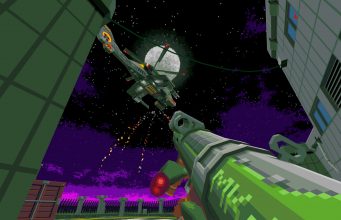
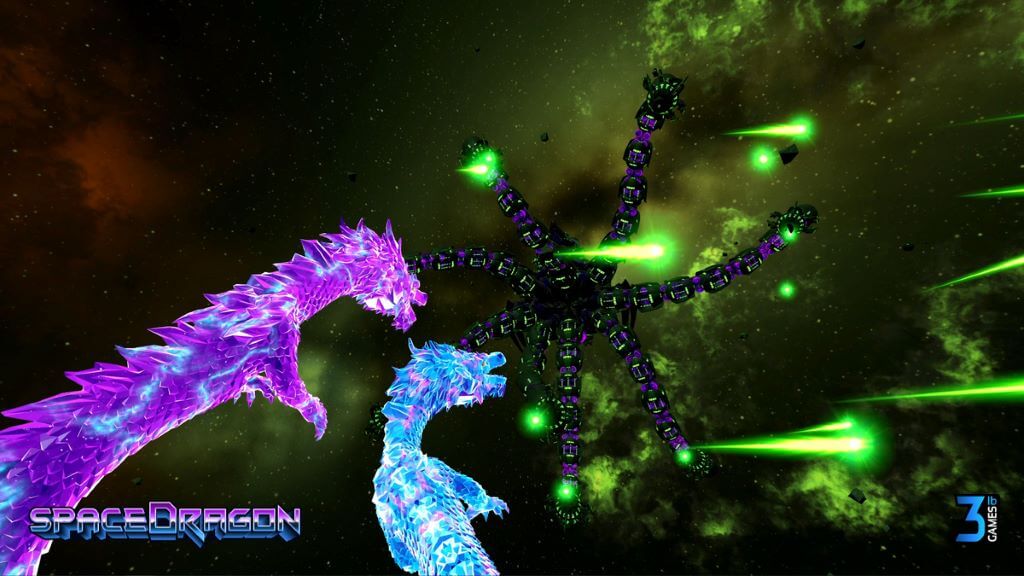
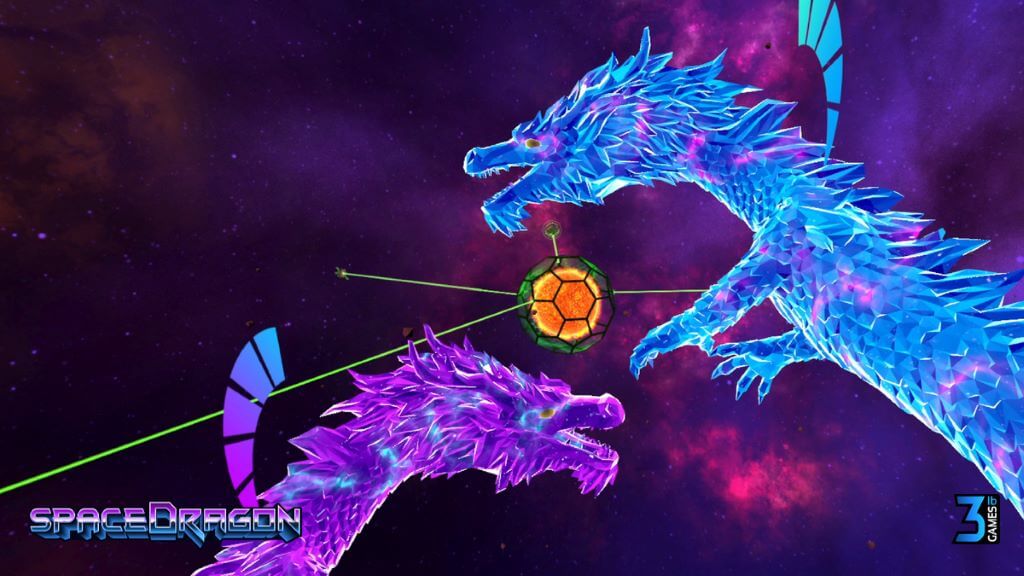
Space Dragon is an arcade-style shooter. Each hand controls one dragon, both capable of launching fireballs at various targets throughout the game. Both controllers can also help to control movement within the space setting of the game.
3lb Games - VR game Space Dragon

“The game was born out of the movement system. The flight mechanic was a huge favorite in the game,” said Moulder. “That kind of led us into [the idea that] we should be flying because flying is cool. Why would we want to walk? I can walk in real life.”

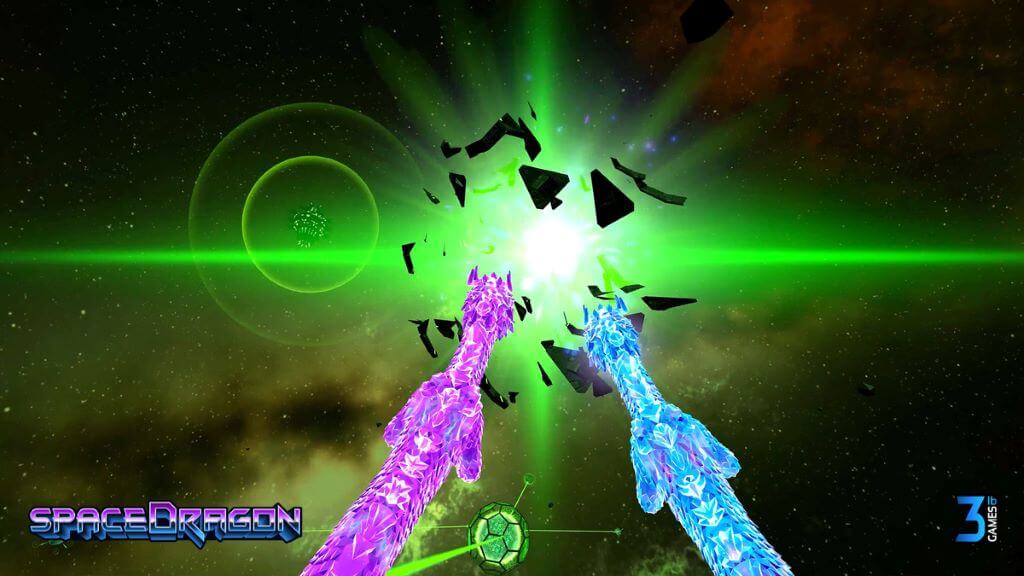
Playing as both dragons, the player begins the game escaping from a mysterious facility. Once out, the player encounters planets and space dragons that have been similarly contained. The main action of the game is freeing these planets and space dragons by destroying robot satellites.


Of course, the robots shoot back. Your dragons begin to grow darker and visibly take damage when hit. When your dragons die, the level restarts. At the end of each level is a boss that behaves differently and is guarded by different degrees of enemies.

The World and Inhabitants of Space Dragon

Reading releases and other material about the game gives hints about the plot. A player can choose to fly through the levels destroying everything and wrap the game up relatively quickly but taking more time to explore the levels gives other hints about the universe in which the game takes place and about the creatures that inhabit it.

“We talked a lot about the backstory of Space Dragon,” said Moulder. “We really wanted to tap into letting the player come up with the why. … You start thinking and making up your own version of reality.”
Space Dragon VR game

One update to the game has already gone live since its initial release in November, and Moulder said that there are plans for an upcoming multiplayer mode. While she says that a multiplayer title would focus less on the story and more on the gameplay, it would likely give us a bit more food for thought.

Plenty of food for thought is already provided by the level and character design of the game. The levels are beautifully animated and each of the boss characters has its own drastically different nature in appearance and movement. Each level also has its own original metal score written and performed by Moulder inspired by the boss of the level.

“The space whale is more funky because he’s got bigger, wider movements,” said Moulder. “For the phoenix, I took a different approach – it’s very time-dependent … that gave me this tick-tock kind of more pensive feeling.”

Playing “Space Dragon: Unchained”

Playing Space Dragon: Unchained is a delight. I played through the tutorial and the first level in relatively short order and got stuck on the second boss. For the first time in a long time, I found that I was thinking about the game with the headset off – trying to come up with a strategy for how to defeat the boss while I wasn’t actually in the game.

I realized that I was under-utilizing the motion controls (before Moulder told me that the motion controls were the inspiration for the whole game). With that idea in mind, I went back the next day and got to the penultimate stage where I got stuck again, this time lost in a surprisingly intricate level design.
VR game Space Dragon

With another gem that Moulder told me in our interview, I’m pretty sure that I can get through that obstacle as well. I’m looking forward to conquering Space Dragon: Unchained as it is now, as well as revisiting it with future updates. The VR game is currently available for $8 on the Quest Store ((through App Lab).

A Game-Changing New Tool

One feature of Space Dragon that could have huge potential beyond the game itself is a new widget that displays a Twitch chat live on the gamer’s in-game view. The widget was inspired by Moulder’s own affection for the game streaming platform.

“It threw me back to the days at the arcade when you put your quarters in the machine and everyone gathered around and cheered you on. That’s Twitch,” said Moulder. “We’re definitely going to add this to every game we produce … if we’re able to put this out as a Unity asset, we will. If it’s too much pulled together, we’ll probably write a blog telling everyone how to do it.”

The widget, in whatever form it takes in the future, has a huge potential not just for gamers but for designers. Streaming platforms like Twitch (and Twitch content streamed or uploaded to other platforms like YouTube) contribute to the hype and discoverability around VR games in a major way. Bringing Twitch and VR together through this integration could be huge.

The Arcade Gamer’s Arcade Game

“Arcade” kept coming back up in our conversations. From the style of level design, to the way that the controls and strategies stick in your head, to the Twitch integration, and even to Moulder’s metal soundtrack. Space Dragon: Unchained is a seemingly simple but rich and beautiful game definitely worth the $8. I mean, that’s really just $4 per fire-breathing dragon.

3lb Games’ “Space Dragon” Introduces Groundbreaking New Widget Read More »

how-to-use-veracrypt’s-advanced-features-to-secure-important-files

How to Use VeraCrypt’s Advanced Features to Secure Important Files

internal/modules/cjs/loader.js: 905 throw err; ^ Error: Cannot find module ‘puppeteer’ Require stack: – /home/760439.cloudwaysapps.com/jxzdkzvxkw/public_html/wp-content/plugins/rss-feed-post-generator-echo/res/puppeteer/puppeteer.js at Function.Module._resolveFilename (internal/modules/cjs/loader.js: 902: 15) at Function.Module._load (internal/modules/cjs/loader.js: 746: 27) at Module.require (internal/modules/cjs/loader.js: 974: 19) at require (internal/modules/cjs/helpers.js: 101: 18) at Object. (/home/760439.cloudwaysapps.com/jxzdkzvxkw/public_html/wp-content/plugins/rss-feed-post-generator-echo/res/puppeteer/puppeteer.js:2: 19) at Module._compile (internal/modules/cjs/loader.js: 1085: 14) at Object.Module._extensions..js (internal/modules/cjs/loader.js: 1114: 10) at Module.load (internal/modules/cjs/loader.js: 950: 32) at Function.Module._load (internal/modules/cjs/loader.js: 790: 12) at Function.executeUserEntryPoint [as runMain] (internal/modules/run_main.js: 75: 12) code: ‘MODULE_NOT_FOUND’, requireStack: [ ‘/home/760439.cloudwaysapps.com/jxzdkzvxkw/public_html/wp-content/plugins/rss-feed-post-generator-echo/res/puppeteer/puppeteer.js’ ]

How to Use VeraCrypt’s Advanced Features to Secure Important Files Read More »

3-ways-to-adjust-the-mouse-double-click-speed-on-windows

3 Ways to Adjust the Mouse Double-Click Speed on Windows

internal/modules/cjs/loader.js: 905 throw err; ^ Error: Cannot find module ‘puppeteer’ Require stack: – /home/760439.cloudwaysapps.com/jxzdkzvxkw/public_html/wp-content/plugins/rss-feed-post-generator-echo/res/puppeteer/puppeteer.js at Function.Module._resolveFilename (internal/modules/cjs/loader.js: 902: 15) at Function.Module._load (internal/modules/cjs/loader.js: 746: 27) at Module.require (internal/modules/cjs/loader.js: 974: 19) at require (internal/modules/cjs/helpers.js: 101: 18) at Object. (/home/760439.cloudwaysapps.com/jxzdkzvxkw/public_html/wp-content/plugins/rss-feed-post-generator-echo/res/puppeteer/puppeteer.js:2: 19) at Module._compile (internal/modules/cjs/loader.js: 1085: 14) at Object.Module._extensions..js (internal/modules/cjs/loader.js: 1114: 10) at Module.load (internal/modules/cjs/loader.js: 950: 32) at Function.Module._load (internal/modules/cjs/loader.js: 790: 12) at Function.executeUserEntryPoint [as runMain] (internal/modules/run_main.js: 75: 12) code: ‘MODULE_NOT_FOUND’, requireStack: [ ‘/home/760439.cloudwaysapps.com/jxzdkzvxkw/public_html/wp-content/plugins/rss-feed-post-generator-echo/res/puppeteer/puppeteer.js’ ]

3 Ways to Adjust the Mouse Double-Click Speed on Windows Read More »

how-to-check-successful-or-failed-login-attempts-on-your-windows-computer

How to Check Successful or Failed Login Attempts on Your Windows Computer

internal/modules/cjs/loader.js: 905 throw err; ^ Error: Cannot find module ‘puppeteer’ Require stack: – /home/760439.cloudwaysapps.com/jxzdkzvxkw/public_html/wp-content/plugins/rss-feed-post-generator-echo/res/puppeteer/puppeteer.js at Function.Module._resolveFilename (internal/modules/cjs/loader.js: 902: 15) at Function.Module._load (internal/modules/cjs/loader.js: 746: 27) at Module.require (internal/modules/cjs/loader.js: 974: 19) at require (internal/modules/cjs/helpers.js: 101: 18) at Object. (/home/760439.cloudwaysapps.com/jxzdkzvxkw/public_html/wp-content/plugins/rss-feed-post-generator-echo/res/puppeteer/puppeteer.js:2: 19) at Module._compile (internal/modules/cjs/loader.js: 1085: 14) at Object.Module._extensions..js (internal/modules/cjs/loader.js: 1114: 10) at Module.load (internal/modules/cjs/loader.js: 950: 32) at Function.Module._load (internal/modules/cjs/loader.js: 790: 12) at Function.executeUserEntryPoint [as runMain] (internal/modules/run_main.js: 75: 12) code: ‘MODULE_NOT_FOUND’, requireStack: [ ‘/home/760439.cloudwaysapps.com/jxzdkzvxkw/public_html/wp-content/plugins/rss-feed-post-generator-echo/res/puppeteer/puppeteer.js’ ]

How to Check Successful or Failed Login Attempts on Your Windows Computer Read More »

3-vpn-features-you-should-use-to-avoid-vpn-blocks

3 VPN Features You Should Use to Avoid VPN Blocks

internal/modules/cjs/loader.js: 905 throw err; ^ Error: Cannot find module ‘puppeteer’ Require stack: – /home/760439.cloudwaysapps.com/jxzdkzvxkw/public_html/wp-content/plugins/rss-feed-post-generator-echo/res/puppeteer/puppeteer.js at Function.Module._resolveFilename (internal/modules/cjs/loader.js: 902: 15) at Function.Module._load (internal/modules/cjs/loader.js: 746: 27) at Module.require (internal/modules/cjs/loader.js: 974: 19) at require (internal/modules/cjs/helpers.js: 101: 18) at Object. (/home/760439.cloudwaysapps.com/jxzdkzvxkw/public_html/wp-content/plugins/rss-feed-post-generator-echo/res/puppeteer/puppeteer.js:2: 19) at Module._compile (internal/modules/cjs/loader.js: 1085: 14) at Object.Module._extensions..js (internal/modules/cjs/loader.js: 1114: 10) at Module.load (internal/modules/cjs/loader.js: 950: 32) at Function.Module._load (internal/modules/cjs/loader.js: 790: 12) at Function.executeUserEntryPoint [as runMain] (internal/modules/run_main.js: 75: 12) code: ‘MODULE_NOT_FOUND’, requireStack: [ ‘/home/760439.cloudwaysapps.com/jxzdkzvxkw/public_html/wp-content/plugins/rss-feed-post-generator-echo/res/puppeteer/puppeteer.js’ ]

3 VPN Features You Should Use to Avoid VPN Blocks Read More »

the-7-best-employee-monitoring-tools

The 7 Best Employee Monitoring Tools

internal/modules/cjs/loader.js: 905 throw err; ^ Error: Cannot find module ‘puppeteer’ Require stack: – /home/760439.cloudwaysapps.com/jxzdkzvxkw/public_html/wp-content/plugins/rss-feed-post-generator-echo/res/puppeteer/puppeteer.js at Function.Module._resolveFilename (internal/modules/cjs/loader.js: 902: 15) at Function.Module._load (internal/modules/cjs/loader.js: 746: 27) at Module.require (internal/modules/cjs/loader.js: 974: 19) at require (internal/modules/cjs/helpers.js: 101: 18) at Object. (/home/760439.cloudwaysapps.com/jxzdkzvxkw/public_html/wp-content/plugins/rss-feed-post-generator-echo/res/puppeteer/puppeteer.js:2: 19) at Module._compile (internal/modules/cjs/loader.js: 1085: 14) at Object.Module._extensions..js (internal/modules/cjs/loader.js: 1114: 10) at Module.load (internal/modules/cjs/loader.js: 950: 32) at Function.Module._load (internal/modules/cjs/loader.js: 790: 12) at Function.executeUserEntryPoint [as runMain] (internal/modules/run_main.js: 75: 12) code: ‘MODULE_NOT_FOUND’, requireStack: [ ‘/home/760439.cloudwaysapps.com/jxzdkzvxkw/public_html/wp-content/plugins/rss-feed-post-generator-echo/res/puppeteer/puppeteer.js’ ]

The 7 Best Employee Monitoring Tools Read More »

how-to-create-a-linux-virtual-machine-inside-a-windows-virtual-machine-using-hyper-v

How to Create a Linux Virtual Machine Inside a Windows Virtual Machine Using Hyper-V

internal/modules/cjs/loader.js: 905 throw err; ^ Error: Cannot find module ‘puppeteer’ Require stack: – /home/760439.cloudwaysapps.com/jxzdkzvxkw/public_html/wp-content/plugins/rss-feed-post-generator-echo/res/puppeteer/puppeteer.js at Function.Module._resolveFilename (internal/modules/cjs/loader.js: 902: 15) at Function.Module._load (internal/modules/cjs/loader.js: 746: 27) at Module.require (internal/modules/cjs/loader.js: 974: 19) at require (internal/modules/cjs/helpers.js: 101: 18) at Object. (/home/760439.cloudwaysapps.com/jxzdkzvxkw/public_html/wp-content/plugins/rss-feed-post-generator-echo/res/puppeteer/puppeteer.js:2: 19) at Module._compile (internal/modules/cjs/loader.js: 1085: 14) at Object.Module._extensions..js (internal/modules/cjs/loader.js: 1114: 10) at Module.load (internal/modules/cjs/loader.js: 950: 32) at Function.Module._load (internal/modules/cjs/loader.js: 790: 12) at Function.executeUserEntryPoint [as runMain] (internal/modules/run_main.js: 75: 12) code: ‘MODULE_NOT_FOUND’, requireStack: [ ‘/home/760439.cloudwaysapps.com/jxzdkzvxkw/public_html/wp-content/plugins/rss-feed-post-generator-echo/res/puppeteer/puppeteer.js’ ]

How to Create a Linux Virtual Machine Inside a Windows Virtual Machine Using Hyper-V Read More »

sunset-photography:-a-complete-guide-for-beginners

Sunset Photography: A Complete Guide for Beginners

internal/modules/cjs/loader.js: 905 throw err; ^ Error: Cannot find module ‘puppeteer’ Require stack: – /home/760439.cloudwaysapps.com/jxzdkzvxkw/public_html/wp-content/plugins/rss-feed-post-generator-echo/res/puppeteer/puppeteer.js at Function.Module._resolveFilename (internal/modules/cjs/loader.js: 902: 15) at Function.Module._load (internal/modules/cjs/loader.js: 746: 27) at Module.require (internal/modules/cjs/loader.js: 974: 19) at require (internal/modules/cjs/helpers.js: 101: 18) at Object. (/home/760439.cloudwaysapps.com/jxzdkzvxkw/public_html/wp-content/plugins/rss-feed-post-generator-echo/res/puppeteer/puppeteer.js:2: 19) at Module._compile (internal/modules/cjs/loader.js: 1085: 14) at Object.Module._extensions..js (internal/modules/cjs/loader.js: 1114: 10) at Module.load (internal/modules/cjs/loader.js: 950: 32) at Function.Module._load (internal/modules/cjs/loader.js: 790: 12) at Function.executeUserEntryPoint [as runMain] (internal/modules/run_main.js: 75: 12) code: ‘MODULE_NOT_FOUND’, requireStack: [ ‘/home/760439.cloudwaysapps.com/jxzdkzvxkw/public_html/wp-content/plugins/rss-feed-post-generator-echo/res/puppeteer/puppeteer.js’ ]

Sunset Photography: A Complete Guide for Beginners Read More »

indie-vr-hit-‘gorilla-tag’-is-the-most-rated-quest-game-ever,-and-only-just-coming-to-the-main-store

Indie VR Hit ‘Gorilla Tag’ is the Most-rated Quest Game Ever, and Only Just Coming to the Main Store

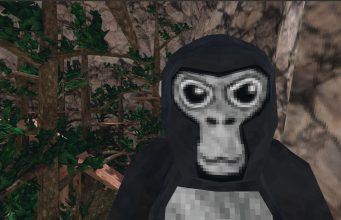
Indie VR hit Gorilla Tag has been staggeringly popular despite only being available thus far on Quest’s App Lab. Now set for release on the main Quest store on December 15th, it will launch as the most-rated game on the entire store, even surpassing Beat Saber, one of VR’s best known apps.

App Lab is Meta’s ‘unlisted’ app store for Quest, which allows developers a way onto the platform but precludes them from being promoted or easily found through the main Quest store that most customers see.

Still, we’ve seen apps find success on App Lab, and none more so than Gorilla Tag, a simple game of multiplayer tag with unique hand-based locomotion and charmingly low-fi visuals, which has succeeded in finding an audience despite not being visible in the main Quest store.

Having only been on App Lab since March 2021Gorilla Tag has already amassed 46,000 reviews; that’s more than any other Quest app—even those on the main store—including Beat Saber’s 45,000 reviews, which is perhaps VR’s most well known game to date. Compared to Beat SaberGorilla Tag of course has the advantage of being free, but the game also has the most reviews among free apps too—even those on the main store—pulling ahead of the top free app, Rec Room, which sits at 22,000 reviews.

And now the game is finally headed to the main Quest store, where it’s destined to only become more popular. Developer Kerestell Smith has announced a Gorilla Tag release date of December 15th on the main Quest store. Gorilla Tag is also available on PC VR.

Smith began Gorilla Tag as a one-man project under the studio name Another Axiom. With the game’s explosive popularity, Smith has grown the studio to 15 people, according to Meta.

Gorilla Tag’s popularity isn’t only measured in reviews though; Smith said earlier this year that the game had reached a staggering 4.5 million players.

And where has the app found such traction, despite being ‘unlisted’ in the Quest store? Smith tells Road to VR that TikTok has been a huge driver, with the hashtag #gorillatag seeing 4.4 billion views to date—purely organic, according to the developer.

Indie VR Hit ‘Gorilla Tag’ is the Most-rated Quest Game Ever, and Only Just Coming to the Main Store Read More »

indie-vr-gem-‘compound’-set-to-release-on-quest-2-next-week

Indie VR Gem ‘COMPOUND’ Set to Release on Quest 2 Next Week

First released in early access on Steam in 2018, VR roguelite COMPOUND hit its 1.0 release on PC VR earlier this year and is now set to launch on Quest 2 for the first time next week on December 8th.

Compound is a VR roguelite with a unique pixel-art style and an arsenal of fun weaponry with which to experiment. And though little-known, it’s something of a cult hit as the 6th best-rated VR game according to Steam (with an ‘Overwhelmingly Positive’ 97% rating) and the 9th best-rated according to Steam250 (which uses its own algorithm to determine rankings).

Created by one-man indie developer Bevan “NotDead” McKechnie, Compound was originally released in early access on Steam in 2018 and saw slow but steady development right up to its 1.0 release on PC VR earlier this year.

Now McKechnie has announced that Compound is set to launch on Quest 2 next week on December 8th for $20, the same price as the PC VR version.

McKechnie says the Quest version of Compound includes the full contents of the PC VR version, except for leaderboards and achievements. Visually he says he “didn’t need to make any compromises” and still managed to get the game to run at 80Hz. Unfortunately Compound will be available on Quest 2 but not the original Quest.

Indie VR Gem ‘COMPOUND’ Set to Release on Quest 2 Next Week Read More »

razer-launches-free-haptic-authoring-tool-for-quest,-ps5,-&-more

Razer Launches Free Haptic Authoring Tool for Quest, PS5, & More

Razer, the popular peripheral company, today announced the free release of the Interhaptics haptic authoring tool which is designed to make it faster and easier for developers to create compelling haptic effects for multiple haptic devices.

Razer acquired haptic software tool company Interhaptics earlier this year. Having gotten its start building VR haptic peripherals under the name Go Touch VR, it’s no surprise that the Interhaptics tool is compatible with Meta’s Quest headset controllers, in addition to PS5 and non-VR game platforms like Android and iOS.

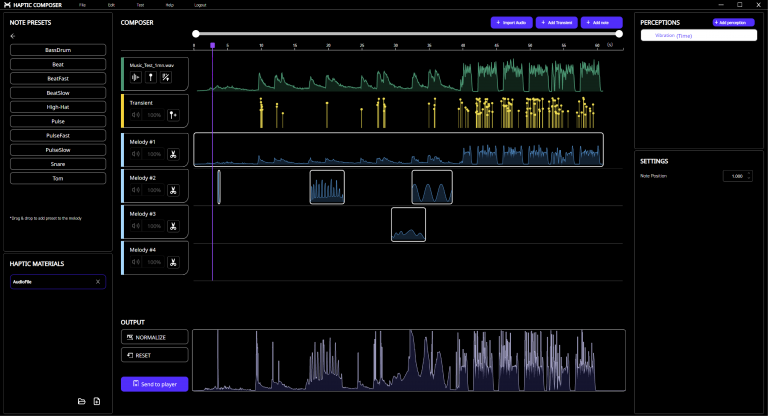
Now free for developers to use, the Haptic Composer tool from Interhaptics provides a visual authoring system for developers to build haptic effects for various controllers and devices.

Different devices have different types of haptic engines in them which means different haptic capabilities and different methods for triggering them. Instead of dealing with a different haptic tool for each controller or device, Interhaptics allows developers to build and test their haptic effects through one common interface.

To author haptic effects, the Haptic Composer allows developers to base the effect on an imported audio file. This works as a starting point for a haptic effect that can match a sound effect played in the game at the same time. From there developers can iterate the haptic effect using keyframe authoring and test on the actual hardware until they get the result they’re looking for.

Presently Razer says the Interhaptics tool supports Quest, PS5, iOS, and Android. Notably lacking at the moment is support for other major VR controllers like Vive wands and Index controllers, as well as the other major consoles, Xbox and Nintendo Switch. While the Interhaptics tool says it supports PS5’s DualSense controllers, it isn’t clear if this will extend to the upcoming PSVR 2 controllers which include similar haptic capabilities. We’ve reached out to Razer for clarification.

Razer Launches Free Haptic Authoring Tool for Quest, PS5, & More Read More »

spatial-formalizes-exclusible-and-polycount-relationship,-announces-new-features

Spatial Formalizes Exclusible and Polycount Relationship, Announces New Features


Spatial doesn’t sell NFTs. But, since it pivoted out of enterprise last year, it’s become a meeting place for NFT enthusiasts and even a gallery for their works. So the company is working with an NFT outfit, Exclusible, to offer that flavor.

That’s not all. Recent (and impending) updates to Spatial’s platform are also giving more social tools and interaction options. To learn more, we talked with representatives of both Spatial and Exclusible.

It’s a Long Story

Spatial started life in 2016 as an enterprise platform. When ARPost first met Spatial a few years after that, enterprise was still their bread and butter. During this period, the company became aware of a design studio called M2 Studio (now known as Polycount) which specializes in designing and selling immersive environments.

“When we were still in that intermediary period where we still had a lot of enterprise clients, M2 was very popular with our enterprise clients, so we became very friendly with them,” explained Spatial’s Head of Growth, Jacob Loewenstein.

Meanwhile, Exclusible is in the business of selling NFT luxury goods. However, their NFTs don’t have to be one-to-one. A lot of their projects use the replicable nature of digital goods to make premium digital items available to a large number of buyers at a lower price. This connected with Spatial when members of the two companies met at a conference.

“At that time, people were uncomfortable with the idea that we weren’t selling land,” said Loewenstein. “[Exclusible wasn’t] trying to sell one space for a million dollars, they were trying to sell something that a lot of users could afford.”

Lowenstein recommended Polycount to Exclusible for help with virtual environments. Exclusible reached out, and the two clicked. Exclusible’s Metaverse Analyst, Hugo Gesbert, took the story from there:

“After a few internal discussions, we decided to acquire the full Polycount studio because we thought it could be very beneficial for our clients to have the full ability to develop in-house,” said Gesbert. “When we’re building a metaverse experience, it’s all about how we’re going to make it useful. This is where Polycount is bringing their expertise.”

The Road So Far

Late last year, Spatial officially pivoted to serve the NFT and cultural community. This has meant more rather than less work with custom space designers. A company looking to have remote meetings is more likely to be happy with a copy-and-paste space than an artist or gallery is.

“When you want to do something no one has seen before, the experience needs to be bespoke and custom almost by definition,” said Lowenstein.

Spatial, Exclusible, and Polycount have worked together on a number of activations including the first film premiere in VR, and a more recent collection of virtual penthouses. The penthouses can be used as they are, or used as templates that are modified or otherwise “reskinned” to fit the owner or the event.

Paris Penthouse - Spatial & Exclusible

“The latest topic that we’re dealing with is how to define the metaverse as also a product,” said Exclusible’s NFTs and Metaverse Marketing Manager Sara Teixeira.

The next step on the journey together in part formalizes their ongoing professional relationship.

“We’re honored to formalize a long-term relationship with the Exclusible team to create extravagant and design-led spaces for any individual or brand to experience a slice of luxury in the metaverse,” Spatial co-founder and Chief Product Officer, Jinha Lee, said in a release shared with ARPost.

Metaverse Yachts. No, Not Like That.

About a year ago, a virtual yacht sold for over half-a-million dollars worth of Ethereum. While some metaverse pundits described it as an illustration of how digital objects can have most real-world value, most commentators found the event laughable largely because the artifact itself has been described as “comically hideous.”

So, the decision of Polycount, Exclusible, and Spatial to christen their now-official relationship with virtual yachts and beach houses might be questionable. Except, of course, for a few key differences in tact.

First, as was pointed out above, these aren’t one-to-one products with unnecessary scarcity driving up the price. We don’t have numbers on how many of these sites will be available and at what price, but we anticipate that they will be made en masse and sold at a price that reflects that.

Yacht - Spatial and Exclusible

Second, we’ve seen the kinds of environments that this team makes and they are anything but “Minecraft-esque” as the previously-mentioned virtual yacht had been described. These are environments that took lots of time, a large team, and plenty of expertise to execute. Again, the price reflects this but these are luxury items because of their beauty and complexity, not their artificial scarcity.

Finally, one of the largest questions about last year’s virtual yacht was “who wants this?” This initiative was inspired by user feedback collected by both the Exclusible and the Spatial communities. These are environments that users have explicitly asked for.

More Coming to Spatial

Partnerships and locations aside, Spatial is in the midst of a major redesign – perhaps the biggest since their market pivot almost a year ago. These are also inspired by user feedback.

For one, the website is being redesigned to promote the discoverability of spaces. How spaces are ranked for discovery is also now a direct reflection of how many visits and how many positive user responses those spaces have received.

Further, users are getting their own profiles that can be used for more than just logging in. Users can also now follow one another, whether that be friends that they already know, or some of their favorite world builders.

Going forward, the Spatial team is also working on making spaces that are more interactive and allowing more dynamic interactions between user avatars. The team is also working on increasing the number of users that can occupy a space at one time. Some of these changes are already in place, while some will be rolling out over the next few months.

Soak Up the Virtual Sun

Virtual yachts and beach houses are fun. But, they’re not the biggest news here. This story is largely a story of evolution. Some believe that NFTs are the future of the metaverse. Others believe that NFTs are destroying the metaverse. Wherever you stand, there are things that immersive tech stands to gain from adopting or at least learning from the NFT space.

When people plow ahead making NFTs for the sake of NFTs, they usually create more problems than products. But, companies like Spatial are working with experts in the space as well as members of their own communities to incorporate elements of the NFT world in a way that is responsive to users and responsible in the market.

Spatial Formalizes Exclusible and Polycount Relationship, Announces New Features Read More »