Author name: Rejus Almole

rocket-report:-channeling-the-future-at-wallops;-spacex-recovers-rocket-wreckage

Rocket Report: Channeling the future at Wallops; SpaceX recovers rocket wreckage


China’s Space Pioneer seems to be back on track a year after an accidental launch.

A SpaceX Falcon 9 rocket carrying a payload of 24 Starlink Internet satellites soars into space after launching from Vandenberg Space Force Base, California, shortly after sunset on July 18, 2025. This image was taken in Santee, California, approximately 250 miles (400 kilometers) away from the launch site. Credit: Kevin Carter/Getty Images

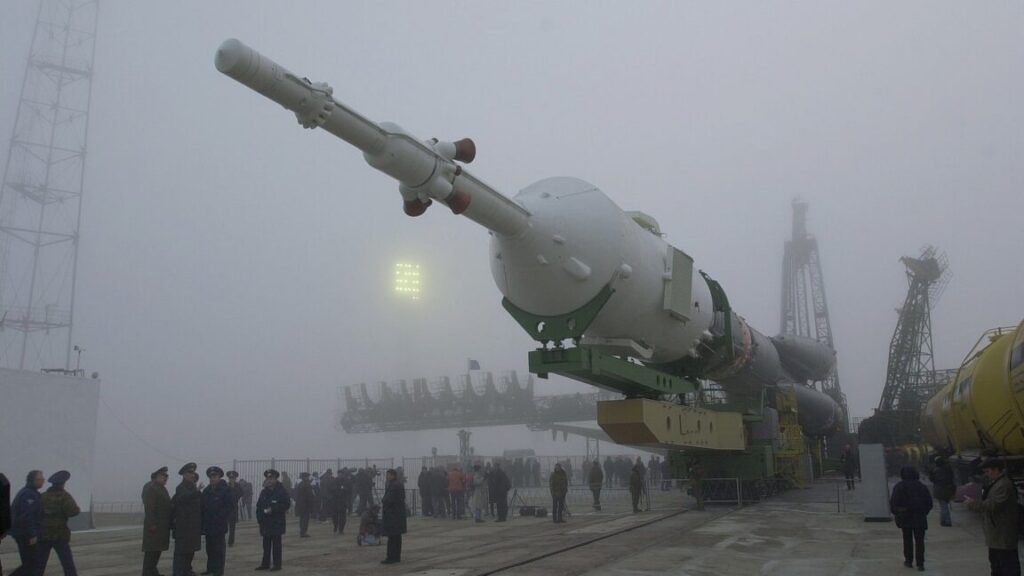
Welcome to Edition 8.04 of the Rocket Report! The Pentagon’s Golden Dome missile defense shield will be a lot of things. Along with new sensors, command and control systems, and satellites, Golden Dome will require a lot of rockets. The pieces of the Golden Dome architecture operating in orbit will ride to space on commercial launch vehicles. And Golden Dome’s space-based interceptors will essentially be designed as flying fuel tanks with rocket engines. This shouldn’t be overlooked, and that’s why we include a couple of entries discussing Golden Dome in this week’s Rocket Report.

As always, we welcome reader submissions. If you don’t want to miss an issue, please subscribe using the box below (the form will not appear on AMP-enabled versions of the site). Each report will include information on small-, medium-, and heavy-lift rockets, as well as a quick look ahead at the next three launches on the calendar.

Space-based interceptors are a real challenge. The newly installed head of the Pentagon’s Golden Dome missile defense shield knows the clock is ticking to show President Donald Trump some results before the end of his term in the White House, Ars reports. Gen. Michael Guetlein identified command-and-control and the development of space-based interceptors as two of the most pressing technical challenges for Golden Dome. He believes the command-and-control problem can be “overcome in pretty short order.” The space-based interceptor piece of the architecture is a different story.

Proven physics, unproven economics … “I think the real technical challenge will be building the space-based interceptor,” Guetlein said. “That technology exists. I believe we have proven every element of the physics that we can make it work. What we have not proven is, first, can I do it economically, and then second, can I do it at scale? Can I build enough satellites to get after the threat? Can I expand the industrial base fast enough to build those satellites? Do I have enough raw materials, etc.?” Military officials haven’t said how many space-based interceptors will be required for Golden Dome, but outside estimates put the number in the thousands.

The easiest way to keep up with Eric Berger’s and Stephen Clark’s reporting on all things space is to sign up for our newsletter. We’ll collect their stories and deliver them straight to your inbox.

Sign Me Up!

One big defense prime is posturing for Golden Dome. Northrop Grumman is conducting ground-based testing related to space-based interceptors as part of a competition for that segment of the Trump administration’s Golden Dome missile-defense initiative, The War Zone reports. Kathy Warden, Northrop Grumman’s CEO, highlighted the company’s work on space-based interceptors, as well as broader business opportunities stemming from Golden Dome, during a quarterly earnings call this week. Warden identified Northrop’s work in radars, drones, and command-and-control systems as potentially applicable to Golden Dome.

But here’s the real news … “It will also include new innovation, like space-based interceptors, which we’re testing now,” Warden continued. “These are ground-based tests today, and we are in competition, obviously, so not a lot of detail that I can provide here.” Warden declined to respond directly to a question about how the space-based interceptors Northrop Grumman is developing now will actually defeat their targets. (submitted by Biokleen)

Trump may slash environmental rules for rocket launches. The Trump administration is considering slashing rules meant to protect the environment and the public during commercial rocket launches, changes that companies like Elon Musk’s SpaceX have long sought, ProPublica reports. A draft executive order being circulated among federal agencies, and viewed by ProPublica, directs Secretary of Transportation Sean Duffy to “use all available authorities to eliminate or expedite” environmental reviews for launch licenses. It could also, in time, require states to allow more launches or even more launch sites along their coastlines.

Getting political at the FAA … The order is a step toward the rollback of federal oversight that Musk, who has fought bitterly with the Federal Aviation Administration over his space operations, and others have pushed for. Commercial rocket launches have grown exponentially more frequent in recent years. In addition to slashing environmental rules, the draft executive order would make the head of the FAA’s Office of Commercial Space Transportation a political appointee. This is currently a civil servant position, but the last head of the office took a voluntary separation offer earlier this year.

There’s a SPAC for that. An unproven small launch startup is partnering with a severely depleted SPAC trust to do the impossible: go public in a deal they say will be valued at $400 million, TechCrunch reports. Innovative Rocket Technologies Inc., or iRocket, is set to merge with a Special Purpose Acquisition Company, or SPAC, founded by former Commerce Secretary Wilbur Ross. But the most recent regulatory filings by this SPAC showed it was in a tenuous financial position last year, with just $1.6 million held in trust. Likewise, iRocket isn’t flooded with cash. The company has raised only a few million in venture funding, a fraction of what would be needed to develop and test the company’s small orbital-class rocket, named Shockwave.

SpaceX traces a path to orbit for NASA. Two NASA satellites soared into orbit from California aboard a SpaceX Falcon 9 rocket Wednesday, commencing a $170 million mission to study a phenomenon of space physics that has eluded researchers since the dawn of the Space Age, Ars reports. The twin spacecraft are part of the NASA-funded TRACERS mission, which will spend at least a year measuring plasma conditions in narrow regions of Earth’s magnetic field known as polar cusps. As the name suggests, these regions are located over the poles. They play an important but poorly understood role in creating colorful auroras as plasma streaming out from the Sun interacts with the magnetic field surrounding Earth. The same process drives geomagnetic storms capable of disrupting GPS navigation, radio communications, electrical grids, and satellite operations.

Plenty of room for more … The TRACERS satellites are relatively small, each about the size of a washing machine, so they filled only a fraction of the capacity of SpaceX’s Falcon 9 rocket. Three other small NASA tech demo payloads hitched a ride to orbit with TRACERS, kicking off missions to test an experimental communications terminal, demonstrate an innovative scalable satellite platform made of individual building blocks, and study the link between Earth’s atmosphere and the Van Allen radiation belts. In addition to those missions, the European Space Agency launched its own CubeSat to test 5G communications from orbit. Five smallsats from an Australian company rounded out the group. Still, the Falcon 9 rocket’s payload shroud was filled with less than a quarter of the payload mass it could have delivered to the TRACERS mission’s targeted Sun-synchronous orbit.

Tianlong launch pad ready for action. Chinese startup Space Pioneer has completed a launch pad at Jiuquan spaceport in northwestern China for its Tianlong 3 liquid propellent rocket ahead of a first orbital launch, Space News reports. Space Pioneer said the launch pad passed an acceptance test, and ground crews raised a full-scale model of the Tianlong 3 rocket on the launch pad. “The rehearsal test was successfully completed,” said Space Pioneer, one of China’s leading private launch companies. The activation of the launch pad followed a couple of weeks after Space Pioneer announced the completion of static loads testing on Tianlong 3.

More to come … While this is an important step forward for Space Pioneer, construction of the launch pad is just one element the company needs to finish before Tianlong 3 can lift off for the first time. In June 2024, the company ignited Tianlong 3’s nine-engine first stage on a test stand in China. But the rocket broke free of its moorings on the test stand and unexpectedly climbed into the sky before crashing in a fireball nearby. Space Pioneer says the “weak design of the rocket’s tail structure was the direct cause of the failure” last year. The company hasn’t identified next steps for Tianlong 3, or when it might be ready to fly. Tianlong 3 is a kerosene-fueled rocket with nine main engines, similar in design architecture and payload capacity to SpaceX’s Falcon 9. Also, like Falcon 9, Tianlong 3 is supposed to have a recoverable and reusable first stage booster.

Dredging up an issue at Wallops. Rocket Lab has asked regulators for permission to transport oversized Neutron rocket structures through shallow waters to a spaceport off the coast of Virginia as it races to meet a September delivery deadline, TechCrunch reports. The request, which was made in July, is a temporary stopgap while the company awaits federal clearance to dredge a permanent channel to the Wallops Island site. Rocket Lab plans to launch its Neutron medium-lift rocket from the Mid-Atlantic Regional Spaceport (MARS) on Wallops Island, Virginia, a lower-traffic spaceport that’s surrounded by shallow channels and waterways. Rocket Lab has a sizable checklist to tick off before Neutron can make its orbital debut, like mating the rocket stages, performing a “wet dress” rehearsal, and getting its launch license from the Federal Aviation Administration. Before any of that can happen, the rocket hardware needs to make it onto the island from Rocket Lab’s factory on the nearby mainland.

Kedging bets … Access to the channel leading to Wallops Island is currently available only at low tides. So, Rocket Lab submitted an application earlier this year to dredge the channel. The dredging project was approved by the Virginia Marine Resources Commission in May, but the company has yet to start digging because it’s still awaiting federal sign-off from the Army Corps of Engineers. As the company waits for federal approval, Rocket Lab is seeking permission to use a temporary method called “kedging” to ensure the first five hardware deliveries can arrive on schedule starting in September. We don’t cover maritime issues in the Rocket Report, but if you’re interested in learning a little about kedging, here’s a link.

Any better ideas for an Exploration Upper Stage? Not surprisingly, Congress is pushing back against the Trump administration’s proposal to cancel the Space Launch System, the behemoth rocket NASA has developed to propel astronauts back to the Moon. But legislation making its way through the House of Representatives includes an interesting provision that would direct NASA to evaluate alternatives for the Boeing-built Exploration Upper Stage, an upgrade for the SLS rocket set to debut on its fourth flight, Ars reports. Essentially, the House Appropriations Committee is telling NASA to look for cheaper, faster options for a new SLS upper stage.

CYA EUS? The four-engine Exploration Upper Stage, or EUS, is an expensive undertaking. Last year, NASA’s inspector general reported that the new upper stage’s development costs had ballooned from $962 million to $2.8 billion, and the project had been delayed more than six years. That’s almost a year-for-year delay since NASA and Boeing started development of the EUS. So, what are the options if NASA went with a new upper stage for the SLS rocket? One possibility is a modified version of United Launch Alliance’s dual-engine Centaur V upper stage that flies on the Vulcan rocket. It’s no longer possible to keep flying the SLS rocket’s existing single-engine upper stage because ULA has shut down the production line for it.

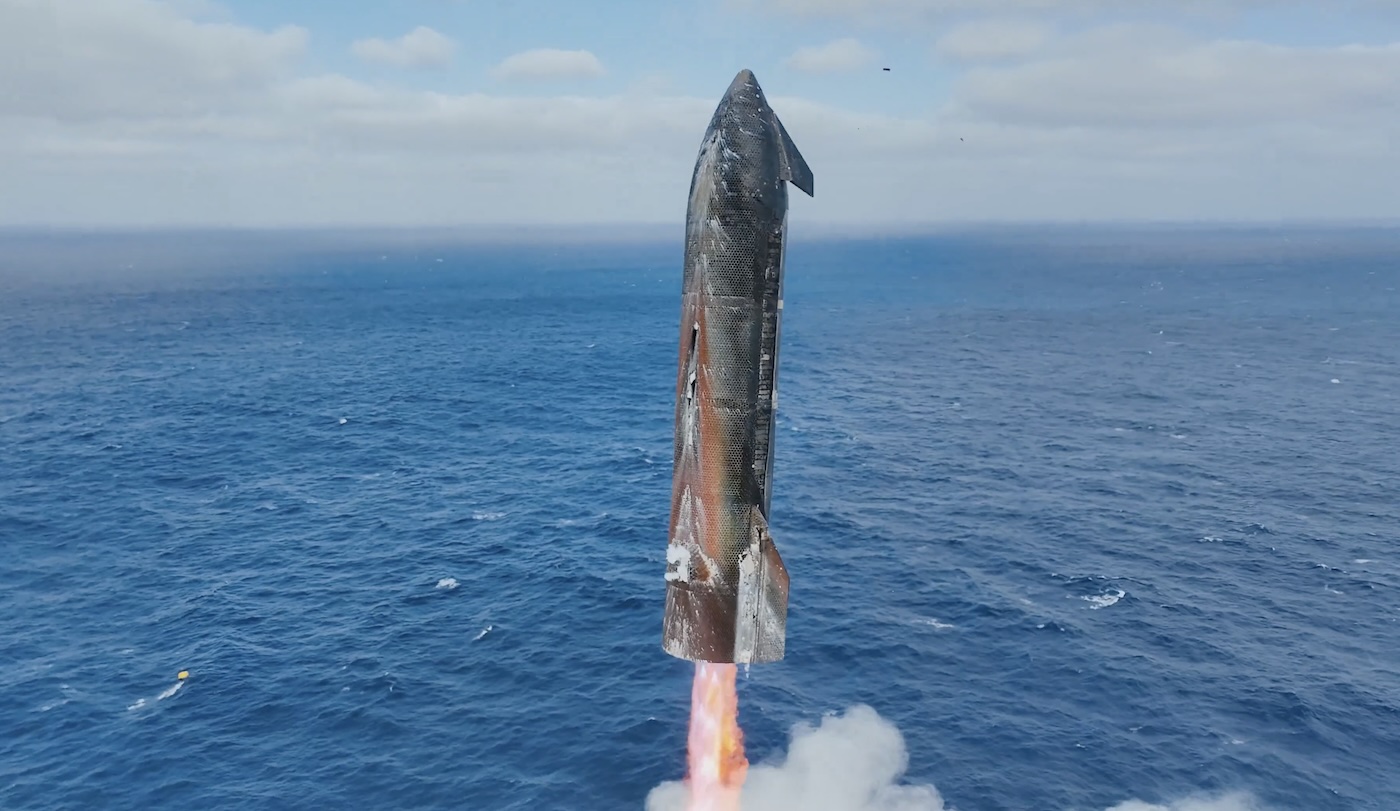
Raising Super Heavy from the deep. For the second time, SpaceX has retrieved an engine section from one of its Super Heavy boosters from the Gulf of Mexico, NASASpaceflight.com reports. Images posted on social media showed the tail end of a Super Heavy booster being raised from the sea off the coast of northern Mexico. Most of the rocket’s 33 Raptor engines appear to still be attached to the lower section of the stainless steel booster. Online sleuths who closely track SpaceX’s activities at Starbase, Texas, have concluded the rocket recovered from the Gulf is Booster 13, which flew on the sixth test flight of the Starship mega-rocket last November. The booster ditched in the ocean after aborting an attempted catch back at the launch pad in South Texas.

But why? … SpaceX recovered the engine section of a different Super Heavy booster from the Gulf last year. The company’s motivation for salvaging the wreckage is unclear. “Speculated reasons include engineering research, environmental mitigation, or even historical preservation,” NASASpaceflight reports.

Next three launches

July 26: Vega C | CO3D & MicroCarb | Guiana Space Center, French Guiana | 02: 03 UTC

July 26: Falcon 9 | Starlink 10-26 | Cape Canaveral Space Force Station, Florida | 08: 34 UTC

July 27: Falcon 9 | Starlink 17-2 | Vandenberg Space Force Base, California | 03: 55 UTC

Photo of Stephen Clark

Stephen Clark is a space reporter at Ars Technica, covering private space companies and the world’s space agencies. Stephen writes about the nexus of technology, science, policy, and business on and off the planet.

Rocket Report: Channeling the future at Wallops; SpaceX recovers rocket wreckage Read More »

nvidia-ai-chips-worth-$1b-smuggled-to-china-after-trump-export-controls

Nvidia AI chips worth $1B smuggled to China after Trump export controls


Black market for US semiconductors operates despite efforts to curb Beijing’s high-tech ambitions.

Credit: VGG | Getty Images

At least $1 billion worth of Nvidia’s advanced artificial intelligence processors were shipped to China in the three months after Donald Trump tightened chip export controls, exposing the limits of Washington’s efforts to restrain Beijing’s high-tech ambitions.

A Financial Times analysis of dozens of sales contracts, company filings, and multiple people with direct knowledge of the deals reveals that Nvidia’s B200 has become the most sought-after—and widely available—chip in a rampant Chinese black market for American semiconductors.

The processor is widely used by US powerhouses such as OpenAI, Google, and Meta to train their latest AI systems, but banned for sale to China.

In May, multiple Chinese distributors started selling B200s to suppliers of data centers that serve Chinese AI groups, according to documents reviewed by the FT. This was shortly after the Trump administration moved to prevent sales of the H20—a less-powerful Nvidia chip tailored to comply with Joe Biden-era curbs.

It is legal to receive and sell restricted Nvidia chips in China, as long as relevant border tariffs are paid, according to lawyers familiar with the rules. Entities selling and sending them to China would be violating US regulations, however.

Last week, Nvidia chief Jensen Huang announced that the Trump administration would begin to allow the selling of its China-specific H20 chip once more.

In the three months beforehand, Chinese distributors from Guangdong, Zhejiang, and Anhui provinces sold Nvidia’s B200s, as well as other restricted processors such as the H100 and H200.

According to contracts reviewed by the FT and people with knowledge of the transactions, the total sales during this period are estimated to be more than $1 billion.

Nvidia has long insisted there is “no evidence of any AI chip diversion”. There is no evidence that the company is involved in, or has knowledge of, its restricted products being sold to China.

“Trying to cobble together data centers from smuggled products is a losing proposition, both technically and economically,” Nvidia told the FT. “Data centers require service and support, which we provide only to authorized Nvidia products.”

“The new century of a smart China”

One Anhui-based company, whose name translates to “Gate of the Era,” is one of the largest sellers of B200s, according to documents seen by the FT.

It was founded in February, as speculation mounted that Trump would stop H20 chip sales to China. The company is fully owned by a group with the same name based in Shanghai, registered on the same day, according to company filings.

The chips were sold in ready-built racks, each containing eight B200s as well as other components and software needed to plug straight into a data centre. Such a rack is about the size of a large suitcase and weighs close to 150 kg including packaging.

The current market price ranges between RMB 3 million to RMB 3.5 million ($489,000) per rack, down from more than RMB 4 million in mid-May when they first became available in China in large quantities. The current prices represent about a 50 percent premium from the average selling price of similar products in the US.

Since mid-May, Gate of the Era obtained at least two shipments of a few hundred B200 racks each, according to people with knowledge of the deals. They sold them directly—or indirectly via secondary distributors—to various data centre suppliers and other companies. Gate of the Era and its affiliates are estimated to have sold close to $400mn of such products.

Gate of the Era lists an AI solution provider China Century—or Huajiyuan in Chinese—as its largest shareholder, according to company registration files.

Also headquartered in Shanghai, China Century states on its website it has a lab in Silicon Valley as well as a supply chain centre in Singapore, with the company saying it uses data tools to build “the new century of a smart China.”

China Century claims to have more than 100 business partners and highlights AliCloud, ByteDance’s Huoshan Cloud, as well as Baidu Cloud as “trusted partners” on its website.

AliCloud and Baidu did not respond to requests for comment. Huoshan Cloud’s name was taken off China Century’s website after the FT approached them for comment. Huoshan Cloud said: “It is standard practice for any company to manage the unauthorized use of its logo.

“We have not procured Nvidia’s chips. We do not have any related [Nvidia chip] business,” said China Century, adding that it did “smart city work,”

The FT visited the registered headquarters of Gate of the Era at an office in a government-run industrial park dedicated to cryptography companies. No representative was available. The company had not yet moved into the office since changing its registration to the address in June.

The FT also visited its previous registered address, which was occupied by a real estate investment group that had been there for more than two years and claimed no connection. When reached on the phone, Gate of the Era declined to comment.

According to industry insiders, product specifications and pictures of packaging seen by the FT, many of the B200 racks sold by Gate of the Era, as well as other Chinese distributors, over the past months were originally from Supermicro, a US-based assembler that provides chip solutions to data centers.

There is no suggestion that Supermicro is involved in or has knowledge of its products being smuggled into China. Supermicro said it “complies with all US export control requirements on the sale and export of GPU systems.”

“Export controls will not prevent the most advanced Nvidia products from entering China,” said one Chinese data centre operator. “What it creates is just inefficiency and huge profits for the risk-taking middlemen.”

“It’s like a seafood market”

Some Chinese distributors openly market products such as Supermicro’s B200 racks on social media that show photos of packages with the company’s logo—although it has not been verified if the sales have been completed.

To showcase the “plug-and-use” nature of such racks, some vendors provide testing for buyers, according to those with knowledge of the practice and clips posted online. Transactions tend to happen on the spot, with buyers picking up the products after checking their legitimacy.

On social media, groups are created to match supply and demand from hundreds of traders and data centre suppliers.

Apart from B200, various other restricted Nvidia chips such as H200, H100, and 5090 are being advertised openly on Chinese social media platforms such as Douyin and Xiaohongshu.

Packaging and installation pictures and videos seen by the FT show product logos of companies such as Supermicro, Dell, and Asus—infrastructure providers that assemble Nvidia’s chips into servers.

There is no suggestion that these companies are aware of the social media advertising or their products being sold in China.

Like Supermicro, Dell, and Asus said they maintained rigorous and strict compliance to all laws and regulations, including US export controls, and took action against partners who failed to comply.

“It’s like a seafood market,” said one distributor, “There’s no shortage.”

Racks for sale—with more smuggled stock to come

The B200 is in high demand given its performance, value, and relatively easy maintenance compared with the more complex Grace Blackwell series, according to industry insiders.

The GB200 AI rack, containing Nvidia’s most high-end products, also appear to be available in China despite US export controls.

One distributor claimed it had sold 10 racks of GB200 at close to RMB 40 million ($5.6 million) each. The FT could not independently verify this claim, while marketing information about GB200 from various distributors’ accounts on social media shows consistent pricing and stock status as “available for pick up onshore.”

Some Chinese distributors have even started advertising for their future stock of B300s, Nvidia’s upgrade from the B200 expected to enter mass production in the fourth quarter of this year.

US export controls have had some effect on the black market.

Given the nature of such products, leading Chinese AI players with global operations are not able to order them in a legally compliant way, install them in their own data centers, or receive Nvidia’s customer support.

This has led to third-party data centre operators becoming key buyers who then provide computing services. Other clients include smaller companies in tech, finance, and health care that do not have strong compliance requirements, as well as Chinese companies on the so-called US entity list that are not allowed to buy any Nvidia chips legally.

However, the scale of these projects is much smaller compared with mega clusters of data centers being built by tech giants around the world.

With H20 export controls having been lifted, many Chinese tech companies are expected to resume purchasing the compliant chips in large sums even though its performance is generations behind the still restricted products such as B200, according to people familiar with their plans.

Black market sales for B200s and other restricted Nvidia chips dropped noticeably after the relaxation of the H20 ban, according to multiple distributors.

“People are weighing their options now H20 is available again,” said one distributor. “But there will always be demand for the most cutting-edge stuff.”

The Southeast Asia stop off

Industry experts said that Southeast Asian countries have become markets where Chinese groups obtained restricted chips.

The US Department of Commerce is discussing adding more export controls on advanced AI products to countries such as Thailand as soon as September, according to two people familiar with the matter. This rule is mainly targeting Chinese intermediaries used to obtain advanced AI chips via these countries.

The US commerce department declined to comment. The Thai government did not respond to a request for comment.

Earlier this month, Malaysia introduced stricter export controls targeting advanced AI chip shipments from the country to other destinations, especially China.

The potential tightening of export controls on Southeast Asian countries has also contributed to buyers rushing to place orders before such rules take effect, according to people with knowledge of the matter.

Even if these avenues to obtain AI chips are closed, Chinese industry insiders said new shipping routes would be established. Supplies have already started arriving via European countries not on the restricted list.

“History has proven many times before that given the huge profit, arbitrators will always find a way,” said one Chinese distributor.

Additional reporting by Michael Acton, Demetri Sevastopulo, and Anantha Lakshmi.

© 2025 The Financial Times Ltd. All rights reserved. Please do not copy and paste FT articles and redistribute by email or post to the web.

Nvidia AI chips worth $1B smuggled to China after Trump export controls Read More »

spacex-launches-a-pair-of-nasa-satellites-to-probe-the-origins-of-space-weather

SpaceX launches a pair of NASA satellites to probe the origins of space weather


“This is going to really help us understand how to predict space weather in the magnetosphere.”

This artist’s illustration of the Earth’s magnetosphere shows the solar wind (left) streaming from the Sun, and then most of it being blocked by Earth’s magnetic field. The magnetic field lines seen here fold in toward Earth’s surface at the poles, creating polar cusps. Credit: NASA/Goddard Space Flight Center

Two NASA satellites rocketed into orbit from California aboard a SpaceX Falcon 9 rocket Wednesday, commencing a $170 million mission to study a phenomenon of space physics that has eluded researchers since the dawn of the Space Age.

The twin spacecraft are part of the NASA-funded TRACERS mission, which will spend at least a year measuring plasma conditions in narrow regions of Earth’s magnetic field known as polar cusps. As the name suggests, these regions are located over the poles. They play an important but poorly understood role in creating colorful auroras as plasma streaming out from the Sun interacts with the magnetic field surrounding Earth.

The same process drives geomagnetic storms capable of disrupting GPS navigation, radio communications, electrical grids, and satellite operations. These outbursts are usually triggered by solar flares or coronal mass ejections that send blobs of plasma out into the Solar System. If one of these flows happens to be aimed at Earth, we are treated with auroras but vulnerable to the storm’s harmful effects.

For example, an extreme geomagnetic storm last year degraded GPS navigation signals, resulting in more than $500 million in economic losses in the agriculture sector as farms temporarily suspended spring planting. In 2022, a period of elevated solar activity contributed to the loss of 40 SpaceX Starlink satellites.

“Understanding our Sun and the space weather it produces is more important to us here on Earth, I think, than most realize,” said Joe Westlake, director of NASA’s heliophysics division.

NASA’s two TRACERS satellites launched Wednesday aboard a SpaceX Falcon 9 rocket from Vandenberg Space Force Base, California. Credit: SpaceX

The launch of TRACERS was delayed 24 hours after a regional power outage disrupted air traffic control over the Pacific Ocean near the Falcon 9 launch site on California’s Central Coast, according to the Federal Aviation Administration. SpaceX called off the countdown Tuesday less than a minute before liftoff, then rescheduled the flight for Wednesday.

TRACERS, short for Tandem Reconnection and Cusp Electrodynamics Reconnaissance Satellites, will study a process known as magnetic reconnection. As particles in the solar wind head out into the Solar System at up to 1 million mph, they bring along pieces of the Sun’s magnetic field. When the solar wind reaches our neighborhood, it begins interacting with Earth’s magnetic field.

The high-energy collision breaks and reconnects magnetic field lines, flinging solar wind particles across Earth’s magnetosphere at speeds that can approach the speed of light. Earth’s field draws some of these particles into the polar cusps, down toward the upper atmosphere. This is what creates dazzling auroral light shows and potentially damaging geomagnetic storms.

Over our heads

But scientists still aren’t sure how it all works, despite the fact that it’s happening right over our heads, within the reach of countless satellites in low-Earth orbit. But a single spacecraft won’t do the job. Scientists need at least two spacecraft, each positioned in bespoke polar orbits and specially instrumented to measure magnetic fields, electric fields, electrons, and ions.

That’s because magnetic reconnection is a dynamic process, and a single satellite would provide just a snapshot of conditions over the polar cusps every 90 minutes. By the time the satellite comes back around on another orbit, conditions will have changed, but scientists wouldn’t know how or why, according to David Miles, principal investigator for the TRACERS mission at the University of Iowa.

“You can’t tell, is that because the system itself is changing?” Miles said. “Is that because this magnetic reconnection, the coupling process, is moving around? Is it turning on and off, and if it’s turning on and off, how quickly can it do it? Those are fundamental things that we need to understand… how the solar wind arriving at the Earth does or doesn’t transfer energy to the Earth system, which has this downstream effect of space weather.”

This is why the tandem part of the TRACERS name is important. The novel part of this mission is it features two identical spacecraft, each about the size of a washing machine flying at an altitude of 367 miles (590 kilometers). Over the course of the next few weeks, the TRACERS satellites will drift into a formation with one trailing the other by about two minutes as they zip around the world at nearly five miles per second. This positioning will allow the satellites to sample the polar cusps one right after the other, instead of forcing scientists to wait another 90 minutes for a data refresh.

With TRACERS, scientists hope to pick apart smaller, fast-moving changes with each satellite pass. Within a year, TRACERS should collect 3,000 measurements of magnetic reconnections, a sample size large enough to start identifying why some space weather events evolve differently than others.

“Not only will it get a global picture of reconnection in the magnetosphere, but it’s also going to be able to statistically study how reconnection depends on the state of the solar wind,” said John Dorelli, TRACERS mission scientist at NASA’s Goddard Space Flight Center. “This is going to really help us understand how to predict space weather in the magnetosphere.”

One of the two TRACERS satellites undergoes launch preparations at Millennium Space Systems, the spacecraft’s manufacturer. Credit: Millennium Space Systems

“If we can understand these various different situations, whether it happens suddenly if you have one particular kind of event, or it happens in lots of different places, then we have a better way to model that and say, ‘Ah, here’s the likelihood of seeing a certain kind of effect that would affect humans,'” said Craig Kletzing, the principal investigator who led the TRACERS science team until his death in 2023.

There is broader knowledge to be gained with a mission like TRACERS. Magnetic reconnection is ubiquitous throughout the Universe, and the same physical processes produce solar flares and coronal mass ejections from the Sun.

Hitchhiking to orbit

Several other satellites shared the ride to space with TRACERS on Wednesday.

These secondary payloads included a NASA-sponsored mission named PExT, a small technology demonstration satellite carrying an experimental communications package capable of connecting with three different networks: NASA’s government-owned Tracking and Data Relay Satellites (TDRS) and commercial satellite networks owned by SES and Viasat.

What’s unique about the Polylingual Experimental Terminal, or PExT, is its ability to roam across multiple satellite relay networks. The International Space Station and other satellites in low-Earth orbit currently connect to controllers on the ground through NASA’s TDRS satellites. But NASA will retire its TDRS satellites in the 2030s and begin purchasing data relay services using commercial satellite networks.

The space agency expects to have multiple data relay providers, so radios on future NASA satellites must be flexible enough to switch between networks mid-mission. PExT is a pathfinder for these future missions.

Another NASA-funded tech demo named Athena EPIC was also aboard the Falcon 9 rocket. Led by NASA’s Langley Research Center, this mission uses a scalable satellite platform developed by a company named NovaWurks, using building blocks to piece together everything a spacecraft needs to operate in space.

Athena EPIC hosts a single science instrument to measure how much energy Earth radiates into space, an important data point for climate research. But the mission’s real goal is to showcase how an adaptable satellite design, such as this one using NovaWurks’ building block approach, might be useful for future NASA missions.

A handful of other payloads rounded out the payload list for Wednesday’s launch. They included REAL, a NASA-funded CubeSat project to investigate the Van Allen radiation belts and space weather, and LIDE, an experimental 5G communications satellite backed by the European Space Agency. Five commercial spacecraft from the Australian company Skykraft also launched to join a constellation of small satellites to provide tracking and voice communications between air traffic controllers and aircraft over remote parts of the world.

Photo of Stephen Clark

Stephen Clark is a space reporter at Ars Technica, covering private space companies and the world’s space agencies. Stephen writes about the nexus of technology, science, policy, and business on and off the planet.

SpaceX launches a pair of NASA satellites to probe the origins of space weather Read More »

ai-video-is-invading-youtube-shorts-and-google-photos-starting-today

AI video is invading YouTube Shorts and Google Photos starting today

Google is following through on recent promises to add more generative AI features to its photo and video products. Over on YouTube, Google is rolling out the first wave of generative AI video for YouTube Shorts, but even if you’re not a YouTuber, you’ll be exposed to more AI videos soon. Google Photos, which is integrated with virtually every Android phone on the market, is also getting AI video-generation capabilities. In both cases, the features are currently based on the older Veo 2 model, not the more capable Veo 3 that has been meming across the Internet since it was announced at I/O in May.

YouTube CEO Neal Mohan confirmed earlier this summer that the company planned to add generative AI to the creator tools for YouTube Shorts. There were already tools to generate backgrounds for videos, but the next phase will involve creating new video elements from a text prompt.

Starting today, creators will be able to use a photo as the basis for a new generative AI video. YouTube also promises a collection of easily applied generative effects, which will be accessible from the Shorts camera. There’s also a new AI playground hub that the company says will be home to all its AI tools, along with examples and suggested prompts to help people pump out AI content.

The Veo 2-based videos aren’t as realistic as Veo 3 clips, but an upgrade is planned.

So far, all the YouTube AI video features are running on the Veo 2 model. The plan is still to move to Veo 3 later this summer. The AI features in YouTube Shorts are currently limited to the United States, Canada, Australia, and New Zealand, but they will expand to more countries later.

AI video is invading YouTube Shorts and Google Photos starting today Read More »

whistleblower-scientists-outline-trump’s-plan-to-politicize-and-dismantle-nsf

Whistleblower scientists outline Trump’s plan to politicize and dismantle NSF

Nearly 150 employees of the National Science Foundation (NSF) sent an urgent letter of dissent to Congress on Tuesday, warning that the Trump administration’s recent “politically motivated and legally questionable” actions threaten to dismantle the independent “world-renowned scientific agency.”

Most NSF employees signed the letter anonymously, with only Jesus Soriano, the president of their local union (AFGE Local 3403), publicly disclosing his name. Addressed to Rep. Zoe Lofgren (D-Calif.), ranking member of the House Committee on Science, Space, and Technology, the letter insisted that Congress intervene to stop steep budget cuts, mass firings and grant terminations, withholding of billions in appropriated funds, allegedly coerced resignations, and the sudden eviction of NSF from its headquarters planned for next year.

Perhaps most disturbingly, the letter revealed “a covert and ideologically driven secondary review process by unqualified political appointees” that is now allegedly “interfering with the scientific merit-based review system” that historically has made NSF a leading, trusted science agency. Soriano further warned that “scientists, program officers, and staff” have all “been targeted for doing their jobs with integrity” in what the letter warned was “a broader agenda to dismantle institutional safeguards, impose demagoguery in research funding decisions, and undermine science.”

At a press conference with Lofgren on Wednesday, AFGE National President Everett Kelley backed NSF workers and reminded Congress that their oversight of the executive branch “is not optional.”

Taking up the fight, Lofgren promised to do “all” that she “can” to protect the agency and the entire US scientific enterprise.

She also promised to protect Soriano from any retaliation, as some federal workers, including NSF workers, alleged they’ve already faced retaliation, necessitating their anonymity to speak publicly. Lofgren criticized the “deep shame” of the Trump administration creating a culture of fear permeating NSF, noting that the “horrifying” statements in the letter are “all true,” yet filed as a whistleblower complaint as if they’re sharing secrets.

Whistleblower scientists outline Trump’s plan to politicize and dismantle NSF Read More »

new-“applecare-one”-plan-bundles-three-extended-warranties-for-$20-a-month

New “AppleCare One” plan bundles three extended warranties for $20 a month

AppleCare One can also be extended to other Apple products you own “that are up to four years old” (or one year old for headphones) and “in good condition,” even if they’re outside of the typical 60-day grace period for subscribing to AppleCare+. Apple says that the condition of these devices may need to be verified “using a customer’s iPhone or iPad, or at an Apple Store” before they can be added to the plan, presumably to reduce the number of people who opt in after the fact to avoid pricey repairs to already damaged devices.

While the potential savings are the best argument in favor of the new plan, it also adds a handful of new benefits for some devices. For example, AppleCare One covers theft for both iPads and Apple Watches, something that isn’t covered for these devices under a standard AppleCare+ subscription. The subscription can also simplify the trade-in process, removing a traded-in device from your AppleCare One plan and replacing it with an upgraded device automatically.

If you haven’t subscribed to AppleCare+ before, it functions both as an extended warranty and an insurance program. If your device breaks suddenly for reasons outside of your control, repairs and replacements are generally free of additional charge; for accidental damage, theft and loss, or battery replacements, users are charged additional flat service fees for repairs and replacements, rather than Apple’s hefty parts and labor costs. Battery replacements are also free when your battery drops below 80 percent of its original capacity.

AppleCare One plans will go on sale starting tomorrow, July 24.

New “AppleCare One” plan bundles three extended warranties for $20 a month Read More »

2025-aston-martin-vanquish-volante:-a-m’s-ultimate-gt-goes-topless

2025 Aston Martin Vanquish Volante: A-M’s ultimate GT goes topless

It’s hard to blame them. Top up or down, the Vanquish’s aesthetic is one of eagerness and aggression, largely due to the F1-derived aero elements to cool the massive power unit as well as to balance out air from front to back. The rest is all Aston Martin-quality craftsmanship, shaping the Vanquish into a taut, sleek form wrapped in formal attire.

An Aston Martin Vanquish engine bay

Yes, you could just have an electric motor make this much torque and power almost silently. Credit: Aston Martin

Bond. Aluminum Bond.

The secret underlying the Vanquish’s capabilities is its bonded aluminum body, which is perfectly suited for a grand tourer like this. Bonding panels together rather than welding them makes controlling the NVH (noise, vibration, harshness) levels much easier as the adhesives absorb vibrations, while the stiffness provides much more control in terms of lateral movement. This also means the suspension has less to compensate for, which means it can be stiffer without adding teeth-rattling jitter.

Indeed, on the move, the Vanquish Volante is velvety-smooth on the highway, and with the top down, conversations don’t need to be shouted. Raise the soft top and the well-sealed cover is indistinguishable from the coupe as far as your ears are concerned.

The even-keeled nature is also due in part to the balance Aston Martin maintains between the throttle input and the electronic rear differential. At low speeds, the Vanquish is quite agile, but a progressive power band keeps it from being nervous or jerky when laying down the power, with the wheels effectively locked in place at high speeds for added stability.

A silver Aston Martin Vanquish Volante seen in profile

If a Vantage is for track work, a Vanquish is for cruising. Credit: Aston Martin

We’re talking autobahn speeds, here, by the way. What we’d usually muster on the highway is a cakewalk for this immense luxury chariot. It goes too fast too quickly, for better or for worse, with 80 mph (129 km/h) feeling like half of that. Different drive modes make a palpable difference in behavior, with GT mode supporting smooth, long stretches while Sport and Sport + offer more engaging, throaty behavior for twisty backroads. Here, the car continues to be well-mannered, though the occasional dab for power triggers an overeager automatic into dropping a gear or two, sending the V12 into a fury.

2025 Aston Martin Vanquish Volante: A-M’s ultimate GT goes topless Read More »

win-for-chemical-industry-as-epa-shutters-scientific-research-office

Win for chemical industry as EPA shutters scientific research office


Deregulation runs rampant

Companies feared rules and lawsuits based on Office of Research and Development assessments.

Soon after President Donald Trump took office in January, a wide array of petrochemical, mining, and farm industry coalitions ramped up what has been a long campaign to limit use of the Environmental Protection Agency’s assessments of the health risks of chemicals.

That effort scored a significant victory Friday when EPA Administrator Lee Zeldin announced his decision to dismantle the agency’s Office of Research and Development (ORD).

The industry lobbyists didn’t ask for hundreds of ORD staff members to be laid off or reassigned. But the elimination of the agency’s scientific research arm goes a long way toward achieving the goal they sought.

In a January 27 letter to Zeldin organized by the American Chemistry Council, more than 80 industry groups—including leading oil, refining, and mining associations—asked him to end regulators’ reliance on ORD assessments of the risks that chemicals pose for human health. The future of that research, conducted under EPA’s Integrated Risk Information System program, or IRIS, is now uncertain.

“EPA’s IRIS program within ORD has a troubling history of being out of step with the best available science and methods, lacking transparency, and being unresponsive to peer review and stakeholder recommendations,” said an American Chemistry Council spokesperson in an email when asked about the decision to eliminate ORD. “This results in IRIS assessments that jeopardize access to critical chemistries, undercut national priorities, and harm American competitiveness.”

The spokesperson said the organization supports EPA evaluating its resources to ensure tax dollars are being used efficiently and effectively.

Christopher Frey, an associate dean at North Carolina State University who served as EPA assistant administrator in charge of ORD during the Biden administration, defended the quality of the science done by the office, which he said is “the poster case study of what it means to do science that’s subject to intense scrutiny.”

“There’s industry with a tremendous vested interest in the policy decisions that might occur later on,” based on the assessments made by ORD. “What the industry does is try to engage in a proxy war over the policy by attacking the science.”

Among the IRIS assessments that stirred the most industry concern were those outlining the dangers of formaldehyde, ethylene oxide, arsenic, and hexavalent chromium. Regulatory actions had begun or were looming on all during the Biden administration.

The Biden administration also launched a lawsuit against a LaPlace, Louisiana, plant that had been the only US manufacturer of neoprene, Denka Performance Elastomer, based in part on the IRIS assessment of one of its air pollutants, chloroprene, as a likely human carcinogen. Denka, a spinoff of DuPont, announced it was ceasing production in May because of the cost of pollution controls.

Public health advocates charge that eliminating the IRIS program, or shifting its functions to other offices in the agency, will rob the EPA of the independent expertise to inform its mission of protection.

“They’ve been trying for years to shut down IRIS,” said Darya Minovi, a senior analyst with the Union of Concerned Scientists and lead author of a new study on Trump administration actions that the group says undermine science. “The reason why is because when IRIS conducts its independent scientific assessments using a great amount of rigor… you get stronger regulations, and that is not in the best interest of the big business polluters and those who have a financial stake in the EPA’s demise.”

The UCS report tallied more than 400 firings, funding cuts, and other attacks on science in the first six months of the Trump administration, resulting in 54 percent fewer grants for research on topics including cancer, infectious disease, and environmental health.

EPA’s press office did not respond to a query on whether the IRIS controversy helped inform Zeldin’s decision to eliminate ORD, which had been anticipated since staff were informed of the potential plan at a meeting in March. In the agency’s official announcement Friday afternoon, Zeldin said the elimination of the office was part of “organizational improvements” that would deliver $748.8 million in savings to taxpayers. The reduction in force, combined with previous departures and layoffs, have reduced the agency’s workforce by 23 percent, to 12,448, the EPA said.

With the cuts, the EPA’s workforce will be at its lowest level since fiscal year 1986.

“Under President Trump’s leadership, EPA has taken a close look at our operations to ensure the agency is better equipped than ever to deliver on our core mission of protecting human health and the environment while Powering the Great American Comeback,” Zeldin said in the prepared statement. “This reduction in force will ensure we can better fulfill that mission while being responsible stewards of your hard-earned tax dollars.”

The agency will be creating a new Office of Applied Science and Environmental Solutions; a report by E&E News said an internal memo indicated the new office would be much smaller than ORD, and would focus on coastal areas, drinking water safety, and methodologies for assessing environmental contamination.

Zeldin’s announcement also said that scientific expertise and research efforts will be moved to “program offices”—for example, those concerned with air pollution, water pollution, or waste—to tackle “statutory obligations and mission essential functions.” That phrase has a particular meaning: The chemical industry has long complained that Congress never passed a law creating IRIS. Congress did, however, pass many laws requiring that the agency carry out its actions based on the best available science, and the IRIS program, established during President Ronald Reagan’s administration, was how the agency has carried out the task of assessing the science on chemicals since 1985.

Justin Chen, president of the American Federation of Government Employees Council 238, the union representing 8,000 EPA workers nationwide, said the organizational structure of ORD put barriers between the agency’s researchers and the agency’s political decision-making, enforcement, and regulatory teams—even though they all used ORD’s work.

“For them to function properly, they have to have a fair amount of distance away from political interference, in order to let the science guide and develop the kind of things that they do,” Chen said.

“They’re a particular bugbear for a lot of the industries which are heavy donors to the Trump administration and to the right wing,” Chen said. “They’re the ones, I believe, who do all the testing that actually factors into the calculation of risk.”

ORD also was responsible for regularly doing assessments that the Clean Air Act requires on pollutants like ozone and particulate matter, which result from the combustion of fossil fuels.

Frey said a tremendous amount of ORD work has gone into ozone, which is the result of complex interactions of precursor pollutants in the atmosphere. The open source computer modeling on ozone transport, developed by ORD researchers, helps inform decision-makers grappling with how to address smog around the country. The Biden administration finalized stricter standards for particulate matter in its final year based on ORD’s risk assessment, and the Trump administration is now undoing those rules.

Aidan Hughes contributed to this report.

This story originally appeared on Inside Climate News.

Photo of Inside Climate News

Win for chemical industry as EPA shutters scientific research office Read More »

here’s-why-there-are-so-few-new-cars-for-under-$30,000

Here’s why there are so few new cars for under $30,000

Winners and losers

However, averages conceal a lot, and not all cars are becoming more expensive. US-made vehicles got cheaper to the tune of $191 per car, and cars.com says that more and more consumers are searching for domestically made vehicles to save money. Imports from the UK have gotten the most expensive—increasing by an average of $10,129—since these are almost all luxury cars with high purchase prices. (A new, lower tariff was recently negotiated by the UK.) A less pronounced effect can be seen with vehicles from the EU, where the mix still contains plenty of premium cars; average EU car prices in the US have risen $2,455 since the start of the year. Japanese imports are in third place, with an average increase of $1,226.

But imports from South Korea, China, and Canada have also dropped in average price. Some of this is due to a reduction of imports or a change in trims—General Motors is bringing in fewer cars from South Korea, and both it and Hyundai are bringing over more cars with lower trim levels.

Which is a spot of good news for the bargain hunter. While the perception is that dealerships only stock fully loaded vehicles, cars.com found that 34 percent of new car inventory is made up of low trim-level vehicles, up from 30 percent two years ago. And only a quarter of new vehicles are fully loaded. Meanwhile, it’s the middle that’s been squeezed, as mid-level trims make up 41 percent of new vehicle inventory, down from 46 percent in 2023.

The electric vehicle market is facing perhaps the most significant challenge this year, as the Republican Party has succeeded in its efforts to eradicate incentives meant to drive EV adoption. The EV tax credit for both new and used cars will be gone on October 1, which will make many new EVs $7,500 more expensive for most of their buyers. And it’s not like EVs were cheap to begin with: average MSRP for a new EV is around $65,000, although KBB found that the average transaction price for a new EV in June was $56,910, reflecting the current incentives.

Bargain hunters should consider buying pre-owned. While new EV supply has grown by 15.1 percent year on year, used EV inventory grew by 31.3 percent over the same period, with prices dropping by 3.5 percent to an average of $35,629 in the process.

Here’s why there are so few new cars for under $30,000 Read More »

it’s-“frighteningly-likely”-many-us-courts-will-overlook-ai-errors,-expert-says

It’s “frighteningly likely” many US courts will overlook AI errors, expert says


Judges pushed to bone up on AI or risk destroying their court’s authority.

A judge points to a diagram of a hand with six fingers

Credit: Aurich Lawson | Getty Images

Credit: Aurich Lawson | Getty Images

Order in the court! Order in the court! Judges are facing outcry over a suspected AI-generated order in a court.

Fueling nightmares that AI may soon decide legal battles, a Georgia court of appeals judge, Jeff Watkins, explained why a three-judge panel vacated an order last month that appears to be the first known ruling in which a judge sided with someone seemingly relying on fake AI-generated case citations to win a legal fight.

Now, experts are warning that judges overlooking AI hallucinations in court filings could easily become commonplace, especially in the typically overwhelmed lower courts. And so far, only two states have moved to force judges to sharpen their tech competencies and adapt so they can spot AI red flags and theoretically stop disruptions to the justice system at all levels.

The recently vacated order came in a Georgia divorce dispute, where Watkins explained that the order itself was drafted by the husband’s lawyer, Diana Lynch. That’s a common practice in many courts, where overburdened judges historically rely on lawyers to draft orders. But that protocol today faces heightened scrutiny as lawyers and non-lawyers increasingly rely on AI to compose and research legal filings, and judges risk rubberstamping fake opinions by not carefully scrutinizing AI-generated citations.

The errant order partly relied on “two fictitious cases” to deny the wife’s petition—which Watkins suggested were “possibly ‘hallucinations’ made up by generative-artificial intelligence”—as well as two cases that had “nothing to do” with the wife’s petition.

Lynch was hit with $2,500 in sanctions after the wife appealed, and the husband’s response—which also appeared to be prepared by Lynch—cited 11 additional cases that were “either hallucinated” or irrelevant. Watkins was further peeved that Lynch supported a request for attorney’s fees for the appeal by citing “one of the new hallucinated cases,” writing it added “insult to injury.”

Worryingly, the judge could not confirm whether the fake cases were generated by AI or even determine if Lynch inserted the bogus cases into the court filings, indicating how hard it can be for courts to hold lawyers accountable for suspected AI hallucinations. Lynch did not respond to Ars’ request to comment, and her website appeared to be taken down following media attention to the case.

But Watkins noted that “the irregularities in these filings suggest that they were drafted using generative AI” while warning that many “harms flow from the submission of fake opinions.” Exposing deceptions can waste time and money, and AI misuse can deprive people of raising their best arguments. Fake orders can also soil judges’ and courts’ reputations and promote “cynicism” in the justice system. If left unchecked, Watkins warned, these harms could pave the way to a future where a “litigant may be tempted to defy a judicial ruling by disingenuously claiming doubt about its authenticity.”

“We have no information regarding why Appellee’s Brief repeatedly cites to nonexistent cases and can only speculate that the Brief may have been prepared by AI,” Watkins wrote.

Ultimately, Watkins remanded the case, partly because the fake cases made it impossible for the appeals court to adequately review the wife’s petition to void the prior order. But no matter the outcome of the Georgia case, the initial order will likely forever be remembered as a cautionary tale for judges increasingly scrutinized for failures to catch AI misuses in court.

“Frighteningly likely” judge’s AI misstep will be repeated

John Browning, a retired justice on Texas’ Fifth Court of Appeals and now a full-time law professor at Faulkner University, last year published a law article Watkins cited that warned of the ethical risks of lawyers using AI. In the article, Browning emphasized that the biggest concern at that point was that lawyers “will use generative AI to produce work product they treat as a final draft, without confirming the accuracy of the information contained therein or without applying their own independent professional judgment.”

Today, judges are increasingly drawing the same scrutiny, and Browning told Ars he thinks it’s “frighteningly likely that we will see more cases” like the Georgia divorce dispute, in which “a trial court unwittingly incorporates bogus case citations that an attorney includes in a proposed order” or even potentially in “proposed findings of fact and conclusions of law.”

“I can envision such a scenario in any number of situations in which a trial judge maintains a heavy docket and looks to counsel to work cooperatively in submitting proposed orders, including not just family law cases but other civil and even criminal matters,” Browning told Ars.

According to reporting from the National Center for State Courts, a nonprofit representing court leaders and professionals who are advocating for better judicial resources, AI tools like ChatGPT have made it easier for high-volume filers and unrepresented litigants who can’t afford attorneys to file more cases, potentially further bogging down courts.

Peter Henderson, a researcher who runs the Princeton Language+Law, Artificial Intelligence, & Society (POLARIS) Lab, told Ars that he expects cases like the Georgia divorce dispute aren’t happening every day just yet.

It’s likely that a “few hallucinated citations go overlooked” because generally, fake cases are flagged through “the adversarial nature of the US legal system,” he suggested. Browning further noted that trial judges are generally “very diligent in spotting when a lawyer is citing questionable authority or misleading the court about what a real case actually said or stood for.”

Henderson agreed with Browning that “in courts with much higher case loads and less adversarial process, this may happen more often.” But Henderson noted that the appeals court catching the fake cases is an example of the adversarial process working.

While that’s true in this case, it seems likely that anyone exhausted by the divorce legal process, for example, may not pursue an appeal if they don’t have energy or resources to discover and overturn errant orders.

Judges’ AI competency increasingly questioned

While recent history confirms that lawyers risk being sanctioned, fired from their firms, or suspended from practicing law for citing fake AI-generated cases, judges will likely only risk embarrassment for failing to catch lawyers’ errors or even for using AI to research their own opinions.

Not every judge is prepared to embrace AI without proper vetting, though. To shield the legal system, some judges have banned AI. Others have required disclosures—with some even demanding to know which specific AI tool was used—but that solution has not caught on everywhere.

Even if all courts required disclosures, Browning pointed out that disclosures still aren’t a perfect solution since “it may be difficult for lawyers to even discern whether they have used generative AI,” as AI features become increasingly embedded in popular legal tools. One day, it “may eventually become unreasonable to expect” lawyers “to verify every generative AI output,” Browning suggested.

Most likely—as a judicial ethics panel from Michigan has concluded—judges will determine “the best course of action for their courts with the ever-expanding use of AI,” Browning’s article noted. And the former justice told Ars that’s why education will be key, for both lawyers and judges, as AI advances and becomes more mainstream in court systems.

In an upcoming summer 2025 article in The Journal of Appellate Practice & Process, “The Dawn of the AI Judge,” Browning attempts to soothe readers by saying that AI isn’t yet fueling a legal dystopia. And humans are unlikely to face “robot judges” spouting AI-generated opinions any time soon, the former justice suggested.

Standing in the way of that, at least two states—Michigan and West Virginia—”have already issued judicial ethics opinions requiring judges to be ‘tech competent’ when it comes to AI,” Browning told Ars. And “other state supreme courts have adopted official policies regarding AI,” he noted, further pressuring judges to bone up on AI.

Meanwhile, several states have set up task forces to monitor their regional court systems and issue AI guidance, while states like Virginia and Montana have passed laws requiring human oversight for any AI systems used in criminal justice decisions.

Judges must prepare to spot obvious AI red flags

Until courts figure out how to navigate AI—a process that may look different from court to court—Browning advocates for more education and ethical guidance for judges to steer their use and attitudes about AI. That could help equip judges to avoid both ignorance of the many AI pitfalls and overconfidence in AI outputs, potentially protecting courts from AI hallucinations, biases, and evidentiary challenges sneaking past systems requiring human review and scrambling the court system.

An overlooked part of educating judges could be exposing AI’s influence so far in courts across the US. Henderson’s team is planning research that tracks which models attorneys are using most in courts. That could reveal “the potential legal arguments that these models are pushing” to sway courts—and which judicial interventions might be needed, Henderson told Ars.

“Over the next few years, researchers—like those in our group, the POLARIS Lab—will need to develop new ways to track the massive influence that AI will have and understand ways to intervene,” Henderson told Ars. “For example, is any model pushing a particular perspective on legal doctrine across many different cases? Was it explicitly trained or instructed to do so?”

Henderson also advocates for “an open, free centralized repository of case law,” which would make it easier for everyone to check for fake AI citations. “With such a repository, it is easier for groups like ours to build tools that can quickly and accurately verify citations,” Henderson said. That could be a significant improvement to the current decentralized court reporting system that often obscures case information behind various paywalls.

Dazza Greenwood, who co-chairs MIT’s Task Force on Responsible Use of Generative AI for Law, did not have time to send comments but pointed Ars to a LinkedIn thread where he suggested that a structural response may be needed to ensure that all fake AI citations are caught every time.

He recommended that courts create “a bounty system whereby counter-parties or other officers of the court receive sanctions payouts for fabricated cases cited in judicial filings that they reported first.” That way, lawyers will know that their work will “always” be checked and thus may shift their behavior if they’ve been automatically filing AI-drafted documents. In turn, that could alleviate pressure on judges to serve as watchdogs. It also wouldn’t cost much—mostly just redistributing the exact amount of fees that lawyers are sanctioned to AI spotters.

Novel solutions like this may be necessary, Greenwood suggested. Responding to a question asking if “shame and sanctions” are enough to stop AI hallucinations in court, Greenwood said that eliminating AI errors is imperative because it “gives both otherwise generally good lawyers and otherwise generally good technology a bad name.” Continuing to ban AI or suspend lawyers as a preferred solution risks dwindling court resources just as cases likely spike rather than potentially confronting the problem head-on.

Of course, there’s no guarantee that the bounty system would work. But “would the fact of such definite confidence that your cures will be individually checked and fabricated cites reported be enough to finally… convince lawyers who cut these corners that they should not cut these corners?”

In absence of a fake case detector like Henderson wants to build, experts told Ars that there are some obvious red flags that judges can note to catch AI-hallucinated filings.

Any case number with “123456” in it probably warrants review, Henderson told Ars. And Browning noted that AI tends to mix up locations for cases, too. “For example, a cite to a purported Texas case that has a ‘S.E. 2d’ reporter wouldn’t make sense, since Texas cases would be found in the Southwest Reporter,” Browning said, noting that some appellate judges have already relied on this red flag to catch AI misuses.

Those red flags would perhaps be easier to check with the open source tool that Henderson’s lab wants to make, but Browning said there are other tell-tale signs of AI usage that anyone who has ever used a chatbot is likely familiar with.

“Sometimes a red flag is the language cited from the hallucinated case; if it has some of the stilted language that can sometimes betray AI use, it might be a hallucination,” Browning said.

Judges already issuing AI-assisted opinions

Several states have assembled task forces like Greenwood’s to assess the risks and benefits of using AI in courts. In Georgia, the Judicial Council of Georgia Ad Hoc Committee on Artificial Intelligence and the Courts released a report in early July providing “recommendations to help maintain public trust and confidence in the judicial system as the use of AI increases” in that state.

Adopting the committee’s recommendations could establish “long-term leadership and governance”; a repository of approved AI tools, education, and training for judicial professionals; and more transparency on AI used in Georgia courts. But the committee expects it will take three years to implement those recommendations while AI use continues to grow.

Possibly complicating things further as judges start to explore using AI assistants to help draft their filings, the committee concluded that it’s still too early to tell if the judges’ code of conduct should be changed to prevent “unintentional use of biased algorithms, improper delegation to automated tools, or misuse of AI-generated data in judicial decision-making.” That means, at least for now, that there will be no code-of-conduct changes in Georgia, where the only case in which AI hallucinations are believed to have swayed a judge has been found.

Notably, the committee’s report also confirmed that there are no role models for courts to follow, as “there are no well-established regulatory environments with respect to the adoption of AI technologies by judicial systems.” Browning, who chaired a now-defunct Texas AI task force, told Ars that judges lacking guidance will need to stay on their toes to avoid trampling legal rights. (A spokesperson for the State Bar of Texas told Ars the task force’s work “concluded” and “resulted in the creation of the new standing committee on Emerging Technology,” which offers general tips and guidance for judges in a recently launched AI Toolkit.)

“While I definitely think lawyers have their own duties regarding AI use, I believe that judges have a similar responsibility to be vigilant when it comes to AI use as well,” Browning said.

Judges will continue sorting through AI-fueled submissions not just from pro se litigants representing themselves but also from up-and-coming young lawyers who may be more inclined to use AI, and even seasoned lawyers who have been sanctioned up to $5,000 for failing to check AI drafts, Browning suggested.

In his upcoming “AI Judge” article, Browning points to at least one judge, 11th Circuit Court of Appeals Judge Kevin Newsom, who has used AI as a “mini experiment” in preparing opinions for both a civil case involving an insurance coverage issue and a criminal matter focused on sentencing guidelines. Browning seems to appeal to judges’ egos to get them to study up so they can use AI to enhance their decision-making and possibly expand public trust in courts, not undermine it.

“Regardless of the technological advances that can support a judge’s decision-making, the ultimate responsibility will always remain with the flesh-and-blood judge and his application of very human qualities—legal reasoning, empathy, strong regard for fairness, and unwavering commitment to ethics,” Browning wrote. “These qualities can never be replicated by an AI tool.”

Photo of Ashley Belanger

Ashley is a senior policy reporter for Ars Technica, dedicated to tracking social impacts of emerging policies and new technologies. She is a Chicago-based journalist with 20 years of experience.

It’s “frighteningly likely” many US courts will overlook AI errors, expert says Read More »

local-cuisine-was-on-the-menu-at-cafe-neanderthal

Local cuisine was on the menu at Cafe Neanderthal

Gazelle prepared “a la Amud,” or “a la Kebara”?

Neanderthals at Kebara had pretty broad tastes in meat. The butchered bones found in the cave were mostly an even mix of small ungulates (largely gazelle) and medium-sized ones (red deer, fallow deer, wild goats, and boar), with just a few larger game animals thrown in. And it looks like the Kebara Neanderthals were “use the whole deer” sorts of hunters because the bones came from all parts of the animals’ bodies.

On the other hand (or hoof), at Amud, archaeologists found that the butchered bones were almost entirely long bone shafts—legs, in other words—from gazelle. Apparently, the Neanderthal hunters at Amud focused more on gazelle than on larger prey like red deer or boar, and they seemingly preferred meat from the legs.

And not too fresh, apparently—the bones at Kebara showed fewer cut marks, and the marks that were there tended to be straighter. Meanwhile, at Amud, the bones were practically cluttered with cut marks, which crisscrossed over each other and were often curved, not straight. According to Jallon and her colleagues, the difference probably wasn’t a skill issue. Instead, it may be a clue that Neanderthals at Amud liked their meat dried, boiled, or even slightly rotten.

That’s based on comparisons to what bones look like when modern hunter-gatherers butcher their game, along with archaeologists’ experiments with stone tool butchery. First, differences in skill between newbie butchers and advanced ones don’t produce the same pattern of cut marks Jallon and her colleagues saw at Amud. But “it has been shown that decaying carcasses tend to be more difficult to process, often resulting in the production of haphazard, deep, and sinuous cut marks,” as Jallon and her colleagues wrote in their recent paper.

So apparently, for reasons unknown to modern archaeologists, the meat on the menu at Amud was, shall we say, a bit less fresh than that at Kebara. Said menu was also considerably less varied. All of that meant that if you were a Neanderthal from Amud and stopped by Kebara for dinner (or vice versa) your meal might seem surprisingly foreign.

Local cuisine was on the menu at Cafe Neanderthal Read More »

trump-to-sign-stablecoin-bill-that-may-make-it-easier-to-bribe-the-president

Trump to sign stablecoin bill that may make it easier to bribe the president


Donald Trump’s first big crypto win “nothing to crow about,” analyst says.

Donald Trump is expected to sign the GENIUS Act into law Friday, securing his first big win as a self-described “pro-crypto president.” The act is the first major piece of cryptocurrency legislation passed in the US.

The House of Representatives voted to pass the GENIUS Act on Thursday, approving the same bill that the Senate passed last month. The law provides a federal framework for stablecoins, a form of cryptocurrency that’s considered less volatile than other cryptocurrencies, as each token is backed by the US dollar or other supposedly low-risk assets.

The GENIUS Act is expected to spur more widespread adoption of cryptocurrencies, since stablecoins are often used to move funds between different tokens. It could become a gateway for many Americans who are otherwise shy about investing in cryptocurrencies, which is what the industry wants. Ahead of Thursday’s vote, critics had warned that Republicans were rushing the pro-industry bill without ensuring adequate consumer protections, though, seemingly setting Americans up to embrace stablecoins as legitimate so-called “cash of the blockchain” without actually insuring their investments.

A big concern is that stablecoins will appear as safe investments, legitimized by the law, while supposedly private companies issuing stablecoins could peg their tokens to riskier assets that could tank reserves, cause bank runs, and potentially blindside and financially ruin Americans. Stablecoin scams could also target naïve stablecoin investors, luring them into making deposits that cannot be withdrawn.

Rep. Maxine Waters (D-Calif.)—part of a group of Democrats who had strongly opposed the bill—further warned Thursday that the GENIUS Act prevents lawmakers from owning or promoting stablecoins, but not the president. Trump and his family have allegedly made more than a billion dollars through their crypto ventures, and Waters is concerned that the law will make it easier for Trump and other presidents to use the office to grift and possibly even obscure foreign bribes.

“By passing this bill, Congress will be telling the world that Congress is OK with corruption, OK with foreign companies buying influence,” Waters said Thursday, CBS News reported.

Some lawmakers fear such corruption is already happening. Senators previously urged the Office of Government Ethics in a letter to investigate why “a crypto firm whose founder needs a pardon” (Binance’s Changpeng Zhao, also known as “CZ”) “and a foreign government spymaker coveting sensitive US technology” (United Arab Emirates-controlled MGX) “plan to pay the Trump and Witkoff families hundreds of millions of dollars.”

The White House continues to insist that Trump has “no conflicts of interest” because “his assets are in a trust managed by his children,” Reuters reported.

Ultimately, Waters and other Democrats failed to amend the bill to prevent presidents from benefiting from the stablecoin framework and promoting their own crypto projects.

Markets for various cryptocurrencies spiked Thursday, as the industry anticipates that more people will hold crypto wallets in a world where it’s fast, cheap, and easy to move money on the blockchain with stablecoins, as compared to relying on traditional bank services. And any fees associated with stablecoin transfers will likely be paid with other forms of cryptocurrencies, with a token called ether predicted to benefit most since “most stablecoins are issued and transacted on the underlying blockchain Ethereum,” Reuters reported.

Unsurprisingly, ether-linked stocks jumped Friday, with the token’s value hitting a six-month high. Notably, Bitcoin recently hit a record high; it was valued at above $120,000 as the stablecoin bill moved closer to Trump’s desk.

GENIUS Act plants “seeds for the next financial crisis”

As Trump prepares to sign the law, Consumer Reports’ senior director monitoring digital marketplaces, Delicia Hand, told Ars that the group plans to work with other consumer advocates and the implementing regulator to try to close any gaps in the stablecoin legislation that would leave Americans vulnerable.

Some Democrats supported the GENIUS Act, arguing that some regulation is better than none as cryptocurrency activity increases globally and the technology has the potential to revolutionize the US financial system.

But Hand told Ars that “we’ve already seen what happens when there are no protections” for consumers, like during the FTX collapse.

She joins critics that the BBC reported are concerned that stablecoin investors could get stuck in convoluted bankruptcy processes as tech firms engage more and more in “bank-like activities” without the same oversight as banks.

The only real assurances for stablecoin investors are requirements that all firms must publish monthly reserves backing their tokens, as well as annual statements required from the biggest companies issuing tokens. Those will likely include e-commerce and digital payments giants like Amazon, PayPal, and Shopify, as well as major social media companies.

Meanwhile, Trump seemingly wants to lure more elderly people into investing in crypto, reportedly “working on a presidential order that could allow retirement accounts to be invested in private assets, such as crypto, gold, and private equity,” the BBC reported.

Waters, a top Democrat on the House Financial Services Committee, is predicting the worst. She has warned that the law gives “Trump the pen to write the rules that would put more money in his family’s pocket” while causing “consumer harm” and planting “the seeds for the next financial crisis.”

Analyst: End of Trump’s crypto wins

The House of Representatives passed two other crypto bills this week, but those bills now go to the Senate, where they may not have enough support to pass.

The CLARITY Act—which creates a regulatory framework for digital assets and cryptocurrencies to allow for more innovation and competition—is “absolutely the most important thing” the crypto industry has been pushing since spending more than $119 million backing pro-crypto congressional candidates last year, a Coinbase policy official, Kara Calvert, told The New York Times.

Republicans and industry see the CLARITY Act as critical because it strips the Securities and Exchange Commission of power to police cryptocurrencies and digital assets and gives that power instead to the Commodity Futures Trading Commission, which is viewed as friendlier to industry. If it passed, the CLARITY Act would not just make it harder for the SEC to raise lawsuits, but it would also box out any future SEC officials under less crypto-friendly presidents from “bringing any cases for past misconduct,” Amanda Fischer, a top SEC official under the Biden administration, told the NYT.

“It would retroactively bless all the conduct of the crypto industry,” Fischer suggested.

But Senators aren’t happy with the CLARITY Act and expect to draft their own version of the bill, striving to lay out a crypto market structure that isn’t “reviled by consumer protection groups,” the NYT reported.

And the other bill that the House sent to the Senate on Thursday—which would ban the US from creating a central bank digital currency (CBDC) that some conservatives believe would allow for government financial surveillance—faces an uphill battle, in part due to Republicans seemingly downgrading it as a priority.

The anti-CBDC bill will likely be added to a “must-pass” annual defense policy bill facing a vote later this year, the NYT reported. But Rep. Marjorie Taylor Greene (R.-Ga.) “mocked” that plan, claiming she did not expect it to be “honored.”

Terry Haines, founder of the Washington-based analysis firm Pangaea Policy, has forecasted that both the CLARITY Act and the anti-CBDC bills will likely die in the Senate, the BBC reported.

“This is the end of crypto’s wins for quite a while—and the only one,” Haines suggested. “When the easy part, stablecoin, takes [approximately] four to five years and barely survives industry scandals, it’s not much to crow about.”

Photo of Ashley Belanger

Ashley is a senior policy reporter for Ars Technica, dedicated to tracking social impacts of emerging policies and new technologies. She is a Chicago-based journalist with 20 years of experience.

Trump to sign stablecoin bill that may make it easier to bribe the president Read More »