Author name: Rejus Almole

sustainable-farming-on-earth-and-in-space:-a-must-see-at-tnw-conference

Sustainable farming on Earth and in space: A must-see at TNW Conference
Sustainable farming on Earth and in space: A must-see at TNW Conference

Ioanna Lykiardopoulou

Story by

Ioanna Lykiardopoulou

Ioanna is a writer at TNW. She covers the full spectrum of the European tech ecosystem, with a particular interest in startups, sustainabili Ioanna is a writer at TNW. She covers the full spectrum of the European tech ecosystem, with a particular interest in startups, sustainability, green tech, AI, and EU policy. With a background in the humanities, she has a soft spot for social impact-enabling technologies.

Barbara Belvisi, award-winning innovator and entrepreneur, will be speaking at TNW Conference, which takes place on June 15 & 16 in Amsterdam. If you want to experience the event (and say hi to our editorial team!), we’ve got something special for our loyal readers. Use the promo code READ-TNW-25 and get a 25% discount on your business pass for TNW Conference. See you in Amsterdam!

Picture a future where technology enables sustainable living on Earth, while preparing for life in space. That’s the exact mission of Interstellar Lab — and this future is happening now! So if you share my excitement about humankind’s prospect to become a multiplanetary species, then at TNW Conference, you’re in for a treat.

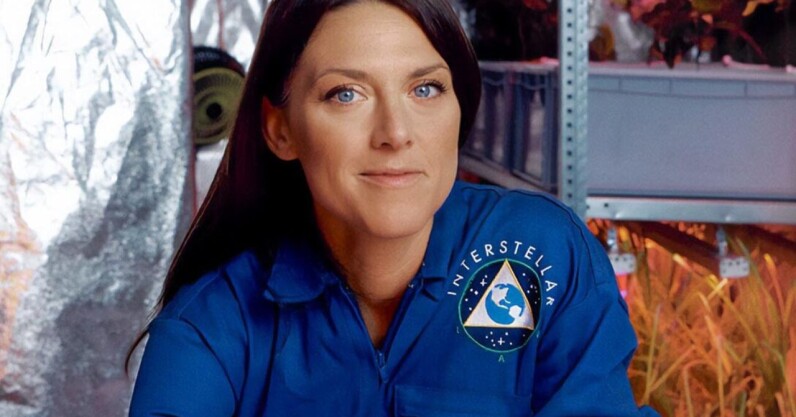
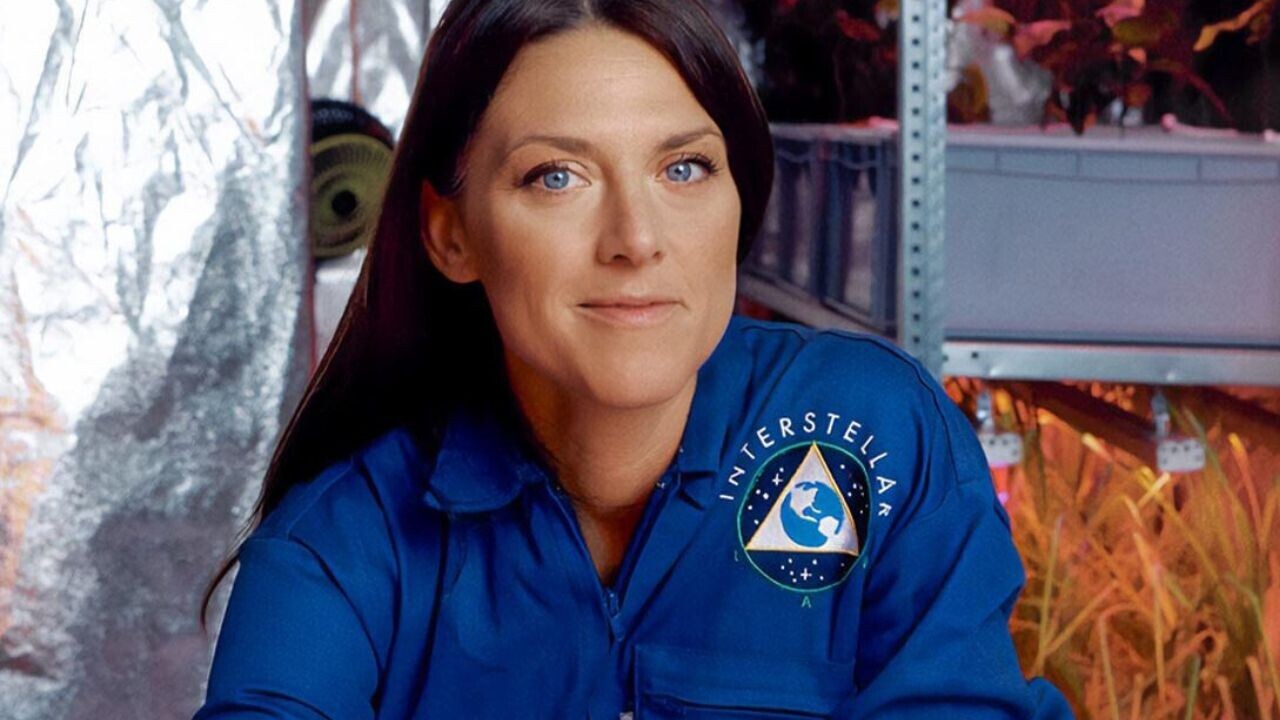
On day one of the event, Barbara Belvisi, founder and CEO of the company, will tell the audience about how the startup’s BioPod is the next-generation greenhouse for the Earth and beyond.

It all started in 2018, when Belvisi founded Interstellar Lab, driven by her childhood passion for nature and space.

The French-American startup entered the industry with a visionary project: the development of mini extraterrestrial cities, called Experimental Bio-regenerative Stations (Ebios). The concept encompasses an array of modules, which, independently or combined, house all the infrastructure and resources needed to support and sustain human life on Mars and the Moon.

The first module developed is a sustainable farming system called BioPod. But its purpose isn’t only to prepare for life in space; it can also alleviate the climate crisis we’re currently facing.

We did it! First full-scale BioPod is out and operational. 🌱🚀

Our first BioPod is inspired by space and designed for earth. BioPod provides sustainable farming solutions for agriculture, natural ingredient sourcing and bioconservation.

Space for earth 🚀🌎 pic.twitter.com/tZ70mvvekn

— Interstellar Lab (@InterstellarLA) September 29, 2022


According to Belvisi, the team first came up with the idea of a dome structure that could fulfill the nutritional needs of four astronauts on the Moon. They then turned this design into a product for the Earth.

Built to withstand extreme climates, BioPod is a 55m2 bubble-shaped greenhouse made of an inflatable membrane and composite base. It’s a fully autonomous, controlled-environment module that, thanks to AI and its aeroponics system, can create any type of climate, securing the ideal conditions for plants to grow.

🏆We have won the #BOLDAward in the #SpaceFrontier category 🚀! Congratulations to all the nominees and winners of the @Bold_Awards and hope to continue boldly innovating the way we grow food and protect life on Earth and beyond! 🌏🌿

➡ Read more : https://t.co/lhl7zxRFBg pic.twitter.com/lkir8XIJfm

— Interstellar Lab (@InterstellarLA) April 4, 2023


The benefits of this technology are large and far-reaching. BioPod’s ability to cultivate virtually any plant and examine their hidden potential — such as producing fruits with higher nutrition concentration or cosmetic plants with specific oil concentration — render it a groundbreaking solution for a variety of purposes: from agriculture, research, and cosmetics, to medicine and bioconservation.

Notably, Interstellar Lab claims that each BioPod can increase yield by approximately 300 times, reduce water consumption by 98%, lower energy consumption by about 20 times, and capture 1 tonne of CO2 annually.

At the TNW Conference on June 15, Barbara Belvisi will share how Interstellar Lab is disrupting sustainable agriculture on Earth, while providing a test-bed for future life support in space.

I, for one, can’t wait to hear how merging space and Earth tech can help us live a better life on this planet and beyond.

Barbara Belvisi’s insights on multiplanetary life are merely one attraction of TNW Conference. You can find more on the event agenda — and remember: for a 25% discount on business passes, use the promo code READ-TNW-25.

Get the TNW newsletter

Get the most important tech news in your inbox each week.

Also tagged with


Sustainable farming on Earth and in space: A must-see at TNW Conference Read More »

eu-approves-microsoft-bid-for-activision-blizzard-—-but-the-saga-is-‘unlikely-to-end-soon’

EU approves Microsoft bid for Activision Blizzard — but the saga is ‘unlikely to end soon’

EU approves Microsoft bid for Activision Blizzard — but the saga is ‘unlikely to end soon’

Thomas Macaulay

Story by

Thomas Macaulay

Senior reporter

Thomas is a senior reporter at TNW. He covers European tech, with a focus on deeptech, startups, and government policy. Thomas is a senior reporter at TNW. He covers European tech, with a focus on deeptech, startups, and government policy.

Eu regulators have greenlit Microsoft’sacquisition of gaming giant Activision Blizzard, but analysts warn that the deal remains a long way from completion.

The EU approved the $69 billion (€63bn) takeover after Microsoft agreed to several pro-competition remedies. Most notably, the company pledged to automatically license popular Activision Blizzard games, such as Call of Duty, to rival cloud gaming services.

“The commitments offered by Microsoft will enable for the first time the streaming of such games in any cloud game streaming services, enhancing competition and opportunities for growth,” said Margrethe Vestager, the EU’s antitrust czar.

With our 🇪🇺 clearance #Activition Blizzard’s games will also be available on cloud. This is good for competition and innovation and brings games to many more devices and consumers. #Microsoft‘s commitments will enable the streaming of games in any cloud game streaming service. https://t.co/DpcaRpiV7X

— Margrethe Vestager (@vestager) May 15, 2023

The decision comes just weeks after British regulators vetoed what would be the gaming industry’s biggest-ever deal. The shock move by the Competition and Markets Authority (CMA) sparked fears that the takeover would collapse.

The EU’s approval has revived optimism at Microsoft, but the merger still faces significant hurdles.

The ruling from the CMA  could still be applied globally — and the regulator is sticking to its guns. Following the EU’s ruling, the authority doubled down on its position.

Sarah Cardell, chief executive of the CMA, warned that Microsoft’s proposals would define the market’s conditions for a decade.

“They would replace a free, open and competitive market with one subject to ongoing regulation of the games Microsoft sells, the platforms to which it sells them, and the conditions of sale,” she said.

“This is one of the reasons the CMA’s independent panel group rejected Microsoft’s proposals and prevented this deal. While we recognise and respect that the European Commission is entitled to take a different view, the CMA stands by its decision.”

This is one of the reasons the CMA’s independent panel group rejected Microsoft’s proposals and prevented this deal.

While we recognise and respect that the European Commission is entitled to take a different view, the CMA stands by its decision.

[5/5]

— Competition & Markets Authority (@CMAgovUK) May 15, 2023

The UK, however, is part of a shrinking minority. Following the EU’s decision, the deal has gained approval in an estimated 37 countries with well over 900 million inhabitants collectively.

Many analysts now doubt that the UK will prevent the deal from closing. Microsoft is appealing the CMA’s decision, and the British government appears to oppose the regulator’s stance.

Critics have also questioned the CMA’s antitrust argument. Mark Long, former Microsoft Xcloud program manager and CEO of AAA shooter Shrapnel, is confident about the prospects for his former employers.

“Ultimately, I think they win on appeal… because [Xbox head] Phil Spencer wants Xcloud on every platform he can cut a deal for, including Playstation and Switch,” Long told TNW. “Hard to argue that’s bad for consumers.”

Yet Microsoft also faces scrutiny closer to home. In the US, the Federal Trade Commission has sued to block the acquisition. The impending trial is unlikely to reach a decision before the year’s end.

Gareth Mills, partner at law firm Charles Russell Speechlys, warns that Microsof’s path to approval remains treacherous. He notes that the EU’s approval is merely conditional — and that further challenges remain.

“The picture is, therefore, more complex than a binary “approval/ rejection” of the respective regulators that supporters of the deal may seek to imply,” Mills told TNW.

“The saga is unlikely to come to an end anytime soon, with a legal complaint refiled last week in the Californian courts by gamers seeking an injunction, as well as Microsoft’s heralded appeal of the CMA’s decision and the US Federal Trade Commission’s case against the acquisition also still pending.”

Get the TNW newsletter

Get the most important tech news in your inbox each week.

Also tagged with


EU approves Microsoft bid for Activision Blizzard — but the saga is ‘unlikely to end soon’ Read More »

openai-is-offering-a-free-class-in-prompt-engineering-for-devs

OpenAI is offering a free class in prompt engineering for devs

OpenAI is offering a free class in prompt engineering for devs

Elaine Burke

Story by

Elaine Burke

Elaine Burke is an award-winning journalist, editor and broadcaster covering science, technology and media. She previously served as editor Elaine Burke is an award-winning journalist, editor and broadcaster covering science, technology and media. She previously served as editor of Silicon Republic and is currently the host of For Tech’s Sake, a co-production of The HeadStuff Podcast Network and Silicon Republic.

Whether or not AI lives up to the hype surrounding it will largely depend on good prompt engineering.

Prompt engineering is the key to unlocking useful — and usable — outputs from generative AI, such as ChatGPT or its image-making counterpart DALL-E.

These AI tools use natural language processing so they can take a user’s typed inputs and turn them into their desired outputs. However, as many who have tried and tested can confirm, crafting inputs that are comprehensive and detailed enough to instruct the AI to nail the brief is a process that takes time to master.

Think of it as asking a coworker to write you a biography of themselves. If you don’t give them a word count, style guide, or suggested tone of voice, you can’t expect their work to meet those requirements. It’s the same with assistive AI. If the prompt — the text you input into the interface — is unclear and leaves too much room for interpretation, you will need to iterate until you get the exact recipe that delivers the goods.

As with all skills, prompt engineering takes practice. And, seeing how quickly this technology has come into mainstream use, experts are few and far between. But one AI company is offering free training right now.

A short course in prompt engineering has been developed in partnership with OpenAI and is available via the DeepLearning.AI website. It’s delivered by OpenAI’s Isa Fulford alongside none other than Andrew Ng, a noted computer scientist who worked on AI at Google and Baidu before he founded DeepLearning.AI.

In just one hour, Ng and Fulford outline best practices in prompt engineering and give participants hands-on practice with the OpenAI API. The introductory course is aimed at developers but no previous experience with AI is required, just a basic understanding of Python. And for developers who have already started tinkering with large language models, the course will leave you with the instructions you need to build a chatbot of your own.

The course is currently free, but this will be for a limited period only. So now is a good time to grasp this opportunity and learn what makes this tech tool tick.

Some developers may be reluctant to engage with generative AI systems and see them as a threat to their employment. But what’s evident from the outputs so far is that AI needs diligent human oversight to be trusted, and those who can work alongside this technology will be our best guides for its responsible use.

As with any digital transformation, upskilling will be key to the effective roll-out of assistive AI technologies, and those already trained in their use will be in high demand.

These tools are still being refined for use across many sectors and workplaces, and it’s not yet known how widespread the applications will be.

AI is still an emerging technology in many respects, so you’re not likely to see a job specification that demands years of prompt engineering experience. But those keeping their skills up to date show a commitment to professional development that is appealing to potential employers. And if a company’s broader strategy has AI in its sights, they’ll want to bring those with the know-how on that journey.

Check out these roles available now at companies with AI on their roadmap.

Microsoft

Microsoft has been one of OpenAI’s biggest backers since its early days, investing billions in its AI development.

In Dublin, Microsoft is looking for a full stack software engineer for its Word and Editor team, which is using techniques such as machine learning (ML) and artificial intelligence to support content generation within its 365 software suite, including Word, Outlook, and Teams.

Accenture

International consultancy Accenture is setting its stall out to be the go-to agency other businesses can turn to to find out how to best apply advanced technologies like AI. It’s currently seeking technology strategy consultants who can help develop applications that take into account disruptive trends and put them to work “competently and carefully” in Munich and Dusseldorf.

In Dublin, Accenture is seeking a research engineer for its BioInnovation team, which is exploring applications of AI in healthcare and life sciences. This hands-on role will involve designing and implementing AI research prototypes and requires someone with the skills and capacity to take responsibility for the entire technology stack.

Apple

Apple is an early pioneer in assistive AI through its personal assistant in our pockets, Siri. It’s currently seeking a fluent Danish speaker to join its AI and ML team.

The job involves listening to and transcribing audio files to evaluate Siri’s response and language usage, demonstrating the value of human oversight in improving assistive technologies. The role can be based in either Barcelona or Cork, and comes with a full relocation package for the right candidate.

For more career opportunities, check out the House of Talent job board

Get the TNW newsletter

Get the most important tech news in your inbox each week.

Also tagged with


OpenAI is offering a free class in prompt engineering for devs Read More »

first-contact:-finland’s-framery-reveals-new-office-pod-with-in-person-effect

First Contact: Finland’s Framery reveals new office pod with in-person effect

First Contact: Finland’s Framery reveals new office pod with in-person effect

Andrii Degeler

Story by

Andrii Degeler

Andrii is the Head of Media at TNW, with over a decade of experience in covering the European tech ecosystem. Talk to him about new and exci Andrii is the Head of Media at TNW, with over a decade of experience in covering the European tech ecosystem. Talk to him about new and exciting developments in tech, especially those involving vastly underreported industry niches and geographies.

If you’re working with other people — which most of us are — it’s quite likely that you’re spending a sizeable chunk of your time in meetings. Before COVID-19, you’d expect most meetings to be conducted in-person, and business travel was much more prolific than it is these days.

The pandemic changed that dynamic beyond recognition, as startups and corporates alike suddenly discovered that a lot of things can actually be discussed and solved in a video call. Combined with people being generally reluctant to return to the office, this has ushered in an era of telepresence, where at least 84% of meetings (or even 98% depending on whom you’re listening to) have at least one remote participant.

But spending a bulk of your meeting time looking at the screen is tiring, and the rapport established over a Zoom meeting is nothing like what you can expect in-person. In an attempt to address this issue, Finland-based office pod pioneer Framery has just unveiled Framery Contact, an indoor call booth aimed at emulating an IRL meeting as closely as possible.

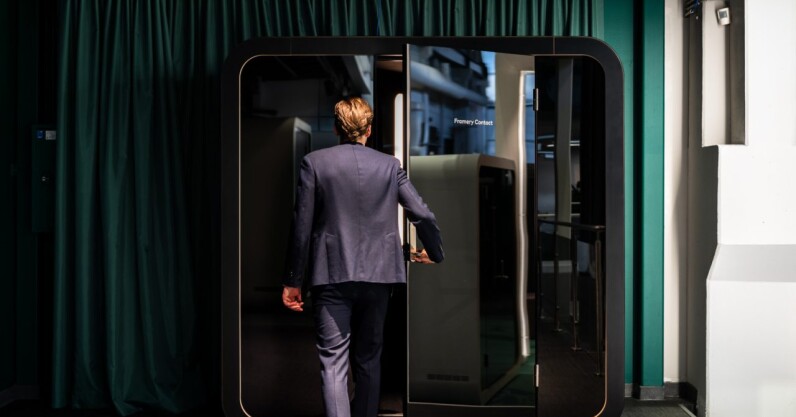
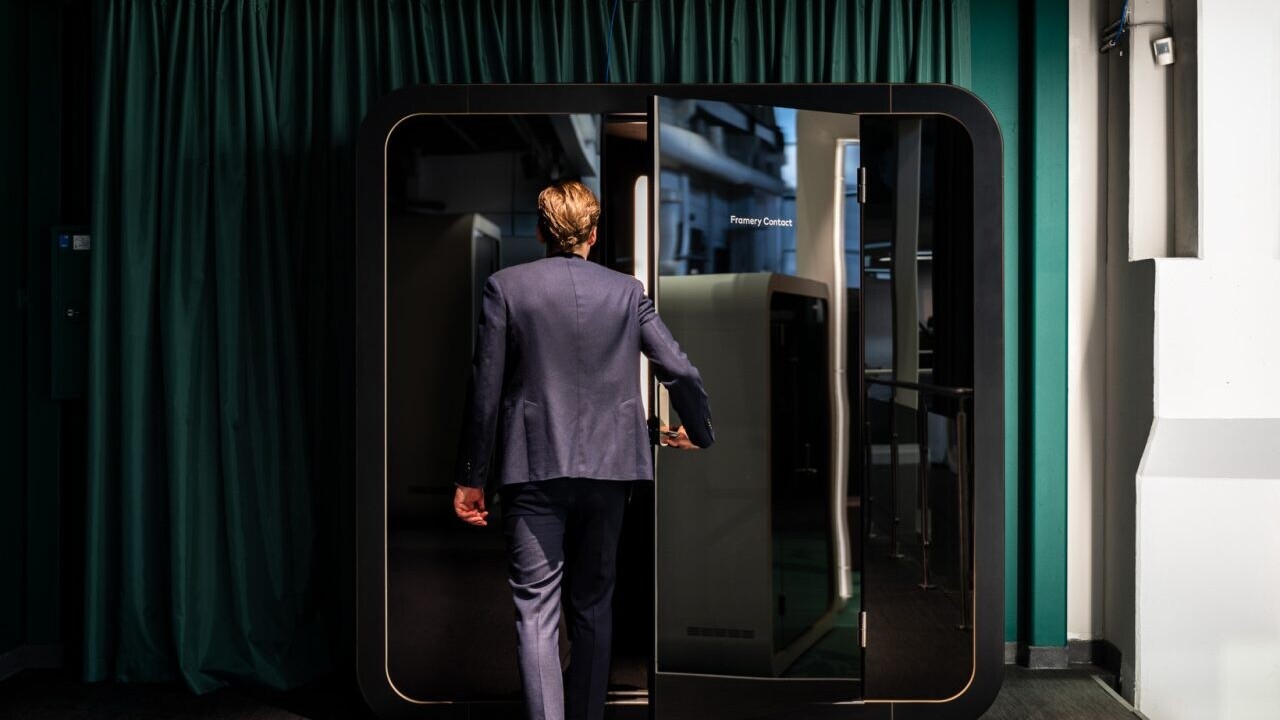
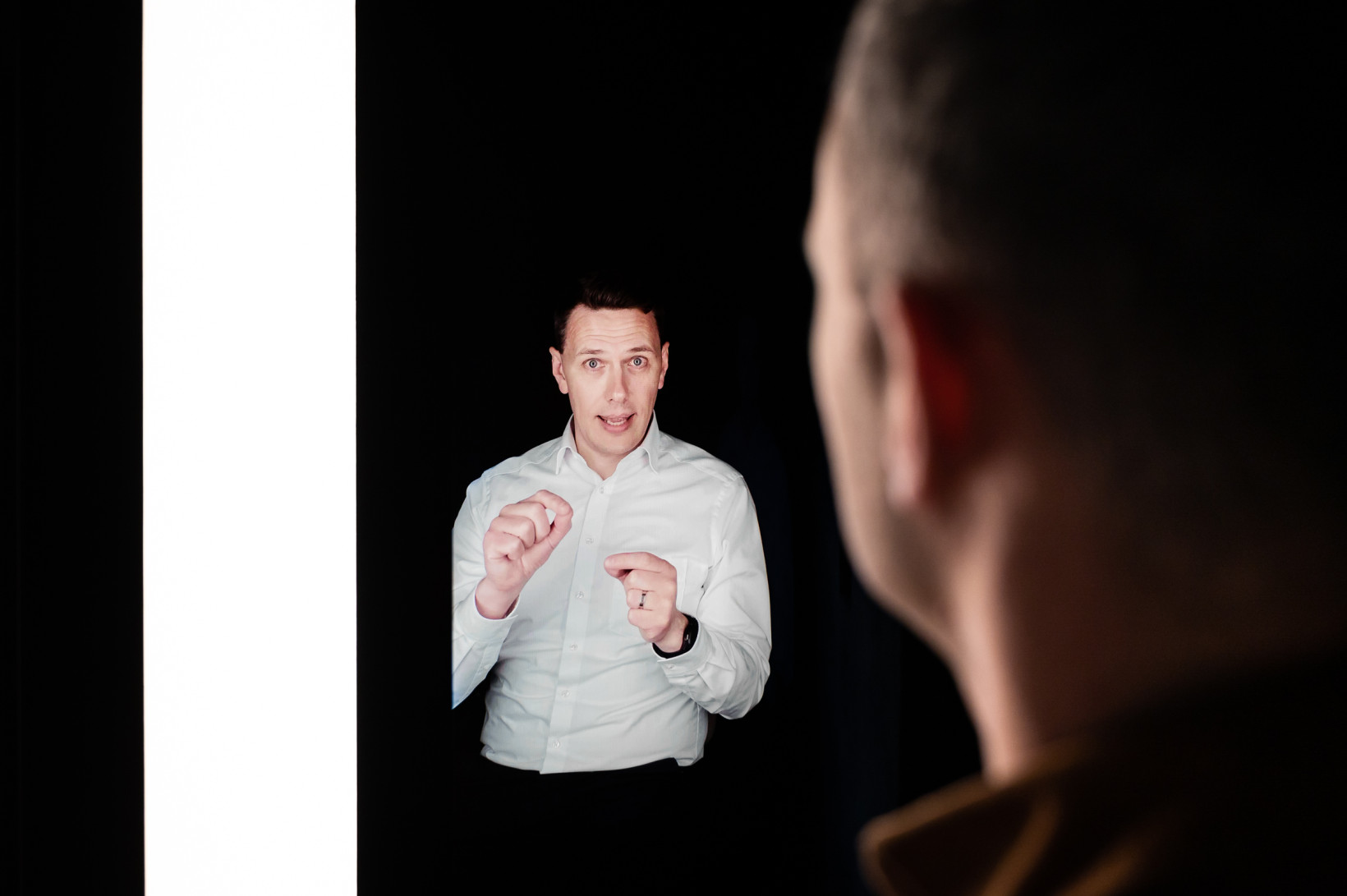
Most suitable for one-on-one meetings, the Contact is essentially a blacked out office pod with a large high-quality 4K screen, strategically positioned lighting, and a camera with a mirror system that gives the feeling of proper eye contact.

A couple of weeks before the official unveiling, TNW (represented by yours truly) went to Tampere, Finland to experience the pod and learn more about Framery’s journey that led to its creation. (Disclosure: travel and accommodation for the trip were covered by Framery. The company had no editorial influence on this story and didn’t see it before publication.)

Silence is golden

Founded in 2010 in Tampere, about a two-hour drive north from Helsinki, Framery started as a passion project of two young guys whose manager had insisted on making loud sales calls in their open-plan office. One of the guys, the company’s CEO Samu Hällfors, says that the company became the world’s first and biggest producer of truly soundproof office pods. From the first one-person enclosure, Framery O, the startup has extended its offering over the years with the four-person Q and six-person 2Q models.

In 2021, the company also presented Framery One, a version of the one-person pod with advanced connectivity options, built-in occupancy sensors, and calendar integration capabilities, which allowed booking it the same way you would a meeting room. Since then, the Finns have been hard at work on the software part of the product, aimed at providing insight into the pods’ usage for the HR or building managers.

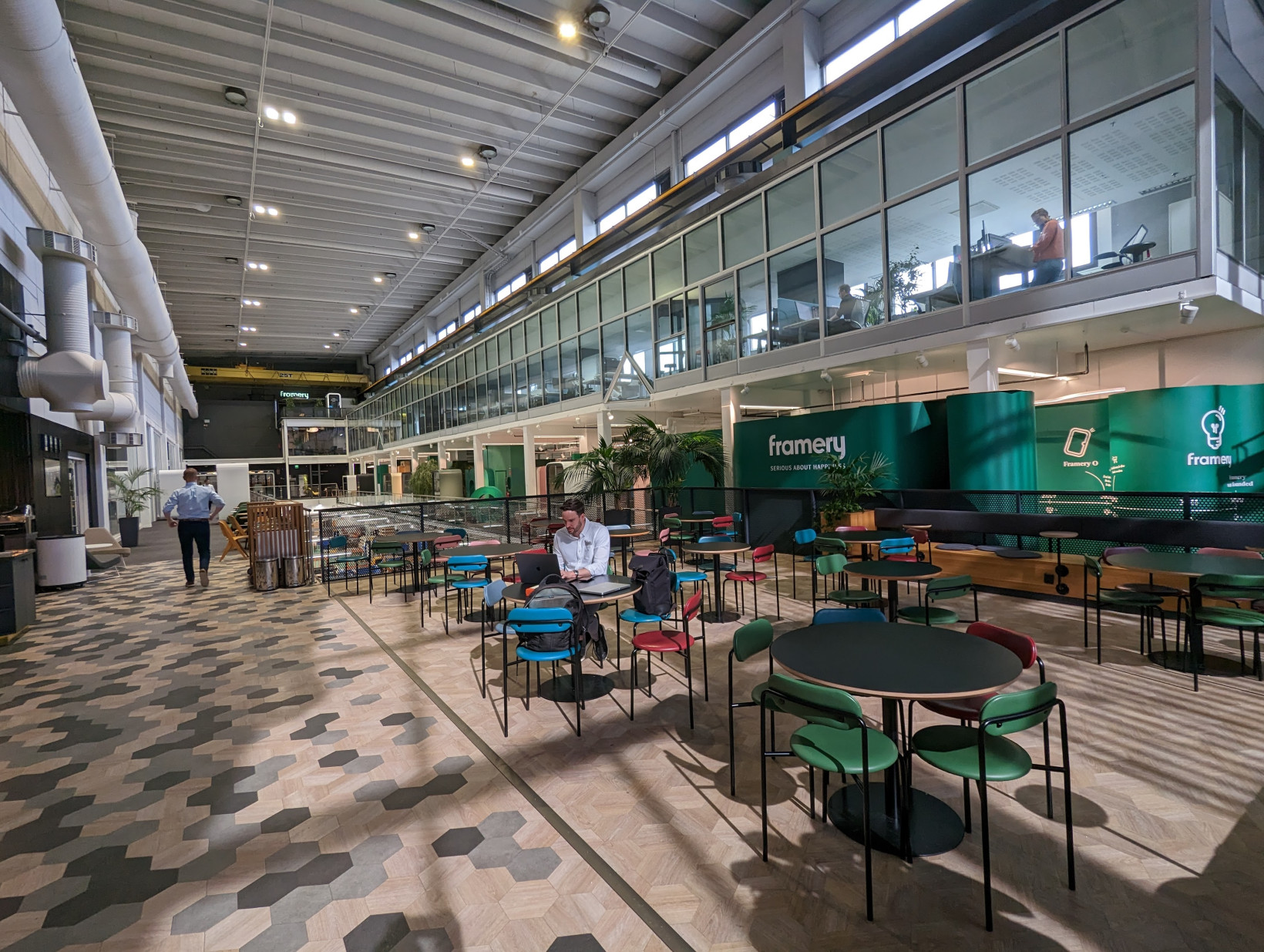
Framery office builiding in Tampere
Framery’s office and production facility in Tampere, Finland

Going even further, the team is currently working on a project that would see a heart rate sensor integrated into the seat in the pod, which could potentially provide anonymised and aggregated data on the users’ health and mental well-being.

The company, which currently employs some 400 people, saw €154 million in revenue in 2022. Back in 2018, Finnish private equity firm Vaaka Partners acquired 60% of Framery for an undisclosed amount.

Hello darkness

With the new office pod, Framery is definitely making a big bet on the importance its customers attach to the presence effect. Hällfors assumes that the first users of the product will be “international companies with offices on different continents;” having a Contact in each of them would supposedly make one-on-one meetings more engaging.

Achieving the desired effect, however, is likely to take some time, as the tech may require some getting used to. Unlike Framery’s other pods, Contact has blackout glass walls, so entering it for the first time feels very unusual; it certainly did for me.

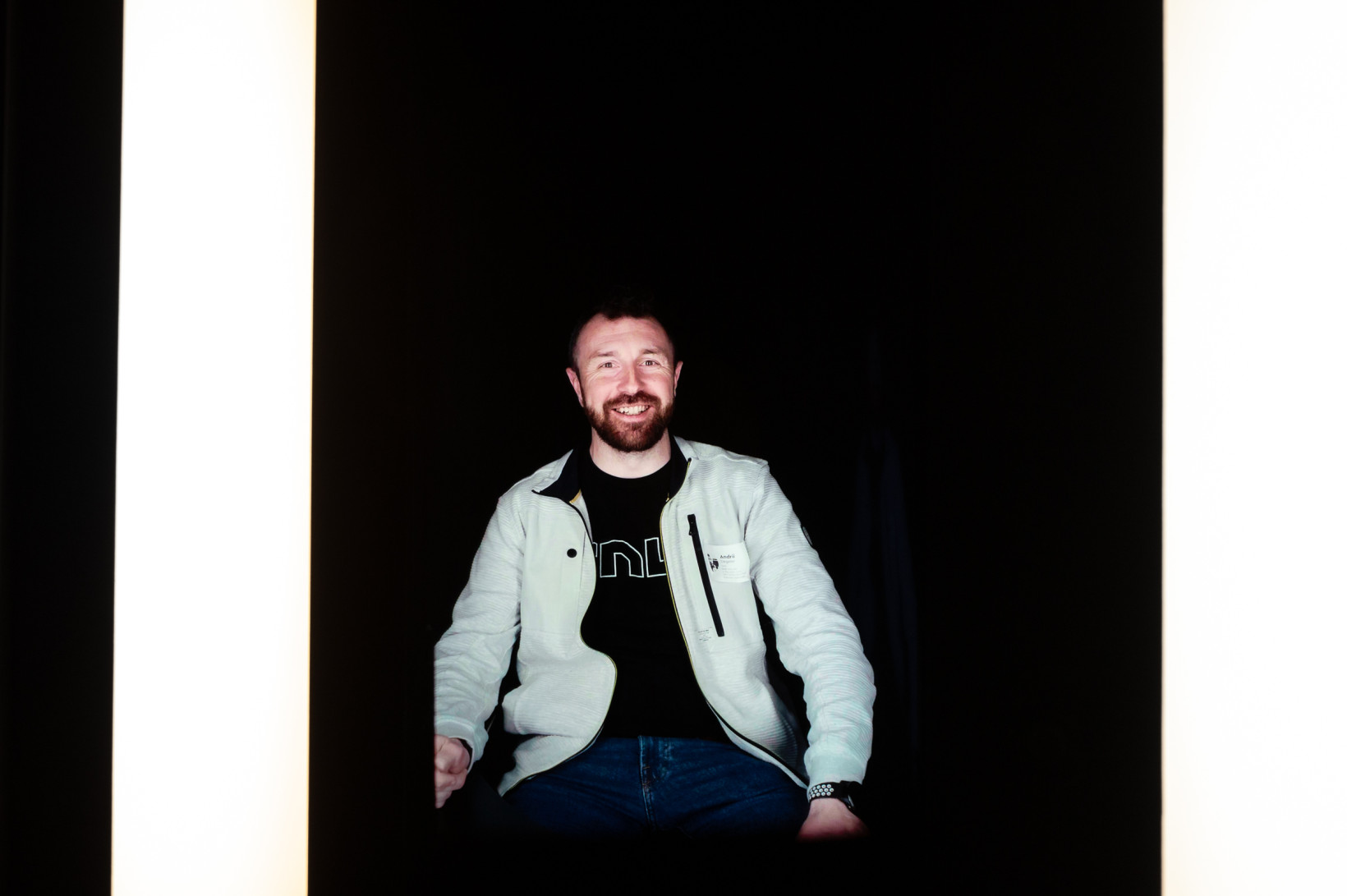
Andrii Degeler sitting inside the Framery Contact pod

Inside the pod, I found a seat and a side table, as well as a small screen on the left-hand side where you can control the calling system. The pod’s software suite runs on Windows 10 IoT with the UI written using the Qt framework. Its custom architecture is based on Scalable Video Coding (SVC) and uses the H.265 compression standard.

A portrait-oriented 4K screen occupies most of the pod’s wall in front of the user, with two bright lights to its sides. When Hällfors, who was in the US at the time of the test, called from another pod, I saw his image with proper depth right away, although some other people reported that it took them a couple of minutes to adjust.

The reason is that Framery Contact isn’t using any sophisticated technologies like volumetric or light-field displays, opting for a normal 2D screen together with our own mental capabilities.

“Removing the surroundings with black [backdrop] helps your brain to actually fill in the gaps and build this kind of 3D representation,” Hällfors explained.

Framery Contact uses only one camera; Karvinen didn’t name the brand or model, but mentioned that it’s an off-the-shelf component rather than a custom-built device. The camera is clearly optimised to deliver the most crisp image when the person in the pod is sitting upright; if they lean forward or backward, however, their image on the screen quickly becomes a bit blurred.

Person on screen in Framery's Contact pod
The pod system uses only one camera. Credit: Framery

Combined with a mirror-based system that gives the illusion of eye contact and a seemingly decent audio setup in the soundproof booth, Framery Contact does feel much closer to an in-person experience. Although it supposedly only requires a bandwidth of 10Mbit/s to work, I was able to see a few stutters and jitters during the five-minute call, although the experience was hardly affected by them.

Done is better than perfect

At the moment, there are under a dozen Framery Contact booths in existence. Most of them are installed at the offices of the company’s unnamed pilot customers — and Framery is looking for more of those.

As for commercial availability, Hällfors doesn’t expect it to happen before some time next year. The planned price for the new pod is around €24,000; for comparison, a Framery Q pod that the Contact is based on costs around €16,000.

Framery’s unveiling comes just a few days after Google presented the latest update on its Project Starline, which uses several cameras and heavily relies on AI to create a 3D representation of the person you’re talking to on the screen. The obvious advantage of Google’s approach is that it doesn’t require a blacked out pod; the obvious issue, however, is that there’s no timeline on when it’d become commercially available. In addition, Google has continuously deflected questions about Skyline’s possible pricing, which suggests that it’s going to be sky-high indeed.

Two people interacting via screen using Google proejct Starlight
Google’s Project Starline comprises multiple cameras and an expensive light-field display. Credit: Google

In addition to corporate offices, Hällfors sees the Contact being used in industries like telehealth and recruitment among others. He also mentioned that the next step for the company will be to scale the technology to allow meetings with up to two people on each side.

“I don’t think the Contact will replace all of our products, I don’t think the technology will be useful for all the use cases,” he said. “[Framery pods] are also used for in-person meetings, hybrid meetings, concentrated work, and so on.”

Another feature to be added in the future is interoperability with traditional video conferencing services like Google Meet, Zoom, or Microsoft Teams to allow a one-to-many usage scenario. According to Hällfors, it’s not a particularly difficult task from a technological standpoint; the biggest obstacle at this point is that none of those apps support 4K video, which is paramount for the product.

All in all, Framery Contact is an impressive feat of engineering that could signify a new technological trend and bring our expectations for online meetings to a new level. It’s not quite clear, however, how much is too much when it comes to creating a real-life feeling. In the meantime, look out for those black-glass booths in a corporate office near you to answer this question for yourself.

Get the TNW newsletter

Get the most important tech news in your inbox each week.

Also tagged with


First Contact: Finland’s Framery reveals new office pod with in-person effect Read More »

xrhealth-merges-with-amelia-virtual-care

XRHealth Merges With Amelia Virtual Care

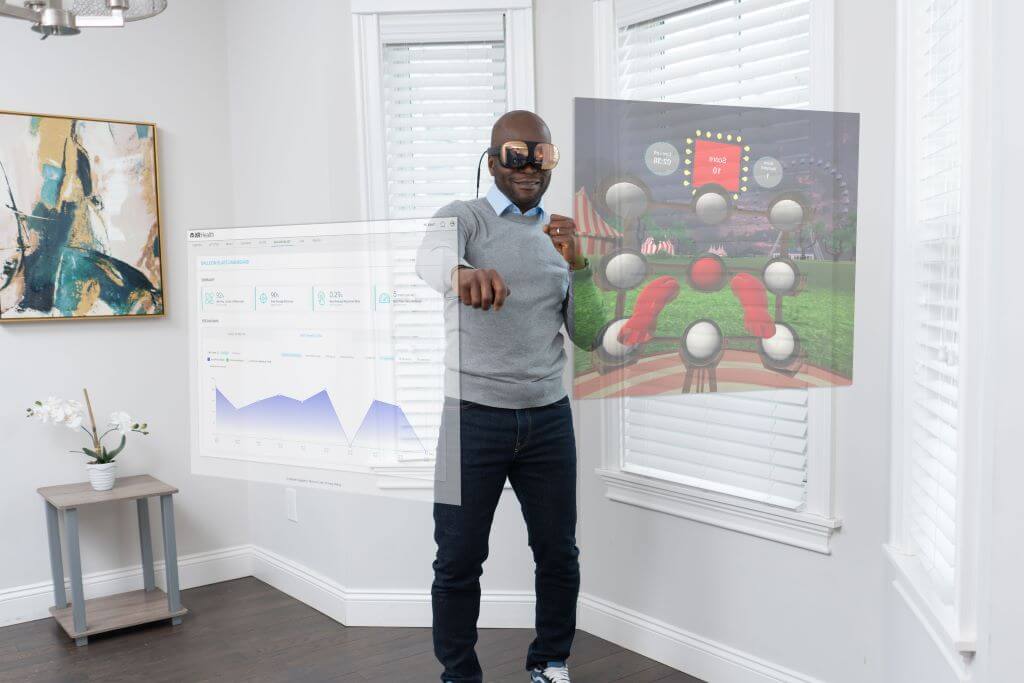
XRHealth is an enterprising company that combines telehealth with VR gaming for remote physical and occupational therapy solutions. Amelia Virtual Care also pioneers VR telehealth, but prioritizes a different kind of therapy by focusing on mental wellness.

The two companies recently announced a merger. The resulting company will offer both physical and mental therapy through the combined teams, skills, and software of both companies. Eran Orr, current CEO of XRHealth (which will be the name of the new combined company) will remain CEO.

What Amelia Virtual Care Brings to the Table

“We’re thrilled to join forces with XRHealth at a time when clinicians are adopting virtual reality as a mainstream tool for delivering high-quality care and engaging patient experiences,” Xavier Palomer said in a release shared with ARPost.

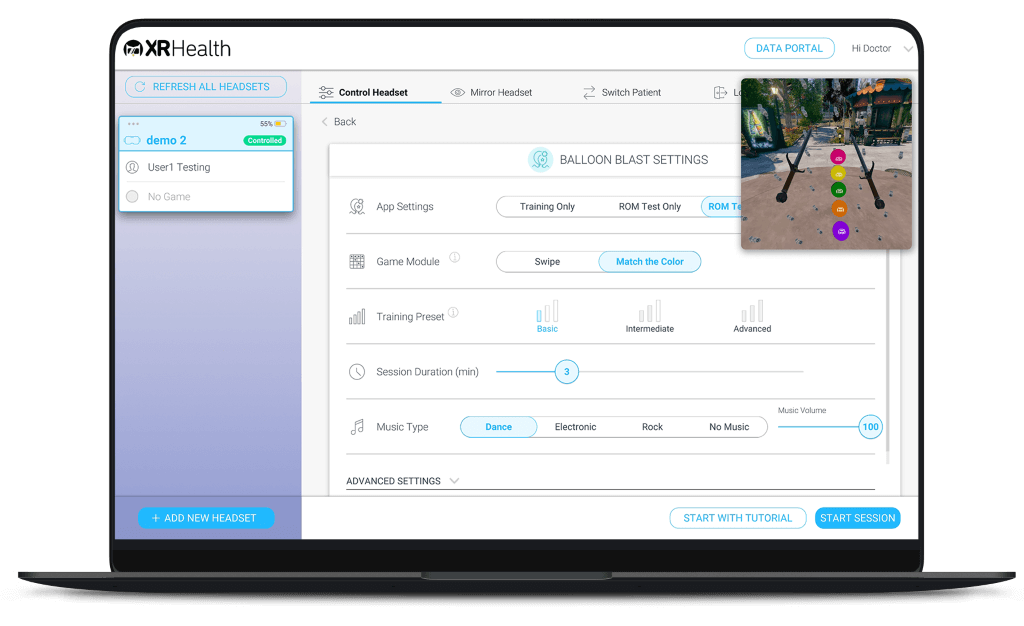
XRHealth Laptop and external control

Palomer is the founder and current Executive Chairman of Amelia Virtual Care but will pivot to Chief Growth Officer of the new combined company. “While VR is still novel to many patients, it’s a well-proven solution grounded in more than 30 years of research and experience,” said Palomer.

ARPost hadn’t crossed paths with Amelia Virtual Care prior to the merger, but we’re looking forward to seeing all that they bring to the new combined company. Of particular interest, Amelia’s solution incorporated a finger-worn electrodermal response sensor for recording the participant’s galvanic skin response.

Joining Forces With XRHealth

“We’re ready to introduce the XR platform that any hospital and clinic can use,” Orr said in the release. “The merger enables us to offer a one-stop shop to diverse players and streamline the technology in a way that will see XR devices adopted for a variety of treatments, with XRHealth leading the way for the entire industry.”

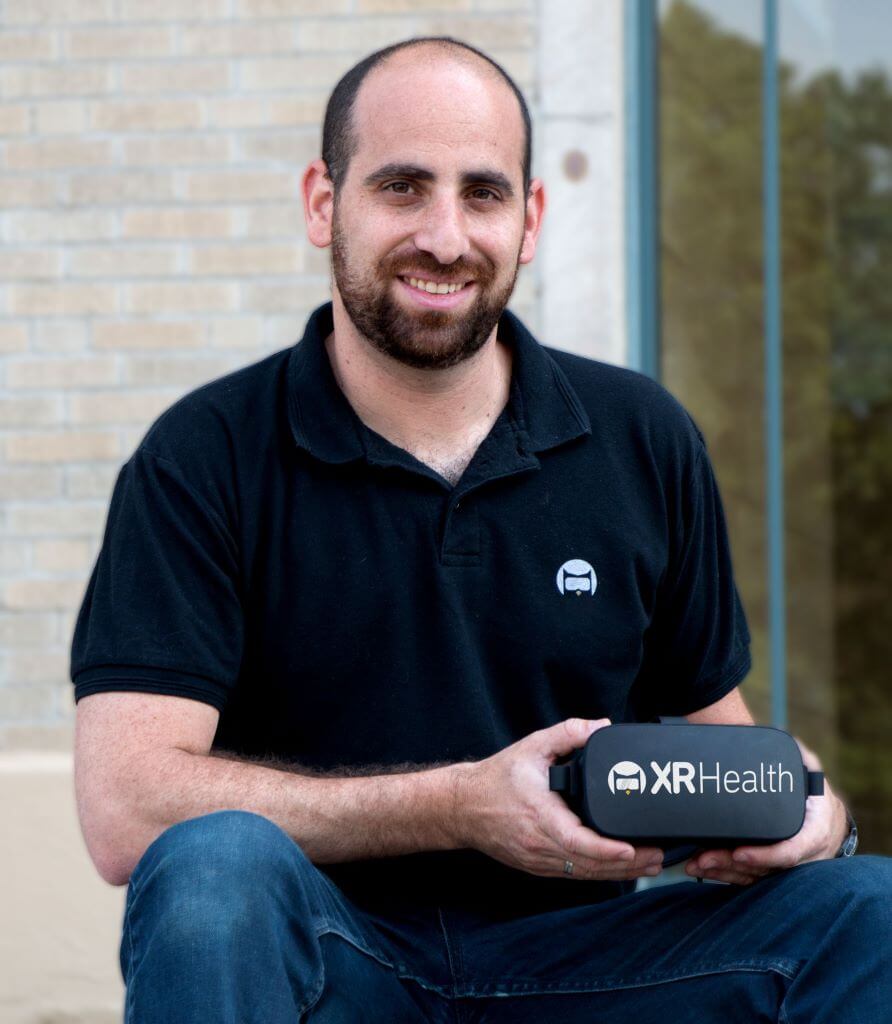
Eran Orr XRHealth with VR headset
Eran Orr

Orr’s company has already achieved a number of significant accomplishments in both the technology and adoption and infrastructure. The Medicare-covered platform runs on a number of devices including Pico headsets and the VIVE Flow. Both headsets offer adoption venues for users as well as different hardware and software capabilities.

XRHealth with HTC Flow headset

“With our merger, we now have an end-to-end product that addresses privacy and security, multiple use cases with a variety of content, compliance and regulation, and operational tools to support scale,” XRHealth co-founder and CTO Miki Levy said in the release. “We have a growing number of content partners today and expect this to increase dramatically after this merger.”

Miki Levy XRHealth
Miki Levy

Better Together

Amelia Virtual Care brings its own experts, a different branch of medicine, and some hardware innovations. XRHealth brings greater hardware accessibility, greater patient accessibility, and its own branch of medicine. Between the two, this merger seems like a win for the growing number of individuals pursuing healthcare through VR appointments and practices.

XRHealth Merges With Amelia Virtual Care Read More »
apple’s-upcoming-headset-“so-good”,-according-to-oculus-founder

Apple’s Upcoming Headset “so good”, According to Oculus Founder

Palmer Luckey, the founder of Oculus who left the company in 2017, appears to have insider knowledge of the upcoming Apple XR headset, which is expected to be unveiled at its Worldwide Developers Conference (WWDC) next month. To Luckey, Apple’s hotly awaited entrance into the space is apparently “so good.”

The Apple headset is so good.

— Palmer Luckey (@PalmerLuckey) May 14, 2023

Luckey hasn’t quantified his experience beyond this, or even said that his impressions indeed come from a personal demo of Apple’s long-rumored mixed reality headset, which, like Meta Quest Pro, is thought to be capable of both virtual reality and passthrough augmented reality thanks to outward facing cameras. Whatever the case, the VR pioneer is sufficiently impressed with whatever the fruit company has in store.

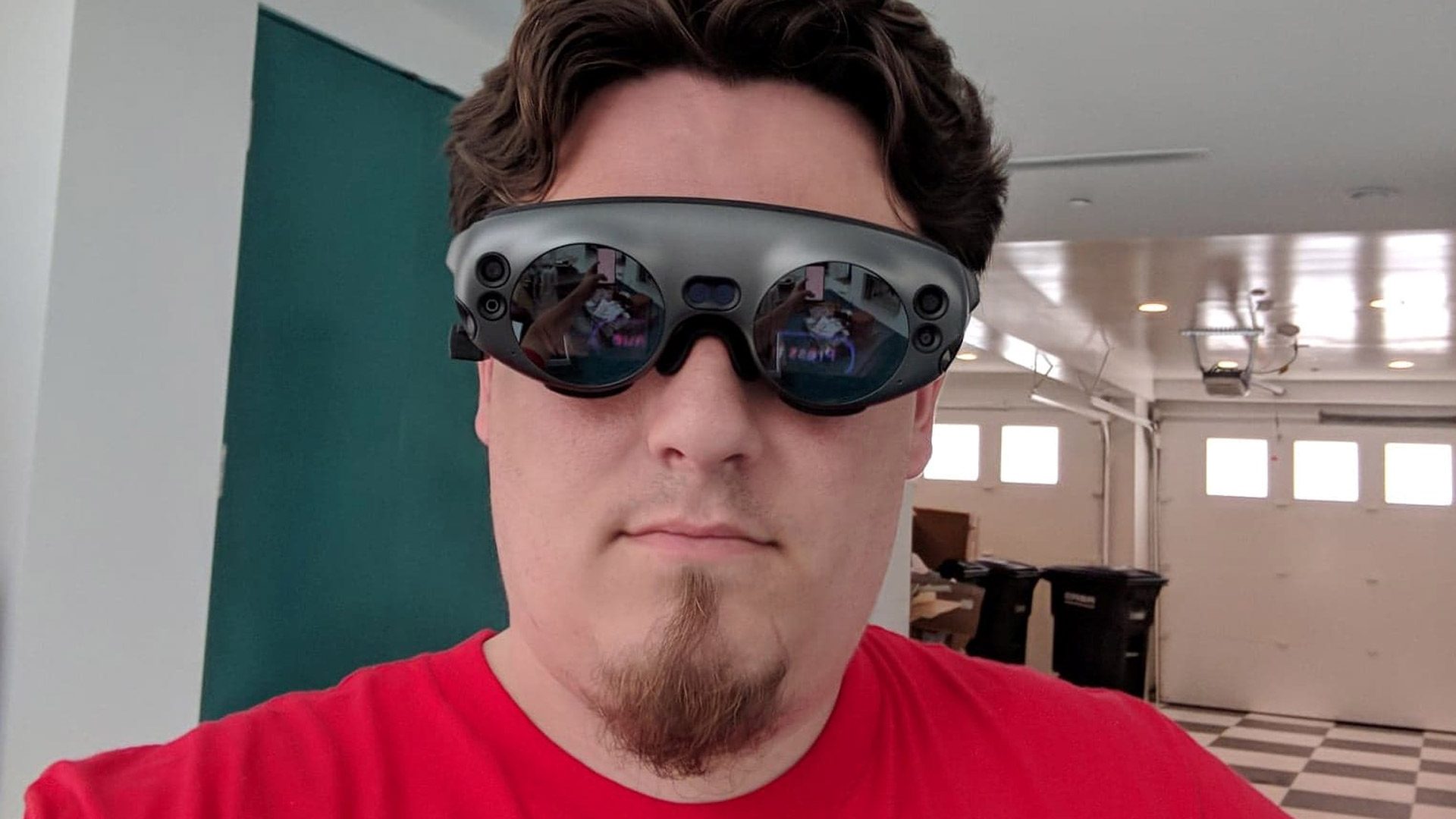
Luckey, who founded defense company Anduril after his 2017 Facebook departure, is no stranger to candidly voicing his opinions on headset design. When unicorn AR startup Magic Leap released its ML1 headset in mid-2018, he called it a “tragic heap,” further stating the AR headset was “a tragedy in the classical sense.”

Palmer Lucker donning ML1 | Image courtesy Palmer Luckey

At the time, Magic Leap was just as secretive about its hardware as Apple is today. And Luckey’s opinion was undoubtedly tinged by the company’s self-generated hype which grew in the shadow of that secrecy.

“Magic Leap needed to really blow people away to justify the last few years,” Luckey wrote in his review of the headset. “The product they put out is reasonably solid, but is nowhere close to what they had hyped up, and has several flaws that prevent it from becoming a broadly useful tool for development of AR applications. That is not good for the XR industry.”

Does this mean Apple is actually delivering on the hype and pushing the ball forward with the reported $3,000 headset? Even with an avalanche of patently unverifiable leaks to go on and Luckey’s word, we truly won’t know until that ‘one more thing’ is announced on stage. Then again, you simply never can tell with Apple. We have our calendars marked for the June 5th WWDC keynote, so join us then to find out.

Apple’s Upcoming Headset “so good”, According to Oculus Founder Read More »

e1-billion-tech-fund-launched-in-major-boost-for-dutch-startups

€1 billion tech fund launched in major boost for Dutch startups

€1 billion tech fund launched in major boost for Dutch startups

Siôn Geschwindt

Story by

Siôn Geschwindt

Organs-on-chips, recyclable wind turbine blades, and robotic farmers — these are just some of the technologies earmarked for funding under a new growth programme approved by the Dutch government last week. 

NXTGEN HIGHTECH will invest €1 billion over the next seven years in an effort to make the Netherlands Europe’s leading high-tech cluster. 

The programme is the initiative of prominent Dutch innovation accelerators including Holland High Tech, TNO, and FME, along with a number of universities and regional development agencies. 

Most of the 260 participating companies are SMEs (190) and startups (70) that will use the funding to further develop and scale their solutions. 

“The urgency of new technology applications is high and we need solutions now,” Marc Hendrikse, board chairman of NXTGEN HIGHTECH, commented. “The strength lies in the breadth of the programme. It not only works on new applications and technologies but also on digitising factories and the supply chain,” he said.

While the Netherlands is an international leader in ultra-precise high-tech equipment, this position is “threatened by political interests and growing competition from other continents,” the organisation said in a press release. Furthermore, R&D investments are significantly lower than in other knowledge-based countries, costing growth, it added. 

In an effort to cement the country’s place at the top of European high-tech, the programme will invest across six core areas: agrifood, biomedical production technology, energy, composites, laser-satellite communication, and semiconductors.

Within the agrifood domain, selected companies include those that use smart solutions, sensor technology, and robotics to improve the efficiency of farming, a sector that struggles with labour shortages and soaring costs. One of these startups is BioScope, which helps farmers find abnormalities in their crops using data gathered from drones and satellites.   

Among other startups already selected by the programme is Hydraloop, which has developed a smart water-saving device for homes. The list also includes Lionvolt, a Eindhoven University of Technology spin-off developing 3D solid-state batteries that charge extremely quickly, and Single Quantum, which is developing superconducting single-photon detectors — crucial components in optical imaging and telecommunication systems.

By 2030, NXTGEN HIGHTECH aims to have developed a fully certified system for operating factories autonomously, in order to boost the productivity of the Dutch manufacturing industry. 

What’s more, the programme hopes to boost the country’s share of semiconductor production using the expertise of its members, which include the likes of chip giant and Europe’s most valuable tech firm ASML. 

Bringing all of this together, say the partners, is education. In collaboration with universities and colleges, the programme looks to embed the Dutch ‘systems engineering’ approach in the education system by 2030. 

Systems engineering analyses complex systems, like cars or batteries, to find more efficient ways of operating them. The discipline better equips students with the knowledge they need to excel in high-tech industries and adapt to the rapidly changing job market. 

“Only by continuing to invest in technical knowledge and skills will the Netherlands become future-proof,” the organisation concluded.

Get the TNW newsletter

Get the most important tech news in your inbox each week.

Also tagged with


€1 billion tech fund launched in major boost for Dutch startups Read More »
spain’s-crowmie-empowers-everyone-to-invest-in-green-energy

Spain’s Crowmie empowers everyone to invest in green energy

Spain’s Crowmie empowers everyone to invest in green energy

Jill Petzinger

Story by

Jill Petzinger

This profile is part of the main prize of the Pitch Battle at TNW Valencia 2023 won by Crowmie. Want your company to get featured as well? You’ve only got a few days to join the startup contest at TNW Conference in Amsterdam on June 15 & 16!

Valencia’s hottest green-fintech startup is on a mission to break down the high barriers to investment in the energy sector and make it easy for everyone to fund renewable projects.

Crowmie, which launched February last year, is jumping into the micro-investing space by allowing anyone with as little as €100 to spend the chance to invest directly into renewable energy projects in Spain, and see monthly returns. 

Tech-wise, Crowmie has built a platform to create digital security tokens (STO, Security Token Offerings) for the total amount of each project they want to finance. This automated process means all investment transactions are registered in the blockchain

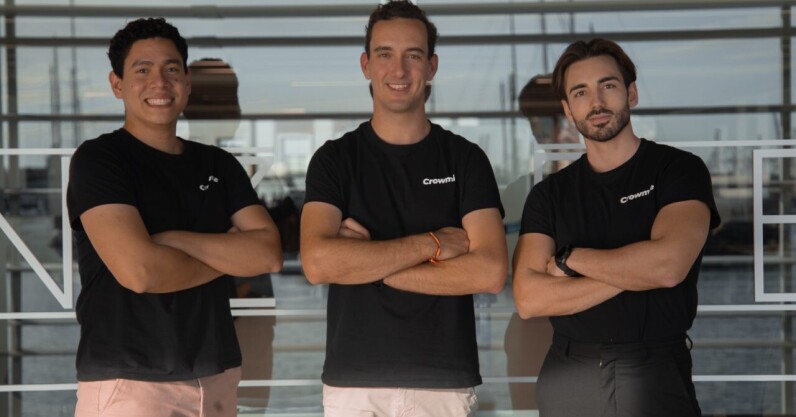
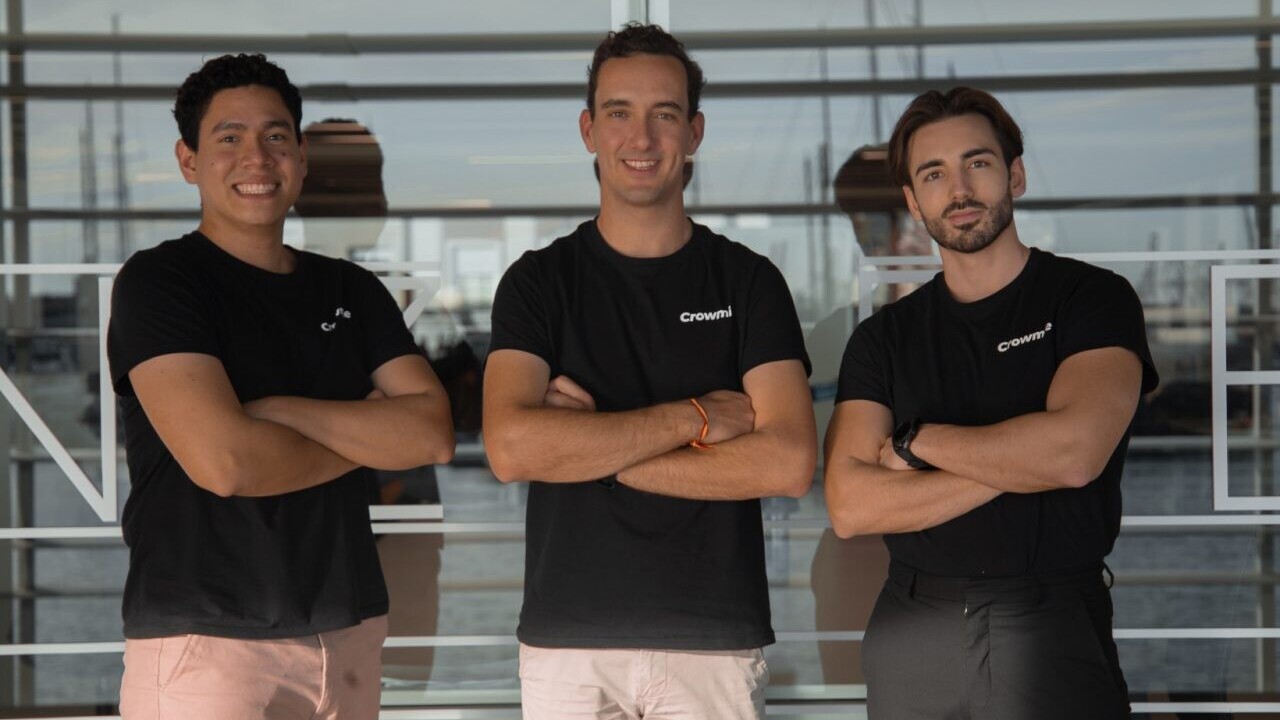
The 12-person startup, led by founders Fernando Dávila (26), Pablo Valverde (29) and Joshua Cleveland (29) won the Pitch Battle at TNW Valencia in March this year.

“The jury was impressed with the team’s vision and goal of making it easier to invest in renewable energy,” said Boris Veldhuijzen van Zanten, co-founder of TNW and jury member of the Pitch Battle. “This is such an amazing opportunity that people like you and I can now finally get active in. This is one of those startups that you hope become very successful, not just for the team, or the investors but for the whole world.”

Crowmie (the name is a mashup of “crowd” and “homie”) has received €300,000 in pre-seed funding so far and is going after a €1.5 million seed round this year. The company will deploy the funds towards marketing, tech, opening up the investment platform to people in the US and building a presence in Mexico and Colombia. 

Tokenised investment inspiration

CEO Dávila, who studied astro-engineering in Valencia before becoming a founder, told TNW that innovation in property tech was one of their main inspirations.

“The idea came about because we saw an incredible trend in the tokenisation world, especially in the real estate sector,” Dávila said, citing RealT in the US and Reental in Spain as two pioneering companies in real-estate tokenised investments. 

The trio thought that the same model of fractional, tokenised investment could totally work in the renewable energy sector too — and no one was doing it in Spain. 

“Right now only those with high amounts of capital can invest in the renewable energy vertical, and we want to do it with tokenisation, because impact investment is growing now and will grow much more in the future,” Dávila added.

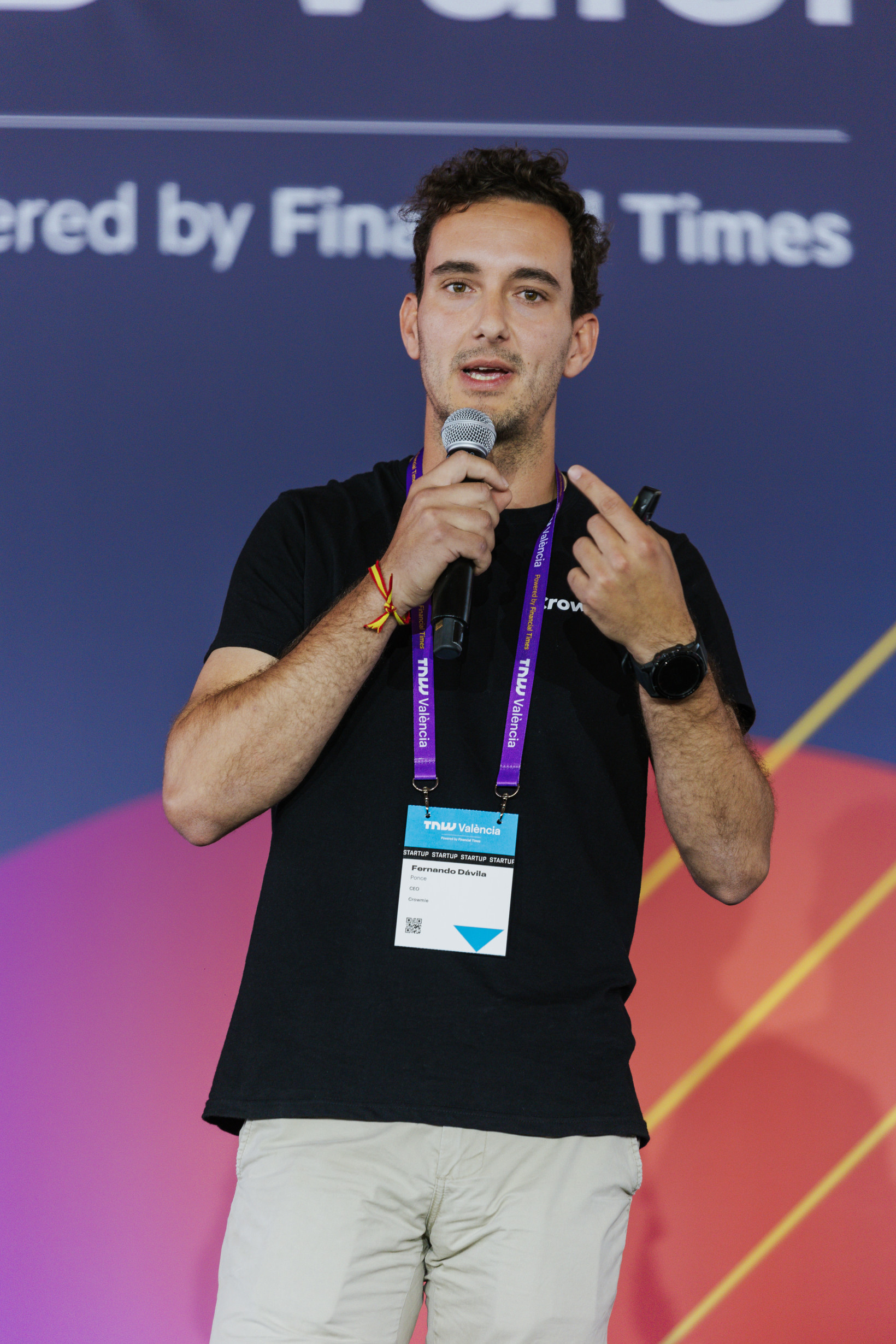
Crowmie CEO Davila presenting at TNW Valencia
Crowmie’s CEO on stage during the TNW Valencia pitch battle. Credit: TNW

“We are really digitising a completely traditional sector like investment, using blockchain technology that allows us to open the doors to anyone from anywhere in the world, making it easy to invest in renewable energies, which until now was completely impossible.”

Spain is a promising base for green-energy initiatives. Just over 42% of the country’s electricity was generated from renewable sources in 2022, and it wants to increase this share to 74% by 2030.  

According to a Reuters report from December 2022, Spain has the largest solar pipeline in Europe, with so many solar projects in planning that the government is struggling to get all the permits issued. 

Zero-hassle investing

Getting up and running on the Crowmie app is simple, according to Dávila. Once someone signs up and completes the legal verification steps, they just need to select which of the Crowmie energy projects they want to invest in, and how much.

They then receive a minted token for that monetary value giving them economic rights to the project. They can resell their tokens with one click any time.

Crucially, Crowmie’s business model is not purely about facilitating investment and financing the projects, as they actually own the installations and plants themselves. Once they’ve built an energy plant, typically for a large company or factory, they sell the energy from it to the customer, and distribute the money to all investors. 

Two solar plants are up and running so far, with, Dávila says, a total of 66 investors from multiple countries on board, with an average investment ticket of €2,000. 

¡𝗗𝗬𝗔 ya está en producción! ☀️

𝗔𝗯𝗿𝗶𝗹 será el primer mes que dará rentabilidad…

¿Estáis 𝗽𝗿𝗲𝗽𝗮𝗿𝗮𝗱𝗼𝘀? 🌱 pic.twitter.com/tyBfV0cxNk

— Crowmie (@crowmie_es) April 10, 2023

Crowmie’s photovoltaic plant supplying the TYPSA factory in Zaragoza was financed with €114,000 and started operating in February this year. Investors started getting dividends from the first month of operations and it is expected to deliver a return of 7.5% per year for five years for investors, and save 1,365 tonnes of CO₂ per year.

The startup also makes money by taking 5% of the value of tokens that they mint on the platform (giving them 5% of the economic rights of any one project) and a 2% processing fee. 

Chickens and eggs

“Our biggest challenge is to balance the projects and the investors – it is chicken and egg,” said  Dávila. “You have to balance the volume of investors on the platform, and the volume of projects that you have, in order to finance that project fast, really timing when the projects are coming, then creating FOMO among those investors that they are going to miss this opportunity.”

“We have three kinds of investors,” he added. “On one side, we have professional investors, who invest between €10,000 and €50,000. Then there are retail investors, who go in for about €2,000 a ticket. The third level is those who put in between €100 and €2,000.” 

Compliance and due diligence across finance, technical and legal before they sign contracts with clients for the energy projects is the expensive part of doing business for Crowmie, and needs to be outsourced.  

For now, the founders are cutting their teeth on projects in Spain, but they’re already looking at expanding into Mexico and Colombia, where their partners have other energy projects. These 25 partners, Dávila said, have already created a pipeline of 40 potential projects for Crowmie to the value of €20 million.

Get the TNW newsletter

Get the most important tech news in your inbox each week.

Also tagged with


Spain’s Crowmie empowers everyone to invest in green energy Read More »

expanding-the-applications-of-vr-training-for-mental-health-awareness-and-wellness-at-work

Expanding the Applications of VR Training for Mental Health Awareness and Wellness at Work

The use of VR training for mental health awareness is not a new concept. This technology has become a powerful tool that enhances the professional development and overall well-being of employees in the workplace.

With Mental Health Awareness Month serving as a crucial reminder of the importance of addressing mental health concerns, we once again go through the role immersive technologies play in promoting mental health awareness and providing support.

The Prevalence of Mental Health Issues 

In the United States alone, approximately 50 million adults are experiencing a mental illness. But what’s more alarming is that over 55% of them receive no treatment. That’s 28 million individuals struggling with mental health issues on their own.

In the workplace, employees experiencing poor mental health are more likely to face absenteeism, lower job satisfaction, and burnout. The impact of these issues extends beyond individual employees, affecting overall productivity, morale, and employee retention within organizations. Fortunately, business leaders are now realizing the need to address mental health concerns in the workplace.

Harnessing Immersive Technologies for Mental Health Support

XR technologies, including VR training, have emerged as powerful tools for addressing mental health concerns and fostering a supportive workplace environment. Companies like Moth+Flame have been at the forefront, developing immersive training solutions that promote mental health in the workplace.

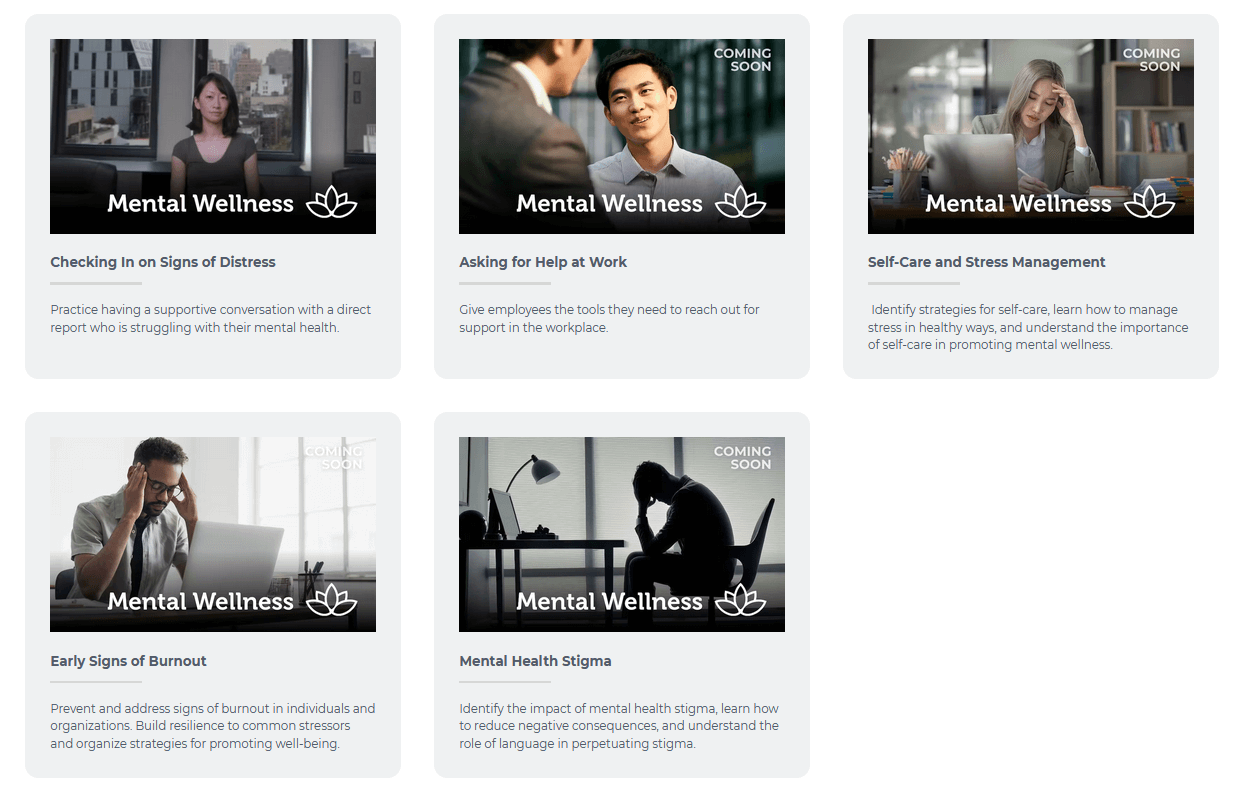
Moth+Flame Mental Wellness library

This month, they launched a Mental Wellness library to facilitate open conversations on mental health concerns. Through this library, individuals can engage in realistic scenarios, practice meaningful conversations, and acquire the necessary skills to provide appropriate support.

According to Kevin Cornish, founder and CEO of Moth+Flame, developing the library was a big commitment they made in support of mental health awareness. Their goal is to get more people comfortable with talking about mental health at work so that, ultimately, people know how to ask for help and how to offer help. “We believe that the more people who are trained on how to handle these conversations, the more people will ultimately get help,” says Cornish. “If one person gets the support they need by using this conversation and being prepared for a tough conversation, then we have succeeded.”

Collaborative Efforts in VR Training for Mental Health Awareness

Moth+Flame is not alone in recognizing the potential of XR technologies for mental health training. Several companies and organizations are utilizing VR to improve mental health awareness and support in the workplace.

PsyTechVR is also empowering organizations by giving them access to VR apps with guided meditations and art therapies that enhance mental wellness. The company, which launches new therapy content every two weeks, offers both self-guiding VR courses as well as courses with a specialist, where the doctor has access to user’s training in real-time and guides them through all the training.

Penumbra’s REAL Vision VR Wellness offers over 100 immersive experiences designed specifically for improving employee mental wellness. The company’s REAL i-Series is designed to offer VR-enabled tools for cognitive activation, distraction therapy, reminiscence therapy, mindfulness therapy, and relaxation therapy.

Collaborations among tech, health, and business sectors are paving the way for better VR experiences tailored to mental health. The National Institute of Mental Health for one has been funding research on virtual reality exposure therapy and other immersive applications.

The Impact of VR-Based Mental Health Training Programs

Although specific case studies on VR-based mental health training programs are still emerging, the potential impact is significant. Moth+Flame, for instance, partnered with the US Air Force to provide VR training specifically for suicide prevention, demonstrating the efficacy of immersive experiences in sensitive topics.

They have seen firsthand the transformative effect of VR in military suicide prevention training. By expanding access to these training programs and empowering more individuals to handle difficult conversations, the hope is that more people will feel comfortable seeking help and offering support.

Looking Ahead: Empowering a Supportive Work Environment

VR training for mental health awareness has the potential to revolutionize workplace well-being. As more organizations recognize the significance of addressing mental health concerns, the demand for immersive XR experiences will continue to grow.

As Mental Health Awareness Month highlights the importance of open dialogue, companies across various industries are embracing VR training as part of their mental health initiatives. By incorporating XR technologies into their employee development programs, organizations demonstrate a commitment to fostering a supportive work environment that prioritizes mental well-being.

It’s not just Moth+Flame, PsyTechVR, and Penumbra leading the way in utilizing XR technologies for mental health support. Other companies have also recognized the value of immersive experiences in promoting mental health awareness. From mindfulness apps to virtual therapy sessions, the potential applications of XR in mental health care are vast. Collaborative initiatives between industry leaders and mental health professionals further amplify the impact of XR in promoting mental health awareness.

Expanding the Applications of VR Training for Mental Health Awareness and Wellness at Work Read More »

‘hello-neighbor-vr’-coming-to-all-major-headsets-soon,-gameplay-trailer-here

‘Hello Neighbor VR’ Coming to All Major Headsets Soon, Gameplay Trailer Here

tinyBuild Games and Steel Wool Studios announced their upcoming VR take on viral indie hit Hello Neighbor is landing on PSVR 2, Quest 2, and SteamVR headsets later this month.

Update (May 12th, 2023): tinyBuild and Steel Wool revealed Hello Neighbor VR is coming on May 25th to all major VR headsets. Pre-orders are already available on Quest. You can also wishlist on Steam and PSVR.

In the meantime, the studios have released a new gameplay trailer. The original article announcing Hello Neighbor VR follows below:

Original Article (November 7th, 2022): If you haven’t played before, Hello Neighbor is a stealth horror game all about sneaking into your neighbor’s house to figure out what horrible secrets he’s hiding in the basement. The neighbor’s AI learns from your every move, so when you find a nice window to habitually climb through, you’ll probably find a bear trap there next go-around.

In franchise’s first VR game, you take on the role of six neighborhood heroes as they “confront their fears to free their friend, who is held captive in a bizarre basement prison,” the studios say.

“You’ll need to learn and master each of their unique abilities to solve puzzles, uncover mysteries, and make it out of the neighbor’s house in one piece, all while trying to avoid capture by the creepy Neighbor himself! Just the thought of it sends our heartbeats racing!”

Here’s how tinyBuild and Steel Wool describe the action:

  • Multiple playable characters:  Switch between characters to outsmart the AI. Each unique character has their own key items and skills. Switch between the perspectives of the Rescue Squad team members at will, solving puzzles and avoiding the Neighbor as you attempt to reach the creepy basement!
  • Environmental puzzles require creative solutions:  You will have to increasingly use your wits to find alternate solutions to a dynamic range of puzzles and challenging environmental obstacles. Many puzzles that may seem unsolvable at first glance require you to use the perspectives of multiple characters in conjunction to overcome them.
  • Non-linear exploration:  Use your own approach to infiltrate Mr. Peterson’s house by alternating perspectives, combining character’s skills to dynamically solve puzzles, uncover hidden mysteries, and reveal new pathways through your environment.
  • Confront your fears:  Experience nightmarish dream sequences and learn more about the secrets of the Hello Neighbor universe!

It’s not clear whether Hello Neighbor VR is simultaneously launching on SteamVR, Quest 2, and PSVR 2, however the game’s Steam page says it’s releasing on February 22nd, 2023. That’s when PSVR 2 is set to launch too.

To create the game, Hello Neighbor developers tinyBuild is working with VR developers Steel Wool Studios, which is best known for the breakout-hit Five Nights at Freddy’s and the VR adaptation Five Nights at Freddy’s: Help Wanted.

‘Hello Neighbor VR’ Coming to All Major Headsets Soon, Gameplay Trailer Here Read More »

‘space-invaders:-world-defense’-will-showcase-google’s-newest-ar-tool-this-summer

‘Space Invaders: World Defense’ Will Showcase Google’s Newest AR Tool This Summer

Google has announced an upcoming AR game, Space Invaders: World Defense, which is built as a showcase of the company’s latest AR tool.

Over the last few years Google has been steadily working on its AR developer toolset, ARCore. This week at Google IO 2023, the company added a brand new tool to its kit called Geospatial Creator.

Geospatial Creator gives developers the ability to create world-anchored digital content that will appear in the same location for all users. Built on a foundation of both ARCore and 3D data from Google Maps, it’s competes with Niantic’s Lightship AR platform, and is getting integrations for both Unity and Adobe Aero.

To showcase the latest capabilities of ARCore, Google has teamed up with Taito Corporation, the original developer of arcade hit Space Invaders (1978), to build a brand new city-scale AR game called Space Invaders: World Defense.

Planned to launch later this Summer—fittingly aligned with the 45 year anniversary of the original game—Space Invaders: World Defense will purportedly have players “defend the earth from Space Invaders in their neighborhood,” and will “combine AR and 3D gameplay to deliver a fully contextual and highly engaging immersive experience that connects multi-generations of players.”

Sadly we’ve yet to see a glimpse of any real gameplay, so it isn’t clear just how the game will work, but with any luck we’ll eventually find more information from the game’s official website.

‘Space Invaders: World Defense’ Will Showcase Google’s Newest AR Tool This Summer Read More »

eu-nears-ban-on-predictive-policing-and-facial-recognition-after-ai-act-vote

EU nears ban on predictive policing and facial recognition after AI Act vote

EU nears ban on predictive policing and facial recognition after AI Act vote

Thomas Macaulay

Story by

Thomas Macaulay

Senior reporter

Thomas is a senior reporter at TNW. He covers European tech, with a focus on deeptech, startups, and government policy. Thomas is a senior reporter at TNW. He covers European tech, with a focus on deeptech, startups, and government policy.

The EU is edging closer to a landmark ban on predictive policing and facial recognition.

At a crunch vote today on the bloc’s flagship AI Act, two committees of MEPs overwhelmingly endorsed sweeping new rules on artificial intelligence. The text now moves to a vote by the entire European Parliament in June. Once approved, the regulation will become the world’s first comprehensive AI law.

At Thursday’s vote, MEPs approved a strengthened version of the rulebook. The Act now prohibits predictive policing and facial recognition in public spaces.

The amendments also introduce new restrictions on generative models, such as ChatGPT, and emotion recognition.

Civil liberties campaigners have welcomed the move. Fair Trials, a criminal justice watchdog, described the vote as “a landmark result” for human rights.

“These systems automate injustice, exacerbating and reinforcing racism and discrimination in policing and the criminal justice system, and feeding systemic inequality in society,” said Griff Ferris, Senior Legal and Policy Officer at Fair Trials.

“The EU Parliament has taken an important step in voting for a ban on these systems, and we urge them to finish the job at the final vote in June.”

The industry responds

In the tech sector, reactions to the vote were mixed. The Software Alliance (BSA), a lobby group that represents the likes of Microsoft and IBM, has called for further clarification.

“The enterprise software industry remains concerned about the allocation of responsibilities in the AI value chain and the treatment of foundation models,” said Matteo Quattrocchi, BSA’s policy director.

“The rules as currently written are not tailored to reflect companies’ roles in the AI ecosystem, or differences in business models and AI uses, and likely will not address some of the concerns raised by specific applications of some foundation models.”

Privacy experts, meanwhile, can expect further demand for their services. Isabelle Roccia, MD for Europe at the International Association of Privacy Professionals, anticipates a significant impact.

“Organisations will have to increasingly rely on their privacy teams to operationalize AI because their data stewardship expertise is highly transferrable and extremely relevant to AI governance,” she said.

Get the TNW newsletter

Get the most important tech news in your inbox each week.

Also tagged with


EU nears ban on predictive policing and facial recognition after AI Act vote Read More »