EU member states have approved draft legislation allowing governments to spy on journalists in the name of “national security.”
The Council published a draft of the European Media Freedom Act (EMFA) last week that would extend media surveillance powers, including placing spyware on journalists’ phones.
The original purpose of the EMFA was to safeguard media independence and pluralism. First presented by the Commission last September, the act was hailed as a major step forward for the protection of press freedom.
But earlier this month, France introduced an exception to the ban on deploying spyware against journalists, provided it was used in the interests of national security.
The <3 of EU tech
The latest rumblings from the EU tech scene, a story from our wise ol’ founder Boris, and some questionable AI art. It’s free, every week, in your inbox. Sign up now!
The exemption would allow member states to hack into journalists’ phones if they suspect their sources could be talking to criminals involved in anything the state perceives to be a threat.
A broad array of crimes, ranging from murder to theft and music piracy, will now be considered as legal justification for using surveillance software on reporters.
Press freedom advocates have warned these last-minute changes could “open the door to all sorts of abuses.”
The European Federation of Journalists, which represents some 320,000 journalists from across 45 countries, said it was “disturbed” by the “dangerous loopholes” in the Council’s proposal.
“It shows a disregard for media freedom principles,” it said, arguing that such legislation would put journalists and their sources even more at risk.
Christophe Deloire, secretary general of Reporters Without Borders, went so far as to say that the addition of a national security exemption to the EMFA was a “danger to journalism” and “would poison this law from within.”
A spokesperson for the EU Commission told reporters last week that he would “not comment on every step of the legislative process,” when asked about the concern that now spyware could be used against journalists.
EU ambassadors will now take the draft legislation to the European Parliament to assemble the final text.
The European Commission welcomed the agreement by the bloc’s member states and called for the draft legislation to become law soon.
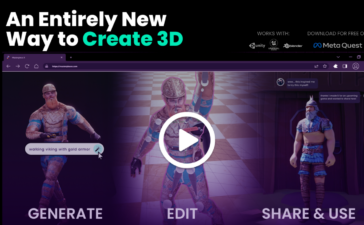
Empowering independent creators is an often-touted benefit of AI in XR. We’ve seen examples from professional development studios with little to no public offering, but precious few examples of AI-powered authoring tools for individual users. Masterpiece Studio is adding one more, “Masterpiece X”, to help everyone “realize and elevate more of their creative potential.”
“A New Form of Literacy”
Masterpiece Studio doesn’t just want to release an app – they want to start a movement. The team believes that “everyone is a creator” but the modern means of creation are inaccessible to the average person – and that AI is the solution.
“As our world increasingly continues to become more digital, learning how to create becomes a crucial skill: a new form of literacy,” says a release shared with ARPost.
Masterpiece Studio has already been in the business of 3D asset generation for over eight years now. The company took home the 2021 Auggie Award for Best Creator and Authoring Tool, and is a member of the Khronos Group and the Metaverse Standards Forum.
So, what’s the news? A new AI-powered asset generation platform called Masterpiece X, currently available as a beta application through a partnership with Meta.
The Early Days of Masterpiece X
Masterpiece X is already available on the Quest 2, and it’s already useful if you have your own 3D assets to import. There’s a free asset library, but it only contains sample content at the moment. The big feature of the app – creating 3D models from text prompts – is still rolling out and will (hopefully) result in a more highly populated asset library.
“Please keep in mind that this is an ‘early release’ phase of the Masterpiece X platform. Some features are still in testing with select partners,” reads the release.
That doesn’t mean that it’s too early to bother getting the app. It’s already a powerful tool. Creators that download and master the app now will be better prepared to unlock its full potential when it’s ready.
Creating an account isn’t a lengthy process, but it’s a bit clunky – it can’t be done entirely online or entirely in-app, which means switching between a desktop and the VR headset to enter URLs and passwords. After that, you can take a brief tutorial or experiment on your own.
The app already incorporates a number of powerful tools into the entirely spatial workflow. Getting used to the controls might take some work, though people who already have experience with VR art tools might have a leg up. Users can choose a beginner menu with a cleaner look and fewer tools, or an expert menu with more options.
So far, tools allow users to change the size, shape, color, and texture of assets. Some of these are simple objects, while others come with rigged skeletons that can take on a variety of animations.
I Had a Dream…
For someone like me who isn’t very well-versed in 3D asset editing, now is the moment to spend time in Masterpiece X – honing my skills until the day that asset creation on the platform is streamlined by AI. Maybe then I can finally make a skateboarding Gumby-shaped David Bowie to star in an immersive music video for “Twinkle Song” by Miley Cyrus. Maybe.
Resolution Games, the studio behind Demeo (2021), Blaston (2020), and Angry Birds VR: Isle of Pigs (2019), shared more info on how it’s engineering a new sport for its upcoming game Racket Club.
The studio released a new behind-the-scenes video that goes into detail about how Racket Club is played, where it came from, and what sets it apart from other racket sport experiences in VR.
In the video, chief creative officer Mathieu Castelli explains how Racket Club was built with realism in mind, offering up a sort of gameplay that could easily translate to real courts.
Castelli says that a big step in the project was modeling the “right feeling of impact” of when the ball hits the racket, something that is fairly mathematically complex. Another was defining the space so users could play naturally at home, and not need in-game locomotion stuff like teleportation. In the end, it comes down to body positioning and swing accuracy, something that is a 1:1 translation from physical racket sports.
While the basic physicality of Racket Club could translate to a real-world court, there’s a few things that VR simply does better, Castelli explains. As players gain expertise, the glass enclosures lower, increasing the chance of knocking the ball out of the court. Impressively long rallies, or the classic back and forth shots between players, can also give you more points, which can turn around a match in one go.
Racket Club is set to release on the Quest platform and PC VR headsets sometime in 2023. In the meantime, you can wishlist the game on Steam and the Meta Quest Store.
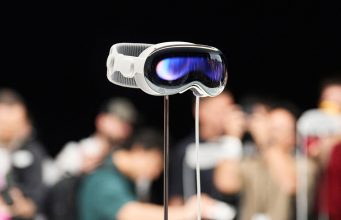
Apple says it will give developers the opportunity to apply for Vision Pro dev kits starting sometime in July.
In addition to releasing a first round of developer tools last week, including a software ‘Simulator’ of Vision Pro, Apple also wants to give developers a chance to get their hands on the headset itself.
There’s no telling how many of the development kits the company plans to send out, or exactly when they will start shipping, but given Apple’s culture of extreme secrecy you can bet selected developers will be locked down with strict NDAs regarding their use of the device.
The Vision Pro developer kit isn’t the only way developers will be able to test their apps on a real headset.
Developers will also be able to apply to attend ‘Vision Pro developer labs’:
Apply for the opportunity to attend an Apple Vision Pro developer lab, where you can experience your visionOS, iPadOS, and iOS apps running on Apple Vision Pro. With direct support from Apple, you’ll be able to test and optimize your apps and games, so they’ll be ready when Apple Vision Pro is available to customers. Labs will be available in six locations worldwide: Cupertino, London, Munich, Shanghai, Singapore, and Tokyo.
Our understanding is that applications for the developer labs will also open in July.
Additionally, developers will also be able to request that their app be reviewed by Apple itself on visionOS, though this is restricted to existing iPhone and iPad apps, rather than newly created apps for visionOS:
If you currently have an iPad or iPhone app on the App Store, we can help you test it on Apple Vision Pro. Request a compatibility evaluation from App Review to get a report on your app or game’s appearance and how it behaves in visionOS.
Vision Pro isn’t planned to ship until early 2024, but Apple wants to have third-party apps ready and waiting for when that time comes.
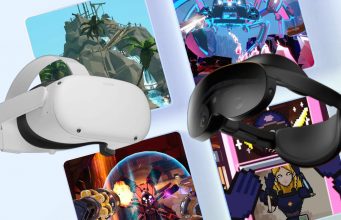
Meta today announced a new VR game subscription service that will give you access to two hand-picked Quest games per month, priced at $8 per month, or $60 annually.
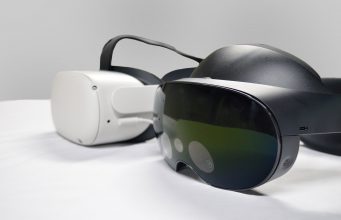
Called Meta Quest+, the subscription service will be available to Quest 2, Quest Pro and eventually Quest 3 users.
Similar to PlayStation’s PS Plus service, Meta is offering up two specific redeemable titles on the first of each month which you can download and keep for as long as you’re a paid member.
Meta says members can cancel at any time, which would mean you’d lose access to each game you redeemed, although the company says rejoining allows you to gain access to those previously redeemed titles.
The service is kicking off in July with Cloudhead Games’ physical action-rhythm FPS Pistol Whip and the nostalgia-fueled arcade adventure Pixel Ripped 1995 from ARVORE Immersive Experiences.
August is set to have Mighty Coconut’s highly-rated Walkabout Mini Golf and FPS roguelite MOTHERGUNSHIP: FORGE from Terrible Posture Games.
Meta Quest+ is set to cost $8 per month, or billed for $60 annually, a 37% savings over the monthly charge. You can learn more and also sign up here.
Meta says Quest+ titles are eligible for App Sharing across accounts, although if you happen to already own any of the games on offer monthly, you’ll just have to stick around to see whether something comes up that you don’t already own.
To sweeten the pot, the company is doing a deal for July that reduces the first month’s charge to $1, which is then followed by the regular $8 per month. That specific offer ends July 31st, 2023.
While Quest+ has been the subject of rumors for the past few months, it wasn’t clear which route the company would go—whether it would be a Viveport-style affair that allows you to pick from a pool of eligible games, or what they revealed today, a highly curated system like PS Plus. It’s an interesting route which could signal they’re expecting a substantial raise in new users in the coming months, as the company is set to launch its $500 Quest 3 headset September 27th, 2023, which has come along with a price reduction of Quest 2 to the original $300 price point.
A research team, led by the University of Cambridge, has developed a novel computer memory design, which promises to significantly improve performance while reducing the energy demands of internet and communications technologies.
As per the university, AI, algorithms, internet usage, and other data-driven technologies are estimated to require over 30% of our global electricity consumption within the next decade.
“To a large extent, this explosion in energy demands is due to shortcomings of current computer memory technologies,” said first author Dr Markus Hellenbrand, from Cambridge’s Department of Materials Science and Metallurgy. “In conventional computing, there’s memory on one side and processing on the other, and data is shuffled back between the two, which takes both energy and time.”
The researchers experimented with a new type of technology known as resistive switching memory. Unlike conventional memory devices that can encode data in two states (one or zero), this novel type of memory can enable a continuous range of states.
This is done by applying an electrical current on specific materials, causing the electrical resistance to increase or decrease. The various changes in electrical resistance create different possible states to store data.
“A typical USB stick based on continuous range would be able to hold between ten and 100 times more information, for example,” explained Hellenbrand.
The team developed a prototype device based on hafnium oxide, which had so far proven to be challenging for resistive switching memory applications. That’s because the material has no structure at the atomic level. Hellenbrand and his co-scientists, however, found a solution: throwing barium into the mix.
“These materials can work like a synapse in the brain.
When barium was added, it formed highly-structured barium “bridges” between thick films of hafnium oxide. At the point where these bridges meet the device contacts, an energy barrier was created, allowing the electrons to cross. The energy barrier can be raised or lowered, which changes the resistance of the hafnium oxide composite, and in turn allows multiple states to exist in the material.
“What’s really exciting about these materials is they can work like a synapse in the brain: they can store and process information in the same place, like our brains can,” Hellebrand said.
The researchers believe that this could lead to the development of computer memory devices with far greater density and performance but lower energy consumption, making the technology especially promising in the field of AI and machine learning.
A patent of the technology has been filed by Cambridge Enterprise, the university’s commercialisation arm, and the scientists are now working with the industry to run larger feasibility studies. They claim that integrating hafnium oxide into existing manufacturing processes won’t prove challenging, as the material is already being used in semiconductor production.
Police forces across the UK have been receiving an increasing number of false calls to 999, the country’s emergency services number. This isn’t attributed to a jump in crime, but largely to an Android feature, the National Police Chief’s Council (NPCC) reports.
Nationally, all emergency services are currently experiencing record high 999 call volumes. There’s a few reasons for this but one we think is having a significant impact is an update to Android smartphones…
— National Police Chiefs’ Council (NPCC) (@PoliceChiefs) June 17, 2023
According to the NPCC, Android’s Emergency SOS feature prompts the device to call 999 when the power button is pressed five times or more — which, as it seems, can easily happen accidentally in one’s pocket or bag.
This results in “silent calls” to the emergency services, where operators can’t hear anyone on the line. But as these calls can’t be ignored, the NPCC said that operators need to spend “valuable time” to call the number back and check whether help is actually needed.
Devon and Cornwall Police told the BBC that silent calls require 20 minutes to be dealt with. On Sunday alone, the station received 169 silent calls between 00: 00 and 19: 00.
The emergency feature in question was first introduced in the Android 12 update in 2021, but due to the overall fragmented way that device manufacturers roll out updates, the function is only now reaching enough users to become a national issue.
Google may have developed the software, but it won’t be the one fixing it. In a statement to the BBC, the tech giant said that it’s up to the manufacturers to manage how the feature works on their phones, expecting them to “shortly” introduce an update to address the issue. In the meantime, it’s urging users to switch Emergency SOS off.
Apart from temporarily disabling the feature, the NPCC is also asking citizens to stay on the line and let call operators know that they have dialed 999 by accident and don’t require any assistance.
Android isn’t the sole culprit when it comes to false emergency calls. Apple’s Crash Detection feature has also triggeredan influx of false alarms to 911 dispatchers across the US.
Microsoft announced it’s released a public preview of Azure Remote Rendering support for Meta Quest 2 and Quest Pro, something that promises to allow devs to render complex 3D content in the cloud and stream it to those VR headsets in real-time.
Azure Remote Rendering, which already supports desktop and the company’s AR headset HoloLens 2, notably uses a hybrid rendering approach to combine remotely rendered content with locally rendered content.
Now supporting Quest 2 and Quest Pro, developers are able to integrate Microsoft’s Azure cloud rendering capabilities to do things like view large and complex models on Quest.
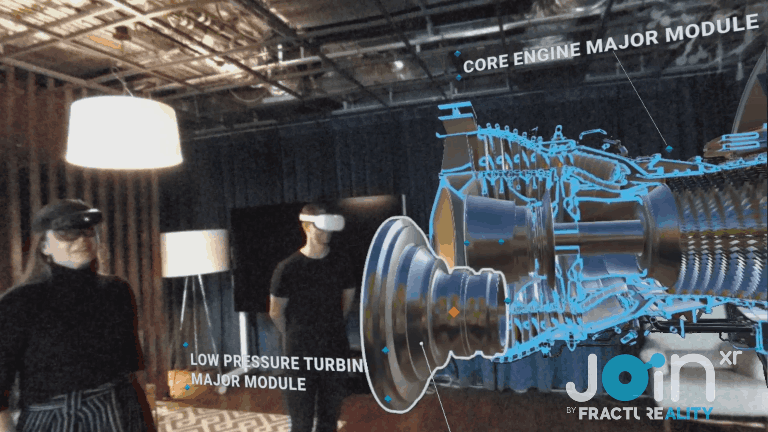
Microsoft says in a developer blog post that one such developer Fracture Reality has already integrated Azure Remote Rendering into its JoinXR platform, enhancing its CAD review and workflows for engineering clients.
Image courtesy Microsoft, Fracture Reality
The JoinXR model above was said to take 3.5 minutes to upload and contains 12.6 million polygons and 8K images.
While streaming XR content from the cloud isn’t a new phenomenon—Nvidia initially released its own CloudXR integration for AWS, Microsoft Azure, and Google Cloud in 2021—Microsoft offering direct integration is a hopeful sign that the company hasn’t given up on VR, and is actively looking to bring enterprise deeper into the fold.
If you’re looking to integrate Azure’s cloud rendering tech into your project, check out Microsoft’s step-by-step guide here.
Thomas is a senior reporter at TNW. He covers European tech, with a focus on deeptech, startups, and government policy. Thomas is a senior reporter at TNW. He covers European tech, with a focus on deeptech, startups, and government policy.
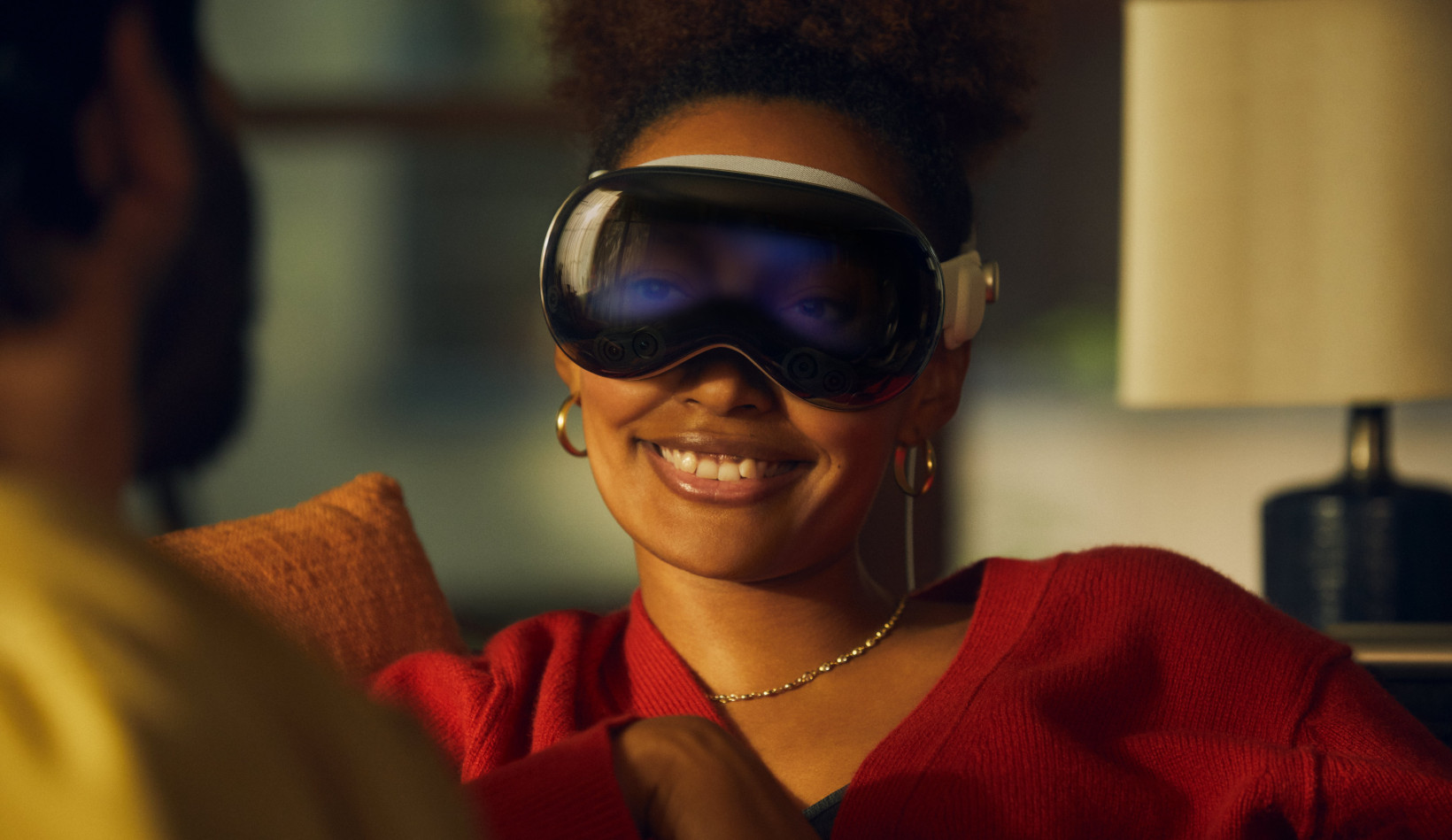
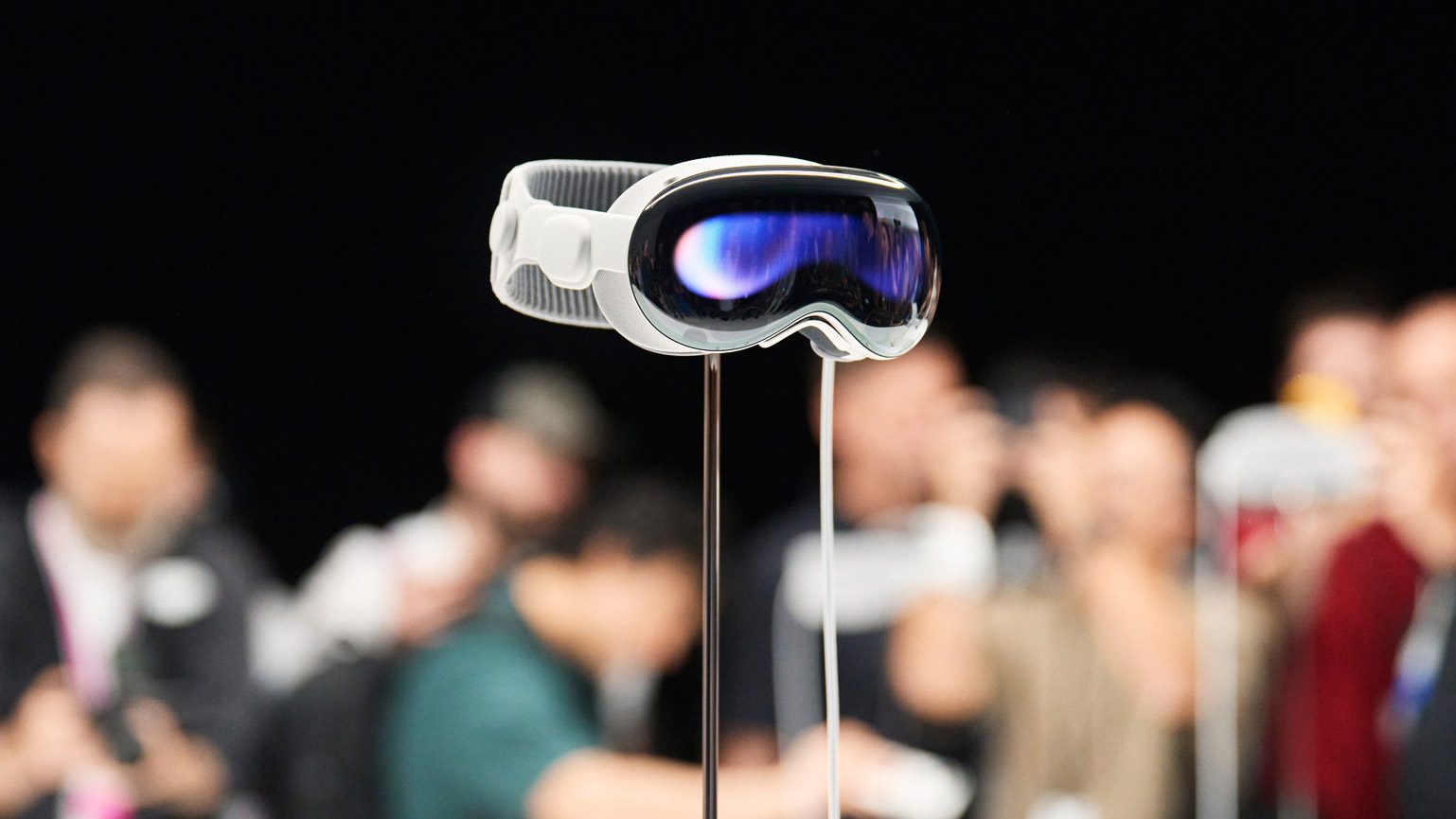
The Vision Pro arrived with great fanfare. At the launch event in California, Apple CEO Tim Cook described the new headset as a “revolutionary” device that heralds a “new era of spatial computing”. Bold claims indeed, but Apple’s track record lends them credibility.
The tech giant has already redefined music players, tablets, laptops, desktops, smartwatches, and headphones. Analysts are now proclaiming an “iPhone moment” for extended reality (XR).
Across the Atlantic, the launch was being watched closely by Europe’s XR kingpin: Varjo. The Helsinki-based startup claims to produce the world’s most advanced VR and XR. But it now faces competition from the biggest company on the planet.
The Vision Pro is slated to go on sale in early 2024. Credit: Apple
When Apple revealed the Vision Pro’s cost, the announcement drew an audible gasp from the audience. At a whopping $3,499 (€3,238) the headset is strictly for big spenders. But the impressive specs, the mix of VR and AR, and the focus beyond gaming have triggered comparisons with an even pricier device: Varjo’s €6,495 XR-3.
Nonetheless, Varjo (Varjo (pronounced “var-yo”) remains bullish. Rather than view the Vision Pro entry as a threat, the company hopes Apple’s arrival will turbocharge the sector.
“Apple’s entrance into XR with Vision Pro is an important moment for our whole industry,” said Urho Konttori, Varjo’s CTO and co-founder.
“Mixed reality is already a fixture in the enterprise sector… We hope today is the turning point for consumers when it starts being part of their everyday lives too, with promising applications for entertainment, personal productivity, and communication.”
Such public positivity was expected from Varjo. But it’s been echoed in the thoughts of external experts.
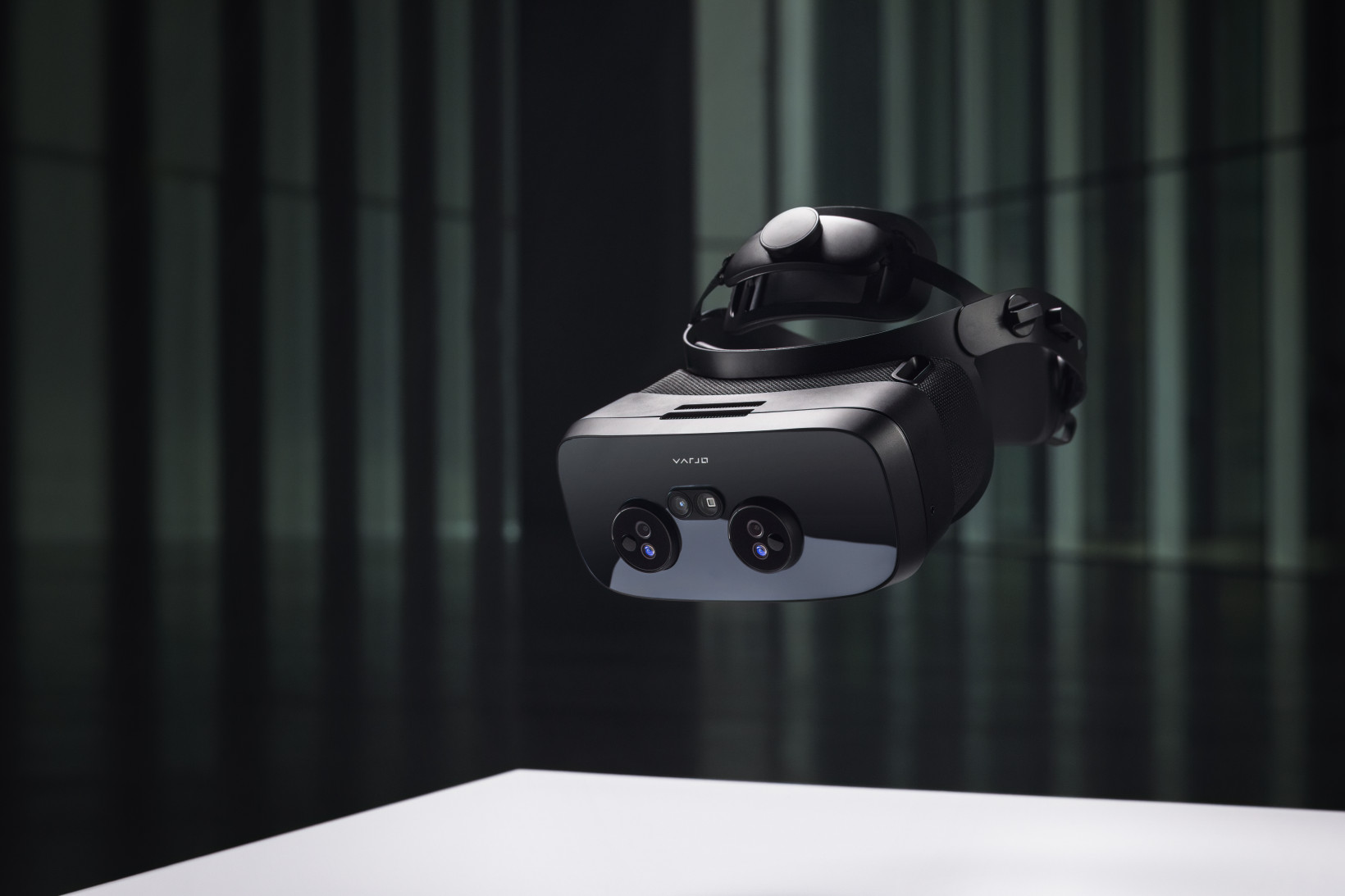
Varjo says the XR-3 delivers “the most immersive mixed reality experience ever constructed.” Credit: Varjo
“I expect that, in the short term at least, Vision Pro will largely create opportunities for other businesses by raising the profile of XR generally,” Sam Dale, a technology analyst at market research firm IDTechE, told TNW. “This includes Varjo, which I believe targets a substantially different customer type to the Vision Pro.”
Indeed, Varjo has been laser-focused on high-demanding enterprises. The company says over a quarter of the Fortune 100 is using Varjo today, as well as various government departments. The Vision Pro, meanwhile, has been promoted as a more general computing system, suitable for use cases ranging from a workstation to an entertainment device.
“We’re shaving off huge amounts of time and costs.
Varjo has eschewed these consumer applications. All the company’s customers have sky-high requirements — sometimes literally. In aviation, the tech is used to train pilots without the need for lengthy travel and expensive simulators. In 2021, the system was certified for civil aviation training in the EU — an endorsement that rival products won’t gain overnight.
Varjo also had to overcome large entry barriers in other sectors, such as the defence and automotive industries. According to the company, 15 of the 20 largest carmakers in the world now use the tech to build and sell their vehicles. Again, the savings can be immense — but only if the XR accurately reflects reality.
“You see every contour of the car, you see every flake of paint,” Timo Toikkanen, Varjo’s CEO, told TNW. “We’re obviously shaving off huge amounts of time and costs from that process.”
Toikkanen was an executive at Finnish phone giant Nokia before joining Varjo. Credit: Varjo
The effects were certainly impressive in our demo of the tech. On a sunny day in London, England, TNW tested out the XR-3 at the offices of VC firm Atomico, which led a $31 million (€28 million) investment round in Varjo in 2018.
After strapping on and calibrating the headset, a photorealistic sports car appeared on the meeting room floor. Using hand gestures, we unlocked the doors to admire the vehicle’s interior.
Seconds later, we were transported to the iconic Silverstone motor racing circuit. The same car was parked in front of our eyes, but now reflecting its virtual surroundings.
Aside from a flicker of sunlight shining onto the display, the experience was remarkably lifelike. The image resolution, field of view, depth perception, and eye and hand tracking were all superior to any other XR device we’ve tried. But then again, we’re yet to have a go on the Vision Pro.
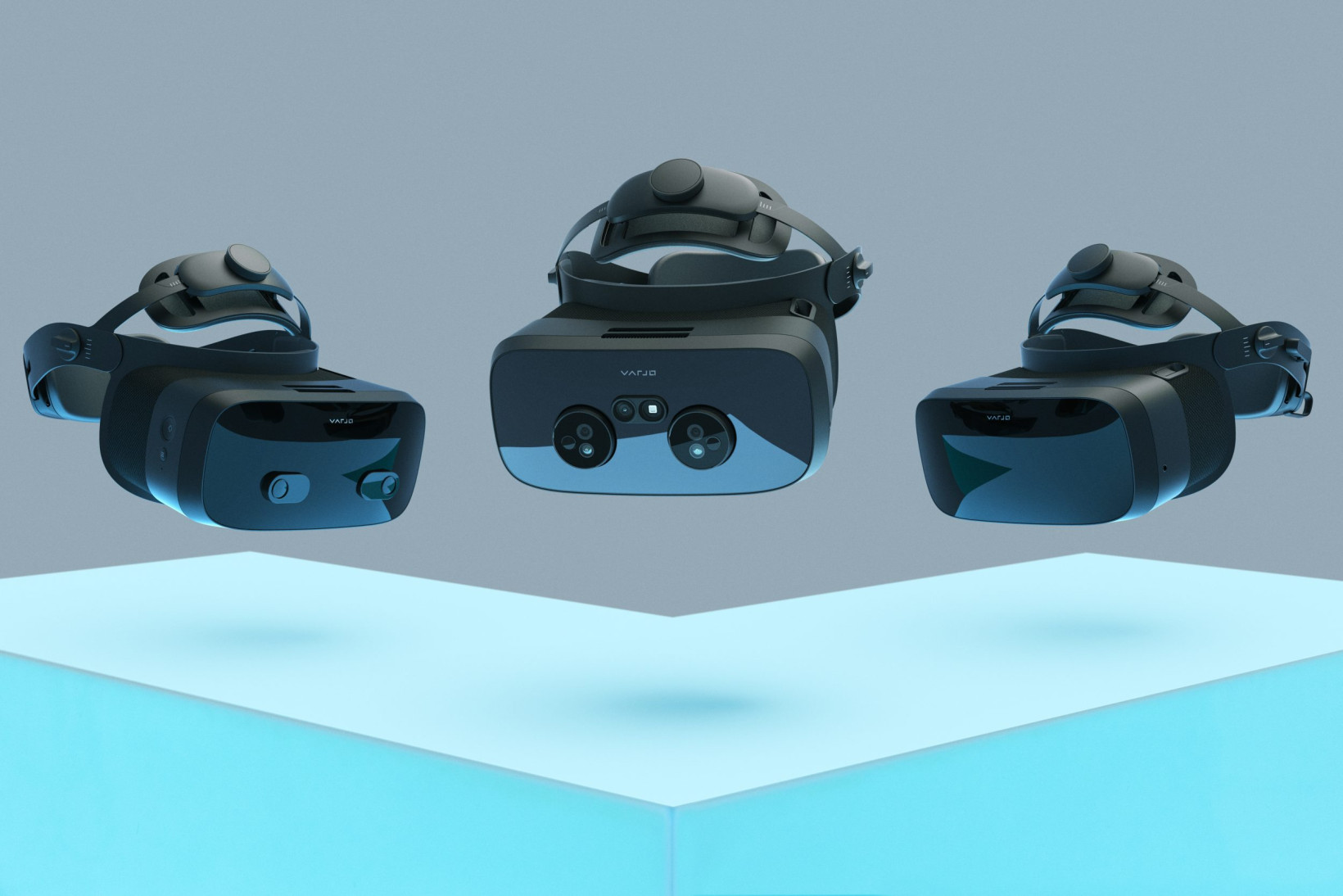
Varjo headsets include the mixed reality XR-3 (centre), and two virtual reality devices: the VR-3 (left), and the Aero (right). Credit: Varjo
Apple’s XR device has impressed both early users and analysts. But the tech differs significantly from Varjo’s.
Dale notes that Varjo headsets connect to external gaming PCs via cables to receive computing power. The Vision Pro, however, does this internally. That makes it more portable and the power is substantial. But even Apple’s high-end silicon is unlikely to match the performance of elite PCs.
“I think it’s primarily a developer device.
Another difference is that the Vision Pro is more of a personal system. People with bad eyesight will require prescription inserts, and further individual customisations may be needed. In contrast, Varjo’s headsets can be worn over glasses and shared between multiple users.
“Varjo’s headsets will likely beat the Vision Pro in top-end image quality, but at the cost of a lot of hardware complexity, extra weight, and a price in at least the same range,” said Dale.
The companies have also trod divergent paths to their ecosystems. Varjo’s hardware relies on a broader, more open network of partners, including Steam for base stations. The systems interface with external hardware for user tracking
Apple’s headset, meanwhile, keeps everything self-contained within Apple’s own ecosystem. That will appeal to many existing Apple users and developers, but it could erect new barriers for enterprise customers. These companies often have complex needs and established systems outside Apple’s empire.
Founded in 2016, Varjo has a commercial headstart on Apple. Credit: Varjo
In time, Apple may shift focus to cheaper devices, mass consumption, and new segments. There are already reports that the company aims to release a more affordable headset by the end of 2025. Experts expect that the Vision Pro is merely a first step into extended reality.
That’s the prediction of Tom Furness, one of the sector’s leading luminaries. Known as the “grandfather” of VR and AR, Furness build the first helmet-mounted displays used by US Air Force pilots. He expects Apple to use the Vision Pro to refine the XR plans.
“I think it’s primarily a developer device,” Furness said at TNW Conference.
Varjo will be keeping a close eye on the progress. As an established player with a strong customer base in highly-specialised industries, the company has found a niche that Apple is yet to target.
While Apple’s unparalleled resources make it a threat to any XR incumbent, Varjo remains hopeful that the Vision Pro invigorates the entire sector — at least, for now.
Get the TNW newsletter
Get the most important tech news in your inbox each week.
One thing that didn’t get much attention during the announcement of Apple Vision Pro is the headset’s modular design. With straightforward connections and magnetic mounting, the company’s robust ecosystem of third-party accessory makers will no doubt be scurrying to offer options.
In a, perhaps surprising, move Apple built Vision Pro with modularity in mind. This is surely a recognition by the company that one size does not fit all when it comes to an XR headset.
When I tried Vision Pro for myself earlier this month, I found that ergonomics were one of the few places where it didn’t feel like Apple was raising the bar. But considering the modular design of the headset, it seems likely there will be options to choose from.
Not only did the headband of my demo unit have an ‘M’ on it (suggesting Apple itself is probably making S, M, and L sizes), but the way each piece of the headset attaches together makes it appear that the door is wide open for third-party accessories.
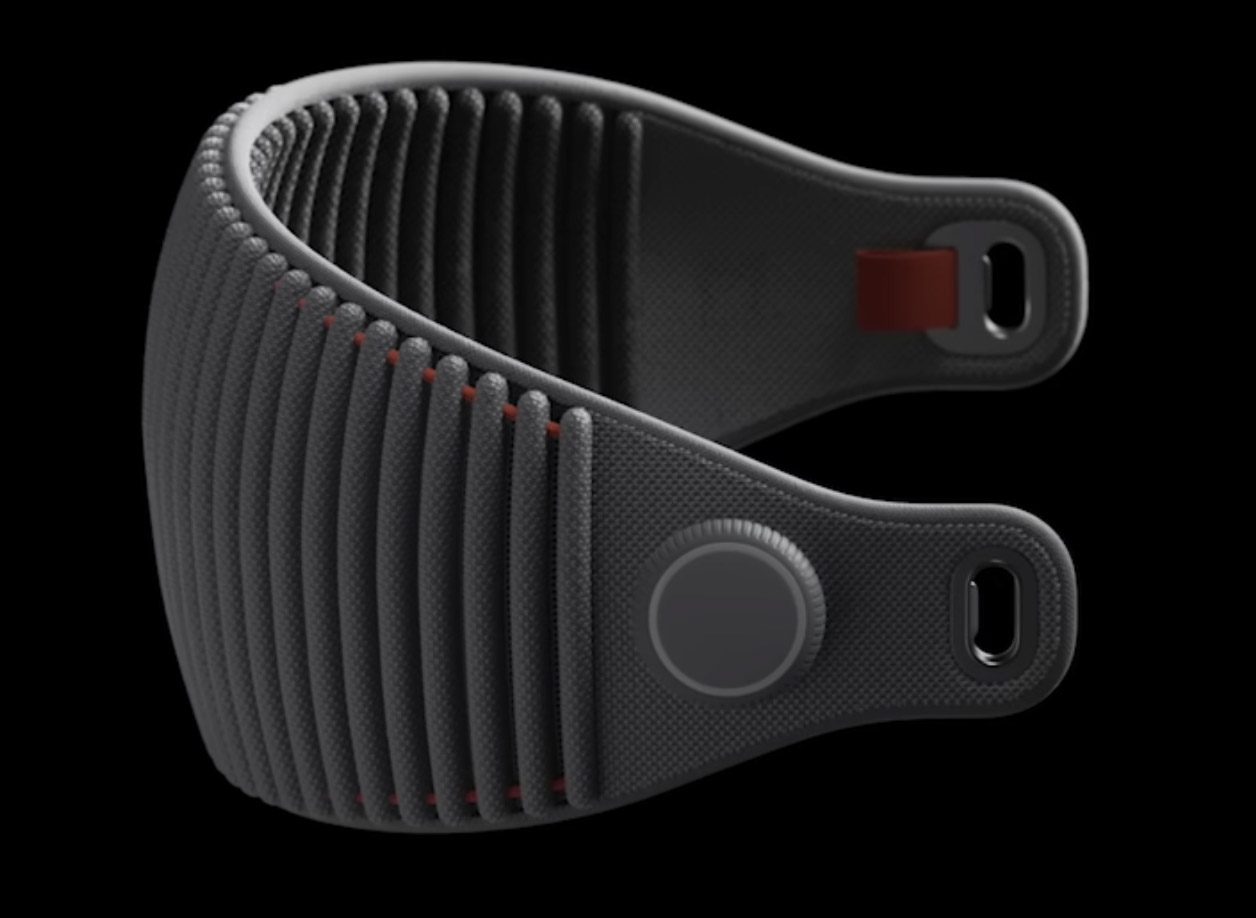
First there is the quick-release headstrap, which is easily disconnected with a simple pull of the orange tab.
Image courtesy Apple
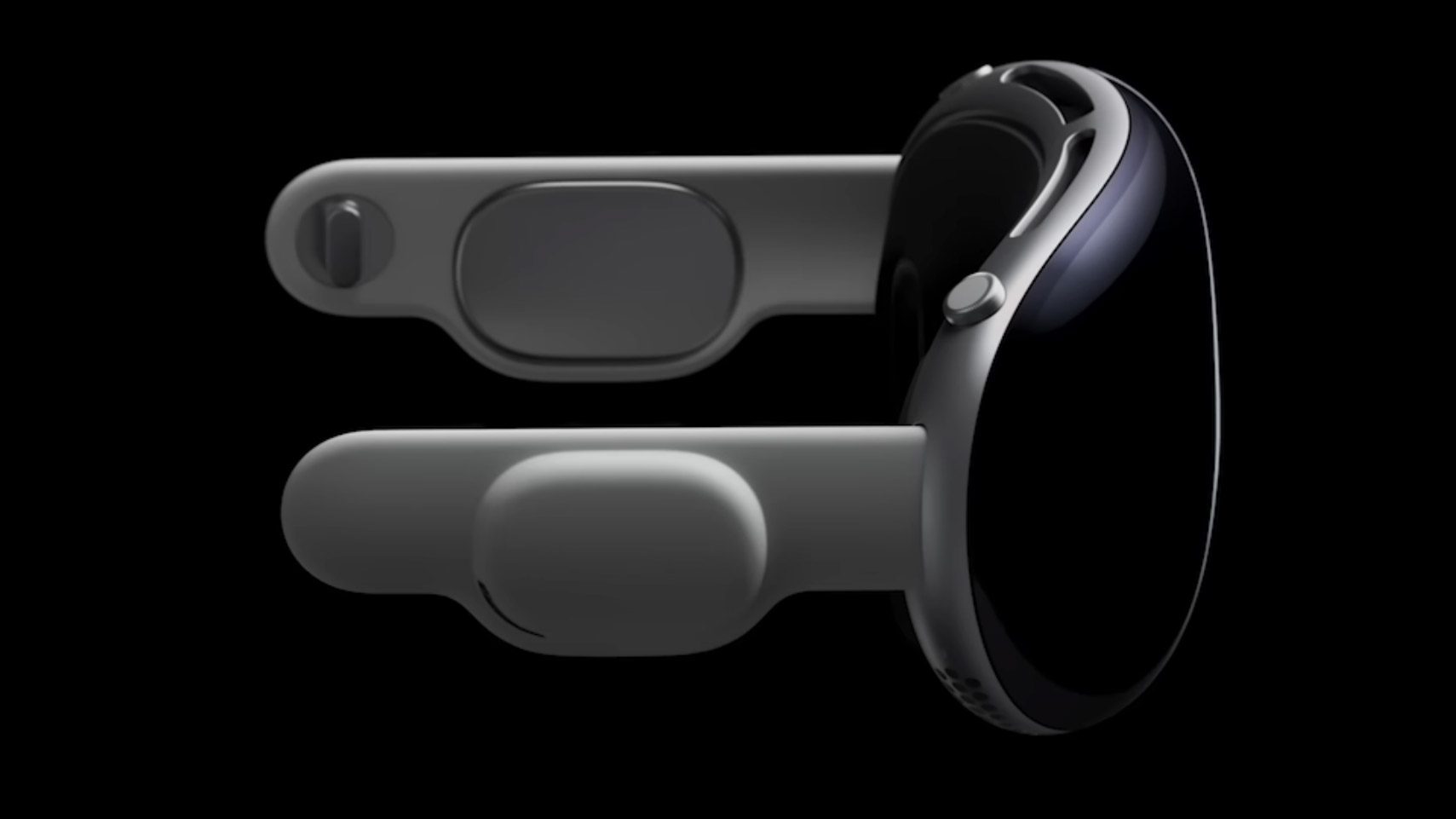
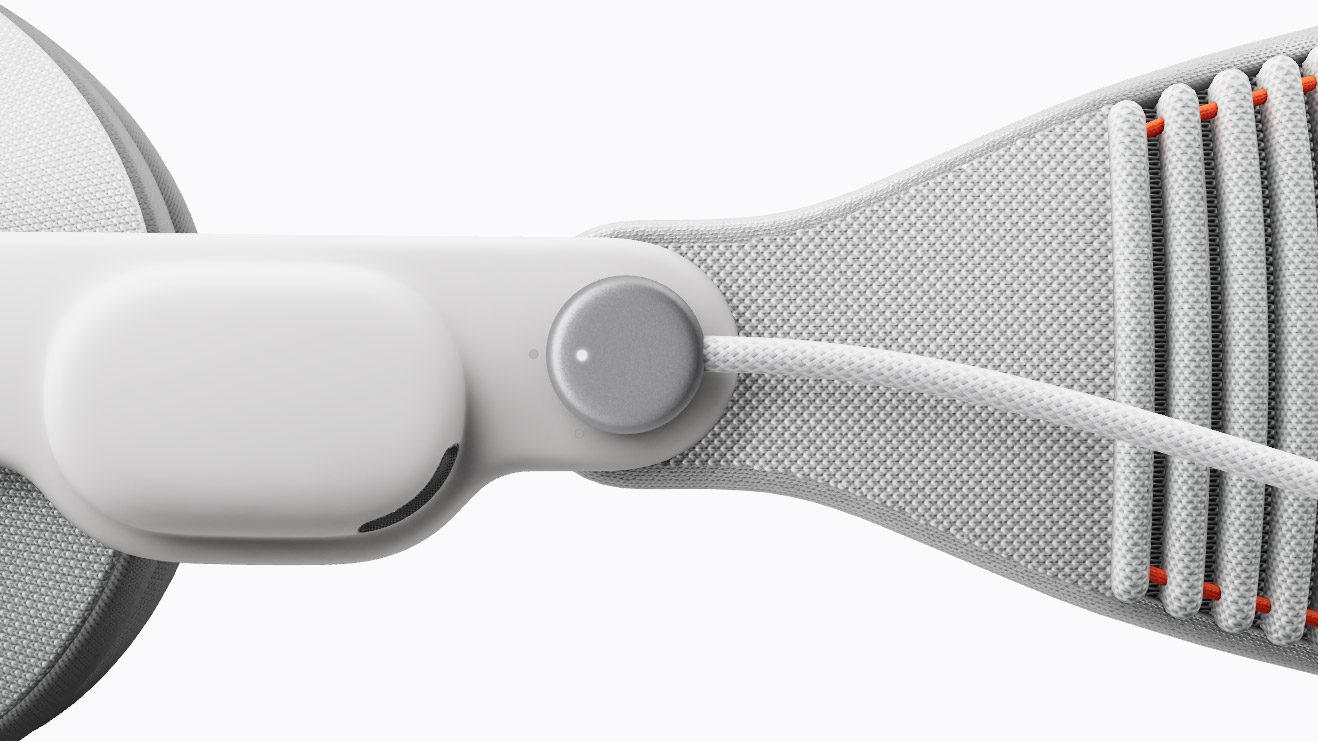
And luckily the way the speakers are mounted means they’ll always be there no matter which strap you’re using.
Image courtesy Apple
Then there’s the facepad which is magnetically attached, meaning third-party facepads can make use of those magnetic attachment points.
Image courtesy Apple
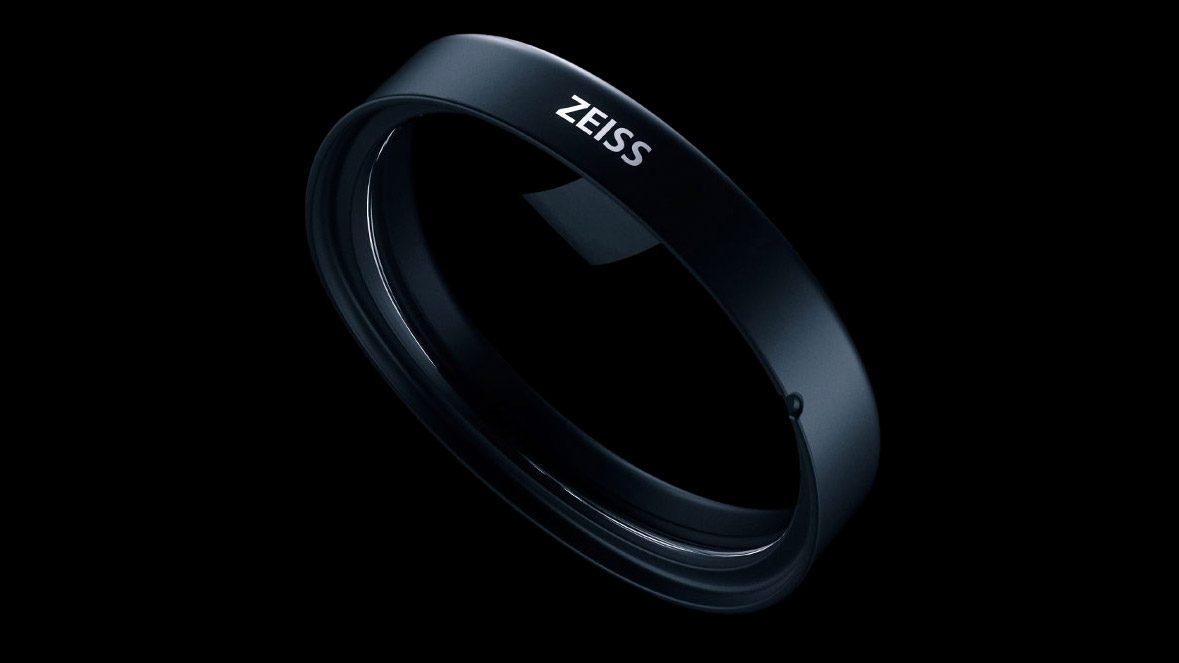
The same goes for the prescription lens inserts; although Zeiss has been named as the official maker of prescription lenses for Vision Pro, any lens maker should be able to make lenses that clip in magnetically.
Image courtesy Zeiss
The only question that’s up in the air is the headset’s battery, which attaches with a curious rotating connector.
Image courtesy Apple
It’s unclear if Apple will have made this connector proprietary in some way that’s difficult for third-parties to couple with. If Apple didn’t go out of their way to prevent third-parties from doing so, then we’ll likely see additional battery options, like larger capacity batteries and even battery-headstraps to prevent having a tether down to your pocket.
Apple has one of the most robust third-party accessory ecosystems of any consumer electronics brand—estimated at tens of billions in annual revenue. The company is also pretty good about providing detailed resources and guidelines for accessory makers, including full diagrams of products for accessories that require precise fitting, and it’s very likely this will eventually extend to Vision Pro.
Be it iPhone cases or MacBook keyboard covers, it’s not uncommon for the company’s third-party accessory makers to race to be the first on the market with an accessory for the newest Apple product, and you can bet there will be at least a few gunning for that finish line when Vision Pro launches early next year.
Image courtesy Apple
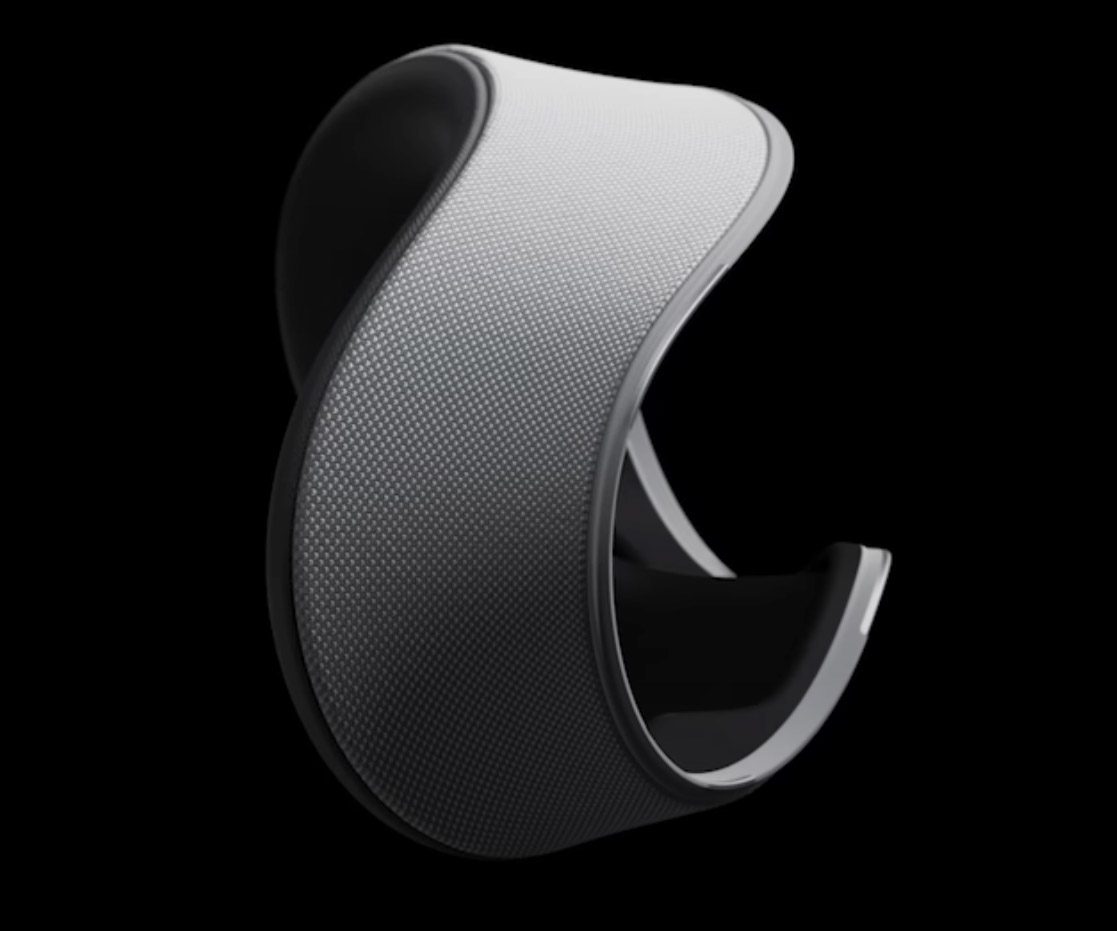
The thing I’m most looking forward to is third-party headstraps. While the one that comes with Vision Pro is nice from the standpoint of the materials and tightening mechanism, I still almost always prefer a more rigid strap, which should be possible given the modularity of the headset as we know it today.
Masterpiece Studio, the developers behind the titular PC VR creative suite, released a new version of its software built natively for Quest 2, something its creators hope will appeal to people looking for an easy way to make models, avatars, and other 3D assets.
Called Masterpiece X, the free creation tool is now live on the Quest platform, bringing with it the ability to remix existing models and make it your own through “a more playful and fluid workflow: 3D remixing, which is the process of creating new content by modifying old content,” explains studio founder Jonathan Gagne in a Meta blog post.
The developers say Masterpiece X hopes to target the hobbyist creator market by offering people an easy-to-use app that lowers historic barriers of entry.
“Traditionally, 3D creation has been an extremely complex and technical topic,” says Masterpiece Studio Designer Polina Berseneva. “That’s why so many traditional tools are so challenging for beginners—there’s just so much to learn.”
Here’s how the studio describes Masterpiece X:
remix any part of your model – from mesh to texturing, rigging, and animation
find free-to-use models in the community library (or import or generate your own – coming soon!)
export your model to your game, virtual world, or creative project, and
share it with our community to inspire & help others!
The studio says Masterpiece X isn’t targeted at experienced 3D modelers, animators, or creators looking for a tool to build assets from scratch instead of remixing, as the app emphasizes ease of use over complexity.
Until You Fall (2020), the critically acclaimed VR sword fighting game, is now available for PSVR 2.
The hack and slash rogue-lite has been available on SteamVR, Quest and the original PSVR since late 2020, however now its fun and lively sword fighting comes to PSVR 2.
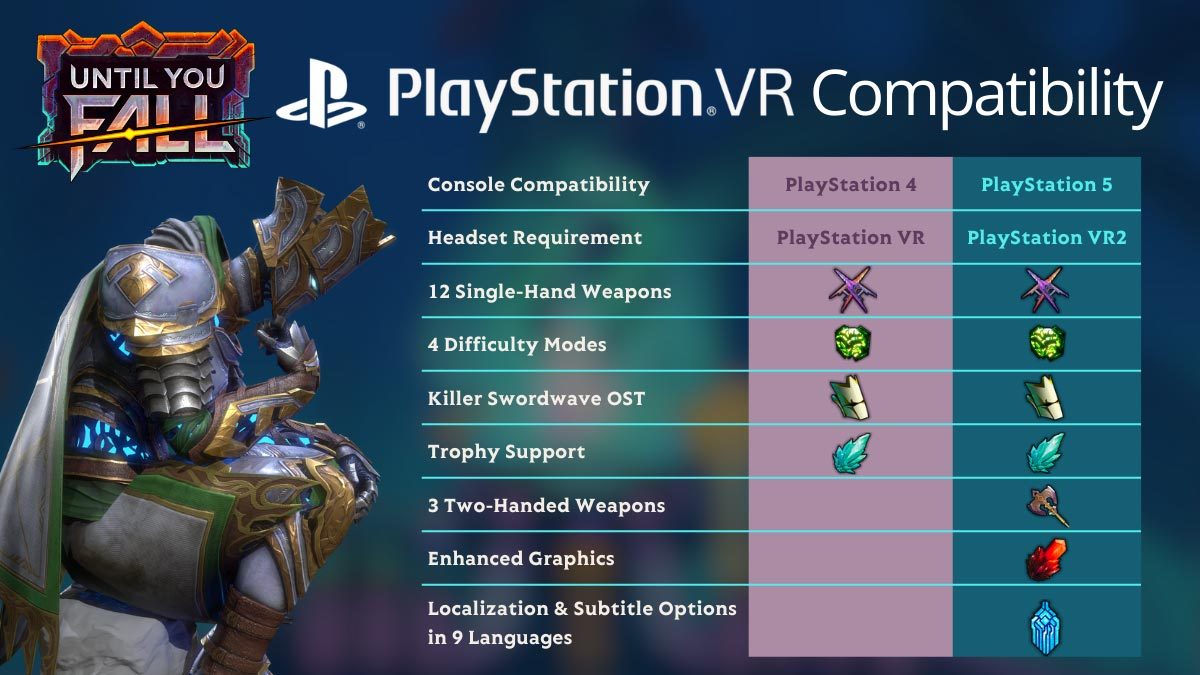
Take note, the PSVR 2 port isn’t a free upgrade from the original PSVR version, but rather priced separately at $25 in the PlayStation Store.
Schell Games says its two-handed weapon update, which brings three two-handed weapons to the game, is also not supported on the older version of the game. Check out the guide below to see what’s changed in the new PSVR 2 version.
Image courtesy Schell Games
Until You Fall offers a unique approach to VR sword fighting which notably combines the physicality and satisfaction of a proper hack & slash title with the depth of RPG combat. Just make sure to clear some space because you’ll need it.
If you haven’t played before, also make sure to check out our full review on Quest to see why we gave it a strong [8/10].