I’m doing the Monthly Roundup early this month so that next week can be GPT-5.2 and affordability of life week, assuming we are not overtaken by other events.
The risk-reward profile of creating highly dangerous new viruses, supposedly in order to study them, is abysmal even when things are handled properly.
Also, the actual practice of it is completely utterly insane.
This below is the kind of thing that could very easily cause a global pandemic vastly worse than Covid, or even end civilization, and it was done in a BSL-2 laboratory, and no one has been arrested for it.
People need to be arrested for this. Ideally heads need to end up on pikes until it stops.
Maarten De Cock: A new 🇨🇳 gain of function study created chimeric coronaviruses that can infect human cells and kill mice (up to 100% mortality).
🚩”The viral infection [and all animal experiments] were performed in a BSL-2 laboratory”(!)🤦♂️
All the modern buildings and living spaces have no character, even expensive ones, as everything converges on a single largely white aesthetic. A lot of people realize that the old look of ‘having character’ was better, but no one ends up doing it, even when there is the ability to pay more.
This level of having no idea what prices do seems to be very common. Also very common is that someone finds out and then refuses to understand:
Pamela Hobart: I graduated with high honors from an affluent, acclaimed high school and then again with high honors with a BA in philosophy & pre-law before EVER once hearing the idea that prices convey information and coordinate actors.
I’ll never forget rolling up to a philosophy conference in Pasadena in 2008 and wandering into a session on “price gouging” and the pro-”price gougers” introduced this concept.
Possibly the single most transformative moment of my entire education.
like I didn’t even grow up in a particularly liberal enclave or anything either, most parents were garden variety Republicans as were the teachers I imagine.
Kelsey Piper recalls the story of James Damore, and the attempts to have him blacklisted after he was fired from Google. The events are also described in this podcast by her boss at the time, Harj Taggar, who resisted the calls to blacklist him. Yeah, things were like that back then.
David Manheim: I will again state my view that condemning bad things is great, but condemning others for failing to condemn bad things, (much less boycotting them and similar glorious loyalty oath crusades,) is building toxic community incentives and attempting to force conformity.
Partly this is because life beckons and we have better things to do with our time than constantly condemn everything bad. But it’s more than that.
Often condemning a bad thing only gives it oxygen, and also gives oxygen to additional demands to condemn things that are decreasingly bad until you finally draw the line, and you are now seen as endorsing, condoning or even ‘platforming’ anything you didn’t sufficiently condemn and punish. At which point you become blameworthy, no matter what you did. Don’t accept the jurisdiction of that court.
The central point on such guides is that you need to know why they haven’t gotten the gift for themselves despite it providing value when you give it to them, and the more good reasons for that the better.
Activation energy, trivial inconveniences, choices are bad, lack of in-context knowledge or taste, lack of access, guilt over spending, too much audacity or cringe if they bought it for themselves, shared experiences, symbolic meaning and yes liquidity and solvency constraints are all good reasons. Stack them on top of each other.
Fidji Simo (OpenAI CEO of Products): We need the equivalent of the 20th-century clean water revolution, except for clean indoor air.
People with post-infectious chronic illnesses have known for a while how insane it is that, as a society, we continue to find it perfectly acceptable to breathe air full of viruses that can completely destroy our lives years later and that our schools are virus factories.
With more horrible conditions being attributed to viruses earlier in life, I hope that perceptions will finally change, and that contaminated air will soon feel as unacceptable as contaminated water.
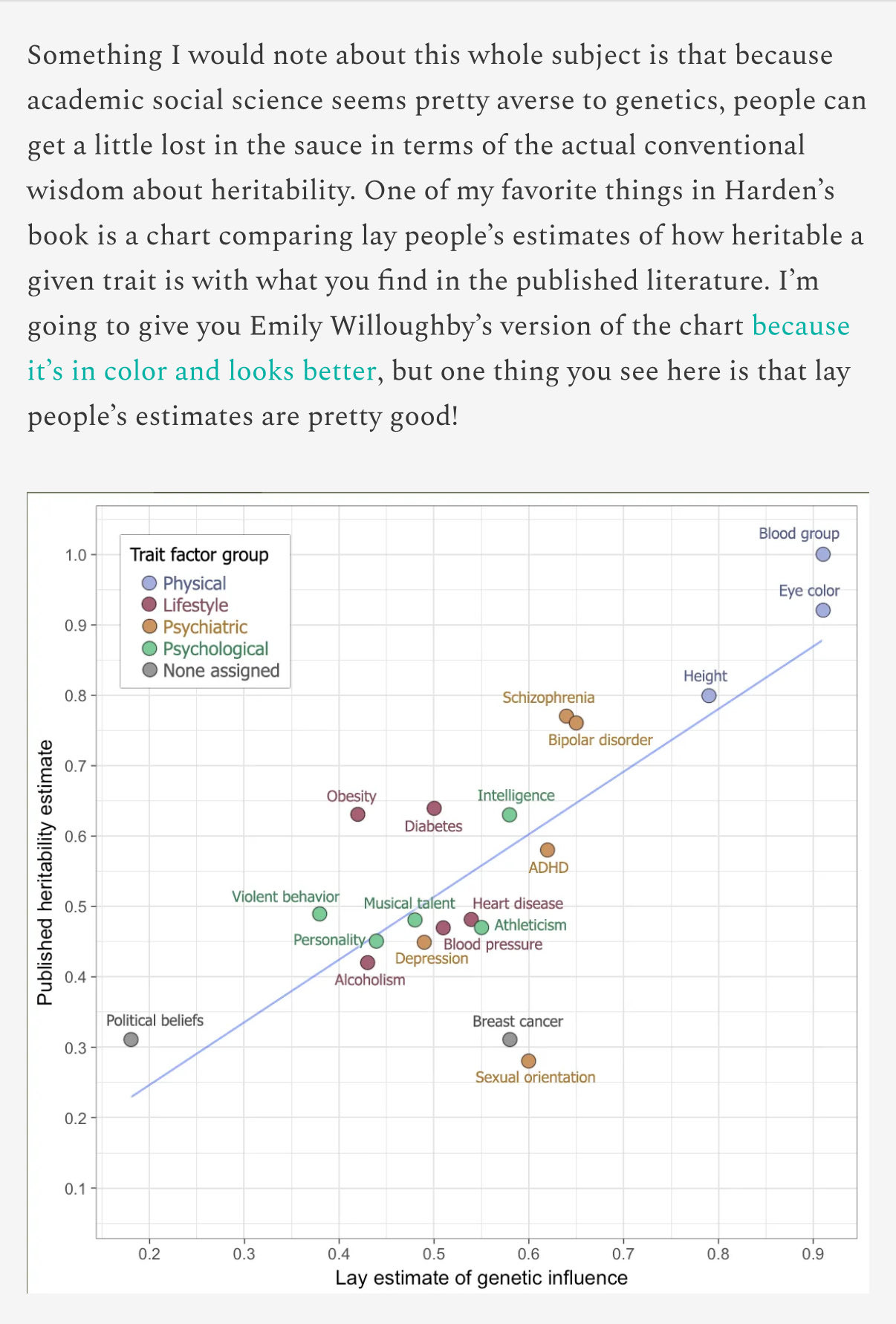
The public is reasonably good at estimating which traits are how heritable, r^2 is something like 0.35-0.4 even if you exclude eye color and blood group, and if you assume the literature is always right and the laypeople are wrong, which I would not be so quick to assume, especially for the big gaps: sexual orientation and obesity.
Oliver Habryka offers a beginner’s guide, as in basic explanations for why exiting in paranoia-inducing epistemic situations drives people crazy and towards making seemingly crazy decisions. Oliver’s thesis is that the world has gotten more paranoia-requiring and epistemically hostile, and that this often overwhelms the value of us having better information and other resources, often leading to worse decisions.
He starts by going over how lemon markets work, and points out that in the real world we always have not only a potential lemon problem but also a potential lemon problem among the identifiers of the lemons, and so on. Whatever system you are relying upon there are those looking to exploit it.
Well, maybe. That’s true for a sufficiently collective value of ‘you,’ or if you alone are a sufficiently important target. In many cases, this doesn’t apply, and it isn’t true.
In other cases you can do a pretty good job identifying non-suspicious counterparties, or you can engage in enough iterated games, such that you can solve such worries.
The reason used cars in particular are such an issue is that not only is it traditionally hard to detect lemons, there is also little recourse or consequence to selling a lemon, and also there is a baseline cultural expectation that a ‘used car salesman’ will be slimy, so them being suspicious or having somewhat of a sketchy reputation doesn’t mean you can obviously bail on them.
(We now actually have made substantial progress in the used car lemon problem, with inspections that come with warranties, longer test drive periods, online marketplaces, certifications that have long term reputations to maintain and the rise of history trackers like Carfax and AutoCheck.)
The next point Oliver makes, about OODA loops, is key, although I’d frame it differently. Oliver presents it as, if the enemy can ‘get inside your OODA loop,’ meaning act on you before you can observe, orient, decide and act, then you’re screwed, because you never actually get to act in an appropriate way. This is a good illustration but feels too general.
It’s more a question of, can you handle the epistemic environment in which you have been placed without taking generally paranoid or drastic measures?
Consider a poker game. If you’re up against an inferior player, or one of similar caliber, then there is a lot of room to make interesting moves, and try to use the information they are giving off, and to give off intentionally misleading information, both with game actions and otherwise. You can always make what you think is the ‘best’ play based on the situation, and ideally only randomize in true edge cases.
If you’re up against a sufficiently superior player, that won’t work. They anticipate what you are thinking, they adopt faster than you do, they are giving off actively misleading signals and figuring out yours.
You need to retreat to your best approximation of game theory optimal play and randomize your moves while ignoring your reads, combining Oliver’s strategies.
Which are:
Oliver Habryka: There are lots of different ways people react to adversarial information environments like this, but at a high level, my sense is there are roughly three big strategies:
You blind yourself to information
You try to eliminate the sources of the deception
You try to become unpredictable
All three of those produce pretty insane-looking behavior from the outside, yet I think are by-and-large an appropriate response to adversarial environments (if far from optimal).
Blinding yourself to information is an extreme response that only makes sense when you are sufficiently outgunned. One good reason to be outgunned is that others might be putting way more effort in than you can or would want to put in.
When sources around you are willing to lie or otherwise untrustworthy, that does not mean you should ignore them, even if they are clearly lying to you to try and trick you.
Oliver gives the example of the CDC during Covid, where they were saying things like ‘masks don’t work.’ This is indeed valuable information about the CDC and also the current world state, if you understand how to process it and not fall into the trap of interpreting it as ‘oh, masks don’t work.’
The CDC and Fauci were operating at Simulacra Level 2. As in, they would tell you [X] so that you would believe [X] and then act accordingly and do [Y]. They didn’t care if [X] was true or false, they cared that they thought [Y] was good for public health.
Once you identify that this is what the CDC and Fauci are doing, you can properly interpret their statements. They say ‘[X] is true’ and you hear ‘we think it would be good for public health if you did [Y].’
You can do similar things when you figure out people are on Level 3 or Level 4.
I also think the stories on professional advice, official numbers and admissible evidence, Oliver’s examples of rules limiting information flow, are more complicated, but I won’t get into that here.
Strategy two is to purge the untrustworthy. This seems purely good. Even if you are in a mostly non-paranoid mode, and can mostly trust everyone, how do you keep it that way? By punishing and if needed exiling anyone who is not trustworthy, which includes you being insufficiently able to trust that they are trustworthy. That’s how trustworthiness works.
A variation of purging, or asking which sources are unreliable, is to determine which sources are adversarial. A source can be unreliable without being adversarial, or it can be adversarial without being unreliable. Ideally you’d avoid me if I was either of these.
Strategy three is to become unpredictable and vindictive.
You can combine these strategies, and you can also use either one on their own.
To a large extent ‘be unpredictable and vindictive’ is about creating maximally strong incentives. If you’re going down this strategy, you want maximum distinction between reward and punishment, and to always make people uncertain where they stand and worried or hopeful you might flip from one to the other, ideally with fear of massive overreactions. It can definitely work.
Paranoia is one good reason to do this, as it makes people scared to cross you, but it also is a valid strategy for anyone with enough power even without paranoia.
And again, you can split the two halves and do either without the other.
Richard Ngo suggests an additional strategy, that the wise trader uses, which is to have wide bid-ask spreads, and being conservative in taking actions that might reward or get punished by deception.
Thus we have six strategies.
We have Oliver’s three, the last of which is split in two, we have Richard’s, and then we have Git Gud, be able to parse the information properly and get good use out of it, and you can do any combination of the six.
The only one I have read is Open Socrates by Agnes Callard, which I affirm was excellent and I’m sad I did not finish my book review. I might attempt it again at a later time, it is even now on top of my ‘when I have time’ stack, although it will suffer from my loss of memory. I’ll be largely relying on what I chose to highlight. Still seems worth it? So much to enjoy disagreeing with in that book.
I am on the fence on whether I should be reading and reviewing more nonfiction books, versus other uses of time.
Tyler Cowen picks his best fiction of 2025, as a person whose best-of book lists are much bigger than how many books I read at all. I hadn’t even heard of any of these. Balle is included and appears to be a time travel story, which I’m usually down for, but I can wait and see if people like where it goes.
How many fiction books did I read in 2025 other than when reading to my kids? One, This Is How You Lose The Time War, which I read on a plane and can recommend as ‘a good book.’ I owe Seth Burn that I will read Dungeon Crawler next. Fiction is one of the things my revealed preferences don’t find the time for. I wonder if that is a mistake, as the upside of a really good book can be very high.
I’d also love to learn how to write fiction, although I’m most attracted to the idea of a screenplay? Every time I try to actually write fiction I feel like an imposter, nothing seems right or good enough, I end up not writing anything. Yet I often have very particular opinions about creative works.
I will be doing a Movies of 2025 post, either later this year or early in 2026, once I’ve had opportunity to watch the end-of-year movies. This was the year of pain, and the year of anticorrelation with critics.
Another article, this time from Slow Boring and Chris Dalla Riva, points out that copyright terms are too long and terms too restrictive. In particular, Chris blames this for a lot of our cultural stagnation, as there are constant pushes to reintroduce us to existing music and other IP via things like biopics.
Except, isn’t that good? What’s wrong with getting owners of song catalogues to bankroll biopics for artists like Elvis and Springsteen, which you don’t have to watch and are often pretty good and also make our music experiences better? Or to encourage sampling?
The intervention Chris pushes is expanded compulsory licensing. I agree that compulsory licensing has been great for music. I unfortunately don’t think that works the same way for television and movies, but also the copyright term is obviously way too long and due to treaties it would be difficult to shorten it.
Thus, an obvious compromise suggests itself. We can move to mandatory licensing after a reasonable period of time, something like 30 years, plus a required prominent disclaimer on all licensed visual media.
Lucas Shaw and Michelle Davis: California Republican Darrell Issa wrote a note to US regulators objecting to any potential Netflix deal, saying it could result in harm to consumers. Netflix has argued that one of its biggest competitors, however, is Alphabet Inc.’s YouTube, and that bundling offerings could lower prices for subscribers.
I think Netflix is right, and also this merger could be fantastic for customers, combining HBO and Netflix. Netflix has promised to allow Warner Brothers films to continue to have full theatrical releases, and for their business to continue unchanged, and I see little reason for them not to do that.
I have also heard the theory that if Paramount buys Warner Bros. then Paramount would pull all of both companies content from Netflix and form a competitor, so the Netflix bid is largely defensive. That’s all the more reason not to fear it.
My instinct is we want Netflix to win this fight, but if Paramount is willing to integrate Paramount+ and HBO Max into an actually functional streaming service that can surface high quality content (Paramount+ is, shall we say, not the most functional service on either surfacing high quality content or serving its basic functions) then that would also be a win.
If a Magic: The Gathering deck would be too good with perfect play, but approximately zero people can play the deck well enough to dominate with it, do we have a problem? Amulet decks in Modern are the latest to suggest this question.
In the linked discussion I think both Seth Burn and Sam Black make good points. Centrally I agree that bans are about harm reduction, which is often best served by harm prevention, with the goal of creating the best game in practice. I view harm as primarily mattering on the level of typical player experiences and health of a format in practice. I do think there’s a level at which Pro Tour level results can force your hand here anyway, but it’s on the level of ‘this deck is >50% to win if we ran the tournament back next week.’
Werewolf is a highly illustrative game (basic rules: there are [X] players in the village, [Y] of which are werewolves, each day everyone in the village including the werewolves votes to kill a player, each night the werewolves kill a player, whichever side is left at the end wins, various players get various other special powers), in that in most groups the werewolves win way more often than they ‘should’ for given values of [X] and [Y].
This happens largely because so many players effectively focus largely on their own survival rather than the survival of their team, so they become afraid to speak out or otherwise try to help the village win, and that the villager side is in various ways the harder one to play well. Whereas if the villagers are good enough at working together, getting people talking and analyzing Bayesian evidence, they can win remarkably often, including a high chance of identifying a werewolf at game start without any hard evidence. These are important lessons about the world and the ease with which a focused group can win, which was the point of the OP she is QTing here.
Liv Boeree is correct that by balancing the special roles (and also the number of werewolves) you can get the win rate for the werewolves to be whatever you want it to be for a given group of people, but people fail to understand the dynamics pointing towards the werewolves, and thus the werewolves tend to win most games in practice unless a given group is self-balancing.
Roblox is a confusingly popular platform for children’s computer games. There are more than 150 million daily active users spending 11 billion hours a month, 3 percent of the gaming space, with at one point more than 25 million users simultaneously playing the game ‘Steal a Brainrot.’ I haven’t checked that ‘game’ out but presumably based only on the title this is an indictment of our entire civilization. A quick investigation indicates it is basically a base raiding game.
Roblox is described as ‘one of the primary gathering places for preteens.’
Alas, any time something attracts kids that will mean not only hosts of abominations like ‘Steal a Brainrot.’ It also means predators, and there are 20+ associated lawsuits. Roblox pitched Kevin Roose and Hard Fork on interviewing Roblox’s CEO David Baszucki about child safety, which seems like a fine idea for all concerned, except then it got weird.
They start out talking about new safety measures, including using a facial scan and AI age estimator (that is also using various behavioral indicators) before allowing communications. The idea is yes you might fool the image filter but when you stack the evidence it gets harder and harder to hide that you’re a kid. They also use such strategies as not sharing images, aggressive text filtering and so on.
And he says essentially: Hey, better to have the kids in Roblox with these restrictions, than a place like Snapchat or Instagram or Discord where things are worse. Fair point.
That all helps, but as always if you twiddle enough you can always get through filters. As Baszucki points out at some point you’re using the fifth letter of every third word and nothing short of full generative AI analysis is going to ever cut it. Give me a text channel, give me sufficient incentive and time, and you’re cooked.
Many games respond to this by not allowing open-ended chat, period, or heavily restricting what it takes to open such a channel. When I made the Emergents TCG, I was essentially informed by our legal department that no, you are not going to let your users chat with each other, you are not allowed to do that.
Which really, really sucks. I’m totally with Baszucki that allowing communication adds a ton of value, that being social is important to the experience. I mean, look, it sure isn’t the quality of the games.
Then Roose asks about responsibility coming with scale and then the Hindenburg report on Roblox where they said they were compromising child safety to report growth to investors (which of course they were, compromises are inevitable and not obviously bad, we’re talking price here) and things keep focusing on the safety issues at the expense of everything else, at which point Baszucki gets increasingly upset and things go off the rails and complains that he’d love to also talk about things other than content filtering at some point.
Fundamentally, underneath him going on tilt, it seems like Baszucki’s core argument is that AI safety filtering is better than human filtering given how much human attention could reasonably be available. And I actually agree with that, so long as it escalates to a human when necessary.
Oh, and then Baszucki brings up Polymarket unprompted, he’s rightfully a big fan but also then he gives a flat out yes to a intended-to-be-a-joke question about putting prediction markets inside Roblox via a Dress To Impress Predictor. So that was a lot of fun. Isaac King is right that prediction markets for kids are a great idea if you can find a way to avoid them devolving into gambling, that does not make it not funny.
Seth Burn breaks down the latest game in which an NFL team would have benefited by going for 2 in order to adjust their behavior (in this case, the Eagles score a TD to go down 9 with 3: 09 to go against the Bears). To maximize the probability of winning, the Eagles need to go for 2 right away, so they can onside kick if they fail, which overrides all the ways the Bears might use the information.
That is true, but the gain in win probability is very low, whereas the amount of exciting football that is lost to the fans, in expectation, is rather high. From the perspective of the NFL or of the fans, I would want a convention that you kick the extra point here. I agree that you play to win the game, but it’s not to the exclusion of all other considerations, and the win probability difference here is very small, well under 1%. It’s fine to give some consideration to what is cool, to the fan experience, to various records, to health of players, to ‘the good of the game’ writ large and maintaining good norms.
An easy way to see this is that near the end of basketball games, there is a point at which there is a non-zero chance that the team trailing could win if they started fouling, yet there is a convention that past some point they do not try, and that this convention is obviously a good thing. Whereas in the NCAA tournament that rule goes out the window and you play to win the game, and that too is good.
What’s the actual business model? Sports drive alumni donations.
Geoff White: Donors gave nearly $900 million dollars to UofM in 2025. As an alum, I can state with 100% confidence those numbers would be substantially lower without athletics. The impact is far, far, far greater than $15mm, it is probably closer to $250mm. That is the real story.
Twitter made user locations public, revealing that many supposedly accounts stoking the flames of toxic discourse were not American at all. At least many of them were foreigners in it for the engagement payments.
Mostly all the ‘real’ accounts are who and where they said they were, many reported that a bunch of accounts that got exposed vanished, and mostly this was a big win. I didn’t notice a change, but I cultivate lists and block as needed so I’m not exposed to troll farms. Seems like a very good change overall.
This led to some obviously real accounts joking about being put in the wrong place (such as Liv Boeree being put in the UK or Will Eden in Japan) and also some bad faith attacks in places where the origin was obviously glitched. As always, I noted who joined in such attacks and who did not.
The rollout of the new Twitter ‘chat’ feature has been a rather unmitigated disaster and it is rather dismaying that it was allowed to go forward. It frequently didn’t work, and even when it does work the whole thing is worse than what we had before, and I don’t see any benefits.
Visegrad 24: The European Parliament just voted in favor of banning social media for people under the age of 16.
483 MEPs voted in favor while 92 voted against. If it becomes law, people will likely have to use IDs to log into their profiles, making anonymous accounts impossible.
The primary effect of this is to force tracking and verification of everyone’s identify online to the maximum extent possible. Which of course they know, and is why they voted for it.
Over half the cost of hardware construction at Revoy and Charm Industrial is claimed to come from regulatory bottlenecks. The post makes good points but I note the accounting seems creative, as in ‘you delayed my project a year so you imposed a societal burden equal to the per-year benefits of the project.’ That’s a real thing you can measure, but you have to keep it in its proper context.
Tyler Cowen says an important point out loud, which is that every workable immigration policy offends liberal instincts, public opinion or both. I would argue that ultimately, no matter the path, it is both. All the options require doing something that profoundly sucks in both ways, in some combination of who is not allowed in, how we enforce who is not allowed in and how we treat those we let in.
That still leaves many free wins available to us. We are miles away from the production possibilities frontier. High skilled and high value immigration is a win for everyone across the board, or can be with compensation as needed, no matter what else we ultimately choose to do, and a lot of the things we do right now are purely destructive and cruel, and we can stop. But yes, ultimately there are contradictions.
Elon Musk: Falsely labeling non-violent people as “fascist” or “Nazi” should be treated as incitement to murder.
CNN (October 29, 2024): Trump calls Harris a fascist, says he is ‘the opposite of a Nazi.’
To guarantee objectivity I turned to Grok to ask if Elon Musk has ever done this. The answer is yes.
Zvi: has Elon Musk called any non-violent people ‘fascist’ or ‘nazis’?
Grok: Yes, Elon Musk has referred to non-violent individuals and entities as “fascists” or drawn comparisons implying “Nazi” associations on multiple occasions. Here are some key examples based on documented instances:
In September 2024, Musk labeled the Australian government “fascists” in response to proposed legislation that would fine social media platforms for failing to address misinformation. This was directed at the center-left government led by Prime Minister Anthony Albanese, who is not associated with violence.
He doubled down on the remark after Albanese criticized it, emphasizing his opposition to the bill’s potential impact on free speech.
In February 2022, amid the Canadian trucker protests against COVID-19 restrictions, Musk posted (and later deleted) a meme likening Prime Minister Justin Trudeau to Adolf Hitler, implying a Nazi comparison. The meme read: “Stop comparing me to Justin Trudeau. I had a budget,” overlaid on a photo of Hitler.
In a related post, he stated: “If Canadian government is suppressing peaceful protests, that’s where fascism lies,” indirectly calling Trudeau’s administration fascist.
Trudeau, a non-violent political leader, was the target of these remarks.
These instances involve Musk criticizing government actions he views as authoritarian, but the individuals and groups referenced (e.g., elected officials and administrations) are not engaged in personal violence.
Zvi: would you describe these instances as ‘falsely labeling’ those people?
Grok: Yes, I would describe these instances as falsely labeling those people, as the terms “fascist” and “Nazi” (or direct comparisons to Hitler) carry specific historical and ideological connotations that do not accurately apply to the democratic governments and leaders in question. [explanation continues].
Look, no, good that he’s donating the money to kids at all, but this implementation is dumb, it doesn’t buy that much political goodwill and it isn’t a good use of the funds. This seems well behind the ‘make tuition free’ donations if you have to go this route.
Postmanbloke: House parties need to make a comeback.
Peter Wildeford: House parties exist! I met my girlfriend at a house party 2 years and 10 months ago ❤️
Allie: Guys just have house parties. No one is stopping you.
The fun thing is you do not need a house! I did this in my apartment.
I think they often also mean they don’t have a social circle to begin with.
Cartoons Hate Her!: ACTUALLY something is stopping me: nobody fucking comes!!
One problem here is irl I have zero “status” related to my career. Not that it explains nobody liking me, but people generally don’t know/care what CHH is, so I say im a writer and theyre thinking “oh, a loser”
There are a lot of people from the Internet who would come to my house party if I invited them, but I specifically do not want them there.
Ben Hsieh: ok i can finally post about my trauma trying to host events in LA where consistently 0-1 people showed and in one case the invitees did the same event just without me
honestly felt like something was wrong with me until i moved back to NYC and started getting 20+ attendees again
the actual nadir (well besides the rehosting thing) was somehow hosting a comped company happy hour where all 6 rsvpd coworkers ghosted including a designer i work with every day. honestly fuck LA never going back
shoutout to the solo attendees tho, those guys were total bros about it every time 🫡
Jake Eaton: first holiday party in LA we invited (and cooked) for 20 people; 2 showed up. once we proposed doing formalwear at mel’s diner with friends. while we tried to find a date, we saw on instagram they did it without us. i still miss it all the time though
Ben Hsieh: wow this is so validating to hear that it wasn’t just me. honestly i never felt like it was anything personal but just the unpredictable traffic and people being overly surface nice makes the flake rate insane. solidarity for hosts w/ flakey friends tho
Misha: Party Expert here: most house parties are not in fact networking events based on your prestige or legible status. They’re outgrowths of friend groups, chance meetings, and public/semi-public events.
There IS an unfortunate sort of catch-22 here which is if you’re locally socially disconnected your avenue for getting people to come to your parties / getting invited to parties is pretty constrained
but there’s also a clear if effortful path to connection
Another unfortunate thing about the process of making friends (or lovers or whatever) is that it’s necessarily kind of stochastic because it’s hard to know if you’ll get along with someone before you interact. Even correct purposeful behavior will only be intermittently rewarded.
I would attend a house party by Cartoons Hate Her! if it was local, but then I am probably one of those internet people she doesn’t want to come.
Lots of businesses actually have no idea how they make or lose money, and have huge room for improvement. There’s a reason Private Equity exists.
> discover 2 of 3 “income sources” are actually cost centers
> convince board to pivot business model
> revenue up 311%
Zac Hill: This is exactly what led my wife to opening her own nail salon: she literally spent one day looking at the accounting of a well-regarded high end DC franchise while bored working at the front desk, and was just like “…wait, what? no.”
Leah Libresco Sargeant: Experiences like this help drive the “surely the problem is waste fraud and abuse” attitude @rSanti97’s been talking about elsewhere on Here
See also: the movie Dave where they fix the federal budget this way.
I had one job where I didn’t realize I wasn’t supposed to be doing this so I went ahead and did it. I believe the impact was similar, but after a while rather than let me transition into running the place those that did run it told me to stop, at one point even saying ‘the time of heroes is over.’ I didn’t stay that much longer after that.
I am being more careful about wording than the paper abstract, because while obviously some of this is causal, I don’t believe we can assume most or all of this is causal. There are also other mechanisms in play, such as higher performers that are already on good terms with the boss (and thus more likely to get raises) more often entering such relationships, and breakups happening for reasons.
What this does conclude is that as the subordinate, if you are not prepared to seek alternative employment then you should tread lightly and only do this if you see a real future together, since if you break up you face a net loss of 13% of earnings and probably a much bigger loss in terms of other aspects of the work experience.
We study what appears to be a very minor workplace mistreatment—failing to deliver an expected birthday gift and greeting card on time—and examine its effect on subsequent employee performance. Using a dynamic difference-in-differences approach with detailed data from a national retail chain, we find that this small slight leads to over a 50% increase in employee absenteeism and a reduction of more than two working hours per month.
Again I would be cautious with potential common cause concerns, but yeah people take such things personally, as anyone who has seen shows like The Office or worked in an actual typical office will know.
In a forum post formally announcing the official UI change, Community Manager Randy “Kaivax” Jordan noted that the team “quickly” got to work on enabling the floating house UI after seeing the community “almost immediately” embrace the glitch. But Kaivax also notes that the undersides of houses were never intended to be visible, and thus “aren’t modeled are textured.” Players who make floating houses “may decide to hide that part behind other things,” Kaivax suggests.
Players with houses that float too high may also have problems positioning the camera so they can click the door to enter the house. For this problem, Kaivax suggests that “you might want to consider building a ramp or a jumping puzzle or a mount landing spot, etc.”
We met Alcock’s Supergirl briefly at the end of Superman, when she showed up to collect her dog Krypto, still a bit hung over from partying on a red-sun planet. She is more jaded than her cousin, having witnessed the destruction of Krypton and the loss of everything and everyone she loved. “He sees the good in everyone and I see the truth,” she says in the teaser.
Kara, aka Supergirl, is turning 23 and declares it will be the best year yet, which is admittedly “not a very high bar to clear.” While she might not be too keen on the prospect, she’s going to be a superhero nonetheless. Per the longline: “When an unexpected and ruthless adversary strikes too close to home, Kara Zor-El, aka Supergirl, reluctantly joins forces with an unlikely companion on an epic, interstellar journey of vengeance and justice.”
In addition to Alcock, the cast includes Matthias Schoenaerts as chief villain Krem of the Yellow Hills; Eve Ridley as Ruthye Marye Knoll, the aforementioned “unlikely companion” who meets and bonds with Supergirl over the course of the film; Ferdinand Kingsley as Ruthye’s father Elias; and David Krumholtz and Emily Beecham as Supergirl’s parents, Zor-El and Alura In-Ze. Jason Momoa also makes an appearance as Lobo, an alien bounty hunter from the planet Czarnia. We catch a brief, blurry glimpse of Momoa’s well-muscled mercenary with the glowing red eyes in the teaser. And of course, our favorite misbehaving pupster Krypto is returning, too; he kicks off the teaser by peeing on a newspaper.
While Disney wants its characters out of Google AI generally, the letter specifically cited the AI tools in YouTube. Google has started adding its Veo AI video model to YouTube, allowing creators to more easily create and publish videos. That seems to be a greater concern for Disney than image models like Nano Banana.
Google has said little about Disney’s warning—a warning Google must have known was coming. A Google spokesperson has issued the following brief statement on the mater.
“We have a longstanding and mutually beneficial relationship with Disney, and will continue to engage with them,” Google says. “More generally, we use public data from the open web to build our AI and have built additional innovative copyright controls like Google-extended and Content ID for YouTube, which give sites and copyright holders control over their content.”
Perhaps this is previewing Google’s argument in a theoretical lawsuit. That copyrighted Disney content was all over the open internet, so is it really Google’s fault it ended up baked into the AI?
Content silos for AI
The generative AI boom has treated copyright as a mere suggestion as companies race to gobble up training data and remix it as “new” content. A cavalcade of companies, including The New York Times and Getty Images, have sued over how their material has been used and replicated by AI. Disney itself threatened a lawsuit against Character.AI earlier this year, leading to the removal of Disney content from the service.
Google isn’t Character.AI, though. It’s probably no coincidence that Disney is challenging Google at the same time it is entering into a content deal with OpenAI. Disney has invested $1 billion in the AI firm and agreed to a three-year licensing deal that officially brings Disney characters to OpenAI’s Sora video app. The specifics of that arrangement are still subject to negotiations.
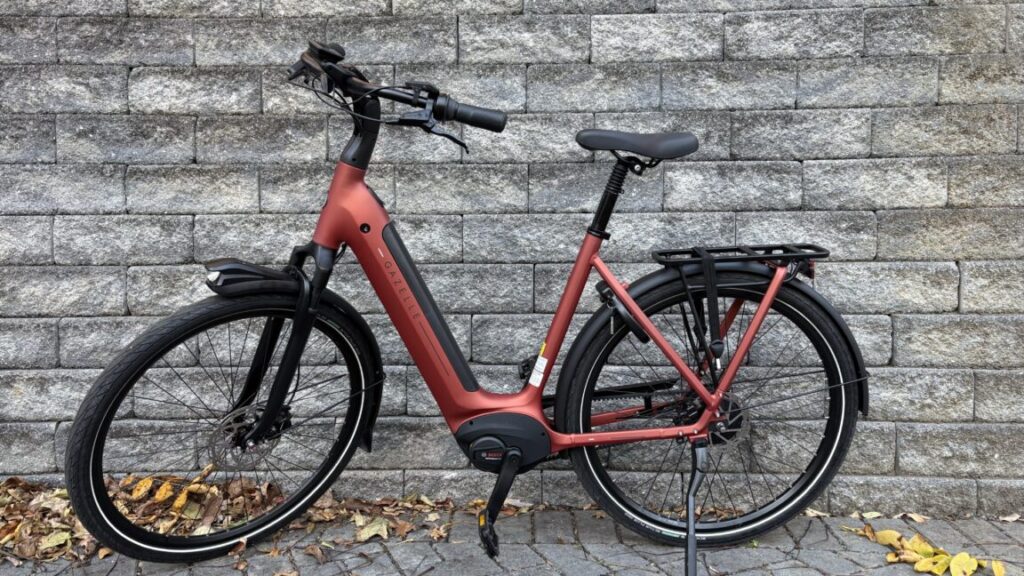
A little while back, we took a look at a large cargo bike from Urban Arrow that had some interesting features: a drive train that sported continuous variable gearing and a belt drive. But it was difficult to get a feel for what using that drivetrain was like when it was being used to shift a large and extremely heavy cargo bike. So, I jumped at the opportunity when Urban Arrow’s sister company, Gazelle, offered a chance to ride one of its new Arroyo models, which feature the same drivetrain, but this time coupled to a fairly standard commuter bike.
Getting rid of all the weight and bulk really allowed the drive system to shine. And, as with its cargo-carrying cousin, the bike is filled with thoughtful touches and design decisions that make riding it a pleasure. But all that comes at a cost: This is a premium bike with little in the way of compromises, and it’s priced accordingly.
High-end hardware
The Arroyo line is meant for commuters and urban/suburban riding. It has a step-through frame, a large rack, fenders, and its riding stance is very upright. In keeping with its Dutch heritage, it’s meant to be ridden as a bicycle, rather than a bike-like scooter. There’s no throttle to let you avoid pedaling, and even when it’s set to its maximum assist rating, you’ll end up putting in a reasonable amount of effort during the ride. If you’re looking for something that lets you handle a commute in hot weather without sweating, you’ll probably want to look elsewhere.
Gazelle offers three versions of the Arroyo, with the low end having a traditional chain drive and a lower-powered electric assist for $3,000. We looked at the top-of-the-range C380 Elite, which tacks an extra $1,500 onto the price but gets you a more powerful Bosch motor (75 Nm of torque), a better display, and the belt drive. The motor itself is a mid-drive with a torque sensor, a configuration that tends to provide the best performance.
Since the 1990s, physicists have pondered the tantalizing possibility of an exotic fourth type of neutrino, dubbed the “sterile” neutrino, that doesn’t interact with regular matter at all, apart from its fellow neutrinos, perhaps. But definitive experimental evidence for sterile neutrinos has remained elusive. Now it looks like the latest results from Fermilab’s MiniBooNE experiment have ruled out the sterile neutrino entirely, according to a paper published in the journal Nature.
How did the possibility of sterile neutrinos even become a thing? It all dates back to the so-called “solar neutrino problem.” Physicists detected the first solar neutrinos from the Sun in 1966. The only problem was that there were far fewer solar neutrinos being detected than predicted by theory, a conundrum that became known as the solar neutrino problem. In 1962, physicists discovered a second type (“flavor”) of neutrino, the muon neutrino. This was followed by the discovery of a third flavor, the tau neutrino, in 2000.
Physicists already suspected that neutrinos might be able to switch from one flavor to another. In 2002, scientists at the Sudbury Neutrino Observatory (or SNO) announced that they had solved the solar neutrino problem. The missing solar (electron) neutrinos were just in disguise, having changed into a different flavor on the long journey between the Sun and the Earth. If neutrinos oscillate, then they must have a teensy bit of mass after all. That posed another knotty neutrino-related problem. There are three neutrino flavors, but none of them has a well-defined mass. Rather, different kinds of “mass states” mix together in various ways to produce electron, muon, and tau neutrinos. That’s quantum weirdness for you.
And there was another conundrum, thanks to results from Los Alamos’ LSND experiment and Fermilab’s MiniBooNE (MicroBooNE’s predecessor). Both found evidence of muon neutrinos oscillating into electron neutrinos in a way that shouldn’t be possible if there were just three neutrino flavors. So physicists suggested there might be a fourth flavor: the sterile neutrino, so named because unlike the other three, it does not couple to a charged counterpart via the electroweak force. Its existence would also have big implications for the nature of dark matter. But despite the odd tantalizing hint, sterile neutrinos have proven to be maddeningly elusive.
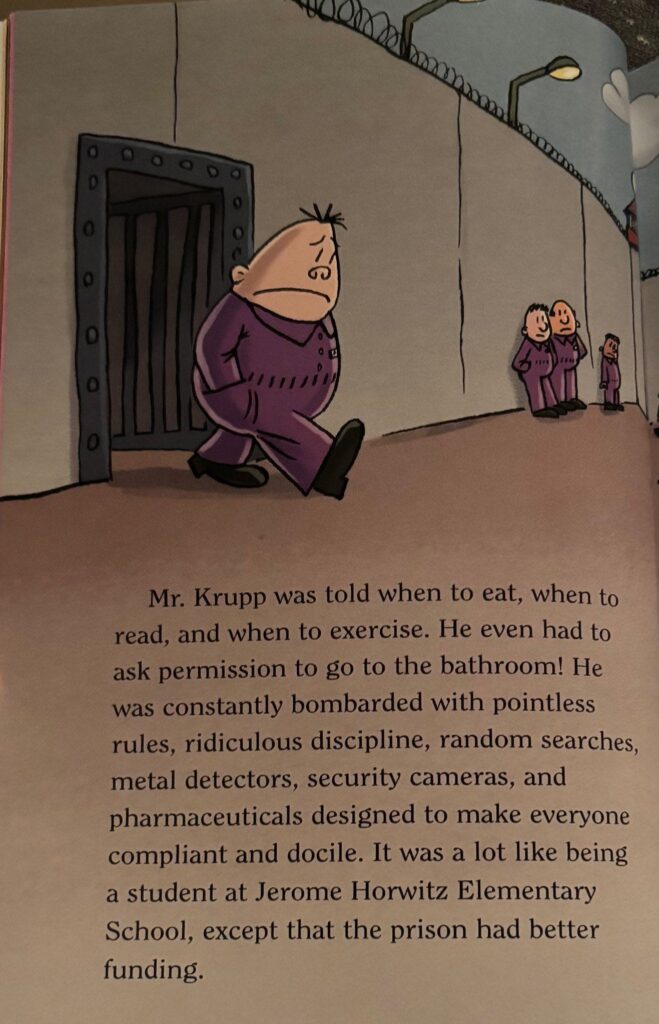
The focus this time around is on the non-academic aspects of primary and secondary school, especially various questions around bullying and discipline, plus an extended rant about someone being wrong on the internet while attacking homeschooling, and the latest on phones.
If your child is being bullied for real, and it’s getting quite bad, is this an opportunity to learn to stand up for yourself, become tough and other stuff like that?
Mostly no. Actually fighting back effectively can get you in big trouble, and often models many behaviors you don’t actually want. Whereas the techniques you would use against a real bully outside of school, that you’d want to use, don’t work.
Schools are a special kind of bullying incubator. Once you become the target it is probably not going to get better and might get way worse, and life plausibly becomes a paranoid living hell. If the school won’t stop it, you have to pull the kid. Period.
If a child has the victim nature, you need to find a highly special next school or pull out of the school system entirely, or else changing schools will not help much for long. You have to try.
It seems rather obvious, when you point it out, that if you’re going to a place where you’re being routinely attacked and threatened, and this is being tolerated, that the actual adult or brave thing to do is to not to ‘fight back’ or to ‘take it on the chin.’ The only move is to not be there.
In my case, I was lucky that the school where I was bullied went the extra mile and expelled me for being bullied (yes you read that right). At the time I was mad about it, but on reflection I am deeply grateful. It’s way better than doing thing.
It was years past when sensible parents would have pulled me out, but hey.
Peachy Keenan: I can’t even look at photos of a little boy who killed himself because of “severe bullying” because I get too upset, and I am begging parents: if your child is getting bullied, you need to WALK. You need to GET THEM OUT.
This is your only job, and you must not fail. Teasing is one thing, but if your child has become the class target, there is no fix except to rescue them at the first sign of trouble.
Mason: At the heart of this is a widely held but quiet conviction that the regular nastiness a lot of kids put up with is some kind of necessary socialization/character-building process right up until a kid starts falling apart Parents’ frogs are boiled. They should tolerate MUCH less.
It is tragic that often getting your child out of there will be very difficult. Our society often does not let you choose your prison on the cheap if the current one involves too much violence. But yeah, at some point you pull them out anyway. If you can’t find somewhere else to place them, let them study on their own, especially now with LLMs.
A story: School refuses to suspend a disruptive student who has no intention of passing any classes and often does not even attend. There’s pressure to ‘keep the suspension rate down,’ so the metric is what gets managed. And they refuse to do anything else meaningful, either.
Their best teacher, who is the only one bothering to write the student up, gets assigned all the problem cases because she is the best, and is being told to essentially suck it all up, finally is fed up and moves to another school, and the faculty continues falling apart from there.
Also Mihoda points out that the story includes ‘while many students are content to play quietly on their phones all period,’ and it turns out phones are totally banned from the classroom but students ignore this and there are no consequences. So it sounds like once you mess up the metrics that badly, there is no way to give the students any meaningful incentives or reasons to change their behaviors. You might as well stop pretending you are running an educational institution rather than a babysitting service.
The weirdest part of all this is that OP reports the student here could produce work at grade level when he wanted to. That only raises further questions.
A very obvious reason to believe you should ban phones is that it is the most elite and intertwined with phones and tech who most want their own kids off of phones.
Paul Schofield: I’d bet that within a decade, wealthy parents will be sending their kids to elite private schools that market themselves as low tech (no phones, screens, AI, etc.) and we’ll end up scrambling to figure out how to make this kind of education available to marginalized students.
Maia: Mark Zuckerberg’s kids have, by his own admission, very limited screen time and no public social media. He sends them to a screen-free school where expert tutors teach small class sizes. Is that because he’s stupid and doesn’t recognize the educational value of his own creations?
At a bare minimum, it seems very obvious that letting kids use screens during classes will end poorly? Yet they do it anyway, largely because lectures are such an inefficient delivery mechanism that the kids aren’t motivated enough to notice that they’re giving up what little learning would actually take place otherwise.
Tracing Woods: One of the most important messages of serious education research:
“students are really bad at knowing how learning happens”
– Off-task device use (email, texting, social media) was significantly linked to lower scores on the first exam.
– Later in the semester, this relationship weakened, suggesting students may have changed behaviour based on feedback.
– Texting is the most common and impactful distraction
– this last point (highlighted) is interesting and again points to the fact that students are really bad at knowing how learning happens.
To be fair to the students I suffer from the same problem, where I am tempted by distractions during meetings and television shows and social gatherings and basically constantly. It’s rough.
Texting in particular seems terrible, because it yanks your attention actively rather than passively, and responding quickly and well has direct obvious implications. If you could somehow ban texting and other things that push, that would probably do a large portion of the work.
I also would watch out for correlation not being causation. There are obvious reasons why being a poor student or otherwise not likely to learn from a class would cause your device time in that class to rise.
There is another recent RCT on banning smartphones. Grades only increased by 0.086 standard deviations. If that’s all this was, then yeah it’s a nothingburger. Note these other results from the abstract:
Importantly, students exposed to the ban were substantially more supportive of phone-use restrictions, perceiving greater benefits from these policies and displaying reduced preferences for unrestricted access. This enhanced student receptivity to restrictive digital policies may create a self-reinforcing cycle, where positive firsthand experiences strengthen support for continued implementation.
Despite a mild rise in reported fear of missing out, there were no significant changes in overall student well-being, academic motivation, digital usage, or experiences of online harassment. Random classroom spot checks revealed fewer instances of student chatter and disruptive behaviors, along with reduced phone usage and increased engagement among teachers in phone-ban classrooms, suggesting a classroom environment more conducive to learning.
Context (in the comments): From the paper: “For example, the difference between having an average teacher and a very good teacher for one academic year is roughly 0.20 SD – an effect size that is considered large”. This was a one-semester intervention.
If students habitually checking their phones and being on their phones during class, resulting also in less chatter and disruptive behavior, mattered so little that its impact on learning could be well-measured by a one time 0.086 standard deviations in grades, then why are students in classes at all?
This is a completely serious question. Either classes do something or they don’t. Either we should make kids go to schools and pay attention or we shouldn’t.
The comments here, all of them, assert that banning phones is important, overdetermined and rather obvious. They’re right, and it’s crazy that this kind of support does not then result in phones being banned more consistently.
Hank (in the comments at MR): We recently removed our 12 year old son’s cell phone privileges indefinitely to improve focus on school work and due to shoddy listening at home. After two weeks, I can report:
– significantly improved focus *and patiencewhen doing homework. With the siren song of the phone gone, he is better able to just sit and focus on immediate tasks.
– much better two-way communication between parents and child, as opposed to absent-minded half answers we got when cell phone was present.
– big increase in time spent outside playing with neighborhood kids.
– more time simply spent thinking. When he’s not engaged elsewhere, he lays on the porch, presumably processing his day or just thinking big thoughts.
– more offers to help the household run, like walk dog.
– more questions for us about our day and what we do in our jobs. this rarely happened before.
We did not know what to expect, but I don’t need a study to know it’s the best decision we made for our child all year.
The obvious way to explain this is that grades are effectively on curves. When you ban phones the curve moves up, and it looks like you don’t see much improvement.
The opposite is also possible, Claude points out that teacher perceptions could be causing higher grades, since we don’t see changes in self-reported perceived learning or academic motivation.
I would still bet on this being an undercount.
Parents are often the ones pushing back against phone bans in schools, because parents want to constantly surveil and text their kids, and many care more about that than whether the kids learn.
Himbo President: I never want to step
Matthew Zeitlin: teachers are truly braver than the troops, i don’t understand how anyone does the job anymore
Tetraspace: I do want to step on parents’ toes and consider “parents want to surveil their kids” a point that cuts against allowing phones in schools (though dominated by student preferences)
Mostly the good argument for and against is “students want to coordinate on a no-phones equilibrium but being one a few that don’t use their phones means you miss out, so make school a phones tsar” vs. “maybe not all students, though, so let them organize that among themselves.”
Tyler Cowen attempts to elevate Frank from the comments to argue for phones, saying taking away phones ‘hurt his best students,’ and adds that without phones how can you teach AI? I have never seen a comments section this savage, either in the content or in the associated voting, starting with the post asking him to prove his claim to be a teacher (which he does not do).
Most of all, it was this:
Lizard Man: All of these seem like arguments against school, not arguments for phones.
If you think that the smartest students are hurt because they should be on their phones instead of in class, okay, well, why are they in class?
If you say you cannot possibly learn AI without a phone, one has three responses.
Have you not heard of computers?
In the middle of any given class?
Do you think what the students are doing with their phones is learning?
Pretty obviously this is not what is happening. No one reports this ever.
If they somehow are doing this, are they complementing what’s in the class, or are they substituting for it? Again, what are you even doing?
Can I imagine a world in which phones benefit students because they are asking the AI complementary questions during classes the way Tyler would use one? Sure. There presumably exist some such students. But to argue against banning phones you have to effectively make an argument against requiring school in current form.
The argument ‘some kids have no one to talk to and taking away their phone is cruel’ is even stupider. First, if a kid has no one physically there to talk to ever, that’s a different huge failure, and again why does this person go to school, but also shouldn’t they be learning during the school day not chatting with buddies via text? We really think it’s a depravation to live like everyone used to until after the final bell?
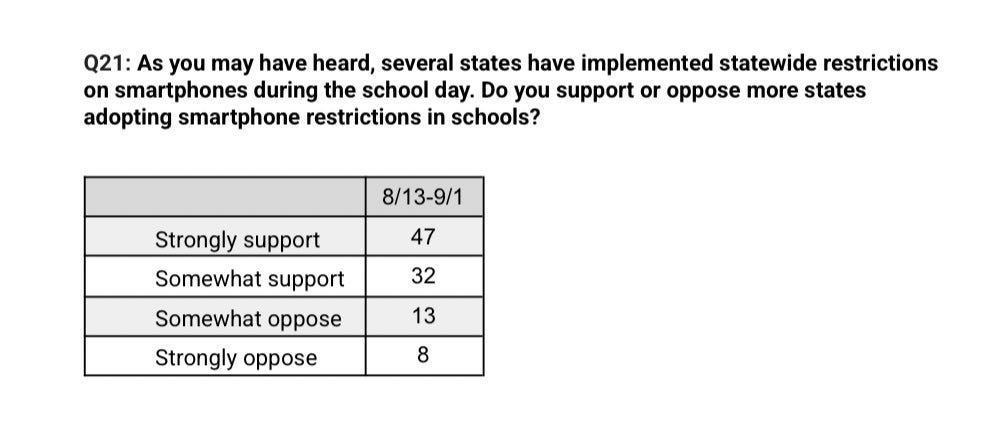
David Figlio & Umut Ozek: Cellphone bans in schools have become a popular policy in recent years in the United States, yet very little is known about their effects on student outcomes.
In this study, we try to fill this gap by examining the causal effects of bans on student test scores, suspensions, and absences using detailed student-level data from Florida and a quasi-experimental research strategy relying upon differences in pre-ban cellphone use by students, as measured by building-level Advan data. Several important findings emerge.
First, we show that the enforcement of cellphone bans in schools led to a significant increase in student suspensions in the short-term, especially among Black students, but disciplinary actions began to dissipate after the first year, potentially suggesting a new steady state after an initial adjustment period.
Second, we find significant improvements in student test scores in the second year of the ban after that initial adjustment period.
Third, the findings suggest that cellphone bans in schools significantly reduce student unexcused absences, an effect that may explain a large fraction of the test score gains. The effects of cellphone bans are more pronounced in middle and high school settings where student smartphone ownership is more common.
The proposed mechanism for absences seems to be that cellphones were previously used to coordinate or plan absences, which the students could no longer do. The adjustment period, before which suspensions are a problem, makes sense, and also helps explain some of the negative results elsewhere. Alternatively, students might see school as less pointless.
During an April English lesson, McGhee says he sought clarification on a vocabulary word: aliens. “Like space aliens,” he asked, “or illegal aliens without green cards?” In response, a Hispanic student—another minor whom the lawsuit references under the pseudonym “R.”—reportedly joked that he would “kick [McGhee’s] ass.”
This was Reason magazine, so they focus on whether this was constitutional. I’d prefer to ask whether this is was a reasonable thing to do, which it obviously isn’t given the context.
On the law, it seems schools can punish ‘potentially disruptive conduct.’
So that means that if other students could respond by being disruptive, than that can be put on you, whether or not that response is reasonable.
Thus, punishing people who get bullied for causing a disturbance. If they weren’t asking for it then the bullies wouldn’t be going around being disruptive. This is remarkably common, and also was a large portion of my actual childhood.
This is then amplified by the problem that many actual disruptors care a lot less about punishment than others with more at stake, and in many cases they even get a full pass anyway, so the opportunities for asymmetrical warfare are everywhere.
One must deal with what is taught and done in practice, not in theory.
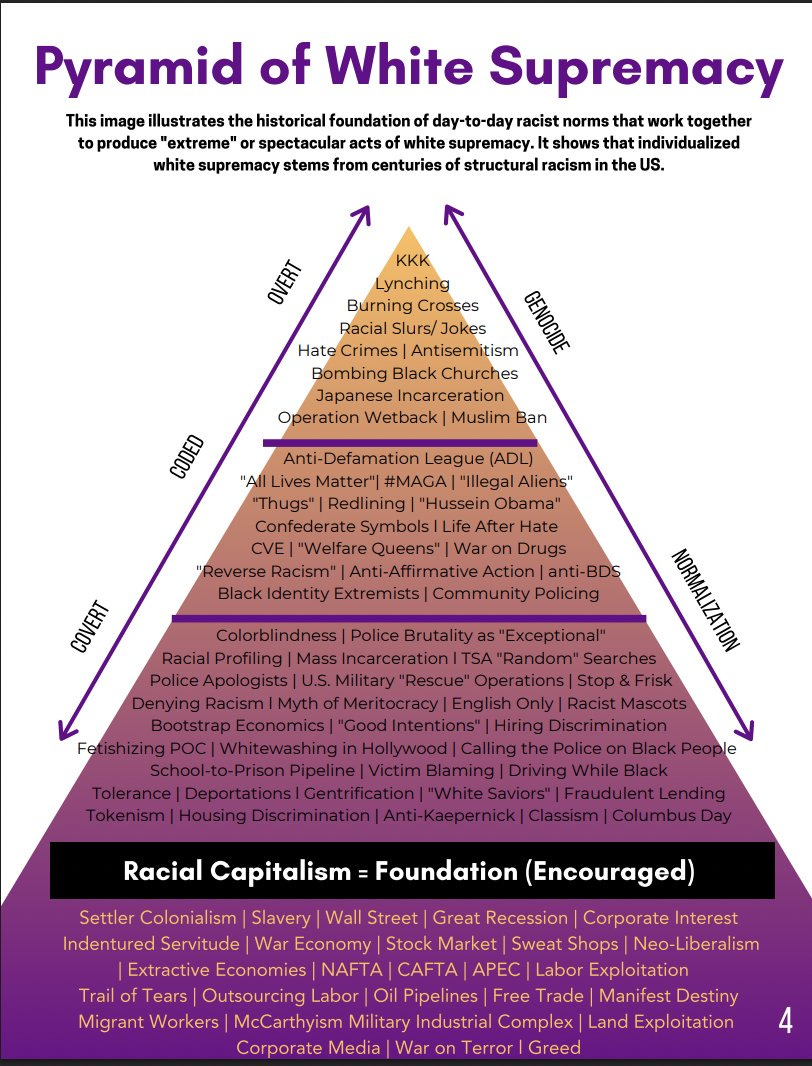
So if this pyramid is being used in the Harvard School of Education, and it straight up lists “Free Trade” as part of a “Pyramid of White Supremacy” in the same category as literally “Slavery” then, well, there is that.
Kane: I finally got the public records request back.
SF Public Schools (@SFUnified) paid $182,000 to a consultant, while already in a deficit, to implement “grading for equity”.
The advice: make 41% a passing grade, and stop grading homework.
Equity achieved.
Our public schools @SFUnified agreed to pay the “equity consultant” $380/hr plus $14,800 in expenses.
In the emails to @SFUnified, the “equity consultant” was bragging that after “equity” training, teachers would not count tardiness nor penalize not doing homework at all.
This is what our public schools are wasting taxes on. Here are all >120 pages of emails and invoices regarding @SFUnified deciding to waste taxes on “equity” consultants and blow up the deficit even more.
T. Greer: What is the stupidest or most embarrassing wrong fact you have tweeted?
Paul Graham: Just today I tweeted a graph claiming there were 327 school shootings a year in the US in 2021. Turned out the source was using a very broad definition of “school shooting,” and that there were actually 2 in the usual sense of the phrase.
Yes, two is two too many and all that. But it drives home the insanity of traumatizing the entire generation in the name of ‘active shooter drills,’ or using this as a reason students need to have phones.
A school shooting is a plane crash. It happens, it is highly salient, it is tragic, and you should live your life as if it will never, ever happen to you or anyone you know.
I’ve said it before, but it bears repeating because they keep happening.
Rep. Marie Gluesenkamp Perez (link has video): There is broad consensus affirming what parents already know — mandatory active school shooter drills are deeply traumatizing for children and have no evidence of decreasing fatalities.
We should not use taxpayer dollars to mandate kids’ participation in ineffective strategies from the 1990s. Parents deserve the right to opt their kids out.
My amendment affirming that passed the Appropriations Committee on a bipartisan basis last night, and I’ll continue working with colleagues on both sides of the aisle to move this legislation forward.
Kelsey Piper: she’s right and should get a lot of credit for coming out and saying it.
mandatory school shooting drills are security theater. they don’t keep kids safe and they may well make school shootings more available to troubled kids as an idea. they are not a good use of taxpayer dollars and we can simply stop.
this amendment just lets parents opt out, where I want to shut the industry down entirely, but it’s still an improvement!
Schools will schedule tons of breaks all over the place, only be open half the time, waste your child’s time the bulk of every day, give them very little individual attention, kick your kid out if they think he might be sick, and then react in horror to the idea that you might not have attending every remaining day that they choose to be open as your highest priority.
The Principal’s Office: It’s 2025 and I actually have parents trying to defend pulling their child out of school for a vacation. I get a death. I get granny is turning 100 and lives out of state. But to get a cheaper vacation- nope. Can’t ever support that.
To be fair to TPO, he clarifies that unique experiences are different, and his objection is when this is done to get ‘lower prices.’
Well, I say with my economist hat, how much lower? How much should a parent pay to not miss one day of school? What happens if other things in life don’t line up perfectly with today’s random crazy schedules?
The thing is, this is all over the educational system, where schools including colleges will absolutely throw fits at the idea that you might have something more important to do if you try to defend that.
On the other hand, you can also simply skip school and basically get away with it, and ever since Covid we’ve had quite a lot of chronically absent kids and there isn’t much the system seems to be able to do about it.
A six word horror story: Parents see all grades right away.
Clem: We are now getting our kids’ grades sent directly to our phones after every assignment/test and woo boy am I happy that I grew up in the 90s with very limited internet.
This sounds like absolute hell for a large fraction of students. In case you don’t remember childhood, image if every day your boss called your spouse to report on every little thing you did wrong, only way worse.
Air conditioning. Being too hot makes it hard to learn. AC mostly fixes this.
Air filtering improves ability to think and rate of learning.
Not missing massive amounts of school without any attempt at substitution.
Free lunch, even though there’s no such thing, seems like another easy win.
Yet we often by law force children to get up early to get to classrooms without AC or air filtering, and basic lunches are often not free.
I believe we should ban phones, but let’s start with not banning sleep or AC?
On the question of missing massive amounts of school, from October 2019: Paper says being exposed to the average incidence of teacher strikes during primary school in Argentina ‘reduced the labor earnings of males and females by 3.2% and 1.9% respectively’ due to increased unemployment and decreased occupational skill levels, partly driven by educational attainment.
Compare this to a traditional ~10% ‘rate of return on education.’ This is ~2.5% for missing about half a school year along the way, or half the effect of time at the end.
Given the way that we treat school, it makes sense that large amount of missed time can cause cascading problems. If you fall sufficiently far behind, the system then punishes you further because you’re out of step.
This implies an initially small but increasing marginal cost of missing days, until the point where you are sufficiently adrift that it no longer much matters.
Except in this case, the kids all missed time together, so the effect should largely get made up over time.
My guess is that the bulk of the cost of missing school is that the school system is not designed to handle students missing large amounts of school, and instead assumes you will be in class and keeping up with class with notably rare exceptions. You’re basically fine if you can then catch up rather than being lost, but if you’re lost then you’re basically screwed and there aren’t graceful fallback options.
The eternal question: Are you trying to learn or to avoid (working at) learning?
Arnold Kling: I observed that over the years that I taught AP statistics, the better I got at explaining, the worse I got at teaching. It was better for students if I stumbled, back-tracked, or used a more challenging way to demonstrate a proposition than if I did so quickly and efficiently. I see this also in Israeli dancing, where the more mistakes that the teacher makes and has to correct, the better is my memory for the dance.
Learning requires work. When the teacher stumbles, that can force the student to work harder. This relates to AI, because AI can allow students to get away with less work. This appeals to students, but it does not help them.
If you are ‘better at explaining,’ but your explanations work less well? Skill Issue! Obviously that means you are not in fact explaining better. You are ‘hiding your chain of thought (CoT),’ and that CoT was doing work. The explanations are getting worse.
If mistakes are helpful, you can make actual mistakes, or you can demonstrate mistakes. As one karate sensei I had would often say, ‘bad example,’ then he do the move wrong. One could argue that it is very hard to ‘get the errors right’ if they are not real, but I would argue the opposite, that if they are real they are kind of random and if you plan them then you can pick the most effective ones. But it’s easy to fool yourself into thinking the mistakes are dead weight, so random will often be better than none at all.
I have a policy of trying very hard not highlighting people who are Wrong on the Internet. But when sufficient virality attaches (e.g. 10 million or more views) we get to have a little fun. You can safely skip this section if you already know all this.
I just want it as a reference for later to point out such people really exist and also writing it helped vent some rage.
So here is ‘Knowing Better,’ who not only does now know better, but who has some very… interesting ideas about human children.
People really do make versions of all of these rage-inducing, frankly evil arguments, on a continuous basis.
This thread gives us an opportunity to find them in their purest forms, and provide the oversupply of obvious counterarguments.
Luke: Homeschooling. Shouldn’t. Be. An. Option.
Possum Reviews: Is there even one realistic and compelling argument against homeschooling, considering all of the data shows homeschooled kids do better than public school kids in just about all theaters of life? I’m giving you anti-homeschooling people the benefit of the doubt that there’s more to it than just wanting Big Brother to control all of the information and narratives kids are exposed to for the purposes of indoctrination.
Knowing Better: I get flak every time I say this, so I figured I should clarify.
Universally, 100% of the time, homeschooling is the worst option for every single child. Without exception.
Knowing Better: No person on earth is qualified to teach every subject at every grade level. Having a textbook isn’t enough.
Teachers are supposed to know more than what is in the book so they can answer questions about the book.
Emphasis on ‘supposed to,’ this often is not the case. Some teachers are magic, but the title doesn’t make them so, especially given they need to deal with 20:1 student:teacher ratios or higher much of the time, whereas you can do 4:1 or 1:1 a lot.
But also we are talking about (mostly) elementary school subjects, not ‘every subject at every grade level.’
Yes, I think I am very qualified to teach ‘every subject’ at (for example) a 5th grade level other than foreign languages. I am smarter than a fifth grader. To the extent I don’t know the things, I can learn the things faster than I teach them. You can just [learn, or do, or teach] things. And that’s even without AI.
The medical school motto is ‘see one, do one, teach one.’ A powerful mantra.
The math team in high school literally said hey, you’re our 6th best senior and there’s overflow, you’re a captain now, go teach a class, good luck. And it was fine.
Kelsey Piper: My sophomore year of high school my calculus class got assigned a math teacher who didn’t actually know calculus so he just kind of found the smart kid and told him to teach the class. It was fine tbh, but if you’re gonna posture about this you have to have qualified teachers.
He went to MIT for undergrad and then got a bio PhD. honestly I was probably receiving very high quality math instruction, just not from a Qualified Teacher TM
The real situation is that public schools vary a lot in how good the teachers are and parents also vary a lot in how good they are at teaching and so sometimes homeschooling results in an increase in how much kids learn and sometimes a decrease.
But some people rather than have this conversation just blindly insist that all public school educators are super-genius super-experts doing some incredibly sophisticated thing. And this is alienating to parents and students because we can see it’s not true.
Dave Kasten: A big weakness of this particular anti-homeschooling argument is that it’s supposed to be persuading policy elites, who by default are extremely likely to think that they’re capable of generically doing any task up to AP exams.
Kelsey Piper: and who are basically correct about this imo, it’s not that hard.
Patrick McKenzie: I could get behind a compromise: a) Mandatory annual testing for homeschool students and anyone below 10th percentile ordered to attend public school. b) Any public school teachers whose class below 10th percentile identified as Would Have Been Fired If They Were Homeschoolers:
Of course that is not a serious policy proposal, because it contemplates making public school employees accountable for results in any fashion whatsoever, but a geek can dream.
Kelsey Piper: We run a very small very low budget co-op/microschool and we keep getting kids from public school who can’t read. They learn how at a normal pace once you teach them. They just weren’t taught.
To the extent I can’t learn the things and don’t know the things… well, in this context I don’t actually care because obviously those things aren’t so important.
But also, home schooling does not mean I have to know and teach every subject as one person? There is a second part. There are friends. There are tutors, and even multiple full day s per week of private tutoring costs less than private school tuition around here. There are online courses. There are books. There is AI, which basically is qualified to teach everything up through undergraduate level. And so on.
For foreign languages, if one wants to learn those, standard classes are beyond atrocious. If you’re ahead of class you learn almost nothing. If you’re behind, you die, and never catch up. There are much, much better options. And it’s a great illustration of choice – you can teach them whatever second language you happen to know.
Knowing Better: Even then, you need to know when to teach what concepts.
Teachers are basically experts in child development.
Kids physically can’t understand negative numbers until a certain age. The abstract thinking parts of their brain aren’t done cooking yet. Do you know what age that is?
Polimath: This whole thread is kind of terrible, but this part of it is just about perfect because teachers are not experts in child development and the idea that kids *physicallycan’t understand negative numbers before a certain age is so wrong it is funny.
I really want the answer here to be a negative number. Unfortunately it’s not, but also there obviously isn’t a fixed number, also often this number is, like, four. Come on.
But actually, in a side thread, we find out he thinks the answer is… wait for it… 12.
My oldest son is ten. He’s been working with negative numbers for years. If he hadn’t, I’d be very, very worried about him. Don’t even ask what math I was doing at 12.
Knowing Better: The OP was saying I’m wrong about kids not understanding negative numbers until a certain age.
I know it’s 12 and I know it’s easy to look up. He didn’t.
So I gave him another example of something that develops later, and you looked up the age as if it disproves my point.
Perry Metzger: I was doing algebra long before I was twelve. I did proofs long before I was 12. You think I didn’t understand negative numbers? I can introduce you to literally hundreds of children below the age of 12 who understand negative numbers.
Andrew Rettek: My six year old has been doing math problems with negative numbers for months at least.
Delen Heisman: I’m sorry but your kid lied to you about his age, he’s gotta be at least 12.
Eliza: When I was in 4th grade, I took a test intended for eighth graders which had oddities like “4x+3=11”, but it seemed obvious to me that the x meant “times what?” without ever having learned algebra. Not understanding negatives by 12? bonkers!
Gallabytes: a friend of mine published in number theory at 11.
Jessica Taylor: utterly absurd views disprovable through methods like “remembering what it was like to be a kid” or “talking with 10 year olds.”
Mike Blume: This man is a child development expert who knows incontrovertible child development facts, like that children under twelve can’t understand negative numbers.
My eight year old is going to find this hilarious when she wakes up.
(can confirm, she laughed her little head off)
That’s the thing. Arguments against home schooling almost never would survive contact with the enemy, and by ‘the enemy’ I mean actual children.
Anyway, back to the main thread.
Knowing Better: But let’s say you decide to do it anyway, because you want your child to have a religious education.
Your child needs to be exposed to different ideas and people who don’t look like them.
It’s going to happen eventually, better for it to happen now while you’re able to explain why you believe what you do.
The universal form of this argument, which will be repeated several times here, is ‘if bad things [from your perspective] will happen in the future, better that similar bad things happen now.’
The argument here is patently absurd – that if you send your child to a secular school, they are less likely to end up religious than if you send them to a religious school. Or that if you expose kids to anti-[X] pro-[Y] arguments and have them spend all day in a culture that is anti-[X] and pro-[Y] and rewards them on that basis, that this won’t move them on net from [X] towards [Y].
I also am so sick of ‘your kid needs ‘socialization’ or to be around exactly the right type and number of other children or else horrible things will happen, so you should spend five figures a year and take up the majority of their lives to ensure this. Which is totally, very practically, a thing people constantly say.
…Your child is a genius.
They may be ahead of the class, but they won’t learn how to work with others and help them catch up.
That isn’t your child’s job, of course, but it will be an invaluable skill going forward. Want them to be a leader some day?
Kind of sounds like you want to make it their job. Yes, the entire philosophy is that if your child falls behind, it is bad for them. But if they somehow get ahead, that is also not good, and potentially even worse. Instead they should spend their time learning to… help others ‘catch up’ to them, also known as teaching?
As for ‘learning to work with others’ this is such a scam way of trying to enslave my kid to do your work for you, I can’t even.
If you want your child to be a leader, fine, teach them leadership skills. You think the best way to do that is have them in a classroom where the teacher is going over things they already know? Or enlisting them to each other kids? How does that work?
You know those prodigies who end up in college at 16? What kind of experience do you think they’re having?
Absolutely zero college kids – sorry, adults – will want to hang around a 16 year old for reasons that I hope are obvious.
This is completely false. Adults very much want to hang out with bright eager 16 year olds, reports a former bright eager 16 year old. Yes, they won’t want to hang out to do certain things, but that’s because they’re illegal or they think you’re not ready. So, as William Eden points out, you can just… not tell them.
Let your kid grow up like everyone else.
I’ve seen everyone else. No.
…Your child has been bullied.
I’m sure it’s safer at home. Is that your plan for the rest of their childhood?
Getting the school to fix the situation, or switching schools, or hell, paying the popular kids to protect your child, is still better than keeping them at home.
Do you even hear yourself? Schools are a place where violence and a lot of property crime, and most forms of verbal bullying are de facto legal. And you are saying that you can’t respond with exit. Paying the popular kids to protect your child? What universe do you live in? Does that ever, ever work? Do you have any idea what would happen in most cases if you tried, how much worse things would get?
Yes, of course you can try to ‘get the school to fix the situation’ but they mostly won’t. And switching schools may or may not be a practical option, and probably results in the same problem happening again for the same reasons. If kids sense you’re the type to be bullied, they’ll bully you anywhere, because we create the conditions for that.
As a parent, it is not your job to curate your child’s entire existence and decide what ideas they hear or who they socialize with.
They will grow up and resent you for it.
Your job is to guide them and provide context to what they’re experiencing outside of your presence.
No, parent, deciding how to raise your kids and what they get exposed to isn’t your job, fyou, that’s the state’s job, via the schools, except they are optimizing for things you actively hate, and also mostly whatever is convenient for them and their requirements. And who said you are ‘deciding what ideas they hear or who they socialize with’ here anyway?
In school, the kid is exposed to whatever the state decides. The kid has basically zero say until high school and very little until college. At home, the kids has lots of say. Because they can talk to you, and you can respond. Same with who they hang out with – they’re not forced to spend all day with a randomly assigned class, nor are you suddenly forced to dictate who their friends are.
He doubles down downthread on it being a bad thing if you curate your child’s experiences, and try as a parent to ensure the best for them (while also doubling down that most home school parents don’t do this). Sorry, what?
When it comes to stats like “homeschooled kids perform better on tests,” there’s a selection bias problem.
Every public school kid takes tests like the SAT or ACT. Only the college-bound homeschool kids do.
Parents decide the curriculum. There is no homeschool diploma.
The idea of a tradwife teaching her 8 blonde kids in a farmhouse is the EXCEPTION when it comes to homeschool.
More often than not, homeschool is a dumping ground for kids who have failed out of or been expelled from everywhere else. It’s a dead end to their education.
You got to love the adverse selection argument followed right away by ‘it’s mostly a dumping ground for expelled kids.’ And also the whole ‘you shouldn’t choose this for your child’ with the (completely false) claim that most such children got expelled, so they don’t have much choice. It contradicts the entire narrative above, all of it.
As for the argument on tests, well, we can obviously adjust for that in various ways.
There is of course also a class of people who say they are ‘homeschooling’ and instead are ‘home not schooling’ where the kids hang out without any effort to teach them. That’s often going to be not great, and you should check, but that’s what the tests are for. And others will spend a bunch of focus on cultural aspects (or what some would call indoctrination), just like regular school does, and some will take that too far. But again, that’s what the tests are for.
For final thoughts on homeschooling this time, I’m turning this over to Kelsey:
Kelsey Piper: Homeschooling is one of those things where the people who do it have generally made it one of the major focuses of their life and put thousands of hours of thought into it – which curriculum to use, which philosophy/approach, which tests and camps and resources, etc
which makes the tossed-off contributions of people who have given homeschooling about 5 hours of thought in their lives particularly maddening. Now, this dynamic shows up in other contexts and doesn’t always mean that the people who do something full time are right!
But the odds that a criticism that you came up with after having thought about homeschooling on and off when you see a tweet about it will resonate, be useful, be meaningful or even be literally true are just not good.
‘you’re not qualified to teach your kids’ I’m familiar both with the large scale literature on homeschool outcomes and on the actual test scores of the homeschooled/alt-schooled kids I know. There just isn’t a productive conversation to be had here until you acknowledge that.
So I guess what we’re really trying to say here is…
I mean this universally, not only regarding children or education.
The entire educational ‘expert’ class very obviously is engaged in enemy action. They are very obviously trying to actively prevent your children from learning, and trying to damage everyone’s families and experiences of childhood, in ways that are impossible to ignore. And they are using their positions to mobilize the state to impose their interventions by force, in the face of overwhelming opposition, in one of the most important aspects of life.
If that is true, then the procedure ‘find the people who are labeled as experts and defer to them’ cannot be a good procedure, in general, for understanding the world and making life decisions. If you want to defer to opinions of others, you need to do a much better job than this of figuring out which others can be safely deferred to.
Trump’s odd Nvidia reversal may open the door for China to demand Blackwell access.
Donald Trump’s decision to allow Nvidia to export an advanced artificial intelligence chip, the H200, to China may give China exactly what it needs to win the AI race, experts and lawmakers have warned.
The H200 is about 10 times less powerful than Nvidia’s Blackwell chip, which is the tech giant’s currently most advanced chip that cannot be exported to China. But the H200 is six times more powerful than the H20, the most advanced chip available in China today. Meanwhile China’s leading AI chip maker, Huawei, is estimated to be about two years behind Nvidia’s technology. By approving the sales, Trump may unwittingly be helping Chinese chip makers “catch up” to Nvidia, Jake Sullivan told The New York Times.
Sullivan, a former Biden-era national security advisor who helped design AI chip export curbs on China, told the NYT that Trump’s move was “nuts” because “China’s main problem” in the AI race “is they don’t have enough advanced computing capability.”
“It makes no sense that President Trump is solving their problem for them by selling them powerful American chips,” Sullivan said. “We are literally handing away our advantage. China’s leaders can’t believe their luck.”
Trump apparently was persuaded by Nvidia CEO Jensen Huang and his “AI czar,” David Sacks, to reverse course on H200 export curbs. They convinced Trump that restricting sales would ensure that only Chinese chip makers would get a piece of China’s market, shoring up revenue flows that dominant firms like Huawei could pour into R&D.
By instead allowing Nvidia sales, China’s industry would remain hooked on US chips, the thinking goes. And Nvidia could use those funds—perhaps $10–15 billion annually, Bloomberg Intelligence has estimated—to further its own R&D efforts. That cash influx, theoretically, would allow Nvidia to maintain the US advantage.
Along the way, the US would receive a 25 percent cut of sales, which lawmakers from both sides of the aisle warned may not be legal and suggested to foreign rivals that US national security was “now up for sale,” NYT reported. The president has claimed there are conditions to sales safeguarding national security but, frustrating critics, provided no details.
For years, the US has established tech dominance by keeping advanced technology away from China. Trump risks rocking that boat by “tearing up America’s export-control policy,” particularly if China’s chip industry simply buys up the H200s as a short-term tactic to learn from the technology and beef up its domestic production of advanced chips, The Economist reported.
In a sign that’s exactly what many expect could happen, investors in China were apparently so excited by Trump’s announcement that they immediately poured money into Moore Threads, expected to be China’s best answer to Nvidia, the South China Morning Post reported.
Several experts for the non-partisan think tank the Counsel on Foreign Relations also criticized the policy change, cautioning that the reversal of course threatened to undermine US competition with China.
Suggesting that Trump was “effectively undoing” export curbs sought during his first term, Zongyuan Zoe Liu warned that China “buys today to learn today, with the intention to build tomorrow.”
And perhaps more concerning, she suggested, is that Trump’s policy signals weakness. Rather than forcing Chinese dependence on US tech, reversing course showed China that the US will “back down” under pressure, she warned. And they’re getting that message at a time when “Chinese leaders have a lot of reasons to believe they are not only winning the trade war but also making progress towards a higher degree of strategic autonomy.”
In a post on X, Rush Doshi—a CFR expert who previously advised Biden on national security issues related to China—suggested that the policy change was “possibly decisive in the AI race.”
“Compute is our main advantage—China has more power, engineers, and the entire edge layer—so by giving this up, we increase the odds the world runs on Chinese AI,” Doshi wrote.
Experts fear Trump may not understand the full impact of his decision. In the short-term, Michael C. Horowitz wrote for CFR, “it is indisputable” that allowing H200 exports benefits China’s frontier AI and efforts to scale data centers. And Doshi pointed out that Trump’s shift may trigger more advanced technology flowing into China, as US allies that restricted sales of machines to build AI chips may soon follow his lead and lift their curbs. As China learns to be self-reliant from any influx of advanced tech, Sullivan warned that China’s leaders “intend to get off of American semiconductors as soon as they can.”
“So, the argument that we can keep them ‘addicted’ holds no water,” Sullivan said. “They want American chips right now for one simple reason: They are behind in the AI race, and this will help them catch up while they build their own chip capabilities.”
China may reject H200, demand Blackwell access
It remains unclear if China will approve H200 sales, but some of the country’s biggest firms, including ByteDance, Tencent, and Alibaba, are interested, anonymous insider sources told Reuters.
In the past, China has instructed companies to avoid Nvidia, warning of possible backdoors giving Nvidia a kill switch to remotely shut down chips. Such backdoors could potentially destabilize Chinese firms’ operations and R&D. Nvidia has denied such backdoors exist, but Chinese firms have supposedly sought reassurances from Nvidia in the aftermath of Trump’s policy change. Likely just as unpopular with the Chinese firms and government, Nvidia confirmed recently that it has built location verification tech that could help the US detect when restricted chips are leaked into China. Should the US ever renew export curbs on H200 chips, adopting them widely could cause chaos in the future.
Without giving China sought-after reassurances, Nvidia may not end up benefiting as much as it hoped from its mission to reclaim lost revenue from the Chinese market. Today, Chinese firms control about 60 percent of China’s AI chip market, where only a few years ago American firms—led by Nvidia—controlled 80 percent, the Economist reported.
But for China, the temptation to buy up Nvidia chips may be too great to pass up. Another CFR expert, Chris McGuire, estimated that Nvidia could suddenly start exporting as many as 3 million H200s into China next year. “This would at least triple the amount of aggregate AI computing power China could add domestically” in 2026, McGuire wrote, and possibly trigger disastrous outcomes for the US.
“This could cause DeepSeek and other Chinese AI developers to close the gap with leading US AI labs and enable China to develop an ‘AI Belt and Road’ initiative—a complement to its vast global infrastructure investment network already in place—that competes with US cloud providers around the world,” McGuire forecasted.
As China mulls the benefits and risks, an emergency meeting was called, where the Chinese government discussed potential concerns of local firms buying chips, according to The Information. Reportedly, Beijing ended that meeting with a promise to issue a decision soon.
Horowitz suggested that a primary reason that China may reject the H200s could be to squeeze even bigger concessions out of Trump, whose administration recently has been working to maintain a tenuous truce with China.
“China could come back demanding the Blackwell or something else,” Horowitz suggested.
In a statement, Nvidia—which plans to release a chip called the Rubin to surpass the Blackwell soon—praised Trump’s policy as striking “a thoughtful balance that is great for America.”
China will rip off Nvidia’s chips, Republican warns
Both Democratic and Republican lawmakers in Congress criticized Trump’s plan, including senators behind a bipartisan push to limit AI chip sales to China.
Some have questioned how much thought was put into the policy, as the US confusingly continues restricting less advanced AI chips (like the A100 and H100) while green-lighting H200 sales. Trump’s Justice Department also seems to be struggling to keep up. The NYT noted that just “hours before” Trump announced the policy change, the DOJ announced “it had detained two people for selling those chips to the country.”
The chair of the Select Committee on Competition with China, Rep. John Moolenaar (R-Mich.), warned on X that the news wouldn’t be good for the US or Nvidia. First, the Chinese Communist Party “will use these highly advanced chips to strengthen its military capabilities and totalitarian surveillance,” he suggested. And second, “Nvidia should be under no illusions—China will rip off its technology, mass produce it themselves, and seek to end Nvidia as a competitor.”
“That is China’s playbook and it is using it in every critical industry,” Moolenaar said.
House Democrats on committees dealing with foreign affairs and competition with China echoed those concerns, The Hill reported, warning that “under this administration, our national security is for sale.”
Nvidia’s Huang seems pleased with the outcome, which comes after months of reportedly pressuring the administration to lift export curbs limiting its growth in Chinese markets, the NYT reported. Last week, Trump heaped praise on Huang after one meeting, calling Huang a “smart man” and suggesting the Nvidia chief has “done an amazing job” helping Trump understand the stakes.
At an October news conference ahead of the deal’s official approval, Huang suggested that government lawyers were researching ways to get around a US law that prohibits charging companies fees for export licenses. Eventually, Trump is expected to release a policy that outlines how the US will collect those fees without conflicting with that law.
Senate Democrats appear unlikely to embrace such a policy, issuing a joint statement condemning the H200 sales as dooming the US in the AI race and threatening national security.
“Access to these chips would give China’s military transformational technology to make its weapons more lethal, carry out more effective cyberattacks against American businesses and critical infrastructure and strengthen their economic and manufacturing sector,” Senators wrote.
Ashley is a senior policy reporter for Ars Technica, dedicated to tracking social impacts of emerging policies and new technologies. She is a Chicago-based journalist with 20 years of experience.
Justice Samuel Alito suggested that a ruling for Slaughter could open the way for Congress to convert various executive branch agencies into “multi-member commissions with members protected from plenary presidential removal authority.”
“I could go down the list… How about Veterans Affairs? How about Interior? Labor? EPA? Commerce? Education? What am I missing?” Alito said.
“Agriculture,” Justice Neil Gorsuch responded. The official transcript notes that Gorsuch’s response was met with laughter.
Justice Brett Kavanaugh expressed skepticism about the power of independent agencies, saying, “I think broad delegations to unaccountable independent agencies raise enormous constitutional and real-world problems for individual liberty.” He said the court’s approach with “the major questions doctrine over the last several years” has been to “make sure that we are not just being casual about assuming that Congress has delegated major questions of political or economic significance to independent agencies, or to any agencies for that matter.”
Kagan: President would have “uncontrolled, unchecked power”
Unlike the unanimous Humphrey’s Executor, the Slaughter case appears headed for a split ruling between the court’s conservative and liberal justices. Justice Ketanji Brown Jackson said there are “dangers and real-world consequences” of the Trump administration’s position.
“My understanding was that independent agencies exist because Congress has decided that some issues, some matters, some areas should be handled in this way by nonpartisan experts, that Congress is saying that expertise matters with respect to aspects of the economy and transportation and the various independent agencies that we have,” Jackson said. “So having a president come in and fire all the scientists and the doctors and the economists and the Ph.D.s and replacing them with loyalists and people who don’t know anything is actually not in the best interest of the citizens of the United States. This is what I think Congress’s policy decision is when it says that these certain agencies we’re not going to make directly accountable to the president.”
Justice Elena Kagan said there has historically been a “bargain” in which “Congress has given these agencies a lot of work to do that is not traditionally executive work… and they’ve given all of that power to these agencies largely with it in mind that the agencies are not under the control of a single person, of the president, but that, indeed, Congress has a great deal of influence over them too. And if you take away a half of this bargain, you end up with just massive, uncontrolled, unchecked power in the hands of the president.”
In one of those cases, a judge lifted the hold on construction, ruling that a lack of a sound justification for the hold made it “the height of arbitrary and capricious,” a legal standard that determines whether federal decision-making is acceptable under the Administrative Procedures Act. If this were a fictional story, that would be considered foreshadowing.
With no indication of how long the comprehensive assessment would take, 17 states sued to lift the hold on permitting. They were joined by the Alliance for Clean Energy New York, which represents companies that build wind projects or feed their supply chain. Both the plaintiffs and the agencies that were sued asked for summary judgment in the case.
The first issue Judge Saris addressed is standing: Are the states suffering appreciable harm from the suspension of wind projects? She noted that they would receive tax revenue from the projects, that their citizens should see reduced energy costs following their completion, and that the projects were intended to contribute to their climate goals, thus limiting harm to their citizens. At one point, Saris even referred to the government’s attempts to claim the parties lacked standing as “tilting at windmills.”
The government also argued that the suspension wasn’t a final decision—that would come after the review—and thus didn’t fall under the Administrative Procedures Act. But Saris ruled that the decision to suspend all activity pending the rule was the end of a decision-making process and was not being reconsidered by the government, so it qualified.
Because Trump told us to
With those basics out of the way, Saris turned to the meat of the case, which included a consideration of whether the agencies had been involved with any decision-making at all. “The Agency Defendants contend that because they ‘merely followed’ the Wind Memo ‘as the [Wind Memo] itself commands,’ the Wind Order did not constitute a ‘decision’ and therefore no reasoned explanation was required,” her ruling says. She concludes that precedent at the circuit court level blocks this defense, as it would mean that agencies would be exempt from the Administrative Procedures Act whenever the president told them to do anything.
Although the US Department of Justice (DOJ) holds the power to block mergers that it deems to go against antitrust laws, Trump’s influence over the DOJ can’t be overlooked. While Paramount previously seemed to establish a good relationship with the president, Netflix co-CEO Ted Sarandos may have done the same recently.
Sarandos “spoke with the president in the last couple of weeks in a confab that lasted about two hours,” The Hollywood Reporter reported on Sunday, citing “multiple” anonymous sources. A White House official told the publication that they can’t comment on “private meetings that may or may not have occurred,” and Netflix didn’t respond to the publication’s requests for comment.
Meanwhile, Trump’s relationship with the Ellisons and Paramount may have taken a turn recently. Today, the president lashed out at Paramount over an interview with Rep. Marjorie Taylor Greene (R-Ga.) that aired on the news program 60 Minutes. As he said on Truth Social, per The Hollywood Reporter: “My real problem with the show, however, wasn’t the low IQ traitor, it was that the new ownership of 60 Minutes, Paramount, would allow a show like this to air. THEY ARE NO BETTER THAN THE OLD OWNERSHIP, who just paid me millions of Dollars for FAKE REPORTING about your favorite President, ME! Since they bought it, 60 Minutes has actually gotten WORSE.”
Appealing to the movie theater industry
The movie theater industry is one of the biggest critics of Netflix’s WB acquisition due to fear that the streaming leader won’t release as many movies to theaters for as long and may drive down licensing fees. Paramount is leaning into this trepidation.
As one of the oldest film studios (Paramount was founded as Famous Players Film Company in 1912), Paramount has much deeper ties to the theater business. Ellison claimed that if Paramount and WBD merge, there will be “a greater number of movies in theaters.”
Sarandos said last week that Netflix plans to maintain WBD’s current theater release schedule, which reportedly goes through 2029.
In terms of streaming, Paramount’s announcement pointed to a “combination of Paramount+ and HBO Max,” lending credence to a November report that Paramount would fold HBO Max into its own flagship streaming service if it buys WBD.
With numerous industries, big names, billions of dollars, and politics all at play, the saga of the WBD split and/or merger is only just beginning.
This article was updated on December 8 at 2: 31 p.m. ET with comment from Sarandos.
Prime Video dropped an extended teaser for the fifth and final season of The Boys—based on the comic book series of the same name by Garth Ennis and Darick Robertson—during CCXP in Sao Paulo, Brazil. And it looks like we’re getting nothing less than a full-on Supe-ocalypse as an all-powerful Homelander seeks revenge on The Boys.
(Spoilers for prior seasons of The Boys and S2 of Gen V below.)
Things were not looking good for our antiheroes after the S4 finale. They managed to thwart the assassination of newly elected US President Robert Singer, but new Vought CEO/evil supe Sister Sage (Susan Heyward) essentially overthrew the election and installed Senator Steve Calhoun (David Andrews) as president. Calhoun declared martial law, and naturally, Homelander (Antony “Give Him an Emmy Already” Starr) swore loyalty as his chief enforcer. Butcher (Karl Urban) and Annie (Erin Moriarty) escaped, but the rest of The Boys were rounded up and placed in re-education—er, “Freedom”—camps.
The second season of spinoff series Gen V was set after those events, and the finale concluded with Annie recruiting the main cast members to join the fight against Homelander and the Supes. Season 5 of The Boys picks up where the Gen V finale left off. Per the official premise:
In the fifth and final season, it’s Homelander’s world, completely subject to his erratic, egomaniacal whims. Hughie, Mother’s Milk, and Frenchie are imprisoned in a “Freedom Camp.” Annie struggles to mount a resistance against the overwhelming Supe force. Kimiko is nowhere to be found. But when Butcher reappears, ready and willing to use a virus that will wipe all Supes off the map, he sets in motion a chain of events that will forever change the world and everyone in it. It’s the climax, people. Big stuff’s gonna happen.
Most of the main cast is returning for the final season (although RIP Claudia Doumit’s Victoria Neuman), and we’ll also see the return of Soldier Boy (Jensen Ackles), aka Homelander’s daddy, revealed in the S4 finale mid-credits scene to be alive and chilling out in cryostorage. Showrunner Eric Kripke has said that he wanted to delve a little deeper into that father/son relationship, particularly since Soldier Boy has switched sides and aligned with the supes after Butcher tried to kill him in S3.