
The official records were a bit of a mess, to say the least, but the ensuing investigation revealed that while the cemetery had space for 130,000 graves, between 140,000 and 147,500 people were listed as buried there. And some areas had apparently never been used for burials. The cemetery’s then-director, Carolyn Towns, grounds foreman Keith Nicks, Nicks’ brother Terrence, and another employee, Maurice Dailey, were charged.
The only reason they were caught is because they became increasingly reckless about their grave-robbing, even using a backhoe to dig up old graves, smashing skeletons to bits as they did so. Some 1,500 bones were recovered and identified as belonging to at least 38 individuals, but between 200 and 400 graves had been desecrated, per official estimates. Emmett Till’s decaying casket was found covered by a tarp and surrounded by debris in a garage behind the cemetery. (The restored casket is now housed at the Smithsonian’s Museum of African American History.)
The evidence of the moss
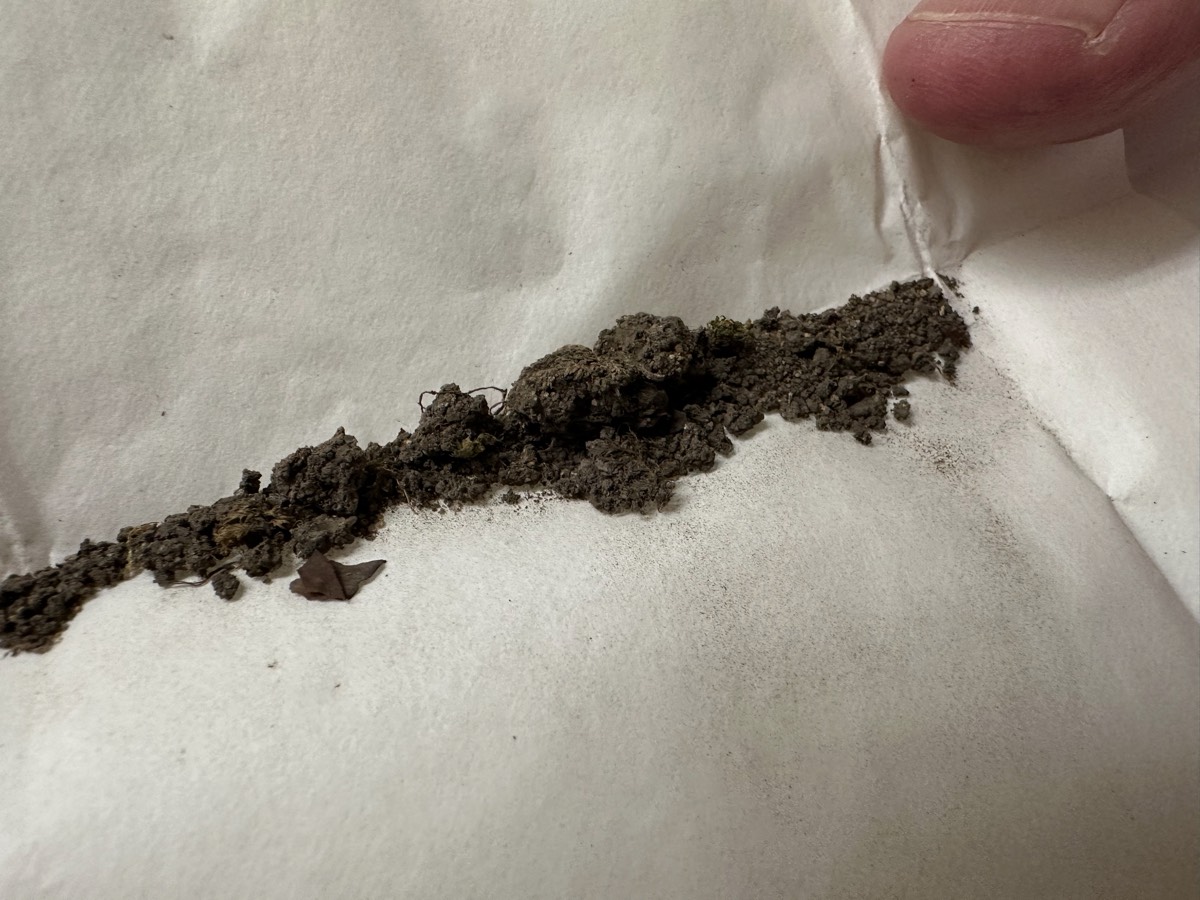
The tiny bits of dirt and moss collected in Burr Oak Cemetery in 2009, which were a key piece of evidence in the criminal case.
Credit: Field Museum
The tiny bits of dirt and moss collected in Burr Oak Cemetery in 2009, which were a key piece of evidence in the criminal case. Credit: Field Museum
Prosecutors still had to prove their case. In addition to the skeletal remains, the FBI had collected broken mulberry branches and buried grass fragments for expert analysis. Von Konrat was just going about his museum business in 2009 when the FBI called, seeking expert advice on pieces of moss their team had found, inexplicably buried eight inches below the topsoil with the reburied remains. They needed his help identifying the species as well as determining how long it had been buried. This would provide the FBI with a crucial timeline of when the remains had been reburied.
“Moss is a little bit freaky,” said von Konrat. “Mosses have an interesting physiology, where even if they’re dry and dead and preserved, they can still have an active metabolism, a few cells that are still active. The amount of metabolic activity deteriorates over time, and that can tell us how long ago a moss sample was collected.” The key was chlorophyll, a green pigment central to photosynthesis. Chlorophyll degrades as a decaying plant’s cells stop functioning, so the museum team could measure how much light was being absorbed by the chlorophyll in control specimens whose age was known (both fresh and dried). Then they could compare those measurements to the forensic sample.