wi-fi hotspots

fcc-chairman-leads-“cruel”-vote-to-take-wi-fi-access-away-from-school-kids

FCC chairman leads “cruel” vote to take Wi-Fi access away from school kids

The FCC votes were criticized by advocacy groups. “Students who rely on long bus rides to complete assignments and library patrons who depend on hotspots for work, education, or telehealth will suddenly lose access to essential tools. This decision is a step backward,” said Joseph Wender, executive director of the Schools, Health & Libraries Broadband Coalition.

“Chairman Carr’s cruel move to delete our kids’ Internet connections won’t make America smarter,” said Revati Prasad, executive director of the Benton Institute for Broadband & Society. The FCC “openly voted to snatch back the opportunity to offer more Americans, especially in rural areas, the high-speed Internet access to do the business of life online—pay bills, make telehealth appointments, fill out school applications—after the library closes,” American Library Association President Sam Helmick said.

The advocacy groups said that in New Mexico, “Farmington Municipal Schools equipped its 90 buses with Wi-Fi, serving over 6,500 students daily. Parents reported that children returned home with homework already completed.” In Ohio, “the Brown County Public Library’s hotspot program allowed homeschool families to join virtual classes, entrepreneurs to run mobile businesses, and veterans to participate in telehealth appointments and certification testing.”

Helmick said the library association is also “discouraged by the lack of due process, which left no opportunity for staff, patrons and library advocates to give input on the draft order.” Gomez similarly criticized the process, saying the FCC didn’t release the draft order until after the deadline for interested parties to meet with commissioners’ offices.

Gomez: Programs weren’t illegal

Gomez disputed Carr’s legal argument, saying that “Congress gave the FCC permission to expand the applications of E-Rate funding as the technologies used to educate children evolve.” She pointed out that the Universal Service law says the FCC may designate additional services for support. Gomez continued:

When the E-Rate program was implemented, dial-up Internet was the standard, and today, September 30th, 2025, AOL is discontinuing dial-up service. It is safe to say the landscape of communications technology has changed dramatically throughout the life of the E-Rate program. As underscored during my visit to the High School for Environmental Studies in New York a couple of weeks ago, students are now using Chromebooks in classrooms on a regular basis, and they are expected to submit homework assignments online using platforms like Google classroom. These changes are made possible with support from E-Rate funding.

Gomez said that in 2003, under President George W. Bush, the FCC “expanded E-Rate support to cover Internet access for bookmobiles. It also clarified that E-Rate funding could cover a school bus driver’s use of wireless services while transporting students, a librarian’s use of wireless services on a library’s mobile library unit van, and teachers’ use of wireless services while accompanying students on a field trip. Expanding E-Rate support to cover hotspots and Wi-Fi on school buses was consistent with that precedent.”

FCC chairman leads “cruel” vote to take Wi-Fi access away from school kids Read More »
senate-passes-“cruel”-republican-plan-to-block-wi-fi-hotspots-for-schoolkids

Senate passes “cruel” Republican plan to block Wi-Fi hotspots for schoolkids

Blumenthal pointed out that under a joint resolution of disapproval, the FCC is forbidden to adopt a similar rule in the future. “I have to ask, really? Are schools and teachers crying out to repeal this rule? Really? No, they are not. How does this proposal make any sense for them or for families? For the parents? For the community? It makes no sense,” Blumenthal said.

Sen. Edward Markey (D-Mass.) called the Republican move “a cruel and shortsighted decision that will widen the digital divide and rob kids of the tools they need to succeed.”

FCC’s new chair opposed lending program

The FCC previously distributed Wi-Fi hotspots and other Internet access technology through the Emergency Connectivity Fund (ECF) that was authorized by Congress in 2021. After that program was axed last year, the FCC responded by adapting E-Rate to include hotspot lending.

FCC Chairman Brendan Carr, who was elevated to the agency’s top spot by Trump in January, voted against the program last year. Carr said in his dissent that only Congress could decide whether to revive the hotspot lending.

“Now that the ECF program has expired, its future is up to Congress,” he said at the time. “The legislative branch retains the power to decide whether to continue funding this Wi-Fi loaner program—or not. But Congress has made clear that the FCC’s authority to fund this initiative is over.”

Overall E-Rate funding is based on demand and capped at $4.94 billion per year. Actual spending for E-Rate in 2023 was $2.48 billion. E-Rate and other Universal Service Fund programs are paid for through fees imposed on phone companies, which generally pass the cost on to consumers.

The House version of the measure to kill the lending program was introduced by Rep. Russ Fulcher (R-Idaho). “E-Rate was designed to ensure schools and libraries have the connectivity they need to educate and serve their communities, not to create a backdoor entitlement program that stretches beyond the law’s clear boundaries,” Fulcher said in February when he filed the resolution. “The FCC cannot be allowed to unilaterally interpret the law in a way that fits their political agenda. The expansion of this program under the Biden administration was a blatant example of overreach that is not only unlawful but also disregards congressional intent.”

Senate passes “cruel” Republican plan to block Wi-Fi hotspots for schoolkids Read More »

senator-ted-cruz-is-trying-to-block-wi-fi-hotspots-for-schoolchildren

Senator Ted Cruz is trying to block Wi-Fi hotspots for schoolchildren


Ted Cruz vs. Wi-Fi hotspots

Cruz: Hotspot lending could “censor kids’ exposure to conservative viewpoints.”

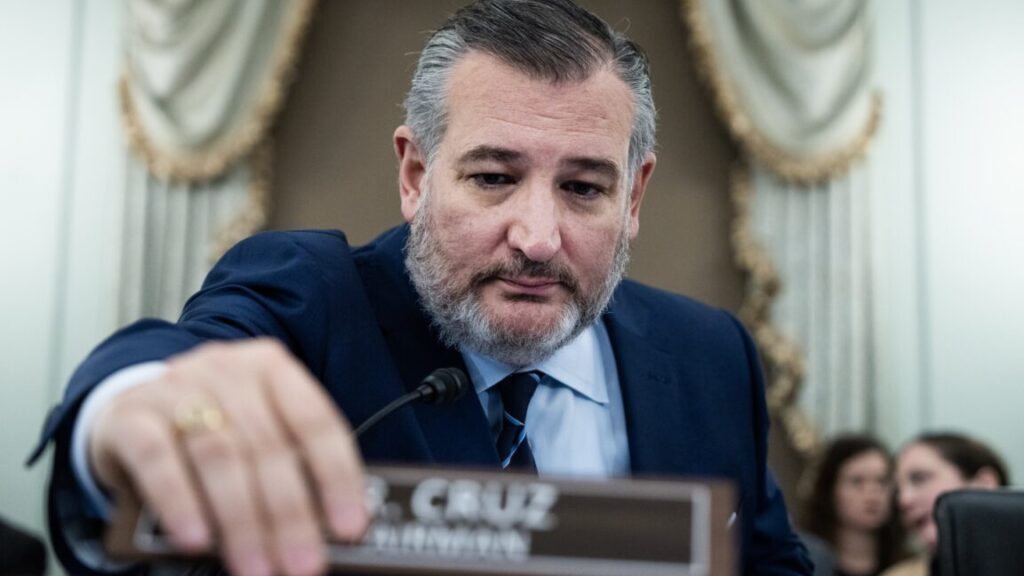
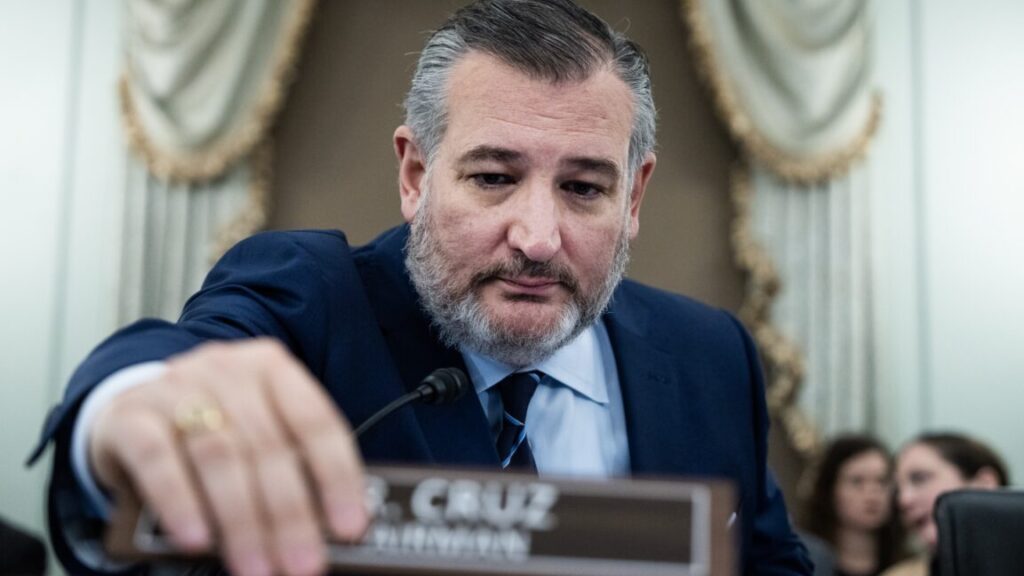
Senate Commerce Committee Chairman Ted Cruz (R-Texas) at a hearing on Tuesday, January 28, 2025. Credit: Getty Images | Tom Williams

US Senator Ted Cruz (R-Texas) is trying to block a plan to distribute Wi-Fi hotspots to schoolchildren, claiming it will lead to unsupervised Internet usage, endanger kids, and possibly restrict kids’ exposure to conservative viewpoints. “The government shouldn’t be complicit in harming students or impeding parents’ ability to decide what their kids see by subsidizing unsupervised access to inappropriate content,” Cruz said.

Cruz, chairman of the Commerce Committee, yesterday announced a Congressional Review Act (CRA) resolution that would nullify the hotspot rule issued by the Federal Communications Commission. The FCC voted to adopt the rule in July 2024 under then-Chairwoman Jessica Rosenworcel, saying it was needed to help kids without reliable Internet access complete their homework.

Cruz’s press release said the FCC action “violates federal law, creates major risks for kids’ online safety, [and] harms parental rights.” While Rosenworcel said last year that the hotspot lending could be implemented under the Universal Service Fund’s existing budget, Cruz alleged that it “will increase taxes on working families.”

“As adopted, the Biden administration’s Wi-Fi Hotspot Order unlawfully expanded the Universal Service Fund (USF) to subsidize Wi-Fi hotspots for off-campus use by schoolchildren, despite the Communications Act clearly limiting the Commission’s USF authority to ‘classrooms,'” Cruz’s announcement said. “This partisan order, strongly opposed by then-Commissioner Brendan Carr and Commissioner Nathan Simington, represents an overreach of the FCC’s mandate and poses serious risk to children’s online safety and parental rights.”

Cruz’s press release said that “unlike in a classroom or study hall, off-premises hotspot use is not typically supervised, inviting exposure to inappropriate content, including social media.” Cruz’s office alleged that the FCC program shifts control of Internet access from parents to schools and thus “heightens the risk of censoring kids’ exposure to conservative viewpoints.”

The Cruz resolution to nullify the FCC rule was co-sponsored by Sens. John Thune (R-S.D.), Roger Wicker (R-Miss.), Deb Fischer (R-Neb.), Jerry Moran (R-Kan.), Marsha Blackburn (R-Tenn.), Todd Young (R-Ind.), Ted Budd (R-N.C.), Eric Schmitt (R-Mo.), John Curtis (R-Utah), Tim Sheehy (R-Mont.), Shelley Moore Capito (R-W.Va.), and Cynthia Lummis (R-Wyo.).

The FCC’s plan

Under the CRA, Congress can reverse recent agency actions. The exact deadline isn’t always clear, but the Congressional Research Service estimated “that Biden Administration rules submitted to the House or Senate on or after August 1, 2024” are likely to be subject to the CRA during the first few months of 2025. The FCC hotspot rule was submitted to Congress in August.

The FCC rule expands E-Rate, a Universal Service Fund program that helps schools and libraries obtain affordable broadband. The hotspot order would let schools and libraries use E-Rate funding for “lending programs to loan Wi-Fi hotspots and services that can be used off-premises to the students, school staff, and library patrons with the greatest need,” the FCC says.

The FCC’s hotspot order said “technology has become an integral part of the modern classroom,” and that “neither Congress nor the Commission has defined the term ‘classroom’ or placed any explicit location restrictions on schools or libraries.”

“We conclude that funding Wi-Fi hotspots and services for off-premises use will help enhance access for school classrooms and libraries to the broadband connectivity necessary to facilitate digital learning for students and school staff, as well as library services for library patrons who lack broadband access when they are away from school or library premises,” the FCC order said.

Off-premises use can help “the student who has no way of accessing their homework to prepare for the next day’s classroom lesson, or the school staff member who is unable to engage in parent-teacher meetings or professional trainings that take place after the school day ends, or the library patron who needs to attend a virtual job interview or perform bona fide research after their library’s operating hours,” the FCC said.

The FCC order continued:

Thus, we conclude that by permitting support for the purchase of Wi-Fi hotspots and Internet wireless services that can be used off-premises and by allowing schools and libraries to use this technology to connect the individuals with the greatest need to the resources required to fully participate in classroom assignments and in accessing library services, we will thereby extend the digital reach of schools and libraries for educational purposes and allow schools, teachers, and libraries to adopt and use technology-based tools and supports that require Internet access at home. For these reasons, we conclude that the action adopted today is within the scope of our statutory directive under section 254(h)(2)(A) of the Communications Act to enhance access to advanced telecommunications and information services for school classrooms and libraries.

The FCC order said it would be up to schools and libraries “to make determinations about acceptable use in their communities.” Schools and libraries seeking funding would be “subject to the requirements under the Children’s Internet Protection Act, which requires local educational agencies and libraries to establish specific technical protections before allowing network access,” the FCC said. They also must certify on an FCC form that they have updated and publicly posted acceptable use policies and may be required to provide the policies and evidence of where they are posted to the FCC.

Hotspots were distributed during pandemic

The FCC previously distributed Wi-Fi hotspots and other Internet access technology through the $7.171 billion Emergency Connectivity Fund (ECF), which was authorized by Congress in the American Rescue Plan Act of 2021. But Congress rescinded the program’s remaining funding of $1.768 billion last year.

The Rosenworcel FCC responded by adapting E-Rate to include hotspot lending. Overall E-Rate funding is based on demand and capped at $4.94 billion per year. Actual spending for E-Rate in 2023 was $2.48 billion. E-Rate and other Universal Service Fund programs are paid for through fees imposed on phone companies, which generally pass that cost on to consumers with a “Universal Service” charge on telephone bills.

Carr, who is now FCC chairman, said in his July 2024 dissent that only Congress can decide whether to revive the hotspot lending. “Now that the ECF program has expired, its future is up to Congress,” he said. “The legislative branch retains the power to decide whether to continue funding this Wi-Fi loaner program—or not. But Congress has made clear that the FCC’s authority to fund this initiative is over.”

With the previous temporary program, Congress ensured that Universal Service Fund money wouldn’t be spent on the Wi-Fi hotspots and that “the program would sunset when the COVID-19 emergency ended,” Carr said. But the replacement program doesn’t have the “guardrails” imposed by Congress, he argued.

“The FCC includes no limit on the amount of ratepayer dollars that can be expended in aggregate over the course of years, no limit on the locations at which the hotpots can be used, no sunset date on the program, and no protection against this program increasing consumers’ monthly bills,” Carr said.

Even if Congress doesn’t act on Cruz’s resolution, Carr could start a new FCC proceeding to reverse the previous decision. Carr has said he plans to take actions “to reverse the last administration’s costly regulatory overreach.”

Ex-chair said plan didn’t require budget increase

Rosenworcel said the temporary program “demonstrated what a modern library and school can do to help a community learn without limits and keep connected.”

“Today we have a choice,” she said at the time. “We can go back to those days when people sat in parking lots to get a signal to get online and students struggling with the homework gap hung around fast food places just to get the Internet access they needed to do their schoolwork. Or we can go forward and build a digital future that works for everyone.”

She argued that the FCC has authority because the law “directs the agency to update the definition of universal service, which includes E-Rate, so that it evolves over time,” and “Congress specifically directed the Commission to designate additional services in this program as needed for schools and libraries.”

Cruz’s press release said the FCC “order imposes no overall limit on the amount of federal dollars that can be expended on the hotspots, lacks mean-testing to target children who may not have Internet at home, and allows for duplication of service in areas where the federal government is already subsidizing broadband. As a result, the order could strain the USF while increasing the risk of waste, fraud, and abuse.”

However, Rosenworcel said the program would work “within the existing E-Rate budget” and thus “does not require new universal service funds nor does it come at the cost of the support E-Rate provides to connectivity in schools and libraries.” Addressing the budget, the FCC order pointed out that E-Rate demand has fallen short of the program’s funding cap for many years.

While there wouldn’t be mandatory mean-testing, the FCC program would rely on schools and libraries to determine who should be given access to hotspots. “In establishing a budgeted approach to the lending program mechanism, we expect that the limited number of available Wi-Fi hotspots will more naturally be targeted to students, school staff, or library patrons with the most need,” the FCC order said.

Photo of Jon Brodkin

Jon is a Senior IT Reporter for Ars Technica. He covers the telecom industry, Federal Communications Commission rulemakings, broadband consumer affairs, court cases, and government regulation of the tech industry.

Senator Ted Cruz is trying to block Wi-Fi hotspots for schoolchildren Read More »