water use

microsoft-vows-to-cover-full-power-costs-for-energy-hungry-ai-data-centers

Microsoft vows to cover full power costs for energy-hungry AI data centers

Taking responsibility for power usage

In the Microsoft blog post, Smith acknowledged that residential electricity rates have recently risen in dozens of states, driven partly by inflation, supply chain constraints, and grid upgrades. He wrote that communities “value new jobs and property tax revenue, but not if they come with higher power bills or tighter water supplies.”

Microsoft says it will ask utilities and public commissions to set rates high enough to cover the full electricity costs for its data centers, including infrastructure additions. In Wisconsin, the company is supporting a new rate structure that would charge “Very Large Customers,” including data centers, the cost of the electricity required to serve them.

Smith wrote that while some have suggested the public should help pay for the added electricity needed for AI, Microsoft disagrees. He stated, “Especially when tech companies are so profitable, we believe that it’s both unfair and politically unrealistic for our industry to ask the public to shoulder added electricity costs for AI.”

On water usage for cooling, Microsoft plans a 40 percent improvement in data center water-use intensity by 2030. A recent environmental audit from AI model-maker Mistral found that training and running its Large 2 model over 18 months produced 20.4 kilotons of CO2 emissions and evaporated enough water to fill 112 Olympic-size swimming pools, illustrating the aggregate environmental impact of AI operations at scale.

To solve some of these issues, Microsoft says it has launched a new AI data center design using a closed-loop system that constantly recirculates cooling liquid, dramatically cutting water usage. In this design, already deployed in Wisconsin and Georgia, potable water is no longer needed for cooling.

On property taxes, Smith stated in the blog post that the company will not ask local municipalities to reduce their rates. The company says it will pay its full share of local property taxes. Smith wrote that Microsoft’s goal is to bring these commitments to life in the first half of 2026. Of course, these are PR-aligned company goals and not realities yet, so we’ll have to check back in later to see whether Microsoft has been following through on its promises.

Microsoft vows to cover full power costs for energy-hungry AI data centers Read More »

illinois-city-plans-to-source-its-future-drinking-water-from-lake-michigan

Illinois city plans to source its future drinking water from Lake Michigan

The Great Lakes Compact —

As aquifers dry up, some Midwest communities are looking to the region’s natural resources.

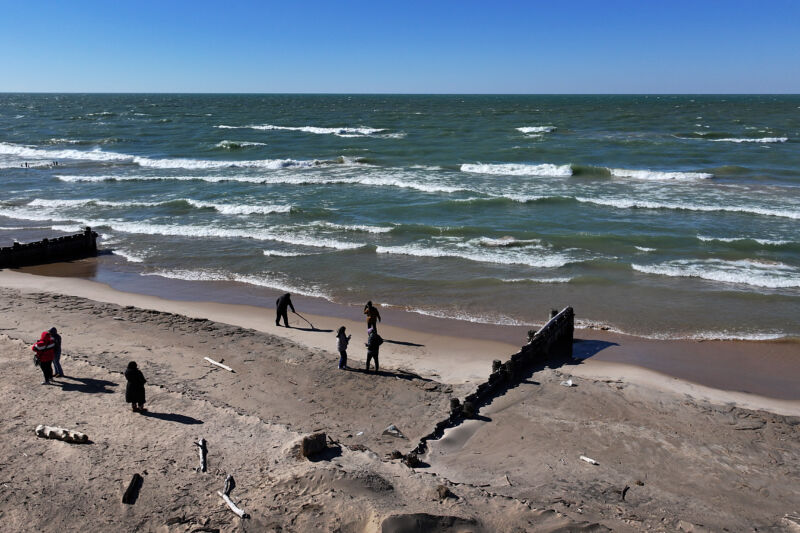
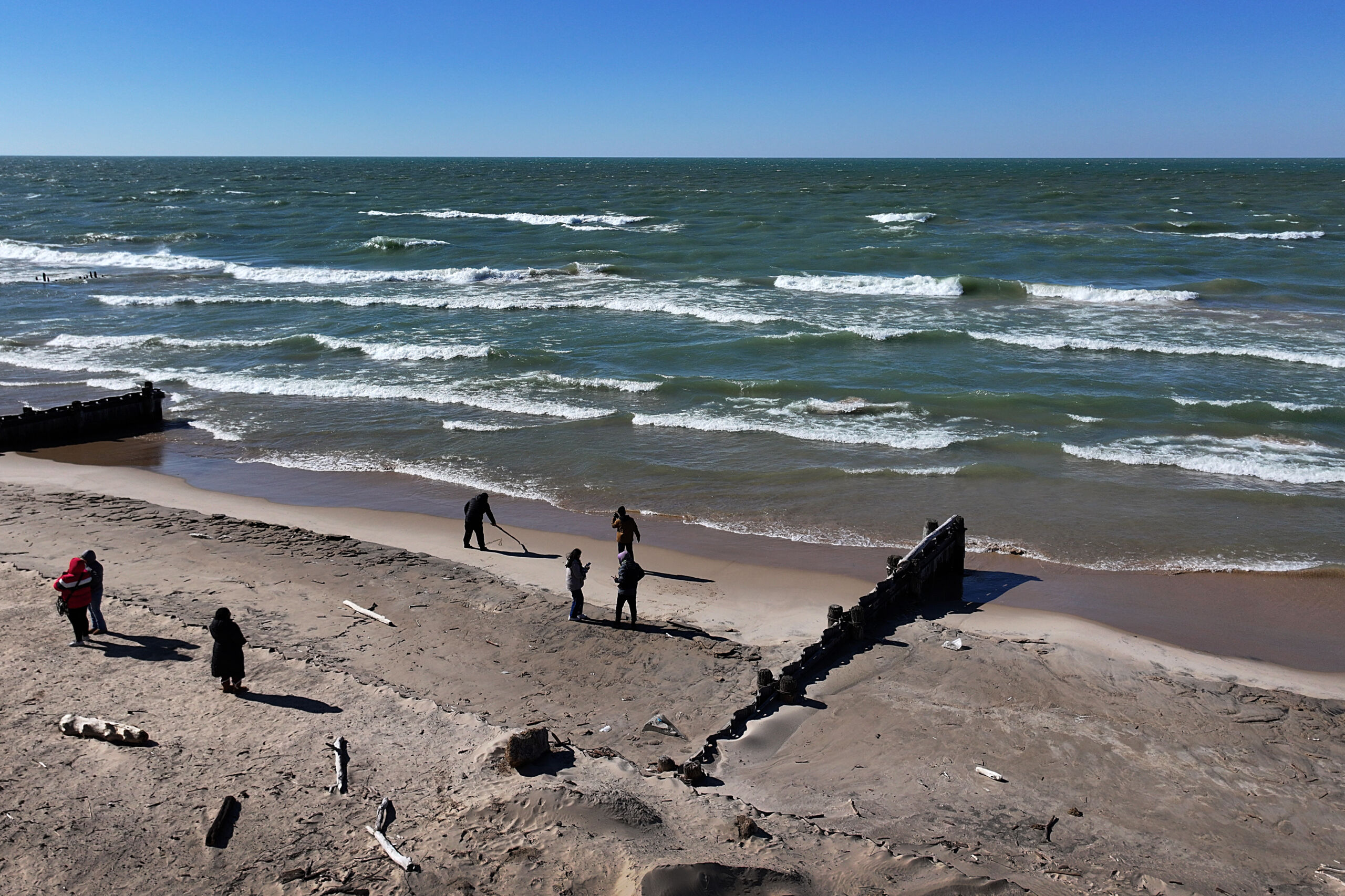
Waves roll ashore along Lake Michigan in Whiting, Indiana.

Enlarge / Waves roll ashore along Lake Michigan in Whiting, Indiana.

This article originally appeared on Inside Climate News, a nonprofit, independent news organization that covers climate, energy, and the environment. It is republished with permission. Sign up for their newsletter here

The aquifer from which Joliet, Illinois, sources its drinking water is likely going to run too dry to support the city by 2030—a problem more and more communities are facing as the climate changes and groundwater declines. So Joliet eyed a huge water source 30 miles to the northeast: Lake Michigan.

It’s the second-largest of the Great Lakes, which together provide drinking water to about 10 percent of the US population, according to the National Oceanic and Atmospheric Administration’s Office for Coastal Management.

Soon, Joliet residents will join them. After years of deliberation, their city government decided last year to replace the aquifer by piping it in from Lake Michigan, buying it from the city of Chicago.

Project construction will start in 2025 with the intent to have water flowing to residents by 2030, said Theresa O’Grady, an engineering consultant working with the city of Joliet. Joliet will foot the approximately $1 billion bill for the project, including the cost to build 65 miles of piping that will transport water from Chicago to Joliet and neighboring communities.

Not just anyone can gain access to Lake Michigan’s pristine, saltless water. That’s rooted in the Great Lakes Compact, an agreement that governs how much water each state or Canadian province can withdraw from the lakes each day. With some exceptions, only municipalities located within the 295,200-square-mile basin (which includes the surface area of the lakes themselves) can get approved for a diversion to use Great Lakes drinking water.

Joliet is one of those exceptions.

“I’ve seen occasional news stories about, ‘Is Kansas suddenly going to get Lake Michigan water because Joliet got Lake Michigan water?’ We are going above and beyond to demonstrate how much we respect the privilege we have to use Lake Michigan water. We are spending hundreds of millions of dollars to be good stewards of that,” said Allison Swisher, Joliet’s director of public utilities.

In April 2023, then-Chicago Mayor Lori Lightfoot signed an agreement with Joliet and five other nearby communities to supply them with treated Lake Michigan water. Now, legal experts and other Great Lakes communities are left wondering how Joliet, located well outside of the Great Lakes basin, fits in.

The exemption in the Great Lakes Compact

The Great Lakes Region, which encompasses portions of New York, Pennsylvania, Ohio, Indiana, Illinois, Michigan, Wisconsin, and Minnesota, as well as the Canadian province of Ontario, is governed through the Great Lakes Compact, enacted in 2008.

“If you do not live in a straddling community, or you’re not a city in a straddling county, you don’t have a ticket to the dance. You can’t even ask for a Great Lakes water diversion,” said Peter Annin, director of the Mary Griggs Burke Center for Freshwater Innovation at Northland College and author of The Great Lakes Water Wars.

“With the exception of the state of Illinois,” he added.

The Chicago exemption, as it is often referred to, has roots in the 1800s, when animal waste from the city’s stockyards would flush into the Chicago River, ultimately pouring into Lake Michigan.

“That’s why Chicago embarks on this massive Panama Canal-like water diversion project, to take all that sewage and put it into this long canal, which then would connect with the Des Plaines River southwest of the city, and then the Illinois River, and then the Mississippi River,” Annin said, referring to the infamous reversal of the Chicago River. “Chicago’s solution was to flush its toilet to St. Louis.”

Every day, Chicago had the right to use billions of gallons of Lake Michigan water to divert this water and dilute the pollution downstream. The state of Wisconsin began challenging the diversion in the 1920s, arguing that Illinois’ superfluous water use was depleting water levels in the lake. In 1967, the Supreme Court sided with Illinois, and now, Chicago can do whatever it wants with its 2.1 billion gallons per day.

“So here we are today with this really kind of unbelievable Joliet water diversion proposal,” Annin said.

Illinois city plans to source its future drinking water from Lake Michigan Read More »