virtual reality

frame-releases-second-set-of-platform-defining-updates

Frame Releases Second Set of Platform-Defining Updates

It’s been over a year since ARPost introduced readers to Frame, the hardware-agnostic web-based virtual meeting platform. The team, a part of Virbela (which has its own app-based virtual world platform), just announced a major update. It was time to step back in with Vice President Gabe Baker.
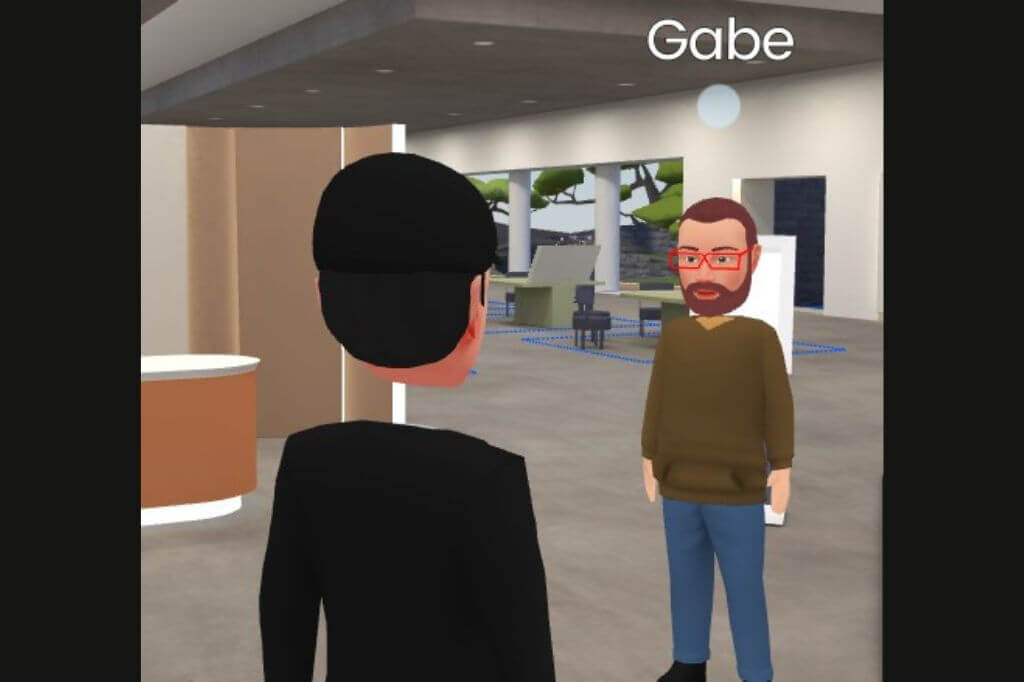
Gabe Baker in Frame 3.0

A Peek at the Update

Frame’s update was all about adding power to the platform while making it easier to use. The result was added or improved tools with a more streamlined user interface so that more advanced users can access the tools without cluttering the view for everyone else.

New tools include advanced analytics and new APIs for adding members and admins and editing assets. There’s also a new question queue system for support centers, classrooms, and other large-scale discussion cases, and a partner program that rewards users for attracting subscribers to the platform.
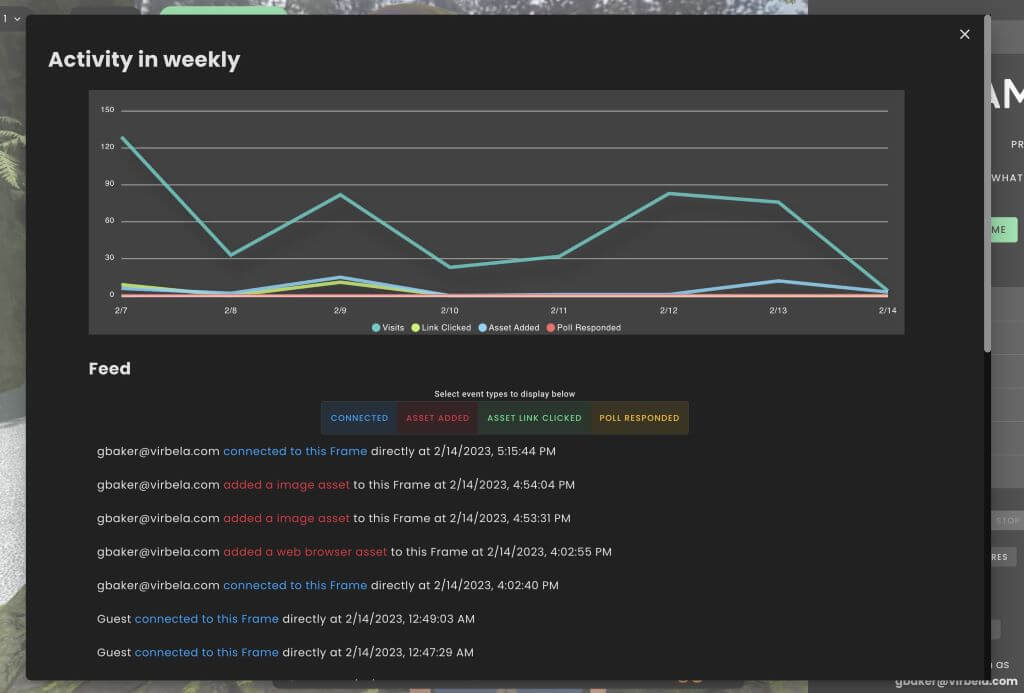
Analytics - Frame 3.0

“Fundamentally, we believe that the web browser IS the metaverse and that we’re entering a new era of spatial computing that will result in many traditional websites, apps, and services existing on the spatial web alongside the 2D internet that we’re used to today,” Baker wrote in a blog post announcing the update.

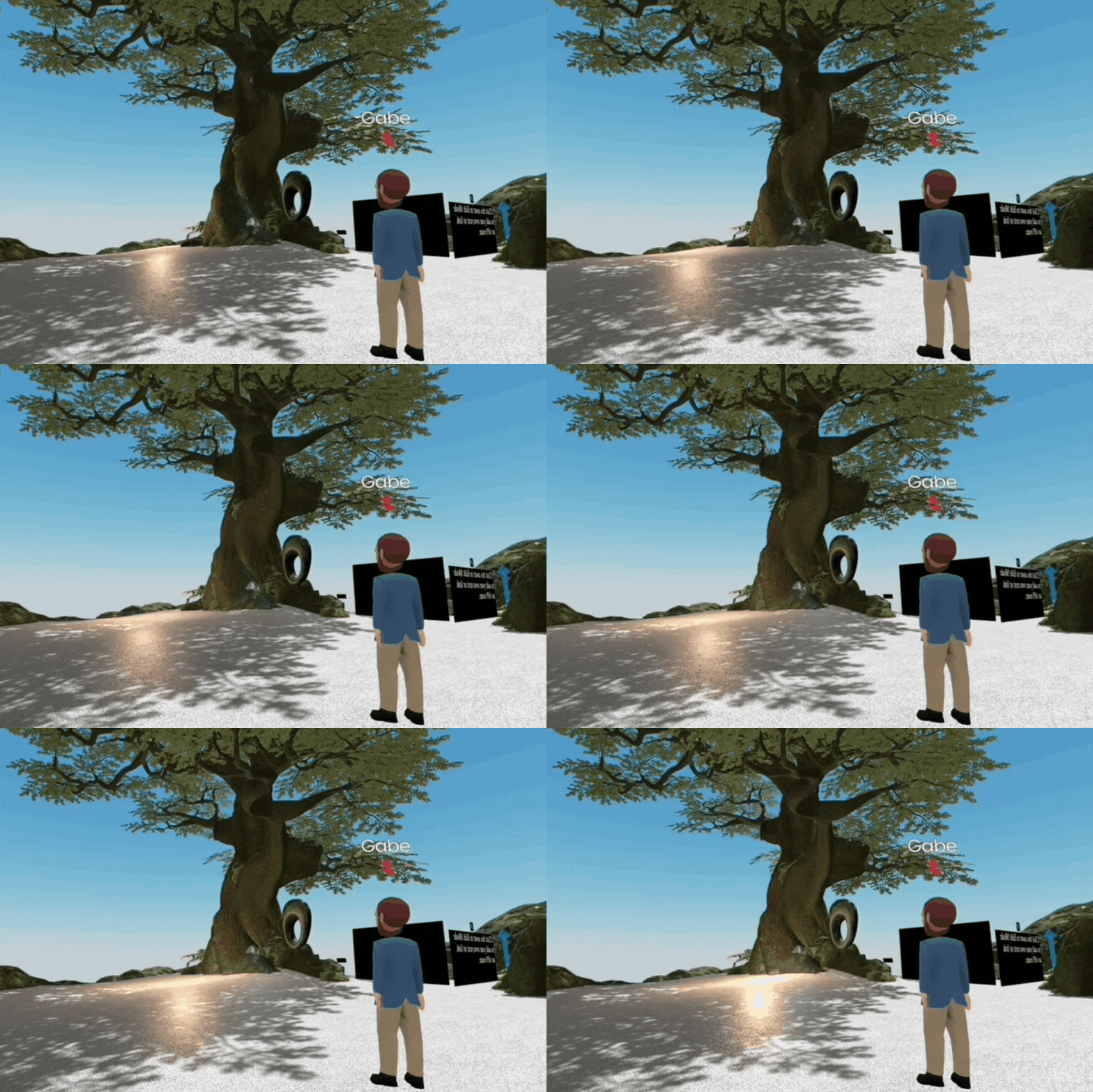
Even if you’re not building and hosting your own frames, there are benefits coming for average users as well. These include new environments, graphics updates like real-time light and shadow, and a still experimental option to use full-body avatars.
Frame Releases Second Set of Platform-Defining Updates

Also announced were coming roadmap updates including increased asset storage and support for multiple web browsers. Some of these will be limited to the paid subscriber tiers, but will all be rolled out “while maintaining a robust free plan.”

Seeing Is Believing

Reading about the updates is one thing, but I jumped into the platform, first solo and then in a live session with Baker to check them out for myself. As a connoisseur of VR avatars, I was pleasantly surprised before even entering a Frame.

I Have Legs and a Jacket. Life Is Good.

The avatars weren’t one of my favorite aspects of the platform last time around, but they’ve come a long way. Even if you don’t opt for the full-body avatars, the “classic” avatars are a lot more expressive and have some layered clothing options that were missing before. You can also use your Ready Player Me avatar, but not in full-body mode.

“[Full-body avatars] are hard to achieve on the web just for performance reasons,” said Baker. “We still have a ways to go on the full-body customizations.”
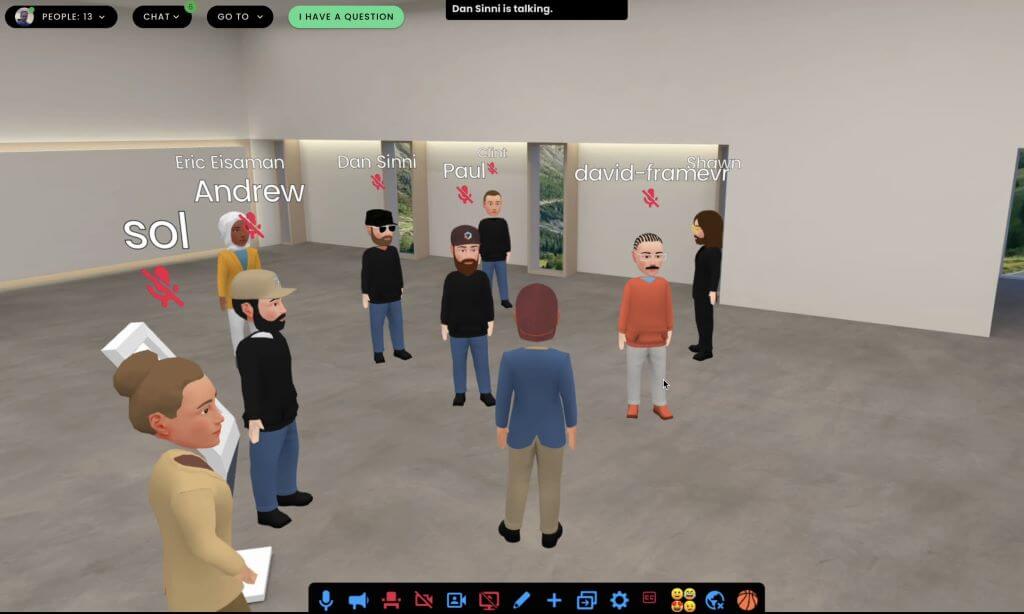
Full-body avatars - Frame 3.0

I was curious about whether Frame had had some conversations with parent company Virbela, who have had full-body avatars since the beginning. However, it’s not that simple, as Virbela is a native app as opposed to a browser-based platform.

“It’s a bit of a different world because they’re a Unity-based application,” said Baker. “In terms of the back-and-forth, there’s not really much because we use Babylon.js.”

All the Pretty Lights

Frame is also a year behind Virbela in announcing graphics performance updates. Graphics and display are big topics at the company because they are key areas where developers can compromise to achieve performance. That’s a big deal for a platform designed to run on everything from headsets to computers to mobile phones.

“It’s always going to be more important to us that people can get into Frame than that they can have an amazing graphical experience,” said Baker. “People do use Frame to explore digital twins and then they do need that level of graphical fidelity.”

And, that level of graphical fidelity is available to those users. The platform has long had a feature that tones down display quality automatically to the highest level that can be achieved by the user’s hardware while maintaining a stable experience. There is also a system in the works for builders to upload separate versions of their worlds for devices with different abilities.

Performance requirements aside, one of the worlds that we visited was at least as visually impressive as the average VR application – and more impressive than a number of them.

“There are still some visual experiences that you really need to be in a native application for, but the gap is narrowing,” said Baker, who was also the guest on our latest episode of XR Talks. (If you missed it live on Twitter Spaces yesterday, you can listen to it on YouTube here or Spotify here.)

Tools for Builders

Another area where the company tries to achieve compromise is with developer tools. The plan has always been to keep the platform agile and approachable, but it’s quickly growing into a fully-featured world-building tool for developers who need it.

“When we first started Frame, our whole thing was like ‘no nonsense, no download, no code,’ and we still very much believe in that vision,” said Baker. “But now we’re kind of branching out because we do see people that want to do those kinds of things… and if you don’t want to, you don’t have to.”

Worldbuilders have more ability than ever to create and bring in their own assets, as well as enable visitors to do the same. They can also see who created or edited which assets and when through new analytics tools.

Welcome to Frame 3.0

There are a growing number of browser-based immersive spaces. And most of them can be accessed from portals placed within a Frame. That is one of the many reasons that this is one of our favorite platforms in the immersive web. And it just keeps getting better.

Frame Releases Second Set of Platform-Defining Updates Read More »

mental-health-and-vr:-the-role-of-emerging-technologies-in-transforming-mental-health-care

Mental Health and VR: The Role of Emerging Technologies in Transforming Mental Health Care

With one out of eight people in the world living with a mental disorder, mental health has become a critical concern of global importance. However, many people are still not receiving the care they need and deserve. Fortunately, emerging technologies are becoming more affordable and accessible, offering new possibilities to transform mental health care. One such solution is mental health services in VR.

To explore the key role emerging technologies play in revolutionizing the field of mental health, we delve into the current challenges the industry faces and how new technologies can potentially address them. Terrance Williams, the founder of Meta Wellness, shares his insights on how digital and immersive technologies can augment the delivery of mental health care services.

Major Gaps in Mental Health Systems

Mental health systems worldwide are marked by significant gaps in information and research, governance, resources, and services. For instance, around half of the world’s population live in countries where the ratio of psychiatrists to people is 1 for every 200,000. In the United States alone, almost one out of four adults with mental illness reported that they were not able to receive the treatment they needed.

Virtual reality offers an accessible and affordable way to provide high-quality and timely mental health care.

The Role of VR in Mental Health Care

VR and similar technologies have the potential to provide more immersive and engaging interventions that can significantly enhance the quality and accessibility of mental health care. Terrance Williams believes that VR is the next stage toward the future of mental health. He explains that instead of telehealth services relying on zoom or a computer to host their sessions, they can now do their sessions in VR in the metaverse.

According to Williams, the effectiveness of VR has been seen in a number of ways including the treatment of acrophobia, panic disorders, schizophrenia, agoraphobia, social phobia, claustrophobia, and eating disorders.

VR simulations have also shown great promise as an effective element in therapy sessions for PTSD as they allow a person to face their trauma in a relaxed and controlled setting. Indeed, the possibilities are endless. Even in the realm of rehabilitation, VR has been seen as useful in cognitive rehabilitation in adults and children with autism spectrum disorder.

Challenges in VR Mental Health

The development and use of VR in mental health care must be carefully monitored and regulated to ensure that it benefits patients and does not create new risks or challenges. Asked about the challenges that mental health professionals face when incorporating VR into their practices, Williams says that one of the biggest things he often gets asked about is HIPAA compliance. Although he explains that this does not pose a threat as long as certain measures are in place and certain steps are taken to maintain compliance.

Another issue often raised when it comes to mental health in VR is the accessibility of equipment. Headset devices are needed to conduct sessions in VR. Since the technology is still fairly new, VR headsets are not as common as phones, tablets, or laptops. While they can now be easily bought at electronic stores, they are not yet standard items in the common household. This limits access to mental health VR services, especially in low-income families.

XR Talks with ARPost

Incorporating VR Into Mental Health Care

For mental health professionals looking to incorporate VR into their practices, it is important to start with learning the basics of virtual reality technology and how it can be used for mental health purposes. Collaborating with companies that specialize in building VR platforms for mental health professionals, like Meta Wellness, can also help navigate the technology.

Through Meta Wellness, Williams has been helping mental health professionals, therapists, life coaches, nonprofits, and many others in the virtual reality space. The company specializes in building VR platforms for mental health professionals for telehealth purposes. Clients anywhere in the world can buy or rent virtual reality spaces to host telehealth or private group sessions. As one of the pioneers in the space, they are committed to educating, growing, and exploring the possibilities of what virtual reality can bring.

Stronger Mental Health Care With Mental Health VR

Williams believes that in the future, 90% of all mental health telehealth sessions will eventually take place in the metaverse through virtual reality. He believes that mental health VR is the next phase in this sector. As the technology grows, so will the capabilities and accessibility.

Indeed, virtual reality and other immersive technologies can play a key role in addressing the indisputable and urgent need for wide-ranging transformation toward mental health for all. They can bridge the vast gap and reduce inequities in mental health systems.

Mental Health and VR: The Role of Emerging Technologies in Transforming Mental Health Care Read More »

awe-2023-is-right-around-the-corner

AWE 2023 Is Right Around the Corner

Augmented World Expo, AWE for short, returns to Santa Clara this year from May 31 to June 2, 2023. The agenda is still coming together but there’s already a lot to be excited about. Let’s take a look.

Morning Keynotes

Many XR companies save some of their biggest announcements for the AWE stage. Even when companies aren’t dropping new products, apps, and services, they use the time to inform and inspire listeners about this rapidly developing space.

Day One

The first day of AWE always starts with an opening keynote from event founder Ori Inbar. Inbar’s addresses are always insightful and digestible with good measures of his palpable enthusiasm and humor. During his opening keynote last year, Inbar spoke about how XR can help make both big dreams and small dreams become reality.

Next up is the Qualcomm keynote from Vice President and General Manager of XR Hugo Swart. At his keynote last year, Swart presented Snapdragon Spaces and introduced the first two recipients of Qualcomm Ventures’ metaverse-funded companies.

Then, Nreal CEO Chi Xu takes the stage. Nreal hasn’t been a keynote presenter in the years that ARPost has covered AWE. But, the company is definitely going places. This year saw the commercial launch of Nreal Air (review) and we know that they have at least one more model waiting in the wings for the next big launch.

Day Two

Day two only has one proper keynote scheduled, this time with Magic Leap. Last year, the company’s Head of Product Management, Jade Meskill, took the stage to talk about the Magic Leap 2 and “augmented enterprise.” We don’t yet know what will come of this year’s keynote but it’s being given by the company’s CEO Peggy Johnson.

Following that is a “Fireside Chat” with Unity CEO John Riccitiello. That it’s a “fireside chat” and not a “keynote” arguably suggests that there won’t be any big product announcements but that doesn’t mean that this session shouldn’t be on your schedule.

Days two and three are lighter on heavy-hitting speakers to encourage attendees to check out the expo floor, which we’ll look at next. Don’t worry though, there are sessions to look forward to beyond just keynotes and we’ll look at some of those later.

The Expo Floor

It’s impossible to know exactly what will be going on on the expo floor, which is part of what makes it so exciting. A list of exhibitors (over 130 of them) and a map of the expo floor are posted on the AWE website, but what companies will be showcasing and how is a mystery until the floor opens on day two.

First off, a number of haptics pioneers will be there including Haptx, bHaptics, and SenseGlove. Any immersive technology is better when you experience it yourself instead of just seeing it on YouTube, but this is doubly true for haptics. But, unfortunately, many of these products are still hard for the average person to get their hands on. That makes the expo floor a great intro.

Mojo Vision will also be on the AWE expo floor. While this company isn’t likely to be putting their AR contact lenses onto the eyeballs of just anybody, they do have rigs that allow you to get a glimpse through what they’re building.

DigiLens, Vuzix, and Lenovo will also be on the AWE Expo floor. These companies make components and enterprise hardware that’s usually a cut above available consumer models. Trying them out can be a glimpse into the future. I got to get my hands on some of their hardware at last year’s expo and left feeling enlightened.

Also, Tilt Five will be returning. Last year, their augmented game board was the life of the expo floor drawing huge crowds – not just to interact with the product but to watch other people interact with the product.

Of course, that’s only a sliver of the total exhibitors. Personally, I’m hoping to reconnect with some of my friends from Avatour, Echo3D, FundamentalVR, Inworld AI, Leia Inc., Mytaverse, OVR Technology, VRdirect, and Zappar.

Expert Talks and Panel Discussions

Day One

On day one, right after the keynotes, many will likely stay in their seats to see Forbes columnist, author, and educator Charlie Fink talk with Magic Leap founder and former CEO Rony Abovitz about “How We Can Invigorate XR.” A few hours later on the same stage, Qualcomm Director of Product Management Steve Lukas will talk about “Building AR for Today.”

A little after that, one might head out of the Mission City Ballroom to Grand Ballroom C’s “Web3” track where EndeavorXR founder and CEO Amy Peck will be debating “Pros &Cons of Web3” with XR Guild President Avi Bar-Zeev. It’s hard to find an XR organization that Peck isn’t or hasn’t been involved with, and Bar-Zeev co-created Google Earth and HoloLens.

From there, one might head back to the Mission City Ballroom for “Intersection of AI and the Metaverse: What’s Next?” a panel discussion with leading XR ethicist Kent Bye, HTC VIVE China President Alvin Graylin, WXR Fund Managing Partner Amy LaMeyer, and Creative Artist Agency’s Chief Metaverse Officer Joanna Popper.

But wait! Happening at the same time is “How XR Technology Is Changing the Fashion Landscape” with Beyond Creative Technologist David Robustelli, Ready Player Me co-founder Kaspar Tiri, and DressX co-founder Daria Shapovalova.

Depending on which of those last two talks you see, you might have time for “What Problem Does the Metaverse Solve?” with Nokia Head of Ecosystem and Trend Scouting Leslie Shannon.

If you miss the first fashion session, you can always catch “Redefining Fashion and Beauty’s Next Decade – From Virtual Beings and Gaming to Generative AI” with LVMH VP of Digital Innovation Nelly Mensah, 5th Column founder and CEO Akbar Hamid, and Journey founder and Chief Metaverse Officer Cathy Hackl.

Day Two

On the same day that the expo opens up, on the main stage, Paramount Pictures Futurist Ted Schilowitz presents “XR Excellence: Demonstration & Discussion” – billed as a collection of “what he thinks are the best experiences in VR and MR today, and what we can learn from those experiences” followed by Q&A.

But oh no! At the same time in Ballroom D, Khronos Group President Neil Treveett, XRSI founder and CEO Kavya Pearlman, and Moor Insights & Strategy Senior Analyst Anshel Sag are talking about building open standards for the metaverse!

XR Talks with ARPost

Both of those events conflict with a “Meet the Makers” session featuring Julie Smithson and Karen Alexander of MetaVRse, Sophia Moshasha of the VR/AR Association, and Ben Erwin of The Polys Awards.

Later in the afternoon, Inworld AI’s Chief Creative Officer John Gaeta and Chief Product Officer Kylan Gibbs debut a new concept demo called “Origins” – a new kind of caper in which a human detective must navigate a world of generative AI bots.

The evening of AWE Day Two is also The Auggie Awards. We can’t tell you too much about the Auggie Awards because the finalists aren’t out. In fact, you still have until April 7 to submit nominees. Then, there’s a period of public voting until May 4. You can submit nominees and vote for your favorites here.

Day Three

On day three, in the “AI and Virtual Beings” track, producer, director, and strategist Rebecca Evans, Stanford University Graduate Research Fellow Eugy Han, Odeon Theatrical CEO Stephanie Riggs, and Dulce Dotcom advisor Dulce Baerga will discuss “Avatars, Environments & Self Expression – from Social VR to Cross-Reality Experiences.”

From there, you might head back to the Mission City Ballroom for a Fireside Chat with Tom Furness, the founder and chairman of the Virtual World Society – one of the oldest and noblest organizations in immersive tech.

AWE concludes on the afternoon of day three with Inbar’s closing statements and the Best In Show Awards on the main stage.

How to Attend AWE

Once again, all AWE recordings will become available on AWE.live. If you want to experience AWE in person, you still have time to get tickets. If you’re reading this before February 28, you still have time for Super Early Bird Tickets. You can also get 20% off of your ticket price by using discount code 23ARPOSTD at checkout.

And keep an eye on ARPost as AWE draws nearer. As a media partner of the event, we’ll be giving two free tickets to selected readers as part of an upcoming drawing. Watch our social media channels for details.

AWE 2023 Is Right Around the Corner Read More »

apple-ar-glasses-put-on-hold-to-make-way-for-mr-glasses-–-vr-and-metaverse-expert-weighs-in

Apple AR Glasses Put on Hold to Make Way for MR Glasses – VR and Metaverse Expert Weighs In

Has Apple bitten more than it could chew? It appears that the long-awaited AR glasses won’t be hitting the shelves any time soon. A Bloomberg article published recently says that the Apple AR glasses are facing technical challenges, so their release has been delayed indefinitely and the project scope pared back. The report also revealed that Apple may instead opt to release a more affordable mixed reality headset.

Emma Ridderstad, CEO and Co-founder of Warpin Reality, shares her insights on the delayed release of the Apple AR glasses and the development of its mixed reality headset, probably to be called Reality Pro. She also shares her thoughts on what these developments mean for the industry, the consumers, and the future of AR/VR.

Apple AR Glasses Shelved to Make Way for an MR Headset

For a couple of years now, Apple has been developing AR glasses that resemble real eyeglasses. The design has already gone through several iterations but still, apparently, fails to meet expectations. While it is unclear where the real problem lies, it is clear that we won’t be seeing through the Apple AR glasses this year.

According to Bloomberg, what we may see soon are MR headsets that combine virtual and augmented reality elements. It was reported that Apple is shifting its focus towards developing a bulkier but less complicated MR headset with a projected price tag of $3,000. The company then plans to follow this with a more affordable version priced at just around $1,500, closer to Meta Quest Pro, though still with a higher price tag.

A Wise Move by Apple

When asked whether the delay of the Apple AR glasses will affect businesses that have already adopted the technology, Ridderstad believes that it would have little impact. Aside from the limited number of businesses currently using Apple’s AR technology, those that have adopted it are not fully reliant on it.

According to Ridderstad, AR/VR technology is still in its infancy. As immersive as these headsets are, they aren’t very convenient. The use cases are still quite limited, and the high cost of both hardware and software can be restrictive. “VR headsets need to become useful to people. Right now, they solve business-to-business problems but they’re still mostly just fun for the end consumer,” Ridderstad explained. So, Apple’s shift from AR glasses to MR headsets makes sense given the broader need to make immersive technology more accessible and affordable.

Ridderstad also believes that Apple will remain a key player in the industry, despite delays on its AR glasses. Consumers continue to trust Apple to produce well-researched and designed products. Considering the price, design, and content of these headsets, the market needs to see more affordable and functional headsets. “Since most people are just starting to see what these new technologies can do, we have to remind ourselves that this evolution is going to take time,” she said. “The real end consumer adoption will probably happen with Apple this time too.”

The True Value of XR Goes Beyond Gaming and Entertainment

XR technology has long been associated with gaming. But Ridderstad argues that the true value of XR lies in its potential in business, training, and education.

Her company, Warpin Reality, has developed a platform called Xelevate, which allows companies to launch customizable VR training courses for their employees. These courses range from safety drills to customer experience simulations and personality development workshops. Platforms like this have allowed construction companies to train their people on safety and equipment use and taught employees what to do during emergencies.

Ridderstad believes that VR/AR can optimize focus, learning, and training. She cites a PwC study that found that VR learners are more focused, learn more quickly, and are more emotionally engaged than e-learners. It could also create opportunities in remote work for those who struggle with in-person demands such as people with disabilities.

Diversity and Accessibility in Tech 

For years, the tech industry has been known to be a boys’ club. This still remains true in the metaverse. A McKinsey report found that in organizations shaping metaverse standards, 90% of leadership roles are held by men. Ridderstad warns, “The metaverse is not going to be an environment that people want to be in unless everyone feels welcome and comfortable. I think it is safe to say that unless women play their part in building the metaverse, and take their place among its architects, it won’t be.”

These technologies have the potential to revolutionize the future, so it’s important that they are designed for both men and women to see a higher level of adoption.

Apple AR Glasses Put on Hold to Make Way for MR Glasses – VR and Metaverse Expert Weighs In Read More »

get-fit-while-having-fun-with-sports-vr-games

Get Fit While Having Fun With Sports VR Games

Sports VR games are changing the fitness game. These highly interactive apps have the potential to transform the way we stay fit by making sports and fitness activities more fun, engaging, and convenient.

They allow players to immerse themselves in a virtual environment and engage in physically demanding activities, such as playing virtual basketball or boxing, within the confines of their own homes. With research indicating increased energy expenditure while playing, VR games offer a fun and convenient alternative to traditional workouts.

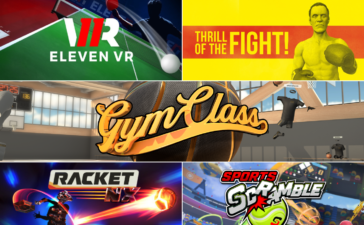
If you’d like to get some sports into your fitness routine but do not have time to hit the gym or stay out on the field, here are five of the top sports VR games you can try out at home. These games provide a full-body workout that challenges players to improve their hand-eye coordination, reaction time, and physical endurance. They can help burn anywhere from 4 to 13 calories per minute.

5 Sports VR Games to Up Your Fitness Game This Year

Gym Class VR

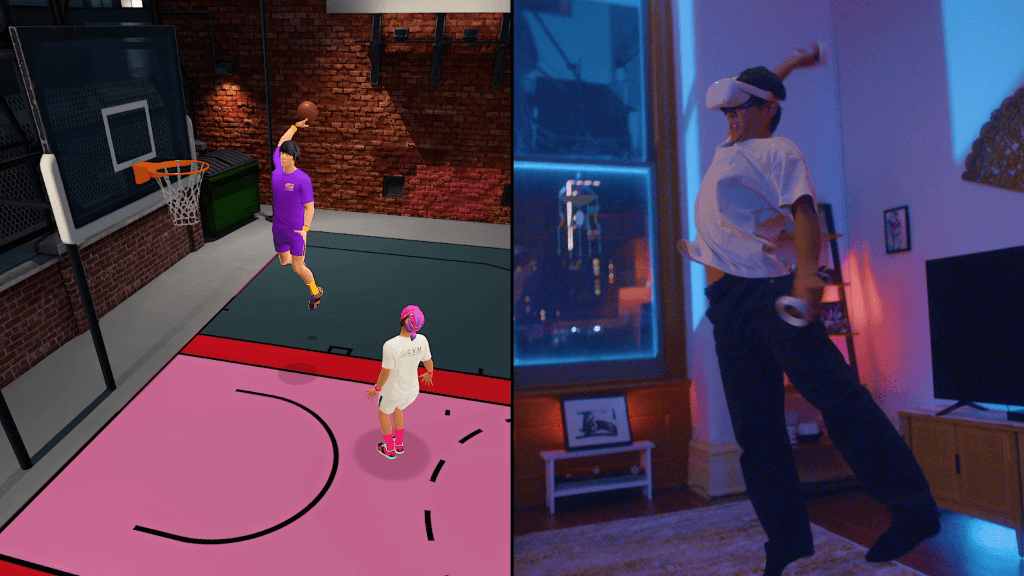
Love shooting hoops? Gym Class VR brings the ball game right where you are. Join players from all over the world for an immersive basketball game. Warm up with jumping jacks, wall squats, and other drills. Form a team with your friends and compete with other teams.

Gym Class VR - sports VR game

This game transports you into a virtual court and makes you feel as if you were playing on a real one. Dribble, pass, and shoot the same way you do in real life. For an extra level of motivation to keep playing, track your progress with statistics, shot charts, and streaks.

Racket: Nx

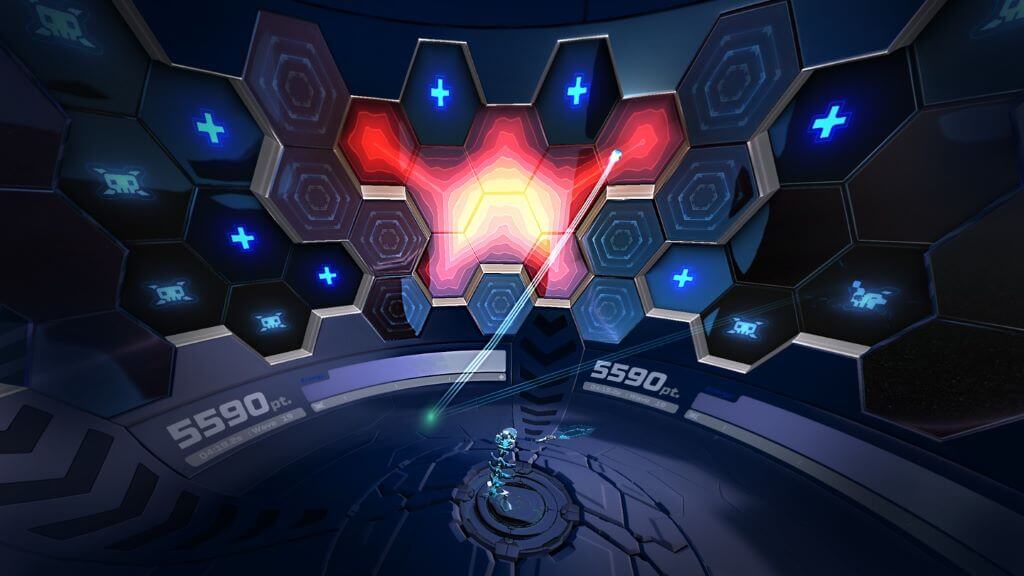
Court meets arcade in this sports VR game that blends elements of racquetball and pinball to create a fast-paced and exciting workout experience. Racket: Nx takes you inside the glass dome of a pinball machine for a one-of-a-kind racquetball experience.

Racket: Nx - sports VR game

Get your ball ready and hit targets as soon as they light up. Score points and dodge obstacles in the giant pinball arena. With its high-paced, psychedelic, and competitive gameplay, you’ll have a blast as you improve your hand-eye coordination, speed, precision, and agility.

The Thrill of the Fight

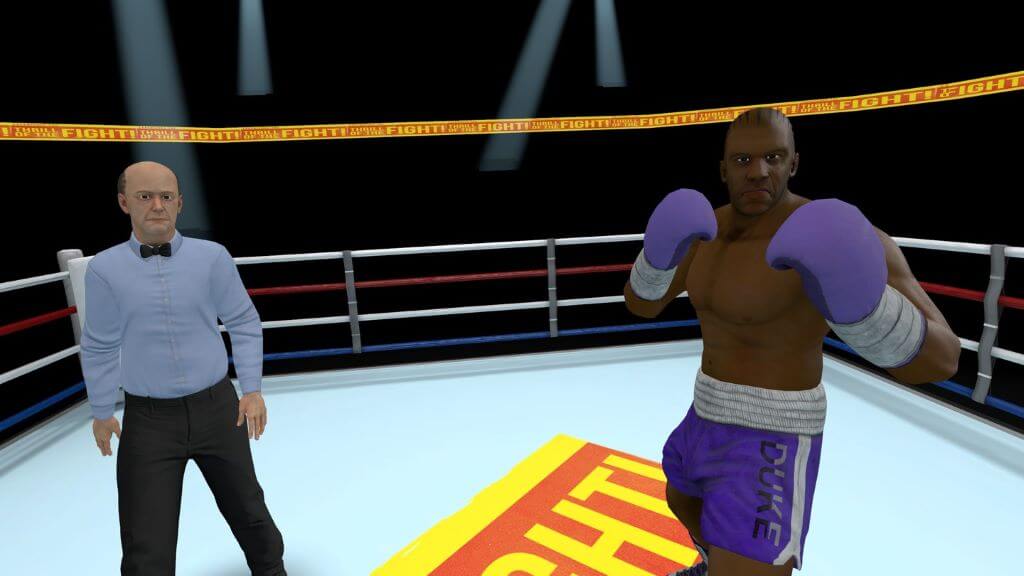
Feel the thrill of a real fight with the hyper-realistic gameplay of this sports VR game. The Thrill of the Fight lets you face off with your opponent in a virtual ring set at room scale.

The Thrill of the Fight - boxing match

Dodge hits, throw jabs, cross hooks, and land knockout punches as if you were in a real boxing match. Play the game regularly to learn and hone different boxing styles and techniques. Progress faster through the levels as you improve your skill, timing, and strategy.

Eleven Table Tennis

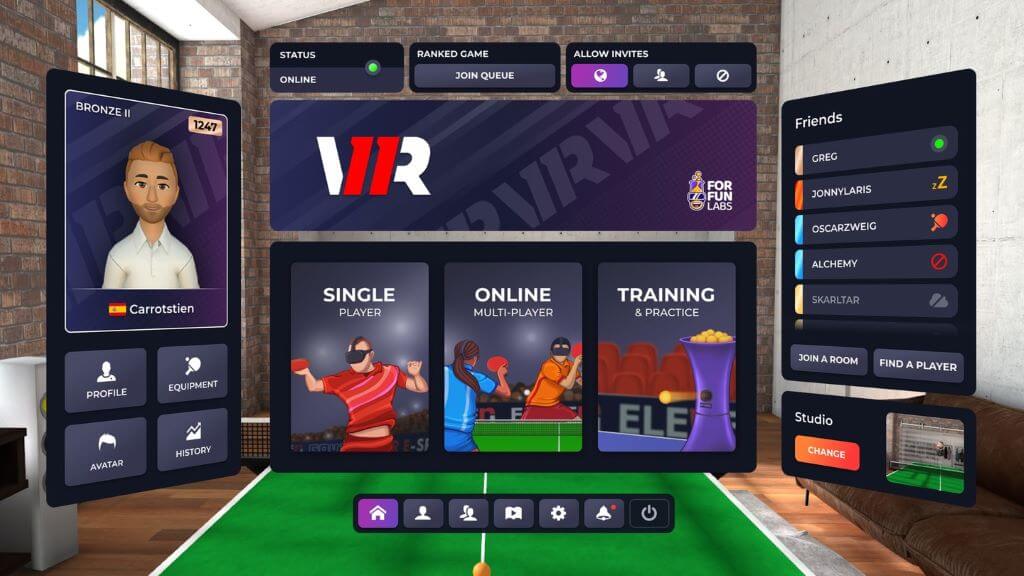
Smash your way to fitness. With the fast-paced gameplay and intense action in Eleven Table Tennis, you’ll be breaking a sweat in no time. Touted as the best simulation for table tennis, this game mimics actual movements and physics.

Eleven Table Tennis - sports VR game

Whether you are competing online against other players or practicing with an advanced AI opponent, you’ll feel as if you are playing the game in real life. The exercise intensity depends on a player’s skill level from a light workout for beginners to a super intense game for dedicated or highly skilled players.

Sports Scramble

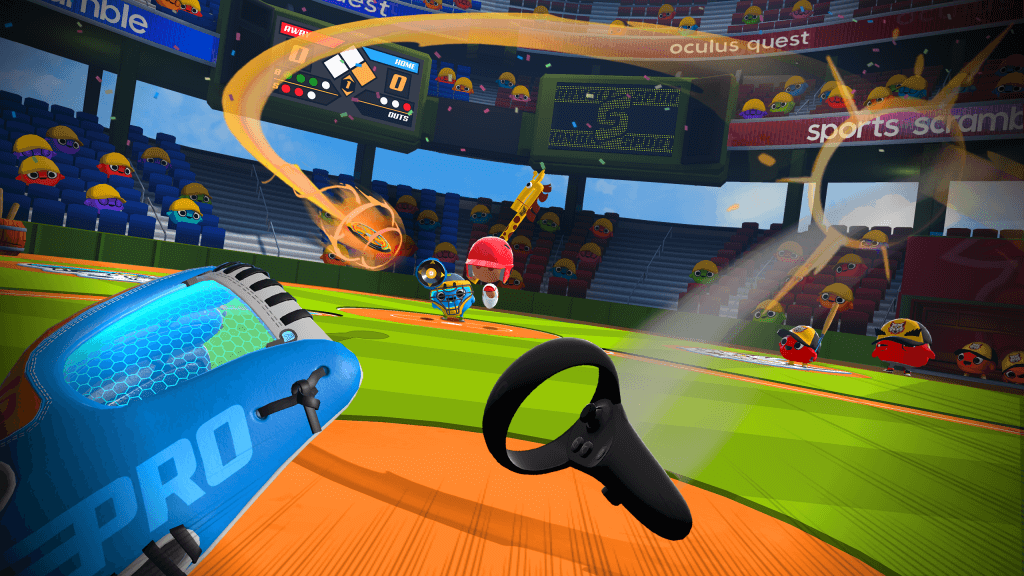
Go berserk with all the fun you’ll be having while playing a mix-matched sports VR game. Sports Scramble combines the distinct elements of different sports to create unique and totally fun VR experiences.

Sports Scramble - sports VR game

Play tennis with a badminton birdie, bowl a strike with a basketball, or score a home run with a racket. This game lets you play in a large tennis court, a zany bowling lane, or a baseball field but makes the experience more exciting—and crazily fun—by giving you unusual sports gear for your game.

Start Your Fitness Journey the Fun Way

Indeed, sports VR games are good workout alternatives that offer more enjoyment, convenience, and accessibility than traditional workouts. By providing an enjoyable and interactive way to exercise, they help people start their fitness journey the fun way and make it a sustainable part of their lifestyle.

However, it is important to be conscious of your mobility and fitness levels and consult a doctor if you have any medical concerns before using VR. Also, while sports VR games are a fun workout option, they should not replace actual sports training and one should be careful not to over-exercise.

Get Fit While Having Fun With Sports VR Games Read More »
moth+flame-launches-ai-powered-vr-authoring-tool-for-custom-enterprise-vr-training-content-creation

Moth+Flame Launches AI-Powered VR Authoring Tool for Custom Enterprise VR Training Content Creation

A new VR authoring tool can potentially accelerate enterprise VR adoption this year. Invesco, a global investment firm, recently launched a virtual reality training experience they custom built using the new Moth+Flame’s VR authoring tool. Taking only 72 hours to develop, this custom VR training gives us a glimpse of the vast potential the new VR tool offers.

Moth+Flame VR Authoring Tool Addresses Challenges in VR Content Creation

In one of the most recent PwC surveys of PwC, 51% of companies have built VR into at least one specific line of business or are in the process of integrating VR into their processes. Many companies also see the benefits of VR as an effective way to develop and train people.

While the adoption of VR in enterprises is steadily increasing, enterprises face several challenges that hamper VR integration. Among these are the long development time and the level of expertise needed to create VR content.

Moth+Flame, a VR technology platform that specializes in enterprise-grade immersive learning solutions, addresses some of these challenges to accelerate the adoption of VR.

Ushering a year of great leaps in tech development, Moth+Flame launched a new VR authoring tool that leverages generative artificial intelligence. The new tool allows users to build custom VR content faster and easier. It empowers metaverse content creators and enterprise users to fast-track the development and adoption of VR across industries.

Empowering Novice Users to Create Immersive VR Content

Built on an advanced AI-driven platform, the VR authoring tool generates immersive training content that feels hyper-realistic and engaging. Voice-activated features prompt users to speak to navigate the training scenario. The interactive and immersive experience enhances training as it reinforces learning objectives and improves knowledge retention.

With its user-friendly interface, the platform can be used for VR content creation even by novice users with little or no technical expertise. Drag-and-drop editors and 3D asset libraries help users create high-quality immersive experiences. Multi-user support allows collaboration within teams and among learning and development departments. All these features enable enterprises to revamp existing training or create new ones that are more engaging and effective.

Invesco Uses Moth+Flame VR Authoring Tool to Build VR Training

The Moth+Flame VR authoring tool is still in its beta phase, but it has already shown how it can revolutionize VR use at the enterprise level. Invesco, the first early-access user to bring this technology to workforce development, has shown the benefits the tool brings to enterprise training.

Last week, Invesco launched their new VR training that was built using the Moth+Flame authoring tool. While the average development time for a VR training program is around eight to ten weeks, Invesco was able to build theirs in just 72 hours. Moreover, they were able to create VR content tailored to their specific requirements.

The new VR training is designed to help the Invesco sales team in handling customer complaints and concerns. Sales representatives use VR headsets to practice conversations with customers in realistic simulated scenarios. By adopting the Moth+Flame authoring tool, Invesco can generate other immersive training experiences across their enterprise.

“The biggest challenge for all education is the scale of content creation. So much enterprise training is limited to low-scoring e-learning products because of scale limitations,” said Kevin Cornish, CEO of Moth+Flame. “So much enterprise training is limited to low-scoring e-learning products because of scale limitations. With this tool, enterprises will be able to scale their content creation across all use cases in virtual reality, the most effective training modality available.”

Paving the Way for Rapid Adoption of VR in Enterprises

Invesco, along with other global brands, is now implementing VR training to maximize efficiency in the workplace. With the new VR authoring tool from Moth+Flame, enterprises gain access to advanced technology that empowers them to create immersive VR training. They can easily create VR content and deploy them to their workforce on iOS or VR headsets. With solutions like this authoring tool, we can expect the rapid adoption of VR at the enterprise level across industries.

Moth+Flame Launches AI-Powered VR Authoring Tool for Custom Enterprise VR Training Content Creation Read More »

a-farewell-to-altspacevr

A Farewell to AltspaceVR

The social VR community was shocked and devastated to learn that AltspaceVR is shutting its doors. While it’s in the nature of emerging technology applications to come and go, many with few tears shed by fewer remaining users, this platform seems to have been taken from us in the prime of its life leaving many wondering where to go next.

The Sun Goin’ Down on AltspaceVR

On January 20, a blog post titled “AltspaceVR to Sunset the Platform on March 10, 2023” appeared at the top of the company’s homepage. An email was also sent to users.

“When AltspaceVR first launched, our vision was to create a place where people from around the world could connect and socialize in real time,” the team wrote. “It was a bold vision, and with the help of our passionate community, the platform became a place where users made lifelong memories, formed cherished friendships, found love — and even married in IRL (in real life).” 

AltspaceVR

Much of the post waxes nostalgic about the platform, which launched in 2015 and was purchased by Microsoft in 2017. The post also encouraged “the many creators and developers who are part of the AltspaceVR community to host final events and download their content.”

“The decision has not been an easy one as this is a platform many have come to love, providing a place for people to explore their identities, express themselves, and find community,” wrote the team. “It has been a privilege to help unlock passions among users.”

Why, Microsoft? Why?

The team writes that they are closing AltspaceVR to “shift our focus to support immersive experiences powered by Microsoft Mesh.” Microsoft Mesh is the company’s mixed reality platform that was announced from within AltspaceVR during Microsoft Ignite 2021. The event, featuring Alex Kipman and James Cameron, looked at the platform as a tool for humanity.

“A dream you dream alone is just a dream. A dream we dream together is called reality,” Kipman said at the time, quoting John Lennon. “We tend to think of reality and dreams as separate. But, are they?”

Since then, Microsoft has focused on Mesh as more of an enterprise tool than a collaborative dream maker. At Microsoft Ignite 2022, CEO Satya Nadella announced that Mesh would be integrating with Microsoft Teams. Nadella also presented integrations between Microsoft Teams (presumably including Mesh) with Meta’s Horizon Workrooms at Meta Connect 2022.

“We knew early on that we wanted this to be a great place to get work done and with Microsoft, we can make that happen,” Meta CEO Mark Zuckerberg said at the event.

What About Us?

Shutting down AltspaceVR to focus on an enterprise platform is a strange play seeing as virtually none of the people using it were using it for enterprise. The always-full events schedule included comedy shows, community events, support groups and spiritual meetings, and musical performances. Where will they go?

Some of the events that you may know and love from AltspaceVR are already happening across multiple immersive platforms. For example, the live VR comedy show Failed to Render began in AltspaceVR but also has a home in Horizon Worlds and VRChat. Similarly, the Polys Awards takes place in AltspaceVR but also takes place in Mozilla Hubs, ENGAGE, and others.

But, what about those experiences that are only on AltspaceVR? Like BRCvr’s Burning Man experiences? An email from the organization said that they have plans for future events in another platform, but are respectfully waiting for the book to close forever on this chapter.

“Leaving AltspaceVR is difficult for all of us who have loved building this incredible community,” BRCvr co-founder Athena Demos said in the email. “Before we announce where we plan to continue our virtual Burning Man experiences, we want to honor the incredible friendships and creative partnerships we have forged on AltspaceVR.”

Kavya Pearlman, the CEO of XR Safety Initiative – which has been hosting events, such as Metaverse Safety Week, on the platform for years – said in a tweet that she was in talks with the group’s technical partner about moving to other platforms. Nothing official has been announced.

Yep , that’s quite a sad news .. just spoke to @ChickenWaffleVR about moving @MetaSafetyWeek to alternate platforms.

I wonder why @Microsoft bought @AltspaceVR in the first place , if it was only to sunset it later on.

So sorry for the team & everyone impacted.

— Kavya Pearlman (@KavyaPearlman) January 20, 2023

The King Is Dead. Long Live the King.

AltspaceVR had no enemies but it had many competitors. When the eulogy of a blog post went live on Twitter, representatives from a number of immersive platforms spoke at the wake.

We have some sad news, Altspacers. #AltspaceVR is shutting down on March 10th.

Though we hate saying goodbye, we also feel such pride and gratitude for all the magic that happened here. ✨

Thanks for joining us on this epic adventure. #socialvr https://t.co/peCwpaaBl3

— AltspaceVR (@AltspaceVR) January 20, 2023

There was no gloating at the grave, but tweets from Somnium Space, Spatial, and Mona invited displaced worldbuilders to take their events and spaces along. While this may be an option for events and assets, it’s not a meaningful option for users.

As mentioned in the blog post, users can download their data from the platform. However, there isn’t much that can be done with it. Photographs taken within the platform can be cherished but avatars can’t be transferred. It’s possible to download profile data from users that you met on the platform, but that’s not likely to help you connect with them on other platforms.

And, what are those platforms likely to be? Where will we meet next? A couple of solutions have already been named.

Where Will We Go?

VRChat is a proven and robust platform, but isn’t necessarily friendly towards new users, particularly when it comes to avatar creation. It has more tools and options than AltspaceVR but that can make it feel unwieldy. Somnium Space is in a similar category.

Spatial is a strong contender. The lightweight and easy-to-use platform runs in-browser, which is another strong bonus. Integration with Ready Player Me also means that creating an avatar is easy and bringing one with you if you already have one is even easier. Mona is in a similar category.

Mozilla Hubs has been putting in a lot of work, but they charge for that. With the new $20/month subscription price, many casual users won’t be signing on anymore.

ENGAGE is a solid free option, though it does require an app download. The same goes for Horizon – particularly if Meta makes good on its promise to make the platform available on hardware other than Meta headsets.

VIVE has also been building out its immersive offerings, but these also tend to be clunkier than many users will want. Virbela has also shown itself a capable, robust, and user-friendly platform, though a free app download is required.

The End of an Era

This was the first immersive world I ever entered. The fact that you don’t need a headset to enter the free and easy-to-use platform made it an unparalleled introduction to VR.

From before and after I got my first headsets, I have many memories from this platform, including the first time that I really felt like I had made eye contact with someone across the country. After years in the industry, there were still times when I would put on a headset just to shoot hoops outside of my VR house. AltspaceVR will be missed.

A Farewell to AltspaceVR Read More »

virtex-stadium-holds-first-major-events,-inches-toward-open-access

Virtex Stadium Holds First Major Events, Inches Toward Open Access

A number of the attractions of watching live sports carry over into esports. However, unless you’re watching an esports tournament in person, a lot of those attractions go away. Interactions with other fans are limited. The game view is limited. The game is flattened and there’s little environment ambiance. Virtex wants to fix that.

A History of Virtex

Virtex co-founders Tim Mcguinness and Christoph Ortlepp met at an esports event in 2019. Mcguinness presented the idea of “taking that whole experience that we were doing there in the physical world and bringing it into the virtual world,” Ortlepp said in a video call with ARPost. The two officially launched the company in 2020.

The following year saw the company’s first major hires (and its first coverage from ARPost). The company was focusing on integrating Echo VR and needed permission from Meta (then Facebook), who purchased the game’s developer Ready At Dawn in 2022.

“The first thing we had to do was get something that we could show to Meta,” said Ortlepp. “For us, Echo was a good community to start with.”

Virtex got the green light from Meta. It also got Jim Purbrick who had previously been a technical director at Linden Lab and an engineering manager for Oculus.

“Moderation is an area where he had a big impact on us,” said Ortlepp. “We need live moderators to keep people safe… If now we have two or three hundred people in the platform, what if we have ten thousand people? Can we keep users safe and prevent a toxic environment?”

Meta’s support also meant that Virtex could finally launch its beta application. The beta is still technically closed – meaning that it isn’t on any app store, and you have to go through the Virtex website to access it. However, the closed beta isn’t limited. Testers have the opportunity to participate in “test sessions” – live streamed games every Thursday.

The platform held its first major tournament in December, with another about to kick off as this article was being written. Games are scheduled every week into the spring.

A Tour of the Stadium

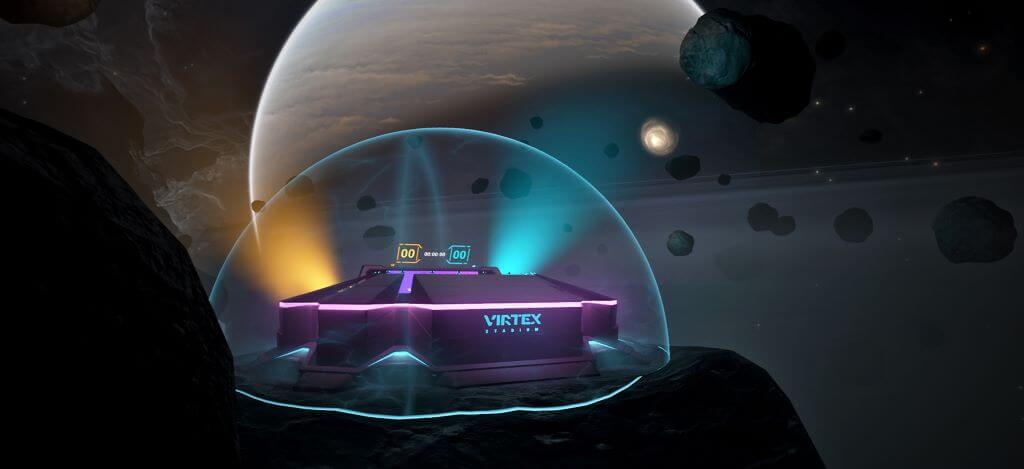
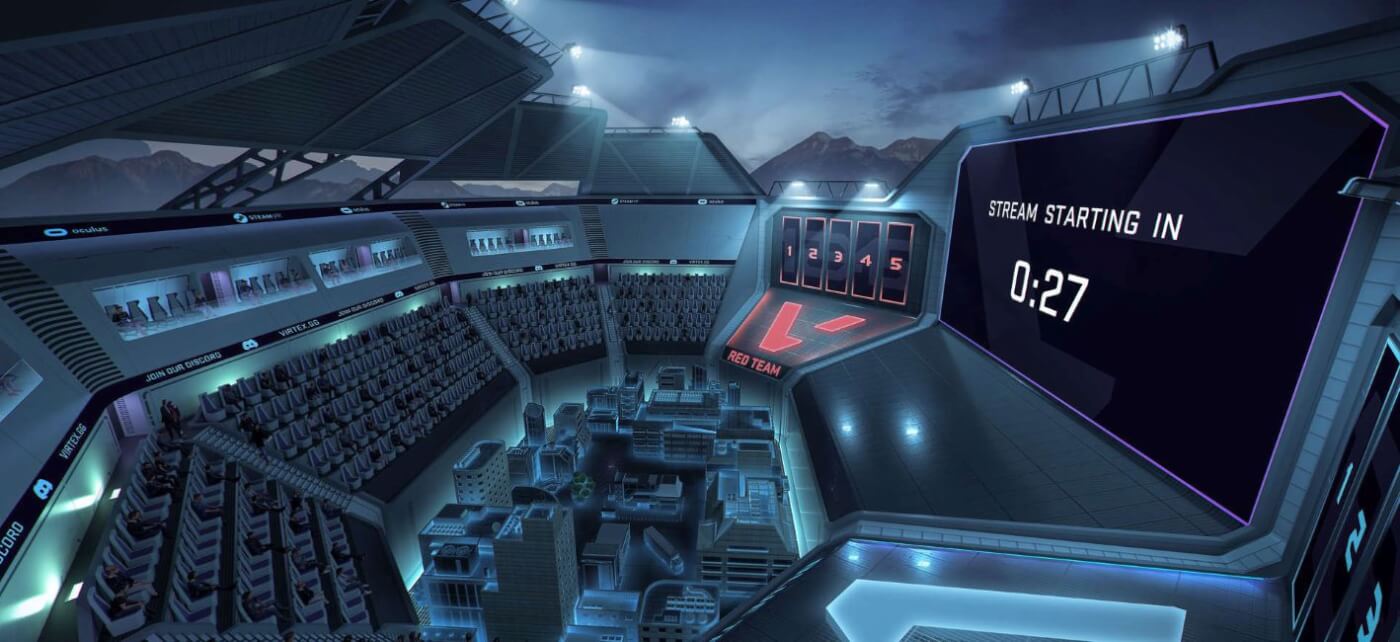
Right now, the Virtex virtual world consists of a stadium entrance, a lounge area, and a commentator booth in addition to the stadium itself.

“The purpose [of the entrance and lounge] is really to set the stage for the user, to welcome them,” said Ortlepp.

Virtex Stadium Environment - Exterior

In the lounge, users can socialize, modify their avatars (through a Ready Player Me integration), and even watch a miniaturized version of the live match. The lounge itself is still being developed with plans for mini-games and walls of fame. Connected areas including a virtual store and bar area are also in the works.

In the stadium itself, users can see and interact with other spectators. They can watch a 3D reproduction of the live game in real time, or watch a Twitch stream of the game on a jumbo screen above the stadium floor.

“We feature the video because we didn’t want to take away from esports viewers what they’re currently used to,” said Ortlepp. Virtex wants to give spectators options to explore viewing in new ways, without leaving them in an entirely unfamiliar setting.

A teleport system allows faster movement to different areas of the stadium, including the stadium floor to watch from within the game or even follow players through the action. This is possible thanks to the unique solution that Virtex has developed for recreating the game within the virtual stadium.

virtex stadium virtual reality stadium streaming

The studio also adds special recording and hosting tools like camera bots for streaming games within the stadium to Twitch and YouTube. Aspects of the stadium’s appearance can even be changed to match whatever game is being played.

“We are the platform. Ideally, we don’t ever want to be the content creators,” said Ortlepp. “So we have certain user modes for the ones that are actually operating the tournaments.”

When Can We Expect an App?

Virtex Stadium is up and running. But, the team plans to spend at least the next few months in their “closed” beta phase. For one thing, they really want to have their moderation plan in place before making the app more discoverable. They’re also still collecting feedback on their production tools – and thinking of new ones.

Further, while the platform currently has a decent schedule, the team wants to work with more games and more gaming communities. That includes other VR titles as well as more traditional esports. Ideally, one day, something will be happening in Virtex no matter when a user signs in.

“Where do we take it from here? There are no standards – no one has done this before,” said Ortlepp. “The virtual home of esports is basically the vision. It’s something we don’t claim yet – we have to earn it.”

It’s Not Too Early to Check It Out

Everything about Virtex is exciting, from their plans for the virtual venue itself, to their passion and concern for their community. Ortlepp said that the company is “careful about making dated timeline promises.” In a way that’s a little frustrating but it’s only because the company would rather hold off on something amazing than push something that falls short of their vision.

Virtex Stadium Holds First Major Events, Inches Toward Open Access Read More »
brcvr-presents-re-burn-23,-a-burning-man-inspired-event,-launches-“blind-burners-world”

BRCvr Presents Re-Burn-23, a Burning Man-Inspired Event, Launches “Blind Burners World”

BRCvr, the award-winning virtual version of Black Rock City, will present Re-Burn-23 this month. The global virtual Burning Man-inspired event can be accessed via Zoom and AltspaceVR. It will run from January 27 to January 29, 2023, and will include exciting additions to its lineup, such as the metaverse environment “Blind Burners World.”

What Is Re-Burn-23?

Re-Burn-23 is a three-day immersive virtual event that will bring together artists, technologists, Burners, the Burner-curious, and other creatives in a Burning Man-inspired event.

It will feature new additions, such as Blind Burners World, as well as popular immersive worlds from previous virtual burn events. “We are taking the principle of ‘Communal Effort’ to a whole new level, bringing technologies and artists together in a robust collaboration that integrates 360 video from the 2022 burn with 3D digital assets, continuing our efforts to bring a rich Burner experience to the globe,” said Athena Demos, co-founder of BRCvr, in a press release shared with ARPost.

Re-Burn-23 is organized by Big Rock Creative (BRC), an award-winning company that crafts unique XR experiences. Offered as a gift to enthusiasts, this virtual event will be free of charge for interested individuals.

The event can be accessed by a global audience via Zoom, for mobile and desktop devices, and AltspaceVR, for VR headsets, Macs, and PCs. The wide accessibility via VR and 2D is an effort to bring about radical inclusion. Re-Burn-23 will be the final virtual burn event that will be hosted on the Microsoft AltspaceVR platform, since the platform is, unfortunately, shutting down on March 10 this year.

Blind Burners World

Re-Burn-23 will feature many new additions, and one of them is Blind Burners World.

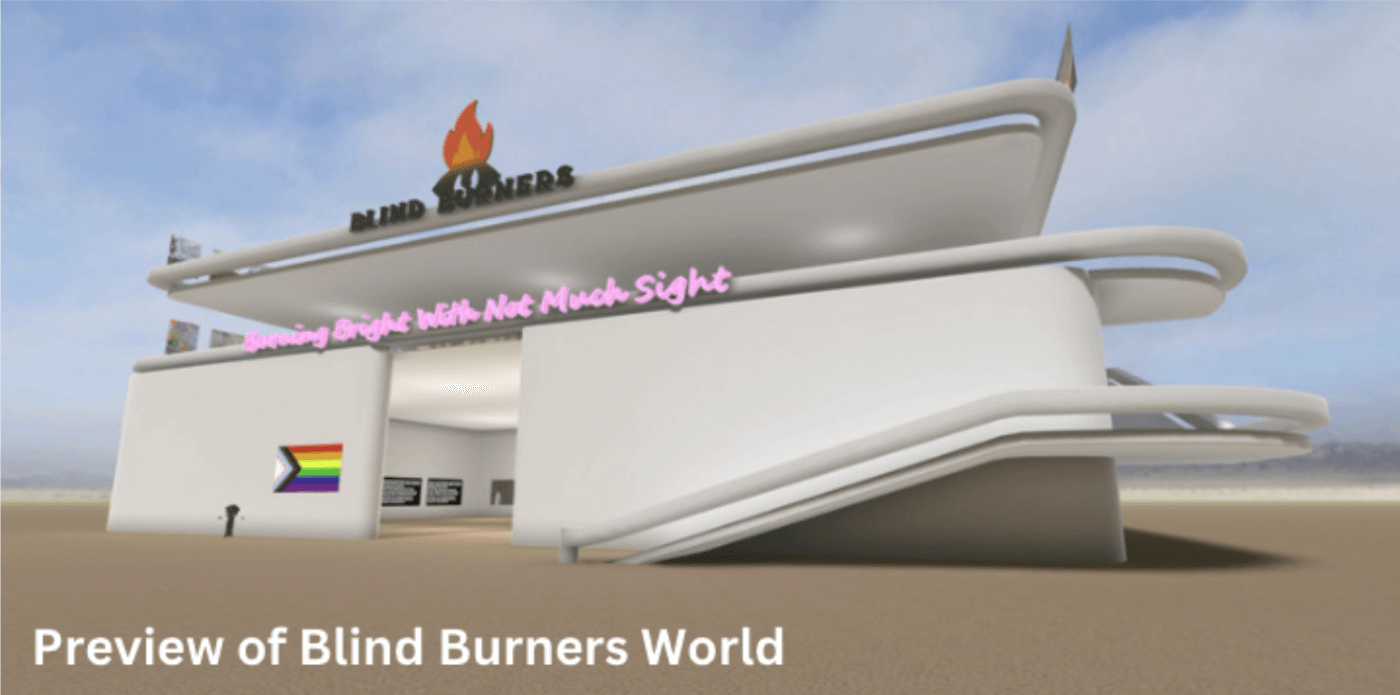
Blind Burners World is the first-ever immersive metaverse environment that will showcase works by artists with visual impairment. In partnership with Blind Burners – a community of blind, partially sighted, and sighted artists and performers – Blind Burners World is designed to be navigable by sound. It will feature a gallery showcasing art and photography by artists with blindness and low vision, a Temple of Accessibility, and a Galactic Sound Garden. Each artwork will come with an audio description made and recorded by the artist.

Preview of Blind Burners World - BRCvr - Re-Burn-23

“When Burning Man communities moved online in 2020, Athena and the team at BRCvr were the first to embrace our call for accessibility in the metaverse,” said Blind Burners founder, Chris Hainsworth. “Without accessibility, cultural claims to radical inclusion are as shallow as a teacup.”

BRCvr Immersive Documentary Experience

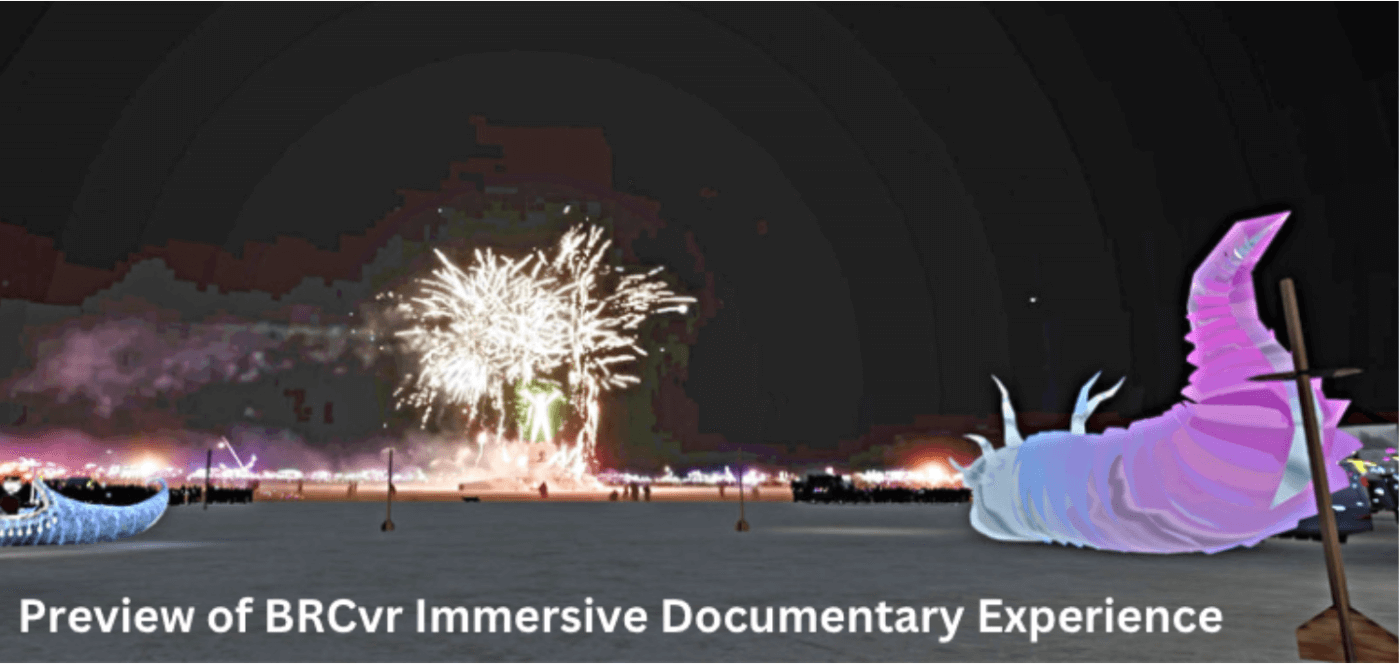
On Re-Burn-23, participants will have the opportunity to watch a preview of the BRCvr Immersive Documentary Experience. It will be presented in a format of mixed reality storytelling in an immersive documentary application. The preview will feature live-action content captured during the 2022 on-playa burn in Black Rock City and will allow participants to engage and share this new experience.

Preview of BRCvr Immersive Documentary Experience - BRCvr - Re-Burn-23

Re-Burn-23 will feature other events including Sovereign Light 2023, Daisy Shaw’s World Tour of Re-Burn-23, a content creator meet and greet, artist talks, and even a “Bad Movies and Pizza Party” event, where participants can enjoy watching bad movies while eating pizza.

BRCvr Presents Re-Burn-23, a Burning Man-Inspired Event, Launches “Blind Burners World” Read More »

ces-2023-highlights-featuring-news-and-innovations-from-canon,-micledi,-and-nvidia

CES 2023 Highlights Featuring News and Innovations From Canon, MICLEDI, and NVIDIA

CES is considered the world’s tech event, showcasing groundbreaking technologies and innovations from some of the world’s biggest brands, developers, manufacturers, and suppliers of consumer technology. At CES 2023, attendees saw the unveiling of the latest developments from over 3,200 exhibitors, including technology companies Canon, MICLEDI, and NVIDIA.

Canon Immersive Movie Experience and Immersive Calling Experience

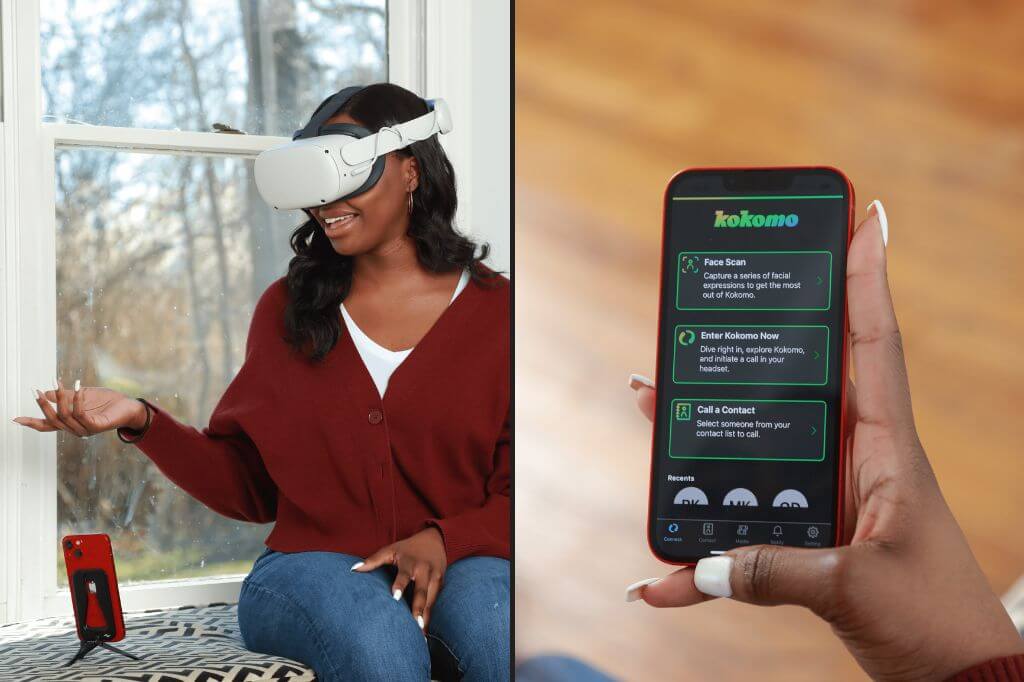
Canon USA has partnered with filmmaker and director M. Night Shyamalan (The Sixth Sense, The Village, and Signs) to create an immersive movie experience for CES 2023 attendees. Featuring M. Night Shyamalan’s upcoming film Knock at the Cabin (which will be in theaters February 3), Canon unveiled Kokomo, an immersive virtual reality software that leverages VR to give users an immersive calling experience.

Canon Kokomo - CES 2023
Kokomo

With Kokomo, users can now connect with their friends and family as if they’re there in person by using a compatible VR headset and smartphone. In a 3D call, Kokomo will emulate a photo-real environment and mirror the physical appearance of the user. CES 2023 participants were able to witness Kokomo in action at the Canon booth, where they were able to have a one-on-one Kokomo conversation with select characters from the movie Knock at the Cabin.

Aside from Kokomo, Canon also unveiled its Free Viewpoint Video System, which creates point-cloud-based 3D models for more immersive viewing experiences in larger areas like arenas and stadiums. At CES 2023, attendees were able to experience the Free Viewpoint System, which allowed them to watch an action scene from Knock at the Cabin from multiple viewpoints.

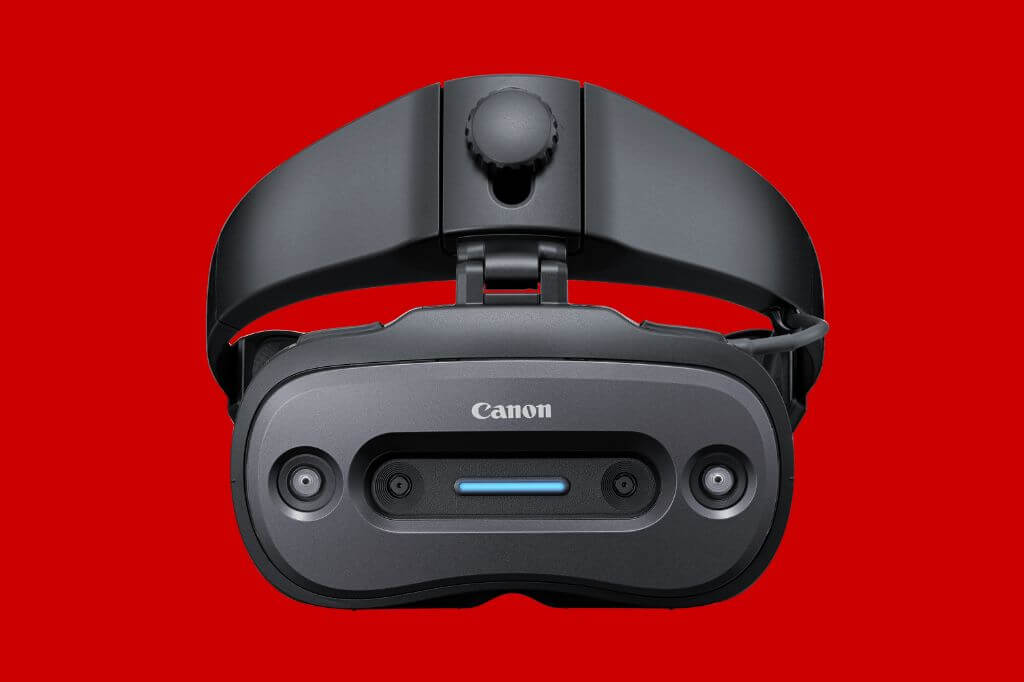
CES 2023 attendees also had the opportunity to see Canon’s mixed reality system MREAL in action, by experiencing a scene from Knock at the Cabin as if they were a character in the movie.

Canon MREAL X1 headset
MREAL X1

MICLEDI Demonstrates New Red µLEDs at CES 2023

MICLEDI Microdisplays, a technology company developing the microLED displays for the augmented reality market, also showcased its advancements in microLED display tech for AR glasses at CES 2023.

At the event, the company demonstrated its new red microLEDs on AllnGaP starting material. This development is in line with MICLEDI’s aim to create high-performance individual color-performing microLEDs that can be combined with the company’s full-color microLED display module.

Through MICLEDI’s innovations in microLED technology, users can begin to experience clearer and more precise digital images via AR glasses that are more portable and lightweight. The red AllnGaP microLEDs, along with MICLEDI’s three-panel full-color microLED display module, are poised to raise the standards of AR glasses in the coming years.

MICLEDI - Red GaN and Red AlInGaP microLED displays - CES 2023

“There is no one-size-fits-all solution for AR glasses,” said MICLEDI CEO, Sean Lord. “This achievement, with our previously announced blue, green, and red GaN µLEDs, opens the door to a broader offering of display module performance parameters which enables MICLEDI to serve customers developing AR glasses from medium to high resolution and medium to high brightness.”

Demonstration units of both Red GaN and Red AlInGaP were shown at the company’s booth at CES 2023.

NVIDIA Announces New Products and Innovations at CES 2023

NVIDIA announced new developments and NVIDIA Omniverse capabilities at CES 2023. The tech company, which is known for designing and building GPUs, unveiled its new GeForce RTX GPUs, which come with a host of new features that can be found in NVIDIA’s new studio laptops and GeForce RTX 4070 Ti graphics cards. This new series of portable laptops gives artists, creators, and gamers access to more powerful solutions and AI tools that will help them create 2D and 3D content faster.

NVIDIA also shared new developments to its Omniverse, including AI add-ons for Blender, access to new and free USD assets, and an update on the NVIDIA Canvas, which will be available for download in the future.

Aside from these updates, the company also released a major update to its Omniverse Enterprise, which enables users to access enhancements that will let them develop and operate more accurate virtual worlds. This major update is also set to expand the Omniverse’s capabilities through features such as new connectors, Omniverse Cloud, and Omniverse DeepSearch. More new partners are planning to use NVIDIA Omniverse to streamline their workflows and operations. These include Dentsu International, Zaha Hadid Architects, and Mercedes Benz.

NVIDIA Omniverse ACE - CES 2023
NVIDIA Omniverse ACE

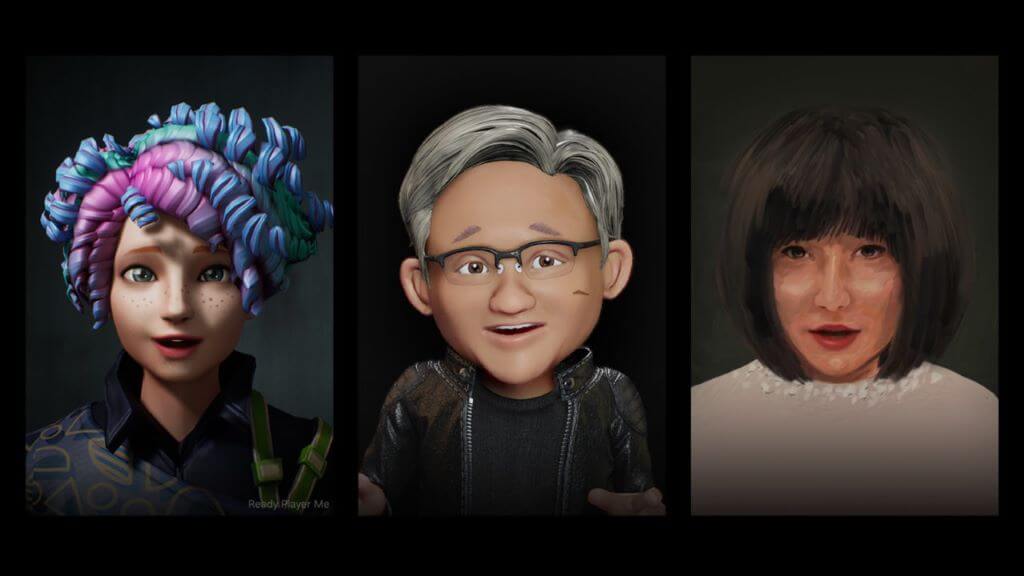
Moreover, this January, NVIDIA opened its early-access program for NVIDIA Omniverse Avatar Cloud Engine (ACE), allowing developers and teams to build interactive avatars and virtual assistants at scale.

Demos of VITURE One XR Glasses and Mobile Dock

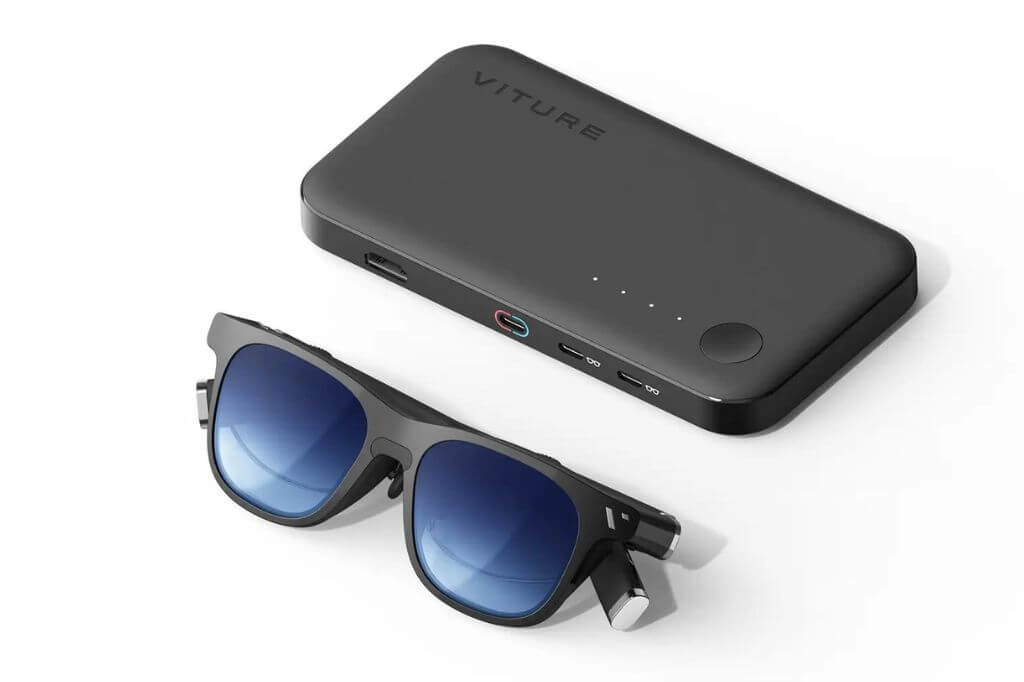
Aside from these established tech companies, VITURE, a new XR startup that received accolades from CES, TIME, and the Fast Company for its flagship product, the VITURE One XR glasses, also prepared something interesting for the CES 2023 attendees.

VITURE One XR glasses and Mobile Dock

The company made both their VITURE One XR glasses, compatible with Steam Deck, laptops, and PCs, and their Mobile Dock, which introduces co-op play and Nintendo Switch compatibility, available for testing.

CES 2023 Highlights Featuring News and Innovations From Canon, MICLEDI, and NVIDIA Read More »
new-holosuite-feature-enables-users-to-seamlessly-blend-volumetric-video-clips

New HoloSuite Feature Enables Users to Seamlessly Blend Volumetric Video Clips

Arcturus, volumetric video editing and streaming tools provider, has been at the forefront of virtual production, revolutionizing immersive content experiences across a vast range of verticals.

As part of its efforts to bring volumetric video to a wider audience, it prioritizes research and development of new tools that allow creators to fully harness the power of volumetric video. One of its latest releases is an innovative tool that aims to transform virtual production, XR storytelling, and metaverse experiences on HoloSuite.

Blend: Connecting Volumetric Video Clips With Seamless Transitions

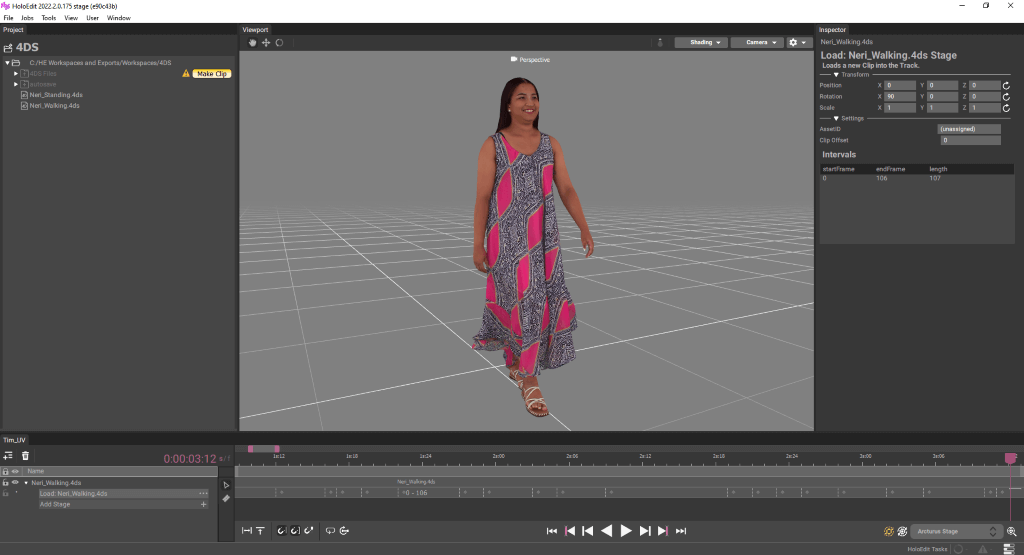
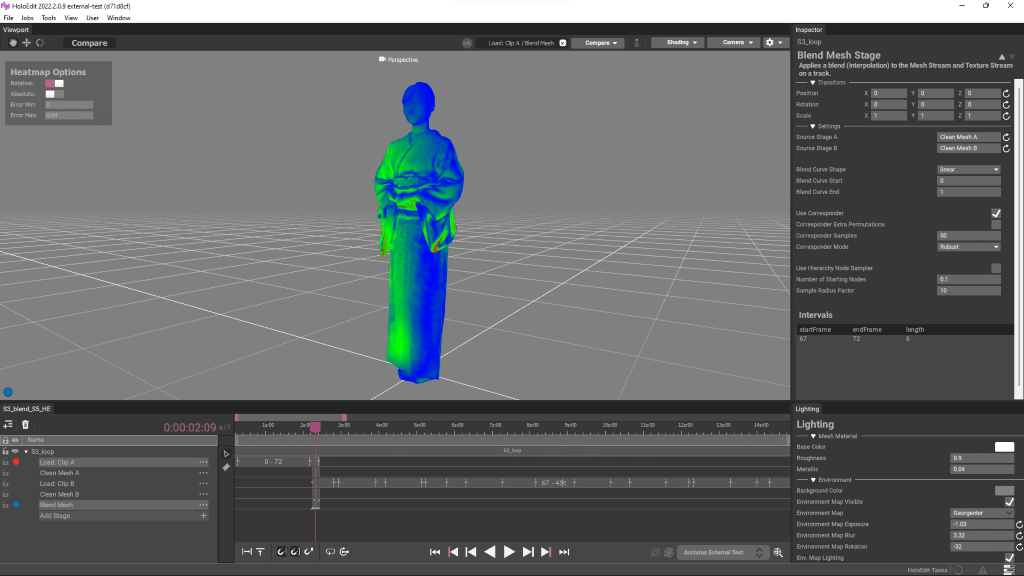
Arcturus recently unveiled a new beta tool that further amplifies the capabilities of HoloSuite, its flagship platform for volumetric video. The “Blend” tool, a product of years of research and development by the Arcturus team, gives users a unique way to explore new forms of digital storytelling, build immersive experiences, develop metaverse content, and more.

Arcturus - Beta feature Blend volumetric video

With Blend, users can connect volumetric video clips and blend them seamlessly. Creators can now take live-action clips, use volumetric video characters to populate virtual backgrounds, and build branching narratives with imperceptible transitions between tracks.

With the new tool, creators of metaverse experiences can use people instead of computer-generated avatars in their content. They can insert blended volumetric video clips of live-action 3D performances into digital environments without having to create digidoubles. Blend also allows users to blend and loop multiple recordings of a photorealistic subject.

“Volumetric video isn’t just offering content creators new ways to do old things better; with the right tools, it offers possibilities that simply weren’t there before,” said CEO of Arcturus, Kamal Mistry, in a press release shared with ARPost. “Our new tools will open up a huge range of potential uses across multiple industries, and soon we will begin to see content unlike anything that’s ever been seen before.”

The Arcturus team designed and developed the Blend tool to meet the emerging demands of volumetric video users. While still in beta, all current HoloSuite users have access to the tool and can provide their feedback to help improve its capabilities.

With the beta testing running over the next few months, the team can fine-tune functionalities and ensure compatibility and stability before the tool becomes a standard feature on the platform.

More HoloSuite Updates From Arcturus

The Blend tool is just one of the several updates released for HoloSuite last month. Along with it, Arcturus also released a host of quality-of-life improvements and upgrades that open a wider range of potential uses for HoloSuite across multiple industries.

Unity users can now enjoy improved OMS playback with their HoloSuite plugins. This provides them with better viewing controls for volumetric video files within Unity. Support for upgrades for OMS playback on Unreal Engine 5 is expected to roll out soon.

Game engine users can now also use “Generate Normals” to smoothen noise for better relighting on volumetric subjects. For more dynamic viewing, HoloSuite added new lighting preferences that include adding environmental lighting directly within HoloEdit. The new native 4DS file support also allows users to import data directly from 4DViews.

New feature Arcturus HoloSuite 4DS import

Framing the Future of Video

Arcturus is committed to giving content creators the tools they need to create authentic digital human representations and immersive experiences. To further advance technology in this field, it has announced a new $11 million round of Series A funding in November 2022.  The funding, led by CloudTree Ventures with substantial investments from Epic Games and Autodesk, signifies confidence in the vast potential of volumetric video.

The new funding will help Arcturus grow its infrastructure and continue developing the HoloSuite platform. It will help expand research into new tools that further the use of AI in volumetric video production, improve 3D data capture, and enhance live streaming on digital platforms among many others.

Just like the Blend tool, more tools and techniques are bound to revolutionize the way users create and interact with digital content. As it unlocks new possibilities for virtual production through state-of-the-art 3D creation tools, Arcturus is framing the future of video.

New HoloSuite Feature Enables Users to Seamlessly Blend Volumetric Video Clips Read More »