
tariff refunds

nintendo-sues-to-prevent-trump-from-dodging-full-tariff-refunds

Nintendo sues to prevent Trump from dodging full tariff refunds


Nintendo may face pressure to share refunds with gamers who helped pay tariffs.

Last Friday, Nintendo joined thousands of companies suing the Trump administration to secure full refunds, plus interest, for billions in unlawful tariffs collected under the International Emergency Economic Powers Act (IEEPA).

In its complaint, Nintendo insisted that the Trump administration has already conceded that more than $200 billion in refunds are owed to hundreds of thousands of importers who paid tariffs, regardless of liquidation status.

However, Nintendo fears that the Trump administration may try to avoid paying refunds to certain companies whose tariff payments have already been liquidated, which means that the duties owed were finalized. The government has continually argued that it will only follow through on refunding all importers if a court directly orders refunds to be repaid in a way that requires reliquidation. Such an order would force officials to void all finalized tariffs and come as a relief to many companies in Nintendo’s position that remain uncertain if all their tariff payments can be clawed back.

Ultimately, Nintendo argued, it increasingly seems like the government plans to delay refunds until the court steps in. That leaves it up to the Court of International Trade to order Trump officials to do the right thing, Nintendo said. And in the gaming giant’s view, that’s to proceed with prompt refunds to make all importers whole.

As Nintendo explained, the company regularly imports goods and paid unlawful tariffs throughout 2025. Notably absent in Nintendo’s complaint was the amount of tariffs the company wants refunded. However, Nintendo seemingly has a lot of liquidated duties at stake. The company argued that without a ruling barring the government “from arguing that liquidation prevents the Court from ordering refunds,” the company will “suffer imminent irreparable harm.”

“All liquidated entries including IEEPA Duties must be reliquidated,” Nintendo argued. “This Court has the authority to reliquidate entries subject to the IEEPA duties.”

According to Nintendo, the Trump administration has no plans to oppose such a court order, and all that’s needed is the rubber stamp.

The company asked the court to order prompt refunds for all companies that were harmed by Trump’s unlawful key trade policy. To ensure that tariff refund delay chaos doesn’t worsen as courts weigh the right path forward, Nintendo also wants the court to block officials from continuing to liquidate tariff payments and to order the reliquidation of any liquidated entries.

Gamers may want Nintendo to share refunds

Nintendo of America declined to comment on whether the company has estimated the total tariff refund owed or to share any public financial documents that estimate total tariffs paid, so it’s hard to know exactly how big the company’s refund could be.

“We can confirm that we filed a request,” Nintendo of America said, regarding the lawsuit. “We have nothing else to share on this topic.”

It’s possible that Nintendo is uncomfortable sharing an estimate for its tariff refunds publicly, because the company has gotten some backlash over both ordinary and tariff-related price increases in the past year. Sharing an estimate of tariff refunds owed could risk reviving the backlash from customers, who may push for Nintendo to find a way to pass partial refunds on to customers who helped pay the tariffs.

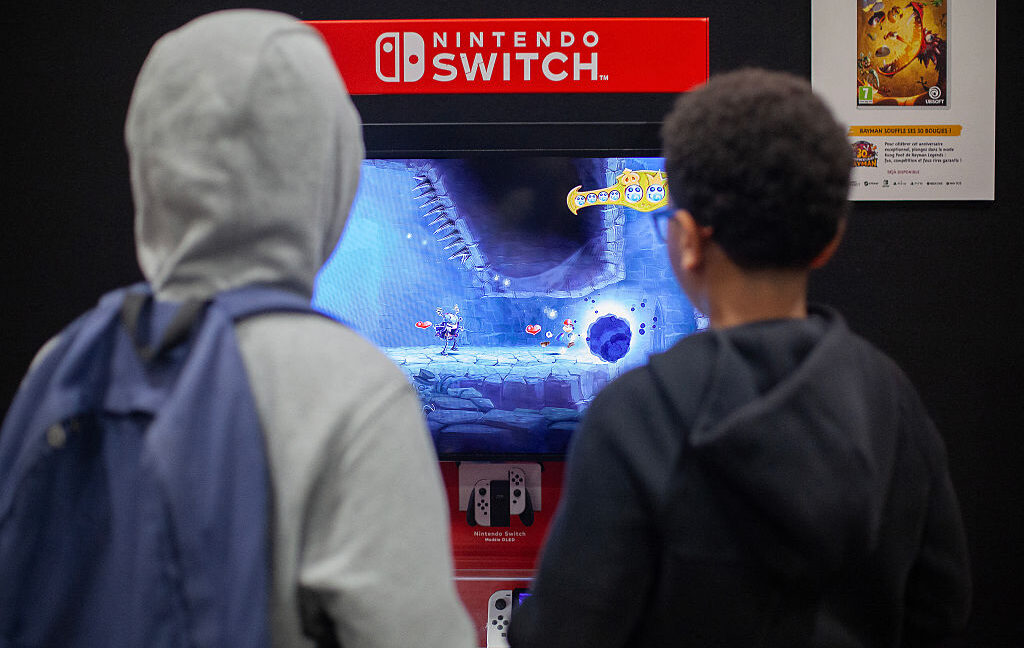
For Nintendo, Trump’s IEEPA tariffs had particularly terrible timing. They took effect last April, just as Nintendo was gearing up to release the Switch 2. The sudden tariffs caused delays for preorders, but the console launched as planned, as Nintendo refused to let tariffs disrupt the official rollout.

For gamers, the Switch 2 already had a higher price tag than expected, at $450. Lashing out over the sticker shock, a swarm of disgruntled online protesters urged Nintendo to “drop the price.”

There was speculation that the price hike was linked to tariffs. But Nintendo of America President Doug Bowser told The Verge that the jump from the Switch’s debut price of $300 was not directly due to tariffs. Instead, it seemed that Nintendo had joined other game companies in raising console prices to historic highs, an Ars review found. But Bowser acknowledged that Trump’s IEEPA tariffs were still “fresh” at that moment, telling The Verge that, “like many companies right now,” Nintendo was “actively assessing what the impact may be.” Understandably, gamers braced for more price increases.

It only took a month before Nintendo President Shuntaro Furukawa foreshadowed tariff-linked price increases, a game industry news site closely monitoring Nintendo’s tariff moves reported. In May, Furukawa conceded that software wasn’t as impacted, but “hardware involves special factors such as tariffs,” which Nintendo must take into account, “while conducting careful and repeated deliberations when determining price.”

However, Furukawa said that the overall calculus for Nintendo weighed against increasing the Switch 2 price even more to cover tariffs, because seemingly Nintendo feared a higher price point would rob Switch 2 of sales and its games of exposure. As he explained:

Our basic policy is that for any country or region, if tariffs are imposed, we recognize them as part of the cost and incorporate them into the price. However, this year marks our first new dedicated video game system launch in eight years, so given our unique situation, our priority is to maintain the momentum of our platforms, which is extremely important for our dedicated video game platform business. Consequently, if the assumptions on tariffs change, we will consider what kind of price adjustments would be appropriate, taking into account various factors such as the market conditions.

By August, the Switch 2 price remained stable, but Nintendo had increased prices on the original Switch, as well as Switch 2 accessories, citing “market conditions.”

And it wasn’t just Nintendo forced to make adjustments that riled its fans, suggesting that many major players in the gaming industry may face demands from frustrated consumers to share refunds.

Nintendo may get creative to avoid backlash

Early on during Trump’s IEEPA tariff regime—which randomly raised and decreased tariffs on products from all major US trading partners—the Entertainment Software Association warned that the entire game industry could be harmed by unchecked tariffs.

And the Consumer Technology Association (CTA), which has long opposed IEEPA tariffs, forecasted before Trump took office that his tariff threats risked harming consumers by immediately increasing game console prices by 25 percent.

That forecast only got darker as 2025 dragged on. In May, when China and Trump were still embroiled in tit-for-tat retaliations, and China appeared to have the upper hand, CTA warned that an estimate showed only 1 percent of game consoles are produced in the US. If IEEPA tariffs weren’t changed to exempt consoles from tariffs, consoles could soon cost more than $1,000 on average, up by about 69 percent, CTA estimated.

It remains unclear how much Nintendo and other gaming companies paid in tariffs or how much their customers paid in tariff-related price increases, and for the latter at least, it will likely stay that way. No courts are currently weighing whether customers who helped importers pay for tariffs should get refunds, too.

A technology, media, and telecommunications leader for PwC, which advises big firms on tax questions, Dallas Dolen, told Ars that most companies are laser-focused right now on securing refunds. However, once they have that money, some companies that are worried about reputational harm may come up with “creative” ways to reimburse customers, such as offering discounts.

Ed Brzytwa, CTA’s vice president of international trade, told Ars that it was obvious that consumer backlash to price increases was one of the biggest tariff burdens for consumer tech firms like gaming companies.

“The main point that we’ve made over and over and over again is that this impacts consumers in the form of potentially higher costs for products,” Brzytwa told Ars.

Last month, libertarian think tank the Cato Institute published calculations showing that “tariff costs have generally been borne by US-based companies and consumers.”

“Americans are bearing most of the tariffs’ economic burden, including through higher retail prices,” the Cato Institute reported. In a chart tracking analysis that included measuring costs passed on to consumers, they cited a Goldman Sachs study that predicted by the end of 2025 that the amount of the “tariff burden” borne by consumers “would shift to 55 percent.” The most recent analysis cited, a Yale Budget Lab study, found that costs of tariffs passed on to companies and consumers increased over time.

There’s no telling yet whether any companies that passed on tariff costs will pass on relief to consumers or if it will simply help them keep prices stable as new tariffs come.

For Nintendo and other consumer tech companies, refunds may provide a reprieve but don’t actually provide relief from tariff hell, experts agreed. As Trump looks to replace struck-down IEEPA tariffs with tariffs that could shake up supply chains further by targeting semiconductors or other currently exempt tech products or materials, Dolen told Ars that tech companies “don’t feel better that there might be some, quote, win here because the supply chain still feels overwhelming.” That could mean that the best Americans can hope for is that prices don’t increase more as Trump tries to keep his tariff regime alive.

One glimmer of hope for American consumers—who largely oppose Trump’s tariffs across the board and are already frustrated to be missing out on tariff refunds—is that Trump is likely very well aware that threats of additional tariff-related price increases will likely not be tolerated ahead of the midterm elections, experts suggested.

Photo of Ashley Belanger

Ashley is a senior policy reporter for Ars Technica, dedicated to tracking social impacts of emerging policies and new technologies. She is a Chicago-based journalist with 20 years of experience.

Nintendo sues to prevent Trump from dodging full tariff refunds Read More »
tech-industry-is-in-tariff-hell,-even-if-refunds-are-automated

Tech industry is in tariff hell, even if refunds are automated


Trade groups urge court to create a simple blueprint for tariff refunds.

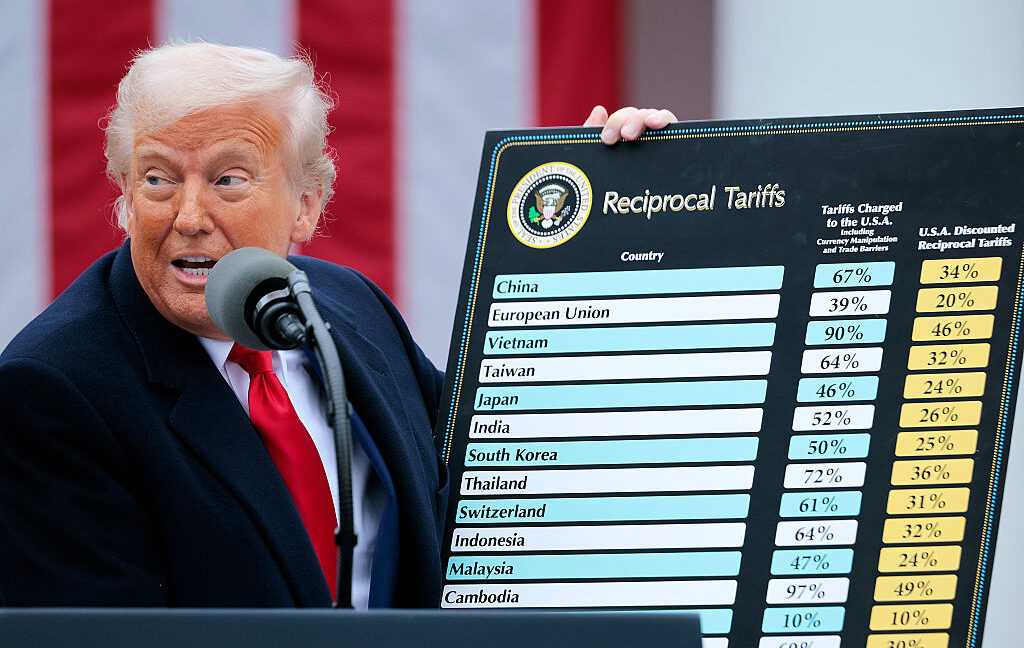
It has been two weeks since the Supreme Court blocked Donald Trump’s emergency tariffs, but an estimated 300,000 US businesses still have no idea if or when they will receive refunds.

Economists have estimated that more than $175 billion was unlawfully collected, and the US could end up owing substantially more than that the longer the refund process is dragged out, since the US must pay back daily interest on the funds. According to the Cato Institute, a libertarian think tank, a conservative estimate showed that “$700 million in interest is added to the final bill every month that the government delays tariff refunds, or around $23 million per day.”

The US is aware that interest is compounding daily on tariffs, as the Trump administration argued against an injunction that would have temporarily blocked the tariffs much sooner by noting that no one would be harmed, since tariffs would be repaid with interest if deemed unlawful. However, now that the court has ruled against tariffs, the Trump administration seems to be dragging its feet in finding a way to return all the ill-gotten funds.

Ed Brzytwa, vice president of international trade for the Consumer Technology Association (CTA), told Ars that delays seem counter to US interests at this point.

“The government should have an intrinsic interest in providing these new funds as fast as possible, so they don’t owe more interest over time,” Brzytwa said. Providing refunds sooner, he suggested, would be a benefit not only to companies, but also “to their employees, to the US economy, to US consumers, all the above.”

For the tech industry, many popular products have been spared hundreds of billions in tariffs since Trump took office, but, as the CTA documented in repeated court filings, many more products were hit by them. Ahead of midterms, when analysts predict that tariff whipsawing might slow down, tech firms remain uncertain about when to expect refunds, experts told Ars. At a time when firms already feel overwhelmed, they’re also navigating new tariffs that are raising new legal challenges, while risking more supply chain strains as additional threats of tariff-stacking loom.

Refunds should be automated, CTA argued

Pressure is increasing on Trump to deliver refunds faster, however, after US Court of International Trade Judge Richard Eaton ordered universal refunds for all importers who paid Trump’s emergency tariffs on Wednesday. At a hearing that day, Eaton noted that Customs knows how to issue refunds, later ordering that all claims be efficiently resolved, CNBC reported.

Officials from Customs and Border Protection (CBP) are expected to share an update on their proposed refund plans at a hearing Friday in that case, raised by Atmus Filtration, which reportedly paid about $11 million in unlawful tariffs.

In the meantime, the CTA and the Chamber of Commerce (CoC) filed a motion to submit a proposed brief in another tariffs lawsuit outlining what the trade groups believe is the best strategy for handling refunds.

That lawsuit, raised by V.O.S. Selections, is being overseen by a different Court of International Trade judge, Gary Katzmann. The groups are hoping that he may agree with Eaton, who noted at the Wednesday hearing that “the agency should be able to program its system to issue refunds,” CNBC reported. The trade groups’ proposed brief emphasized that “in fact, CBP has already issued refunds for some of those tariffs because they were retroactively reduced by a subsequent trade agreement.”

According to the trade groups, the US government has the technology to streamline—and possibly even automate—tariff refunds.

“They have the technology to do it,” Brzytwa said. “They offer refunds to importers all the time.”

But apparently, the Trump administration so far lacks the will to use it, instead planning to wait for court direction before taking any steps to send the funds back. So now the court must intervene to draft a blueprint that all businesses can use to secure a quick and easy refund, the groups said.

“There is no question that American businesses are now entitled to the return of the billions of dollars they were forced to pay under these unlawful tariffs,” the groups wrote. “The law is clear on that point, and the government has repeatedly stated that it would issue refunds if the tariffs were ultimately deemed invalid.”

If the court requires each business to either litigate their claims or go through “impractical” CBP administrative procedures to request refunds, either the courts or CBP will be overwhelmed, the groups argued. Dealing with the backlog could drag out refunds for years, while the interest accrues and the most vulnerable businesses risk being forced to shut down, they argued.

For many small firms with tight profit margins, the emergency tariffs “have already stretched their resources to the breaking point,” groups wrote.

“Those are the types of companies that need to be prioritized in a refund plan,” Brzytwa said. He suggested the court should require officials to take steps “to help the companies that barely are making it at this point because they paid such steep amounts in tariffs.”

Perhaps even more concerning to the court, for any firms that end up negatively weighing the costs of a lengthy legal battle with the government against likely much smaller tariff refunds, some claims may be abandoned. That would, troublingly, leave taxes collected unlawfully under the International Emergency Economic Powers Act (IEEPA) in the Trump administration’s hands, groups warned.

“There is no need to individually litigate whether particular IEEPA duties were valid—they are all invalid,” the groups wrote. Instead, groups urged the court to “craft an injunction facilitating a streamlined administrative process for plaintiffs in this case to use in obtaining their refunds.” That same process could become “a blueprint for other importers to secure refunds,” they suggested.

Possibly, a “commonsense” court-ordered solution could be easily created to streamline refunds, groups proposed.

“Because the government has tracked the payment of IEEPA tariff duties, it knows who paid them and in what amounts, even without refund-seeking submissions from the affected importers,” the groups said. Later on, they added, “this efficiency is important not only to reduce strain on courts and the government, but to ensure that refunds issue on a defined and predictable timeline. Delay should not become a de facto denial of recovery for importers who paid unlawful tariffs and wish to seek appropriate relief.”

Dallas Dolen—a technology, media, and telecommunications leader for PwC, a leading global professional services network that advises big firms on tax questions—told Ars that he’s also worried that tariff refund fights will drag on for years without a court-ordered pathway to expedite them.

Until courts clarify how the refund process will work, he said that PwC continues to advise companies to “be really organized, be really prepared.” Every business impacted should stop now to assess what tariffs they expect they’re owed and possibly hire staff to ensure they’re prepared to secure a refund when processes are created, PwC advised. That level of preparedness may be critical, since “it’s unlikely the government will write them two checks,” Dolen said.

It may be time for Trump to rethink tariffs

Dolen suggested that consumer technology might be the sector of the tech industry most hurt by tariffs, and even if refunds are automated, alternative tariffs that Trump is threatening to impose could change the calculus on refunds.

According to Dolen, some businesses required to pay new tariffs under Section 122 of the Trade Act of 1974 may instead get a gross refund, possibly subtracting Trump’s latest 10 percent global tariffs from the total of IEEPA tariffs owed.

Perhaps complicating the math further, those new tariffs could increase before refunds are issued. Just yesterday, Treasury Secretary Scott Bessent said that Section 122 tariffs could be raised by another 15 percent this week, The New York Times reported. And over the next five months, the tech industry could be paying tariffs at the same levels as under Trump’s IEEPA tariffs, Bessent has claimed.

However, Trump’s tariffs remain hugely unpopular, even with Republicans. Both experts agreed that Trump will likely be more thoughtful about tariffs ahead of the midterms. And since he’s unlikely to get much support from Congress members focused on reelection, any changes will likely come by executive order. Dolen suggested that Trump’s concerns about inflation from tariffs may make him less willing to impose them.

“Restraint’s probably not the perfect word,” but the president may start exhibiting “a little more contemplation and thoughtfulness,” Dolen suggested.

Brzytwa told Ars that the CTA is also hoping that the back-to-back court rulings might push Trump to rethink his aggressive tariff strategy—especially given that his goals of increasing US manufacturing are not being achieved by them.

“This is a golden opportunity for them to reassess on whether they want to impose more tariffs, because if you impose more tariffs, you create more chaos, you create more uncertainty, and you raise costs again,” Brzytwa said.

Another wrinkle is that the Supreme Court ruling has emboldened critics of Trump’s tariffs. Although Trump and Bessent have postured that the Supreme Court ruling is meaningless, since they have other tariff avenues to explore, those will not replace his prior IEEPA tariffs, Brzytwa said. And the administration already is facing legal pressure that could gut the Section 122 authority to impose tariffs, after 20 states sued Trump to block his next go-to tariff tool.

But Trump seems unlikely to give up tariffs as a source of leverage in negotiations with all of America’s trading partners, and sometimes even in negotiations with US companies. And even if Section 122 tariffs are one day blocked, just as IEEPA tariffs were, Brzytwa told Ars that CTA is “very closely” monitoring additional tariffs that could be imposed under Section 232 of the Trade Expansion Act and Section 301 of the Trade Act of 1974. Those could hit products like semiconductors or critical minerals, as well as any downstream products containing them, perhaps further hurting cash-strapped tech firms stuck feeling fuzzy about what costs or supply chain disruption may come in the near future.

Photo of Ashley Belanger

Ashley is a senior policy reporter for Ars Technica, dedicated to tracking social impacts of emerging policies and new technologies. She is a Chicago-based journalist with 20 years of experience.

Tech industry is in tariff hell, even if refunds are automated Read More »