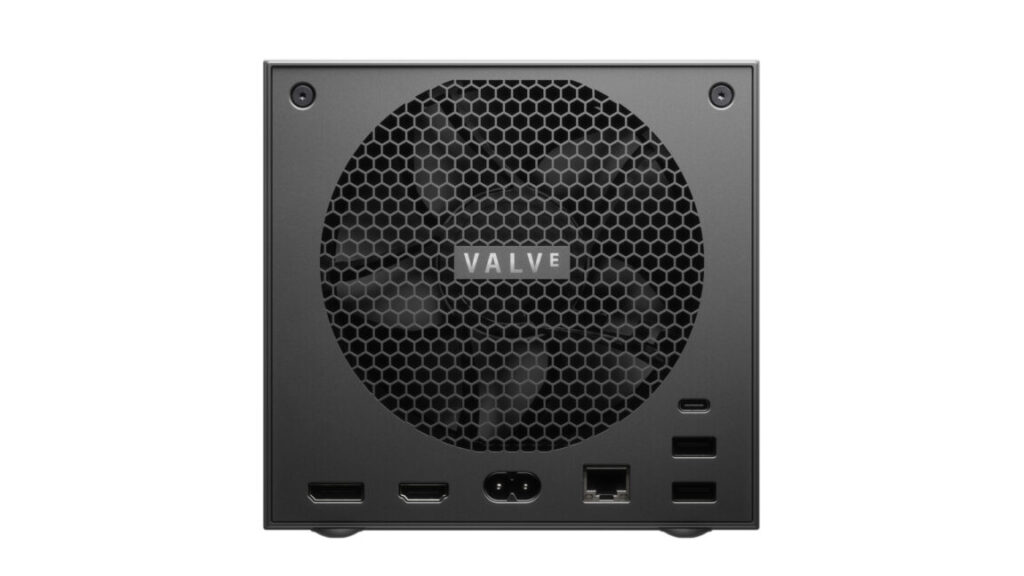
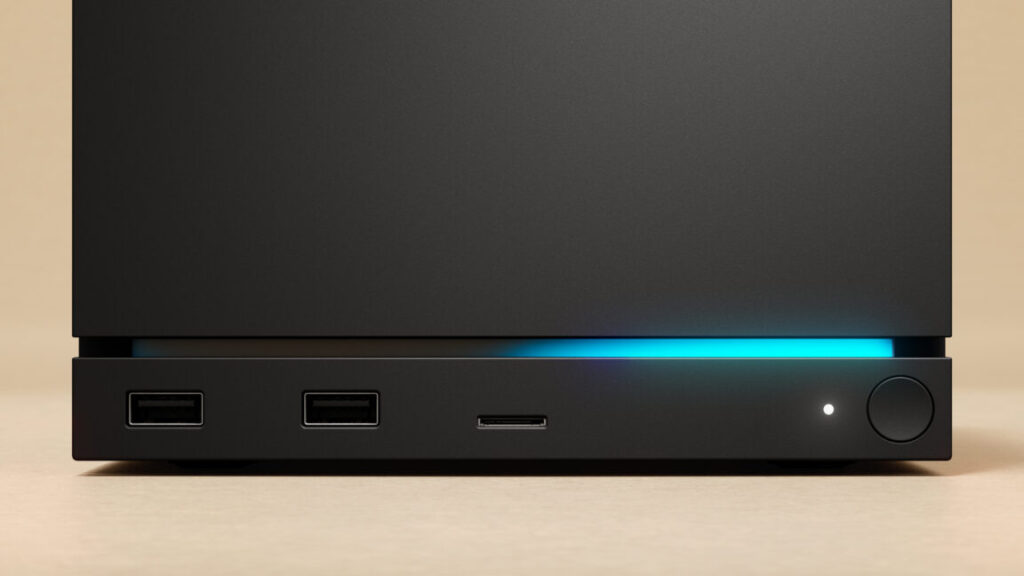
After Valve announced its upcoming Steam Machine living room box earlier this month, some analysts suggested to Ars that Valve could and should aggressively subsidize that hardware with “loss leader” pricing that leads to more revenue from improved Steam software sales. In a new interview with YouTube channel Skill Up, though, Valve’s Pierre-Loup Griffais ruled out that kind of console-style pricing model, saying that the Steam Machine will be “more in line with what you might expect from the current PC market.”
Griffais said the AMD Zen 4 CPU and RDNA3 GPU in the Steam Machine were designed to outperform the bottom 70 percent of machines that opt-in to Valve’s regular hardware survey. And Steam Machine owners should expect to pay roughly what they would for desktop hardware with similar specs, he added.
“If you build a PC from parts and get to basically the same level of performance, that’s the general price window that we aim to be at,” Griffais said.
The new comments follow similar sentiments relayed by Linus Sebastian on a recent episode of his WAN Show podcast. Sebastian said that, when talking to Valve representatives at a preview event, he suggested that a heavily subsidized price point would make the Steam Machine hardware into “a more meaningful product.” But when he suggested that he was imagining a console-style price in the range of $500, “nobody said anything, but the energy of the room wasn’t great.”
Forget about $500
Based on these comments, we could start estimating a potential Steam Machine price range by speccing out a comparable desktop machine. That would likely require building around a Ryzen 5 7600X CPU and Radeon RX 7600 GPU, which would probably push the overall build into the $700-plus range. That would make the Steam Machine competitive with the pricey PS5 Pro, even though some estimates price out the actual internal Steam Machine components in the $400 to $500 range.
If you ask random gamers what price they think Valve will charge for its newly announced Steam Machine hardware, you’ll get a wide range of guesses. But if you ask the analysts who follow the game industry for a living the same question… well, you’ll actually get the same wide range of (somewhat better-informed) guesses.
At the high end of those guesses are analysts like F-Squared‘s Michael Futter, who expects a starting price of $799 to $899 for the entry-level 512GB Steam Machine and a whopping $1,000 to $1,100 for the 2TB version. With internal specs that Futter says “will rival a PS5 and maybe even hit PS5 Pro performance,” we can expect a “hefty price tag” from Valve’s new console-like effort. At the same time, since Valve is “positioning this as a dedicated, powerful gaming PC… I suspect that the price will be below a similarly capable traditional desktop,” Futter said.
DFC Intelligence analyst David Cole similarly expects the Steam Machine to start at a price “around $800” and go up to “around $1,000” for the 2TB model. Cole said he expects Valve will seek “very low margins” or even break-even pricing on the hardware itself, which he said would probably lead to pricing “below a gaming PC but slightly above a high-end console.”
A loss leader?
At the other end of the spectrum, Superdata Research founder and SuperJoost newsletter author Joost Van Dreunen predicted the entry-level Steam Machine could come in as low as $549, rising to $749 for the 2TB version (plus an additional $50 for bundles including a Steam Controller).
To Van Dreunen, Valve’s unique position as a private company with a loyal fan base means it can “price its hardware to hit its own strategic sweet spot rather than mirror the competition.” And in this case, he said, that could mean taking a “modest” loss on the hardware as a way to get more gamers invested in SteamOS.
Getting people to buy more games on SteamOS could be worth a lot more to Valve than any Steam Machine hardware profits.
Credit: Valve
Getting people to buy more games on SteamOS could be worth a lot more to Valve than any Steam Machine hardware profits. Credit: Valve
“Just like Sony and Microsoft, the real money isn’t in the box, it’s in the ecosystem you enter once you buy it,” Van Dreunen said. “To me the question isn’t whether Valve can afford to eat margin. It’s whether they want the SteamOS footprint to grow fast enough to justify it. … Strategically, this is about expanding the platform, not squeezing the hardware.”
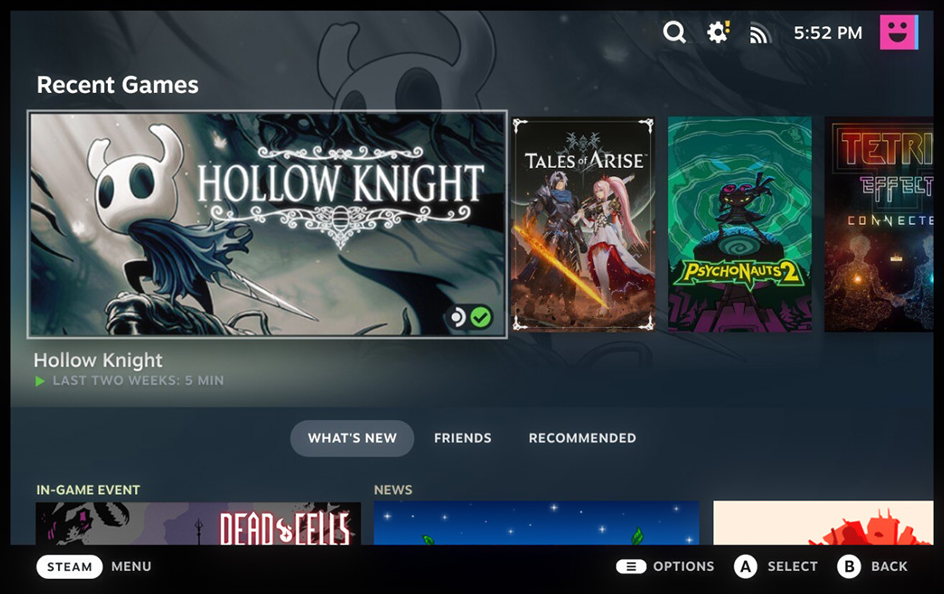
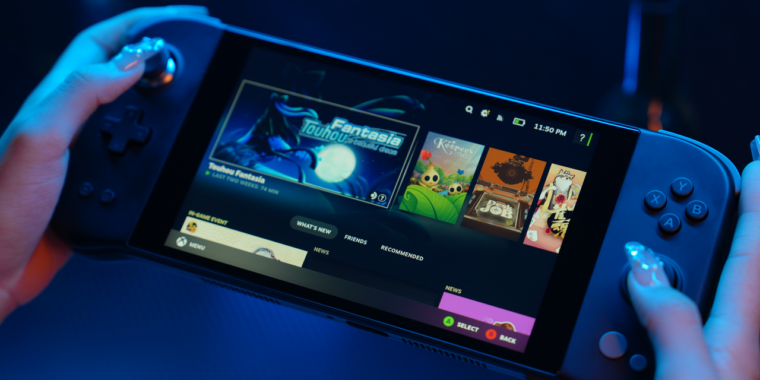
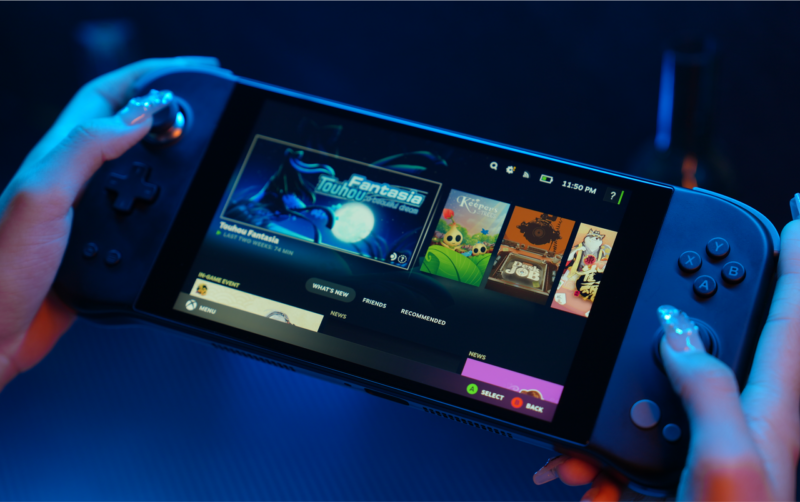
Enlarge/ Yes, that is SteamOS. No, that is not a Steam Deck.
Since the successful launch of the Steam Deck nearly two years ago, we’ve seen plenty of would-becompetitors that have tried to mimic the Deck’s portable form factor and ability to run PC games. Thus far, though, these competitors have all been missing one of the Steam Deck’s best features: integration with the increasingly robust, Linux-based SteamOS 3.
That’s finally set to change with the just-announced Ayaneo Next Lite, the first non-Valve portable hardware set to come with SteamOS pre-installed. We can only hope this is the start of a trend, as Valve’s gaming-focused operating system brings many advantages over gaming portables (and maybe desktops) that run a full Windows installation.
A bespoke, portable gaming OS
Ayaneo’s announcement highlights a few vague-ish features of the Next Lite, including a 7-inch 800p screen, a 47 Wh battery, and drift-resistant hall-effect joysticks. But even though the announcement doesn’t include a specific asking price, Ayaneo promises that the device “integrates outstanding cost-effectiveness” and will be “the all-new cost-effective choice with flagship experiences.”
That ad copy highlights one of the main advantages a SteamOS-based gaming portable brings over one sporting Windows: cost. Sure, OEMs are likely paying much less than the $139 consumer asking price for a copy of Windows 11. Still, even a $70-per-unit bulk license would represent a good 10 percent of the ASUS ROG Ally’s $700 asking price (and an even bigger chunk of the price difference between the Ally and the Steam Deck). In an increasingly competitive portable PC gaming market, being able to cut out that significant cost over Windows-based alternatives could be a big deal.
Enlarge/ Look how happy not paying for a Windows license has made these gamers.
Then there’s the interface. Modern Windows is designed with a desktop/laptop or tablet form factor in mind. That UI definitely leaves something to be desired when forced into a 7- or 8-inch touchscreen that lacks a keyboard and mouse. Our review of the ROG Ally highlights just how annoying it can be to have to fiddle with Windows settings on a touchscreen running “an awkwardly scaled” version of the OS. And while Microsoft has experimented with a handheld-friendly version of Windows meant for portable gaming devices, nothing public has yet come of the effort.
SteamOS 3, on the other hand, has been built from the ground up with portable gaming on Steam Deck in mind. That comes through in many little ways, like a built-in “suspend” mode, tons of battery-optimization features, and menus that are designed for a small screen and joystick navigation.
And let’s not forget the way that most Steam games are pre-configured and optimized to “just work” on the OS after you download them, eliminating the kind of settings tweaking that’s often needed when running Windows on a gaming portable. As Ars’ Kevin Purdy summed it up in his ROG Ally review, “I find it easier to install, launch, and configure games on Valve’s Steam Deck, a handheld PC rooted in Arch Linux, than on the Ally’s combination of Windows 11 and Asus’ own Armoury Crate software.”
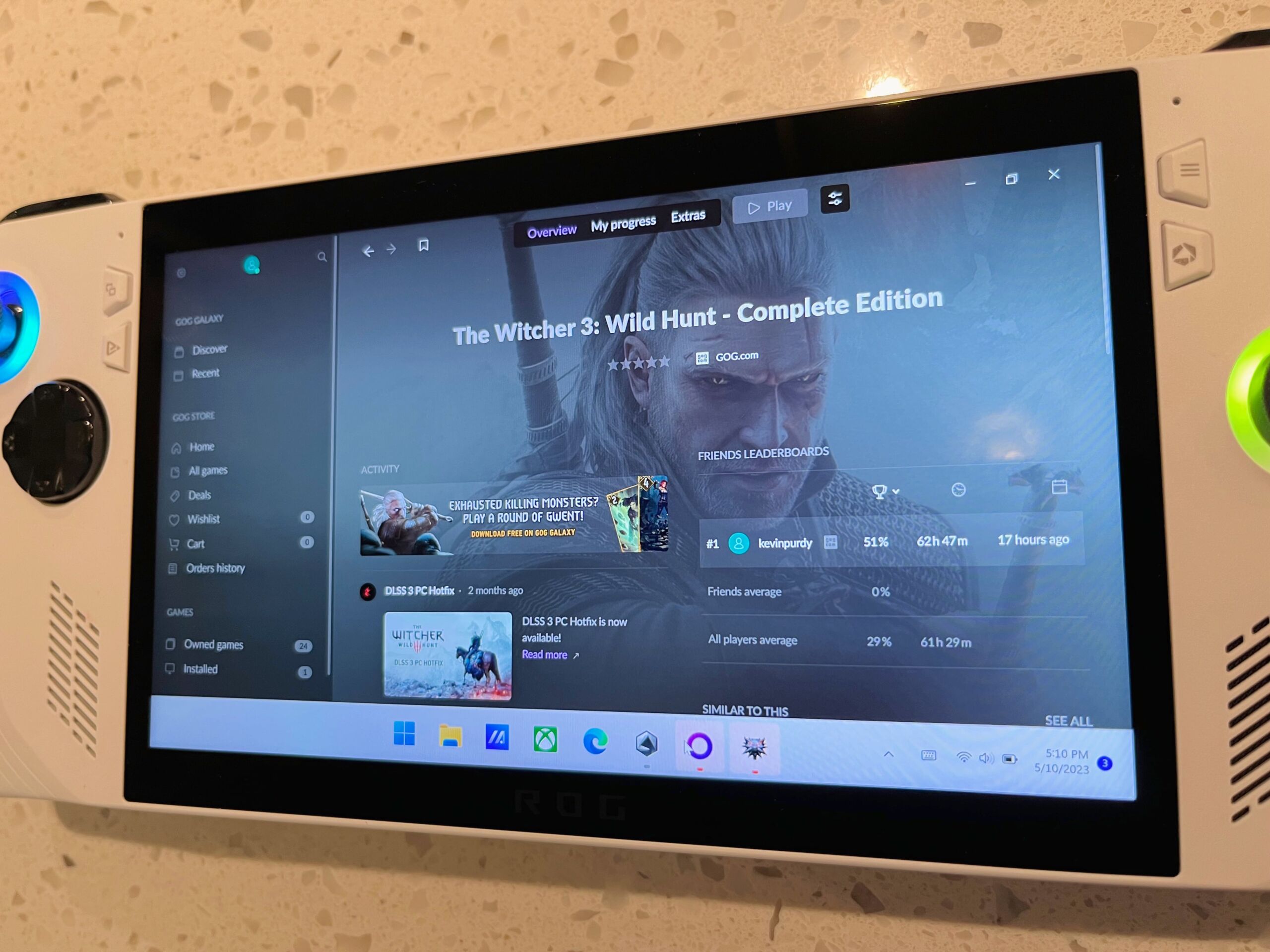
Enlarge/ A mess of launchers and OS cruft crowd the screen when launching The Witcher 3 on the ROG Ally.
Kevin Purdy
Yes, a Windows installation means a gaming portable is compatible with almost every PC game ever made, including many that still don’t run on SteamOS for one reason or another. But SteamOS’s robust Proton compatibility layer means an ever-expanding list of thousands of games are certified as at least “Playable” on SteamOS, including most of Steam’s most popular titles. That’s a huge change from the desktop-focused “Steam Machines” era of the mid-’10s, when early versions of SteamOS could only run the relative handful of games that developers bothered to explicitly port to Linux.
While Proton does come with at least some performance overhead, a variety of Steam Deckbenchmarks show games running under SteamOS tend to perform comparably (or sometimes better) than those running under Windows on the handheld. That’s also a huge change from the Steam Machines era, when Ars’ testing showed that many SteamOS games ran significantly worse than their Windows counterparts on the same desktop hardware.