UCLA faculty gets big win in suit against Trump’s university attacks
Government can’t use funding threats to override the First Amendment.
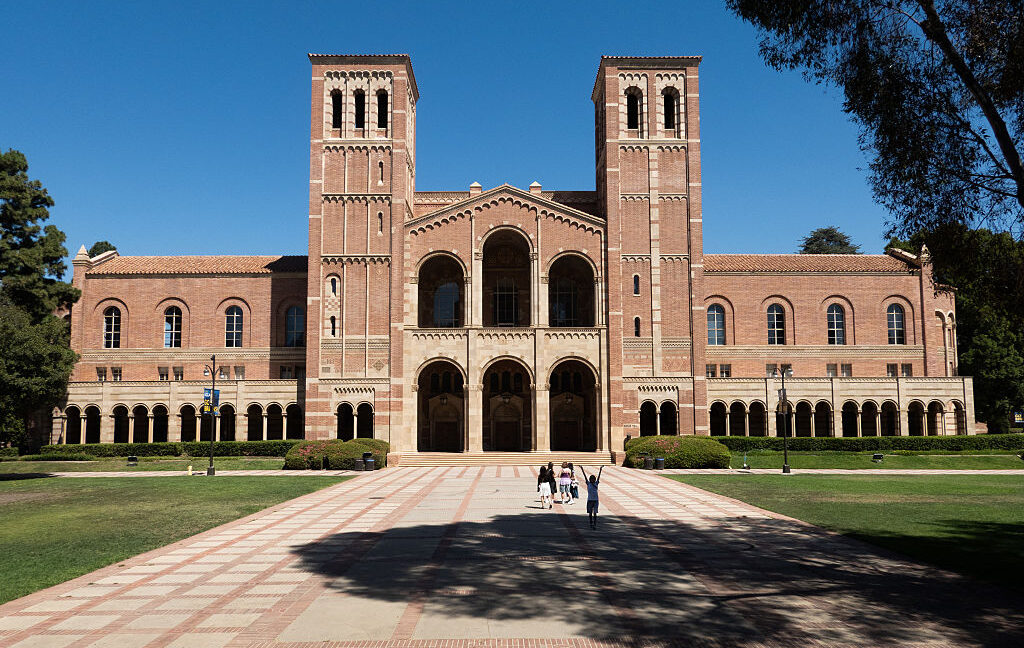
While UCLA has been most prominently targeted by the Trump Administration, the ruling protects the entire UC system. Credit: Myung J. Chun
On Friday, a US District Court issued a preliminary injunction blocking the United States government from halting federal funding at UCLA or any other school in the University of California system. The ruling came in response to a suit filed by groups representing the faculty at these schools challenging the Trump administration’s attempts to force UCLA into a deal that would substantially revise instruction and policy.
The court’s decision lays out how the Trump administration’s attacks on universities follow a standard plan: use accusations of antisemitism to justify an immediate cut to funding, then use the loss of money to compel an agreement that would result in revisions to university instruction and management. The court finds that this plan was deficient on multiple grounds, violating legal procedures for cutting funding to an illegal attempt and suppressing the First Amendment rights of faculty.
The result is a reprieve for the entire University of California system, as well as a clear pathway for any universities to fight back against the Trump administration’s attacks on research and education.
First Amendment violations
The Judge overseeing this case, Rita Lin, issued separate documents describing the reasoning behind her decision and the sanctions she has placed on the Trump administration. In the first, she lays out the argument that the threats facing the UC system, and most notably UCLA, are part of a scripted campaign deployed against many other universities, one that proceeds through several steps. The Trump administration’s Task Force to Combat Anti-Semitism is central to this effort, which starts with the opening of a civil rights investigation against a university that was the site of anti-Israel protests during the conflict in Gaza.
“Rooting out antisemitism is undisputedly a laudable and important goal,” Judge Lin wrote. But the investigations in many cases take place after those universities have already taken corrective steps, which the Trump administration seemingly never considers. Instead, while the investigations are still ongoing, agencies throughout the federal government cancel funding for research and education meant for that university and announce that there will be no future funding without an agreement.
The final step is a proposed settlement that would include large payments (over $1.2 billion in UCLA’s case) and a set of conditions that alter university governance and instruction. These conditions often have little to no connection with antisemitism.
While all of this was ostensibly meant to combat antisemitism, the plaintiffs in this case presented a huge range of quotes from administration officials, including the head of the Task Force to Combat Anti-Semitism, saying the goal was to suppress certain ideas on campus. “The unrebutted record in this case shows that Defendants have used the threat of investigations and economic sanctions to… coerce the UC to stamp out faculty, staff, and student ‘woke,’ ‘left,’ ‘anti-American,’ ‘anti-Western,’ and ‘Marxist’ speech,” Lin said.
And even before any sort of agreement was reached, there was extensive testimony that people on campus changed their teaching and research to avoid further attention from the administration. “Plaintiffs’ members express fear that researching, teaching, and speaking on disfavored topics will trigger further retaliatory funding cancellations against the UC,” Lin wrote, “and that they will be blamed for the retaliation. They also describe fears that the UC will retaliate against them to avoid further funding cuts or in order to comply with the proposed settlement agreement.”
That’s a problem, given that teaching and research topics are forms of speech, and therefore protected by the First Amendment. “These are classic, predictable First Amendment harms, and exactly what Defendants publicly said that they intended,” Lin concluded.
Beyond speech
But the First Amendment isn’t the only issue here. The Civil Rights Act, most notably Title VI, lays out a procedure for cutting federal funding, including warnings and hearings before any funds are shut off. That level of coercion is also limited to cases where there’s an indication that voluntary compliance won’t work. Any funding cut would need to target the specific programs involved and the money allocated to them. There is nothing in Title VI that enables the sort of financial payments that the government has been demanding (and, in some cases, receiving) from schools.
It’s pretty obvious that none of these procedures are being followed here. And as Lin noted in her ruling, “Defendants conceded at oral argument that, of the billions of dollars of federal university funding suspended across numerous agencies in recent months, not a single agency has followed the procedures required by Title VI and IX.”
She found that the government decided it wasn’t required to follow the Civil Rights Act procedures. (Reading through the decision, it becomes hard to tell where the government offered any defense of its actions at all.)
The decision to ignore all existing procedures, in turn, causes additional problems, including violations of the Tenth Amendment, which limits the actions that the government can take. And it runs afoul of the Administrative Procedures Act, which prohibits the government from taking actions that are “arbitrary and capricious.”
All of this provided Lin with extensive opportunities to determine that the Plaintiffs, largely organizations that represent the faculty at University of California schools, are likely to prevail in their suit, and thus are deserving of a preliminary injunction to block the federal government’s actions. But first, she had to deal with a recent Supreme Court precedent holding that cases involving federal money belong in a different court system. She did so by arguing that this case is largely about First Amendment and federal procedures rather than any sort of contract for federal money; money is being used as a lever here, so they ruling must involve restoring the money to address the free speech issues.
That issue will undoubtedly be picked up on appeal as it makes its way through the courts.
Complete relief
Lin identified a coercive program that is being deployed against many universities and is already suppressing speech throughout the University of California system, including on campuses that haven’t been targeted yet. She is issuing a ruling that targets the program broadly.
“Plaintiffs have shown that Defendants are coercing the [University of California] as a whole, through the Task Force Policy and Funding Cancellation, to stamp out their members’ disfavored speech,” Lin concluded. “Therefore, to afford Plaintiffs complete relief, the entirety of the coercive practice must be enjoined, not just the suspensions that impact Plaintiffs’ members.”
Her ruling indicates that if the federal government decides it wants to cut any grants to any school in the UC system, it has to go through the entire procedure set out in the Civil Rights Act. The government is also prohibited from demanding money from any of these schools as a fine or payment, and it can’t threaten future funding to the schools. The current hold on grants to the school by the government must also be lifted.
In short, the entire UC system should be protected from any of the ways that the government has been trying to use accusations of antisemitism to suppress ideas that it disfavors. And since those primarily involve federal funding, that has to be restored, and any future threats to it must be blocked.
While this case is likely to face a complicated appeals process, Lin’s ruling makes it extremely clear that all of these cases are exactly what they seemed. Just as members of the administration stated in public multiple times, they decided to target some ideas they disfavored and simply made up a process that would let them do so.
While it worked against a number of prominent universities, its legal vulnerabilities have been there from the start.
John is Ars Technica’s science editor. He has a Bachelor of Arts in Biochemistry from Columbia University, and a Ph.D. in Molecular and Cell Biology from the University of California, Berkeley. When physically separated from his keyboard, he tends to seek out a bicycle, or a scenic location for communing with his hiking boots.
UCLA faculty gets big win in suit against Trump’s university attacks Read More »