South Carolina

sc-measles-outbreak-has-gone-berserk:-124-cases-since-friday,-409-quarantined

SC measles outbreak has gone berserk: 124 cases since Friday, 409 quarantined

A measles outbreak in South Carolina that began in October is now wildly accelerating, doubling in just the past week to a total of 434 cases, with 409 people currently in quarantine.

Amid the outbreak, South Carolina health officials have been providing updates on cases every Tuesday and Friday. On Tuesday, state health officials reported 124 more cases since last Friday, which had 99 new cases since the previous Tuesday. On that day, January 6, officials noted a more modest increase of 26 cases, bringing the outbreak total at that point to 211 cases.

With the 3-month-old outbreak now doubled in just a week, health officials are renewing calls for people to get vaccinated against the highly infectious virus—an effort that has met with little success since October. Still, the health department is activating its mobile health unit to offer free measles-mumps-rubella (MMR) vaccinations, as well as flu vaccinations at two locations today and Thursday in the Spartanburg area, the epicenter of the outbreak.

Officials are also warning that they’re losing the ability to trace cases, and exposures are continuing. Last Friday, someone contagious with measles was in the South Carolina State Museum in Columbia between 1 pm and 5 pm ET. Anyone in the museum during that time and unvaccinated is at risk of contracting the infection. The virus spreads through the air and can linger in a room’s airspace for up to two hours after an infected person has left. Measles is so contagious that up to 90 percent of unvaccinated people exposed will fall ill.

SC measles outbreak has gone berserk: 124 cases since Friday, 409 quarantined Read More »
measles-continues-raging-in-south-carolina;-99-new-cases-since-tuesday

Measles continues raging in South Carolina; 99 new cases since Tuesday

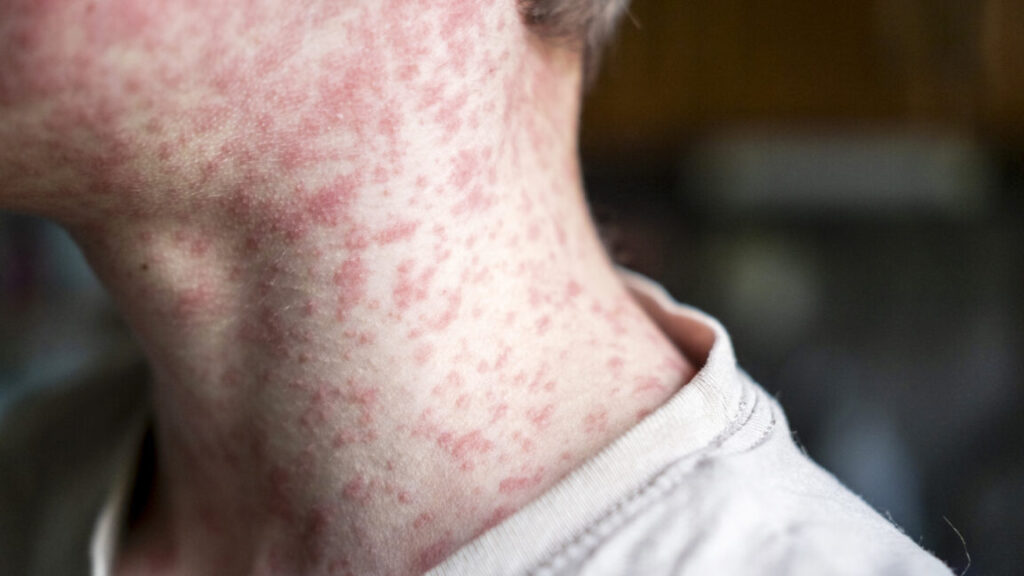
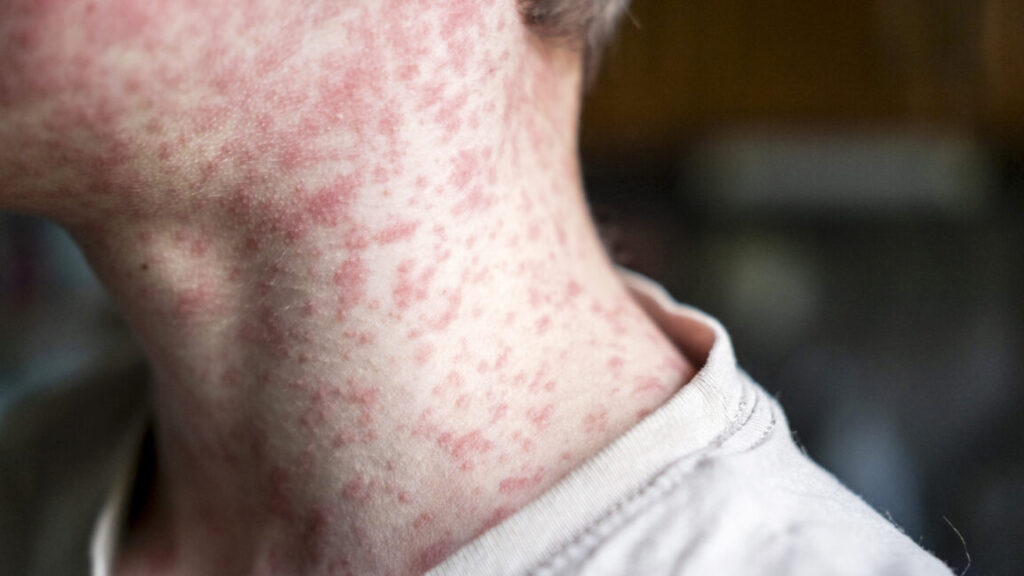
The disease usually develops seven to 14 days after an exposure, but it can take up to 21 days (which is the length of quarantine). Once it develops, it’s marked by a high fever and a telltale rash that starts on the head and spreads downward. People are contagious for four days before the rash develops and four days after it appears. Complications can range from ear infections and diarrhea to encephalitis (swelling of the brain), pneumonia, death in up to 3 out of 1,000 children, and, in very rare cases, a fatal neurological condition that can develop seven to 10 years after the acute infection (subacute sclerosing panencephalitis).

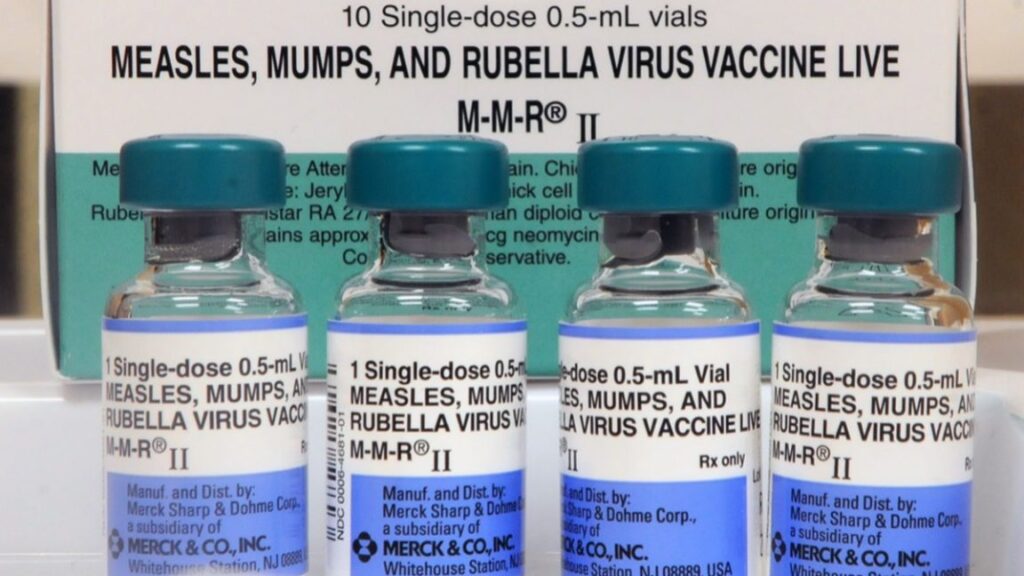
Two doses of the measles, mumps, and rubella (MMR) vaccine is considered 97 percent effective against the virus, and that protection is considered lifelong. Ninety-nine percent of the 310 cases in the South Carolina outbreak are in people who are unvaccinated, partially vaccinated, or have an unknown vaccination status (only 2 people were vaccinated).

The Centers for Disease Control and Prevention, which only has data as of January 6, has tallied three confirmed cases for this year (two in South Carolina and one in North Carolina, linked to the South Carolina outbreak). Since then, South Carolina reported 26 cases on Tuesday and 99 today, totaling 125. North Carolina also reported three additional cases Tuesday, again linked to the South Carolina outbreak. In all, that brings the US tally to at least 131 just nine days into the year.

In 2025, the country recorded 2,144 confirmed cases, the most cases seen since 1991. Three people died, including two otherwise-healthy children. In 2000, the US declared measles eliminated, meaning that it was no longer continuously circulating within the country. With ongoing outbreaks, including the one in South Carolina, the country’s elimination status is at risk.

Measles continues raging in South Carolina; 99 new cases since Tuesday Read More »

over-250-people-quarantined-in-south-carolina-as-measles-outbreak-rages

Over 250 people quarantined in South Carolina as measles outbreak rages

The quarantine period for measles is 21 days from the exposure, which is the maximum incubation period before the tell-tale rash appears. Measles is highly infectious, with up to 90 percent of unvaccinated or otherwise vulnerable people contracting the virus upon exposure. People infected with measles are infectious from four days before the rash appears to four days after its onset.

The outbreak is occurring in the northern region of South Carolina, with many cases identified in Spartanburg County, which contains Inman, as well as Greenville County. Both counties have low vaccination rates. For the 2024–2025 school year, only 90 percent of Spartanburg students were vaccinated, while Greenville’s vaccination rate was 92.4 percent. Those numbers are well below the 95 percent target needed to halt community transmission.

The two counties’ low vaccination rates are coupled with high rates of religious exemptions. Spartanburg has the state’s highest rate, with 8.2 percent of students exempt from the school vaccination requirement based on religious beliefs. Neighboring Greenville has a religious vaccination exemption rate of 5.3 percent.

Of the 111 outbreak cases, 105 were unvaccinated, three were partially vaccinated, two had an unknown status, and one case was fully vaccinated.

On a national scale, vaccination rates have declined overall amid misinformation spread by anti-vaccine activists, including current Health Secretary Robert F. Kennedy Jr. As such, measles cases are at a 33-year high, with nearly 2,000 cases this year and 46 outbreaks.

Over 250 people quarantined in South Carolina as measles outbreak rages Read More »

measles-outbreak-in-sc-sends-150-unvaccinated-kids-into-21-day-quarantine

Measles outbreak in SC sends 150 unvaccinated kids into 21-day quarantine

Health officials in South Carolina are warning that the highly infectious measles virus is spreading undetected in communities in the northern part of the state, specifically Spartanburg and Greenville counties.

Last week, officials in Greenville identified an eighth measles case that is potentially linked to the outbreak. Seven outbreak cases had been confirmed since September 25 in neighboring Spartanburg, where transmission was identified in two schools: Fairforest Elementary and Global Academy, a public charter school.

Across those two schools, at least 153 unvaccinated children were exposed to the virus and have been put in a 21-day quarantine, during which they are barred from attending school, state officials said in a press conference. Twenty-one days is the maximum incubation period, spanning from when a person is exposed to when they would develop a rash if infected.

It’s unclear how the latest case in Greenville became infected with the virus and how they may link to the nearby Spartanburg cases.

“What this case tells us is that there is active, unrecognized community transmission of measles occurring in the Upstate [northern region of South Carolina], which makes it vital to ensure that the public have received their measles vaccinations,” the South Carolina Department of Public Health said in an announcement.

The two recommended doses of the measles, mumps, and rubella (MMR) vaccine are about 97 percent effective at blocking the infection, and that protection is considered lifelong. Without that protection, the virus is extremely contagious, infecting 90 percent of unvaccinated people who are exposed. The virus spreads easily through the air, lingering in the airspace of a room for up to two hours after an infected person has left.

Measles outbreak in SC sends 150 unvaccinated kids into 21-day quarantine Read More »

felony-charges-after-south-carolina-high-school-filled-with-“fart-spray”…-for-weeks

Felony charges after South Carolina high school filled with “fart spray”… for weeks


Let’s dig into the science of stink.

As a boy, I once owned a whoopee cushion. I thought it was hilarious; my aging and extremely “proper” great aunt—God rest her soul—did not, and at one Thanksgiving dinner, she let me know. Chastened, I never used a whoopee cushion again. Nor, as the decades passed, did I think much more about the possible humor value of fake farts.

Until this week, when I came across the strange case of Alexander Paul Robertson Lewis, who has been charged with a felony in South Carolina for—and let me quote from the official police press release here—using “an Internet-acquired spray designed to imitate fecal odor.”

The nanny state run amok? The criminalization of fun? Authorities who Just Can’t Take A Joke?

Not exactly.

The gas leak that wasn’t

The 32-year-old Lewis worked as a teacher’s assistant at the West Florence High School in Florence County, South Carolina. His duties did not, of course, include spraying anything “designed to imitate fecal odor” into the air. But according to police, Lewis was responsible for “creating a foul smell” at the school—not once, but for weeks. It was so dire that multiple students needed medical attention.

The school’s administration suspected a gas leak at first. According to local news reports, in mid-August, the school sent an email to parents letting them know that “gas is only used in our school for heating, in the kitchen for food preparation, and in a few of the science labs. Excluding the kitchen, we have turned off all gas to the building as a precaution. This has allowed us to rule out a gas leak as the source of the odor.”

The district brought in plumbers to inspect “all lines above the ceilings as well as the propane tank lines for potential gas leaks.” It brought in the local gas utility to test for leaks in “hallways, classrooms, rooftops, science labs, propane tanks, natural gas meters, and floor drains in bathrooms.” It hired an environmental consultant to do air quality testing. None of these inspections turned up anything untoward.

Over the next weeks, parents and students began to complain vociferously about getting sick at school. One student told local station WPDE that “every time I go to my second block class, I walk up the stairwell and immediately, teachers are covering their noses and their mouths, coughing because of the smell.” Another said, “I got physically sick the other day because of the smell. I feel like I’m going to pass out because I get so lightheaded and so dizzy.”

Parents said that they were taking their children for doctors’ visits, worried about possible carbon monoxide exposure or about asthma-related difficulties. One parent wrote in a Facebook comment about the whole saga, “My daughter passed out and [was] rushed to the ER.”

An angry mom showed up to a September school board meeting and ripped into the district for its lack of responsiveness. “There has been an ongoing smell for the past two, three weeks now,” she said. “My son has asthma. This is triggering his asthma… I had to take him to the doctor twice… He’s had to use his inhaler multiple times a day.”

The school continued to search for answers. According to WMBF News, the district ultimately had “five different entities test for gas, opening several walls, and checking sewer lines.”

In the end, though, it may come down to some guy wielding a truly noxious amount of “fart spray.”

On September 20, police arrested Lewis for using the spray “on multiple occasions and over time resulting in a disruption of the school,” which spent $55,000 trying to track down the problem.

Such events are uncommon but not unknown. In 2023, for instance, two people in San Antonio, Texas, were arrested and charged with felonies after a similar “senior prank.” In that case, according to local accounts, “The stench was so bad that the school was evacuated twice in an attempt to find the source, while seven students were taken to the hospital for further care after complaining of headaches and nausea.”

Crazy. But why the severe reactions?

Mug shot for Alexander Paul Robertson Lewis

Alexander Paul Robertson Lewis. Credit: Florence County Sheriff

Safe stink?

One can go on Amazon and find many of these products, and they often advertise themselves as being “non-toxic.” A product called “Wet Farts” claims, for instance, that “Our fart spray extra strong prank is made with non-toxic and non-flammable ingredients that are totally safe and effective.” (Though it does note that Wet Farts will “bombard your victims with a stinky wet cloud of fart that will make their face grimace and their eyes water.”)

But even “non-toxic” products can cause reactions, especially in susceptible populations like asthma sufferers. Many of these fart products don’t publish their ingredient lists, although some have put out Safety Data Sheets (SDS). Before we look at those, though, let’s back up and consider something a bit more basic to see how it compares.

Simple “stink bombs” often rely on ammonium sulfide, which, when exposed to air, generates hydrogen sulfide. This smells strongly of rotten eggs. The National Institutes of Health describes ammonium sulfide as a “colorless to yellow liquid, with an odor of rotten eggs or ammonia,” which can “slowly react with water to generate flammable and toxic hydrogen sulfide gas.” The compound “may be irritating to skin, eyes, and mucous membranes and may cause illness from skin absorption.”

Stink bombs may also use mercaptans such as methyl mercaptan, which is added to odorless natural gas to make it smell. (It is also present in bad breath.)

But this kind of thing is amateur hour. Sulfides and mercaptans alone aren’t enough to capture the ripe aroma of fully baked flatulence. So truly noxious fart sprays often contain secret ingredient blends that are difficult to evaluate. “Liquid Ass” has a published SDS that notes the product is a yellowish “turbid liquid” that is 90-plus percent water; the rest is a “mixture of proprietary natural ingredients.”

Exposure to Liquid Ass, especially in large quantities, can cause “irritation” to the skin and eyes, while eye splashes “may cause temporary pain and blurred vision.” Ingesting the stuff can “cause headaches, gastritis, [and] intoxication,” while breathing it “may cause irritation to the mucous membranes of the upper respiratory tract.” Still, exposure should “cause irritation with only minor residual injury.”

The makers of Liquid Ass claim that the hydrogen sulfide released by garden-variety stink bombs can, even at moderate levels, cause real problems for people. By contrast, they say that Liquid Ass “has been tested to be safe” and that its SDS notes: “No hazardous ingredients known to be present.”

Or the discerning prankster might consider the Jue-Fish Toxic Bomb Super Fart! gift set. It’s perfect to use when “meeting with friends” or even “dealing with villains.”

While it “smells like the worst smell in the world,” the ingredients are “very safe.” These include:

  • water
  • capsaicin [responsible for the “heat” in hot peppers; also used in pepper spray/tear gas]
  • piperine [gives black and white pepper their pungency]
  • mustard extract
  • fermented soybeans [natto, a Japanese food made from fermented soybean, is described as being “notorious for its strong, distinctive smell, often compared to dirty socks or ammonia”]
  • fermented Houttuynia cordata [a plant known as “fish mint” or “fish leaf,” with “an unusual taste from its volatile oil decanoyl acetaldehyde (3-oxododecanal), a taste that is often described as “fishy”]

The point is that the ingredients in “fart sprays” can vary widely, may not be fully disclosed, and may never have been tested for toxicity in the combination present in the bottle. Even when “non-toxic,” they may cause problems for some people.

(One of the best parts of working at Ars Technica is seeing experts emerge from the woodwork to enlighten us about all sorts of fascinating topics in the comments; I trust that the chemists here can shed even more light on the “science of stink”—and on why it might cause strong reactions.)

Still—it’s pretty amazing that one teacher’s assistant was allegedly able to create such a serious situation for an entire high school. Just how much of this stuff could one person spray?

We may learn more over the coming months when Lewis has to return to court. He is currently free on a $9,090 bond.

Photo of Nate Anderson

Felony charges after South Carolina high school filled with “fart spray”… for weeks Read More »