Sarmat

the-missile-meant-to-strike-fear-in-russia’s-enemies-fails-once-again

The missile meant to strike fear in Russia’s enemies fails once again

Therefore, it’s no wonder Russian officials like to talk up Sarmat’s capabilities. Russian President Vladimir Putin has called Sarmat a “truly unique weapon” that will “provide food for thought for those who, in the heat of frenzied aggressive rhetoric, try to threaten our country.” Dmitry Rogozin, then the head of Russia’s space agency, called the Sarmat missile a “superweapon” after its first test flight in 2022.

So far, what’s unique about the Sarmat missile is its propensity for failure. The missile’s first full-scale test flight in 2022 apparently went well, but the program has suffered a string of consecutive failures since then, most notably a catastrophic explosion last year that destroyed the Sarmat missile’s underground silo in northern Russia.

The Sarmat is supposed to replace Russia’s aging R-36M2 strategic ICBM fleet, which was built in Ukraine. The RS-28, sometimes called the Satan II, is a “product solely of Russian industry cooperation,” according to Russia’s Ministry of Defense.

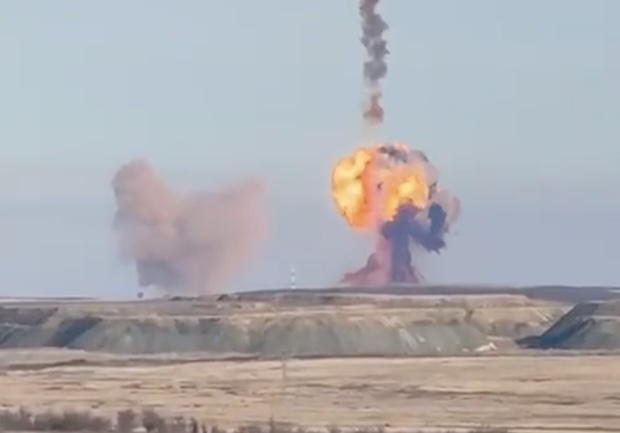
The video of the missile failure last week lacks the resolution to confirm whether it was a Sarmat missile or the older-model R-36M2, analysts agree it was most likely a Sarmat. The missile silo used for Friday’s test was recently renovated, perhaps to convert it to support Sarmat tests after the destruction of the new missile’s northern launch site last year.

“Work there began in Spring 2025, after the ice thawed,” wrote Etienne Marcuz, an analyst on strategic armaments at the Foundation for Strategic Research, a French think tank. The “urgent renovation” of the missile silo at Dombarovsky lends support for the hypothesis that last week’s accident involved the Sarmat, and not the R-36M2, which was last tested more than 10 years ago, Marcuz wrote on X.

“If this is indeed another Sarmat failure, it would be highly detrimental to the medium-term future of Russian deterrence,” Marcuz continued. “The aging R-36M2 missiles, which carry a significant portion of Russia’s strategic warheads, are seeing their replacement pushed even further into the future, while their maintenance—previously handled by Ukraine until 2014—remains highly uncertain.”
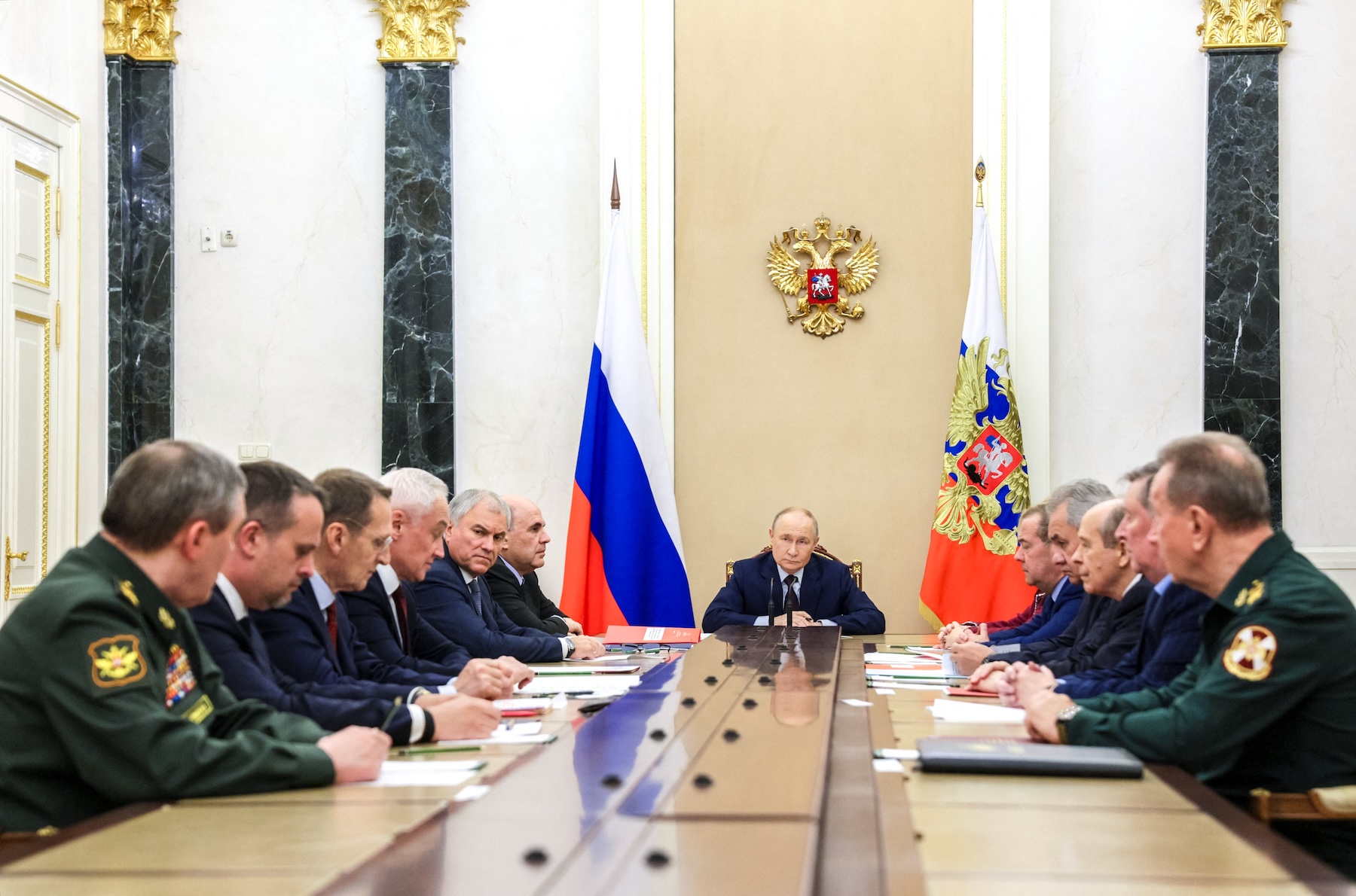
In this pool photograph distributed by the Russian state media agency Sputnik, Russia’s President Vladimir Putin chairs a Security Council meeting at the Kremlin in Moscow on November 5, 2025. Credit: Gavriil Grigorov/Pool/AFP via Getty Images

Podvig, the UN researcher who also runs the Russian Nuclear Forces blog site, agrees with Marcuz’s conclusions. With the R-36M2 missile soon to retire, “it is extremely unlikely that the Rocket Forces would want to test launch them,” Podvig wrote on his website. “This leaves Sarmat.”

The failure adds fresh uncertainty to the readiness of Russia’s nuclear arsenal. If this were actually a test of one of Russia’s older ICBMs, the result would raise questions about hardware decay and obsolescence. In the more likely case of a Sarmat test flight, it would be the latest in a series of problems that have delayed its entry into service since 2018.

The missile meant to strike fear in Russia’s enemies fails once again Read More »
satellite-images-suggest-test-of-russian-“super-weapon”-failed-spectacularly

Satellite images suggest test of Russian “super weapon” failed spectacularly

  • The Sarmat missile silo seen before last week’s launch attempt.

    Maxar Technologies

  • A closer view of the Sarmat missile silo before last week’s launch attempt.

    Maxar Technologies

  • Fire trucks surround the Sarmat missile silo in this view from space on Saturday, September 21.

    Maxar Technologies

Late last week, Russia’s military planned to launch a Sarmat intercontinental ballistic missile (ICBM) on a test flight from the Plesetsk Cosmodrome. Imagery from commercial satellites captured over the weekend suggest the missile exploded before or during launch.

This is at least the second time an RS-28 Sarmat missile has failed in less than two years, dealing a blow to the country’s nuclear forces days after the head of the Russian legislature issued a veiled threat to use the missile against Europe if Western allies approved Ukraine’s use of long-range weapons against Russia.

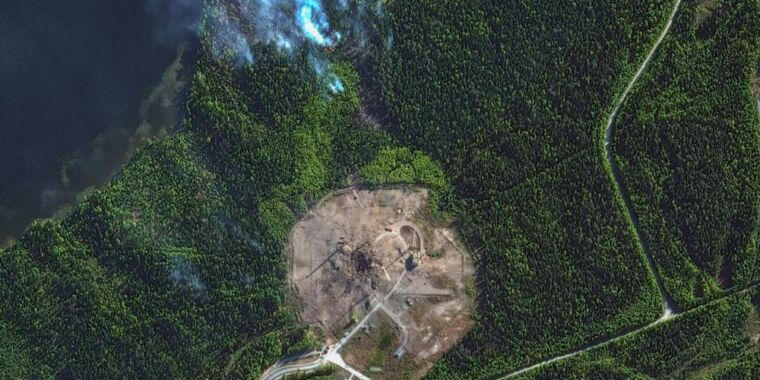
Commercial satellite imagery collected by Maxar and Planet show before-and-after views of the Sarmat missile silo at Plesetsk, a military base about 500 miles (800 kilometers) north of Moscow. The view from one of Maxar’s imaging satellites Saturday revealed unmistakable damage at the launch site, with a large crater centered on the opening to the underground silo.

The crater is roughly 200 feet (62 meters) wide, according to George Barros, a Russia and geospatial intelligence analyst at the Institute for the Study of War. “Extensive damage in and around the launch pad can be seen which suggests that the missile exploded shortly after ignition or launch,” Barros wrote on X.

“Additionally, small fires continue to burn in the forest to the east of the launch complex and four fire trucks can be seen near the destroyed silo,” Barros added.

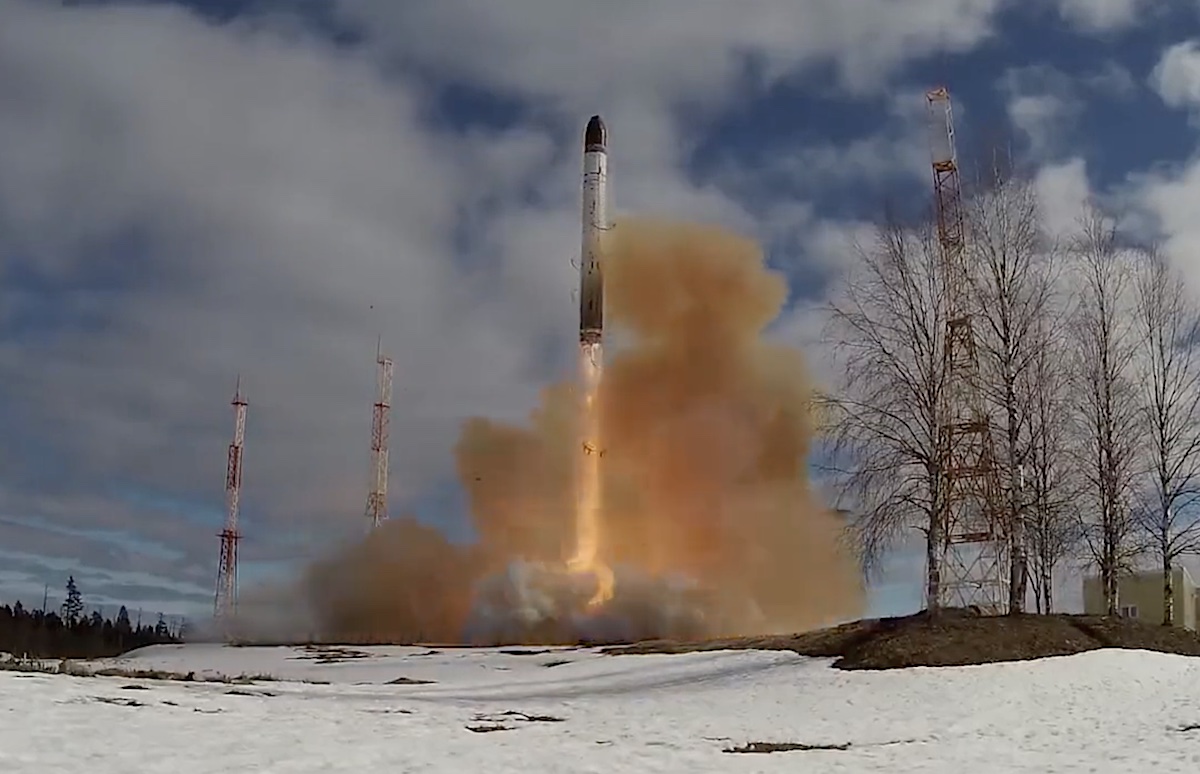
An RS-28 Sarmat missile fires out of its underground silo on its first full-scale test flight in April 2022.

Enlarge / An RS-28 Sarmat missile fires out of its underground silo on its first full-scale test flight in April 2022.

Russian Ministry of Defense

The Sarmat missile is Russia’s largest ICBM, with a height of 115 feet (35 meters). It is capable of delivering nuclear warheads to targets more than 11,000 miles (18,000 kilometers) away, making it the longest-range missile in the world. The three-stage missile burns hypergolic hydrazine and nitrogen tetroxide propellants, and is built by the Makeyev Design Bureau. The Sarmat, sometimes called the Satan II, replaces Russia’s long-range R-36M missile developed during the Cold War.

“According to Russian media, Sarmat can reportedly load up to 10 large warheads, 16 smaller ones, a combination of warheads and countermeasures, or hypersonic boost-glide vehicle,” the Center for Strategic and International Studies writes on its website.

The secret is out

Western analysts still don’t know exactly when the explosion occurred. Russia issued warnings last week for pilots to keep out of airspace along the flight path of a planned missile launch from the Plesetsk Cosmodrome. Russia published similar notices before previous Sarmat missile tests, alerting observers that another Sarmat launch was imminent. The warnings were canceled Thursday, two days before satellite imagery showed the destruction at the launch site.

“It is possible that the launch attempt was undertaken on September 19th, with fires persisting for more than 24 hours,” wrote Pavel Podvig, a senior researcher at the United Nations Institute for Disarmament Research in Geneva, on his Russian Nuclear Forces blog site. “Another possibility is that the test was scrubbed on the 19th and the incident happened during the subsequent defueling of the missile. The character of destruction suggests that the missile exploded in the silo.”

James Acton, a senior fellow at the Carnegie Endowment for International Peace, wrote on X that the before-and-after imagery of the Sarmat missile silo was “very persuasive that there was a big explosion.”

Satellite images suggest test of Russian “super weapon” failed spectacularly Read More »