Portable monitors could make foldable-screen gadgets finally make sense
-
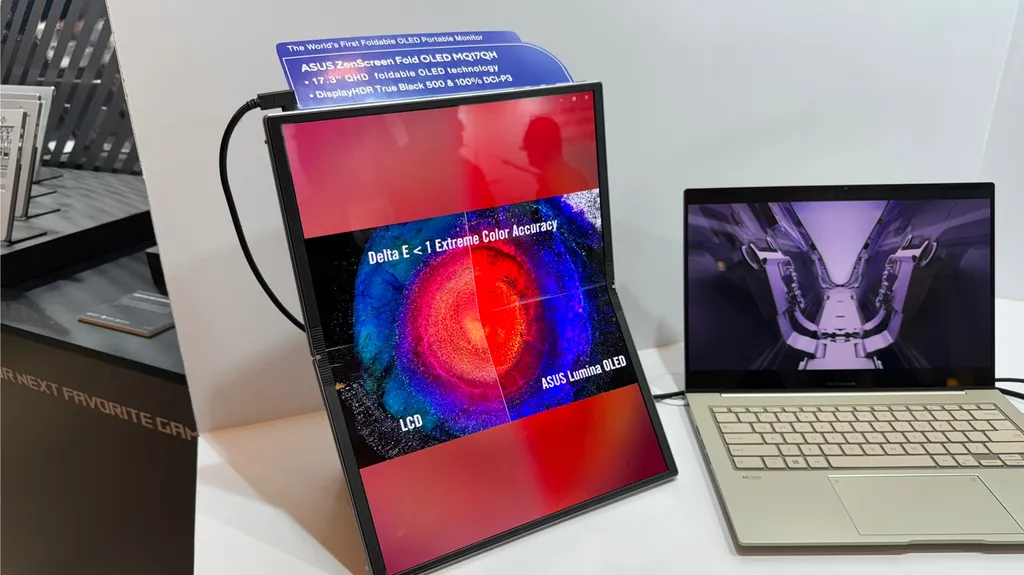
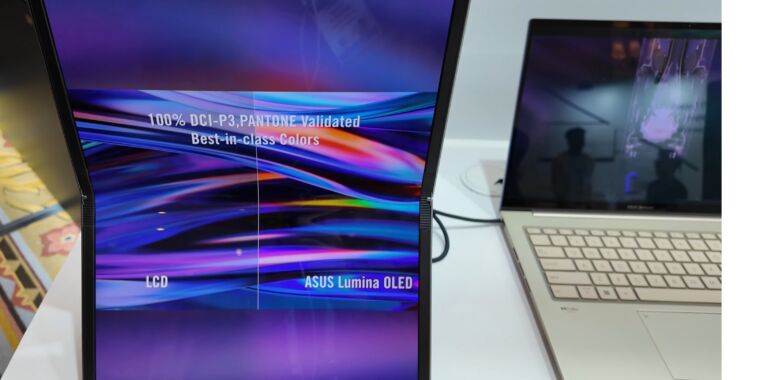
Asus plans to release this foldable OLED monitor in 2024. Electronics retailer Abt Electronics captured footage of it on display at CES.
-
The monitor has a metal chassis and glossy coating.
-
The monitor could help workers quickly add more screen space to setups.
-
In its video, Abt Electronics showed off different angled views of the monitor.
-
Like other foldables, the crease can seemingly catch reflections and glare when the device is bent.
-
Port selection.
-
The portable monitor will come with a sleeve.
Foldable screens have been bending their way into consumer gadgets over the last few years. But with skepticism about durability, pricing, image quality, and the necessity of such devices, foldable screens aren’t mainstream. With those concerns in mind, I haven’t had much interest in owning a foldable-screen gadget, even after using a foldable laptop for a month. However, the foldable portable monitor that Asus is showing at CES in Las Vegas this week is an application of foldable OLED that makes more sense to me than others.
Asus’ ZenScreen Fold OLED MQ17QH announced on Tuesday is a 17.3-inch portable monitor that can fold to a 12.5-inch size. The monitor has 2560×1920 pixels for a pixel density of 184.97 pixels per inch. Other specs include a 100 percent DCI-P3 coverage claim and VESA DisplayHDR True Black 500 certification.
When I think of the ways I use portable monitors, foldability makes more sense than it does with other device types. For example, I love working outside when possible, and an extra 17.3-inch screen that’s easy to carry would make long work sessions with an ultraportable laptop more feasible. The Fold OLED’s 17.3 inches is near the larger size for a portable monitor, but the fold and comparatively light weight should make it feel more transportable than similarly sized monitors that don’t fold in half.
Regarding dimensions and weight, Asus compares the monitor to a 13-inch thin-and-light laptop. The monitor weighs 2.58 lbs—that’s notable heft for something meant to be lugged around (the smaller Lenovo ThinkVision M14 weighs 1.3 pounds, for comparison). But 2.58 lbs is still on the lighter side for a 17-inch-class monitor (Asus’ 17-inch ROG Strix XG17AHP is 3.88 lbs), and Asus’ foldable is similarly thin.
Asus credits a “waterdrop-style hinge” for the monitor’s thin size. It’s 0.38 inches (9.7 mm) thick when unfolded, which should translate to about 0.76 inches (19.4 mm) when the monitor is folded shut.
It feels more natural for a portable monitor to add a fold for easy transport, since portability is right in the device category’s name.
Plus, a portable monitor doesn’t have the same types of component and cooling concerns as computing devices like laptops and phones do.
Crease concerns
I haven’t seen Asus’ foldable monitor in person, so I can only speculate on image quality. The monitor is still being finalized, but based on images and video from people who’ve seen the ZenScreen Fold OLED in person at CES and my experience using foldables, I expect the display to show a crease that picks up reflections and/or glare when bent. But considering that a portable monitor will typically be open flat, this doesn’t matter the same way it would with other types of foldable devices.
However, what matters is whether that crease is still visible when the monitor’s flat. A portable monitor is likely to be viewed from different angles, which could make even a slight crease pop. For what it’s worth, The Verge reported that the Asus monitor’s crease seemed to “disappear” when flat, but I remain highly cautious.
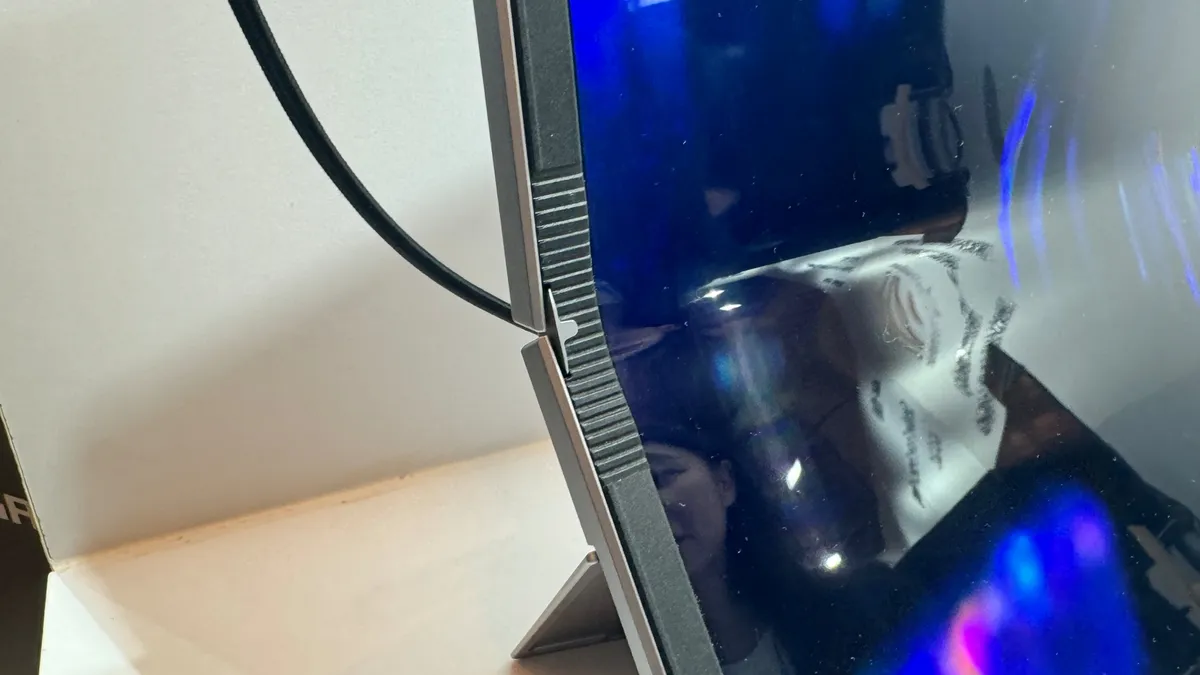
Asus’ monitor announcement showed confidence that “you’ll hardly be able to tell that there’s a hinge behind the display” when it’s open because of the waterdrop-style hinge, which is the same hinge type that the Samsung Galaxy Z Fold 5 uses, as pointed out by The Verge. The hinge type reportedly makes for a looser feel when the device is closed. Samsung Display has claimed that this puts less stress on the display and minimizes the gap seen when the foldable is shut. Asus’ announcement noted that the foldable monitor’s hinge uses “hundreds of parts,” which “all but eliminat[e] the gap.”
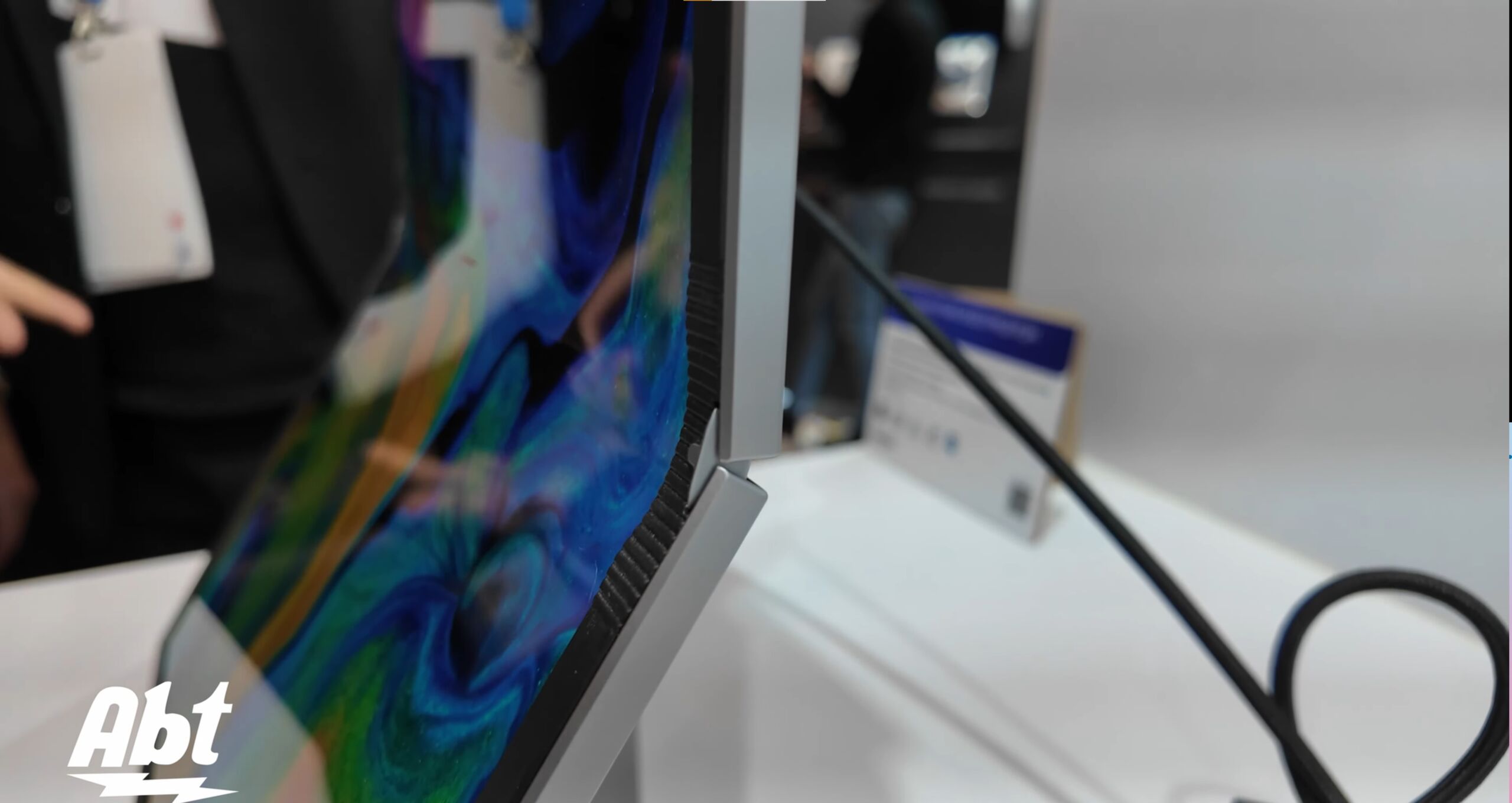
Enlarge / A close-up of the hinge, shown on-video by Abt Electronics.
Like with any other foldable, though, durability remains a concern. A portable monitor may be moved around frequently, and Ars has seen firsthand how fragile a foldable screen can be, including with those small-gap designs.
Speaking of different viewing angles and visibility outdoors (and in bright rooms), the use of OLED suggests that this monitor won’t be as bright as some LCD portable monitors. That could limit visibility, depending on your use case. Asus hasn’t shared a brightness spec for the ZenScreen Fold.
Portable monitors could make foldable-screen gadgets finally make sense Read More »