Inside the quixotic team trying to build an entire world in a 20-year-old game
Stories and lesson learned from an impossibly large community modding project.
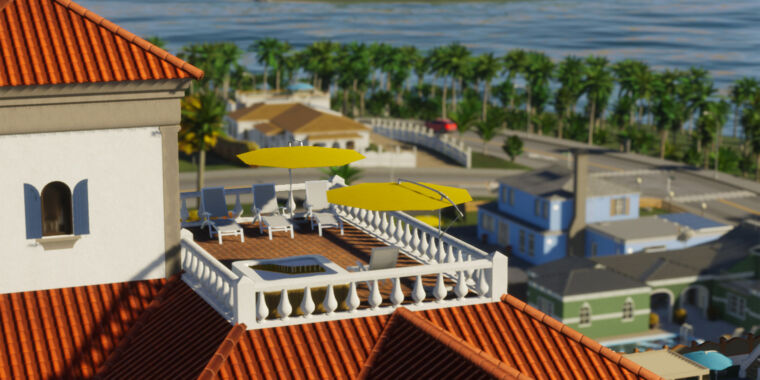
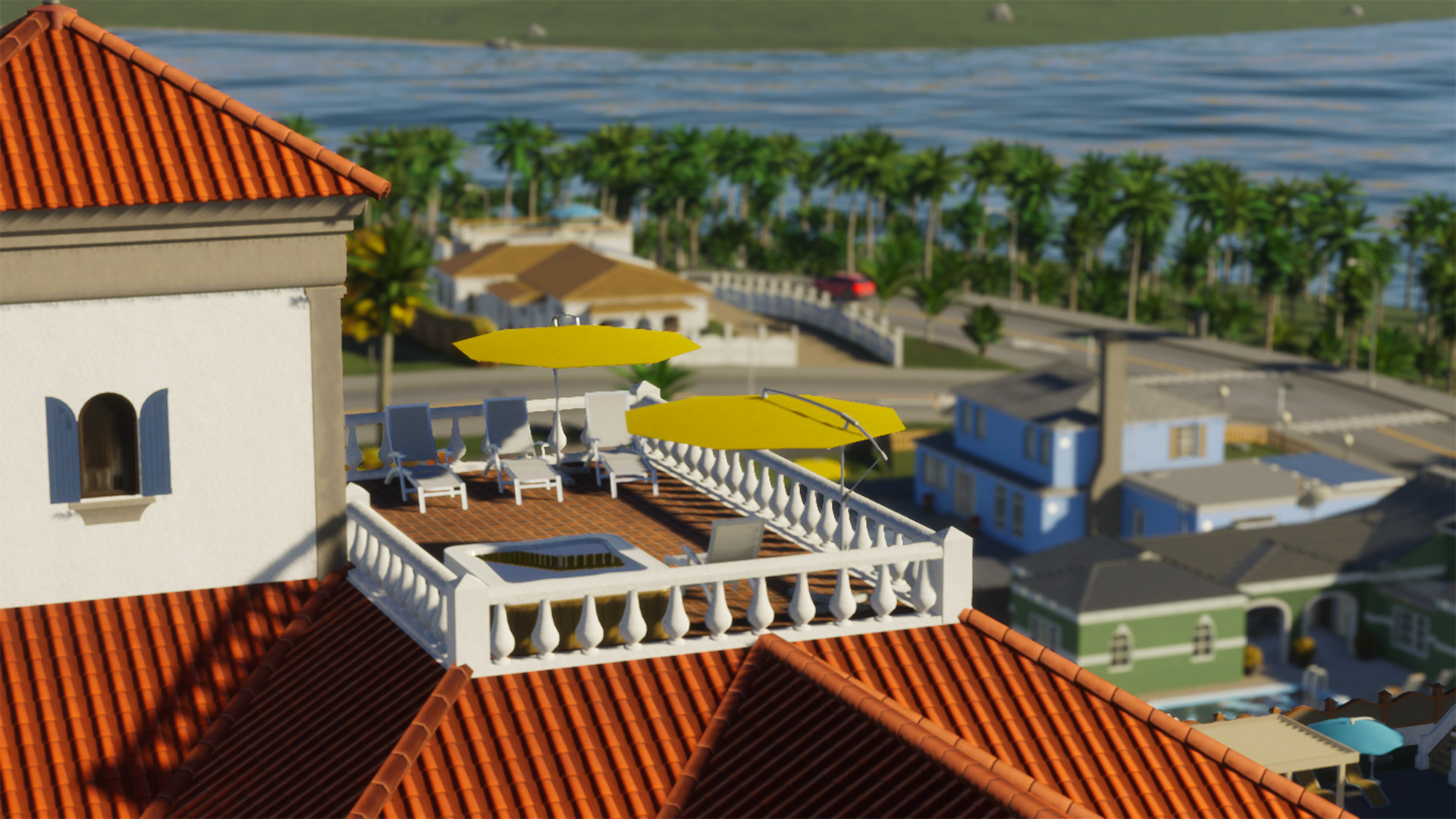
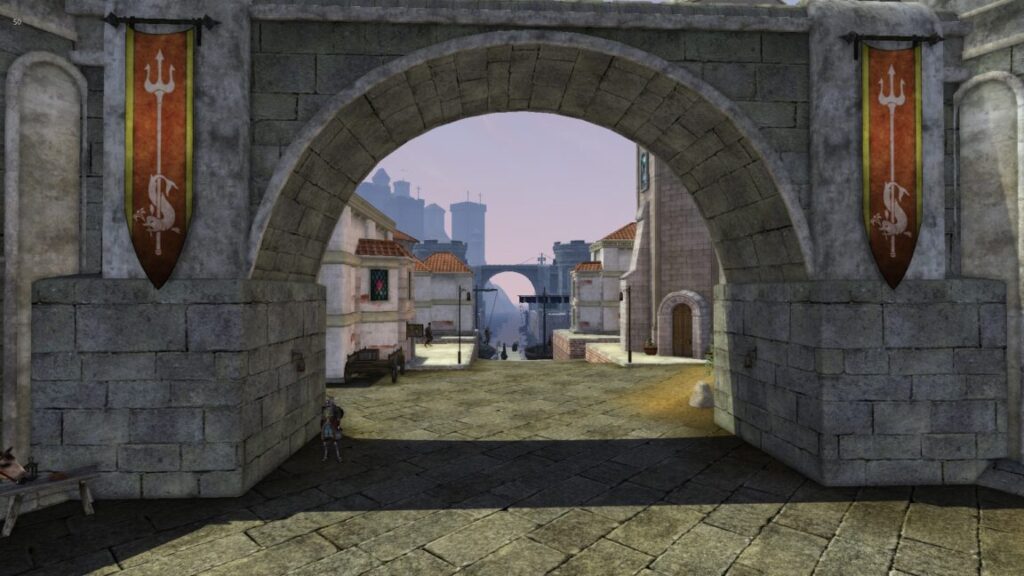
The city of Anvil, rendered in The Elder Scrolls III: Morrowind. Credit: Daniel Larlham Jr.
Despite being regarded as one of the greatest role-playing games of all time, The Elder Scrolls III: Morrowind disappointed some fans upon its release in 2002 because it didn’t match the colossal scope of its predecessor, The Elder Scrolls II: Daggerfall. Almost immediately, fans began modding the remaining parts of the series’ fictional continent, Tamriel, into the game.
Over 20 years later, thousands of volunteers have collaborated on the mod projects Tamriel Rebuilt and Project Tamriel, building a space comparable in size to a small country. Such projects often sputter out, but these have endured, thanks in part to a steady stream of small, manageable updates instead of larger, less frequent ones.
A tale of (at least two) mods
It’s true that Daggerfall included an entire continent’s worth of content, but it was mostly composed of procedurally generated liminal space. By contrast, Morrowind contained just a single island—not even the entire province after which the game was named. The difference was that it was handcrafted.
Still, a player called “Ender,” stewing in disappointment over Morrowind’s perceived scope, took to an Elder Scrolls forum to propose a collaborative effort to mod the rest of Tamriel into the game. Tamriel Rebuilt was born.
After realizing that re-creating the entire continent was too lofty a goal, the group decided to instead focus on the rest of the Morrowind province alone—but that didn’t last long.
There had been others working toward similar goals. The makers of the fan project “Skyrim: Home of The Nords” were working on putting the province of Skyrim into Morrowind well before that location was officially made the setting of the 2011 sequel The Elder Scrolls V: Skyrim.
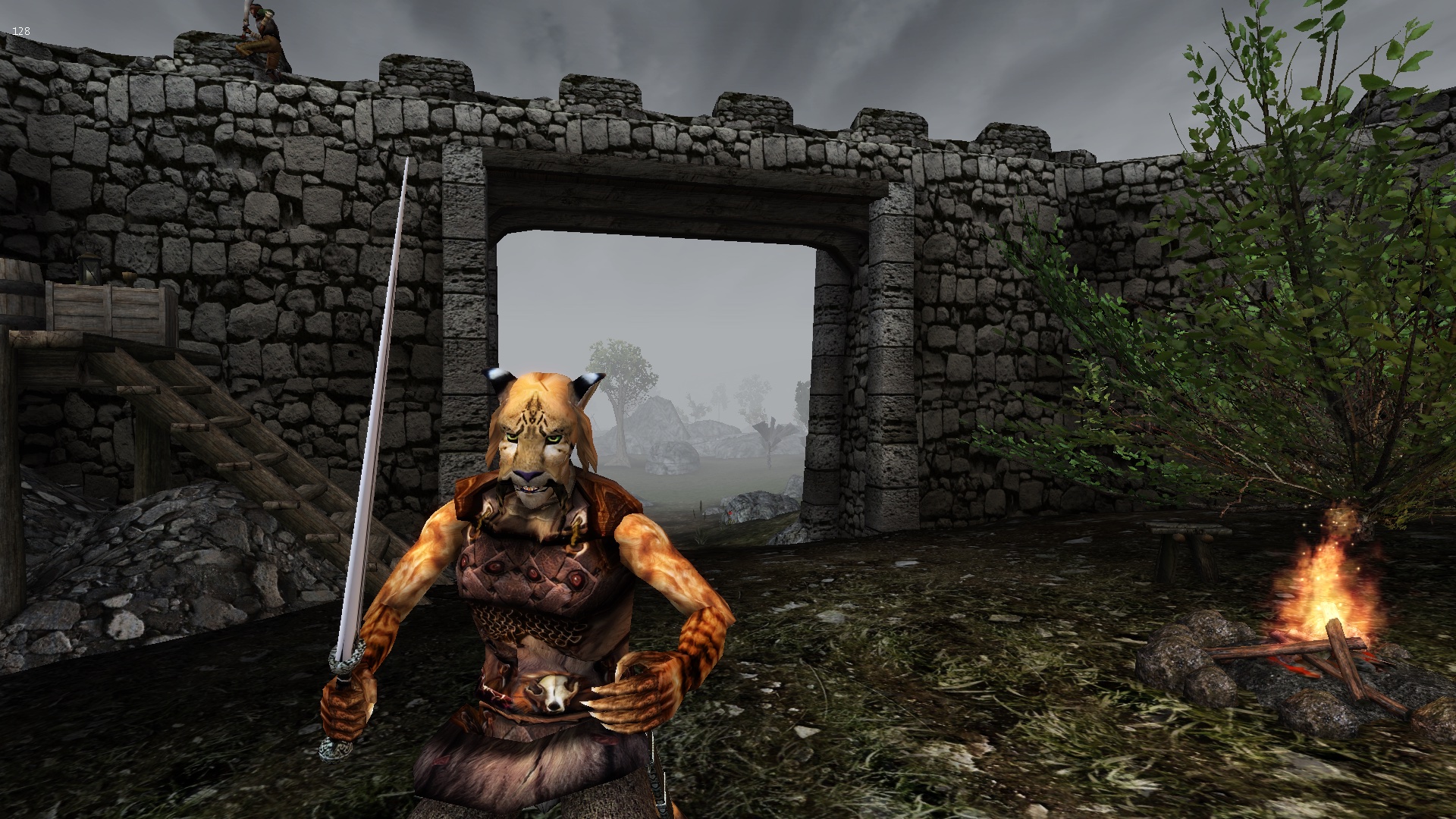
A screenshot from Skyrim: Home of the Nords.
Credit: Daniel Larlham Jr.
A screenshot from Skyrim: Home of the Nords. Credit: Daniel Larlham Jr.
Other modders were working on “Project Cyrodilll,” an attempt to put The Elder Scrolls IV: Oblivion’s province into Morrowind. In 2015, those two projects combined to form Project Tamriel, reigniting the goal of adding the remaining provinces of Tamriel.
Tamriel Rebuilt and Project Tamriel first became connected when the modders decided to combine their asset repositories into Tamriel_Data, but they have since grown closer through their shared developers, training protocols, and tools.
“The entirety of Tamriel is, in our scale, roughly the size of the real-life country of Malta, which is small in real life, but quite big from a human perspective,” said Tiny Plesiosaur, a senior developer who has done mapping and planning for both projects but who spends most of her time on Project Tamriel these days.
Both projects aim to create a cohesive, lore-accurate representation of these realms as they would have looked during the fictional historical period in which Morrowind takes place. So far, they’ve made substantial progress.
One thing in their favor, said Mort, a 13-year veteran quest-designer of Tamriel Rebuilt, is that Morrowind design makes it especially amenable to large-scale modding.
“I’d say the thing that makes Morrowind most conducive to these kinds of projects is no voiced dialogue,” Mort said. “The reason that you see so many quest mods for Morrowind as opposed to Oblivion and Skyrim and even Fallout is that the barrier to make a quest is essentially nothing.”
Frequent, contained public releases also work to their advantage. “I know for a lot of projects, they want to [do a] ‘we’ll release it when it’s done’ kind of thing,” said Mort. “We’ve found that releasing content builds hype, it gives players what they want, and perhaps most importantly, it serves as a proof of life and a fantastic recruitment tool.”
Every time Tamriel Rebuilt pushes a release, he said, the team picks up at least a dozen devs almost immediately. So far, Tamriel Rebuilt has seen nine releases; the most recent is titled “Grasping Fortune.” The next release, “Poison Song,” is expected sometime in 2026 and will include a never-before-seen faction. The most optimistic estimate for when the project will be fully finished is 2035.
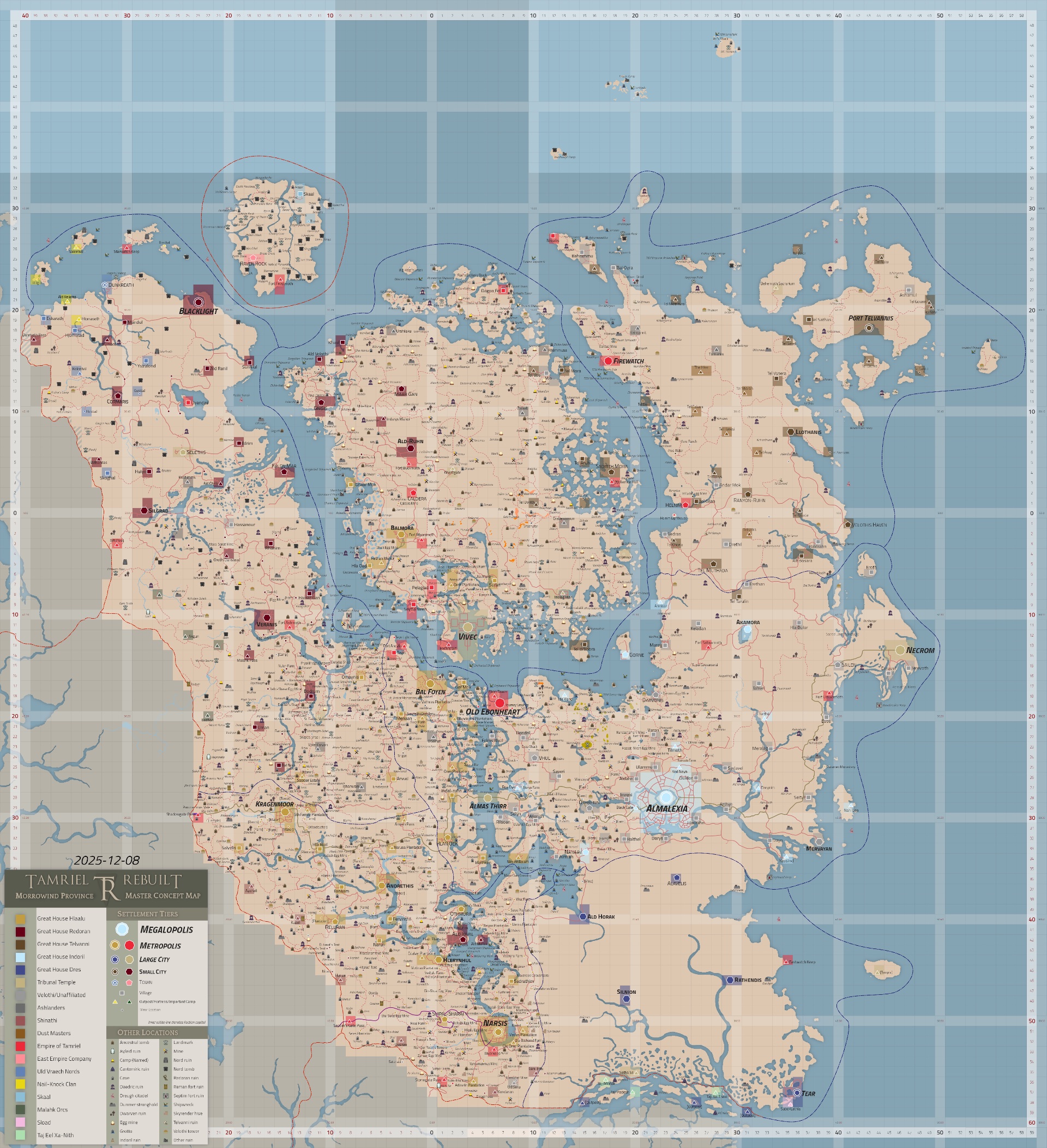
A map of the province of Morrowind for the Tamriel Rebuilt project. Note that the original game includes only the large island in the bay in the top half of the image.
Credit: Tamriel Rebuilt
A map of the province of Morrowind for the Tamriel Rebuilt project. Note that the original game includes only the large island in the bay in the top half of the image. Credit: Tamriel Rebuilt
Project Tamriel has made most of its progress in Skyrim and Cyrodiil. The release of “Abecean Shores,” the coastal section of Cyrodiil, came in late 2024. Together, the projects have added hundreds of hours of hand-crafted quests, dungeons, and landscapes to a game that was already robust.
Lus said the current timeline for Project Tamriel is a new release for Skyrim and then Cyrodill, followed by either High Rock—a comparatively smaller, peninsula province west of Skyrim—or the desert province of Hammerfell.
For many developers, the point isn’t to see these massive projects in a finished state but to complete the next task and hopefully bring the team closer to the next release.
A brief history of Tamriel Rebuilt
Sultan of Rum, a kind of historian for Tamriel Rebuilt, joked that the project was aptly named because of how many times it has been rebuilt—partly because the tools the modders use to build the project have gotten better over time, rendering work done before those advances obsolete.
But even then, Tamriel Rebuilt was more of a Wild West in its infancy: a ragtag bunch of video game enthusiasts working mostly independently and without very much oversight. As the project has become more unified, it has meant a lot of turnover and a fair share of setbacks.
“If you took a satellite picture of the game world in 2005, you’d have essentially a complete province already,” Sultan of Rum said. “But the trouble was that the quality wasn’t good; there was no coherence. The 5 percent of the work to just create a landmass was done, but the management wasn’t there.”
Much of the project’s history has been lost to time as Internet forums disappeared, but Sultan of Rum has been able to piece together some of the growing pains Tamriel Rebuilt has endured. A struggle between the need to centralize and the desire of some modders to remain independent is a recurring theme.
One period is considered a dark age for Tamriel Rebuilt. In the first couple of years, a significant group of modders had been working on a piece of content for the project called “Silgrad Tower,” while the project simultaneously began consolidating to build continuity.
Concept art for the project. ThomasRuz
There was debate among the modders about where Silgrid Tower should be located and which faction would have controlled it. This eventually led to an acrimonious split between the two groups. “The Silgrid Tower team was eventually put to the choice of either having to delete their work and restart it or, you know, leave the project. So they left the project,” said Sultan of Rum.
He said that much of the conflict has since been scrubbed from the forum archives, and the ordeal led to the deletion of the Tamriel Rebuilt forums, which were hosted by the Silgrid Tower team. This was probably the most drama the project has seen, he said.
There was also a period when the project moved to The Elder Scrolls IV: Oblivion’s construction set. “Maybe even a majority of the project jumped onto the [Oblivion] engine to start building out Hammerfell,” said Sultan of Rum. “So for a long time—four years—the sort of focus point of Tamriel Rebuilt was on Oblivion and on the province of Hammerfell, not on the Morrowind part, which of course was the successful one.”
Another event is solemnly referred to as “The Great Self-Decapitation.” Sultan of Rum explained that around 2015, some of the older guard—developers and administrators alike—left the project all at once. The exodus was due to the second scrapping of a large city in development.
“People were hoping that by 2013 it would come out. Literally thousands of hours of human labor were spent creating it in the construction set,” recalled Sultan of Rum. “It just turned out that it was non-viable as a playable space. It wasn’t thought out well enough, it didn’t coalesce into a compelling, playable world. The modders were faced with the prospect of having to throw out just a huge chunk of work.”
That decision sapped a lot of energy from the project, and others on the team began to move away from it as their personal lives became busier. Sultan of Rum said all this has made the project better in the long run. Project leaders soon instituted better planning and management systems that centralized information and preserved institutional knowledge in case longtime developers decide to leave.
Over the years, they’ve also refined their training practices, which has ultimately led to more developers joining both projects.
“If your goal is to get development done, providing as much detail and tutorializing and onboarding processes, making that as simple as possible is going to get you your best results,” said Mort. “Because, again, if you aren’t gaining devs, you’re losing devs.”
The parameters for onboarding new developers are now clearly defined, with a low barrier to entry focused on competence with the tools. These tests are called showcases.
Once the showcase is accepted, developers can begin working on both Tamriel Rebuilt and Project Tamriel, where much of the overlap between the two lies.
Mort added that the gap between a potential developer expressing interest and actively contributing can be as little as a week. This also allows movement between roles—for example, an interior designer training in exterior designing or someone starting in quest design moving elsewhere if it’s not a good fit.
Even more importantly, newer tech has improved the development process. The open source 3D modeling and animation tool Blender has become much friendlier to Morrowind modders, enabling teams to create custom assets more easily.
While this has required retouching some areas of Tamriel Rebuilt, it has also meant quicker turnaround times for custom assets. For Project Tamriel developers, the impact has been greater, as they can now reliably and routinely create assets to better represent Tamriel’s diverse cultures.
The old informs the new
The developers are well aware that both projects may still be unfinished 10 years from now, but most are just working toward the next release.
Discussing the project with just a few of the developers, it’s immediately clear how current work will inform future efforts.
For example, LogansGun is an exterior developer who did much of the work on the promotional videos for Tamriel Rebuilt’s last few releases. He joined the project because he wanted to leave his mark on this historical effort and ended up staying much longer than he thought he would.
Between work and raising a family, LogansGun often found himself working on Tamriel Rebuilt instead of playing video games, partly because of a childhood love for Morrowind and a desire to make the game more than it was.
“I remember playing it a lot, and it really stuck with me,” LogansGun said. “And it might have been like 5th or 6th grade that I had a friend and we all sat in like a four-student pod, and he would bring the map inside the plastic Xbox disc case. When we had some free time in class, he’d lay it out, and we’d all be looking all over the map of Vvardenfell and all the things that we had explored or wanted to explore.”
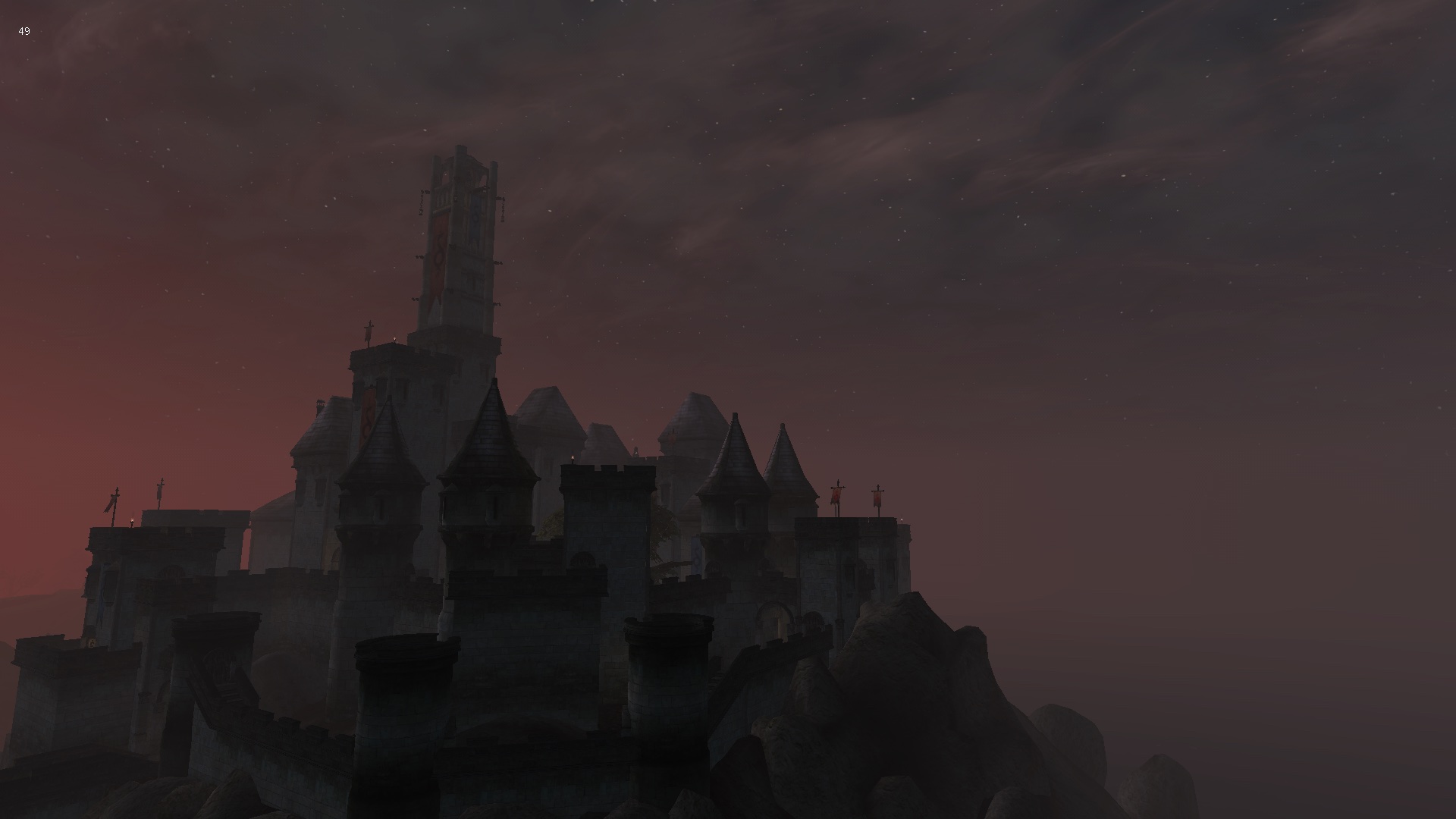
Another environment from the game, Old Ebonheart.
Credit: Daniel Larlham Jr.
Another environment from the game, Old Ebonheart. Credit: Daniel Larlham Jr.
Meadhainnigh, a college-aged chemical engineering student, first learned about Tamriel Rebuilt through the promotional video for Grasping Fortune, the project’s most recent update. The roughly three-minute video showcases some of the landscapes, cityscapes, and interiors, the culmination of thousands of hours of work. LogansGun is credited as the creator of that video, which has been used to inspire the next wave of contributors.
“I was thinking, well, this seems like a really cool project, and I just wanted to contribute and feel part of something bigger, and the rest is history, really,” said Meadhainnigh, who is now an asset dev for Project Tamriel. “But I joined the Discord server. I kind of learned the process of the project, and once I felt like I knew what I was going on, I tossed my hat in the ring.”
Meadhainnigh knew very little about development before he joined the project, and he said it’s the first online community he has been a part of. What keeps him going is that community—and to see his and others’ work become a part of a whole.
“We have some really wonderful people who are the old guard that feel like they are the comfortable welders, and they’re all very wise,” he said. “But even in the newest editions, we’re not here because we think that it’s all going to be done within our lifetimes. We like to joke about 2090 and about raising our children to work on the project. We just like to look at the next release, and that tends to be exciting enough to get us going.”
Inside the quixotic team trying to build an entire world in a 20-year-old game Read More »