mergers

downdetector,-speedtest-sold-to-it-service-provider-accenture-in-$1.2b-deal

Downdetector, Speedtest sold to IT service provider Accenture in $1.2B deal

In a statement, Accenture CEO and chair Julie Sweet said:

By acquiring Ookla, we will help our clients across business and government scale AI safely and build the trusted data foundations they need to deliver the reliable, seamless connectivity that creates value.

Current Accenture public sector clients include the US Air Force, the US Social Security Administration, and, recently, the US Department of State.

Speedtest and Downdetector are popular among people seeking something to help quickly test their current internet speed and the status of online services, respectively. Downdetector is often cited by media reports discussing the availability of websites, apps, banks, and more.

Under Ziff Davis, both programs also have business-to-business (B2B) applications. Using Speedtest, for instance, Ookla gathers, aggregates, and analyzes data for “billions of mobile network samples daily, which measure radio signal levels, network coverage, and availability, and [quality of experience] metrics for a number of connected experiences, such as streaming video, video conferencing, gaming, web browsing, and CDN and cloud provider performance,” Ookla says. Currently, Speedtest claims telecommunications operators, regulatory and trade bodies, analysts, journalists, and nonprofits as B2B customers.

Downdetector Explorer, meanwhile, is a monitoring tool that’s supposed to help businesses detect outages. Customers include streaming services, banks, social networks, and communication service providers.

Should Accenture’s acquisition close, the IT consultant will similarly use data from Speedtest and Downdetector to inform clients, and individual users will be subject to a new privacy policy and any other changes Accenture potentially makes.

An Accenture spokesperson told Ars Technica that Accenture plans to operate the Ookla “business as it operates today.” 

Downdetector, Speedtest sold to IT service provider Accenture in $1.2B deal Read More »

under-a-paramount-wbd-merger,-two-struggling-media-giants-would-unite

Under a Paramount-WBD merger, two struggling media giants would unite

A successful Paramount-WBD merger would be the largest streaming merger ever and would lead to further consolidation in the industry.

“What started as a fragmented but flexible streaming ecosystem is increasingly trending toward rebundling—fewer, larger super-platforms offering broader catalogues at higher price points,” Mathur said.

Paramount holds on to cable

Paramount’s WBD bid is unique in its aggressive push for cable channels, which are struggling with viewership and advertising revenue. Under a WBD merger, Paramount would add networks like HGTV, Cartoon Network, TLC, and CNN to its linear TV lineup, which currently includes Comedy Central, Nickelodeon, and CBS.

Although Paramount and WBD’s cable businesses are both in decline, they are both profitable. Paramount’s TV/media business, which includes its cable channels and production studios, reported $1.1 billion in adjusted OIBDA in Q4 2025. WBD’s cable business posted adjusted EBITDA of $1.41 billion that quarter.

Ultimately, a Paramount-WBD merger would put diversity of viewpoints at risk. Under Ellison’s ownership, CBS News has adjusted its approach with new editor-in-chief Bari Weiss. There have also been concerns about censoring CBS under Ellison’s Paramount, including from Stephen Colbert, who said this month that CBS forbade him from interviewing Texas Democratic Senate candidate James Talarico; CBS denied Colbert’s claim. Further, Paramount could have a lasting impact on CNN, including costs, layoffs, and coverage.

More to come

Regulatory scrutiny will be at the center of Paramount and WBD’s merger over the upcoming months. Federal approval is likely, but the merger also faces European regulation and potential state lawsuits. The theater industry is also lobbying against Paramount’s WBD merger.

Should a Paramount-WBD merger ultimately be greenlit, two declining businesses will be challenged to form a profitable one. Even with regulatory approval, Paramount-Skydance-Warner-Bros.-Discovery faces an uphill climb.

Although the bidding war may be settled, the fight for WBD is only beginning.

Under a Paramount-WBD merger, two struggling media giants would unite Read More »

netflix-cedes-warner-bros.-discovery-to-paramount:-“no-longer-financially-attractive”

Netflix cedes Warner Bros. Discovery to Paramount: “No longer financially attractive”

On Thursday, WBD’s board deemed Paramount’s revamped offer “superior,” giving Netflix four business days to match it. But that same day, Netflix, which had recently emphasized its willingness to walk away from mergers it deems overly expensive, said it would no longer pursue the acquisition.

A statement from Netflix co-CEOs Ted Sarandos and Greg Peters issued last night said:

The transaction we negotiated would have created shareholder value with a clear path to regulatory approval. However, we’ve always been disciplined, and at the price required to match Paramount Skydance’s latest offer, the deal is no longer financially attractive, so we are declining to match the Paramount Skydance bid.

The CEOs added that the WBD merger “was always a ‘nice to have’ at the right price, not a ‘must have’ at any price.”

Netflix and Paramount’s stock have continuously declined since Netflix announced its planned merger. Following yesterday’s announcement, Netflix shares rose by more than 10 percent in after-hours trading, and Paramount shares increased by 5 percent.

In a statement quoted by The Hollywood Reporter yesterday, WBD President and CEO David Zaslav said, “Once our board votes to adopt the Paramount merger agreement, it will create tremendous value for our shareholders. We are excited about the potential of a combined Paramount Skydance and Warner Bros. Discovery and can’t wait to get started working together telling the stories that move the world.”

The article was edited to correct ticking fee information. 

Netflix cedes Warner Bros. Discovery to Paramount: “No longer financially attractive” Read More »

wbd-says-paramount’s-new,-higher-offer-could-be-“superior”-to-netflix’s

WBD says Paramount’s new, higher offer could be “superior” to Netflix’s

Paramount Skydance increased its bid for Warner Bros. Discovery (WBD) from $30 per share to $31 per share, WBD said today. Amid a competing offer from Netflix for WBD’s movie studios and streaming businesses, WBD said that Paramount’s new bid “could reasonably be expected to lead to a ‘Company Superior Proposal.’”

Under its revamped offer, Paramount would also pay the $7 billion regulatory termination fee that would arise should a Paramount-WBD merger fail to close due to antitrust regulation.

The company owned by David Ellison also said it would pay $0.25 per share for every day the deal doesn’t close, starting on September 30, rather than the previous start date of December 31.

Paramount previously agreed to pay the $2.8 billion termination fee that WBD would be subject to if it canceled its merger deal with Netflix.

Netflix has offered $27.75 per share for a smaller part of WBD’s overall business. Netflix is looking to pay all-cash for WBD’s film studios, intellectual property, HBO, and streaming services, including HBO Max, but not any of WBD’s other cable channels.

WBD’s board has not decided if Paramount’s revamped offer is better than what Netflix has offered. If the board makes that determination, Netflix will have four days to present a better offer.

It’s unclear if Netflix would be willing to pay more for WBD’s streaming and movie businesses than what it’s already offered. The streaming giant hasn’t commented on Paramount’s new offer yet, but on Friday, co-CEO Ted Sarandos told Variety that the people in charge of Netflix are “super-disciplined buyers.”

“We have a reputation for such so that I’m willing to walk away and let someone else overpay for things. We have a rich history of that,” he added.

Regardless of the ultimate buyer, any WBD merger is expected to face intense regulatory scrutiny, lead to higher subscription prices, and have a lasting impact on Hollywood.

WBD says Paramount’s new, higher offer could be “superior” to Netflix’s Read More »

higher-prices,-simpler-streaming-expected-if-hbo-max-folds-into-paramount+

Higher prices, simpler streaming expected if HBO Max folds into Paramount+

If a company acquires any form of HBO, one of its top challenges is expected to be streamlining operations while maintaining HBO’s premium brand. This could be especially difficult under a “more mainstream umbrella like Paramount+,” Alderman noted.

Streaming has already diluted the HBO brand somewhat. Through streaming, HBO is now associated with stuff from DC Comics and Cartoon Network, as well as reality shows, like 90 Day Fiancé and Naked and Afraid. Merging with Paramount+ or even Netflix could expand the HBO umbrella further.

That expanded umbrella could allow a company like Paramount to better compete against Netflix, something WBD executives have shied away from. HBO Max is “not everything for everyone in a household,” JB Perrette, WBD’s streaming president and CEO, said this spring.

“What people want from us in a world where they’ve got Netflix and Amazon [Prime Video] are those things that differentiate us,” Casey Bloys, chairman and CEO of HBO and Max content, told The Wall Street Journal in May.

A “stress test” for more streaming mergers

Aside from the impact on HBO Max subscribers, WBD’s merger talks have broad implications. A deal would open the door for much more consolidation in the streaming space, something that experts have been anticipating for some years and that addresses the boom of streaming services. Per Clark, discussions of a Paramount-WBD merger are “less about two studios joining forces and more about a stress test for future M&A.”

If WBD accepts a Paramount bid and that bid clears regulatory hurdles, it would signal that “premium content under fewer umbrellas is back in play,” Clark said.

A Paramount-WBD merger is likely to speed up consolidation among mid-tier players, like NBCUniversal, Lionsgate, and AMC, Alderman said, pointing to these companies’ interest in scaling their streaming businesses and in building differentiated portfolios to counter Netflix and Disney+’s expansive libraries.

If Paramount and WBD don’t merge, Clark expects to see more “piecemeal” strategies, such as rights-sharing, joint venture bundles, and streaming-as-a-service models.

Higher prices, simpler streaming expected if HBO Max folds into Paramount+ Read More »

disney-makes-antitrust-problem-go-away-by-buying-majority-stake-in-fubo

Disney makes antitrust problem go away by buying majority stake in Fubo

Fubo’s about-face

Fubo’s merger with Disney represents a shocking about-face for the sports-streaming provider, which previously had raised alarms (citing Citi research) about Disney’s ownership of 54 percent of the US sports rights market—ESPN (26.8 percent), Fox (17.3 percent), and WBD (9.9 percent). Fubo successfully got a preliminary injunction against Venu in August, and a trial was scheduled for October 2025.

Fubo CEO David Gandler said in February that Disney, Fox, and WBD “are erecting insurmountable barriers that will effectively block any new competitors.

“Each of these companies has consistently engaged in anticompetitive practices that aim to monopolize the market, stifle any form of competition, create higher pricing for subscribers, and cheat consumers from deserved choice,” Gandler also said at the time.

Now, set to be a Disney company, Fubo is singing a new tune, with its announcement claiming that the merger “will enhance consumer choice by making available a broad set of programming offerings.”

In a statement today, Gandler added that the merger will allow Fubo to “provide consumers with greater choice and flexibility” and “to scale effectively,” while adding that the deal “strengthens Fubo’s balance sheet” and sets Fubo up for “positive cash flow.”

Ars Technica reached out to Fubo about its previously publicized antitrust and anticompetitive concerns, whether or not those concerns had been addressed, and new concerns that it has settled its lawsuit in favor of its own business needs rather than over a resolution of customer choice problems. Jennifer Press, Fubo SVP of communications, responded to our questions with a statement, saying in part:

We filed an antitrust suit against the Venu Sports partners last year because that product was intended to be exclusive. As its partners announced last year, consumers would only have access to the Venu content package from Venu, which would limit choice and competitive pricing.

The definitive agreement that Fubo signed with Disney today will actually bring more choice to the market. As part of the deal, Fubo extended carriage agreements with Disney and also Fox, enabling Fubo to create a new Sports and Broadcast service and other genre-based content packages. Additionally, as the antitrust litigation has been settled, the Venu Sports partners can choose to launch that product if they wish. The launch of these bundles will enhance consumer choice by making available a broad set of programming offerings.

“… a total deception”

Some remain skeptical about Disney buying out a company that was suing it over antitrust concerns.

Disney makes antitrust problem go away by buying majority stake in Fubo Read More »

microsoft-cancels-blizzard-survival-game,-lays-off-1,900

Microsoft cancels Blizzard survival game, lays off 1,900

Survival game won’t survive —

Job cuts hit Xbox, ZeniMax businesses, too, reports say.

Activision Blizzard survival game

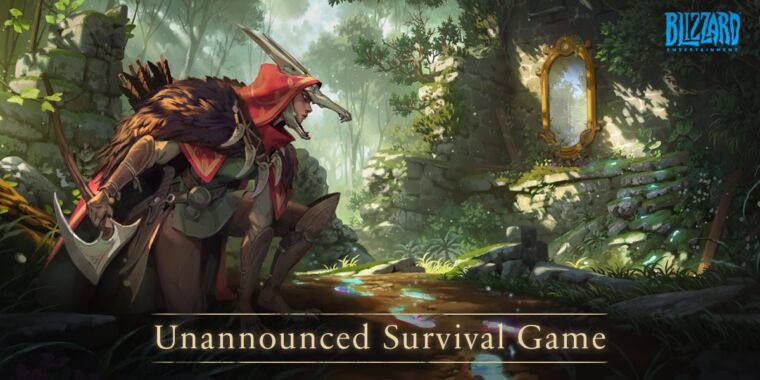
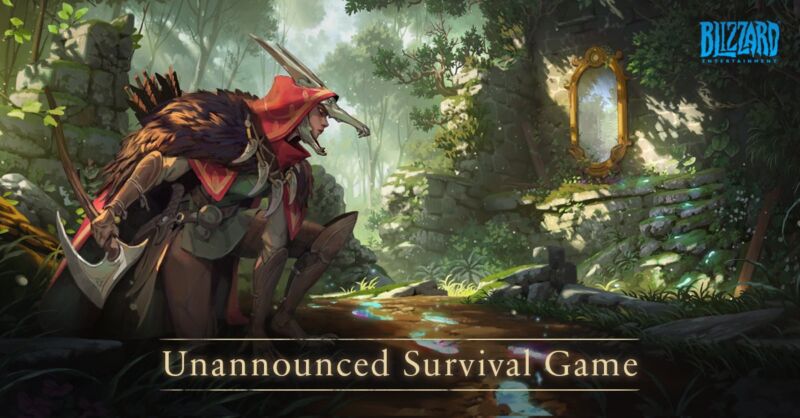
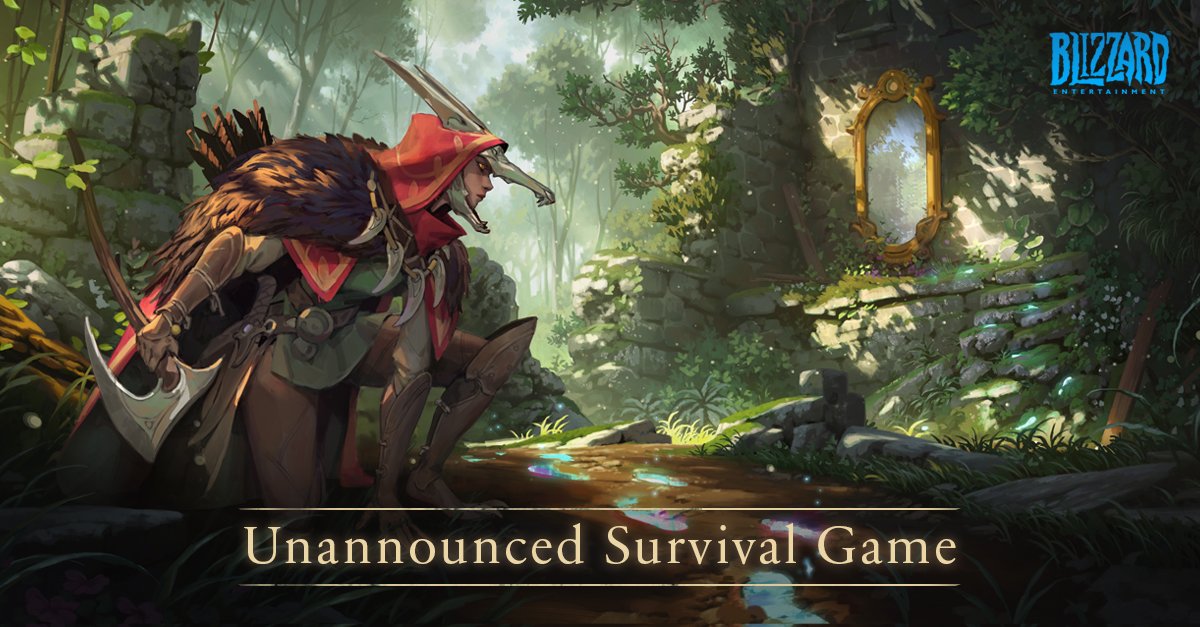
Enlarge / Blizzard shared this image teasing a now-cancelled game in 2022.

Blizzard Entertainment/Twitter

The survival game that Blizzard announced it was working on in January 2022 has reportedly been canceled. The cut comes as Microsoft is slashing jobs a little over four months after closing its $69 billion Activision Blizzard acquisition.

Blizzard’s game didn’t have a title yet, but Blizzard said it would be for PC and console and introduce new stories and characters. In January 2022, Blizzard put out a call for workers to help build the game.

The game’s axing was revealed today in an internal memo from Microsoft Gaming CEO Phil Spencer seen by publications including The Verge and CNBC that said:

Blizzard is ending development on its survival game project and will be shifting some of the people working on it to one of several promising new projects Blizzard has in the early stages of development.

Spencer said Microsoft was laying off 1,900 people starting today, with workers continuing to receive notifications in the coming days. The layoffs affect 8.64 percent of Microsoft’s 22,000-employee gaming division.

Another internal memo, written by Matt Booty, Microsoft’s game content and studios president, and seen by The Verge, said the layoffs are hitting “multiple” Blizzard teams, “including development teams, shared service organizations and corporate functions.” In January 2022, after plans for the merger were first announced, Bobby Kotick, then-CEO of Activision Blizzard, reportedly told employees at a meeting that Microsoft was “committed to trying to retain as many of our people as possible.”

Spencer said workers in Microsoft’s Xbox and ZeniMax Media businesses will also be impacted. Microsoft acquired ZeniMax, which owns Bethesda Softworks, for $7.5 billion in a deal that closed in March 2021.

After a bumpy ride with global regulators, Microsoft’s Activision Blizzard purchase closed in October. Booty’s memo said the job cuts announced today “reflect a focus on products and strategies that hold the most promise for Blizzard’s future growth, as well as identified areas of overlap across Blizzard and Microsoft Gaming.”

He claimed that layoffs would “enable Blizzard and Xbox to deliver ambitious games… on more platforms and in more places than ever before,” as well as “sustainable growth.”

Spencer’s memo said:

As we move forward in 2024, the leadership of Microsoft Gaming and Activision Blizzard is committed to aligning on a strategy and an execution plan with a sustainable cost structure that will support the whole of our growing business. Together, we’ve set priorities, identified areas of overlap, and ensured that we’re all aligned on the best opportunities for growth.

Laid-off employees will receive severance as per local employment laws, Spencer added.

Additional departures

Blizzard President Mike Ybarra announced via his X profile today that he is leaving the company. Booty’s memo said Ybarra “decided to leave” since the acquisition was completed. Ybarra was a top executive at Microsoft for over 20 years, including leadership positions at Xbox, before he started working at Blizzard in 2019.

Blizzard’s chief design officer, Allen Adham, is also leaving the company, per Booty’s memo.

The changes at the game studio follow Activision Blizzard CEO Bobby Kotick’s exit on January 1.

Microsoft also laid off 10,000 people, or about 4.5 percent of its reported 221,000-person workforce, last year as it worked to complete its Activision Blizzard buy. Microsoft blamed those job cuts on “macroeconomic conditions and changing customer priorities.”

Today’s job losses also join a string of recently announced tech layoffs, including at IBM, Google, SAP, and eBay and in the gaming community platforms Unity, Twitch, and Discord. However, layoffs following Microsoft’s Activision Blizzard deal were somewhat anticipated due to expected redundancies among the Washington tech giant’s biggest merger ever. This week, Microsoft hit a $3 trillion market cap, becoming the second company to do so (after Apple).

Microsoft cancels Blizzard survival game, lays off 1,900 Read More »