
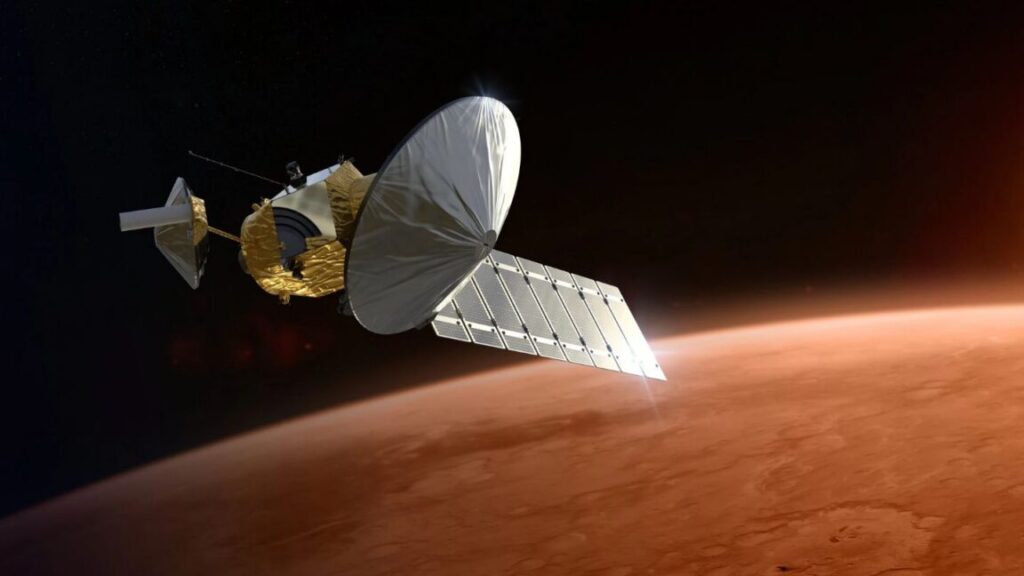
mars telecommunications orbiter

a-non-public-document-reveals-that-science-may-not-be-prioritized-on-next-mars-mission

A non-public document reveals that science may not be prioritized on next Mars mission

The way this document is written suggests that when NASA scores bidders for the Mars Telecommunications Network, the addition of a camera or other scientific payloads won’t be a net positive. However, if they pose an overall risk to the mission, they would be a net negative.

New award to Rocket Lab may complicate things

One of the other intriguing parts of this mission is that it sets up a battle royale of sorts for some of NASA’s most prominent contractors. Rocket Lab and Blue Origin have both waged very public campaigns that tout their solutions to NASA’s needs. SpaceX is also interested in winning a Mars mission for its Starship launch system. Then there are traditional contractors, such as Lockheed Martin, which have a long and storied history of building robust (if costly) Mars missions.

If NASA is going to launch the Mars Telecommunications Network by late 2028 to make the next “window” to the red planet, it must move quickly with this solicitation. In particular, industry protests after a decision is made could hold up the project for months and would almost certainly doom NASA’s hopes of making the 2028 launch opportunity.

On Monday, the space agency awarded Rocket Lab a $390,936 contract to study “Mars End-to-End Communication Service Architectures.” The award is not significant monetarily, but it does indicate that NASA is interested in Rocket Lab’s ideas for improving communications between Earth and Mars, and potentially a Mars Sample Return mission down the road. However, one source suggested to Ars that the award is a potential conflict of interest.

The contracting office for the Rocket Lab award is Goddard Space Flight Center, which is also responsible for managing the Mars Telecommunications Network. That Rocket Lab, alone, received an award like this from the NASA center that will also decide on the orbiting spacecraft—coterminous when such a decision will be made—is surely to be the basis of one or more protests should Rocket Lab win the Mars Telecommunications Network contract, the source told Ars.

A non-public document reveals that science may not be prioritized on next Mars mission Read More »
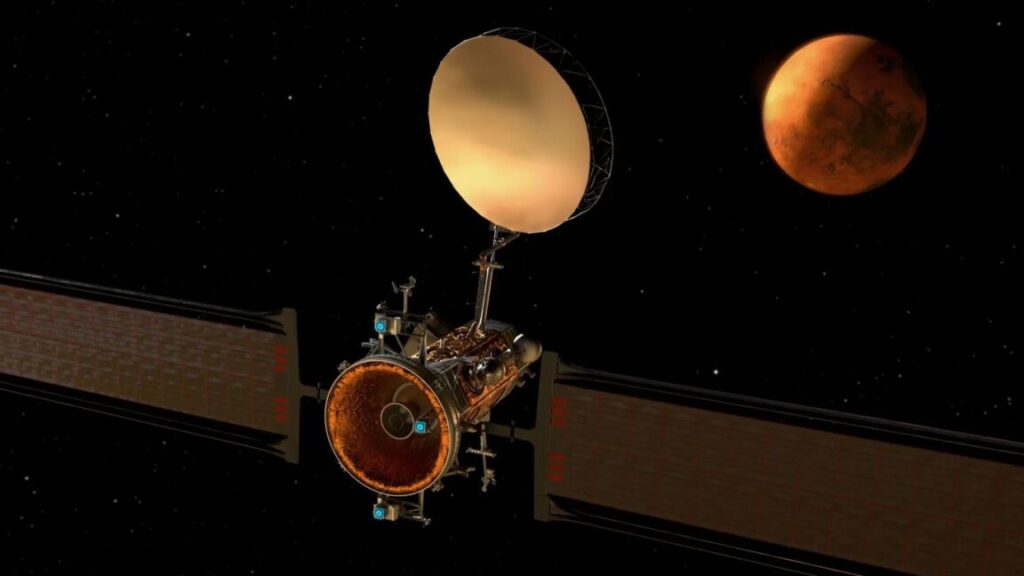
nasa-faces-a-crucial-choice-on-a-mars-spacecraft—and-it-must-decide-soon

NASA faces a crucial choice on a Mars spacecraft—and it must decide soon

However, some leaders within NASA see the language in the Cruz legislation as spelling out a telecommunications orbiter only and believe it would be difficult, if not impossible, to run a procurement competition between now and September 30th for anything beyond a straightforward communications orbiter.

In a statement provided to Ars by a NASA spokesperson, the agency said that is what it intends to do.

“NASA will procure a high-performance Mars telecommunications orbiter that will provide robust, continuous communications for Mars missions,” a spokesperson said. “NASA looks forward to collaborating with our commercial partners to advance deep space communications and navigation capabilities, strengthening US leadership in Mars infrastructure and the commercial space sector.”

Big decisions loom

Even so, sources said Isaacman has yet to decide whether the orbiter should include scientific instruments. NASA could also tap into other funding in its fiscal year 2026 budget, which included $110 million for unspecified “Mars Future Missions,” as well as a large wedge of funding that could potentially be used to support a Mars commercial payload delivery program.

The range of options before NASA, therefore, includes asking industry for a single telecom orbiter from one company, asking for a telecom orbiter with the capability to add a couple of instruments, or creating competition by asking for multiple orbiters and capabilities by tapping into the $700 million in the Cruz bill but then augmenting this with other Mars funding.

One indication that this process has been muddied within NASA came a week ago, when the space agency briefly posted a “Justification for Other Than Full and Open Competition, Extension” notice on a government website. It stated that the agency “will only conduct a competition among vendors that satisfy the statutory qualifications.” The notice also listed the companies eligible to bid based on the Cruz language: Blue Origin, L3Harris, Lockheed Martin, Northrop Grumman, Rocket Lab, SpaceX, Quantum Space, and Whittinghill Aerospace.

NASA faces a crucial choice on a Mars spacecraft—and it must decide soon Read More »