macos 26

how-to-downgrade-from-macos-26-tahoe-on-a-new-mac

How to downgrade from macOS 26 Tahoe on a new Mac


Most new Macs can still be downgraded with few downsides. Here’s what to know.
An Ars Technica colleague recently bought a new M4 MacBook Air. I have essentially nothing bad to say about this hardware, except to point out that even in our current memory shortage apocalypse, Apple is still charging higher-than-market-rates for RAM and SSD upgrades. Still, most people buying this laptop will have a perfectly nice time with it.

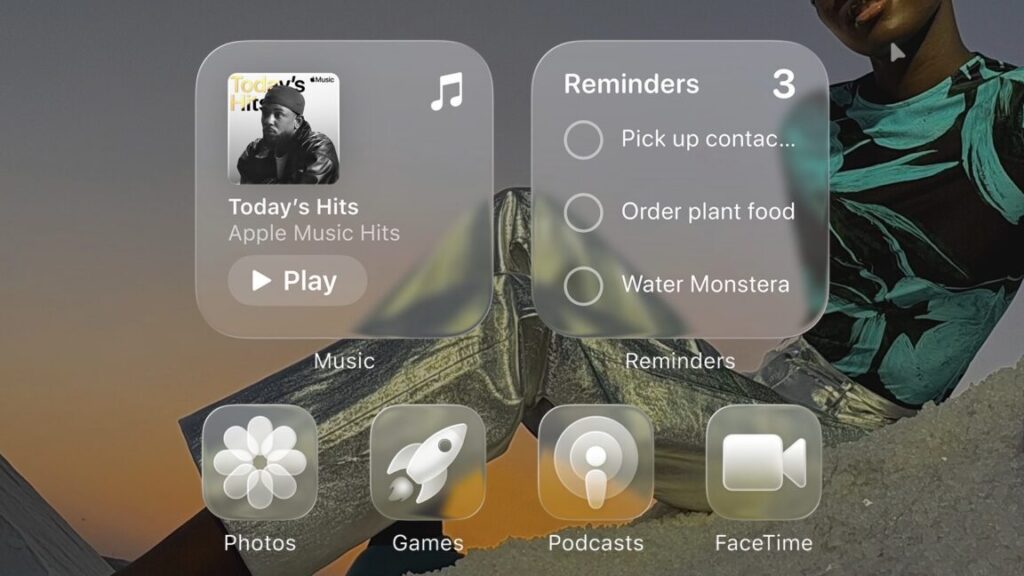
But for this colleague, it was also their first interaction with macOS 26 Tahoe and the Liquid Glass redesign, the Mac’s first major software design update since the Apple Silicon era began with macOS 11 Big Sur in 2020.

Negative consumer reaction to Liquid Glass has been overstated by some members of the Apple enthusiast media ecosystem, and Apple’s data shows that iOS 26 adoption rates are roughly in line with those of the last few years. But the Mac’s foray into Liquid Glass has drawn particular ire from longtime users (developers Jeff Johnson and Norbert Heger have been tracking persistently weird Finder and window resizing behavior, to pick two concrete examples, and Daring Fireball’s John Gruber has encouraged users not to upgrade).

My general approach to software redesigns is to just roll with them and let their imperfections and quirks become background noise over time—it’s part of my job to point out problems where I see them, but I also need to keep up with new releases whether I’m in love with them or not.

But this person has no such job requirement, and they had two questions: Can I downgrade this? And if so, how?

The answer to the first question is “yes, usually,” and Apple provides some advice scattered across multiple documentation pages. This is an attempt to bring all of those steps together into one page, aimed directly at new Mac buyers who are desperate to switch from Tahoe to the more-familiar macOS 15 Sequoia.

Table of Contents

A preemptive warning about security updates and older versions of macOS

Before we begin: Apple handles macOS updates differently from iOS updates. Eventually, Apple requires devices that support the latest iOS and iPadOS versions to install those updates if they want to continue getting security patches. That means if your iPhone or iPad can run iOS or iPadOS 26, it needs to be running iOS or iPadOS 26 to stay patched.

Older macOS versions, on the other hand, are updated for around three years after they’re initially released. The first year, they get both security patches and new features. The next two years, they get security patches and new versions of the Safari browser. Macs running older-but-supported macOS versions also generally continue to get the same firmware updates as those running the latest macOS version.

Generally, we’d recommend against using macOS versions after security updates have dried up. For macOS 15 Sequoia, that will happen around September or October of 2027. Apple also sometimes leaves individual vulnerabilities unpatched on older operating systems; only the latest releases are guaranteed to get every patch. If you can look past the elements of Tahoe’s design that bother you most, staying on it is the safest option.

You can follow steps similar to the ones in this guide to downgrade some Macs to even older versions of macOS, but I wouldn’t recommend it; macOS 14 Sonoma will get security and Safari updates for only another six months or so, which isn’t long enough to justify spending the time to install it.

What we won’t cover is how to transfer data you want to keep from your Tahoe install to an older version of macOS. We’re assuming you have a new and relatively pristine Mac to downgrade, one that you haven’t loaded up with data other than what you already have synced to iCloud.

Can my Mac downgrade?

Mostly, yes. Any Mac with an M4 family chip or older, including the M4 MacBook Air and everything else in Apple’s current lineup, should support the current version of Sequoia (as of this writing, 15.7.4, with Safari 26.3).

As a rule of thumb, Macs will not run any version of macOS older than the one they shipped with when they launched. Apple provides security updates for older versions of macOS, but it doesn’t bother backporting drivers and other hardware support from newer versions to older ones.

The only Mac to launch since Tahoe was released is the M5 MacBook Pro, so owners of that system will need Tahoe or newer. If Apple puts out new Macs in early March as expected, those Macs will also only work with Tahoe or newer, and downgrades won’t be possible.

Although we’re mainly talking about new Macs here, these steps should all be identical for any Apple Silicon Mac, from the original M1 computers on up. If you buy a recently used Mac that ships with Tahoe installed, a downgrade still works the same way. We won’t cover the steps for installing anything on an Intel Mac—vanishingly few of them support Tahoe in the first place, and most people certainly shouldn’t be buying them at this late date.

Option one: A bootable USB installer

Apple hasn’t shipped physical install media for macOS in 15 years, but each downloadable installer still includes the bits you need to make a bootable USB install drive. And while late-Intel-era Macs with Apple T2 chips briefly made booting from external media kind of a pain, Apple Silicon Macs will boot from a USB drive just as easily and happily as early Intel-era Macs did.

This method will be the easiest for most people because it only requires you to own a single Mac—the one you’re downgrading.

Create the USB installer
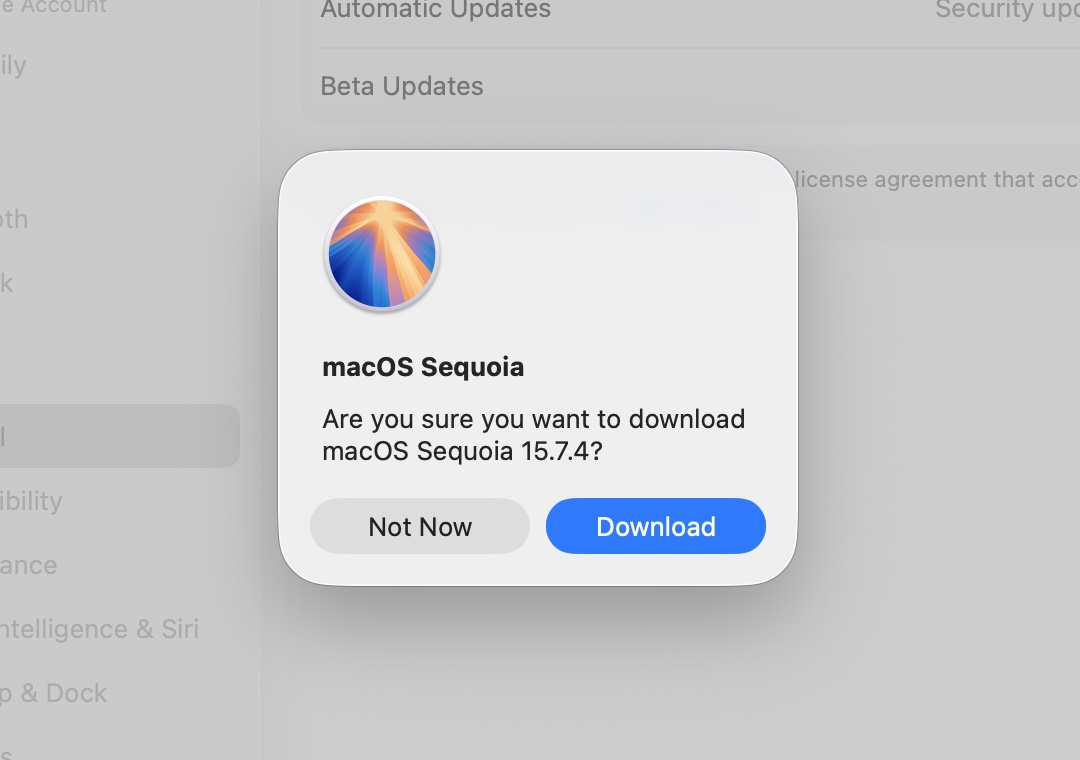
Downloading the Sequoia installer through Software Update. Downloading this way serves as an additional compatibility check; your Mac won’t download any version of macOS too old for it to run.

Credit: Andrew Cunningham

Downloading the Sequoia installer through Software Update. Downloading this way serves as an additional compatibility check; your Mac won’t download any version of macOS too old for it to run. Credit: Andrew Cunningham

To make a USB installer, you’ll need a 32GB or larger USB flash drive and the downloadable macOS Sequoia installer. A 16GB drive was large enough for macOS for many years, but Sequoia and Tahoe are too large by a couple of gigabytes.

Apple’s support page here links to every downloadable macOS installer going back to 2011’s 10.7 Lion. In Tahoe, the macOS Sequoia link takes you to the App Store, which then bounces you to Software Update in the Settings app. This process has enough points of failure that it may not work the first time; try clicking the “Get” button in the App Store again and it usually goes.

If you’re downloading the installer from within macOS Tahoe, you’ll see a pop-up when the download completes, telling you that the installer can’t be run from within that version of macOS. Since we’ll be running it off of its own USB stick, you can safely ignore this message.

While the installer is downloading, install and prepare your USB drive. Open Disk Utility, click the View button, and select “show all devices.” Click the root of your USB drive under the “external” header in the left sidebar, and click the Erase button in the upper-right control area.

Change the disk’s name to whatever you want—I use “MyVolume” so I don’t have to change Apple’s sample terminal commands when copying the installer files—and make sure the Format is set to Mac OS Extended (Journaled) and the Scheme is set to GUID Partition Map. (That’s not an error; the macOS installer still wants an HFS+ filesystem rather than APFS.)

The handy thing is that if you have a larger USB drive, you can create installers for multiple macOS versions by partitioning the disk with the Partition button. A 64GB drive split into three ~21GB partitions could boot Tahoe, Sequoia, and another past or future macOS version; I just have it split into two volumes so I can boot Sequoia and Tahoe installers from the same drive.
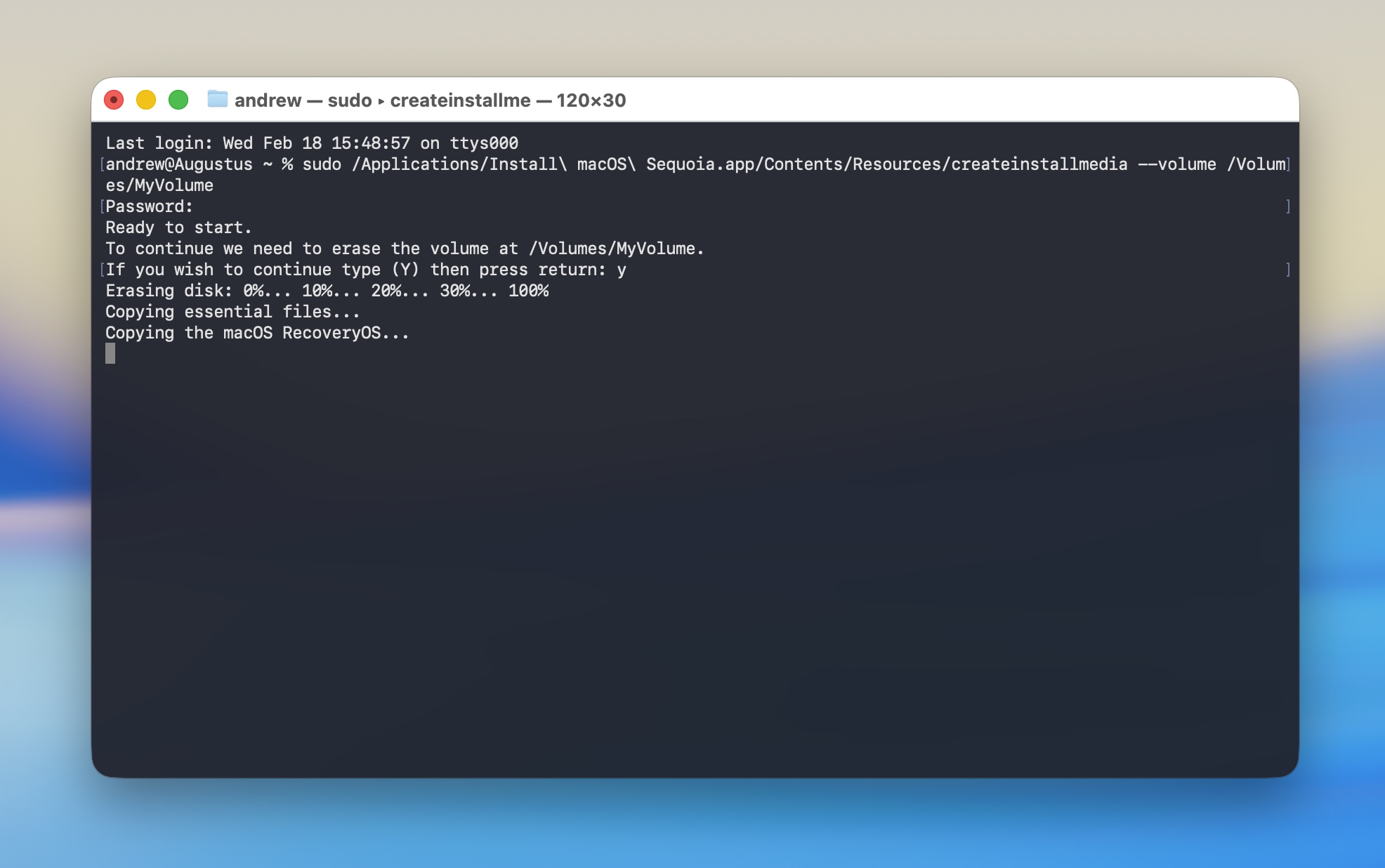
Running the Terminal command to create our macOS 15 Sequoia boot drive.

Credit: Andrew Cunningham

Running the Terminal command to create our macOS 15 Sequoia boot drive. Credit: Andrew Cunningham

Once the Sequoia installer is in your Applications folder, run a Terminal command to copy the installer files. Apple has commands for each version of macOS on this page. Use this one for Sequoia:

sudo /Applications/Install macOS Sequoia.app/Contents/Resources/createinstallmedia --volume /Volumes/MyVolume

If you named the USB drive something other than MyVolume when you formatted it, change the name in the command as well. Note that names with spaces require a backslash before each space.

The Terminal will prompt you for your password and ask you to type Y to confirm. It will then reformat the drive and copy the files over. The time this takes will vary depending on the speed of the USB drive you’re using, but for most USB 3 drives, it should only take a few minutes to create the installer. When the Terminal command is done running, leave the disk inserted and shut down your Mac.

Using the USB installer

With your Mac powered down and the USB installer drive inserted, press and hold the power button on your Mac (the Touch ID button on any laptop or the dedicated power button on a desktop) until the text under the Apple logo changes to “loading startup options.” You should see the macOS Sequoia installer listed alongside Macintosh HD as a boot option; highlight it and click Continue. If you don’t see the Sequoia installer, you may need an extra step—highlight Options, then click Continue, and we’ll talk more about this momentarily.

Once booted, the Sequoia installer will automatically launch the macOS installer to do an in-place upgrade, which isn’t what we want. Hit Command+Q to quit the installer and click through the confirmation, and you’ll get the typical menu of recovery environment options; from here, launch Disk Utility, click the top level of the internal Macintosh HD disk, and click Erase. Click through the prompts to erase the Mac and restart.
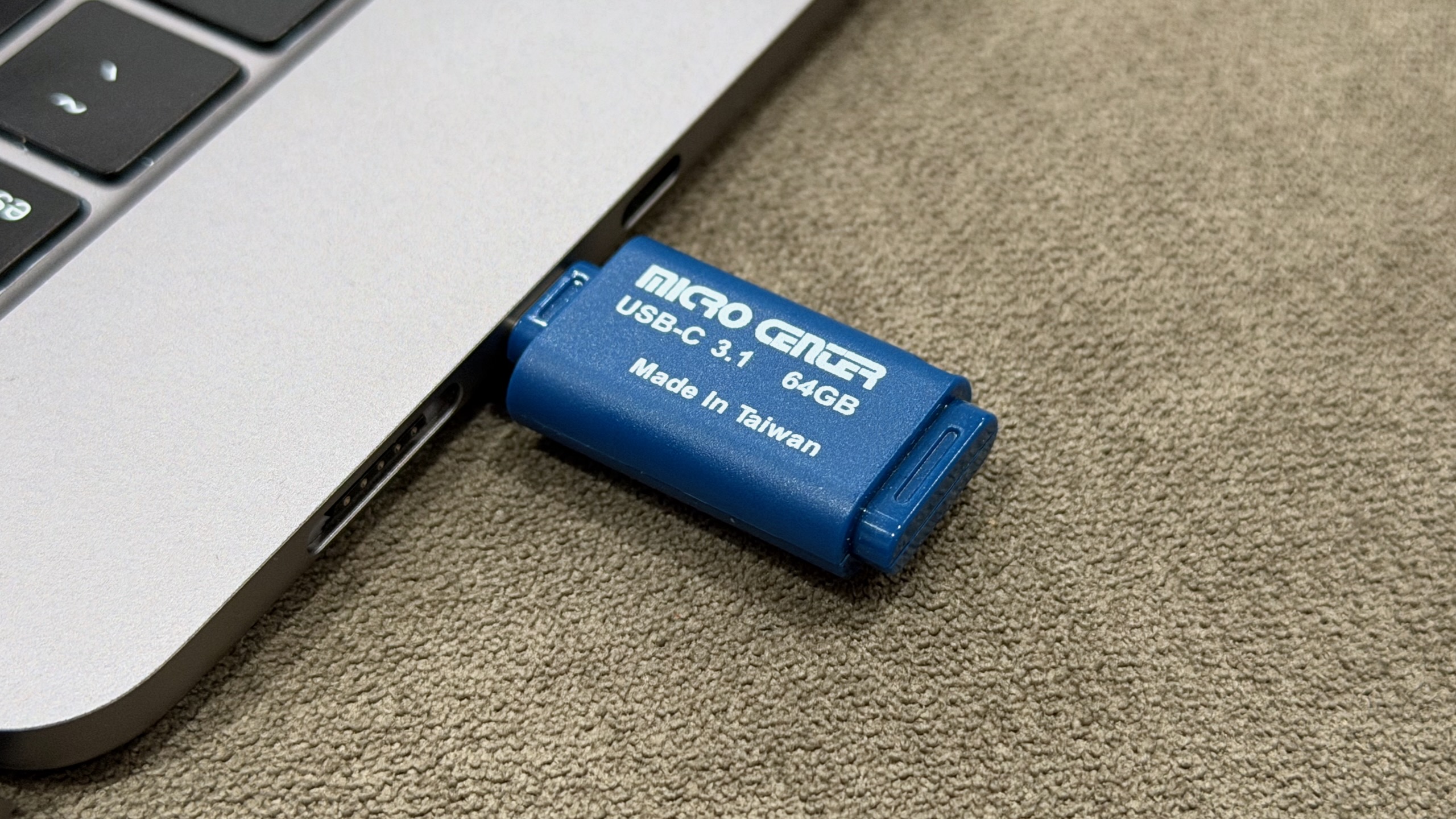
My own macOS USB installer from my beloved Micro Center.

Credit: Andrew Cunningham

My own macOS USB installer from my beloved Micro Center. Credit: Andrew Cunningham

After the Mac restarts, you’ll need an Internet connection to activate it before you can do anything else with it; connect using the Wi-Fi menu in the top-right, typing in your network SSID and password manually if the menu doesn’t auto-populate. This will activate your Mac and get you back to the recovery environment menu.

Here, select the Sequoia installer and click through the prompts—you should be able to install Sequoia on the now-empty Macintosh HD volume with no difficulty. From here, there’s nothing else to do. Wait until the installation completes, and when it’s ready, it will boot into a fresh Sequoia install, ready to be set up.

If you didn’t see your Sequoia installer in the boot menu before and you clicked the Options gear instead, it usually means that FileVault encryption or Find My was enabled on the Mac—maybe you signed into your Apple account when you were initially setting up Tahoe before you decided you wanted nothing to do with it.

When you boot into the recovery environment, you’ll be asked to select a user you know the password for, which will unlock the encrypted disk. If all you want to do is erase the Mac and make it bootable from your USB stick, don’t worry about this; just select Recovery Assistant from the menu, select Erase Mac, and click through the prompts. Then, use the steps above to boot from your USB stick, and you should be able to install a fresh copy of whatever macOS version you want to the now-erased internal drive.

The nuclear option: A DFU restore

Normally, a bootable USB installer does everything you need it to do. It wipes the data from your Mac’s internal storage and replaces it with new data. But occasionally you need to drill a little deeper, either because your Mac becomes unresponsive or you’ve been running beta software and want to switch back to a stable release. Or just because other steps haven’t worked for you.

The nuclear option for resetting a Mac is a DFU (or Device Firmware Upgrade) restore. Based on the restore process for iPhones and iPads, a DFU restore uses a compressed IPSW archive that contains not only the macOS system files but also firmware files for all Apple Silicon Macs. The USB installer just replaces macOS; the DFU restore replaces everything from the firmware on up. (These are also the same files used to create macOS virtual machines using Apple’s Virtualization Framework.)

Because a DFU restore can only be performed on a Mac that’s booted into a special DFU mode, you’ll need a second Mac with a USB-C or Thunderbolt port, plus a USB-C cable. Apple says the USB-C charging cable included with Macs will work for this but not to use a Thunderbolt cable; I’ve used a generic USB-C cable, and it has worked fine.

The first step is to download the relevant IPSW file from Apple. This page on the Mr. Macintosh site is the one I have bookmarked because it’s a good repository of virtually every macOS IPSW file Apple has ever released, including beta versions for when those are useful.

First, download the macOS 15.6.1 IPSW file linked on that page (and here) to your host Mac (Apple stops releasing IPSW files for older OSes once newer ones have been released, so this is the newest file you’ll be able to get for macOS 15). Both iPhones and iPads have model-specific IPSW files, but for macOS, there’s just one image that works with all Macs.

On the Mac you’re trying to restore—we’ll call it the “target Mac” for simplicity’s sake—figure out which of its USB-C ports is the designated DFU port. There’s only one that will work, and it’s usually the leftmost or rightmost port. Plug one end of the USB-C cable into that DFU port and the other into any USB-C port on your host Mac and follow Apple’s instructions for how to boot the system into DFU mode.
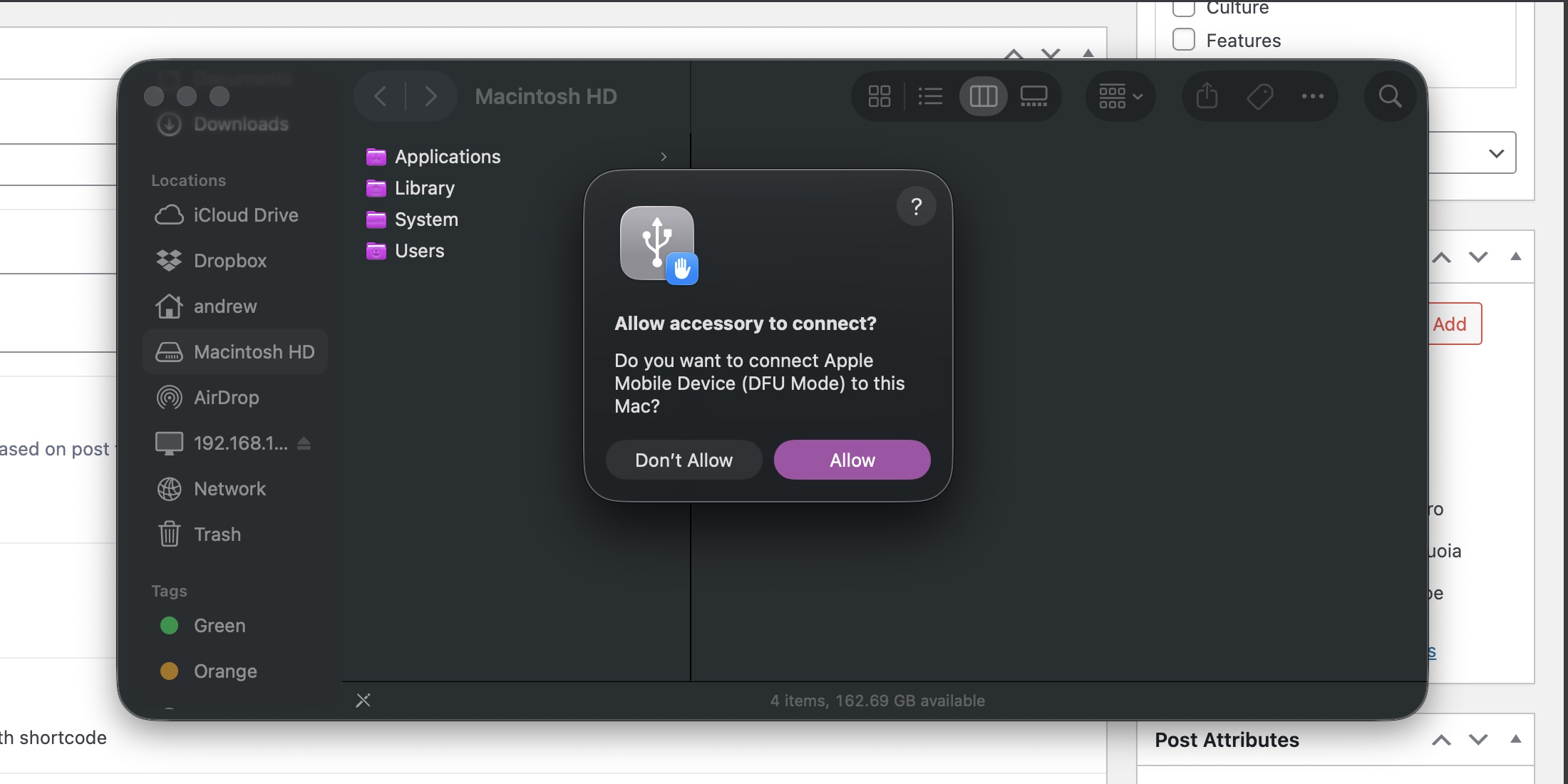
A Mac in DFU mode will need permission before your Mac can work with it.

Credit: Andrew Cunningham

A Mac in DFU mode will need permission before your Mac can work with it. Credit: Andrew Cunningham

When it’s successfully booted into DFU mode, your host Mac will see the target Mac, and you’ll see the same notification you get any time you plug in USB accessories for the first time. Allow it to connect, open a Finder window, and scroll down the left-hand sidebar until you get to “Mac” under the Locations heading.

The Finder’s DFU interface is pretty simple—a picture, a line of text, and two buttons. We want to restore, not revive, the Mac. Clicking the Revive Mac button will normally download and install the latest macOS version from Apple. But you can force it to use a different IPSW file—like the Sequoia one we just downloaded—by holding down the Option key as you click it. Navigate to the IPSW file, open it, and allow the restore process to begin.

This will take some time; you can track progress in the first phase in the Finder window. After a few minutes, the Mac you’re restoring will light back up, and you can watch its progress there. Once the target Mac reboots with its signature chime, the process is complete.

Because the IPSW file is for an outdated version of Sequoia, the first thing you’ll want to do is hit Software Update for the latest Sequoia and Safari versions; you’ll be offered a Tahoe upgrade, but you obviously won’t want to do that after the trouble you just went through. Scroll down to “other updates,” and you’ll be offered all the non-Tahoe updates available.

Downgrader’s remorse?

You will run into a handful of downsides when running an older version of macOS, especially if you’re trying to use it with iPhones and/or iPads that have been updated to version 26.

Most of the awkwardness will involve new features introduced in Messages, Notes, Reminders, and other Apple apps that sync between devices. The Messages app in Sequoia doesn’t support background images or polls, and it handles spam filtering slightly differently. They’re minor absences and annoyances, mostly, but they’re still absences and annoyances.

At least for the time being, though, you’ll find Sequoia pretty well-supported by most of Apple’s ecosystem. Core services like iCloud and iMessage aren’t going anywhere; Xcode still supports Sequoia, as does every Apple Creator Studio app update aside from the new Pixelmator Pro. App support may eventually drop off, but there’s not a lot that requires the latest and greatest version of macOS.

If and when you decide it’s time to step up to a newer version of macOS, Tahoe (or whatever macOS 27 is called) will be there in Software Update waiting for you. You’ll need to install a new version eventually if you want to keep getting app updates and security patches. But you don’t have to yet.

Photo of Andrew Cunningham

Andrew is a Senior Technology Reporter at Ars Technica, with a focus on consumer tech including computer hardware and in-depth reviews of operating systems like Windows and macOS. Andrew lives in Philadelphia and co-hosts a weekly book podcast called Overdue.

How to downgrade from macOS 26 Tahoe on a new Mac Read More »
ios-2601,-macos-260.1-updates-fix-install-bugs,-new-phone-problems,-and-more

iOS 26.0.1, macOS 26.0.1 updates fix install bugs, new phone problems, and more

Now that iOS 26, macOS 26 Tahoe, and Apple’s other big software updates for the year are out in public, Apple’s efforts for the next few months will shift to fixing bugs and adding individual new features. The first of those bug fix updates has arrived this week in the form of iOS 26.0.1, macOS 26.0.1, iPadOS 26.0.1, and equivalent updates for most of the devices across Apple’s ecosystem.

The release notes for most of the updates focus on device- and platform-specific early adopter problems, particularly for buyers of the new iPhone 17, iPhone 17 Pro, and iPhone Air.

The iOS 26.0.1 update fixes a bug that could prevent phones from connecting to cellular networks, a bug that could cause app icons to appear blank, and the VoiceOver feature becoming disabled on devices that have it on. Camera, Wi-Fi, and Bluetooth bugs with the new iPhones have also been patched. The iPadOS update also fixes a bug that was causing the floating software keyboard to move around.

iOS 26.0.1, macOS 26.0.1 updates fix install bugs, new phone problems, and more Read More »

macos-26-tahoe:-the-ars-technica-review

macOS 26 Tahoe: The Ars Technica Review

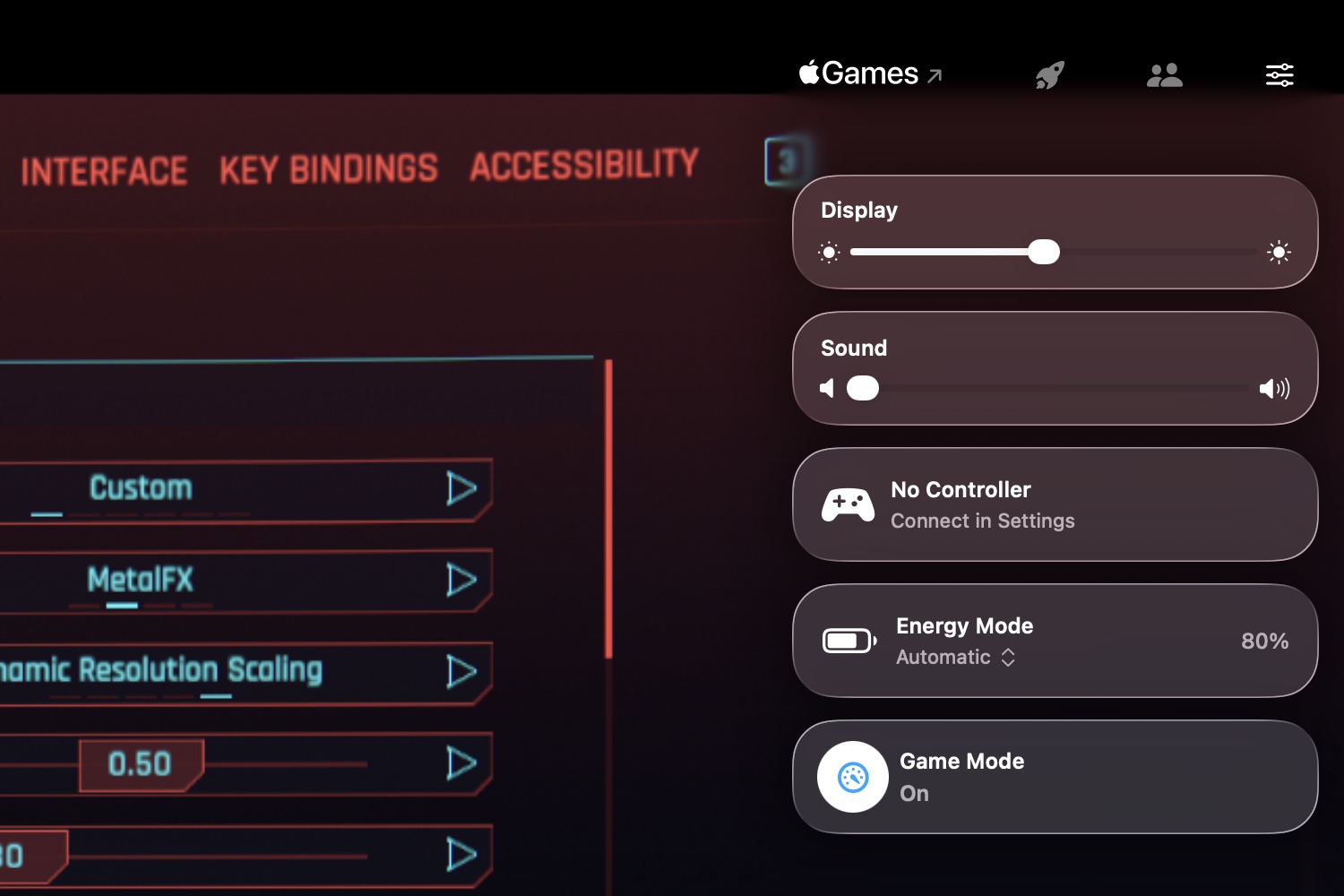
Game Overlay

The Game Overlay in macOS Tahoe. Credit: Andrew Cunningham

Tahoe’s new Game Overlay doesn’t add features so much as it groups existing gaming-related features to make them more easily accessible.

The overlay makes itself available any time you start a game, either via a keyboard shortcut or by clicking the rocketship icon in the menu bar while a game is running. The default view includes brightness and volume settings, toggles for your Mac’s energy mode (for turning on high-performance or low-power mode, when they’re available), a toggle for Game Mode, and access to controller settings when you’ve got one connected.

The second tab in the overlay displays achievements, challenges, and leaderboards for the game you’re playing—though only if they offer Apple’s implementation of those features. Achievements for games installed from Steam, for example, aren’t visible. And the last tab is for social features, like seeing your friends list or controlling chat settings (again, when you’re using Apple’s implementation).

More granular notification summaries

I didn’t think the Apple Intelligence notification summaries were very useful when they launched in iOS 18 and macOS 15 Sequoia last year, and I don’t think iOS 26 or Tahoe really changes the quality of those summaries in any immediately appreciable way. But following a controversy earlier this year where the summaries botched major facts in breaking news stories, Apple turned notification summaries for news apps off entirely while it worked on fixes.

Those fixes, as we’ve detailed elsewhere, are more about warning users of potential inaccuracies than about preventing those inaccuracies in the first place.

Apple now provides three broad categories of notification summaries: those for news and entertainment apps, those for communication and social apps, and those for all other kinds of apps. Summaries for each category can be turned on or off independently, and the news and entertainment category has a big red disclaimer warning users to “verify information” in the individual news stories before jumping to conclusions. Summaries are italicized, get a special icon, and a “summarized by Apple Intelligence” badge, just to make super-ultra-sure that people are aware they’re not taking in raw data.

Personally, I think if Apple can’t fix the root of the problem in a situation like this, then it’s best to take the feature out of iOS and macOS entirely rather than risk giving even one person information that’s worse or less accurate than the information they already get by being a person on the Internet in 2025.

As we wrote a few months ago, asking a relatively small on-device language model to accurately summarize any stack of notifications covering a wide range of topics across a wide range of contexts is setting it up to fail. It does work OK when summarizing one or two notifications, or when summarizing straightforward texts or emails from a single person. But for anything else, be prepared for hit-or-miss accuracy and usefulness.

Relocated volume and brightness indicators

The pop-ups you see when adjusting the system volume or screen brightness have been redesigned and moved. The indicators used to appear as large rounded squares, centered on the lower half of your primary display. The design had changed over the years, but this was where they’ve appeared throughout the 25-year existence of Mac OS X.

Now, both indicators appear in the upper-right corner of the screen, glassy rectangles that pop out from items on the menu bar. They’ll usually appear next to the Control Center menu bar item, but the volume indicator will pop out of the Sound icon if it’s visible.

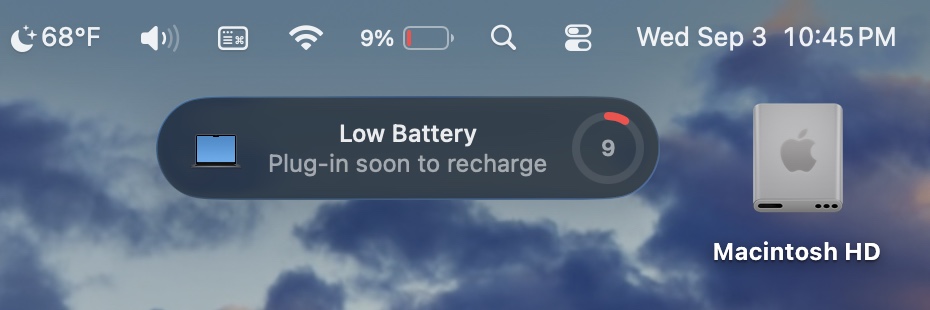
New low battery alert

Tahoe picks up an iPhone-ish low-battery alert on laptops. Credit: Andrew Cunningham

Tahoe tweaks the design of macOS’ low battery alert notification. A little circle-shaped meter (in the same style as battery meters in Apple’s Batteries widgets) shows you in bright red just how close your battery is to being drained.

This notification still shows up separately from others and can’t be dismissed, though it doesn’t need to be cleared and will go away on its own. It starts firing off when your laptop’s battery hits 10 percent and continues to go off when you drop another percentage point from there (it also notified me without the percentage readout changing, seemingly at random, as if to annoy me badly enough to plug my computer in more quickly).

The notification frequency and the notification thresholds can’t be changed, if this isn’t something you want to be reminded about or if it’s something you want to be reminded about even earlier. But you could possibly use the battery level trigger in Shortcuts to customize your Mac’s behavior a bit.

Recovery mode changes

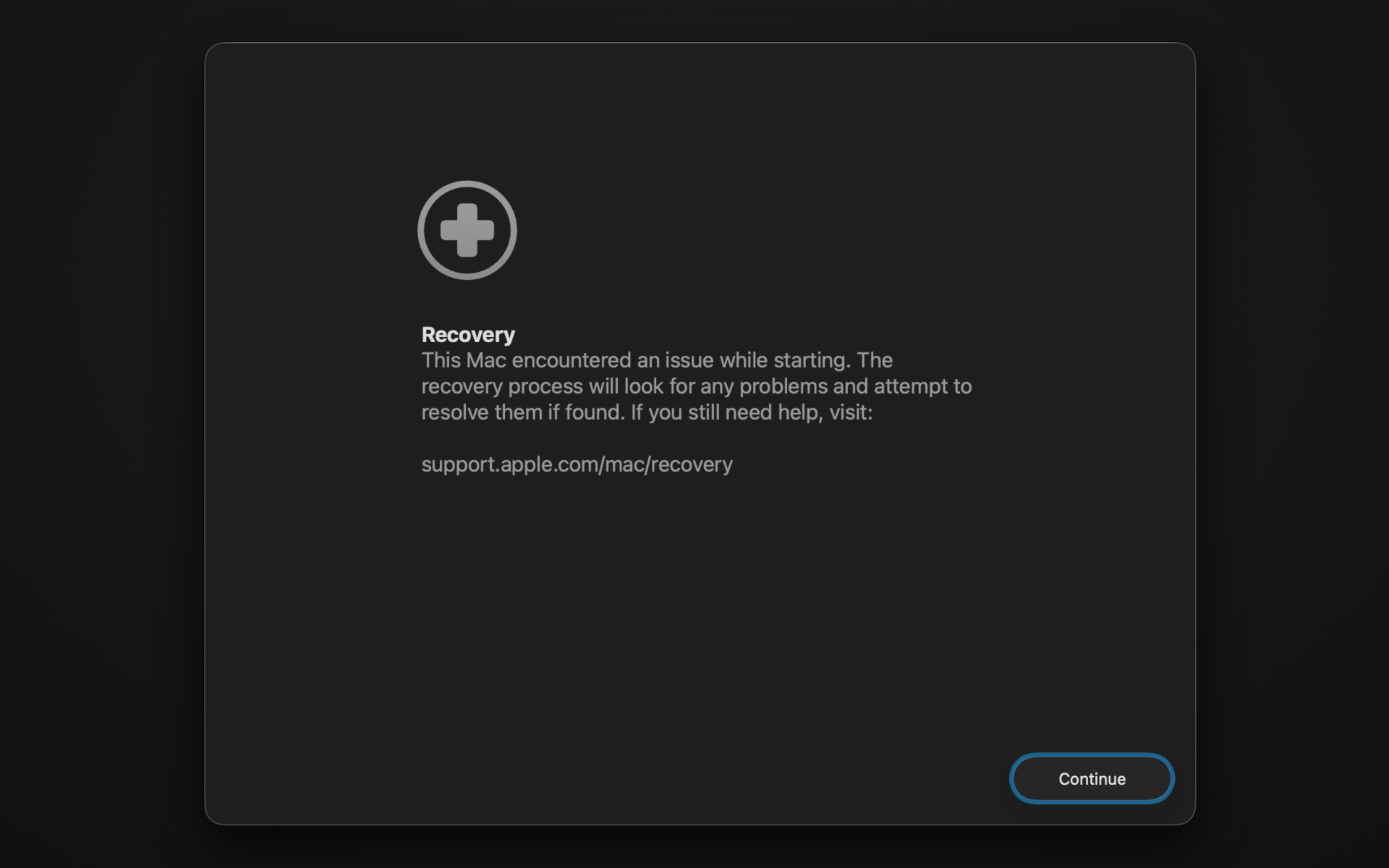
A new automated recovery tool in macOS Tahoe’s recovery volume. Credit: Andrew Cunningham

Tahoe’s version of the macOS Recovery mode gets a new look to match the rest of the OS, but there are a few other things going on, too.

If you’ve ever had a problem getting your Mac to boot, or if you’ve ever just wanted to do a totally fresh install of the operating system, you may have run into the Mac’s built-in recovery environment before. On an Apple Silicon Mac, you can usually access it by pressing and holding the power button when you start up your Mac and clicking the Options button to start up using the hidden recovery volume rather than the main operating system volume.

Tahoe adds a new tool called the Device Recovery Assistant to the recovery environment, accessible from the Utilities menu. This automated tool “will look for any problems” with your system volume “and attempt to resolve them if found.”

Maybe the Recovery Assistant will actually solve your boot problems, and maybe it won’t—it doesn’t tell you much about what it’s doing, beyond needing to unlock FileVault on my system volume to check it out. But it’s one more thing to try if you’re having serious problems with your Mac and you’re not ready to countenance a clean install yet.

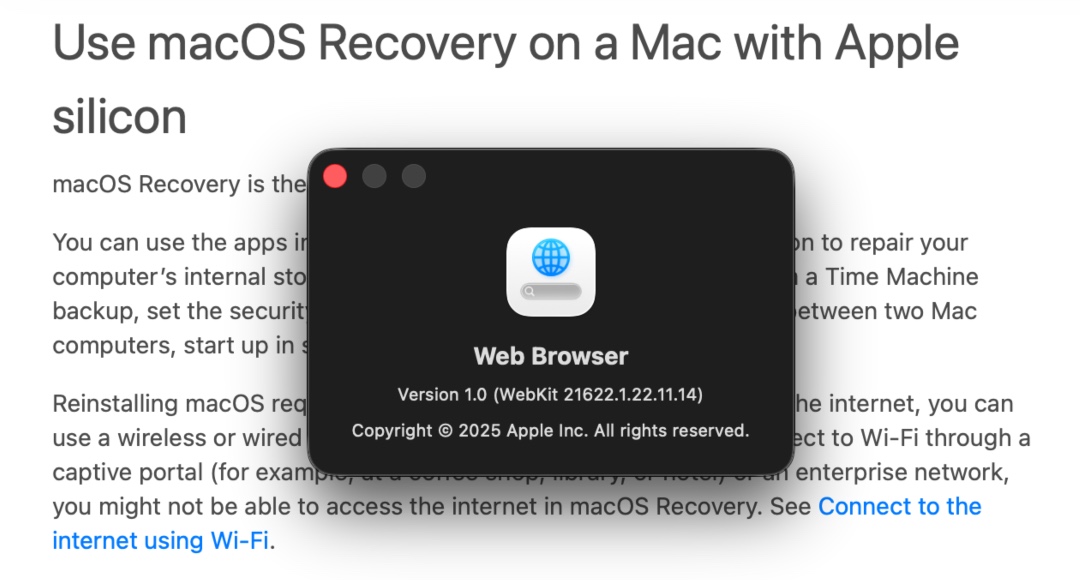
The web browser in the recovery environment is still WebKit, but it’s not Safari-branded anymore, and it sheds a lot of Safari features you wouldn’t want or need in a temporary OS. Credit: Andrew Cunningham

Apple has made a couple of other tweaks to the recovery environment, beyond adding a Liquid Glass aesthetic. The recovery environment’s built-in web browser is simply called Web Browser, and while it’s still based on the same WebKit engine as Safari, it doesn’t have Safari’s branding or its settings (or other features that are extraneous to a temporary recovery environment, like a bookmarks menu). The Terminal window picks up the new Clear theme, new SF Mono Terminal typeface, and the new default 120-row-by-30-column size.

A new disk image format

Not all Mac users interact with disk images regularly, aside from opening them up periodically to install an app or restore an old backup. But among other things, disk images are used by Apple’s Virtualization framework, which makes it relatively simple to run macOS and Linux virtual machines on the platform for testing and other things. But the RAW disk image format used by older macOS versions can come with quite severe performance penalties, even with today’s powerful chips and fast PCI Express-connected SSDs.

Enter the Apple Sparse Image Format, or ASIF. Apple’s developer documentation says that because ASIF images’ “intrinsic structure doesn’t depend on the host file system’s capabilities,” they “transfer more efficiently between hosts or disks.” The upshot is that reading files from and writing files to these images should be a bit closer to your SSD’s native performance (Howard Oakley at The Eclectic Light Company has some testing that suggests significant performance improvements in many cases, though it’s hard to make one-to-one comparisons because testing of the older image formats was done on older hardware).

The upshot is that disk images should be capable of better performance in Tahoe, which will especially benefit virtual machines that rely on disk images. This could benefit the lightweight virtualization apps like VirtualBuddy and Viable that mostly exist to provide a front end for the Virtualization framework, as well as virtualization apps like Parallels that offer support for Windows.

Quantum-safe encryption support

You don’t have a quantum computer on your desk. No one does, outside of labs where this kind of technology is being tested. But when or if they become more widely used, they’ll render many industry-standard forms of encryption relatively easy to break.

macOS 26 Tahoe: The Ars Technica Review Read More »

apple-intelligence-news-summaries-are-back,-with-a-big-red-disclaimer

Apple Intelligence news summaries are back, with a big red disclaimer

Apple has released the fourth developer betas of iOS 26, iPadOS 26, macOS 26 and its other next-generation software updates today. And along with their other changes and fixes, the new builds are bringing back Apple Intelligence notification summaries for news apps.

Apple disabled news notification summaries as part of the iOS 18.3 update in January. Incorrect summaries circulating on social media prompted news organizations to complain to Apple, particularly after one summary said that Luigi Mangione, alleged murderer of UnitedHealthcare CEO Brian Thompson, had died by suicide (he had not and has not).

Upon installing the new update, users of Apple Intelligence-compatible devices will be asked to enable or disable three broad categories of notifications: those for “News & Entertainment” apps, for “Communication & Social” apps, and for all other apps. The operating systems will list sample apps based on what you currently have installed on your device.

All Apple Intelligence notification summaries continue to be listed as “beta,” but Apple’s main change here is a big red disclaimer when you enable News & Entertainment notification summaries, pointing out that “summarization may change the meaning of the original headlines.” The notifications also get a special “summarized by Apple Intelligence” caption to further distinguish them from regular, unadulterated notifications.

Apple Intelligence news summaries are back, with a big red disclaimer Read More »

apple-sues-youtuber-who-leaked-ios-26’s-new-“liquid-glass”-software-redesign

Apple sues YouTuber who leaked iOS 26’s new “Liquid Glass” software redesign

“Defendants’ misconduct was brazen and egregious,” says Apple’s filing. “After Mr. Prosser learned that Mr. Ramacciotti needed money, and that his friend Ethan Lipnik worked at Apple on unreleased software designs, Defendants jointly planned to access Apple’s confidential and trade secret information through Mr. Lipnik’s Apple-owned development iPhone.”

Apple’s main source of information appears to be an audio message sent to Lipnik by Ramacciotti, which Lipnik then provided to Apple. An April 4 email from an anonymous source, also shared in the filing, named Lipnik as the source of the leaks and alleged the involvement of Ramaciotti and three other names that are blacked out.

According to the filing, Lipnik has been fired from Apple “for failing to follow Apple’s policies designed to protect its confidential information, including development devices and unreleased software and features.” The filing also accuses Lipnik of failing to report “multiple prior breaches” to Apple.

For his part, Prosser claims that Apple’s timeline of events is incorrect.

“This is not how the situation played out on my end,” Prosser posted to social media late yesterday. “Luckily have receipts for that. I did not ‘plot’ to access anyone’s phone. I did not have any passwords. I was unaware of how the information was obtained. Looking forward to speaking with Apple on this.”

Prosser then posted a screenshot from a messaging app, dated to February, which implies that he had been sent the information about the Liquid Glass redesign unsolicited.

Apple’s suit is seeking damages from Prosser and Ramacciotti, and it wants “to protect its trade secrets” and “prevent Messrs. Ramacciotti and Prosser from continuing to act unlawfully.” Even though the company has already publicly announced iOS 26 and the Liquid Glass design, Apple describes Prosser and Ramacciotti as “an ongoing threat” because Lipnik’s phone “contained other announced design elements that remain confidential.”

Apple sues YouTuber who leaked iOS 26’s new “Liquid Glass” software redesign Read More »

the-macbook-air-is-the-obvious-loser-as-the-sun-sets-on-the-intel-mac-era

The MacBook Air is the obvious loser as the sun sets on the Intel Mac era


In the end, Intel Macs have mostly gotten a better deal than PowerPC Macs did.

For the last three years, we’ve engaged in some in-depth data analysis and tea-leaf reading to answer two questions about Apple’s support for older Macs that still use Intel chips.

First, was Apple providing fewer updates and fewer years of software support to Macs based on Intel chips as it worked to transition the entire lineup to its internally developed Apple Silicon? And second, how long could Intel Mac owners reasonably expect to keep getting updates?

The answer to the first question has always been “it depends, but generally yes.” And this year, we have a definitive answer to the second question: For the bare handful of Intel Macs it supports, macOS 26 Tahoe will be the final new version of the operating system to support any of Intel’s chips.

To its credit, Apple has also clearly spelled this out ahead of time rather than pulling the plug on Intel Macs with no notice. The company has also said that it plans to provide security updates for those Macs for two years after Tahoe is replaced by macOS 27 next year. These Macs aren’t getting special treatment—this has been Apple’s unspoken, unwritten policy for macOS security updates for decades now—but to look past its usual “we don’t comment on our future plans” stance to give people a couple years of predictability is something we’ve been pushing Apple to do for a long time.

With none of the tea leaf reading left to do, we can now present a fairly definitive look at how Apple has handled the entire Intel transition, compare it to how the PowerPC-to-Intel switch went two decades ago, and predict what it might mean about support for Apple Silicon Macs.

The data

We’ve assembled an epoch-spanning spreadsheet of every PowerPC or Intel Mac Apple has released since the original iMac kicked off the modern era of Apple back in 1998. On that list, we’ve recorded the introduction date for each Mac, the discontinuation date (when it was either replaced or taken off the market), the version of macOS it shipped with, and the final version of macOS it officially supported.

For those macOS versions, we’ve recorded the dates they received their last major point update—these are the feature-adding updates these releases get when they’re Apple’s latest and greatest version of macOS, as macOS 15 Sequoia is right now. After replacing them, Apple releases security-only patches and Safari browser updates for old macOS versions for another two years after replacing them, so we’ve also recorded the dates that those Macs would have received their final security update. For Intel Macs that are still receiving updates (versions 13, 14, and 15) and macOS 26 Tahoe, we’ve extrapolated end-of-support dates based on Apple’s past practices.

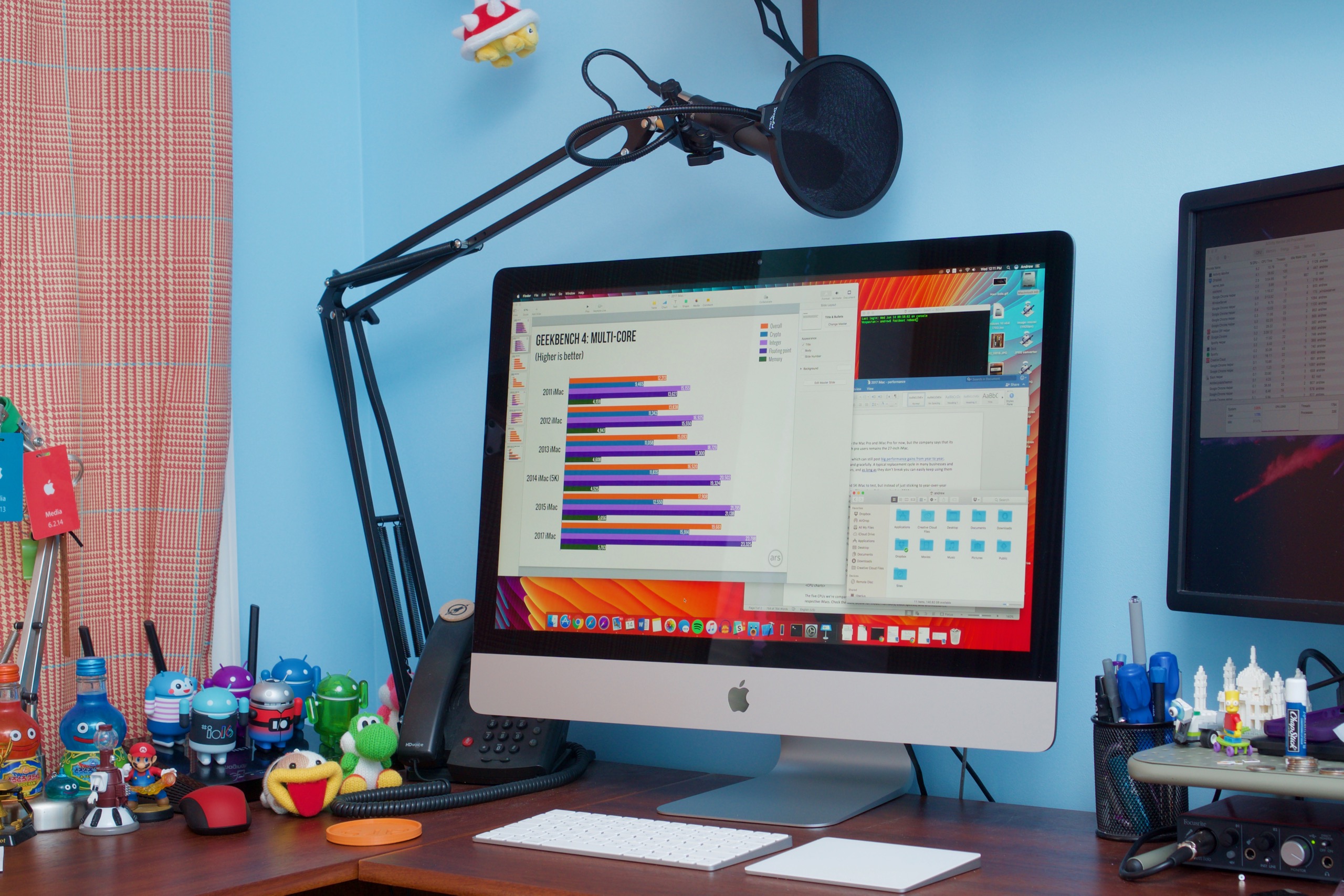
A 27-inch iMac model. It’s still the only Intel Mac without a true Apple Silicon replacement. Credit: Andrew Cunningham

We’re primarily focusing on two time spans: from the date of each Mac’s introduction to the date it stopped receiving major macOS updates, and from the date of each Mac’s introduction to the date it stopped receiving any updates at all. We consider any Macs inside either of these spans to be actively supported; Macs that are no longer receiving regular updates from Apple will gradually become less secure and less compatible with modern apps as time passes. We measure by years of support rather than number of releases, which controls for Apple’s transition to a once-yearly release schedule for macOS back in the early 2010s.

We’ve also tracked the time between each Mac model’s discontinuation and when it stopped receiving updates. This is how Apple determines which products go on its “vintage” and “obsolete” hardware lists, which determine the level of hardware support and the kinds of repairs that the company will provide.

We have lots of detailed charts, but here are some highlights:

  • For all Mac models tracked, the average Mac receives about 6.6 years of macOS updates that add new features, plus another two years of security-only updates.
  • If you only count the Intel era, the average is around seven years of macOS updates, plus two years of security-only patches.
  • Most (though not all) Macs released since 2016 come in lower than either of these averages, indicating that Apple has been less generous to most Intel Macs since the Apple Silicon transition began.
  • The three longest-lived Macs are still the mid-2007 15- and 17-inch MacBook Pros, the mid-2010 Mac Pro, and the mid-2007 iMac, which received new macOS updates for around nine years after their introduction (and security updates for around 11 years).
  • The shortest-lived Mac is still the late-2008 version of the white MacBook, which received only 2.7 years of new macOS updates and another 3.3 years of security updates from the time it was introduced. (Late PowerPC-era and early Intel-era Macs are all pretty bad by modern standards.)

The charts

If you bought a Mac any time between 2016 and 2020, you’re generally settling for fewer years of software updates than you would have gotten in the recent past. If you bought a Mac released in 2020, the tail end of the Intel era when Apple Silicon Macs were around the corner, your reward is the shortest software support window since 2006.

There are outliers in either direction. The sole iMac Pro, introduced in 2017 as Apple tried to regain some of its lost credibility with professional users, will end up with 7.75 years of updates plus another two years of security updates when all is said and done. Buyers of 2018–2020 MacBook Airs and the two-port version of the 2020 13-inch MacBook Pro, however, are treated pretty poorly, getting not quite 5.5 years of updates (plus two years of security patches) on average from the date they were introduced.

That said, most Macs usually end up getting a little over six years of macOS updates and two more years of security updates. If that’s a year or two lower than the recent past, it’s also not ridiculously far from the historical average.

If there’s something to praise here, it’s interesting that Apple doesn’t seem to treat any of its Macs differently based on how much they cost. Now that we have a complete overview of the Intel era, breaking out the support timelines by model rather than by model year shows that a Mac mini doesn’t get dramatically more or less support than an iMac or a Mac Pro, despite costing a fraction of the price. A MacBook Air doesn’t receive significantly more or less support than a MacBook Pro.

These are just averages, and some models are lucky while others are not. The no-adjective MacBook that Apple has sold on and off since 2006 is also an outlier, with fewer years of support on average than the other Macs.

If there’s one overarching takeaway, it’s that you should buy new Macs as close to the date of their introduction as possible if you want to maximize your software support window. Especially for Macs that were sold continuously for years and years—the 2013 and 2019 Mac Pro, the 2018 Mac mini, the non-Retina 2015 MacBook Air that Apple sold some version of for over four years—buying them toward the end of their retail lifecycle means settling for years of fewer updates than you would have gotten if you had waited for the introduction of a new model. And that’s true even though Apple’s hardware support timelines are all calculated from the date of last availability rather than the date of introduction.

It just puts Mac buyers in a bad spot when Apple isn’t prompt with hardware updates, forcing people to either buy something that doesn’t fully suit their needs or settle for something older that will last for fewer years.

What should you do with an older Intel Mac?

The big question: If your Intel Mac is still functional but Apple is no longer supporting it, is there anything you can do to keep it both secure and functional?

All late-model Intel Macs officially support Windows 10, but that OS has its own end-of-support date looming in October 2025. Windows 11 can be installed, but only if you bypass its system requirements, which can work well, but it does require additional fiddling when it comes time to install major updates. Consumer-focused Linux distributions like Ubuntu, Mint, or Pop!_OS may work, depending on your hardware, but they come with a steep learning curve for non-technical users. Google’s ChromeOS Flex may also work, but ChromeOS is more functionally limited than most other operating systems.

The OpenCore Legacy Patcher provides one possible stay of execution for Mac owners who want to stay on macOS for as long as they can. But it faces two steep uphill climbs in macOS Tahoe. First, as Apple has removed more Intel Macs from the official support list, it has removed more of the underlying code from macOS that is needed to support those Macs and other Macs with similar hardware. This leaves more for the OpenCore Configurator team to have to patch in from older OSes, and this kind of forward-porting can leave hardware and software partly functional or non-functional.

Second, there’s the Apple T2 to consider. The Macs with a T2 treat it as a load-bearing co-processor, responsible for crucial operating system functions such as enabling Touch ID, serving as an SSD controller, encoding and decoding videos, communicating with the webcam and built-in microphone, and other operations. But Apple has never opened the T2 up to anyone, and it remains a bit of a black box for both the OpenCore/Hackintosh community and folks who would run Linux-based operating systems like Ubuntu or ChromeOS on that hardware.

The result is that the 2018 and 2019 MacBook Airs that didn’t support macOS 15 Sequoia last year never had support for them added to the OpenCore Legacy Patcher because the T2 chip simply won’t communicate with OpenCore firmware booted. Some T2 Macs don’t have this problem. But if yours does, it’s unlikely that anyone will be able to do anything about it, and your software support will end when Apple says it does.

Does any of this mean anything for Apple Silicon Mac support?

Late-model Intel MacBook Airs have fared worse than other Macs in terms of update longevity. Credit: Valentina Palladino

It will likely be at least two or three years before we know for sure how Apple plans to treat Apple Silicon Macs. Will the company primarily look at specs and technical capabilities, as it did from the late-’90s through to the mid-2010s? Or will Apple mainly stop supporting hardware based on its age, as it has done for more recent Macs and most current iPhones and iPads?

The three models to examine for this purpose are the first ones to shift to Apple Silicon: the M1 versions of the MacBook Air, Mac mini, and 13-inch MacBook Pro, all launched in late 2020. If these Macs are dropped in, say, 2027 or 2028’s big macOS release, but other, later M1 Macs like the iMac stay supported, it means Apple is likely sticking to a somewhat arbitrary age-based model, with certain Macs cut off from software updates that they are perfectly capable of running.

But it’s our hope that all Apple Silicon Macs have a long life ahead of them. The M2, M3, and M4 have all improved on the M1’s performance and other capabilities, but the M1 Macs are much more capable than the Intel ones they supplanted, the M1 was used so widely in various Mac models for so long, and Mac owners can pay so much more for their devices than iPhone and iPad owners. We’d love to see macOS return to the longer-tail software support it provided in the late-’00s and mid-2010s, when models could expect to see seven or eight all-new macOS versions and another two years of security updates afterward.

All signs point to Apple using the launch date of any given piece of hardware as the determining factor for continued software support. But that isn’t how it has always been, nor is it how it always has to be.

Photo of Andrew Cunningham

Andrew is a Senior Technology Reporter at Ars Technica, with a focus on consumer tech including computer hardware and in-depth reviews of operating systems like Windows and macOS. Andrew lives in Philadelphia and co-hosts a weekly book podcast called Overdue.

The MacBook Air is the obvious loser as the sun sets on the Intel Mac era Read More »

what-to-expect-from-apple’s-worldwide-developers-conference-next-week

What to expect from Apple’s Worldwide Developers Conference next week


i wwdc what you did there

We expect to see new designs, new branding, and more at Apple’s WWDC 2025.

Apple’s Worldwide Developers Conference kicks off on Monday with the company’s standard keynote presentation—a combination of PR about how great Apple and its existing products are and a first look at the next-generation versions of iOS, iPadOS, macOS, and the company’s other operating systems.

Reporting before the keynote rarely captures everything that Apple has planned at its presentations, but the reliable information we’ve seen so far is that Apple will keep the focus on its software this year rather than using the keynote to demo splashy new hardware like the Vision Pro and Apple Silicon Mac Pro, which the company introduced at WWDC a couple years back.

If you haven’t been keeping track, here are a few of the things that are most likely to happen when the pre-recorded announcement videos start rolling next week.

Redesign time

Reliable reports from Bloomberg’s Mark Gurman have been saying for months that Apple’s operating systems are getting a design overhaul at WWDC.

The company apparently plans to use the design of the Vision Pro’s visionOS software as a jumping-off point for the new designs, introducing more transparency and UI elements that appear to be floating on the surface of your screen. Apple’s overarching goal, according to Gurman, is to “simplify the way users navigate and control their devices” by “updating the style of icons, menus, apps, windows and system buttons.”

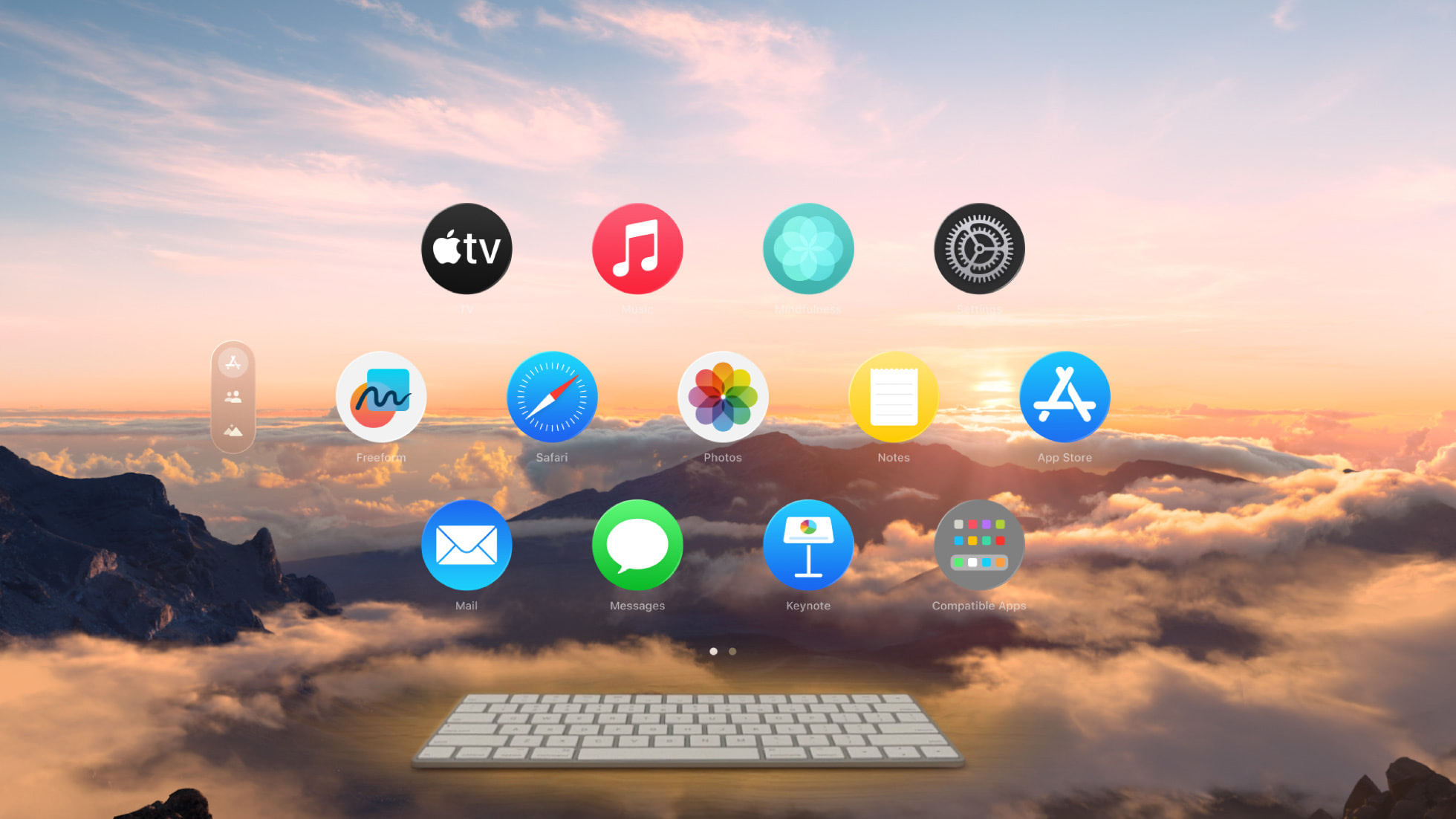
Apple’s airy, floaty visionOS will apparently serve as the inspiration for its next-generation software design. Credit: Apple

Any good software redesign needs to walk a tightrope between freshening up an old look and solving old problems without changing peoples’ devices so much that they become unrecognizable and unfamiliar. The number of people who have complained to me about the iOS 18-era redesign of the Photos app suggests to me that Apple doesn’t always strike the right balance. But a new look can also generate excitement and encourage upgrades more readily than some of the low-profile or under-the-hood improvements that these updates normally focus on.

The redesigned UI should be released simultaneously for iOS, iPadOS, and macOS. The Mac last received a significant facelift back in 2020 with macOS 11 Big Sur, though this was overshadowed at the time by the much more significant shift from Intel’s chips to Apple Silicon. The current iOS and iPadOS design has its roots in 2013’s iOS 7, though with over a decade’s worth of gradual evolution on top.

An OS by any other name

With the new design will apparently come a new naming scheme, shifting from the current version numbers to new numbers based on the year. So we allegedly won’t be seeing iOS 19, macOS 16, watchOS 12, or visionOS 3—instead, we’ll get iOS 26, macOS 26, watchOS 26, and visionOS 26.

The new numbers might be a little confusing at first, especially for the period of overlap where Apple is actively supporting (say) macOS 14, macOS 15, and macOS 26. But in the long run, the consistency should make it easier to tell roughly how old your software is and will also make it easier to tell whether your device is running current software without having to remember the number for each of your individual devices.

It also unifies the approach to any new operating system variants Apple might announce—tvOS starts at version 9 and iPadOS starts at version 13, for example, because they were linked to the then-current iOS release. But visionOS and watchOS both started over from 1.0, and the macOS version is based on the year that Apple arbitrarily decided to end the 20-year-old “macOS X” branding and jump up to 11.

Note that those numbers will use the upcoming year rather than the current year—iOS 26 will be Apple’s latest and greatest OS for about three months in 2025, assuming the normal September-ish launch, but it will be the main OS for nine months in 2026. Apple usually also waits until later in the fall or winter to start forcing people onto the new OS, issuing at least a handful of security-only updates for the outgoing OS for people who don’t want to be guinea pigs for a possibly buggy new release.

Seriously, don’t get your hopes up about hardware

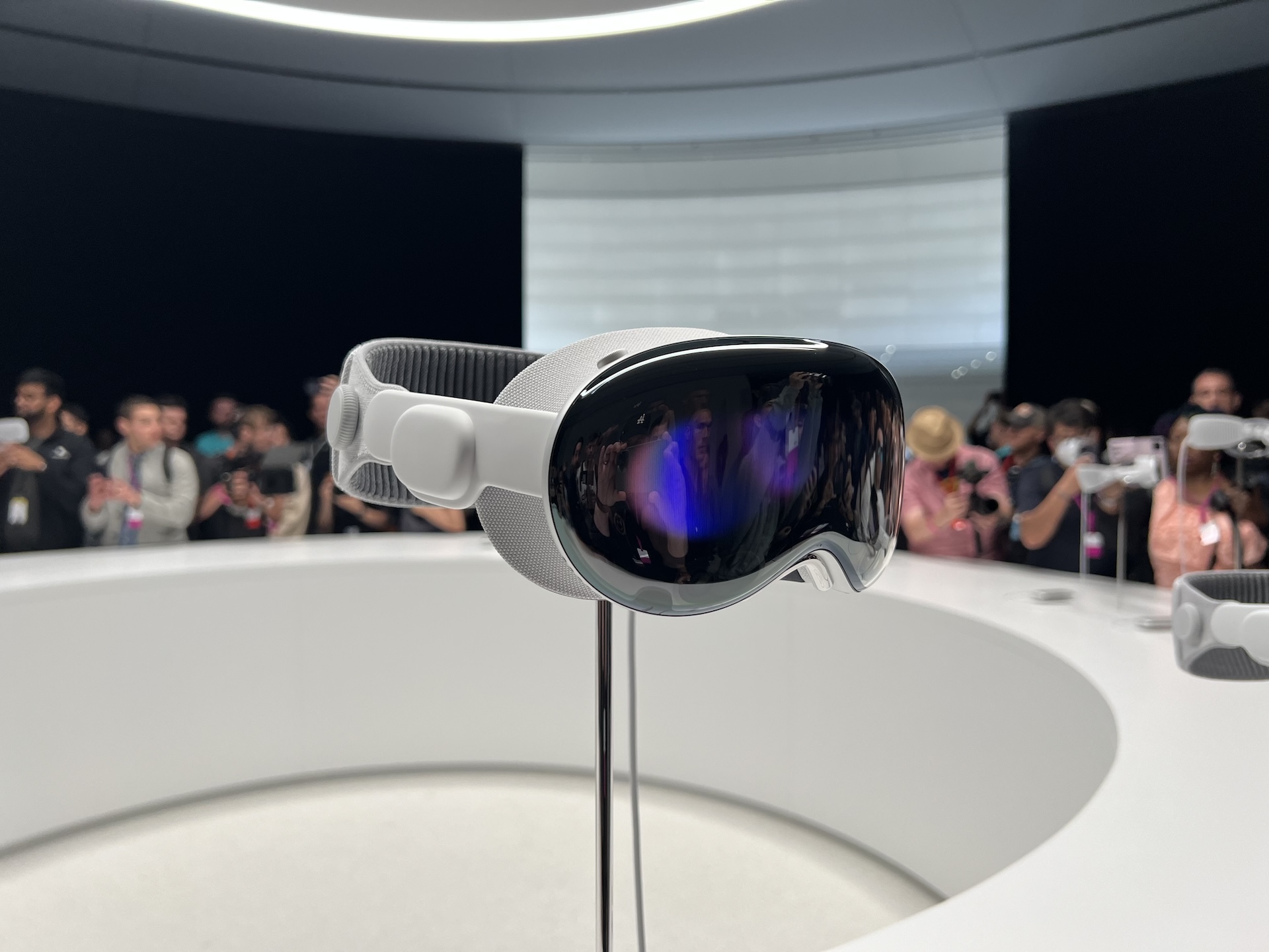
Apple showed off Vision Pro at WWDC in 2023, but we’re not expecting to see much hardware this year. Credit: Samuel Axon

Gurman has reported that Apple had “no major new devices ready to ship” this year.

Apple generally concentrates its hardware launches to the spring and fall, with quieter and lower-profile launches in the spring and bigger launches in the fall, anchored by the tentpole that is the iPhone. But WWDC has occasionally been a launching point for new Macs (because Macs are the only systems that run Xcode, Apple’s development environment) and occasionally brand-new platforms (because getting developers on board with new platforms is one way to increase their chances of success). But the best available information suggests that neither of those things is happening this time around.

There are possibilities, though. Apple has apparently been at work behind the scenes on expanding its smart home footprint, and the eternally neglected Mac Pro is still using an M2 Ultra when an M3 Ultra already exists. But especially with a new redesign to play up, we’d expect Apple to keep the spotlight on its software this time around.

The fate of Intel Macs

It’s been five years since Apple started moving from Intel’s chips to its own custom silicon in Macs and two years since Apple sold its last Intel Macs. And since the very start of the transition, Apple has resisted providing a firm answer to the question of when Intel Macs will stop getting new macOS updates.

Our analysis of years of support data suggests two likely possibilities: that Apple releases one more new version of macOS for Intel Macs before shifting to a couple years of security-only updates or that Apple pulls the plug and shifts to security-only updates this year.

Rumors suggest that current betas still run on the last couple rounds of Intel Macs, dropping support for some older or slower models introduced between 2018 and 2020. If that’s true, there’s a pretty good chance it’s the last new macOS version to officially support Intel CPUs. Regardless, we’ll know more when the first betas drop after the keynote.

Even if the new version of macOS supports some Intel Macs, expect the list of features that require Apple Silicon to keep getting longer.

iPad multitasking? Again?

The perennial complaint about high-end iPads is that the hardware is a lot more capable than the software allows it to be. And every couple of years, Apple takes another crack at making the iPad a viable laptop replacement by improving the state of multitasking on the platform. This will allegedly be another one of those years.

We don’t know much about what form these multitasking improvements will take—whether they’re a further refinement of existing features like Stage Manager or something entirely new. The changes have been described as “more like macOS,” but that could mean pretty much anything.

Playing games

People play plenty of games on Apple’s devices, but they still aren’t really a “destination” for gaming in the same way that a dedicated console or Windows PC is. The company is apparently hoping to change that with a new unified app for games. Like Valve’s Steam, the app will reportedly serve as a storefront, launcher, and achievement tracker, and will also facilitate communication between friends playing the same game.

Apple took a similar stab at this idea in the early days of the iPhone with Game Center, which still exists as a service in the background on modern Apple devices but was discontinued as a standalone app quite a few years ago.

Apple has been trying for a few years now to make its operating systems more hospitable to gaming, especially in macOS. The company has added a low-latency Game Mode to macOS and comprehensive support for modern wireless gamepads from Microsoft, Sony, and Nintendo. The company’s Game Porting Toolkit stops short of being a consumer-friendly way to run Windows games on macOS, but it does give developers of Windows games an easier on-ramp for testing and porting their games to Apple’s platforms. We’ll see whether a unified app can help any of these other gaming features gel into something that feels cohesive.

Going home

A smart speaker about the size of a mason jar.

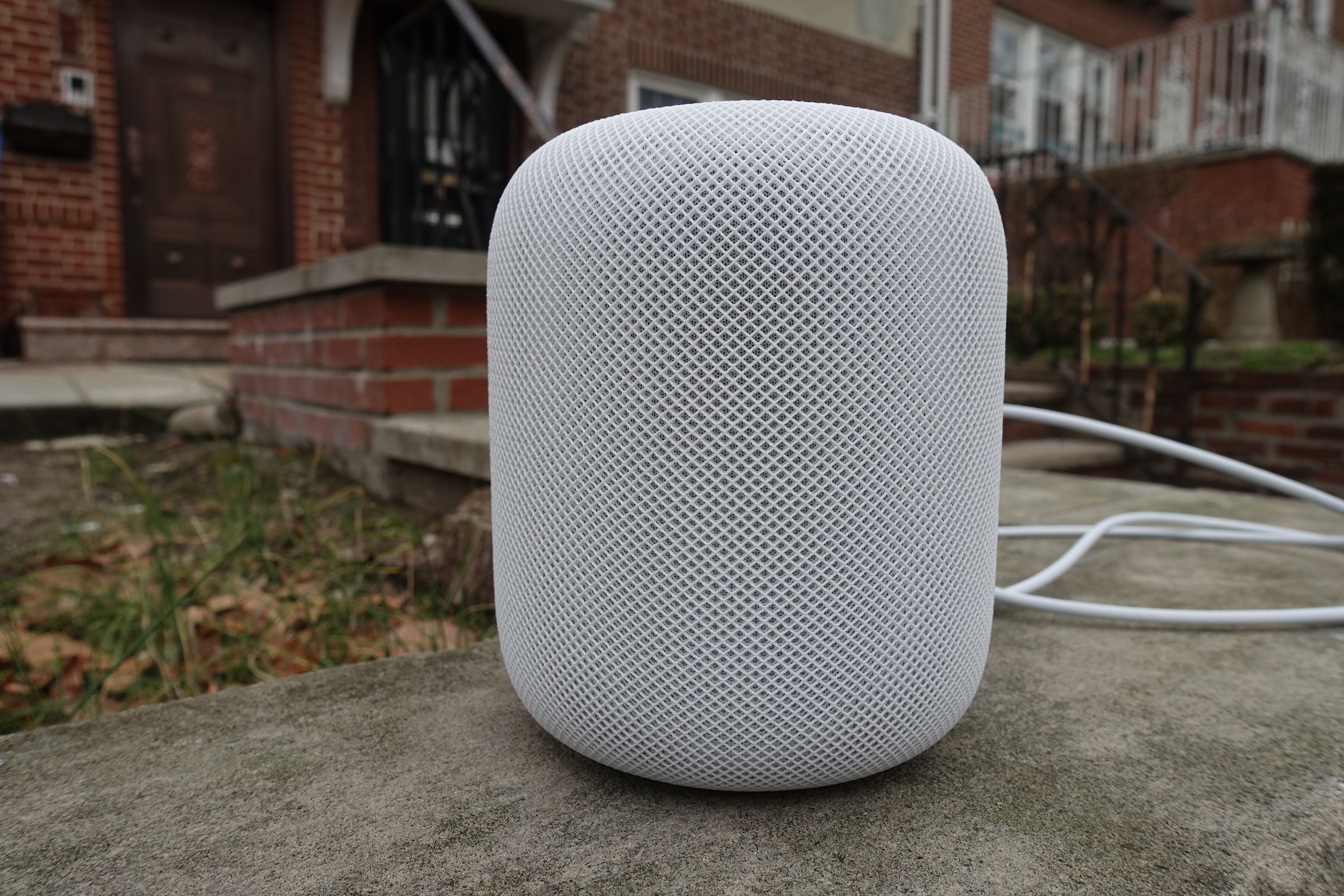
Might we see a more prominent, marketable name for what Apple currently calls the “HomePod Software”? Credit: Jeff Dunn

One of Apple’s long-simmering behind-the-scenes hardware projects is apparently a new kind of smart home device that weds the HomePod’s current capabilities with a vaguely Apple TV-like touchscreen interface. In theory, this device would compete with the likes of Amazon’s Echo Show devices.

Part of those plans involve a “new” operating system to replace what is known to the public as “HomePod Software” (and internally as audioOS). This so-called “homeOS” has been rumored for a bit, and some circumstantial evidence points to some possible pre-WWDC trademark activity around that name. Like the current HomePod software—and just about every other OS Apple maintains—homeOS would likely be a specialized offshoot of iOS. But even if it doesn’t come with new hardware right away, new branding could suggest that Apple is getting ready to expand its smart home ambitions.

What about AI?

Finally, it wouldn’t be a mid-2020s tech keynote without some kind of pronouncements about AI. Last year’s WWDC was the big public unveiling of Apple Intelligence, and (nearly) every one of Apple’s product announcements since then has made a point of highlighting the hardware’s AI capabilities.

We’d definitely expect Apple to devote some time to Apple Intelligence, but the company may be more hesitant to announce big new features in advance, following a news cycle where even normally sympathetic Apple boosters like Daring Fireball’s John Gruber excoriated the company for promising AI features that it was nowhere near ready to launch—or even to demo to the public. The executives handling Apple’s AI efforts were reshuffled following that news cycle; whether it was due to Gruber’s piece or the underlying problems outlined in the article is anyone’s guess.

Apple will probably try to find a middle road, torn between not wanting to overpromise and underdeliver and not wanting to seem “behind” on the tech industry’s biggest craze. There’s a decent chance that the new “more personalized” version of Siri will finally make a public appearance. But I’d guess that Apple will focus more on iterations of existing Apple Intelligence features like summaries or Writing Tools rather than big swings.

Photo of Andrew Cunningham

Andrew is a Senior Technology Reporter at Ars Technica, with a focus on consumer tech including computer hardware and in-depth reviews of operating systems like Windows and macOS. Andrew lives in Philadelphia and co-hosts a weekly book podcast called Overdue.

What to expect from Apple’s Worldwide Developers Conference next week Read More »