macaques

macaque-facial-gestures-are-more-than-just-a-reflex,-study-finds

Macaque facial gestures are more than just a reflex, study finds

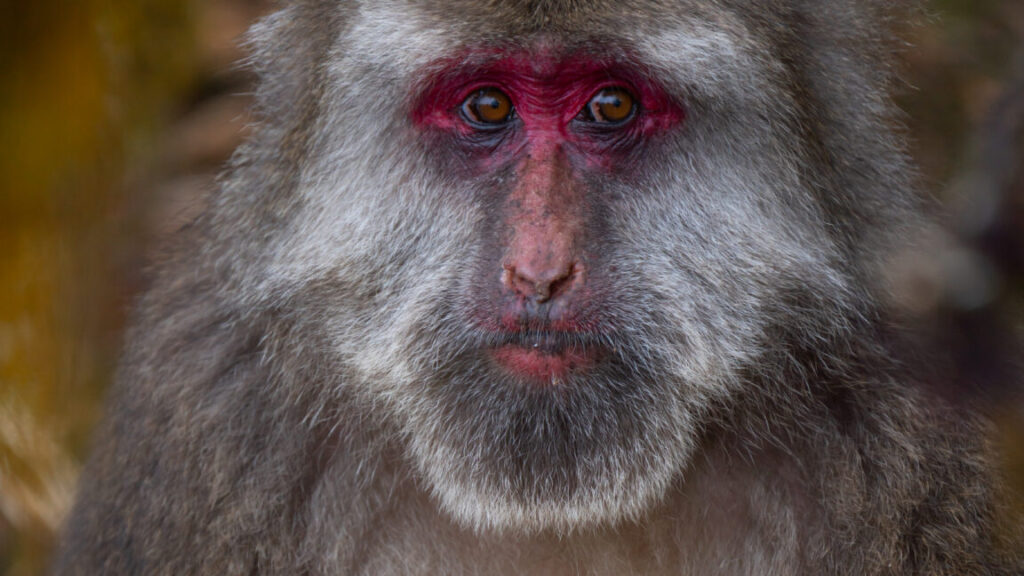
Based on the video analysis, scientists identified three facial gestures they wanted to focus on: the lipsmack macaques use to signal receptivity or submission; the threat face they make when they want to challenge or chase off an adversary; and chewing, a non-social, volitional movement. Then, using the fMRI scans, the team located key brain areas involved in triggering these gestures. And when this was done, Ianni and her colleagues went deeper—quite literally.

Under the hood

“We targeted these brain areas with sub-millimeter precision for implantation of micro-electrode arrays,” Ianni explains. This, for the first time, allowed her team to simultaneously record the activity from many neurons spaced across the areas where the brain generates facial gestures. The electrodes went into the primary motor cortex, the ventral premotor cortex, the primary somatosensory cortex, and the cingulate motor cortex. When they were in, the team once again exposed the macaques to the same set of social stimuli, looking for neural signatures of the three selected facial gestures. And that’s when things took a surprising turn.

The researchers expected to see a clear division of responsibilities, one where the cingulate cortex governs social signals, while the motor cortex is specialized in chewing. Instead, they found that every single region was involved in every type of gesture. Whether the macaques were threatening a rival or simply enjoying a snack, all four brain areas were firing in a coordinated symphony.

This led Ianni’s team to the question of how the brain distinguished between social gestures and chewing, since it apparently wasn’t about where the brain processed the information. The answer was in different neural codes—different ways that neurons represent and transmit information in the brain over time.

The hierarchy of timing

By analyzing neural population dynamics, the team identified a temporal hierarchy across the cortex in macaques. The cingulate cortex used a static neural code. “The static means the firing pattern of neurons is persistent across both multiple repetitions of the same facial gesture and across time,” Ianni explains, and maintained their firing pattern till 0.8 seconds after that. “A single decoder which learns this pattern could be used at any timepoint or during any trial to read out the facial expression,” Ianni says.

Macaque facial gestures are more than just a reflex, study finds Read More »
hong-kong-monkey-encounter-lands-man-in-icu-with-rare,-deadly-virus

Hong Kong monkey encounter lands man in ICU with rare, deadly virus

rare but deadly —

The man had recently visited a country park known for its macaque monkeys.

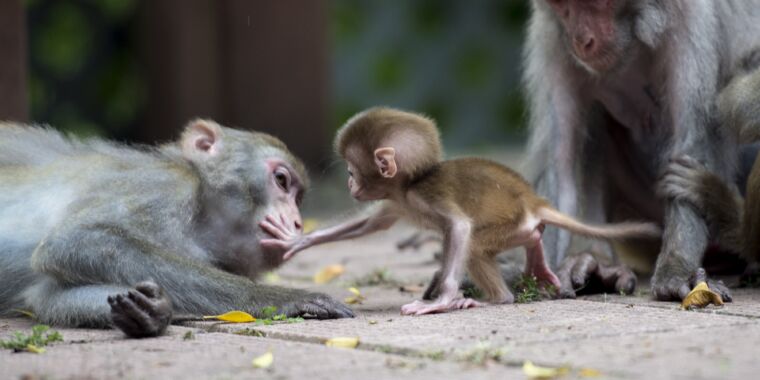
This photo taken in August 2014 shows macaque monkeys in a country park in Hong Kong.

Enlarge / This photo taken in August 2014 shows macaque monkeys in a country park in Hong Kong.

A 37-year-old man is fighting for his life in an intensive care unit in Hong Kong after being wounded by monkeys during a recent park visit and contracting a rare and deadly virus spread by primates.

The man, who was previously in good health, was wounded by wild macaque monkeys during a visit to Kam Shan Country Park in late February, according to local health officials. The park is well known for its conservation of wild macaques and features an area that locals call “Monkey Hill” and describe as a macaque kingdom.

On March 21, he was admitted to the hospital with a fever and “decreased conscious level,” health officials reported. As of Wednesday, April 3, he was in the ICU listed in critical condition. Officials reported the man’s case Wednesday after testing of his cerebrospinal fluid revealed the presence of B virus.

B virus, also known as herpes B virus or herpesvirus simiae, is a common infection in macaques, usually causing asymptomatic or mild disease. Infections in humans are extremely rare, but when they occur, they usually come from macaque encounters and are often severe and deadly. The infection can start out a lot like the flu, but the virus can move to the brain and spinal cord, causing brain damage, nerve damage, and death. The US Centers for Disease Control and Prevention estimates that about 70 percent of untreated infections in humans are fatal.

Despite the presence of macaques around Hong Kong, the man’s case is the first known B virus infection documented there. The virus was discovered in 1932, and since then only 50 human infections have been documented as of 2019, the CDC reports. Of those 50 people infected, 21 died. The agency notes that in one case, from 1997, a researcher was infected and died after bodily fluid from an infected monkey splashed into her eye. Still, contracting the virus is rare, even among people exposed to macaques. The CDC reports that there are hundreds of reports of macaque bites and scratches each year in US animal facilities, and infections remain very uncommon.

However low the risk, health officials recommend keeping your distance from wild monkeys and not feeding or touching them. If you are bitten or scratched, wash the wound immediately and seek medical attention.

Hong Kong monkey encounter lands man in ICU with rare, deadly virus Read More »